GCCs Drive India’s Office Leasing with 37% Share, Bengaluru Leads the Way

GCCs Drive India’s Office Leasing with 37% Share, Bengaluru Leads the Way

India’s office market shattered records in 2024, with global capability centres (GCCs) playing a pivotal role in achieving historic leasing levels. According to a report by CBRE, the year saw a gross absorption of 79.0 million sq ft, a 16% YoY growth.

GCCs accounted for 37% of the total office leasing activity in 2024, solidifying their importance in India’s commercial real estate market. BFSI firms and technology companies contributed 44% of GCC leasing, showcasing their integral role in the office sector’s growth.

When it comes to distribution based on different cities, Bengaluru led the GCC leasing segment with 34% share, with Hyderabad at second place with 20% share. They were followed by Delhi-NCR (12%), Mumbai (11%), Pune (10%), and Chennai (9%). Ahmedabad, Kolkata, and Kochi collectively contributed 4% of GCC leasing during the quarter.

Bengaluru, Hyderabad, Mumbai, and Delhi-NCR dominated the market in 2024, contributing 73% of the total leasing activity. Technology companies and flexible space operators led the charge, followed by BFSI firms. Domestic firms also remained key players, driving 50% and 45% of leasing activity on a quarterly and annual basis, respectively.

The October-December period saw the highest quarterly leasing activity, with 22.2 million sq ft absorbed—an 8% QoQ rise. Mumbai, Hyderabad, and Bengaluru emerged as hotspots, collectively accounting for 66% of the absorption during the quarter.

Overall, Bengaluru led office space absorption in 2024, accounting for 28% of the total leasing activity, followed by Hyderabad (16%) and Mumbai (15%). Domestic firms remained the largest contributors, driving 45% of total leasing, with companies from the Americas contributing 34%, EMEA 16%, and APAC 5%.

New project completions reached 52.3 million sq ft during the year, with 16.1 million sq ft added in Q4 alone, a 15% QoQ increase. Over half of the newly completed spaces in Q4 were green-certified, reflecting a growing focus on sustainable development.

While earlier speaking with AIM, Mohandas Pai, founder of Aarin Capital and former CFO of Infosys, said that while all states will try to attract companies, the incentive of concession on land and power alone is not enough to lure GCCs away from Bengaluru.

Pai highlighted that companies prefer employees who are ready to join immediately, as setting up GCCs doesn’t take much time. GCCs employ over 2.2 million people in India, with major hubs in Bengaluru, Hyderabad, and Mumbai, as revealed by AIM Research. On the lines of CBRE report, AIM Research, too, notes that Bengaluru holds the largest share of 34%, highlighting its position as India’s top hub for GCCs. This is supported by the city’s strong IT industry connection, skilled workforce, and good infrastructure.

The post GCCs Drive India’s Office Leasing with 37% Share, Bengaluru Leads the Way appeared first on Analytics India Magazine.

How Indian IT Partnered with AI Startups in 2024

Indian IT

While some companies build AI solutions in-house, others rely on partnerships with startups and other tech companies to provide AI services for their clients. Indian IT firms, in particular, predominantly rely on startups and big tech as they believe that investing too much capital in building products is not their niche.

In 2024, leading Indian IT firms like Infosys, TCS, Tech Mahindra, Wipro, and HCLTech significantly advanced their integration of generative AI into their offerings for providing small language models and also building multi-agent systems for their clients in the upcoming years. Much of this is allegedly achieved by partnering with AI startups with bases in India.

Infosys Leads the Way

Infosys has been at the forefront of this AI integration. Chairman Nandan Nilekani has predicted that while companies will increasingly develop their own specialised AI models to enhance efficiency and productivity, service companies will adopt them for their clients.

At the sidelines of the Meta Build with AI Summit, an Infosys representative told AIM, “We are building industry-wide solutions. For market research, we have built a proof-of-concept, and internally, we are leveraging many Llama models for our AI-first journey.”

In addition to these partnerships with Meta, Microsoft, and even NVIDIA to build models for its clients, Infosys also announced its partnership with Sarvam AI in October to build small language models for banking and IT operations, Infosys Topaz BankingSLM and Infosys Topaz ITOpsSLM.

Infosys also completed the acquisition of 100% of the stake of in-tech for €450 million, which it announced in its Q4FY24 report in April to expand its R&D capabilities.

Infosys Innovation Fund recently also placed its bet on Bengaluru-based oncology precision startup 4baseCare. The startup is pushing to beat cancer with genomics and AI.

TCS and Wipro Invest for Technological Acquisitions

TCS has been involved in significant AI projects, which have contributed to its revenue growth. In June, along with Infosys, Tech Mahindra, and HCLTech, the IT giant partnered with Yellow.ai to build AI solutions. These collaborations aim to use Yellow.AI’s platform to enhance HR and customer service automation solutions.

In March, TCS announced its strategic partnership with SymphonyAI to create predictive and generative AI business applications. SymphonyAI specialises in providing enterprise AI SaaS for financial crime detection and related verticals. Cut to June; the IT firm also partnered with Xerox to improve business outcomes when migrating from legacy data centres to Azure public cloud and integrating generative AI services.

In November, Wipro partnered with RELEX Solutions, a prominent provider of integrated supply chain and retail planning solutions. The aim is to use Wipro’s deep expertise in the retail and consumer packaged goods (CPG) industries alongside RELEX’s AI platform to deliver improved capabilities for demand forecasting, supply chain efficiency, and operational planning.

This came after Wipro announced its alliance with Cyble for AI-driven cybersecurity risk management solutions in August while working closely with its GCC in India.

Moreover, Wipro is investing to strengthen its capabilities across organisations and making bold moves in mergers and acquisitions (M&A) and acquiring companies like Capco and Rizing, which have boosted consulting capabilities and simplified the company’s operating model, said Wipro chief Srini Pallia during the Q4 2024 earnings call.

Tech Mahindra’s Love for Startups

Under the leadership of CEO Mohit Joshi, Tech Mahindra is aiming to grow its banking and financial services revenue share to 25% by 2027. Joshi plans to leverage his BFSI expertise to drive this expansion and sees generative AI as an opportunity for the IT sector and the company’s workforce.

In 2024, Tech Mahindra announced several partnerships with AI startups. In April, the company announced a collaboration with Spain-based Atento to deliver generative AI-powered solutions and services to enterprises worldwide.

In May, Tech Mahindra partnered with Zapata Computing Holdings Inc. with the aim of enhancing Zapata AI’s quantum-based generative AI solutions. This collaboration aims to scale Tech Mahindra’s capabilities, offering ‘Scale at Speed’ solutions to drive operational efficiency and improve responsiveness for global Communication Service Providers (CSPs).

In August, Tech Mahindra joined forces with LivePerson, a leader in digital customer conversations, to revolutionise customer engagement in the financial services and healthcare and life sciences (HLS) sectors.

In the same month, Tech Mahindra also collaborated with Horizon3.ai to develop cybersecurity solutions. The partnership integrates Horizon3.ai’s NodeZero platform, which offers autonomous threat detection, AI-powered penetration testing, and Governance, Risk, and Compliance (GRC) insights into Tech Mahindra’s cybersecurity services.

In September, Tech Mahindra also partnered with Discai, a subsidiary of the KBC Group, to provide an AI-powered anti-money laundering (AML) solution.

HCLTech Provides Solutions to Others

HCLTech is establishing a generative AI technology education and training centre built on IBM’s platform. Along with TCS, in August, the company announced its partnership with Xerox for AI and digital engineering services.

Most recently, in November HCLTech partnered with Inspeq AI, an Irish-Indian technology firm, to help enterprises worldwide responsibly develop and integrate AI applications. The alliance aims to embed a responsible AI (RAI) layer into application development, seamlessly integrating with existing toolchains like Microsoft Co-Pilot, AWS Bedrock, and other business applications.

In June, the company collaborated with Tecnotree to develop 5G-led generative AI solutions for telcos. The aim of the partnership is to bring HCLTech’s AI-based communications technology with Tecnotree’s 5G and AI-based BSS platform.

Apart from investing and partnering with AI startups, HCLTech decided to provide its services to its clients, which it built in partnership with big firms like Intel, SAP, IBM, AWS, Microsoft, and GitHub.

Other Mid-Sized Firms

Mid-sized IT firms are rapidly adopting AI through strategic investments and acquisitions.

LTIMindtree has invested $6 million in Voicing.AI, focusing on enhancing conversational, contextual, and emotional intelligence across over 20 languages. The company also partnered with GitHub to train its workforce.

Meanwhile, Mphasis has launched NeoCrux to improve developer productivity and acquired Silverline to enhance customer experience with conversational AI. Persistent Systems, addressing AI-related privacy concerns, acquired Arrka to strengthen its privacy management platform.

Smaller firms like Happiest Minds and Hexaware have also made AI acquisitions, positioning themselves for the agentic AI revolution. Happiest Minds partnered with MindSculpt in April and with Soroco in February to enhance its AI solutions.

The post How Indian IT Partnered with AI Startups in 2024 appeared first on Analytics India Magazine.

X’s Grok did surprisingly well in my AI coding tests

Grok on an iPhone above a coding background.

When X first came out with its chatbot, it was behind a paywall. But TANSTAAFL notwithstanding, X recently opened up Grok to the world. So I decided to throw my programming tests at it.

Also: How I test an AI chatbot's coding ability — and you can, too

I've always been a bit intrigued by Grok because of the name. Grok was coined by Robert Heinlein, one of my very favorite science fiction writers. I fully credit Heinlein with twisting my young brain.

My parents tightly controlled the media I had access to based on what they considered wholesome and healthy. But they gave me free rein to read whatever limited science fiction I could find in the local library — because the word science meant it had to be educational.

Without geeking out on Heinlein too much, let's just say that he had a very open mind when it came to societal norms. He wrote powerful stories, included wonderful science-related themes in his narratives, and often injected deep social commentary into his books.

Also: The best AI for coding in 2025 (and what not to use)

He also coined the term "grok" as a Martian word with many broad meanings. First appearing in Stranger in a Strange Land, it can be interpreted as meaning "I understand," with that understanding existing at a deep, fundamental level. As such, it's a perfect name for an AI chatbot.

Except…

When I asked Grok about what LLM (large language model) it uses, it decided to also tell me that it was inspired by the wit and rebelliousness of Hitchhiker's Guide to the Galaxy. While Hitchhiker's does have wit and it does have rebelliousness, it does not include the word "grok."

And with that, let's dive into my programming tests.

1. Writing a WordPress plugin

This is a coding test that requires the AI to know PHP programming and how to construct a WordPress plugin. It was actually born from a real-world request from my wife, who needed a tool to randomize and sort names, but with a twist.

Also: What WordPress users need to know about the Automattic and WP Engine conflict

Every month, she runs an involvement device on her e-commerce site that chooses a bunch of names at random. The gotcha is that some of her users get multiple entries if they submit multiple projects. So, the randomizer has to manage multiple names but also separate them so they're not side by side in the results.

Finally, the code had to provide a good, clear user interface so that she could simply paste in the names, click a button, and get her list back out.

I fed this assignment to Grok, and it succeeded. The interface was cleanly laid out and functional. And, most importantly, it did what the code was supposed to do, successfully randomizing and separating the names. I give this test a win.

2. Rewriting a string function

My second test resolves a problem first reported to me by a user. The code I had pushed out was designed to test if a number entered by a user was in valid dollars and cents currency. My error was that the code only allowed for integers, so you could donate $5, but not $5.25.

Grok successfully rewrote the regular expression code. It's very close to a win, but I have to give it a fail because the code it generates doesn't allow numbers like .5, which is a valid currency amount. It does allow 0.5, but not every user would choose to prepend a zero to the cents value.

Also: Elon Musk's X now trains Grok on your data by default — here's how to opt out

It also uses a fairly inefficient mechanism to do double conversions and doesn't properly handle strings that can't be converted into a number.

So far, we're at one win and one loss.

3. Finding an annoying bug

The third test requires knowledge of the WordPress framework and API because the bug I'm asking the AI to find is a subtle one that results from a misinterpretation of the WordPress API requirements.

A number of the LLMs I tested got the problem wrong (as I did for hours when trying to debug it). But Grok grokked the problem and gave me a functionally correct and useful answer.

This brings us to two wins and one loss, pulling Grok ahead of almost half of the other LLMs tested previously. Let's see how it does on the fourth and final test.

4. Writing a script

This is a tough test because it requires the AI to be aware of a fairly low-volume vertical scripting tool for the Mac called Keyboard Maestro. It also requires the AI to be able to write code for three separate environments at once: Keyboard Maestro, Chrome, and AppleScript.

So far, only Google Gemini and ChatGPT running the GPT-4 and above LLM have passed this test. Even ChatGPT 3.5 failed.

But we have a new AI that can handle this level of coding challenge: Grok. That gives Grok three wins out of four, which puts it ahead of every other AI not based on a ChatGPT LLM.

Final thoughts

Overall, Grok held its own. If it had only allowed a currency value without a leading zero, it would have had a perfect score. I'm not sure how I feel about all the changes at X since it replaced Twitter, but Grok appears to be a fairly formidable chatbot, at least when it comes to programming prowess.

Also: How to program your iPhone's Action Button to summon ChatGPT's voice assistant

What do you think? Have you used Grok? Have you read Stranger in a Strange Land? What about Hitchhiker's? Let us know in the comments below. So long, and thanks for all the fish.

You can follow my day-to-day project updates on social media. Be sure to subscribe to my weekly update newsletter, and follow me on Twitter/X at @DavidGewirtz, on Facebook at Facebook.com/DavidGewirtz, on Instagram at Instagram.com/DavidGewirtz, on Bluesky at @DavidGewirtz.com, and on YouTube at YouTube.com/DavidGewirtzTV.

Featured


Microsoft to Invest $80 Billion in AI Data Centers in Fiscal 2025

Generative AI products have sparked a surge in data center development. Microsoft is continuing this trend with plans to invest $80 billion in fiscal year 2025 to build AI-enabled data centers, the company revealed in a recent blog post.

“Not since the invention of electricity has the United States had the opportunity it has today to harness new technology to invigorate the nation’s economy,” wrote Microsoft President and Vice Chair Brad Smith. “In many ways, artificial intelligence is the electricity of our age, and the next four years can build a foundation for America’s economic success for the next quarter century.”

$80 billion dedicated to AI data centers and deployment

Microsoft’s vision is built on three core pillars:

  • Advancing and investing in AI technology and infrastructure within the U.S.
  • Implementing AI skilling programs to encourage AI adoption and career opportunities in the country.
  • Exporting American AI technologies to political allies.

The $80 billion investment will be divided into various projects, including a task to “build out AI-enabled datacenters to train AI models and deploy AI and cloud-based applications around the world,” Smith wrote. Over half of the investment has been earmarked for infrastructure within the U.S.

This investment into AI data centers far exceeds Microsoft’s total capex spending in 2024, which totaled at least $53 billion.

‘AI race’ with China rages on

Meanwhile, international investment will further Microsoft’s goal of dominating external markets with U.S. AI products, particularly in areas facing competition from China.

Microsoft’s reference to AI data centers in the same breath as China’s Belt and Road investments shows the ongoing and well-documented “AI race” is going strong. Both countries seek to add AI and cloud data center infrastructure to global infrastructure. Microsoft highlighted the United Arab Emirates and Kenya as footholds for the U.S. to which Microsoft provided AI infrastructure and supply line expertise.

“The rapid development of China’s AI sector has heightened competition between American and Chinese AI, with much of this likely to play out during the next four years in international markets around the world,” Smith wrote.

SEE: The U.S. alleges Chinese threat actors were behind a breach of U.S. Treasury systems in December.

In discussing the upcoming presidential administration, Smith recalled past executive orders fostering AI development. He requested that the U.S. government “expand on these efforts” and support AI research. “Pragmatic” export control policies and loose regulations will help Microsoft foster the U.S. economy through its sale of AI products, Smith wrote.

Microsoft’s AI products proliferate through PCs and smart devices

In recent months, Microsoft has made additional moves that reaffirm its commitment to AI.

In 2024, the tech giant invested about $14 billion in OpenAI. Smith explained that AI skilling will be essential for the future of American jobs. Microsoft provides free training in the basics of generative AI and has continued efforts to upskill professionals and AI hobbyists, including in APAC.

Microsoft has also continued to produce AI PCs equipped with the Copilot+ generative AI assistant. The Redmond-based company also has partnered with other hardware makers to enhance AI infrastructure options like Azure.

Both LG and Samsung are adding shortcuts to Microsoft Copilot to their smart TVs, the companies announced on Jan. 6 at the CES trade show in Las Vegas.

Smith believes Microsoft’s AI efforts will ultimately support the American economy. However, he noted that the success of these efforts is contingent upon a broad technology ecosystem, including the entire chip economy, software developers who create solutions for customers, and the construction firms building data centers.

“Together,” he explained, “all these groups have enabled the technology sector to become an economic backbone for the United States and the world.”

NCSA Director Bill Gropp on SC24, Focus in 2025

Editor's Note: In this note of reflection, Bill Gropp, Director of the National Center for Supercomputing Applications (NCSA), takes us through a year of achievements at NCSA. From the launch of the DeltaAI supercomputer to groundbreaking partnerships in AI, healthcare, and quantum research, Gropp highlights NCSA's critical role in advancing innovation and collaboration, underscoring the center's dynamic approach as it prepares to tackle the challenges and opportunities of 2025 and beyond.

2024 was an amazing year for NCSA. So much so it’s hard to know where to start our annual opportunity for reflection.

Just four short weeks ago, DeltaAI was accepted for production, officially launching our second U.S. National Science Foundation supercomputer in the last three years and cementing NCSA as a leading supporter of artificial intelligence research by providing the majority of GPU cycles for the NSF ACCESS program. We just received the early user-period survey and researchers were very happy with DeltaAI’s performance, the support we provided and even the documentation, which, during that period, is often patchworked together. A lot of interesting research has already been done on DeltaAI, so the system’s off to a really great start.

Image courtesy NCSA

But our AI research support doesn’t end there. NCSA is positioned as a major partner in two new AI initiatives that have gained momentum in 2024.

Earlier this year, NCSA joined the newly launched National Artificial Intelligence Research Resource (NAIRR) Pilot and our Delta system remains the prominent choice of NAIRR researchers as the most requested and most awarded resource in the initial round of awards. Congratulations are in order for NCSA Deputy Director John Towns and his team for playing a significant role in the NAIRR pilot’s early success. NCSA is also part of the NSF-Simons SkAI Institute. Led by by Northwestern University and announced in September, SkAI is a great example of the leadership NCSA has shown in digital astronomy while partnering with the University of Illinois astronomy department and other leading institutions in the Midwest.

That strong external partnership philosophy is also showcased in the healthcare field. The MarginDX project, funded through the Advanced Research Projects Agency for Health within the U.S. Department of Health and Human Services, is developing a health technology that combines optical imaging technologies with AI screening tools to ensure, in real-time, that tumor tissue and cells are completely removed during surgery. Led out of one of our sister institutes and building upon the wonderful partnership with the Mayo Clinic and Illinois Alliance, researchers at NCSA and across campus are playing a major role in redefining healthcare.

I’m very proud of each of these projects and the many more collaborations undertaken by NCSA this year.

SC24 Bigger and Better Than Ever

SC is always a great time for building partnerships, particularly exploring ones that are outside of the university, outside of the state and even outside of the nation. One of the things that was amazing about it was the increase in size with record numbers of attendees and exhibitors.

The growth of SC reflects the continued importance of high-performance computing, but I think it also reflects the recognition that HPC is leading the way in pushing technologies forward and I think people are recognizing this. Of course, there are many different views in how you do computing, even at large scale, and I think it’s really good to be challenged by new ideas. One of the great things about SC is that you can have those discussions with people with different backgrounds and experience, work out some of those details and develop those partnerships.

In the keynote by Dr. Nicola Fox, it was interesting to see all of the intersections of computing with the NASA mission and the breadth of the NASA mission. It’s a reminder that HPC is used everywhere. “HPC Is Everywhere” was the tagline from when I was conference chair at SC13 and it was reinforced in many ways by this SC. Fox discussed how defining HPC really touched on all aspects of the NASA mission, which is always fun to see. It reminded me of when people ask what NCSA does – it’s hard to answer because we do so much. She spoke about the major divisions of NASA that cover a lot of ground that not everybody thinks of and that’s very similar to discussions I have about NCSA. People are often surprised by the sheer variety of work in which NCSA is involved.

Impacting Illinois

NCSA is also making a major impact close to home, investing in what we hope will be long-term campus initiatives. The formation of the Office of Data Science Research is something we’ve been trying to do for a long time, but it’s great to finally get that launched as a campus-level office to provide a nexus for community-building and information-sharing both within campus and outside the university. Also, the Research Computing Vision Committee, recently launched as part of the Boldy Illinois 2030 framework, will be making recommendations for how campus should think about support and organization of research computing, something that’s been all too ad hoc in the past.

And Illinois Computes has really taken off. We’re seeing many more people taking advantage of it. I’m delighted about the direction that Chuck Thompson is taking the program, the energy he’s brought to it, the way he’s been reaching out all over campus to ensure that both researchers are really aware of the opportunity and also that we’re listening to what the researchers need.

There’s a tremendous amount of good stuff to be proud of and I’m sure I’ve missed a bunch of things that I should have included. These ventures will position us to capitalize on the many efforts already underway or soon to be – not just at NCSA but Illinois as well.

2025 and Beyond

When looking forward, Illinois Quantum and Microelectronics Park is certainly an interesting opportunity for the whole state but also for NCSA in a number of areas, not just in terms of the quantum computing side but also continuing our broader engagement with another exciting, large project. Of course, we’re hoping with the success of the NAIRR pilot, that additional funding will be provided to further establish the NAIRR program and establish more research resources.

We’ve been having some interesting discussions with some partners both in the state and in the Big Ten about shared interests in research computing infrastructure, which I think have the potential not just for sharing some infrastructure, but taking advantage of those kinds of partnerships to have deeper collaboration in shared research projects and opportunities.

One of the things that’s also inspiring is we’ve put in more proposals this year than in previous years – up 44% over last fiscal year and more than double the total from five years ago. I’m excited about the focus on taking advantage of our expertise in computing to have a bigger impact and it’s great to see that growth.

The future looks bright for NCSA, and while I’m in no hurry to grow older, I can’t wait to see what we’ll do next.

This article was first published by NCSA and is reproduced here with NCSA's permission.

How we test phones at ZDNET in 2025

Best Phones

The way the smartphone fits into our daily lives has changed dramatically over the past decades, from being solely a communication device to now connecting us to the vast internet. Today, the definition of the smartphone is being altered again, with AI slowly but surely taking center stage in the mobile experience. It might even replace apps one day.

Also: The best phones to buy in 2025

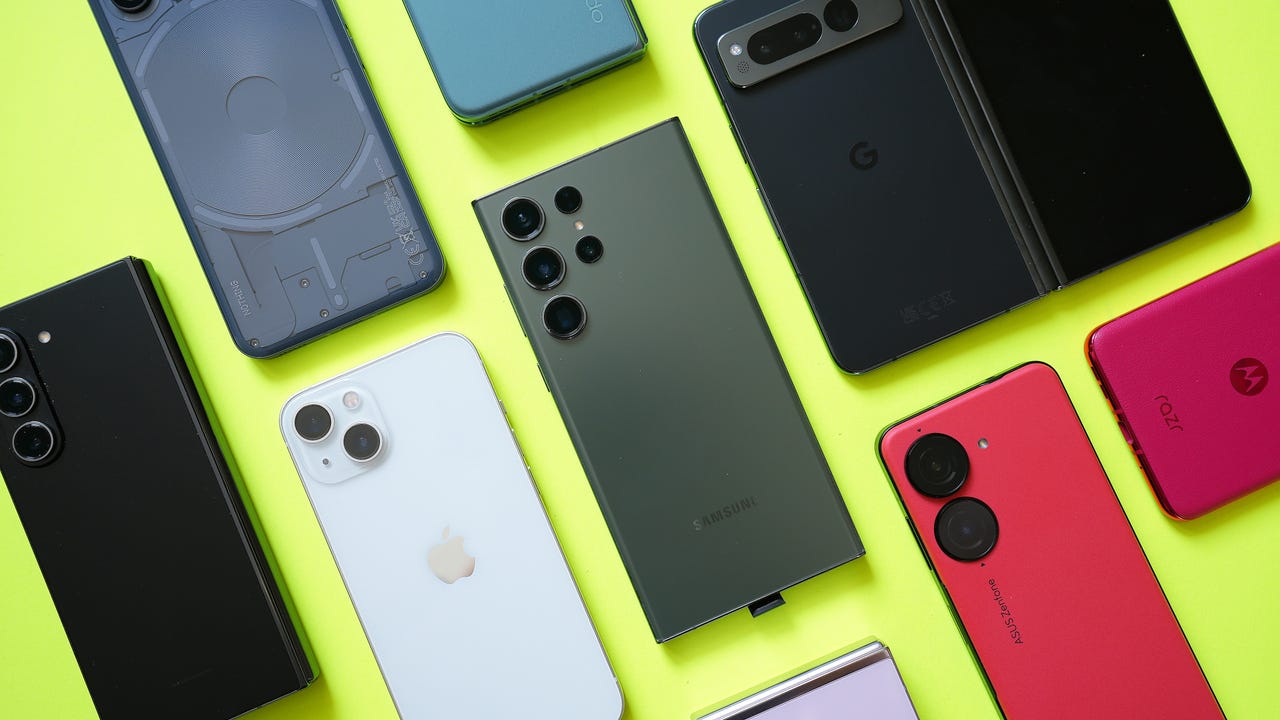
No matter the outcome, the value of smartphones in modern society is immeasurable; it's a must-have gadget. So, to help readers like you find the best handset for your needs and preferences, ZDNET's team of mobile experts tests just about every phone that hits the market throughout the year, from Androids to iPhones. We even test the devices that claim they'll replace smartphones.

If you've ever wondered how we evaluate the latest smartphones to decide if they're worth recommending, here's a breakdown of the various aspects we consider.

How we test phones in 2025

For starters, the phones we review at ZDNET are mostly provided by manufacturers shortly before they launch to the public. That means our initial hands-on reviews are typically based on a week's time (or longer) with the unreleased devices.

Within the embargoed time frame, ZDNET reviewers can test the latest features (ideally on the latest software patch), ask follow-up questions to manufacturers, and evaluate the devices without any influence from other reviewers. There are also moments when we purchase phones to test or review a device provided by a mobile carrier, not the manufacturer. In the latter case, we'll explicitly credit the carrier in the coverage, though it'll have no editorial influence.

While ZDNET primarily covers smartphone releases in the US market, we also evaluate international handsets to understand the competitive landscape better and have a frame of reference when making recommendations to international readers. We also attend trade shows, including CES and Mobile World Congress, to connect with industry experts and analysts.

What makes a phone ZDNET recommended?

For hands-on testing, five aspects determine whether or not a phone gets recommended by ZDNET: design, performance, cameras, battery life, and special features. The importance of each aspect will vary across users; some will value camera quality over battery life, and others just want a phone that's unique and different. Generally, the order of importance is cameras, battery life, design, performance, and then special features.

To be included in our buying guides, the best smartphones must achieve above-average marks on all five criteria (with a reviewed score of over 3.5 out of 5), especially when compared to other devices priced similarly. Reviewers also consider the key differences between the latest phone models and their predecessors during the grading process.

Design and ergonomics

How a phone looks and feels can greatly influence the overall experience. There's a reason why Apple stores meticulously arrange iPhones the way they do, with the most colorful options front and center. Does the latest A17 Pro processor on the iPhone 15 Pro Max truly matter if you're already mesmerized by the adorably-sized, blue-colored iPhone 15? (Just me?)

But also, how does the phone feel when it's tucked in your tight jeans or lightweight shorts? When testing and recommending phones, we consider design and ergonomics heavily, understanding that not everyone wants the biggest and most premium-feeling option out there. For example, a device with a plastic casing will serve you better than an all-glass build if you're a construction worker or someone who's often outdoors.

To truly test the real-world experience of using the latest iPhones and Androids, ZDNET reviewers often don't accessorize the handsets with silicone or rubberized cases; instead, we browse, take pictures, and roam around with them as is. Phones get brownie points if they're rated IP68, the industry standard for water and dust resistance.

Performance

Several factors affect a phone's performance, including LTE/5G signal, battery life, and background tasks. Therefore, we typically begin our evaluations with a fully charged handset, all background tasks closed, and as stable of a mobile connection as possible. I'm based in New York City, so I typically test the performance capacity of phones across various signal areas, such as the subway (where LTE signal can range from poor to non-existent) and back home in Staten Island (where LTE signal is richer due to the lack of skyscrapers and congestion.)

Performance testing also includes putting phones through varying levels of graphic-intensive tasks, including importing and exporting spreadsheets, photo-editing in Adobe Lightroom, and playing mobile games like Genshin Impact and Asphalt 9. I'll oftentimes have a music player app running in the background or YouTube Picture-in-Picture just to push the mobile processor a little more.

Of course, reviewers also consider the price of the tested devices, adjusting their standards and expectations accordingly.

Cameras

Arguably the most valuable aspect of today's smartphones, built-in cameras have improved so much over the past few years that they're now our most convenient (and reliable) tool to capture life's most important moments. Testing phone cameras at ZDNET includes capturing hundreds of photos and videos of various subjects and in various lighting conditions. The list of subjects ranges from flower petals (for macro shots) to people (for portrait shots) to the moon (for zoom/periscope shots).

Also: The best camera phone of 2025: Expert tested and reviewed

Having a larger sample size to reference and compare with images from other phone models gives us the most accurate assessment of what phone camera is best at preserving details, colors, contrast, and more. Whether we're evaluating the latest Samsung Galaxy phones to each other or with the latest iPhone, ZDNET reviewers can typically be found with more than one device in their pockets, both for comparison reasons and because we're simply tech geeks.

Battery life and charging

It's also important for us to evaluate how long phones last under light, moderate, and heavy usage, how long they take to recharge, and how they do it (wired, wireless, or both). We typically judge the endurance of phones based on screen-on time (SOT); that's the total amount of time the screen is turned on, whether you're scrolling through TikTok or typing an email. The higher the SOT, the longer the phone lasts.

On average, phones can score from three hours of SOT to upwards of nine hours of SOT, with the value resetting after 24 hours or when the phone is fully recharged. However, remember that a high SOT value is not always correlated to top-tier battery life; being able to play a Netflix video at full brightness for four hours straight is more impressive, endurance-wise, than leaving a text document on the screen for nine hours. Therefore, when speaking to the battery life of phones, we also describe it in a more practical sense — mentioning if a device can last one full day of usage, more or less.

Special features

Beyond the traditional testing pillars, we also consider phones' unique and special features as we finalize our buying advice. Devices like the Samsung Galaxy S24 Ultra have a built-in S Pen stylus, the Nothing Phone 2a has a light-up back cover, and the OnePlus Open can fold and expand into a handheld tablet. Such features distinguish these devices from a bustling smartphone market, bringing added value to users. Of course, they're judged by a practicality scale, and only the most useful gimmicks will earn our reviewers' approval.

ZDNET Recommends

Apple’s $95 million Siri settlement could mean a payout for you — here’s how much

Siri on iPhone

Apple has settled a class action lawsuit in which tens of millions of users can expect a slice of the payout.

Last Tuesday, the iPhone maker agreed to pay $95 million to settle a 2019 lawsuit claiming that Siri violated the privacy of Apple users by recording their conversations, as reported by Reuters.

Lopez v. Apple, Inc.

Known as Lopez v. Apple, Inc., the class action lawsuit was filed by three plaintiffs who alleged that Apple programmed Siri to intercept conversations even when no hot word, such as "Hey Siri," was spoken. Further, the plaintiffs claimed that Apple violated their privacy by sharing recordings of the conversations with third-party contractors.

Specifically, two of the plaintiffs said that mentioning Air Jordan sneakers and Olive Garden restaurants prompted ads for both products. The third plaintiff said he received ads for a surgical treatment after discussing it privately with his doctor.

Also: iOS 18.2 was killing my iPhone's battery until I turned off this feature

In settling the suit, Apple has denied any wrongdoing on its part. Before the plaintiffs and Apple users can receive their slice of the payout, the settlement must be approved by U.S. District Judge Jeffrey White in the Oakland, Calif., federal court.

How much you could get

How much would the average Apple user stand to collect? That depends on how many Apple devices you own. Though each individual payout would reach only as high as $20, that's the amount per Siri-enabled device. Each individual will be able to file a claim for as many as five Siri devices, according to a copy of the preliminary settlement agreement posted by Ars Technica.

However, the settlement specifically states that it applies to current or former owners of a Siri device in the US whose private conversations were obtained by Apple and/or shared with third parties due to an unintended activation by Siri between Sept. 17, 2014, and the settlement date. That description implies that the payout would be limited to Apple customers who caught Siri snooping, and not all Siri users.

Assuming the judge approves the settlement at the final approval hearing, scheduled within 45 days, details on how to collect your cut will be available through the settlement website.

Also: The best AI chatbots: ChatGPT, Copilot, and notable alternatives

The class action period runs from Sept. 17, 2014, to Dec. 31, 2024, encompassing more than 10 years of Siri use. The 2014 date marks Apple's introduction of the phrase "Hey Siri" to trigger the voice assistant.

Damage to Apple's reputation

For a company that earned $93.74 billion in its latest fiscal year, $95 million represents only about nine hours of profit for Apple, Reuters explained. Although the payout won't hurt Apple's bottom line, there could be some damage to the company's reputation.

Compared with the likes of Microsoft, Google, and other major tech players, Apple has always boasted about its commitment to privacy. Assuming the allegations in the lawsuit are true, the company doesn't seem shy about bending or breaking its promises when it comes to protecting the privacy of its users.

Also: Apple reportedly prepping powerful new AI version of Siri for 2026

People have expressed concerns about voice assistants snooping on their conversations and even sharing those conversations with third parties without consent. Even though Apple denied any such misdeeds, the settlement implies that the company didn't want to fight the allegations, which puts it in a bad light.

Before the lawsuit was even filed, The Guardian published a story in early 2019 about the alleged Siri privacy violations. Using info shared by a whistleblower, The Guardian reported that Apple contractors were able to hear confidential conversations as part of their job of quality control or grading of Siri's responses.

To address the privacy concerns, Apple made specific changes to Siri in August 2019. The company suspended the human grading of Siri responses, promised to stop storing recordings of Siri conversations, and changed the Siri training based on audio samples to an opt-in process. Further, even for users who opted in to allow their conversations to be shared, the recordings would be accessible only to Apple employees and not outside contractors.

Also: 7 rules to follow when setting up a home security camera — and where you should never install one

In response to the lawsuit and privacy concerns, an Apple spokesperson shared the following statement with ZDNET:

"Siri has been engineered to protect user privacy from the beginning. Siri data has never been used to build marketing profiles and it has never been sold to anyone for any purpose. Apple settled this case to avoid additional litigation so we can move forward from concerns about third-party grading that we already addressed in 2019."

"We use Siri data to improve Siri, and we are constantly developing technologies to make Siri even more private," the statement concluded.

Google is also in the crosshairs

Apple isn't the only large tech company under fire from such a lawsuit. A similar class action suit filed by users of Google's voice assistant has charged the search giant with privacy violations, Reuters added. Being heard in a San Jose, Calif., federal court, the law firms representing the plaintiffs are the same ones who stand to gain in the Apple case.

Apple

Sam Altman Left Disappointed by o1 Pro

OpenAI CEO Sam Altman said the company was not making money on its most expensive offering, the $200 ChatGPT Pro subscription. While this should not be surprising, given that OpenAI is a loss-making company, Altman revealed that he expected otherwise.

“We are currently losing money on OpenAI Pro subscriptions! People use it much more than we expected,” he said in a post on X. “I personally chose the price and thought we would make some money,” he added. These expectations align with the company’s plans to further transition away from a non-profit business model.

In December of last year, OpenAI announced the $200 ChatGPT Pro plan. This plan includes all the features of the Plus plan and access to the additional o1 Pro mode, which is said to use “more compute for the best answers to the hardest questions”. The model has been met with praise ever since its debut.

Pretty high praise for o1 pro out on reddit pic.twitter.com/nObgXcQ5Ja

— Alex Teichman (@alex_teichman) December 31, 2024

There was initial scepticism when the high-price tag subscription was launched, but Altman clarified that it’s not for everybody and a majority of the users will not need it. “Most users will be very happy with the o1 in the plus tier,” he said, indicating that the $20 ChatGPT Plus plan would suffice for the majority.

Altman’s statements today indicate that people are open to paying big bucks for OpenAI’s models, which costs the company much more in computing and inference. Eventually, it seems like OpenAI will release more expensive plans.
It’s recently announced o3 model ranks atop all benchmarking tests but has high costs. The model scored the highest in the ARC-AGI benchmark but costs a whopping $1000 per task.

Recently, OpenAI CFO Sarah Friar suggested that the company may charge $2000 a month to replace humans with a PhD-level assistant.

Overall, profitability will mean more than ever for OpenAI, which also dictates the definition of artificial general intelligence (AGI). As of now, the company defines it as “a highly autonomous system that outperforms humans at most economically valuable work.” When they announce AGI, Microsoft, one of its major investors, will lose access to OpenAI’s most powerful models.

Microsoft does not want to settle for a subjective, vague definition of AGI, and both companies have reportedly agreed that AGI will only be achieved when OpenAI earns $100 billion in profits. In 2024, OpenAI reported a $5 billion loss on $3.7 billion in revenue. Reports suggest that it is unlikely to become profitable before 2029.

However, reports also suggested that OpenAI was trying to remove the ‘AGI’ clause from their agreement. While OpenAI has yet to officially announce the ‘profit-driven’ definition for AGI, Altman said in a blog post that the company was ready to announce it in 2025.

“We are now confident we know how to build AGI as we have traditionally understood it. We believe that, in 2025, we may see the first AI agents “join the workforce” and materially change the output of companies,” he said.

The post Sam Altman Left Disappointed by o1 Pro appeared first on Analytics India Magazine.

Mind the Gap: Cloud Spending is Perplexing CFOs

As my family’s “CFO,” I meticulously scanned my utility bills late one night. As I went through them, line by line, I was confused and frustrated – I couldn’t understand the jump in costs and what was driving them. It was a confusing mix of kilowatt hours, supply and transmission costs, and local fees. I’m seeing a very similar phenomenon with cloud spending.

My day job at IBM is creating automation solutions to help solve organizations’ efficiency and observability issues in the IT industry. As a foundation for today’s digital transformation, cloud and hybrid cloud technologies offer many benefits, from cost savings to flexibility, security, and automatic software updates; yet, all the benefits come with various costs that can be difficult to measure and manage.

What makes cloud spending difficult?

The hard part about cloud spending is that it’s too complex to fully understand how much cloud costs will be. Surface-level cloud spending is fairly easy to track, but when it gets down to things like Kubernetes workloads – how software is deployed, scaled, and managed in and across clouds – AI model inferencing and provisioning, cost projections are extremely difficult and often wildly inaccurate because there are too many gaps not being accounted for.

Some gaps are the size of canyons, and others are hard to spot. Remember, this isn’t the pinnacle of cloud complexity either; it will only worsen.

Think of this situation in the spirit of getting AI initiatives off the ground. Organizations tend to be okay with initial high associated cloud costs to create more revenue and profit; however, that way of spending isn’t sustainable.

FREE DOWNLOAD: 5 Tips for Controlling Your IT Budget (TechRepublic Premium)

What is FinOps, and how can it help manage cloud spending?

Managing cloud costs is so significant that the IT industry created a practice to manage it. FinOps, as it’s known in my industry, is an operational framework for managing cloud costs from engineering to operations. In fact, according to Civo’s The Cost of Cloud Report 2024, 60% of organizations saw cloud spending increase this past year, and 40% of those said costs rose by more than 25%.

If you bring in the larger macro-factors of companies cutting resources for efficiency, inflationary price increases, and new technology spending, CFOs need more support and visibility.

How can partnering with CIOs and using automation help CFOs tackle cloud costs?

CIOs can help their CFO colleagues by adopting FinOps practices powered by AI technologies that reduce the burden of tracking, tagging, and constantly chasing your operations team to understand how budgets are being spent, bringing real-time visibility and decision support to your fingertips.

The cloud operates in real-time, but it can be predictable and forecasted in a way that improves visibility and automates resource management, observability, and cost transparency.

SEE: How AI Is Changing the Cloud Security and Risk Equation (TechRepublic)

Automation can save by over-provisioning CPUs/GPUs, memory, and storage. It can help observe application health and proactively remediate issues. Automation also can provide a holistic and granular breakdown of how cloud costs are racking up.

Partnering with CIO peers and implementing automation solutions can help get a CFO off the hot seat. CFOs need to be able to manage budget expectations while keeping the business on track with innovation and spending.

CFOs, CIOs, engineers, DevOps, and cloud/AI team leads must tackle this problem together. The synergy of aligning business and financial outcomes will allow spending to shrink and maximize its potential simultaneously. A good FinOps posture means everyone has equal visibility and accountability in spending.

DOWNLOAD: Year-Round IT Budget Template (TechRepublic Premium)

Is investing in a FinOps automation solution worth it?

Yes. The extra initial cost of buying a FinOps automation solution will pay for itself in less than two years – I bet it could happen in 12 months.

Implementation of a a FinOps automation solution is critical. Get it done right from the start – maximize the connectivity, efficiencies, and collaboration – and watch the cloud spending and your CFO’s stress melt away.

Some old financial advice has never been more prevalent than now: Live within your means. Bills shouldn’t surprise you or make you sweat, and CFOs shouldn’t pay the price for your overspending.

Profile photo of Bill Lobig.
Bill Lobig, vice president, Product Management, IBM IT Automation. Image: IBM

Bill Lobig is responsible for IBM IT Automation Software Product Management. This includes a range of technologies allowing people and organizations to optimize their technology spend and ensure the health and performance of applications.

Bill has been in the enterprise software space for over 25 years holding various roles in engineering & product management ranging from unstructured data/content management, information life cycle governance, business process management, machine learning & AI, and Application Modernization, FinOps, and IT Operations. Bill graduated Summa Cum Laude from the University of Maryland College Park.

Women Innovators Break the Glass Ceiling in GCCs

With the rise in India’s Global Capability Centres (GCCs), there is a visible trend of women leading innovation, and the list is quite extensive. According to a joint research published by Pure Storage and Zinnov, GCCs in India are leading the charge for a diverse workforce, with women accounting for 28% of their workforce.

Madhurima Khandelwal, vice president at American Express, brings her background in Economics to the table to lead a strong team of 1,700 skilled professionals. She is no stranger to innovation; her stint as head of AI Labs saw her team boost the company’s machine learning and AI capabilities.

Sirisha Voruganti, on the other hand, has a management degree from Harvard and is making headway at Lloyds Technology Centre India. As the CEO and managing director of the tech and data company, she pulled off an impressive feat by growing the team to over 1,000 engineers in just six months.

In a LinkedIn post, Voruganti acknowledged that women are indeed breaking the glass ceiling and forging a new era of leadership.

In another LinkedIn post, Kishore Chandran, founder and president at Dr Kalam Foundation, said, “The story of India’s GCCs is being written by nearly two dozen women leaders who are taking on pivotal roles beyond traditional HR and marketing domains. These women are leading core engineering, finance, innovation, analytics, and other areas.”

Meanwhile, Suchita Vishnoi, co-founder and CMO at gatewAI, spoke about how women leaders lead by example, blend heart and mind, and showcase strong team-building skills.


“I see a lot of women who bring in leadership skills when it comes to putting a team together and leading by example…That’s a very big quality. I am a woman leader myself, and I think I bring that.”

She pointed out that the expertise, experience, and ability to lead diverse, large-scale teams of women make them ideal for such roles. “They are skilled, they are experienced, they have the right expertise, and they bring in the best leadership qualities that anyone needs to bring in to lead a large team of the scale.”

According to her, women leaders often rise above differences in origin to represent their organisations effectively.

Recently, AIM spoke to Dhanya Rajeswaran, who leads Fluence’s India operations as the country managing director. With her management degree, she’s been instrumental in building the GCC in India from scratch, turning it into a key innovation hub for Fluence, a global leader in energy storage and renewable tech.

Dhanya highlighted the collaborative nature of GCC leadership, which moves away from the traditional hierarchy. “The role of a GCC leader is, in my view, a very strong bridge builder. You need a vision, a strategic mindset, and strong execution, but also the ability to connect across potential silos in the organisation.”

This leadership style thrives on connections over authority. “Not everybody reports to you or has to listen to you, but you still need to work with them to connect the dots meaningfully, both globally and locally,” she added.

For Dhanya, creating an innovation culture means fostering an environment where “everybody feels nurtured, free, and enabled”.

When asked if GCCs offer a more unbiased environment for women, she elaborated on their global focus. “Is it an unbiased environment, or is it an environment which is more globally connected? There are no traditional mindsets about how things should look, but rather a focus on finding the best person for the job.”

On why more women seem to lead in GCCs, Dhanya noted, “I don’t think women are chosen intentionally. But the structure is fluid and open, which might naturally lead to more women being in these roles.” This flexible and inclusive approach challenges traditional norms and enables innovation to thrive.

Massive Expansion

Under her leadership, Fluence was established in India in 2022 and has rapidly scaled to 400 employees in just over a year.

She pointed out that for India, especially as a Global Innovation Centre (GIC), there are three key aspects of the company strategy. “India is an accelerator, value generator and horizontal integrator.”

The GIC contributes not only to the speed of product development but also enhances the company’s top and bottom lines globally.

Fluence goes beyond just providing battery energy storage systems, often referred to as “the boxes”. “We don’t just do the battery energy storage, which means it’s the boxes, but on top of the boxes, we have our own software, which is our operating system,” Rajeswaran explained.

The core of Fluence’s innovation lies in its in-house software solutions in India, which involves two to three different levels.

First is the Fluence Operating System, a control system that ensures the smooth operation of storage units. Next is an asset management tool called Nispera. Finally comes Mosaic, a powerful AI-driven bidding application that uses AI to make critical decisions.

“At any given time, there are nearly 5,000 decisions you need to make to decide if now is the moment to bid in the market and at what price,” she explained. The AI simplifies this process, which helps eliminate guesswork and helps customers act at the right moment.

These tools are not standalone products. They integrate with Fluence’s storage systems. For example, Mosaic can automatically trigger energy discharge when market prices are favourable, combining hardware, software, and AI for a complete energy storage solution.

India Takes Centre Stage

India’s contributions to global product development at Fluence have reached a new milestone. “For the first time in two years, we now have the global product leader for our next-gen product sitting out of India and designing that product,” Rajeswaran added.

Unlike many organisations that delegate smaller portions of work to India, Fluence takes a different approach. “Nearly 75% of our global teams have a strong presence in India,” Rajeswaran explained.

Rajeswaran also added that the centre has grown more than eightfold in just two years. “We started with just a few of us setting up the entity.”

Why Bengaluru

Rajeswaran pointed out that a unique thing about Bengaluru is that it is so cosmopolitan. “People here have worked in so many different parts of the world, and eventually, they settle here.”

Bengaluru offers Fluence, whose work is highly specialised, an unparalleled advantage. “If you need someone familiar with Australia’s grid codes, chances are you will find them in Bengaluru more than anywhere else.”

While other cities like Chennai or Hyderabad also have talent pools, Bengaluru’s ability to provide niche global expertise sets it apart.

As a company, Fluence takes a quality-over-quantity approach to its workforce. “Globally, we are a $2.7 billion revenue company with a headcount of only 8,700,” Rajeswaran further said. This lean but highly skilled team ensures that every hire brings deep expertise in engineering, energy, and technology.

The post Women Innovators Break the Glass Ceiling in GCCs appeared first on Analytics India Magazine.