Top 11 AIM Articles That Captured India’s AI Turning Point in 2025

AI in India isn’t just about big tech labs or headline-grabbing breakthroughs; it’s reshaping careers, cities, classrooms, and everyday work in powerful ways. From developers rethinking their tools and IT majors changing hiring strategies, to women challenging bias in AI and startups innovating across sectors, from sports to weather forecasting, stories AIM reported in 2025 captured the shifting realities of India’s AI moment.

In this listicle, we look back at the most telling reads of 2025 on India’s AI ecosystem and where it’s headed.

1. Indian IT Doesn’t Care About 40-Year-Old Software Engineers

The article argued that India’s IT industry increasingly prioritises younger or adaptable workers, making it harder for software engineers over 40 to find roles unless they’ve moved into leadership or client-facing positions.

With AI reshaping tech work and firms favouring juniors or reskilled talent, experience alone often isn’t enough. Many mid-career professionals now must pivot into management roles, niche domains, or continuously upskill to stay relevant in the evolving job market.

2. Why Developers are Cancelling Cursor Subscriptions

This article delved into the phenomenon of developers cancelling Cursor subscriptions as its early hype fades.

Once praised for pioneering “vibe coding,” many users now report declining usefulness, frustrating performance, hidden or confusing costs, and a departure from a developer-first focus. These issues, discussed widely on Reddit and other forums, have led professionals to abandon the tool for more transparent, reliable alternatives.

3. World’s Biggest Tech Companies Are Rushing to Bengaluru, But…

In this article, we reported on how global tech giants are rapidly expanding in Bengaluru, transforming it from India’s Silicon Valley into a major AI and innovation hub. The city’s large tech workforce, affordable cost of living, competitive salaries, and vibrant ecosystem attract R&D centres, AI divisions, and major campuses. This growth lures startups and established firms alike, often making Bengaluru a preferred alternative to San Francisco for tech investment and talent development.

4. Why Developers Are Quietly Returning to VS Code and Ditching Cursor

Developers are increasingly returning to Visual Studio Code and leaving the AI-powered Cursor editor as Microsoft’s tool improves with features like Copilot and greater reliability.

In this article, we reported how many find Cursor less practical because of bugs, instability, and a less polished core editing experience. At the same time, VS Code’s familiar, stable environment with strong AI integrations meets their needs. This shift isn’t dramatic but reflects a preference for dependable tooling over flashy new alternatives.

5. Indian IT Majors Cut Visa Petitions by 44% in Four Years

The article highlighted that Indian IT majors have cut their US work visa (H-1B) petitions by about 44% over four years, reflecting a sharp reduction in reliance on foreign hires.

Data showed visa filings from top firms like TCS, Infosys and Wipro fell significantly, driven by stricter US immigration policies, rising costs, and industry shifts toward local hiring, automation, and remote delivery models, reshaping how Indian tech services deploy talent abroad.

6. How ‘Women in Cloud’ Flips the Script on AI and Gender Bias

The article highlighted how Women in Cloud tackles gender bias in AI by focusing on preparation, access, and community support for women in tech. The global network of women tech founders observed that AI often amplifies existing gender inequalities because biased data and systems disadvantage women, and that investment alone isn’t enough. Through mentorship, workforce development, and leadership programmes, Women in Cloud aims to empower women and create more inclusive AI innovation and opportunities.

7. STEM’s Surge Has a Name: The Sunita Williams Effect

The article explored how NASA astronaut Sunita Williams’ achievements have inspired a growing interest in STEM across India.

In her ancestral village in Gujarat and beyond, Williams is celebrated as a role model whose success motivates more girls and young people to pursue careers in science and technology. Her impact, along with that of other space pioneers, is credited with shifting gender ratios in engineering education and fueling a passion for space-related fields.

8. Meet Satya Nadella, The Developer Hiding in Plain Sight

Microsoft CEO Satya Nadella appeared in Bengaluru not as a distant tech leader but like an enthusiastic engineer, sharing and tinkering with AI projects. He starts his day experimenting with tools like Copilot and GitHub, building systems such as a multi-agent “LLM Council.” In this article, Nadella talked about his hands-on developer mindset, blending leadership with personal coding curiosity, and innovation in AI.

9. Why Chinese Talent Dominates Silicon Valley

The article explained why Chinese talent is prominent in Silicon Valley, highlighting strong STEM education, cultural emphasis on hard work, and elite university pipelines that produce world-class engineers.

Many Chinese professionals bring rigorous work ethics and technical excellence to top US tech firms, especially in AI, drawing major recruiters. This diaspora’s impact reflects deep education values and global mobility, contributing significantly to innovation hubs like Silicon Valley.

10. Why AI Can’t Fully Replace Traditional Weather Forecasting Yet

In this article, we highlighted AI’s promise for weather forecasting. However, it can’t fully replace traditional models yet, especially in India.

The main challenge is limited access to large, high-quality meteorological data, which hampers AI accuracy and adoption. Traditional physics-based forecasting remains essential for reliable, high-resolution predictions and critical warnings. AI tools are improving rapidly, but data bottlenecks and integration issues mean they still complement rather than replace conventional systems.

11. Grassroots to Glory: Growth of AI-Driven Sports Analysis in India

This article sheds light on how AI is reforming sports analysis in India by helping coaches and athletes interpret data from wearables, video footage, and historical records to improve performance, reduce injuries, and refine strategy.

Startups like ScoutEdge are filling data gaps, especially in tier-2 and tier-3 regions, though experts stress that human judgement remains crucial. While AI with computer vision is enhancing insights, adoption still depends on local context and expertise.

The post Top 11 AIM Articles That Captured India’s AI Turning Point in 2025 appeared first on Analytics India Magazine.

Amidst AI Woes, Here’s How Hyderabad Got a Fresher-Only IT Campus

Indian IT’s Goal to Hire 1 Lakh FreshersIndian IT’s Goal to Hire 1 Lakh Freshers

At a time when much of the technology industry believes artificial intelligence will shrink the need for junior engineers, EPAM Systems is taking a different view.

The US-headquartered, engineering-led IT services firm has opened a 60,000 sq ft. fresher-only engineering facility in Hyderabad, aimed at training early-career engineers for AI-native delivery.

Over the past decade, EPAM’s headcount in India has grown nearly tenfold to more than 12,000 employees, and the company now sees the city as its primary pipeline for future engineers and leaders.

Larry Solomon, senior vice president and chief people officer at EPAM Systems, told AIM that the new campus reflects a shift in how the company builds engineering talent to meet growing demand shaped by cloud, data and AI.

Building Engineers for AI-Native Delivery

Solomon said traditional corporate training still focuses heavily on memorisation rather than real problem-solving.

According to him, engineers today need to break down unfamiliar client problems, collaborate across teams and assemble solutions that cannot be derived from textbooks.

The Hyderabad facility has been designed around that philosophy. Instead of fixed classroom instruction, the centre follows a flipped learning model, where freshers explore problems independently and seek guidance from mentors. The goal is to help engineers become comfortable navigating ambiguity early in their careers.

EPAM is also deliberately moving away from rigid training paths that push all engineers through identical sequences. Solomon said such approaches often result in uniform thinking and limited solution diversity. In an AI-era of delivery environment, the company believes teams must explore multiple solution paths rather than converge on a single “correct” answer.

EPAM said it plans to onboard 1,000 freshers into the programme in 2026 through campus placements. Each participant will be employed full-time, subject to performance during the training period.

Why EPAM Is Betting on Freshers

The Hyderabad campus is the first facility of its kind across EPAM’s global network. The move reflects a decision to shape engineers from the start, instead of relying on a lateral market where AI-ready skills remain limited.

A fresher-only setup also separates early learning from the pressure of live delivery. While the setting mirrors project teams, it removes client deadlines, giving new hires space to build judgment before moving into production roles.

Solomon rejected the idea that AI automation reduces the relevance of junior engineers. “I do not see AI as a threat to the employment of junior engineers. I see it as an asset,” he said.

According to him, basic familiarity with AI tools is only an entry point. The real value lies in applying those tools within real-world constraints such as business objectives, data limitations and system architecture.

By embedding AI into training from day one, EPAM wants freshers to treat it as a default part of engineering work rather than a specialised skill.

Solomon linked the investment directly to EPAM’s India roadmap. “They are a critical part of our growth strategy,” he said, adding that the company would not commit this level of resources if the model were short-term.

The city already hosts senior engineers and business leaders who will mentor cohorts as they pass through the programme.

Instead of integrating freshers into teams formed by lateral hires, EPAM aims to immerse them in its client-first delivery approach, collaboration norms and problem decomposition methods before they start live projects.

Amidst the fresher hiring pressure across the industry, EPAM is making the opposite bet — that early-career engineers, trained differently, will be essential to building AI-native systems at scale.

A Bet Against the Market

A Blind survey of 1,023 professionals in India found that 79% said their companies had reduced entry-level or internship hiring over the past year, with more than half reporting a significant drop. Only 6% saw any increase.

The pullback was pronounced at large tech firms, where roughly 80% reported declines in fresher or intern intake.

This trend reflects a broader shift, as companies use automation and AI to compress traditional entry-level work rather than expand it.

According to a report by Deccan Herald, citing staffing firm Xpheno, hiring of freshers is expected to remain muted through 2025–26 due to weak IT demand and AI adoption.

India’s engineering colleges produce about nine lakh BE and BTech graduates every year, yet the tech sector is expected to absorb only around 1.2 lakh of them.

Active demand is even lower. Xpheno estimates current entry-level demand across all sectors is under 50,000 roles, with only one-third coming from technology companies.

Earlier projections of 1.5 lakh tech hires were revised downward as uncertainty in key markets, particularly the US, affected hiring plans. In the first half of fiscal 2025-26, seven large IT services firms together absorbed a net 23,000 freshers.

Of the nine lakh engineering graduates, about 2.3 lakh are computer science graduates, including 13,000 from top-tier institutes such as IITs, NITs and BITS. While a small fraction secure core tech roles, many are forced into non-engineering jobs.

Against this backdrop, EPAM’s decision to expand fresher intake through a dedicated AI-focused campus runs counter to prevailing industry trends.

What Freshers Need to Do Now

In a tightening market, industry leaders say fresh graduates need to stand out on fundamentals rather than tools

“The fundamentals still matter: clean coding practices, debugging ability, systems thinking, and an understanding of how data flows through an application. AI tools don’t replace this — they make it even more important,” Sudipta Chandra, AVP, technology at Calsoft, told AIM.

Beyond skills, mindset is becoming a key filter. Freshers are expected to engage with AI and take responsibility for outcomes critically. “The mindset I value most is curiosity paired with discipline,” Chandra said.

Abhimanyu Saxena, co-founder of Scaler and InterviewBit, told AIM that freshers need to shift focus from credentials to execution. “In today’s AI-driven world, the true differentiator is not what you know but what you can build.”

He urged students to start early with real-world exposure. “Students should start early by participating in hackathons, contributing to open-source projects,” he said, alongside working on side projects that mimic real-world complexity and seeking mentorship from those who have built and scaled systems.

As fresher hiring shrinks and expectations rise, engineers who combine strong judgment with AI fluency are likely to be the ones who break through.

The post Amidst AI Woes, Here’s How Hyderabad Got a Fresher-Only IT Campus appeared first on Analytics India Magazine.

India’s Data Centre Boom is Real, But So is the Implementation Lag

Behind the headline growth numbers of data centres in India lies a complex web of challenges—from policy fragmentation and power constraints to talent shortages and infrastructure readiness—that could determine how sustainably the sector scales.

While established hubs like Mumbai and Chennai continue to dominate nearly 65–70% of India’s data centre capacity, according to S&P Global, emerging locations illustrate both the promise and the bottlenecks of the next growth phase.

However, momentum alone is not enough. Data centres are among the most capital-intensive infrastructure assets, and investors remain cautious in the absence of policy clarity.

“Power density, liquid cooling, high-speed interconnects, and GPU supply chains have become strategic bottlenecks, not operational issues,” AS Rajgopal, MD and CEO of NxtGen Cloud Technologies, told AIM.

Unlike states like Tamil Nadu, which have policy frameworks in place to attract digital infrastructure investments through subsidies, tax breaks, and single-window clearances, several regions still lack a formal data centre policy or a single-window clearance system.

“Karnataka was one of the first states to roll out a data centre policy, but the implementation on the ground is taking a lot of time,” Surajit Chatterjee, MD and country head, data centre, CapitaLand, noted. “Various departments haven’t been aligned on what a data centre asset class actually needs.”

He pointed to Tamil Nadu’s investment promotion body, Guidance Tamil Nadu—a dedicated IAS-led unit reporting directly to the state’s Industries, Investment Promotion & Commerce Department—as a model worth emulating. “They act as the interface between the investor and the government and coordinate across departments. That makes a big difference,” he added.

Power, Connectivity, and Clearances

Among the most pressing challenges is power, in terms of both availability and scalability. Data centres require uninterrupted electricity on a massive scale, with the International Energy Agency estimating that electricity consumption from data centres reached 415 TWh, or about 1.5% of global electricity consumption, in 2024.

“Power is the nerve of data centres,” Chatterjee said. “More scalability is needed—not just brown power, but green power as well.”

Grid upgrades, substation expansion, and last-mile telecom connectivity are equally critical.

In Bengaluru, for instance, data centres remain clustered in areas like Whitefield, where future expansion will require upgrades from 220 kV to 400 kV and even 765 kV substations—projects that demand coordination across multiple departments.

NTT recently launched a data centre campus in Devanahalli, Bengaluru.

“Currently, the IT load is around 65 MW,” Alok Bajpai, managing director of NTT Data India, told AIM. “The first building is about 22–23 MW. If we replicate that, we reach around 65–70 MW. But if AI customers come in and want higher density, then it can go up to 100 MW.”

In the city, data centres largely remain an enterprise-driven market; however, what was once a 100–200 kilowatt requirement has now moved into the megawatt range.

“Our first customer itself is already a megawatt. We’ve also signed a financial institution from Mumbai asking for 6.4 MW—something you never heard of earlier in enterprise,” he noted.

Environmental clearances are another major friction point. “It’s time-consuming and tedious, and that’s where states can really help by fast-tracking processes,” Chatterjee noted.

Fragmented Policies, Fast-Moving Technology

Although data centres were granted infrastructure status in the Union Budget 2022, state-level interpretations and execution vary widely. “Largely, the policies are similar,” the CapitaLand executive explained, “but some states are showing extra effort to implement them quickly, while others are still taking too long.”

This delay is especially costly in a sector where technology cycles move faster than construction timelines. A greenfield data centre project in India typically takes 28–30 months to complete. “By the time you finish your first phase, technology will have gone through two rounds of evolution,” he added. “That’s why infrastructure has to be modular and flexible.”

Regulatory and approval-related delays remain a central pain point for operators. Even when state governments are supportive, policy changes mid-project can cause significant setbacks.

While building the NTT Data Centre in Bengaluru, Bajpai recalled that the master plan had to change midway. “The data centre policy changed, and because of that, the occupancy certificate got delayed.”

The delay pushed the go-live date by several months. “We had committed to an October go-live, but now we are going in December—after a lot of push and pull. We were under fire from customers,” he lamented.

Meanwhile, India’s data centre capacity has surged from 50–60 MW per location pre-COVID-19 to nearly 1.5 GW today, according to a PwC report, with ambitions to reach 14 GW by 2035.

AI workloads are now pushing physical limits, demanding a the shift toward liquid cooling.“Traditional racks operated at 6–12 kilowatts,” Chatterjee explained. “Liquid cooling takes that to 100-plus kilowatts per rack.”

Yet liquid cooling is expensive, complex, and still nascent in India. “It’s a high-capex technology. Not every end user can afford it,” he said, noting that current deployments are largely driven by global hyperscalers. “GPUs are coming faster than liquid cooling infrastructure. The ecosystem—original equipment manufacturers (OEMs), supply chains, talent—still needs time to mature.”

However, traditional air and water cooling systems may soon fall short. “Water cooling may become inefficient or even more expensive. Early movers in liquid cooling will definitely have an advantage,” Bajpai added.

Talent: Adequate Today, Scarce Tomorrow

Contrary to popular belief, data centres do generate employment—particularly across allied industries such as electrical equipment, cooling systems, and OEM manufacturing. Still, the sector faces an impending talent crunch.

“Today, we have talent,” Chatterjee said. “But moving from 1.2 GW to 3 GW—we won’t be able to manage without building the pipeline.”

To prepare, operators are increasingly planning partnerships with academic institutions. “We’ll pick up graduates, deploy them on the floor for a year, train them, and then put them on projects,” Chatterjee observed. “These are high-SLA, 24×7 critical infrastructures—you can’t just plug people in.”

Industry leaders are now pushing for a national data centre policy to harmonise standards across states, especially around power, sustainability, land, and clearances. “A national policy is critical,” he said. “It will ensure states don’t create fragmented rules and will help the ecosystem move faster.”

Despite the challenges, optimism remains strong, given investor enthusiasm and India’s steady data fundamentals. The country generates over 20% of global data, but has only about 3% data centre penetration, according to a Deloitte report.

Industry players say engagement with policymakers has increased significantly over the past year.
Karnataka, in particular, Bajpai added, is showing renewed intent.

The post India’s Data Centre Boom is Real, But So is the Implementation Lag appeared first on Analytics India Magazine.

Mukesh Ambani Unveils Draft ‘Reliance AI Manifesto’, Aims 10x Productivity Boost

Reliance SheinReliance Shein

Reliance Industries Chairman Mukesh Ambani has unveiled a draft ‘Reliance AI Manifesto’, calling AI “the most consequential technological development in human history.” The draft outlines plans to transform Reliance into an AI-native deep tech company, aiming for a 10x productivity impact on India’s economy and society.

In a message to over six lakh Reliance employees, Ambani said the world has seen only “the tip of the iceberg” of AI’s potential, even as its transformative power is already evident.

He set two headline goals for the group: a 10x improvement in the quality and outcomes of work across the workforce, and a 10x impact through Reliance’s businesses and philanthropic initiatives. The vision is to deliver “affordable AI for every Indian”.

The draft manifesto, circulated internally for feedback, is structured in two parts.

The first focuses on embedding AI and agentic AI across Reliance’s internal operations. The second part looks outward, inviting ideas to apply AI across Reliance’s businesses, including Jio’s 500-million-plus subscriber base, Reliance Retail’s supply chains, and emerging areas such as new energy, life sciences, financial services, and media.

Ambani stressed that the effort is not about replacing people but about raising standards, eliminating manual effort, and improving speed, quality, and decision-making. Core enterprise processes such as procure-to-pay, order-to-cash, and plant-to-port are proposed to be redesigned end-to-end with AI built in.

This internal transformation will be anchored on a common digital architecture described as a 12-layer Digital Functional Core, with data as the foundation and AI as the acceleration layer. Strong governance, human accountability, and built-in compliance are positioned as non-negotiable, with Ambani underlining that speed should not come at the cost of safety or integrity.

Organisationally, the manifesto proposes a shift to small, cross-functional “pods” with clear goals and single-point accountability to push ownership closer to execution.

Ambani also flagged the possibility of developing indigenous AI hardware, robotics, and power-efficient systems to support India’s technological self-reliance.

Employees have been invited to submit suggestions by January 26, after which the final manifesto will be shaped.

The post Mukesh Ambani Unveils Draft ‘Reliance AI Manifesto’, Aims 10x Productivity Boost appeared first on Analytics India Magazine.

In 2025, Indian IT Hit ‘Pay Now’ on a Cart Filled With AI Brains

In 2025, Indian IT companies didn’t go on an acquisition spree for scale or client lists. Instead, they checked out with specific capabilities, AI engineering talent, agentic analytics, cloud transformation expertise, Salesforce depth, cybersecurity skills, and telecom IP.

From multi-billion-dollar bets like Coforge–Encora to targeted buys by TCS, Infosys, HCLTech and Wipro, the year’s deals revealed a clear strategy shift—buying speed, platforms and relevance in an AI-first enterprise market, rather than waiting for organic transformation to catch up.

Coforge – Encora

Coforge has announced a definitive agreement to acquire Encora in an all-stock transaction valued at $2.35 billion, describing the acquisition as a “defining moment” for the company, as it builds capabilities in AI-led engineering, data and cloud services.
CEO Sudhir Singh described the combined entity as becoming an approximately $2.5-billion technology services company, with a $2-billion enterprise core of AI-led engineering, data and cloud services.

Encora, founded in Silicon Valley, provides AI-native software engineering services to digital-native companies and Fortune 1000 enterprises. Its offerings span intelligent process design, agent-native product engineering, core modernisation, AI foundations, data readiness, and AI operations.

TCS – Coastal Cloud

TCS signed an agreement to acquire Coastal Cloud for an all-cash consideration of $700 million, saying the deal will make it one of the world’s top five Salesforce advisory and consulting firms and deepen its ability to drive “AI-first, agent-driven transformation.”

Founded in 2012, Coastal Cloud is a leading multi-cloud Salesforce consulting firm, specialising in enterprise-scale transformations. It brings AI-led advisory and business consulting capabilities to help customers reimagine sales, service, marketing, revenue, CPQ, commerce and Salesforce Data Cloud.

TCS COO Aarthi Subramanian, said in a press release that this acquisition marks a pivotal milestone in advancing TCS’ global Salesforce capabilities and accelerating its AI-led transformation agenda. “By adding over 400 multi-cloud specialists with deep industry expertise, we are strengthening our advisory and business consulting capabilities and enhancing our AI and data offerings,” she added.

Wipro – HARMAN Digital Transformation Solutions

Wipro announced and later closed an acquisition of HARMAN’s DTS unit for a transaction value of $375 million. Wipro said DTS’ about 5,600 employees will join Wipro’s engineering global business line.

The company said that the deal brings to Wipro deep product engineering and digital transformation services capabilities, combined with strong expertise in embodied AI, embedded software, device engineering, and customer experience platforms.

“The acquisition of DTS strengthens Wipro’s ability to deliver AI-powered, end-to-end engineering services,” said Srikumar Rao, managing partner and global head of engineering, Wipro Limited.

HCLSoftware – Jaspersoft

HCLSoftware announced it will acquire Jaspersoft (a Cloud Software Group business unit) to add pixel-perfect reporting and embedded analytics to its data & AI portfolio. In a release, the company positioned this as an accelerator for its “Agentic Business Intelligence” roadmap.

Marc Potter, CEO, Actian & portfolio GM for HCLSoftware’s data & AI division, said the deal will let customers “provide seamless AI-powered embedded analytics with strong architectural flexibility.” The $240 million deal is expected to close within six months.

HCLTech – Hewlett Packard Enterprise’s telecom solutions business

HCLTech signed an agreement to buy HPE’s telco solutions business (previously part of HPE’s Communications Technology Group) for $160 million. The company highlighted that the business supports “more than 1 billion devices” and that about 1,500 engineering and telecom specialists across 39 countries will join HCLTech.

Anil Ganjoo, chief growth officer & global head – telecom at HCLTech, said the deal strengthens HCLTech’s shift “toward higher-value, IP-led services and non-linear growth.”

Infosys – Versent Group

Infosys announced it will acquire 75% of Versent Group (a Telstra-owned digital transformation provider) for about $153 million to gain operational control of a leading Australian cloud and digital transformation business; Telstra will retain a 25% stake.

In a statement, the company said the collaboration will see Versent Group’s cloud and digital transformation expertise boosted by Infosys’ advanced AI capabilities, cloud, data and digital consulting services. The collaboration will leverage Infosys Topaz and cloud offering Infosys Cobalt, as well as the cybersecurity capabilities of The Missing Link.

It aims to deliver a new wave of differentiated value to accelerate end-to-end digital transformation for Australian enterprises and government corporations.

TCS – ListEngage

TCS announced acquisition of ListEngage (a US Salesforce specialist) to scale its Salesforce, marketing cloud and Agentforce/AI advisory capabilities. The company COO Aarthi Subramanian said, “This US-based acquisition is an important step in scaling our Salesforce capabilities globally,” adding that ListEngage’s AI advisory services will enhance their offerings. TCS acquired the company for $72.8 million.

Infosys – The Missing Link

Infosys signed a deal to acquire The Missing Link (Australia), a full-stack cybersecurity services specialist. The company said that the strategic investment further strengthens Infosys’ cybersecurity capabilities, while bolstering its presence in the fast-growing Australian market, and reaffirms its continued commitment to global clients to navigate their digital transformation journey.

Together with The Missing Link, and Infosys Cobalt, Infosys aims to usher in the new wave of differentiated value to customers, with specialised end-to-end cybersecurity offerings and solutions.

Headquartered in Australia, The Missing Link brings to Infosys, a group of highly skilled cybersecurity professionals consisting of Red Team, Blue Team, and a state-of-the-art Global Security Operations Centre (GSOC), adding to the network of Infosys’ global cyber defense centres. The Missing Link was acquired for about $63–65 million.

Infosys-MRE Consulting

Infosys announced an agreement to acquire Houston-based MRE Consulting, adding about 200 professionals with deep energy/commodity trading and risk-management (E/CTRM) domain expertise and platforms. The company said that the investment brings newer capabilities for Infosys in trading and risk management, especially in the energy sector.
Ashiss Kumar Dash, EVP & global head – services, utilities, resources, energy, and sustainability at Infosys, said, “By combining MRE Consulting’s deep E/CTRM (energy and commodity trading and risk management) capabilities with Infosys’ established leadership in the energy, resources and utilities sector, we are further enhancing our ability to drive value for our clients in this critical area of their business.” The deal was closed at around $36 million.

HCLSoftware – Wobby

Among the latest deals, HCLSoftware announced in December the acquisition of Wobby, a Belgian early-stage startup that builds AI “data-analyst agents” for data warehouses, for about $5.3 million.

HCL framed this as adding natural-language, agentic data-analysis capabilities to its data & AI stack so customers can get fast business insights on demand. The company described Wobby as an early-stage buy that complements HCLSoftware’s metadata, data-catalog and governance offerings.

The post In 2025, Indian IT Hit ‘Pay Now’ on a Cart Filled With AI Brains appeared first on Analytics India Magazine.

Manus Skips Funding at $2 Bn Valuation to Join Meta: Report 

Manus, an agentic AI platform developed by Singapore-based startup Butterfly Effect Technology, is now part of Meta.

In a brief announcement, Meta said that Manus’s team will join the company to help develop general-purpose AI agents across Meta’s products.

Neither Meta nor Manus (owned by Butterfly Effect Technologies) disclosed financial terms, and it remains unclear whether the deal is a 100% acquisition or an acquihire. However, several media reports stated that Meta has acquired the company.

In its official blogpost, Manus said its products will continue operating without disruption. “Our top priority is ensuring that this change won’t be disruptive for our customers,” the company said in a statement.

Liu Yuan, a partner at ZhenFund and an angel investor in Butterfly Effect, told the Chinese media outlet 36kr that the negotiation process was so “incredibly fast” that he doubted whether this was a fake offer.

The report added that the ‘acquisition negotiations’ were completed in little over ten days. Manus was previously in the process of raising fresh funding at a $2 billion valuation, but the “vision offered by Meta founder and CEO Mark Zuckerberg quickly swayed” the team.

Manus is positioned as a general-purpose AI agent designed to execute work rather than simply generate responses. It can independently research topics by pulling from multiple online sources, navigate websites to complete tasks end-to-end, and analyse structured data from Excel and CSV files.

It also supports image generation, visual assets, and other structured outputs within larger workflows and integrates with tools, including Google Chrome, Drive, Gmail, Notion, and Google Calendar.

On benchmarks such as Meta’s Remote Labour Index, which measures automation of remote work, Manus ranked first, outperforming xAI’s Grok 4, GPT-5, ChatGPT Agent, and Gemini 2.5 Pro, although the benchmark has not been updated to reflect newer model releases.

Earlier this year, Manus announced it had crossed $100 million in annual recurring revenue just eight months after launch, placing it among the fastest-growing AI startups alongside Lovable, Replit, and Cursor.

The company offers paid plans ranging from $20 to $200 per month.

The deal follows a significant restructuring of Manus’s corporate footprint.

The company was founded in 2022 by a China-based team and raised $75 million in a Series B round just weeks after launch in a round led by US venture firm Benchmark, at an estimated $500 million valuation. The funding drew scrutiny from US regulators because of executive orders restricting American capital from flowing into Chinese AI companies, prompting a Treasury Department review.

Following the round, Manus relocated its headquarters to Singapore and sharply reduced its presence in China. This included layoffs in mainland China, shutting down China operations, abandoning plans for a localised Chinese release, and cutting off technical collaboration frameworks previously discussed with Alibaba.

Chris McGuire, a senior fellow for China and emerging technologies at the Council on Foreign Relations, wrote on X, “Neither the US government nor the Chinese government would have permitted Meta to acquire Manus if it had remained based in Beijing.”

“But once Manus fled China, likely as a result of US outbound investment restrictions, the Chinese government lost its influence over Manus and its say in the transaction,” he added.

The acquisition comes as Meta struggles to keep pace in the open-source model race. Llama 4 has underperformed expectations, while Chinese models such as Kimi, Qwen, and DeepSeek have advanced rapidly.

Like Meta’s earlier Scale AI deal and the formation of its new ‘Superintelligence’ team, the Manus acquisition appears aimed at building a new agentic layer within its offerings.

One developer stated on X that this deal signals how Meta will now focus on the execution layer of AI workloads.

Meta’s hardware products, including Ray-Ban smart glasses and Quest headsets, could act as agent interfaces, while apps like WhatsApp and Instagram become task-delegation layers.

WhatsApp already supports payments, business commerce, Meta AI content generation, and scheduling, positioning it as a natural surface for deploying AI agents at scale.

Rishi Dean, VP of tech at Lyft, wrote on X: “So many US companies don’t understand how much better ManusAI is at everything they’re trying to build.”

“This is an acquisition like YouTube or WhatsApp,” he added.

The post Manus Skips Funding at $2 Bn Valuation to Join Meta: Report appeared first on Analytics India Magazine.

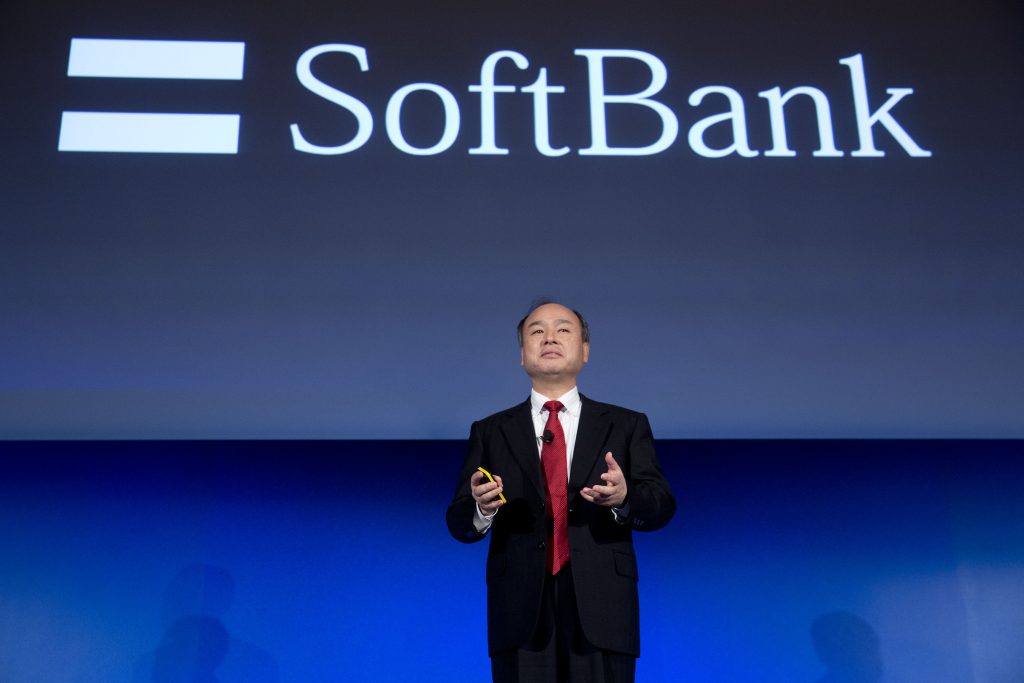
Softbank Buys DigitalBridge for $4 Bn to tap Data Centre Infrastructure

Japan’s SoftBank Group has reached a definitive agreement to acquire DigitalBridge, a digital infrastructure investment firm, for an enterprise value of around $4 billion. This acquisition is part of the Japanese conglomerate’s strategy to capitalise on the surge in data centre infrastructure driven by AI advancements.

According to the company, the acquisition will enhance SoftBank Group’s capacity to construct, scale, and finance the essential infrastructure needed for future AI services and applications.

“As AI transforms industries worldwide, we need more compute, connectivity, power, and scalable infrastructure,” said Masayoshi Son, chairman and CEO of SoftBank Group, in a statement. “This acquisition will strengthen the foundation for next-generation AI data centres, advance our vision to become a leading ASI platform provider, and help unlock breakthroughs that move humanity forward.”

SoftBank Group will acquire all outstanding common stock of DigitalBridge for $16 per share in cash. This transaction, recommended unanimously by a special committee of independent directors and approved by DigitalBridge’s board, represents a 15% premium over the December 26, 2025, closing share price and a 50% premium over the unaffected 52-week average as of December 4, 2025.

After the deal, DigitalBridge will operate as a separate entity led by CEO Marc Ganzi. The transaction is subject to customary closing conditions, including regulatory approvals, and is expected to close in the second half of 2026.

“The buildout of AI infrastructure represents one of the most significant investment opportunities of our generation,” said Marc Ganzi, CEO of DigitalBridge. “SoftBank shares our DNA as builders and long-term investors committed to scaling transformational digital infrastructure.

The post Softbank Buys DigitalBridge for $4 Bn to tap Data Centre Infrastructure appeared first on Analytics India Magazine.

Tech Mahindra’s EPFO Order Puts Provident Fund Compliance Under Spotlight

Tech Mahindra’s recent disclosure of an Employees’ Provident Fund Organisation (EPFO) order has reignited a wider debate on corporate compliance, delayed regulatory enforcement, and the security of employee savings, drawing pointed reactions from legal, finance and technology professionals.

On December 19, Tech Mahindra informed stock exchanges that it had received an order from the Pune office of EPFO to remit ₹1,287.44 crore to provident fund accounts of certain identified domestic employees and employees deputed to foreign locations in non-SSA (social security arrangement) countries.
India has SSAs with select countries to coordinate provident fund obligations for employees on overseas assignments.

The provident fund authority invoked Section 7A of the Employees’ Provident Funds and Miscellaneous Provisions Act, 1952, which empowers it to conduct inquiries and determine dues payable by employers.

The amount comprises ₹566.78 crore towards provident fund contributions and ₹720.66 crore as interest, and relates to the period between May 2014 and March 2016.

According to the disclosure, the EPFO has alleged non-remittance of provident fund contributions for the identified employees during this period. Tech Mahindra countered that it had already disclosed the matter as part of its contingent liabilities in its audited financial statements. The IT firm said it will file an appeal, and that it “does not reasonably expect the said Order to have any material financial impact on the Company.”

“Basis the Company’s assessment, an appeal will be filed, and the Company is hopeful of a favourable outcome at the appellate level,” the company said.

Wider Ramifications

The order has drawn attention because of its scale, retrospective application, and potential implications in how provident fund obligations are interpreted for employees on overseas deputation, particularly in countries without social security agreements with India.

While the filing itself is procedural, reactions from professionals across sectors reflect broader unease around provident fund compliance and enforcement timelines.

Harpreet Singh Saluja, advocate at the Bombay High Court and president of the Nascent Information Technology Employees Senate, advocating for the rights and welfare of IT and ITES employees, emphasised in a LinkedIn post that provident fund contributions represent employees’ life savings, long-term security and, in many cases, their only financial cushion after years of work.

“These are not technical lapses. These are deductions and contributions that should have gone into employees’ PF accounts years ago,” Saluja said.

“When large IT corporations speak of global excellence, ethics and governance, employees expect that the most basic statutory obligation will never be compromised. Overseas deputation cannot become a convenient excuse to dilute social security rights.”

Saluja added that compliance is not discretionary and that trust, once eroded, is difficult to rebuild.

The disclosure comes as a few ex-employees have complained of PF discrepancies in the company.

Harshl Deore, founder and CTO of AI automation firm Confidential, made an appeal on LinkedIn stating that a former Tech Mahindra employee from its Pune Sharda Centre had been struggling to get his provident fund transferred. According to Deore, the EPFO has sought a letter from Tech Mahindra because the PF category was not filled correctly during the employee’s service, leading to repeated rejection of the transfer claim by the field officer.

Deore said that despite multiple requests and follow-ups, the required letter has not been issued by the company’s PF team, leaving the former employee without any internal escalation route and causing them financial distress.
However, any link between the individual case and the EPFO order is yet to be established.

Tech Mahindra declined to comment on AIM’s request to explain the legal or interpretational issues that led to the alleged non-remittance, how it interpreted provident fund obligations for employees deputed to non-SSA countries, and whether its assessment of materiality would change if the appeal were unsuccessful.

The IT firm is certainly facing bottomline pressure, with its net profit declining 4.5% year-on-year in Q2 to ₹1,195 crore. Its IT headcount also declined 2,090 YoY.

The order comes on the heels of EPFO’s recent move allowing members to withdraw up to 75% of the corpus amount from their EPF accounts at any time. It also allowed for instant withdrawals through ATMs and UPI to the bank account of their choice.

The post Tech Mahindra’s EPFO Order Puts Provident Fund Compliance Under Spotlight appeared first on Analytics India Magazine.

Edtech 3.0: AI Implementation in Schools Gives Startups New Hope for Growth

Indian edtech platforms are entering a new phase of growth. From the funding highs of 2021, the subsequent bust when schools reopened, to focusing on value instead of valuations in the aftermath of BYJU’S debacle, edtech startups have all the while competed for direct user sign-ups. Now, they are embedding their services within school and learning ecosystems, blended learning centres, and hybrid offline models, turning institutions into distribution engines and stabilising revenue streams.

BrightChamps exemplifies this shift. After moving from a B2C model in 2023, nearly 90% of its India revenue now comes from school partnerships. This pivot helped the startup reach 35,000 students by late 2023, and over a million by early 2025.

LeadSchool, too, has partnered with 8,600+ schools across 20 states. It generated revenue of ₹351 crore in FY25, with net losses narrowing 70% year-on-year owing to the business-to-institution (B2I) play.
The shift in revenue generation comes as more teachers embrace AI. According to a survey by the Centre for Teacher Accreditation, over 70% of teachers across India are now using AI tools. The adoption is also driven by the National Education Policy 2020, which encourages the use of digital tools. This has created a demand driven by schools looking to build trusted AI ecosystems, and Indian edtechs sense a new opportunity.

Why Are Schools and Edtechs Collaborating?

Analysts suggest multiple reasons behind the B2I pivot, including rising customer acquisition costs (CAC), waning funding, and the need for sustainable growth.

Suraj Biswas, founder and CEO of Assessli, which offers AI-driven personalisation solutions, told AIM that many edtech firms struggle with profitability because their CAC is much higher than offline. “A lot of marketing and retention goes into online as the CAC to Lifetime Value (LTV) ratio is small, which should ideally be 1:7—if CAC is 10%, LTV should be around 70%,” he explained.

The CAC-to-LTV ratio shows how much more a customer is worth than it costs to acquire them. It’s an essential metric in evaluating business sustainability, growth potential, and operational efficiency.

Meanwhile, India’s edtech landscape has also suffered from a funding drought, forcing players to look for new revenue streams. Capital inflow slowed drastically from $4.1 billion in 2021 to $215 million by September 2024. While edtech investments jumped 5x in H1 2025 compared with the year-ago period, according to Venture Intelligence data, it’s still far below the funding highs of 2021 and 2022.

Competitive pressure from coaching institutes and preparation-focused centres is also a big driver behind the shift. “If schools don’t collaborate with tech or coaching platforms, students shift to dummy schools. That’s both a learning loss and a business loss,” said Biswas.

Beyond competition, schools lack the internal capability to build advanced AI systems. “Collaboration is the only way to stay ahead of the curve,” he noted.

This has opened doors for edtech companies to offer AI-powered tools that automate evaluation, reduce teacher workload, and generate deeper insights into student learning.

ChatGPT, Gemini Are Not Classroom Solutions

Despite the rapid adoption of ChatGPT and Gemini for Classrooms by students and educational institutes, stakeholders emphasise that foundation models alone cannot meet school-level requirements.

“The application layer and the foundation layer are different. ChatGPT and Gemini are generic platforms. Schools need class-wise, subject-wise, curriculum-aligned solutions,” said Biswas.
He mentioned that Big Tech firms like Google and OpenAI can’t customise workflows suited to the needs of each school. This is also a complex undertaking given India’s diverse boards and assessment structures. This creates a clear role for edtech companies to build contextual application layers, safety guardrails, and institution-ready experiences on top of foundation models.

“General-purpose AI cannot address Indian classroom realities on its own. Edtech companies provide the implementation layer that drives adoption,” said Mathew KG, Principal, Excel Public School, Mysuru.

AI-Native SaaS in Institutes

Traditional school software is getting a facelift. Legacy enterprise resource planning (ERP) and learning management systems (LMS) are increasingly being re-architected as AI-first platforms.

“ERP and LMS will not exist as standalone products for long. They are converting into AI-based systems that integrate learning, assessment, and analytics,” Mathew said.

Private schools like Excel Public School, Ekya School, and Orchid International School are already deploying a wide SaaS stack, including AI-powered lesson planning, quiz creation, learning management, and evaluation tools

“There is growing acceptance among teachers and students for AI tools that reduce workload and improve outcomes, provided they align with pedagogy and safety,” said Mathew KG.

Muneer Ahmad Khant, VP of sales and marketing at visual solutions provider ViewSonic India, said that the evolving trend in B2I will be “the seamless integration of advanced AI technologies from OpenAI and Gemini with increasingly personalised, offline-enabled edtech solutions.”

Biswas emphasised the importance of frictionless AI. Rather than tablets or wearables, demand is emerging for edge-enabled edtech hardware that supports assessment, attendance, content delivery, and learning analytics without increasing screen time.

“Parents in India do not like increased screen time, and students are distracted by more screen simulation. BYJU’S’ Smart Tab failure is indicative of this shift. Instead, teachers could use SaaS tools, and classrooms could be powered by cameras to catch student behaviour and engagement,” he suggested.

Evaluation Is the Hardest Problem

While AI’s use in teaching and content creation is rising, evaluation remains the sector’s biggest bottleneck.

“Evaluation is where the nub of the problem lies,” former IIM Bangalore professor A Damodaran noted. “Your evaluation system will decide whether you create innovators or just machine cogs.”

Most schools remain cautious, concerned about cheating, AI hallucinations, and shallow learning. As a result, AI is rarely trusted for assessment.

Edtech startups are attempting to change that with AI-driven evaluation tools that go beyond marks to analyse conceptual gaps, behavioural patterns, and learning trajectories. “Evaluation shouldn’t stop at two out of five [marks]. It should explain why the student got two, what went wrong, and what to do next,” Biswas asserted.

Despite interest, AI-driven evaluation remains expensive to deploy at scale due to massive compute needs and high data costs. “The cost of AI-based evaluation is very high. That’s why only premium or AI-forward schools are adopting it today,” he noted.

Private Schools vs Government Schools

The divergence between private and public education models is widening.

Kerala government’s education-focused tech arm, Kerala Infrastructure and Technology for Education (KITE), has rejected proprietary AI tools, opting instead to build Samagra Plus AI, trained entirely on curriculum-aligned, government-owned data.

“Unless we have absolute control over the dataset and knowledge base, an AI system cannot ensure the accuracy, safety, and alignment needed for school education,” K Anvar Sadath, CEO of KITE, told AIM.
He added that classroom learning must strictly follow the curriculum and a defined pedagogy, and this level of academic control is simply not possible with open, proprietary AI tools such as ChatGPT or Gemini.
On the other hand, private schools have the flexibility to experiment with more customised models of teaching and learning.

“Private schools can focus on deeper personalisation, advanced analytics, and differentiated learning experiences,” said Mathew. “They can integrate edtech tools more closely into classroom practices, assessments, co-curricular learning, and parent communication. Private schools can also work closely with edtech partners to pilot new ideas, refine solutions, and adopt best-in-class tools that go beyond basic digitisation.”

Biswas explained that private schools open up access to their academic resources, including question sets, pedagogy, and teaching practices, which play a crucial role in fine-tuning education technology models.

Indian edtech’s B2I pivot now closely aligns with the US, where edtech companies, including Quizlet, which offers GPT-powered study and assessment tools, and Khan Academy’s Khanmigo, are moving from consumer-facing apps to institution-focused solutions that integrate AI into curricula and administrative workflows. By serving as the implementation layer that bridges foundation models and school-specific needs, companies hope to reclaim the ‘future of learning’ tag that they once held.

The post Edtech 3.0: AI Implementation in Schools Gives Startups New Hope for Growth appeared first on Analytics India Magazine.

India’s Data Centre Surge to Drive 3x Growth in Cooling Market: Govt White Paper

India’s data centre cooling market is poised for an exponential expansion, projected to more than triple in value to $7.13 billion by 2030, according to a newly released government white paper titled “Democratising Access to High-Performance Computing.”

The surge is driven by a massive increase in capacity and computational workloads that could see the sector’s share of national electricity consumption jump from 0.5% to nearly 3% within the next six years.

The report, published by the Office of the Principal Scientific Adviser to the Government of India, highlighted a critical infrastructure shift.

While the cooling market was valued at $2.1 billion in 2024, the rapid adoption of AI and high-performance computing has necessitated the need for more advanced and energy-intensive thermal management systems.

The report noted that as India positions itself as a global hub for data processing, the environmental and economic stakes are rising. The projected increase in electricity consumption—a six-fold proportional rise—underscores the urgent need for ‘green’ data centre technologies.

Current cooling methods are being challenged by the high heat density of modern server racks, leading to a shift toward liquid cooling and other sustainable innovations.

The white paper emphasised that democratising access to computing power is essential for India’s digital sovereignty.

Edge facilities are already being planned in regional hubs, including Jaipur, Coimbatore, and Chandigarh, helping decentralise compute capacity and reduce latency.

These collaborative models are reinforced by targeted incentives that encourage private players to build on and integrate with national digital assets, including AIKosh, the Open Government Data Platform, and the National Data and Analytics Platform, thereby widening access to scalable AI infrastructure.

However, scaling AI data centres will require an additional 45-50 million sq ft of real estate by 2030, underscoring the need to integrate sustainability planning with compute expansion.

This growth requires a parallel focus on energy efficiency. The document suggested that without significant interventions in how data centres are cooled and powered, the sector’s energy footprint could place unprecedented strain on the national grid.

The findings come at a time when the Indian government is aggressively promoting the IndiaAI Mission, which seeks to build a robust domestic computing stack.

The post India’s Data Centre Surge to Drive 3x Growth in Cooling Market: Govt White Paper appeared first on Analytics India Magazine.