
Top 10 Robotic Companies Utilizing Artificial Intelligence in 2023

The top robotic companies utilizing artificial intelligence in 2023 as a solution to operational challenges

Intro: Robotics technology is becoming more prevalent in many industries around the world due to its ability to reduce operating costs, increase productivity, and improve product quality and consistency. Robotics companies are embedding artificial intelligence (AI) in machines to help businesses and their employees through automation in areas ranging from manufacturing to customer service.

Artificial intelligence is a branch of computer science that aims to create technology that can simulate the operations of the human brain. The goal of applying AI to robotics is to advance innovation. Self-driving cars, autonomous drones, humanoid robots, and autonomous farming equipment are examples of intelligent machines. They use sensors, computer vision technology, machine learning, and other AI technologies to perform various tasks. The demand for AI-enabled robotics has driven significant growth in the industry. The following are top AI Robotics companies that help create smart consumer products to develop the first human-like artificial brain.

  1. Boston Dynamics

Boston Dynamics is best known for creating a line of dynamic, highly mobile robots known as BigDog, Spot, Atlas, and Handle. Spot has been commercially available since 2019, making Boston Dynamics’ first commercially available robot. Boston Dynamics develops sensor-based controls that prepare robots for a variety of environments and terrains, with the goal of creating dynamic, intelligent, and adaptive robots.

  1. Hanson Robotics

Hanson Robotics develops artificial intelligence robots that not only look like humans but also behave like humans. These AI robots have life-like skin made of Hanson’s proprietary nanotechnology known as Frubber, and they have human-like features such as eye contact, facial recognition, speech, and the ability to hold natural conversations. The robots are capable of producing high-quality expressions that provide a less mechanical robotic experience.

  1. iRobot

iRobot Corporation is a technology company based in the United States that designs and manufactures consumer robots. It was founded in 1990 by three members of MIT’s Artificial Intelligence Lab who were working on space exploration and military defence robots. The company’s products include a variety of self-cleaning vacuum cleaners ‘Roomba’, floor moppers ‘Braava’, and other self-cleaning devices.

  1. Miso Robotics

Miso Robotics’ technology is designed for use in commercial kitchens and is used to create AI robotic products for restaurants. Flippy, the company’s cooking robot, has 3D and thermal vision, allowing it to learn from its surroundings and acquire new skills. Miso Robotics’ Flippy can offset rising labour costs by automating activity around the fryer station. Miso also released Flippy 2, which can work an entire fry station and perform more than twice as many food prep tasks as the original Flippy.

  1. Diligent Robotics

Diligent Robotics employs artificial intelligence to create robotic assistants that assist healthcare workers with routine tasks. Moxi, the company’s first robot teammate, works in hospitals to assist clinical staff with non-patient-facing tasks, giving them more time to focus on patient care. The Moxi robot can run patient supplies, deliver lab samples, retrieve items from the central supply, distribute PPE, and deliver medication, and it has a robotic arm that can navigate doors and elevators.

  1. UiPath

UiPath, arguably the market leader in robotic process automation, creates an enterprise software platform with tools for robot licencing, provisioning, scheduling, monitoring, and alerting. Its robots handle the tedious task of communicating between legacy apps, allowing developers to focus on new AI-oriented apps.

  1. Skydio

Skydio, a drone manufacturer, uses AI to develop technology for autonomous flight. The company’s flagship products include the Skydio 2, an unmanned aerial device optimized for video and controllable via an app, a controller, or a beacon that can reach a speed of 36 miles per hour. The company offers solutions for a variety of industries, including public safety, defence, construction, and telecommunications.

  1. Bossa Nova Robotics

The robots imagined by futurists in the 1950s were tin people who could walk and talk. Modern robots are rarely shaped like humans; the robots in Bossa Nova are tall vacuum cleaners. Bossa Nova began as a robotic toy manufacturer but now has full-scale robots in retailers such as Walmart. The robots move up and down the shelves, detecting inventory issues and saving money on human labour.

  1. HiSilicon

Running AI is extremely data-intensive; the more data, the better, so today’s chipmakers, such as Intel and Nvidia, are stars. HiSilicon should be added to that list. The company developed the first AI chip for mobile devices. The chip performs tasks like high-speed language translation and facial recognition admirably.

  1. Qualcomm

Qualcomm, which manufactures highly capable smartphone chips, is driving the AI revolution by utilizing a signal processor for image and sound capabilities. Qualcomm acquired NUVIA, a competitive CPU and technology design firm, enhancing future CPU opportunities. Qualcomm is likely to remain a key driver of AI functionality in the critical consumer device market in terms of market size and power.

The post Top 10 Robotic Companies Utilizing Artificial Intelligence in 2023 appeared first on Analytics Insight.


Top 10 RoboTech Companies to Work for in India in 2023

The top 10 Robotech companies to work for in India in 2023 spilt over to robotics

The present epidemic has demonstrated the importance of Robo Tech companies in a variety of businesses. Robots are useful in maintaining social distancing since they can accomplish the work automatically. Robots have been supporting doctors and personnel in servicing patients, particularly in the healthcare area. These kinds of creative robotics solutions have transformed the Indian automation industry. There are numerous companies accessible to meet the needs of the sector. Here is a list of robotics businesses that are altering India’s automation arena. To know about the top 10 Robotech companies working in India.

In the field of information technology, India is a leading country. This has also influenced robots. The robotics industry is both advanced and lucrative. Some Indian businesses have received significant honor both at both home and abroad. Human effort and, in certain situations, intelligence are being rapidly replaced by robots. They are employed for a variety of tasks, including food preparation, house cleaning, pet walking, and the manufacturing of complicated aircraft and submarines RoboTech companies in 2023.

1. Fanuc India

Fanuc India is a division of the eponymous Japanese industrial robotics major. Fanuc installs more than 4,700 robots for industrial purposes every year in India, these are very specialized purposes of the manufacturing process like material handling, spot welding, arc welding, machine tending, press tending, die-cast extraction, and spraying.

ladling, sand core handling, forge tending, fettling, ultrasonic welding, plasma spray, and other specific requirements for industrial purposes extensive range of robots with carrying payload capacities ranging from 500gm to 1,200Kg offers and also application-specific Robots such as Painting Robots, Food Grade Type Robots, Wash-Down Robots, Arc Welding Robots, and Spot-Welding Robots.

2. Gridbots

Gridbots was founded in 2007, it specializes in advanced robotics and Artificial Intelligence, and won several national and international accolades in the field of robotics and Artificial Intelligence. largest companies in India and abroad extensively used Gridbots products, it manufactures robotic manipulators, Automated Guided Vehicles (AGVs), robot-driven equipment, and a whole range of other robotic solutions.

3. Sastra Robotics

Sastra Robotics manufactures robotic solutions for human-like automated functional testing of real physical devices. Sastra Robotics, situated in Kochi, is one of the world’s top 50 robotics businesses. according to TiE Silicon Valley’s 2017 Technology Startup Evaluation, Original Equipment Manufacturers (OEMs) and others use the company’s robots to test their goods, shortening the time between the research and development, testing, and marketing cycles.

4. Grey Orange Robotics

Through robotics and automation, Grey Orange is transforming India’s logistics and supply chain processes. itis a worldwide corporation that designs, manufactures, and deploys advanced robot systems for warehousing, distribution, and other industrial applications. Grey Orange Robotics claims to have “deep domain understanding, world-class software and hardware engineering,” as well as the ability to tackle a wide range of complicated business-related issues that necessitate more than human intellect.

5. Systemantics Robotics

Systematic Robotics is a Bangalore-based company that is a market leader in the field of automation and robotics in India. Asystr 600 is the company’s flagship product, capable of Computer Numeric Control (CNC) of machines and managing various operations, such as those for metal industries such as bending, stamping, and forging, as well as dispensing, palletizing, and product inspection. Automation and robotics solutions help businesses reduce operating expenses while increasing production and profitability. This is described as a method for designing and manufacturing industrial robotic arms that lower key adoption barriers for the factory floor.

6. Grade Autonomous System

AdverTron, India’s first advertising robot, was created by this business. This robot plays music, speaks English, and informs potential clients about a company’s products. Weddings, corporate/social events, automobile and jewelry dealerships, architects, and workplaces can all benefit from V’Me Gesture Kiosks. It is a robotic solution for any business that wishes to control its surroundings with simple motions.

7. Hi-tech Robotics System Ltd

The firm creates products for the next generation of mobility, with cutting-edge automated, driver-assistive technology and mobile robots for both people and material transportation, with such a connected Industrial Internet of Things (IoT)-based architecture, the company is also equipping the industry with Autonomous Guided Robots (AMRs) for warehousing and manufacturing facilities.

8. Asimov Robotics

Asimov Robotics is an Indian robotics firm that offers technical product solutions and robotics consulting to a variety of industrial sectors. it includes robotic simulation and control, machine vision, training, virtual reality, and navigation applications. The company specializes in creating and implementing customized solutions to satisfy individual needs, allowing companies to increase profits, maintain quality, decrease risk, and assist research.

9. Navstik Labs

Navstik labs are working on robotic solutions for the country’s aerospace industry. The business has already created several cutting-edge solutions. FlytOS, for example, is a standard and flexible platform for commercial drone operations. still another item FlytLive is a ready-to-use web-based Ground Control Station program for cloud-connected over 3G, 4G/4GLTE, and Wi-Fi drones for real-time telemetry, control, and video-streaming.

10. Omnipresent Robot Tech

It has created cutting-edge Unmanned Aircraft Vehicles, River Cleaning Robots, and robot sensing, navigation, and perception software. Omnipresent Robot Technologies Pvt. Ltd creates cutting-edge robotics, electronic sensors, and intelligent electronics. Drones for three-dimensional (3D) modeling, Nerve Center- an Internet of Things (IoT)-based control system for CCTV cameras and surveillance systems that allow instant response, robotics that assist engineers in seeing through the eye of a chimney or other narrow, inaccessible installations, customized drones for various specialized purposes including search and rescue, and a variety of other innovative drone-based robotics are among these.

The post Top 10 RoboTech Companies to Work for in India in 2023 appeared first on Analytics Insight.

A Comprehensive guide on Robotics: Laws and Types

Robotics is a combination of engineering, science, and technology that produces devices known as robots that perform substitution or replication of human beings or human actions.

In Switzerland startups with respect to robotics are becoming as popular as they have never been before.

We are living in times when robots have become a part of our everyday life. Many science fiction writers in the past described the world with robots. One of them was Isaac Asimov who depicted three laws of robotics in his famous book “I, Robot”. Modern engineers follow these laws nowadays with precise accuracy. Let us recall them:

Law 1: A robot may not injure a human being or, through inaction, allow a human being to come to harm.

Law 2: A robot must obey the orders given to it by human beings except where such orders would conflict with the First law.

Law 3: A robot must protect its own existence as long as such protection does not conflict with the First or Second law.

As our world is becoming more and more technologically advanced we must admit that robots now are not a part of fantasy anymore. As an example, we may state that at the beginning of the 21st century about ninety percent of all robots we performing the functions of car assemblers at motorcar factories. They look like mechanisms with arms mostly assigned to welding and screwing.

These days show us that robotics evolved to assignments that are more sophisticated when it comes to exploration in planetary severe conditions, participation in law enforcement activities, adoption of surgical treatment, and assistance in rescue operations.

Definition of a Robot

All robots are featured with specific characteristics. Let us review the most evident of them:

  • A robot is a machine built as a set of mechanical parts. Every robot is designed for its specific task to perform. The mechanical nature of all robots allows them to achieve their objectives in conditions where human beings would not be able to succeed. For instance, we may mention a robot called “Perseverance” that landed on Mars in February 2021. This rover has its wheels constructed with titanium, where each of the wheels is separately motorized.
  • The mechanical parts of a robot are supported by electrical components. These electrical elements provide control and power for the machinery. The most important is electrical power obtained from a battery, which is an immanent part of such machines.
  • Computerized programming is another indispensable feature applied to all robots at least to some extent. Such programs are assigned for commands that tell a robot when, how, and what it must do.

As time goes by the development of robotics facilities grows together with software and artificial intelligence that become more and more advanced. Further, we will have robots that are smarter than current models and will be more energy and cost-efficient. Smart factories will require them to carry out complicated tasks and preserve global supply chains from sudden obstacles.

Production of robots will speed up the achievement of goals in the exploration of deep seas and the unfathomable space of our universe, which has always been a dream of humankind.

Types of Robots

All robots are produced in different sizes and shapes that are relevant to the objectives they are supposed to perform. Functionality, design, and levels of autonomy are the features where robots differ from each other. For example, a tiny robotic crawling crab created by Northwestern University with a size of 0.5 millimeters, or 600 feet-long robotic tank vessel “Vindskip”. These robots are designed to do tasks that cannot be done by humans.

We may distinguish five main types of robots that discharge their tasks in accordance with their design and abilities:

  • Programmed Robots. Pre-programmed bots carry out uncomplicated and repeated actions within a managed environment. For instance, they are utilized as mechanical arms or automatic assembly tracks. The purpose of such an arm is just to weld something on something, to attach some detail to some part of a gear, and so on. Such robots will do these tasks quickly, accurately, and without fatigue so long as electric current powers them.
  • Human-like Robots. Androids are the type of robots that try to replicate human appearance and behavior. Usually, they do the actions that humans would do. For instance, walking, running, or carrying things. If an objective requires they may even have a realistically looking human face and mimic.
  • Self-contained Robots. Autonomous robots perform their activity without human supervision. They are really a one-of-a-kind type since they conceive everything around them with the help of their sensors and then in correspondence with acquired information, they make the most optimal decision on what to do next. The best examples are modern autonomous cleaning bots (vacuum cleaners) and drones.
  • Remote-controlled Robots. Teleoperated robots are considered to be semi-autonomous robots that use a radio network for human operation and control maintained at a certain range. For instance, when a human operates the robot from a safe distance trying to fix something in the depth of a sea or clearing minefields with a drone on a battlefield.
  • VR Robots. Augmenting robots are designed to change human capabilities enhancing their strength, speed, and so on. Moreover, such robots may replace some lost human capabilities. For instance, due to an accident, a human may lose his or her limb, and here comes a robot that can be used as a prosthetic limb.

Software Robotics

This type of robotics is represented by bots. Bots are considered to be computer programs that perform their duties in autonomous mode. One of the most vivid examples can be chatbots. This type of a robot is designed to simulate communication online and via the phone and is frequently used in customer service letting humans be busy with more skillful work. There are several types of software bots:

  • Chatbots: perform ordinary communication mostly as far as customer service is concerned.
  • Spam bots: search and collect emails in order to send spam to them.
  • Download bots: download applications and software in automated mode.
  • Search engine bots: scan various websites in order to make them visible to search engines.
  • Monitoring bots: discharge reports regarding the speed and status of all websites.

The location of such bots is limited within the internet space, which does not allow to consider them as full-featured robots.

Top 10 Open-Source and Free RPA Tools of 2023

The top open-source and free RPA tools of 2023 can be inspected, modified, or enhanced by anyone

Finding Robotic Process Automation (RPA) software may be a difficult (and expensive) process that demands a lot of time and money. RPA systems are well-liked for a reason, although non-enterprise organizations might not require all the functions they offer. There are thankfully several open-source and free RPA tools available.

To highlight some of the top open-source and free RPA tools of 2023, we have compiled a list. Some of these RPA tools are provided by companies who want to eventually upsell you on their corporate product. A group of developers working to democratize robotic process automation maintains and runs the others. Let’s dive into the list of RPA tools of 2023 right away!

  1. Automai RPA

Business operations are streamlined with Automai RPA, and mistakes are decreased. Users of the Robotic Automation Platform may apply the same automation scenarios throughout the lifespan of any application they employ for their business processes. The program is free of code and provides a simple scenario developer that makes use of user actions and a recorder. Users of Automai have access to a single platform that can meet all of their organizations, development teams, and operations teams’ demands for automation. Automai offers a free trial that businesses may utilize to start streamlining their procedures even if it is not an open-source solution.

  1. Automation Anywhere

An RPA platform called Automation Anywhere combines traditional RPA with cognitive components like language comprehension and interpreting unstructured data. Moreover, the platform provides intelligent automation for business and IT operations that uses SMART automation technology to automate complicated activities, spread them among several computers, and provide scriptless automation. Companies may test the capabilities of the RPA Workspace software from the firm, which is a low-code solution.

  1. Blue Prism

Intelligent automation, robotic operating models, Blue Prism Cloud, automation lifecycle management, and a process evaluation tool are just a few of the several products that Blue Prism has to offer. The intelligent automation platform from Blue Prism is suitable for SaaS deployments and supports on-premises, public cloud, hybrid, and pro-code tools. Blue Prism doesn’t require programming knowledge during deployment and may be deployed in four to six weeks. A free trial of the product is available.

  1. Capto

Europe-based Capto, an open-source RPA tool, primarily serves clients of various sizes in the legal, financial services, and procurement sectors. The company’s open-source, cloud-based bots are configurable and may help organizations streamline processes, cut costs, and increase revenue. Document creation, processing of invoices, procure-to-pay (P2P), automation of emails, real-time reporting, automated data input, excel workflows, new user onboarding, ERP automation, systems integration, tax return automation, and other features are among the capabilities.

  1. HelpSystems

The tool Automate from HelpSystems is an extensive RPA platform designed to automate manual and repetitive tasks within an organization. The capacity to scale automation solutions, as well as great functionality, are all strengths of Automate. HelpSystems provides centralized visibility, administration, reporting, and analytics inside distributed networks, the ability to interact with a wide range of applications, and a graphical workflow architecture to unite IT and business teams. The Automate solution from HelpSystem is available for a free trial.

  1. Kofax

A method for gathering, improving, and providing data from any application or data source is provided by Kofax RPA. For business users and citizen developers to design, create, construct, deploy, and manage RPA across processes, the solution offers low-code and no-code development tools. By automating data collection and input, boosting operational effectiveness with intelligent software robots, and monitoring and improving processes with robotic process intelligence, Kofax assists users in removing mistakes. There is a risk-free trial period.

  1. Linx

A no-code RPA platform called Linx enables the quick creation and implementation of automated procedures and jobs. The platform also provides a hosted server for quick deployment and a no-code IDE designer to speed up development. Moreover, Linx enables users to quickly interact with legacy systems, Software as a Service (SaaS) tools, and any ODBC, OLE DB, or NoSQL databases. In addition to numerous premium variants, Linx also provides a free version of its software.

  1. Pega

Pega Robotic Process Automation, which is a component of the Pega Platform, offers a variety of features. To guarantee that a user’s investment in process automation produces good outcomes, the solution provides Pega RPA Auto-balancing. Employees may now focus on other duties since the Pega Email Bot automatically triages, routes, and responds to emails using artificial intelligence (AI) and natural language processing (NLP). AI is also used by the workforce intelligence tool to decide where and when automation will have the biggest impact. There is a no-cost trial period.

  1. UiPath

Anybody in a company may create and operate robots thanks to the UiPath RPA Platform. Rich programming environments are available for more experienced developers, while StudioX allows citizen developers to automate routine, everyday chores for themselves and their teams. Users of UiPath can utilize Test Suite to test their procedures. The vendor also provides a variety of methods to interact with bots via Chatbots, UiPath Assistant, and Action Center. With Automation Ops, users can now develop and oversee governance regulations. There is a free trial period of 60 days.

  1. VisualCron

VisualCron is an automation, integration, and task-scheduling solution designed for Windows-based systems. The software has an intuitive user interface and doesn’t require any programming knowledge to use or develop tasks. Based on client needs and comments, VisualCron has produced over 300 unique jobs using various technologies. Users can also modify the activities’ flow based on the error type and outcome. There is a free trial period of 45 days.

The post Top 10 Open-Source and Free RPA Tools of 2023 appeared first on Analytics Insight.

Microsoft Makes ChatGPT Code For Robots! Beyond the Words Lies the Catch

While Microsoft makes ChatGPT code for robots, experts say chatGPT is far away from achieving the kind of autonomy

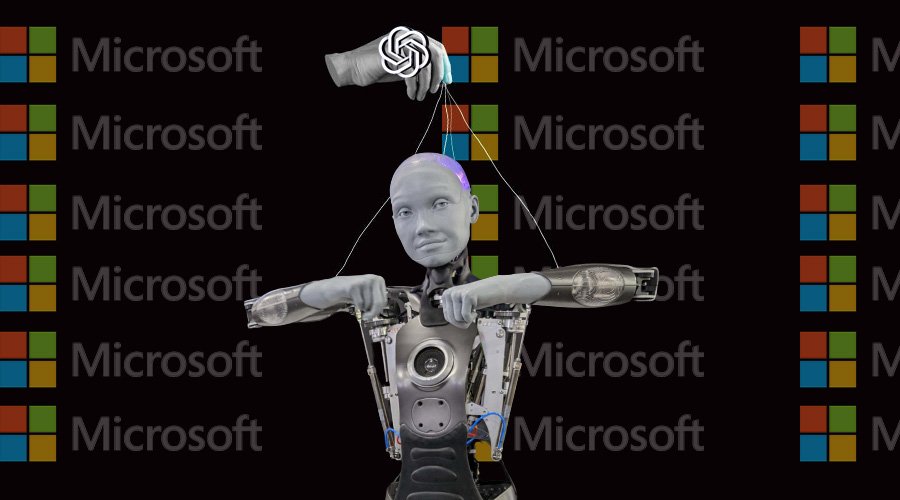
Microsoft is about to attempt another stunt with chatGPT. It will employ the canny AI chatbot to deliver commands to robots and drones. A team of Microsoft researchers has put their research findings in the paper, ‘ChatGPT for Robotics: Design Principles and Model Abilities’, dwelling on how ChatGPT can unlock a new robotic paradigm. The research primarily explores how it is possible for a user to give instructions to a robot in spite of being coding illiterate. The proposed design principles will allow the user to sit in the loop and provide feedback to the large language model (LLM). As per the paper, researchers have aimed to apply LLMs knowledge without the need for fine-tuning. “Our goal with this research is to see if ChatGPT can think beyond the text, and reason about the physical world to help with robotics tasks,” the Microsoft researchers wrote.

In the technical paper, they demonstrate how chatGPT can solve robotics puzzles, and its deployment in the manipulation, aerial, and navigation domains. Indeed, the chatbot can quickly translate natural language instructions into code. But can it take straightforward and precise instructions like other AI assistants do? Not quite. It requires detailed instructions about the process, as to what happens with specific parts of the drones or what kind of instructions chatGPT had to generate code. No wonder, the team towards the end of the paper proposes PromptCraft, a collaborative open-source platform, that helps in developing positive and negative prompting strategies when working with LLMs in a robotics context. “Over time we aim to provide different environments where users can test their prompts, and welcome new contributions,” mention the researchers.

According to the paper authored by, Sai Vemprala, Rogerio Bonatti, Arthur Bucker, and Ashish Kapoor, the project defines a high-level API that ChatGPT can understand and mapped it to lower-level robot functions. Then they wrote elaborate text prompts for chatGPT to explain the bot, the task goals, available functions, and also the limitations. ChatGPT could generate device-specific code to achieve the set simulation goal. It seems like chatGPT could accomplish spatio-temporal reasoning, taking into account the details of the physical world. “We see that ChatGPT is able to appropriately use the provided API functions, reason about the ball’s appearance and call relevant OpenCV functions, and command the robot’s velocity based on a proportional controller,” they explain in the paper.

For someone who has a reasonable knowledge of how such models work, this sort of reasoning should sound absurd because for eg., the autonomous vehicle industry hasn’t achieved it yet so chatGPT couldn’t have either.

However, thankfully, the Microsoft team acknowledges chatGPT’s limitations and that it requires external supervision. “We emphasize that these tools should not be given full control of the robotics pipeline, especially for safety-critical applications. Given the propensity of LLMs to eventually generate incorrect responses, it is fairly important to ensure solution quality and safety of the code with human supervision before executing it on the robot,” the paper states.

The post Microsoft Makes ChatGPT Code For Robots! Beyond the Words Lies the Catch appeared first on Analytics Insight.

Top 10 Robo-Advisors for Investment Advice in 2023

Robo-advisors

Robo investors can customize the portfolio. What all they need is a few inpuuts and in certain cases, a minimal fee.

Investment is a tricky affair and it takes a lot of calculations to arrive at the right portfolio choice or decide the timing. All the complexity around it is so overwhelming that some might want to have a hands-off approach to investing. Robo-advisors are such online investment platforms, where you can automate the investment process just by feeding a few inputs such as financial goals, timeline, risk tolerance, and other preferences. However, some platforms are too pricey or require a steep minimum balance. Here we sort the top 10 robot advisors for investment in 2023.

  1. Fidelity Go

It is the platform for someone who does not have much money initially to invest in. One can get started with just $10 and no further advisory fee is charged for those who have less than $25,000 under management. Those with above $25,000, would pay a minimal 0.35% per year as a fee and in exchange get unlimited one-on-one coaching.

  1. Ally

Ally requires only $100 as a minimum deposit and fees for its service. If one needs a cash-enhanced portfolio, it requires a buffer money of 30% of portfolio money. These account holders need not pay an advisory fee. For a market-focused portfolio, the buffer amount is set at 2% and needs only 0.3% as an advisory fee.

  1. Betterment:

It needs only $10 to start investing at Betterment. An easy-to-use platform with features like automatic rebalancing and dividend reinvestment that come with no added cost helps set up automated deposits. The only disadvantage is the advisory fee it charges for one-on-one advice from certified financial planners.

  1. Acorns

Meant for those who do not want to invest a hefty amount upfront, it makes investment easy by rounding up purchases and investing the spare change. Apart, the account can be opened with the lowest minimum of $5 to start with. It charges a flat fee of $3 every month instead of in terms of the percentage of funds in the account.

  1. SigFig

Unlimited advice irrespective of the account balance is the most striking feature of this platform. It has some amazing customer advisor features including phone, email, and chat. The platform constantly monitors the account and rebalances it if required. However, one needs to $2,000 to open a SifFig account and requires a 0.25% annual fee for funds exceeding $10,000.

  1. TD Ameritrade

It builds a unique portfolio of ETFs and mutual funds based on your financial goals and risk appetite. The downside: this account requires a $5,000 minimum deposit to get started. For a limited time, you can earn $100 when you open an automated TD investing account. Terms and conditions apply.

  1. Schwab Intelligent Portfolios

Though the platform charges a steeper initial deposit, it offers the best all-around service for the price. Further, it doesn’t charge an advisory fee, doesn’t take commissions nor has account closure fees. Customers get 24/7 live support from US-based professionals. The platform is capable of automatically rebalancing the portfolio when required.

  1. INVEST for Amex by Vanguard

Designed for basic American Express cardholders, it offers membership reward points upon investments. The one-on-one consultation feature that it provides is one of its most special features. However, after 90 days free advisory period, the customers have to pay a fee of 0.5% on assets managed by the INVEST platform.

9. UBS Advice Advantage:

The platform charges a steep minimum balance of $10,000 apart from the advisory fee and is therefore not advised for newbies. However, for the money one pays, it offers features like automated rebalancing, tax-loss harvesting, and continuous advice from professional by experienced finance professionals.

10. Wealthfront

Wealthfront robo advisor helps users to create portfolios and customize them based on specific interests such as social responsibility. This account needs $500 to open an account that is not accessible to everyone. It charges an advisory fee of 0.25% per year and the customers get phone and email access to product specialists, with emails answered in one business day.

The post Top 10 Robo-Advisors for Investment Advice in 2023 appeared first on Analytics Insight.

Thanks to Microsoft, a New API Allows ChatGPT to Control Robots

ChatGPT to Control Robots

Microsoft’s Revolutionary API Allows ChatGPT to Control Robots with Natural Language Processing.

Intro

In recent years, the field of robotics has seen rapid growth and development, with innovations such as the ChatGPT API allowing for even greater control over machines. Microsoft has been at the forefront of this revolution, developing a new API that enables us to communicate with robots in a natural, human-like way. The ChatGPT API is based on machine learning techniques, which means that it can understand natural language and respond accordingly. This makes it incredibly versatile and suitable for a wide range of applications.

One of the most exciting aspects of the new Microsoft API is its ability to allow us to control robots remotely. This means that we can now operate robots from anywhere in the world, making them ideal for a wide range of applications. With this level of control, the possibilities are truly endless. In this article, we will explore the capabilities of the ChatGPT API and how it is set to revolutionize the way we interact with robots.

Introducing the ChatGPT API

The ChatGPT API is a new tool that allows us to communicate with robots in a natural, human-like way. This is a major step forward in the field of robotics, as it makes it easier for us to interact with machines and control them in more sophisticated ways. The API is based on machine learning techniques, which means that it can understand natural language and respond accordingly. This makes it incredibly versatile and suitable for a wide range of applications.

Controlling Robots Remotely

One of the most exciting aspects of the new Microsoft API is its ability to allow us to control robots remotely. This means that we can now operate robots from anywhere in the world, making them ideal for a wide range of applications. For example, they could be used to explore remote or hazardous environments or to perform complex tasks in manufacturing or logistics. With this level of control, the possibilities are truly endless.

Making Robots More Intelligent

With the ChatGPT API, we can now take advantage of the latest machine-learning techniques to create more advanced and intelligent robots. These robots are capable of understanding natural language, which means that they can communicate with humans more naturally. This makes them easier to interact with and more versatile in their applications. With this level of control, we can expect to see even more advanced and intelligent robots in the future.

Ease of Use

Despite its advanced capabilities, the ChatGPT API is incredibly easy to use. Even those who are not familiar with programming or robotics can take advantage of this technology and put it to use in their projects. With a simple set of commands, we can now instruct robots to perform specific tasks or carry out complex sequences of actions. This makes it accessible to a wide range of users, from hobbyists to professionals.

The Future of Robotics

At ChatGPT, we believe that the ChatGPT API is just the beginning of a new era in robotics. As technology continues to develop, we can expect to see even more advanced and intelligent robots that can perform a wide range of tasks. With the ability to control these machines remotely and in a natural, human-like way, the possibilities are truly endless. We look forward to seeing what the future holds for this exciting field.

In addition to the advancement in robotic technology, we can also expect to see robots become more prevalent in our everyday lives. From manufacturing and logistics to healthcare and education, robots will likely play an increasingly important role in various industries. They can also be used to perform tasks that are dangerous or difficult for humans, such as exploring hazardous environments or performing rescue missions during natural disasters. Moreover, as robots become more intelligent, they will be able to perform tasks that require a higher level of decision-making and adaptability, making them even more useful in various fields.

The post Thanks to Microsoft, a New API Allows ChatGPT to Control Robots appeared first on Analytics Insight.
pArm6, A New Collaborative Robot with 6 DoF, Is Now Available from Premo Robotics

pArm6 a new collaborative robot

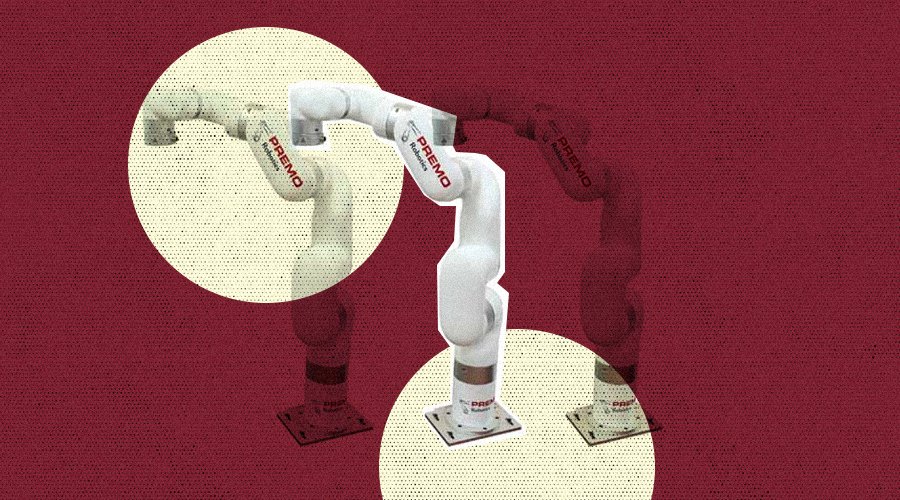
pArm6, a new collaborative robot with six DoF, is now available from Premo Robotics. Here are the details

The robot with 6 DoF (six-degree-of-freedom) pArm6 COBOT ARM+CONTROLLER is made to collaborate with human workers in a shared workspace to complete a wide range of tasks, including quality inspection, material handling, dispensing, assembly, palletizing, welding, finishing, and material removal.

This cutting-edge new collaborative robot arm has an environment that makes programming and using it simple. This makes it easy for people who don’t know much about robotics to quickly set it up and use it, which saves time and makes production lines or research environments more efficient.

Overall, the COBOT ARM+CONTROLLER 6DoF can increase productivity and efficiency in a wide range of industries by automating dangerous or repetitive tasks and freeing up human workers to concentrate on more complex tasks that call for a high level of critical thinking and decision-making.

The PREMO robotics pArm6 a new collaborative robot is a flexible and practical answer for different applications. It offers mainstream performance for a fraction of the cost of other 6-axis robot arms thanks to its 5kg payload and 0.1mm repeatability.

The ultra-lightweight design of this robot arm makes it simple to operate and install in a variety of settings. Additionally, the AC control box and cables reduce workspace clutter and simplify the wiring process.

If you’re looking for a flexible, collaborative robot arm, PREMO pArm 6 is a good, affordable option. And offers education and research centers a discount of 20%, making the pArm 6 even more accessible to academic and scientific communities and encouraging robotics and automation innovation and experimentation.

Read more about the Premo Collaborative robot pArm6 here, or click this link to download the datasheet. Send us a message through the contact form for more information.

Concerning Premo’s Collaborative Robots

Within PREMO SL, Premo Collaborative Robots is a brand. specialized in the distribution of lightweight, adaptable, safe, and simple-to-integrate robotic solutions and accessories for a variety of settings.

The post pArm6, A New Collaborative Robot with 6 DoF, Is Now Available from Premo Robotics appeared first on Analytics Insight.

Top 5 Industrial Robots You Should Know in 2023

Top 5 Industrial Robots

The top 5 industrial robots you should know in 2023 have revolutionized many sectors

Industrial robots have revolutionized manufacturing and production processes across a wide range of industries. From automating repetitive tasks to performing complex and precise operations, industrial robots have become a critical component of modern manufacturing. With advancements in technology, the capabilities of these robots continue to expand, making them even more versatile and efficient. In this article, we will introduce you to the top 5 industrial robots you should know in 2023. We will discuss their features, capabilities, and advantages, as well as their applications in various industries. Whether you are a business owner, an engineer, or simply interested in the latest developments in industrial automation, this article is for you.

  1. Fanuc CRX Collaborative Robot

The Fanuc CRX Collaborative Robot is a highly advanced industrial robot that can work alongside human workers safely. It is equipped with state-of-the-art sensors and vision systems that allow it to adapt to changing environments and work efficiently with human workers. The Fanuc CRX robot is lightweight and easy to program, making it an ideal choice for small and medium-sized enterprises.

  1. ABB IRB 1100 Industrial Robot

The ABB IRB 1100 is a compact and powerful industrial robot designed for high-speed pick-and-place applications. It has a payload capacity of up to 4kg and a reach of 0.73m. The robot is equipped with a built-in vision system that allows it to work with high precision and accuracy, even in low-light conditions.

  1. KUKA KR 3 AGILUS Industrial Robot

The KUKA KR 3 AGILUS is a fast and agile industrial robot designed for handling tasks that require high speed and accuracy. It has a payload capacity of up to 3kg and a reach of up to 540mm. The robot is equipped with advanced motion control technology that allows it to move quickly and precisely.

  1. Universal Robots UR10e Collaborative Robot

The Universal Robots UR10e is a highly advanced collaborative robot designed to work alongside human workers safely. It has a payload capacity of up to 10kg and a reach of up to 1300mm. The robot is equipped with advanced safety features that allow it to detect and avoid collisions with humans.

  1. FANUC R-2000iD Industrial Robot

The FANUC R-2000iD is a high-performance industrial robot designed for heavy-duty applications. It has a payload capacity of up to 210kg and a reach of up to 2655mm. The robot is equipped with advanced motion control technology that allows it to move quickly and precisely, making it an ideal choice for high-speed pick-and-place applications.

The post Top 5 Industrial Robots You Should Know in 2023 appeared first on Analytics Insight.
Top 5 Industries Utilizing Robotics to Boost Efficiency

Top-5-Industries-Utilizing-Robotics-to-Boost-Efficiency

The top 5 industries utilizing robotics to boost efficiency and convenience for businesses

The International Federation of Robotics predicted in 2018, 1.3 million industrial robots will be in operation. Robotics is still growing as a significant industry. The following are the top 5 industries utilizing robotics to boost efficiency and convenience for both businesses and customers.

1. Healthcare

Several aspects of health care, including surgery, therapy, rehabilitation, patient companionship, and daily activities, could be altered by advances in robotics. Robotic medical devices aren’t meant to replace human healthcare workers; rather, they’re meant to make their jobs simpler.

2. Agriculture

The agriculture sector has been aggressively seeking to incorporate various forms of robotic technology to help enhance productivity while reducing total expenses. Tractors and harvesters that are GPS-guided have already been used by farmers. The experimental usage of autonomous systems to automate tasks including pruning, thinning, mowing, spraying, and weeding has increased recently. Pests and diseases that harm crops are also being managed with the help of sensor technologies.

3. Food Preparation

The kitchen will soon include one of the more lavish robot technological breakthroughs. In a home kitchen, automated and intelligent robots like those developed by Moley Robotics will be able to prepare and cook hundreds of meals. The smartphone-controlled robotic chef will be able to rapidly and effectively produce the specified meal when the controller selects a recipe and organizes pre-packaged containers of chopped and prepared components.

4. Manufacturing

Robots are utilized in a variety of manufacturing processes to assist boost output and efficiency while cutting costs. Similar to the healthcare sector, many robots in manufacturing work alongside humans to complete tedious, complex, or repetitive jobs under the direction and supervision of the worker.

5. Military

Robotic technology is being used widely in the military and public safety sectors. Unmanned drones are one prominent topic. On the battlefield, these devices can be utilized for missions like surveillance. Military drones can assess threat levels and supply soldiers and first responders with real-time information while flying over places of war and conflict, in hostage situations, and for natural and man-made disasters.

The post Top 5 Industries Utilizing Robotics to Boost Efficiency appeared first on Analytics Insight.