What is Fuzzy Logic, Robotics & Future of Artificial Intelligence?

What is Fuzzy Logic, Robotics & Future of Artificial Intelligence?

This article explains what is fuzzy logic, robotics & future of artificial intelligence in detail

In this article, we will learn in short about the fuzzy logic concept and robotics in artificial intelligence. Also, check out the future scope of artificial intelligence.

Fuzzy Logic in Artificial Intelligence

The logical output is produced by fuzzy logic systems in response to uncertain, disorderly, deformed, and incomplete fuzzy inputs.

Artificially intelligent fuzzy logic is a method of problem-solving that resembles human reasoning. The strategy will be an exact reproduction of how a person would decide, and it should consider all possible solutions to the issue along with a digital output of YES or NO.

The fundamental logic system is an n-valued logic system that applies the scale of the input state and produces outputs depending on the input state and degree of change of these states. To provide a definitive output, the developer of fuzzy logic systems, therefore, incorporated all conceivable logic of inputs in the system. They support the management of uncertainty in tiny micro-controllers, car operations, electrical gadgets, etc.

Applications Of Fuzzy Logic

Fuzzy logic is used to control

How household equipment including refrigerators, air conditioners, washing machines, dishwashers, microwave ovens, hoover cleaners, etc. operate automatically or semi-automatically.

Many environmental factors, such as air purifiers and heater operations.

Operations of vehicles such as four-wheelers, racing motorcycles, and vehicles.

Operations of electronic devices including photocopiers, printers, smart TVs, digital cameras, still cameras, etc.

Robotics in Artificial Intelligence

Artificially intelligent devices known as robots exhibit real-world human behavior. Any type of robot’s primary goal is to reduce the amount of human effort required to repeatedly do a specific activity depending on the set of attributes for which they have been trained and programmed.

Mechanical engineering, electrical engineering, and computer programming are used in robotics, a branch of artificial intelligence, to build and develop robots that can think and act like intelligent machines.

Robots can travel, see, and compute their reaction using computer vision thanks to artificial intelligence. The machine learning process, which is a part of AI and is based on predetermined rules and programs, allows the robots to carry out the duties that humans give to them. Robots will be able to do their work independently and without human supervision thanks to this type of AI. As a result, autonomous humanoid robots that can perceive their environment and adapt to it were developed.

The robots, also known as industrial robots, are used for commercial reasons to carry out demanding tasks in an industrial setting. They are meant to accomplish one specific activity consistently and precisely.

Future of Artificial Intelligence

1. Self-Driven Cars

Although partially automated cars have been introduced in several nations, a driver is still required to control the automobile. As a result, there is much to learn and incorporate into automated automobiles and other vehicles before they are fully automated and driverless. The American Department of Transportation is developing the technology to turn buses, cabs, and trucks completely automated by adding artificial intelligence.

2. AI in Cybernetics Science

By combining robots and artificial intelligence, researchers are aiming to create human bodies that are stronger, more resilient, and longer-lasting. People who are physically or intellectually challenged will benefit directly from this.

3. AI in Healthcare

The WHO aims to provide patients with predictive treatment powered by AI by 2030. According to each patient’s unique lifestyle, dietary habits, age, and medical history, the predictive analysis will help the patient understand the risk of a certain disease to which he or she may be prone. It will also propose preventative actions. Additionally, this will aid in avoiding and lowering the prevalence of several widely transmitted illnesses including the seasonal flu. Many nations are also working to create AI-enabled robotic nurses that can provide patient care more effectively than humans while simultaneously lowering the rate of human mistakes.

4. AI in Education

The e-learning industry is expanding quickly, providing both students and teachers with a richer and more comprehensive experience. To allow students in faraway locations to study and communicate with professors, AI-enabled software and applications have been developed. Researchers are attempting to create AI-enabled tutors that will be on call 24/7 to assist students with their questions and offer them immediate solutions. These tutors will also be able to use online learning to instruct kids with disabilities.

5. A system that Supports Decision-Making

The fuzzy logic system can provide answers to difficult issues that are founded on non-linear, unstructured data inputs. They react more rationally and linearly than a person would to an identical question. This capability may be used to answer questions about some extremely complicated circumstances in several banking and finance-related sectors.

The post What is Fuzzy Logic, Robotics & Future of Artificial Intelligence? appeared first on Analytics Insight.
Top 10 Cloud Robotics Start-ups to Keep an Eye on in 2023

Top 10 cloud robotics start-ups

The top 10 cloud robotics start-ups shaping the future

Cloud robotics is a branch of robotics that employs various cloud technologies to improve robot efficiency and effectiveness. Cloud robots have been produced as a result of the increased use of cloud-based technologies and artificial intelligence robotics technology, which has increased demand in the worldwide cloud robotics market. It is commonly used in logistics, monitoring, training, and entertainment. Scientists have enhanced the physical features of robots and added astonishing virtual advances of cloud computing to improve their aspects. The following are the top ten cloud robotics startups.

  1. Automation: The organization creates robotic software solutions, lean artificial intelligence (AI), and low-code applications. It also provides cloud services and allows for the automation of long operations that span numerous platforms. This company tops the list of the top 10 cloud robotics companies due to its physical and virtual use of robots for work automation. It creates and improves robotic cloud solutions by utilizing cloud computing and process automation technologies.

  2. SaltyCloud: SaltCloud is a PBC, or Public Benefit Corporation, that was founded in March 2017. It offers cutting-edge security automation solutions to assist other businesses and organizations in protecting themselves from cyber adversaries. This company currently provides three security and risk automation technologies to the general market.

  3. Soar Robotics Inc.: Soar Robotics should be on your shortlist if you’re searching for independent operations at scale for urban and industrial applications. It uses hyper-realistic visual and physical settings to enable seamless connectivity and cloud intelligence. This is used to test technology for safety by simulating real-world scenarios in virtual reality.

  4. Bright Machines: Bright Machines combines intelligent software, flexible factory robots, and machine learning to help firms manufacture smarter and more efficiently. They use machine learning, computer vision, and cloud architecture to automate manufacturing and boost flexibility, robustness, and transparency. They collaborate with forward-thinking companies to achieve the whole manufacturing transformation.

  5. INVOLI: INVOLI, which was founded in Switzerland in 2017, provides services that enable its customers to harness the power of the drone revolution. This company facilitates the safe integration of new aircraft into the aviation world while preventing collisions with other aircraft. It provides technology that enables intelligent air traffic instruments and collision avoidance technologies to be used in the aviation industry.

  6. Covariant: Covariant, based in Berkeley, California, develops artificial intelligence known as the “Covariant Brain.” This is the technology that allows robots to become smarter. They teach their robots using a variety of AI techniques and methods, including reinforcement learning. It accomplishes this with an off-the-shelf robot arm, a suction gripper, and a simple 2D camera system.

  7. Arctoris: The cloud-based robotics firm collaborates with biotech, pharmaceutical, and academic institutions to facilitate drug development projects. Arctoris accomplishes this by utilizing cutting-edge robotics technology. Aside from these relationships, the company conducts its internal drug development programs and provides access to its platform to researchers and entrepreneurs.

  8. RosHub: RosHub is a startup based in the United States that produces and develops connection solutions for robot fleets. It is responsible for creating, testing, and implementing these solutions in unstructured public places. It also enables the integration of an open-source robotics operating system (ROS) with current tools and APIs.

  9. Freedom Robotics was created in 2018 and has its headquarters in San Francisco. Management tools are included in the development of its cloud-based robotics management software (RMS). This aids in the development, operation, prototyping, and scaling of robot fleets.

  10. Graphcore: This top cloud robotics firm was launched in the United Kingdom in 2016. IPU accelerators and popular software from Graphcore combine to deliver the fastest and most adaptable platform for present and future machine intelligence applications. It contributes to cost reduction while improving AI performance in the cloud and data centers.

The post Top 10 Cloud Robotics Start-ups to Keep an Eye on in 2023 appeared first on Analytics Insight.
Top 5 Robotic Stocks to Buy in India in 2023

Robotics Stocks

This article provides a list of the top 5 robotic stocks to buy in India in 2023

To expand, Indian businesses are incorporating cutting-edge strategies. The objective is to boost safety, accuracy, and production volume. The Indian government is advancing both public and private sector industries as well as robotics start-ups in the country.

Indian businesses are rapidly adopting robotics software and technologies, but they still face several unique obstacles. The following is a list of the top 5 robotic stocks to buy in India in 2023:

  1. Mahindra & Mahindra

The Indian multinational automobile manufacturing company Mahindra & Mahindra Limited is a member of the Mahindra group. M&M has joined the competition and has a “robotic weld line” at its Nashik factory. Several of its products, including the Marazzo and the XUV300, are now served by it. Robots perform roughly 70% of the work in their vehicle body shop.

  1. Maruti Suzuki India

Maruti isn’t a long way behind in automation. At its car factories in Manesar and Gurugram, it employs numerous robots.

More than 2000 robots are employed in the weld shop, where robots are most commonly used. Auto car bodies are shaped in the press and paint shops, both of which are automated. Nowadays, most car assembly is done manually. They utilize more than 5,000 robots at their plant to deliver vehicles.

  1. Tata Motors

The “Made-in-India” robot TAL BRABO was introduced by TAL Manufacturing Solutions, a Tata Motors wholly-owned subsidiary. It primarily serves the micro, small, and medium industries and is abbreviated as “Bravo Robot. This robot is utilized by enormous names which incorporate Tata Motors, Mahindra and Mahindra, CPG Enterprises, BITS Dubai Campus, and Micromax Systems.

  1. Happiest Minds

Happiest Minds Robotic Process Automation as a service is intended to assist associations with incorporating RPA with innovations like machine learning, AI, and knowledge-based systems to drive endeavor-wide change.

  1. Tata Elxsi

Tata Elxsi focuses on innovating products and services that enable pharmaceutical and healthcare companies to automate core processes. The business works in product engineering and designing other embedded systems for robotics and software that are related to them.

The post Top 5 Robotic Stocks to Buy in India in 2023 appeared first on Analytics Insight.

Top 10 Robotics Technology Companies in the United States in 2023

Top-10-Robotics-Technology-Companies-in-the-United-States-in-2023

The top 10 robotics technology companies in the United States in 2023 are enlisted in this article

The Top 10 Robotics Technology Companies in the United States in 2023 Are Developing Better Robots That Can Communicate with Humans and Operate in A Range of Sectors Using Artificial Intelligence and Machine Learning.

They are developing methods to incorporate robots into consumer products and services, therefore enhancing people’s lives. Manufacturing, logistics, agriculture, and even space exploration make use of robotics technology. Robotics technology companies in 2023 have been utilized to become more efficient and cost-effective.

Top 10 Robotics Technology Companies in the United States in 2023:

1. Boston Dynamics: Boston Dynamics creates robots capable of negotiating difficult terrain and completing complicated jobs autonomously. Their robots feature superior sensors that allow them to precisely traverse their environment. They are also equipped with algorithms that allow them to adapt to changes in their surroundings and diverse settings, allowing them to work more flexibly.

2. Tesla: Tesla also manufactures energy storage devices, which allow household and business users to store solar-generated energy. They collaborate with SolarCity to offer solar panel installation and maintenance to prospective consumers.

3. SoftBank Robotics: SoftBank Robotics is dedicated to developing solutions that improve people’s lives and open up new opportunities for them. They think that robots can help people tackle real-world problems, such as caring for the old or the crippled or assisting in workplaces or hospitals.

4. Honda Robotics: Honda Robotics is also a pioneer in the development of autonomous vehicle technology. Honda Robotics has created a variety of autonomous technologies, including self-driving automobiles, through collaborations with automotive firms. The business is actively developing fully autonomous cars capable of navigating difficult situations safely and efficiently.

5. UBTECH Robotics: UBTECH Robotics has created commercial robot solutions for a variety of sectors. Their AI-powered robots have been employed in industries such as automation, healthcare, manufacturing, logistics, and others. UBTECH Robotics has emerged as a prominent actor in the development of autonomous robotic systems capable of performing complicated tasks in dynamic conditions.

6. Ambidextron: Apart from robots and artificial intelligence, Ambidextron also develops software and hardware solutions for companies and families. Their products vary from virtual reality headsets to home automation systems that enable customers to control lights and other appliances remotely. In addition, the firm is continually developing new technologies such as 3D printing, face recognition, and machine learning.

7. Fetch Robotics: Other products from Fetch Robotics include software solutions such as the Fleet Management System (FMS), which allows customers to monitor the performance of their robots in real-time, and the Warehouse Execution System (WES), which assists customers in managing their warehouse operations.

8. Robotic Research: Robotic research firms engage professionals in artificial intelligence, robotics, engineering, and computer science who collaborate to develop new technologies and produce dependable and efficient robotic systems.

9. Sarcos Robotics: Sarcos Robotics is well-known for its sophisticated robotics engineering capabilities and inventive use of cutting-edge technologies such as Artificial Intelligence (AI), Machine Learning (ML), and computer vision.

10. ABB Robotics: ABB Robotics also provides maintenance, repair, parts replacement, inspection, and training to guarantee that its robots work optimally. The firm provides consultation and customization services to assist companies get the most out of their automation investments.

The post Top 10 Robotics Technology Companies in the United States in 2023 appeared first on Analytics Insight.

Top 10 Industries Impacted by Robotic Process Automation Startups

Robotic Process Automation

The top 10 industries favoring robotic process automation in 2023 are enlisted in this article

Automation and digitalization are being adopted by many sectors. This transformation is made possible by advanced robotics, artificial intelligence, and robotic process automation (RPA). All business activities may be automated with RPA, which reduces time and expense. For this reason, businesses are incorporating robotic process automation tools into their infrastructure. This time, you get to learn about 10 startups that are revolutionizing 10 different sectors with robotic process automation.

  1. Different types of robots are used by the manufacturing sector to automate work on the factory floor. When it comes to automating the industry, RPA solutions function as software robots that supplement real robots. With capabilities like multi-robot synchronization and remote robot programming, they increase the efficiency of using factory robots. RPA is being used more frequently by manufacturing start-ups to automate and improve operations including material transfer, cutting, and product packing. RPA solutions help manufacturers of all stripes increase revenue by resolving particular technical issues that are unique to each product.

  2. RPA systems offer a thorough picture of processes that include numerous teams or locations. Because of this, businesses involved in supply chains and logistics also benefit greatly from introducing robotic process automation. Such solutions automate the tracking of commodities inside warehouses and throughout supply networks. Additionally, they combine monitoring with other labor-intensive duties like order processing, documentation, and inventory management, giving warehouse managers total command over their businesses.

  3. Documentation and triage are examples of manual, repetitive procedures used in the healthcare sector. To provide healthcare personnel more time to focus on patient care, RPA technologies automate these and other administrative duties. RPA is facilitating the conversion of unstructured medical data into clinical insights as the sector moves toward digitalization. This helps with infection control measures and enhances the accuracy of clinical reporting. RPA also automates some components of remote care and patient contact, giving patients the information they require.

  4. For manual processes like reviewing paperwork for underwriting or opening new bank accounts, banks are adopting digitalization. These are automated by robotic process automation tools, saving financial firms money and time. They raise the caliber of their services by lowering false positives and biases. For businesses of all sizes, B2B-facing technologies automate processes like invoice validation and tax filing. RPA is being used by fintech businesses to streamline compliance reporting and provide multitasking to their clients.

  5. RPA automates the production of content in the media sector, including everything from advertisements to sports visualizations and news summaries. Providing customers with the most pertinent material is a priority for online media organizations. RPA technologies enable over-the-top (OTT) platforms to provide personalized suggestions and make content easily searchable by automatically extracting and analyzing metadata. Last but not least, the sector employs RPA to manage customer engagement and service demands, freeing up more resources for fresh content creation.

  6. Insurance firms deal with a lot of unstructured data, just like the fintech sector. By automating processes including claims processing, underwriting, and compliance reporting, RPA technologies reduce costs and save time. Large amounts of data are processed by the industry for each of its services. RPA enables insurance companies to reduce policy cost footprint by automating the analysis of this data and the relevant replies.

  7. There is an effort to eliminate bias from the recruiting process in the human resources field. RPA technologies are being used more frequently by businesses in their hiring processes because they don’t necessitate much human interaction. They automate every process, from finding candidates and screening resumes to onboarding new staff. RPA solutions raise employee happiness and engagement by relieving them of tedious and repetitive work.

  8. Telecom firms need to improve customer engagement and service efficiency. Both of these goals are possible thanks to robotic process automation systems. Telecom businesses rely on a network of resources and software programs that exchange data. Software robots speed up operations by facilitating data transfer and automating computation and analytical tasks. RPA-enabled bots enhance customer service, order fulfillment, and complaint handling from the customer’s perspective.

  9. Data sharing between field technicians, remote assets, and centralized and decentralized units is necessary for the efficient running of utilities. By automating data processing, RPA reduces errors and delays while also seeing chances to improve processes. Additionally, processing invoices is expedited, freeing up staff members to work on higher-priority responsibilities. These technologies also make customers’ lives easier by handling complaints and processing claims more quickly.

  10. Industry 4.0 uses intelligent hardware and software to convert manufacturing processes from physical objects to cyber-physical systems. RPA implementation prospects are abundant when using industrial sensors, remote monitoring, and data sharing between assets. It serves as the cornerstone for automating every aspect of manufacturing, including material sourcing, inventory control, and quality assurance. The profitability and sustainability of operations are increased through robotic process automation by automating and streamlining Industry 4.0 procedures.

The post Top 10 Industries Impacted by Robotic Process Automation Startups appeared first on Analytics Insight.

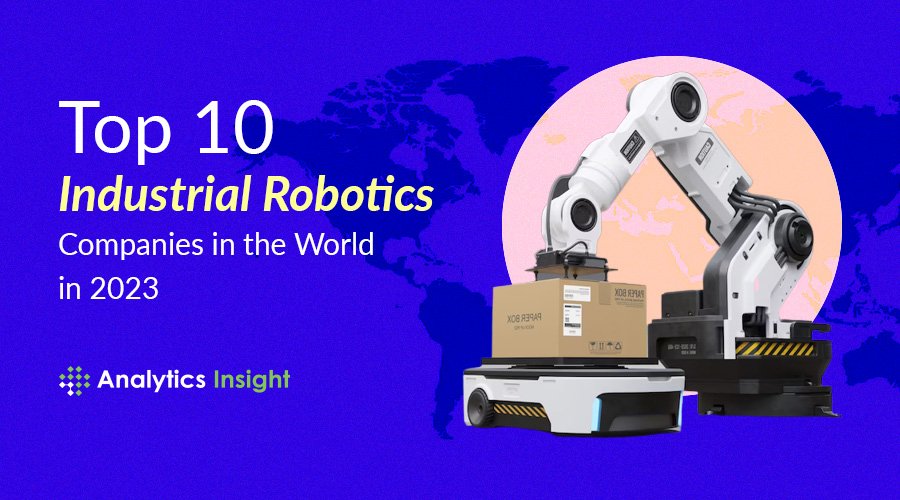
Top 10 Industrial Robotics Companies in the World in 2023

Robotics

The top 10 industrial robotics companies in the world in 2023 are some of the notable picks

These systems are designed, produced, installed, and maintained by industrial robotics companies. They also offer the actual robot, the computational interface, and instructions for integrating the system into the current industrial environment.

While some industrial robotics companies acquire certain parts, others build their components. When it comes to applications, these machine automation companies often create specialized robots, whereas generalized robots may perform a variety of tasks specified by the maker. Companies that specialize in industrial robotics frequently offer specialized robot solutions for niche markets like the automobile industry. Additionally, certain industrial robotics companies have application-specific specializations. These top 10 industrial robotics companies are developing new industrial robots to help businesses operate more efficiently. Let us look at the top 10 industrial robotics companies in the world in 2023.

  1. ABB

An ABB robot often stands out for its white color and unique red branding. Founded in 1988, ABB is a Swiss company with headquarters in Zürich. It specializes in power equipment and other automation technology in addition to robots. With an estimated US$28 billion in yearly sales, the business sold 100,000 robots for the first time in the world in 2002.

  1. Faunc

A Fanuc robot may typically be identified by its vivid yellow color. Fanuc was established in 1972 and is headquartered in Oshino, Japan, at the foot of the well-known Mount Fuji. The business specializes in CNC machines, robots, and other forms of automation. Over 750,000 robots have been placed by the corporation globally, and it generates US$4.7 billion in yearly sales.

  1. KUKA

A KUKA robot frequently stands out from the crowd thanks to its unique orange color. KUKA was first established in 1898 as an acetylene gas producer. With an automated welding system, the business made its first foray into industrial automation in 1956, and in 1971, it produced its first welding robot. The business, which has its headquarters in Augsburg, Germany, generates US$2.5 billion in sales each year, of which US$899 million comes from robots.

  1. Yaswaka

Yaskawa is the company that creates the Motoman line of robots, which are typically identified by their white and blue coloring. Despite being established in 1915, Yaskawa didn’t deploy its first robot until 1974. It was the first industrial robot in Japan to be powered by electricity; all other robots up to that point were hydraulically powered. The business, which has its headquarters in Fukuoka, Japan, has yearly sales of about US$1.7 billion, of which US$597 million comes from robots.

  1. Epson

Epson’s desktop printers may come to mind first when you think of the company. However, Epson’s robotics division is a significant competitor in the market. Japan’s Nagano is home to Epson, which was established there in 1942. In 1984, the business introduced its robots to the markets in North and South America for the first time. The corporation as a whole generates US$9.6 billion in sales annually, of which wearable and industrial items account for around US$1.32 billion.

  1. Comau

Comau is an Italian manufacturer of automation and robotics. The business was established in 1973, and in the 1980s it created the first laser robot for General Motors. The company has lately expanded into collaborative robots, and its Aura cobot has the biggest marketable payload capacity (170kg). The business brings around US$1.2 billion annually.

  1. Kawasaki

The Japanese industrial company Kawasaki is most well-known for its bikes, engines, and aerospace machinery. Although the business was established in 1896, it didn’t begin producing robots until 1968, when it signed a contract to produce them locally with Unimation, the world’s first industrial robotics firm. Over 160,000 robots have been installed by the firm globally, and it generates US$1.3 billion in yearly sales.

  1. Mitsubishi

Robots made by Mitsubishi Electric, a business most known for its electric goods, are also familiar in the sector. Mitsubishi Electric, a Mitsubishi division, was established in Tokyo, Japan, in 1921. The business generates around US$11.6 billion in revenue annually, of which industrial automation systems account for about US$3 billion.

  1. Stäubli

Stäubli robots are another pillar of the robotics sector and are used in numerous sites all over the world. The business is headquartered in Horgen, Switzerland, and was established in 1892. It started as a maker of weaving automation before expanding into robotics in 1982 when it bought Unimation. The corporation makes about US$1.2 billion in revenue each year.

  1. Universal Robots

The newest business on this list, collaborative robots (also known as cobots), was at the forefront of one of the most recent developments in robotics. Founded in 2005, Universal Robots is a Danish company with headquarters in Odense. The firm probably invented the phrase “collaborative robot” to describe a robot that can work outside of a safety fence. The business brings in about US$219 million a year.

The post Top 10 Industrial Robotics Companies in the World in 2023 appeared first on Analytics Insight.
How Robotic Process Automation is Impacting the World in 2023?

Robotic Process Automation (RPA)

Robotic Process Automation (RPA): The game-changing revolutionary impact on the world in 2023

INTRO

Robotic Process Automation (RPA) is a rapidly growing technology that is transforming the business landscape. In 2023, the impact of RPA on the world is expected to be even more significant, as more and more businesses adopt this technology to automate their processes. RPA can automate repetitive and mundane tasks, resulting in increased efficiency and cost savings, improved accuracy and quality of work, enhanced customer experience, increased flexibility and scalability, improved compliance and security, increased employee satisfaction, and improved decision-making.

This article will delve into the details of how Robotic Process Automation is impacting the world in 2023. We will explore the benefits of RPA and how it is changing the way businesses operate.

Increased Efficiency and Cost Savings

One of the primary benefits of RPA is increased efficiency and cost savings. RPA can automate repetitive and time-consuming tasks, reducing the time and effort required to complete them. This results in increased productivity and efficiency, which can save businesses a significant amount of money. In fact, according to a study by Deloitte, RPA can lead to cost savings of up to 30% in certain areas.

Improved Accuracy and Quality

RPA eliminates the possibility of human error in repetitive tasks, which leads to improved accuracy and quality of work. By automating processes, RPA ensures that the same process is executed consistently and accurately every time. This, in turn, leads to improved customer satisfaction and increased trust in the company.

Enhanced Customer Experience

RPA can significantly enhance the customer experience by improving response times and reducing errors. By automating customer service tasks, such as email response, chatbots, and social media management, RPA can provide customers with faster and more accurate responses. This leads to increased customer satisfaction, loyalty, and repeat business.

Increased Flexibility and Scalability

RPA allows businesses to be more flexible and scalable. It can quickly adapt to changing business needs, allowing businesses to scale up or down as required. RPA can also automate tasks across multiple systems, making it easier for businesses to integrate new systems into their existing infrastructure.

Improved Compliance and Security

RPA can help businesses ensure compliance with regulations and standards by automating compliance-related tasks. This leads to improved compliance and reduced risk of non-compliance. Additionally, RPA can enhance security by automating security-related tasks, such as access management and threat detection.

Increased Employee Satisfaction

By automating repetitive and mundane tasks, RPA can free up employees’ time to focus on more engaging and challenging tasks. This can lead to increased job satisfaction, employee engagement, and retention.

Improved Decision Making

RPA can provide businesses with real-time data and analytics, allowing them to make more informed decisions. By automating data collection and analysis, RPA can provide businesses with insights into their operations, customers, and market trends. This, in turn, can lead to improved decision-making and business outcomes.

Reduced Training Time and Costs

With RPA, businesses can reduce the time and costs associated with training employees on complex systems and processes. RPA can automate the training process, making it easier for employees to learn new systems and processes quickly and efficiently.

Improved Collaboration

RPA can improve collaboration between teams by automating communication and collaboration tasks. For example, RPA can automate the process of scheduling meetings, sharing documents, and sending notifications, making it easier for teams to collaborate and work together effectively.

Increased Innovation and Agility

By automating repetitive and mundane tasks, RPA can free up employees’ time to focus on more innovative and creative tasks. This can lead to increased innovation and agility, allowing businesses to stay ahead of the competition and adapt to changing market conditions.

Better Resource Allocation

RPA can help businesses optimize resource allocation by automating tasks that require fewer resources, such as data entry and processing. This allows businesses to allocate their resources more effectively and efficiently, leading to cost savings and improved performance.

Improved Compliance Reporting

RPA can automate compliance reporting, making it easier for businesses to demonstrate compliance with regulations and standards. This can reduce the time and effort required to generate compliance reports and reduce the risk of non-compliance.

Increased Transparency and Accountability

RPA can increase transparency and accountability by automating the tracking and monitoring of business processes. This allows businesses to identify areas for improvement and ensure that employees are following established processes and procedures.

The post How Robotic Process Automation is Impacting the World in 2023? appeared first on Analytics Insight.

Top 10 Personal Robots that You Can Buy in 2023

Personal Robots

Revolutionize your life with the top 10 personal robots of 2023: A comprehensive guide

As we move into 2023, the age of personal robotics is becoming increasingly prevalent. With technological advancements in artificial intelligence, robotics, and machine learning, personal robots are becoming more affordable and accessible to the general public. These robots can perform a wide range of tasks, from cleaning your home to entertaining you and your family. However, with so many options on the market, it can be challenging to decide which personal robot is right for you.

In this article, we will take a closer look at the top 10 personal robots that you can buy in 2023. From the Sony Aibo to the UBTECH Jimu Robot Builderbots Kit, we will provide you with a comprehensive guide to the best personal robots on the market, helping you to make an informed decision about which robot is right for you.

  1. Sony Aibo

Sony Aibo is an adorable and intelligent robot that has won the hearts of millions of people worldwide. This robot dog can recognize faces, and voices, and even learn tricks. It has a responsive touch sensor and a camera that allows you to see the world through its eyes.

  1. Anki Vector

Anki Vector is a small but mighty robot that can perform a wide range of functions. It has a built-in camera, microphone, and speaker, making it an excellent companion for those who enjoy music and entertainment. Anki Vector can recognize faces and voices, respond to questions, and even play games with you.

  1. Robomow RS630

The Robomow RS630 is a robotic lawnmower that can save you a lot of time and effort. It has an advanced mapping system that allows it to efficiently mow your lawn, and it can be controlled through a mobile app. The Robomow RS630 can also be programmed to work on a schedule, ensuring that your lawn is always neat and tidy.

  1. iRobot Roomba i7+

The iRobot Roomba i7+ is an intelligent robot vacuum that can clean your home efficiently and autonomously. It has advanced mapping and navigation systems that allow it to navigate around your home seamlessly. It can also be controlled through a mobile app, and it has a self-emptying bin, which means that you don’t have to worry about emptying it frequently.

  1. Jibo

Jibo is a social robot that can interact with you and your family. It has a built-in camera, microphone, and speaker, making it an excellent companion for those who enjoy socializing. Jibo can recognize faces and voices, respond to questions, and even tell jokes. It can also be programmed to perform a wide range of functions, making it an excellent assistant.

  1. Mayfield Robotics Kuri

Mayfield Robotics Kuri is an adorable and intelligent robot that can perform a wide range of functions. It has a built-in camera, microphone, and speaker, making it an excellent companion for those who enjoy music and entertainment.

  1. Temi

Temi is a personal robot that can perform a wide range of functions. It has a built-in camera, microphone, and speaker, making it an excellent companion for those who enjoy socializing. Temi can recognize faces and voices, respond to questions, and even tell jokes. It can also be programmed to perform a wide range of functions, making it an excellent assistant.

  1. Misty II

Misty II is a developer-friendly robot that can be customized to perform a wide range of functions. It has a built-in camera, microphone, and speaker, making it an excellent platform for developing new applications. Misty II can also be programmed to perform a wide range of functions, making it an excellent assistant.

  1. Ubtech Walker

Ubtech Walker is a humanoid robot that can walk, talk, and interact with you. It has a built-in camera, microphone, and speaker, making it an excellent companion for those who enjoy socializing. Ubtech Walker can recognize faces and voices, respond to questions, and even perform yoga poses.

  1. UBTECH Jimu Robot Builderbots Kit

UBTECH Jimu Robot Builderbots Kit is a robot-building kit that allows you to build your robot. It comes with easy-to-follow instructions and programmable blocks that allow you to customize your robot’s movements and functions.

The post Top 10 Personal Robots that You Can Buy in 2023 appeared first on Analytics Insight.