How Data Science is Impacting the Field of Robotics

Data-Science

Data science is impacting the field of robotics and it plays a major role in the industry

Today, the rapidly changing field of robotics and data science has become intangible. Before delving into how Data Science has a significant impact on robotics, let us first define Data Science, and then we will delve deeper into the world of robotics and see data science is impacting the field of robotics and its major role in robotics.

Data Science, like Robotics, is an interdisciplinary field in which scientific methods, statistics, mathematical algorithms, and computer systems collaborate to derive a solution to an ongoing problem, predict possible future business risks, discover a future shopping trend, and so on. Data Science, like Robotics, heavily relies on Artificial Intelligence and Machine Learning to generate “actionable insights” for a variety of applications. The future does not have to be a game of chance; it can be founded on data-driven truths.

The Impacts of Data Science on Robotics

As previously stated, robotics is a constantly evolving field of study. But how does this rapid change occur? During the early days of robotics discovery, scientists had a difficult time working on the overtly complex data used for real-time tasks, particularly vision-oriented tasks. Understanding or predicting what the robot’s next action will be became difficult for the scientists as well.

This is where Data Science comes into play and saves the day. Reprogramming a robot for a new function or preparing for a new real-time trend involving vision-oriented tasks was time-consuming. Data Scientists who rely on AI and Machine Learning learned to work with robots that would evolve, acquire newer behavior through labeled data, evolve after learning to identify errors in existing data, and so on. As a result, the scientist’s task becomes easier, and robots can evolve with little human intervention.

The post How Data Science is Impacting the Field of Robotics appeared first on Analytics Insight.

Top 10 Robotic Trends and Predictions to Look Out for in 2023

Top 10 Robotic trends and predictions in 2023

The top Robotic trends and predictions to look out for in 2023 impacted companies worldwide

Robots are more adaptive and versatile and becoming an integral part of many business operations today. Robotics and AI are sectors that are fast progressing, advancing, and holding endless potential for the future of humanity. The emerging Robotics trends and Predictions in 2023 meet the growing demand for industrial automation, digitalization, and sustainability.

The advances in Robotics and Artificial Intelligence have made it feasible to construct machines that can do jobs with extraordinary speed and accuracy. According to current developments in AI and Machine Learning, the future scope of Robotics increases. The robot industry is expected to grow significantly in the coming years and the sector may be worth $260 billion by 2030. Automated Guided Vehicles, Autonomous Mobile Robots, Cobots, Drones, Humanoid Robots, Robotic cybersecurity, Intelligent robots, etc are some top Robotic trends and Predictions that impact 8,949 companies worldwide. Let us see the top 10 Robotic trends and Predictions to look out for in 2023:

  1. Autonomous Mobile Robots

To mitigate workers’ exposure to hazardous situations like toxic chemicals, right spaces, or heavy machinery, startups and scaleups utilize AMRs to automate various industrial processes. To understand immediate surroundings and to navigate independently, they made use of sensors, AI, and computer vision. AMR performs various functions and from monitoring stock levels, automating material handling, and transporting food and other items to the hotel.

  1. Intelligent Robots

Robots utilize real-time information and optimize tasks by integrating AI into Robotics. Startups use computer vision, machine learning, and dynamics modeling for this. To improve the accuracy and performance of robots, real-time data and large datasets are utilized to train the robots. The implementation of AI-based robots in manufacturing automates repetitive tasks from picking and placing to 3D printing and quality inspection. Robots used in retail stores and hotels leverage NLO to boost customer interaction.

  1. Cobots

Unlike industrial robots, cobots or Collaborative Robots contain advanced sensors and software to ensure behavior around people. These robots lift heavy materials like metals, polymers, and other items. To automate assembly takes like welding and screw drilling, they take the form of end-of-arm tooling. Cobots supplement current production lines to help workers, necessitating the least amount of production downtime possible during integration.

  1. Robotics as a Service

It takes money and a lot of time in developing and maintaining robots. Due to these constraints, small businesses are unable to integrate robotics into their operations. However, RaaS offers a subscription-based business model to leverage robotics. This allows companies to hire robots on demand to quickly scale their operations in response to shifting market conditions.

  1. Robotics Cybersecurity

Robotics are easy targets for cyberattacks due to IoT’s integration and increased connectivity. Due to the deployment of robotics in defense, manufacturing, healthcare, and space industries, safeguarding robotic solutions against illegal access is necessary. Robotic cybersecurity solutions safeguard endpoints and connectivity stacks to avoid data leaks and asset downtimes by using AI and Machine learning to continuously monitor data and networks.

  1. Drones

Startups build drones to enable advances in edge computing, HPC, and connectivity technologies. They perform applications like delivering packages, collecting aerial data, inspecting infrastructure, etc. Startups use vertical take-off and landing technology to improve the usability of drones in confined spaces.

  1. Internet of Robotic Things

The Internet of Things offers monitoring, sense, and tracking whereas robotics focuses on production, interaction, and autonomous behavior. Edge computing platforms enable feedback-driven workflows by collecting and sending data. This is what Connected robots do.

  1. Humanoid Robots

Humanoid Robots are used in various sectors like healthcare industries, entertainment, hospitality, and more. They are used increasingly for contactless cleaning or in-hospital delivery. In addition, they support human workers in hazardous environments during power plant inspection, maintenance, disaster recovery operations, etc. These robots also automate tasks to save costs and improve productivity.

  1. Automated Guided Vehicles

AGVs are also known as self-guided vehicles that transport materials in warehouses, distribution centers, and manufacturing facilities. The movement of these robots is enabled by a combination of software and sensor-based navigation system through a predictable path. The acceleration and deceleration of AGVs are controlled by operators through computer software to reduce accidents and improve worker safety. They also feature automatic obstacle detection numbers for safe movement.

  1. Assistive Robots

Assistive robots increase independence and quality of life. To sense and process sensory information and interact with humans, these robots are incorporated with sensors and intelligent algorithms. Assistive robots have immense potential to minimize the physical dependence of people with disabilities on their caregivers, improve their survival, and increase their quality of life. Likewise, assistive robots can relieve and support caregivers in providing care. They must have accurate, human-quality visual perception and ensure safe physical robotic manipulation of a person’s body.

The post Top 10 Robotic Trends and Predictions to Look Out for in 2023 appeared first on Analytics Insight.

How are Robots Making Cancer Surgeries Safe and Successful?

Robots-are-Making-Cancer-Surgeries-Safe-and-Successful

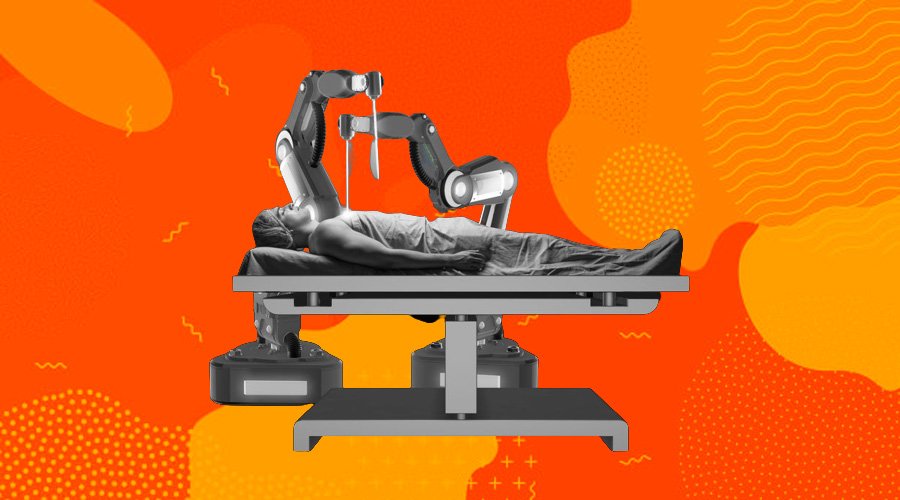
Precision is something that is not just important but essential for certain surgeries. Endoscopic techniques have long played a crucial role in the same to achieve this goal, relieving patients from going through the pain and ordeal of open surgeries. With the advent of robotics in the medical industry particularly with their vast application in the field of surgery, robotic cancer surgeries are proving to be lifesavers. Here are how robots are making cancer surgeries safe and successful helping surgeons in achieving precision and eliminating rogue cells from a patient’s body.

The robotic console is a minimally invasive interface. It is wide usage for non-cancer surgeries such as removing kidney stones, gall bladder stones, etc. For cancer patients, robotic surgery can make a dramatic difference when compared to non-cancer surgeries. Cancer treatment includes different stages that include chemotherapy, radiation treatment, and then surgical operations. For a cancer patient to take all the treatments, he/she should recover quickly, which is quite difficult as these patients have a lowered immunity. For the robotic surgery involves less blood loss and lesser cuts, recovery becomes easy.

For complicated surgeries related to Pancreatic cancers, patients have very little scope to survive. It is found that nearly 30% of patients do not survive because the surgery requires cutting through so many other organs of the body. With robotics technology it is possible to view the interiors 10 times larger and in 3D format, making it easy for surgeons to make the least number of incisions to the other organs and bypass critical organs. For certain types of cancers that occur to the visible parts of the body, i.e., neck cancer or face cancer, open surgeries leave huge scars. The robotic surgeries, for their minimally invasive ability, can save patients from Psychological stress from having to bear scars.

The post How are Robots Making Cancer Surgeries Safe and Successful? appeared first on Analytics Insight.

Future of Robotics: Shapeshifting Robots That Can Liquify and Regain Shape

Future of Robotics

Shapeshifting robots to be the future of robotic technology. Know more about them

Robotics has made incredible advances in recent years, with robots becoming more sophisticated and versatile. One of the most recent advancements in this field is the concept of shapeshifting robots. These robots can change their form or shape to adapt to different environments and perform different tasks. They are designed to be highly fluid and flexible, capable of flowing like liquids through tight spaces or conforming to complex shapes. When necessary, they can harden into a solid state, allowing them to perform tasks such as picking up objects or pushing buttons.

How do they work?

To pull off this melting trick, the researchers heated the bot using magnetic induction, which involves using a moving magnet to create an electrical current inside the robot. The current melted the gallium, and the magnetic elements suspended within drew it to the magnet.

The magnetic particles play a role in making the material responsive to an alternating magnetic field, allowing you to heat up the material and cause a phase change through induction. The magnetic particles, on the other hand, provide the robots with mobility and the ability to move in response to the magnetic field.

The device was inspired by sea cucumbers, which have been observed switching between soft and stiff states to protect themselves from their environment and increase the weight they can carry, according to the researchers.

Some of the applications of these shape-shifting robots:

These robots have several potential medical and technological applications, according to the researchers. So far, it has passed all of the following tests: Repairing circuits by entering difficult-to-reach areas and then transforming them into a solder, melting to form a screw socket and then solidifying to form a mechanical screw, taking a foreign object out of a model’s stomach.

Liquid robots have numerous potential applications. They could be used in the medical field for minimally invasive surgeries, or in search and rescue operations to navigate through narrow spaces and rubble. Liquid robots could be used to inspect and maintain complex machinery in manufacturing and industry, and they could be used to sample and analyze hazardous substances in environmental monitoring.

Benefits of liquid robots:

The ability of liquid robots to adapt to changing environments is one of their primary advantages. Unlike traditional rigid and inflexible robots, liquid robots can change shape to fit into tight spaces or around obstacles. This enables them to perform tasks that traditional robots would find impossible, as well as making them more efficient and effective in a variety of situations.

Another significant advantage of liquid robots is their ability to collaborate in swarms. A single task can be completed more quickly and effectively by connecting multiple liquid robots together. In a search and rescue operation, for example, a swarm of liquid robots could search a large area together, covering more ground and providing a more comprehensive assessment than a single robot could.

Despite their numerous advantages, liquid robots do pose some challenges. One of the most difficult challenges is creating materials that are both flexible and strong enough to maintain a solid form when required. Control and stability of the robots, as well as the development of effective algorithms for controlling their movements and behaviour, are also issues.

Conclusion: Despite these obstacles, the future of shapeshifting robots, particularly liquid robots, appears bright. With continued research and development, these robots are expected to become even more advanced and capable in the coming years, opening up exciting new possibilities for a variety of industries and applications.

The post Future of Robotics: Shapeshifting Robots That Can Liquify and Regain Shape appeared first on Analytics Insight.
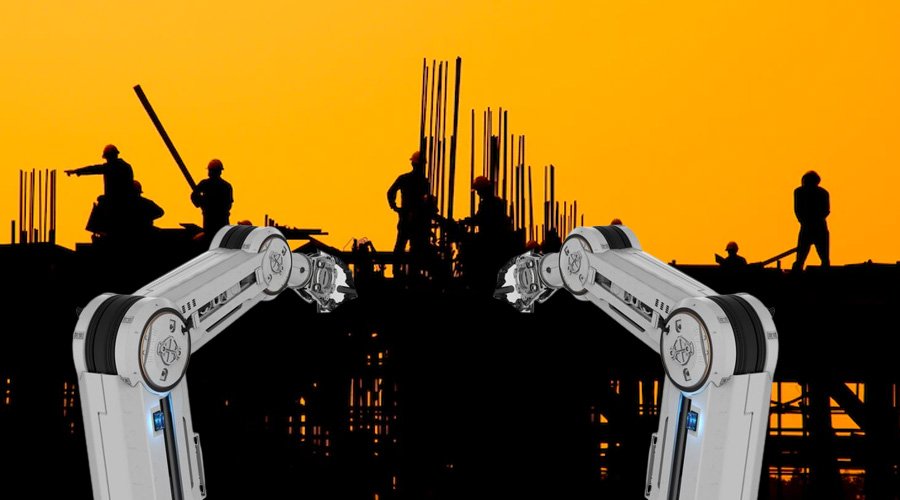
Robots Pitching in for the Construction Industry Are in Major Flux

Robots Pitching in for the Construction Industry

Roomba or self-propelled trench diggers are the robots that might construct your home.

Self-propelled trench diggers are Drones that can simulate structures in 3D. Roomba-like machines that draw the placement of each floor beam. As houses, offices, and industrial sites rise across the nation, the construction site of the future is already here. At a time when the construction industry is going through a lot of change, robots can lay bricks, hang plasterboard, and tie rebar are helping out. Matthew Johnson-Roberson, the head of the robotics institute at Carnegie Mellon University, said that construction robots are a perfect illustration of how robotic technology could affect people’s lives. They want to automate a challenging industry that includes moving parts and a variety of intricate sites and structures.

A crisis in the building industry is accelerating innovation. Thousands of jobs remain unfilled, and building expenses are growing. A growing number of those in the field are getting older and working in hazardous situations. Federal funding is flooding in to improve infrastructure among this. More construction companies are using robots to automate work on building sites as a result of a convergence of circumstances. In the industry, robots are not new. Amazon employs a variety of robots in its operations, including the humanoid-like Sparrow and the Roomba-like Kiva, which move packages. Elon Musk, who is infamous for saying he will automate Tesla’s production, recently introduced the Optimus humanoid robot prototype with the intention of changing the nature of physical labor. Google recently demonstrated artificially intelligent robots that can assist people with daily duties. Even some robots are developing frying and cooking skills.

Johnson-Roberson noted that the dynamics of building, however, have changed. Since the duties are typically more outlined and call for less refinement in large-scale constructions like dams, bridges, and highways, robotic technology has been adopted more quickly in these contexts. Because many of the duties require fine motor control, which robots struggle to perform, the home construction sector has lagged, he continued. Nevertheless, Johnson-Roberson said it’s unlikely that humanoid robots would soon be working on construction sites, hammering nails into planks of wood. Instead, significant jobs like digging, surveying, pouring concrete, and carrying heavy objects around will probably be automated using advancements in laser range-finding technology, artificial intelligence software, robotic gear, and sensors.

Fastbrick Robotics, an Australian start-up, creates the Hadrian X, a mobile robot that can lay up to 1,000 bricks per hour. Advanced Construction Robotics in Pennsylvania creates robots that can connect up to 1,100 rebar junctions every hour. The San Francisco-based company Canvas has a mobile robot that can complete a drywall.

The founder and CEO of Dusty Robotics, Tessa Lau, started her company by refurbishing her own house. She became aware of how many processes were necessary and that there was almost always a chance for error, potentially leading to delays. The actual sketching out of a home or work floor to indicate to builders where each beam has to be nailed or plank needs to go was one of the areas that might be automated, she concluded after studying the construction business. She had a foundation in artificial intelligence and robotics. Her business developed a Roomba-like tool that prints an imprint on the real floor of the construction site to accomplish that. Instead of drawing lines with chalk, individuals upload digital drawings into software that tells the Roomba where to go with an accuracy of 1/16th of an inch.

Lau acknowledged the worry that robots would replace labor on construction sites, but she pointed out that as fewer people enter the field, more people are retiring from the industry. She claimed that this is causing a crisis for construction companies, who must find a method to complete the work while there is a talent shortage. She declared, “Our machines are stealing jobs.” “People aren’t filling those positions, therefore the only way we’re going to be able to meet the world’s need for housing and infrastructure is if we construct robots to take those jobs away.”

The post Robots Pitching in for the Construction Industry Are in Major Flux appeared first on Analytics Insight.

Top 10 Engineering Colleges in India Offering AI and Robotics Courses

Top 10 Engineering Colleges

The top engineering colleges in India offering AI and Robotics courses are enlisted

Numerous developers are being employed worldwide in AI and robotics, the most active area of technology today. The range of improved employment prospects is expanding as more businesses use AI in their operations.

ISRO, Tech Mahindra, TATA, DRDO, BARC, and other leading employers in robotics and AI in India include these. Freshers who are hired by these large corporations may receive yearly salaries of up to INR 5 lakhs. Here is a list of the top engineering colleges in India offering AI and Robotics courses.

  1. Amity University

Location: Gurugram

A combined B.Tech and M.Tech program in AI and robotics, consisting of 10 semesters each and encompassing a range of machine learning topics, is available from Amity University. Two required internships are also part of the curriculum for the students.

  1. LPU

Location: Jalandhar

LPU is renowned for its offers and placements. An eight-semester curriculum with 4-6 optional courses in engineering, such as automotive, robotics, and cyber security, has also just been introduced by this institution. It is called the B.Tech in Robotics and Automation.

  1. SASTRA University

Location: Thanjavur

The confluence of these technologies with electronics, computer engineering, and mechanical engineering is also covered in an interdisciplinary course. The robotics course covers human-like autonomy and robotics automation systems.

  1. Somaiya Vidyavihar University

Location: Mumbai

The most crucial components of AI and robotics with computer vision are covered in this B.Tech course, including perception, sensor data, environment learning, planning, reasoning, and decision-making as well as automating them. Lab exercises, contests, quizzes, and mini-projects are all part of the course.

  1. NRI Group of Institutions

Location: Bengaluru

One of the finest institutions in MP, the NRI Institute is situated in Madhya Pradesh and provides a comprehensive and advanced study in AI. Thanks to its training and placement unit, the university has maintained a 100% placement rate over the years.

  1. Jain University

Location: Bengaluru

An industry-focused engineering curriculum, comprising electrical, electronics, computer science, instrumentation, AI/ML, and mechatronics, is included in this B.Tech program from Jain University. Graduates of this program can work in such fields as hardware design, process engineering, PLC and SCADA engineering, automation testing, and CAD design.

  1. NITTE University

Location: Mangalore

NITTE is providing a thorough curriculum that includes big data analytics, programming, and deep learning in AI, as well as sensing, programming, designing, and controlling in robotics and machine learning, with a focus on the deployment of Industry 4.0 technologies.

  1. Usharama College of Engineering and Technology

Location: Andhra Pradesh

Usharama is one of the few institutions offering a variety of courses for teaching and research in artificial intelligence and machine learning, with several degrees in these fields spanning from Bachelor’s Degrees to Master’ Degrees.

  1. VIT

Location: Chennai

This course, which offers a potential specialization in AI and Robotics, might be a terrific springboard for aspiring engineers to learn more about AI, eventually, land a job, and create remarkable products.

  1. GNA University

Location: Punjab

Robotics and Automation Engineering is a new, practically oriented subject that GNA University has introduced. It prepares the path for careers in mining, ocean research, nanotechnology, aviation engineering, and many other fields.

The post Top 10 Engineering Colleges in India Offering AI and Robotics Courses appeared first on Analytics Insight.
Top 10 High-Paying Robotics Internships to Apply for in February 2023

Top 10 High-Paying Robotics Internships

The Top 10 High-Paying Robotics Internships to Apply for in February 2023

Intro

As the field of robotics continues to grow and expand, there are more opportunities for students and recent graduates to get hands-on experience in this exciting and innovative field. Whether you are interested in software engineering, mechanical engineering, or electrical engineering, there are many opportunities for you to gain valuable experience in robotics.

If you are looking for a high-paying internship in the field of robotics, you have come to the right place. In this article, we will be discussing the top 10 high-paying robotics internships available in February 2023. These internships are ideal for students who are looking to gain experience in robotics, while also earning a competitive salary.

  1. Google Robotics Internship

Google is one of the leading tech companies in the world and it is no surprise that they offer an exceptional robotics internship program. The Google Robotics Internship offers a chance for students to work on cutting-edge robotics projects and gain hands-on experience in this exciting field. This internship is ideal for students who are interested in software engineering, as well as mechanical and electrical engineering

  1. Amazon Robotics Internship

Amazon is one of the largest online retailers in the world and they have a strong focus on innovation and technology. The Amazon Robotics Internship provides students with an opportunity to work on the development and implementation of robotic systems in warehouse and distribution centers. This internship is ideal for students who are interested in mechanical engineering and electrical engineering, as well as software engineering.

  1. NASA Robotics Internship

NASA is one of the world’s leading space agencies and they have a strong focus on technology and innovation. The NASA Robotics Internship provides students with an opportunity to work on the development and implementation of robotic systems for space exploration and research.

  1. Microsoft Robotics Internship

Microsoft is one of the world’s largest tech companies and they have a strong focus on innovation and technology. The Microsoft Robotics Internship provides students with an opportunity to work on the development and implementation of robotic systems for a variety of applications.

  1. Intel Robotics Internship

Intel is one of the world’s leading technology companies and they have a strong focus on innovation and technology. The Intel Robotics Internship provides students with an opportunity to work on the development and implementation of robotic systems for a variety of applications.

  1. Tesla Robotics Internship

Tesla is one of the world’s leading electric vehicle companies and they have a strong focus on technology and innovation. The Tesla Robotics Internship provides students with an opportunity to work on the development and implementation of robotic systems

  1. Bosch Robotics Internship

Bosch is one of the world’s leading technology companies, known for their innovation and expertise in a variety of fields, including robotics. The Bosch Robotics Internship provides students with an opportunity to work on the development and implementation of robotic systems for various applications, including industrial and consumer products.

  1. Fanuc Robotics Internship

Fanuc is one of the world’s leading robotics companies, known for its expertise in industrial automation and robotics. The Fanuc Robotics Internship provides students with an opportunity to work on the development and implementation of robotic systems for industrial applications.

This internship is ideal for students who are interested in mechanical engineering, electrical engineering, and software engineering. As a Fanuc Robotics Intern, you will be working with a team of experienced engineers and technicians to help improve the efficiency and accuracy of robotic systems in various industries.

  1. ABB Robotics Internship

ABB is a global technology leader in the field of robotics and automation. The ABB Robotics Internship provides students with an opportunity to work on the development and implementation of robotic systems for various applications, including industrial and consumer products.

This internship is ideal for students who are interested in mechanical engineering, electrical engineering, and software engineering. As an ABB Robotics Intern, you will be working with a team of experienced engineers and technicians to help develop new technologies and improve existing systems.

  1. Rockwell Automation Robotics Internship

Rockwell Automation is a global leader in the field of industrial automation and robotics. The Rockwell Automation Robotics Internship provides students with an opportunity to work on the development and implementation of robotic systems for various industrial applications.

This internship is ideal for students who are interested in mechanical engineering, electrical engineering, and software engineering. As a Rockwell Automation Robotics Intern, you will be working with a team of experienced engineers and technicians to help improve the efficiency and accuracy of robotic systems in various industries.

The post Top 10 High-Paying Robotics Internships to Apply for in February 2023 appeared first on Analytics Insight.

What is Smart Robotics? What are its Benefits and Challenges?

Smart Robotics

Smart Robotics: Understanding the Benefits and Challenges

Smart Robotics refers to the application of artificial intelligence and machine learning to create robots that are capable of performing complex tasks. It is an innovative and rapidly growing field that offers many benefits and challenges. In this article, we will take a closer look at what Smart Robotics is, what benefits it offers, and what challenges it presents.

What is Smart Robotics?

Smart Robotics is a field of robotics that involves the development of robots with advanced intelligence and capabilities. These robots use artificial intelligence algorithms, machine learning, and computer vision to analyze and interpret their surroundings, allowing them to make decisions and perform tasks that would otherwise require human intervention.

One of the key advantages of Smart Robotics is that it enables robots to be programmed to perform tasks that are beyond the physical capabilities of human beings. For example, a Smart Robotics system might be programmed to perform a complex surgical procedure with precision and accuracy that is simply not possible for a human surgeon.

Benefits of Smart Robotics

There are many benefits to using Smart Robotics in various industries. Here are just a few of the most significant:

Increased Efficiency

One of the biggest benefits of Smart Robotics is that it increases efficiency. Robots can work around the clock without stopping, and they can perform complex tasks much faster and more accurately than human beings. This means that companies can get more done in less time, which can increase productivity and reduce costs.

Improved Quality

Another benefit of Smart Robotics is that it can improve the quality of products and services. By using robots to perform complex tasks, companies can reduce the risk of human error, which can result in higher-quality products and services. In addition, robots can be programmed to perform tasks with precision and accuracy which is simply not possible for human beings, which can result in even higher quality products and services.

Increased Safety

Smart Robotics can also increase safety in various industries. For example, robots can be used in dangerous environments, such as construction sites or hazardous waste facilities, to perform tasks that would otherwise be too dangerous for human beings. In addition, robots can also be used to perform complex and dangerous tasks, such as performing surgeries, which can reduce the risk of complications and improve patient outcomes.

Improved Customization

One additional benefit of Smart Robotics is improved customization. With the use of artificial intelligence and machine learning, robots can be programmed to perform tasks in unique ways, customized to the specific needs and requirements of each individual business or industry. This allows for greater flexibility and adaptability in how these systems are used and can result in more personalized and effective solutions.

Challenges of Smart Robotics

While there are many benefits to using Smart Robotics, there are also some challenges that must be overcome. Here are a few of the most significant:

High Costs

One of the biggest challenges of Smart Robotics is the high cost of developing and implementing these systems. The cost of developing and building robots, as well as the cost of training them to perform complex tasks, can be very high, which can make it difficult for smaller companies to adopt these technologies.

Technical Complexity

Another challenge of Smart Robotics is the technical complexity of these systems. Robots must be programmed with advanced algorithms and artificial intelligence, which can be difficult and time-consuming. In addition, robots must be able to interact with their surroundings, which can require sophisticated computer vision and machine learning algorithms.

Ethical Concerns

There are also ethical concerns associated with the use of Smart Robotics. For example, there is a risk that robots could replace human workers, which could lead to job loss and unemployment. In addition, there are also concerns about the potential for robots to be used for malicious purposes, such as for military or criminal activities.

Dependence on Technology

One additional challenge of Smart Robotics is the dependence on technology. As these systems become increasingly advanced and integrated into various industries, there is a risk of becoming too reliant on technology, which can result in a lack of redundancy and a higher risk of system failure. In addition, the need for constant updates and maintenance to keep up with advances in technology can also present a challenge for companies and industries that use these systems.

The post What is Smart Robotics? What are its Benefits and Challenges? appeared first on Analytics Insight.

Top 10 Most Popular Robotic Process Automation Tools in 2023

Process Automation tool is the key process of implementing and delivering the management tasks with more efficiency and reliability.

Robotic process automation is a software technology that makes it simple to design, build, deploy, and manage the robots’ system software. The main advantage of this automation technology mimics the interlinkage of many digital systems and software.

Robotic process automation is used in various fields and sectors like Banking and financial services, as well as healthcare.

Here are the top 10 most popular robotic process automation tools in 2023:

1. UiPath:

The robotic process automation tool UiPath (User Interface) is used for end-to-end automation. Many methods are used in UiPath to transform all the monotonous pieces of work into automated processes. The best feature of the UiPath is automation through Hub-Insights cloud integration. The test result in UiPath gives better accuracy, improved compliance, and increases speed and productivity. This UiPath is one of the 10 most popular robotic tool which Open and free of cost for the users.

2. Blue prism:

Blue Prism is a process automation tool for intelligent enterprise automation. In any business or organization, operational efficiency and flexibility are enhanced for individuals by using blue prism automation. Blue Prism can process assessment, task mining, automated decisions, and intelligent orchestration. Blue prism platform is one of the best automation tools in 2023.

3. Automation 360:

Automation 360 is the unified, integrated platform for automating business processes and automating repetitive, manual tasks. Automation 360 can also be used for document generation, process intelligence, and automated workflow. This platform has been designed with both technical and non-technical users in mind. Because the automation 360 is entirely AI-driven, any task completed with it will result in increased productivity. The best feature of the automation 360 platform is that the cost of ownership is lower and it doesn’t require heavy maintenance.

4. Automation edge:

All the front-end and back-end processes can be handled by the automation edge automation tool. All processes are completed more efficiently, with fewer errors, and at a faster pace. With Automation Edge, we can complete all of the non-essential tasks. This automation edge is a low-code acrobatic tool.

5. Kofax:

Kofax’s platform is the one of the 10 most popular robotic tools which is used to extend the workforce capacity, reduce system disruption, and accelerate workflows. In the legacy systems, the data is integrated using Kofax.

6. Pega:

The Pega the process automation tool is mainly used for duplication, business risks, and errors. Pega’s tool is more secure for users. The results produced by the Pega are faster and better. The tool is also cost-effective; the overall IT cost is lower, and the productivity is high. The tool is robust and reliable.

7. Nice:

A nice automation tool performs the end-to-end process in business organizations. This useful tool assists users in an unguarded or organised manner. It gives support to the user directly from the desktop while the user is in contact with the customer over the phone.

8. Mulesoft automation:

Mulesoft is used in combination with MuleSoft APIs to power end-to-end automation. Without APIs, users can unlock data from legacy systems and applications, and Mulesoft makes for smarter and faster decision-making. Mulesoft is one the best tool Automation tools of 2023.

9. Keysight’s eggplant:

The features of eggplant are that it can enable the link to the data source, and for each record, it executes the task. Keysight’s eggplant is compatible with both automated and manual processes.

10. Inflectra rapise:

Inflectra supports tasks of any size. The platform is open to users for enhancements and integration. The tools can be used on the web and on the desktop, and they can be used for web scraping and screen scraping. There is a unique code-less methodology known as Rapise Visual Language (RVL). This code language is for the ease of recording and maintaining automation processes.

The post Top 10 Most Popular Robotic Process Automation Tools in 2023 appeared first on Analytics Insight.

How AI, Robotics, and Automation Change the Landscape of Employment?

The AI, Robotics, and Automation are Transforming the Future of Work

At a time when artificial intelligence (AI), robotics, and automation are becoming increasingly integrated into the workplace, it’s natural to wonder about the future of employment. The impact of these technologies on the job market is already being felt, and it is likely to intensify in the coming years. This article aims to examine how AI, robotics, and automation are changing the landscape of employment.

The Rise of AI, Robotics, and Automation

AI, robotics, and automation are not new concepts. However, recent technological advancements have accelerated their development and made them more accessible. AI, for example, is becoming increasingly sophisticated, capable of performing tasks that previously required human intelligence, such as language translation, image recognition, and decision-making. Robotics and automation, meanwhile, are transforming industries from manufacturing to healthcare, replacing human workers with machines that can perform tasks faster, more accurately, and at a lower cost.

The Impact on Employment

The increasing use of AI, robotics, and automation is already having a significant impact on the job market. While these technologies are creating new jobs, they are also displacing existing ones. According to a report by the World Economic Forum, by 2025, the displacement of workers due to automation could reach 85 million jobs in medium and large businesses across 15 major economies.

However, it’s not all bad news. The same report suggests that AI, robotics, and automation will also create 97 million new jobs in the same period. The challenge is ensuring that the displaced workers are equipped with the skills needed to fill these new roles.

The Changing Nature of Work

The rise of AI, robotics, and automation is also changing the nature of work. Many of the tasks that machines are taking over are repetitive and require little creativity. This is leading to a shift in the types of jobs that are available, with an increasing emphasis on roles that require creativity, problem-solving, and emotional intelligence.

This shift is likely to have a profound impact on education and training. The skills that are in demand are changing rapidly, and it’s becoming increasingly important for workers to be able to adapt and learn new skills quickly.

The Need for New Policies

The impact of AI, robotics, and automation on employment is a complex issue that requires a multifaceted solution. Governments, businesses, and individuals all have a role to play in ensuring that the transition to a new era of work is as smooth as possible.

One of the key challenges is ensuring that workers are equipped with the skills needed to fill the new roles that are being created. This will require investment in education and training, as well as new policies that incentivize workers to develop their skills and transition to new roles.

Another challenge is ensuring that the benefits of these new technologies are shared fairly. AI, robotics, and automation have the potential to increase productivity and reduce costs, but they also have the potential to exacerbate inequality. It’s essential that policies are put in place to ensure that the benefits are distributed fairly and that workers are not left behind.

The Benefits of AI, Robotics, and Automation

AI, robotics, and automation have many benefits that can enhance workplace productivity and efficiency. These technologies can perform repetitive tasks accurately and at a faster pace than human workers, allowing companies to save time and money. They can also help businesses process and analyze large amounts of data, enabling them to make informed decisions quickly.

In addition to their productivity benefits, AI, robotics, and automation can also improve workplace safety. These technologies can perform dangerous tasks that would otherwise be too risky for human workers. They can also reduce the risk of human error, minimizing accidents and improving safety in the workplace.

The Future of Work

The integration of AI, robotics, and automation into the workplace is not going to slow down anytime soon. It is predicted that by 2030, up to 800 million jobs could be lost due to automation. However, it is also expected that there will be a shift towards more skilled jobs, with the demand for workers in fields such as data analysis and programming increasing.

Furthermore, as the workplace becomes more automated, soft skills such as creativity, critical thinking, and problem-solving become increasingly important. These skills are difficult to automate and are likely to be in high demand in the future.

Conclusion

The rise of AI, robotics, and automation is changing the landscape of employment. While these technologies are creating new opportunities, they are also displacing existing jobs. The challenge is to ensure that the displaced workers are equipped with the skills needed to fill the new roles that are being created.

The post How AI, Robotics, and Automation Change the Landscape of Employment? appeared first on Analytics Insight.