Robotizing Humans: Development, Innovation and Evaluation of Humanoids

Robotizing

Humans are always exploring new and innovative ways, that makes them the most advanced and intelligent creatures of nature. From an artificial intelligence system to research and development in robotics, all are the creations of humans’ intelligent minds. And now it has entered in the race of making Humanoid robots. Today, the development of humanoids is increasing rapidly, and they are occupying a larger percentage of robotics research space.

Humanoid is a robot with a body shape built to resemble the human body. Typically, this kind of robot has a torso with a head, two arms and two legs that can walk like humans. However, it isn’t necessary that they look convincingly like a real person as some humanoids have a helmet instead of a face such as ASIMO, a humanoid robot created by Honda in 2000.

The concept of humanoid robots has been with us for several decades, when Ron Wensley in 1927, developed a robot, named Herbert Televox. This was the first-ever humanoid robot, which could lift the receiver to take a telephone call and control simple processes by operating switches according to the signals it received. Though the robot lacked the ability to speak and only could listen with a sensitive microphone placed close to the telephone receiver and had able to respond to actions based on sound and pitch.

The modern concept of humanoids began to develop with the advent of the industrial revolution that enabled the use of complex mechanics. They are now used as a research tool in several scientific areas.

They are being designed by most robotic manufacturing companies for various purposes, including serving as crucial instruments in scientific research; better understanding of human cognitive abilities; simulating human behavior, and can be used to perform human tasks like a receptionist. Humanoids can also serve very well as personal assistants where they can assist the elderly and sick people.

They are even these days being leveraged for entertaining purposes where they can sing, play music, and interact with the audience. Recently, CloudMinds, known for intelligent robot-systems, has developed a smart robot rental program that serves intelligent cloud service humanoid robots. The robot is particularly designed for entertainment at trade shows, weddings, special events, conferences, and offices.

Humanoids can also be leveraged for perilous and dicey tasks such as space exploration. For instance, ISRO’s Vyom Mitra, a female humanoid robot, that is designed for the organization’s Gaganyaan unmanned mission. And the Indian Space Research Organisation (ISRO) is planning to send it before sending out humans in 2022.

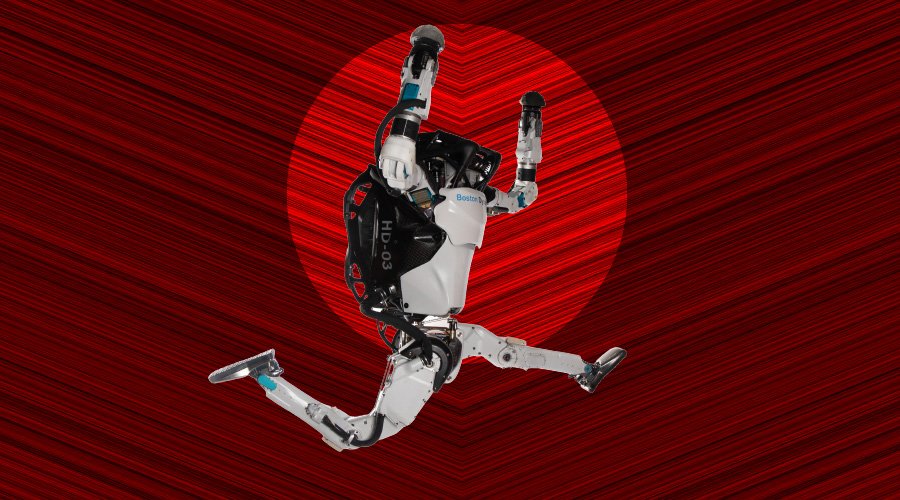
Humanoids are also used extensively in the military as most countries’ military forces are exploring and experimenting with robots. For instance, Boston Dynamics’ 6 feet, 2 inches humanoid robot, named Atlas. The robot is designed for high mobility and can negotiate outdoor, and rough terrain.

The post Robotizing Humans: Development, Innovation and Evaluation of Humanoids appeared first on Analytics Insight.

The Future Scope of Humanoid Robots

Robots

The scope of humanoid robots goes beyond just being auxiliary machines or companion robots

While humanoids currently are one of the smallest groups of service robots, they have the potential to become the industrial tool of the future. The robotics of tomorrow is an exciting prospect as companies like Softbank Robotics and others have created human-like robots to be used as medical assistants and teaching aids.

Currently, humanoid robots are outshining in the medical industry, particularly as companion robots. Even, companies are leveraging these kinds of robots to fill engineering tasks. For instance, a four-year joint research project was conducted by Joint Robotics Laboratory and Airbus Group to make use of humanoid robotic technology in aircraft manufacturing facilities. By utilizing humanoid robots on aircraft assembly lines, Airbus looks to free up human operators of some of the most arduous and perilous tasks, so that they could then focus on higher-value tasks.

However, the prime intricacy found with these robots is the confined spaces where they have to work in as well as being able to move without colliding with the surrounding objects.

While the robotic industry will witness an increase in humanoid robots, it will also affect the service industry. Looking at industry insights, the robots in the service industry are largely led by floor cleaning robots; unmanned aerial vehicles (UAVs) and lawnmowers; and humanoid robots, assistant robots and companion robots, telepresence robots, human exoskeletons, surgical robots and autonomous mobile robots.

Many countries like the US, UK, Canada, Japan, among others will be leading the adoption of humanoid robots. Also, the four major industries that will be seen taking charge of the advancements would be computer and electronic products, the electrical equipment and appliances industry, transportation equipment, and machinery.

Thus, there are much larger expectations that humanoid robots in years to come will serve as companions and assistants to humans in their daily lives. And ultimately, they will give their helping hands in times of natural disasters.

The post The Future Scope of Humanoid Robots appeared first on Analytics Insight.

Top Humanoid Robots Innovations So Far

Innovations

Top Humanoid Robot Innovations in Use Right Now That Changed the World

Humanoid robots have the utmost potential to become a future industrial tool. They will continue to play a central role in robotics research and many 21st century applications. Currently, they are likely to serve as companions and assistants in daily life and as ultimate assistants in human-made and natural disasters.

Here are some top innovations in humanoid robots bringing the world beyond imagination.

Sophia

Developed by Hong Kong-based company Hanson Robotics, Sophia is a social humanoid robot. She was activated in February 2016 and made her first public appearance at South by Southwest Festival in mid-March 2016 in Austin, TX. Since its launch, Sophia has garnered a lot of media coverage, featuring numerous high-profile interviews, events, and panel discussions across the world. Sophia is a first of its kind of robot who received citizenship from any country and was named the world’s first UN Innovation Champion.

Toyota T-HR3

Toyota T-HR3 is a third-generation humanoid robot, which was designed from the get-go to be remote-controlled by a human. It is 1.5-meter tall, weighs 75 kilograms, and has torque-controlled freedom of 32 degrees with a pair of 10 fingered hands. The robot is designed to be a platform with capabilities that can safely assist people in a different variety of settings like home, medical facilities, disaster-stricken areas, construction sites, and outer space. T-HR3 is controlled by a Master Maneuvering System that enables the robot’s entire body to be instinctively operated with wearable controls. That control system maps the robot’s hand, arm, and foot movements and a head-mounted display allows users to see from the robot’s perspective.

Honda E2-DR

E2-DR is a disaster response robot from Honda that is able to navigate through dangerous, complex environments. The robot looks like a humanoid, and heavier and tougher than the company’s Asimo, first presented in 2000. Honda E2-DR is designed to perform as a rescuer in a broad range of situations dangerous for human rescuers, including areas with high background radiation or in a structurally unsound, badly damaged building. Armed with three LED-equipped cameras, rotating laser rangefinders, infrared projectors, and 3D cameras to navigate its potentially hazardous environments, Honda E2-DR is 1.68 m tall, 85 kg in weight.

Xin Xiaomeng

Xin Xiaomeng is the first female AI news anchor at the Chinese state-owned Xinhua news agency. In February last year, the news agency divulged its latest effort to deliver content through AI. Working in collaboration with the Chinese search engine company Sogou to produce Xin, the robot made her debut at China’s Two Sessions meetings. Xin Xiaomeng is the second AI-based news anchor working for the news agency, developed in collaboration with Sogou. Xinhua has been experimenting with AI-driven journalism in recent years, including a robot reporter whose attempt to emulate a human went slightly awry.

Boston Dynamics Atlas

Atlas is a bipedal humanoid robot that was developed by Boston Dynamics, with funding and oversight from the U.S. Department of Defense agency, DARPA. The robot, which is 1.8-meter tall, is designed for the DARPA Robot Challenge. Unveiled in July 2013, the objective of this robot was to assist in a variety of search and rescue tasks. The control system of Atlas coordinates motions of the arms, torso, and legs to accomplish whole-body mobile manipulation, significantly expanding its reach and workspace. The second Atlas generation could walk on snow, pick up boxes, and stand up alone after falling, that humanoids are prone to perform

The post Top Humanoid Robots Innovations So Far appeared first on Analytics Insight.

Robotic Wing that Can Flap Like a Bird and Beyond

Robotic Wing

Robotic wing designed by a Swedish-Swiss research team is capable of flapping like a bird

According to a recent study done by Lund University in Sweden, birds fly more effectively by folding their wings during the upstroke. The results could mean that sect-folding is the coming step in adding propulsive and aerodynamic effectiveness in flopping drones. Indeed the precursors to catcalls — defunct raspberry-like dinosaurs served by folding their bodies during the upstroke, as they developed active flight. Among flying creatures alive at the moment, birds are the largest and most effective. This makes them particularly intriguing for scientists to develop alleviation models for drones. Yet, determining which flopping strategy is stylish requires studies of colorful ways of flopping the bodies. Thus, a Swedish- Swiss exploration team has constructed a robotic-sect that can achieve just that — flopping like a raspberry, and beyond. The issue of perfecting drone dexterity and versatility has directed the attention of numerous roboticists toward flopping flight, a mode of locomotion used by nature’s active fliers. Among extant flying creatures, birds are the largest and arguably the most effective, making them particularly intriguing as an alleviation model for drones.

“We’ve fabricated a robot sect that can exhibit delirium more like raspberry than former robots but also delirium in a way that birds cannot do. By measuring the performance of the sect in our wind lair, we’ve studied how different ways of achieving the sect upstroke affect force and energy in flight ”, says Christoffer Johansson, a biology experimenter at Lund University, “ The new robotic sect can be used to answer questions about raspberry flight that would be insolvable simply by observing flying birds. Research into the flight capability to live birds is limited to the flopping movement that the raspberry actually uses”, explains Christoffer Johansson. The bio-hybrid robotic sect is partially developed from real feathers, with more advanced kinematic capabilities than former robotic bodies, and is analogous to those of real raspberries. In their former studies, experimenters have shown that birds exhibit delirium more horizontally when flying sluggishly. The new study shows that the birds presumably do it, indeed though it requires further energy because it’s easier to produce sufficiently large forces to stay above and propel themselves. These commodity drones can emulate to increase the range of pets they can fly at. In the first case study, the robotic sect is used to totally study the aerodynamic consequences of different upstroke kinematic strategies at different flight pets and stroke airplanes.

The results indicate that sect folding during upstroke not only favors thrust product, as anticipated but also reduces force-specific aerodynamic power, indicating a strong selection pressure on protobirds to evolve upstroke sect folding. It’s also shown that thrust conditions likely mandate the sect’s stroke tilting. The platoon says their results can also be used in other exploration areas, similar to a better understanding of how the migration of birds is affected by climate change and access to food. There are also numerous implicit uses for drones where this perceptivity can be put to good use. One major purpose might be using drones to deliver goods. A new drive system for flopping sect independent robots has been developed by a University of Bristol platoon, using a new system of electromechanical zipping that does down with the need for conventional motors and gears. This new advance, published moment in the journal Science Robotics, could pave the way for lower, lighter, and further effective micro-flying robots for environmental monitoring, hunting and deliverance, and deployment in dangerous environments. Taking alleviation from and other flying insects, experimenters from Bristol’s Faculty of Engineering, led by Professor of Robotics Jonathan Rossiter, have successfully demonstrated a direct-drive artificial muscle system, called the Liquid- amplified Zipping Actuator (LAZA) that achieves sect stir using no rotating corridor or gears. The LAZA system greatly simplifies the flopping medium, enabling the unborn miniaturization of flopping robots down to the size of insects. In the paper, the platoon shows how a brace of LAZA- powered flopping bodies can give further power compared with nonentity muscle of the same weight, enough for a flight where the robot flew across a room at 18 body lengths per second. They also demonstrated how the LAZA can deliver harmonious flopping over further than one million cycles, important for making flopping robots that can take over long-haul breakouts. The platoon anticipates the LAZA to be espoused as an abecedarian structure block for a range of independent nonentity-like flying robots.

The post Robotic Wing that Can Flap Like a Bird and Beyond appeared first on Analytics Insight.

Python vs C++ vs C vs MATLAB: The best robotic language

Robotics Programming

Python vs C++ vs C vs MATLAB which robotic language is best

Intro

Python, C++, C, and MATLAB are all popular programming languages that are used in a wide range of applications. Each language has its own strengths and weaknesses, and the choice of language will depend on the specific requirements of the project at hand.

Python

Python is a high-level, interpreted language that is known for its simplicity and ease of use. It is often used in scientific computing, data analysis, and machine learning. Python has a large number of libraries and modules that make it easy to perform complex tasks, and it has a large and active community of developers.

C++

C++ is a high-level, compiled language that is widely used in the development of software, games, and other applications. It is known for its speed and efficiency, and it is often used in applications that require a lot of computational power. C++ also has a large number of libraries and modules available, and it is widely supported by many platforms.

C

C is a low-level, compiled language that is known for its efficiency and low-level access to system resources. It is often used in systems programming and in the development of embedded systems, operating systems, and other low-level applications. C is widely supported by many platforms and has a large number of libraries available.

MATLAB

MATLAB is a high-level, interpreted language that is widely used in scientific computing, data analysis, and engineering. It is known for its powerful mathematical and visualization capabilities, and it has a large number of libraries and modules available for specific tasks. MATLAB is often used in academia and in industries such as aerospace, automotive and finance.

Which programming language should you choose?

The choice of programming language depends on the specific requirements of the project. Python is a good choice for scientific computing, data analysis and machine learning, while C++ is a better choice for applications that require a lot of computational power. C is good for systems programming and the development of embedded systems, and MATLAB is best suited for scientific computing, data analysis, and engineering.

How fast can you learn this programming language?

The speed at which a user can learn a programming language depends on various factors such as the user’s prior programming experience, the language’s complexity, and the resources available for learning.

Python is known for its simplicity and ease of use, making it a great language for beginners to learn. Its clear and readable syntax, along with a large number of resources available for learning, can make the learning process relatively fast.

C++ can be slightly more complex than Python, as it is a compiled language and has more features and concepts to learn. However, with the right resources and guidance, a user can learn the basics of C++ relatively quickly.

C is considered a low-level language and can be more challenging to learn compared to Python and C++. It requires a good understanding of computer systems and memory management, and it is more prone to errors. C can be more time-consuming to learn than the other languages mentioned.

MATLAB, like Python, is considered to be relatively easy to learn, especially for users with a background in mathematics and engineering. MATLAB’s syntax is similar to that of other programming languages and has a wide range of resources and tutorials available for learning.

In general, a user with prior programming experience will be able to pick up a new language relatively quickly, but for a complete beginner, it might take more time to learn

Which of these programming languages is best?

All of the programming languages mentioned (Python, C++, C, and MATLAB) are widely used in various industries and domains. However, based on the popularity rankings and job demand, Python is considered to be the most used one among the four.

Python is the most popular language among developers, according to the TIOBE Index, which tracks the popularity of programming languages. It’s also consistently ranked as the most sought-after language in job postings. Python’s popularity is attributed to its simplicity, readability, and wide range of libraries and modules that make it easy to perform complex tasks. It’s used in a variety of fields, such as web development, data science, artificial intelligence, and scientific computing.

C++ and C are also widely used, especially in the development of software, operating systems, and embedded systems. However, the C++ job demand is more than C.

MATLAB, while it’s not as popular as Python, is widely used in scientific computing, data analysis, and engineering. It’s often used in academia and industries such as aerospace, automotive, and finance.

Overall, Python is considered to be the most used and versatile programming language among the four mentioned.

The post Python vs C++ vs C vs MATLAB: The best robotic language appeared first on Analytics Insight.

Top Smartest Home Robots that You Can Actually Buy in 2023

Smartest Home Robots

The top home robots for 2023, according to engineers and technology experts

With the invention of the robot vacuum, the idea of a robot handling errands for you initially took shape. There are many different house robots on the market now that are prepared to assist you in crossing things off of your never-ending to-do list.

  • The automatic grill cleaning robot is a novice home robot that comes with a rechargeable battery, a dishwasher-safe removable tray, a detachable brush, and a telescopic arm. The robot is easy to assemble and use, just place it on the grill surface and press the power button. After a few minutes of working time, the robot automatically returns to the charging base, where it can recharge its battery for the next use. Furthermore, it can be used. with a price tag of $599, the device isn’t too expensive, however, it still depends on the customer’s individual needs and preferences.
  • This robotic lawnmower is ideal for small to medium-sized gardens and yards because it can cut grass up to 3.6″ tall and cover 0.4 acres. The Husqvarna Auto mower 430X is a feature-rich and smart home-friendly option if your backyard is larger. This robotic lawnmower, which is made by a reputable company, performed admirably and was a wise purchase. Installing boundary and guide wires are required for the auto mower to operate, but after that, you can sit back and unwind. This lawnmower has a battery life similar to that of a robot vacuum and will return to its charging station when it runs out of power.
  • Want a dog but are unable to care for the fur or the demanding walking schedule? Enter Aibo, a robotic dog that doesn’t shed and doesn’t require walks (though you can still teach it skills, have it use the restroom, and eat virtual food)! Aibo has a variety of sensors integrated into it to help respond and react appropriately to humans, albeit it does need a cloud plan to save data, grow, and evolve. However, it is not a replacement for a real pet. Its facial expressions were astoundingly realistic. Additionally, it can bring refreshments, play music, podcasts, and shows, and work with Alexa to make calls and send reminders.
  • We can all agree that washing the windows may be a difficult process, but this home robot makes it easier to get to all the nooks and crannies. In two hours, this robot cleans your pool by filtering away dirt and debris. Although it hasn’t been evaluated by the Good Housekeeping Cleaning Lab, our experts believe this is a great tool for routine pool care and upkeep. The robot is attached to your windows using suction technology, and you can manually control it using an app to reach even the most difficult-to-reach places. The washable microfibre pads used to gently scrub the windows can be reused in the future.
  • This 2-in-1 robot vacuum and mop, which is rated as one of the top robot vacuums by the Good Housekeeping Institute and the recipient of the 2021 Good Housekeeping Cleaning Awards, can clean all types of floors, including carpets and bare hardwood. Cleaning Lab specialists complimented the robot’s high-end capabilities, including the use of sound waves to scrub and the ability to build personalized cleaning schedules for specific rooms, and they found the setup simple and the app straightforward to use. In addition to responding to vocal commands, the robotic toy Dash also comes with five free apps that teach coding and critical thinking abilities through entertaining projects and challenges. With the ability to sing, sketch, and move around, Dash is sure to keep kids interested.
  • This 840-piece mega kit is intended for LEGO fans and kids aged 7 to 12 who are interested in learning more about coding and robotics. Simply download the free LEGO Boost app to bring five distinct robots to life, including a rover, guitar, cat, and more! Kids may take part in the app’s more than 60 activities, which include coding challenges, in addition to building robots. Its straightforward drag-and-drop interface, which teaches youngsters about loops and variables while simultaneously fostering their problem-solving, creativity, and imaginative play abilities, is what Rothman finds so appealing about it. When your youngster outgrows this toolbox, you may graduate to the more challenging LEGO Mindstorms Robot Inventor for a wider variety of inventive, engaging designs to construct.

The post Top Smartest Home Robots that You Can Actually Buy in 2023 appeared first on Analytics Insight.

Boston Dynamics’ Atlas, a Humanoid Robot, Improvised its Capabilities

Boston Dynamics' Atlas

Boston Dynamics’ Atlas humanoid robot impresses with improvised capabilities

Boston Dynamics, a company recognized for developing advanced robots, recently announced major improvements to the capabilities of Atlas, the humanoid robot. Atlas, a bipedal robot that can walk on two legs, can now travel uneven terrain, recover from falls, pick up and carry goods, open doors, climb ladders, and execute a range of jobs. These developments have been made possible by the incorporation of enhanced grasping and manipulation capabilities, as well as new control algorithms that allow the robot to improvise and adapt to new conditions.

About Boston Dynamics:

Boston Dynamics is a technology firm that focuses on developing advanced robotics and autonomous systems. The business has received international attention for its creative and ground-breaking robotics technology. Boston Dynamics has produced several advanced robots, including the quadrupedal robots Spot and Handle, and the bipedal robot Atlas, with a focus on producing robots that can operate in a wide range of situations and execute a variety of activities. The company’s robots are noted for their advanced abilities, such as walking on two legs, navigating hard terrain, and performing complex tasks.

About Boston Dynamics’ Atlas:

Atlas is a bipedal robot that can walk on two legs and carry out a variety of duties. The robot has 28 hydraulically operated joints, which provide it with a wide range of motion and flexibility. The robot also features a variety of sensors, including LIDAR, stereo cameras, and an IMU, which enable it to comprehend and navigate its surroundings.

The last time Atlas was seen in a video, the robots lacked grasping abilities. The legs were first prioritized with arm mobility limited to balance. Atlas, on the other hand, is now portrayed with crab claw-style hands and wrist movement. Atlas is placed in a construction worksite environment and asked to move objects around to reach its target in the brief demonstration. Atlas may be seen lifting planks to build a bridge, hurling a bag containing two 10-pound weights, pushing a massive wooden box over, and completing a spectacular double quark flip.

Atlas’ Improvised Capabilities:

Atlas’ ability to improvise and adapt to new situations is one of the most significant enhancements to its powers. The robot can now navigate tough terrains such as rocky or uneven terrain and recover from falls and other disturbances. This is due to the creation of new control algorithms that enable the robot to anticipate and adapt to changes in its surroundings.

Atlas’ ability to do a range of activities is another significant improvement. The robot is now capable of picking up and carrying goods, opening doors, and even climbing ladders. This is due to the incorporation of improved gripping and manipulation capabilities. The robot can now grip and manipulate objects with its hands, allowing it to perform a larger range of jobs.

Boston Dynamics has improved the robot’s overall stability and robustness in addition to these capabilities. The robot can now function in a wider range of temperatures and weather conditions, and it is less prone to damage from falls or other disruptions.

Conclusion: Overall, Atlas’ latest developments have pushed the robot one step closer to becoming a viable tool for a wide range of applications, including search and rescue, construction, and manufacturing. With continuous study and development, we can expect this and other robots to have even more astounding skills in the future.

The post Boston Dynamics’ Atlas, a Humanoid Robot, Improvised its Capabilities appeared first on Analytics Insight.

Top 10 Programming Languages for Robotics in 2023

Robotics programming languages

Robotics is a rapidly growing field that relies heavily on programming to control and coordinate the actions of robots. The selection of the right programming language is crucial for the success of a robotics project as it determines the capabilities, performance, and ease of development of the system. There are many pamming languages available, each with its own strengths and weaknesses. In this article, we will discuss the top 10 programming languages for robotics in 2023, taking into account factors such as popularity, ease of use, and suitability for specific tasks.

  1. Python

Python is a popular programming language for robotics due to its simplicity, readability, and versatility. It can be used for a wide range of tasks, including machine learning, computer vision, and control systems. It also has a large community and many open-source libraries and frameworks that support robotics development. Due to its simplicity and readability, it is also a popular choice for beginners in robotics.

  1. C++

C++ is a powerful, high-performance programming language that is widely used in robotics due to its ability to handle complex algorithms and low-level operations. C++ can be used for a wide range of tasks, including real-time control systems, motion planning, and sensor processing. It also has a large community and many open-source libraries and frameworks that support robotics development

  1. Java

Java is a popular programming language for robotics due to its platform independence, portability, and large community. It is widely used in industry, and Java Virtual Machine (JVM) allows it to run on many different platforms. Java is an object-oriented language, and it has a rich set of libraries and frameworks that support robotics development. It’s also widely used for developing Android mobile applications, which makes it a good choice for robotics projects that involve mobile robots.

  1. C#

C# is a popular programming language for robotics due to its simplicity and versatility. It’s a modern, object-oriented language and is widely used in industry. It’s also the primary language for developing Windows applications, making it a good choice for robotics projects that involve integrating with other Windows-based systems. The language also has a large community and a rich set of libraries and frameworks that support robotics development.

  1. MATLAB

MATLAB is a numerical computing environment and programming language that is popular in robotics for its ability to handle complex mathematical computations, data visualization, and simulation. It is widely used in research and education for prototyping, modeling, and simulating robotics systems. It also has a large community and many toolboxes and libraries that support robotics development.

  1. JavaScript

JavaScript is a popular programming language for robotics due to its flexibility and ability to run on various platforms. It can be used to control robots and other devices through web interfaces and can be used to create web-based visualization and control tools. It’s commonly used in combination with other technologies such as Node.js and ROS to create robotics applications.

  1. Lua

Lua is a lightweight, high-performance programming language that is popular in robotics due to its simplicity and small footprint. It is often used as an embedded scripting language to control and configure robotics systems. Lua is a simple and easy-to-learn language that is well-suited for small-scale robotics projects, such as those involving embedded systems. It also has a small memory footprint and can be easily integrated with other languages such as C/C++.

  1. Ruby

Ruby is a popular programming language for robotics due to its simplicity, readability, and ease of use. It’s an object-oriented language that is easy to learn and use, making it well-suited for small-scale robotics projects. It also has a large community and many libraries and frameworks that support robotics development

  1. Go

Go, often referred to as Golang, is a modern, open-source programming language designed for building robust, concurrent, and scalable systems. It is widely used in robotics for its ability to handle large amounts of data and its support for concurrency, making it well-suited for building distributed systems. Go is a statically-typed and compiled language, which makes it efficient and fast. It’s also known for its simplicity and readability, making it easy to learn and use

  1. Rust

Rust is a modern, open-source programming language designed for building robust and safe systems. It is gaining popularity in robotics due to its memory-safety features, which can help prevent common programming errors such as buffer overflows, and its ability to handle low-level operations. Rust is a statically-typed and compiled language, which makes it efficient and fast.

The post Top 10 Programming Languages for Robotics in 2023 appeared first on Analytics Insight.
Top 10 Influential Women in Robotics in 2023

Influential-Women

The top influential women in Robotics in 2023 are strong role models for upcoming generations

Robotics, an interdisciplinary branch of computer science and engineering involves the design, construction, operation, and use of robots. Robotics is the way of the future and women are leading the way for these most helpful technologies. The influential women in Robotics are strong role models for many.

Robotics designs machines that can help and assist humans. As the number of leading women influencers in robotics grows so does the combined global impact of their efforts, increasing the visibility of women in the field who may otherwise go unrecognized. The role models these women represent are diverse. The world’s first computer programmer, Ada Lovelace faced a battle in times when women were not encouraged to pursue a career in science. From Ada to women involved in Robotics today, the list of top influential women in robotics in 2023 will surely inspire many to consider robotics as a career.

Women are involved in all facets of robotics, leading the way for the most accommodative advancements since robotics is the approach of the future. Here is the list of the top 10 influential women in robotics in 2023:

1. Danielle Applestone

Danielle Applestone, founder and CEO of Daughters of Rosie, and former CEO at Bantam tools is working to bring women into the growing backlog of well-paying jobs in American manufacturing with a purpose for advancement and benefit to address the labor crisis in the American manufacturing sector in. She developed the Other Machine, a desktop CNC machine with user-friendly machine control software funded by DAPRA.

2. Crystal Chao

Crystal Chao is AI/Robotics technology leader whose expertise in AI for human-robot interaction including social robotics, conversational systems, design or visualization tool, etc. She oversees a team at Huawei that operates in Silicon Valley, Boston, Beijing, and Tokyo as the Company’s chief scientist and Global lead of Robotics Projects.

3. Emily Cross

Emily Cross, a cognitive neuroscientist based her research using complex action learning paradigms, social interaction manipulations, and robots, in combination with brain imaging and brain stimulation, to explore how brain and behavior are shaped by different kinds of experience. Currently, she works as the principal investigator for “Social Robots” 2016-2021.

4. Alice Agogino

Alice Agogino is the CEO of Squishy Robotics, Inc., and Roscoe and Hughes are professors of Mechanical engineering at UC Berkeley. The Squishy robots developed from research at BEST Lab or Berkeley Emergent Space Tensegrities Lab, are instantly deployable mobile sensing robots for disaster rescue, remote monitoring, and space exploration. She received the Presidential Award for Excellence in Science, Mathematics, and Engineering Mentoring in 2018.

5. Sussane Bieller

Sussane Bieller is the general secretary of the International Federation of Robotics, a non-profit group that represents more than 50 national robot associations and manufacturers of industrial robots from over twenty countries. She managed projects for the European Robotics Association’s EUnited Robotics and was elected among the ‘top 10 Women in Robotics Industry’.

6. Cynthia Breazeal

Cynthia Breazeal is a professor of media arts and sciences at MIT, where she founded and directs the Personal Robots group at the Media Lab. She is a pioneer of social robotics and human-robot interaction. Her recent work focuses on the theme of “living with AI” and understanding the long-term impact of social robots that can build relationships and provide personalized support as helpful companions in daily life.

7. Heather Justice

Heather Justice, a software engineer, holds an ideal position as Mars Exploration Rover Driver. After watching the first Rover land on Mars as a 16-yeat old, she decides to pursue her career in computer science and engineering. She did her internships at three different NASA locations and also worked in a variety of research fields. She pursued her M.S. from the Robotics Institute at Carnegie Mellon University in 2011.

8. Ayorkor Korsah

Ayorkor Korsah is the head of the Department of Computer Science at Ashesi University in Ghana. She is also a robotics professor at Asheshi University and a founding member of the group that shared resources for robotics in 2012, the African Robotics Network.

9. Madeline Ganon

Madeline Ganon, also known as ‘The Robot Whisperer’ specializes in convincing robots to do from transforming giant robots into living, breathing, mechanical creatures. She is thinking of new ways to communicate with technology. Her interactive business, Minus, received an Honorable Mention for the 2017 Ars Electronica STARTS Prize.

10. Kanako Harada

Kanako Harada, the project manager oversees the Cabinet Office of Japan’s ImPinitiativetive, “Bionic Humanoids Propelling New Industrial Revolution.” She held positions with Hitachi Ltd., the Japan Association for the Advancement of Medical Equipment, and the Italian Scuola Superiore Sant’Anna. Her study focuses on surgical robotics and surgical skill evaluation.

The post Top 10 Influential Women in Robotics in 2023 appeared first on Analytics Insight.

Top 10 Most Amazing and Technological Robots 2023

Robots

These top 10 amazing and technological robots are proven to be effective at simple tasks and jobs

Robots are fast transforming the days of our lives with smart functionalities and protection capabilities. Tech-driven countries are focused on manufacturing different kinds of robots for industrial use, personal use, household use, business use, and many more. The global robotics market size is expected to hit US$189.36 billion in 2027 with a CAGR of 13.5%. This article features the top 10 most amazing technological robots in 2023.

Robear

Robotics has contributed immensely to the field of healthcare. One such innovation is Robear, a high-tech teddy bear that aims to help raise an elderly person from a bed to a wheelchair. No wonder why this robot is all set to make a mark in the healthcare industry.

AIBO

Meet AIBO – an adorable robot dog that was brought into existence by Sony. This robot was discontinued almost a decade ago. However, it has now come back with even more abilities for human operations. This mechanical pup reacts to words of praise or scratches on the head, can learn tricks, and will seek out owners. One point that cannot go unnoticed is that it has an application that owners can use to adjust system settings or add new tricks, and can store memories by connecting to the internet cloud.

RP Vita

What can get better than a feature wherein multiple medical specialists and caregivers collaborate in real-time? This is exactly what RP Vita has in store for you. With this robot, there is now access to holistic care that is difficult to find in most medical facilities. This robot is already being used in a significant number of hospitals and in no time will mark its presence everywhere.

Hadrian X

Hadrian X is a building robot that is in charge of all brick loading, chopping, routing, and installation. The robot, created by Fastbrick Robotics in Australia, employs FBR’s dynamic stabilization tech, which adjusts to ambient variables in real time, allowing precision robots in large-scale outdoor tasks.

Ocean Robot

The ocean is a vital aspect of our existence, and we have no idea what lurks under its surface. The introduction of high-tech ocean robots, on the other hand, has made it feasible to explore ocean depths. Eelume, a Norwegian firm has created the Eelume EELY500, a high-tech marine robot. It’s made for underwater inspection and repair in industrial environments.

Saul Robot

Saul Robot is a robot that shoots strong pulses of very energetic UV rays at the Ebola virus, melting it into worthless bits of genetic material. When effective therapies for this illness were in short supply, the Air Force utilized this robotic equipment to eradicate the infection in rooms where relief workers were quarantined.

Paro

Dr. Takanori Shibata created the therapeutic robot. Paro is controlled by artificial intelligence (AI) and alters its behavior in response to a variety of sensors for monitoring light, sound, temperature, and touch. This robot is designed to help caregivers and patients communicate more efficiently and reduce stress.

Pepper

Pepper is a semi-humanoid robot that adjusts its behavior based on the moods of the people around it. The robot, created by SoftBank Robotics, detects and responds to emotional states such as grief, surprise, excitement, and rage naturally and appropriately. Pepper detects noises with multi-directional sensors.

Robotic Vacuum Cleaner

Robotic vacuum cleaners are floor-cleaning devices with sophisticated programming. They are easier to use since they are self-cleaning. Robotic vacuum cleaners may be stored beneath beds, tables, and closets, but a normal vacuum cleaner takes more room. For example, iRobot’s Roomba is the smartest and most efficient robot vacuum.

Asus Zenbo

The Asus Zenbo is a low-cost robot that can roll around on its own and accepts voice directions. It’s made to assist people to remember things like exercise and medication routines, as well as doctor’s visits. This robot can also monitor its surroundings and link to smart home elements such as surveillance cameras, lighting, and door locks to identify any emergencies.

The post Top 10 Most Amazing and Technological Robots 2023 appeared first on Analytics Insight.