4 Things IT Leaders Can Do Now To Build the Future Tech Team They Want

Four of Australia’s tech workforce leaders have called for a greater focus on cultivating tech talent from inside organizations as well as outside the industry. They have also argued that making progress on diversity would have a positive impact on the IT industry’s future success.

Carina Parisella, head of technology workforce at ANZ.
Carina Parisella, head of technology workforce at ANZ

Speaking on a panel at the SXSW Festival, ANZ Bank’s Head of Technology Workforce Carina Parisella and David Ranasinghe, chief digital officer at Revenue NSW, both said improving staff mobility and building a learning culture could improve talent retention and meet skills needs.

Meanwhile Molly Rowe, vice president of people at tech firm Recordpoint, detailed how graduate programs can support progress on diversity in tech, while head of recruiting at _nology Australia, Roisin O’Neill, said tech teams should look at talent planning for the next five to 10 years.

Jump to:

  • Design for talent retention as well as hiring the right people
  • Focus on training and reskilling employees and new hires
  • Commit to developing diversity in your technology team
  • Ride the recruitment market waves by thinking long-term

1. Design for talent retention as well as hiring the right people

As head of a 12,000-strong tech workforce at ANZ bank, Carina Parisella is very aware of the recent shift in talent priorities. The trend has been towards people having multiple careers and companies needing tech workers more than workers needing them, leading to attrition.

To connect with a new generation of workers more attuned to passion, purpose, having an impact and doing meaningful work, Parisella said companies need to look at designing for retention rather than just hiring, which she said is what “… will give companies the edge.”

Parisella said ANZ has seen success with focusing on the individual interests and goals of early career talent, leading to an 85% retention rate that was outperforming the tech industry. By getting priorities right early, staff were both staying longer and were higher performing.

Talent mobility and learning culture the key to talent retention

Tech leaders are measured on talent mobility at ANZ. The organization aimed to have a minimum of 200 tech workers — and up to 500 — taking up gig economy type roles internally with other teams, to improve mobility and team development, while reducing “talent hoarding.”

SEE: A complete blueprint for building and managing technology teams.

With AI set to automate about 20–30% of existing roles each year, Parisella said the shelf life of skills had decreased. She said that building a learning culture was now a critical factor to keep up with skills needs, or organizations would face attrition from their tech staff.

AI used wisely could support retention of more women in tech

AI could be a big opportunity to recruit and retain more women in tech to increase industry diversity, Parisella said, because it could automate some of the more repetitive tasks, such as basic coding, which in the past haven’t interested a large enough number of female candidates.

Women are likely to be attracted to tech roles if their soft skill or “power skills” strengths become more important to tech teams, including creativity, critical thinking and working with people.

2. Focus on training and reskilling employees and new hires

David Ranasinghe, chief digital officer at Revenue NSW.
David Ranasinghe, chief digital officer at Revenue NSW. Image: Revenue NSW

Revenue NSW Chief Digital Officer David Ranasinghe said his department’s operations and tech headcount increased through the worst of the COVID-19 pandemic. Once the spike in work died down, there was a question of what the NSW government should do with that talent.

“We focused on the retraining and reskilling of our staff,” Ranasinghe said. “All the people with the most knowledge of our business and of our customers’ needs and a passion for technology — we have retrained them into roles in technology and other areas of the business.”

Having tech training and skills in-house has been a major shift in the way the NSW government manages tech talent, but Ranasinghe said it has been successful. Some workers have been retrained into AI and automation space, which will help if there is a deficit of skilled labour.

SEE: Want to develop your team? Here’s how to develop an IT team’s capabilities.

Ranasinghe said employees are also now granted three hours every Friday for training through third parties and online.

“There’s no point saying go and do education, but do it at the beginning or the end of the day,” said Ranasinghe. “We’ve given them time to incentivize people to invest in their career.”

Training and reskilling improving tech employee engagement

Revenue NSW previously had a 27% tech worker attrition rate and relied on contractors. It shifted to the “medium- to long-term game” of hiring selectively and targeting candidates such as graduates who wanted to grow through the ranks, while investing in training and retention.

Ranasinghe said it was trying multiple strategies to find new hires including cadetship programs and recruiters.

“We’ve had nurses, physios, engineers from Brazil; their contribution to the culture and how quickly they have picked things up has just amazed me,” he said.

With 1,750 engineers in his own and parallel departments, Ranasinghe said he also measures mobility across divisions and agencies to provide its team with different career experiences, from back-office to more customer-facing. Overall, engagement scores have increased 6%.

3. Commit to developing diversity in your technology team

Recordpoint Vice President of People Molly Rowe has helped to increase the diversity of the tech firm’s 50-strong engineering team. Now, 35% of its engineering staff are women, and 22 backgrounds and ethnicities are represented in the team, well above industry averages.

Rowe said the organization had been successful in driving female representation in particular through its graduate program.

“We had an incredible graduate program when I joined four years ago, but we made some tweaks and really used that to drive a lot of our diversity,” said Rowe.

Rowe said IT leaders would not always be successful with diversity because of market realities.

“We’re using a decent tech stack of Kubernetes, Terraform and Azure Cloud, and we can’t expect a senior engineer with eight years’ experience to also be female all the time,” said Rowe.

However she said that putting these initiatives in place was valuable to the industry in the long run.

“If we want to make good software that is representative of people and the people who use it, then it needs to be built by people who are representative of those people,” said Rowe.

Diversity initiatives require leadership and take time

Tech leaders across Australia should be aware that building more diverse teams takes time.

“We need to understand that organizational change is not a fast process and it is something you have to commit to in advance and have to be consistent with over time,” Rowe said. “Yes, you can go ahead and make immediate hires, and things will change. But there’s a lot of cultural pieces that need to change behind the scenes for diversity to be successful.”

Rowe said IT would need to work with other stakeholders.

“Everybody needs to be involved, including your hiring teams,” said Rowe. “But you do need to have a mandate from up high, and (you) need a leader who is willing to drive cultural change and is willing to be the stakeholder for it.”

4. Ride the recruitment market waves by thinking long-term

Tech recruitment expert Roisin O’Neill, head of niche recruitment firm _nology Australia, said companies are being more cautious around tech hiring in late 2023. O’Neill said the company is now thinking about what it wants its tech workforces to look like over the longer term.

SEE: Some Australian companies are looking at talent as a service to fill skills gaps.

“The last couple of years were really reactive and about growing at all costs because money was cheap, but that’s not the case now,” O’Neill said. “Companies are now thinking, ‘What do I want my workforce to look like in five to 10 years?’ as opposed to, ‘What do I need now at this very minute?'”

Tech hiring ” … has traditionally been a bit of a nightmare,” O’Neill said, and the waves of firing, hiring and recalibration throughout the COVID-19 pandemic volatility led to changes in what people care about, how companies hire, what the right talent looks like and what companies want.

However, companies are still hiring tech workers as exhibited by the low unemployment rate.

“We’re in a recalibration phase; it is not this huge trend of downsizing and layoffs,” O’Neill said. “It is not that tech jobs are not important any more, it’s just that companies have had to get more cautious about what their workforces look like, and again, it’s all about designing for the long term now.”

Companies to play role in growing Australia’s technology workforce

Organizations and their IT leaders will need to play a role in supporting Australia’s tech future long-term. Data from the Technology Council of Australia shows tech jobs are due to grow from 900,000 in 2023 to 1.2 million in seven years, with a potential shortfall of 200,000 jobs.

O’Neill said the most significant opportunity available for meeting the jobs target was for organizations to play a role in skilling up existing workers, whether that is those already in tech being retrained into more modern technology or people reskilling from nontech into tech roles.

Subscribe to the Daily Tech Insider AU Newsletter

Stay up to date on the latest in technology with Daily Tech Insider Australian Edition. We bring you news on industry-leading companies, products, and people, as well as highlighted articles, downloads, and top resources. You’ll receive primers on hot tech topics that are most relevant to AU markets that will help you stay ahead of the game.

Delivered Thursdays Sign up today

Challenging Bigtech’s Generative AI Narrative

Almost a year ago, a human mimicking technology was given to people which they didn’t ask for. Since the launch of OpenAI’s chatbot no one has been spared from learning how they can use tools akin to ChatGPT to make their lives better personally and professionally. At the foundation of these tools are large language models (LLMs) built on millions of data points and billions of dollars. But these chatbots by the big tech companies have not reaped results, yet.

“Essentially, we’re against the narrative of OpenAI, Anthropic and Cohere. We’re much more aligned with the open source side which is tending to lean towards smaller, specialised models as opposed to one model to rule them all,” Mark McQuade the co-founder of Arcee.ai, an AI startup that works towards developing domain-specific LLMs.

“Although large foundational models certainly have their place, companies are trying to shove 20 use cases into one model. Each use case should have its own small language model in order for that to be scalable, and efficient,” he added.

For example, if you want a customer support language model why, it need not write poetry. It is like having a thousand piece toolset when all you need is a single screwdriver. With the smaller specialised models, you have the ability to train them more efficiently.

Moreover, the larger the model, the more it opens up the possibility of hallucinations because it has a bunch of not needed data that saturates the importance of the overall data.

But, that’s just the foundation and not how you can gather the best return on investment out of an LLM, noted McQuade who has previously served as the ML success & business development lead at Hugging Face, the open source platform.

Seeing the opportunity, Mark and his team built the End2End RAG system that sits on top of the main LLM. The way to get the most ROI is to pair an in-domain specialised model with the system he said.

A report published by the Wall Street Journal two weeks ago, brought to light that big tech companies have not yet been able to generate profits through their generative AI products. It stated that Microsoft has lost money on the firsts of its products, said a person with knowledge of the figures. It and Google are now launching AI-backed upgrades to their software with higher price tags. Zoom Video Communications has also tried to mitigate costs by sometimes using a simpler AI it developed in-house.

McQuade further explained that the team has built its own form of retrieval augmented generation (RAG), that sits on top of the model.

“The RAG that you see today is really glorified prompt engineering. The most common standard RAG flow you see today is completely unaware of the context of your data. Without looking up in your data it sends the lookup plus the original query to GPT,” he added.

His team has built an end to end RAG system where first they train the entire RAG architecture on data provided. Then they train retriever and generator models as one system, simultaneously, so they feed off each other. They become much more contextually aware of the data. After the system is tuned users can hit it for inference and add more data to their knowledge base, as you would in a typical RAG system.

“The smaller system greatly reduces hallucinations,” he stated. Apart from reduced hallucinations, there’s also a drastic difference from a cost perspective. Two billion tokens hitting GPT-4 costs about 360k. Two billion tokens hitting our system if it runs inside a virtual private cloud (VPC) is about 30k for the cost of compute, McQuade said.

Interestingly, the team’s lead NLP researcher is an author of a paper from 2021 called fine tuning the entire RAG architecture. He’s spent four years on his thesis and PhD attacking domain adaptation of LLMs.

The Experimental Phase

When cloud entered the market in 2006 people started playing with it. It was a slow adoption curve, but everyone’s on the cloud today. McQuade believes generative AI is the same.

“People need to test it and that’s what they’re doing. We firmly believe in a world of millions — if not billions of models — essentially a model per task. On the closed source, you’re gonna get bigger multimodal models and on the open source side, they’re gonna get smaller and more efficient. That’ll be a great battle,” he said. This explains why Microsoft, AWS, and Google, everyone is backing Meta’s Llama, or integrating into their offerings.

He is betting that the bigger model will not win but from a technology standpoint the next really big thing is obviously multimodal. It’s going to be around agents and synthetic dataset generation. Agents will allow you to not only get responses from LLM’s but complete tasks. McQuade shared, “We are taking the focus on synthetic data set generation and language models are only as good as the data.”

It’s the hardest piece to any model whether it’s training or fine tuning. There’s been a big push recently for generating high quality synthetic data. That’s one of the biggest waves in the next 3-6 months as they won’t need to rely solely on messy unstructured data, McQuade concluded.

The post Challenging Bigtech’s Generative AI Narrative appeared first on Analytics India Magazine.

PM Modi Unveils Vision for Thriving Semiconductor Ecosystem at India Mobile Congress

“India’s semiconductor mission is not just gonna meet domestic demand, but it is moving towards the vision to fulfil global needs,” PM Modi remarked at the 7th edition of the India Mobile Congress today.

This follows on the heels of the approval of a Memorandum of Cooperation (MoC) between India and Japan on the Semiconductor Supply Chain Partnership by the Union Cabinet. The landmark agreement, signed in July 2023, seeks to enhance the semiconductor supply chain, recognising its pivotal role in the advancement of industries and digital technologies.

Modi expanded on the need for a thriving semiconductor ecosystem by saying, “It is important to set up a strong semiconductor manufacturing sector in India for the success of hardware and software in the tech ecosystem.”

He added that the government is giving the sector a push through public sector investments and scenes.
“The Indian government has already set up a Rs. 80k crore PLI scheme for the development of semiconductors in India,” the Prime Minister said, addressing a huge crowd in Delhi.

Modi went on to underline the fact that recently India has witnessed a slew of investments in the semiconductor space. “Companies from around the world have partnered with Indian companies to invest and set up semiconductor assembly and testing facilities,” he said.

With firms like US-based Microchip unveiling its $300 million investment plan, India truly looks to rally this space. Moreover, Micron is constructing a $2.75 billion semiconductor factory in Gujarat. Additionally, Foxconn’s $8 billion investment in India is expected to increase fivefold in the coming three years. These investments signify the growing interest in India’s semiconductor industry and its potential for substantial growth.

The Prime Minister also spoke about how a vision for electronic manufacturing has helped India’s ascent towards becoming the second largest manufacturer of phones behind China.

“You must’ve witnessed Goggle’s announcement of their plans to manufacture their Pixel phones in India. On the other hand, Samsung and Apple have already started the manufacturing of their Fold 5 and iPhone 15,” he said.

Adding that, “We were mobile importers and have become, mobile exporters.”

The post PM Modi Unveils Vision for Thriving Semiconductor Ecosystem at India Mobile Congress appeared first on Analytics India Magazine.

IBM Launches Gen-AI-powered Watsonx Code Assistant for Enterprise

IBM has officially unveiled its Watsonx Code Assistant, an AI-powered tool designed to assist enterprise developers and IT operators in coding more efficiently. This generative AI assistant employs natural language prompts and is now available to address two key enterprise use cases: IT Automation through Watsonx Code Assistant for Red Hat Ansible Lightspeed and mainframe application modernisation with Watsonx Code Assistant for Z.

Watsonx Code Assistant is built on the foundation of IBM’s Granite AI models, running on the IBM Watsonx platform. The tool utilises a decoder architecture for natural language processing, enhancing the accuracy and efficiency of coding processes. Watsonx Code Assistant aligns with IBM’s commitment to accelerate the development process while maintaining the core principles of trust, security, and compliance.

According to a recent report from IDC, this AI-powered tool can help improve code quality by promoting best practices in code recommendations, eliminating the need for unvetted repositories.

Kareem Yusuf, Senior Vice President of Product Management and Growth at IBM Software, stated, “Watsonx Code Assistant puts AI-assisted code development and application modernization tools directly into the hands of developers to help address skills gaps and increase productivity.”

The launch of Watsonx Code Assistant represents another addition to IBM’s suite of Watsonx assistants, including Orchestrate and Assistant, all of which aim to make generative AI accessible and non-disruptive for enterprises.

Key data from the technical preview of this tool indicates increased productivity by 20-45%, with an overall average acceptance rate of 85% for AI-generated content recommendations.

Ashesh Badani, Chief Product Officer at Red Hat, expressed that Watsonx Code Assistant for Red Hat Ansible Lightspeed could “close skills gaps, create greater organizational efficiencies, and free enterprise IT to deliver even more business value.”

Watsonx Code Assistant for Z focuses on the modernization of mainframe applications by facilitating the translation of COBOL to Java on IBM Z. It aims to accelerate the modernization of mainframe applications while leveraging the performance, security, and resiliency capabilities of IBM Z. T

IBM’s long-term partnership with TCS has played a pivotal role in the development and deployment of this tool. Together, they have created a full-service practice for in-place application modernization. With the potential for developer productivity gains, the tool is expected to find applications on the mainframe.

The post IBM Launches Gen-AI-powered Watsonx Code Assistant for Enterprise appeared first on Analytics India Magazine.

Can LangChain Survive Multi-Agents’ Winter?

The past few weeks have been quite exciting in the LLM landscape as there has been a significant rise of multi-agents – the likes of XAgent, AutoGen, MetaGPT, and BabyAGI among others. Many developers are aggressively experimenting with them to solve maths problems, dynamic group chat, multi-agent coding, retrieval-augmented chat (RAG), building AI chatbots in a simulated environment, conversational chess, among others.

All of these developments bring us to question the relevance of LangChain in the new era of multi-agents. Ironically, in an AMA on Reddit, Harrison Chase co-founder of LangChain said, “No one really knows where LangChain will go.”

When asked whether they intend on moving from building a single agent to multi-agent like AutoGen he responded saying,“Yes we are considering it. The main thing blocking us from investing more is concrete use cases where multi agent frameworks are actually helpful.”

For LangChain, the current focus has been directed towards refining smaller, specialised components, recognising the inherent difficulty in this task. For example LangSmith which is designed to expedite debugging and transition from prototype to production for such applications. The primary emphasis has been on chains and a single base AgentExecutor.

At the same time, a lot of developers are experimenting, and amalgamating AutoGen and Langchain. Interestingly, it works.Currently, AutoGen doesn’t support connections to external data sources in the native framework, and LangChain steps in to fill in that gap.

So far, so good

Recently, LangChain marked their one year anniversary this month. In this time, they’ve gained popularity and at the same time received criticism for their inefficiencies.

As of today they have 65.8k stars on GitHub and are built by over 5,000+ contributions by 1,500+ contributors. The community-led open source platform has developers who use it extensively while the frustrated lot have gone on to make their own alternatives. In contrast, the mushrooming AI mult-agents are still in their early days, and a lot of them are still experimenting with it. Unlike LangChain, which has real industrial and business use cases.

LangChain vs AutoGen

The primary difference between them is that LangChain is a framework for building agents, which means that it provides the tools and infrastructure needed to create and deploy agents. AutoGen, on the other hand, is an agent that can converse with multiple agents.

Within the LangChain framework, there exists a subpackage called LangChain Agents, specifically designed for harnessing LLMs to make decisions and take actions.

LangChain Agents encompasses a variety of agent types, one of which is the ReAct agent. The ReAct agent is particularly noteworthy as it integrates both reasoning and acting processes when utilising LLMs. It’s primarily tailored for use with LLMs that precede the capabilities of ChatGPT.

It’s important to note that all agents included in LangChain Agents adhere to a single-agent paradigm. In other words, they are designed to function individually and aren’t inherently geared toward facilitating communication or collaborative modes.

Due to these identified limitations, the multi-agent systems present in LangChain, such as the re-implementation of CAMEL, are constructed from the ground up and do not rely on LangChain Agents. However, they maintain a connection to LangChain by utilising fundamental orchestration modules provided by LangChain, including AI models wrapped by LangChain and their corresponding interfaces.

While AutoGen is more focused on building conversational AI applications with multiple agents. AutoGen also provides a number of features that are specifically designed for building conversational AI applications, such as support for multi-agent conversations and context management.

Another key difference between LangChain and AutoGen is their approach to integrating LLMs with other components.

LangChain uses a chain-based approach, where each chain consists of a number of components that are executed in sequence. AutoGen, on the other hand, uses a graph-based approach, where components can be connected in different ways to create complex conversational flows.

In conclusion

LangChain is essentially a framework that makes it easier to build applications on top of Large Language Models. It is typically built using a sequence of steps or ‘chains’ and consists of a number of components like data sources, API calling, code generation, and data analysis etc.

This complicated the framework and many users feel that it is too verbose to use. There is a complete lack of documentation, filled with bugs and many users have noticed that LangChain introduces unnecessary abstractions and indirection making simple LLM tasks more complex.

Harrison Chase, the co-founder of the framework admitted to some flaws on HackerNews and explained that work is being done to fix the issues.

“In the past 3 weeks, we’ve revamped our documentation structure, changed the reference guide style, and worked on improving docstrings to some of our more popular chains. However, there is still a lot of ground to cover, and we’ll keep on pushing,” he said.

AutoGen took what LangChain agents can do a step further. Instead of working on one agent at a time, AutoGen enables multiple agents to engage in collaborative task completion by providing adaptable, conversational, and flexible functions in various modes. These AutoGen agents seamlessly integrate with LLMs, human inputs, and a range of tools to suit the task’s specific requirements.

It’s only a matter of time until LangChain introduces multi-agent capabilities.

The post Can LangChain Survive Multi-Agents’ Winter? appeared first on Analytics India Magazine.

Cloud’s Crucial Role in Chatbot Revolution

Cloud's Crucial Role in Chatbot Revolution

How often have you experienced this frustrating scenario? You’re talking to a chatbot as you’re trying to return an item. You get to the point where it asks you for an order number but you do not have one, so it restarts the conversation from square one again: “Hi, may I help you? What is your order number?” This back-and-forth is one of many frustrations that are faced not only by customers but also by the developers who are building this customer relationship management (CRM) chatbots meant to improve the user experience.

These frustrations aside, chatbots are incredibly valuable CRM tools for businesses due to their cost-effectiveness and capacity to handle large volumes of enquiries around the clock. This is made possible by the powerful cloud technology that drives them.

How do Chatbots Work?

Chatbots are computer programs adept at simulating conversations with humans, commonly employed in customer service contexts. The essential technologies supporting chatbots encompass Natural Language Processing (NLP), enabling comprehension and response to human language; Machine Learning (ML), facilitating continuous improvement through user interactions; Database services for storing and retrieving information; Storage services to handle large data sets; and Compute services, providing processing power for NLP and ML algorithms. With the sheer amount of resources required to power each of these technologies, the cloud is an essential component that has enabled chatbot development.

All of these functions combined bring together the chatbot, which is able to interact with customers using conversational language to address common questions and where necessary, pull customer information from a database to help resolve an enquiry.

With that said, some of the difficulties faced by developers are the design of the conversational flow, training the AI which is the brains of the chatbot, and the integration of the chatbot with other systems, along with other operational considerations such as cost control and server maintenance.

The Cloud Tech That Drives Chatbot Development

Chatbot development can be quite a resource-hungry undertaking, which is why developers are turning to cloud-based technologies to reduce costs and improve efficiency.

Serverless computing and on-demand computing are two important cloud technologies in chatbot development. With on-demand cloud computing, developers have the ability to choose the right set-up for their deployment needs and scale computing resources up or down as needed to meet their traffic demands. By leveraging this technology, developers can avoid overpaying for unused capacity and improve the performance and reliability of the chatbot after deployment.

On top of the benefits offered by on-demand computing, serverless computing manages the infrastructure for the developer, which liberates them from the hassles of server and backend management. This approach reduces costs by removing the need for businesses to invest in and manage their infrastructure. Serverless computing is particularly appealing for chatbot deployment as these are event-driven applications and developers would only pay for the time that the code is run.

Aside from cost efficiency, these cloud computing products offer developers three significant advantages. Scalability is improved, enabling swift adjustments to computing resources based on demand, and ensuring chatbots stay responsive during peak usage. Accelerated deployment is another advantage, as on-demand computing eliminates the complexities of provisioning and managing servers. Maintenance is simplified, freeing up developers to focus on enhancing chatbot quality and functionality.

Some noteworthy cloud computing services that have evolved the functionality of chatbots include AI/Machine Learning (ML), computer vision, and Large Language Model (LLM). AI and ML plays a pivotal role in shaping chatbots, utilising diverse approaches falling under broader categories like NLP to enhance user interaction. ML algorithms, including those within generative AI, train chatbots for tasks such as intent classification, entity extraction, and response generation which improves its ability to understand customer enquiries.

Currently, the integration of generative AI is propelling chatbots in customer service, sales, and marketing. Customer service chatbots provide round-the-clock support, sales chatbots assess leads, and marketing chatbots promote products while collecting customer feedback. Leveraging these technologies in chatbot development brings benefits such as increased accuracy and efficiency, scalability for businesses of varying sizes, and continuous availability, thereby enhancing customer satisfaction and productivity.

Chatbots: The Way Forward

While they may have limitations at times, chatbots are rapidly revolutionising customer service, sales, and marketing, and cloud technology is playing a crucial role in this transformation. By leveraging cloud computing’s scalability, cost-effectiveness, and ease of maintenance, chatbot developers can overcome the challenges of building and deploying intelligent and responsive chatbots.

As cloud computing and AI continue to evolve, chatbots are poised to become an essential tool for businesses in the 21st century.

For further insights, register for the AWSome Day Online Conference, a free 3-hour cloud training by Amazon Web Services on November 16, 2023. Attendees will learn about cloud concepts, core services, innovative solutions, and practical skills to start building on the cloud.

Sign up for the conference here.

The post Cloud’s Crucial Role in Chatbot Revolution appeared first on Analytics India Magazine.

How to Write AI Art Prompts Effectively with Examples

The key to quality artificial intelligence art generator output is well-thought-out prompts. Generating AI art goes beyond slapping a few words together. It requires precision, imagination and a deep understanding of what you want the AI to create.

While basic prompts can give you quality results with generative AI tools like ChatGPT, Google Bard and other text-generative AI tools, text-to-image prompts require you to be specific in your requests to get the best results. This often means needing to understand what you want the end result to be and knowing how to describe the details, framing and lighting to get there.

While you build your confidence in making prompts, it’s a good idea to join AI art communities or even explore AI art to see what prompts were used to generate the output.

Jump to:

  • Structure of an AI art prompt
  • How to write an AI art prompt
  • 10 AI art prompt examples
  • Finding AI art prompt ideas

Structure of an AI art prompt

AI art prompts provide the necessary instructions and context for AI art generators, enabling them to generate artwork that tells compelling stories. A well-written prompt can help you properly represent your idea, while a poorly written prompt may generate an irrelevant image.

SEE: Explore these top AI art generators.

To get the best output, enter your prompt using the structure below:

  • Primary request: Opening phrase, subject, theme or content, action verb, optional descriptor, setting or context.
  • Secondary request: Art form, style and artist references.
  • Additional settings: Lighting, colors and framing.

The opening phrase in the primary request is optional, depending on the tool. For instance, Midjourney’s opening phrase is /imagine. Different tools might use different ways to initiate the generation of art prompts, such as /imagine, create or generate. You can also use a descriptive word as your opening phrase.

In practice, the structure above will look like this as a prompt: Create a serene landscape, painted with soft pastel colors, near a tranquil river.

Figure A shows sample results of the above prompt when used on different AI art generators.

Figure A

A landscape image generated from three different art generators. From left to right: Craiyon art style, NightCafe hyperreal style and Img2Go realistic style.

Separating each element in your prompt with a comma is important to ensure clarity and proper structure. While there aren’t any standard word or character limits for AI art prompts — different AI art generators have different upper character or word limits — it is best to keep your prompts under 100 words.

The more descriptive your prompts are, the better the AI tool will be able to produce the results. However, long prompts can confuse the AI and lead to poor results. The more words you use, the less chance the image will align with your intended output.

How to write an AI art prompt

Now that you know how to structure an AI art prompt, it’s time to put it into practice. Before you start writing your prompt, clearly envision what you want the art to convey. Think about the subject, mood, style and details necessary to your concept.

Be clear and specific

The best AI art prompts follow a specific structure, as most prompts that produce a great result share a set of common characteristics: clarity, precision and specificity. When writing an AI art prompt, start by describing the content of your image.

If you want the picture to appear in a certain way, you can add an opening phrase or descriptive words to guide the AI art generator. Some examples include:

  • A pencil sketch of…
  • A digital artwork of…
  • A photograph of…
  • A graffiti of…
  • An illustration of…

Add and describe the subject

After describing your art form in the opening phrase, proceed to describe your subject, which is the image’s content. Some examples are:

  • A painting of a cat: Cat is the subject.
  • A digital art of a convenience store: Convenience store is the subject.
  • A pencil sketch of a dog: Dog is the subject (Figure B).

Figure B

A pencil sketch of a dog.
A pencil sketch of a dog. Image: Img2Go

Add more details to your prompt

To make your AI art prompt more effective, include additional details that will give the AI more context and guidance. You can specify the style or mood you want the artwork to have, the colors or color palette to use, any specific elements or objects you want to include, and the composition or layout of the image.

To add life to your image, you need to add various components to your prompts.

  • Action of the subject: This tells the AI what action is being taken. For example, a cat riding a bicycle.
  • Action execution technique: This tells the AI how the subject is performing the actions. For example, a car riding a bicycle boldly.
  • The mood of the image: The mood can be described using adjectives to convey the atmosphere or emotion of the scene. For example, a happy cat riding a bicycle with confidence.
  • Background description: This provides context and setting for the image and can include details such as location, time of day, weather or any relevant elements. For example, a cat riding a blue bicycle with confidence in the rain along a peaceful road (Figure C).

Figure C

A cat riding a blue bicycle in the rain.
A cat riding a blue bicycle in the rain. Image: NightCafe

Framing and lighting

Framing refers to how a subject is positioned in the image. You can specify the desired framing style, such as close-up, wide shot or any other technique. You can even mention a preferred placement or perspective of the subject within the frame, such as centered, off-center or from a specific angle.

Lighting plays an important role in all kinds of images, AI-generated or not. The position and quality of light in relation to the subject can impact the quality of your photo or illustration, from clarity to tone and emotion. You can enhance your prompt by adding a specific lighting style like Rembrandt lighting or chiaroscuro or a lighting source such as moonlight, sunlight or even a spotlight (Figure D).

Figure D

A portrait of a woman in a moonlit forest using a realism style, with soft, golden lighting and a close-up framing.
A portrait of a woman in a moonlit forest using a realism style, with soft, golden lighting and a close-up framing. Image: NightCafe

10 AI art prompt examples

Here are some AI art prompt examples to help you get started:

  1. An illustration of a polar bear.
  2. A high-resolution 3D render of Batman, cinematic lighting.
  3. Oil painting of a cottage near a pond, spring time.
  4. A futuristic cityscape at night, featuring neon lights, holographic billboards and advanced transportation.
  5. A digital painting inspired by a famous mythological story, such as Greek or Norse mythology.
  6. A 3D rendering of a futuristic cityscape at sunset, with flying cars and holographic displays.
  7. A picture of a person walking alone through a forest in the style of Romanticism taken from an aerial viewpoint.
  8. A photorealistic rendering of Michael Jackson.
  9. An impressionist painting of an old boot with brand neon green laces.
  10. Superman, cinematic lighting, realistic.

Finding AI art prompt ideas

Crafting the best AI art prompts can be challenging. It requires a lot of critical thinking. If you use a free AI generator, you may lose lots of valuable credits trying to create the perfect prompt to get your desired results; even paid tools on low plans may have limited credits.

Creating an AI prompt with primary and secondary requests and additional requirements that consider the action, mood and lighting can help you create effective prompts. And if you’d like help, you can always join AI art communities, like OpenAI’s server and Midjourney’s server, to learn how other creators craft their prompts.

PREMIUM: Consider creating an AI ethics policy before using AI art tools.

It’s also a good idea to visit AI art platforms like NightCafe and Craiyon, which allow you to see the prompts used for any of the images posted. If you’d like to leave the work completely to the machines, generative AI tools like ChatGPT, Google Bard and BingChat Enterprise can serve as AI art prompt generators.

Subscribe to the Innovation Insider Newsletter

Catch up on the latest tech innovations that are changing the world, including IoT, 5G, the latest about phones, security, smart cities, AI, robotics, and more.

Delivered Tuesdays and Fridays Sign up today
OpenAI to Offer $25,000 API Credits in AI Preparedness Challenge

OpenAI recently announced the establishment of a Preparedness team dedicated to assessing, forecasting, and safeguarding against the risks associated with highly-capable AI systems. In addition to this, it also announced the launch of the Preparedness Challenge,
The challenge is aimed at identifying less obvious areas of concern related to catastrophic misuse prevention. The challenge offers up to $25,000 in API credits to the top 10 submissions, with the potential to discover candidates for the Preparedness team among the leading contenders.
Click here to apply.

OpenAI, with its mission of creating safe artificial general intelligence (AGI), has consistently emphasised the importance of addressing safety risks across the entire spectrum of AI technologies, from existing models to the potential future superintelligent systems. This endeavour is in line with the voluntary commitments made by OpenAI and other leading AI research labs in July, focusing on promoting safety, security, and trust within the AI domain.

OpenAI’s Preparedness team, under the leadership of Aleksander Madry, will play a pivotal role in this effort. The team’s scope extends from assessing the capabilities of upcoming models to those with AGI-level proficiency. Their mission encompasses a wide range of categories, including individualized persuasion, cybersecurity, and the management of threats related to chemical, biological, radiological, and nuclear (CBRN) domains. Additionally, the team will address issues concerning autonomous replication and adaptation (ARA).

The core of OpenAI’s approach lies in understanding and mitigating the risks associated with frontier AI models. These models, expected to surpass the capabilities of today’s most advanced AI systems, hold immense potential for the betterment of humanity. However, they also pose severe and complex risks, necessitating thorough preparedness and precautionary measures.

The company is also actively seeking talent from diverse technical backgrounds to join the Preparedness team and contribute to the enhancement of frontier AI models.

Meanwhile, speculations are rife that at the upcoming OpenAI DevDay conference, the company might just announce their first completely autonomous agent which might ultimately lead to AGI. OpenAI chief Sam Altman is known to tease people with hints that the company has achieved AGI internally. While he has clarified that he was kidding, later on, things might take a pretty interesting turn this time around.

The post OpenAI to Offer $25,000 API Credits in AI Preparedness Challenge appeared first on Analytics India Magazine.

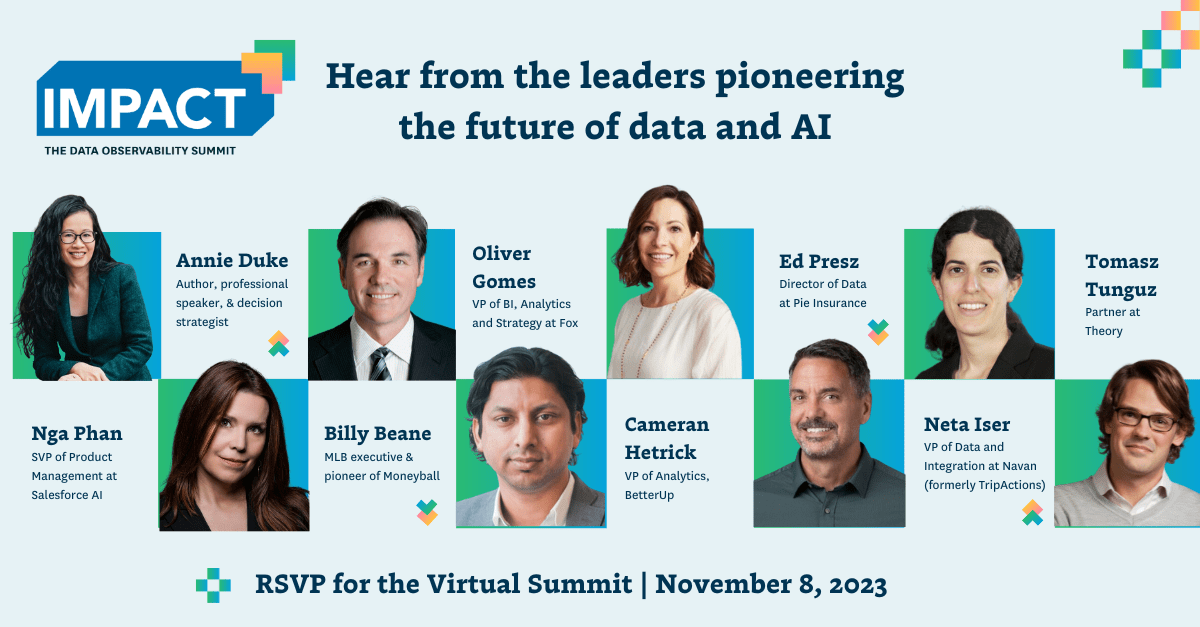
IMPACT: The Data Observability Summit is back November 8th and the lineup is bigger and better than EVER!

Sponsored Content

IMPACT: The Data Observability Summit is back November 8th and the lineup is bigger and better than EVER!

This year, the Monte Carlo Data team has outdone themselves with talks from Eli Collins, VP of Product at Google DeepMind, Annie Duke, former poker champion and decision strategist, Billy Beane, the inventor of Moneyball and EVP with the Oakland A’s, and Nga Pham, SVP of Product at Salesforce AI.

They’ll also have talks and panels with leaders at Snowflake, Databricks, dbt labs, Fivetran, Navan, Betterup, Hubspot, and other pioneering data and AI companies, networking, giveaways, and more. Register for the virtual summit today!

More On This Topic

  • IMPACT 2022: The Data Observability Summit, on Oct. 25-26
  • When Correlation is Better than Causation
  • Data Governance and Observability, Explained
  • Data Observability: Building Data Quality Monitors Using SQL
  • Data Observability, Part II: How to Build Your Own Data Quality Monitors…
  • Tech visionaries to address accelerating machine learning, unifying AI…

Qualcomm Claims Snapdragon X Elite Platform for Windows PCs Will Rival Apple Chips

Qualcomm’s Snapdragon X Elite, a system-on-chip platform for Windows PCs announced at Snapdragon Summit in Maui on October 24, marks a step into the global PC world for the historic mobile device chip maker.

Certain PCs from Acer, ASUS, Dell, HP, HONOR, Lenovo, Microsoft (specifically the Surface line), Samsung and Xiaomi will include Qualcomm Snapdragon X Elite CPUs, Qualcomm announced at the Snapdragon Summit. Laptops running Windows on the Qualcomm Snapdragon X Elite platform are expected to begin shipping in mid-2024.

Jump to:

  • What is Qualcomm Snapdragon X Elite?
  • Qualcomm challenges Apple in the laptop chip space
  • Snapdragon Seamless adds interoperability

What is Qualcomm Snapdragon X Elite?

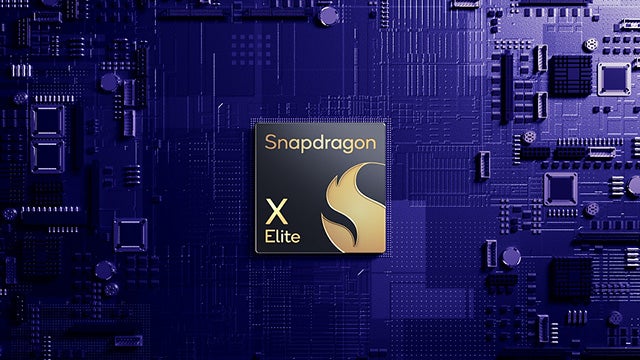
Qualcomm’s Snapdragon X Elite is a 4nm system-on-chip platform (Figure A) that includes the Qualcomm Oryon CPU, Qualcomm Adreno GPU, the Qualcomm AI Engine with integrated Qualcomm Hexagon NPU, the Qualcomm Sensing Hub and 5G and Wi-Fi 7 connectivity.

Figure A

The Qualcomm Snapdragon X Elite system-on-chip processor platform.
The Qualcomm Snapdragon X Elite system-on-chip processor platform. Image: Qualcomm

The 64-bit architecture Qualcomm Oryon CPU has 12 cores for up to 3.8 GHz maximum clock speed. Some variants of the Qualcomm Oryon CPU can be boosted up to 4.3 GHz, according to Qualcomm’s specs sheet. The Adreno GPU runs up to 4.6 TFLOPs and has DX12 API support for graphics.

SEE: Qualcomm partnered with Google on RISC-V compatible CPUs for Wear OS by Google. (TechRepublic)

The AI Engine and NPU allow the Qualcomm Snapdragon X Elite to run generative AI large language models over 13B parameters on-device. Qualcomm proposes the NPU and Sensing Hub combined will make AI data more secure, allowing inferencing (which is part of training a generative AI model) to be done on the chip. The NPU is built to run Windows Studio Effects and other AI-heavy applications.

“The ability to run generative AI applications locally will enable more personalized experiences, improve latency, provide better security and privacy protections and reduce costs,” said Enrique Lores, president and chief executive officer of HP Inc., in a prepared statement for Qualcomm.

Qualcomm challenges Apple in the PC chip space

During a keynote presentation at the Snapdragon Summit, Qualcomm CEO Cristiano Amon said the Qualcomm Snapdragon X Elite would be competitive with Apple’s M2 Max chip in terms of power and energy use.

“Oryon CPU exceeds the M2 Max,” Amon said during the presentation. “It’s faster than any leading Arm-compatible competitor in single-thread and CPU performance.”

(TechRepublic did not attend the presentation live. We reviewed the recording of the presentation.)

“We believe 2024 is an inflection point in the PC industry,” Kedar Kondap, senior vice president and and general manager of compute and gaming at Qualcomm, told TechRepublic in an email. “There is a large install base of Windows users that are awaiting an upgrade. In addition, market projections show AI PCs will accelerate in 2024 and 2025.”

Chip platforms for PCs have been dominated by Intel and AMD, with Qualcomm mostly making its Arm-based processors for smartphones. Qualcomm’s move into the PC space began with the acquisition of CPU and technology design company Nuvia in 2021. Since then, Arm has sued Qualcomm because, Arm alleges, the purchase and subsequent use of Nuvia designs breached a pre-existing contract between Arm and Qualcomm.

NVIDIA is trying to beat Intel in the Arm-based PC platform market, Reuters reported on October 23.

Snapdragon Seamless adds interoperability

At the Snapdragon Summit, Qualcomm also announced Snapdragon Seamless, a cross-platform interoperability technology that lets Android, Windows and Snapdragon devices using other operating systems discover each other and share peripherals (e.g., mice and keyboards) and data.

Qualcomm’s Snapdragon Seamless will allow dragging and dropping of files across devices from different manufacturers. The full list of interoperable manufacturers is:

  • Microsoft.
  • Android.
  • Xiaomi.
  • ASUS.
  • Honor.
  • Lenovo.
  • OPPO.

Qualcomm Snapdragon Seamless will be incorporated into Qualcomm’s upcoming Snapdragon 8 Gen 3 premium mobile platform, as well as wearable and audio platforms. Qualcomm expects to expand Snapdragon Seamless to mixed reality, automotive and IoT platforms.

Subscribe to the Innovation Insider Newsletter

Catch up on the latest tech innovations that are changing the world, including IoT, 5G, the latest about phones, security, smart cities, AI, robotics, and more.

Delivered Tuesdays and Fridays Sign up today