Zuppa Signs MoU with German Startup to Develop AI Swarm Intelligence

Zuppa has signed an MoU with Germany-based Eighth Dimension to develop AI-led swarm drone capabilities. The companies will work on teaming algorithms and real-time object recognition for unmanned aerial systems.

The collaboration aims to bring new autonomous functions to Zuppa’s UAV platforms. Both teams will focus on how the systems will operate, where the AI models will be tested, and when the prototypes are ready for testing.

The companies plan to initiate joint R&D efforts across India and Germany, with early field demonstrations anticipated in 2025. The work will include building AI models, onboarding integration, and live trials of swarm functions.

“By joining forces with Eighth Dimension, we’re taking a significant step toward the future of autonomous aerial intelligence,” Venkatesh Sai, founder and technical director at Zuppa, said. “Their expertise in distributed AI systems and real-time context learning complements our focus on rugged UAV platforms.”

Eighth Dimension builds AI frameworks that enable drones and robots to sense, reason, and act in real-time. Its applications cover defence, logistics and surveillance. Zuppa develops cybersecure autopilots and UAV systems for defence and industrial use.

Gaganpreet Singh, founder of Eighth Dimension, said the partnership aligns with the startup’s mission. “Zuppa’s deep experience in UAV design and deployment perfectly aligns with our mission to bring AI-enabled autonomy to real-world systems,” he said. “This partnership bridges European AI innovation with Indian engineering strength.”

The firms expect the project to support scalable and collaborative drone operations in future deployments.

Zuppa also previously partnered with Chennai-based Garuda Aerospace to advance the development of secure drone technology.

This involved an undisclosed investment and product orders, marking a step in strengthening India’s indigenous drone ecosystem, aiming to align with India’s push for self-reliance under the Aatmanirbhar Bharat mission.

The post Zuppa Signs MoU with German Startup to Develop AI Swarm Intelligence appeared first on Analytics India Magazine.

Anthropic’s Claude Can Now Program a Robot Dog

Anthropic tested how its AI model Claude could help non-experts operate a robot dog during an internal trial called Project Fetch. The company split eight researchers with no robotics background into two groups on a single day.

One team used Claude, while the other worked without it. Both groups were asked to program quadruped robots to fetch beach balls. Anthropic said the goal was to assess how AI could support tasks that bridge the digital and physical worlds.

The team using Claude completed more tasks and worked faster. According to the company, “Team Claude succeeded in about half the time it took Team Claude-less.” Only the Claude-assisted team made significant progress towards full autonomy, where the robot detected and retrieved the ball without human steering.

The experiment involved three phases. First, both teams used the manufacturer’s controller to guide the robot. In the next phase, they had to connect their laptops to the robot, retrieve sensor data, and write software to control its movement. Anthropic noted that access to Claude “was most advantageous” in connecting to the robot and its onboard sensors, where the AI helped navigate conflicting online information.

The Claude-assisted team also wrote more code and explored several approaches in parallel. The company observed that this sometimes led to diversions, but it also widened experimentation.

During the final phase, the Claude-assisted team almost achieved autonomous ball retrieval. Their robot “could autonomously locate the beach ball, navigate towards it, and move it around,” but it fell short of grasping and returning the ball.

Anthropic analysed audio transcripts from the workspace. It reported that the Claude-less team showed more confusion and negative emotion. The group also asked more questions among themselves compared with the Claude team, whose members often partnered mainly with their AI assistants.

Researchers without Claude commented that working without the tool felt unusual, since they used it daily. Despite occasional frustrations, both teams managed to get the robots running. The experiment also surfaced real-world issues for AI systems, including a moment when a robot dog miscalculated its path and nearly collided with a table after being programmed to walk forward at speed.

The post Anthropic’s Claude Can Now Program a Robot Dog appeared first on Analytics India Magazine.

AI Orders Hit 10% as Sonata’s Profit Rises Despite Revenue Slide

SonataSonata

Sonata Software reported a weaker Q2 on the top line, but its AI push is now showing up in the order book. The company posted a 13.5% jump in net profit to ₹120.9 crore in the September quarter. Profit in the same period last year was ₹106.49 crore. Sequential profit rose to ₹120.9 crore from ₹109 crore.

Revenue fell 2.3% year on year to ₹2,119.3 crore and dropped sharply from ₹2,965 crore in the June quarter. The fall came from the domestic business.

Product and services revenue in India slipped to ₹1,391.3 crore, which pulled the overall number down. International IT services in rupee terms grew 4.3 percent to ₹730.3 crore.

EBIT rose to ₹146.3 crore, up 9.2% from the previous quarter. Margins improved to 6.9% compared to 4.5% a year earlier.

Samir Dhir, MD and CEO, said the company closed a large healthcare deal and stressed the growing impact of its AI work. He said AI-led orders formed about 10% of the order book for the quarter. “As clients accelerate AI-enabled modernisation to enhance competitiveness, we remain confident in the company’s long-term growth trajectory,” he said.

In Q1, Sonata added seven new clients, including a landmark $73 million AI-led digital modernisation deal with a major US-based TMT company. Dhir had emphasised that this deal highlights Sonata’s growing reputation in the AI space.

The post AI Orders Hit 10% as Sonata’s Profit Rises Despite Revenue Slide appeared first on Analytics India Magazine.

AI Coding Startup Cursor Raises $2.3 Bn, Reaches $29.3 Bn Valuation

AI coding platform, Cursor, has raised $2.3 billion in a Series D funding round, taking the company to a $29.3 billion post-money valuation, the AI-powered code editor startup announced on Thursday.

The round includes participation from existing investors Accel, Thrive, Andreessen Horowitz, and DST, while Coatue, NVIDIA, and Google have joined as new backers.

The company said the fresh capital will support its ongoing research and product expansion. “This funding will allow us to invest deeply in our research and build Cursor’s next magical moments,” the company said.

Cursor, which set out two years ago to build an AI-native development environment, said its long-term goal has been to create “a code editor that is more helpful, delightful, and fun than the world has ever seen,” and an environment where “it’s impossible to write bugs.”

The startup has scaled to over 300 engineers, researchers, designers, and operators, with plans to grow further. Cursor also reported crossing $1 billion in annualised revenue, claiming “millions of developers and many of the world’s most accomplished engineering organisations” as customers.

According to the company, its in-house models now generate more code than almost any other LLMs in the world.

Cursor said the Series D marks the next phase in its effort to transform how software is written. “We’re obsessed with the magical moments in the history of programming with AI,” the team said, adding that “the ceiling is high for how great Cursor can become, and much work remains.”

The announcement comes as new academic research tracks Cursor’s impact inside engineering teams. A study by Suproteem Sarkar, assistant professor of finance and applied AI at the University of Chicago, found that companies merged 39% more pull requests after Cursor’s agent became the default mode. The study compared early Cursor users with organisations that had not adopted the tool.

According to the research, senior developers are more likely to accept agent-written code changes. “For every standard deviation increase in experience, we see a corresponding increase in the rate of agent acceptances,” Sarkar found. The study also noted that experienced developers are more likely to plan tasks before generating code.

Cursor said the findings reflect how developers are learning to work with AI systems. The company noted that revert rates did not change significantly and bugfix rates slightly decreased, suggesting stable code quality.

The post AI Coding Startup Cursor Raises $2.3 Bn, Reaches $29.3 Bn Valuation appeared first on Analytics India Magazine.

Bengaluru Positions Itself to Build the Next Global Deep Tech Giants

On November 12, 2025, the Indian Venture and Alternate Capital Association (IVCA) convened its flagship ‘Circles – Bangalore Edition’. The event stressed that India’s next chapter of technological ascendancy will be driven by deep tech: long-horizon, research-intensive innovation, rather than the faster-moving consumer web plays.

Investors, entrepreneurs, and policymakers deliberated on the central query: How can India translate its research-rich promise into real-world, global-scale companies?

Patient Capital and Government-Industry Collaboration

“Deep tech investing in India is often misunderstood. The real opportunity lies in identifying scalable innovations early, supporting them through the long development cycles, and thinking strategically about exits,” said Manish Kheterpal, co-founder and managing partner at WaterBridge Ventures and co-chair of the IVCA VC Council.

Success follows when investors, founders, academia and the government work together to turn research into real-world impact, he added.

Notably, Kheterpal pointed to parallels in the US, where companies like SpaceX or Palantir Technologies derive 60–90% of their revenue from government contracts, and argued that “if we want to create large companies with Indian sovereignty, the government must also partner commercially with deep tech companies.”

His remarks were echoed by Siddarth Pai, founding partner at 3one4 Capital and co-chair of IVCA’s regulatory affairs committee: “India’s deep tech moment is the convergence of three different factors—capital, talent, and policy. Each feeds into the other to create a virtuous cycle.”

He further noted that thanks to frameworks such as the newly announced RDI (Research, Development & Innovation) Fund, the country is “expected to galvanise over ₹4 lakh crore of additional capital for deep tech in India.”

From IT Hub to Deep Tech Nucleus

The event underscored the role of Bengaluru and the state government in backing this shift. In a fireside chat, Rajan Anandan, managing director, Peak XV Partners & Surge and Priyank Kharge, minister for electronics, IT, biotechnology & rural development, government of Karnataka, agreed that Karnataka is not just a backdrop, but a protagonist in the deep tech story.

“Karnataka has always been at the forefront of innovation, and as we look ahead, we are entering the deep tech decade for the state,” Kharge said, adding that the goal is to build globally employable talent, empower entrepreneurs beyond Bengaluru, and enable deep tech solutions that define India’s future.

Indeed, Karnataka’s latest startup policy (2025-30) with a ₹518 crore outlay intends to generate 25,000 new startups and specifically emphasises emerging tech such as AI, quantum computing and blockchain.

Upward Momentum, Gaps

On paper, the deep tech surge is real. According to IVCA’s own data excerpted at the event, India’s deep tech sector saw funding grow from $103 million in 2019 to $1.27 billion in 2023, before moderating to $709 million in 2024.

It now comprises over 13% of India’s $11 billion venture capital ecosystem. Meanwhile, more than 3,600 deep tech startups operating across various sectors, including semiconductors, quantum computing, biotech, clean energy, and space, have raised over $383.4 million (₹34,000 crore) since 2020.

Independent data draw a similar contour: one analysis estimates roughly $8.5 billion has been cumulatively invested in Indian deep tech over the past decade, with the peak annual number ($2.15 billion) in 2022.

Another commentary points out that while Indian deep tech startups raised $1.6 billion in 2024 (a 78% jump year-on-year), they still received only about 5% of the country’s total startup funding, far behind China’s ~35% share.

A recent initiative, the India Deep Tech Alliance, launched in September 2025 with a $1 billion pledge has already secured fresh commitments of $850 million from investors such as NVIDIA Corporation, Qualcomm Ventures and others.

What’s Ahead?

What is clear from the IVCA Forum is that deep tech cannot be treated like traditional digital startups. The units of play are different: longer development cycles, higher risk, more complex commercialisation, often requiring government procurement, ecosystem orchestration and patience.

As industry experts write, “The ground realities of competing in the space race for India include structural gaps such as fragmented demand, uneven policy execution and thin, specialised talent pools.”

Hence, the emphasis at the event was on building the value chain, not just the venture. As Kharge put it: “We’re investing not just in startups but in the entire value chain that makes startups into unicorns, from research and skilling to incubation and acceleration.”

India is no longer content to be the world’s back-office for services. Instead, it sees deep tech as a lever for sovereignty (in semiconductors, space, AI), for manufacturing, and for an economy less dependent on incremental digital services.

If India indeed is at the cusp of its “deep tech decade”, then the ingredients are falling into place: a global investor reset, rising policy priority, clusters like Bengaluru, and a pipeline of founders who refuse to settle for ordinary.

As Manish Kheterpal summed up: “The real opportunity lies in identifying scalable innovations early, supporting them through the long development cycles.” Only now, India is building the infrastructure to do just that.

The post Bengaluru Positions Itself to Build the Next Global Deep Tech Giants appeared first on Analytics India Magazine.

Godrej Aerospace Delivers Vikas Engine to ISRO for Upcoming Gaganyaan Mission

India Space techIndia Space tech

Godrej Enterprises Group’s Aerospace business has delivered a human-rated L110 stage Vikas Engine to ISRO’s Liquid Propulsion Systems Centre (LPSC) on Thursday. The engine will support ISRO’s upcoming Gaganyaan human spaceflight mission, which aims to send Indian astronauts into space.

The mission aims for a crewed launch, tentatively planned for 2027, following three uncrewed launches, with the first one scheduled before the end of the current financial year (March 2026).

The engine will be used in the LVM3 Gaganyaan Launch Vehicle, designed by ISRO to carry the crew module. The vehicle will lift off with Indian astronauts who will complete planned experiments before returning to Earth.

Maneck Behramkamdin, executive VP and business head of the Aerospace business, said, “This is not just a milestone for Godrej Enterprises Group, but also a matter of immense national pride. Contributing to India’s first human spaceflight programme is both an honour and a responsibility that we carry with the highest commitment.”

He added that the achievement reaffirms the company’s four-decade-long partnership with ISRO and shows its capability in delivering mission-critical technology.The company has contributed engines and components for missions including Chandrayaan and NISAR.

This development added to ISRO’s latest announcement on Tuesday. The space organisation completed a key test of the main parachutes for the Gaganyaan crew module at the Babina Field Firing Range in Jhansi on November 3.

The test is part of the ongoing Integrated Main Parachute Airdrop Tests that will qualify the parachute system for the mission. The system has ten parachutes across four types, including apex cover separation parachutes, drogue parachutes, pilot parachutes and main parachutes.

ISRO evaluated the system under an extreme scenario involving a delay in the disreefing of one main parachute. A simulated crew module mass was dropped from an altitude of 2.5 km using an IL-76 aircraft. The parachutes deployed as intended, and the test article achieved a stable descent and soft landing.

The test involved teams from the Vikram Sarabhai Space Centre, Aerial Delivery Research and Development Establishment, DRDO, the Indian Air Force and the Indian Army. It marks further progress toward qualifying the parachute system for human spaceflight.

The post Godrej Aerospace Delivers Vikas Engine to ISRO for Upcoming Gaganyaan Mission appeared first on Analytics India Magazine.

India’s FOSS Contributions Remain Negligible Despite Heavy Adoption, Says Zerodha CTO

India’s largest stock brokerage, Zerodha, is known for disrupting the financial industry with its tech-first approach. But beyond fintech, the company is quietly building a global reputation for something far more fundamental by contributing to the growth of open-source technology.

Recently, Kailash Nadh, the CTO of Zerodha, shared a post marking the first anniversary of FLOSS/fund (Free/Libre/Open Source Software), an initiative by Zerodha that provides $1 million each year to support important open-source software projects around the world.

The company announced the second tranche of 2025, worth $675,000. Combined with the earlier tranche of $325,000, the fund has now completed its planned annual allocation.

“$1million per year is not even a drop in the ocean when considering the size and depth of the global FOSS ecosystem,” Nadh told AIM. He added that the fact that multi-billion- and trillion-dollar corporations don’t do this is mind-boggling.

According to Nadh, financial sustainability continues to be a major challenge for the global FOSS (free and open-source software) ecosystem, though awareness around the issue is steadily growing. “Ironically, even if you do want to give money to FOSS projects, it’s not easy to do so, especially in a country like India with significant amounts of red tape,” he said.

FLOSS/fund has already funded major global projects such as Blender, FFmpeg, OpenStreetMap, F-Droid, and KDE, among many others.

Nadh pointed out that despite the vast amount of FOSS consumed across India’s industry, government, and academia, the country’s contributions remain “close to negligible.” However, he noted a visible shift in recent years, driven by grassroots tech communities engaging with the FOSS United Foundation.

“It feels like the beginning of a movement that’s on its way to reach a critical mass,” he said, adding that the change is emerging from independent developers rather than the larger industry or startup ecosystem.

Non-Thematic Fund for Open Collaboration

In his blog post, Nadh said that what makes FLOSS/fund unique is its non-thematic and open-ended approach, and it does not limit itself to any single category, like developer tools or humanitarian projects. Instead, it evaluates each project on its own merit.

According to Nadh, this diversity brings both opportunity and complexity.

“How does one compare a decades-old, widely used project with a new experimental one that holds great promise but uncertain success?” he said. “They must all be viewed through their own lenses — and that’s pretty damn hard under the umbrella of a fund.”

To streamline project evaluation, FOSS/fund plans to introduce a community-driven selection process through the FOSS United Foundation, a partner ecosystem deeply involved in FOSS/fund’s execution and outreach.

Zerodha is Not Alone

India’s open-source movement is getting new supporters among its tech companies. A closer look at firms like Meesho, Zomato, and Ola’s Krutrim AI Labs, along with others such as PhonePe and Swiggy, shows that the country’s tech ecosystem is becoming more mature in how it uses and contributes to open-source software.

Meesho recently open-sourced its in-house ML platform, BharatMLStack, a production-grade system for real-time inference and model management. It includes a feature store, orchestration system, and monitoring tools, built to deliver sub-10-millisecond inference latency.

Zomato, on the other hand, represents a slightly different stage in India’s open-source adoption story. The food delivery and dining platform is a heavy consumer of open-source technology and is gradually becoming a contributor.

Internally, Zomato’s analytics and data platforms are powered by Trino (formerly PrestoSQL). This open-source distributed SQL engine allows the company to query data across Hive, MySQL, Druid, and MongoDB.

They also leverage Apache Druid, another open-source data store used for real-time analytics, and their migration to AWS Graviton instances helped reduce compute costs by 30%.

On the contribution side, Zomato’s engineers have started releasing their own tools to the public. A notable example is Espresso, a high-performance PDF generation and signing framework written in Go and Chromium, which reduced server costs by 90%.

At the same time, Bhavish Aggarwal’s Krutrim AI is expanding its open-source efforts in the field of AI. The company has open-sourced multiple foundational models and tools designed for Indian contexts, such as Dhwani, a speech-to-text model for Indic languages, and Krutrim Translate, a multilingual translation model.

It also released Vyakhyarth, a sentence-embedding model for regional languages, and BharatBench, a vision-language benchmark tailored for Indian AI research.

Similarly, CRED, which sells itself on design and user experience, has open-sourced its 4th generation design system, NeoPOP, which is inspired by the philosophy and aesthetic principles of the Neo-pop movement.

A public repository on Flipkart’s GitHub, with over 5,000 stars, called RecyclerList View, provides a high-performance list view component for React Native and web applications. One of PhonePe’s public repositories’, Mantis, is a security framework designed to automate the workflow of asset discovery and vulnerability scanning.

Nadh also mentioned India’s growing investment in digital infrastructure, particularly through initiatives such as the IndiaAI Mission, which is funding the creation of open-source large language models (LLMs) and AI tools using public money.

The IndiaAI Mission, backed by the Indian government, aims to make AI resources accessible to startups, researchers, and public institutions. Nadh argued that such national efforts cannot succeed without a strong foundation of open-source software. “The Government of India is strategically pro-FOSS,” he wrote. “Everything from large government systems to much of the new-age tech industry is built on FOSS.”

The post India’s FOSS Contributions Remain Negligible Despite Heavy Adoption, Says Zerodha CTO appeared first on Analytics India Magazine.

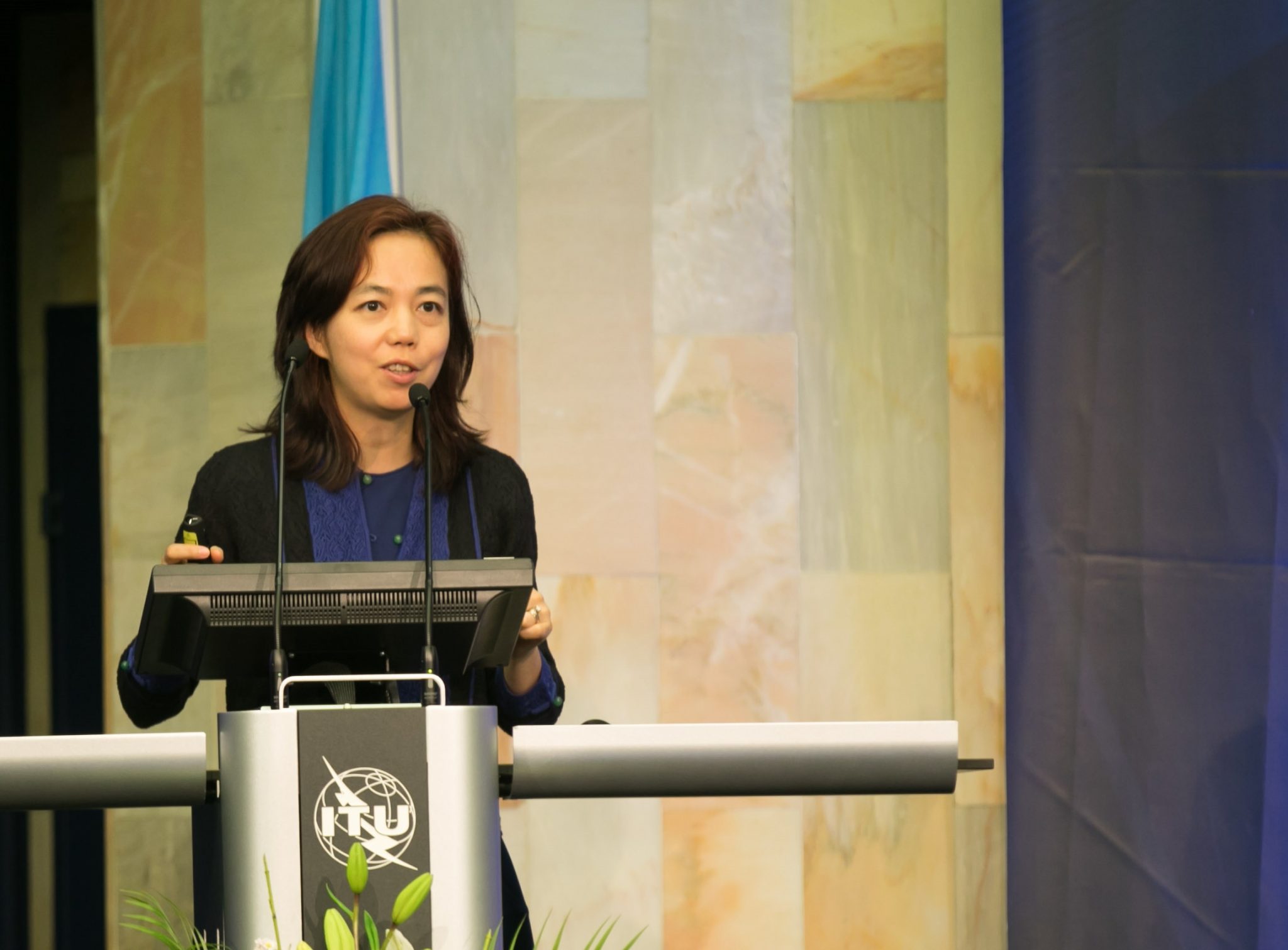
Fei-Fei Li’s World Labs Launches Marble, a Multimodal 3D World Model for Public Use

World Labs, the startup founded by AI pioneer Fei-Fei Li, has released its generative world model, Marble, publicly available after a two-month beta with early users.

“Marble can create 3D worlds from text, images, video, or coarse 3D layouts,” World Labs said. “Users can interactively edit or expand worlds.”

The company raised $230 million last year in September.

Alongside the launch, World Labs introduced Marble Labs, a workspace for creators to explore workflows, case studies, and documentation. “It is where artists, engineers, and designers push the boundaries of world models,” the company said.

There are many other startups like Decart and Odyssey building world models and putting out free demos, and Google’s Genie is still only in a research preview.

Marble supports text-to-world and image-to-world generation, as well as multi-image and video inputs for greater control over scene structure. Worlds can be exported as Gaussian splats, triangle meshes, collider meshes, or videos with pixel-level camera control.

Marble now includes AI-native world editing tools, enabling object removal, style changes, and structural modifications. World Labs also unveiled Chisel, an experimental 3D sculpting mode that lets users design coarse layouts and apply styles through prompts. “Chisel decouples structure from style,” according to the company.

Users can expand worlds through one-step enlargement or compose multiple worlds to build large spaces. Enhanced video export can add detail, motion, and cleanup while preserving spatial structure.

World Labs said Marble is an early step toward broader spatial intelligence. “Future world models will let humans and agents alike interact with generated worlds in new ways,” the company said.

The post Fei-Fei Li’s World Labs Launches Marble, a Multimodal 3D World Model for Public Use appeared first on Analytics India Magazine.