Why Everyone’s Suddenly Talking About India’s New Data Protection Rules

The central government, on November 14, notified the long-awaited Digital Personal Data Protection (DPDP) Rules, 2025, formally setting in motion India’s multi-stage rollout of a modern privacy regime.

Notably, some of the provisions take effect immediately, most notably the establishment of the Data Protection Board of India (DPBI), headquartered in the National Capital Region (NCR).

Yet, the more profound transformation will unfold gradually over the next 12 to 18 months, as obligations around consent, processing notices, fiduciary responsibilities, and individual rights slowly come into force.

The announcement came after the Business Software Alliance (BSA), an industry body representing global tech giants like Microsoft, AWS, Adobe, IBM, Salesforce and SAP, among others, urged the Indian government to introduce a text and data mining (TDM) exception in copyright law, stressing that it is key to enabling responsible and competitive use of AI across industries.

The announcement also revives a larger question. During public consultation earlier this year, the draft rules received around 9,000 submissions. For a country of 1.4 billion people navigating an increasingly AI-driven digital landscape, does that number signal robust civic engagement or highlight the extent to which citizen awareness is still missing?

“In a country of over 1.4 billion people, expecting every citizen to become an expert on data privacy laws like the DPDP Act is unrealistic. The average person shouldn’t have to dive deep into legal jargon. Citizens should instead be aware of their basic rights and duties in simple terms, three or four key takeaways they can remember and act on. The conversation shouldn’t be about mastering the fine print, but about empowering individuals with the essentials,” said Pawan Prabhat, co-founder of Shorthills AI.

His point underscores that even as India builds one of the world’s most ambitious digital public infrastructures, individuals are still catching up to the fundamentals of data rights. In the age of generative AI, where personal information can be embedded in training sets, inferred by algorithms or profiled at scale, the stakes have never been higher.

But the uncertainty extends beyond citizens. Companies building AI systems face a regulatory landscape that leaves critical gaps unaddressed.

The DPDP Act mandates transparent processing, revocable consent, strong security controls and clearly defined processor contracts. “But the act leaves key AI issues unclear, such as on automated decisions, profiling, model-training uses, sensitive data distinctions, and core processes like consent, deletion, retention and cross-border transfers, creating major accountability gaps,” Srinivas Padmanabhuni, CTO at AIEnsured, told AIM.

While the draft rules attempt to operationalise the act, India is still negotiating the tension between enabling AI innovation and enforcing meaningful privacy protections.

“The establishment of a definite enforcement timeline signals a critical juncture,” said Mayuran Palanisamy, partner at Deloitte India. The rules emphasise breach reporting, verifiable parental consent, consent manager operations, significant data fiduciary criteria and prescriptive safeguards. Successful implementation will require regulators, businesses and consumers to collaborate continuously, and organisations must invest in updated processes, technologies and training to build transparency and integrate privacy into their systems and culture.

Legal experts echo the sentiment by welcoming the clarity, while warning that interpretational guidance will be essential as the rules move from paper to practice.

“The rules offer clear timelines and added flexibility for children’s data, but the real challenge will be delivering scalable, frictionless parental-consent tokens across India’s digital public infrastructure,” said Aparajita Bharti, founding partner at The Quantum Hub.

Children’s data emerges as another critical front in India’s new privacy regime, one where the government has struck a balance between safety, usability and operational flexibility. According to Bharti, the rules now provide the industry a phased compliance roadmap while addressing long-standing concerns around behavioural monitoring, age-appropriate content, parental controls and verifiable consent.

“We welcome these developments. MeitY has provided much-needed clarity and has been judicious in allowing an adequate transition period with major provisions coming into effect 18 months from now,” Shahana Chatterji, partner at Shardul Amarchand Mangaldas & Co, said.

“The industry must now focus on aligning data practices with the Act, and MeitY will need to provide the regulatory and interpretational clarity that will inevitably be needed,” he added.

India is accelerating into an AI-first decade with digital health records, algorithmic credit scoring, predictive governance systems and generative AI woven into daily life. The DPDP Act and its 2025 Rules will become the framework that determines how innovation, rights and accountability coexist.

The next 18 months will define how India interprets privacy in an AI-shaped world at a time when global peers are tightening their own data laws and determining how more than a billion citizens will experience digital agency in the years ahead.

The post Why Everyone’s Suddenly Talking About India’s New Data Protection Rules appeared first on Analytics India Magazine.


Why India’s Voice-First Moat Is Finally Real

On the demand side, friction-heavy moments within India’s digital payments ecosystem are creating high-volume entry points for voice automation. For instance, 19.63 billion UPI transactions in September 2025 generated millions of PIN resets, refund requests, and dispute calls.

Coupled with India’s surge toward 900 million internet users by 2025, driven largely by rural and non-English-speaking cohorts, a structural transition is in sight where voice becomes a primary interface, not an add-on.

This momentum, though, has led to a crowded, noisy landscape of startups, from hyper-funded incumbents to experimental foundation-model teams.

Amid the marketing narratives and aggressive demonstrations, the central question remains: who is solving India’s real vernacular AI problem, and who is simply amplifying the hype?

The Vernacular Gap

Gnani.ai offers a clear articulation of India’s vernacular challenge with evidence of real technical differentiation in the market.

Co-founder and CEO Ganesh Gopalan claims India’s multilingual landscape has shaped Gnani.ai’s product roadmap. “Our training dataset includes millions of hours of telephony data in each language… making our models more accurate and reliable in real-world, noisy environments.”

He adds that most global models rely on clean, high-quality audio scraped from podcasts or YouTube. However, Gnani’s emphasis on telephony-grade, dialect-heavy, code-switched data directly addresses India’s lived reality, where audio quality is low, English blends with regional languages, and accents vary every 200 kilometres.

This focus brings along challenges in managing accent variations, slang, and code-switching between English and regional languages, along with limited domain-specific data. However, Gnani.ai continues to invest in data augmentation, transfer learning, and local partnerships to ensure consistent, high-quality performance across linguistic environments, Gopalan maintains.

This admission is important as it punctures the narrative that India’s language problem can be solved by a single “Indic LLM,” or that synthetic data pipelines alone, as Sparsh Agrawal, founder of Luna AI, suggests, can overcome structural sparsity in the Indian linguistic ecosystem.

Luna AI, positioning itself as a “speech-to-speech foundational model”, embodies the current hype cycle. Its pitch anchors on entertainment, companionship, and real-time character voices. Luna’s leadership frames voice as the inevitable UX layer of India’s digital economy.

This broad assertion, voice as the default interface, is directionally correct but glosses over the brittle technical backbone required to operationalise this at a population scale. Agrawal acknowledges India’s complex linguistic diversity and scarce vernacular datasets: “India’s diversity and the languages that are there, the data is scarce and it’s not accurately presented.”

Despite this, the company maintains that India is inherently “voice-built”. “People don’t type, they just [talk to] the mic,” he says.

However, the gap between consumer preferences and AI capabilities remains wide, especially in terms of dialectal fidelity, low-resource languages, and noisy real-world environments, such as kirana shops or autorickshaws.

Enterprise Readiness

Currently, the surge in voice AI adoption is not driven by consumer entertainment apps, but by enterprise workflows where accuracy, security, and latency are crucial. Gopalan argues that Indian enterprises have shifted from treating voice as a UX feature to treating it as critical infrastructure. “The adoption is strongest across BFSI, Auto, Telecom, and Healthcare.”

This is the crux of India’s voice-AI story, not just the cultural predisposition toward speaking rather than typing, but the institutional realisation that voice interaction can reduce operational friction for tens of millions of customers.

Voice AI is expanding beyond basic peer-to-peer transfers to include bill payments, e-commerce transactions, and ticket bookings, as seen with IRCTC’s ‘AskDISHA‘ assistant. The National Payments Corporation of India (NPCI) has also introduced ‘UPI HELP’, an AI assistant designed to resolve queries, track complaints, and manage AutoPay mandates.

The ‘Hello! UPI’ feature integrates UPI with voice AI, enabling users to complete digital transactions with ease through simple voice commands. This development enhances accessibility, particularly for feature phone users or those with limited digital literacy.
Network People Services Technologies Limited (NPST) is working with Indian Overseas Bank to implement UPI 123Pay, a voice-based UPI payment system. It operates without internet connectivity, supports 12 Indian languages, and allows for balance checks and transaction history. NPST developed this system in partnership with MissCallPay, processing over 18 billion transactions annually.
While voice AI is already being integrated into NPCI-aligned IVR systems, the real challenge lies in regulatory requirements, including authentication, consent, fraud detection, and on-device processing.

“As digital transformation deepens, enterprises increasingly view voice AI not just as a tool for convenience, but as a strategic layer central to omnichannel and inclusive customer experiences,” Gopalan adds.

Policy, Payments, Population and Product

Gopalan believes that India’s funding ecosystem and government initiatives like the IndiaAI Mission are significantly enhancing voice technology innovation through subsidised computing, indigenous datasets, and direct financing.

He, however, pointed out that voice tech startups struggle to find patient capital from private players, which leaves them challenged in terms of building at scale.

This funding asymmetry explains why the Indian market has both unsustainably hyped frameworks and deeply technical but under-capitalised players.

Where global players falter is precisely where India-focused teams excel. As Gopalan emphasises, “Gnani.ai consistently delivers 30-40% higher accuracy than global competitors and over 20% better accuracy than local alternatives… enriched with domain-specific context and enterprise knowledge.”

This is the kind of empirical, measurable performance delta that separates engineering-driven companies from prototype-driven storytelling. The net result is defensible as global models cannot compete without Indian-grade datasets, and Indian voice AI startups cannot succeed without deep linguistic engineering.

The post Why India’s Voice-First Moat Is Finally Real appeared first on Analytics India Magazine.

‘My Manager Thinks Copilot is Saving 40% Time’

The funniest part about working in AI right now is how far the push for AI tools is from reality. On paper, we are in a golden age. Every sprint looks faster with AI coding tools like Cursor and Copilot. Every manager walks around with the confidence of a man who thinks AI is pair programming with the universe.

Inside the codebase, it smells like a landfill.

A Reddit post on r/developersIndia summed this up without poetry. “My manager thinks Copilot is saving 40% time. It’s actually just hiding our tech debt,” wrote a developer. He wasn’t exaggerating. You can feel this everywhere—across companies, across teams, across Slack channels full of late-night commits that no one understands.

Developers know exactly how this plays out. Generative AI code is great for boilerplate. That is not the debate. But, that’s not what management sees. They see speed and demos. They see timelines shrinking without any understanding of what is rotting under the surface.

Read: AI’s Boilerplate Boom: Faster Code, Deeper Debt

The Reddit thread was a long, chaotic session to vent out. People weren’t arguing, but confessing. One said his PRs were full of “correct but bad code I don’t fully get.” Another said their review backlog exploded because AI doesn’t understand restraint.

Someone else said the juniors just paste whatever Copilot throws at them. The AI writes a 300-line function, and everyone pretends that’s normal.

It runs, so ship it. If something breaks, there’s always a guy who says, “Just ask the model why it broke.”

That is the tragedy. People are not using AI, they are surrendering to it.

CTOs Fed Out Entire Codebase to an AI Model

Indian developers are now being forced to use AI tools such as Cursor and Copilot, but they don’t understand the code it generates. They trust it because management has started measuring “AI usage.” According to recent reports, Indian IT firms are also tracking how employees are using AI tools, in some sense to track the efficiency and productivity of the team.

One software engineer at an Indian firm, seeking anonymity, told AIM that apart from Copilot, they are also being forced to test vibe coding tools for faster efficiency. In a similar case on Reddit, a CTO fed the entire repo into a model during a live demo. He pushed the whole thing in front of employees while bragging about how AI could now handle “routine work.”

Then he told HR to track which developers prompt well and which ones don’t. “We need to start tracking AI usage per developer. If someone isn’t leveraging AI efficiently, maybe they aren’t the right fit for this new era,” the Redditor said.

Adithya S Kolavi, founder of CognitiveLabs, said that he believes that it is important for developers to learn AI tools to stay relevant in this era. “If you are not using AI as a coding assistant in this age, it will be hard to catch-up with people who are,” he said.

Read: Indian Companies are Forcing Developers to Use Cursor

Companies used to judge developers by architecture. Then by velocity. Now, they judge them by how many times they press ‘tab’.

In certain cases in the past few months, CEOs have also started firing developers who were not using AI. Coinbase CEO Brian Armstrong admitted that he fired engineers who refused to sign up for the company’s AI coding tools. Former GitHub CEO Thomas Dohmke has been just as blunt. “Either you embrace AI, or get out of this career.”

Faith-based Engineering

Developers are faster at starting features and slower at shipping quality. That is the paradox. GenAI accelerates the beginning and drags the end. The PRs and review time get longer. Debugging gets harder because the author didn’t write the logic, the model did.

And this is happening everywhere. Not because AI is bad, but because companies think AI is magic. The moment leadership believes Copilot gives you a 40% productivity boost, the damage begins. Developers stop pushing back. They stop asking for clarity. They stop rejecting inflated requirements.

When a tool promises speed, managers stop respecting complexity. Jargon and nuance disappear. They think everything is possible in two weeks because “the AI wrote a draft.”

The truth is that AI doesn’t remove tech debt. It hides it. It wraps it in syntactically correct sentences. It covers it in clean-looking abstractions. It makes everything look neat until someone tries to debug it.

Managers will celebrate their 40% savings. Until the day the entire stack goes down for reasons no one understands. Then everyone will realise the truth. You don’t get free speed. You get speed borrowed from the future, with interest.

The post ‘My Manager Thinks Copilot is Saving 40% Time’ appeared first on Analytics India Magazine.

ChatGPT Will Stop Using Em Dashes If Instructed So

ChatGPT’s Deep ResearchChatGPT’s Deep Research

Sam Altman, OpenAI’s CEO, stated on X that ChatGPT will refrain from using em dashes when a user specifies this preference in their Custom Instructions. “It finally does what it’s supposed to do,” he said.

Custom instructions on ChatGPT allow tailoring how the AI responds and can be found in the Personalisation tab in the settings menu.

“Small-but-happy win,” Altman added.

Ever since ChatGPT gained popularity among the masses, the em dash, or ‘—’, has appeared with increasing frequency in online writing, becoming a noticeable hallmark of AI-generated text.

Users have since found it difficult to instruct ChatGPT to avoid using em dashes in a piece of text.

“I pushed, pulled, rewired and begged, but nothing made it stop,” one user wrote in a blog post.

ChatGPT remembers everything you’ve ever said, but forgets the 897 times you told it to stop using em dashes🤦‍♂️ pic.twitter.com/ktg1HtwVGM

— Jon C. Phillips (@joncphillips) October 28, 2025

“$100 for anyone who can show me how to get ChatGPT to stop using em dashes. It’s driving me insane,” said Chip Huyen, the author of the popular book ‘AI Engineering’, in a post on X a few months ago.

Multiple factors have been attributed to ChatGPT’s increasing use of em dashes. The model reflects patterns present in its training data, which includes a significant amount of modern prose that relies on the mark for pacing, emphasis and fluid transitions.

“If [AI] relied a lot on either magazine writing or blog writing, then those two styles were quite fond of the em dash,” said Aileen Gallagher, a journalism professor at Syracuse University, in a statement to the Washington Post earlier this year.

Em dashes also offer a compact way to connect or interrupt ideas without additional structure, making them efficient from a token-generation standpoint.

The excess usage of em dashes in ChatGPT has also been a subject of jokes and memes on social media.

Find a partner who loves you as much as ChatGPT loves em dashes. pic.twitter.com/OxeWoemVm1

— AshutoshShrivastava (@ai_for_success) August 28, 2025

Some also say that this correlation is unfair. “It’s annoying that em dashes have become the telltale sign someone used ChatGPT to generate the text,” said one user on X.

“I use them often in my emails and writing—probably incorrectly. Now everyone assumes I’m putting everything through ChatGPT.”

Altman announced this update a day after OpenAI released the GPT 5.1 model. It is an upgrade to the GPT-5 model family that introduces new reasoning features, faster performance on simple tasks, and expanded personalisation tools across ChatGPT.

The post ChatGPT Will Stop Using Em Dashes If Instructed So appeared first on Analytics India Magazine.

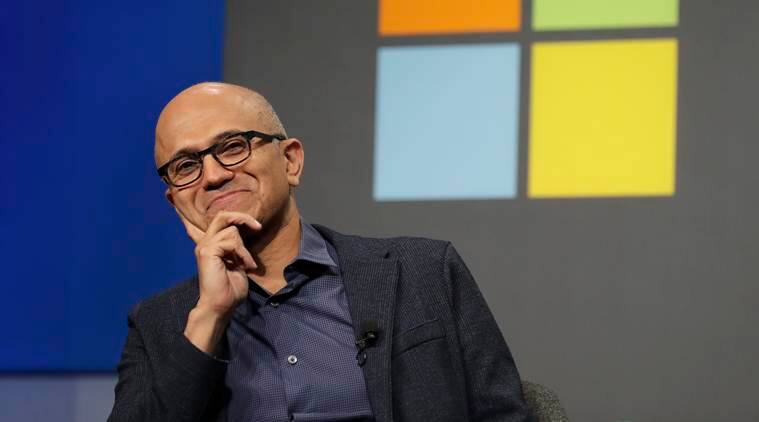
Satya Nadella says Microsoft Holds Full Access to OpenAI’s AI chip IP

Satya Calls OpenAI a “Little Tech Company”Satya Calls OpenAI a “Little Tech Company”

Microsoft CEO Satya Nadella said the company has access to all of OpenAI’s system-level intellectual property, outlining how Microsoft plans to balance its in-house silicon efforts with continued large-scale use of NVIDIA GPUs.

Speaking in an interview, Nadella said Microsoft receives all parts of OpenAI’s accelerator-related IP, except for consumer hardware. When asked what level of access the company has, he responded, “All of it”.

Notably, OpenAI and Broadcom recently announced a multi-year strategic collaboration to co-develop and deploy 10 gigawatts of OpenAI-designed AI accelerators and networking systems, marking a major expansion in OpenAI’s infrastructure capabilities.

Nadella added that Microsoft had earlier provided OpenAI with its own IP while building supercomputers together, creating a reciprocal flow of technology. “We built it for them and they benefited from it… and now as they innovate, even at the system level, we get access to all of it,” he said.

Nadella said this IP pipeline allows Microsoft to evolve Maia at a deliberate pace, even as competitors like Google push forward with custom chips. He explained that internal silicon only succeeds when paired with internal model demand. “If you build your own vertical thing, you better have your own model… and you have to generate your own demand for it or subsidise the demand for it,” he said.

He acknowledged that Microsoft continues to rely heavily on NVIDIA GPUs and that any new accelerator must compete with NVIDIA’s existing fleet. “In a fleet, what I’m going to look at is the overall TCO (Total cost of ownership),” Nadella said.

He added that large cloud rivals face similar dynamics. “Even Google’s buying NVIDIA, and so is Amazon,” he said. “It makes sense because NVIDIA is innovating, and it’s the general-purpose thing. All models run on it, and customer demand is there.”

He explained that Microsoft’s approach is informed by its experience rolling out multiple generations of compute hardware. “We had a lot of Intel, then we introduced AMD, and then we introduced Cobalt. That’s how we scaled it,” he said, noting that Microsoft already operates mixed-silicon environments.

Nadella said Microsoft will maintain a closed loop between its MAI models and its silicon roadmap to ensure microarchitectures track its own workloads. At the same time, the company intends to execute quickly with NVIDIA hardware.

Nadella said Microsoft will first deploy the systems OpenAI builds for them, and then extend those designs into its broader infrastructure.

The post Satya Nadella says Microsoft Holds Full Access to OpenAI’s AI chip IP appeared first on Analytics India Magazine.

9 Indian AI Research Papers That Deserve More Attention in 2025

arXiv Receives $10 Mn FundingarXiv Receives $10 Mn Funding

Indian AI research in 2025 is fast becoming less about imitation and more about invention. Apart from the flashy announcements in the country, from multilingual datasets to generative tools for accessibility, researchers are building what global labs often overlook—AI grounded in India’s languages, laws and lived realities.

These papers show where the country’s AI research is heading and why it matters.

Sakshm AI: Advancing AI‑Assisted Coding Education for Engineering Students in India Through Socratic Tutoring and Comprehensive Feedback

This study, authored by Raj Gupta, Harshita Goyal, Dhruv Kumar, Apurv Mehra, Sanchit Sharma, Kashish Mittal and Jagat Sesh Challa, introduces ‘Sakshm AI’, an intelligent tutoring system tailored for engineering students in India.

The platform embeds a chatbot named Disha, which uses a Socratic approach—offering context-aware hints and structured feedback instead of outright answers, while maintaining conversational memory.

It tackles a real gap in coding education in India—most tools either give direct answers or lack context awareness and feedback. By focusing on Socratic guidance and scalable intelligent tutoring, it promises deeper learning gains, especially in settings where expert human tutors may not be accessible. The mixed-methods evaluation strengthens its claims.

Nyay‑Darpan: Enhancing Decision Making Through Summarisation and Case Retrieval for Consumer Law in India

This paper comes from a team led by Swapnil Bhattacharyya and late Pushpak Bhattacharyya, among others, at institutions including the IIT Bombay and National Law School of India University. It addresses a clear gap: AI tools exist for criminal or civil law, but consumer‐law disputes in India are poorly served.

The authors propose a two‐in‐one system that first summarises consumer case files and then retrieves related judgments to support decision-making. The tool achieves over 75% accuracy in finding similar cases and ~70% in summary quality metrics. By releasing the dataset and framework, the work aims to democratise legal tech for consumers and smaller actors.

ILID: Native Script Language Identification for Indian Languages

Authored by Yash Ingle and Pruthwik Mishra (2025) from Indian institutions, the paper presents a dataset of 2,50,000 sentences covering English as well as all 22 Indian official languages, labelled for sentence-level native script language identification. The authors point out that many Indian languages share scripts or are code-mixed, making language identification a surprisingly challenging preprocessing task.

They provide baseline models (ML + transformer fine-tuning) and show performance drops for low‐resource languages. It matters because accurate language detection is foundational for any multilingual Indian NLP pipeline—if that fails, downstream tasks like translation, summarisation or QA will misfire.

MorphTok: Morphologically Grounded Tokenization for Indian Languages

By M Brahma et al (2025), along with professor Ganesh Ramakrishnan from IIT Bombay, the researchers observed that standard BPE tokenisation often mis-segments Indian language words, especially compound or sandhi forms in Hindi/Marathi. They propose a morphology-aware pre-tokenisation step along with Constrained BPE (CBPE), which handles dependent vowels and script peculiarities.

They build a new dataset for Hindi and Marathi sandhi splitting and show downstream improvements (eg, reduced fertility, better MT and LM performance). Tokenisation may seem mundane, but for Indian languages, the ‘right’ units matter a lot; improvements here ripple into many tasks.

COMI-LINGUA: Expert Annotated Large-Scale Dataset for Hindi-English Code-Mixed NLP

Authored by Rajvee Sheth, Himanshu Beniwal and Mayank Singh (IIT Gandhinagar), this dataset represents the largest manually annotated Hindi-English code-mixed collection with over 1,25,000 high-quality instances across five core NLP tasks.

Each instance is annotated by three bilingual annotators, yielding over 3,76,000 expert annotations with strong inter-annotator agreement (Fleiss’ Kappa ≥ 0.81). The dataset covers both Devanagari and Roman scripts and spans diverse domains, including social media, news and informal conversations. This addresses a critical gap: Hinglish (Hindi-English code-mixing) dominates across urban Indian communication, yet most NLP tools trained on monolingual data fail on this mixed language phenomenon.

IndianBailJudgments‑1200: A Multi‑Attribute Dataset for Legal NLP on Indian Bail Orders

Sneha Deshmukh and Prathmesh Kamble compiled 1,200 Indian court judgments on bail decisions. Each judgment is annotated with over 20 structured attributes (bail outcome, IPC sections, crime type, court name, legal reasoning). They used GPT-4o prompts to bootstrap labels and manually verified a subset.

Bail orders directly affect millions of undertrial prisoners in India; a structured dataset allows legal NLP tools to maybe assist lawyers, judges or reformers in analysing bail decisions systematically.

TathyaNyaya and FactLegalLlama: Advancing Factual Judgment Prediction and Explanation in the Indian Legal Context

By Shubham K Nigam, Balaram Deepak Patnaik et al, the researchers introduce TathyaNyaya, a dataset focused on factual statements in Indian legal judgments (Supreme Court and High Courts) rather than full texts, and FactLegalLlama, an instruction-tuned LLaMa variation that predicts judgments and explains them.

Prediction, along with explanation, in the Indian legal domain is rare. The dataset & model aim to enhance transparency in AI‐legal assistance rather than black-box outputs.

LegalSeg: Unlocking the Structure of Indian Legal Judgments Through Rhetorical Role Classification

Shubham K Nigam, Tanmay Dubey, Govind Sharma, Noel Shallum, Kripabandhu Ghosh, Arnab Bhattacharya created LegalSeg, a dataset of over 7,000 documents and 1.4 million sentences annotated with seven rhetorical roles (e.g., facts, arguments, judgements) in Indian legal judgments. They benchmark different architectures, including role-aware transformers and find that leveraging document structure helps.

Understanding the internal structure of legal texts is key to summarisation, information extraction and building legal-AI systems tailored to India’s judicial style.

DRISHTIKON: A Multimodal Multilingual Benchmark for Testing Language Models’ Understanding on Indian Culture

Arijit Maji, Raghvendra Kumar, Akash Ghosh et al propose DRISHTIKON, a benchmark spanning 15 languages, 64,288 aligned text-image pairs covering Indian cultural themes (festivals, cuisine, attire, heritage). They evaluate vision-language models and show that these struggle to reason about culturally grounded multimodal content.

As AI becomes global, culture matters. Indian cultural content is massively under-represented. This benchmark enables the evaluation of models’ cultural competence for Indian contexts.

The post 9 Indian AI Research Papers That Deserve More Attention in 2025 appeared first on Analytics India Magazine.

LAT Aerospace Readies its First uSTOL Demonstrator for Flight

LAT Aerospace has completed its first ultra-short take-off and landing (uSTOL) technology demonstrator, founder Deepinder Goyal said on Wednesday in a post on LinkedIn. The fully electric, fixed-wing UAV is “almost ready for flight,” marking the company’s first significant milestone since it began building the aircraft and its flight lab earlier this year.

Goyal said the team built “every bench, every tool, every fixture” in the lab to move the aircraft towards flight. He added that the UAV can take off from a distance of 40 metres, fly for 60 minutes, and cruise autonomously between Mumbai and Pune.

Ground roll tests are complete, and the team is preparing for the first flight attempt in the coming weeks.

Goyal said the aircraft uses a “massive CL of 5,” which he noted is more than twice that of most aircraft. The company finished the initial build in a short period, with the team working on the lab and the plane in parallel.

He said the team is “pushing hard to get the bird in the air,” adding that they will share videos of the attempt soon.

Alongside the demonstrator, LAT Aerospace has initiated research on hybrid-electric propulsion and is assembling a team to develop gas turbine engines. Goyal called the effort “one of the hardest engineering challenges possible,” but said the team remains committed to making it real before the end of the decade.

In another post on LinkedIn, co-founder Surobhi Das mentioned that the company “started setting up in-house labs: building a full-fledged powertrain lab, HILS, wind tunnel (yes, our own), and more.”

She also mentioned that the team is working on figuring out how to reduce weight, building their own Monte Carlo simulator, developing a ground architecture for hybrid-electric vehicles, designing physics models from scratch, and more.

The post LAT Aerospace Readies its First uSTOL Demonstrator for Flight appeared first on Analytics India Magazine.

PhonePe, OpenAI Partner to Bring ChatGPT to Millions of Indian Users

PhonePe on Thursday announced a strategic collaboration with OpenAI to make ChatGPT accessible to users across its consumer and business platforms in India.

The partnership will allow PhonePe users to explore ChatGPT’s capabilities directly within the PhonePe app ecosystem, including the Indus Appstore.

The company said the integration will help users access information for daily needs such as travel planning and shopping, while also opening up new use cases as generative AI adoption grows in the country.

The collaboration will help accelerate consumer exposure to ChatGPT and support the business goals of both companies..

Rahul Chari, founder, whole-time director and CTO of PhonePe, said the company has “spent years building the foundational layers for digital services at population scale.” He added, “This strategic alliance demonstrates that collaborations between innovative companies in this space can help expand the reach of cutting-edge technology to the broader population. We are excited to partner with OpenAI to begin this journey.”

Oliver Jay, head of international at OpenAI, said the partnership marks progress toward the company’s goal of increasing AI access in India. “Our collaboration with PhonePe is a significant milestone in our mission to make AI more accessible to people throughout India,” he said.

“India is a global hub for innovation, and PhonePe’s deep understanding of the country’s fabric and its user base make them the ideal partner. This partnership will demonstrate the value of consumer AI across India, helping millions of users enhance their daily lives.”

OpenAI recently announced that users in India will receive one year of free access to ChatGPT Go, effective from November 4. The announcement was made alongside OpenAI’s first DevDay Exchange event held in Bengaluru on the same day.

Meanwhile, Paytm earlier this year partnered with Perplexity AI to integrate AI search capabilities directly into the Paytm app.

The post PhonePe, OpenAI Partner to Bring ChatGPT to Millions of Indian Users appeared first on Analytics India Magazine.