Infosys has escalated its legal battle with Cognizant by filing a counterclaim in a Texas court on January 10, accusing the latter and its CEO, Ravi Kumar, of anticompetitive tactics and misuse of sensitive information, according to reports.
The lawsuit, centred on Infosys’s healthcare platform Helix, underscores growing tensions between the two IT giants amidst industry uncertainty due to the US economic climate and the rise of AI.
This counterclaim follows Cognizant subsidiary TriZetto’s 2024 lawsuit alleging Infosys misappropriated trade secrets to develop Helix. Infosys has now requested a jury trial, seeking triple damages, legal costs, and the invalidation of restrictive agreements imposed by Cognizant.
The suit alleges Cognizant obstructed Helix’s development by imposing contractual barriers, poaching key Infosys executives, and stifling innovation. It further claims Ravi Kumar, who is also a former Infosys executive, delayed Helix’s launch during his transition to Cognizant, leveraging inside knowledge to hinder Infosys’s market entry.
Infosys began developing its healthcare insurance platform, Helix, in 2019, with initial backing from Ravi Kumar. However, the company alleges that Kumar withdrew his support in 2022 while engaging with Cognizant about a potential role. This included denying resources for the platform and delaying its launch by 18 months.
The lawsuit claims Kumar’s sudden shift in attitude toward Helix occurred in Spring 2022, coinciding with his transition to Cognizant. He resigned from Infosys in October 2022 and was shortly after named Cognizant’s CEO.
Infosys also accuses Cognizant of targeting key Helix executives, including Kumar, Shveta Arora, and Ravi Kiran Kuchibhotla, to hinder the platform’s development and marketing efforts before their departures. Additionally, Kumar allegedly used his insider knowledge of Helix’s strategy and functionality to dissuade potential clients after joining Cognizant.
Cognizant, a key player in healthcare IT, previously argued that Infosys violated Non-Disclosure and Access Agreements to gain an unfair advantage. The case reflects a deepening rivalry between the two firms, fuelled by executive poaching and strategic competition.
The post Infosys Files Counterclaim on Cognizant CEO for Misusing Sensitive Information, Building Competing Product Illegally appeared first on Analytics India Magazine.
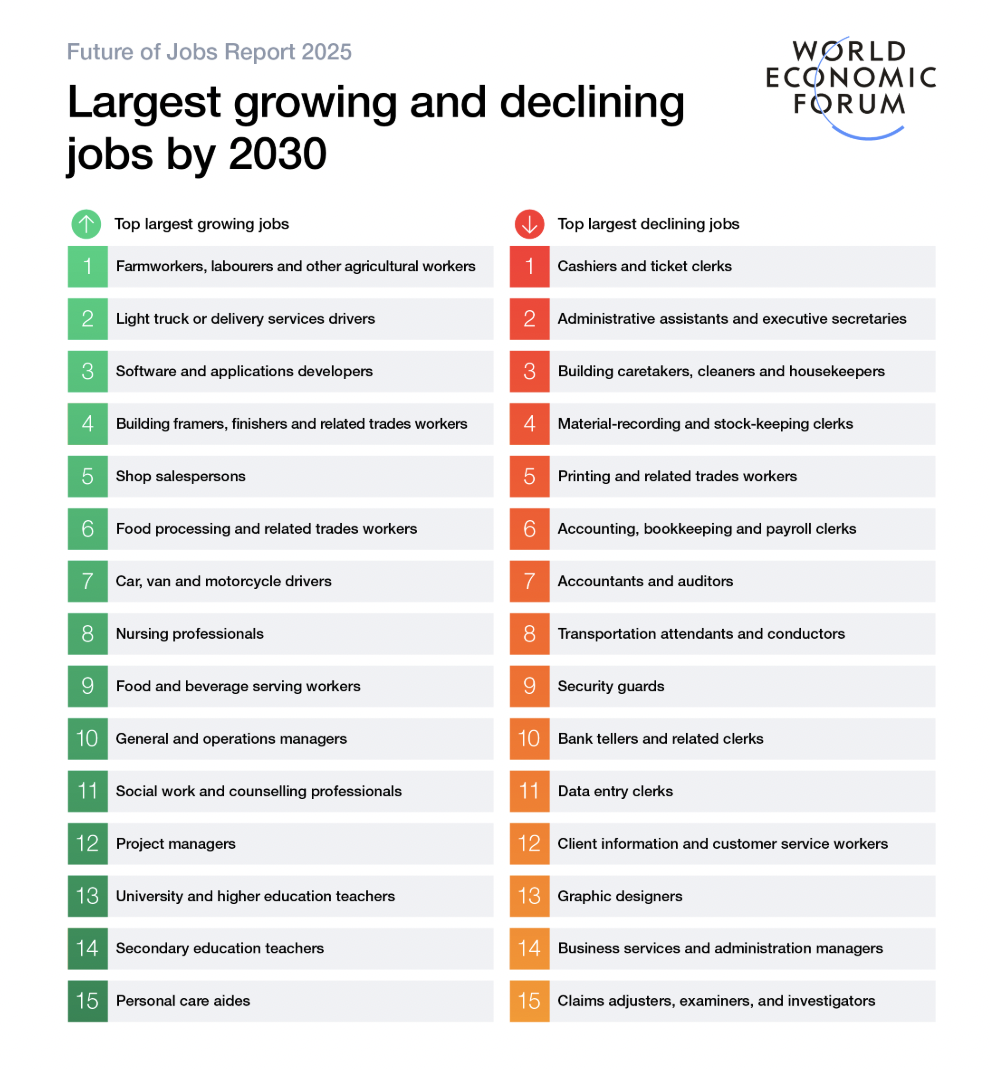
The World Economic Forum released the Future of Jobs Report 2025 which offers a glimpse into the evolving job market influenced by technology, green transitions, and societal shifts. Further, AI and machine learning specialists are grabbing headlines.
The report states that 39% of core job skills are expected to change by 2030 and the future of work demands agility. Technological skills such as AI expertise, big data analysis, and cybersecurity are considered important.
But it’s not just tech-related skills, creative thinking, resilience, leadership, and even environmental stewardship are also climbing the skills ladder, stressing the value of a well-rounded, adaptable workforce.
The shift is prompting businesses to invest in reskilling and upskilling initiatives.
Creative thinking has emerged as a top skill set, along with resilience, flexibility, and agility. Employers are also looking for the spark of curiosity and the drive for lifelong learning, making these traits as valuable as any technical proficiency.
The report also highlighted a shift toward leadership and human-centric skills, with social influence, talent management, and environmental stewardship joining the ranks of the top 10 skills for the future.
Source: WEF Report
Even Naukri.com’s December 2024 report stressed the same. At the tech frontier, AI and machine learning roles are expanding, with a 36% growth rate. Sectors like oil and gas, FMCG, and healthcare are also witnessing double-digit growth, signaling a broad-based economic resurgence.
“India’s job market is entering 2025 with vigour, driven by AI/ML growth and creative sectors. The surge in fresher hiring and evolving C-suite roles signals a transformation into a more dynamic landscape,” says Pawan Goyal, Chief Business Officer at Naukri.
The post 39% Core Job Skills to Change by 2030 with AI Taking the Lead, says WEF appeared first on Analytics India Magazine.
The cybersecurity landscape of 2024 was marked by devastating ransomware attacks, artificial intelligence (AI)-powered social engineering, and state-sponsored cyber operations that caused billions in damages. As 2025 kicks off, the convergence of AI, geopolitical instability, and evolving attack surfaces presents an even more complex threat environment.
Security professionals are bracing for what could be the most challenging year yet in cyber defense as threat actors leverage increasingly sophisticated tools and tactics. Based on current threat intelligence and emerging attack patterns, here are five significant cybersecurity predictions that will likely shape 2025.
1. Ransomware will become data destruction and manipulation
Ransomware is no longer just about extortion — it's becoming a tool for systemic disruption.
Also: The Best of CES 2025 awards are in, as selected by ZDNET and the rest of CNET Group
Ransomware attacks have become a fixture of the cybersecurity threat landscape, with organizations paying millions to recover encrypted data. However, the nature of these attacks is changing. This year, ransomware groups will move beyond encryption and data theft, targeting the integrity of critical data itself.
This evolution could include attacks that corrupt sensitive databases, modify financial records, or disrupt the operations of entire industries. Imagine the implications of altered medical records in a hospital or tampered financial data at a multinational bank. The risks extend beyond monetary losses, threatening lives and destabilizing trust in institutions.
"Ransomware payloads themselves haven't changed that much. We've seen some minor tweaks and improvements," Dick O'Brien, principal intelligence analyst at Symantec Threat Hunter Team by Broadcom, notes. "However, genuine innovations have occurred in the ransomware attack chain. Your average, successful ransomware attack is a complex, multi-stage process that involves a wide range of tools and a fair amount of hands-on keyboard activity on the part of the attackers."
Also: Is prompt engineering a 'fad' hindering AI progress?
O'Brien credits the change to evolving tools and tactics. "The main trend has been the move away from malware. The majority of tools used by attackers these days are legitimate software," he explains. "In many attacks, the only malware we see is ransomware, which is introduced and run at the last minute."
Recent studies, including insights from the Cybersecurity and Infrastructure Security Agency (CISA), emphasize the growing sophistication of ransomware operators leveraging AI and automation to launch faster, more targeted attacks.
What organizations can do
Implement advanced backup and disaster recovery strategies.
Prioritize data integrity checks to ensure tampered data is detected.
Invest in endpoint detection and response (EDR) tools to quickly identify and isolate threats.
2. AI-powered attacks will outpace human defenses
AI is revolutionizing industries, and that includes cybercrime. In 2025, adversaries will harness AI to craft highly targeted phishing campaigns, develop advanced malware, and identify system vulnerabilities at unprecedented speeds. These AI-driven attacks will challenge even the most advanced cybersecurity teams, as the sheer volume and sophistication of threats will outpace manual defenses.
Also: How to protect yourself from phishing attacks in Chrome and Firefox
One example of this emerging threat is the use of generative AI to create deepfake audio and video, which can be used to bypass identity verification systems or spread misinformation. In 2024, several high-profile incidents demonstrated how convincing deepfake technology has become, and its potential for abuse in cyberattacks is only growing.
"The cybercrime adversary community is opportunistic and entrepreneurial, and they have been quick to adopt and deploy new technologies […] the use of deepfakes, artificial intelligence, and LLMs is the next step in this evolution as attackers seek to establish trust with the victim at the initial stages of the attack via social engineering," says Alex Cox, LastPass' director of information security. "They most commonly achieve this by pretending to be a decision maker for the targeted firm, thereby putting known authority behind the attacker's requests."
AI-powered attacks are perilous because they scale effortlessly. An attacker can program an AI system to identify weak passwords across thousands of accounts in minutes or to scan an entire corporate network for vulnerabilities far faster than a human could.
What organizations can do
Deploy AI-driven defensive tools that monitor networks in real-time.
Train employees to recognize sophisticated phishing attempts, even AI-crafted.
Collaborate with industry partners to share intelligence on emerging AI-driven threats.
The cat-and-mouse game of cybersecurity is entering a new, faster phase, where AI is the primary technology deployed by both red and blue teams.
3. Critical infrastructure will be an early target
In 2024, attacks on critical infrastructure made headlines, from European energy grids to water systems in the United States. This trend will accelerate in 2025 as nation-states and cybercriminal groups focus on disrupting the systems that societies depend on most. These attacks are often aimed at causing maximum chaos with minimal effort and are increasingly weaponized in geopolitical conflicts.
Also: Technologist Bruce Schneier on security, society and why we need 'public AI' models
Aging systems and fragmented security protocols exacerbate the risks to critical infrastructure. For example, many energy grids rely on legacy technologies never designed to withstand modern cyberattacks. Meanwhile, the growing interconnectivity of operational technology (OT) and information technology (IT) creates new vulnerabilities.
"As I've spoken to water companies and utilities, I've found that many lack the basics in their industrial cyber programs," warns Ian Bramson, vice president of global industrial cybersecurity at Black & Veatch. "They haven't established visibility into their OT networks or the control over their environments to prevent, detect, or respond to attacks."
Bramson urges leaders to view industrial cyber — what he calls "the networks, equipment, and devices that impact safety and uptime (i.e., operational continuity)" — as a matter of safety. "Virtual attacks on these can have significant real-world physical impacts. Making cyber a safety concern mandates action and prioritizes resources. All utilities take safety seriously. Extending that to cyber gives it the priority it needs. Ultimately, it's public welfare and employee safety that make OT mission-critical for water utilities."
What organizations can do
Partner with government agencies like CISA to identify and mitigate vulnerabilities.
Segment OT and IT networks to limit the impact of breaches.
Invest in continuous monitoring and real-time threat detection for critical systems.
Protecting critical infrastructure isn't just a cybersecurity priority — it's a matter of national security.
4. Supply chain attacks will escalate
The interconnected nature of global business has created a perfect storm for supply chain attacks. These breaches exploit vulnerabilities in third-party vendors, allowing attackers to infiltrate multiple organizations through a single entry point. In 2025, experts expect these attacks to grow in frequency and sophistication.
One notable example is the SolarWinds cyber attack, which compromised thousands of organizations by targeting a widely used software provider. Similarly, the Kaseya ransomware attack highlighted how small vendors can serve as gateways to larger enterprises. Supply chain attacks are insidious because they exploit trusted relationships between companies and their vendors, often going undetected for months.
Governments and regulatory bodies are taking notice. In 2024, new guidelines for supply chain security were introduced in both the US and the European Union, emphasizing the need for transparency and accountability. However, compliance alone won't be enough to stop attackers who are constantly evolving their methods.
As Matti Pearce, vice president of information security, risk, and compliance at Absolute Security, explains: "CISOs will need innovative detection and monitoring techniques to uncover unauthorized AI applications that might not be directly observable on network traffic. Focusing on user education and providing secure, approved AI tools will be central strategies in mitigating these risks […] because the rise in the use of AI is outpacing securing AI, you will see AI attacking AI to create a perfect threat storm for enterprise users."
"Today, the security industry still doesn't know how to protect AI well," Pearce continues. "Human error — not malicious adversaries — will be the reason for this expected conflict. With the increased adoption of AI, we can expect to see AI poisoning in the already vulnerable supply chain. In addition, a critical AI flaw will be the entry point for a potentially new and novel attack that will go undetected and cause significant economic disruption."
What organizations can do
Conduct thorough security audits of all third-party vendors.
Implement zero-trust principles to limit the impact of compromised partners.
Use threat intelligence to identify and respond to supply chain vulnerabilities proactively.
The security of your supply chain is only as strong as its weakest link.
5. The cybersecurity workplace skills gap will deepen
The cybersecurity industry is facing a significant talent shortage. According to a report by ISC², the number of unfilled cybersecurity jobs – over 3.4 million globally in 2024 – is expected to grow in 2025. This workforce gap presents a significant challenge as the demand for skilled professionals rises.
Also: You can boost your cybersecurity skills for free with this new initiative
The shortage isn't just about numbers — it's about expertise. Many organizations struggle to find employees with specialized skills in threat intelligence, AI-driven defenses, and cloud security. As a result, overburdened teams are at greater risk of burnout, leading to higher turnover rates and further exacerbating the problem.
"A shift in the balance of power is underway in the criminal underworld, requiring human solutions," says O'Brien. "Historically, the operators of large ransomware families stood at the top of the cybercrime food chain. They franchised their businesses using the ransomware-as-a-service (RaaS) business model, where "affiliate" attackers leased their tools and infrastructure in exchange for a cut of ransom payments.
"However, this business model's unintended consequence has been placing more power in the hands of affiliates, who can quickly migrate to rival operations if one is shut down. Ransomware operations are now competing with one another for affiliates, offering increasingly better terms for their business."
Also: 'Scam yourself' attacks just increased over 600% — here's what to look for
To address this crisis, organizations are turning to creative solutions. Upskilling programs and internal training initiatives are helping existing employees transition into cybersecurity roles. Additionally, automation and AI handle repetitive tasks, freeing human analysts to focus on strategic decision-making.
What organizations can do
Invest in training and mentorship programs to develop internal talent.
Partner with universities and coding boot camps to build a pipeline of skilled workers.
Embrace diversity initiatives to attract candidates from underrepresented groups.
Closing the cybersecurity talent gap isn't just an industry challenge — it's a societal imperative.
What these predictions mean for 2025
The cybersecurity challenges of 2025 are daunting, but they are not insurmountable. Organizations can defend against innovative cyber threats using a multilayered approach that combines technological solutions with human expertise.
AI-powered defensive tools provide real-time network surveillance, while strict segmentation between operational and information technology systems protects critical infrastructure. Zero-trust security principles and thorough vendor audits help mitigate supply chain vulnerabilities. By investing in cybersecurity training programs to address the talent shortage, organizations can leverage human ingenuity to work around vulnerabilities proactively.
In a first-ever podcast appearance, Prime Minister Narendra Modi appeared on Zerodha co-founder Nikhil Kamath’s WTF episode. In a candid conversation, discussing a range of topics from personal story, policy making, governance and tech, Modi empahsised on India’s growth and the transformation it has brought to the youth.
Narrating his incident at Taiwan, despite explaining about tech, their questions were still around if India is a land of black magic and snake charmers. To which Modi replied that his ancestors might have been used to playing with snakes but now it is different. “Our ancestors played with snakes. Today, every child in India plays with a mouse.”
Viksit Bharat 2047
Speaking about India’s technological growth, Modi spoke about UPI, where he highlights how in the last decade, he has brought the technology of the world in one’s pocket. He also spoke about Viksit Bharat 2047, a vision to make India a self-reliant country being a production powerhouse of the world.
He even recalled the time when he faced a setback of having been denied a visa, two decades later, the world has transformed to an extent. “The world now stands in line for India’s visa,” he said.
AI Means Aspirational India
Modi goes on to explain the aspirational part of India by expanding AI as ‘Aspirational India.’
Kamath mentioned about his growing years in his mid teens, used to believe that studying hard, going abroad, doing a PhD and working abroad in Microsoft was “the highlight” and that there was nothing beyond that. However, when we meet the youth today, the conversation is on building in India, and talks on moving abroad have reduced. “This is a big change,” he said.
Modi goes on to explain sternly, “I am openly saying. You’ll regret, if you don’t come back to India. Now is the time for India,” he said. He even says that startups that were once seen as a disaster, are now considered a matter of pride.
He confidently believes in the youth and said that today’s 20-25-year-olds will be in a position to run the country efficiently by 2047.
The post Every Child in India Now Plays with Mouse, Not Snakes: PM Modi appeared first on Analytics India Magazine.
There is no stopping Jensen Huang. After sovereign AI, NVIDIA’s chief has a newfound obsession, mostly revolving around self-driving cars and AI agents. Speaking at CES 2025, he highlighted the potential of robotaxis and autonomous vehicle (AV) technologies to transform global mobility and logistics.
“I predict that this will likely be the first multi-trillion dollar robotics industry,” he said in his keynote. This claim comes amid a growing wave of innovation, investment, and competition in the autonomous driving landscape.
Nvidia CEO Jensen Huang tonight on robotaxis and self-driving: “I predict that this is going to be the first multi-trillion dollar robotics industry.” pic.twitter.com/QVTnwhdMUY
— Sawyer Merritt (@SawyerMerritt) January 7, 2025
Robotaxis show promise in reducing traffic congestion, lowering emissions, and providing mobility solutions that are accessible to millions worldwide.
Moreover, the integration of autonomous vehicles into public and private fleets is expected to create millions of new jobs in AI development, system integration, and maintenance, further cementing the industry’s economic impact.
Breakthroughs in AI platforms, sensor technologies, and cloud computing are backing the push for autonomous mobility. Companies like NVIDIA have introduced platforms such as DRIVE Hyperion and Cosmos to streamline the development of AV systems.
DRIVE Hyperion enables autonomous vehicle manufacturers to handle perception, mapping, and decision-making efficiently, while the recently launched Cosmos platform generates synthetic driving environments for training AV algorithms.
Using tools like AI traffic generators and neural reconstruction engines, Cosmos creates high-fidelity 4D simulations, turning hundreds of real-world drives into billions of effective miles for training data.
Real vs Synthetic Data Debate
The role of synthetic data in training AV systems has sparked debate among industry experts. Sawyer Merritt, an investor at Tesla, referred to NVIDIA’s Cosmos and pointed out that synthetic data, while innovative, cannot replace the reliability of real-world video driving data.
“Synthetic driving data is like using ChatGPT—you might trust what you see is true, but you often can’t be entirely certain without further validation,” he said.
Merritt emphasised Tesla’s unmatched advantage: over 7.1 million vehicles on the road worldwide, collectively driving upwards of 75 billion miles annually, with more than 56 million onboard cameras capturing real-world video data.
The company’s cars capture real-world driving scenarios, offering unmatched insights for self-driving.
In a recent conversation with AIM, Sami Atiya, president of the robotics & discrete automation business area at ABB, also expressed his views on the subject. He believes synthetic data will play a huge role in robotics as the company is already using it for “arm simulations and complex path-planning” for its in-house robots.
Synthetic data opens up endless possibilities without ever needing to touch the robot. But he also reminded us to be wary of any biases or misleading elements in the data. “The main expertise of the people who actually use these AI systems will become much more crucial to know the right input and output of data that is not biased,” Atiya said.
He agreed with Ilya Sutskever on the end of traditional pre-training due to data limitations, emphasising AI’s reliance on scaling models and exploring agents and synthetic data as the future of AI innovation. “We will reach a plateau, and we are about to see more capacity being thrown at systems,” he said.
An Industry on the Move
Waymo, Alphabet’s self-driving subsidiary, has been conducting extensive real-world trials and is expanding its operations in cities across the United States and in Tokyo early this year.
Meanwhile, Cruise, a subsidiary of General Motors, has been deploying autonomous taxis in select locations, including San Francisco and Phoenix. At the same time, Mobileye, an Intel company, launched a unique sensor technology for layered visuals, which generates 3D perception for a reliable understanding of the environment.
Mobileye’s latest system on a chip, the EyeQ6, powers this advanced processing, as announced by founder and CEO Amnon Shashua in his keynote address at CES 2025. The tech, which offers high-resolution sensing capabilities that address camera weak spots, will enter production in 2026.
NVIDIA also recently announced collaborations that will shape the future of autonomous vehicles. Toyota, the world’s largest automaker, is building its next-generation vehicles on NVIDIA DRIVE AGX Orin, running the safety-certified NVIDIA DriveOS operating system.
These vehicles will offer functionally safe, advanced driving assistance capabilities. Also, partnerships with companies like Aurora and Continental highlight the widespread adoption of these technologies across legacy automakers.
Other leaders using Cosmos to build physical AI for AVs include Fortellix, Uber, Waabi and Wayve. Such partnerships aim to overcome challenges in autonomous driving and ensure rapid deployment of robotaxis and self-driving fleets worldwide.
For instance, HERE Technologies and AWS recently announced a $1 billion partnership to develop AI mapping solutions critical for precise navigation.
Meanwhile, Uber and NVIDIA recently announced a partnership to support the development of AI-powered autonomous driving technology. More details on this are expected later this year.
Dara Khosrowshahi, CEO of Uber, said in the official announcement, “Generative AI will power the future of mobility, requiring both rich data and very powerful compute.”
With Uber completing millions of trips every day, Khosrowshahi hopes to create safe and scalable autonomous driving solutions for the industry. Now, major companies look forward to pairing up with the NVIDIA Cosmos platform and NVIDIA DGX Cloud to help build stronger AV partners.
Additionally, Amazon and Qualcomm have also announced a collaboration to revolutionise in-car experiences by combining Qualcomm’s Snapdragon Digital Cockpit platform with Amazon’s AI and cloud services.
Last month, Volvo Cars CEO Jim Rowan met Qualcomm president & CEO Cristiano Amon for a lap in the eX90 and a chat about the car as the new computing space.
The Landscape in India, Starting in Bengaluru
Bengaluru, known for its traffic and tech innovation, is emerging as a key player in India’s autonomous vehicle landscape.
The Bengaluru Traffic Police’s exploration of a digital twin for traffic management signals a tech-forward approach crucial for enabling robotaxis and autonomous vehicles.
Bengaluru’s police commissioner envisions a future where AI boosts enforcement and management, serving as a ‘force multiplier’ to meet the city’s unique needs. However, infrastructure upgrades, better rule adherence, and two-wheeler-focused technologies remain critical.
AI-based cameras reduce violation processing time from 300 seconds to 5 seconds. While enforcement leverages rule-based AI effectively, traffic management faces challenges like unpredictable road behaviour, requiring real-time adaptability and instant decision-making for optimal impact.
The post Robotaxis and Self-Driving Cars to be the ‘First Multi-Trillion Dollar Industry’ appeared first on Analytics India Magazine.
Tomorrow's application users may look quite different than what we know today — and we're not just talking about more GenZers. Many users may actually be autonomous AI agents.
That's the word from a new set of predictions for the decade ahead issued by Accenture, which highlights how our future is being shaped by AI-powered autonomy. By 2030, agents — not people — will be the "primary users of most enterprises' internal digital systems," the study's co-authors state. By 2032, "interacting with agents surpasses apps in average consumer time spent on smart devices."
Also: In a machine-led economy, relational intelligence is key to success
This heralds a moment of transition, what the report's primary author, Accenture CTO Karthik Narain, calls the Binary Big Bang. "When foundation models cracked the natural language barrier," writes Narain, "they kickstarted a shift in our technology systems: how we design them, use them, and how they operate."
These new developments are "pushing the limits of software and programming, multiplying companies' digital output, and laying the foundation for cognitive digital brains that infuse AI deeply into enterprises' DNA," Narain adds.
The emerging technology development landscape will focus on three areas, he states: agentic systems, digital core, and generative user interfaces. These will be deployed on highly composable and modular building blocks.
Agentic systems
Agentic systems currently "show great promise with small pieces of code, and given documentation and examples, can call functions and APIs with high accuracy," he reports. "They can create functions and APIs to use later. Companies are rapidly integrating these capabilities into new models to accelerate engineering velocity."
The Accenture team added this notation:
"One of the leading agentic systems for software engineering today is Anthropic's Claude 3.5 Sonnet. "When tested on SWE-Bench Verified, a software engineering benchmark of real-world issues from GitHub, it achieved a remarkable 49% resolved rate.38 In 2023, agents had a rate of less than 5%."
Digital core
The digital core is the technological architecture and infrastructure that runs the AI-powered enterprise. Agents will rely on a digital core that enables them to "connect data sources with analytical platforms that can use that data to drive decision-making and useful actions." Today's agentic systems can't build and maintain the entire digital core — "but they're tackling pieces of it," Narain points out.
Also: Is prompt engineering a 'fad' hindering AI progress?
About half of executives responding to Accenture's survey, 48%, report they soon expect agents to be able to upgrade and modernize functions and integrations. At least 46% said agents will soon be able to assure the quality of digital functions and systems, and 45% anticipate agents will access functions from internal systems.
Accessing functions from third-party systems is still a ways off, however — only 29% see this on the near horizon. Only 38% see their agents capable of accessing data from across the organization.
Generative UI
Another interesting development Narain and his co-authors see emerging with the rise of AI agents is generative UI, which involves leveraging AI techniques to generate highly personalized user interfaces. "For decades, the high cost of software development and the low cost of software distribution have driven the idea of creating a single UI that must work for every user. But now, as agentic systems advance and begin to take more actions on our behalf in the digital world, they're driving a new software paradigm where cheaper code and language-first interfaces make dynamically generated, custom UI components increasingly feasible."
To get started, the Accenture co-authors urge teams to experiment with agents internally. "A good way to begin is to create task-specific internal agents. After starting small, you can move modularly, over time expanding the functions and data your internal agents can access and using them to learn and prepare for building external-facing agents in the future."
Also: Make room for RAG: How Gen AI's balance of power is shifting
As autonomous agents proliferate, maintaining consistency and trust becomes crucial. "Companies will need to closely surveil them and ensure guardrails are in place," the report continues. "What data are these systems accessing, who is directing them, what is the quality of their outputs, and more? Transparency here will help to increase employees' trust in the systems. As you create a monitoring system, lay out a governance and technological roadmap for implementation. Also, develop communication and maintenance plans so your organization understands how the monitoring works and your guardrails keep up with advances." Finally, to keep things grounded, Narain and his co-authors caution that "AI agents are amazing technical feats but are by no means perfect. They are computationally expensive, non-deterministic, and can lack explainability. But just as retrieval augmented generation (RAG) can ground an LLM, so can code and functions ground an agent, making them more explainable and increasing trust in them."
Tata Technologies and Korean Semiconductor Telechips announced a strategic partnership to co-develop software solutions for next-generation vehicles. They will focus on creating advanced systems for Software-Defined Vehicles (SDVs), including ADAS (Advanced Driver Assistance Systems), automotive cockpit domain controllers, and central and zonal gateway controllers.
The partnership aims to address critical challenges faced by automakers, such as integrating software with hardware and reducing development time. Tata Technologies will contribute its expertise in automotive software engineering, while Telechips will bring its advanced semiconductor solutions, such as AI-powered processors and System-on-Chips (SoCs).
Warren Harris, CEO and Managing Director of Tata Technologies, said, “We are delighted to collaborate with Telechips, combining their advanced semiconductor technology with our deep domain knowledge.” “This partnership exemplifies our commitment to enabling OEMs to deliver intelligent, connected, and sustainable vehicles that redefine safety, functionality, and user experiences.”
This collaboration will focus on real-time updates, improved connectivity, and enhanced vehicle safety. By leveraging AI and Telechips’ cutting-edge semiconductor technologies, the partnership aims to help automakers develop greener and more competitive vehicles while keeping pace with global sustainability goals.
Jang-Kyu Lee, CEO of Telechips, said, “Our partnership with Tata Technologies highlights our commitment to transforming the automotive semiconductor landscape. Together, we are paving the way for safer, smarter, and more connected mobility solutions, enabling OEMs to lead in the SDV era.” Last year, Tata Communications today announced a collaboration with Palo Alto Networks, the global cybersecurity leader, to deliver comprehensive cybersecurity solutions to global enterprises.
The post Tata Technologies Partners with Telechips to Drive Innovation in Next-Gen Vehicle Software appeared first on Analytics India Magazine.
Cohere, a Canada-based AI startup, has launched North, a secure platform designed to help businesses manage workflows.
With tools powered by large language models (LLMs), advanced search capabilities, and automation features, North simplifies data management and routine operations for organisations across sectors.
A key feature of the platform is its Compass search system, which can retrieve information from various sources, including documents, spreadsheets, and images. By addressing the inefficiencies caused by fragmented data systems, Compass seeks to enable teams to make faster, better-informed decisions.
“North gets rid of the pain that enterprises experience during the AI adoption process, providing near-immediate productivity benefits while being privately deployable,” said Cohere CEO Aidan Gomez in a statement.
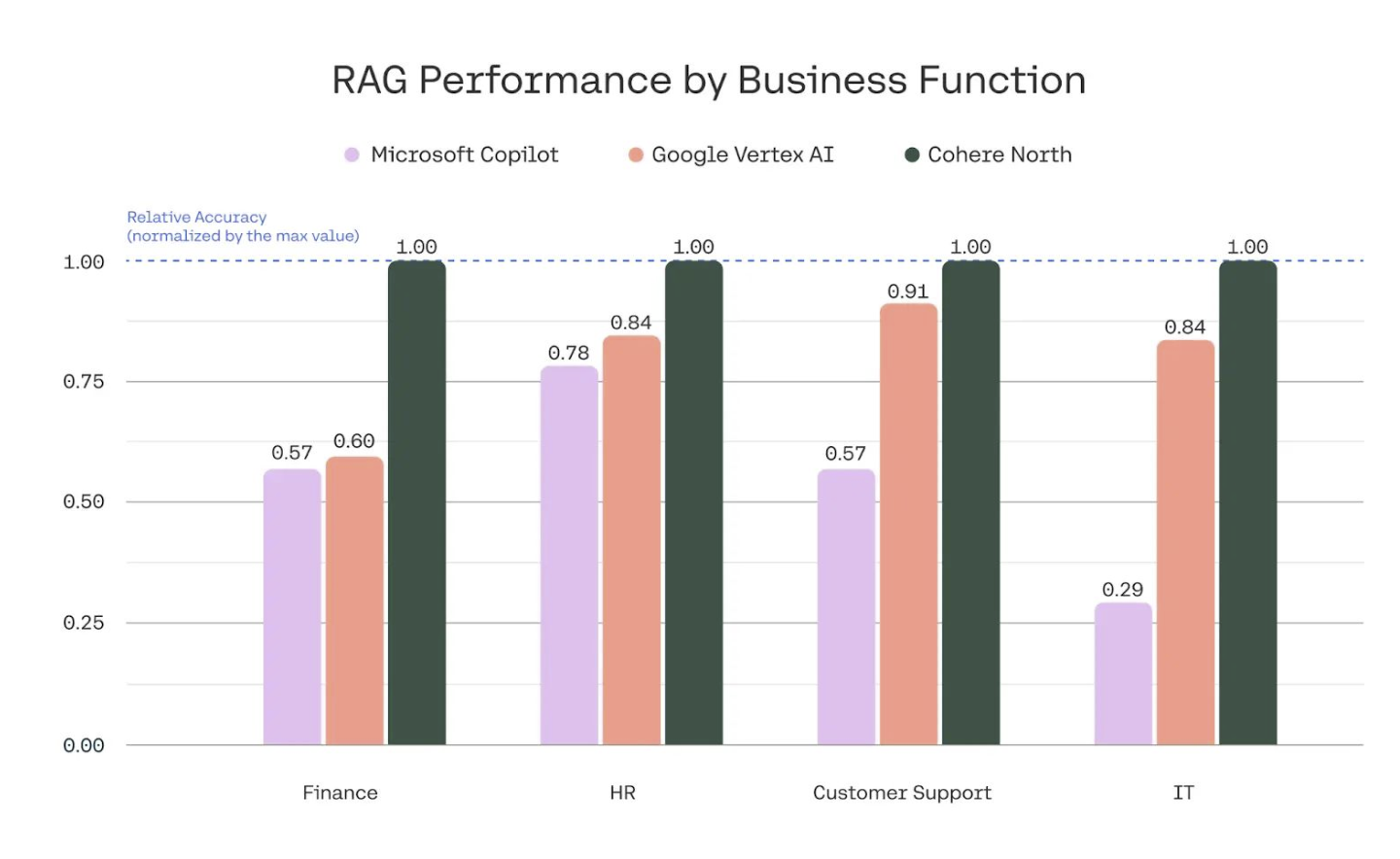
The platform integrates with existing workflows, allowing employees to create custom AI tools for tasks in HR, finance, IT, and customer support. By automating repetitive processes, North frees employees to focus on higher-priority work.
Last month, the company launched Command R7B, the smallest model in its R series of LLMs. These target businesses that prioritise speed, cost efficiency, and flexibility.
Why is North Important?
In addition to its productivity tools, North prioritises security. The platform operates in private or air-gapped environments, making it suitable for industries with strict regulatory requirements, such as finance, healthcare, and manufacturing. Organisations can customise the system to match their specific terminology and internal processes.
“Companies looking for an AI solution never ask us about AGI or ASI. But every company asks about data security and privacy,” said Josh Gartner, head of communications at Cohere AI.
Early trials of North include a collaboration with the Royal Bank of Canada, which helped tailor the platform for secure banking applications. This partnership reflects North’s potential to meet the unique demands of regulated industries.
Available through an early access programme, North integrates AI into existing workflows without requiring costly bespoke systems. With its emphasis on security and flexibility, Cohere positions North as a tool to support businesses in improving productivity and operational efficiency while navigating the challenges of AI adoption.
The post Cohere Launches its AI Workspace ‘North’ appeared first on Analytics India Magazine.
The synthesis of generative machine learning models and digital agents, which many have dubbed Agentic AI, may well prove the most advantageous development for enterprise-spanning deployments of Artificial Intelligence.
The tandem of these technologies drastically extends the benefits they offer. The natural language understanding and generation of AI models are considerably enhanced by the action enabled by digital assistants. When properly implemented, ChatGPT does much more than summarize, write, or answer questions about documents.
This model, and other generative models paired with bots, can actually perform tasks to accelerate workflows and spur process automation to achieve mission-critical objectives.
The relatively recent launch of Foxit’s AI Assistant, in the Foxit Admin Console, provides a tangible demonstration of these capabilities. Based on ChatGPT, it allows end users to streamline document management by simply prompting the bot—not for answering questions about, or writing, content, but to manipulate the actual documents themselves.
The implications of these capabilities are far-reaching. According to Deedee Kato, Vice President of Corporate Marketing at Foxit, this functionality may soon result in AI agents performing intricate tasks, like readying pdfs for court filing.
“We know that there’s a bunch of steps that have to happen that law firms have to do, in order to submit court cases,” Kato said. “You have to have bookmarks. You have to have it compressed. There’s about 10 different things you have to do before you can file it with the court. We’re thinking in the future, we might have [such] a multi-step workflow in these prompts.”
Smart commands
At present, Foxit users can issue smart commands—natural language prompts to the system’s digital agent—to perform single actions at a time. This feature enhances the codeless motif presently typifying Intelligent Document Processing solutions, many of which are based on drag-and-drop, point-and-click methodologies. Instead, one can simply direct the system via natural language to perform any variety of tasks for managing pdfs and e-signature activities.
“Our differentiator is that within AI Assistant you can fully execute a pdf command, like ‘rotate pages one through nine 90 degrees’,” Kato commented. “You can put that as a prompt and it will execute the command versus like Adobe or ChatGPT. If you put in that command or prompt, it’ll just explain what ‘rotate’ means.” With natural language prompts, it’s possible to implement agents to convert, edit, issue comments, initiate e-sign activities, add certifications, and implement other actions on pdfs.
Kato estimated there are approximately 80 activities AI Assistant can complete. Foxit also relies on ChatGPT to supplement user activity by rewriting pdfs in different tones of voice and lengths, translating and summarizing them, and more. “It’s anything in the ribbon, like password protect,” Kato mentioned. “There’s a lot of stuff you can do for pdfs; I only use about 10 percent. Law firms probably use a lot of the things that I don’t.”
License management
In addition to modifying pdfs to prepare them for the next phase of a workflow, the AI-powered digital agent can complete a number of administrative tasks pertaining to licensing Foxit products and services. Instead of utilizing manual methods, users can simply prompt the agent to perform activities related to licensing in bulk. “We see the AI Assistant as automating these manual tasks,” Kato remarked. “Instead of just doing it one by one, rotating each page, or signing each individual license, we see it as automating multiple tasks.”
These capabilities are invaluable for performing these tasks at enterprise scale, particularly for situations in which organizations are engaged in training sessions and onboarding new employees. There are specific features for assigning licenses to particular groups and domains, and for information in CSV files or spreadsheets. “Like for Baker McKenzie, there’s thousands of users and there’s a license for every user,” Kato pointed out. “So, to manage those licenses, let’s say someone leaves Baker McKenzie and then another employee starts. With the admin console you can move that license to the new user.”
The greater significance
Eliciting action from digital agents infused with language models represents the next progression of enterprise AI—and the premise for what has come to be known as Agentic AI. It’s possible to build agents for respective tasks, combine agents for specific workflows, and increase the overall sophistication and complexity of deployments of these intelligent bots.
Within this realm of possibilities, facets of intelligent document processing may seem relatively tame. Nonetheless, they herald the enormous potential this technology has to offer to the enterprise in its inexorable march to benefit from these expressions of cognitive computing.
The cybersecurity concept known as “zero trust data security” is based on the tenet “never trust, always verify.” Zero Trust requires constant verification of every person and device trying to access resources, regardless of location, in contrast to standard security approaches that presume everything within a network is reliable.
This strategy is essential for mobile app developers, especially those who work with big businesses like retail banks or e-commerce corporations, where the stakes for data breaches are quite high.
Comprehending data security with Zero Trust
Zero Trust Data Security fundamentally changes traditional security paradigms by constantly confirming all access requests, whether they originate from inside or outside the network. Before providing access to any resources, this method guarantees that each user, device, and application has been verified and approved.
1. Least privileged access
By enforcing the least privilege principle, Zero Trust gives users the bare minimum of access required to carry out their duties. Just-In-Time (JIT) and Just-Enough-Access (JEA) policies dynamically modify access rights based on current requirements and risk assessments to accomplish the least privilege access.
By restricting access permissions, Zero Trust reduces the possible impact of compromised credentials or criminal activity. This idea is further reinforced by adaptive policies that instantly modify access levels in response to risk profiles.
2. Confirm clearly
The explicit verification principle is central to Zero Trust. Authenticating and granting access through explicit verification entails a thorough assessment of several data points, including user identification, location, device health, and activity patterns.
Zero Trust demands rigorous verification of every access attempt, in contrast to conventional models that allow access based on network location, guaranteeing that only authorized users and devices are able to communicate with the network. Context-aware security rules and multi-factor authentication (MFA) are frequently used to improve this verification procedure.
3. Presume a breach
Zero Trust focuses on reducing harm and blocking lateral movement within the network because it operates under the premise that breaches are unavoidable. By dividing the network into isolated parts that limit access to resources based on stringent verification procedures, micro-segmentation reduces damage and stops lateral movement from a breach.
Real-time threat detection and ongoing monitoring are essential elements that enable the prompt detection and containment of questionable activity. Zero Trust guarantees that the network is resilient against various threats by presuming that breaches could happen.
The value of Zero Trust data security for developers of mobile apps
Zero Trust Data Security offers a strong defense against increasingly complex cyber threats, which is why it is essential for mobile app developers, particularly when making apps for big businesses. Through the implementation of Zero Trust principles, developers may guarantee the security and resilience of their applications.
1. Improved posture for security
Using Zero Trust, which imposes stringent access restrictions and continuous verification, significantly improves the security of an application. This enhanced security posture is crucial for mobile apps in large corporations, where data breaches can have catastrophic consequences. Zero Trust reduces the possibility of illegal access from outside attackers or compromised internal accounts by demanding robust authentication for each access request.
2. Reducing insider threats
Insider risks can be difficult to identify and stop, but Zero Trust is especially good at reducing them. Zero Trust lowers the possibility of malicious activity or unintentional data disclosure by ensuring that users have just the permissions required for their responsibilities through the use of least privilege access and ongoing monitoring. Complementing these efforts with mobile app pentesting helps uncover hidden weaknesses, especially in access control and user authentication systems
In addition to limiting lateral mobility within the network, rigorous access controls and micro-segmentation also reduce the potential harm that an insider could cause. The ability to quickly identify and handle suspicious activities is further enhanced by anomaly detection and real-time analytics.
3. Defense against enhanced dangers
Zero Trust offers a strong defense against advanced persistent threats (APTs) and other complex attacks by focusing on early detection and quick response and assuming that breaches can happen. When threat intelligence and continuous monitoring are combined, unusual patterns and behaviors that point to an assault can be found.
Zero Trust reduces the attack surface and limits adversaries’ ability to move laterally throughout the network by implementing stringent access rules and isolating critical resources. With this proactive approach, attackers’ potential to do damage is greatly reduced, even if they manage to obtain early access.
Architecture implications while implementing Zero Trust data security
There are important architectural concerns when developing mobile apps that incorporate Zero Trust data security. Guaranteeing strict access controls and ongoing verification entails reorganizing the application’s architecture.
1. Micro-segmentation
The network and application must be separated into distinct, smaller components to achieve Zero Trust. Every portion functions independently, and stringent verification procedures limit access.
Micro-segmentation reduces the attack surface by limiting the possible mobility of threats within the application. To restrict possible mobility, mobile apps’ admin features, transaction processing, and user data could be divided into separate modules, each with its own monitoring and access controls.
2. Powerful authorization and authentication
Including robust permission and authentication systems is a crucial architectural change. To guarantee that users and devices are authenticated using more than just passwords, multi-factor authentication (MFA) is made a default requirement.
Based on predetermined criteria and real-time risk assessments, role-based access control (RBAC) and attribute-based access control (ABAC) systems make sure that users can only access what they need when they need it. To control user identification and session validity, RBAC may make use of OpenID Connect, OAuth, or proprietary token-based systems.
3. Communications encrypted
It is crucial to guarantee end-to-end encryption for all data, both in transit and at rest. Strong encryption algorithms are used for stored data, and Transport Layer Security (TLS) is used for all connections between the mobile application and backend services. To guard against physical theft or loss, developers should also think about encrypting local device storage.
Best practices for Zero Trust data security
Adopting particular software development best practices is necessary to implement Zero Trust Data Security in a mobile app environment and guarantee strong security throughout the application’s lifetime.
1. Secure coding techniques
Standards for secure code are essential for avoiding vulnerabilities like buffer overflows, SQL injection, and cross-site scripting (XSS). Developers can reduce typical attack vectors by using parameterized queries, output encoding, and input validation.
To find and fix vulnerabilities early, the development process can use tools for static application security testing (SAST). Adopting safe frameworks and libraries that are patched and updated frequently also contributes to a robust security posture.
2. Frequent penetration tests and security audits
Frequent penetration tests and security audits assist in locating and fixing possible application flaws. Code, configurations, and dependencies are examined during security audits to ensure best practices and security standards are being followed.
Penetration testing mimics actual attacks to find weaknesses that automated methods might overlook. Developers can enhance the mobile app’s overall security posture and proactively handle security threats by implementing these strategies.
3. Continuous Deployment and Continuous Integration (CI/CD)
The CI/CD pipeline’s integration of security checks guarantees that vulnerabilities are found and fixed before code deployment. The build process should incorporate automated testing, such as vulnerability scanning, security linting, and static and dynamic analysis.
Developers may reliably implement security regulations and identify any problems early on by incorporating these technologies. Additionally, by facilitating quick iterations and security update deployments, this strategy ensures that the program is resilient to new threats.
Challenges of a Zero Trust data strategy
Implementing a zero-trust data strategy in an organization involves various considerations and challenges. Problems must be fixed to transition from traditional security models to a zero-trust architecture.
1. Regulatory compliance
Ensuring compliance with all regulatory requirements is necessary for the implementation of Zero Trust. Regulations like GDPR, CCPA, HIPAA, and PCI DSS that are specific to particular firms need stringent data protection and access control practices. Zero Trust principles are consistent with these requirements since they impose strict access constraints and continuous monitoring.
Companies must adjust their Zero Trust strategy to meet certain regulatory obligations. To demonstrate compliance, this can mean putting in place additional documentation, auditing, and reporting processes.
2. Performance overheads
Performance overheads may be introduced by Zero Trust’s granular access constraints and ongoing verification. Constant authorization, monitoring, and authentication can put a burden on system and network resources and could affect user experience.
Organizations must optimize their infrastructure and implement scalable solutions to manage growing loads without sacrificing performance to lessen these consequences. Latency can be reduced and smooth operations can be guaranteed by utilizing cutting-edge technology like edge computing and network path optimization.
3. Complexity of implementation
Implementing Zero Trust may necessitate major adjustments to an organization’s procedures and infrastructure. Legacy systems frequently require significant alterations or replacements since they are inflexible when it comes to integrating with contemporary Zero Trust concepts. This procedure can be resource-intensive, including significant time, technological, and human commitment. Organizations must carry out a thorough assessment of their current environment to identify gaps and develop a detailed implementation plan. Effective change management strategies are crucial to overcoming resistance and guaranteeing a smooth transition.
Conclusion
Zero Trust Data Security represents a paradigm shift in how businesses handle cybersecurity, especially in developing mobile apps. Adopting Zero Trust principles is essential for developers creating apps for major corporations to protect sensitive data and uphold strong security postures.
Developers may create secure mobile applications that satisfy the exacting security requirements of contemporary businesses by regularly confirming users and devices, putting robust authentication and encryption into place, and utilizing cutting-edge technologies like AI and ML.