In a transfer to spice up AI and cloud capabilities within the healthcare business, Innovaccer Inc., a number one healthcare AI firm, has raised $275 million in a Sequence F funding spherical.
The funding spherical, which included each major and secondary funding, noticed participation from B Capital Group, Banner Well being, Danaher Ventures LLC, Era Funding Administration, Kaiser Permanente, and Microsoft’s enterprise fund, M12.
The funding comes at an important time for Innovaccer, which plans to channel this capital into introducing new AI and cloud developments. These efforts will assist to increase collaboration with current prospects and scale its developer ecosystem.
The corporate additional intends to reinforce its choices with a number of copilots and brokers designed to streamline medical choice help, documentation, care administration, and call middle operations.
Abhinav Shashank, co-founder and CEO of Innovaccer, stated, “Our objective is to make healthcare extra proactive, predictive, and personalised. This funding will allow us to push the boundaries of what’s potential in healthcare AI.”
As of right this moment, Innovaccer has raised $675 million from main enterprise capital companies and strategic traders. To additional its capabilities, Innovaccer additionally acquired two corporations, Cured and Pharmacy High quality Options over the previous yr.
Sandeep Gupta, Co-founder and COO of Innovaccer, stated, “This funding propels us into the following chapter of remodeling healthcare with AI.”
Based in 2014, Innovaccer, a healthcare expertise firm empowers organisations to modernise affected person experiences, implement value-based care applications, and scale back administrative burdens.
Innovaccer has expanded its buyer base considerably over the previous two years. Within the US, it serves six of the highest 10 well being programs and has strengthened public sector partnerships with San Mateo County and Alameda County.
Additional, the platform helps over 130 healthcare organisations and continues to steer in inhabitants well being, knowledge administration, and AI, attaining 50 per cent year-on-year income development for the previous 5 years.
The publish Innovaccer Secures $275M to Redefine Healthcare with Copilots and AI Brokers appeared first on Analytics India Journal.
HubSpot co-founder Dharmesh Shah has ventured into the AI space withAgent.ai, an agentic platform designed to enable users to create and collaborate on custom AI agents.
First unveiled at the INBOUND 2024 conference, the project has already amassed an impressive 258,000 users in just four months, significantly surpassing its initial goals.
“At time of launch, I was hoping to get on stage and say I had thousands of users in beta already. Turns out, I was right. We had 47,000 users in beta when launched,” Shah shared in a recent update on LinkedIn.
The platform allows creators to experiment with low-code tools to build agents tailored to specific use cases, from analysing personal health data to optimising workflows. It also serves as a professional network and marketplace, with over 3,400 agents built so far, including contributions from HubSpot CEO Yamini Rangan.
“We now have 14,422 builders approved to create agents , and 1,697 of them have done so,” Shah noted, emphasising the platform’s accessibility and growing ecosystem.
The rapid adoption of Agent.ai highlights its potential to democratise AI innovation, catering to everyone from professionals to middle school students. With Shah’s hands-on approach, the platform is continuously evolving, aiming to bridge the gap between AI tools and real-world applications.
“This is the most fun I’ve had building since ChatSpot (now Breeze Copilot),” Shah added, reflecting his excitement for this transformative project.
Shah is currently building an agent on Agent.ai to process data from his Oura Ring (using its API). While unsure of the exact use case, he is considering a chat agent to query data insights, such as sleep patterns, average bedtimes, or correlations like readiness scores with social media activity and engagement.
“Imagine one day being able to take some of your health/sleep data and intersecting with your meeting/transcription data. Does your town in meetings change when you haven’t had enough sleep?” he asked on a social media post.
A few days ago Shah remarked that in the future, it’s going to be all about agents. “Even with the large language models we have *today* I think it’s possible to create useful AI agents that can augment a team and take on some subset of tasks that need to be done to accomplish a goal,” he said. He expects the underlying tech to get better in this year which will give the opportunity to make more use cases with AI agents.
Shah confirmed that right now, it’s running independent of HubSpot, but his hope is that it will eventually get rolled into HubSpot.
Indian Founders AI Agents
The craze for agentic AI continues with big tech and startups alike working on building customised agents for their customers. The AI agents market has been witnessing promising growth. From $5.1 billion in 2024, the market is expected to hit $47.1 billion by 2030. In particular, Indian entrepreneurs have been significantly driving the growth.
Indian founders in the AI startup space have been increasingly driving this growth. A few founders have remarked that advancements in foundational models have made it easier and cheaper to build AI agents.
Recently, Microsoft chief Satya Nadella showcased Copilot Studio, a conversational AI platform that helps users build AI agents, at Microsoft AI Tour in Namma Bengaluru. “Building agents should be as simple as creating a spreadsheet,” said Nadella.
Similarly, at the AI Pitchfield event, Salesforce India head, Arundhati Bhattacharya, expressed her enthusiasm on the Indian Agentic startup front.
“India’s startup ecosystem, being the third largest in the world, is uniquely positioned to address challenges at a billion-plus scale. The progress we’re seeing with agentic AI is phenomenal, even though companies are just starting to dip their toes into it,” she said.
The post HubSpot Co-Founder Launches Agentic AI Platform, Agent.ai, Records 258K Users in Just 4 Months appeared first on Analytics India Magazine.
This guide highlights the importance of container monitoring, key metrics to track, and tools ranging from Docker's built-in commands to comprehensive systems like Prometheus and Grafana.
CES brought this year’s top AI products and consumer devices to Las Vegas for a week of reveals. NVIDIA shaped many of these trends as the company that contributed to and benefitted from the artificial intelligence boom the most. TechRepublic has rounded up the top trends in commercial products and AI from the show.
Agentic AI is the next step for generative bots
Agentic AI, a buzzword throughout the last half of 2024, was a hot topic at CES. Agentic AI typically strings together multiple actions by several generative AI services to automatically perform tasks that would otherwise have taken a human worker hours or days to complete.
NVIDIA’s Blueprints for agentic AI are pre-built packages of NIM microservices and technologies from AI partners. For example, LangChain uses its own LangGraph, plus Llama 3.3 70B NVIDIA NIM microservices, to create reports. The agent searches the web and interprets the user’s request to provide the report in a given format.
Accenture sees agentic AI as useful for managing inventory, personalizing care for patients in clinical trials, and troubleshooting problems with industrial equipment. The company partnered with NVIDIA on its AI Refinery platform for deploying agents in business environments.
“Advancements in digitizing knowledge, new AI models, agentic AI systems and architecture enables enterprises to create their own unique cognitive digital brains,” said Karthik Narain, group chief executive of technology and chief technology officer at Accenture, in a press release.
Next-generation GPUs revealed
The chips powering generative AI training and inference and processors for laptops and PCs were at the top of my mind at CES 2025. The major processor announcements were:
NVIDIA’s GeForce RTX 50-series.
AMD’s Radeon 9000 series and Ryzen AI series.
Intel’s Core Ultra 200V series.
Qualcomm’s Snapdragon X.
The GeForce RTX 5090 GPU is a beneficiary of NVIDIA’s top-of-the-line Blackwell architecture. Developers can also look at the $3,000 Project DIGITS, which NVIDIA calls a desktop supercomputer. Project DIGITS uses the one-pentaflop NVIDIA GB10 Grace Blackwell Superchip for prototyping, tuning, and deploying generative AI models.
The Project DIGITS desktop can run a petaflop of AI computing. Image: NVIDIA
“Fusing AI-driven neural rendering and ray tracing, Blackwell is the most significant computer graphics innovation since we introduced programmable shading 25 years ago,” NVIDIA CEO Jensen Huang said in a press release.
SEE: Microsoft gives laptops from various manufacturers the Copilot+ label if the devices can run generative AI locally.
Could AI make humanoid robots happen?
Huang expressed optimism about today’s generative AI finally making humanoid robot assistants a reality.
Humanoid robots tend to garner attention for their sci-fi swagger. However, the attempt to commercialize them has been rocky, from the quiet retirement of Boston Dynamics’ Atlas robot to a human operator controlling an allegedly autonomous Optimus robot at a Tesla promotional event in October.
NVIDIA’s differentiator is the Cosmos, which Huang called the “world foundation model platform.” The platform applies vast amounts of synthetic motion data to the problem. It builds on the Isaac GR00T research platform, which developers can access now. While GR00T helps a simulated robot learn from human movement, Cosmos creates physics-aware videos and models of physical environments to teach robots about navigating the world.
AI comes to autonomous and augmented driving
Autonomous cars are another CES staple. Full autonomy has remained a dream, but Waymo’s success marks a careful foray into making autonomous cars more common.
NVIDIA wants a place in self-driving cars as well. Huang announced that NVIDIA’s self-driving platform, NVIDIA DRIVE AGX Hyperion, has passed two industry safety benchmarks. Toyota and others signed onto NVIDIA’s driver assistance operating system. Plus, Uber will use the Cosmos model to experiment with AI-powered self-driving vehicles.
“Generative AI will power the future of mobility, requiring both rich data and very powerful computing,” said Dara Khosrowshahi, CEO of Uber, in a press release. “By working with NVIDIA, we are confident that we can help supercharge the timeline for safe and scalable autonomous driving solutions for the industry.”
Elsewhere in automotive software, Bosch developed a cloud-based system to warn drivers — and the drivers nearby using the same program — when they’re driving against the flow of traffic.
New laptops and laptop rebrandings go all-in on AI
As a consumer-focused show, CES offered many more devices, including high-definition TVs and powerful gaming PCs. But we found the featured laptops to be most remarkable for business.
Dell announced a new naming scheme and line of business laptops at CES 2025, among several other laptop and AI PC offerings. Lenovo leaned into AI with the ThinkBook Plus Gen 6 Rollable laptop, which unfolds from a 14-inch display to 16.7 inches and can run generative AI tools.
Don’t try to roll the ThinkBook Plus Gen 6 Rollable into a tube shape, but the display does fold out. Image: Lenovo
The Snapdragon X Plus CPU and AI features are in the remarkably light (2.2 pounds) Asus Zenbook A14. Samsung announced a new Galaxy Book5 line powered by Samsung’s Galaxy AI.
“We are thrilled to make Galaxy AI and cutting-edge innovation accessible to more people than ever before, addressing their unique productivity needs on PC and other Galaxy devices,” said Changtae Kim, EVP and head of the new computing R&D team for mobile experience business at Samsung Electronics.
At the 2025 CES event, Nvidia announced a new $3000 desktop computer developed in collaboration with MediaTek, which is powered by a new cut-down Arm-based Grace CPU and Blackwell GPU Superchip. The new system is called “project DIGITS” (not to be confused with Nvidia's Deep Learning GPU Training System: DIGITS). The platform offers a series of new capabilities for both the AI and HPC markets.
Project DIGITS features the new Nvidia GB10 Grace Blackwell Superchip with 20 Arm cores and is designed to offer a “petaflop” (at FP4 precision) of GPU-AI computing performance for prototyping, fine-tuning and running large AI models. (Mandatory floating point explainer may be helpful here.)
Since the release of the G8x line of video cards (2006), Nvidia has done a good job of providing CUDA tools and libraries available across the entire line of GPUs. The ability to use a low-cost customer video card for CUDA development has helped create a vibrant ecosystem of applications. Due to the cost and scarcity of performant GPUs, the DIGITS project should enable more LLM-based software development. Like a low-cost GPU, the ability to run, configure, and fine-tune open transformer models (e.g., llama) on a desktop should be attractive to developers. For example, by offering 128GB of memory, the DIGITS system will help overcome the 24GB limitation on many lower-cost consumer video cards.
Scant Specs
The new GB10 Superchip features an Nvidia Blackwell GPU with latest-generation CUDA cores and fifth-generation Tensor Cores, connected via NVLink-C2C chip-to-chip interconnect to a high-performance Nvidia Grace-like CPU, which includes 20 power-efficient Arm cores (ten Arm Cortex-X925 and ten Cortex-A725 CPU cores . Though no specs were available, the GPU side of the GB10 is assumed to offer less performance than the Grace-Blackwell GB200. To be clear; the GB10 is not a binned or laser trimmed GB200. The GB200 Superchip has 72 Arm Neoverse V2 cores combined with two B200 Tensor Core GPUs.
The defining feature of the DIGITS system is the 128GB (LPDDR5x) of unified, coherent memory between CPU and GPU. This memory size breaks a “GPU memory barrier” when running AI or HPC models on GPUs; for instance, current market prices for the 80GB Nvidia A100 vary from $18,000 to $20,000. With unified, coherent memory, PCIe transfers between CPU and GPU are also eliminated. The rendering in the image below indicates that the amount of memory is fixed and cannot be expanded by the user. The diagram also indicates that ConnectX networking (Ethernet?), Wifi, Bluetooth, and USB connections are available.
The system also provides up to 4TB of NVMe storage. In terms of power, Nvidia mentions a standard electrical outlet. There are no specific power requirements, but the size and design may give a few clues. First, like the Mac mini systems, the small size (see Figure 2) indicates that the amount of generated heat must not be that high. Second, based on the images from the CES show floor, no fan vents or cutouts exist. The front and back of the case seem to have a sponge-like material that could provide air flow and may serve as whole system filters. Since heat design indicates power and power indicates performance, the DIGITS system is probably not a screamer tweaked for maximum performance (and power usage), but rather a cool, quiet, and proficient AI desktop system with an optimized memory architecture.
As mentioned, the system is incredibly small. The image below offers some perspective against a keyboard and monitor (There are no cables shown. In our experience, some of these small systems can get pulled off the desktop by the cable weight.)
Figure 2: Nvidia project DIGITS system on desktop with magnified view. (Source: Nvidia)
AI on the desktop
Nvidia reports that developers can run up to 200-billion-parameter large language models to supercharge AI innovation. In addition, using Nvidia ConnectX networking, two Project DIGITS AI supercomputers can be linked to run up to 405-billion-parameter models. With Project DIGITS, users can develop and run inference on models using their own desktop system, then seamlessly deploy the models on accelerated cloud or data center infrastructure.
“AI will be mainstream in every application for every industry. With Project DIGITS, the Grace Blackwell Superchip comes to millions of developers,” said Jensen Huang, founder and CEO of Nvidia. “Placing an AI supercomputer on the desks of every data scientist, AI researcher, and student empowers them to engage and shape the age of AI.”
These systems are not intended for training but are designed to run quantized LLMs locally (reduce the precision size of the model weights). The quoted one petaFLOP performance number from Nvidia is for FP4 precision weights (four bits, or 16 possible numbers)
Many models can run adequately at this level, but quantization can be increased to FP8, FP16, or higher for possibly better results depending on the size of the model and the available memory. For instance, using FP8 precision weights for a Llama-3-70B model requires one byte per parameter or roughly 70GB of memory. Halving the precision to FP4 will cut that down to 35GB of memory, but increasing to FP32 will require 140GB, which is greater than the DIGITS system offers.
HPC cluster anyone?
What may not be widely known is that the DIGITS is not the first desk-side Nvidia system. In 2024, GPTshop.ai introduced a GH200-based desk-side system. HPCwire provided coverage that included HPC benchmarks. Unlike the DIGITS project, the GPTshop systems provide the full heft of either the GH200 Grace-Hopper Superchip and GB200 Grace-Blackwell Superchip in a desk-side case. The increased performance also comes with a higher cost.
Using the DIGITS Project systems for desktop HPC could be an interesting approach. In addition to running larger AI models, the integrated CPU-GPU global memory can be very beneficial to HPC applications. Consider a recent HPCwire story about CFD application running solely on Intel two Xeon 6 Granite Rapids processors (no GPU). According to author Dr. Moritz Lehmann, the enabling factor for the simulation was the amount of memory he was able to use for his simulation.
In a similar fashion, many HPC applications have had to find ways to get around the small memory domains of common PCIe-attached video cards. Using multiple cards or MPI helps spread out the application, but the most enabling factor in HPC is always more memory.
Of course, benchmarks are needed to determine the suitability of the DIGITS Project fully for desktop HPC, but there is another possibility: “build a Beowulf cluster of these.” Often considered a bit of a joke, this phrase may be a bit more serious regarding the DIGITS project. Of course, clusters are built with servers and (multiple) PCEe-attached GPU cards. However, a small, moderately powered, fully integrated global memory CPU-GPU might make for a more balanced and attractive cluster building block. And here is the bonus: they already run Linux and have built-in ConnectX networking.
This article first appeared on sister site HPCwire.
Trying to use Siri on an iPhone or iPad can be a frustrating experience. That's because Apple's voice assistant too often fails to understand or correctly respond to your requests. And in this age of generative AI, Siri can't handle the same types of tasks easily tackled by advanced AI bots. To skirt Siri's limitations and add a dose of AI, you can now use ChatGPT directly on your iPhone and iPad.
Also: Apple's $95 million Siri settlement could mean a payout for you — here's how much
Available in iOS/iPadOS 18.2, OpenAI's chatbot will take over from Siri to respond to certain questions and requests — just as if you were using the ChatGPT website or app. The difference here is that ChatGPT is integrated via Apple Intelligence. That means the AI can automatically pop up to help you when Siri is stymied.
Before you proceed, keep in mind that you need the right type of device, one that supports Apple Intelligence. That means any iPhone 16, an iPhone 15 Pro, an iPhone 15 Pro Max, any iPad model with an M1 or later chip, or an iPad mini with an A17 Pro chip.
With a supported device, you can ask Siri to call on ChatGPT to respond to specific types of requests, particularly those geared toward generative AI. Beyond submitting general requests, you can use ChatGPT with Apple's AI-powered Writing Tools to write and revise text based on your descriptions. On an iPhone 16, you can use ChatGPT with Visual Intelligence, which taps into the camera to provide details on the places and objects around you.
Also: Every iPhone model that supports Apple's AI features (including the new Siri)
You don't need your own ChatGPT account to use the AI through Apple Intelligence. However, if you do have an account, you can simply connect to it. This means you're able to access a history of your requests. Plus, those of you with ChatGPT Plus subscriptions can take direct advantage of the premium features. But even if you have an account, you may still want to use ChatGPT anonymously since by default your conversations won't be used for AI training.
OK, let's get ChatGPT on your iOS device.
How to set up and use ChatGPT on your iPhone or iPad
Also: Want Apple's new AI features without buying a new iPhone? Try this app
Also: The top mobile AI features that Apple and Samsung owners actually use
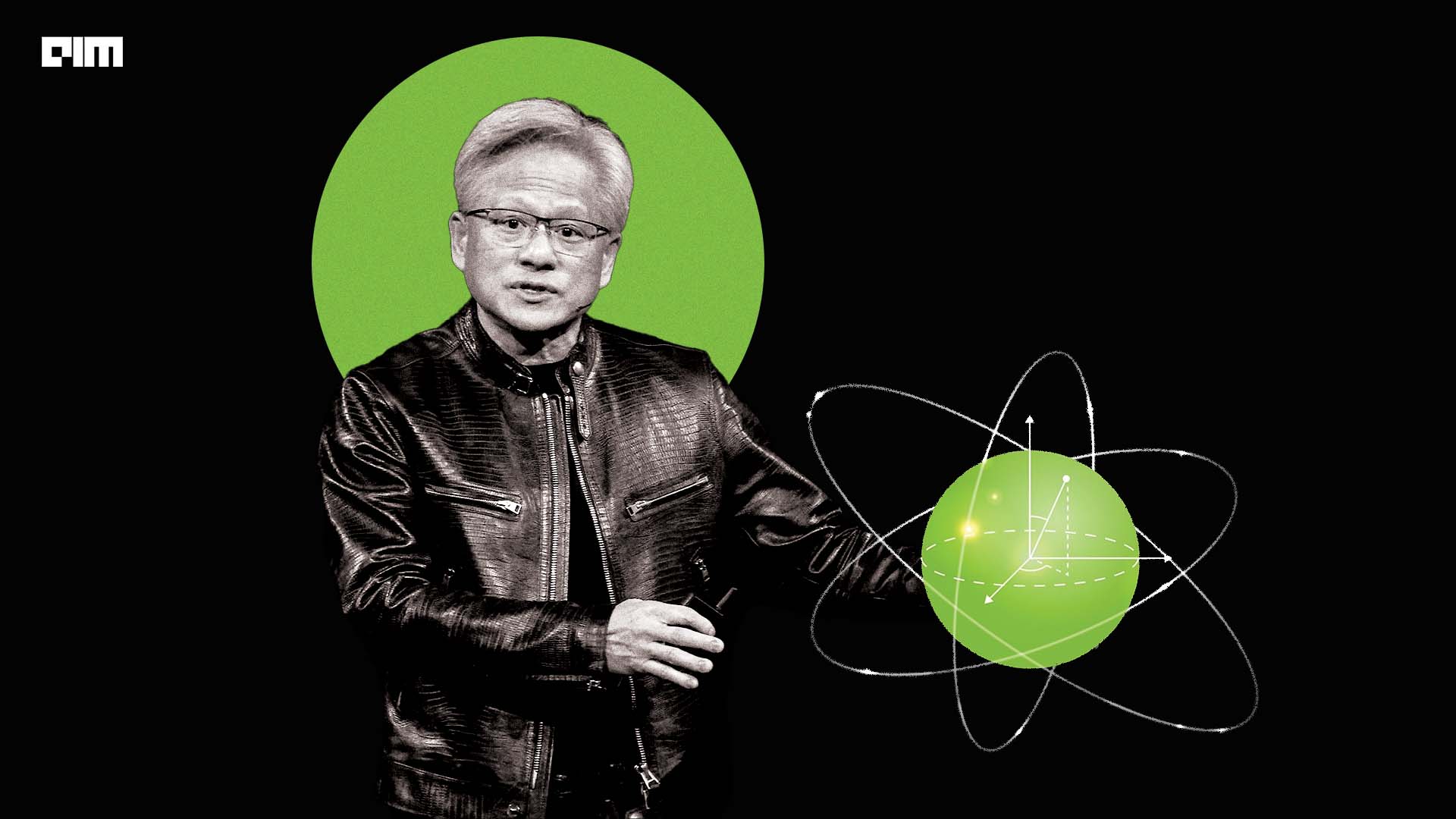
A single statement from Nvidia CEO Jensen Huang during an analyst event at CES has triggered a massive selloff in the quantum computing sector, erasing approximately $8 billion in market value, according to reports.
Huang suggested that bringing “very useful quantum computers” to market could take 15 to 30 years, citing the need for quantum processors, or qubits, to increase by a factor of 1 million.
Quantum computing stocks crash after AI godfather Jensen Huang exploded the quantum computing bubble w/3 lines: "If you said 15 years for very useful quantum computers, that would probably be on the early side. If you said 30 is probably on the late side. But if you picked 20, I… pic.twitter.com/8XG4xYZEBv
— Holger Zschaepitz (@Schuldensuehner) January 8, 2025
Market Fallout
Huang’s comment had a ripple effect. The quantum computing companies’ stocks have witnessed a sharp decline ever since. For instance, IonQ shares fell over 31.65%, while Rigetti Computing dropped by 37.25%, and D-Wave Quantum saw its stock tumble down by 25.61% after Huang’s statement.
The remarks undermined the optimism that had been building in the sector, particularly following Google’s announcement of a breakthrough with its Willow quantum chip in December.
Google revealed progress in creating a 105-qubit chip, part of its roadmap to develop a quantum system with 1 million qubits. This news led to a great exchange between Sundar Pichai and Elon Musk with dreams of building quantum clusters in space.
Industry Pushes Back
However, countering his claim, Quantum leaders were quick to challenge and form an alternative narrative. Alan Baratz, CEO of D-Wave Quantum, dismissed Huang’s comments as “dead wrong.”
Baratz told CNBC that the reason was “that we at D-Wave are commercial today.” He pointed to clients like Mastercard and NTT Docomo, which are already leveraging their quantum systems for business operations.
$NVDA $QBTS TODAY JENSEN HUANG SAID THAT QUANTUM COMPUTING WAS 20 YEARS AWAY FROM BEING USEFUL. DWave Quantum $QBTS was down as much as 49% after these comments and ended the day down 36%. The stock is up 1000% from the September lows. The CEO of DWave says in this clip… pic.twitter.com/2hGf9ZSS0R
— amit (@amitisinvesting) January 8, 2025
Baratz acknowledged that Huang’s timeline might apply to gate-based quantum computers but argued it was “100% off base” for annealing quantum computers, which D-Wave specialises in.
He also said that D-Wave quantum computers solve in minutes what supercomputers would take millions of years, challenging Huang’s views on current tech capabilities. He publicly offered to meet with Huang to clarify what he described as “knowledge gaps” in the CEO’s understanding.
Another user on X took to the platform to address this, saying, “NVIDIA is literally hiring quantum engineers right now.”
So let me get this straight… Jensen is hiring people right now for a technology that he thinks won't be useful until 30 years from now?$NVDA is literally hiring quantum engineers right now. The math on this timeline isn't math-ing. $IONQ pic.twitter.com/8UYhznX3J2
— Ashton Cheekly (@elwalvador) January 8, 2025
Similarly, others have also posted images of NVIDIA job postings for a quantum computing director and related positions; the very next day, Huang expressed his views.
The selloff followed a period of intense investor interest in quantum computing. While Huang’s projection has sparked debate, it underscores the technical and commercial challenges facing the quantum computing sector.
For now, Huang’s remarks have cast a shadow over what was previously seen as a fast-moving and highly promising market.
The post Jensen Huang’s Comment on Quantum Computers Draws the Ire from Industry appeared first on Analytics India Magazine.
In June last year, Larsen & Toubro (L&T) made headlines for grappling with an acute manpower shortage across its businesses. Chairman SN Subrahmanyan, popularly known as SNS, said that the company needed around 45,000 engineers and techies. An attrition rate of 10% was said to be a contributing factor.
L&T has made headlines once again, and this time, SNS broke the internet with his viral video. In it, he was seen asking employees to work 90 hours a week, including Sundays—a move that could only compound the company’s attrition and staff shortage issues.
During an employee interaction, Subrahmanyan said he would be happier if he could make them work on Sundays as well. “What do you do sitting at home? How long can you keep looking at your wife? Come on, get to the office and start working,” he added.
Drawing comparisons with China’s intensive work culture, he said, “If you want to be on top of the world, you have to work 90 hours a week.”
Facing Brickbats
Netizens have reacted sharply to his extreme work expectations, erupting in a flurry of memes, jokes and posts online.
A Reddit user commented, “So unfortunate, we have such business leaders! I think we must call them “leaders in baby diapers” 🙂 I had a few close friends who worked at L&T Madras. About 10 years ago. Going by what they said about the work culture, I felt it was like an adults’ kindergarten.”
Another added: “L&T came to my college for placements, offering a CTC of 6 LPA, and they expect us to work 90 hours a week for that? This really highlights the sad state of labour laws in India and the mindset of some Indian chairmen and CEOs. It’s honestly ridiculous.”
A former L&T employee, Karthik Madhavapeddi, deputy editor at IndiaSpend, had this to say: “I just saw a news report in which L&T chief SN Subrahmanyan (SNS to employees) is quoted saying he wants employees to work 90 hours a week.”
He added that having worked at L&T Construction from 2010 to 2013, “I can say this reflects the typical mindset of someone with a background in construction. On-site, we had 6.5-day workweeks, with hours stretching from 8:30 am to 8:30 pm Monday through Saturday, and up to 1 pm on Sundays. The only exceptions were projects where the client’s operations didn’t permit such extended hours.”
Further, he said that labourers and workmen were compensated with overtime pay for the extra three hours. Employees, however, were not.
“When I attended an internal interview for the management trainee programme at the corporate office in Mumbai, the interviewers didn’t seem to grasp why such long hours were necessary on-site,” Madhavapeddi added.
He said that SNS may have brought the same “construction culture” into the corporate.
Narayan Murthy in the Mix
Last year, Infosys co-founder Narayan Murthy kicked up a storm with his “70-hour a week” remark. Commenting on development and nation-building, Murthy said, “India’s work productivity is one of the lowest in the world… my request is that our youngsters must say, ‘This is my country. I’d like to work 70 hours a week’.”
Bollywood actress Deepika Padukone also took to social media, connecting SNS’s remarks to mental health.
In a LinkedIn post, Sanjay Sehgal, chairman & CEO at MSys Technologies, explained that Indian workers, on average, worked significantly longer hours than their global counterparts.
According to the International Labour Organisation, the average Indian worker, aged around 15, clocks in 47.7 hours per week. This is higher than countries like the US (36.4), the UK (35.9), Germany (34.4), and even Asian countries like China (46.1), Singapore (42.6), and Japan (36.6).
He further claimed that gig industry workers, such as those working for UrbanCompany, Swiggy, Zomato, Ola, and Uber, put in 11-12 hours a day, often totalling over 70 hours a week. This includes labourers, electricians, and plumbers, who spend long hours but often lack growth opportunities or fair pay.
Young workers, aged 16 to 25, are increasingly involved in gig work like driving taxis, delivering food, or renting bikes, which provide limited benefits or career progression.
Additionally, employees in IT and corporate sectors often face expectations of being available round-the-clock for calls and emails to ease collaboration with global teams. “But now, despite knowing the effects of long working hours, pushing employees to work for 70 hours a week sounds unjust and brutal,” said Sehgal.
L&T, however, rushed in to defend its chairman. A company spokesperson said, “Nation-building lies at the heart of our mission. For over eight decades, we have been shaping India’s infrastructure, industries, and technological capabilities. We believe this is India’s decade – a period calling for collective commitment and effort to drive growth and realise our shared vision of becoming a developed nation.”
The post Dear L&T, This is a Recipe for Attrition appeared first on Analytics India Magazine.
Technology is predicted to be the most divergent driver of labor market change, with broadening digital access expected to create and displace more jobs than any other macro trend, according to the World Economic Forum (WEF).
About 170 million new jobs (equivalent to 14% of today's employment) will be created this decade, according to the WEF's 'Future of Jobs Report 2025'. At the same time, 92 million roles will be displaced, creating a net employment increase of 78 million jobs.
Also: 15 ways AI saved me time at work in 2024 — and how I plan to use it in 2025
Not surprisingly, artificial intelligence (AI) and information processing technology are expected to create 11 million jobs, while simultaneously displacing 9 million others, more than any other technology trend. Robotics and autonomous systems are expected to be the largest job displacer, with a net decline of five million jobs from 2025 to 2030.
However, there is good news about new emerging tech trends like AI. Three of the technology trends — broadening digital access, advancements in AI and information processing, and robotics and autonomous systems technologies — also feature prominently as drivers of the fastest-growing jobs.
Also: Why ethics is becoming AI's biggest challenge
In fact, the expected impact of macro and technology trends on jobs, technology, and AI trends are among the top drivers for the 10 fastest-growing jobs. AI and information processing technologies are among the top three drivers of job growth.
Change is the new normal in employment trends.
The WEF report notes the shifting paradigm in the human-machine future of work. The interplay between humans, machines, and algorithms is redefining job roles across industries. Automation is expected to drive changes in people's ways of working, with the proportional share of tasks performed solely or predominantly by humans expected to decline as technology becomes more versatile.
Survey respondents estimate that 47% of work tasks today are performed mainly by humans alone, with 22% performed mainly by technology (machines and algorithms), and 30% completed by a combination of both. By 2030, employers expect these proportions to be nearly evenly split across the three approaches.
Autonomous businesses will be powered by agentic AI, as noted by the latest research by Accenture, featuring Salesforce as a pioneer company in developing the autonomous enterprise, where humans and AI agents co-create value and drive customer success.
The Human-Machine frontier.
Growth and decline drivers for jobs are based on several factors. Five factors will drive a net creation of 78 million jobs globally by 2030: technological changes, the green transition, demographic shifts, geoeconomic fragmentation, and economic uncertainty. Among these drivers, technological change is expected to have the biggest impact on jobs by 2030, creating and displacing them.
Five key factors that will drive a net creation of 78 million jobs globally by 2030.
For context, the largest growing category of jobs is farmworkers — 34 million additional jobs by 2030, adding to the 200 million farmworkers today. Delivery drivers, software developers, building construction workers, and shop salespersons complete the top five fastest-growing jobs.
The largest growing and declining jobs by 2030.
According to WEF, employers expect 39% of key skills required in the job market to change by 2030. This figure represents significant disruption but is down from 44% in 2023.
Also: Your AI transformation depends on these 5 business tactics
Technological skills are projected to grow in importance more rapidly than any other skill in the next five years. AI and big data are at the top of the list, followed by networks and cybersecurity, and technological literacy.
The job market is in flux.
Creative thinking and resilience, flexibility, and agility are also rising in importance, along with curiosity and lifelong learning. Other fast-rising skills are leadership and social influence, talent management, analytical thinking, and environmental stewardship.
These are the core skills to focus on in 2025.
Today's core skills blend cognitive, self-efficacy, and engagement skills. Looking ahead to 2030, technology skills dominate the fastest-growing skills, driven by ongoing digital change.
The impact of AI is clear.
So, how will businesses respond to AI developments? The increased use of emerging technologies is prompting half of businesses to realign their organizations. Accelerated AI innovation is creating a strong demand for skilled talent, with over two-thirds of employers planning to hire for AI-specific roles, even as 40% foresee workforce adjustments in response to the technology's adoption.
Also: 4 ways to turn generative AI experiments into real business value
To learn more about the WEF's Future of Jobs Report 2025, you can find the full report here.


 AI Agents