IBM Bought a ‘Nervous System’ for $11 Billion 

IBM’s decision to buy real-time data streaming company Confluent for $11 billion signals a shift in the AI race. Tech giants believe that controlling real-time data is as important as building powerful models.

This acquisition comes in a year marked by similar moves. Salesforce purchased Informatica, while services firm Genpact acquired XponentL Data to expand its data and AI capabilities. These deals indicate that enterprise vendors want greater control over data feeding AI systems.

IBM said its acquisition will combine its AI and automation software with Confluent’s real-time data streaming capabilities, helping enterprises to connect, process, and govern data across environments. The companies said this will support AI agents and applications that require access to trusted, real-time data.

Confluent, built on the open source platform Apache Kafka, offers data streaming, connectors, governance, stream processing, and deployment options across Confluent Cloud, Confluent Platform, WarpStream, and Confluent Private Cloud. It claims to work with more than 6,500 clients, including over 40% of the Fortune 500.

IBM said the deal aligns with its hybrid cloud and open-source strategy, following earlier acquisitions such as Red Hat and HashiCorp.

Andrew Humphreys, senior director analyst at Gartner, told AIM that IBM wants to position itself to become the platform through which enterprises move, process and govern data for emerging AI workloads. He said Salesforce signalled a similar intent with its Informatica acquisition, placing IBM in direct competition with Salesforce and Oracle as companies seek to own the data infrastructure that feeds AI.

Humphreys said the acquisition gives IBM more than 50% share in the event broker market. He noted that alternatives such as Redpanda, AWS MSK, Google MSK and Azure Event Hub remain strong competitors as cloud providers bundle these services directly into their platforms.“Clients who do not have a multi-cloud strategy are more likely to choose IBM Confluent than they were likely to do so prior to the acquisition,” he said.

Michael Ni, VP and principal analyst at Constellation Research, told AIM that Confluent fills a structural gap for IBM by providing the “nervous system” needed for its AI and hybrid-cloud strategy. He said IBM already had strong capabilities in metadata, governance and AI lifecycle management, but lacked a unified streaming backbone.

“Confluent fills that gap with portable, governed data-in-motion infrastructure that complements IBM’s hybrid-first strategy, making it an alternative to hyperscalers for enterprises seeking vendor-neutral streaming and enterprise AI governance,” Ni said.

Humphreys added that IBM has long competed with Confluent through its IBM MQ product, which is central to many event-driven architectures. He said, “IBM MQ and Kafka solve different problems,” giving IBM a chance to offer a broader portfolio.

How does it help IBM?

In a blog post, IBM CEO Arvind Krishna wrote that companies increasingly want to run operations in real time as transactions, supply chains and fraud detection happen within milliseconds. He said AI models are “only as strong as the signals feeding them,” while digital workers and autonomous workflows require continuous, reliable data streams.

Ni said the deal helps IBM compete more directly with leading cloud companies. “You can’t compete with AWS, Google, or Databricks without a real-time nervous system that provides the streaming context that AI, agents, and automated decisions require to support autonomous workflows and agentic architectures,” he said.

Humphreys said both companies are positioning the deal as a step towards enabling more real-time data access for AI agents. But he warned that claims that everything will become event-driven should be treated cautiously, noting that “most AI agents still rely on static data snapshots” and that adoption will take time.

Salesforce is making a similar push

Salesforce recently expanded its Data 360 portfolio by adding Informatica to address one of the main challenges in enterprise AI adoption, which is unreliable results stemming from inconsistent, siloed, or low-quality data.

The company said the combination of Data 360, MuleSoft, and now Informatica creates a unified data foundation that provides AI systems with the context they need to operate accurately across enterprise applications.

Informatica brings deeper metadata intelligence, data lineage, governance, and quality controls into Salesforce’s data stack. The latter said the platform helps establish shared meaning for business entities across ERP, finance, supply chain, HR, and commerce systems, thereby reducing ambiguity for AI models.

“AI is only as good as the understanding behind it, and that understanding comes from context,” said Rahul Auradkar, EVP and general manager for Data 360 and AI Foundations at Salesforce. He said integrating Informatica with MuleSoft’s real-time connectivity gives customers a foundation of trusted enterprise context that strengthens every AI, automation, and analytics outcome.

Salesforce said these capabilities will help reduce hallucinations, support safer execution, and strengthen applications across Agentforce, Tableau, and the broader Salesforce platform.

The post IBM Bought a ‘Nervous System’ for $11 Billion appeared first on Analytics India Magazine.

Unconventional AI Wants to Solve AI Scaling Crunch with Analog Chips. Will It Work?

IBM Acquires Confluent in a Strategic Play to Strengthen the Data Layer of Enterprise AI

As generative and agentic AI reshape enterprise architectures, the competitive frontier is moving away from…

Inside Oracle’s Plan to Win Agentic AI Race

Inside Oracle’s Plan to Win Agentic AI RaceInside Oracle’s Plan to Win Agentic AI Race

In 2025, the enterprise technology landscape has been reshaped by the rise of agentic AI. Hyperscalers like Oracle, AWS, Microsoft, and Google Cloud have all made decisive moves to pivot from simple LLM-powered features to full-fledged autonomous software agents capable of handling complex business tasks.

Agent marketplaces, agent builders, orchestration layers, and “digital teammates” have become the new battleground. If every major cloud vendor now offers similar tooling, the obvious question is where the real moat lies.

Oracle believes it holds an answer and an advantage that others will find difficult to replicate. The company notes that where an agent lives matters as much as what it can do.

This became clear at its AI World 2025 conference in Las Vegas in October, where Natalia Rachelson, senior vice president of Fusion Applications Product Management division, articulated the company’s strategic shift.

While competitors race to build open agent ecosystems, Oracle has quietly turned its Fusion Applications suite into an engine of 600 embedded agents, treated as enterprise software rather than just automation tools.

At the event, Oracle expanded its AI Agent Studio for Fusion Applications and launched the Fusion Applications AI Agent Marketplace, a catalogue of pre-built, enterprise-grade agents that live inside Fusion ERP, SCM, HR, CX and other Oracle applications.

Unlike the horizontal agents marketplaces emerging across the industry, Oracle’s is purpose-built for the workflows and business objects of Fusion Applications. It stands in stark contrast to the infrastructural strategies of AWS, Microsoft and Google Cloud.

Rachelson, in an exclusive interaction with AIM, explained the rationale and said, “We’re treating every AI agent as a piece of enterprise software. It has to follow the same security rules, the same access control, the same auditing as anything else in Fusion.”

Behind that sits a network of over 32,000 certified agent builders, steeped in the specifics of Fusion’s data structures and workflows.

The Hyperscaler Race

In the weeks following Oracle’s announcement, AWS, Microsoft and Google all intensified their agentic AI narratives. At AWS re:Invent this month, CEO Matt Garman outlined a future driven not by LLM outputs but by “billions of agents” performing real operational tasks inside enterprises.

AWS Marketplace, which had originally targeted 50 agent listings at launch, quietly crossed 800 and surged beyond 2,100 before re:Invent even began.

AWS is now talking in terms of “frontier agents,” anchored by Amazon Bedrock AgentCore, a platform designed to construct, constrain, evaluate, and provide long-term memory for production-grade agents.
AWS also introduced three flagship frontier agents: Kiro Autonomous Agent, a virtual developer that maintains persistent context across sessions, learns your coding style, repositories, and review patterns, and can work for hours or days before surfacing changes; AWS Security Agent, an embedded security consultant; and AWS DevOps Agent, effectively an autonomous SRE already achieving nearly 86% root-cause identification inside AWS and collapsing mean time to repair (MTTR) from hours to minutes.
Check out AWS re:Invent coverage on Front Page by AIM Network:

At Ignite 2025, Microsoft reinforced this momentum by declaring that agents are “the apps of the AI era.” Its new Agent 365 control plane sits atop the Microsoft 365 and Dynamics ecosystems, designed to manage more than a billion enterprise agents by the end of the decade.

Microsoft, once dominant in enterprise software via Windows and Office, now aims to do so with managed, policy-aware digital workers.

Google Cloud, meanwhile, has taken a more interoperability-first approach. At the Cloud Next event, it introduced the Agent2Agent protocol, enabling agents from different vendors to collaborate across platforms such as SAP, ServiceNow, Box, and Vertex. Google’s marketplace is being built not merely to host agents but to allow them to discover and talk to one another through open standards.

Every hyperscaler now has some version of the same pitch: an agent marketplace, a builder studio, and an orchestration layer that promises to turn LLMs into “digital employees” inside your business.

Each major cloud provider now offers a similar comprehensive suite: a marketplace for agents, a dedicated builder studio, and a robust orchestration layer. This stack is designed to transform large language models (LLMs) into functioning “digital employees” within an enterprise.
The Real Deal

Rather than competing to host the most extensive inventory of general-purpose agents, Oracle is optimising for depth, governance, and domain specificity.

The company states that it is focusing on a more specific, yet more profound goal: developing application-embedded agents for mission-critical enterprise workflows.

AWS is developing a large-scale partner-led agent ecosystem on Amazon Bedrock AgentCore and AWS Marketplace, allowing users to subscribe to agents in the same manner as SaaS services. Its “AI Factories” and AgentCore runtimes focus on infra maturity, long-running workflows, and global procurement.

Microsoft is turning agents into the default way work happens across Microsoft 365 and Dynamics. With Work IQ and Agent 365, its focus is on managing agents as “digital teammates” across productivity apps, security tools, and business systems, all tied to a single control panel.

Google Cloud is betting on orchestration and interoperability. Vertex AI Agent Builder, AgentSpace, and the Agent2Agent protocol aim to make it easy to build multi-agent systems, let agents from different vendors work together over an open protocol, and then surface those agents through an AI Agent Marketplace.

All three are building broad, horizontal ecosystems.

Agents as Enterprise Software

Gartner recently warned that over 40% of agentic AI projects will be scrapped by 2027 because many are simply rebranded chatbots without robust governance, security, or clear RoI.

Rachelson’s answer to that risk is to treat agents less like fancy prompts and more like SAP-era enterprise software.

In Oracle AI Agent Studio, the company claimed that every agent is fully traceable, monitored in production, evaluated systematically, and bound to Fusion’s security and role-based access control.

The company said it is adding support for the Model Context Protocol (MCP) and Agent-to-Agent (A2A) cards, so Fusion agents can securely interact with third-party tools and even other vendors’ agents, while still preserving governance and guardrails.

Where some marketplaces offer agents as APIs, Oracle is pushing agents as governed enterprise systems.

The post Inside Oracle’s Plan to Win Agentic AI Race appeared first on Analytics India Magazine.

Starcloud Becomes First to Train LLMs in Space Using NVIDIA H100

NVIDIA-backed startup Starcloud has successfully trained and run LLMs from space for the first time, a step toward orbital data centres as demand for computing power and energy grows on Earth.

The Washington-based company’s Starcloud-1 satellite, launched last month with an NVIDIA H100 GPU, has completed training of Andrej Karpathy’s nano-GPT on the complete works of Shakespeare and run inference on Google DeepMind’s open Gemma model.

“We just trained the first LLM in space using an NVIDIA H100 on Starcloud-1! We are also the first to run a version of Google’s Gemini in space!” wrote Philip Johnston, founder and CEO of Starcloud, in a post on LinkedIn.

“This is a significant step on the road to moving almost all compute to space, to stop draining the energy resources of Earth and to start utilising the near limitless energy of our Sun!” he added.

In a post on X, Starcloud CTO Adi Oltean said that getting the H100 operational in space required “a lot of innovation and hard work” from the company’s engineering team. He added that the team executed inference on a preloaded Gemma model and aims to test more models in the future.

Founded in 2024, Starcloud argues that orbital compute could ease mounting environmental pressures linked to traditional data centres, whose electricity consumption is expected to more than double by 2030, according to the International Energy Agency.

Facilities on Earth also face water scarcity and rising emissions, while orbital platforms can harness uninterrupted solar energy and avoid cooling challenges.

The startup, part of NVIDIA ’s Inception program and an alumnus of Y Combinator and the Google for Startups Cloud AI Accelerator, plans to build a 5-gigawatt space-based data centre powered entirely by solar panels spanning four kilometres in width and height. Such a system would outperform the largest US power plant while being cheaper and more compact than an equivalent terrestrial solar farm, according to the company’s white paper.

A New Era of Solar-Powered Intelligence in Orbit

Besides Starcloud, Google, SpaceX and Jeff Bezos’ Blue Origin are also pursuing space-based data centres.

Google recently announced Project Suncatcher, which explores placing AI data centres in orbit. The initiative involves satellites equipped with custom tensor processing units and linked through high-throughput free-space optical connections to form a distributed compute cluster above Earth.

Google CEO Sundar Pichai described space-based data centres as a “moonshot” in a recent interview. He said the company aims to harness uninterrupted solar energy near the sun, with early tests using small machine racks on satellites planned for 2027 and potential mainstream adoption within a decade.

Elon Musk, meanwhile, announced in November 2025 that SpaceX would build orbital data centres using next-generation Starlink satellites, calling them the lowest-cost AI compute option within five years. He said Starlink V3 satellites could scale to become the backbone of orbital compute infrastructure.

According to a recent report, SpaceX is preparing for an initial public offering in 2026 to raise more than $25 billion at a valuation exceeding $1 trillion. According to Bloomberg News, SpaceX plans to use the IPO proceeds to build space-based data centres and purchase the chips needed to run them. Musk discussed the idea during a recent event with Baron Capital.“

Starship should be able to deliver around 300 GW per year of solar-powered AI satellites to orbit, maybe 500 GW. The ‘per year’ part is what makes this such a big deal,” he said in a post on X on November 20. “Average US electricity consumption is around 500 GW, so at 300 GW/year, AI in space would exceed the entire US economy just in intelligence processing every 2 years.”

The post Starcloud Becomes First to Train LLMs in Space Using NVIDIA H100 appeared first on Analytics India Magazine.

Adobe Brings Photoshop, Express and Acrobat to ChatGPT

Adobe on December 10 announced that it has launched Photoshop, Adobe Express and Adobe Acrobat inside ChatGPT, giving the platform’s 800 million weekly users the ability to edit images, create designs and work with documents through simple conversational instructions.

The tools are available free to ChatGPT users on desktop, web and iOS. Adobe Express is available on Android, with Photoshop and Acrobat for Android launching soon.

Adobe said the integration brings its leading creative and productivity apps to a platform widely used for everyday tasks, allowing users to enhance photos, design invitations, and transform documents without leaving ChatGPT.

“We’re thrilled to bring Photoshop, Adobe Express and Acrobat directly into ChatGPT, combining our creative innovations with the ease of ChatGPT to make creativity accessible for everyone,” said David Wadhwani, president of digital media at Adobe. “Now hundreds of millions of people can edit with Photoshop simply by using their own words, right inside a platform that’s already part of their day-to-day.”

Users can access these tools by typing the name of the Adobe app along with an instruction. For instance, typing “Adobe Photoshop, help me blur the background of this image” will open Photoshop inside the chat and guide them through the process.

Photoshop inside ChatGPT allows adjustments to parts of an image, control of brightness, contrast and exposure, and use of effects. Adobe Express enables users to browse templates, update text and images and add animations. Acrobat lets people edit PDFs, extract text or tables, merge files, compress documents and redact sensitive details.

The rollout builds on Adobe’s recent work in conversational AI, including the launch of Acrobat Studio earlier this year and AI Assistants for Photoshop and Adobe Express. Adobe also previewed an AI Assistant for Adobe Firefly that will help creators move ideas across multiple Adobe apps.

The post Adobe Brings Photoshop, Express and Acrobat to ChatGPT appeared first on Analytics India Magazine.

Mphasis Appoints Punit Sood as Independent Director

Mphasis has appointed Punit Sood as an independent director on its board for a five-year term, effective December 11, 2025, the company said in a statement.

It informed that the appointment is based on the recommendations of the internal Nomination and Remuneration Committee and is subject to shareholders’ approval.

The company also said that Jan Kathleen Hier will conclude her tenure as independent director and chairperson of the company effective Wednesday, upon the completion of her second and final term.

Sood currently serves as an independent director on the boards of ICICI Bank and National Payments Corporation of India. He brings more than 36 years of leadership experience across financial services and technology, the company said.

His career includes senior roles at global organisations such as Citibank, GE Capital, United Technologies, JPMorgan Chase, and NatWest.

Sood has held CIO roles across geographies and has led global capability centre (GCC) strategies for NatWest, JPMorgan Chase and Citibank.

He chaired the NASSCOM GCC Council during 2021–23 and served as a member for the 2023–25 term. Sood also serves as an external expert with Boston Consulting Group, advising on global capability centre strategy.

Mphasis CEO and managing director Nitin Rakesh said, “His (Sood’s) insights on leadership will enrich our strategic thinking as we continue to navigate the ever-changing business landscape.”

The post Mphasis Appoints Punit Sood as Independent Director appeared first on Analytics India Magazine.

Virtusa Acquires SmartSoC Solutions, Supplements Cloud Services with Semiconductor Chip Design

Virtusa Corporation, an IT services company specialising in AI, cloud, and data analytics, has acquired Bengaluru-based SmartSoC Solutions, a leader in semiconductor engineering and integrated circuit (IC) design services.

It marks Virtusa’s expansion into the semiconductor design industry by completing its full-stack, end-to-end service capabilities, spanning the entire digital technology ecosystem from the chip to the network, cloud, and application layer, the company said in a statement.

The deal gives Virtusa full-stack capabilities in silicon design, verification and embedded systems engineering, at a time when demand for advanced silicon is rising sharply due to the growth of AI and large-scale data centres.

Virtusa CEO Nitesh Banga described the acquisition as “transformational,” saying it immediately positions the company as a meaningful player in high-growth semiconductor services. “It completes our vision for a full-stack offering that can serve clients from the foundational silicon layer all the way to the customer application,” he said in the statement.

Banga added that as AI models become more complex and data centre expansion accelerates globally, in-house chip design capability will be crucial for engineering partners.

SmartSoC, founded in 2016 and headquartered in Bengaluru, is a fast-growing semiconductor engineering and IC design services firm with capabilities across silicon design, verification, and embedded systems.

With this acquisition, Virtusa will onboard more than 1,400 engineers specialised in VLSI, physical design, and embedded software. The deal also significantly expands Virtusa’s India delivery footprint through SmartSoC’s centres in Bengaluru, Hubli, and Hyderabad, including a large tier 2 delivery centre in Hubli that strengthens the company’s cost-effective engineering capacity.

SmartSoC’s leadership team, led by founder and CEO Bharath Desareddy, will stay on and continue managing delivery operations and client engagements. All existing project structures, service contracts and commitments will continue as they are.

Desareddy said the combination creates a “unique market proposition” by bringing together SmartSoC’s specialised semiconductor engineering expertise with Virtusa’s global scale and enterprise client base. “This allows us to accelerate our growth, broaden our services and deliver immediate value to global semiconductor and technology companies,” he added.

The acquisition comes during a period of rapid expansion in the semiconductor and systems engineering market, fuelled by the proliferation of smart devices and soaring investments in AI and edge computing infrastructure. Virtusa’s entry into this segment strengthens its ability to help clients reduce time-to-market for next-generation, power-efficient products and positions the company at the centre of emerging chip innovation.

The post Virtusa Acquires SmartSoC Solutions, Supplements Cloud Services with Semiconductor Chip Design appeared first on Analytics India Magazine.

From Deck-Makers to Decision Partners: AI Is Remaking Consulting

The consulting industry is undergoing a structural shift as artificial intelligence automates the junior-level research and analysis work that once supported its pyramid-shaped staffing model.

According to a global survey by McKinsey & Company, The State of AI in 2025, 88% of organisations now report using AI in at least one business function.

Meanwhile, a Harvard Business Review (HBR) commentary argued that this trend is reducing the need for large analyst pools, the backbone of the traditional consulting pyramid, prompting firms to rethink how they deliver value.

At a recent seminar on consulting in the age of AI, Bhaskar Ghosh, chief strategy and innovation officer at Accenture, said the sector is entering what he calls the “intelligent age,” where systems can sense, decide, act and learn autonomously. This, he argued, requires consulting to “redefine itself” by shifting from advice-driven work to measurable outcomes.

“AI is real, AI needs to create value; consulting must redefine itself,” he said, adding that the goal should be “problem solving with human creativity, plus machine efficiency.”

His view was echoed by Kartikeya Bolar Pramoda, associate professor at TA Pai Management Institute (TAPMI), Manipal, specialising in information systems and analytics. Pramoda believes that the future belongs to firms “bold enough to redesign their models, elevate their people, and harness AI as an amplifier of human judgement.”

Industry practitioners say this reflects shifting client expectations.

According to Gaurav Gupta, head of R&D at consulting firm Kotter, traditional reasons companies hire consultants (access to information, benchmark knowledge, analytics, and external validation) are becoming less valuable as AI makes information abundant.

“What is continuing to be extremely useful is deep expertise,” he said, arguing that specialised skills and insights drawn from hard-earned experience are “not easy to emulate through automation.”

But the transition is exposing uneven effects across consulting careers.

Shivaraj KM, principal analyst with ISG (Information Services Group), said efficiency gains are already visible at the bottom of the talent structure, especially in roles tied to research, client-delivery support, and marketing.

While “AI has had little effect at mid-senior roles,” he warned firms are likely to operate with fewer entry-level staff as judgment-based work remains concentrated higher up.

“It is not the death of the industry,” he said, “just learning to work in the new environments of GenAI.”

Why This Shift

The pressure on consulting’s traditional model comes from multiple trends converging. First, AI tools, especially generative AI and “agentic” systems, are now mature enough to perform tasks historically done by junior analysts, like data gathering, summarising, modelling, and initial diagnostics.

Second, the expectations of clients, the buyers of consulting, are changing.

With internal capabilities growing and AI tools broadly accessible, many companies expect faster turnaround, tangible execution support, and real business outcomes rather than long drawn-out advisory reports.

As Gupta noted, the value proposition is shifting away from information scarcity to “deep expertise” and execution capacity.

How Firms Are Responding

In response to these shifts, many consulting firms are retooling their structures, talent pipelines, and delivery models.

According to Ben Appleton, founder of Strat-Bridge, a specialist executive search partner and a consulting company, firms are increasingly adopting cross-functional teams or “pods” combining domain specialists, AI-fluent consultants, and senior strategic advisors.

These teams, smaller than traditional consulting squads, lean heavily on AI to do groundwork: data extraction, summarisation, modelling, initial insights.

Human consultants are then freed to do what machines cannot: interpret ambiguous problems, apply judgment, navigate organisational complexity, and build trust with clients.

The result is that consulting engagements are shifting from slide-heavy decks to outcome-oriented delivery, execution, implementation support, and ongoing advisory.

This shift echoes what Ghosh called “new consulting”: a model defined by value creation, agility, and human-machine collaboration.

Such firms are also rethinking hiring and training. Instead of recruiting large batches of generalist analysts, many are raising the bar for domain depth, sector experience, and “AI fluency”, the ability to work with AI tools, interpret machine outputs, and combine them with human insight.

The Risks

But this transition is not without friction.

Despite widespread AI adoption, meaningful returns remain elusive.

As the McKinsey survey noted, only a minority of firms report strong financial impact from their AI investments. Many remain in pilot or experimental phases, and benefits often lag expectations.

For consulting firms, this means that scaling AI inside delivery models, while also preserving trust, intellectual property, confidentiality, and strategic depth, is a complicated balancing act.

There is also the human dimension. Many early-career consultants, who once formed the bulk of consulting firms’ workforce, face uncertain futures.

As Shivaraj’s observation suggested, efficiency gains are hitting the bottom of the pyramid first. The job is not vanishing, but its shape and scale are changing dramatically.

The post From Deck-Makers to Decision Partners: AI Is Remaking Consulting appeared first on Analytics India Magazine.

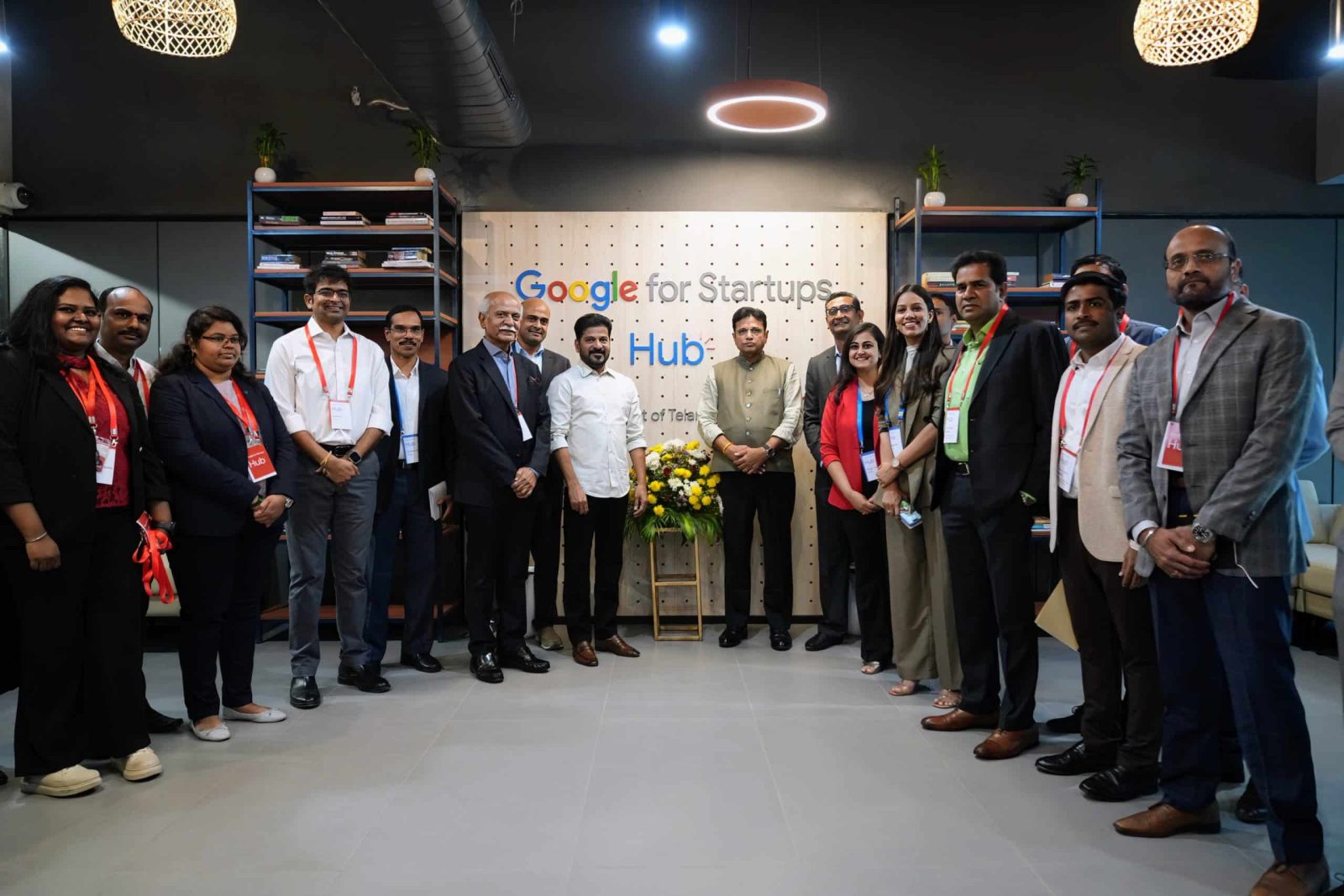
Google, Telangana Govt Launch ‘Google for Startups Hub’ in Hyderabad

Google and the Telangana government have launched the Google for Startups Hub at T-Hub in Hyderabad, which includes a dedicated space to support the growing startup ecosystem.

Google will engage with regional startups from Telangana through a dedicated Hub, providing free year-long coworking spaces for selected AI-focused startups and access to curated venture investors.

D Sridhar Babu, Telangana’s IT minister, said, “With this launch, we’re further expanding our innovation ecosystem, one designed not only to help startups build great technology products but to strengthen their entire capacity to innovate.”

As part of the global Google for Startups network, the Hub will assist startups from incubation through innovation, offering physical infrastructure, mentoring, AI expertise, and international visibility, while also featuring networking areas and event spaces where founders, tech builders, investors, and ecosystem partners can connect.

Through the Hub, founders will get access to Google experts in AI/ML, product development, and UX, who will lead tailored sessions for startups and student founders.

The initiative also supports women entrepreneurs and tier-2 innovators while fostering a collaborative community of startups, alumni, and investors to accelerate learning and experimentation.

“By working closely with Google, we are ensuring that we are ahead of our innovation curve and founders and innovators from across Telangana, including Tier-2 and Tier-3 cities, can access world-class resources without leaving the state,” said Sanjay Kumar, special chief secretary for the state’s IT department.

Collaborating with the Telangana government enables Google to deliver comprehensive support to this ecosystem, including AI capabilities on Google Cloud, as well as Android, Play, Ads, and its wider developer and startup programmes, as per Preeti Lobana, country manager at Google India.

The post Google, Telangana Govt Launch ‘Google for Startups Hub’ in Hyderabad appeared first on Analytics India Magazine.