NeoSapien raises $2M to Boost AI Wearable Ecosystem

NeoSapien, the AI-native wearable startup, has closed a $2 million seed round led by Merak Ventures. Individual investors, including Awais Ahmed (founder, Pixxel), Anupam Mittal (founder, Shaadi.com), Sameer Mehta (co-founder, boAt), Namita Thapar (Emcure Pharmaceuticals) and Aprameya Radhakrishna (CEO, Koo), participated in the round.

The startup was founded in 2024 by brothers Dhananjay Yadav and Aryan Yadav.

It said the fresh capital will be used to accelerate product development, boost market visibility and expand its team across functions. NeoSapien’s flagship product, Neo 1, acts as an AI assistant that captures everyday conversations and actions in real time.

Unlike basic voice tools that handle only one task at a time, Neo 1 works in the background, remembers past interactions, understands context as it builds, and generates insights on its own.

The startup highlighted the product’s multilingual capability and said it supports more than 100 languages, from Kannada to Mandarin. It combines contextual intelligence with custom hardware to process interactions in real time.

The founders aim to build an operating system for AI assistants across various form factors such as glasses, pendants, watches, and rings, with NeoOS as the core software. Its NeoCore SDK will allow businesses and developers to create applications on top of this intelligence layer.

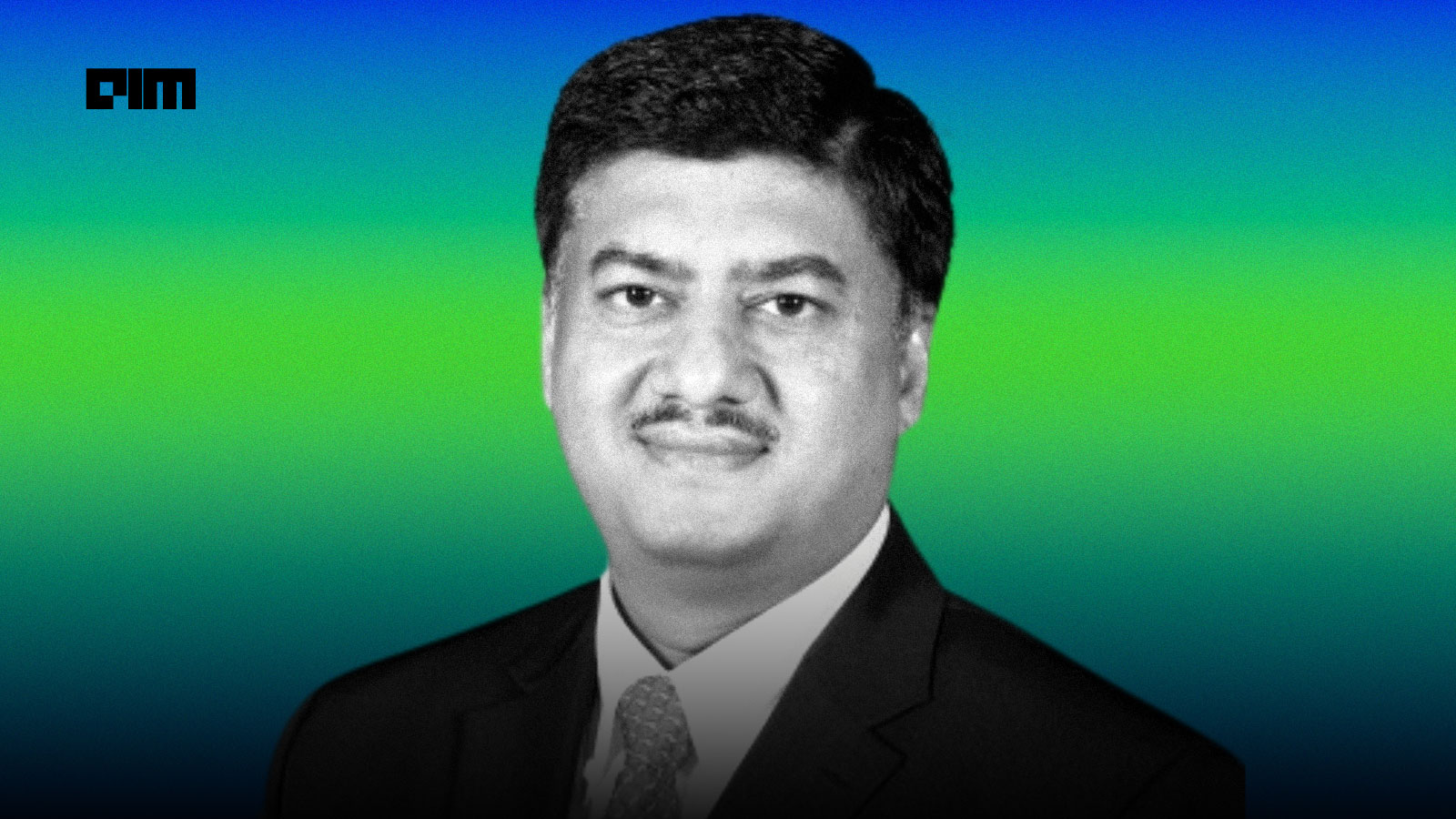
“We’re building technology that fades into the background so you can stay present in your life,” Dhananjay Yadav said in a statement. He further observed that the mental energy people spend trying to remember past conversations, retain long-term context, and integrate disparate data is considerable. And hence their product Neo 1 handles that seamlessly, freeing up human intelligence for what actually matters, Dhananjay noted.

Lead investor Merak Ventures believes that NeoSapien is by far the top contender in this segment. “Seldom has India had a chance to participate in a global, tectonic shift, but with PAIAs (Personal AI Assistant), it has a real shot at doing so. NeoSapien is by far the top contender to take India there,” Sheetal Bahl, founding partner at Merak Ventures, said.
He acknowledged that the founders have achieved something incredible by bringing a consumer product from India to market in less than a year with a paltry sum of money.

“We believe NeoOS will power hundreds of millions of upcoming AI consumer wearables sold in India and across the world every year,” he said.

NeoSapien is positioning itself as a next-generation AI company focused on wearable intelligence, blending adaptive technology with human intuition.

With its proprietary “Second Brain” OS and privacy-first approach, the startup aims to make AI-native wearables a global standard, transforming how people think, work, and live in the age of context-aware AI.

The post NeoSapien raises $2M to Boost AI Wearable Ecosystem appeared first on Analytics India Magazine.

10 Notable Executives Who Left Apple in 2025

Despite a wave of rumours, Johny Srouji, Apple’s senior vice president of hardware technologies, has made it clear he has no intention of leaving the company.

The speculation triggered genuine concern online, given Srouji’s key role in shaping Apple’s silicon strategy and spearheading the ARM-based M-series revolution that reshaped the Mac lineup and set a new course for Apple’s hardware trajectory.

His reassurance, however, doesn’t change the broader picture.

Apple has seen a notable amount of executive turnover in 2025. Some long-standing leaders have retired, others have been recruited by competitors, and several transitions were deliberately initiated as Apple restructured to strengthen its position in AI.

Alan Dye: Departs Apple After 19 Years, Joins Meta as Chief Design Officer

Recently, Bloomberg reported that Alan Dye, who has served as the head of Apple’s user interface (UI) design team since 2015, has now been ‘poached’ by Meta.

Citing sources familiar with the matter, the report added that Apple is replacing Dye with Stephen Lemay, a longtime UI designer at the company.

Meta is reportedly creating a new design studio and appointing Dye to lead the design of hardware, software and AI integration for its UI.

Dye was instrumental in defining the look and the feel of Apple’s most recent software products. As per his LinkedIn profile, he has been a part of Apple since 2006.

John Giannandrea: Stepped Down After 7 Years Leading AI Strategy, To Retire in 2026

Apple announced that John Giannandrea, senior vice president for machine learning and AI strategy, stepped down from his role in December and moved into an advisory position ahead of his planned retirement in Spring 2026.

Apple said Giannandrea had been responsible for building out Apple’s modern AI organisation since joining the company in 2018, overseeing foundation models, search and knowledge, core ML research and AI infrastructure.

The remaining parts of his organisation were redistributed to Sabih Khan and Eddy Cue, while Apple hired Amar Subramanya—previously a senior AI leader at Microsoft and Google—to assume the role of vice president of AI and report directly to Craig Federighi, Apple’s senior vice president of software engineering.

Jeff Williams: Retires After 26 Years, Steps Down as COO

In July, Apple announced that Jeff Williams will step down as chief operating officer as part of a long-planned transition, with Sabih Khan taking over the role. Williams will continue reporting to CEO Tim Cook until the former’s retirement, slated later in 2025, while still overseeing Apple’s design team, Apple Watch and Health initiatives.

Williams spent 27 years at the company, shaping its global supply chain, leading supplier responsibility programmes, and playing key roles in launching the iPod, iPhone and Apple Watch. His transition marks one of the most consequential leadership handovers at Apple in recent years.

Robby Walker: Leaves AI/Search Team After Long Tenure, Exits in Late 2025

Bloomberg reported that Robby Walker, one of Apple’s senior-most AI executives, left the company in late 2025. Walker had been a direct reportee to John Giannandrea and previously ran Siri, before oversight of the assistant was reassigned to Craig Federighi earlier in the year.

After that shift, he became the senior director responsible for Apple’s Answers, Knowledge and Information (AKI) team and helped build a new AI-powered search system intended to compete with Perplexity and ChatGPT.

The report added that Walker had remained an influential voice inside Apple’s AI organisation despite his responsibilities being gradually reduced, making his exit another meaningful loss for the company’s already strained AI efforts.

Kate Adams: Retiring After 7 Years as General Counsel

Apple confirmed that Kate Adams, who had served as general counsel since 2017, will retire, with her transition extending into late 2026.

Apple said Adams had been a central figure in shaping the company’s legal strategy, consistently advocating for user privacy and defending Apple’s ability to innovate across contentious regulatory environments.

During her eight-year tenure, she oversaw some of Apple’s most complex legal and policy challenges and later took on interim oversight of the Government Affairs organisation as part of a broader leadership reshuffle.

Apple stated that her responsibilities would ultimately transfer to Jennifer Newstead, who will assume the combined role of SVP, general counsel and government affairs in 2026.

Lisa Jackson: Retiring After 12 Years Leading Environment and Policy Efforts

Apple also announced that Lisa Jackson, vice president for environment, policy and social initiatives, will step down in late January 2026 after more than a decade of leading the company’s sustainability and government-relations work.

Apple noted that Jackson had been instrumental in reducing Apple’s global emissions by over 60% since 2015 and had been a key figure in Apple’s engagements with governments worldwide on issues ranging from privacy to accessibility.

Jackson’s portfolio—spanning climate strategy, environmental programs and social initiatives—became a model for integrating sustainability into Apple’s core operations.

With her departure, the environment and social initiatives groups were reorganised under COO Sabih Khan, completing one of Apple’s most significant policy-leadership transitions of the year.

Ruoming Pang: Departs AI Group, Moves to Meta’s Superintelligence Lab

Ruoming Pang, the manager in charge of Apple’s foundational models team, joined Meta in July after spending four years at the company.

As per a Bloomberg report, Meta offered him a package worth tens of millions of dollars per year.

Pang’s LinkedIn profile shows that he began his role as a ‘distinguished software engineer’ at Apple in 2021, after completing his 15-year tenure at Google.

At Google, he worked on Google Brain’s speech recognition research and the development of leading deep learning frameworks used by TPUs, the company’s in-house hardware

Tom Gunter: Senior LLM Researcher Departs After 8 Years, Joins Meta’s Superintelligence Push

In July, Tom Gunter, one of Apple’s senior-most LLM researchers, left the company after approximately eight years. He joined Meta as an AI research scientist.

Gunter was a key member of Apple’s Foundation Models team and is regarded internally as difficult to replace due to his specialised expertise in large-scale LLM systems.

His departure came amid escalating talent pressure inside Apple’s AI group, as Meta had been offering dramatically higher compensation packages to recruit researchers for its Superintelligence Labs unit.

A Bloomberg report notes that his exit intensified concerns about morale and retention within Apple’s core AI organisation, which has been strained by uncertainty around the company’s shifting Siri and generative-AI strategy.

Ke Yang: Leaves Apple Weeks After Promotion, Joins Meta’s Superintelligence Labs

Ke Yang, the executive recently appointed to lead Apple’s AI-driven web search initiative, left the company in October to join Meta. As per his LinkedIn profile, he spent six years at Apple as the senior director of machine learning.

Reports state that Yang had been appointed only weeks earlier to lead the AKI division—the team responsible for building ChatGPT-like web search features for Siri and for the broader AI reboot Apple planned for early 2026.

Before taking over the AKI group, Yang had led the search-focused components of the team and became a direct report to John Giannandrea following the departure of AKI senior director Robby Walker, both of whom are no longer with Apple.

Jian Zhang: Exits Robotics AI Team to Join Meta’s Robotics Studio

Jian Zhang, Apple’s lead researcher for AI-driven robotics, left the company in September to join Meta’s Robotics Studio. He spent 10 years at Apple as the head of robotics research in AI and machine learning.

According to Bloomberg, Zhang led a small team of academics within Apple’s AI and Machine Learning division, focusing on automation technologies and the role of AI in Apple’s early-stage robotics concepts. These include devices Bloomberg previously described as part of Apple’s long-term hardware pipeline.

At Meta, Zhang moved to a robotics organisation developing hardware and software for next-generation AI-powered devices, reinforcing Meta’s aggressive push to hire Apple’s top AI researchers at the time.

Note: The list above reflects some of the most notable shifts, but they do not represent an exhaustive account of every leadership change.

The post 10 Notable Executives Who Left Apple in 2025 appeared first on Analytics India Magazine.

Microsoft Names Cognizant, Infosys, TCS, Wipro as “Frontier Firms” for Copilot Deployment

Microsoft will expand partnerships with Cognizant, Infosys, Tata Consultancy Services, and Wipro, positioning the four Indian IT majors as “frontier firms” in the global adoption of agentic AI, its chairman and CEO Satya Nadella announced during his AI tour in Bengaluru.

Each company will deploy more than 50,000 Microsoft Copilot licenses, collectively exceeding 200,000 seats, the company said.

The announcement comes a day after Microsoft unveiled plans to invest $17.5 billion in cloud and AI infrastructure, skills and operations in India over the next four years.
According to the company, these partnerships will enable enterprises to enhance productivity, efficiency and accessibility, while accelerating AI-powered innovation across industries.

Microsoft said embedding AI into core operations will position these Indian IT majors as ‘frontier firms’ that not only adopt AI early but also redesign workflows around human-agent collaboration to drive measurable impact across delivery, sales, finance, HR, and customer engagement.

Puneet Chandok, president, Microsoft India & South Asia, said the four companies “are moving beyond experimentation to full-scale deployment, embedding Microsoft Copilot into the fabric of everyday work.”

Microsoft has also significantly expanded its partnership with Cognizant, calling the company its “client zero” for Copilot.

The collaboration enables Cognizant to refine Copilot and agentic solutions for large-scale enterprise use, going beyond productivity improvements to fundamentally change how organisations access data, make decisions, and scale innovation.

Cognizant CEO Ravi Kumar S, in a statement, said the technology sector is witnessing “a historic, largest infrastructure investment, with companies investing hundreds of billions annually into AI infrastructure.”

He added, “As an AI builder company, our mission is to bridge the gap between these investments and extract business value, ensuring our associates and clients benefit from Generative AI.”

Infosys, which has one of Microsoft’s largest Copilot deployments across the world, is integrating Microsoft’s intelligence layer into Infosys Topaz Fabric and Infosys Cobalt to operationalise multi-agent workflows.

CEO and MD Salil Parekh said deploying Copilot at scale and embedding AI into the Topaz operating model is enabling Infosys to “shift from traditional workflows to a human-plus-agent powered AI-first enterprise.”

TCS is working with Microsoft to transform sales, HR and finance processes by democratising tools such as the 365 Copilot and GitHub Copilot across its global workforce.

The company said all employees now have a personalised AI coach.

Microsoft also recently hosted a global hackathon to deep dive into AI agent development, with participation from more than 281,000 employees.

“TCS has equipped tens of thousands of its professionals with Microsoft AI solutions. Microsoft Cloud, data, and AI technologies are integral to our business transformation,” TCS CEO and MD K Krithivasan said.

Wipro has entered into a three-year partnership with Microsoft and launched a Microsoft Innovation Hub at its Partner Labs in Bengaluru.

With more than 50,000 Copilot licenses deployed and over 25,000 employees already upskilled in Microsoft Cloud and GitHub technologies, Wipro is embedding agentic AI across workflows in sectors ranging from financial services and retail to manufacturing and healthcare, Microsoft noted.

“Wipro Intelligence… is helping us deliver game-changing outcomes that are reshaping how enterprises work and compete in the AI era,” Wipro CEO and MD Srini Pallia said.

“Our partnership with Microsoft amplifies this vision, accelerating the adoption of agentic AI and unlocking value for our clients and us.”

The post Microsoft Names Cognizant, Infosys, TCS, Wipro as “Frontier Firms” for Copilot Deployment appeared first on Analytics India Magazine.

Okta to Invest in R&D to Expand AI Operations in its Bengaluru Campus

oktaokta

Okta, a cloud-based Identity and Access Management (IAM) service platform, announced today a significant expansion of its operations in India, pledging a considerable investment to boost its research and development capabilities and its physical presence at its Bengaluru campus.

The updated facility will prioritise the development of the essential Identity Security Fabric necessary to safeguard this new ecosystem, expediting AI-driven identity advancements for both the region and the global stage. Since 2023, the team has expanded to 700 employees.

Furthermore, Okta intends to increase its workforce in India by 50% by 2026, focusing on advanced engineering and product development talent to further its goal of securing AI at scale.

According to the company, this expansion underscores India’s importance as a vital global tech talent centre and is closely linked to Okta’s international growth strategy to double its revenue from $5 billion to $10 billion.

“Our expansion in Bengaluru is about amplifying our ability to innovate at the speed of AI. India’s talent pool has the unique depth required to tackle the complex security challenges of securing AI agents and the expanded identity surface,” Shakeel Khan, regional vice president & country manager at Okta India, said in a statement.

“This new facility will be the engine that helps build the identity layer of the future, ensuring that Okta leads the charge in securing the Age of AI for customers across sectors,” he added.

Okta’s research shows that 91% of companies have AI agents, yet only 10% have security plans for them. This gap could result in a 40% failure rate for AI agent deployments by 2027 without proper authentication.

Stephanie Barnett, VP presales and interim GM for the APJ region, said, “Okta’s data shows that more than half of organisations now see modern identity and access management as their most critical defence in the AI era.”

As a result, organisations are prioritising modern identity as their key defence in the AI era. The rapid rise of Generative and Agentic AI has made IAM essential, as securing AI agents is crucial, the company said.

The post Okta to Invest in R&D to Expand AI Operations in its Bengaluru Campus appeared first on Analytics India Magazine.

As AI Collapses Drug Discovery Timelines, Will India Follow China’s Lead?

‘Healthcare GCCs in India Help Cut Costs by 20%’‘Healthcare GCCs in India Help Cut Costs by 20%’

India’s bioeconomy has expanded at breakneck speed over the past decade, rising from $10 billion in 2014 to $165.7 billion in 2024. The scale of manufacturing, the depth of clinical research talent, and the global reputation of Indian pharma have placed the country among the world’s top biotech hubs.

To replicate such success in biotechnology over the next decades, countries would require manufacturing muscle and speed at R&D to discover and develop new therapies. One source critical to this speed is Artificial Intelligence (AI).

Nowhere is that more evident than in China.

Its strategic use of AI to automate labs, model biological interactions, design molecules and optimise clinical trials has transformed it into one of the world’s fastest-rising biopharma powers. They say China has begun compressing drug discovery timelines at a pace India has not yet matched.

China in 2022 unveiled its first five-year bioeconomy plan that projected a target of a $3.28-trillion bioeconomy to be achieved by the end of 2025.

Western pharmaceutical giants are striking multibillion-dollar deals with Chinese biotech firms that use AI, signalling growing confidence in China’s ability to deliver faster and cheaper innovative drugs.

AstraZeneca, Pfizer, and Sanofi among the Big Pharma have struck major deals with Chinese AI-driven biotech firms, drawn by the country’s rapid development timelines, lower research costs, and a state-supported startup ecosystem.

While US companies continue to dominate the sector, China’s growing talent pipeline and strong government backing are beginning to shift global perceptions around where the next wave of biotech innovation may emerge.

At the Bengaluru Tech Summit in November this year, Kiran Mazumdar-Shaw, executive chairperson of Biocon, pointed out the rapid surge in China’s clinical R&D activity. “China has validated its use of AI to bring down pipeline time and costs, becoming one of the most efficient drug discovery ecosystems,” she said.

China’s share of global clinical trial starts has jumped from 3% in 2013 to 28% in 2023, a shift so dramatic that it is now considered the only country capable of challenging the US biotech machine across the full research-to-commercialisation pipeline.

Debjani Ghosh, president of NASSCOM, described this convergence as the defining feature of the new technological age. “The disruption is not in individual sciences. The disruption is at the convergence,” she said during her keynote at the Bengaluru Tech Summit.

For her, AI is no longer merely a powerful tool; it has become the centre of gravity in a planetary system of emerging technologies, with biology, physics, materials science and energy orbiting around it. “Everything else is anchored around intelligence,” she said. “This is where you get to see the maximum disruption and impact.”

Ghosh argued that India has spent too long in a “perpetual catch-up phase” in AI, in silicon, in quantum and the biotech race must not fall into the same pattern. “How do we move India out of this perpetual catch-up phase and leapfrog to a leadership position, where we are defining the evolution, the standards, and the alliances?” she asked.

As AI becomes woven into biology, computing and automation, it will reshape not just industries but national security, governance and global power. China has understood this, she said, and acted decisively to translate that understanding into policy and investment.

According to Stanford University’s AI Index Report 2024, China accounted for 61.1% of global AI patent filings in 2022, far ahead of the United States at 20.9%. Analysts point to a decade of investment in AI talent, biomedical research, and supportive policy as the foundation for this new phase of growth.

Mazumdar-Shaw expanded on why China’s momentum is particularly significant for India. China’s application of AI goes beyond prediction models or molecule screening. It has built automated laboratories capable of running experiments around the clock at speeds that would require dozens of human scientists to match.

These labs are beginning to merge with AI systems trained on enormous volumes of biological and chemical data, creating feedback loops that accelerate discovery with each cycle. “Biology is becoming programmable,” she said.

India may be the world’s largest supplier of generics and vaccines, but a future led by AI-driven biology will depend on rapid prototyping, automated validation, massive compute and the ability to shift from molecule development to clinical testing in record time. If China continues to compress its development cycles, it could redefine global supply chains and intellectual property flows in ways that blunt India’s current advantages.

However, Ghosh warned that this technological shift will not only shape industrial competitiveness but also global power structures. She pointed to DeepSeek, a Chinese AI breakthrough that triggered an immediate geopolitical recalibration.

“When DeepSeek came up, all of a sudden everybody was saying we have a new leader in AI,” she said. “What happens when you lead in some of these technologies? You’re not just a technology leader; you become an economic rule-maker.” AI, quantum computing and programmable biology, she said, have become core instruments of tech diplomacy—a domain India can no longer afford to treat as peripheral.

The panel stressed that India holds enormous untapped potential. Its talent base, cost advantages, biodiversity, clinical research capacity and growing entrepreneurial ecosystem create fertile ground for a leap in AI-led biotech innovation. But, such a leap requires India to embrace convergence, not just incremental improvement. It demands that biology be treated not as a lab science but as a computational discipline, one that requires high-performance computing, data interoperability, cross-sector collaboration and policy frameworks that enable bold experimentation.

Mazumdar-Shaw said she believes the answer lies in recognising that the next breakthroughs in healthcare, agriculture, materials, energy and climate will come from programmable systems.

Ghosh emphasised that the window for action is narrower than most policymakers realise. “It will happen sooner than we realise,” she said.

The post As AI Collapses Drug Discovery Timelines, Will India Follow China’s Lead? appeared first on Analytics India Magazine.

Why R Systems Turned to Mangaluru to Build Agentic Ecosystem

R Systems, a global IT services and digital solutions company, has set up a global capability centre (GCC) in Mangaluru after acquiring local firm Novigo in a ₹400-crore all-cash deal earlier this year. Since 2011, the end-to-end IT solutions provider has specialised in full-cycle IT Services and platform solutions.

While this acquisition may seem like another move by the US-headquartered firm to expand its India footprint, after taking over Pune-based product engineering firm Velotio Technologies in 2023, it hints at a larger trend of promoting balanced regional growth in tech across Karnataka.

Here, the Mangaluru cluster, encompassing Dakshina Kannada, Kodagu, Udupi, and Uttara Kannada districts, is an interesting piece of the puzzle.

With targeted innovation, the region has emerged as a key hub for port and logistics technology, fintech, IT, and deep tech industries.

Mangaluru offers plug-and-play infrastructure, driven by Karnataka’s Beyond Bengaluru initiative, with over 2 million sq ft of IT space currently under development, including the KEONICS IT Park.

The region already contributes over ₹4,200 crore in exports and aims to reach ₹40,000 crore by 2033. The cluster supports more than 200 startups and employs around 20,000 IT professionals, positioning it as a rapidly growing destination for technology and innovation.

In an exclusive conversation with AIM, Nitesh Bansal, CEO, R Systems, shared the rationale behind establishing a GCC in Mangaluru, the centre’s focus areas, and its vision for the future.

Why Mangaluru Over Other Cities?

On why R Systems chose Mangaluru instead of traditional tech hubs, Bansal explained, “R Systems has always had a presence in Noida, Pune, Chennai, and Bengaluru. But as we looked at expanding the talent pool, we were also exploring promising tier 2 centres offering both cost advantage and higher retention.”

Furthermore, Bansal’s previous experience at Infosys played a key role. He recalls overseeing the Mangaluru development centre during his tenure as senior vice president, impressed by the quality of talent and higher retention.

“Novigo is a recognised brand locally, consistently ranked among the top three preferred companies to work for. This combination of great talent, high retention, and strong brand recognition made Mangaluru very attractive for us,” he added.

Currently, R Systems’ Mangaluru office has about 350 employees, primarily from Novigo, with plans to hire another 35 through campus drives.

Bansal emphasised the importance of tier 2 talent while recognising the value of niche skills in tier 1 cities. “Some deeply skilled talent exists more in Bengaluru and Hyderabad because of experience with global enterprises. That talent is limited and expensive. But to scale, you need good, knowledgeable, hardworking people willing to learn.”

Mangaluru has seen gradual growth in its tech ecosystem over the years. Over time, Tech Mahindra, Cognizant, and others built their presence. Startups like RoboSoft and Novigo have contributed significantly. Recently, NTT Data and Bose created large GCCs.

When the size of the pie grows, everyone’s share grows too, and that’s exactly how the ecosystem benefits.

Building Innovation in Mangaluru

India’s GCCs have rapidly progressed from experimenting with AI to deploying it at enterprise scale.

According to the EY India GCC Pulse Survey 2025, 58% of GCCs are already investing in agentic AI, and another 29% plan to scale these initiatives in the coming year, signalling a decisive shift toward AI-driven value creation.

To achieve this, R Systems is leveraging Novigo’s expertise in low-code, no-code, and intelligent process automation to drive innovation.

“We are entering in a big manner in the agentic AI ecosystem. It is a combination of data, AI, and process skills. Some we bring from other centres, but some we will have to acquire and build. We believe Mangaluru will act as a great talent pool for us to build that ecosystem,” Bansal stated.

The company’s agentic AI portfolio spans three categories including internal agents that automate the software development lifecycle through the Optima AI suite already deployed across 70+ clients.

Vertical process agents deliver industry-specific AI solutions for sectors including healthcare, insurance, and travel. Telecom and horizontal corporate agents streamline enterprise functions, including accounts payable, legal document verification, and employee onboarding, supported by a library of nearly 125 pre-built agents.

“We use a variety of frameworks, including OpenAI, Anthropic, Llama 2, Llama 3, and even some Chinese models,” Bansal noted.

Looking ahead, R Systems aims for both quantitative and qualitative growth.

“We would like to scale the centre to around 500 people in the next two years,” he noted.

“Qualitatively, we want it to become the heartbeat of agentic innovation and a centre of excellence for verticals like insurance, travel, and other capabilities we develop,” Bansal added.

The post Why R Systems Turned to Mangaluru to Build Agentic Ecosystem appeared first on Analytics India Magazine.