
Why Branding Remains a Key Challenge for India’s Greenfield GCCs

India is flexing its dominance as the world’s preferred destination for global capability centres (GCCs), with the number of GCCs in the country projected to reach 2,400 by 2030, according to EY. At the same time, the ecosystem is facing an acute talent crunch, especially for mid-senior level leaders adept at AI, ML and digital skills.

Moreover, a recent SPAG FINN Partners report revealed that attrition rates across India’s GCCs stand at 15–20%, adding fuel to the fire.

It all points to a fundamental challenge that the country faced even during the early outsourcing era: branding.

Many centres struggle to clearly articulate their value to parent organisations. This is especially true for greenfield centres being set up from scratch. Over 140 new greenfield GCCs have been launched across the country over the past 30 months alone, as per data shared by the consulting services company, Inductus Group.

Talking to AIM, Ullas Vinod, India site and director of healthcare major Owens & Minor’s Pune-based GCC, emphasised that timing is critical for branding of greenfield GCCs. “These efforts need to begin even before the GCC is formally established. Having the right partners and the first 25–30 senior team members plays a crucial role in shaping how attractive the new centre appears to talent.”

What about Talent?

Greenfield GCCs’ inability to attract senior talent hints at a structural issue. Sachin Alug, CEO of talent solutions company NLB Services, explained, “When we establish a new GCC from scratch, we’re essentially asking top-tier talent to bet their careers on an entity that exists more as a corporate promise than a tangible reality.”

Unlike mature GCCs that have spent decades building employer brands and alumni networks, greenfield centres face what he called a “startup stigma”, without the excitement or upside usually associated with startups.

India’s senior technology talent today matches global standards, which makes professionals far more discerning. “Talented professionals ask themselves: Will this new centre have staying power, or will it become another cost-optimisation casualty when the parent company faces headwinds?” Alug pointed out.

In the early stages, many greenfield GCCs focus heavily on operational stability—getting delivery right, building internal capabilities, and managing costs. While this is understandable, branding often takes a back seat.

The SPAG FINN Partners report found that only 25–30% of GCCs in India have hired PR or communications partners.

As a result, there is little promotional storytelling, limited leadership visibility, minimal engagement with academia or industry forums, and very little communication about what makes the GCC unique beyond its parent brand.

“In the early stages, referrals form a significant share of hiring, and when existing team members believe in the journey, they become the strongest ambassadors for GCCs that are still relatively unknown in the local market,” Vinod added.

Problem of Global Branding in Indian Market

Adding to the problem, global branding narratives are rarely adapted well for the Indian market.

“If you’re not a big, instantly recognisable brand—like Microsoft or Amazon—branding becomes a real challenge. The reality is that nearly 90% of GCCs, including some very large ones, belong to companies that most people in India have never heard of,” Ashish Sinha, MD, Flutter Entertainment India, noted.

Another major issue is what Alouk Kumar, CEO, Inductus Group, described as the “headquarters credibility gap.”

“Many greenfield GCCs suffer from ambiguous positioning, are they innovation hubs or cost centres?” he pondered.

He further noted that while parent companies may publicly project their India centres as strategic innovation partners, internal realities such as budget control, decision-making authority, and project ownership often tell a different story.

This disconnect does not go unnoticed. Talent in cities like Bengaluru, Hyderabad, and Pune quickly picks up on the mismatch. Candidates don’t just compare GCCs with one another but also with product companies, startups, and established multinationals with clear value propositions.

When a greenfield GCC cannot clearly explain whether it owns products, drives architecture decisions, or simply provides extended development support, it struggles to attract top talent.

Kumar believes what separates successful greenfield GCCs is transparency and leadership commitment. “The GCCs that break through invest heavily in visible leadership presence—not just during launch,” he said.

In such cases, global C-suite leaders regularly spend time in India, teams are co-located, and India becomes a real decision-making hub. These centres also prioritise strategic projects early on, creating visible impact and intellectual property that helps counter scepticism.

“The uncomfortable truth is that branding a greenfield GCC requires patient capital and long-term thinking in an era obsessed with quarterly results,” Kumar added.

Organisations that treat GCC setup as a multi-year brand-building effort, rather than a short-term hiring sprint, are better positioned to build strong employer brands and attract high-quality talent.

Trust is Key

The importance of branding is also reinforced by hiring data. A Taggd study showed that 75% of job candidates consider employer reputation a key factor when choosing where to work. Yet many greenfield GCCs fail to fully leverage this.

“As the talent battlefield heats up with the entry of new GCCs, candidates are looking for more than compensation,” observed Nitika Goel, managing partner and CMO of consulting firm Zinnov.

Greenfield GCCs face tough competition from established IT services firms and well-known global brands. Without a strong identity, they often become backup options rather than first choices for candidates.

Goel pointed out that weak employer value propositions and generic cultural messaging further hurt hiring outcomes. “The challenge is not awareness but confidence,” he explained.

This often results in slower hiring cycles and higher candidate dropouts, even when the work itself is compelling.

Goel added that successful greenfield GCCs take a more focused approach, often partnering with a handful of universities aligned to its engineering goals and building research collaborations.

Also, hiring conversions can be improved by offering candidates a real mission—such as ownership of a new product line—instead of relying on brand name alone. “A sharp EVP amplifies this,” she said.

When purpose, leadership intent, and values are consistent across the hiring journey, confidence improves. Early credibility signals such as strong leadership visibility, competitive pay, niche skill incentives, and certifications like Great Place to Work also help close the trust gap faster.

The post Why Branding Remains a Key Challenge for India’s Greenfield GCCs appeared first on Analytics India Magazine.

Persistent, DigitalOcean Partner to Make AI Accessible, Scalable

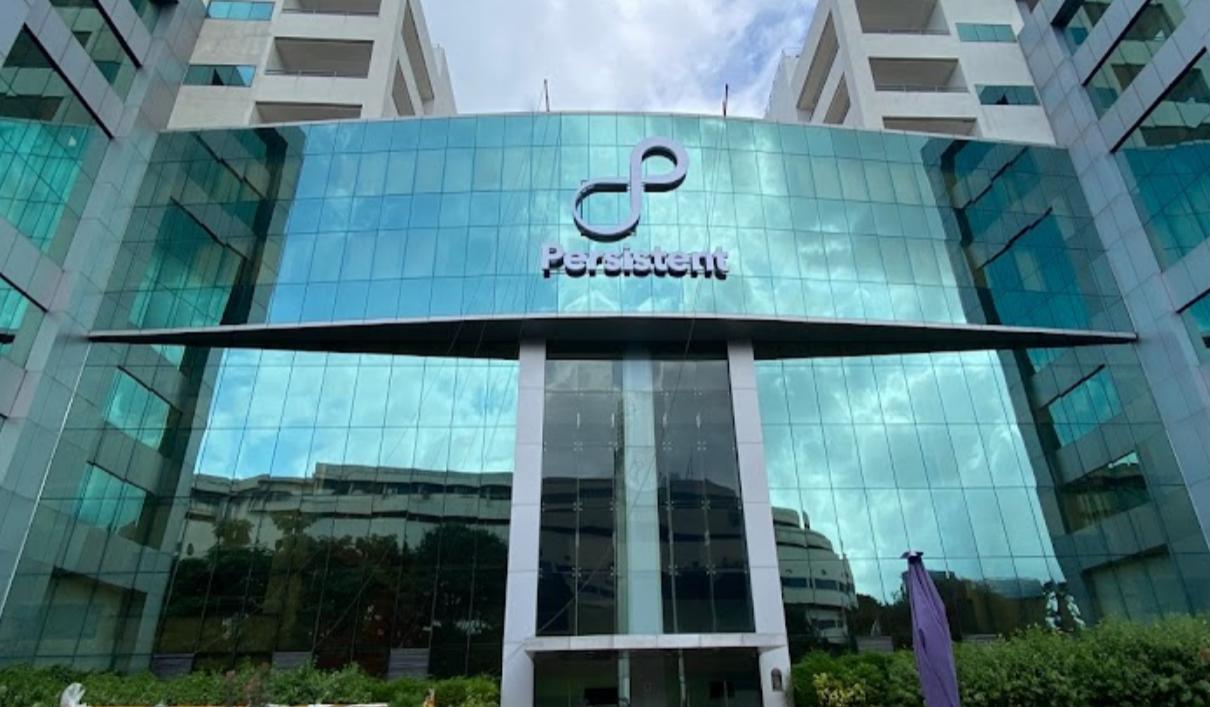
Persistent Systems and cloud computing platform DigitalOcean have partnered to accelerate AI adoption for enterprises and developers.

The collaboration seeks to develop cost-effective, scalable, and secure infrastructure to support AI workloads and deployments, the companies said in a release.

As part of the partnership, Persistent has selected DigitalOcean as its cloud and AI infrastructure provider for SASVA, its AI-powered platform.

SASVA integrates code, documentation, architecture, and executive summaries, adapting across diverse workflows and roles. The platform leverages DigitalOcean Gradient AI Agentic Cloud to run AI workloads and customer deployments.

This includes using Gradient AI for the full agent development lifecycle and high-powered GPUs from DigitalOcean’s AI infrastructure offerings.

Persistent said it selected Gradient AI Agentic Cloud to deliver cloud infrastructure for digital-native enterprises and AI-native customers, while reducing infrastructure and maintenance costs through managed, ready-to-use environments.

It also provides continuous access to a catalogue of diverse models, frameworks, and AI accelerators within SASVA.

Paddy Srinivasan, CEO, DigitalOcean, said, “DigitalOcean’s agentic cloud delivers the infrastructure, platform, and services that make AI accessible, scalable, and cost-effective.”

Partnering with Persistent, he said, expands these capabilities to more enterprise use cases by integrating the company’s AI foundation with SASVA’s deterministic engineering.

The companies aim to address the mounting challenges organisations face as they accelerate AI adoption, including rising GPU and infrastructure costs, fragmented agent development ecosystems, and increasing security and compliance requirements.

With the collaboration, they project to reduce AI infrastructure and operational costs by more than 50%, enabling faster adoption and more predictable scaling of AI across industries.

Sandeep Kalra, CEO and executive director, Persistent, said that as enterprises move from experimenting with AI to embedding it across their core operations, success will hinge on how effectively they scale with speed, trust and measurable impact.

“Together, we are simplifying how organisations build, deploy and scale AI, strengthening the foundation for the next wave of intelligent, platform-driven innovation.”

The post Persistent, DigitalOcean Partner to Make AI Accessible, Scalable appeared first on Analytics India Magazine.
Digantara Raises $50 Mn to Expand Space Surveillance

Digantara, a Bengaluru-based space tech startup, has raised $50 million in a Series B funding round to scale its space surveillance and intelligence operations, expand manufacturing, and grow research teams globally.

The round saw participation from 360 ONE Asset, SBI Investment Co. Japan, Ronnie Screwvala, Peak XV Partners, and Kalaari Capital.

With the fresh capital, the company plans to expand beyond India and the United States, set up new manufacturing facilities for optical systems and satellites, and double its global research and development workforce over the next year.

Digantara is also preparing to launch 15 space surveillance satellites and two dedicated missile-warning satellites through 2026–27.

“Space is no longer a frontier; it is the new high ground for national security,” said Anirudh Sharma, founder and CEO of Digantara, in a statement. He added that the funding would “accelerate our path to operational readiness, expand into the US and Europe, and drive new programmes in missile warning, tracking, and space-based interceptors.”

Founded in 2018 by Sharma, Rahul Rawat, and Tanveer Ahmed, Digantara began as a space situational awareness company and has since expanded into space-based surveillance and early warning systems. The company launched its first space surveillance satellite, SCOT (Space Camera for Object Tracking), in January this year, aboard SpaceX’s Transporter-12 mission, enabling space-to-space observation.

Sharma said the company’s evolution was driven by gaps in persistent visibility and early warning. “What started as space domain awareness naturally evolved into building a constellation of satellites and ground systems designed to see earlier, track continuously, and enable decisions where seconds matter,” he said in a LinkedIn post.

It has since secured defence contracts in India and the United States.

Karnataka’s minister for IT and biotechnology, Priyank Kharge, said in a LinkedIn post that the state’s space tech policy aims to support companies such as Digantara as they scale globally. He emphasised support through “infrastructure, manufacturing depth and long-term policy certainty, so more world-class space companies can scale from Karnataka to the world.”

Digantara currently operates across India, Singapore, and the United States, and plans to expand into Europe by mid-2026. The company added that recent orders and mission contracts from defence and commercial intelligence customers reflect growing demand for space-based surveillance capabilities.

Digantara’s integrated infrastructure, AIRA, combines space and ground-based sensors with data processing systems. Its portfolio includes the SCOT electro-optical and LiDAR satellites, the ALBATROSS missile-warning satellites, and the SKYGATE network of ground sensors.

Data from these systems feeds into its platforms, Space MAP and STARS, to support near real-time threat detection and response for government and defence agencies.

The post Digantara Raises $50 Mn to Expand Space Surveillance appeared first on Analytics India Magazine.

Zepto Cafe Now Lets You Order via AI Models

Indian quick-commerce firm Zepto has released an internal tool that allows users to place Zepto Cafe orders using natural-language instructions through an LLM such as Anthropic’s Claude.

The tool, built by a Zepto engineer and shared publicly on GitHub, was amplified on LinkedIn by co-founder and CEO Aadit Palicha.

It is based on MCP (Model Context Protocol), an open-source framework from Anthropic that serves as the coordination layer between the AI model and live services, deciding what action to take and when.

Unlike traditional chatbots that rely only on their training data, MCP enables models to access fresh, permissioned information and trigger specific workflows through a controlled interface. In Zepto’s setup, MCP interprets the user’s text instruction and routes it to the appropriate action.

Execution of those actions is handled by Playwright, which serves as the browser automation layer.

Playwright controls a real web browser to navigate Zepto’s website, select the delivery address, add items to the cart, and place the order—replicating the steps a human user would take rather than calling a backend API.

In a demo video, Pranav Chandra Prodduturi, a senior category manager at Zepto, showed Claude placing a Zepto Cafe dessert order at a chosen address via the MCP server.

“Interesting projects getting built in our office these days,” said Palicha, congratulating his colleague in the LinkedIn post.

The capability is not available through Zepto’s consumer app or website. Users must manually set up the MCP server and log in to Zepto via a web browser for the automation to work.

On security, Zepto notes that phone numbers are passed via environment variables rather than embedded in code, ensuring sensitive identifiers never enter the codebase, version control, or logs.

Authentication is handled through a manual browser login, with sessions stored only on the user’s local machine and never committed to the repository.

The system uses no API keys or hard-coded credentials. Because Playwright operates inside a real browser session, the automation inherits Zepto’s existing web security controls rather than bypassing them.

Similar experiments are emerging across India’s consumer internet ecosystem. Recently, Zomato built a similar MCP server that lets users order food via text-based prompts.

The post Zepto Cafe Now Lets You Order via AI Models appeared first on Analytics India Magazine.

Why Global Voice AI Fails India and How Mihup Cracked It

India’s digital transformation is often framed around the idea of a smartphone in every hand. Yet, for millions across Tier-2 and Tier-3 cities, the reality is far more nuanced. Typing, English fluency and conventional digital interfaces continue to pose significant barriers to meaningful digital access.

As voice becomes the natural bridge to digital access, the Indian Voice AI market is projected to reach $1.82 billion by 2030, according to NASSCOM.

While global enterprises increasingly fine-tune foundation models from OpenAI, Meta, and others, Mihup has taken a fundamentally different approach by building its entire automatic speech recognition (ASR), natural language processing (NLP), and text-to-speech (TTS) stack in-house—a deep-tech investment supported by over $5 million raised over nine years, including its latest round in October 2024.

Kolkata-based AI firm Mihup is a leading voice AI platform enabling enterprises to deliver seamless voice-first experiences, most notably through its long-standing partnership with Tata Motors, which began in 2019.

Its technology is already embedded in more than one million Tata Motors vehicles, including the Nexon, Safari, Altroz and Punch, and has been validated through extensive real-world testing.

With deep linguistic coverage spanning 50 Indian languages and dialects, including hybrid forms such as Hinglish, Tamilish and Benglish, Mihup allows users to interact in their natural speaking style, without needing to modify their everyday language.

“When we started building Mihup’s voice stack, there was nothing available that represented India adequately,” Priyanka Kamdar, head of growth, Mihup, told AIM. Even today, despite major advancements in global AI, “their focus on India is still limited,” she added.

Global Models Don’t Reflect India’s Linguistic Reality

India’s linguistic landscape defies conventional modelling. “India is not one large language market; it is a patchwork of hundreds of micro-languages, dialects and speech patterns,” Kamdar added.

Even within a single language, pronunciations shift dramatically. For instance, Bengali in Kolkata differs from the same language in Siliguri, Hindi in Jaipur sounds different from that in Patna.

However, Kamdar added that “there is no comprehensive global dataset that captures these nuances and generic ASR models trained on Western speech simply do not map onto the Indian linguistic reality.”

Fine-tuning global models would have meant compensating for a fundamentally flawed base.

“We needed control over the entire signal processing pipeline, the phoneme inventory, the lexicon, the acoustic modelling decisions and the contextual understanding layers on top of it,” she said.

For Mihup, owning the end-to-end stack was a foundational requirement for delivering high accuracy, low latency and reliability in Indian conversational environments.

Mihup supports over 10 Indian languages, powered by datasets sourced from purchased corporate, public data, customer-permitted recordings and proprietary collections built over nine years. The company also contributes insights to the IndiaAI Mission and Nandan Nilekani’s EkStep Foundation.

Why Phonetic Modelling Wins in a Market Like India

Traditional ASR systems assume clean, standardised pronunciation—an assumption that breaks almost immediately in India, Kamdar mentioned.

Mihup, by contrast, leans heavily on phonetic modelling, which focuses on the sounds of speech rather than predefined words.

Phonetic models adapt naturally to accents by tracking sound transitions rather than expecting a single correct pronunciation. They also handle mixed-language speech seamlessly, as they aren’t restricted to a fixed lexicon.

Crucially, these models preserve contextual variation, tone, emphasis and regional cues that carry meaning, making them far more flexible and accurate across diverse speech patterns.

This approach makes the system resilient to the way Indians actually speak, not the idealised way models expect them to.

Connectivity constraints have shaped Mihup’s deployment strategy from the ground up. “We begin with usage reality, who the user is, where they are, what latency they can tolerate and what privacy demands exist,” Kamdar added.

Illustrating this with examples, Kamdar explained that in automotive use cases, “a pure cloud assistant would fail in India’s connectivity conditions.” As a result, media, navigation and system commands run on-device, while open-ended queries go to the cloud.

In contact centres, the cloud remains the primary deployment model, but for live support, “we support on-device or local deployment as needed,” Kamdar added.

This hybrid architecture ensures reliability across India’s varied connectivity conditions.

Cracking Technical Problems Global Assistants Still Haven’t Solved

Mihup has deliberately focused on challenges that Western voice assistants often treat as niche, but which are mainstream in India.

One of the biggest challenges is language mixing. “Switching between English and a regional language multiple times in one sentence is normal in India,” Kamdar added.

Mihup treats this as a baseline, not an exception.

Another major challenge is extreme noise and overlapping speech. “Indian call centres, road conditions, field environments, all introduce noise, interruptions, overlapping speakers,” she mentioned.

The company has built noise reduction, diarisation and transcription specifically for these realities because they’re the default, not exceptions.

Despite significant technological advancements, “Contact centres see 98% of calls unanalysed today,” Kamdar added. According to Mihup, the barrier lies in mindset, not technology.

The shift required is threefold. First is the move from fine to optimised. Comprehensive analysis reveals what top agents do differently, what frustrates customers and which process gaps drive repeat calls.

Second is a shift from viewing support as a cost centre to recognising it as a growth lever, as conversation intelligence reveals renewal drivers, upsell cues and churn signals. Third is the move from anecdotes to evidence, grounding decisions in insights drawn from thousands of real customer interactions rather than isolated samples.

Through its platform, Mihup enables enterprises to make this leap, moving from reactive sampling to evidence-based operational intelligence that drives transformation.

The post Why Global Voice AI Fails India and How Mihup Cracked It appeared first on Analytics India Magazine.

OpenAI Launches GPT-Image-1.5 to Take on Google NanoBanana Pro

OpenAI on December 16 announced the rollout of a new version of ChatGPT Images, powered by its latest image generation model, GPT-Image-1.5, which the company said is now available to all ChatGPT users and developers through its API.

The company said the updated model delivers faster image generation, improved instruction following and more reliable image edits, while preserving details such as lighting, composition and facial likeness across edits.

OpenAI said image-generation speeds are up to four times faster than the earlier version.

This follows Google’s introduction of Nano Banana Pro, an image generation and editing model built on Gemini 3 Pro. The model can help users generate visuals from ideas, prototypes, notes and real-time information, and can also access Google Search’s knowledge base.

“The new Images model is rolling out today in ChatGPT for all users, and is available in the API as GPT Image 1.5,” the company said. It added that the new Images experience in ChatGPT will be available to most users from today, while Business and Enterprise access will be rolled out at a later date.

According to OpenAI, the model supports a wide range of image edits, including adding, removing and blending elements, as well as creative transformations such as style changes and layout adjustments. The company said the system is better at handling dense text rendering and following detailed instructions compared with GPT Image 1.0.

OpenAI also introduced a dedicated Images section within ChatGPT, allowing users to explore preset styles and prompts and manage image creation in one place. The company said users can continue generating new images while others are still processing.

In the API, OpenAI said GPT-Image-1.5 offers improved consistency in preserving branded visuals and logos across edits, and that image inputs and outputs are priced about 20% lower than the previous image model.

OpenAI said the earlier version of ChatGPT Images will remain available as a custom GPT, and added that further improvements are planned in future releases.

The post OpenAI Launches GPT-Image-1.5 to Take on Google NanoBanana Pro appeared first on Analytics India Magazine.

Why Global Voice AI Fails India and How Mihup Cracked It

India’s digital transformation is often framed around the idea of a smartphone in every hand. Yet, for millions across Tier-2 and Tier-3 cities, the reality is far more nuanced. Typing, English fluency and conventional digital interfaces continue to pose significant barriers to meaningful digital access.

As voice becomes the natural bridge to digital access, the Indian Voice AI market is projected to reach $1.82 billion by 2030, according to NASSCOM.

While global enterprises increasingly fine-tune foundation models from OpenAI, Meta, and others, Mihup has taken a fundamentally different approach by building its entire automatic speech recognition (ASR), natural language processing (NLP), and text-to-speech (TTS) stack in-house—a deep-tech investment supported by over $5 million raised over nine years, including its latest round in October 2024.

Kolkata-based AI firm Mihup is a leading voice AI platform enabling enterprises to deliver seamless voice-first experiences, most notably through its long-standing partnership with Tata Motors, which began in 2019.

Its technology is already embedded in more than one million Tata Motors vehicles, including the Nexon, Safari, Altroz and Punch, and has been validated through extensive real-world testing.

With deep linguistic coverage spanning 50 Indian languages and dialects, including hybrid forms such as Hinglish, Tamilish and Benglish, Mihup allows users to interact in their natural speaking style, without needing to modify their everyday language.

“When we started building Mihup’s voice stack, there was nothing available that represented India adequately,” Priyanka Kamdar, head of growth, Mihup, told AIM. Even today, despite major advancements in global AI, “their focus on India is still limited,” she added.

Global Models Don’t Reflect India’s Linguistic Reality

India’s linguistic landscape defies conventional modelling. “India is not one large language market; it is a patchwork of hundreds of micro-languages, dialects and speech patterns,” Kamdar added.

Even within a single language, pronunciations shift dramatically. For instance, Bengali in Kolkata differs from the same language in Siliguri, Hindi in Jaipur sounds different from that in Patna.

However, Kamdar added that “there is no comprehensive global dataset that captures these nuances and generic ASR models trained on Western speech simply do not map onto the Indian linguistic reality.”

Fine-tuning global models would have meant compensating for a fundamentally flawed base.

“We needed control over the entire signal processing pipeline, the phoneme inventory, the lexicon, the acoustic modelling decisions and the contextual understanding layers on top of it,” she said.

For Mihup, owning the end-to-end stack was a foundational requirement for delivering high accuracy, low latency and reliability in Indian conversational environments.

Mihup supports over 10 Indian languages, powered by datasets sourced from purchased corporate, public data, customer-permitted recordings and proprietary collections built over nine years. The company also contributes insights to the IndiaAI Mission and Nandan Nilekani’s EkStep Foundation.

Why Phonetic Modelling Wins in a Market Like India

Traditional ASR systems assume clean, standardised pronunciation—an assumption that breaks almost immediately in India, Kamdar mentioned.

Mihup, by contrast, leans heavily on phonetic modelling, which focuses on the sounds of speech rather than predefined words.

Phonetic models adapt naturally to accents by tracking sound transitions rather than expecting a single correct pronunciation. They also handle mixed-language speech seamlessly, as they aren’t restricted to a fixed lexicon.

Crucially, these models preserve contextual variation, tone, emphasis and regional cues that carry meaning, making them far more flexible and accurate across diverse speech patterns.

This approach makes the system resilient to the way Indians actually speak, not the idealised way models expect them to.

Connectivity constraints have shaped Mihup’s deployment strategy from the ground up. “We begin with usage reality, who the user is, where they are, what latency they can tolerate and what privacy demands exist,” Kamdar added.

Illustrating this with examples, Kamdar explained that in automotive use cases, “a pure cloud assistant would fail in India’s connectivity conditions.” As a result, media, navigation and system commands run on-device, while open-ended queries go to the cloud.

In contact centres, the cloud remains the primary deployment model, but for live support, “we support on-device or local deployment as needed,” Kamdar added.

This hybrid architecture ensures reliability across India’s varied connectivity conditions.

Cracking Technical Problems Global Assistants Still Haven’t Solved

Mihup has deliberately focused on challenges that Western voice assistants often treat as niche, but which are mainstream in India.

One of the biggest challenges is language mixing. “Switching between English and a regional language multiple times in one sentence is normal in India,” Kamdar added.

Mihup treats this as a baseline, not an exception.

Another major challenge is extreme noise and overlapping speech. “Indian call centres, road conditions, field environments, all introduce noise, interruptions, overlapping speakers,” she mentioned.

The company has built noise reduction, diarisation and transcription specifically for these realities because they’re the default, not exceptions.

Despite significant technological advancements, “Contact centres see 98% of calls unanalysed today,” Kamdar added. According to Mihup, the barrier lies in mindset, not technology.

The shift required is threefold. First is the move from fine to optimised. Comprehensive analysis reveals what top agents do differently, what frustrates customers and which process gaps drive repeat calls.

Second is a shift from viewing support as a cost centre to recognising it as a growth lever, as conversation intelligence reveals renewal drivers, upsell cues and churn signals. Third is the move from anecdotes to evidence, grounding decisions in insights drawn from thousands of real customer interactions rather than isolated samples.

Through its platform, Mihup enables enterprises to make this leap, moving from reactive sampling to evidence-based operational intelligence that drives transformation.

The post Why Global Voice AI Fails India and How Mihup Cracked It appeared first on Analytics India Magazine.

DOE: AI Helps Scientists Investigate the Universe’s Biggest and Smallest Phenomena

Bell and Queen’s University Partner to Build Sovereign AI Supercomputing Infrastructure in Canada

Dec. 16, 2025 — Bell, Canada’s largest communications company, and Queen’s University, a leading research-intensive…

Why Global Voice AI Fails India and How Mihup Cracked It

India’s digital transformation is often framed around the idea of a smartphone in every hand. Yet, for millions across Tier-2 and Tier-3 cities, the reality is far more nuanced. Typing, English fluency and conventional digital interfaces continue to pose significant barriers to meaningful digital access.

As voice becomes the natural bridge to digital access, the Indian Voice AI market is projected to reach $1.82 billion by 2030, according to NASSCOM.

While global enterprises increasingly fine-tune foundation models from OpenAI, Meta, and others, Mihup has taken a fundamentally different approach by building its entire automatic speech recognition (ASR), natural language processing (NLP), and text-to-speech (TTS) stack in-house—a deep-tech investment supported by over $5 million raised over nine years, including its latest round in October 2024.

Kolkata-based AI firm Mihup is a leading voice AI platform enabling enterprises to deliver seamless voice-first experiences, most notably through its long-standing partnership with Tata Motors, which began in 2019.

Its technology is already embedded in more than one million Tata Motors vehicles, including the Nexon, Safari, Altroz and Punch, and has been validated through extensive real-world testing.

With deep linguistic coverage spanning 50 Indian languages and dialects, including hybrid forms such as Hinglish, Tamilish and Benglish, Mihup allows users to interact in their natural speaking style, without needing to modify their everyday language.

“When we started building Mihup’s voice stack, there was nothing available that represented India adequately,” Priyanka Kamdar, head of growth, Mihup, told AIM. Even today, despite major advancements in global AI, “their focus on India is still limited,” she added.

Global Models Don’t Reflect India’s Linguistic Reality

India’s linguistic landscape defies conventional modelling. “India is not one large language market; it is a patchwork of hundreds of micro-languages, dialects and speech patterns,” Kamdar added.

Even within a single language, pronunciations shift dramatically. For instance, Bengali in Kolkata differs from the same language in Siliguri, Hindi in Jaipur sounds different from that in Patna.

However, Kamdar added that “there is no comprehensive global dataset that captures these nuances and generic ASR models trained on Western speech simply do not map onto the Indian linguistic reality.”

Fine-tuning global models would have meant compensating for a fundamentally flawed base.

“We needed control over the entire signal processing pipeline, the phoneme inventory, the lexicon, the acoustic modelling decisions and the contextual understanding layers on top of it,” she said.

For Mihup, owning the end-to-end stack was a foundational requirement for delivering high accuracy, low latency and reliability in Indian conversational environments.

Mihup supports over 10 Indian languages, powered by datasets sourced from purchased corporate, public data, customer-permitted recordings and proprietary collections built over nine years. The company also contributes insights to the IndiaAI Mission and Nandan Nilekani’s EkStep Foundation.

Why Phonetic Modelling Wins in a Market Like India

Traditional ASR systems assume clean, standardised pronunciation—an assumption that breaks almost immediately in India, Kamdar mentioned.

Mihup, by contrast, leans heavily on phonetic modelling, which focuses on the sounds of speech rather than predefined words.

Phonetic models adapt naturally to accents by tracking sound transitions rather than expecting a single correct pronunciation. They also handle mixed-language speech seamlessly, as they aren’t restricted to a fixed lexicon.

Crucially, these models preserve contextual variation, tone, emphasis and regional cues that carry meaning, making them far more flexible and accurate across diverse speech patterns.

This approach makes the system resilient to the way Indians actually speak, not the idealised way models expect them to.

Connectivity constraints have shaped Mihup’s deployment strategy from the ground up. “We begin with usage reality, who the user is, where they are, what latency they can tolerate and what privacy demands exist,” Kamdar added.

Illustrating this with examples, Kamdar explained that in automotive use cases, “a pure cloud assistant would fail in India’s connectivity conditions.” As a result, media, navigation and system commands run on-device, while open-ended queries go to the cloud.

In contact centres, the cloud remains the primary deployment model, but for live support, “we support on-device or local deployment as needed,” Kamdar added.

This hybrid architecture ensures reliability across India’s varied connectivity conditions.

Cracking Technical Problems Global Assistants Still Haven’t Solved

Mihup has deliberately focused on challenges that Western voice assistants often treat as niche, but which are mainstream in India.

One of the biggest challenges is language mixing. “Switching between English and a regional language multiple times in one sentence is normal in India,” Kamdar added.

Mihup treats this as a baseline, not an exception.

Another major challenge is extreme noise and overlapping speech. “Indian call centres, road conditions, field environments, all introduce noise, interruptions, overlapping speakers,” she mentioned.

The company has built noise reduction, diarisation and transcription specifically for these realities because they’re the default, not exceptions.

Despite significant technological advancements, “Contact centres see 98% of calls unanalysed today,” Kamdar added. According to Mihup, the barrier lies in mindset, not technology.

The shift required is threefold. First is the move from fine to optimised. Comprehensive analysis reveals what top agents do differently, what frustrates customers and which process gaps drive repeat calls.

Second is a shift from viewing support as a cost centre to recognising it as a growth lever, as conversation intelligence reveals renewal drivers, upsell cues and churn signals. Third is the move from anecdotes to evidence, grounding decisions in insights drawn from thousands of real customer interactions rather than isolated samples.

Through its platform, Mihup enables enterprises to make this leap, moving from reactive sampling to evidence-based operational intelligence that drives transformation.

The post Why Global Voice AI Fails India and How Mihup Cracked It appeared first on Analytics India Magazine.

Bell and Queen’s University Partner to Build Sovereign AI Supercomputing Infrastructure in Canada

DOE: AI Helps Scientists Investigate the Universe’s Biggest and Smallest Phenomena

Dec. 16, 2025 — What is the structure of the quark-gluon plasma that existed at the…