Apple has begun early discussions with Indian chipmakers to assemble and package components for its iPhone, the Economic Times reported, citing sources. The talks involved Murugappa Group-owned CG Semi, which is building an outsourced semiconductor assembly and test facility in Sanand, Gujarat.
The exploratory talks are the first time Apple has considered assembling and packaging some chips in India, and the discussions are in early stages with no firm agreement yet. Reports said Apple’s talks with CG Semi are “in the very initial stages”. While it is not yet clear “what chips will be packaged out of the Sanand facility at this stage, it will likely be display chips”.
Meanwhile, CG Semi told ET it does not comment on market speculation or talks with specific customers. “We will make appropriate disclosures as and when there is something concrete to share,” the company said.
If a deal goes ahead, it could represent a step up in the value chain for Indian vendors supplying Apple products. The country’s semiconductor industry has recently seen activity, including a pact between US chipmaker Intel and Tata to explore the manufacturing and packaging of Intel products locally.
Analysts say Apple could benefit from a broader supplier base as it seeks to diversify manufacturing locations. However, any progress will depend on meeting Apple’s quality requirements.
Apple has been expanding its manufacturing footprint in India for several years. The company has previously stated its aim to produce a majority of iPhones sold in the United States at Indian facilities by the end of 2026.
The post Apple in Early Talks with Indian Chipmakers to Assemble iPhone Chips appeared first on Analytics India Magazine.
US-based company Wisk Aero, backed by Boeing, completed the first flight of its Generation 6 autonomous electric vertical take-off and landing aircraft (eVTOL) on December 16 at its test facility in Hollister, California.
The company said the aircraft conducted a vertical take-off, hover, and stabilised flight as part of its certification programme in the United States.
The flight marks the first test of an autonomous passenger aircraft that Wisk has submitted for type certification to the US Federal Aviation Administration (FAA). According to Wisk, Generation 6 is intended for commercial use, with planned launch markets, including Houston, Los Angeles and Miami.
Wisk said the initial flight validated core flight systems and marked the start of a wider test campaign focused on safety and performance. The company has completed more than 1,750 test flights across six aircraft generations, according to the statement.
“This first flight is the moment our team has been working towards,” Wisk chief executive officer Sebastien Vigneron said. “It reaffirms our belief in autonomy, and we are even more energised to continue the journey to bring safe, everyday flight to everyone.”
Generation 6 forms part of Wisk’s ongoing certification project with the FAA. The company said the aircraft is designed to meet existing commercial aviation safety standards and operates without an onboard pilot, with human oversight provided by a ground-based supervisor.
Brian Yutko, vice-president of product development at Boeing Commercial Airplanes, and chairman of Wisk’s board, said the programme has relevance beyond the company. “The engineering methods and technologies are all a valuable source of insight for Boeing as we work together and thoughtfully apply them to the future of flight,” he said.
Wisk said upcoming tests will expand from hover operations to higher speeds and altitudes. The programme will also include complex manoeuvres such as transitions between flight modes.
In parallel, the company will continue work on autonomy systems, including detect-and-avoid and navigation, while coordinating with the FAA, NASA, and other partners.
The post Boeing-Backed Wisk Tests its First Autonomous eVTOL for Passenger Flight appeared first on Analytics India Magazine.
Oracle, a longtime leader in database software and cloud services, experienced a dramatic stock decline in late 2025. Shares reached an all-time high of approximately $328 in September 2025 but have since fallen to around $188 as of mid-December, representing a drop of over 40%.
The correction has led to billions of dollars in market value losses and contributed to wider selling in AI-related stocks. The plunge accelerated following the company’s fiscal second-quarter 2026 earnings release on December 10, 2025, which disappointed investors despite signs of strong future demand.
The pressure had already begun earlier. On November 18, 2025, Oracle’s market value had dropped by $315 billion since its OpenAI deal on September 10, which analysts dubbed the “curse of ChatGPT.” The market cap eroded further, falling to $533 billion, down from $927 billion in September.
Oracle is not the only company tied to OpenAI whose shares plunged. Japanese technology conglomerate SoftBank Group, a key investor in OpenAI, saw its shares drop by 40% between October 31 and November 26, resulting in a loss of nearly $50 billion in market capitalisation.
A Disappointing Q2 Earnings Report
Oracle’s Q2 results revealed a mismatch between explosive demand for AI infrastructure and the company’s ability to convert it into immediate revenue.
While remaining performance obligations, a key metric for future cloud contracts, rose to $523 billion year over year, revenue growth fell short of Wall Street expectations. The company also issued third-quarter guidance below estimates, citing ongoing investments needed to meet demand.
Massive Investment in AI Data Centres
A major concern for investors is Oracle’s aggressive spending on AI data centres. In recent months, the cloud has emerged as a key player in AI after a $300 billion deal with OpenAI was disclosed in September, under which the startup will buy computing power over about five years starting in 2027.
Oracle said capital expenditures for fiscal 2026 are now expected to be about $15 billion higher than earlier estimates, after the company burned around $10 billion in cash in the first half of the year. Executives said on a post-earnings call that total capital spending is projected to reach about $50 billion in the fiscal year ending May 2026.
To fund this buildout, Oracle raised $18 billion in new debt, pushing total debt over $100 billion. These investments are necessary to energise capacity for AI workloads, but they are pressuring near-term profitability and free cash flow.
Massive spending across the sector, with limited immediate returns, has raised questions about whether the hype is outpacing reality. “Oracle already has a huge amount of debt. Their balance sheet’s not that good. At some point, they’ll heed the warning of the bond market and slow things down,” said Jim Cramer of CNBC. He added that data centres involve high costs and execution challenges, and that Oracle should not put its balance sheet at risk to support Sam Altman’s plans.
Analysts have raised concerns about Oracle’s ability to fund its expansion plans.
“Ultimately, it comes down to ‘how is Oracle going to raise the money?’” RBC Capital Markets analyst Rishi Jaluria told WSJ. “It’s one thing to build a backlog, but having that backlog translate to revenue shows the ability to actually meet those demands.”
However, not all analysts share this view.
Bank of America analyst Brad Sills told TheStreet, “We view the current mismatch of spend versus revenue as an investment curve issue rather than a change in fundamentals.”
The analyst said the near-term pressure stems from the need for higher capital spending to meet demand, with Oracle absorbing the impact of the rapid pace of investment required by current AI demand trends.
Sills said the company’s core business remains strong, pointing to growing AI demand, data centre projects moving on schedule and Oracle Cloud Infrastructure’s ability to support different platforms and contract types. He added that Oracle’s management has reiterated that the company retains access to multiple financing channels and remains committed to maintaining its investment-grade credit rating.
Oracle is not Alone
Oracle’s surge in capital spending comes amid a broader wave of investment by major cloud providers racing to meet AI demand, though the scale of spending and balance sheet impact varies.
Google expects full-year 2025 capital expenditures of between $91 billion and $93 billion, while Meta has allocated $64 billion to $72 billion, with plans for further increases. Microsoft spent about $80 billion on AI cloud workloads and data centres.
Amazon leads the group, with estimated investments of $100 billion to $125 billion focused on AI capabilities and cloud infrastructure. The company has also announced plans to invest up to $50 billion to expand AI and supercomputing systems for US government customers on AWS.
However, these investments typically take years to generate returns. AI infrastructure projects often involve long build cycles, delayed revenue recognition and upfront capital commitments, creating a lag between spending and returns.
This dynamic has become a growing concern across the sector, particularly as interest rates remain elevated and debt financing becomes more expensive.
Going forward, investors are likely to focus on Oracle’s ability to bring new data centre capacity online on schedule, convert backlog into revenue, and stabilise cash flows as spending peaks.
The post How Oracle Lost $400 Bn in Market Cap in Just 3 Months appeared first on Analytics India Magazine.
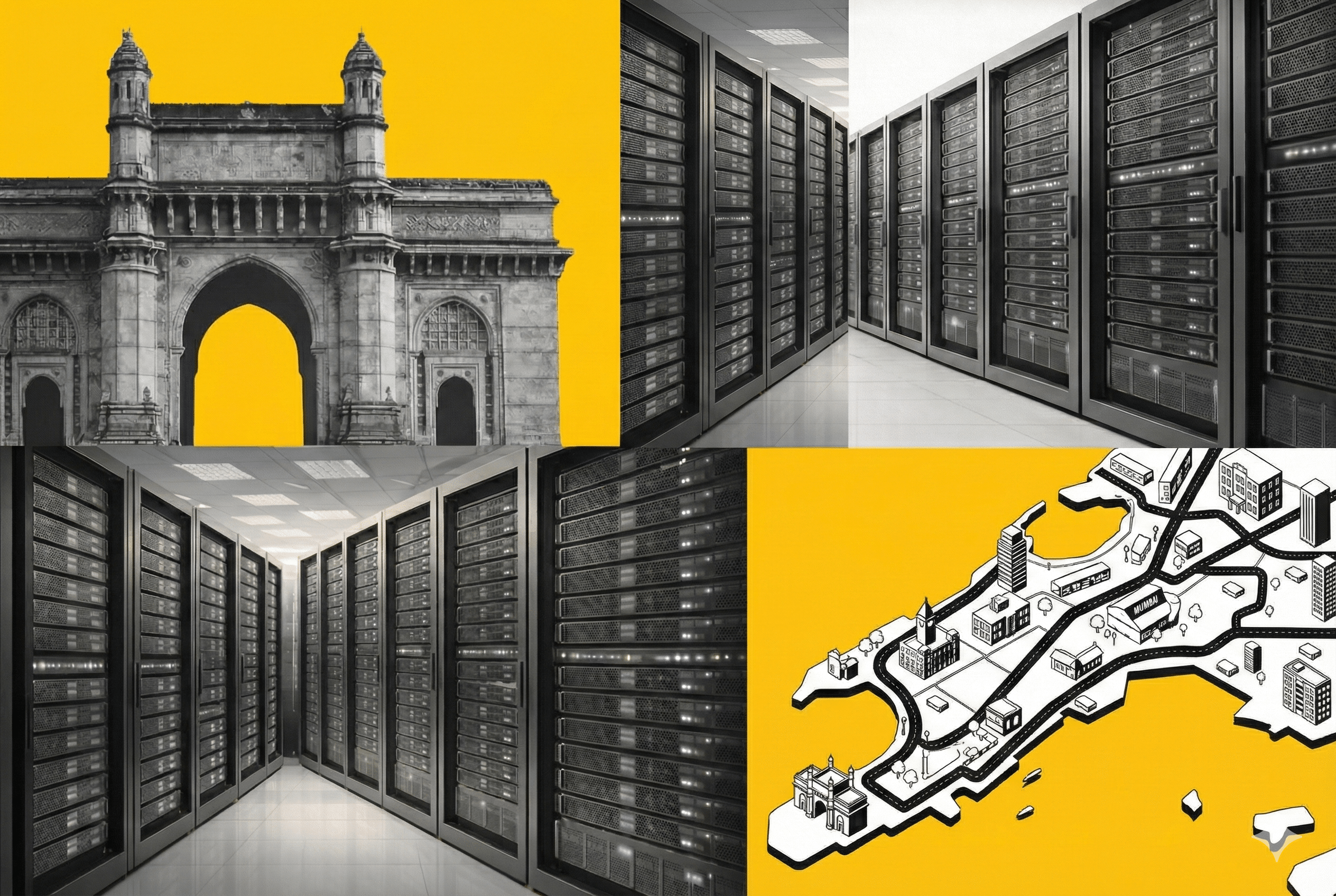
The entertainment capital, the finance capital — and now the data centre capital of India. Mumbai hosts the country’s densest data-centre footprint, and the gap is widening.
Cushman & Wakefield’s India Data Centre H1 2025 Update places Mumbai’s operational capacity at 594 MW, with another 337 MW under construction and 852 MW planned.
That pipeline alone represents 41% of India’s upcoming data centre supply and could push national installed capacity beyond 4,100 MW by 2030.
Chennai ranks second, roughly accounting for 13% of planned capacity and about 15% of operational capacity.
But why is Mumbai leading?
Connectivity Sets the Baseline
A prime reason is that Mumbai is the country’s financial capital, and many BFSI-related workloads are hosted there. Moreover, because RBI’s and SEBI’s data regulations from 2018 and 2023, respectively, require that this data be stored domestically, and considering latency requirements, Mumbai is the optimal location for data centres.
The city includes numerous well-established players, such as Yotta, Sify, STT GDC, and others, who have built AI-ready data centres equipped with leading-edge GPUs and other necessary hardware.
The city’s data centre growth is organised around three clusters: Powai, the Thane–Belapur Road corridor, and Panvel.
Powai is the most mature, anchored by established colocation operators and proximity to financial and IT enterprises.
The Thane–Belapur Road belt, spanning Airoli, Rabale, and Mahape, has become Mumbai’s primary growth engine, accounting for roughly 70% of the city’s built capacity.
With vacancy near 6% and a development pipeline of about 982 MW, the corridor is set to drive the next phase of expansion.
Besides, connectivity is the most obvious reason. Modern data centres function less as isolated facilities and more as nodes in a global network. Mumbai already serves as India’s primary international landing point for data traffic. Thirteen subsea cable systems land in the city today, with three more under development, linking India directly to Europe, Africa, the Middle East, and East Asia.
Source: Submarine Cable Map
Those cables carry financial transactions, cloud workloads, media distribution, and enterprise traffic that cannot tolerate latency or routing uncertainty.
This March, Bharti Airtel announced that it has landed the 2Africa Pearls cable in Mumbai, connecting India to Africa and Europe via the Middle East.
Mumbai’s landing stations feed directly into onshore clusters across Powai, Mahape, and Navi Mumbai.
Cost, Pricing, and Why Demand Holds
Mumbai’s economics is often misunderstood. Land prices are among the highest in the country, but total build economics remain competitive by global standards.
The Data Centre Construction Cost Index assigns Mumbai a score of 0.60—lower than Singapore, Tokyo, Hong Kong, and Seoul. Only Shanghai ranks cheaper.
Cushman & Wakefield’s rental data shows how that plays out within the country.
Monthly colocation pricing per kW in Mumbai ranges from ₹8,000–12,000 for sub-250 kW deployments, ₹7,000–10,000 for 250 kW–1 MW deployments, and ₹6,000–7,500 for deployments above 5 MW.
That is higher than emerging markets such as Kolkata or Pune, where large-scale deployments above 5 MW often price closer to ₹6,000–6,500.
Besides, the cost to acquire land and site for a five-acre land parcel with 50 MW capacity in the prime region of Powai in Mumbai is the highest in the country.
As a Sify spokesperson told AIM, “Mumbai’s position as India’s financial capital makes it an inevitable location for data centre deployment despite high land costs. The greater upfront capex is offset by stronger commercial offtake.”
On scaling despite constraints, the spokesperson added, “Most new facilities are concentrated in the suburbs, where operators can optimise footprints while staying close to key demand clusters.”
Demand Is No Longer Narrow
The demand supporting that offtake has broadened.
Amit Agrawal, president at Techno Digital, a company that builds AI-ready data centres, pointed to sectors rarely concentrated in one geography—film studios, production houses, theatres, fintech teams, and streaming platforms.
“Everywhere I look, I see opportunity because everything is being digitised today,” he told AIM, describing how VFX, editing, content creation, and fintech workflows increasingly rely on AI and automation.
His argument was that Mumbai’s compute demand now runs in multiple directions at once. Creative pipelines, financial automation, enterprise AI, and cloud platforms compete for the same infrastructure.
“Some players build pure infrastructure. Some offer infrastructure as a service. Others run cloud and application layers. All of them find customers because use cases differ,” Agrawal said.
Policy and Utilisation
Furthermore, policy has added predictability to that growth.
Maharashtra’s IT/ITES Policy 2023 grants electricity-duty exemptions, designates data centres as essential services for 24×7 operations, offers full stamp-duty exemptions on land purchases, relaxes building norms, and routes approvals through the MAHITI single-window system.
Sify Infinit Spaces Limited’s (SISL) DRHP also references state-backed digital initiatives, including AI Centres of Excellence and large private hyperscale programmes.
Despite uneven micro-market behaviour, tight vacancy in Thane–Belapur and Powai, and more slack in Panvel, Mumbai remains the most reliable environment for long-term utilisation.
Even as data centre operators such as SISL say that nearly 70% of the power used at their Rabale campus in neighbouring Navi Mumbai comes from renewable sources, the broader Mumbai metropolitan region continues to face periodic power and water stress.
As investments in data centres scale, often backed by policy assurances of uninterrupted electricity and water, it is critical that such guarantees do not come at the expense of supply to the city’s residents.
“Everybody wants to come to Mumbai. But today, the city’s peak power requirement is about 3 GW, and we are already talking about the Thane–Belapur Road coming up with nearly 1 GW of total data centre capacity,” said Agrawal.
Pointing at the scale of the challenge such growth would create, he said, “Just imagine a 15-kilometre stretch consuming one-third of the power of the entire Mumbai city. Are we ready for that? We are not.”
“Data centres will go farther from the cities wherever there is availability of power,” added Agrawal, pointing towards the expansion of the ecosystem in tier 2 and tier 3 cities.
The post How Mumbai Keeps Winning India’s Data-Centre Race appeared first on Analytics India Magazine.
NVIDIA has picked CloudThat, a Bengaluru-based technology training and consulting firm, as its first education services partner in India, marking a key milestone in the country’s fast-growing AI skilling ecosystem.
With this partnership, CloudThat has become the first edtech company in India authorised to deliver NVIDIA’s official education programmes focused on AI and accelerated computing. The move comes at a time when India is stepping up investments in AI infrastructure and talent development to position itself as a global AI hub.
Under the collaboration, CloudThat will offer NVIDIA’s training courses to enterprises, academic institutions and individual learners. The programmes are aimed at building practical expertise in developing, training, optimising and deploying AI systems across real-world use cases, including computer vision, natural language processing, generative AI and large-scale production deployments.
The courses will be led by CloudThat’s instructors, including India’s first two NVIDIA-certified trainers, and will provide learners access to NVIDIA’s AI ecosystem, such as GPU-accelerated labs, curated development environments, pre-built models, and specialised workflow tools.
The announcement follows NVIDIA’s recent India tour, during which the company’s leadership visited CloudThat’s Bengaluru headquarters. In Mumbai, NVIDIA CEO Jensen Huang remarked, “This is India’s moment. You have to seize the opportunity,” adding that the country should focus on building AI systems rooted in its own data rather than exporting data and importing intelligence.
Commenting on the partnership, CloudThat founder and CEO Bhavesh Goswami said India’s AI ambitions will depend as much on skilled talent as on infrastructure. “With India investing heavily in GPU infrastructure, the next critical step is to develop the skilled talent required to unlock its full potential,” he said, adding that the collaboration aims to prepare the next generation of AI professionals across sectors.
The partnership is expected to support growing demand for AI talent across IT services, banking and financial services, manufacturing, retail and the public sector, while opening up career pathways in AI engineering, data science, MLOps robotics, and AI infrastructure.
The post NVIDIA picks CloudThat as First Education Services Partner in India appeared first on Analytics India Magazine.