10 Weird Robots That Make Us Laugh, Cringe, and Say ‘Whoa’

Robots

These 10 weird robots make us laugh, cringe, say ‘whoa’ and a lot more beyond that

Robots appear to be designed these days to take over all types of human activities. They can carry heavy loads, perform repetitive and tiring tasks, supplement humans in stressful jobs, crawl into difficult-to-reach spaces for research, medical applications, or disaster recovery, and serve as expendable substitutes in potentially lethal situations such as military combat.

So, are they truly bizarre? Or do they simply represent the future? There are so many amazing robots that the list could go on for pages. In this article, we have explained the 10 weird robots that will make you laugh, cringe says ‘whoa’, and a lot more beyond that. Read to know more about 10 weird robots that make us laugh.

  1. Injectable Nanobots

It may sound like science fiction, but after being injected with a standard syringe, these injectable nanobots can walk around inside a human body. The four-legged bots, developed at Cornell University, could one day deliver drugs directly to injuries or tumors. They are currently only solar-powered, so they cannot be used inside a body, but this could change.

  1. Weed-Killer Robot

This farming robot uses lasers to remove 100,000 weeds per hour. The “Autonomous Weeder” distinguishes itself from other robots in its class by zapping pesky sprouts into oblivion with high-powered lasers. Furthermore, because the bot uses thermal energy to eliminate weeds rather than a physical intervention such as tilling, the machine does not disturb the soil below.

  1. SlothBot

The SlothBot, as the name suggests, is painfully slow, collecting vital environmental data such as temperature and carbon dioxide levels in Georgia’s Atlanta Botanical Garden. However, there is a reason for its apparent laziness. Its leisurely, languid locomotion aids the robot in avoiding suspicion and completing its mission, wrote deputy editor Courtney Linder in May 2021. Researchers at the Georgia Institute of Technology created the small robot with googly eyes to investigate what is pollinating a genus of rare orchids in the Ecuadorian Rain Forest.

  1. Indian Half-Humanoid Space Robot

Another space agency, the Indian Space Research Organisation (ISRO), plans to send a half-humanoid robot named Vyommitra to space on an uncrewed mission by the end of 2022. The robot will travel to the moon on the unmanned Chandrayaan-3 mission. Vyommitra is bilingual and has a humanoid appearance.

She’ll be able to issue warnings if the cabin conditions become uncomfortable, so humans will be better prepared to deal with problems before they travel to the moon.

  1. Russian Space Robot

Fedor, or “Final Experimental Demonstration Object Research,” was originally intended as a rescue robot for emergencies, but was co-opted by Roscomos, the Russian space agency, in 2019. Its dedicated mission is to test an emergency rescue system aboard a Soyuz 2.1a rocket, a risky situation better handled by Fedor than a human. According to Alexander Bloshenko, the Russian space agency’s director, it would learn how to connect and disconnect electric cables using “standard items ranging from a screwdriver and a spanner to a fire extinguisher.”

  1. Parkour Robots

These parkour robots are extremely mobile and they can do parkour, which includes jumping over chasms, hopping over obstacles, climbing stairs, and running across a balance beam. The Atlas Boston Dynamics Robots may appear cool, but they are intended for more.

“Ultimately, pushing the limits on a humanoid robot-like Atlas drives hardware and software innovation that translates to all of our robots at Boston Dynamics,” the company stated in a blog post published on August 17, 2021.

  1. Xenobots

These “xenobots” have been dubbed “the first living robots” by the researchers who created them. They are one-millimeter-sized “programmable organisms” made from a cross between stem cells from a frog heart and frog skin, according to Joshua Bongard, a computer scientist and robotics expert co-led the research at the University of Vermont who.

Tufts University, the University of Vermont, and Harvard University were the first to use computer algorithms to create frog embryos. Through this type of design, their designers hope to learn more about cellular communication.

  1. Military Robot Dog

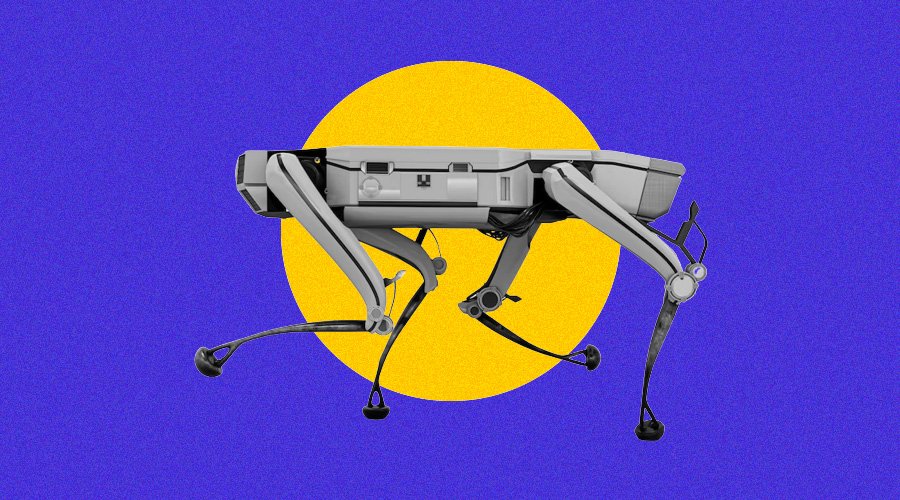
The US Army’s robot dog, which combines a quadruped robot with a sniper rifle, appears to be more promising. Don’t worry, it can only fire at the command of a human operator. It has an in-built sniper rifle that can engage targets from three-quarters of a mile away. This robotic weapon system could be controlled remotely by the service. Importantly, it would only engage targets with the permission of a human, writes Kyle Mizokami, a military and defense staff writer.

  1. Spot the Robo-Dog

If you wanted to pay $74,500, you could buy one of Boston Dynamics’ famous robot dogs, Spot, in 2020. You must contact the company for current pricing information.

With its distinctive sunshine-yellow limbs, this boy can take command in dangerous situations and assist where needed. It has been used on an oil rig, at decommissioned nuclear sites, on construction sites, and even to assist medical workers in safely triaging potential COVID-19 patients. The spot has even been used in creative projects such as stage dancing and theme park performances.

  1. China’s Robotic Yak

According to a Chinese Communist Party-linked tabloid, this four-legged robot-yak can carry as much cargo as two real yaks. With its four spindly legs and barrel-shaped body, it resembles a yak. However, as this video shows, its capabilities may be overstated. China appears to want to use the robot to support ground troops in ways other than just carrying supplies.

The post 10 Weird Robots That Make Us Laugh, Cringe, and Say ‘Whoa’ appeared first on Analytics Insight.
How Can AI Help Socially Intelligent Robots Flourish?

Socially Intelligent robots

AI is a double-edged sword that helps socially Intelligent robots. It’s a relatively recent development

In artificial intelligence and robotics, social intelligence in robots is a relatively recent development. However, a wide range of application areas and contexts in which robots must interact and collaborate with humans or other robots have made it abundantly clear that social and interactive abilities are essential. Human-robot interaction (HRI) research raises a lot of questions about how humans and robots interact with one another and engage in “social behavior.”

Human Intelligence and Robots

Researchers are aiming for more fundamental but also more biologically and developmentally plausible milestones in sensorimotor skills that emphasize the embodied nature of human intelligence. Since the 1980s, Brooks and others have been working on this project, which emphasizes the close connection between the mind, body, and environment. A robot, from this “nouvelle AI” point of view, is more than just a “computer on wheels” in AI. A brand-new artificial intelligence robot is embodied, situated, surrounded by, and responsive to its surroundings.

Robotic Development

A novel AI robot may or may not be influenced by humans; Depending on the skills or behaviors being studied, insects, slugs, and salamanders can all be useful behavioral or cognitive models. Because it was thought that finding a balance between the complexity of the “body,” the “mind,” and the “environment” was important, this paradigm shift in AI had a significant impact on the kind of robotics experiments that were carried out in the field of new AI.

The behavior set of a typical nouvelle AI robot from the 1990s includes:

Wander

Avoid-Obstacle

Positive or Negative Phototaxis

Experiments

The development of machine learning techniques for robot controllers, in which the robot learns to “find” a light source (often modeled as a “food source”) and avoid obstacles, has been extensively investigated using these robotic test beds. Robots operating autonomously in a simulated “ecosystem,” charging their batteries, and experiments inspired by social insect swarm intelligence are two additional scenarios that are more biologically inspired.

It was evident that these robots’ intelligence was not comparable to that of humans: ways of behaving like meandering around in the climate and having the option to answer specific boosts in the climate are displayed by microbes too. Bugs, while not quite as straightforward as natural complex frameworks, show conduct as people that are nearer in the extent to the restricted scope of conduct that machines accessible during the 1990s could mimic, and accordingly became famous models for behavior-based AI,’ the part of nouvelle AI dedicated to creating conduct control frameworks for robots.

The post How Can AI Help Socially Intelligent Robots Flourish? appeared first on Analytics Insight.
Top 5 Robotics Applications Companies in the USA in 2023

Robotics

Here are 5 Robotics Application Firms that are ruling over the USA in 2023

In the USA in 2023, a range of industries will use robotics more and more. Robots are employed most frequently in the industry to automate processes like painting, welding, and assembly. The agricultural industry is also utilizing robotics to ensure that crops are picked more precisely and effectively. Robots are employed in healthcare for surgical procedures and physical therapy, supporting patients who are recovering from disease or injury. The use of robotics in education also promotes creativity and discovery by enabling student interaction with virtual learning environments. In the US in 2023, robotics applications will become more and more significant. This is a result of the rising desire for efficiency and automation in a variety of sectors, from manufacturing to healthcare. Robotic applications can boost output, cut expenses, and promote worker safety.

Boston Dynamics: Robotics Company Boston Dynamics was established in Waltham, Massachusetts, in 1992. They specialize in the development and production of powerful, dynamic, and agile robots. These robots are employed in a wide range of tasks, including entertainment, military operations, search and rescue, and much more. Robotics Business Boston Dynamics was established in Waltham, Massachusetts, in 1992. They specialize in the development and production of powerful, dynamic, and agile robots. These robots are employed in a wide range of tasks, including entertainment, military operations, search and rescue, and much more. The SpotMini, a four-legged robot that can carry goods, open doors, and perform other difficult tasks, is their most well-known creation.

Revolve Robotics: Revolve Robotics is a robotics firm with an emphasis on building robotic systems for homes, offices, and educational institutions. Their goal is to improve everyone’s access to and ease of use of robots. They concentrate on creating cutting-edge goods for their consumers by utilizing cutting-edge technology like artificial intelligence, machine learning, and deep learning. Their selection of robots includes autonomous cars, telepresence robots, robotic arms, and 3D printers. These machines can assist with manufacturing, shipping, customer service, and entertainment. Everyone may utilize their items because they are all created to be effective and simple to use. These robots may assist in a wide range of tasks, from personal use to industrial uses. To ensure that their clients have the greatest possible experience with their products, they continue to develop new concepts and procedures.

Rethink Robotics: Robotics firm Rethink Robotics is situated in Boston, Massachusetts. They were established in 2008, and its area of expertise is the development and production of advanced robots for manufacturing and industrial applications. These robots are renowned for their distinctive design, which incorporates two separate moving arms that can be programmed to carry out tasks like assembling or sorting objects. The business has created several robots, such as the Sawyer robot, which can perform repetitive jobs like picking up components from a conveyor belt. Other robots include the Intera robot, which is intended for research and development, and the Baxter robot, which is made for assembly line use. Several magazines, such as The Wall Street Journal, Fast Company, and Forbes, have profiled their robots.

SoftBank Robotics: Masayoshi Son, the creator of the SoftBank Group and a leading robotics company, founded Softbank Robotics. The firm specializes in the development and manufacturing of robots for use in industry, commerce, and homes. The company was founded in 2006 to develop robots that can recognize and react to human emotions. They have since created robots with sophisticated features like voice recognition, facial identification, and natural language processing. Robotic arms, various machines, and humanoid robots like Pepper, Nao, and Romeo are some of their goods. They try to build robots that are friendly, trustworthy, and efficient. SoftBank Robotics is dedicated to building robots that will assist people all across the world to improve their lives.

UBTech Robotics: Leading suppliers of intelligent humanoid robots and robotic kits for classroom use are UBTech Robotics. Since its founding in 2012, the business has emerged as a pioneer in robotics technology, offering cutting-edge solutions for healthcare, medical research, education, and home entertainment. Around the world, more than 10,000 schools and colleges have already started using UBTech’s robots. Their Alpha 2 Robot has been considered one of the best robots of its kind by Time Magazine, and their Alpha 1S Robot was the first humanoid robot made available to consumers. The goal of UBTech Robotics is to keep developing new robotic technologies and expanding their applications.

The post Top 5 Robotics Applications Companies in the USA in 2023 appeared first on Analytics Insight.

Top 5 Advanced Humanoid Robots in the World in 2023

Advanced Humanoid Robots

The top advanced humanoid robots in the world features the human brain’s underlying mechanism to deal with real world

Intro: The era of innovation and technology saw an increase in the number of companies developing human-like robots that work like actual humans in the hospitality and customer service sectors. These Advanced Humanoid Robots or Android are machines designed to perform human tasks like interacting, talking, walking, and more.

Humanoid Robots have the greatest potential to become a future industrial tool by playing an important role in robotics research and many other 21st-century applications. With AI advancements in Robotics, these humanoid robots are subjected to improvement in various aspects to completely resemble humans. Designed to resemble the human body, they could be also for functional purposes. The various applications of humanoid robots are in Education and entertainment, personal assistance, manufacturing and maintenance, search and rescue, healthcare, and more. In recent news, Asimo by Honda was dubbed the world’s most advanced robot, and Sophia by Hanson Robotics was the most intelligent robot.

The development of AI technologies brought many Humanoid Robots to market, and the top 5 advanced Humanoid Robots in the world in 2023 are listed below:

  1. SOPHIA (HANSON ROBOTICS)

Sophia, developed by Hanson Robotics is the most advanced humanoid robot who made her debut in 2016 and captivates audiences all over the world. Sophia is the world’s first robot citizen and the United Nations Development Programme’s first robot Innovation Ambassador. She appeared in Tonight Show and Good Morning Britain as well as delivered speeches at hundreds of conferences worldwide. In understanding human-robot interactions and their services and entertainment applications, Sophia is a framework for cutting-edge robotics and AI research. Hanson Robotics, the Hong-Kong based company created Sophia to look like the famous Hollywood actress Audrey Hepburn to fit her as an old age companion in nursing homes or a crowd manager in events. She has neural networks and AI embedded in her to recognize human faces and understand their gestures and emotions. Sophia becomes the audience’s favorite by her appearance in high-profile interviews events and other discussions around the world.

  1. ATLAS (BOSTON DYNAMICS)

Atlas was developed by Boston Dynamics in 2013 with a prime focus on locomotion, first walking in the lab, then walking on every type of unstable terrain, and performing some sick Parkour tricks. The company launched Atlas with funding from the United States Defense Advanced Research Projects Agency (DARPA). Other than identifying obstacles in the path, avoiding, bouncing, and performing somersaults, Atlas can perform additional body movements similar to gymnasts. Atlas uses depth sensors for real-time perception and model predictive control technology to improve motion. Atlas sees two sensors which are a color camera and a Lidar module producing a colored point cloud.

  1. AMECA (ENGINEERED ARTS)

Ameca is the world’s most advanced, most realistic humanoid robot created by Engineered Arts in 2021. Ameca’s first video was released publicly on Dec 1, 2021, and received a lot of attention on Twitter and TikTok. It is primarily intended to serve as a platform for the advancement of robotics technologies involving human-robot interaction. AMECA employs embedded microphones, binocular eye-mounted cameras, a chest camera, and facial recognition software to interact with the public. GPT-3 or human telepresence can also control interactions. Its artificial limbs, ligaments, and sensor arrays are all made with cutting-edge technology.

  1. NADINE (KOKORO)

Nadine, an empathetic robot developed by the Japanese company, Kokoro in 2013 responds to greetings, makes eye contact, and remembers all comments and conversations with her. She has a human-like personality, mood, and emotions. She was created by simulating human behavior with cutting-edge technology. Nadine has 3D depth cameras, a microphone, and a webcam to collect visual and audio inputs. Various perception layers process these inputs to recognize various faces, gestures, emotions, and behavior to analyze and respond appropriately. She has built, – chatbots to handle various queries and also a memory model to remember different users and conversations with them. In addition, Nadine is fluent in six languages: English, Hindi, French, Japanese, Chinese, and German.

  1. ASIMO (HONDA)

ASIMO or Advanced Step in Innovative Mobility is a humanoid robot created for search and rescue missions. It can recognize moving objects, postures, gestures, and the surrounding environment as well as sounds and faces, allowing it to interact with humans. Asimo has two camera eyes in the head which capture visual information that detect the movement of multiple objects and determines distance and direction. ASIMO can differentiate between voices and other sounds that enable it to recognize its companions. It responds to various questions by nodding and speaking in different languages and can recognize almost ten different faces and address them by name.

The post Top 5 Advanced Humanoid Robots in the World in 2023 appeared first on Analytics Insight.
Top 10 Robotics Stocks to Buy for 2023 and Beyond

Robotics Stocks

These are the top 10 robotics stocks that you can buy for the year 2023 and beyond

Since the invention of modern robotics in the 1950s, robots have captivated our imagination. Some find the idea of lifelike machines performing human tasks intriguing, while others find it unsettling. You can invest in robotics stocks to buy for 2023 and beyond.

However, robotics, like all technology, is not about replacing humans. Rather, robots can automate routine tasks, freeing up our time for more meaningful pursuits. Breakthroughs in recent years have accelerated the adoption of automation processes within organizations, and some estimates indicate that the global adoption of robotics will accelerate. From 2020 to 2025, global spending could more than double to nearly US$210 billion. Investing in robotics company stocks could thus be a profitable move in the coming years.

In this article, we have explained the top 10 robotics stocks to buy for 2023 and beyond. Read to know more about these robotics stocks.

Nvidia

Semiconductors are the foundation of all technology. Nvidia has risen to the top of this field, and its advanced circuitry designs are enabling all kinds of high-end computing processes, including robots.

GPUs from Nvidia are being used to improve the speed with which computing units crunch data, from data centers to personal computers to small IoT devices. Fast computing time is required for a complex system such as a robot. The aptly named “Jetson” lineup of modules is just one example of Nvidia’s work. Jetson devices, which include artificial intelligence (AI) and machine learning software, are being used in applications ranging from industrial and manufacturing machinery to healthcare devices and self-driving vehicles.

UiPath

Not all robots are actual machines. Many of them live in the virtual world, performing tasks on computers and in cloud computing systems. UiPath, a pioneer in robotic process automation (RPA), creates and supports software bots that can be trained to perform virtual tasks and act as virtual assistants to human workers.

Rockwell Automation

Rockwell Automation is a global leader in industrial technology. Its systems, components, and software assist manufacturers in the development of smarter, more efficient machines. Rockwell’s services and equipment serve a diverse range of industries, from energy and chemical producers to food and beverage manufacturers to automakers.

Intuitive Surgical

Intuitive Surgical is a robotic-assisted surgery pioneer. Its da Vinci system debuted commercially in 2000 and has since expanded globally. The robots from Intuitive Surgical assist surgeons and their teams in performing more precise procedures, which improves patient outcomes and recovery times significantly.

Tesla

The general public and investor community are familiar with the moniker Tesla. Tesla, the corporation that invented electric cars, has a market cap of $1 trillion. One of the businesses that benefited greatly from the pandemic is Tesla. The demand for EVs has also increased as a result of the worldwide economic movement towards a greener environment, which is anticipated to boost sales and stock prices. The electric vehicle industry is expanding and has a bright future ahead of it.

Teradyne

Teradyne is a manufacturer of industrial equipment that aids in the automation of repetitive tasks. One of the most repetitive and time-consuming tasks in the manufacture of electronic devices is testing the products to ensure they work properly. Teradyne’s robotics free people from this activity, shorten testing-verification time, and improve device-testing accuracy before a product is delivered.

Zebra Technologies

Zebra Technologies has a long history in the automation industry. The company creates mobile computing devices to help company employees work more efficiently. Zebra’s robotic-enhanced computers help workers organize and automate their workflow in industries ranging from retail and warehousing to healthcare and banking.

iRobot

Consumer robots are created and manufactured by iRobot Corporation. It provides the best selection of robot vacuums for customers to use at home. The company’s ability to innovate has proven useful and has contributed to a consistent rise in revenue. Also, the business is increasing the types of revenue it generates by emphasizing direct user sales. Their internet platform has been working incredibly well for this. Direct-to-consumer (DTC) revenue of $40 million was reported for the most recent quarter. This was a 13% increase over the third quarter of the previous year.

Upstart Holdings

A cloud-based lending platform run by Upstart Holdings evaluates potential borrowers using alternative parameters. The business arranges loans for its clients using its AI platform. The algorithm that powers Upstart’s platform is its key differentiator. The program can evaluate a borrower using unusual measures. Personal loans, wedding loans, credit card consolidation loans, and auto loans are a few examples of the loans that Upstart provides. Before you, as an investor can reap the rewards of your investment, you must remain put and wait a while. Value stock investing is a long-term endeavor.

PTC

Another company working in secrecy from the general population is PTC. To help manufacturers become more productive and tap into the potential of the digital economy, the company has created an industrial Internet of Things platform, an augmented reality platform, and computer-aided design software.

The post Top 10 Robotics Stocks to Buy for 2023 and Beyond appeared first on Analytics Insight.

Top 10 Robotics Experts and Pioneers in the World You Should Follow

robotics expert

In this article we have discussed about top 10 robotics experts and pioneers in the world

Robotics has evolved to become one of the best technological innovations in no time. Right from education to healthcare, all sectors rely on robotics in one form or the other. If you are interested in robotics and would want to be updated with the latest happenings, we have got you covered. In this article, we will talk about the top 10 robotics experts and pioneers in the world you should follow. Keep reading!

  1. Dieter Fox

This brilliant mind works as a professor in the department of computer science and engineering at the University of Washington and is also a senior director of Robotics Research at Nvidia. Well, there’s more to add to his kitty. He is the head of the UW Robotics and State Estimation Lab RSE-Lab and leads the Robotics Research Lab in Seattle.

  1. Melonee Wise

Melonee Wise is the co-founder of Unbounded Robotics and the CEO of Fetch Robotics. Fetch Robotics is into providing collaborative robots for the warehouse and logistics industry. What is worth a mention is the fact that Wise had led a team of engineers developing next-generation robot hardware and software.

  1. Takeo Kanade

Meet Takeo Kanade – one of the world’s foremost researchers in computer science and robotics. This Japanese computer scientist works as a professor at Carnegie Mello University. Kanade specializes in areas such as computer vision, multi-media, manipulators, autonomous mobile robots, medical robots, and sensors. Additionally, Takeo has published hundreds of papers, thus throwing light on the knowledge held within.

  1. Hiroshi Ishiguro

Hiroshi, the Director of the Intelligent Robotics Laboratory, is also an integral part of the Department of Systems Innovation at the Graduate School of Engineering Science at Osaka University, Japan. A few of his many innovative robotic projects include the construction of his mechanical doppelganger using silicone rubber, pneumatic actuators, powerful electronics, and hair from his scalp.

  1. Prof. John J. Leonard

This robotics expert is well-known in the industry for his research on the problems of navigation and mapping for autonomous mobile robots. The fact that he is one of the pioneers in robotics who has formulated the problem of SLAM (Simultaneous Localization and Mapping) in the mobile robotics research community, cannot go unnoticed. For his immense contribution to the field of robotics, he has received many awards. Well, why not? Indeed, deserving he is!

  1. Sachin Chitta

Sachin Chitta gained huge popularity as the founder and CEO of Kinema Systems which was focused on the world’s first deep-learning-based solutions for robotic depalletizing for logistics. Today, he enjoys the position of “Director of Robotics Research at Autodesk”. With the kind of knowledge and industry experience that he has, Chitta is one of the top 10 robotics science experts to follow for recent updates.

  1. Marc Raibert

Yet another brilliant robotics expert that you cannot miss following is Marc Raibert. Raibert is widely recognized for his immense contribution to the robotics domain with Boston Dynamics. He is the Founder, former CEO, and currently the Chairman of Boston Dynamics.

  1. David Hanson

Well, who doesn’t know David Hanson? The one and only robotics expert who focused on developing robots with the world’s most human-like appearances. What makes him stand apart from the rest is the fact that he is known for integrating figurative arts with robotics engineering and facial expression mechanisms of artificial intelligence. His immense contribution to robotics gives him all the valid attention.

  1. Steve Cousins

Steve Cousins, the founder, and CEO of Savioke is someone with truckloads of robotics knowledge. Right from the creation of the open-source software known as Robot Operating System (ROS) (a standard tool among robotics researchers) to working on robotics projects, Steve has done it all. Worth following him, right?

  1. Prof. Masayuki Inaba

With a clear focus on key technologies of robotic systems and the research infrastructure to develop advanced robots, Inaba has made it to the list of top 10 robotics science experts to follow. As of now, he is a professor at the Department of Creative Informatics and the Department of Mechano-Informatics of the graduate school of Information Science and Technology of Tokyo University.

The post Top 10 Robotics Experts and Pioneers in the World You Should Follow appeared first on Analytics Insight.
Top Single-Board Computers for Robotics In 2023

Top-5-Single-Board-Computers-for-Robotics-of-2023

Top single-board computers for robotics in 2023 can create are enormous and dependent are entitled in this article

When selecting a processor unit for a robot construct, whether it is a single-board computer (SBC) or a microcontroller unit (MCU), consider not only your intended requirements but also possible enhancements and modifications that may arise during such projects. The number of robotic devices you can construct is limitless and is determined by your ingenuity, skills, and, of course, the availability of a board capable of managing all of your ideas.

You may be thinking if an SBC is even necessary or if a microcontroller will serve. While microcontrollers are capable of many tasks, they are not always easy to upgrade and have much less memory.

Furthermore, if your robot must rapidly handle a large amount of information in addition to storing a large amount of data, a microcontroller will be ineffective. This is where the proper SBC can shine, but there are numerous choices to consider. In the context of your robot, factors such as weight, cost, size, interoperability with other electrical components, and energy usage must be considered.

In terms of size, weight, I/O, consumption, and processing capacity, the market now offers a broad range of SBCs. Because each of these traits can have an impact on your robot, we compiled a list to provide a variety of choices to satisfy many common requirements of robotics projects. There is no single optimal SBC choice for robotics as a whole. When examining other elements, a card that excels in one area is bound to have drawbacks. After all, SBC designers want to stand out with their differences, which is what this piece tries to clarify.

The post Top Single-Board Computers for Robotics In 2023 appeared first on Analytics Insight.

Top 10 Industrial Robot Applications for Smart Manufacturers in 2023

Industrial robots

In this article, we elaborate the top 10 innovative industrial robot applications in 2023

Intro:

A factory robot system is referred to as an industrial robot. Industrial robots have three or more axes of motion, are automated, and may be programmed. Different robots have different levels of autonomy. Certain robots are trained to accurately and faithfully perform predetermined tasks repeatedly (repetitive tasks) with little change. The direction, acceleration, velocity, deceleration, and distance of a series of coordinated motions are specified by coded routines that control these operations. Some robots are far more adaptable when it comes to the object’s orientation or the task that needs to be completed on the object itself, which the robot may even need to identify. Robots, for instance, frequently have machine vision sub-systems that serve as their visual sensors and are connected to sophisticated computers or controllers for more precise guidance. The modern industrial robot is increasingly dependent on artificial intelligence. Robots are typically used for tasks like welding, painting, assembly, disassembly, pick-and-place operations for printed circuit boards, packaging and labeling, palletizing, product inspection, and testing. All of these tasks are completed by robots with high levels of endurance, speed, and accuracy. They can help with handling materials. According to the International Federation of Robotics, 1.64 million industrial robots are expected to be in use worldwide by 2020 (IFR).

  1. One of the earliest industries to use industrial robots for assembly was the auto industry. Currently, uses for assembly robots extend far beyond the automotive industry. Small-part assembly with robots at high speed is becoming more and more necessary. Robotic assembly frequently achieves higher throughput and more precision than human labor because of its accuracy and speed.

  2. Adhesives and sealants are applied by a dispensing robot in a variety of applications. They may include using fasteners to join the components, covering the pieces with sealant, and many more techniques. Smaller tasks like distributing adhesive and epoxy demand a fast, portable robot. A heavier payload robot is used in larger applications, which are frequently encountered in the automotive industry.

  3. Handling and picking robots include those that move objects about a warehouse or take items out of a tote and put them in a shipping container. Robots that can pick and fill orders are in high demand due to the growth of e-commerce.

  4. Smaller carts are also considered autonomous mobile robots (AMRs), in addition to bigger autonomous vehicles like forklifts. An AMR in a warehouse is frequently used to move items from an order picker to a packing station. Transporting things inside a facility has traditionally been accomplished utilizing conveyor systems that use revolving cylinders or moving belts. Yet, because of their limited flexibility, conveyor systems are sometimes highly expensive and time-consuming to modify.

  5. Pipetting can take laboratory and medical technicians hours each day. It’s a manual, repetitive procedure where mistakes are simple to make. To make eye drops, nasal sprays, and a wide range of other liquid pharmaceuticals, pharmaceutical companies must precisely discharge liquids into containers. Automating these procedures with liquid-handling robots will increase throughput, increase accuracy, and improve traceability.

  6. Robots that pick and place items are maybe the most frequently used in manufacturing. These robots can load and unload processing equipment, remove components off a conveyor belt and place them in totes or shipping containers, and sort components from an unorganized state to an organized one. This type of robot is typically utilized when there are few variables. For instance, the same kind of part needs to be arranged, stacked, or placed into a tray as it moves down an assembly line.

  7. Robots used for machine tending place workpieces inside machine tools and remove them once an operation is finished. During a typical cycle, a robot arm will take a blank part off of a tray, place it into the machine, wait for the process to be finished, and then remove the finished part and place it on the same tray or possibly a new one.

  8. By enabling automated tool changing and unsupervised operation, milling robots advance CNC automation. By using robotics to complete the milling, it is possible to increase the operation’s precision and flexibility, lower the number of defective products, and increase worker safety. Improving the working environment can aid in keeping employees.

  9. Drilling by hand is laborious and frequently dangerous. Compared to hand drilling, robotic drilling delivers greater precision and repeatability. Increased productivity frees up workers to concentrate on more fulfilling jobs. Both milling and drilling use End of Arm Tooling (EoAT), which rotates and cuts material from a workpiece, making them identical operations. Hence, the two tasks are occasionally merged into a single robot. The robot arm can autonomously switch between milling and drilling tools.

  10. Robots with dexterity offer a manufacturing option that is otherwise extremely challenging to automate. An illustration of this is the creation of muscular implants, like knee and hip joints. A robot can buff and polish a hip joint in just a few minutes, whereas hand buffing and polishing typically take 45-90 minutes.

The post Top 10 Industrial Robot Applications for Smart Manufacturers in 2023 appeared first on Analytics Insight.

Nanorobots Will Help Humans Achieve Immortality by 2030

NanorobotsAccording to former Google scientist nanorobots will help humans to become immortal in just seven years

According to former Google scientist Ray Kurzweil, nanorobots will help humans to become immortal in just seven years. The 75-year-old computer scientist has a history of making insightful predictions. Almost 86% of his 147 forecasts have come true so far. In a YouTube video by tech vlogger Adagio, Kurzweil asserted while discussing the advancement of genetics, nanotechnology, robots, and other fields.

Ray Kurzweil thinks that in the not-too-distant future, nanobots will be able to run through our veins thanks to the current developments and expansions in genetics, robotics, and nanotechnology. Nowadays, the research employs these 50-100 nm wide nanorobots as DNA probes, cell imaging tools, and cell-specific delivery systems. According to Kurzweil, nanorobots will be crucial in the fight against aging and disease and the cellular restoration of human bodies and make humans immortal. He also claims that people can consume any food and keep their slimness and high energy levels thanks to nanotechnology.

Now utilized in research as DNA probes, cell imaging tools, and cell-specific delivery vehicles, nanobots are tiny 50-100 nm broad robots. In the past, he accurately anticipated the expansion of the Internet, the transition to more wireless technology, and the fact that by 2000, a machine would defeat humans at chess. To lead “new efforts in machine learning and language processing,” Kurzweil joined Google in December 2012 in a full-time capacity. Larry Page, a co-founder of Google, announced the hiring and gave Kurzweil his one-sentence job description: “to improve Google’s natural language comprehension.”

The post Nanorobots Will Help Humans Achieve Immortality by 2030 appeared first on Analytics Insight.

DribbleBot: A Four-Legged Robot Dribbling with Determination

Dribblebot

With dribbling determination, comes a four-legged bot Dribblebot, which is designed to play soccer in any terrain

A legged robotic system is a type of robot that has legs instead of wheels or tracks for locomotion. These types of robots are especially useful for navigation in challenging terrain or environments where wheels and tracks cannot easily maneuver. Additionally, legged robotic systems can also have greater mobility and dexterity, allowing them to traverse uneven surfaces or climb stairs. The bot’s in-game dribbling system is excellent even though it doesn’t match Lionel Messi’s level of skill. A legged robotic system that can dribble a soccer ball under identical conditions to humans has been created by researchers from the Computer Science and Artificial Intelligence Laboratory (CSAIL) and MIT’s Improbable Artificial Intelligence Lab. The bot navigated several natural terrains, including sand, gravel, mud, and snow, and adjusted to their differing effects on the motion of the ball using a combination of onboard sensing and computing. “DribbleBot” was a dedicated athlete who could get back up after falling and recover the ball. It has long been a focus of study to create soccer-playing robots. To enable the discovery of difficult-to-script skills for responding to a variety of terrains like snow, gravel, sand, grass, and pavement, the team instead sought to automatically learn how to actuate the legs during dribbling. Here comes simulation.

A digital twin of the real world, the simulation includes a robot, a ball, and a landscape. The forward simulation of the dynamics is handled from there after you load in the bot and other assets and set the physics parameters. The robot is capable of simulating 4,000 different versions of itself concurrently in real-time, making data collecting 4,000 times quicker than with just one robot. It’s a lot of information. The robot begins by not knowing how to dribble the ball; instead, it is only given positive feedback when it succeeds and negative reinforcement when it fails. It is so essentially attempting to determine the order in which its legs should exert forces. According to MIT Ph.D. student Gabe Margolis, who co-led the work with Yandong Ji, research assistant at the Improbable AI Lab, “one facet of this reinforcement learning approach is that we must develop a nice reward to enable the robot learning a successful dribbling habit.” “After we’ve created that reward, the robot can start practicing: It takes a few days in real time and hundreds of days in the simulator. It learns to manipulate the soccer ball to meet the desired velocity over time, getting better and better at it. The team’s recovery controller was incorporated into the bot’s system, which allowed it to recover from falls and explore unexpected terrain. The robot can overcome out-of-distribution interruptions and terrains by using this controller to get back up after falling and switch back to its dribbling controller to continue pursuing the ball.

DribbleBot’s mobility and the types of terrain it may travel across are more limited when dribbling a soccer ball than when it is walking by itself. The robot’s movement must be modified so that it can exert force on the ball while dribbling. The way a ball interacts with a certain environment-such as dense grass or pavement-could be different from how a robot interacts with the same environment. A soccer ball, for instance, will encounter a drag force on grass that is absent on the tarmac, and an incline will impart an acceleration force, altering the ball’s usual course. The soccer test can be sensitive to changes in topography because the bot’s ability to navigate various terrains is frequently less affected by these variances in dynamics-as long as it doesn’t slip. The robot’s hardware includes a variety of sensors that let it comprehend its surroundings. These sensors enable the robot to feel its location, “understand” its position, and “see” parts of its surroundings. It is equipped with a collection of actuators that enable it to exert forces on itself and objects. The computer, or “brain,” is positioned between the sensors and actuators and is in charge of translating the sensor data into the actions that will be carried out by the motors. Although the robot cannot see the snow when it is moving on it, it can feel it thanks to its motor sensors. Nevertheless, playing soccer is more difficult than walking, so the researchers used cameras on the robot’s head and body for a new sensory mode of vision, in addition to the new walking robot.

While some terrains proved difficult for DribbleBot, there is still a long way to go before these robots are as dexterous as their counterparts in nature. The researchers are also eager to apply the lessons discovered while creating DribbleBot to other tasks that require coordinated movements and item manipulation, such as swiftly moving a variety of things from one location to another using the arms or legs.

The post DribbleBot: A Four-Legged Robot Dribbling with Determination appeared first on Analytics Insight.