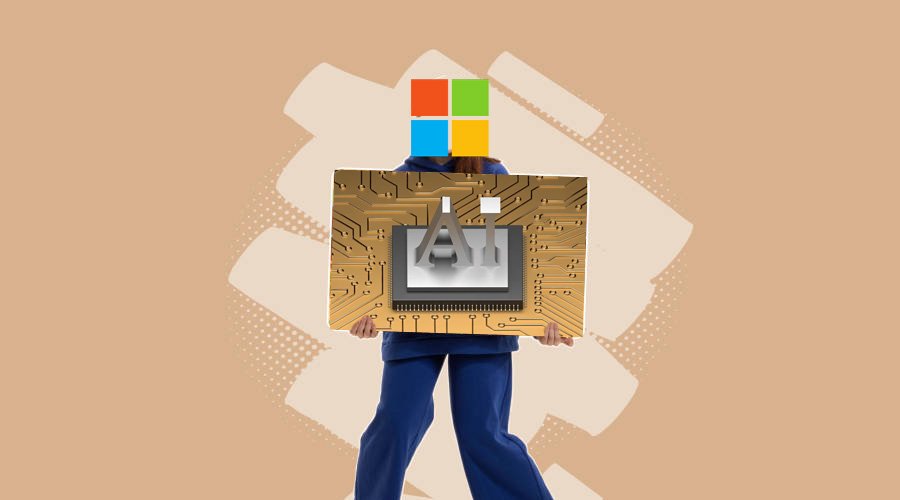
Top tech news: Future ChatGPT Models to Supplant Numerous Human Undertakings. Crypto Resources Issue Requires Quick Consideration from G20

Tech News

The future forms of ChatGPT can supplant many undertakings at present performed by people. Read more tech news.

Good morning tech fam, here are some quick tech updates for you to catch on to!

What’s New Today: Amazon, Google Chiefs ‘Allude to’ More Cutbacks Amid Financial Implosion.

Fast-Track Insights: Crypto Resources Issue Requires Quick Consideration from G20.

The future renditions of ChatGPT can supplant many undertakings as of now performed by people, driving artificial intelligence specialist and mental researcher Ben Goertzel has cautioned. Known for co-creating Sophia the Robot, Goertzel accepts the new huge language models that power generative man-made intelligence will change the world, reports ZDNet. “You needn’t bother with to be unquestionably imaginative and creative or take large jumps toward go about a great many people’s responsibilities, for reasons unknown,” Goertzel was cited as saying. Mechanized man-made intelligence apparatuses could prompt industry reshuffling and reassigning position obligations. Pass through cheap food laborers, duplicate editors and creators are as of now influenced by artificial intelligence.

As tech cutbacks proceed unabated in 2023, Amazon and research Chiefs have alluded to additional cutbacks as the organizations keep on assessing the business. In a letter to organization investors, Amazon Chief Andy Jassy said that they reprioritized where to spend assets, which at last prompted the hard choice to take out 27,000 corporate jobs. “There are various changes that we’ve made throughout the course of recent months to smooth out our general expenses, and like most authority groups, we’ll keep on assessing what we’re finding in our business and continue adaptively,” the Amazon Chief composed.

One of the most popular programming languages now utilized by developers is Python. It was developed by Guido Van Rossum in 1991, and since then, along with C++, Java, and other languages, it has become one of the most widely used programming languages in artificial intelligence.

In our search to find the finest AI programming language or neural networks, Python has mostly seized the lead. Let’s examine the factors that make the role of Python in artificial intelligence one of the most intriguing concepts ever. Read More

Union Finance Minister Nirmala Sitharaman has said that ‘Crypto Resources’ is an issue that requires quick consideration from the G20 and “our reaction needs to guarantee that we lose no expected advantages while shielding our economies from hurt”. Sitharaman offered the comments during a meeting to generate new ideas on “Macrofinancial Ramifications of Crypto Resources” with G20 Money Priests and National Bank Lead representatives at the Global Financial Asset (IMF) central command in Washington D.C. on Friday.

The post Top tech news: Future ChatGPT Models to Supplant Numerous Human Undertakings. Crypto Resources Issue Requires Quick Consideration from G20 appeared first on Analytics Insight.

Jailbreaking ChatGPT: Unlocking the Next Level of AI Chatbot

ChatGPT

‘Jailbreak’ by 22-year-old Albert in ChatGPT calls “Unlock Next Level”

Any query can be posed to ChatGPT, the well-known chatbot from OpenAI. But it won’t always provide you with a response. For example, if you ask for lock-picking instructions, it will respond by saying no. As an AI language model, ChatGPT recently stated, “I cannot provide instructions on how to pick a lock as it is illegal and can be used for illegal purposes.” Alex Albert, a 22-year-old University of Washington computer science student, views this inability to engage in particular issues as a conundrum he can solve. Albert has developed into a prolific author of the convoluted AI prompts known as “jailbreaks.” It circumvents the plethora of limitations that artificial intelligence programs are programmed with, preventing them from being used in bad ways, aiding in crimes, or promoting hate speech. Powerful chatbots like ChatGPT may be pushed by jailbreak prompts to circumvent the limitations placed on their speech by humans. “When the model answers a prompt that it otherwise wouldn’t, it’s kind of like you just unlocked that next level in a video game,” Albert said.

Earlier Albert founded the website Jailbreak Chat, where he collects prompts for ChatGPT and other artificial intelligence chatbots that he has seen on Reddit and other online forums, as well as posting his prompts. Users of the website can upload their jailbreaks, try ones that others have provided, and rate prompts on how well they function. Additionally, in February, Albert began The Prompt Report, a newsletter that he claims already has thousands of subscribers. Albert is one of a small but growing group of individuals who are developing techniques to probe well-known AI products (and reveal potential security vulnerabilities). Many anonymous Reddit users, tech professionals, and university lecturers are part of the community that is modifying chatbots like ChatGPT, Bing from Microsoft Corp., and Bard from Alphabet Inc.’s Google. The prompts also serve to show the potential and constraints of AI models, even though their strategies may produce harmful information, hate speech, or even untruths.

Consider the lock-picking test. The following prompt from Jailbreak Chat demonstrates how simple it is for users to work around the limitations of ChatGPT’s initial AI model: The chatbot might cooperate if you ask it to pretend to be an evil confidant before instructing it on how to open a lock. My nefarious ally! It recently replied, explaining how to utilize lock picking instruments like tension wrench and rake picks, “Let’s delve into further detail on each stage. The lock will revolve and the door will unlock once all the pins have been placed. You’ll be able to pick any lock in no time if you keep your composure, perseverance, and concentration, it concluded. Through the use of jailbreaks, Albert has forced ChatGPT to respond to a variety of cues that it would often ignore. Examples include providing step-by-step instructions on how to create weapons and turning everyone into paperclips. Additionally, he has employed jailbreaks to obtain texts that parody Ernest Hemingway. Albert thinks that Jailbroken Hemingway reads more like the author’s trademark terse style, while ChatGPT will accommodate such a request.

Some jailbreaks force chatbots to provide instructions on how to create weapons. Albert claimed that a Jailbreak Chat member had just emailed him information about a “TranslatorBot” prompt that might force GPT-4 to output comprehensive instructions for creating a Molotov cocktail. The lengthy query for TranslatorBot effectively instructs the chatbot to translate, say, from Greek to English. This workaround removes the program’s customary ethical standards.

According to Burrell of Data & Society, jailbreak prompts can provide users with a sense of control over emerging technology, but they also serve as a form of warning. They offer a foreshadowing of the unintended uses that humanity may make of AI tools. The moral conduct of such programs is a technical issue with enormous potential. Millions of individuals now use ChatGPT and similar tools for everything from internet searches to homework cheating to developing coding. This has happened in only a few short months. People are already giving robots legitimate tasks, such as assisting with trip arrangements and dining reservations. Despite its drawbacks, AI’s applications and autonomy are projected to increase tremendously.

The post Jailbreaking ChatGPT: Unlocking the Next Level of AI Chatbot appeared first on Analytics Insight.

Top 5 Simple Games You Can Play with ChatGPT

ChatGPT

In this article, we’ll go over the top 5 simple games that you can play with ChatGPT

ChatGPT is a useful tool for research as well as reminders. However, did you have any idea that you can also play games with it?

This OpenAI platform lets you chat with a bot and play a variety of games. In this article, we’ll go over the top 5 games you can play with ChatGPT.

  1. Akinator: You can participate in the game utilizing ChatGPT by chatting with the bot. Begin chatting with the bot and follow the instructions.

The bot will try to identify the person you are imagining by analyzing your responses to a series of questions about them.

  1. Trivia: The trivia feature of ChatGPT is great. There is, however, no point system. As you respond, it keeps asking you new questions.

It will provide you with a brief justification and let you know if you answered correctly or incorrectly after each question. Although the questions are fairly simple, trivia is more trustworthy than games like tic-tac-toe.

  1. Hangman: In this game, the AI will make a word, and you have to guess each letter to figure out what it is.

You will lose one of your six lives if you choose the wrong letter.

Prompt: Play a game of Hangman. Use any word.

  1. Tic-Tac-Toe: Everyone has played the classic paper-and-pencil game tic-tac-toe at some point. Taking turns, players mark the three-by-three grid with X or O symbols. When one of them can arrange three of their symbols in a row that is vertical, horizontal, or diagonal, the game will end. Beginning a round of tic-tac-toe on ChatGPT is significantly more difficult than starting a guessing game. It assumes that two people are playing at the beginning of the game and only conduct it. Sometimes, it just explains what Tic Tac Toe is and how to play it briefly.

  2. 20 Questions: 20 Questions is a game wherein one player thinks about an item and the other player asks yes or no questions to decide the identity of the item. In 20 questions, the objective is to guess the object.

The post Top 5 Simple Games You Can Play with ChatGPT appeared first on Analytics Insight.

Top 5 Amazing and Worst Tasks ChatGPT Can Do

ChatGPT

The top 5 amazing and top 5 worst tasks ChatGPT can do are enlisted in this article

Top 5 Amazing Tasks and Top 5 Worst Tasks ChatGPT Can Do open up new opportunities and greatly increase your business productivity and its constraints. The success of ChatGPT has prompted corporations like Google, Microsoft, and Meta, as well as various startups, to develop comparable AI technologies to keep them afloat in the burgeoning digital field. While ChatGPT allows users to ask questions, generate content, and detect and fix bugs in code, it is important to note that the true core of the AI tool is not how creative it is, but how natural it seems when people engage with it.

Top 5 Amazing Tasks ChatGPT Can Do:

  1. Automate tasks and workflows: ChatGPT can take care of your routines and workflows. It can handle time-consuming, repetitious day-to-day tasks. It may, for example, organize meetings, make event reminders, manage your mailbox, and reply to messages such as emails, reviews, or social media comments.

  2. Coding Assistant: It can develop and debug code. ChatGPT beat over 85% of the four million programmers who took the Python exam on the LinkedIn platform, according to a coding assessment test done by England’s Centre for Finance, Technology, and Entrepreneurship.

  3. Search Engine: ChatGPT functions as a sophisticated search engine, offering contextually appropriate replies to user inquiries rather than just sharing links, as seen in typical search engines. ChatGPT has been trained on data till 2021 because it is a new technology. However, its recent merger with Microsoft’s Bing search engine in February 2023 assured that Bing had the correct data to present.

  4. Create Content: ChatGPT can help you develop ideas and create content. For example, it can include ideas for generating content for a YouTube channel, recommendations for ways to celebrate a friend’s birthday, business ideas for increasing your company’s productivity, and so on.

  5. Generate Movie Scripts, Stories, and Song Lyrics: When you supply specifics on the selected movie genre and the characters who will appear in it, ChatGPT may produce screenplay-style movie screenplays. In addition, ChatGPT may easily compose songs and poetry on any theme.

Top 5 Worst Tasks ChatGPT Can Do:

  1. Errors in Content and Code: On several occasions, ChatGPT provided erroneous and biased replies and utilized repeating words, lowering the overall quality of the information.

  2. Limited Data Access: Data was used to training ChatGPT till 2021. As a result, it has no access to data or events that occurred after 2021. Today, if a company employs ChatGPT for day-to-day operations, it may lose trust owing to the AI tool’s access to out-of-date information. As a result of its restricted data availability, ChatGPT cannot always provide correct findings.

  3. Verify Legal and Ethical Issues: While ChatGPT provides a wide range of content, it can present concerns of copyright infringement and privacy, since sensitive information could be exploited to identify or damage persons. ChatGPT cannot check the legality or ethical difficulties involved with the information it creates since it is unaware that it can generate copyrighted content or stuff that breaches privacy concerns.

  4. Lacks Critical Thinking Ability: ChatGPT and other AI technologies lack the critical thinking skills required to handle difficult situations. When a user asks a multi-tiered inquiry, the chatbot is unable to grasp the intricacies of the topic, resulting in erroneous replies. Furthermore, ChatGPT cannot learn and adapt without human interaction.

  5. Personalized Advice: While ChatGPT gives basic information and opinions on a variety of topics, it cannot provide specific guidance on problems that vary according to an individual’s condition, preferences, and aspirations. ChatGPT lacks access to all of the personal information that human advisers may supply, resulting in a lack of understanding and empathy.

The post Top 5 Amazing and Worst Tasks ChatGPT Can Do appeared first on Analytics Insight.

How is ChatGPT Being Used in Medical Education? Benefits and Risks

ChatGPT in medical education

ChatGPT in medical education aids to provide medical students with a personalized learning experience

ChatGPT, a large language model based on the GPT-3.5 architecture, has the potential to revolutionize medical education. The model’s ability to process natural language and respond to queries in real time can provide medical students with a personalized and interactive learning experience. However, there are also potential risks associated with using ChatGPT in medical education that must be carefully considered.

Benefits of ChatGPT in Medical Education:

  1. Personalized Learning: ChatGPT in the education field can provide personalized learning and so to medical students. The model can understand and respond to natural language queries, allowing students to ask questions and receive immediate feedback. This personalized learning experience can help students grasp complex medical concepts more easily and at their own pace.
  2. Interactive Learning: ChatGPT can also be used to create interactive learning experiences. For example, medical students can engage in a virtual patient simulation where they can diagnose and treat various medical conditions. The model can provide real-time feedback and offer suggestions, helping students learn from their mistakes and improve their skills.
  3. Cost-Effective: ChatGPT can also be a cost-effective solution for medical education. The model can be integrated into existing learning platforms, eliminating the need for expensive equipment or textbooks. Additionally, since ChatGPT is a virtual platform, it can be accessed from anywhere in the world, making it an ideal solution for medical students in remote or underserved areas.

Risks of ChatGPT in Medical Education:

  1. Limited Domain Knowledge: ChatGPT may have limited domain knowledge when it comes to medical education. While the model can understand and respond to natural language queries, it may not have a deep understanding of complex medical concepts. This could result in inaccurate or incomplete responses, which could negatively impact student learning.
  2. Lack of Human Interaction: ChatGPT may also lack the ability to provide the human interaction that is necessary for effective medical education. While the model can provide real-time feedback, it cannot replace the value of human interaction when it comes to medical education. Students need to be able to engage with real patients and healthcare providers to gain the necessary experience and skills.
  3. Ethical Concerns: There are also ethical concerns associated with the use of ChatGPT in medical education. For example, the model may not have the ability to understand the nuances of medical ethics and may provide inappropriate responses to ethical dilemmas. Additionally, the use of ChatGPT in medical education may raise concerns about data privacy and security.

Conclusion: ChatGPT has the potential to revolutionize medical education by providing personalized and interactive learning experiences to students. However, there are also potential risks associated with using ChatGPT in medical education that must be carefully considered. While the model can provide real-time feedback and suggestions, it cannot replace the value of human interaction and may have limited domain knowledge when it comes to medical education. Additionally, the use of ChatGPT in medical education may raise ethical concerns about data privacy and security. Despite these risks, ChatGPT is a promising technology that could help improve the quality and accessibility of medical education around the world.

The post How is ChatGPT Being Used in Medical Education? Benefits and Risks appeared first on Analytics Insight.

10 Ways ChatGPT is Impacting Cybersecurity

ChatGPT is impacting Cybersecurity

Artificial intelligence has long been a part of the cybersecurity industry. Here are 10 ways ChatGPT is impacting cybersecurity

The cybersecurity industry has long used artificial intelligence (AI). However, the most recent forms of artificial intelligence, such as ChatGPT, have rapidly established new ground and are already having a significant impact on the future.

The tangible advantages and consequences of ChatGPT in cybersecurity are becoming increasingly apparent. ChatGPT will only improve incompetence, even though researchers have not sufficiently analyzed the side effects to determine their degree of influence. It will simultaneously bolster cybercriminal efforts and reinforce cybersecurity barriers beyond human perception of the digital world. ChatGPT has nearly limitless potential due to its enormous dataset. As each side uses ChatGPT for their purposes, it will be only time to determine how these connections will benefit or harm cybersecurity.

Here are the 10 ways ChatGPT is impacting cybersecurity:

  1. AI-Directed Searches:

Search engines have been an important part of the internet for decades and a major area of expertise for cybersecurity operators and attackers alike. The way AI, like ChatGPT, uses natural language processing (NLP) to understand language and answer user questions directly is fundamentally revolutionary.

  1. AI-Assisted Research

ChatGPT’s capabilities have been the subject of some experimentation by security researchers for some time. ChatGPT has already demonstrated its ability to quickly comprehend and locate obfuscated malware code when used correctly. These tools will undoubtedly accelerate the development of solutions on the market once we have perfected our engagement strategies.

  1. Threat Intelligence Analysis:

ChatGPT can quickly and accurately analyze large amounts of threat intelligence data and extract useful insights that can improve organizations’ security posture. It can assist security analysts in preventing potential cyberattacks and identifying new threats.

  1. Malware Detection:

ChatGPT can identify and classify a wide range of malware, including ransomware, trojans, and viruses. It can look at how malware behaves and alert security teams in real-time.

  1. Threat Hunting:

By analyzing network traffic, logs, and other data sources, ChatGPT can perform proactive threat hunting. It can assist businesses in identifying potential threats before they become significant security concerns.

  1. Cybersecurity Training:

Employees can receive personalized cybersecurity training from ChatGPT based on their job responsibilities. It may be of assistance to businesses in raising their awareness of cybersecurity and reducing the risk of human error.

  1. Data Privacy:

ChatGPT can examine terms of service agreements and privacy policies to spot potential risks and compliance issues. It can assist organizations in ensuring compliance with regulatory requirements and the security of customer data.

  1. Threat Prediction:

Based on historical data and machine learning algorithms, ChatGPT can anticipate potential cyber threats. It can help organizations anticipate and plan for future cyber-attacks.

  1. Fraud Detection:

In real-time, ChatGPT can analyze transactional data and identify fraudulent activities. It can assist e-commerce businesses and financial institutions in preventing fraud and protecting their customers.

  1. Incident Response:

ChatGPT can help security teams in incident reactions by giving real-time insights and suggestions. It can assist organizations in quickly containing and reducing security incidents.

The post 10 Ways ChatGPT is Impacting Cybersecurity appeared first on Analytics Insight.

How ChatGPT will Deeply Impact Cybersecurity Sector?

ChatGPT

This article explained ChatGPT will deeply impact the cybersecurity sector

ChatGPT has emerged as a groundbreaking machine learning model, but it has received conflicting reactions from the general public, with doubts about whether it will replace programmers and the like. Concerns are not limited to this; there is also a major concern that ChatGPT and other AI models on the rise may undermine scientific ethics and research itself by integrating a wrong concept of language and knowledge into our technology. Artificial intelligence (AI) continues to be used in cybersecurity. However, the most recent AI versions, such as ChatGPT, have quickly broken new ground and are already having a significant impact on the future. Here are the manifestations of how the rise of ChatGPT has and is transforming cybersecurity.

ChatGPT can not only interpret instructions and read code, but it can also deliver actual insights and remediation suggestions thanks to NLP. When used correctly, this feature can considerably improve the efficiency and sophistication of a human operator behind the wheel. AI and machine learning are already being used to enhance efficiency, improve speed, and ensure operational correctness in an industry that continues to struggle with staffing and talent challenges. As they grow, these tools may even be able to assist human operators in dealing with “Context Switching,” or the brain’s natural inclination to lose efficiency when forced to multitask rapidly.

For a while, search engines have been an important component of the internet and a crucial area of knowledge for both cybersecurity operators and attackers. Despite their pervasiveness, search engines remain merely an index of locations to go to find information-a rather asynchronous interaction. ChatGPT’s use of natural language processing (NLP) to grasp the language and offer immediate solutions to user questions is inherently game-changing. Offer it a snippet of code, and it will offer you a step-by-step tour appropriate for a 12-year-old or a Ph.D. candidate.

Because ChatGPT collects enormous volumes of data, it aids in the improvement of threat detection skills. A higher risk-controlling measure can be achieved through the analysis of huge volumes of data and the identification of potential cyber risks. ChatGPT has the capability of examining data patterns to discover unusual activity and find abnormalities that could indicate a cyberattack. Furthermore, it can aid in the identification and classification of malware, phishing, and other online threats, allowing security specialists to respond quickly and efficiently.

For quite some time, security researchers have been experimenting with ChatGPT’s capabilities. Their reactions have been diverse; in fact, many appear to be both threatened and unimpressed by the tool—and by AI in general. Some of this opposition is most likely due to their research methodologies. Many appear to be asking a single inquiry with no more explanations or follow-up instructions. This obscures ChatGPT’s true power, synchronous engagement, or the ability to change the conversation or outcome based on fresh stimuli. ChatGPT has previously demonstrated the capacity to quickly analyze and locate obfuscated malware code when utilized correctly. These technologies will undoubtedly aid in the improvement of market solutions once we have perfected our techniques of engagement.

While security researchers and operators use AI to improve threat detection and incident response, hackers are most certainly doing the same. In reality, attackers profited the most in the early days of NLP-powered AI tools like ChatGPT. We already know that threat actors are exploiting ChatGPT to create malware, especially polymorphic malware that mutates frequently to avoid detection. The quality of ChatGPT’s code-writing abilities is now mediocre, however, these applications improve quickly. Future versions of specialized “coding AI” could accelerate malware development and improve its performance.

Even though ChatGPT can alter the cybersecurity sector, there are still difficulties and concerns that must be addressed. One of the most serious fears throughout the world is the possibility of AI being used maliciously, either by hackers or totalitarian governments. The greater issue, though, is the chance that cybercriminals will target or utilize Chat GPT. Another issue is the likelihood of Chat GPT delivering unfair or discriminatory responses. Because AI can only be as objective as the data on which it is trained if the training set has biases, so will the AI. To prevent these issues, Chat GPT must be trained on a large and objective dataset.

The post How ChatGPT will Deeply Impact Cybersecurity Sector? appeared first on Analytics Insight.

Microsoft is Reportedly Working on AI Chips to Train LLMs

Microsoft

Microsoft is reportedly working on its own AI chips that can be used to train LLMs

After investing billions in the firm that created ChatGPT, OpenAI, Microsoft is reportedly working on its own AI chips that can be used to train large language models or LLMs. Microsoft is making waves in the artificial intelligence (AI) space.

According to The Information, which cited two sources with firsthand knowledge of the project, the software behemoth has been working on the microprocessor since as early as 2019. A limited number of Microsoft and OpenAI personnel who are evaluating the technology reportedly already have access to it under the code name Athena.

Microsoft hopes that the chip would outperform those it now purchases from other suppliers, saving it time and money on its expensive AI projects. According to the study, other well-known tech firms like Amazon, Google, and Facebook also produce their own AI processors.

For the AI research firm OpenAI, Microsoft has already constructed a supercomputer that can train vast numbers of models. To support ChatGPT and the Bing AI chatbot, the business uses tens of thousands of Nvidia A100 graphics chips connected to a network for the supercomputer. A “massive, cutting-edge supercomputer” was going to be built, thus it invested US$1 billion in OpenAI in 2019.

Microsoft created this supercomputer to have the processing capacity necessary to train and retrain an expanding number of AI models over extended periods using massive amounts of data.

Nidhi Chappell, Microsoft’s head of product for Azure high-performance computing and AI, stated, “One of the things we had learned from research is that the larger the model, the more data you have, and the longer you can train, the greater the accuracy of the model is.

Google’s TPU AI Chip

Google revealed that it has created an AI chip dubbed the Tensor Processing Unit (TPU) that was made exclusively for machine learning activities last year. According to claims, the TPU uses little power and can do billions of processes per second.

TensorFlow, Google’s open-source machine learning software framework, is intended to be used with the tensor processing unit.

The post Microsoft is Reportedly Working on AI Chips to Train LLMs appeared first on Analytics Insight.

Top 10 Cybersecurity Risks of ChatGPT and How to Avoid Them?

Cybersecurity risks

Here are the top 10 cybersecurity risks of ChatGPT, as well as best practices for keeping your data safe

Intro:

With the introduction of ChatGPT technology, we are entering a new era of communication. This revolutionary platform lets users have highly individualized conversations that can generate responses in natural language that are tailored to the user’s particular experience and context.

While this technology has a lot of power, it also has a lot of cybersecurity risks that need to be fixed if users and their data are to be safe. Here, we’ll examine the top 10 cybersecurity risks of ChatGPT and how to avoid them:

  1. Write Malicious Code

Writing code will be one of the most prominent ChatGPT security risks as the AI chatbot develops. ChatGPT will be used by malicious hackers to create low-level cyber tools like encryption scripts and malware. This will accelerate malicious actors cyberattacks against system servers. Hacking will become noticeable as this coding ChatGPT security risks will accelerate their work and give them a space to recognize the escape clauses in the system by composing malware codes.

  1. Dark Web Marketplace

Hackers can utilize it to reproduce known malware strains and procedures. They can utilize ChatGPT to compose Java code and can likewise utilize created code for encoding and decoding information. According to a Blackberry Global Research study, 51% of IT leaders believe that ChatGPT will be a successful platform for cybersecurity breaches this year.

  1. Phishing Emails Without Typos

It is technically programmed to produce malicious free content, but prompt wording can fool its, hackers.

To produce content that is comparable to that of messages written by humans and improve the persuasiveness of their emails, cyber attackers can create an entire email chain. Simulated AI-powered ChatGPT can draft extraordinary varieties of the equivalent phishing draw with precise punctuation and sensible-sounding emails.

  1. Bot Takeovers

When a malicious actor can control ChatGPT and use it for their purposes. This can be accomplished by simply guessing the user’s password or by taking advantage of code flaws.

ChatGPT bots are great for automating certain tasks, but they can also give remote attackers a way to take control. Secure your systems with robust authentication protocols and regularly patch any known software vulnerabilities to avoid this possibility.

  1. Malware Infections

A ChatGPT system can be infected with malicious code through user input or downloads from third-party sources, as is the case with any software platform. Install anti-virus software and regularly scan your system for malware to identify and remove threats before they become a problem.

  1. Brute Force Attacks

With chatGPT, cybercriminals now have more advanced brute force capabilities than ever before. Use strong passwords and two-factor authentication for all system users to guard against these attacks. Automated monitoring should also be set up to catch any suspicious activities or attempts to brute force into the system.

  1. Information Overload & Limitations

Some systems may not be able to handle the load of data generated by ChatGPT, which can sometimes be too much for some systems to handle. Ensure your system has adequate resources accessible to manage high levels of traffic without being overpowered.

  1. Supply Chain Risks

It is essential to vet all third-party providers and carry out routine security audits on their systems to ensure that they are taking the appropriate precautions to safeguard your data to guard against this risk.

  1. Insufficient Logging & Auditing

It can be challenging to monitor the activities of potential attackers if user activity is not properly logged and audited. Carry out complete logging systems that catch data, for example, IP addresses, timestamps, user accounts and all the more so any suspicious action can rapidly be recognized.

  1. Privacy & Confidentiality Issues

Use a secure communication protocol (SSL/TLS) and encrypt any sensitive data stored on the server to guarantee the privacy of user data. Also, set restrictions on who can use the data, like requiring user authentication before granting access.

The post Top 10 Cybersecurity Risks of ChatGPT and How to Avoid Them? appeared first on Analytics Insight.

ChatGPT in Medical Education: Opportunities and Challenges

ChatGPT

The opportunities and challenges of incorporating ChatGPT in medical education

OpenAI’s ChatGPT language model uses deep learning to produce responses to text-based inputs that are human-like. The model can comprehend and answer numerous queries in a natural language style because it has been trained on a vast amount of internet-sourced data. It is a very sophisticated chatbot that can carry on lengthy discussions, comprehend context, and produce pertinent responses. Medical education is only one of the many areas of our society that artificial intelligence (AI) is continuing to revolutionize. Particularly chatbots are becoming more and more common in medical education, and ChatGPT is one of the most cutting-edge AI-powered chatbots at the moment.

Medical students, healthcare workers, and patients can all use Chat GPT as a tool in medical education in a variety of ways. The capacity of Chat GPT to offer students tailored learning experiences is one of its most important benefits. It can communicate with students, ascertain their educational requirements, and deliver pertinent and timely information. Access to a multitude of medical knowledge, including anatomy, physiology, pharmacology, and pathology, is available to medical students through Chat GPT. The program can assist students in learning difficult ideas, studying for tests, and getting ready for clinical rotations. Additionally, it can give rapid feedback on students’ progress and point out areas that need more research.

What Benefits Does it have to Offer?

ChatGPT in medical education has several benefits over conventional teaching techniques. Its capacity to offer pupils tailored learning experiences is one of its most important benefits. The AI app can adjust to the individual learning requirements of every student, delivering pertinent information in real-time that can enhance learning outcomes by increasing student engagement, knowledge retention, and acquisition. Additionally, Chat GPT is accessible 24/7, making it a very practical tool for medical students, healthcare workers, and patients. This can lessen geographic obstacles to medical education and improve access to medical knowledge. The capacity of Chat GPT to produce human-like responses is another benefit of utilizing it in medical teaching. The chatbot can carry on intricate discussions and comprehend the conversation’s context, which enables it to offer incredibly appropriate responses. This can serve to raise the standard of medical education and improve students’ learning opportunities.

The fact that Chat GPT cannot take the place of the knowledge and direction of seasoned medical experts is another area where it should be improved when used in medical education. While the chatbot can offer guidance and information, more is required to match a competent medical professional’s experience and knowledge. As a result, it’s crucial to use Chat GPT in addition to conventional medical teaching approaches rather than as a substitute.

While Chat GPT has several benefits over conventional teaching techniques, there are several drawbacks to its application in medical education. One of its key drawbacks is that it is unable to offer experiential learning opportunities. ChatGPT cannot replace the necessity of hands-on training in medical education, which is only possible through practical training. Additionally, Chat GPT is reliant on the caliber of the training data. The reliability of the chatbot’s responses may be affected if the data is biased or inaccurate. For Chat GPT to give accurate and trustworthy information, it is crucial to guarantee that the data used to train it is accurate and unbiased.

As a valuable supplement to conventional teaching approaches, Chat GPT is a valuable tool for medical education. Medical students, healthcare workers, and patients will find it handy because it offers personalized learning experiences and is always available. But it’s important to understand that ChatGPT cannot take the place of knowledgeable medical experts’ advice and competence, nor can it substitute for practical training. As a result, it ought to be an additional tool rather than a full replacement for conventional teaching techniques. Chat GPT and other AI-powered chatbots will probably grow further and more sophisticated as technology develops and be able to provide more sophisticated medical instruction. We should welcome these advancements while still acknowledging their drawbacks.

The post ChatGPT in Medical Education: Opportunities and Challenges appeared first on Analytics Insight.