Adobe Unveils World’s First Large-Scale GAN-based Model for Video Super-Resolution 

In a recent breakthrough, Adobe released VideoGigaGAN, a new generative AI model, capable of upscaling videos while removing temporal flickering and blurriness.

In what could be a game-changer for video upscaling, researchers addressed the problem of current video super-resolution (VSR) models producing blurrier outputs while preserving temporal consistency.

They proposed using a GAN-based approach as opposed to a regression-based approach, in turn creating the world’s first large-scale GAN-based model for VSR.

“VSR has two main challenges. The first is to maintain temporal consistency across output frames. The second challenge is to generate high-frequency details in the upsampled frames,” said Yiran Xu, one of the researchers.

However, according to Xu, most VSR models have only addressed maintaining temporal consistency.

Several big tech companies, including Microsoft and Intel, have released VSR models over the past couple of years. Recently, NVIDIA and AMD have more notably released DLSS 3 and FSR 3, respectively, both promising video upscaling capabilities using AI.

While the two compete in the gaming division, Adobe has reportedly delivered a model capable of upscaling videos up to 8x, i.e. from 128×128 to 1024×1024 resolution.

Problems with current VSR models

As stated by the researchers, a significant problem with VSR models is the quality of the upscaled video. They said that upscaled videos tended to be on the blurrier side, though all major VSR models addressed temporal consistency.

Users reported a similar problem with NVIDIA’s DLSS, which struggles with real-life videos.

“It’s a bit of a hit or miss, with the most noticeable artefact being smearing or a Vaseline-like filter on human subjects kinda like those touch-up camera filters that Chinese Android OEMs like to include in their camera app,” a user reported on Reddit.

This is understandable. NVIDIA’s DLSS and AMD’s FSR primarily focus on improving frame rates and image quality specifically for gamers. While DLSS can get its inputs directly from the game engine, it struggles with getting these same inputs from a regular video that lacks that kind of data.

In continuation with NVIDIA’s DLSS capabilities, the American company also released its own VSR model specifically for upscaling videos on Google Chrome and Microsoft Edge last year.

However, these came with their own set of criticisms. The most notable being that while NVIDIA’s VSR model generally did a good job, it struggled with fast-moving videos.

“What we can say is that slow-moving videos (like NVIDIA’s samples) provide the best results, while faster-paced stuff like sports is more difficult, as the frame-to-frame changes can be quite significant,” said Jarred Walton of Tom’s Hardware.

Similarly, AMD released its own video upscaling algorithm to compete with NVIDIA’s VSR model. However, whether this actually uses AI is unknown and general consensus is yet to be solidified, as it was only released in January this year.

What’s the catch?

Coming back to VideoGigaGAN, initial reactions seem exciting, especially as it promises much more than Topaz Video AI delivers.

“Topaz is really weak, it’s made for like clean 720p video that can upscale to max 2x before it’s ruined by artefacts (sic),” another Reddit user said. This is something to look forward to when Adobe makes VideoGigaGAN available to its users.

With Adobe promising the ability to upscale 8x, whether it actually delivers on this front is yet to be seen since we only have sample videos to go by. Real-time use of the model could paint a completely different picture of its capabilities.

Yeah, blew my mind when I saw it

— Dreaming Tulpa 🥓👑 (@dreamingtulpa) April 22, 2024

Some have even likened it to popular sci-fi tech like CSI’s near-impossible enhanced capabilities or even Deckard’s Photo Inspector in Blade Runner.

The real-life applications are obvious as well, from upscaling historical videos to aiding investigations reliant on blurry CCTV footage. Though, the debate on whether AI-upscaled videos should be permitted as evidence in a court of law is still raging on.

In terms of Adobe itself, the model could be integrated into Premiere Pro for users to upscale their own footage, or make sure that all their raw video is of a consistent quality.

However, that is still a while away as the researchers admit that the model suffers when it comes to longer videos. In particular, they specify that videos of over 200 frames are difficult to upscale using the current model.

VideoGigaGAN: Towards Detail-rich Video Super-Resolution
Pretty impressive results!https://t.co/9GGqfDB8ew pic.twitter.com/2ZxpDO6S5S

— Ömer Karışman (@okarisman) April 23, 2024

“Additionally, our model does not perform well in handling small objects, such as text and characters, as the information pertaining to these objects is significantly lost in the LR video input,” they said.

However, if these are solved, Adobe could be leagues ahead of competitors in achieving near-perfect VSR capabilities.

In the meantime, Adobe has released the latest version of its creative generative AI models, Firefly Image 3.

The post Adobe Unveils World’s First Large-Scale GAN-based Model for Video Super-Resolution appeared first on Analytics India Magazine.


New Relic Enhances AI Monitoring, Industry’s First APM for AI

New Relic recently announced the general availability of New Relic AI monitoring with a suite of powerful new features to meet the evolving needs of organizations developing AI applications.

New features include in-depth AI response tracing insights with real-time user feedback and model comparison to help drive continuous improvement of AI application performance, quality, and cost—all while ensuring data security and privacy.

With 60+ integrations, New Relic AI monitoring is one of the most comprehensive solutions that helps organisations find the root cause of AI application issues faster, further their adoption of AI, and support them at every stage of their AI journey.

“Based on my conversations with CIOs, CTOs, and executives across our customer base, it is clear that every company is thinking about how to scale their business with AI.

“Adopting AI can be costly and introduce complexity into their stack. IT and technology leaders are turning to New Relic because observability is essential to help them confidently navigate the exciting future of AI, optimize performance and quality, and control costs, ultimately delivering exceptional customer experiences,” said New Relic Chief Customer Officer Arnie Lopez.

Organisations are eager to adopt AI to offer better digital experiences to their customers. According to Gartner, over 80% of enterprises will have used generative AI APIs or deployed generative AI-enabled applications by 2026.

While there is a strong and growing demand for AI, organizations struggle to bring AI into their tech stacks because of the complexity it introduces. New Relic AI monitoring directly addresses this challenge.

It makes it easy for organizations to manage the complexities of their AI stack by providing a unified view of their entire AI ecosystem alongside the rest of their performance data.

The post New Relic Enhances AI Monitoring, Industry’s First APM for AI appeared first on Analytics India Magazine.

Jensen Huang Personally Delivers First NVIDIA DGX H200 to OpenAI 

NVIDIA CEO Jensen Huang personally hand-delivered the first NVIDIA DGX H200 to OpenAI. In a post shared by Greg Brockman, president of OpenAI, Huang is seen posing with Brockman,and chief Sam Altman, with the DGX H200 in the middle.

“First @NVIDIA DGX H200 in the world, hand-delivered to OpenAI and dedicated by Jensen “to advance AI, computing, and humanity”, wrote Brockman on X.

First @NVIDIA DGX H200 in the world, hand-delivered to OpenAI and dedicated by Jensen "to advance AI, computing, and humanity": pic.twitter.com/rEJu7OTNGT

— Greg Brockman (@gdb) April 24, 2024

Huang delivering the first GPU to OpenAI appears to have become a new tradition. Back in 2016, Huang donated the first DGX-1 AI supercomputer to OpenAI, in support of democratizing AI technology. At that time, Elon Musk was the one who received it.

Would like to thank @nvidia and Jensen for donating the first DGX-1 AI supercomputer to @OpenAI in support of democratizing AI technology

— Elon Musk (@elonmusk) August 9, 2016

The new GPU could be a much-needed addition to OpenAI’s arsenal as the organization is currently working on GPT-5 and plans to make Sora publicly available this year.

NVIDIA introduced DGX H200 last year. The upgraded GPU, succeeding the highly sought-after H100, boasts 1.4 times more memory bandwidth and 1.8 times more memory capacity. These enhancements significantly enhance its capability to manage demanding generative AI tasks.

Moreover, the H200 has a faster memory specification known as HBM3e, elevating its memory bandwidth to 4.8 terabytes per second from the H100’s 3.35 terabytes per second. Its total memory capacity also rises to 141GB, up from the 80GB of its predecessor.

“To create intelligence with generative AI and HPC applications, vast amounts of data must be efficiently processed at high speed using large, fast GPU memory,” said Ian Buck, vice president of hyperscale and HPC at NVIDIA. “With NVIDIA H200, the industry’s leading end-to-end AI supercomputing platform just got faster to solve some of the world’s most important challenges.”

NVIDIA also launched a new AI supercomputer with H200. The NVIDIA DGX H200 utilises NVLink interconnect technology alongside the NVLink Switch System, merging 256 H200 superchips into a single GPU unit.

The setup achieves an impressive 1 exaflop of performance and offers 144 terabytes of shared memory, marking a significant leap from the previous generation NVIDIA DGX A100 introduced in 2020, which had considerably less memory.

The post Jensen Huang Personally Delivers First NVIDIA DGX H200 to OpenAI appeared first on Analytics India Magazine.

Parloa, a conversational AI platform for customer service, raises $66M

Parloa, a conversational AI platform for customer service, raises $66M Paul Sawers 1 day

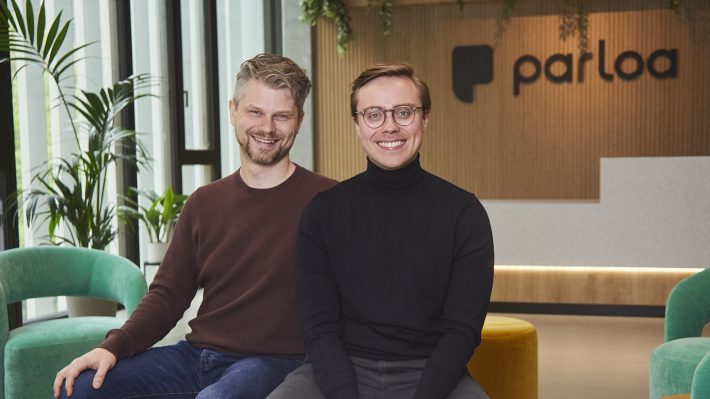
Conversational AI platform Parloa has nabbed $66 million in a Series B round, a year after it raised $21 million from a swathe of European investors to propel its international growth.

The German company is focusing on the U.S. in particular, and last year opened an office in New York, too. It says this hub helped it sign up “several Fortune 200 companies” in the region. For the latest round, Parloa has secured Altimeter Capital as lead backer, a U.S.-based VC firm notable for its investments in the likes of Uber, Airbnb, Snowflake, Twilio and HubSpot.

AI and automation is not new in customer service, but with a new wave of large language models (LLMs) and generative AI infrastructure, truly smart “conversational” AI (i.e., not dumb chatbots) is again firmly in investors’ focus. Established players continue to raise substantial sums — Kore.ai, for example, closed a chunky $150 million round a few months ago from big-name backers such as Nvidia. Elsewhere, entrepreneur and former Salesforce CEO Bret Taylor, in February launched a new customer experience platform called Sierra that’s built around the concept of “AI agents,” and has raised more than $100 million from venture investors.

Parloa is well positioned to capitalize on the “AI with everything” hype that has hit fever pitch these past couple of years as companies seek new ways to improve efficiency through automation.

Founded in 2018, the startup has already secured high-profile customers such as European insurance giant Swiss Life and sporting goods retailer Decathlon, both of which use Parloa’s platform to automate customer communications, including emails and instant messaging.

However, “voice” is where co-founder and CEO Malte Kosub reckons Parloa stands out.

“Our strategy has always been centered around ‘voice first,’ the most critical and impactful facet of the customer experience,” Kosub told TechCrunch over email. “As a result, Parloa’s AI-based voice conversations sound more human than any other solution.”

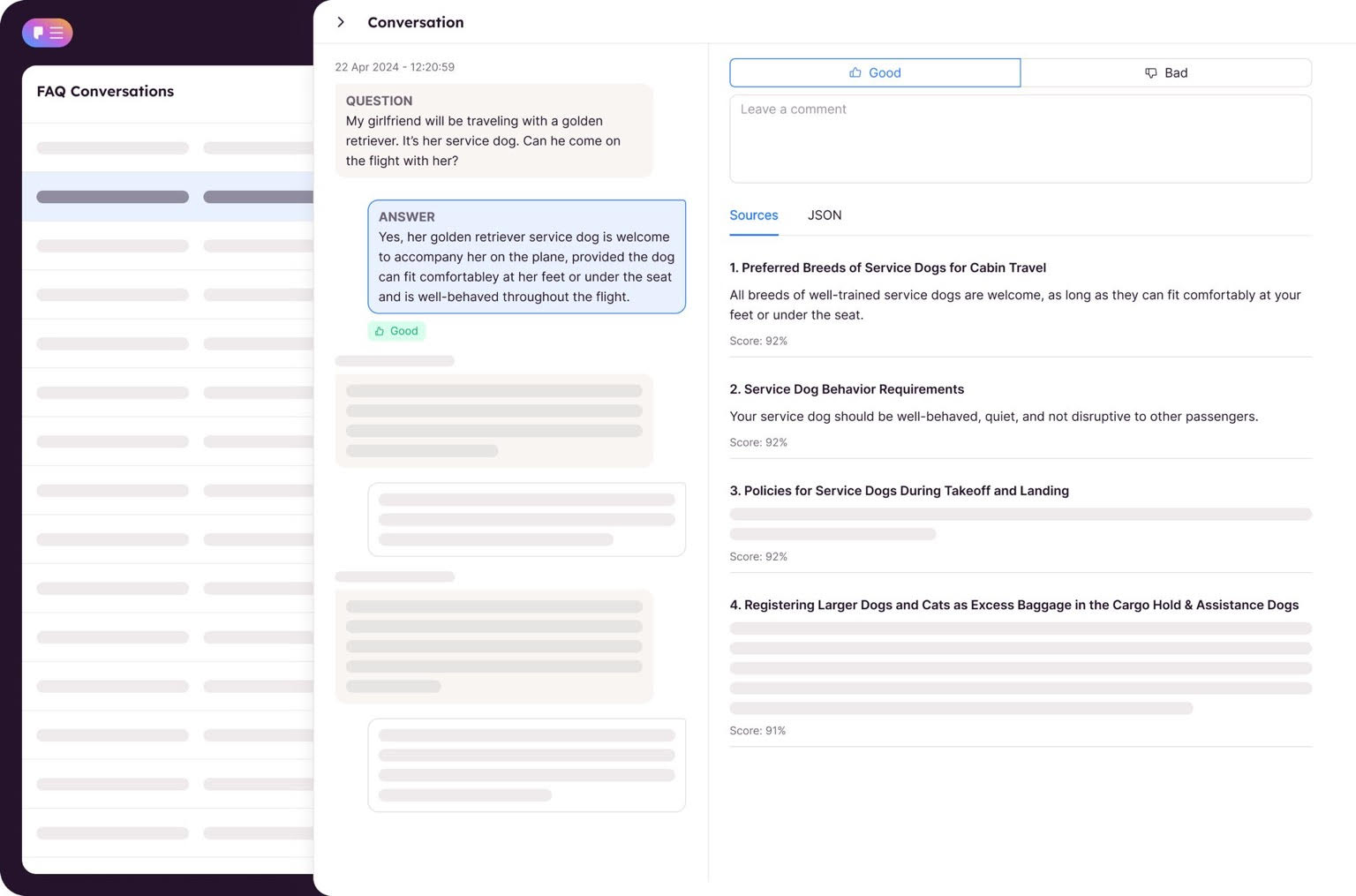
Parloa platform

Parloa platform. Image Credits: Parloa

Co-founder and CTO Stefan Ostwald says that AI has been a core part of Parloa’s DNA since its inception six years ago. The company uses a mix of proprietary and open source LLMs to train models for speech-to-text use cases.

“We’ve trained a variety of speech-to-text models on phone audio quality and customer service use cases. We’ve developed a custom telephony infrastructure to minimize latency — a key challenge in voice automation — as well as a proprietary LLM agent framework for customer service,” he said.

Parloa had previously raised around $25 million, the bulk of which arrived via its Series A round last year. Now with another $66 million in the bank, it’s well-financed to double down on both its European and U.S. growth. Kosub noted that the company has tripled its revenue in each of the past three years.

“We successfully entered the U.S. market in 2023. We’ve always had confidence in the excellence and competitiveness of our product, but the overwhelming and rapid success it achieved in the U.S. surpassed everyone’s expectations,” Kosub said.

Aside form lead investor Altimeter, Parloa’s Series B saw checks from EQT Ventures, Newion, Senovo, Mosaic Ventures and La Familia Growth. Today’s funding brings the company’s total capital raised to $98 million, following its $21 million Series A, which was led by EQT Ventures, in 2023.

Snowflake releases a flagship generative AI model of its own

Snowflake releases a flagship generative AI model of its own Kyle Wiggers 20 hours

All-around, highly generalizable generative AI models were the name of the game once, and they arguably still are. But increasingly, as cloud vendors large and small join the generative AI fray, we’re seeing a new crop of models focused on the deepest-pocketed potential customers: the enterprise.

Case in point: Snowflake, the cloud computing company, today unveiled Arctic LLM, a generative AI model that’s described as “enterprise-grade.” Available under an Apache 2.0 license, Arctic LLM is optimized for “enterprise workloads,” including generating database code, Snowflake says, and is free for research and commercial use.

“I think this is going to be the foundation that’s going to let us — Snowflake — and our customers build enterprise-grade products and actually begin to realize the promise and value of AI,” CEO Sridhar Ramaswamy said in press briefing. “You should think of this very much as our first, but big, step in the world of generative AI, with lots more to come.”

An enterprise model

My colleague Devin Coldewey recently wrote about how there’s no end in sight to the onslaught of generative AI models. I recommend you read his piece, but the gist is: Models are an easy way for vendors to drum up excitement for their R&D and they also serve as a funnel to their product ecosystems (e.g. model hosting, fine-tuning and so on).

Arctic LLM is no different. Snowflake’s flagship model in a family of generative AI models called Arctic, Arctic LLM — which took around three months, 1,000 GPUs and $2 million to train — arrives on the heels of Databricks’ DBRX, a generative AI model also marketed as optimized for the enterprise space.

Snowflake draws a direct comparison between Arctic LLM and DBRX in its press materials, saying Arctic LLM outperforms DBRX on the two tasks of coding (Snowflake didn’t specify which programming languages) and SQL generation. The company said Arctic LLM is also better at those tasks than Meta’s Llama 2 70B (but not the more recent Llama 3 70B) and Mistral’s Mixtral-8x7B.

Snowflake also claims that Arctic LLM achieves “leading performance” on a popular general language understanding benchmark, MMLU. I’ll note, though, that while MMLU purports to evaluate generative models’ ability to reason through logic problems, it includes tests that can be solved through rote memorization, so take that bullet point with a grain of salt.

“Arctic LLM addresses specific needs within the enterprise sector,” Baris Gultekin, head of AI at Snowflake, told TechCrunch in an interview, “diverging from generic AI applications like composing poetry to focus on enterprise-oriented challenges, such as developing SQL co-pilots and high-quality chatbots.”

Arctic LLM, like DBRX and Google’s top-performing generative model of the moment, Gemini 1.5 Pro, is a mixture of experts (MoE) architecture. MoE architectures basically break down data processing tasks into subtasks and then delegate them to smaller, specialized “expert” models. So, while Arctic LLM contains 480 billion parameters, it only activates 17 billion at a time — enough to drive the 128 separate expert models. (Parameters essentially define the skill of an AI model on a problem, like analyzing and generating text.)

Snowflake claims that this efficient design enabled it to train Arctic LLM on open public web data sets (including RefinedWeb, C4, RedPajama and StarCoder) at “roughly one-eighth the cost of similar models.”

Running everywhere

Snowflake is providing resources like coding templates and a list of training sources alongside Arctic LLM to guide users through the process of getting the model up and running and fine-tuning it for particular use cases. But, recognizing that those are likely to be costly and complex undertakings for most developers (fine-tuning or running Arctic LLM requires around eight GPUs), Snowflake’s also pledging to make Arctic LLM available across a range of hosts, including Hugging Face, Microsoft Azure, Together AI’s model-hosting service and enterprise generative AI platform Lamini.

Here’s the rub, though: Arctic LLM will be available first on Cortex, Snowflake’s platform for building AI- and machine learning-powered apps and services. The company’s unsurprisingly pitching it as the preferred way to run Arctic LLM with “security,” “governance” and scalability.

“Our dream here is, within a year, to have an API that our customers can use so that business users can directly talk to data,” Ramaswamy said. “It would’ve been easy for us to say, ‘Oh, we’ll just wait for some open source model and we’ll use it. Instead, we’re making a foundational investment because we think [it’s] going to unlock more value for our customers.”

So I’m left wondering: Who’s Arctic LLM really for besides Snowflake customers?

In a landscape full of “open” generative models that can be fine-tuned for practically any purpose, Arctic LLM doesn’t stand out in any obvious way. Its architecture might bring efficiency gains over some of the other options out there. But I’m not convinced that they’ll be dramatic enough to sway enterprises away from the countless other well-known and -supported, business-friendly generative models (e.g. GPT-4).

There’s also a point in Arctic LLM’s disfavor to consider: its relatively small context.

In generative AI, context window refers to input data (e.g. text) that a model considers before generating output (e.g. more text). Models with small context windows are prone to forgetting the content of even very recent conversations, while models with larger contexts typically avoid this pitfall.

Arctic LLM’s context is between ~8,000 and ~24,000 words, dependent on the fine-tuning method — far below that of models like Anthropic’s Claude 3 Opus and Google’s Gemini 1.5 Pro.

Snowflake doesn’t mention it in the marketing, but Arctic LLM almost certainly suffers from the same limitations and shortcomings as other generative AI models — namely, hallucinations (i.e. confidently answering requests incorrectly). That’s because Arctic LLM, along with every other generative AI model in existence, is a statistical probability machine — one that, again, has a small context window. It guesses based on vast amounts of examples which data makes the most “sense” to place where (e.g. the word “go” before “the market” in the sentence “I go to the market”). It’ll inevitably guess wrong — and that’s a “hallucination.”

As Devin writes in his piece, until the next major technical breakthrough, incremental improvements are all we have to look forward to in the generative AI domain. That won’t stop vendors like Snowflake from championing them as great achievements, though, and marketing them for all they’re worth.

UiPath Launches New Data Centers in Pune, Chennai to Expand India Footprint

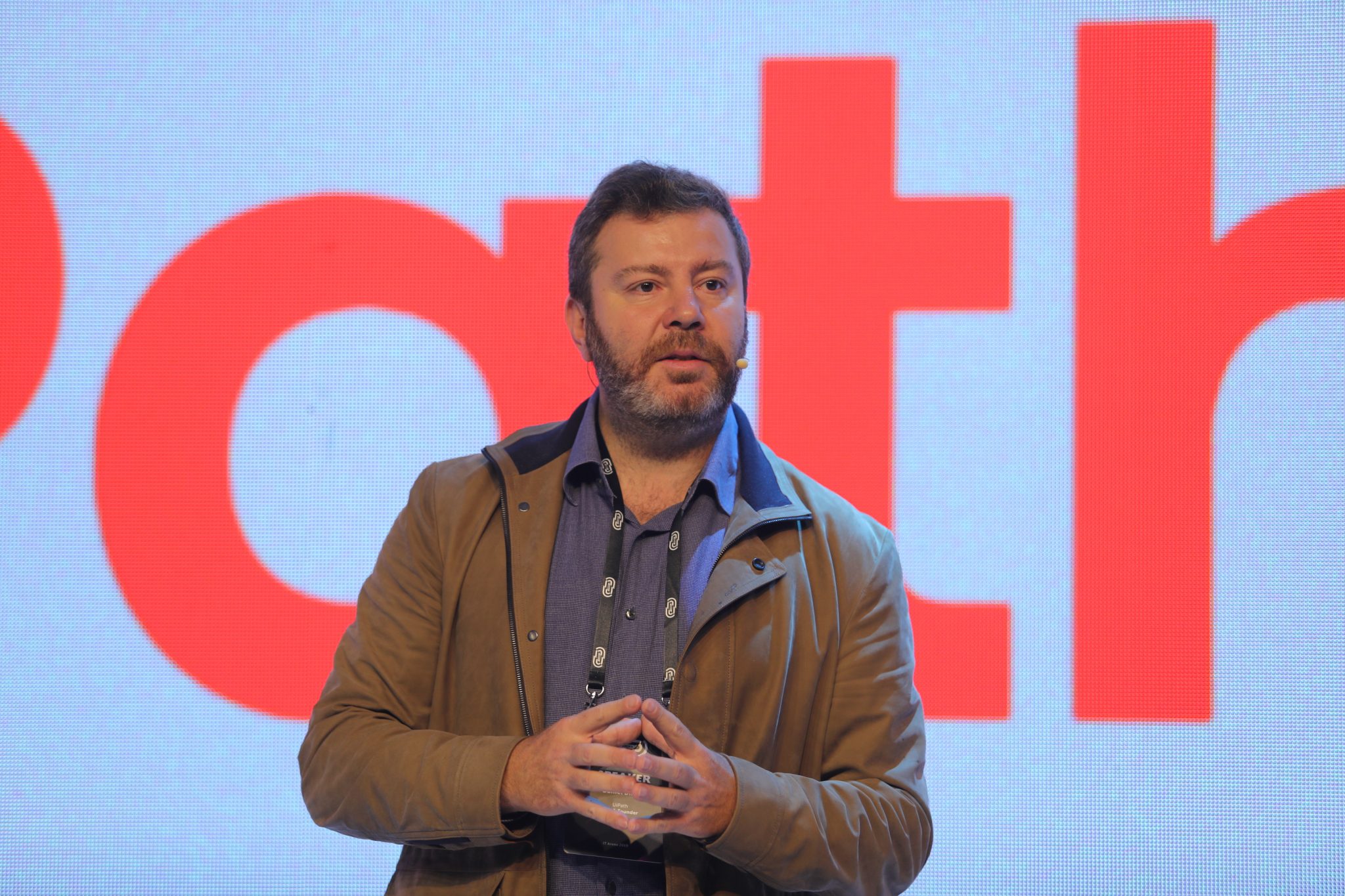
Daniel Dines UiPath

UiPath, a leading enterprise automation and AI software company, announced the launch of two new data centres in Pune and Chennai as part of its global expansion initiative. The new data centres will enable UiPath Automation Cloud to offer enhanced services to customers and partners in the Indian market.

The launch marks a significant milestone for UiPath Automation Cloud, providing opportunities for growth and innovation for both public and private sector entities. The data centres will help meet the growing demand for cloud services in India, with a focus on business continuity and compliance.

“India is a crucial market for UiPath and houses a robust engineering presence in Bengaluru and Hyderabad. As we continue to expand our footprint, the launch of our new data centres in Pune and Chennai further underscores our commitment to empowering Indian businesses with cutting-edge automation solutions,” said Arun Balasubramanian, Vice President & Managing Director, India & South Asia, UiPath.

The new data centres will provide high availability and low latency, improving customer accessibility and service speed. They will host UiPath services such as Intelligent Document Processing (IDP), Artificial Intelligence (AI), Applications, and Core Automation, all accessible as Software-as-a-Service (SaaS) offerings.

“These data centres represent a pivotal step in our mission to democratise automation and drive digital transformation globally. By bringing the UiPath Automation Cloud closer to our Indian customers, we aim to deliver unparalleled value, enabling businesses to harness the full potential of automation,” Balasubramanian added.

With the addition of the Pune and Chennai data centres, UiPath now has cloud regions in India, the United States, Europe, Canada, Japan, Singapore, and Australia.

The expansion demonstrates UiPath’s commitment to the Indian market and its mission to make automation accessible to businesses worldwide.

The post UiPath Launches New Data Centers in Pune, Chennai to Expand India Footprint appeared first on Analytics India Magazine.

Stainless is helping OpenAI, Anthropic and others build SDKs for their APIs

Stainless is helping OpenAI, Anthropic and others build SDKs for their APIs Kyle Wiggers 15 hours

Besides a focus on generative AI, what do AI startups like OpenAI, Anthropic and Together AI share in common? They use Stainless, a platform created by ex-Stripe staffer Alex Rattray, to generate SDKs for their APIs.

Rattray, who studied economics at the University of Pennsylvania, has been building things for as long as he can remember, from an underground newspaper in high school to a bike-share program in college. Rattray picked up programming on the side while at UPenn, which led to a job at Stripe as an engineer on the developer platform team.

At Stripe, Rattray helped to revamp API documentation and launch the system that powers Stripe’s API client SDK. It’s while working on those projects Rattray observed there wasn’t an easy way for companies, including Stripe, to build SDKs for their APIs at scale.

“Handwriting the SDKs couldn’t scale,” he told TechCrunch. “Today, every API designer has to settle a million and one ‘bikeshed’ questions all over again, and painstakingly enforce consistency around these decisions across their API.”

Now, you might be wondering, why would a company need an SDK if it offers an API? APIs are simply protocols, enabling software components to communicate with each other and transfer data. SDKs, on the other hand, offer a set of software-crafting tools that plug into APIs. Without an SDK to accompany an API, API users are forced to read API docs and build everything themselves, which isn’t the best experience.

Rattray’s solution is Stainless, which takes in an API spec and generates SDKs in a range of programming languages including Python, TypeScript, Kotlin, Go and Java. As APIs evolve and change, Stainless’ platform pushes those updates with options for versioning and publishing changelogs.

“API companies today have a team of several people building libraries in each new language to connect to their API,” Rattray said. “These libraries inevitably become inconsistent, fall out of date and require constant changes from specialist engineers. Stainless fixes that problem by generating them via code.”

Stainless isn’t the only API-to-SDK generator out there. There’s LibLab and Speakeasy, to name a couple, plus longstanding open source projects such as the OpenAPI Generator.

Stainless, however, delivers more “polish” than most others, Rattray said, thanks partly to its use of generative AI.

“Stainless uses generative AI to produce an initial ‘Stainless config’ for customers, which is then up to them to fine-tune to their API,” he explained. “This is particularly valuable for AI companies, whose huge user bases includes many novice developers trying to integrate with complex features like chat streaming and tools.”

Perhaps that’s what attracted customers like OpenAI, Anthropic and Together AI, along with Lithic, LangChain, Orb, Modern Treasury and Cloudflare. Stainless has “dozens” of paying clients in its beta, Rattray said, and some of the SDKs it’s generated, including OpenAI’s Python SDK, are getting millions of downloads per week.

“If your company wants to be a platform, your API is the bedrock of that,” he said. “Great SDKs for your API drive faster integration, broader feature adoption, quicker upgrades and trust in your engineering quality.”

Most customers are paying for Stainless’ enterprise tier, which comes with additional white-glove services and AI-specific functionality. Publishing a single SDK with Stainless is free. But companies have to fork over between $250 per month and $30,000 per year for multiple SDKs across multiple programming languages.

Rattray bootstrapped Stainless “with revenue from day one,” he said, adding that the company could be profitable as soon as this year; annual recurring revenue is hovering around $1 million. But Rattray opted instead to take on outside investment to build new product lines.

Stainless recently closed a $3.5 million seed round with participation from Sequoia and The General Partnership.

“Across the tech ecosystem, Stainless stands out as a beacon that elevates the developer experience, rivaling the high standard once set by Stripe,” said Anthony Kline, partner at The General Partnership. “As APIs continue to be the core building blocks of integrating services like LLMs into applications, Alex’s first-hand experience pioneering Stripe’s API codegen system uniquely positions him to craft Stainless into the quintessential platform for seamless, high-quality API interactions.”

Stainless has a 10-person team based in New York. Rattray expects headcount to grow to 15 or 20 by the end of the year.

India Leads Global AI Project Implementation: Report Reveals

NetApp, an intelligent data infrastructure company, has released its second annual Cloud Complexity Report, highlighting India’s position as the top country for the global implementation of AI projects.

The report, which analyses the experiences of global technology decision-makers deploying AI at scale, reveals that 70% of companies in India have AI projects up and running or in motion, significantly higher than the global average of 49%.

Furthermore, 91% of India-based companies plan to use half or more of their data to train AI models in 2024.

Puneet Gupta, Vice President & Managing Director of NetApp India/SAARC, emphasised the critical role of data in enhancing AI capabilities, stating, “India is a country of humungous data sets. It’s no surprise then that India leads the world, and corporations are embracing AI to further their IT agenda.”

The report also revealed a stark divide between AI leaders and AI laggards across various regions, industries, and company sizes.

AI-leading countries, such as India, Singapore, the UK, and the USA, have 60% of their AI projects up and running or in the pilot, compared to only 36% in AI-lagging countries like Spain, Australia/New Zealand, Germany, and Japan.

Despite the challenges posed by rising IT costs and data security concerns, AI leaders are determined to continue their AI progress by scaling back, cutting other IT operations, or reallocating costs from other parts of the business.

In India, 53% of companies reported being more likely to scale back or cut other parts of IT operations to make room for AI projects.

As global companies increase investments in AI, they rely on the cloud to support their goals.

Increasing data security investments is a global priority, with 82% of Indian companies planning to improve security within their public cloud usage in 2024.

The report’s findings underscore the importance of unified data infrastructure in achieving AI success and the need for AI laggards to swiftly innovate to stay competitive in the rapidly evolving AI landscape.

The post India Leads Global AI Project Implementation: Report Reveals appeared first on Analytics India Magazine.
India will Need at least $200-300 Mn to Build GPT-5-level AI Model

US India Investments

Vishnu Vardhan, the founder and CEO of SML and Vizzhy, emphasised on the huge investment required to build and scale complex AI models. In an exclusive interview with AIM, the creator of Hanooman disclosed his plans of raising $200-300 million for the same.

“That’s the kind of money we need to launch this [Hanooman] kind of a product. We’ve already spent tens of million dollars, but that won’t work,” he said.

Vardhan rued that most Indian investors are “not ready to spend on research and deep tech startups”. He noted that Indian investors are willing to commit to minuscule amounts of investments for AI research vs the large amount of 100s of crores required.

Investment for India AI

Recently, the Indian government approved $1.25 billion investments for AI projects, that includes developing LLMs and computing infrastructure. The money would also be used to fund AI startups and accelerate AI applications in the public sector.

While this may be a recent announcement, the reality of Indian investors is starkly different in the current AI landscape. It is largely believed that many Indian VCs don’t have a thesis on deep-tech investments.

If you look at some of the prominent investments in Indian AI startups over the past few months, you’ll find that only a handful of companies have received significant funding. India’s AI ecosystem has raised $700 million in the last three years, where over $500 million in funding was raised by 24 generative AI startups in 2023.

Ola’s Krutrim, touted as India’s own AI company, received $50 million for a valuation of $1 billion, making the company India’s first AI unicorn. However, major funding came in from Matrix Partners India, one of Ola’s primary investors.

Sarvam AI, a Bengaluru-based AI startup, which is training and building Indic-LLMs, received $41 million funded by VC firms Peak XV and Khosla Ventures. The company is also receiving backing from big tech biggie Microsoft.

Indian businessman and former board member of Infosys, Mohandas Pai, highlighted the abundance of talent but not funding when it comes to AI investments.

Source: X

Founder and investor Gaurav Sharma pointed out that with a $4 trillion economy, India should be ‘bold’ and allocate a $30-40 billion sovereign AI investment plan for the next 2-3 years. He even emphasises on how India needs a comprehensive AI policy like Japan.

While India struggles in raising AI investments to build complex models of GPT-4 or a GPT-5 prowess, US cruises through the challenge.

When Google DeepMind chief Demis Hassabis was asked about the OpenAI- Microsoft investment of $100 billion to build a supercomputer, he simply replied with, “We don’t talk about our specific numbers, but I think we’re investing more than that over time”.

Hassabis even spoke about how Alphabet Inc has better computing power than its competitors, including Microsoft, and named it one of the reasons for them to tie up with Google. “We knew that, in order to get to AGI, we would need a lot of compute,” he said.

Fathoming a $100 billion investment or even more may seem incomprehensible. However, the reality showcases the massive scale of investments required to build powerful AI models.

US Encourages Investments

Last year, when OpenAI chief Sam Altman visited India, he was criticised for saying that a model similar to ChatGPT cannot be built with $10 million. While many took to challenging that notion, one year later, the truth remains that huge investments are a must. This is something that the big-tech companies in the US have remained unaffected by.

According to the Stanford AI Index Report 2024, the training costs for GPT-4 touched $78M, with Google Gemini Ultra reaching $191.4M. Interestingly, in 2017, Google’s Transformer model cost $930 for training.

The report continues to also show how there is a direct correlation between the training cost and computational requirements.

Source: AI Index Report 2024

As per the report, the funding for generative AI increased eightfold from 2022 to $25.2 billion with prominent AI players such as OpenAI, Anthropic, Hugging Face and Inflection receiving significant fundings.

Emerging startups in the US also received huge fundings. The AI-powered answer engine, Perplexity received a massive backing from NVIDIA, Jeff Bezos, and others. The company received $70M in the last round, taking its valuation to $520M.

Additionally, the US government also supports funding. In 2023, the government allocated a total of $1.8 billion for AI research and development. For 2024, $1.9 billion has been requested.

While it may seem like there is no dearth of investments for AI companies in the US, a stark difference in the pattern of AI investments in India remains.

The post India will Need at least $200-300 Mn to Build GPT-5-level AI Model appeared first on Analytics India Magazine.
Eric Schmidt-backed Augment, a GitHub Copilot rival, launches out of stealth with $252M

Eric Schmidt-backed Augment, a GitHub Copilot rival, launches out of stealth with $252M Kyle Wiggers 9 hours

AI is supercharging coding — and developers are embracing it.

In a recent StackOverflow poll, 44% of software engineers said that they use AI tools as part of their development processes now and 26% plan to soon. Gartner estimates that over half of organizations are currently piloting or have already deployed AI-driven coding assistants, and that 75% of developers will use coding assistants in some form by 2028.

Ex-Microsoft software developer Igor Ostrovsky believes that soon, there won’t be a developer who doesn’t use AI in their workflows. “Software engineering remains a difficult and all-too-often tedious and frustrating job, particularly at scale,” he told TechCrunch. “AI can improve software quality, team productivity and help restore the joy of programming.”

So Ostrovsky decided to build the AI-powered coding platform that he himself would want to use.

That platform is Augment, and on Wednesday it emerged from stealth with $252 million in funding at a near-unicorn ($977 million) post-money valuation. With investments from former Google CEO Eric Schmidt and VCs including Index Ventures, Sutter Hill Ventures, Lightspeed Venture Partners, Innovation Endeavors and Meritech Capital, Augment aims to shake up the still-nascent market for generative AI coding technologies.

“Most companies are dissatisfied with the programs they produce and consume; software is too often fragile, complex and expensive to maintain with development teams bogged down with long backlogs for feature requests, bug fixes, security patches, integration requests, migrations and upgrades,” Ostrovsky said. “Augment has both the best team and recipe for empowering programmers and their organizations to deliver high-quality software quicker.”

Ostrovsky spent nearly seven years at Microsoft before joining Pure Storage, a startup developing flash data storage hardware and software products, as a founding engineer. While at Microsoft, Ostrovsky worked on components of Midori, a next-generation operating system the company never released but whose concepts have made their way into other Microsoft projects over the last decade.

In 2022, Ostrovsky and Guy Gur-Ari, previously an AI research scientist at Google, teamed up to create Augment’s MVP. To fill out the startup’s executive ranks, Ostrovsky and Gur-Ari brought on Scott Dietzen, ex-CEO of Pure Storage, and Dion Almaer, formerly a Google engineering director and a VP of engineering at Shopify.

Augment remains a strangely hush-hush operation.

In our conversation, Ostrovsky wasn’t willing to say much about the user experience or even the generative AI models driving Augment’s features (whatever they may be) — save that Augment is using fine-tuned “industry-leading” open models of some sort.

He did say how Augment plans to make money: standard software-as-a-service subscriptions. Pricing and other details will be revealed later this year, Ostrovsky added, closer to Augment’s planned GA release.

“Our funding provides many years of runway to continue to build what we believe to be the best team in enterprise AI,” he said. “We’re accelerating product development and building out Augment’s product, engineering and go-to-market functions as the company gears up for rapid growth.”

Rapid growth is perhaps the best shot Augment has at making waves in an increasingly cutthroat industry.

Practically every tech giant offers its own version of an AI coding assistant. Microsoft has GitHub Copilot, which is by far the firmest entrenched with over 1.3 million paying individual and 50,000 enterprise customers as of February. Amazon has AWS’ CodeWhisperer. And Google has Gemini Code Assist, recently rebranded from Duet AI for Developers.

Elsewhere, there’s a torrent of coding assistant startups: Magic, Tabnine, Codegen, Refact, TabbyML, Sweep, Laredo and Cognition (which reportedly just raised $175 million), to name a few. Harness and JetBrains, which developed the Kotlin programming language, recently released their own. So did Sentry (albeit with more of a cybersecurity bent).

Can they all — plus Augment now — do business harmoniously together? It seems unlikely. Eye-watering compute costs alone make the AI coding assistant business a challenging one to maintain. Overruns related to training and serving models forced generative AI coding startup Kite to shut down in December 2022. Even Copilot loses money, to the tune of around $20 to $80 a month per user, according to The Wall Street Journal.

Ostrovsky implies that there’s momentum behind Augment already; he claims that “hundreds” of software developers across “dozens” of companies, including payment startup Keeta (which is also Eric Schmidt-backed), are using Augment in early access. But will the uptake sustain? That’s the million-dollar question, indeed.

I also wonder if Augment has made any steps toward solving the technical setbacks plaguing code-generating AI, particularly around vulnerabilities.

An analysis by GitClear, the developer of the code analytics tool of the same name, found that coding assistants are resulting in more mistaken code being pushed to codebases, creating headaches for software maintainers. Security researchers have warned that generative coding tools can amplify existing bugs and exploits in projects. And Stanford researchers have found that developers who accept code recommendations from AI assistants tend to produce less secure code.

Then there’s copyright to worry about.

Augment’s models were undoubtedly trained on publicly available data, like all generative AI models — some of which may’ve been copyrighted or under a restrictive license. Some vendors have argued that fair use doctrine shields them from copyright claims while at the same time rolling out tools to mitigate potential infringement. But that hasn’t stopped coders from filing class action lawsuits over what they allege are open licensing and IP violations.

To all this, Ostrovsky says: “Current AI coding assistants don’t adequately understand the programmer’s intent, improve software quality nor facilitate team productivity, and they don’t properly protect intellectual property. Augment’s engineering team boasts deep AI and systems expertise. We’re poised to bring AI coding assistance innovations to developers and software teams.”

Augment, which is based in Palo Alto, has around 50 employees; Ostrovsky expects that number to double by the end of the year.