Bharti Airtel and Google Cloud announced a long-term collaboration to deliver cloud solutions to Indian businesses. The partnership will accelerate cloud adoption and modernisation for Airtel’s customers, targeting the growing Indian public cloud services market.
The companies will work together on joint go-to-market strategies, combining Airtel’s connectivity and distribution channels with Google Cloud’s AI technologies. Airtel has developed an IoT solution for the utility sector that integrates connectivity, Google Cloud services, and application software under one offering.
Gopal Vittal, MD & CEO of Bharti Airtel, said, “We are happy to partner with Google Cloud and jointly address this market opportunity with secure and scalable Cloud solutions for government, enterprises, and emerging businesses.”
Airtel has established a dedicated managed services centre in Pune with more than 300 experts who will be trained to champion both Google Cloud and digital services. The collaboration will focus on developing AI/ML solutions trained on Airtel’s large data set, including geospatial analytics, voice analytics, and marketing technology solutions.
Thomas Kurian, CEO of Google Cloud, stated, “Through this partnership, we aim to explore and build transformative solutions that can enhance Airtel’s customer experiences.”
Airtel will leverage Google Cloud’s generative AI capabilities to transform its customer experiences across mobile, broadband, and digital TV, and streamline its internal processes and operations. These capabilities will also be extended to Airtel’s B2B customers in India and globally.
This strategic collaboration between Airtel and Google Cloud comes nearly two years after Airtel’s partnership with Amazon Web Services (AWS) in August 2022. The Airtel-AWS partnership aimed to provide cloud-based solutions to small and medium enterprises (SMEs) and large enterprises in India.
The post Airtel and Google Cloud Collaborate to Boost Business Cloud Solutions appeared first on Analytics India Magazine.
Confluent, the data streaming giant founded by the creators of Apache Kafka, is making significant strides in India, identifying the country as a crucial market for its global expansion strategy.
“India has always been an incredibly important part of our team philosophy. We have very significant parts of our R&D operations here, including massive product areas, and almost every team is represented in India,” said Confluent co-founder and CEO Jay Kreps.
According to Kreps, approximately 20% of its global workforce is now based in India.
Demonstrating its commitment to the Indian market, Confluent has expanded its operations in the region, increasing its workforce by an impressive 50% in 2022. They also inaugurated a new office in Bengaluru, a pivotal hub for its operations in the country.
India has become a top priority for global tech companies due to its large talent pool, low operating costs, and stable environment for supply chains.
As the number of data centres in the country grows, with Oracle, Microsoft, and Meta recently setting up their bases, Confluent is well-positioned to leverage this infrastructure expansion to enhance its services and support for local and regional enterprises, relying on real-time data streaming.
Confluent boasts a substantial engineering team in Bengaluru and a distributed engineering presence nationwide. The leadership team hinted at growing the numbers, with 21 positions currently open in Bengaluru across various teams, including sales, support, and engineering.
India Expansion Strategy
“India, for us, is a very critical market. And it’s a top ten market,” emphasised Confluent global head of sales Hemanth Vedagarbha at the summit. “The core to our APAC strategy is gaining market share in India.”
Confluent’s go-to-market strategy in India is multi-faceted, driven by a network of partnerships and direct sales efforts.
The company is actively investing in building its partner ecosystem, collaborating with major cloud providers such as AWS, Azure, and Google Cloud, as well as system integrators, independent software vendors, resellers, and managed service providers.
To cater to price-sensitive customers in India, Confluent offers a globally consistent pricing model with built-in flexibility based on commitment levels. This allows startups to adopt the platform and effectively addresses the unique needs of the Indian market.
“We have specific initiatives also for startups. For example, getting specific credits for free so that they can start their business without worrying about the cost of the Confluent Cloud,” said CTO Chad Verbowski.
While other data streaming providers like Amazon Kinesis, Google Cloud Pub/Sub, and Azure Stream Analytics also offer robust, scalable, and cost-efficient solutions with strong local support, Confluent distinguishes itself in several ways that might make it a more suitable choice for certain Indian businesses.
The company’s unique advantages include its deep Apache Kafka expertise and a Kafka-centric ecosystem. It also emphasises on stream governance, flexibility in hybrid and multi-cloud deployments, focus on developer experience, and tailored solutions for the Indian market.
“A lot of our customers are generally on open-source Kafka, which is largely prevalent and free versus the paid version at Confluent. But we have our key differentiators. Namely the core engine, which is now 16 times more powerful than open-source Kafka,” Vedagarbha explained.
Additionally, users of the free and open-source Kafka can easily migrate to Confluent when needed.
Unveils New AI Features
Earlier this month, the company hosted its first Kafka Summit in Bengaluru to propel interest among Indian businesses.
“This conference is part of the efforts we’re undertaking to build a strong presence in the country,” said Kreps.
At the summit, Confluent unveiled new capabilities designed to simplify AI integration and stream processing. These advancements include the AI Model Inference for Apache Flink, the Confluent Platform for Apache Flink, and cost-effective Freight clusters.
Confluent’s Chief Product Officer Shaun Clowes stated, “Apache Kafka and Flink are the critical links to fuel machine learning and artificial intelligence applications with the most timely and accurate data.”
Confluent’s AI Model Inference removes the complexity of using streaming data for AI development by enabling organisations to innovate faster and deliver powerful customer experiences.
The new AI capabilities are particularly relevant to the Indian market, where businesses across sectors increasingly adopting AI and machine learning to drive innovation and competitiveness.
The AI Model Inference feature for Apache Flink allows Indian enterprises of all sizes to integrate AI into their data pipelines, enabling real-time decision-making and personalised customer experiences.
The AI capabilities introduced by Confluent so far are already garnering interest from Indian customers. Swiggy, a food delivery platform and a Confluent customer, is optimising its operations further with the platform.
Swiggy’s former CTO Dale Vaz noted, “With real-time insights powered by AI, we can make faster, more informed decisions and stay ahead in the highly competitive food delivery market.”
Confluent field CTO Kai Waehner emphasised the significance of these AI features for Indian customers, stating, “The AI Model Inference feature in Confluent Cloud for Apache Flink enables our customers in India to easily integrate machine learning models into their data streams without the need for complex infrastructure or extensive data engineering efforts.”
He said this allows businesses to quickly derive insights and take action on real-time data.
Moreover, the Confluent Platform for Apache Flink, which enables stream processing on-premises and in hybrid environments, is particularly crucial for Indian organisations that have not yet fully migrated to the cloud.
What’s next?
The company told AIM that it is actively exploring avenues to expand its presence beyond tier-one cities. Specifically, it aims to penetrate regional banks, non-banking financial services, and the healthcare, telecom, and thriving gaming sectors.
Vedagarbha stressed on the immense potential of the Indian market, stating, “When you have 1.3 billion people, there is a lot of data because you have birth records, land records, digital records, social security, health care, and all kinds of financial data. Governmental records and the private sector provide us with an opportunity.”
With the next Kafka summit to take place in Bengaluru again in March 2025, the company is bullish on India.
“We have committed to the Indian market, which we see as a significant growth opportunity. Whether through partnerships, investments in employee resources, or tailored solutions for specific industries, we’re dedicated to supporting India’s evolving data ecosystem,” Waehner said.
The post Confluent has 20% of its Global Workforce in India appeared first on Analytics India Magazine.
The age of Generative AI (GenAI) is transforming how we work and create. From marketing copy to generating product designs, these powerful tools hold great potential. However, this rapid innovation comes with a hidden threat: data leakage. Unlike traditional software, GenAI applications interact with and learn from the data we feed them.
The LayerX study revealed that 6% of workers have copied and pasted sensitive information into GenAI tools, and 4% do so weekly.
This raises an important concern – as GenAI becomes more integrated into our workflows, are we unknowingly exposing our most valuable data?
Let’s look at the growing risk of information leakage in GenAI solutions and the necessary preventions for a safe and responsible AI implementation.
What Is Data Leakage in Generative AI?
Data leakage in Generative AI refers to the unauthorized exposure or transmission of sensitive information through interactions with GenAI tools. This can happen in various ways, from users inadvertently copying and pasting confidential data into prompts to the AI model itself memorizing and potentially revealing snippets of sensitive information.
For example, a GenAI-powered chatbot interacting with an entire company database might accidentally disclose sensitive details in its responses. Gartner's report highlights the significant risks associated with data leakage in GenAI applications. It shows the need for implementing data management and security protocols to prevent compromising information such as private data.
The Perils of Data Leakage in GenAI
Data leakage is a serious challenge to the safety and overall implementation of a GenAI. Unlike traditional data breaches, which often involve external hacking attempts, data leakage in GenAI can be accidental or unintentional. As Bloomberg reported, a Samsung internal survey found that a concerning 65% of respondents viewed generative AI as a security risk. This brings attention to the poor security of systems due to user error and a lack of awareness.
Image source: REVEALING THE TRUE GENAI DATA EXPOSURE RISK
The impacts of data breaches in GenAI go beyond mere economic damage. Sensitive information, such as financial data, personal identifiable information (PII), and even source code or confidential business plans, can be exposed through interactions with GenAI tools. This can lead to negative results such as reputational damage and financial losses.
Consequences of Data Leakage for Businesses
Data leakage in GenAI can trigger different consequences for businesses, impacting their reputation and legal standing. Here is the breakdown of the key risks:
Loss of Intellectual Property
GenAI models can unintentionally memorize and potentially leak sensitive data they were trained on. This may include trade secrets, source code, and confidential business plans, which rival companies can use against the company.
Breach of Customer Privacy & Trust
Customer data entrusted to a company, such as financial information, personal details, or healthcare records, could be exposed through GenAI interactions. This can result in identity theft, financial loss on the customer's end, and the decline of brand reputation.
Regulatory & Legal Consequences
Data leakage can violate data protection regulations like GDPR, HIPAA, and PCI DSS, resulting in fines and potential lawsuits. Businesses may also face legal action from customers whose privacy was compromised.
Reputational Damage
News of a data leak can severely damage a company's reputation. Clients may choose not to do business with a company perceived as insecure, which will result in a loss of profit and, hence, a decline in brand value.
Case Study: Data Leak Exposes User Information in Generative AI App
In March 2023, OpenAI, the company behind the popular generative AI app ChatGPT, experienced a data breach caused by a bug in an open-source library they relied on. This incident forced them to temporarily shut down ChatGPT to address the security issue. The data leak exposed a concerning detail – some users' payment information was compromised. Additionally, the titles of active user chat history became visible to unauthorized individuals.
Challenges in Mitigating Data Leakage Risks
Dealing with data leakage risks in GenAI environments holds unique challenges for organizations. Here are some key obstacles:
1. Lack of Understanding and Awareness
Since GenAI is still evolving, many organizations do not understand its potential data leakage risks. Employees may not be aware of proper protocols for handling sensitive data when interacting with GenAI tools.
2. Inefficient Security Measures
Traditional security solutions designed for static data may not effectively safeguard GenAI's dynamic and complex workflows. Integrating robust security measures with existing GenAI infrastructure can be a complex task.
3. Complexity of GenAI Systems
The inner workings of GenAI models can be unclear, making it difficult to pinpoint exactly where and how data leakage might occur. This complexity causes problems in implementing the targeted policies and effective strategies.
Why AI Leaders Should Care
Data leakage in GenAI isn't just a technical hurdle. Instead, it's a strategic threat that AI leaders must address. Ignoring the risk will affect your organization, your customers, and the AI ecosystem.
The surge in the adoption of GenAI tools such as ChatGPT has prompted policymakers and regulatory bodies to draft governance frameworks. Strict security and data protection are being increasingly adopted due to the rising concern about data breaches and hacks. AI leaders put their own companies in danger and hinder the responsible progress and deployment of GenAI by not addressing data leakage risks.
AI leaders have a responsibility to be proactive. By implementing robust security measures and controlling interactions with GenAI tools, you can minimize the risk of data leakage. Remember, secure AI is good practice and the foundation for a thriving AI future.
Proactive Measures to Minimize Risks
Data leakage in GenAI doesn't have to be a certainty. AI leaders may greatly lower risks and create a safe environment for adopting GenAI by taking active measures. Here are some key strategies:
1. Employee Training and Policies
Establish clear policies outlining proper data handling procedures when interacting with GenAI tools. Offer training to educate employees on best data security practices and the consequences of data leakage.
2. Strong Security Protocols and Encryption
Implement robust security protocols specifically designed for GenAI workflows, such as data encryption, access controls, and regular vulnerability assessments. Always go for solutions that can be easily integrated with your existing GenAI infrastructure.
3. Routine Audit and Assessment
Regularly audit and assess your GenAI environment for potential vulnerabilities. This proactive approach allows you to identify and address any data security gaps before they become critical issues.
The Future of GenAI: Secure and Thriving
Generative AI offers great potential, but data leakage can be a roadblock. Organizations can deal with this challenge simply by prioritizing proper security measures and employee awareness. A secure GenAI environment can pave the way for a better future where businesses and users can benefit from the power of this AI technology.
For a guide on safeguarding your GenAI environment and to learn more about AI technologies, visit Unite.ai.
The global AI image generator market was estimated at $301.7 million in 2022 and is forecasted to grow at a CAGR of 17.5% from 2023 to 2030.
Innovations in deep learning and AI algorithms, particularly generative adversarial networks (GANs) and diffusion models have significantly enhanced the quality and realism of AI-generated images.
As these technologies continue to evolve, they expand the potential applications for AI image generators, fuelling market growth across diverse industries such as advertising, marketing, media, and entertainment.
Interestingly, a quick search on Hugging Face yields over 18,000 text-to-image models alone. Here are 10 open-source text-to-image models that can help people who rely on visual content.
Top 10 Open Source Text-to-Image Models Used in AI Image Generators
DeepFloyd IF
StableStudio
Invoke
Stable Diffusion V1.5
Pixray
Dreamlike photoreal
DreamShaper
Craiyon
Jasper Art
Waifu Diffusion
1. DeepFloyd IF
DeepFloyd IF is a text-to-image model enabling research labs to explore and experiment with advanced text-to-image generation approaches. DeepFloyd IF represents the ultimate solution for generating realistic visuals and enhancing language comprehension. The open-source model boasts a modular design comprising a fixed text encoder and three interconnected pixel diffusion modules.
DeepFloyd IF’s capacity to produce remarkably lifelike and contextually precise images based on textual descriptions empowers developers, fostering a heightened level of interactivity and user engagement within their applications.
However, the model’s limitation in resizing images to 64 pixels could become apparent when high-resolution images are necessary. Additionally, developers may face challenges due to the computational resources demanded by the model’s complexity, particularly when working within constrained resource environments.
Source: DeepFloyd IF text to image model.
2. StableStudio
StableStudio, an open-source AI image generation tool, is the successor to the text-to-image consumer application DreamStudio. StableStudio helps with the imaging pipeline and showcases Stability AI’s dedication towards advancing open-source development within the AI ecosystem.
StableStudio differs from DreamStudio in that it’s not cloud-based. Instead, it’s crafted to offer greater control and customisation options. This makes it ideal for local installations.
This platform provides a user-friendly interface for effortless interaction with generative AI models. While StableStudio is partly open source, users still need an API key for certain features, implying some restrictions on its openness.
Source: StableStudio text to image
3. Invoke
Invoke is a super-smart tool for artists and designers, aiding them in creating captivating pictures and videos through sophisticated computer techniques. It is user-friendly and compatible with most computers, allowing users to execute various tasks such as transforming one image into another, filling in missing elements, and generating new images from scratch.
InvokeAI is open-source, enabling anyone to observe its functionality and contribute enhancements. It can be accessed on GitHub.
Source: Invoke text to image model
4. Stable Diffusion
The Stable Diffusion model, the ultimate solution for generating lifelike images from text, merges an autoencoder with a diffusion model. It is trained extensively on the LAION-5B dataset, making it the market’s most advanced model.
With the flexibility to generate images from a wide range of latent spaces, this model is not restricted to a fixed set of text prompts. It has been trained on a large image dataset, enabling it to possess a deeper understanding of image characteristics.
Source: Stable Diffusion text to image models
5. Pixray
Pixray is a browser-based software application that provides individuals with the ability to generate original images solely through text input.
Among its amazing features are the ability to input text prompts, select from a range of rendering engines (called drawers) such as clipdraw, line_sketch, and pixel, and adjust formatting settings. According to users, Pixray offers unparalleled flexibility and control.
Source: Pixray text to image
6. Dreamlike Photoreal
Dreamlike Photoreal is derived from the Stable Diffusion model. It has undergone an extensive fine-tuning process, leveraging the power of a dataset consisting of images generated by other AI models or user-contributed data.
For optimal results, it is recommended to use non-square aspect ratios, with vertical aspect ratios being ideal for portrait-style photos and horizontal aspect ratios for landscape photos.
Source: Dreamlike Photoreal text to image model
7. DreamShaper
The Dream Shaper V7, an image generation model based on diffusion architecture, significantly improves LoRA support and overall realism.
This model delivers photorealistic images with reduced noise offset and enhances anime-style generation with Booru tags. Additionally, it offers a resolution upgrade for improved visual fidelity, addressing the shortcomings of earlier versions.
Source: Dream Shaper V7 text to image model
8. Craiyon
Craiyon, an AI-powered image-generation tool, formerly DALL-E Mini, brings text prompts to life by crafting visually striking and entirely unique images. Launched in 2022, Craiyon was among the pioneering AI art generators available, leveraging its DALL-E Mini technology to translate basic text descriptions into images.
This AI art generator offers a range of intriguing features for artists, designers, and enthusiasts alike. It can transform any text prompt into a visual masterpiece, provide creative suggestions to inspire artistic momentum, generate images without sacrificing quality, and employ advanced algorithms to anticipate and propose prompts.
Source: Craiyon text to image model
9. Jasper Art
Jasper Art is an AI art generator that forms part of the Jasper AI suite of tools. It swiftly transforms text into distinctive images, photos, and illustrations. Users can create unlimited images without watermarks and easily modify them using text prompts.
Moreover, Jasper Art offers a range of settings for users to customise and refine their artwork. Users can also bookmark and save their favourite creations in the searchable image library, which is particularly beneficial for content creators working with Jasper.
Source: Jasper Art website
10. Waifu Diffusion
Waifu Diffusion is based on the Stable Diffusion model. It is a latent text-to-image model that generates impressive anime images from simple text descriptions.
It is a fine-tuned version of the Stable Diffusion model derived from Stable Diffusion v1.4. The Waifu Diffusion model can learn from user feedback, allowing it to fine-tune its tools and generation processes.
Source: Waifu Diffusion text to image model
The post Top 10 Open Source Text to Image Models in 2024 appeared first on Analytics India Magazine.
TATA AIG has announced the launch of India’s first Satellite In-Orbit Third-Party Liability Insurance policy to provide critical financial protection in order to cater to the growing needs of satellite manufacturers and operators in the Indian space sector.
TATA AIG’s Satellite In-Orbit Third-Party Liability Insurance offers comprehensive coverage for Third-Party Bodily Injury and Third-Party Property Damage, in the event of an incident involving a satellite in orbit, aligning with international standards and best practices.
The Indian space industry is experiencing phenomenal growth, with a projected market size reaching into the tens of billions. With the privatisation of space launches, India targets a five-fold increase in its global launch market share, projected to reach $47.3 billion by 2032. This surge in satellite launches necessitates robust risk management solutions.
“This innovative product caters to the growing needs of satellite manufacturers and operators in the Indian space sector, especially in the wake of recent solar storm that highlights the potential hazards faced by orbiting spacecraft. We are confident that this will empower Indian satellite companies to operate with greater confidence and contribute to the nation’s spacefaring ambitions,” Sushant Sarin, president, commercial business, TATA AIG General Insurance, said.
TATA AIG General Insurance Company Limited is a joint venture between TATA Group and American International Group (AIG). It commenced operations in India on January 22, 2001, and is celebrating 22 years of service this year.
The post Tata AIG Launches India’s First Insurance for Spacetech Sector appeared first on Analytics India Magazine.
AI is advancing at an accelerated pace, and while the possibilities are overwhelming, to say the least, so are the risks that come with it, such as bias, data privacy, security, etc. The ideal approach is to have ethics and responsible guidelines embedded into AI by design. It should be systematically built to filter the risks and only pass the technological benefits.
Quoting Salesforce:
“Ethics by Design is the intentional process of embedding our ethical and humane use guiding principles in the design and development”.
But, it is easier said than done. Even the developers find it challenging to decipher the complexity of AI algorithms, especially the emerging capabilities.
"As per deepchecks, “ability in an LLM is considered emergent if it wasn’t explicitly trained for or expected during the model’s development but appears as the model scales up in size and complexity”.
Given that the developers need help understanding the internals of the algorithms and the reason behind their behavior and predictions, expecting authorities to understand and keep it regulated in a short time frame is an overask.
Further, It is equally challenging for everyone to keep pace with the latest developments, leaving aside comprehending it timely to make the amenable guardrails.
The EU AI Act
That points us to discuss the European Union (EU) AI Act – a historic move that covers a comprehensive set of rules to promote trustworthy AI.
Image from Canva
The legal framework aims to “ensure a high level of protection of health, safety, fundamental rights, democracy and the rule of law and the environment from harmful effects of AI systems while supporting innovation and improving the functioning of the internal market.”
The EU is known for leading data protection by introducing the General Data Protection Regulation (GDPR) previously and now for AI regulation with the AI Act.
The Timeline
For the interest of the argument as to why it takes a long time to bring regulations, let us take a look at the timeline of the AI Act, which was first proposed by the European Commission in Apr '21 and later adopted by the European Council in Dec’22. The trilogue between three legislative bodies – European Commission, Council, and Parliament, has concluded with the EU Act in action in Mar’24 and is expected to be into force by May 2024.
Concerns Who?
With regards to the organizations that come under its purview, the Act applies not only to the developers within the EU but also to the global vendors that make their AI systems available to EU users.
Risk-Grading
While all risks are not alike, the Act includes a risk-based approach that categorizes applications into four categories – unacceptable, high, limited, and minimal, based on their impact on a person's health and safety or fundamental rights.
The risk-grading implies that the regulations become stricter and require greater oversight with the increasing application risk. It bans applications that carry unacceptable risks, such as social-scoring and biometric surveillance.
Unacceptable risks and high-risk AI systems will become enforceable six months and thirty-six months after the regulation comes into force.
Transparency
To start with the fundamentals, it is crucial to define what constitutes an AI system. Keeping it too loose makes a broad spectrum of traditional software systems come under purview too, impacting innovation, while keeping it too tight can let slip-ups happen.
For example, the general-purpose Generative AI applications or the underlying models must provide necessary disclosures, such as the training data, to ensure compliance with the Act. The increasingly powerful models will require additional details such as model evaluations, assessing and mitigating systemic risks, and reporting on incidents.
Amid AI-generated content and interactions, it becomes challenging for the end-user to understand when they see an AI-generated response. Hence, the user must be notified when the outcome is not human-generated or contains artificial images, audio, or video.
To Regulate or Not?
Technology like AI, specifically GenAI, transcends boundaries and can potentially transform how businesses run today. The timing of the AI Act is appropriate and aligns well with the onset of the Generative AI era, which tends to exacerbate the risks.
With the collective brain power and intelligence, nailing AI safety should be on every organization’s agenda. While other nations are contemplating whether to introduce new regulations concerning AI risks or to amend the existing ones to align them to handle new emerging challenges from advanced AI systems, the AI Act serves as the golden standard for governing AI. It sets the trail for other nations to follow and collaborate in putting AI to the proper use.
The regulatory landscape is challenged to lead the tech race among countries and is often viewed as an impediment to gaining a dominant global position.
However, if there ought to be a race, it would be great to witness one where we are competing to make AI safer for everyone and resorting to golden standards of ethics to launch the most trustworthy AI in the world.
Vidhi Chugh is an AI strategist and a digital transformation leader working at the intersection of product, sciences, and engineering to build scalable machine learning systems. She is an award-winning innovation leader, an author, and an international speaker. She is on a mission to democratize machine learning and break the jargon for everyone to be a part of this transformation.
More On This Topic
Data Masking: The Core of Ensuring GDPR and other Regulatory…
8 Innovative BERT Knowledge Distillation Papers That Have Changed…
How to Manage Your Complex IT Landscape with AIOps
In a historic move, Microsoft has announced its largest investment to date in France, solidifying the tech giant's commitment to accelerating the adoption of artificial intelligence and fostering digital innovation within the country. During the prestigious Choose France summit, the company unveiled a sweeping €4 billion investment package designed to propel France to the forefront of the AI revolution.
This multifaceted initiative aims to bolster France's competitiveness in the global AI landscape by nurturing homegrown technological advancements, upskilling the workforce, and supporting the nation's thriving startup ecosystem. Aligning seamlessly with France's National Strategy for AI and the recommendations of the French Commission for Artificial Intelligence, Microsoft's investment underscores its unwavering dedication to positioning France as a leader in the development and responsible utilization of artificial intelligence technologies.
Cloud and AI Infrastructure Investment
At the heart of this investment lies Microsoft's commitment to expanding its cutting-edge Cloud and AI infrastructure within France. The company plans to invest the staggering €4 billion to establish state-of-the-art data centers and bring up to 25,000 of the most advanced GPUs to the country by the end of 2025.
This endeavor will span multiple regions, including the expansion of existing facilities in Paris and Marseille, as well as the development of a new data center campus in the Grand Est Region, specifically in Mulhouse Alsace Agglomération. Local authorities have welcomed this investment, recognizing its potential to bolster the region's competitiveness and attract further investment in the digital economy.
Microsoft's advanced computational infrastructure and AI platform services will enable organizations of all sizes, from startups to multinational corporations, to develop, deploy, and leverage proprietary and open-source AI models and applications. Additionally, this investment will enhance the accessibility of Microsoft's AI-infused services, such as Microsoft 365 and Microsoft Dynamics, to French customers.
Recognizing the environmental impact of such an extensive infrastructure expansion, Microsoft has taken a proactive stance on sustainability. The company has pursued its first renewable energy contracts in France, with plans to have approximately 100 MW of new renewable energy projects operational by the end of 2024. This initiative aligns with Microsoft's broader sustainability goals, including a commitment to 100% renewable energy coverage for its operations, including data centers, by 2025, becoming water positive by 2030, and achieving zero waste by 2030.
Skilling and Training Initiatives
Complementing its substantial infrastructure investment, Microsoft has unveiled a comprehensive skilling and training initiative aimed at equipping 1 million French citizens with the necessary skills to thrive in the AI era by the end of 2027.
Building AI Fluency for Everyone
Microsoft's approach to skilling encompasses a broad spectrum of audiences, from job seekers and students to small and medium-sized businesses (SMBs) and professional audiences. To support French workers across the AI economy, the company will expand its “A Vous l'IA” initiative, launched in March 2024, in collaboration with France Travail. This program will provide job seekers with the essential skills needed to leverage AI technologies effectively, whether in day-to-day applications or as a tool for enhancing job search efforts.
Partnerships with renowned educational institutions, such as Skema Business School, Rennes School of Business, EDHEC, and Efrei, will further Microsoft's commitment to equipping students with the right skillset to navigate the AI-driven landscape.
Upskilling Professionals on AI
Recognizing the need for continuous learning and adapting to technological advancements, Microsoft is collaborating with a network of professional training partners, including Cellenza Training, ENI, Fastlane, IB Cegos, and Skillsoft Global Knowledge. Through dedicated online and in-person activations at Microsoft Experience Labs across various regions, these partnerships will accelerate the AI readiness of organizations of all sizes, with a particular focus on small and medium-sized businesses.
Moreover, Microsoft is launching a pioneering module in collaboration with Simplon, aiming to train developers from diverse backgrounds in the effective utilization of generative AI models, model selection, and deployment using state-of-the-art tools. This initiative ensures proficiency across platforms, fostering an inclusive and adaptable workforce.
Inclusive Programs with Simplon
Building upon its long-standing partnership with Simplon, Microsoft will extend its joint programs over the next three years to promote equal job opportunities in the AI field. The “GenIAles” three-day in-person workshop will continue to support women's access to digital tech job roles, while the network of Microsoft AI Schools by Simplon will further expand across the country. Launched in 2018, this initiative trains job seekers to become AI developers, a newly recognized profession by France Competences in 2020.
Through these comprehensive skilling and training initiatives, Microsoft aims to empower the French workforce, from job seekers to professionals, with the knowledge and capabilities necessary to navigate the AI-driven future confidently and responsibly.
Startup Acceleration Program
In addition to infrastructure investments and skilling initiatives, Microsoft's commitment to France extends to the vibrant startup ecosystem. The company has announced new initiatives aimed at accelerating the growth and success of French startups, embracing the nation's ambition to develop leading and high-growth AI businesses.
At the forefront of this effort is the Microsoft GenAI Studio, a flagship program designed to engage over 2,500 startups by 2027. This comprehensive initiative offers a valuable package of AI expertise, cloud credits, and support activities, fostering collaboration with customers and partners.
The program will commence with a tailored 4-month accelerator program at STATION F, one of Europe's largest startup campuses. Conducted twice a year over three years, this intensive program will provide select French startups with access to technical workshops, AI experts from Microsoft and its partners, and collaborative workspaces on the STATION F campus.
Recognizing the importance of fostering connections with regional players, Microsoft GenAI Studio will embark on a nationwide tour, organizing in-person workshops and hands-on sessions across all regions of France. These events will be hosted at Microsoft Experience Labs, local incubators, and accelerators, with the objective of accelerating the understanding of generative AI technologies, supporting their integration by French startups, and identifying innovative use cases.
Through these initiatives, Microsoft aims to support the long-term growth and competitiveness of the French economy, fostering a more inclusive, sustainable, and trusted digital future. The investments align with the company's AI Access Principles, respecting European and French sovereignty principles, regulations, and values.
France's Digital Transformation is Taking Off
Microsoft's historic investment in France represents a significant milestone in the country's digital transformation journey.
This multifaceted initiative not only demonstrates Microsoft's commitment to France but also highlights the company's recognition of the nation's potential to become a global leader in the development and responsible utilization of AI. Through strategic partnerships, collaborations with educational institutions, and a deep understanding of local needs and aspirations, Microsoft is actively contributing to the creation of a vibrant and inclusive AI ecosystem within France. As the world continues to embrace the transformative power of AI, Microsoft's investment serves as a catalyst for innovation, empowering individuals, businesses, and communities to harness the full potential of AI in France.
Ahead of OpenAI’s most-anticipated partnership with Apple, chief Sam Altman recently lauded the Cupertino-based tech giant for its technology prowess, saying, “iPhone is the greatest piece of technology humanity has ever made”, and it’s tough to get beyond it as “the bar is quite high”.
This is not some new-found love for the company; Altman has always been an Apple fanboy.
Recently, OpenAI hired Jony Ive, the renowned designer of the iPhone, to discuss new AI hardware. “We’ve been discussing ideas,” said Atlman, in a recent episode of All-In Podcast, touching upon the possibility of running LLMs on smartphones and if it is going to be affordable when that happens.
“Almost everyone’s willing to pay for a phone anyway,” added Altman, saying that cheaper is not the answer. “Even if a cheaper device could be made, I think the barrier to carry or use a second device is pretty high,” he added, hinting at how smartphones would not be obsolete anytime soon.
This is contrary to Yann LeCun’s, Meta chief AI scientist, opinion that smartphones will become obsolete in the next 10-15 years and that people will use augmented reality glasses and bracelets to interact with intelligent assistants.
But, Altman disagrees.
“There are a bunch of societal and interpersonal issues that are all very complicated about wearing a computer on your face,” said Altman, citing concerns about Meta’s smart glasses.
The change in Altman’s opinion comes as Apple nears its deal with OpenAI to integrate ChatGPT into iOS 18 as part of its strategy to enhance AI capabilities across its devices.
Also, OpenAI is planning to make some big announcements today where the company is likely to announce an AI voice assistant, alongside unveiling GPT-4 Lite, GPT-4-Auto, and GPT-4-Auto Lite series models. The new model would be capable of conversing with people using both sound and text, while also being able to recognise objects and images.
Apparently, the Apple – OpenAI deal just closed! One day before the voice assistant announcement 🙂 Guess Apple decided that it couldn't make it on its own The new Siri will be from OpenAI pic.twitter.com/Yfr6oCJiwQ
— Bindu Reddy (@bindureddy) May 13, 2024
Many are speculating if this is going to be OpenAI’s ‘Her’ moment. Altman’s comments in the recent podcast sort of resonate with this development, as he said voice is the clue to what the next big thing might be.
“If you can perfect voice interaction, it feels like a whole new way of using a computer,” quipped Altman.
“What I want is just this always-on, super-low-friction thing where I can either, by voice or by text, ideally just kind of know what I want,” said Altman, adding that this AI assistant would help him throughout the day with as much context as possible.
Altman also said that OpenAI is currently developing an AI assistant designed to function like a senior AI employee. Users would be able to delegate tasks to this assistant, including managing emails.
OpenAI recently introduced a Voice Engine model which can generate natural-sounding speech from text input and a mere 15-second audio sample. The Voice Engine project began in late 2022 and initially focused on powering preset voices within OpenAI’s text-to-speech API, ChatGPT Voice, and Read Aloud features.
Sneak peak of Sam at tomorrow's event https://t.co/PLQh78BJjl pic.twitter.com/EypCONNhCh
— The Technology Brother (@thetechbrother) May 12, 2024
Meanwhile, decoding the tech behind it, Jim Fan, a senior scientist at NVIDIA said that all voice AI goes through three stages:
1. Speech recognition or “ASR”: audio -> text1, think Whisper;
2. LLM that plans what to say next: text1 -> text2;
3. Speech synthesis or “TTS ”: text2 -> audio, think ElevenLabs or VALL-E.
LLMs with Voice Matters
OpenAI is not alone. Earlier this year, Hume AI released Empathic Voice Interface, or EVI, which can engage in conversations just like humans, understanding and expressing emotions based on the user’s tone of voice. It can interpret nuanced vocal modulations and generate empathetic responses, leading to many calling it the next ‘ChatGPT moment’.
“We believe voice interfaces will soon be the default way we interact with AI. Speech is four times faster than typing; frees up the eyes and hands; and carries more information in its tune, rhythm, and timbre,” said Alan Cowen, founder of Hume AI.
The company’s EVI API marks the debut of the first emotionally intelligent voice AI API. It is now available, offering the ability to receive live audio input and provide both generated audio and transcripts enriched with indicators of vocal expression.
What is India’s OpenAI up to?
Indian AI startup Sarvam AI is also planning to release Indic Voice LLM in the next four to six months. “We believe that in India, people will experience generative AI through the medium of voice,” said Vivek Raghavan, cofounder, Sarvam AI in an exclusive interview with AIM.
He added that it is difficult to input text in Indian languages and that in India, people tend to prefer voice communication over text.
The company is also working on building agentic systems, allowing users to not only receive information but also take action. “I hope in the next few months we’ll see some of these things being announced and released in the marketplace,” said Raghavan.
Sarvam AI will support 10 languages and hopes to expand in the future. The company’s focus on voice-based interfaces has numerous practical applications in the country, such as in customer support and gathering feedback, where voice-based models can efficiently handle large-scale feedback listening.
The post ‘iPhone is the Greatest Piece of Technology Humanity has Ever Made,’ Says OpenAI’s Sam Altman appeared first on Analytics India Magazine.
LSTMs were initially introduced in the early 1990s by authors Sepp Hochreiter and Jurgen Schmidhuber. The original model was extremely compute-expensive and it was in the mid-2010s when RNNs and LSTMs gained attention. With more data and better GPUs available, LSTM networks became the standard method for language modeling and they became the backbone for the first large language model. That was the case until the release of Attention-Based Transformer Architecture in 2017. LSTMs were gradually outdone by the Transformer architecture which is now the standard for all recent Large Language Models including ChatGPT, Mistral, and Llama.
However, the recent release of the xLSTM paper by the original LSTM author Sepp Hochreiter has caused a major stir in the research community. The results show comparative pre-training results to the latest LLMs and it has raised a question if LSTMs can once again take over Natural Language Processing.
High-Level Architecture Overview
The original LSTM network had some major limitations that limited its usability for larger contexts and deeper models. Namely:
LSTMs were sequential models that made it hard to parallelize training and inference.
They had limited storage capabilities and all information had to be compressed into a single cell state.
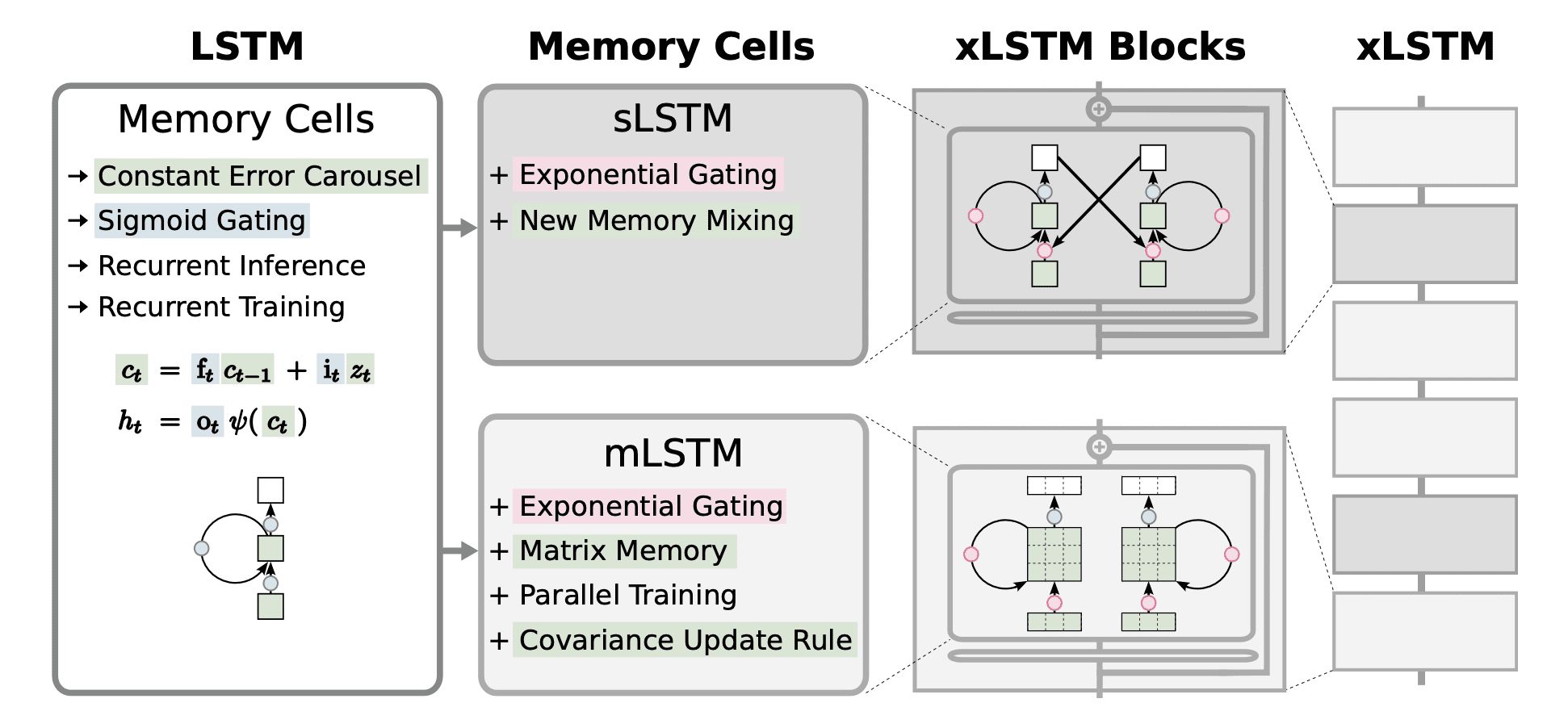
The recent xLSTM network introduces new sLSTM and mLSTM blocks to address both these shortcomings. Let us take a birds-eye view of the model architecture and see the approach used by the authors.
Short Review of Original LSTM
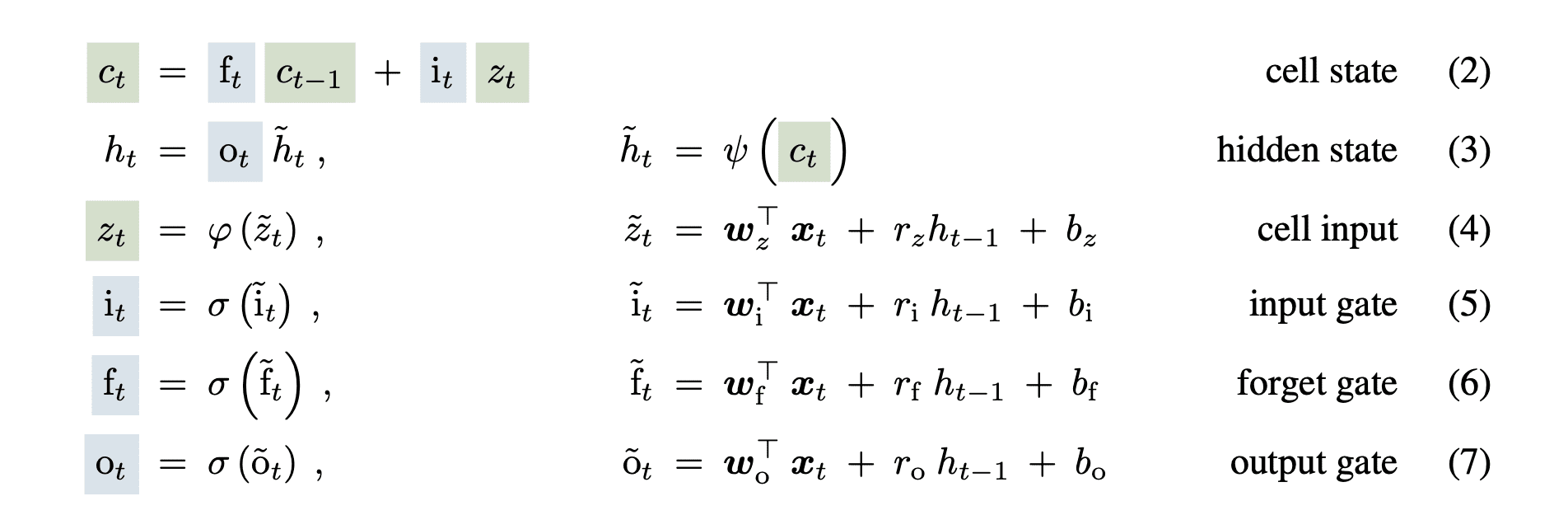
The LSTM network used a hidden state and cell state to counter the vanishing gradient problem in the vanilla RNN networks. They also added the forget, input and output sigmoid gates to control the flow of information. The equations are as follows:
Image from Paper
The cell state (ct) passed through the LSTM cell with minor linear transformations that helped preserve the gradient across large input sequences.
The xLSTM model modifies these equations in the new blocks to remedy the known limitations of the model.
sLSTM Block
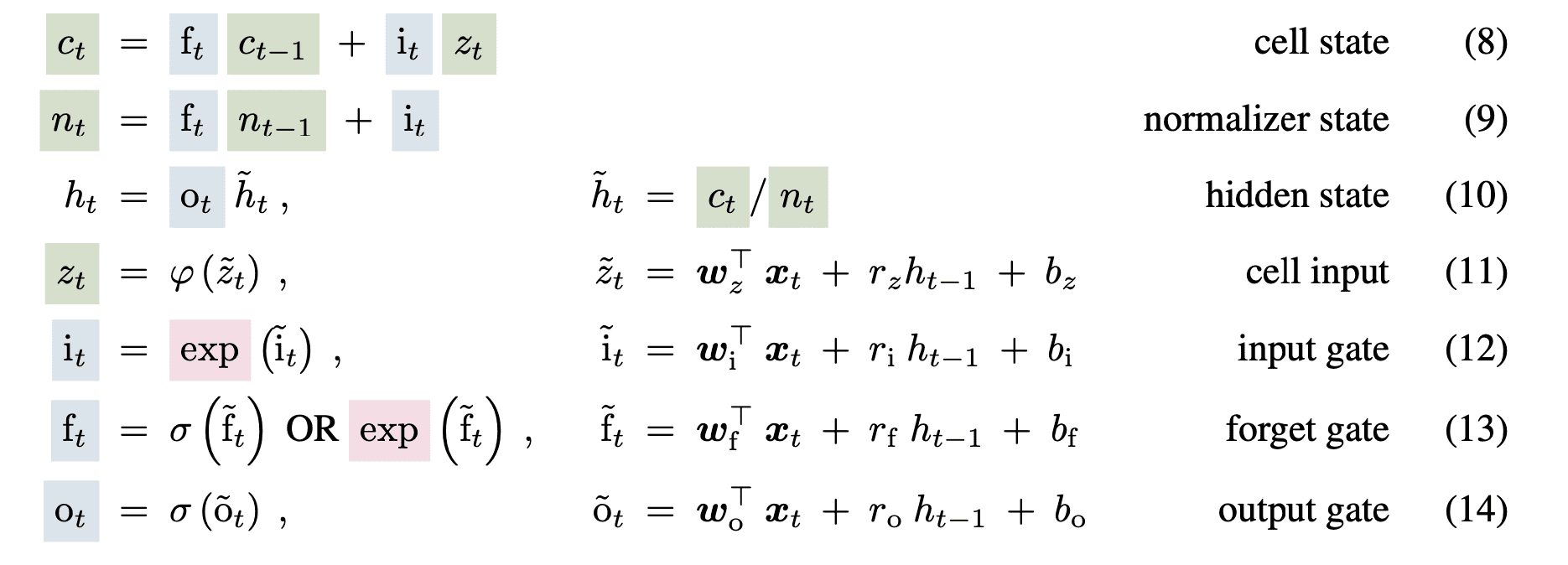
The block modifies the sigmoid gates and uses the exponential function for the input and forget gate. As quoted by the authors, this can improve the storage issues in LSTM and still allow multiple memory cells allowing memory mixing within each head but not across head. The modified sLSTM block equation is as follows:
Image from Paper
Moreover, as the exponential function can cause large values, the gate values are normalized and stabilized using log functions.
mLSTM Block
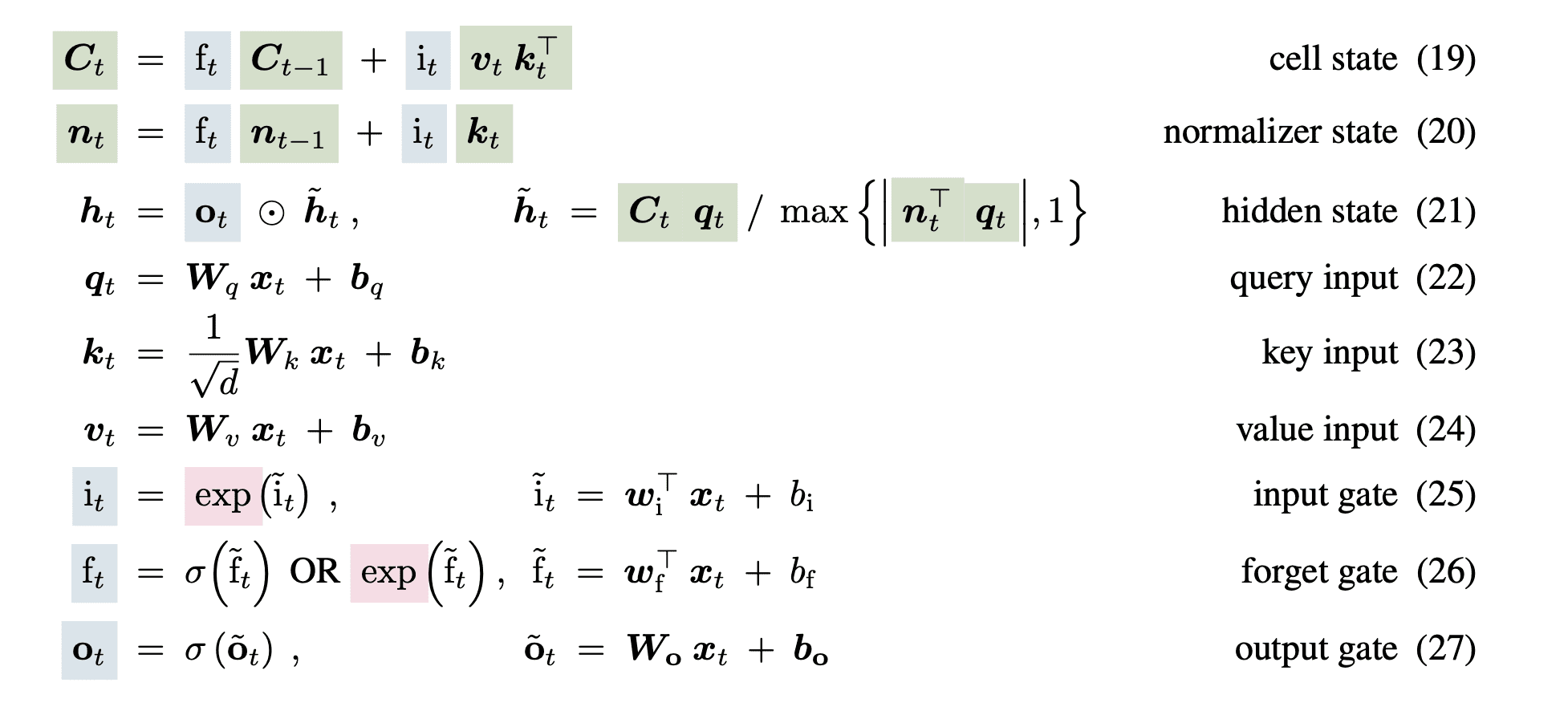
To counter the parallelizability and storage issues in the LSTM network, the xLSTM modifies the cell state from a 1-dimensional vector to a 2-dimensional square matrix. They store a decomposed version as key and value vectors and use the same exponential gating as the sLSTM block. The equations are as follows:
Image from Paper
Architecture Diagram
Image from Paper
The overall xLSTM architecture is a sequential combination of mLSTM and sLSTM blocks in different proportions. As the diagram shows, the xLSTM block can have any memory cell. The different blocks are stacked together with layer normalizations to form a deep network of residual blocks.
Evaluation Results and Comparison
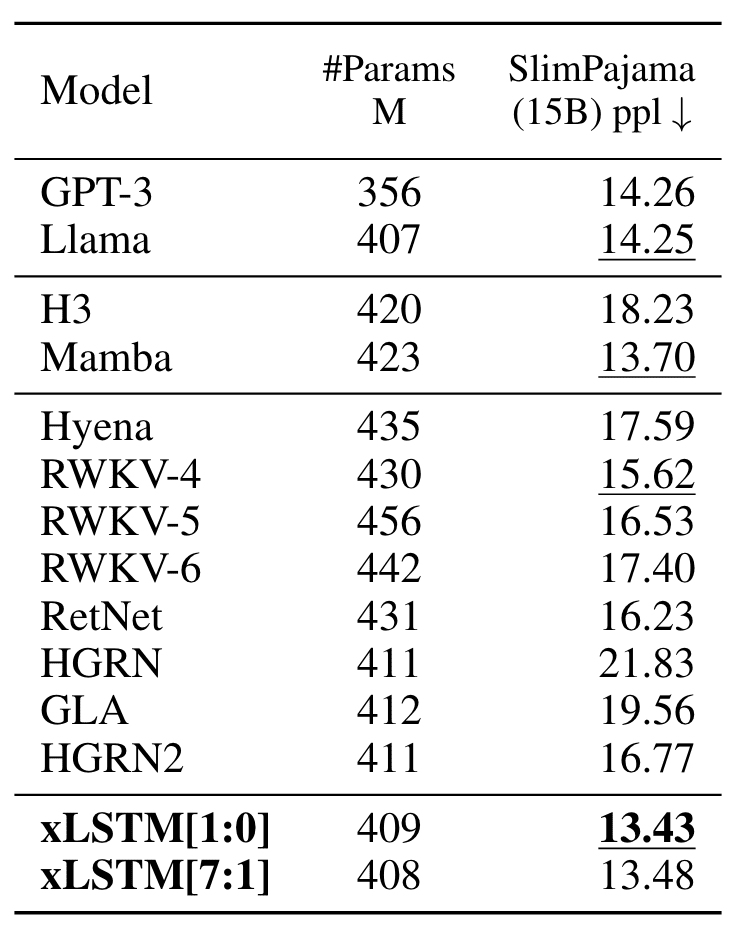
The authors train the xLSTM network on language model tasks and compare the perplexity (lower is better) of the trained model with the current Transformer-based LLMs.
The authors first train the models on 15B tokens from SlimPajama. The results showed that xLSTM outperform all other models in the validation set with the lowest perplexity score.
Image from Paper
Sequence Length Extrapolation
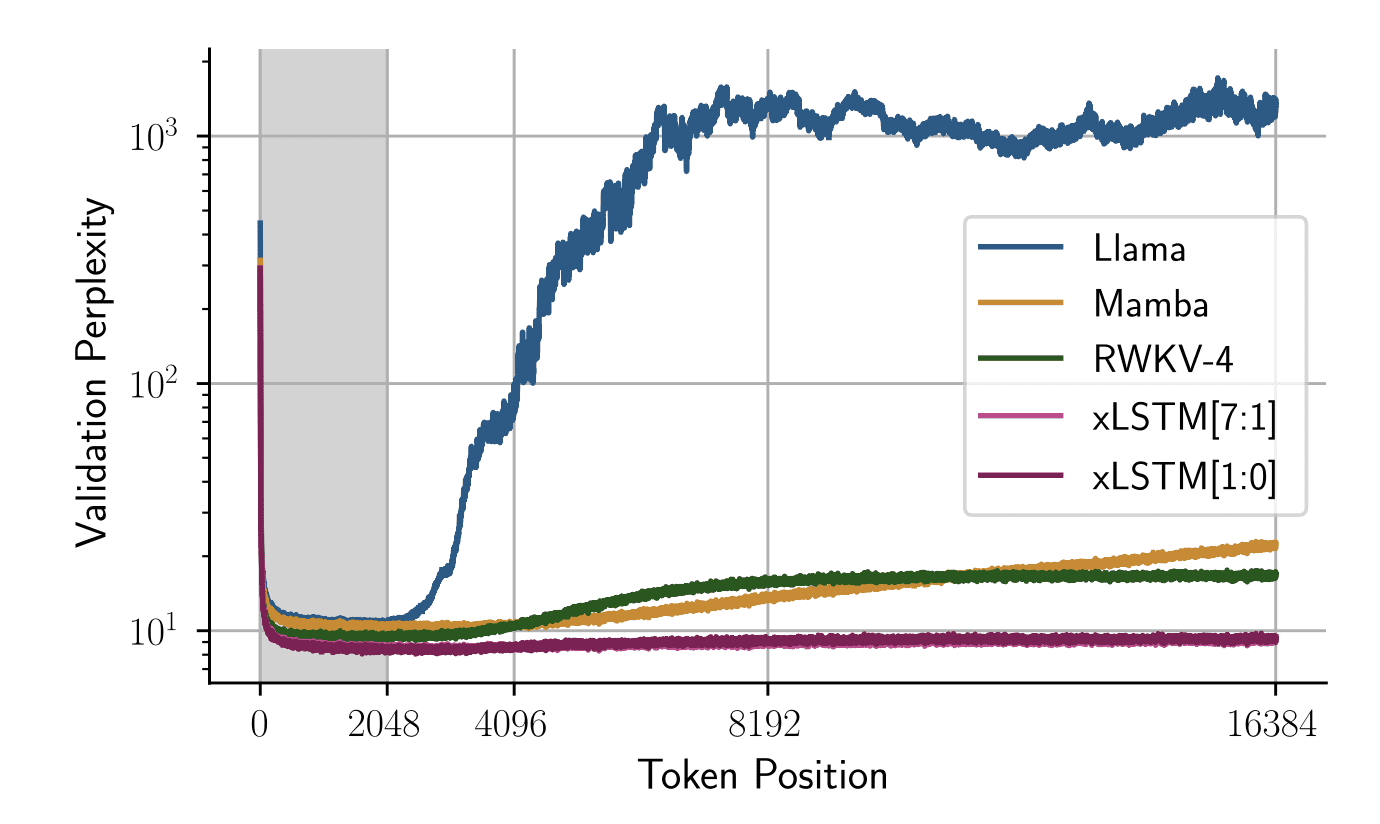
The authors also analyze performance when the test time sequence length exceeds the context length the model was trained on. They trained all models on a sequence length of 2048 and the below graph shows the validation perplexity with changes in token position:
Image from Paper
The graph shows that even for much longer sequences, xLSTM networks maintain a stable perplexity score and perform better than any other model for much longer context lengths.
Scaling xLSMT to Larger Model Sizes
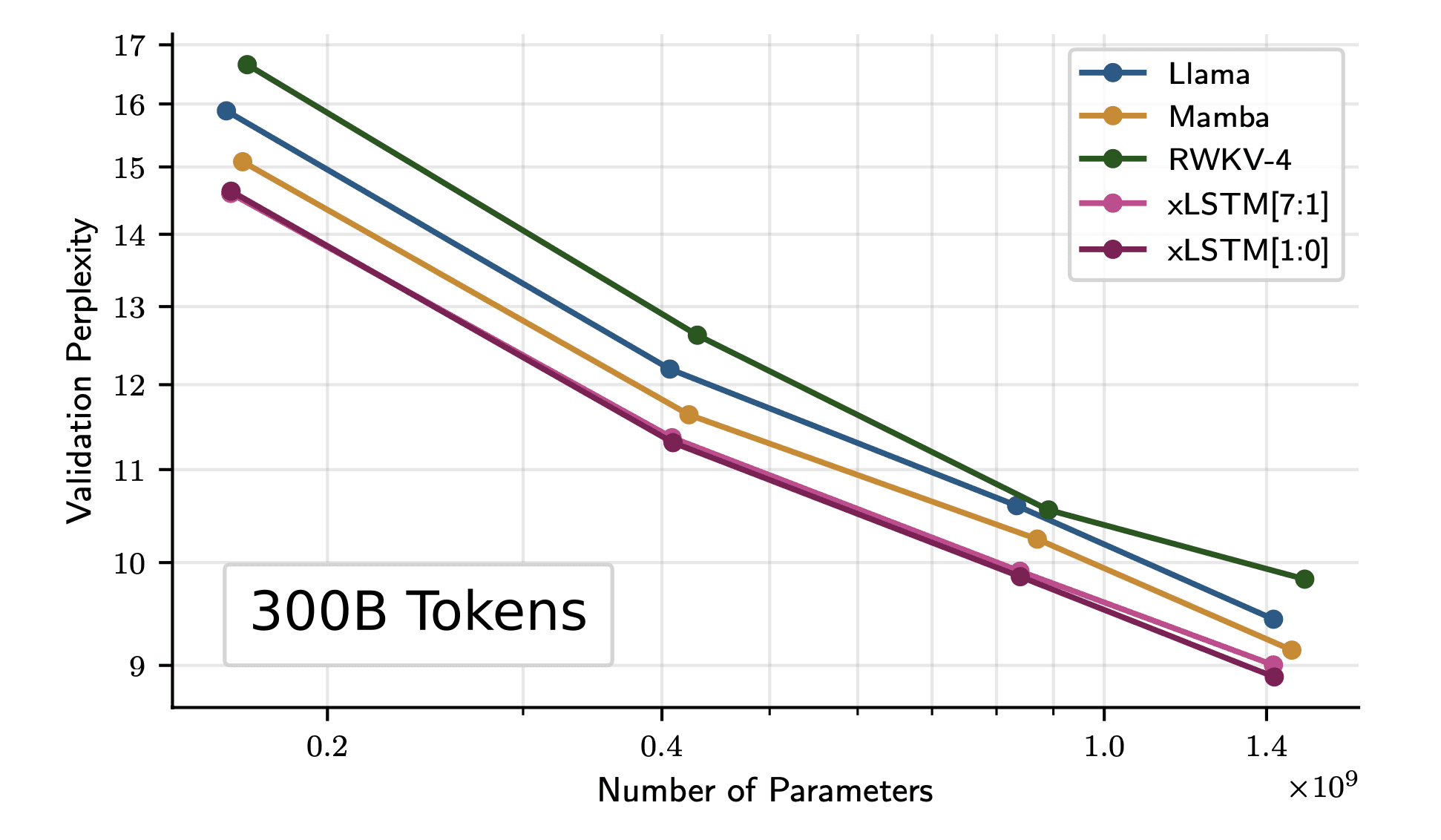
The authors further train the model on 300B tokens from the SlimPajama dataset. The results show that even for larger model sizes, xLSTM scales better than the current Transformer and Mamba architecture.
Image from Paper
Wrapping Up
That might have been difficult to understand and that is okay! Nonetheless, you should now understand why this research paper has got all the attention recently. It has been shown to perform at least as well as the recent large language models if not better. It is proven to be scalable for larger models and can be a serious competitor for all recent LLMs built on Transformers. Only time will tell if LSTMs will regain their glory once again, but for now, we know that the xLSTM architecture is here to challenge the superiority of the renowned Transformers architecture.
Kanwal Mehreen Kanwal is a machine learning engineer and a technical writer with a profound passion for data science and the intersection of AI with medicine. She co-authored the ebook "Maximizing Productivity with ChatGPT". As a Google Generation Scholar 2022 for APAC, she champions diversity and academic excellence. She's also recognized as a Teradata Diversity in Tech Scholar, Mitacs Globalink Research Scholar, and Harvard WeCode Scholar. Kanwal is an ardent advocate for change, having founded FEMCodes to empower women in STEM fields.
More On This Topic
GitHub Copilot and the Rise of AI Language Models in Programming Automation
Multivariate Time Series Analysis with an LSTM based RNN
Deploying Serverless spaCy Transformer Model with AWS Lambda
Five Key Facts About Wu Dao 2.0: The Largest Transformer Model Ever Built
If I Had To Start Learning Data Science Again, How Would I Do It?


















 https://t.co/PLQh78BJjl pic.twitter.com/EypCONNhCh