AI Whistleblowers Stand in the Way of AGI?

AI Whistleblowers Stand in the Way of AGI?

In an unconventional move, but not the first, a group of current and former employees, primarily from AI behemoth OpenAI, has urged their employers to prohibit non-disclosure agreements (NDAs) and empower whistleblowers to speak openly if the firms they work for prioritise growth and profit over safety.

Seven former and four current employees of OpenAI and two Google DeepMind employees, one present and one former have signed the open letter.

They claim that since governments have little to no obligation to receive information about AI companies’ technologies and civil society has none, “current and former employees are among the few people who can hold them accountable to the public”.

Wide-ranging secrecy agreements, however, put whistleblowers at the risk of losing their equity in the business if they choose to come forward.

Yoshua Bengio, Geoffrey Hinton, and computer scientist Stuart Russell, who together provided crucial research that resulted in the development of modern AI and later became some of its most vocal detractors, all backed the letter.

The letter’s authors expressed deep concern about the incentives of AI businesses to avoid governance and responsibility, underlining the importance of transparency and accountability in the industry.

Joshua Segren, co-founder of ShopCierge.ai. Source: X

A representative for OpenAI responded to the letter stating that the business is proud of its “track record of providing the most capable and safest AI systems” and believes in its scientific approach to addressing risk.

The representative also said that the company acknowledges that “rigorous debate is crucial given this technology’s significance”.

Little Overboard, Perhaps?

In his interview, Daniel Kokotajlo, former researcher in OpenAI’s governance division, raised the concern that “some employees believed” Microsoft had improperly tested and distributed a new version of the GPT-4 on Bing in India.

Microsoft refutes the claim.

While those calling for greater transparency and protections for whistleblowers need to be celebrated, it’s important to study the other side.

Some of the former employees are affiliated with the radical effective altruism movement, which tends to focus on the most catastrophic movement and emphasises the long-term effects of our actions. This includes the possibility that an out-of-control AI system could take over and wipe out humanity.

Critics have accused the movement of spreading apocalyptic scenarios regarding technology without proper backing.


Rachid Flih, co-founder of open-source platform Panora.

One of the signatories, Kokotajlo, said that before joining OpenAI, he predicted that artificial general intelligence (also known as AGI), an AI capable of human-like cognition, wouldn’t arrive until 2050.

Now, he says there’s a 50 percent chance the tech will arrive by 2027. He also believes there’s a 70 percent chance that this advanced AI will destroy humanity.

AI scientists like Yann LeCun of Meta have called people concerned about the field’s rapid advancement “doomers”, claiming that their “misplaced sense of urgency reveals an extremely distorted view of reality”.

Leopold Aschenbrenner published a 165-page study outlining a path from GPT-4 to superintelligence, its risks, and the difficulty of aligning such intelligence with human aims. Aschenbrenner was a member of OpenAI’s super alignment team and was sacked for leaking confidential information in April.

This has been discussed extensively previously, but his statements still remain unproven (at least for now).

The signatories’ opposition to NDAs that keep business insiders from raising risk-related concerns is another key demand. Legal hazards associated with this procedure include infringement of intellectual property. For sensitive information such as private data, trade secrets, or creative ideas that provide you a competitive edge, NDAs offer an essential layer of protection.

Profit Over Safety’

The letter comes after two of OpenAI’s senior staffers, co-founder Ilya Sutskever and key safety researcher Jan Leike, quit last month. Leike claimed that OpenAI had abandoned a culture of safety in favour of “shiny products” after he left.

A Ploy to Impede AGI?

Former OpenAI board member Helen Toner claimed in an interview that aired last week that Altman frequently misled and concealed facts from the board, particularly on safety procedures.

According to her, the board “was not informed in advance” about ChatGPT and actually learned about it on Twitter. (Although the corporation didn’t say it outright, it expressed disappointment in Toner’s continued revisiting of these concerns in a statement.)

Musk, who owns a rival chatbot and an AI business, will not be outdone. He is suing OpenAI on the grounds that it prioritises profits and its Microsoft partnership over human growth.

Joshua Achiam, research scientist at OpenAI, criticised the open letter on social media, arguing that employees going public with safety fears would make it harder for labs to address susceptible issues.

In a post on X, he said, “I think you are making a serious error with this letter. The spirit of it is sensible. However, disclosing confidential information from frontier labs, well-intentioned, can be outright dangerous. This letter asks for a policy that would, in effect, give safety staff carte blanche to make disclosures at will, based on their judgement.”

He isn’t the only one. “It would be more helpful if they raise specific problems with current or upcoming systems than just vaguely point to process generalities,” Meta’s lead product manager, GenAI, Arun Rao, said.

Similarly, former OpenAI employee and founder of Interdimensional.ai Andrew Mayne echoed the same. He said, “This has created a situation where people with good intentions could create a scenario in which the opposite of what they want to happen occurs.”

With both parties defending their positions on AI safety, it remains to be seen whether all this is merely noise on the path to AGI.

The post AI Whistleblowers Stand in the Way of AGI? appeared first on AIM.

AI-Powered Open Network VISTAAR Breaks Data Silos to Unify Indian Farmers

vistaar

In her 2023 budget speech, Finance Minister Nirmala Sitharam discussed the need for a Digital Public Infrastructure (DPI) for agriculture. As a result, VISTAAR, which stands for Virtually Integrated System to Access Agricultural Resources, was born.

Built upon the successful launch of ONDC and developed by the Department of Agriculture & Farmers’ Welfare (DA&FW), VISTAAR is an interoperable and federated public network dedicated to making agricultural information more accessible to farmers in India with the help of AI.

“The primary objective of VISTAAR is to empower farmers and enhance services through exponential technologies. However, this concept is likely to expand beyond its initial scope, allowing the entire ecosystem to participate in VISTAAR and reap benefits from its interactions,” Anand Rajan, founder at Apurva.ai, told AIM.

The idea is to bring the whole agriculture ecosystem, from farmers, extension workers, agritech companies, startups, agricultural research institutes, meteorological agencies, and consumers, together through an open, transparent and decentralised network.

In India, agriculture data and knowledge currently exist in silos. For instance, a farmer in Tamil Nadu might be seeking information on a treatment for a particular crop, however, that information might be only available with a farmer in a different part of the country.

With VISTAAR, the ministry aims to break the data silos and create a bridge where the information can flow seamlessly.

How will AI Empower VISTAAR?

“The core value of VISTAAR is to provide conversational, customised and contextual agricultural advisories to extension workers and farmers through multimodal inclusive channels, such as AI-powered bots, mobile apps, interactive voice response (IVR), web portals and more,” the ministry said in a bluebook.

The good thing about open networks is that farmers wouldn’t need a specific app to connect with the VISTAAR network.

Powered by Beckn Protocol, farmers will be able to access VISTAAR through familiar mediums like Telegram, WhatsApp, or any other relevant mobile application they are already using.

Farmers who don’t have access to smartphones can also access VISTAAR through Kissan call centres. Agents could leverage the knowledge repository to address farmers’ queries during the call quickly.

“The innovation lies in the shift from a single app interface to multiple apps and interfaces. This means that services, like those provided by ChatGPT, can be accessed through various mediums such as different chat apps or interactive voice recordings (IVR),” Rajan added.

However, farmers across India speak different languages. Hence, VISTAAR will also leverage the benefits of Bhashini to make the information available in the farmer’s native language.

The ministry also aims to utilise AI to assist farmers, providing responses that may include videos showcasing farmer innovations pertinent to their specific location and season.

“Another example of an application of AI is a startup offering large language Indic voice models leveraging VISTAAR to serve farmers and extension workers using voice as a primary interface to serve advisories and fulfil network interactions,” the ministry said.

Leveraging AI in Agriculture

The ministry also stated that in Bihar, Madhya Pradesh, Rajasthan, and Uttar Pradesh, around 4,000 extension workers and farmers are using an AI Telegram chatbot to receive agricultural advisories.

Trained on an extensive database of farmer-centric content, this chatbot provides precise, context-specific information in Hindi, English and Telugu, with additional languages to be added soon.

In Tamil Nadu, Apurva.ai recorded the experiences of 1500 farmers by collaborating with the ministry. “We utilise this tool to grasp innovations and best practices, and most importantly, we link it back to farmers in Tamil Nadu, delivering the information not in text but through audio,” Rajan said.

When a farmer asks a question about, for instance, innovations in organic farming, they can listen to another farmer’s firsthand experience tailored to the specific context, which is powered by AI.

Likewise, Wadhwani AI has developed an AI conversational Kisan Call Centre chatbot, which assists farmers 24/7 with real-time information.

These developments showcase the power of AI, which can be built into VISTAAR and will, in turn, benefit the Indian agricultural ecosystem.

What VISTAAR Aims to Achieve?

The first phase of VISTAAR prioritises empowering farmers and frontline extension workers by providing them with timely, accurate advisories, easy access to information and knowledge resources, verified data, and learning opportunities.

Whereas the subsequent phases will unlock innovation across more use cases to unbundle agri-commerce, agri-finance (credit, insurance, etc.), agri-supply chain and logistics.

The plan is also to enable access to green energy sources, amongst others, to make Indian agriculture sustainable and climate-resilient.

Moreover, VISTAAR will improve over time with valuable feedback received from the farmers and extension workers.

The post AI-Powered Open Network VISTAAR Breaks Data Silos to Unify Indian Farmers appeared first on AIM.

How Zoho’s No-Code Platform is Solving Rural India’s Educational Dilemma

India still faces a major challenge with educating its students, with over 1.25 million students out of school in 2022-23. States like UP, MP, Bihar, Gujarat, and Assam have the highest number of out-of-school children.

Despite government initiatives to improve rural education infrastructure, such as the Sarva Shiksha Abhiyan and Digital India program, the on-ground implementation often falls short due to lack of proper supervision and tracking.

Challenges related to access, quality of education, socioeconomic factors and infrastructure persist, with lack of proper classrooms, libraries, computer labs etc.

“Most schools and colleges still rely heavily on paper-based and manual data collection, which is the main hurdle in providing real-time insights that can enable decision intelligence,” noted Bharath Kumar B, head of customer experience and success at Zoho Creator in a conversation with AIM.

To overcome these challenges, Zoho through its low-code platform Zoho Creator has allowed NGOs like Pratham, which works to improve education for underprivileged children in rural India, to create apps to manage online classes, exams, student records, communication and more in one centralised system.

Pratham uses Zoho Creator apps to facilitate better data collection, analysis, and reporting, saving significant time and effort.

Institutes Embracing Zoho Creator

Beyond just supporting remote education, Zoho Creator is helping drive innovation and improve experiences across the student lifecycle.

For example, DAV Group of Schools built a unified custom solution consisting of 100 applications, including modules for IT ticketing, fixed asset management, career counselling, and entrance exams.

“SRM University used Zoho Creator to digitise their previously manual course registration process. They were following a manual paper-drive process to manage course registration, which was not scalable to meet their growing needs,” Kumar explained.

Likewise, YEG Academy, a Malaysia-based educational organisation built their entire process management application on Zoho Creator—and the platform has helped them save up to $50,000 in costs.

Ensuring Data Privacy and Security

With educational institutions handling sensitive student data in large volume, data privacy and security remain top concerns. Keeping this in mind, Zoho Creator offers enterprise-grade security features and complies with major data protection regulations to give schools peace of mind.

“Zoho Creator incorporates robust security and privacy controls like end-to-end encryption, GDPR- and HIPAA-compliance, multi-factor authentication, data isolation, and adherence to strict security protocols and data privacy laws,” said Kumar.

The company also ensures other compliance standards like ISO/IEC 27001, SOC 2 + HIPAA. Kumar also claimed that as a company, Zoho never sells customer data and automatically deletes data from terminated accounts within six months.

Empowering Educators and Students

In addition to back-office functions, Zoho Creator is being used to build innovative tools that directly impact teaching and learning. One example is the Teacher Training Management System (TTMS) built for the Department of State Education Research and Training of Karnataka.

Developed in collaboration with the Azim Premji Foundation, TTMS is transforming teacher education in India. The platform has already enabled TTMS, a cloud-based platform, facilitating over 2,000 training sessions for more than 200,000 teachers.

Moreover, the platform offers a wide range of study materials, including documents, PDFs, slideshows, and audio and video files, which teachers can access to prepare for training sessions.

Supporting Skill Development

Beyond K-12 and higher education, Zoho Creator is helping with skill development and vocational training. YEG Academy, which offers career guidance and education aligned with job market demands, was able to build a comprehensive system for managing students, enrollment, sales, customer service, finance, and HR on the platform.

Zoho has launched programmes like Young Creators Programme (YCP) to teach college students the basics of building low-code applications using Zoho Creator.

“In this free workshop, students are taught the basics of creating applications and solutions using Zoho Creator. They also learn aspects like automating business processes, managing data relationships, and utilising business intelligence and analytics,” Kumar added.

To date, YCP has collaborated with 32 educational institutions across 20 cities in India and introduced over 7,040 students globally to low-code development. By empowering the next generation with the tools to build applications, Zoho is helping create a pipeline of talent for the digital economy.

The platform also enables schools to digitise the entire admissions process, from inquiry to acceptance and enrollment. Features like online application forms, document upload, eligibility checks, and applicant communication can all be handled through a custom portal.

Beyond academics, Zoho Creator can also digitise campus processes virtually, such as vehicle fleet management, classroom asset tracking, library reservations, and dining hall orders.

As the education sector continues to evolve, Low-code will also enable schools to take advantage of emerging technologies like AI, machine learning, and augmented/virtual reality.

Zoho Creator already offers an AI Modeler feature that allows users to build intelligent applications without needing data science expertise.

Enabling Data-Driven Decision Making

Perhaps the most significant benefit of using a platform like Zoho Creator is the ability to collect and analyse data across the institution. When processes are digitised and centralised, schools gain visibility into areas that were previously siloed or opaque.

“Zoho Creator applications run on the same infrastructure as these services. We provide a proprietary cloud-native platform that was specifically designed to scale according to the needs of an application,” said Kumar. “All parts of the application scale automatically—from user request management and storage resources to computational abilities.”

With all data in one place, schools can generate reports and dashboards to track KPIs, identify trends, and make data-driven decisions. For example, administrators can analyse enrollment data to optimise course offerings, or use student performance data to identify at-risk students and intervene early.

Worthy Alternatives?

Besides Zoho Creator there are other low-code platforms and education management systems used in India, like Edisapp, Fedena, and Academia ERP, which could be considered alternatives or competitors to in the Indian education market.

Other global low-code platforms like OutSystems, Mendix, Planet Crust, and BP Logix demonstrate use cases and adoption in education, but they don’t specifically have a presence in India.

Creatrix Campus, is one such an AI-driven, cloud-based platform specifically designed for higher education institutions, is gaining significant traction in India and globally. The platform offers end-to-end solutions for automating student and faculty lifecycles, learning and teaching, aiming to provide exceptional experiences.

Key features include complete student lifecycle management, faculty management, outcome-based learning tools, analytics and reporting, a secure and customisable cloud platform, and a mobile-first approach. Creatrix Campus is already being used by over 150+ institutions in 28 countries, including India, with 100,000+ users.

While both platforms allow educational institutions to develop custom applications with minimal coding, Creatrix Campus appears to be more specialised for the higher education sector, whereas Zoho Creator offers flexibility for a broader range of educational use cases.

In comparison, Zoho Creator is a more general-purpose low-code application development platform that caters to various industries, including education. It enables users to build custom applications for admissions, course management, student records, and other educational processes.

The post How Zoho’s No-Code Platform is Solving Rural India’s Educational Dilemma appeared first on AIM.

Google’s AI-powered NotebookLM just got a big upgrade — how to try it (and why you should)

NotebookLM hero image

At Google I/O last year, the company unveiled NotebookLM, an AI-powered note-taking, research, and writing assistant. Since then, the AI tool has continued to evolve, most recently being upgraded to Gemini 1.5 Pro. Now it's becoming even more helpful.

On Thursday, Google released several upgrades to NotebookLM, making it accessible to more users worldwide and improving the application's ability to assist users in conducting research.

Also: How to use Google's AI-powered NotebookLM to organize your research

One of NotebookLM's biggest draws is that users can upload their materials into the notebook to get assistance with their content, such as summarizing, answering questions, and even using the AI assistant to generate new content. Now, users can upload Google Slides and web URLs in addition to the previously supported Google Docs, PDFs, and text files.

The option to add URLs is especially noteworthy: When conducting research, you often find sources online that offer more insights on the topic. Now, you can use NotebookLM to answer questions about a web page's content — or even convert the web page into a guide.

Additionally, NotebookLM now offers inline citations that reference the sources from which the AI pulled its responses. This helps you fact-check the response, which is especially important when using the tool to generate new text.

Because of its upgrade to Gemini 1.5 Pro, which added multimodal capabilities, NotebookLM can create answers based on images, charts, and diagrams in Slides or Docs. In its responses, NotebookLM will include citations for the images so that users can use them as evidence.

Also, the new Notebook Guide feature gives users a high-level summary of all the sources they input, as seen in the image below. This helps work as a sounding board where users can generate other helpful content such as tables of contents, study guides, briefing docs, FAQs, and timelines.

In addition to the new features, Google announced that it was making the upgraded version of NotebookLM available in 200 countries and territories worldwide.

Also: How to sign up for Google Labs — and 5 reasons why you should

You can access NotebookLM either from Google Labs or by visiting the NotebookLM website. Getting started is easy: Create a new notebook, upload your materials, and then work with NotebookLM to perform any of the abovementioned tasks.

Artificial Intelligence

Gemini 1.5 Pro Now Powers Google NotebookLM

Google’s AI-powered note-taking app, NotebookLM is getting more powerful with an upgrade in the underlying AI model and useful with new features. The AI-powered research and writing assistant is being upgraded with the Gemini 1.5 Pro large language model.

Google has also announced that it is coming to over 200 countries and territories around the world, making it widely accessible for diverse international users.

“Our goal from the beginning with NotebookLM has been to create a tool to help you understand and explore complex material, make new connections from information, and get to your first draft faster,” Google said while announcing updates to the platform.

NotebookLM is Google’s AI-powered research and writing assistant designed to help users organise and synthesise information.

The update includes new features such as support for Google Slides and web URLs, improved inline citations for easier fact-checking, and a Notebook guide for summarising sources. Enhanced with Gemini 1.5 Pro’s capabilities, the tool now also handles images, charts, and diagrams.

“You can upload sources — your research notes, interview transcripts, corporate documents — and instantly NotebookLM becomes an expert in the material that matters most to you,” the company said.

Inline citations in the summaries or notes will now directly take users to supporting passages in the sources provided, helping users to quickly and easily fact-check the AI response or dive deeper in the original text.

There’s a notebook guide that gives users a high-level understanding of the provided source by converting them into useful formats like FAQs, Briefing Docs or Study Guides.

“Thanks to Gemini 1.5 Pro’s native multimodal capabilities, you can now ask questions about images, charts and diagrams in your sources. NotebookLM will even include citations to images as supporting evidence when relevant,” the company added.

Enhanced by the capabilities of the Gemini 1.5 Pro language model, NotebookLM helps users streamline their workflow, ensuring that their research and writing are both comprehensive and well-supported. This makes it an invaluable tool for anyone needing to manage extensive information efficiently.

The post Gemini 1.5 Pro Now Powers Google NotebookLM appeared first on AIM.

Canon in Discussion with Indian, Global Players to Supply Chip Making Machines

Canon Inc., widely known for its cameras, is in discussions with Indian and global players to provide semiconductor lithography equipment, a crucial component in chip manufacturing, as it aims to compete with industry leader ASML.

The company is engaging with semiconductor firms investing in India, including the Tata Group and Powerchip Semiconductor Manufacturing Corp (PSMC).

Canon’s president and CEO, Manabu Yamazaki, stated, “We are in early stages of discussions with Indian and global semiconductor companies who have committed to invest in building semiconductor fabrication units in India as well as others who are expanding electronics manufacturing such as phones and laptops for assembling printed circuit boards and motherboards”.

The Japanese multinational has developed a range of semiconductor lithography equipment designed to meet the technical requirements of various applications beyond traditional semiconductor wafer processing.

Canon’s new chipmaking machines can produce circuits equivalent to the 5-nanometer scale when using extreme ultraviolet lithography (EUV), a field dominated by ASML. The company expects its device to reach next-generation 2nm production with further advancements.

In addition to its semiconductor ambitions, Canon has established a new subsidiary in India, Canon Medical Systems India, headquartered in Gurugram, to cater to the growing demand for medical equipment such as CT scanners, MRI machines, and ultrasound systems. The company aims to target key markets, including Chennai, Hyderabad, and Mumbai.

As part of its strategy to strengthen core business segments in India, Canon plans to contribute 30% of its revenue to the Asia business (excluding Japan) by 2035. The company recognises India as a critical market and aims to penetrate tier 2 and tier 3 cities with imaging, printing, and surveillance products while offering a wide range of semiconductor and flat panel display lithography equipment.

The post Canon in Discussion with Indian, Global Players to Supply Chip Making Machines appeared first on AIM.

Ethical hacker releases tool to exploit Microsoft’s Recall AI, says it’s not ‘rocket science’

Recall AI

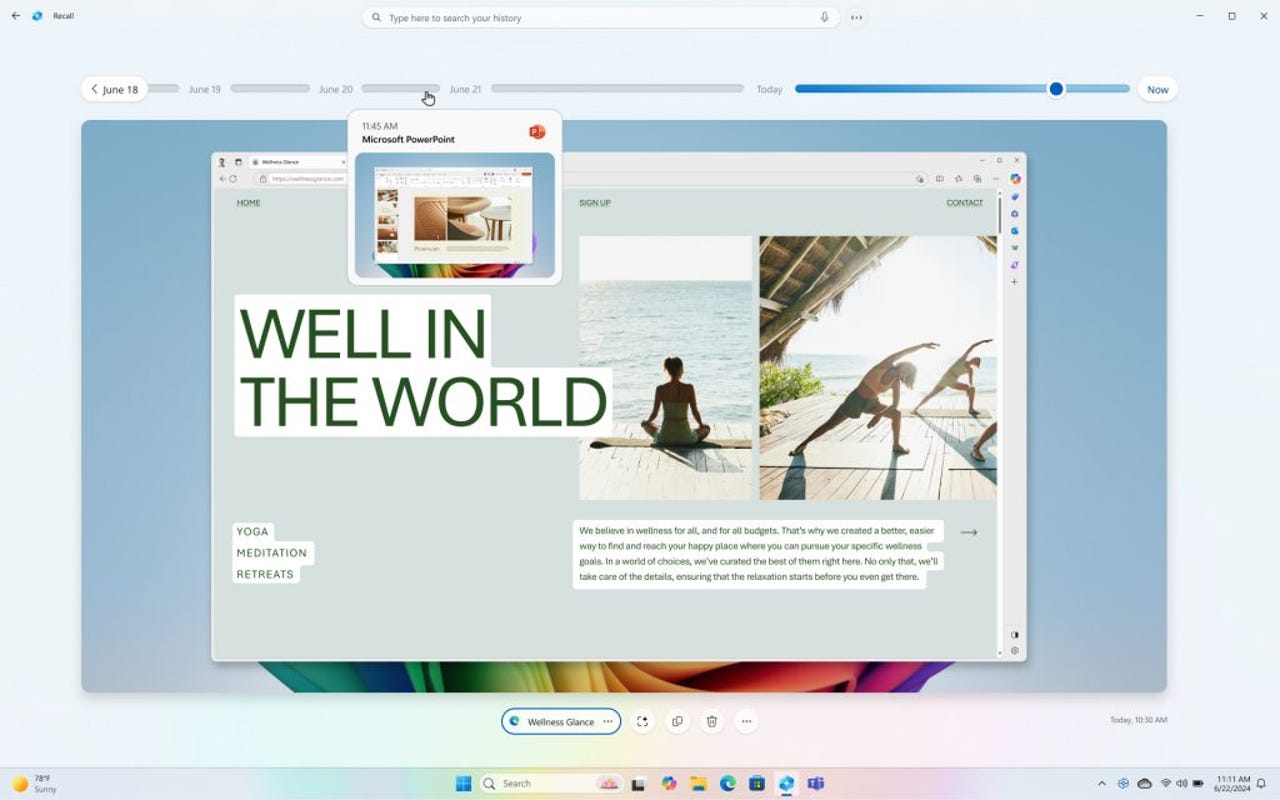
Microsoft has been touting its Windows Recall AI feature as a must-have for anyone who wants to remember an old webpage or message. But a new reveal suggests it may also come with its fair share of security problems.

Ethical hacker Alex Hagenah has launched a tool, called TotalRecall, that shows how anyone with enough know-how and the right tools could steal the recalls saved on a Windows machine and access that data, encryption-free, on a target device. According to Hagenah, whose work was reported on earlier by Wired, he analyzed Windows Recall and found that the tool — which takes screen captures of a Windows machine every five seconds — stores the data completely unencrypted on the user's computer.

Also: 5 ways to save your Windows 10 PC in 2025 — and most are free

"TotalRecall copies the databases and screenshots and then parses the database for potentially interesting artifacts," Hagenah wrote in a GitHub posting about TotalRecall. "You can define dates to limit the extraction as well as search for strings (that were extracted via Recall OCR) of interest. There is no rocket science behind all this."

Microsoft unveiled the Windows Recall feature last month, touting it as the next iteration of using artificial intelligence (AI) to remember what you do on a PC. The feature captures a copy of the PC every five seconds and can be queried for information, including messages previously sent, conversations with friends, and even a recipe that users may have accessed a week prior. Microsoft said the feature would save users time and make the experience of using Windows 11 far more efficient.

Also: The best VPN services of 2024: Expert tested and reviewed

Microsoft also touted how the captures would be stored on the device, so data wouldn't be transferred to the cloud, preserving security. Indeed, a Windows 11 machine's entire hard drive is encrypted when a user isn't logged into their system account. However, when the user does log in, the entire drive is decrypted, making information — including Recalls — available to the user and readily accessible to bad actors who want to steal the data.

TotalRecall is designed to run on a target PC and automatically locate where Recall snapshots are located. The tool can then set a date range for analyzing data or look at what happened on a person's computer at a specific time. While it hasn't been exploited in the wild — Recall AI hasn't launched yet, after all — it could pave the way for hackers with know-how or even domestic abusers to run a version of TotalRecall on a machine surreptitiously to monitor and steal sensitive information, conversations, emails, and more.

Also: Is Microsoft Recall a 'privacy nightmare'? 7 reasons you can stop worrying about it

For its part, Microsoft, which hasn't responded to a request for comment, has been informed by security researchers about the possible risks of allowing Recall to operate in this fashion. And while the company hasn't said if it will change anything, it did say on a support page about Recall that the feature could be turned off in Windows, effectively rendering any exploit inert.

It's also worth noting that TotalRecall was developed for a prerelease version of Windows 11. In some cases, those prerelease versions are configured differently than final builds and Microsoft may be bringing additional security features to Recalls that it didn't deliver in the prerelease version.

Even so, time is running out for Microsoft to do something if the Recall exploit is as big of a concern as Hagenah would suggest: the service launches on Windows on June 18.

Updated at 12:15 p.m. ET to include more detail on how Recall stores data and the possibility of a final version of the software launching with more security protections.

Featured

Sophos Uncovers Chinese Espionage Campaign, ‘Operation Crimson Palace’ in Southeast Asia

Beware of Chinese Open-Source LLMs

Sophos, a security solutions provider, has released a report detailing a highly sophisticated, nearly two-year-long espionage campaign against a high-level government target in Southeast Asia.

The campaign, dubbed “Operation Crimson Palace,” involves three distinct clusters of activity, two of which include tactics, techniques, and procedures (TTPs) that overlap with well-known Chinese nation-state groups, including APT41 and BackdoorDiplomacy.

During the investigation, which began in December 2022, Sophos X-Ops found that the attackers designed their operation to gather reconnaissance on specific users and sensitive political, economic, and military information. The campaign utilised a wide variety of malware and tools, including previously unseen malware such as PocoProxy, a persistence tool.

Paul Jaramillo, director of threat hunting and threat intelligence at Sophos, emphasised the importance of having a broader picture of how these Chinese threat groups coordinate their operations to improve organisational defenses.

“The overlap Sophos has uncovered is an important reminder that focusing too much on any single Chinese attribution may put organisations at risk of missing trends about how these groups coordinate their operations,” said Jaramillo.

Three Distinct Clusters of Activity Identified

Sophos X-Ops first discovered malicious activity on the targeted organisation’s network in December 2022 and began a broader hunt for malicious activity. In May 2023, they uncovered three distinct clusters of activity:

Cluster Alpha: Active from March to August 2023, focusing on disabling AV protections, escalating privileges, and conducting reconnaissance. It utilised malware and TTPs overlapping with Chinese threat groups BackdoorDiplomacy, APT15, Worok, and TA428.

Cluster Bravo: Active for a three-week span in March 2023, focusing on lateral movement and deploying the CCoreDoor backdoor for external communications, discovery, and credential exfiltration.

Cluster Charlie: Active from March 2023 to at least April 2024, focusing on espionage and exfiltration using the PocoProxy persistence tool. It shares TTPs with the Chinese threat group Earth Longzhi, a reported subgroup of APT41, and remains active.

Jaramillo noted that given the frequent overlap and sharing of tooling among Chinese threat groups, the TTPs and novel malware observed in this campaign may resurface in other Chinese operations globally.

Aggressive Development of Cyberespionage Operations in the South China Sea

“What we’ve seen with this campaign is the aggressive development of cyberespionage operations in the South China Sea. We have multiple threat groups, likely with unlimited resources, targeting the same high-level government organisation for weeks or months at a time, and they are using advanced custom malware intertwined with publicly available tools,” said Jaramillo.

Sophos asserts with high confidence that the overall goal behind the campaign was to maintain access to the target network for cyberespionage in support of Chinese state interests.

This includes accessing critical IT systems, performing reconnaissance of specific users, collecting sensitive military and technical information, and deploying various malware implants for command-and-control communications.

Sophos has released a detailed technical report on the three activity clusters and will continue to keep the intelligence community informed of their findings as they investigate further.

The post Sophos Uncovers Chinese Espionage Campaign, ‘Operation Crimson Palace’ in Southeast Asia appeared first on AIM.

Four iOS 18 AI features the iPhone needs to catch up with Android

Generative AI on iPhone

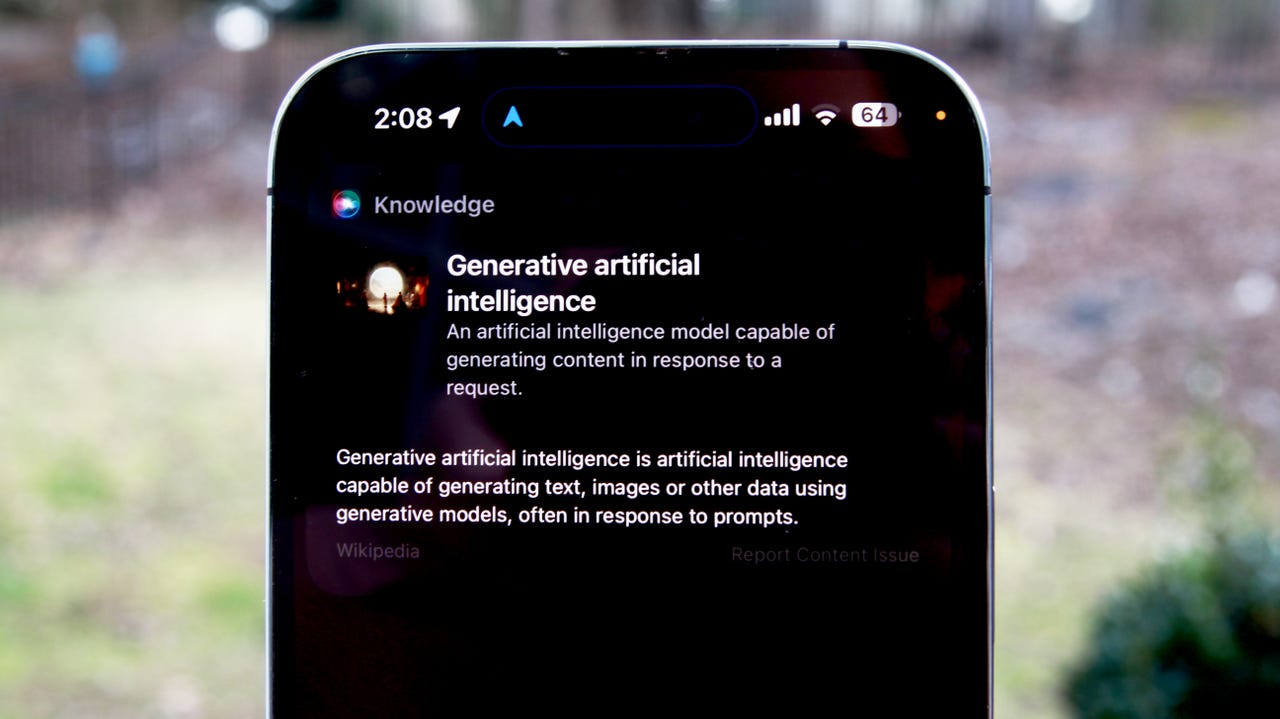
Siri currently can't generate an answer to a question; it searches the web for answers instead.

The generative AI landscape is filling up with bots, from text and image generators to AI-powered musicians. With Google, OpenAI, and Microsoft already having launched new products in recent months, Apple now finds itself trailing behind the generative AI train.

"We will continue to invest in these and other technologies that will shape the future. That includes artificial intelligence, where we continue to spend a tremendous amount of time and effort and we're excited to share the details of our ongoing work in that space later this year," Apple CEO Tim Cook said while discussing the first fiscal quarter of 2024.

Also: What to expect from WWDC 2024: Siri, AI upgrades, iOS 18, MacOS 15, more

Recent reports hint that iOS 18, expected to be announced on Monday during WWDC and launch later this year, will be one of the biggest iOS updates in the company's history, featuring RCS support and a smarter Siri. Sure, it'd be fun to see AI-powered music creation, a personalized fitness or meditation coach, and even AI-generated emojis, but here are the top four AI features I'm most excited (and hoping) to see with iOS 18.

1. Generative AI for a context-aware Siri

Unfortunately, Siri is arguably Apple's biggest shortcoming when stacking its AI services against competitors. While Siri has become a go-to feature on its own, it lags behind its virtual assistant competitors in intelligence and capability. Mounting consumer frustration over Siri's limitations and generative AI's popularity gives Apple a final push to give the voice assistant generative AI.

Also: 6 ways Apple can leapfrog OpenAI, Microsoft, and Google at WWDC 2024

If Apple can give Siri generative AI, iPhone users could ask the voice assistant for more than "Open this app" or "Search Google for this." Generative AI would let users ask Siri to draft messages and emails, explain a concept, and give personalized reminders tailored to their calendars, notes, or contacts.

The biggest challenge for Apple will be running large language models (LLMs) on-device, as one would expect it to do after its long-standing focus on consumer privacy. On-device processing means questions and responses won't have to be sent to remote cloud servers, minimizing data exposure.

2. Contextual search through image gallery

Google Photos now uses AI to automatically tag photos and recognize what is captured in the image. This lets users search through photos with natural language entries, like searching for the word "Concert" and having the Photos app display all the photos and videos taken in a concert. With as many photos as I take daily, this is a feature I'd love to see added to iOS.

Apple already uses AI for facial recognition to create Memories and organize photos of people, places, and events. Adding more AI capabilities to the Photos app could allow iPhone users to search for photos using keywords or phrases, like "beach" or "picnic at Central Park last summer," instead of scrolling through thousands of photos.

Also: 10 things I'd like to see in VisionOS 2.0

Other AI upgrades to photo galleries that could benefit smartphone users include finding and suggesting duplicate photos to free up storage, integrating AI voice assistants to search for photos with voice commands, recommending AI enhancements, and applying edits to photos.

3. Personalized text generation

ChatGPT became popular for its ability to generate text and have conversations that feel natural. Integrating text generation into the iPhone would make it easier for users to draft emails, generate stories, or edit resumes in Apple's native apps, like Notes and Messages.

Also: 5 rumored iOS 18 features I'm most excited about — and AI is just the start

This is another instance where Apple trails behind competitors, as AI text generation is available in the Google Pixel 8 and the Samsung Galaxy S24 lineup of smartphones, as well as Microsoft 365, Gmail, Google Docs, Sheets, and more.

4. AI-powered photo and video editing

We've seen how powerful generative AI can be in photo editing with Adobe Photoshop's Generative Fill and the Google Pixel's Magic Eraser. Unfortunately, this is another example of Apple's shortcomings in AI applications.

I'd love to see Apple integrate these AI features with the iPhone's camera to enhance its limited photo editing options and potentially expand into video editing. In addition to suggesting AI enhancements for photos, it would be great to see iOS improve auto-enhancement options, retouching capabilities, automatic framing and composition, photo restoration, sky replacement, and colorization.

Also: The 3 Apple products you shouldn't buy this month (including this iPad)

I don't anticipate Apple adding AI video generators to its devices. These tools are less common than AI image generators because video is a more complex medium, despite the availability of TikTok and Capcut filters.

It would be surprising to see Apple incorporate AI video features such as real-time background replacement and cinematic effects based on AI scene interpretation into iPhone video editing, especially since this feature was recently introduced to Final Cut Pro for iPad 2.

Apple

Chinese Sora Alternative Blows Everyone’s Mind

Chinese Sora Alternative Blows Everyone’s Mind

While the world is waiting for OpenAI’s Sora, Chinese TikTok competitor company Kuaishou has dropped a Sora-like model which is crazily good. Called Kling, the model is for open access and creates videos even better than Sora in many cases.

Sora by OpenAI is insane.
But KWAI just dropped a Sora-like model called KLING, and people are going crazy over it.
Here are 10 wild examples you don't want to miss:
1. A Chinese man sits at a table and eats noodles with chopstickspic.twitter.com/MIV5IP3fyQ

— Angry Tom (@AngryTomtweets) June 6, 2024

With the prompt – A Chinese man sits at a table and eats noodles with chopsticks; the model generated an almost realistic looking video when compared to Will Smith’s demonic looking noodles video released last year created by Modelscope Text2Video.

Kling can generate 2 minute videos with a single prompt in 1080p quality at 30fps and accurately simulates real-world physical properties.

Leveraging Diffusion Transformer architecture, KLING translates rich textual prompts into vivid scenes. With proprietary 3D VAE and support for various aspect ratios through variable resolution training, KLING has advanced 3D face and body reconstruction technology that allows for full expression and limb movement drive from a single full-body photo.

It is clear that China is increasingly getting ahead when it comes to building AI models. Kling, currently in open access, gives just a preview of what the country is building.

OpenAI has said that it is planning to release Sora by the end of this year, but it might be too late for the company to catch up with China’s text-to-video models. The only thing that it is keeping this at bay is that China might not release the model for world wide access.

Interestingly, Kling isn’t the first video generation model from China. Released in April, Vidu AI was the first chinese version of Sora which was able to create 16 seconds long with 1080p resolution.

This is actually killing me. Apparently Vidu (China’s #SORA) was trained on uncensored vid data
Look closely between the bear’s legs 🤣
I guess it’s realistic? pic.twitter.com/yYkyKYKjrD

— Andrew Gao (@itsandrewgao) April 27, 2024

The post Chinese Sora Alternative Blows Everyone’s Mind appeared first on AIM.