11 Times Coding Died in 2025

In 2025, declaring the death of software engineering became a recurring sport in Silicon Valley. Founders, CEOs, and AI researchers lined up to announce that code was about to write itself, and engineers were about to become optional. None of it quite played out that way. But, the declarations themselves defined the year.

Mark Zuckerberg and the Mid-Level Engineer Apocalypse

In January 2025, Meta CEO Mark Zuckerberg told the Joe Rogan Experience that AI would soon replace mid-level engineers across the industry. He framed it as an economic inevitability rather than a moral choice. “A lot of the code we have in our apps will be built by AI engineers instead of people engineers.”

The comment landed hard because it came from a company that employs thousands of developers. For many engineers, this was the moment casual anxiety turned into something sharper.

Dario Amodei’s Three to Six Month Countdown

Anthropic CEO Dario Amodei delivered one of the boldest timelines of the year while speaking at the Council on Foreign Relations. “I think we will be there in three to six months, where AI is writing 90% of the code. And then, in 12 months, we may be in a world where AI is writing essentially all of the code.”

The quote ricocheted through tech Twitter and VC decks alike. It became shorthand for how fast things were supposedly moving.

Marc Benioff Puts Engineering Hiring on Ice

Salesforce CEO Marc Benioff moved from prediction to policy. In January, he publicly said the company was debating whether to hire any engineers at all in 2025.

Benioff said they are seriously debating if they need to hire anybody this year. He cited 30% productivity gains from AI agents. This isn’t a future scenario, but a real hiring conversation at a $200 billion company.

Sam Altman and the Race to the World’s Best Coder

In February, OpenAI CEO Sam Altman said the quiet part out loud. He predicted that by the end of 2025, an AI system would be the best programmer in the world. He pointed to internal benchmarks showing OpenAI’s reasoning model climbing competitive programming leaderboards and said they would “hit number one by the end of this year.”

Software engineering, in this framing, was just another leaderboard waiting to be topped.

Sundar Pichai’s Ever-Rising Code Percentages

Google CEO Sundar Pichai did not declare engineers obsolete outright. He let the numbers do the talking. In October 2024, he said over 25% of Google’s new code was AI generated. By June 2025, that figure had crossed 30%. Each earnings call pushed the number higher and fed speculation about where it would stop. The implication was clear even if the word “replacement” was never used.

Jensen Huang Declares a New Programming Language

At London Tech Week in June, NVIDIA CEO Jensen Huang delivered one of the most quoted lines of the year. “There’s a new programming language. It is called ‘human’.” Traditional programming, he argued, was effectively dead. The future was about describing intent and letting machines do the rest.

It sounded liberating. It also sounded like a eulogy for hard technical skill.

Satya Nadella Quantifies the Shift Inside Microsoft

Microsoft CEO Satya Nadella revealed between April and June that 20% to 30% of Microsoft’s internal codebases were already written entirely by AI. He shared this casually, almost as a progress update. Coming from a company with tens of thousands of engineers, the message landed quietly but heavily. This was not a lab demo. This was production code.

Tobias Lütke Flips the Burden of Proof at Shopify

In April, a leaked internal memo from Shopify CEO Tobias Lütke made headlines across tech. AI use was now a “fundamental expectation.” Teams had to prove that AI could not do a task before asking for more people. The default assumption was no longer that work needed engineers. Engineers had to justify themselves.

Duolingo Goes “AI First”

Duolingo CEO Luis von Ahn announced an “AI First” strategy that same month. The company would “gradually stop using contractors to do work that AI can handle.” Managers were required to show that AI could not do a job before hiring humans. By August, 80% of Duolingo engineers were using AI tools daily. The message was not subtle. Adapt or get out of the way.

Bill Gates Says Humans Will Be “Unnecessary for Most Things”

Across interviews in 2025, Bill Gates delivered the widest version of the claim. He said AI would make humans “unnecessary for most things” within a decade. Software development was a central example. He added that if he were starting a company today, it would be “AI-first.” When one of the original architects of the software industry talks this way, people listen.

Arvind Krishna and IBM’s 30% White-Collar Shock

IBM CEO Arvind Krishna framed the threat more broadly, but software engineers were firmly in the blast radius. In multiple interviews through 2025, he said AI could replace up to 30% of white-collar jobs. He paired the warning with reassurance, arguing that total employment would still grow.

The contradiction did not go unnoticed. On one hand, mass displacement, and on the other, optimism. For engineers, the takeaway was simpler than the nuance. A third of roles were on the line, and no one was pretending software was exempt.

The Irony

By the end of 2025, none of these predictions had fully materialised. AI did not write 90% of the world’s code. Software engineers were not wiped out. Hiring freezes quietly softened. Teams still needed people who understood systems, trade-offs, and failure modes. What did survive were the quotes.

Together, they form a perfect time capsule of a year when confidence ran far ahead of reality.

The post 11 Times Coding Died in 2025 appeared first on Analytics India Magazine.

Oracle Brings Oracle Database@Google Cloud to India

Oracle has launched Oracle Database@Google Cloud in India, allowing customers to run Oracle database services directly within Google Cloud’s Mumbai region, as enterprises increase adoption of multicloud strategies and data residency requirements tighten.

The service gives Indian customers access to Oracle Exadata Database Service on Dedicated Infrastructure, Oracle Autonomous AI Database, and Oracle Autonomous AI Lakehouse via Google Cloud’s Asia-South 1 region, while ensuring data remains in-country to meet regulatory and compliance needs.

It also allows Oracle and Google Cloud partners to resell the service via the Google Cloud Marketplace.

“As enterprises in India increasingly adopt multicloud strategies, Oracle Database@Google Cloud provides the flexibility, performance, scale, and security they need,” said Shailender Kumar, senior vice president and regional managing director, Oracle India. “Customers in India can now integrate Oracle AI Database capabilities with Google Cloud’s AI and analytics tools and services.”

Google Cloud said the launch will support customers looking to modernise applications and migrate workloads. “Oracle Database@Google Cloud combines Google Cloud’s AI and analytics with Oracle’s database services to help organisations across India accelerate IT modernisation,” said Sashi Sreedharan, managing director, Google Cloud India.

The offering allows enterprises to combine data stored in Oracle databases with Google Cloud services such as BigQuery, Vertex AI and Gemini models, enabling analytics, AI-driven applications and workload migration across platforms.

As part of the rollout, Oracle and Google Cloud have also introduced a partner program in India that allows eligible partners from both ecosystems to purchase and resell Oracle Database@Google Cloud through private offers on the Google Cloud Marketplace.

The post Oracle Brings Oracle Database@Google Cloud to India appeared first on Analytics India Magazine.

Google Launches Gemini 3 Flash, Promises Faster Performance and Lower Costs

Google has rolled out Gemini 3 Flash, a new AI model for developers that the company claims delivers faster performance and lowers costs while retaining advanced reasoning and multimodal capabilities.

The company is making the frontier intelligence model accessible through the Gemini API via Google AI Studio, Gemini CLI, Android Studio, agentic development platform Google Antigravity, and for enterprise customers through Vertex AI.

Gemini 3 Flash is priced at $0.50 per million input tokens and $3 per million output tokens, with additional cost reductions through context caching and batch processing.

“Today we’re introducing Gemini 3 Flash, our latest model with frontier intelligence built for speed at a fraction of the cost,” said Logan Kilpatrick, group product manager at Google DeepMind.

According to Google, Gemini 3 Flash builds on the capabilities of Gemini 3 Pro and outperforms Gemini 2.5 Pro across several benchmarks, while operating up to three times faster. It stated that the model supports multimodal reasoning, coding, agentic workflows, and visual understanding, including code execution for tasks such as counting, zooming, and editing visual inputs.

Google said the Flash series remains its most widely used model family, processing trillions of tokens across hundreds of thousands of applications. With Gemini 3 Flash, the company aims to support large-scale production use cases that require lower latency and higher rate limits.

Early users have already integrated the model into products spanning software development, gaming, document analysis, and deepfake detection. Google also recently introduced CC, an experimental AI productivity agent developed by Google Labs, to help users manage daily tasks and organise their workday more efficiently.

The post Google Launches Gemini 3 Flash, Promises Faster Performance and Lower Costs appeared first on Analytics India Magazine.

Zuppa Geo Navigation, IISc Bengaluru Set Up Drone Centre of Excellence

Zuppa Geo Navigation Technologies has partnered with the Indian Institute of Science (IISc), Bengaluru, to establish a drone centre of excellence (CoE) at IISc’s department of mechanical engineering to advance indigenous unmanned aerial vehicle (UAV) technologies.

The centre will focus on research, design, and testing of drone systems, with an emphasis on autonomous platforms, aerial systems, and cyber-physical integration. The initiative aims to support India’s efforts to strengthen domestic UAV capabilities across sectors, including defence, agriculture, logistics, disaster management, and smart cities.

This comes after the company partnered with Chennai-based Garuda Aerospace in March this year.

The CoE will combine Zuppa’s cyber-physical technology stack with IISc’s research expertise in aerodynamics, robotics, control systems, and systems engineering. According to the partners, this collaboration is intended to accelerate the development of homegrown drone technologies suited to Indian operational and environmental conditions.

“At Zuppa, our mission has always been to spearhead indigenous innovation in UAV and navigation systems,” said Sai Pattabiram, founder and managing director of Zuppa. “The establishment of this centre of excellence at IISc represents a milestone in our journey, as it brings together academic excellence with industry-driven technological leadership.”

He added that the partnership aims to create solutions that can scale beyond domestic applications and meet global benchmarks.

A senior representative from IISc’s department of mechanical engineering said the collaboration would help bridge the gap between academic research and industry deployment.

“By establishing this CoE in collaboration with Zuppa, we aim to advance UAV research that integrates deep scientific insights with practical industry applications,” the representative said. “This partnership will create a strong foundation for innovations in drone design, autonomy, and performance.”

The drone CoE will also support training and research programmes for students and engineers, with a focus on building long-term capabilities in UAV design, autonomy, and system performance.

The initiative aligns with broader national efforts to promote self-reliance in critical technologies and strengthen India’s drone ecosystem through industry–academia collaboration.

The post Zuppa Geo Navigation, IISc Bengaluru Set Up Drone Centre of Excellence appeared first on Analytics India Magazine.

Apple in Early Talks with Indian Chipmakers to Assemble iPhone Chips

Apple’s New In-House Chip is a Bigger Breakthrough Than its Latest iPhoneApple’s New In-House Chip is a Bigger Breakthrough Than its Latest iPhone

Apple has begun early discussions with Indian chipmakers to assemble and package components for its iPhone, the Economic Times reported, citing sources. The talks involved Murugappa Group-owned CG Semi, which is building an outsourced semiconductor assembly and test facility in Sanand, Gujarat.

The exploratory talks are the first time Apple has considered assembling and packaging some chips in India, and the discussions are in early stages with no firm agreement yet. Reports said Apple’s talks with CG Semi are “in the very initial stages”. While it is not yet clear “what chips will be packaged out of the Sanand facility at this stage, it will likely be display chips”.

Meanwhile, CG Semi told ET it does not comment on market speculation or talks with specific customers. “We will make appropriate disclosures as and when there is something concrete to share,” the company said.

If a deal goes ahead, it could represent a step up in the value chain for Indian vendors supplying Apple products. The country’s semiconductor industry has recently seen activity, including a pact between US chipmaker Intel and Tata to explore the manufacturing and packaging of Intel products locally.

Analysts say Apple could benefit from a broader supplier base as it seeks to diversify manufacturing locations. However, any progress will depend on meeting Apple’s quality requirements.

Apple has been expanding its manufacturing footprint in India for several years. The company has previously stated its aim to produce a majority of iPhones sold in the United States at Indian facilities by the end of 2026.

The post Apple in Early Talks with Indian Chipmakers to Assemble iPhone Chips appeared first on Analytics India Magazine.

Nebius AI Cloud 3.1 Adds NVIDIA Blackwell Ultra Compute and Capacity Management Tools

Fujitsu Applies AI-Based QSP Models to Identify Gut-Brain Mechanism Linked to Citicoline

Dec. 17, 2025 — Kirin Holdings Company, Limited and Fujitsu Limited have jointly conducted research on food functionality simulation…

Boeing-Backed Wisk Tests its First Autonomous eVTOL for Passenger Flight

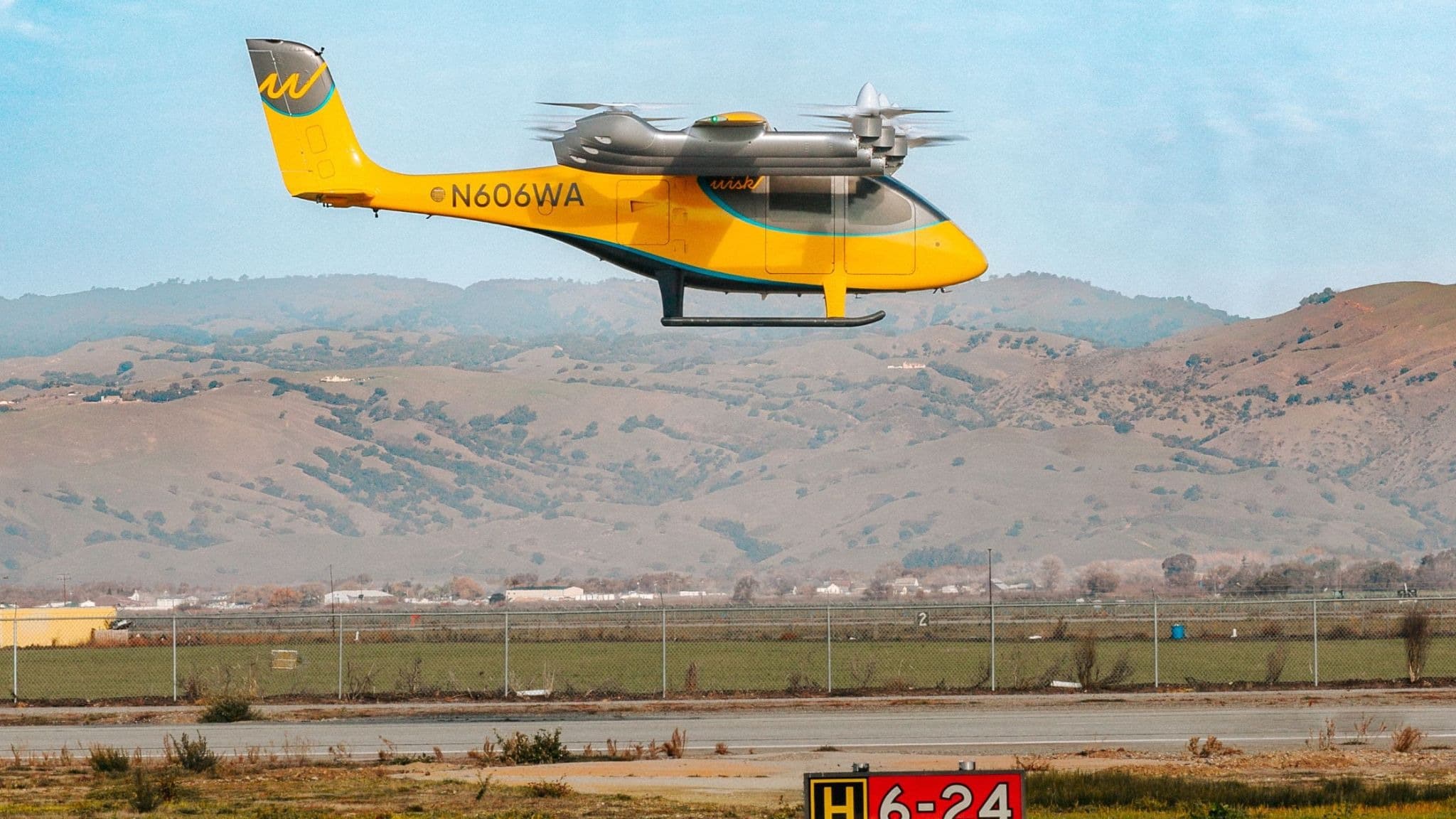
US-based company Wisk Aero, backed by Boeing, completed the first flight of its Generation 6 autonomous electric vertical take-off and landing aircraft (eVTOL) on December 16 at its test facility in Hollister, California.

The company said the aircraft conducted a vertical take-off, hover, and stabilised flight as part of its certification programme in the United States.

The flight marks the first test of an autonomous passenger aircraft that Wisk has submitted for type certification to the US Federal Aviation Administration (FAA). According to Wisk, Generation 6 is intended for commercial use, with planned launch markets, including Houston, Los Angeles and Miami.

Wisk said the initial flight validated core flight systems and marked the start of a wider test campaign focused on safety and performance. The company has completed more than 1,750 test flights across six aircraft generations, according to the statement.

“This first flight is the moment our team has been working towards,” Wisk chief executive officer Sebastien Vigneron said. “It reaffirms our belief in autonomy, and we are even more energised to continue the journey to bring safe, everyday flight to everyone.”

Generation 6 forms part of Wisk’s ongoing certification project with the FAA. The company said the aircraft is designed to meet existing commercial aviation safety standards and operates without an onboard pilot, with human oversight provided by a ground-based supervisor.

Brian Yutko, vice-president of product development at Boeing Commercial Airplanes, and chairman of Wisk’s board, said the programme has relevance beyond the company. “The engineering methods and technologies are all a valuable source of insight for Boeing as we work together and thoughtfully apply them to the future of flight,” he said.

Wisk said upcoming tests will expand from hover operations to higher speeds and altitudes. The programme will also include complex manoeuvres such as transitions between flight modes.

In parallel, the company will continue work on autonomy systems, including detect-and-avoid and navigation, while coordinating with the FAA, NASA, and other partners.

The post Boeing-Backed Wisk Tests its First Autonomous eVTOL for Passenger Flight appeared first on Analytics India Magazine.