Nebius AI Cloud 3.1 Adds NVIDIA Blackwell Ultra Compute and Capacity Management Tools
AMSTERDAM, Dec. 17, 2025 — Nebius today announced Nebius AI Cloud 3.1, bringing next-generation NVIDIA Blackwell Ultra…
Artificial Intelligence News
AI world news.
AMSTERDAM, Dec. 17, 2025 — Nebius today announced Nebius AI Cloud 3.1, bringing next-generation NVIDIA Blackwell Ultra…


Oracle, a longtime leader in database software and cloud services, experienced a dramatic stock decline in late 2025. Shares reached an all-time high of approximately $328 in September 2025 but have since fallen to around $188 as of mid-December, representing a drop of over 40%.
The correction has led to billions of dollars in market value losses and contributed to wider selling in AI-related stocks. The plunge accelerated following the company’s fiscal second-quarter 2026 earnings release on December 10, 2025, which disappointed investors despite signs of strong future demand.
The pressure had already begun earlier. On November 18, 2025, Oracle’s market value had dropped by $315 billion since its OpenAI deal on September 10, which analysts dubbed the “curse of ChatGPT.” The market cap eroded further, falling to $533 billion, down from $927 billion in September.
Oracle is not the only company tied to OpenAI whose shares plunged. Japanese technology conglomerate SoftBank Group, a key investor in OpenAI, saw its shares drop by 40% between October 31 and November 26, resulting in a loss of nearly $50 billion in market capitalisation.
Oracle’s Q2 results revealed a mismatch between explosive demand for AI infrastructure and the company’s ability to convert it into immediate revenue.
While remaining performance obligations, a key metric for future cloud contracts, rose to $523 billion year over year, revenue growth fell short of Wall Street expectations. The company also issued third-quarter guidance below estimates, citing ongoing investments needed to meet demand.
A major concern for investors is Oracle’s aggressive spending on AI data centres. In recent months, the cloud has emerged as a key player in AI after a $300 billion deal with OpenAI was disclosed in September, under which the startup will buy computing power over about five years starting in 2027.
Oracle said capital expenditures for fiscal 2026 are now expected to be about $15 billion higher than earlier estimates, after the company burned around $10 billion in cash in the first half of the year. Executives said on a post-earnings call that total capital spending is projected to reach about $50 billion in the fiscal year ending May 2026.
To fund this buildout, Oracle raised $18 billion in new debt, pushing total debt over $100 billion. These investments are necessary to energise capacity for AI workloads, but they are pressuring near-term profitability and free cash flow.
Massive spending across the sector, with limited immediate returns, has raised questions about whether the hype is outpacing reality. “Oracle already has a huge amount of debt. Their balance sheet’s not that good. At some point, they’ll heed the warning of the bond market and slow things down,” said Jim Cramer of CNBC. He added that data centres involve high costs and execution challenges, and that Oracle should not put its balance sheet at risk to support Sam Altman’s plans.
Analysts have raised concerns about Oracle’s ability to fund its expansion plans.
“Ultimately, it comes down to ‘how is Oracle going to raise the money?’” RBC Capital Markets analyst Rishi Jaluria told WSJ. “It’s one thing to build a backlog, but having that backlog translate to revenue shows the ability to actually meet those demands.”
However, not all analysts share this view.
Bank of America analyst Brad Sills told TheStreet, “We view the current mismatch of spend versus revenue as an investment curve issue rather than a change in fundamentals.”
The analyst said the near-term pressure stems from the need for higher capital spending to meet demand, with Oracle absorbing the impact of the rapid pace of investment required by current AI demand trends.
Sills said the company’s core business remains strong, pointing to growing AI demand, data centre projects moving on schedule and Oracle Cloud Infrastructure’s ability to support different platforms and contract types. He added that Oracle’s management has reiterated that the company retains access to multiple financing channels and remains committed to maintaining its investment-grade credit rating.
Oracle’s surge in capital spending comes amid a broader wave of investment by major cloud providers racing to meet AI demand, though the scale of spending and balance sheet impact varies.
Google expects full-year 2025 capital expenditures of between $91 billion and $93 billion, while Meta has allocated $64 billion to $72 billion, with plans for further increases. Microsoft spent about $80 billion on AI cloud workloads and data centres.
Amazon leads the group, with estimated investments of $100 billion to $125 billion focused on AI capabilities and cloud infrastructure. The company has also announced plans to invest up to $50 billion to expand AI and supercomputing systems for US government customers on AWS.
However, these investments typically take years to generate returns. AI infrastructure projects often involve long build cycles, delayed revenue recognition and upfront capital commitments, creating a lag between spending and returns.
This dynamic has become a growing concern across the sector, particularly as interest rates remain elevated and debt financing becomes more expensive.
Going forward, investors are likely to focus on Oracle’s ability to bring new data centre capacity online on schedule, convert backlog into revenue, and stabilise cash flows as spending peaks.
The post How Oracle Lost $400 Bn in Market Cap in Just 3 Months appeared first on Analytics India Magazine.
Across industries, organizations are drowning in unstructured data: files, videos, images, chat logs, design documents,…

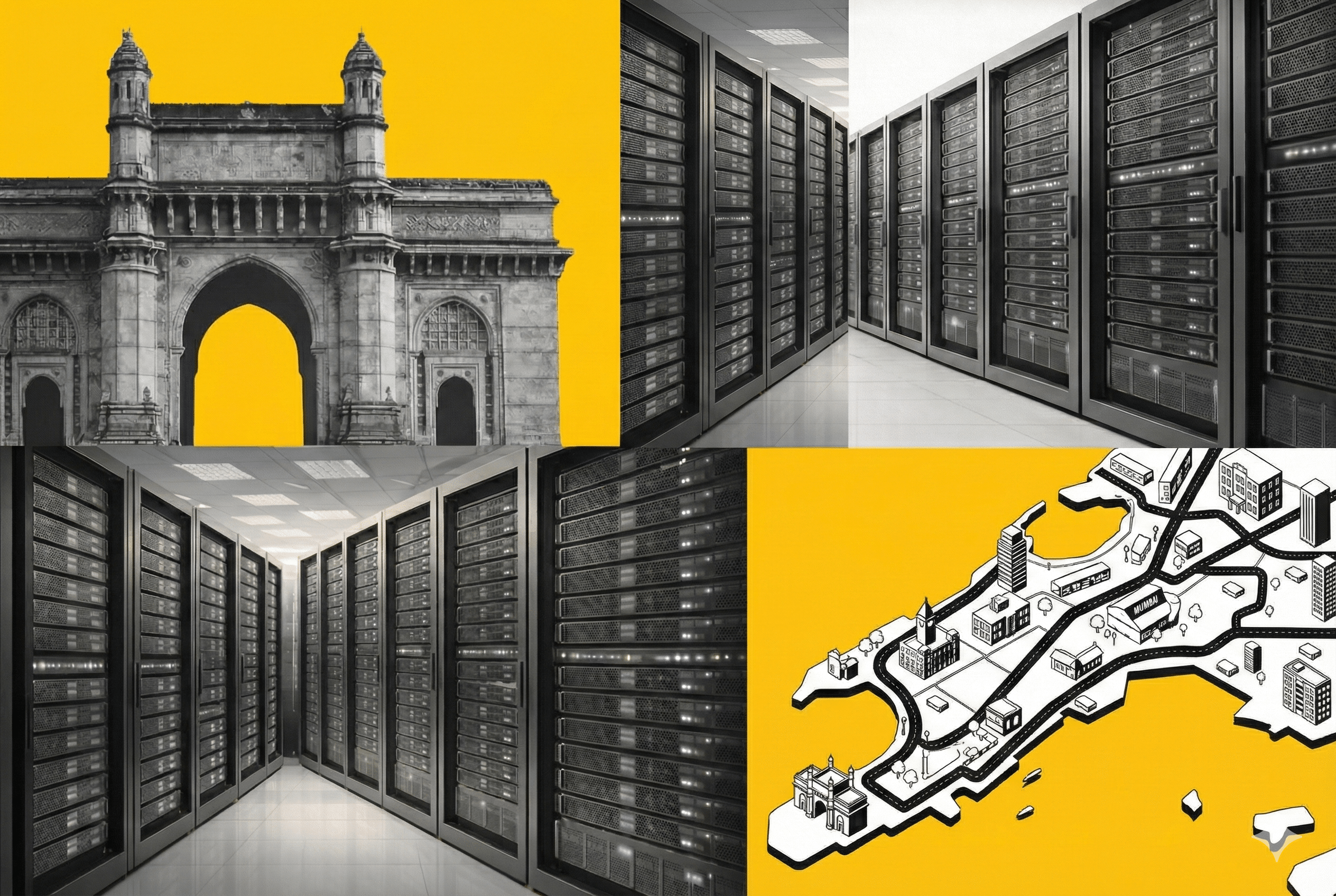
The entertainment capital, the finance capital — and now the data centre capital of India. Mumbai hosts the country’s densest data-centre footprint, and the gap is widening.
Cushman & Wakefield’s India Data Centre H1 2025 Update places Mumbai’s operational capacity at 594 MW, with another 337 MW under construction and 852 MW planned.
That pipeline alone represents 41% of India’s upcoming data centre supply and could push national installed capacity beyond 4,100 MW by 2030.
Chennai ranks second, roughly accounting for 13% of planned capacity and about 15% of operational capacity.
But why is Mumbai leading?
A prime reason is that Mumbai is the country’s financial capital, and many BFSI-related workloads are hosted there.
Moreover, because RBI’s and SEBI’s data regulations from 2018 and 2023, respectively, require that this data be stored domestically, and considering latency requirements, Mumbai is the optimal location for data centres.
The city includes numerous well-established players, such as Yotta, Sify, STT GDC, and others, who have built AI-ready data centres equipped with leading-edge GPUs and other necessary hardware.
The city’s data centre growth is organised around three clusters: Powai, the Thane–Belapur Road corridor, and Panvel.
Powai is the most mature, anchored by established colocation operators and proximity to financial and IT enterprises.
The Thane–Belapur Road belt, spanning Airoli, Rabale, and Mahape, has become Mumbai’s primary growth engine, accounting for roughly 70% of the city’s built capacity.
With vacancy near 6% and a development pipeline of about 982 MW, the corridor is set to drive the next phase of expansion.
Besides, connectivity is the most obvious reason. Modern data centres function less as isolated facilities and more as nodes in a global network. Mumbai already serves as India’s primary international landing point for data traffic. Thirteen subsea cable systems land in the city today, with three more under development, linking India directly to Europe, Africa, the Middle East, and East Asia.

Source: Submarine Cable Map
Those cables carry financial transactions, cloud workloads, media distribution, and enterprise traffic that cannot tolerate latency or routing uncertainty.
This March, Bharti Airtel announced that it has landed the 2Africa Pearls cable in Mumbai, connecting India to Africa and Europe via the Middle East.
Mumbai’s landing stations feed directly into onshore clusters across Powai, Mahape, and Navi Mumbai.
Mumbai’s economics is often misunderstood. Land prices are among the highest in the country, but total build economics remain competitive by global standards.
The Data Centre Construction Cost Index assigns Mumbai a score of 0.60—lower than Singapore, Tokyo, Hong Kong, and Seoul. Only Shanghai ranks cheaper.
Cushman & Wakefield’s rental data shows how that plays out within the country.
Monthly colocation pricing per kW in Mumbai ranges from ₹8,000–12,000 for sub-250 kW deployments, ₹7,000–10,000 for 250 kW–1 MW deployments, and ₹6,000–7,500 for deployments above 5 MW.
That is higher than emerging markets such as Kolkata or Pune, where large-scale deployments above 5 MW often price closer to ₹6,000–6,500.
Besides, the cost to acquire land and site for a five-acre land parcel with 50 MW capacity in the prime region of Powai in Mumbai is the highest in the country.
As a Sify spokesperson told AIM, “Mumbai’s position as India’s financial capital makes it an inevitable location for data centre deployment despite high land costs. The greater upfront capex is offset by stronger commercial offtake.”
On scaling despite constraints, the spokesperson added, “Most new facilities are concentrated in the suburbs, where operators can optimise footprints while staying close to key demand clusters.”
The demand supporting that offtake has broadened.
Amit Agrawal, president at Techno Digital, a company that builds AI-ready data centres, pointed to sectors rarely concentrated in one geography—film studios, production houses, theatres, fintech teams, and streaming platforms.
“Everywhere I look, I see opportunity because everything is being digitised today,” he told AIM, describing how VFX, editing, content creation, and fintech workflows increasingly rely on AI and automation.
His argument was that Mumbai’s compute demand now runs in multiple directions at once. Creative pipelines, financial automation, enterprise AI, and cloud platforms compete for the same infrastructure.
“Some players build pure infrastructure. Some offer infrastructure as a service. Others run cloud and application layers. All of them find customers because use cases differ,” Agrawal said.
Furthermore, policy has added predictability to that growth.
Maharashtra’s IT/ITES Policy 2023 grants electricity-duty exemptions, designates data centres as essential services for 24×7 operations, offers full stamp-duty exemptions on land purchases, relaxes building norms, and routes approvals through the MAHITI single-window system.
Sify Infinit Spaces Limited’s (SISL) DRHP also references state-backed digital initiatives, including AI Centres of Excellence and large private hyperscale programmes.
Despite uneven micro-market behaviour, tight vacancy in Thane–Belapur and Powai, and more slack in Panvel, Mumbai remains the most reliable environment for long-term utilisation.
Even as data centre operators such as SISL say that nearly 70% of the power used at their Rabale campus in neighbouring Navi Mumbai comes from renewable sources, the broader Mumbai metropolitan region continues to face periodic power and water stress.
As investments in data centres scale, often backed by policy assurances of uninterrupted electricity and water, it is critical that such guarantees do not come at the expense of supply to the city’s residents.
“Everybody wants to come to Mumbai. But today, the city’s peak power requirement is about 3 GW, and we are already talking about the Thane–Belapur Road coming up with nearly 1 GW of total data centre capacity,” said Agrawal.
Pointing at the scale of the challenge such growth would create, he said, “Just imagine a 15-kilometre stretch consuming one-third of the power of the entire Mumbai city. Are we ready for that? We are not.”
“Data centres will go farther from the cities wherever there is availability of power,” added Agrawal, pointing towards the expansion of the ecosystem in tier 2 and tier 3 cities.
The post How Mumbai Keeps Winning India’s Data-Centre Race appeared first on Analytics India Magazine.
I have studied and watched artificial intelligence grow over the last forty years. Like many,…


NVIDIA has picked CloudThat, a Bengaluru-based technology training and consulting firm, as its first education services partner in India, marking a key milestone in the country’s fast-growing AI skilling ecosystem.
With this partnership, CloudThat has become the first edtech company in India authorised to deliver NVIDIA’s official education programmes focused on AI and accelerated computing. The move comes at a time when India is stepping up investments in AI infrastructure and talent development to position itself as a global AI hub.
Under the collaboration, CloudThat will offer NVIDIA’s training courses to enterprises, academic institutions and individual learners. The programmes are aimed at building practical expertise in developing, training, optimising and deploying AI systems across real-world use cases, including computer vision, natural language processing, generative AI and large-scale production deployments.
The courses will be led by CloudThat’s instructors, including India’s first two NVIDIA-certified trainers, and will provide learners access to NVIDIA’s AI ecosystem, such as GPU-accelerated labs, curated development environments, pre-built models, and specialised workflow tools.
The announcement follows NVIDIA’s recent India tour, during which the company’s leadership visited CloudThat’s Bengaluru headquarters. In Mumbai, NVIDIA CEO Jensen Huang remarked, “This is India’s moment. You have to seize the opportunity,” adding that the country should focus on building AI systems rooted in its own data rather than exporting data and importing intelligence.
Commenting on the partnership, CloudThat founder and CEO Bhavesh Goswami said India’s AI ambitions will depend as much on skilled talent as on infrastructure. “With India investing heavily in GPU infrastructure, the next critical step is to develop the skilled talent required to unlock its full potential,” he said, adding that the collaboration aims to prepare the next generation of AI professionals across sectors.
The partnership is expected to support growing demand for AI talent across IT services, banking and financial services, manufacturing, retail and the public sector, while opening up career pathways in AI engineering, data science, MLOps robotics, and AI infrastructure.
The post NVIDIA picks CloudThat as First Education Services Partner in India appeared first on Analytics India Magazine.
Dec. 16, 2025 — Bell, Canada’s largest communications company, and Queen’s University, a leading research-intensive…


India is flexing its dominance as the world’s preferred destination for global capability centres (GCCs), with the number of GCCs in the country projected to reach 2,400 by 2030, according to EY. At the same time, the ecosystem is facing an acute talent crunch, especially for mid-senior level leaders adept at AI, ML and digital skills.
Moreover, a recent SPAG FINN Partners report revealed that attrition rates across India’s GCCs stand at 15–20%, adding fuel to the fire.
It all points to a fundamental challenge that the country faced even during the early outsourcing era: branding.
Many centres struggle to clearly articulate their value to parent organisations. This is especially true for greenfield centres being set up from scratch. Over 140 new greenfield GCCs have been launched across the country over the past 30 months alone, as per data shared by the consulting services company, Inductus Group.
Talking to AIM, Ullas Vinod, India site and director of healthcare major Owens & Minor’s Pune-based GCC, emphasised that timing is critical for branding of greenfield GCCs. “These efforts need to begin even before the GCC is formally established. Having the right partners and the first 25–30 senior team members plays a crucial role in shaping how attractive the new centre appears to talent.”
Greenfield GCCs’ inability to attract senior talent hints at a structural issue. Sachin Alug, CEO of talent solutions company NLB Services, explained, “When we establish a new GCC from scratch, we’re essentially asking top-tier talent to bet their careers on an entity that exists more as a corporate promise than a tangible reality.”
Unlike mature GCCs that have spent decades building employer brands and alumni networks, greenfield centres face what he called a “startup stigma”, without the excitement or upside usually associated with startups.
India’s senior technology talent today matches global standards, which makes professionals far more discerning. “Talented professionals ask themselves: Will this new centre have staying power, or will it become another cost-optimisation casualty when the parent company faces headwinds?” Alug pointed out.
In the early stages, many greenfield GCCs focus heavily on operational stability—getting delivery right, building internal capabilities, and managing costs. While this is understandable, branding often takes a back seat.
The SPAG FINN Partners report found that only 25–30% of GCCs in India have hired PR or communications partners.
As a result, there is little promotional storytelling, limited leadership visibility, minimal engagement with academia or industry forums, and very little communication about what makes the GCC unique beyond its parent brand.
“In the early stages, referrals form a significant share of hiring, and when existing team members believe in the journey, they become the strongest ambassadors for GCCs that are still relatively unknown in the local market,” Vinod added.
Adding to the problem, global branding narratives are rarely adapted well for the Indian market.
“If you’re not a big, instantly recognisable brand—like Microsoft or Amazon—branding becomes a real challenge. The reality is that nearly 90% of GCCs, including some very large ones, belong to companies that most people in India have never heard of,” Ashish Sinha, MD, Flutter Entertainment India, noted.
Another major issue is what Alouk Kumar, CEO, Inductus Group, described as the “headquarters credibility gap.”
“Many greenfield GCCs suffer from ambiguous positioning, are they innovation hubs or cost centres?” he pondered.
He further noted that while parent companies may publicly project their India centres as strategic innovation partners, internal realities such as budget control, decision-making authority, and project ownership often tell a different story.
This disconnect does not go unnoticed. Talent in cities like Bengaluru, Hyderabad, and Pune quickly picks up on the mismatch. Candidates don’t just compare GCCs with one another but also with product companies, startups, and established multinationals with clear value propositions.
When a greenfield GCC cannot clearly explain whether it owns products, drives architecture decisions, or simply provides extended development support, it struggles to attract top talent.
Kumar believes what separates successful greenfield GCCs is transparency and leadership commitment. “The GCCs that break through invest heavily in visible leadership presence—not just during launch,” he said.
In such cases, global C-suite leaders regularly spend time in India, teams are co-located, and India becomes a real decision-making hub. These centres also prioritise strategic projects early on, creating visible impact and intellectual property that helps counter scepticism.
“The uncomfortable truth is that branding a greenfield GCC requires patient capital and long-term thinking in an era obsessed with quarterly results,” Kumar added.
Organisations that treat GCC setup as a multi-year brand-building effort, rather than a short-term hiring sprint, are better positioned to build strong employer brands and attract high-quality talent.
The importance of branding is also reinforced by hiring data. A Taggd study showed that 75% of job candidates consider employer reputation a key factor when choosing where to work. Yet many greenfield GCCs fail to fully leverage this.
“As the talent battlefield heats up with the entry of new GCCs, candidates are looking for more than compensation,” observed Nitika Goel, managing partner and CMO of consulting firm Zinnov.
Greenfield GCCs face tough competition from established IT services firms and well-known global brands. Without a strong identity, they often become backup options rather than first choices for candidates.
Goel pointed out that weak employer value propositions and generic cultural messaging further hurt hiring outcomes. “The challenge is not awareness but confidence,” he explained.
This often results in slower hiring cycles and higher candidate dropouts, even when the work itself is compelling.
Goel added that successful greenfield GCCs take a more focused approach, often partnering with a handful of universities aligned to its engineering goals and building research collaborations.
Also, hiring conversions can be improved by offering candidates a real mission—such as ownership of a new product line—instead of relying on brand name alone. “A sharp EVP amplifies this,” she said.
When purpose, leadership intent, and values are consistent across the hiring journey, confidence improves. Early credibility signals such as strong leadership visibility, competitive pay, niche skill incentives, and certifications like Great Place to Work also help close the trust gap faster.
The post Why Branding Remains a Key Challenge for India’s Greenfield GCCs appeared first on Analytics India Magazine.


Persistent Systems and cloud computing platform DigitalOcean have partnered to accelerate AI adoption for enterprises and developers.
The collaboration seeks to develop cost-effective, scalable, and secure infrastructure to support AI workloads and deployments, the companies said in a release.
As part of the partnership, Persistent has selected DigitalOcean as its cloud and AI infrastructure provider for SASVA, its AI-powered platform.
SASVA integrates code, documentation, architecture, and executive summaries, adapting across diverse workflows and roles. The platform leverages DigitalOcean Gradient AI Agentic Cloud to run AI workloads and customer deployments.
This includes using Gradient AI for the full agent development lifecycle and high-powered GPUs from DigitalOcean’s AI infrastructure offerings.
Persistent said it selected Gradient AI Agentic Cloud to deliver cloud infrastructure for digital-native enterprises and AI-native customers, while reducing infrastructure and maintenance costs through managed, ready-to-use environments.
It also provides continuous access to a catalogue of diverse models, frameworks, and AI accelerators within SASVA.
Paddy Srinivasan, CEO, DigitalOcean, said, “DigitalOcean’s agentic cloud delivers the infrastructure, platform, and services that make AI accessible, scalable, and cost-effective.”
Partnering with Persistent, he said, expands these capabilities to more enterprise use cases by integrating the company’s AI foundation with SASVA’s deterministic engineering.
The companies aim to address the mounting challenges organisations face as they accelerate AI adoption, including rising GPU and infrastructure costs, fragmented agent development ecosystems, and increasing security and compliance requirements.
With the collaboration, they project to reduce AI infrastructure and operational costs by more than 50%, enabling faster adoption and more predictable scaling of AI across industries.
Sandeep Kalra, CEO and executive director, Persistent, said that as enterprises move from experimenting with AI to embedding it across their core operations, success will hinge on how effectively they scale with speed, trust and measurable impact.
“Together, we are simplifying how organisations build, deploy and scale AI, strengthening the foundation for the next wave of intelligent, platform-driven innovation.”
The post Persistent, DigitalOcean Partner to Make AI Accessible, Scalable appeared first on Analytics India Magazine.


Digantara, a Bengaluru-based space tech startup, has raised $50 million in a Series B funding round to scale its space surveillance and intelligence operations, expand manufacturing, and grow research teams globally.
The round saw participation from 360 ONE Asset, SBI Investment Co. Japan, Ronnie Screwvala, Peak XV Partners, and Kalaari Capital.
With the fresh capital, the company plans to expand beyond India and the United States, set up new manufacturing facilities for optical systems and satellites, and double its global research and development workforce over the next year.
Digantara is also preparing to launch 15 space surveillance satellites and two dedicated missile-warning satellites through 2026–27.
“Space is no longer a frontier; it is the new high ground for national security,” said Anirudh Sharma, founder and CEO of Digantara, in a statement. He added that the funding would “accelerate our path to operational readiness, expand into the US and Europe, and drive new programmes in missile warning, tracking, and space-based interceptors.”
Founded in 2018 by Sharma, Rahul Rawat, and Tanveer Ahmed, Digantara began as a space situational awareness company and has since expanded into space-based surveillance and early warning systems. The company launched its first space surveillance satellite, SCOT (Space Camera for Object Tracking), in January this year, aboard SpaceX’s Transporter-12 mission, enabling space-to-space observation.
Sharma said the company’s evolution was driven by gaps in persistent visibility and early warning. “What started as space domain awareness naturally evolved into building a constellation of satellites and ground systems designed to see earlier, track continuously, and enable decisions where seconds matter,” he said in a LinkedIn post.
It has since secured defence contracts in India and the United States.
Karnataka’s minister for IT and biotechnology, Priyank Kharge, said in a LinkedIn post that the state’s space tech policy aims to support companies such as Digantara as they scale globally. He emphasised support through “infrastructure, manufacturing depth and long-term policy certainty, so more world-class space companies can scale from Karnataka to the world.”
Digantara currently operates across India, Singapore, and the United States, and plans to expand into Europe by mid-2026. The company added that recent orders and mission contracts from defence and commercial intelligence customers reflect growing demand for space-based surveillance capabilities.
Digantara’s integrated infrastructure, AIRA, combines space and ground-based sensors with data processing systems. Its portfolio includes the SCOT electro-optical and LiDAR satellites, the ALBATROSS missile-warning satellites, and the SKYGATE network of ground sensors.
Data from these systems feeds into its platforms, Space MAP and STARS, to support near real-time threat detection and response for government and defence agencies.
The post Digantara Raises $50 Mn to Expand Space Surveillance appeared first on Analytics India Magazine.


