India’s Data Centre Expansion Is Decentralising

Tier-2 and tier-3 cities in India now rank among the fastest-growing markets for mobile data, digital payments and streaming platforms.

Yet, India’s data-centre capacity remains overwhelmingly concentrated in tier-1 hubs of Mumbai, Chennai, Delhi-NCR, Hyderabad, Bengaluru, Pune and Kolkata. The imbalance is increasingly visible in everyday digital experiences.

Streaming viewership climbed 14% year-on-year to 547.3 million users in 2024, driven by a 21% surge in ad-supported video platforms.

These services remain especially popular in tier-2 and tier-3 cities, where users increasingly prefer free content.

As of March, India had roughly 969 million internet subscribers, of whom 408 million lived in rural areas—a demographic that overlaps with the catchment zones of emerging edge markets.

Sify Infinit Spaces Limited (SISL) noted in its DHRP filings that “while colocation and hyperscale data centres have expanded significantly, their presence is predominantly limited to the top 10 cities.”

“This concentration has resulted in suboptimal digital experiences in tier 2 and tier 3 cities. To address this disparity, edge data centres are being deployed.”

This uneven distribution of infrastructure has created a structural challenge: India generates nearly 20% of the world’s data but holds only about 1% of global data centre capacity.

With most infrastructure locked into metros, vast regions depend on long-distance transmission.

Enter Edge Data Centres

This imbalance has led to a surge in edge data centres — facilities placed closer to demand centres for large user clusters in Jaipur, Chandigarh, Ahmedabad, Kochi, Visakhapatnam, Lucknow, Patna, and Bhubaneswar.

While hyperscaler data centres handle compute-intensive, globally orchestrated workloads on a massive scale, edge data centres handle latency-sensitive, bandwidth-intensive workloads that often require data localisation.

“In India, latency drops significantly when workloads are processed closer to the end user at the edge data centre location in micro cities,” said Vipul Kumar, VP, edge and network at CtrlS Datacenters, in an interaction with AIM.

“Instead of traffic travelling to distant hyperscale regions like Delhi, Mumbai or Chennai, which adds multiple network hops and increases delay, local edge infrastructure keeps compute within the region,” he added.

This improvement is critical for various real-time workloads — fintech authentication, high-frequency trading, OTT streaming, autonomous logistics, and others.

The Rapid Expansion of India’s Edge Ecosystem

Operators are already repositioning to serve these markets. SISL is advancing edge projects in Lucknow and Chandigarh. CtrlS Datacenters is expanding a distributed network as well.

Anil Nama, CIO at CtrlS, told AIM, “CtrlS has already set up edge facilities in Patna and Lucknow and plans to add over 20 new facilities across tier-2/tier-3 cities of India over the next few years.”

Nxtra by Airtel operates 120 edge data centres across 66 locations.

RailTel, a government PSU, has begun deploying over a hundred small data centres at railway premises in partnership with Techno Electric & Engineering Company.

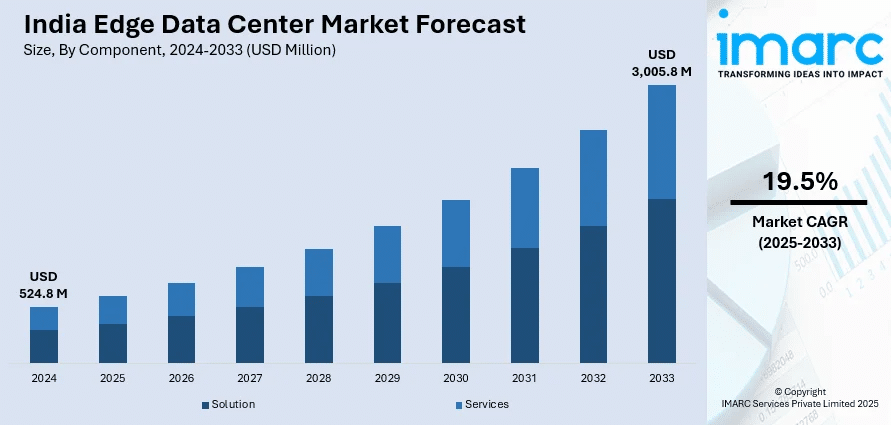
While hyperscaler and colocation capacity in India stands at around 1,200 MW, a JLL report stated that the country’s edge computing capacity is 80-100 MW and is expected to reach up to 180 MW in 2028.

As edge infrastructure grows, the performance gap between metros and non-metros narrows — but the broader shift is still unfolding.

Why Edge Data Centres Are Getting AI Capabilities

The shift extends beyond entertainment or basic internet use cases.

Growing adoption of apps like ChatGPT, along with government-backed AI programmes focused on Indic languages and sector-specific digital services, is pushing compute demand into smaller cities.

Many tier-2 and tier-3 cities already run edge centres built for content delivery and redundancy. Increasingly, they are being considered for high-density AI facilities, where latency becomes a decisive performance factor.
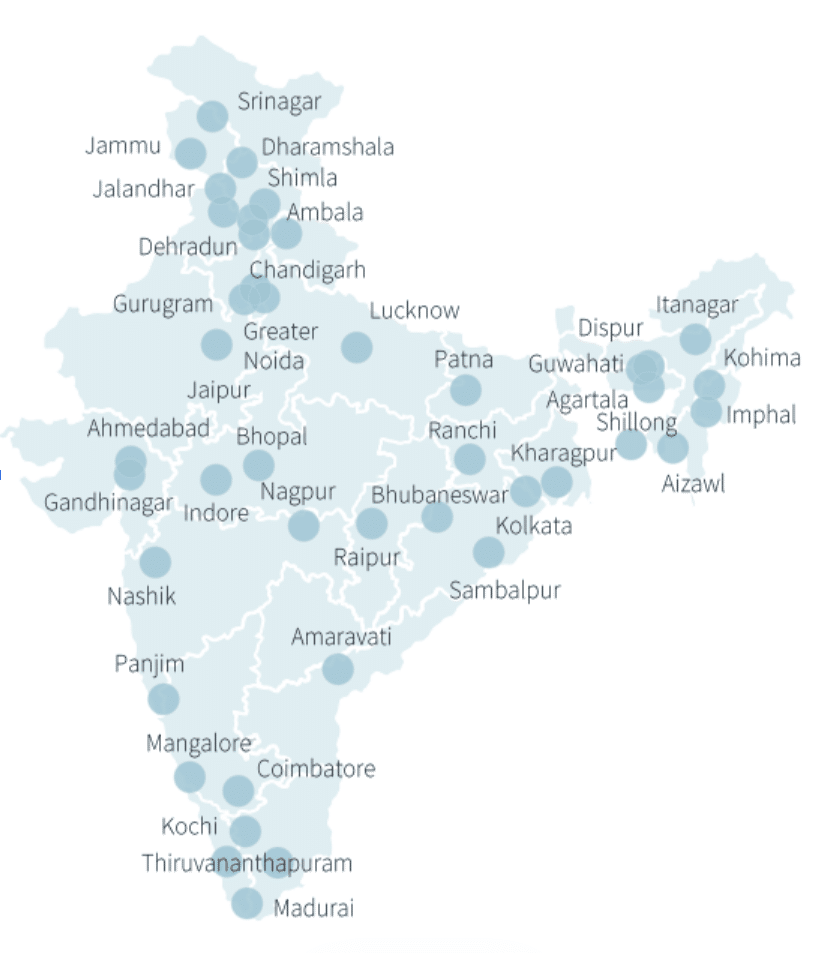
Edge data centre sites in India. Source: JLL

Kumar also pointed out how the differentiation between hyperscaler and edge data centres will not remain static.

Even as hyperscale data centres handle AI training, Kumar added that a significant part of the AI stack, including inference, real-time analytics, and localised AI processing, is already well-suited to edge data centres.

“The future isn’t edge versus hyperscale—it’s edge working in tandem with hyperscalers, creating a distributed cloud fabric that is faster, more resilient, and closer to where digital experiences happen,” said Kumar.

Companies like CtrlS are establishing edge data centre facilities with higher power densities, robust cooling architecture and other technologies that allow them to support GPU-based workloads.

Amit Agrawal, CEO of Techno Digital, told AIM, “India is not a very big country, but it is a sizable country where east to west coverage, or north to south coverage can take anywhere between 30 milliseconds to 45 milliseconds.”

And in the worst case scenario, if there is a delay of 45–50 milliseconds, AI will lose its relevance, he added
“Our [CtrlS] edge facilities are designed as CapEx-light, modular deployments, typically beginning with 50 to 100 racks—strategically positioned near India’s national fibre backbone availability,” said Kumar, stating how this provides ‘immediate’ low latency workloads — while keeping the architecture flexible to scale with AI requirements.

This is also where physical constraints in tier-1 cities begin to influence location strategy. A typical 10 MW data centre may require around 10 acres of developable land. India will need nearly 45 to 50 million square feet of new data centre real estate to support AI-era workloads — a scale that metros would struggle to accommodate.

Water requirements add further complexity. An AI-oriented 1 MW facility can consume about 25.5 million litres annually. Cities like Delhi, Bengaluru, and Hyderabad already face significant groundwater stress.

Agrawal noted that until recently, data centres were built primarily to meet hyperscaler requirements and remained concentrated in cities such as Mumbai and Chennai.

That logic, he said, has reversed. Data centres will now follow power availability rather than expecting power to be drawn to them, and future sites will be determined primarily by where reliable, scalable energy can be secured.

“Everybody wants to come to Mumbai. But today, the city’s peak power requirement is about 3 GW, and we are already talking about the Thane–Belapur Road coming up with nearly 1 GW of total data-centre capacity,” said Agrawal.

He noted the scale of the challenge such growth would create. “Just imagine a 15-kilometre stretch consuming one-third of the power of the entire Mumbai city. Are we ready for that? We are not.”

“Data centres will go farther from the cities wherever there is availability of power,” added Agrawal.

Nama reinforces economic logic. “Tier-2 and tier-3 cities are rapidly emerging as high-value data centre locations. Their significantly lower land and operational costs free up capital for cutting-edge infrastructure and phased hyperscale expansion,” he said.

Even within a tier-1 city, moving away from premium clusters such as Powai dramatically alters the cost equation.

SISL states a five-acre site for a 50 MW facility in Powai is priced at around ₹533 crore, whereas a comparable site in Panvel falls to roughly ₹41 crore.

This differential underscores how much more favourable the economics become as operators look beyond core metro zones and into emerging markets.

Cities like Visakhapatnam illustrate the convergence of these factors — coastal connectivity, favourable state policy, and growing operator interest — already visible in Google’s large-scale hyperscale data centre investment announcement.

Recently, Karnataka’s IT minister Priyank Kharge, also stated that the state will push for data centre establishments across the state’s coastal region, particularly in Mangaluru, which is also promising a growing IT ecosystem.

Kharge said the state is already working with the Department of Energy on a plan to earmark dedicated green energy for AI and data centres. “We will come up with a blueprint by the next budget session,” he noted.

How State Policies Are Accelerating the Shift

The transition beyond tier-1 cities is also being reinforced by state governments.

Tamil Nadu’s Data Centre Policy explicitly encourages investments beyond Chennai, promoting Coimbatore, Madurai, Tiruchirappalli, and Hosur as viable alternatives.

The policy provides 100% stamp-duty exemption in non-metro districts, 50% land-cost subsidies, and access to pre-developed IT parks across eight tier-2 locations with integrated water, sewage, fibre, and power readiness. It also ensures robust power provisioning through dual-grid supply and expedited substation augmentation.

Andhra Pradesh has taken an equally assertive approach. What makes the state’s push notable is that it lacks a conventional tier-1 metropolitan anchor, yet it is pursuing an unusually ambitious data centre strategy.

Its Data Centre Policy 4.0 (2024–29) is explicit in courting AI-enabled facilities and aims to add several hundred megawatts — potentially up to a gigawatt — of new capacity.

Investors receive 100% stamp-duty exemption, capital subsidies or SGST reimbursement, and relaxed building, zoning, and infrastructure norms.

However, until a facility is established, expansion to tier-2 and tier-3 hubs brings multiple challenges. “Each new city requires establishing relationships with local electricity providers, navigating municipal regulations, and building operational frameworks, all of which are time-intensive but essential activities,” said Kumar.

He also stated that selecting the location is critical. While many real estate players own land parcels, only a select few possess the right-sized land at strategic locations.

“Once established in a city, having navigated land acquisition, local regulations, and utility relationships, and having an operational presence on the ground, we can scale capacity considerably quicker than greenfield entrants starting from scratch,” said Kumar.

The post India’s Data Centre Expansion Is Decentralising appeared first on Analytics India Magazine.

Accenture Clocks $21 Billion in Q1 Bookings, AI Deals Fuel Growth

AccentureAccenture

Accenture reported its first-quarter fiscal 2026 results, driven by strong deal bookings and steady revenue growth, even as margins came under pressure from business optimisation costs, according to the company’s earnings filing.

The IT services major posted new bookings of $20.9 billion, up 12% year-on-year in dollar terms, including $2.2 billion in advanced AI bookings.
The company beat Wall Street’s quarterly expectations. The revenue for the quarter rose 6% to $18.7 billion.
Manager services and consulting businesses led the growth, with revenue increasing by 8% and 4%, respectively.

The company signed 33 deals with quarterly bookings exceeding $100 million, reflecting sustained enterprise demand for large transformation programmes

Accenture chair and CEO Julie Sweet said, “We delivered revenue growth of 5% in local currency, at the top of our guided range, while continuing to gain market share. We also strengthened our leadership in advanced AI and deepened our ecosystem partnerships to help clients realise value.”

The CEO stated the results show the company’s strategy to be the preferred reinvention partner for clients.

By geography, EMEA (Europe, the Middle East and Africa) and Asia Pacific delivered stronger growth than the Americas in local currency terms, while industry-wise, financial services led with 14% revenue growth, followed by communications, media and technology at 9%.

Accenture’s GAAP operating margin declined to 15.3%, down from 16.7% a year earlier, reflecting $308 million in business optimisation costs, primarily related to employee severance.

Accenture GAAP refers to the company’s financial results prepared under Generally Accepted Accounting Principles (GAAP), the standard accounting rules mandated by US regulators.

On an adjusted basis, operating margin expanded 30 basis points to 17.0%.

It generated free cash flow of $1.5 billion during the quarter and returned $3.3 billion to shareholders through dividends and share repurchases.

For the full fiscal year 2026, Accenture reaffirmed its revenue growth guidance of 2%–5% in local currency, or 3%–6% excluding the impact of its US federal business, and raised its GAAP operating margin outlook to 15.2%–15.4%.

The company now expects GAAP EPS in the $13.12–$13.50 range.

Accenture employs approximately 7.84 lakh people globally and continues to position itself as a large-scale reinvention and AI services partner for enterprises amid ongoing macroeconomic uncertainty.
Earlier this month, Accenture expanded its partnership with Anthropic, launching a multi-year initiative to train around 30,000 employees on Claude and embed the model across enterprise environments.

It partnered with OpenAI the same month to push enterprise AI deeper into large companies, starting with Accenture’s own workforce.
The company also partnered with Snowflake to push global enterprises to accelerate AI and data-driven reinvention.

The Ireland-based IT consulting giant reported $69.7 billion in revenue last year, a 7% increase from the previous year.

Yet, alongside the growth, the company signalled caution. It warned of slowing momentum, announced job cuts, and noted that the anticipated boom from Artificial Intelligence is not living up to the hype.

The post Accenture Clocks $21 Billion in Q1 Bookings, AI Deals Fuel Growth appeared first on Analytics India Magazine.

IN-SPACe Launches Antariksh Prayogshala to Set Up Space Labs in Academic Institutions

The Indian National Space Promotion and Authorisation Centre (IN-SPACe) has issued a request for proposal (RFP) to establish Antariksh Prayogshala or Space Labs at select academic institutions across India. The move aims to strengthen the space technology ecosystem by providing hands-on training to students and supporting industry–academia collaboration.

Under the initiative, IN-SPACe will select up to seven institutions in a phased manner, with one lab proposed in each country’s zone to ensure regional representation. The labs will also be available to non-government entities in their respective zones.

IN-SPACe will provide financial support of up to 75% of the total project cost, capped at ₹5 crore per institution. The funds will be released on a milestone-linked basis. The labs will focus on providing practical training for students pursuing space technology courses in academic institutions across India.

Vinod Kumar, director for promotion directorate at IN-SPACe, said the centre has rolled out the RFP “as part of its ongoing efforts to strengthen the country’s space technology ecosystem and build future-ready talent”. He added that Antariksh Prayogshala is “̉̉intended to enable meaningful industry–academia collaboration, and support India’s long-term vision of becoming a leading global space economy.”

The selection process will take place in two stages. Institutions will first be screened based on the eligibility criteria outlined in the RFP. Shortlisted applicants will then be evaluated and ranked by an Empowered Committee, after which final selections will be made on a zone-wise basis.

The post IN-SPACe Launches Antariksh Prayogshala to Set Up Space Labs in Academic Institutions appeared first on Analytics India Magazine.

India’s C-DAC Demonstrates Mobile Quantum Communication Using Drones

India’s Centre for Development of Advanced Computing (C-DAC) Pune has demonstrated a mobile quantum communication system using a drone-enabled platform, marking a step towards infrastructure-independent quantum networks.

The demonstration involved mobility-based Quantum Key Distribution (QKD) and a post-quantum-secure drone-communication solution, CDAC announced in a LinkedIn post.

QKD involves securely sharing encryption keys between two parties over quantum channels.

The trial was conducted at C-DAC Pune as part of India’s National Quantum Mission. The project tested how quantum-secured communication performs outside fixed laboratory conditions and under real-world mobility.

C-DAC demonstrated a B92 QKD system on a mobile platform using a 50-metre Free-Space Optical (FSO) link with GPS-based precision time synchronisation. Quantum data post-processing was performed via a drone-based RF link. The system recorded a Quantum Bit Error Rate of about 5% and a secure key rate of around 2 kbps during the field trial.

The project also unveiled ‘Drone Quantum Kavach’, a post-quantum secure communication solution designed for unmanned aerial systems. According to the organisation, the work supports India’s goal of building indigenous and resilient quantum communication capabilities by securing live video streaming from drone to ground station, by protecting each frame with strong encryption.

“CDACINDIA Pune has marked a significant leap in India’s quantum journey by successfully demonstrating a B92 Quantum Key Distribution (QKD) system on a mobile platform,” the organisation said in the post.

Anindita Banerjee, project manager for quantum technologies at CDAC Pune, said the work addressed both mobility and security challenges. “We have demonstrated (1) mobility-based Quantum communication and (2) Drone Quantum Kavach – drone-based quantum secure communication using PQC with industry collaborator Sagar Defence Engineering,” she said in a LinkedIn post.

C-DAC said the results highlighted reliable operation outside controlled environments and supported the case for mobile and ad-hoc quantum networks.

C-DAC intends to bridge the gap between laboratory research and operational use cases. Banerjee described the prototype as a technology readiness level (TRL) 4 to 5 system. The scale measures a technology’s maturity from basic research to full operational deployment.

The organisation said mobile, infrastructure-independent quantum communication could help secure critical data in demanding environments, including drone operations. Further testing and development are expected as India expands its ̉quantum research and deployment under the National Quantum Mission.

The post India’s C-DAC Demonstrates Mobile Quantum Communication Using Drones appeared first on Analytics India Magazine.

OpenAI, Anthropic Announce Multiple Job Openings in India

Leading US-based AI companiesOpenAI and Anthropic have expanded their global hiring efforts with a slate of roles specifically targeting talent in India, reflecting the companies’ growing focus on the region as it builds out local operations.

OpenAI currently lists nine open positions with India locations (Delhi office and remote options) spanning sales, customer success, growth, partnerships, and technical roles.

Several of the roles are focused on sales and revenue growth. These include Account Director positions for Digital Natives, Large Enterprises and Startups. The roles involve managing the full sales cycle, working with engineering and product teams, and helping customers adopt OpenAI’s models and tools for business use cases.

On the customer success side, OpenAI is hiring an AI Deployment Manager in India. The role centres on supporting enterprise customers during implementation, ensuring AI systems are deployed responsibly and deliver measurable outcomes. The company is also hiring a Growth Lead for India, a role focused on driving adoption, usage, and engagement of OpenAI products through local growth strategies, partnerships, and market insights.

Notably, Pragya Misra, public policy and partnership lead, was the company’s first Indian hire. Earlier this year, OpenAI hired Raghav Gupta, former Asia-Pacific MD at Coursera, to lead its education division in India and the APAC region.

The company also appointed Sheeladitya Mohanty as marketing lead and Akash Iyer as social lead for India.

OpenAI is also expanding its partnerships and technical teams in the country. The Product Partnerships Lead role will focus on building and managing strategic partnerships to support product distribution and adoption in India.

Meanwhile, technical roles such as Solutions Architect, Solutions Architect for Startups, and Solutions Engineer are aimed at helping customers and developers design, deploy, and scale applications using OpenAI’s models, while addressing reliability, safety, and performance requirements.

Anthropic is also hiring for roles in India. The company is hiring for two sales-focused positions–Enterprise Account Executive and Industries and Startup Account Executive, in Bangalore.

This recruitment push comes alongside announcements from both OpenAI and Anthropic about opening offices in India. The country has already emerged as one of the most active markets globally for both AI startups, reflecting India’s growing role in their expansion strategies and long-term plans.

The post OpenAI, Anthropic Announce Multiple Job Openings in India appeared first on Analytics India Magazine.

Lovable Raises $330 Mn in Series B Funding at $6.6 Bn Valuation

Vibe coding platform Lovable has raised $330 million in a Series B funding round at a valuation of $6.6 billion, the company said. The round was led by CapitalG and Menlo Ventures’ Anthology fund, with participation from new and existing investors.

The funding round included investments from NVentures, Salesforce Ventures, Databricks Ventures, T.Capital, Atlassian Ventures and HubSpot Ventures, along with Khosla Ventures, DST Global, EQT Growth, Kinship Ventures, and returning investors such as Accel and Creandum.

Lovable said the capital will be used to deepen integrations with enterprise software tools, expand collaboration and governance features for teams, and strengthen infrastructure that supports moving products from prototype to production.

“Lovable has done something rare: built a product that enterprises and founders both love,” said Laela Sturdy, managing partner at CapitalG. “The demand we’re seeing from Fortune 500 companies signals a fundamental shift in how software gets built,” she said.

The company said more than 100,000 projects are created on its platform each day, with over 25 million projects built in its first year. Websites and applications built using Lovable recorded more than 500 million visits in the past six months, it added.

Lovable said its platform is being used by enterprises such as Deutsche Telekom, Klarna and Zendesk to build prototypes and internal tools.

Jorge Luthe, senior director of product at Zendesk, said, “What once took six weeks — from idea to working prototype — now takes just three hours.”

The company said founders are also using the platform to build commercial products, with several startups reaching revenue milestones within months of launch.

Lovable said the latest funding will support broader adoption across teams and organisations as more non-technical users build and ship software products.

The post Lovable Raises $330 Mn in Series B Funding at $6.6 Bn Valuation appeared first on Analytics India Magazine.

With $125 Mn haul, Mythic Wants to Take on NVIDIA GPUs with 100x Energy-Efficient AI Chips

Mythic, a Palo Alto-based AI chip company, has raised $125 million in a funding round to develop analog processing units designed to cut AI energy use by up to 100x compared with GPUs.

The round was led by deep tech-focused venture capital firm DCVC and will support Mythic’s product development, software, and commercial scale-up efforts.

NEA, Atreides, Future Ventures, Softbank KR, S3 Ventures, Linse Capital, One Madison Group, and Catapult, along with Honda Motor and Lockheed Martin, also joined the round.

The company said the raise follows a restructuring under chief executive officer Taner Ozcelik (former NVIDIA VP and GM), and focuses on addressing power constraints in AI computing. “Energy efficiency will define the future of AI computing everywhere,” Ozcelik said in a statement.

Mythic plans to deploy its chips across data centres, automotive systems, robotics, and defence. The 13-year-old company will also use the funding to rebuild its architecture, software stack, and strategy.

The company also introduced Starlight, a sub-one-watt sensing platform that integrates its chips into image sensors. Mythic said the system improves signal extraction in low-light conditions and targets defence, automotive, and robotics use cases.

Mythic’s chips are manufactured in the United States and allied countries using standard semiconductor processes. The company plans to use the new capital to expand production, mature its software development kit, and pursue commercial deployments in AI inference markets.

Mythic’s chips use analog in-memory computing, which combines memory and processing in a single plane. The company said this design reduces energy loss during data movement, which it claims accounts for most of the power consumption in current AI systems.

According to Mythic, its current architecture delivers 120 trillion operations per second per watt.

Ozcelik said the company aims to complement GPUs rather than replace them. “Much as GPUs became the accelerated computer of choice next to CPUs, our APUs will become the accelerated computer of choice next to GPUs,” he said.

Mythic said its chips can run large language models with up to one trillion parameters without requiring high-speed interconnects used by GPU clusters. Internal benchmarks cited by the company show higher tokens per second per watt compared with current high-end GPUs.

Aaron Jacobson, partner at NEA, said the platform “collapses today’s limits on energy and cost” and gives the company scope to scale. Steve Jurvetson of Future Ventures said Mythic’s approach unifies computation and memory “as in the brain,” improving efficiency.

The post With $125 Mn haul, Mythic Wants to Take on NVIDIA GPUs with 100x Energy-Efficient AI Chips appeared first on Analytics India Magazine.