ChatGPT Health Just Wants to Save Your Doctor’s Time, Nothing More

OpenAI is drawing a clearer boundary between general-purpose AI and sensitive personal data. The company is reportedly working on a new audio model and a dedicated device, while also expanding its efforts in the healthcare sector.

On January 7, the company announced ChatGPT Health, a dedicated health experience within ChatGPT that allows users to securely connect personal medical records and wellness apps, while keeping health data isolated from the main chat interface.

The move reflects OpenAI’s emphasis on data separation and privacy. The new health experience operates as a separate space within ChatGPT, with purpose-built encryption, data isolation and controls designed specifically for sensitive health information. “Conversations in Health are not used to train our foundation models,” the company clarified.

The launch follows OpenAI’s own data highlighting the scale of health-related use on ChatGPT. According to the company, more than 230 million people globally ask health and wellness questions on the platform every week, accounting for over 5% of all interactions.

OpenAI said it is initially rolling out ChatGPT Health to a limited group of early users as it tests and refines the experience. Access will be available to users on Free, Go, Plus and Pro plans outside the European Economic Area, Switzerland and the United Kingdom.

“People come to ChatGPT to prep for appointments, understand lab results and make sense of their next steps. Health provides a dedicated space that securely brings your health information and ChatGPT’s intelligence together, so you can better advocate for your health,” Karan Singhal, Health AI lead at OpenAI, wrote in a post on X.

Notably, OpenAI launched the benchmark HealthBench last year to evaluate the capabilities of AI systems in healthcare.

Medical Records and App Integrations

This new feature allows users to connect medical records and wellness apps, including Apple Health, MyFitnessPal and Function, with ChatGPT to ground conversations in their own data. OpenAI said this can help users understand test results, prepare questions for clinicians, or review diet and fitness routines.

Medical record integrations and some apps are currently limited to the US, and Apple Health integration requires iOS.

OpenAI said it has partnered with b.well, a digital health platform, which provides access to connected health data. Users can remove access to medical records or disconnect apps at any time, the company said.

Dr Shashank Goyal, a graduate of JJM Medical College, told AIM thatfrom a user perspective, ChatGPT can now act as a screening mechanism. “It can give people awareness about their daily health parameters and help with early detection. Patients who are not very aware of how their body parameters fluctuate can at least understand when something is going up or down,” he said.

At the same time, OpenAI, in a blog post, clarified that Health is “designed to support, not replace, medical care” and is not intended for diagnosis or treatment.

Goyal added that the use of AI tools could also alter the doctor-patient relationship. On the positive side, “if patients are more aware, doctors may not need to spend as much time explaining basic things,” he said, adding that explaining medical issues to patients in India has traditionally been challenging.

Similarly, Sanchit Vir Gogia, CEO of Greyhound Research, told AIM that clinicians might see value in this new product. “When a patient walks in with a clearer story, better language, and a sense of what matters, the conversation improves. Time is spent interpreting and deciding, not undoing confusion.”

From an industry perspective, Dilip Kumar, who leads health-related investments at Rainmatter Health, said the launch could significantly change the AI health space, with many existing startups likely to lose relevance as adoption grows. “I meet dozens of AI health startups every week and can tell you this is a big deal,” he wrote on LinkedIn. “Most of them will become redundant once this gets adoption—medical triaging, nutrition, fitness training, rehab and mental health all in one place now.”

Ashley Alexander, vice president of health products at OpenAI, said health information today is spread across many systems, apps and trackers, making it harder for people to manage their wellbeing. She said doctor visits are often short and far apart, leaving long gaps where patients want more help understanding their health.

Sharing her personal experience, Alexander said ChatGPT helped her feel more prepared and confident as she navigated her health after having a baby last year.

Privacy Safeguards

OpenAI said all third-party apps available within ChatGPT Health must meet the company’s privacy and security standards, including strict limits on data collection.

“Apps are required to collect only the minimum data needed,” the company said, adding that each integration also undergoes an additional security review before being made available in Health.

“The first time you connect an app, we’ll help you understand what types of data may be collected by the third party. And you’re always in control: disconnect an app at any time, and it immediately loses access,” OpenAI added.

Goyal compared this with medical confidentiality, wherein conversations between doctors and patients are protected by privacy norms, and personal health details cannot be disclosed.

The launch has also drawn scepticism. “This sounds like the craziest data harvesting of the most sensitive personal data users have,” Raquel de Horna, a product and marketing lead at Digital Identity, wrote on LinkedIn. She questioned how OpenAI would assure users that their health data would remain secure and not be repurposed beyond its stated use.

Others argued that concerns around data misuse need to be viewed in the broader context of how health information is already handled today. Tilden Chima, a senior cloud systems engineer, said patient data is already widely accessed across healthcare systems. “Health data is already being harvested or leaked by third-party application add-ons in electronic medical record systems,” he said.

Rajan Kashyap, assistant professor at the National Institute of Mental Health and Neuro Sciences (NIMHANS), previously told AIM that patient confidentiality is often overlooked in the healthcare industry.

“I strongly advocate for strict adherence to protected data-sharing protocols when handling clinical information. In today’s landscape of data warfare, where numerous companies face legal action for breaching data privacy norms, protecting health data is no less critical than protecting national security,” he said.

The risk of unintentionally exposing protected health information through AI platforms is high. AI systems are vulnerable to data breaches, hacking and the potential for re-identification even with anonymised data. According to the National Institutes of Health in the US, the risk increases due to the growing use of cloud-based AI models.

Gogia said trust in health AI systems cannot be assumed and must be clearly justified. “ChatGPT Health remains a consumer product, not a clinically regulated system. That distinction matters,” he said. “Patients need to know what data is collected, how long it is stored, where it is processed and how it can be permanently removed.”

He added that ambiguity can be as damaging as a data breach. “Evidence shows that trust erodes faster due to uncertainty than from a single failure,” he said.

Gogia added that the real gains from tools like ChatGPT Health lie in practical, everyday improvements rather than clinical breakthroughs. However, he cautioned that there are hard limits to what conversational AI can achieve. “These tools do not create clinicians. They do not add beds. They do not reduce chronic disease burden on their own,” Gogia said

By carving out health as a separate space, OpenAI is clearly distinguishing general AI use from sensitive personal data. The success of ChatGPT Health will hinge on how well that line is maintained over time.

The post ChatGPT Health Just Wants to Save Your Doctor’s Time, Nothing More appeared first on Analytics India Magazine.
Skilling Programmes Can’t Keep Up with AI, So What Can Students, Developers Do?

There’s an industry-wide rush to adopt artificial intelligence and automation, but the real battle is on skilling. It’s all about which programmes suit the workforce, how fast they must evolve, and which capabilities will remain indispensable even as algorithms grow more powerful.

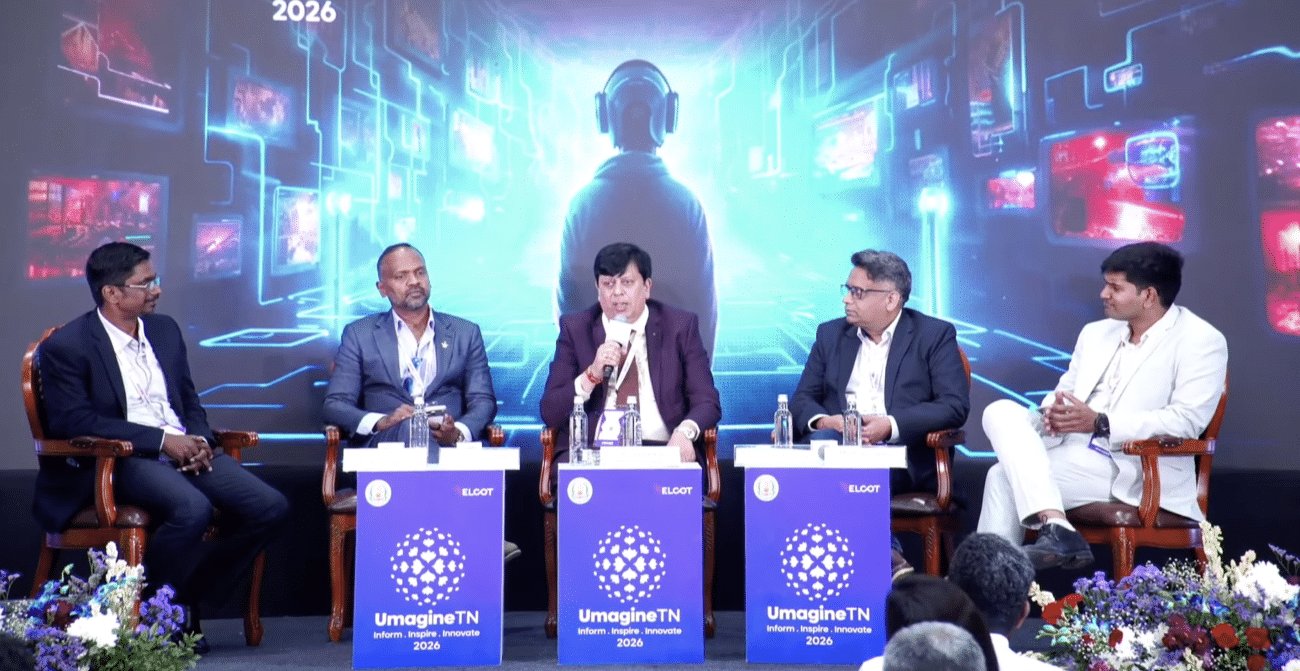
At Tamil Nadu’s technology and innovation summit UmagineTN 2026, technology leaders, enterprise executives and founders debated how skilling must change in an AI-saturated economy.

At a panel discussion titled ‘Ahead of Algorithms: Winning in a Rapidly Digital World’, Cecil Sunder, director of cloud and AI platforms at Microsoft, argued that the very definition of skill has been permanently altered. Intelligence, he said, has become a commodity. With generative AI models now capable of producing code comparable to that of top-tier global programmers, traditional markers such as proficiency in C++ or Python no longer differentiate talent.

“The question is no longer whether you can code,” Sunder said. What matters instead is domain mastery and passion—whether in marketing, accounting, biotechnology or drug research. The foundations of these domains do not change, even as the tools do. In a world where knowledge is instantly accessible, he said, aspiration and depth of understanding are the only sustainable differentiators.

That shift from tool-centric skills to domain-led capability was echoed across the panel.
Rex Jesu Das, head of edge and industrial AI at LTIMindtree, described how his team built a digital twin platform for a manufacturing client, highlighting the uneven pace of transformation between digital-native firms and legacy industrial companies. Algorithms, he noted, are only one component of a much larger system that includes data pipelines, AI agents, factory design, and process reengineering. In that complexity, skilling cannot be reduced to learning AI models alone.

“Human-in-the-loop is here to stay,” Das affirmed, pushing back against fears of mass job displacement. Humans, he argued, provide the emotion, energy and contextual judgement that AI systems lack, making continuous reskilling essential rather than optional.

From a macro perspective, Devkant Aggarwal, regional head at IBM India, noted that algorithms already shape daily life invisibly, from consumption patterns to economic leadership. Countries such as the US, China and India, he said, are pulling ahead precisely because of how effectively they deploy algorithmic systems.

Yet even in an algorithm-led economy, Aggarwal stressed that human skills such as negotiation, relationship-building and problem-solving remain critical. These capabilities allow individuals and organisations to “ace” digital transformation rather than merely automate processes.

He gave the example of IBM’s Naan Mudhalvan programme, the result of collaboration with the Tamil Nadu Skill Development Corporation and Anna University. The initiative focuses on upskilling students in emerging technologies by enabling them to work on real-world problem statements through project-based learning.

The experience revealed constraints that technology alone could not solve—from language preferences to the importance of women mentors for female students. These barriers, Aggarwal said, required human intervention, not chatbots, even as technology acted as an enabler.

It’s the startups under investor pressure that feel the gap between technology’s promise and practical execution hit hardest.

Dinesh Arjun, co-founder and CEO of electric motorcycle maker Raptee.HV, said his 150-person, digitally native organisation—with an average employee age of 24—had never known traditional ways of working. While that brought speed and flexibility, it also created challenges in aligning tools and workflows across teams, especially with limited capital.

Unable to afford the expensive enterprise systems used by large original equipment manufacturers, Raptee.HV’s engineers built an internal stack covering everything from product lifecycle management and ERP to inventory and testing—without top-down direction. The result, Arjun said, was a company able to operate like a much larger manufacturer with a fraction of the resources, enabling both survival and innovation.

That experience shapes how he evaluates talent. Certifications and narrow tool expertise, Arjun warned, often produce candidates whose understanding is confined to specific modules—precisely the kind of work AI will increasingly automate. What his company values instead is agility: the ability to achieve outcomes even without sophisticated tools, an area where Indian talent can still create disproportionate value.

The discussion identified adaptability as the core skill of the future.

Sunder argued that asking which specific AI techniques to learn—such as retrieval-augmented generation (RAG), fine-tuning, model context protocols (MCP) or agent-to-agent (A2A) systems—makes limited sense in a landscape evolving faster than skilling programmes can keep up.

With no option to opt out of learning, he urged students to stay deeply engaged with emerging technologies, follow their rapid evolution, and use them to translate ideas into real-world outcomes rather than treating any single technique as an end in itself.

Even infrastructure constraints, such as GPU shortages and limited cloud capacity, are transitional challenges rather than structural barriers. Demand for AI is outstripping supply, Sunder said, but that imbalance only reinforces the need to accelerate learning and experimentation.

The post Skilling Programmes Can’t Keep Up with AI, So What Can Students, Developers Do? appeared first on Analytics India Magazine.

How Dell’s GB10 Signals the Shift Towards Real On-Device AI

For years, the AI community expected progress to come only from bigger clusters and larger cloud deployments.

Instead, a parallel trend has reshaped how developers build models, leading to small and mid-sized language models becoming dramatically more capable.

This shift has reopened an old question with new urgency: If developers can do more with smaller models, why is much of AI development still locked behind remote, expensive and capacity-constrained infrastructure?

Local computing has struggled to keep pace. Even top-end workstations hit memory ceilings well before loading these improved models.

Teams working on 30B or 70B parameter models often find that their hardware forces them to use compression techniques, model sharding or external GPU servers.

For regulated industries, none of those workarounds are straightforward because moving data off-premise is restricted. For researchers and startups, accessing cloud instances becomes a recurring drain on budgets and iteration velocity.

The gap between what models can do and what local machines can support has grown wider.

To address challenges in this space, hardware manufacturers like Dell have invested significant effort. The company’s latest Dell Pro Max with GB10 is a response to developers capable of building more ambitious on-device AI but blocked by hardware limits.

“Training models with more than 70 billion parameters demands computational resources far beyond what most high-end workstations deliver,” the company said.

By bringing NVIDIA’s Grace Blackwell architecture—previously limited to data centres—into a deskside form factor, Dell is attempting to realign hardware with this new generation of compact but computationally demanding AI workloads.

The Dell Pro Max with GB10 ships with 128GB of unified LPDDR5X memory and runs on Ubuntu Linux with NVIDIA DGX OS, preconfigured with CUDA, Docker, JupyterLab and the NVIDIA AI Enterprise stack.

Dell says the system delivers up to 1,000 trillion operations per second (TOPS) of FP4 AI performance, giving developers the headroom to fine-tune and prototype models up to 200B parameters locally.
“Packing this much power into a compact 1.2-kg device, measuring just 150 mm by 150 mm by 50.5 mm, represents a significant engineering achievement,” the company stated.

Besides, unified memory avoids many bottlenecks that arise from juggling separate CPU/GPU memory pools and lets developers work with large models in a single address space.

The value is practical rather than theoretical. Academic labs can run Meta’s open source Llama-class models without waiting for shared clusters.

Startups can experiment with product features locally instead of committing to cloud spend during early R&D. Banks and healthcare organisations can build AI systems while keeping data inside their compliance perimeter. Independent developers can test and refine models that were previously out of reach without renting external GPUs.

As Dell put it, the Pro Max with GB10 is designed to “streamline development” and eliminate the recurring problem of local devices hitting their limits too early in the workflow.

When working with larger-scale AI workloads, Dell also shared a potential solution. “Teams that need more capacity can bond two GB10 systems to act as a single node, accommodating models of up to 400 billion parameters,” Dell stated.

It added that teams can get started quickly as DGX OS comes preconfigured. They can launch training jobs within minutes, use additional SDKs and orchestration tools as needed, and pull model checkpoints directly from the NVIDIA Developer portal and the NGC catalogue.

It is an AI development node, and a tool for running and iterating on models directly, not an all-purpose PC. Teams without experience in machine learning stacks or DGX-style workflows will face a learning curve.

Still, the direction is consistent with how the AI ecosystem is shifting. As more capable smaller models emerge, on-device AI is becoming viable for tasks that previously required remote compute. Developers want faster iteration, predictable costs and greater control over data.

The device exists to meet those conditions. It does not replace large clusters for final training runs, but it changes what can happen locally in the earliest, most experimental stages.

“Personal computers have brought software development to everyone. Cloud computing has made large-scale apps easy to access,” Dell added. “Now, desktop supercomputing will make advanced AI engineering possible for anyone ready to explore.”

The post How Dell’s GB10 Signals the Shift Towards Real On-Device AI appeared first on Analytics India Magazine.

Tailwind Cuts 75% Jobs as AI Destroys 80% Revenue

Tailwind Labs has laid off 75% of its engineering team after a sharp collapse in revenue, ironically as usage of its open source framework continues to surge.

The company says the rise of AI coding agents has fundamentally broken its business model by cutting developers off from the documentation pages that once drove paid conversions.

Founder and CEO Adam Wathan said that Tailwind’s CSS framework is now seeing around 75 million downloads a month, largely because AI tools generate Tailwind code automatically. That success has come with an unexpected cost.

Traffic to Tailwind’s documentation is down about 40% from early 2023, and revenue has fallen close to 80%, according to the founder. The documentation pages were the primary channel through which users discovered Tailwind’s commercial products.

“But the reality is that 75% of the people on our engineering team lost their jobs here yesterday because of the brutal impact AI has had on our business,” the founder wrote on GitHub. “Every second I spend trying to do fun free things for the community like this is a second I’m not spending trying to turn the business around and make sure the people who are still here are getting their paychecks every month.”

://
Lets hope it het sorted out good for @tailwindcss it's a phenomenal good product
TLDR: tailwind have lost 80% revenue and laid of 75% of the staff probably mostly due to AI pic.twitter.com/IQWJa8kgqc

— Emil Privér (@emil_priver) January 7, 2026

Tailwind builds a utility-first CSS framework used by developers to design websites and applications quickly, along with paid products such as UI components and tools aimed at speeding up front-end development. While the framework itself is free and open source, the company relies on paid add-ons to fund maintenance and ongoing development.

“Traffic to our docs is down about 40% from early 2023 despite Tailwind being more popular than ever,” the founder said. “The docs are the only way people find out about our commercial products, and without customers we can’t afford to maintain the framework.”

He added that while he wants to explore AI-optimised documentation, the risk is that it could worsen the same problem by further reducing human visits. “I really want to figure out a way to offer LLM-optimised docs that don’t make that situation even worse… but I can’t prioritise it right now unfortunately,” he wrote.

On X, the layoffs triggered a wider debate about open source sustainability in the age of AI. Narayan Babu, VP at Zeta, wrote, “How does someone anticipate such scenarios? It is sad, yet logical at the same time (what happened).”

Michael Kove from Kove Consulting LLC, questioned the underlying model itself. “Selling pre-built components is a fragile business model and is a race to the bottom,” he wrote, adding that it is even harder when built on top of an open source framework.

Despite the layoffs, the founder says Tailwind’s growth and its financial health have become completely disconnected.

The post Tailwind Cuts 75% Jobs as AI Destroys 80% Revenue appeared first on Analytics India Magazine.

Ford Unveils AI Assistant, Next-Gen BlueCruise at CES 2026; Eyes Hands-Free Driving

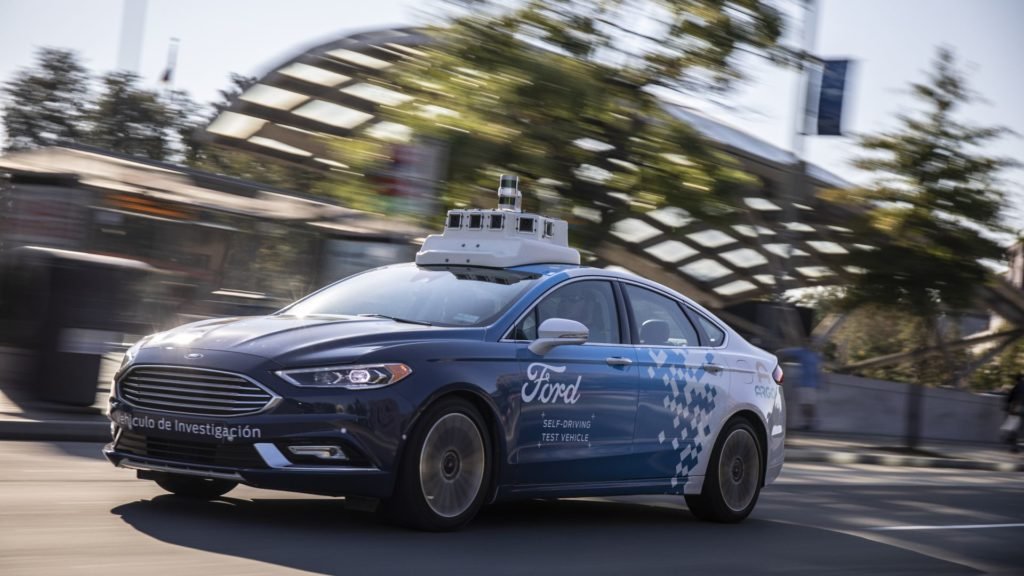
Ford Motor Company reportedly plans to launch an AI-powered digital assistant and a more advanced, lower-cost version of its BlueCruise driver-assistance system, making it one of the few major automaker announcements at the 2026 Consumer Electronics Show (CES).

TechCrunch reported that the AI assistant will debut in Ford’s smartphone app in early 2026, before expanding into vehicles in 2027. Built using off-the-shelf LLMs and hosted on Google Cloud, the assistant will have deep access to vehicle-specific data, allowing it to answer both general and real-time queries, from load capacity questions to details such as oil life and vehicle status.

Ford shared the update during a smaller “Great Minds” speaker session at CES, rather than a headline keynote, underscoring a shift from the late 2010s when automakers dominated the show with large-scale product reveals.

While the company did not give the full details of the in-car experience, the planned integration positions Ford alongside more tech-forward rivals.

Alongside the AI assistant, Ford teased a next-generation version of its BlueCruise advanced driver-assistance system. The company said the new system will be about 30% cheaper to manufacture and more capable than the current version. It is expected to debut in 2027 on the first electric vehicle built on Ford’s low-cost “Universal Electric Vehicle” platform, anticipated to be a mid-sized pickup truck.

Ford also outlined its longer-term ambitions for BlueCruise, including enabling eyes-off driving by 2028. The system is expected to support “point-to-point autonomy,” similar to Tesla’s Full Self-Driving (Supervised) offering and systems being developed by Rivian. As with rival technologies, drivers will still be required to remain alert and ready to take control at any time.

The post Ford Unveils AI Assistant, Next-Gen BlueCruise at CES 2026; Eyes Hands-Free Driving appeared first on Analytics India Magazine.

MeitY Launches Param Shakti Supercomputing Facility at IIT Madras

The Ministry of Electronics and IT (MeitY) has launched Param Shakti, an indigenous 3.1 petaflop supercomputing facility at IIT Madras. This is aimed at strengthening India’s research capacity in high-performance computing. The facility was launched in Chennai by the MeitY Secretary, S Krishnan, under the National Supercomputing Mission.

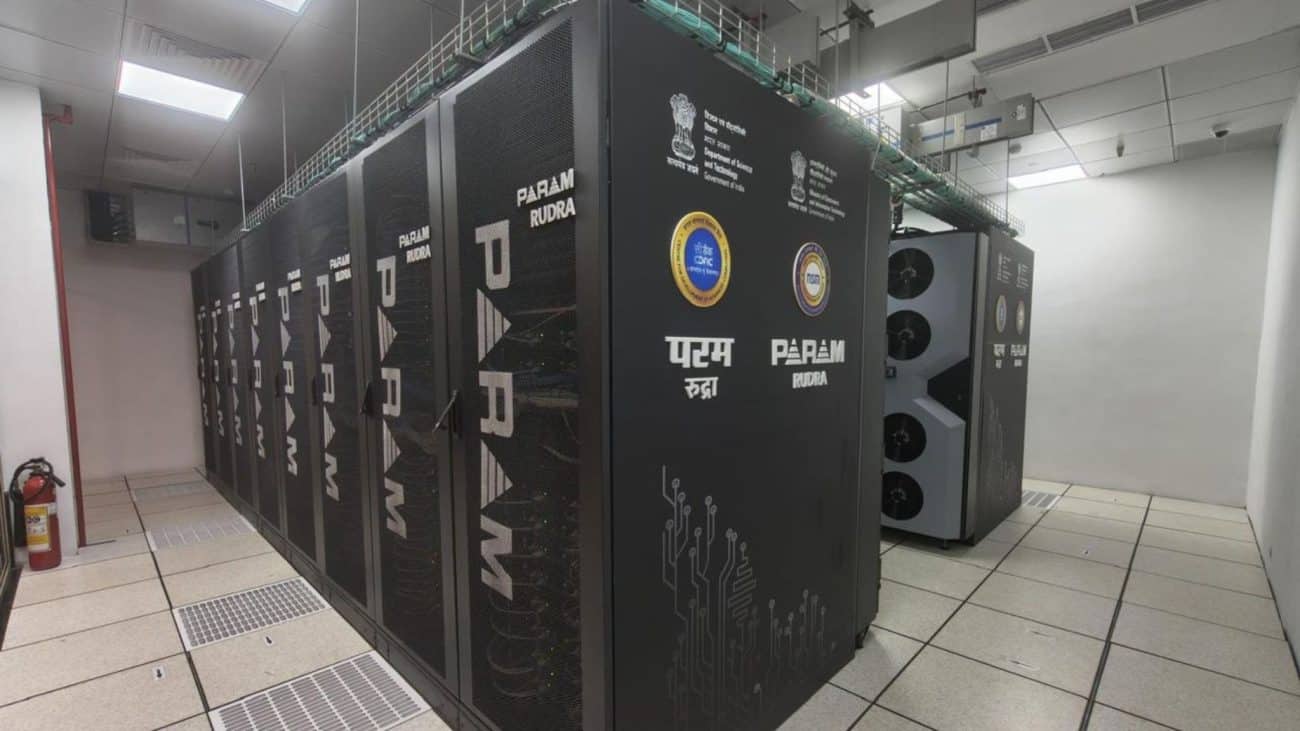
Param Shakti hosts the PARAM Rudra supercomputing system, designed and implemented by the Centre for Development of Advanced Computing (CDAC).

The system has been funded through the National Supercomputing Mission, jointly led by MeitY and the science and technology department, and will support advanced research across aerospace, materials science, climate modelling, drug discovery and manufacturing.

The 3.1 petaflop system can perform over 3.1 quadrillion calculations per second, placing it among the most powerful computing systems in Indian academia. According to MeitY, the facility will help researchers reduce experimental timelines and handle complex simulations at scale.

IIT Madras director V Kamakoti highlighted the role of government-led computing initiatives such as the National Knowledge Network, which connects centrally funded academic institutions. He urged students to focus on energy-efficient programming and effective sharing of GPU resources.

Addressing students and faculty, Krishnan said the institute’s growing interdisciplinary research culture would benefit from the new system. “It is encouraging to see faculty and researchers from diverse departments coming together to use this facility and contribute meaningfully in their respective domains,” he said.

He added that India’s supercomputing footprint was expanding steadily. “With 37 supercomputers already installed across institutions nationwide and more in the pipeline, including the largest system planned for Bengaluru, these efforts are strengthening India’s research and innovation ecosystem,” Krishnan said.

Built Entirely in India

The PARAM Rudra system has been built entirely in India using C-DAC’s Rudra series servers and runs on open-source software, including AlmaLinux and an indigenous system software stack. MeitY said this aligns with India’s push for self-reliance in critical computing infrastructure.

Krishnan also linked the facility to the broader IndiaAI Mission, noting that the government is avoiding dependence on a single technology platform. “By enabling access to multiple GPU architectures, we want our innovators, scientists and researchers to gain broad exposure and develop the capability to master diverse platforms,” he said.

C-DAC director general, E Magesh, traced the development of the Rudra platform and encouraged researchers to adopt indigenous high-performance computing systems. He said wider adoption would be critical to building long-term capability in advanced computing.

Operational since May 2025, the Param Shakti facility has already recorded over 80% utilisation, indicating strong demand from researchers. The data centre operates at a power usage effectiveness of 1.2-1.4, reflecting a focus on energy efficiency.

MeitY said the facility marks an important step as the National Supercomputing Mission moves towards its next phase, with India’s total computing capacity expected to approach exascale levels in the coming years.

The post MeitY Launches Param Shakti Supercomputing Facility at IIT Madras appeared first on Analytics India Magazine.

TN Secures ₹9,500+ Cr Investment Pledges at UMAGINE TN 2026

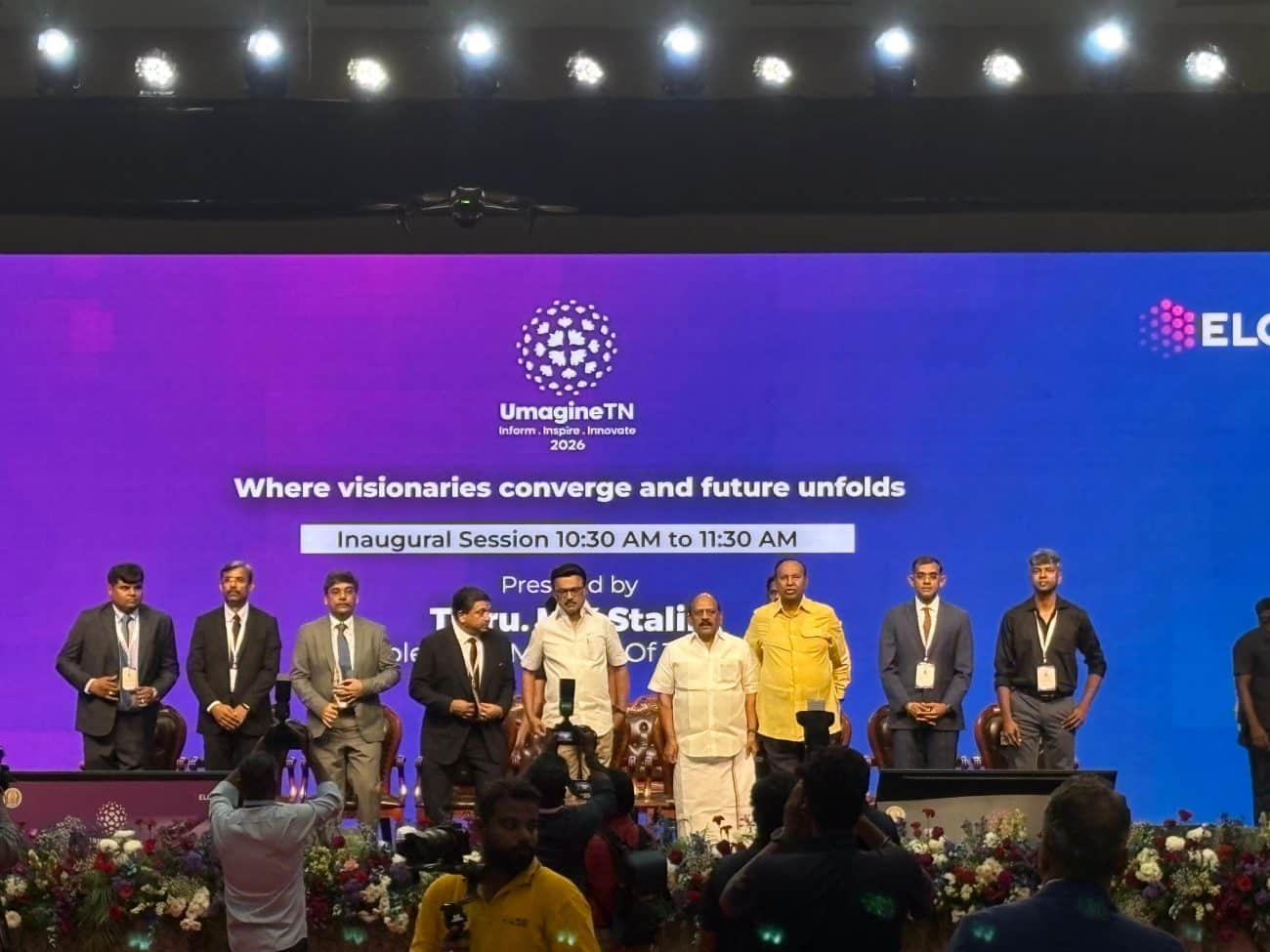
Tamil Nadu announced a fresh set of investment commitments worth ₹9,820 crore, expected to generate over 4,000 jobs, at the inauguration of UMAGINE TN 2026, the state’s flagship technology and innovation conference.

Chief Minister MK Stalin, inaugurating the event, said the investments underscore Tamil Nadu’s emergence as a hub for Global Capability Centres (GCCs), advanced R&D for artificial intelligence, and fintech, built on the state’s strengths in manufacturing and digital innovation.

Among the major announcements was Better Compute Works, which will invest ₹5,000 crore in AI data centres, creating 1,500 jobs.
With Eros GenAI, Eros Innovation committed ₹4,500 crore, generating an estimated 1,000 jobs, while marketing tech company Phantom Digital announced an investment of ₹100 crore to generate 1,000 jobs.
Healthcare startup Rewin Health will invest ₹50 crore with 350 jobs, and SaaS firm Cube84 announced a ₹20 crore investment, creating 300 jobs. WeLoadin Studio LLP will invest ₹150 crore with 150 jobs.

In his address, Stalin said Tamil Nadu’s technology-led growth “did not happen in silos” but was the outcome of combining social justice with economic expansion.

“We are ensuring that this development spreads across the state, including tier-2 and tier-3 cities,” the Chief Minister said, pointing to Coimbatore, Tiruchirappalli, Madurai and Tirunelveli as emerging contributors to the state’s technology ecosystem.

Citing data from the Software Technology Parks of India, Stalin said 32 out of Tamil Nadu’s 38 districts are now exporting software, highlighting the depth of the state’s digital footprint.

Palaniappan Thangavelu Rajan, minister for information technology and digital services, said UMAGINE was conceived to promote equitable access, inclusion and exposure in the technology sector.

“This conference brings together the best minds from around the world to inspire people to think of a better tomorrow,” PTR said, noting that UMAGINE is now in its fourth edition, helping the state build institutional capability to host large-scale global technology events, comparable to Karnataka’s long-running Bengaluru Tech Summit.

PTR said attendance at the conference has grown steadily, with over 13,000 visitors last year, and participation is expected to be higher this year.

Highlighting new initiatives this year, PTR said the government expanded UMAGINE DX, a distributed lecture series conducted across 60 educational institutions in 23 districts. These sessions featured 153 speakers, including 91 alumni, and were attended by more than 18,000 students.

On startups, PTR said the state received over 400 applications, of which around 40 startups were selected to showcase their products at UMAGINE TN 2026. Winners will get opportunities for international exposure in Sharjah, Dubai, Singapore, and other global hubs, through a partnership with the Dubai World Trade Center.

He also underscored the government’s push into AVGC (animation, visual effects, gaming and comics) and creative technologies, citing the state’s AVGC policy, a centre of excellence, and Tamil Nadu hosting the Game Developers Conference of India in Chennai after a gap of 17 years.

This year’s UMAGINE edition features a dedicated track on creative arts in the age of AI, reflecting the convergence of technology with Tamil Nadu’s cultural and creative industries.
UMAGINE TN 2026 will run for two days, bringing together policymakers, technology leaders, startups, students, and global delegates.

The chief minister also launched the state’s deep tech policy at the event.

The post TN Secures ₹9,500+ Cr Investment Pledges at UMAGINE TN 2026 appeared first on Analytics India Magazine.