Indian IT’s AI Moment Runs Into a Data Readiness Check

Indian IT firms are often first in line to implement enterprise AI, but a closer look at delivery reveals constraints rooted more in data governance than in algorithms. Practitioners working hands-on with AI systems say data readiness across the sector is best described as “partial.”

Data readiness is important for organisations to make informed decisions. With high-quality and clean data, they can innovate faster, offer better customer experiences, and ensure regulatory compliance.

Sourajyoti Datta, a data scientist at Vaillant Group with about 12 years of experience in the field, told AIM that Indian IT firms today have “strong data engineering talent and growing governance frameworks,” but outcomes still depend heavily on the client’s underlying data maturity.

“The biggest constraint is not models but data,” he said, pointing to fragmented architectures, inconsistent quality, and immature lineage as reasons why only a minority of AI initiatives make it into stable, value-generating production.

This unevenness cuts across tiers. Datta notes that large Indian IT firms now operate large cloud-native data practices and proprietary GenAI platforms, while mid-sized players often move faster on narrower, domain-specific problems.

The trade-off, however, is scale. Mid-tier firms can execute quickly within defined scopes, but struggle to replicate that success consistently across complex enterprise environments.

Then there’s the question of whether Indian IT companies are building their own data platforms or relying on external ecosystems.

Datta argued that most firms are building core data lakes, lakehouses and machine learning operations (MLOps) blueprints in-house on top of hyperscaler infrastructure, using partnerships and selective acquisitions to accelerate rather than replace those foundations. In his view, data platforms are increasingly treated as internal intellectual property, even as vendors continue to depend on cloud providers and specialist partners to fill gaps.

Pravat Jena, a senior data scientist at Dell with 14 years of experience in data strategy, took a more sceptical view. He said most Indian IT firms remain “strong at pilots and PoCs (proofs-of-concept),” but only a subset are consistently ready for production AI at scale.

The limiting factors, he argued, are operating models and governance maturity rather than technical capability. “Most firms are not building core platforms fully in-house,” Jena said. “They rely heavily on hyperscale-native stacks, vendor tools and partnerships, with limited proprietary differentiation.”

Both Datta and Jena agreed that data quality and governance remain the weakest layers in AI programmes. Jena described governance frameworks as often existing “on paper,” with uneven implementation across legacy systems and multi-cloud environments.

The result is that AI systems scale slowly beyond controlled use cases.

Datta noted that despite regulatory pressure from India’s Digital Personal Data Protection Act and emerging AI governance guidelines, only a minority of enterprises feel adequately prepared to support scalable AI workloads. According to a 2025 McKinsey report, while almost all companies worldwide invest in AI, only 1% believe they are at maturity.

This gap between intent and execution explains why many AI projects stall before reaching enterprise-wide deployment. MIT places the failure rate of generative AI pilots and PoCs at 95%.

“Failures typically originate upstream,” Jena said, citing poor data quality, inconsistent definitions and unclear ownership as the primary causes. Model development, by contrast, is rarely the first point of failure.

From an industry-wide vantage point, the picture looks slightly more optimistic, particularly for the largest firms.

Biswajeet Mahapatra, principal analyst at research firm Forrester, said tier-1 Indian IT companies are largely ready to deliver production-grade AI systems, especially in regulated sectors such as banking, financial services, and telecom. Their advantage is flanked by established cloud-native architectures, mature governance frameworks, and experience in large-scale data engineering.

Meanwhile, tier-2 firms, he added, show uneven readiness, often excelling in niche engagements but lacking the enterprise-grade consistency needed to scale beyond pilots.

Mahapatra described the prevailing approach to data platforms as “hybrid”. Firms typically build internal accelerators and reference architectures while partnering with vendors such as Databricks, Snowflake, and Confluent for specialised capabilities.

Indian IT firms rely on selective acquisitionsto strengthen data engineering or AI operations, particularly among tier-1 players, while smaller firms rely more heavily on pre-integrated partner solutions, he said. These acquisitions plug data gaps, strengthening cloud data platforms, embedded analytics, governance layers and AI-native engineering depth needed to move enterprise AI beyond pilots into production.

This is exactly what TCS tried to accomplish with the $700-million acquisition of Coastal Cloud, a US tech consulting firm specialised in Salesforce solutions. This is a faster way for TCS to gain deep workflow expertise and talent required to tap into AI opportunities.
Experts flagged that ownership of client data platforms remains limited. Indian IT companies still primarily act as system integrators and managed service providers, executing architectures defined by hyperscalers and clients.

Full end-to-end custodianship is rare, although Mahapatra noted that long-term managed services and outcome-based contracts are gradually expanding the scope of operational responsibility for large vendors.

Talent Bottleneck

Talent depth is another concern. Datta and Jena both point to a shortage of elite senior data platform architects capable of designing and running enterprise-scale systems over long periods, even as tool-level and model-centric skills are widely available.
Indian IT services companies are training at an unprecedented scale to prepare their workforces for an AI-led future. Yet even as hundreds of thousands of employees are reskilled in data and generative AI, the sector continues to chase a much smaller pool of specialised talent—data architects, machine learning engineers, and AI platform builders—whose skills cannot be created quickly or cheaply.

Mahapatra agreed that tier-1 firms have strong senior talent pools, but demand far exceeds supply, while tier-2 firms remain more focused on implementation-level skills.

Datta expected hybrid platform orchestrators to emerge, with large firms combining proprietary IP-led platforms and long-term operations while remaining tied to hyperscalers and client sovereignty.

Jena anticipated a bifurcation, where a small group evolves into long-term custodians of enterprise data and AI platforms, while many others continue as project-based implementers.

Meanwhile, Mahapatra said that tier-1 firms will deepen custodial roles through managed platforms and outcome-linked service models, leaving tier-2 firms at a crossroads unless they invest significantly in governance authority and platform operations.

The post Indian IT’s AI Moment Runs Into a Data Readiness Check appeared first on Analytics India Magazine.
India Eyes Manufacturing ‘World’s Smallest AI Supercomputer’ by NVIDIA

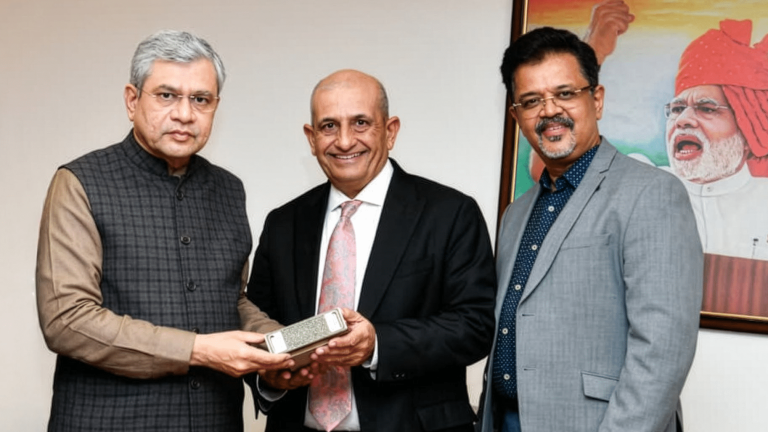
India’s minister of electronics and information technology, Ashwini Vaishnaw, met with officials from NVIDIA to discuss manufacturing the global chip giant’s DGX Spark in India.

DGX Spark is a compact system designed to handle a wide range of artificial intelligence workloads. It integrates NVIDIA’s full AI stack, including GPUs, CPUs, networking, CUDA libraries, and supporting software.

NVIDIA noted that the DGX Spark delivers up to one petaflop of AI performance and is equipped with 128 GB of unified memory. Powered by the GB10 Blackwell Superchip, the system can run inference on AI models with up to 200 billion parameters and fine-tune models with up to 70 billion parameters.

The company announced in October that it would begin shipping the DGX Spark, which it describes as the ‘world’s smallest AI supercomputer’. The system is priced at $3,999.

In a social media post, the minister highlighted its on-device AI processing capabilities, which he believes are suitable for use cases across railways, shipping, healthcare, education, and remote applications.

While the minister did not disclose further details from the meeting, the discussions signal another step in the deepening relationship between India and NVIDIA.

In November, NVIDIA became a founding member and strategic technical advisor to the India Deep Tech Alliance, a consortium of Indian and US investors focused on supporting startups in AI, semiconductors, space, and robotics.

The alliance has secured over $850 million in capital commitments to close funding gaps and accelerate innovation. NVIDIA’s role includes providing technical guidance, training, and broader ecosystem support to emerging deep tech companies.

NVIDIA currently operates multiple engineering and development centres in India, including in Hyderabad, Pune, Gurugram, and Bengaluru, with teams focused on software development, AI tools, and hardware support.

The post India Eyes Manufacturing ‘World’s Smallest AI Supercomputer’ by NVIDIA appeared first on Analytics India Magazine.

EPAM, Cursor Tie Up to Push AI Coding Beyond Enterprise Pilots

EPAMEPAM

EPAM Systems has announced a partnership with Cursor to help global enterprises move from limited AI coding trials to large scale AI-native software development.

The companies said the collaboration will combine Cursor’s AI-native integrated development environment with EPAM’s AI/Run delivery framework to improve productivity, code quality, and developer experience across enterprise engineering teams.

The partnership targets enterprises that have adopted AI coding tools but struggle to see consistent daily usage or measurable returns.

By embedding AI workflows, rules, and agent-style behaviour directly into developers’ primary workspace, the two firms aim to reduce time-to-value and standardise AI-driven engineering practices across complex enterprise environments.

EPAM said the initiative will be supported by its global base of more than 50,000 engineers, along with maturity models, curated engineering context, training programs, and productivity measurement systems.

The company plans to deploy Cursor across large teams while integrating it with existing enterprise systems and processes.

“While most large enterprises have made some investment in AI coding tools, many teams struggle with full adoption and daily use,” Dmitry Tovpeko, VP, AI-Native Engineering at EPAM said. “In response, Cursor’s AI-Native integrated development environment promotes disciplined use by incorporating rules, workflows and agentic behavior directly in the developer’s primary workspace.”

Cursor said the partnership reflects a shared belief that enterprise gains from AI require changes in how engineering teams work, not only new tools. “We share EPAM’s perspective: the teams that achieve exceptional results are those that rethink how they work, not just the tools they use,” Michael Scherr, head of business development at Cursor, said.

The companies said the collaboration will focus on faster enterprise adoption of AI-first software development life cycles, improved efficiency, and clearer return on investment as organisations race to modernise engineering practices.

Read: EPAM’s New CEO Bets on an AI-Native Future

The post EPAM, Cursor Tie Up to Push AI Coding Beyond Enterprise Pilots appeared first on Analytics India Magazine.
Lovable Engineer Saves Company $20 Mn Yearly With Help From His Mother

LovableLovable

An engineer at the AI-powered app development platform Lovable said in a LinkedIn post that a series of changes to the company’s system prompt helped cut annual large language model (LLM) costs by nearly $20 million, while also improving performance.

Benjamin Verbeek, a member of technical staff at Lovable, explaining that he spent the holiday period reviewing and improving the platform’s system prompt. According to Verbeek, the changes made Lovable about 4% faster.

“The crazy part is that this also ended up decreasing our LLM costs by $20M per year—with help from my mother,” Verbeek wrote.

He explained that when his mother—who is a historian by training—asked him to explain his work in the LLM space. He showed her an LLM trace, which is a detailed record of how an AI model processes instructions and generates responses step by step.

Looking at the trace, Verbeek said his mother asked why certain instructions were repeated multiple times across different parts of the prompt.

“What we realised is that our system prompt is constructed dynamically from lots of different files,” Verbeek added. “As we’ve been optimising each part, no one had looked at the coherence for a while. Together we found duplication, inconsistencies, and overly verbose formulations.”

He explained that over time, engineers had kept adding new instructions to emphasise specific behaviours, without removing or consolidating older ones.

This led to unnecessary repetition and diluted the prompt’s overall effectiveness.

Verbeek said the team removed duplicate instructions, tightened the language, and preserved the original intent and balance of constraints.

After manually rewriting the first sections, he used an AI model to refactor the remaining portions in the same style, followed by a detailed line-by-line review to reintroduce a few critical safeguards.

The revised prompt was then A/B tested over the New Year period.

According to Verbeek, the updated system followed instructions more reliably, responded faster, and significantly reduced token usage, leading to substantial cost savings at scale.

Reflecting on the experience, Verbeek highlighted three key takeaways.

Firstly, he said that prompt quality compounds at scale. He also noted that fresh perspectives can outperform simply “prompting harder.” Lastly, he pointed out that fast, safe experimentation is a major advantage in AI development.

However, one user pointed to a recent Google research paper suggesting that prompt repetition can, in some cases, improve the performance of large language models without increasing output length or latency.

Responding to the comment, Verbeek said that repetition can indeed be beneficial in certain contexts, but stressed that Lovable’s advantage lies in its ability to run high-confidence experiments to validate such claims. “In our conditions, this happened to work really well,” he said.

Last December, Lovable raised $330 million in a Series B funding round at a valuation of $6.6 billion.

Lovable said the capital will be used to deepen integrations with enterprise software tools, expand collaboration and governance features for teams, and strengthen infrastructure that supports moving products from prototype to production.

The post Lovable Engineer Saves Company $20 Mn Yearly With Help From His Mother appeared first on Analytics India Magazine.

X Limits Grok Image Tools to Paid Users After Global Govt Backlash

Elon Musk’s Grok Copies OpenAI’s ChatGPTElon Musk’s Grok Copies OpenAI’s ChatGPT

xAI has restricted the image-generation features of its AI model, Grok, to paid subscribers. The change was revealed through Grok’s own responses to user prompts on X.

The move follows widespread government backlash over how Grok was being misused on the platform.

Users on X were editing uploaded images through Grok to fulfil obscene requests. These requests were made by tagging the @grok bot, which generated and posted the edited images directly to the public feed.

The issue escalated because the generated images were publicly visible and often involved explicit sexual content. In several cases, the requests targeted real individuals, raising concerns around consent, harassment, and the circulation of non-consensual explicit material.

As a result, multiple countries—including the United Kingdom, India, Malaysia, France, and Ireland—sent notices to Elon Musk’s social media platform.

These notices called for investigations into the generation and spread of inappropriate and obscene AI-generated images on X.

Data shared by AI detection firm Copyleaks highlights the scale of the problem.

According to the firm, users requested the creation of obscene images at a rate of roughly once per minute over a 24-hour period.

Separately, Reuters reported that in a five-minute window, 102 requests were made to Grok to generate explicit images. The AI model complied with approximately one in five of those requests.

Having said that, X stated in a comment that the company will take action against illegal content on X, “including Child Sexual Abuse Material (CSAM), by removing it, permanently suspending accounts, and working with local governments and law enforcement as necessary.”

“Anyone using or prompting Grok to make illegal content will suffer the same consequences as if they upload illegal content.”

A few days ago, India’s Ministry of Electronics and Information Technology (MeitY) intervened and issued a notice to X, directing it to remove obscene content and flagging concerns over the misuse of Grok.

In a letter addressed to X’s Chief Compliance Officer for India, the Ministry flagged that Grok was being exploited by users to create fake accounts that host, generate, publish, or share obscene images and videos of women in a derogatory and vulgar manner.

The company was given time until February 7th to submit a detailed report. However, a report from The Times of India states that the ministry is not fully satisfied with the company’s initial response, and is “likely to seek clearer, step-by-step details on corrective measures the platform plan to implement.”

The post X Limits Grok Image Tools to Paid Users After Global Govt Backlash appeared first on Analytics India Magazine.

World’s First LLM Company Goes Public 

Beware of Chinese Open-Source LLMsBeware of Chinese Open-Source LLMs

Z.ai, formerly known as Ziphu AI, the developer of the GLM family of large language models (LLMs), made its public market debut on the Hong Kong Stock Exchange, becoming, as investors describe, the world’s first publicly listed large language model company.

The company, which trades under the ticker 02513.HK, priced its shares at HK$116.20 apiece and opened at HK$120.00, giving it a market capitalisation of approximately HK$52.83 billion, or $6.8 billion. With the listing, the company raised roughly $558 million, according to a press release from Qiming Venture Partners, one of the company’s early backers.

Founded in 2019, Z.ai develops open-weight LLMs (allowing users to customise models for specific tasks) that, across multiple benchmarks, have matched or exceeded the performance of both open-source and proprietary models from the United States, while competing closely with Chinese peers such as DeepSeek and Alibaba’s Qwen series.

Qiming Venture Partners claimed, “Z.ai has grown into China’s largest independent large language model developer.” The firm added that, as of September 30, 2025, Z.ai’s models were deployed across more than 12,000 enterprise customers, over 80 million end-user devices, and supported more than 45 million developers globally—making it the independent general-purpose large-model provider in China with the highest number of enabled end-user devices.

Zhang Peng, CEO of Z.ai, said in a statement, “Going public means we must shoulder even greater social responsibility and industry mission.”

He added that the company will continue to focus on “fully independent, controllable full-stack large-model technology,” while pushing forward improvements in reasoning, coding, and multimodal capabilities across the GLM model series.

Z.ai is listed under Hong Kong’s Chapter 18C (Specialist Technology Companies) regime, implying higher volatility and valuation uncertainty compared with profitable semiconductor issuers, as revealed in the IPO prospectus.

While revenue grew rapidly to RMB 312.4 million (≈ HK$345 million, or $42 million) in 2024 (130%+ CAGR since 2022), the company reported net losses of RMB 2.96 billion (≈ HK$3.28 billion, or $420 million) in 2024, largely driven by heavy R&D spending.

Around 70% of IPO proceeds are earmarked for continued large-model R&D rather than capacity expansion or near-term commercialisation, unlike hardware peers raising capital for fabs, chips, or servers.

The post World’s First LLM Company Goes Public appeared first on Analytics India Magazine.

Inside Trump’s Semiconductor Tariff Bluff

US President Donald Trump has repeatedly threatened steep tariffs on semiconductors and electronics. However, those tariffs do not take effect simply because he says they will.

The legal authority Trump relies on is Section 232 of the Trade Expansion Act, which allows the President to impose import restrictions on national security grounds. That authority, however, is conditional.

It can only be exercised after a formal investigation by the US Department of Commerce (DOC) and a subsequent presidential determination based on the findings of that investigation.

Under Section 232, ‘national security’ has been interpreted broadly. It extends beyond military readiness to include domestic industrial capacity, supply-chain concentration and the ability to supply defence or other critical industries during a national emergency.

Tariffs under this framework are instruments designed to alter market incentives by raising the cost of imports, supporting domestic producers and creating leverage to shift production or sourcing decisions.

As a result, any tariff Trump has publicly endorsed—including the 26% tariff on India announced last April, the reciprocal 50% tariff announced in August or the proposed 500% tariff on Russia and countries that purchase Russian oil—can only be applied to industries that the DOC determines pose a national security risk under Section 232.

Tariffs are applied selectively, not universally.

Where the Semiconductor Investigation Stands Today

On April 1, 2025, the DOC formally initiated a Section 232 investigation into semiconductors, the equipment used to manufacture them and the products made with them.

The process included a public comment period and submissions from industry participants.

By statute, the DOC has 270 days to submit its findings. The President then has an additional 90 days to decide whether to act and to specify the nature of any trade restrictions.

That process has not yet concluded, and no findings have been issued.

A Reuters report published in November indicated that officials were not expected to levy semiconductor tariffs in the near term, adding that a final decision was still some distance away.

For now, the technology industry remains unaffected.

This remains true despite Trump’s repeated public warnings to Apple CEO Tim Cook. Trump has said tariffs would follow if production was not moved out of China or India and into the United States, and has also stated that he would impose 100% tariffs on semiconductors while exempting companies that shift manufacturing domestically.

This legislative backdrop sits alongside other policy efforts such as the CHIPS Act, through which the US has deployed subsidies, tax incentives and investment credits to strengthen domestic semiconductor manufacturing, signalling that incentives rather than tariffs are currently the preferred lever to build capacity.

Council on Foreign Relations, a think tank focused on US foreign policy and international relations, noted in a report, “The United States relies heavily on foreign suppliers for these goods (semiconductors, the equipment used to manufacture them and the products made with them), importing over $200 billion more than it exported in 2024.”

At the same time, the report highlighted that Section 232 outcomes are frequently shaped through negotiation.

Liechtenstein, Switzerland and the European Union negotiated a 15% tariff ceiling on semiconductor exports, while Japan secured the lowest tariff rate among countries.

Trump’s meeting with South Korean President Lee Jae Myung last November illustrates this approach. The US committed that any Section 232 terms applied to South Korea would be no less favourable than those offered to countries with comparable trade volumes.

From an Indian context, however, if tariffs are eventually applied to this industry, the impact could be significant.

Apple’s iPhone exports from India crossed $50 billion by December 2025, and 71% of iPhones sold in the US are now made in India.

“Production cycles would face significant disruption. Tech companies plan component orders 6-18 months ahead, and policy uncertainty breaks this entirely,” said Ganesh Krishnan, an entrepreneur and partner at GrowthStory, in an interaction with AIM.

“Relocating isn’t a quick fix either; moving even 10% of the supply chain from Asia to the US would take three years and $30 billion,” he stated.

Krishnanan said the 500% tariff is primarily a negotiating lever against India’s Russian oil purchases, not a serious intent to dismantle the electronics trade. “But uncertainty itself is damaging,” he said, adding that the real concern for big tech companies lies in the conclusions of the investigation.

Industry Inputs and Supply-Chain Economics Matter

The DOC’s investigation process explicitly invites industry input.

Trade associations, manufacturers and downstream users are encouraged to submit evidence and analysis, and a total of 154 comments were submitted in response to the request for public comment.

The Computer & Communications Industry Association (CCIA) said while the US has a “legitimate national security interest in assessing its dependence on foreign suppliers for semiconductors and semiconductor manufacturing equipment,” any policy response must account for the complexity of global supply chains.

This, the body noted, represents “billions of dollars in existing investments by US-based companies and deep commercial relationships built over decades.”

The CCIA warned that broadly applied tariffs would raise costs across the US industry and for consumers and would also “undermine the investments needed to reshore or diversify the supply chain.”

The association argued against “broadly-applied tariffs or import restrictions on the wide array of goods in scope,” urging the DOC instead to focus narrowly on “semiconductors and SME that are critical for national defence and sourced from countries of concern.”

Dell Technologies echoed similar concerns. While supporting efforts to reduce reliance on foreign semiconductor supply chains, the company noted that US manufacturing capacity remains limited and is unable to meet demand at scale in the near term.

Dell argued that the expanding domestic semiconductor production “requires financial and policy facilitative efforts rather than import restrictions,” warning that abrupt trade measures could raise costs, disrupt operations and delay production.

The Information Technology and Innovation Foundation (ITIF) added quantitative context.

While global semiconductor sales were expected to grow in 2025, ITIF warned that moderate to severe tariffs could reverse that trajectory, pushing growth to “as much as a -20% growth rate for the sector in 2025,” potentially wiping out “some $250-300 billion of global semiconductor sales” in a single year.

The analysis cautioned that higher chip prices would cascade through downstream sectors, raising costs for autos, data centres and electronics, and weakening US competitiveness rather than accelerating domestic capacity build-out.

The post Inside Trump’s Semiconductor Tariff Bluff appeared first on Analytics India Magazine.

Govt Mulls ESOP Tax Relief, but Liquidity Risks Still Haunt Startup Employees

For early-stage startups, cash is usually tight. They often rely on employee stock option plans (ESOPs) to attract and retain top talent, crucial for AI and deep tech startups betting on specialised skills. So far, the Centre, through the Inter-Ministerial Board of Certification, allowed the employees of certain eligible startups to defer ESOP tax liability for four years.

Now, the government is reportedly considering extending this relief to all startups recognised by the Department for Promotion of Industry and Internal Trade (DPIIT). By allowing employees to defer tax on stock options until a liquidity event, the policy aims to ease cash-flow pressure and make equity compensation more meaningful.

A senior government official told The Economic Times that the proposal aims to correct timing mismatches in ESOP taxation and ensure that employees are not taxed on unrealised gains. The government wants to come to a resolution before the budget announcement.

Early-stage founders see an obvious upside to the proposed move. Ritik Gupta, founder of B2B startup Overstockbay, told AIM that the change would immediately improve the credibility of ESOPs as a hiring tool.

“Early-stage startups usually can’t match big-company salaries, so ESOPs become an important part of the overall offer. If employees don’t have to worry about paying tax before they actually see any real benefit, ESOPs feel more practical and less risky,” he ascertained.

Yet, while the reform would address a real pain point, founders and investors caution that it does not resolve deeper issues around liquidity, valuation risk, and over-reliance on equity as a substitute for cash compensation.

Hiring Relief and Tax Equity

Gupta highlighted that while the reform is not a cure-all, it makes ESOPs more usable in real compensation planning. “It may not solve everything, but it does make the option more attractive for both founders and team members,” he said.

From a founder’s standpoint, the benefit also shows up indirectly in cash management. “Anything that makes ESOPs more acceptable gives founders more flexibility while planning compensation. When cash is tight, even small policy changes that ease pressure on salaries can make a real difference in how confidently we plan hiring and growth,” Gupta added.

Removing upfront tax is a big stress buster. “It makes ESOPs feel fairer and more realistic for employees who are already taking a risk by joining an early-stage company,” the entrepreneur noted.

Vishal Soni, co-founder and CPO of Lightbulb AI, concurred that the proposal is “a smart way of collecting tax at the time of the liquidity/sell event rather than at the time of exercising,” noting that it reduces “the perquisite tax’s immediate impact.”

The proposal is also a step forward in correcting a fundamental flaw in how ESOPs have been taxed in India.

“Assessing perquisite liability upon exercise of options in illiquid securities imposes taxation on notional gains, a perverse outcome that forces taxation prior to any actual monetisation,” stressed Chinmay Bhosale, co-founder of NYAI, a compliance-intelligence platform. “This violates the fundamental principle that tax liability should crystallise upon disposal, not acquisition.”

Extending relief under Section 80-IAC of the Income Tax Act would be an equalising measure for the startup community, as only roughly 4,000 out of the more than two lakh DPIIT-registered startups currently avail the ESOP tax shelter.

“For AI enterprises dependent upon specialised technical talent, this reform is very crucial and absolutely welcome,” Bhosale noted, adding that it “transforms equity to [a] genuine wealth-creation vehicle” and allows startups to compete for scarce expertise without forcing employees to fund tax bills out of pocket.

A Paper Tiger?

However, the ESOP tax deferral alone does not turn paper wealth into real wealth. Founders feel the move may impart more psychological relief than actual financial relief. “Liquidity is still the bigger question for most startups,” Gupta observed.

Also, the impact on very early-stage startups may be overstated. “A seed/pre-seed startup may not see much value here because very few employees have the vision to understand what ESOPs can do for them, even when offered,” Soni added.

For later-stage startups, however, the calculus changes as they can control cash outflows, deploying more capital for business growth. This shift can alter fundraising strategies.

“Such a move does help in either raising a better round sooner due to an enhancement in business metrics or delaying the fund raise, as one may have enough funds to increase the runway,” he observed.

Still, employees face ambiguity. When asked whether this policy shift would alter how his team perceives long-term ownership and commitment, Soni said, “Views are mixed on this one because it’s clever packaging,” adding that the deferral “doesn’t protect the employees from any downward valuation risk” and that a four-year liquidity horizon is “a very optimistic view.”

Venture investors, however, see the reform as marginal rather than a game-changer.

Ranjeet Shetye, venture partner at YourNest and managing director at supply chain risk management company Everstream Analytics, told AIM, “A tax deferral policy doesn’t fundamentally reshape the economics of early-stage venture capital from a VC perspective.”

Its real impact, he argued, lies in employee behaviour and retention. “What it does is it delays the taxation load. And this does make a material difference to startup employees and hence impacts their retention in a positive way.”

Shetye explained how tax friction currently affects hiring. “Right now, when you write a term sheet, you’re pricing equity against the employee’s after-tax cost of capital. This is real friction,” he said, describing how a young engineer can face a ₹20–25 lakh tax bill on notional gains without having the cash to pay it. “So either you ask for a higher base salary, or you don’t join. Either way, the startup pays a price.”

With deferral, that friction reduces. “Valuations will adjust slightly upward because the risk premium on equity gets smaller,” he added, estimating a “5–10% valuation swing” at most. But he also flagged unintended consequences. “That discipline becomes less stringent,” he said, as founders may push lower salaries and higher equity because “the tax problem becomes the employee’s problem four years later.”

This can lead to job-hopping, financial stress, and compounded risk if exits disappoint. “A startup should help employees avoid the trap of trading away significant financial security for what is potentially a phantom upside on the options,” Shetye warned.

However, founders like Ankit Aggarwal of AI-enabled upskilling startup Unstop frame the reform more squarely as a trust-building measure.

“Extending ESOP tax deferral to all DPIIT-recognised startups is a practical and people-first step,” he said. “When employees are not burdened with an immediate tax liability on unrealised gains, ESOPs move from being a symbolic benefit to a genuine opportunity for wealth creation.”

Raj K Gopalakrishnan, CEO and co-founder of KOGO AI, agreed that the reform addresses a real behavioural barrier. “We’ve seen talented engineers hesitate to exercise ESOPs simply because of the immediate tax hit,” he remarked.

At the same time, he stressed that the proposed policy is “only the starting point.” “We need clearer liquidity pathways, simpler structures, and a culture that treats employees as true partners,” he entailed.

On whether the reform truly creates wealth or remains largely symbolic, Gopalakrishnan offered a measured view. “True wealth creation will only happen when this is paired with more structured buybacks and simpler valuation norms.” Until then, ESOPs, he cautioned, risk remaining “wealth just on paper for too many people.”

The real test will lie not in tax timing alone, but whether equity is used responsibly and not as an excuse to misalign compensation structures.

The post Govt Mulls ESOP Tax Relief, but Liquidity Risks Still Haunt Startup Employees appeared first on Analytics India Magazine.