Multiply Labs to Bring Physical AI Robotics Tech to Advanced Biomanufacturing with NVIDIA
SAN FRANCISCO, Jan. 14, 2026 — Multiply Labs, a leader in robotic biomanufacturing, has announced a…
Artificial Intelligence News
AI world news.
SAN FRANCISCO, Jan. 14, 2026 — Multiply Labs, a leader in robotic biomanufacturing, has announced a…


Baya Systems, a leader in high-performance semiconductor system technologies, has announced the expansion of its engineering hub in Bengaluru to scale its work in AI, high-performance computing (HPC) and automotive systems. The company said the move supports rising global demand for software-driven, chiplet-based semiconductor architectures.
The expanded hub is located at Brigade Metropolis in Bengaluru and opened on January 14.
The company said the Bengaluru centre has grown from five employees in 2023 to more than 50 engineers today. Baya Systems also plans to cross 100 employees at the site by the end of 2026. The hub plays a central role in developing the company’s software-defined semiconductor fabric technologies used in AI and HPC systems worldwide.
The expansion reflects its long-term investment in India as a key engineering base. The company stated that the Bengaluru team contributes to the “development and delivery of the company’s software-defined semiconductor fabric technologies that power scalable, high-performance, chiplet-based systems for AI and HPC systems worldwide.”
This hub will also help increase execution speed and improve collaboration across global teams. The expanded presence is also aimed at accelerating the delivery of next-generation fabric IP at scale.
India has emerged as a critical hub for semiconductor design, verification and software engineering, the company shared. It further noted that the expansion in Bengaluru provides access to a deep talent pool and enables faster innovation.
The company recently opened its first European office in Cambridge, UK. It said that this approach allows proximity to talent, local ecosystems and customers, while improving product development and support response. The company did not disclose the size of its investment in the Bengaluru expansion.
The post Baya Systems Expands Bengaluru Engineering Hub to Support AI, HPC Growth appeared first on Analytics India Magazine.
Jan. 13, 2026 — The Center for AI Standards and Innovation (CAISI) at the U.S. Department…


Airbnb has appointed Ahmad Al-Dahle as its new chief technology officer, effective January 14, 2026, the company announced on Wednesday.
Airbnb co-founder and CEO Brian Chesky said Al-Dahle would lead the company’s technology and engineering efforts at a time when AI is reshaping consumer platforms.
“Ahmad is one of the world’s leading experts in AI,” Chesky said in a statement. “He connects big ideas with technical depth, highly values design, and believes engineering should be a true strategic partner in everything we do.”
Al-Dahle joins Airbnb from Meta, where he most recently led the Generative AI group and oversaw development of the Llama family of open-source AI models. Chesky said the models have been downloaded more than one billion times, with over 60,000 derivative versions created by developers globally.
On his appointment as CTO, Al-Dahle said model capabilities were advancing quickly, and the focus now was on using them to build products people love that help them connect with real people and places.
Before Meta, Al-Dahle spent more than a decade at Apple. He joined the company in 2005 while studying engineering at the University of Waterloo and later worked full-time on core technologies behind the iPhone’s display and multitouch systems.
He also contributed to multiple Apple devices, including the first Apple Watch, and in 2014 led Apple’s autonomous technology group focused on AI systems for its self-driving car project.
In 2020, Al-Dahle moved to Meta to lead mapping and applied AI within Reality Labs. Following the launch of ChatGPT in late 2022, he founded Meta’s Generative AI group in early 2023 and led efforts to integrate AI features across Facebook, Instagram, and WhatsApp.
In other news, Meta has begun a fresh round of layoffs in its Reality Labs division this week, cutting roughly 10% of the unit’s workforce, or more than 1,000 roles.
Yann LeCun, Meta’s former chief AI scientist, credited Al-Dahle with shaping the company’s generative AI push and accelerating open-source AI adoption. “Running the GenAI organisation at Meta was no small feat,” LeCun said.
He added that open-sourcing Llama-2 and subsequent models under Al-Dahle’s leadership “jump-started an entire industry” and helped “unlock the idea of open-source foundation models for the broader AI community.”
Notably, LeCun also left Meta recently to found his own AI startup, Advanced Machine Intelligence (AMI) Labs, where he serves as executive chair.
The post Airbnb Names Meta Generative AI Head Ahmad Al-Dahle as CTO appeared first on Analytics India Magazine.


BharathCloud has selected JLL, a real estate company, as an advisory partner to assist in the development of AI-ready sovereign cloud infrastructure in major cities across India and some international locations.
BharathCloud plans to invest up to $100 million over the next five years, contingent upon board approvals, financing arrangements, regulatory clearances, and current market conditions. In this partnership, JLL will act as the exclusive advisory partner, helping BharathCloud with colocation site selection, design consultancy, and portfolio optimisation, the company said in the press release.
Padma Reddy Sama, co-founder of BharathCloud, said in a statement, “We will roll out sovereign, AI-powered cloud centres starting with at least two in every metro and expanding into Tier-II and Tier-III cities while ensuring top-tier security, scalability, operational efficiency, and compliance with India’s data sovereignty requirements.”
Together, the firms aim to establish top-tier edge cloud infrastructure in cities such as Mumbai, Hyderabad, Bengaluru, Chennai, Delhi NCR, Kolkata and Pune, as well as Tier-II and Tier-III cities such as Vizag, Ahmedabad, Jaipur, Coimbatore, Kochi, Chandigarh and Bhopal.
BharathCloud is advancing India’s 5G, IoT and AI-ready cloud infrastructure by strengthening its partnership with JLL to develop cloud centres. This initiative creates a Digital Triangle in India by integrating DE-CIX’s interconnection ecosystem with BharathCloud’s secure cloud, enabling efficient scaling for businesses and enhancing digital connectivity.
Rachit Mohan, APAC lead of data centre colocation leasing at JLL said, “The cloud centre market is experiencing a boost as India’s data centre landscape, with capacity set to surge from 1.25 GW in 2025 to an impressive 10.5 GW by 2035—an eightfold increase in just one decade.”
He added that the growth of AI infrastructure, cloud markets, 5G technology and government digital initiatives is creating significant opportunities. India is emerging as a key hub in the global cloud ecosystem, with scalable and sustainable infrastructure reshaping the digital economy.
The post BharathCloud, JLL To Develop AI-Ready Sovereign Cloud appeared first on Analytics India Magazine.


Ahead of the highly anticipated launch of its v4 model, DeepSeek has published research that could fundamentally reshape how large language models handle knowledge, and potentially sidestep the hardware constraints hampering Chinese AI development.
In a paper co-authored by DeepSeek CEO Liang Wenfeng, the research introduces “Engram”, a method that allows language models to retrieve knowledge through direct lookup rather than wasteful computation.
DeepSeek’s work matters because Chinese AI labs are looking for algorithmic efficiency, as they are running out of room to scale using brute-force compute due to US export controls on GPUs.
The paper explains that much of the GPU budget is spent reconstructing information that could be retrieved directly from memory or caches. As the authors put it, “Transformers lack a native primitive for knowledge lookup, forcing them to inefficiently simulate retrieval through computation.”
While Mixture-of-Experts (MoE) models—such as Mistral’s Mixtral 8x7B, DeepSeek’s R1, and OpenAI’s GPT-4—achieve efficiency by activating only a subset of the neural network to process inputs, DeepSeek’s approach introduces conditional memory, allowing models to capture local, stereotyped patterns instantly. For example, for an LLM to process a static fact, such as querying for “New York City,” the model is forced to simulate retrieval through multiple layers of processing. Instead, Engram directly retrieves the city’s representation from a lookup table in real-time.
“Language modelling entails two qualitatively different sub-tasks: compositional reasoning and knowledge retrieval,” the authors write. “While the former demands deep, dynamic computation, a substantial portion of text—such as named entities and formulaic patterns—is local, static, and highly stereotyped.”
This architectural shift improves efficiency by offloading static patterns to lookup tables, freeing up high-bandwidth memory (HBM) that would otherwise be occupied by neural parameters performing redundant reconstruction.
The memory tables themselves can be stored in cheaper host memory and prefetched asynchronously. As hash-based lookups are deterministic, the system knows exactly what data will be needed and can reduce communication latency.
Compared to an identically sized MoE baseline model, Engram delivers solid gains on several knowledge, reasoning, and coding benchmarks.

These results suggest that reducing redundant computation does not merely preserve reasoning performance; it can also enhance it by reallocating compute towards genuinely dynamic tasks.
In an interview with Bloomberg, Justin Lin, head of Alibaba’s Qwen series, said there was less than a 20% chance that any Chinese company would leapfrog OpenAI or Anthropic with fundamental breakthroughs over the next three to five years. The report also quoted Tang Jie, founder and chief AI scientist of Z.ai, who warned that the gap between China and the US may be widening.
Both cited limited computing resources, US export controls on chips, and restrictions on adjacent equipment and software used in chip design and manufacturing as key constraints.
Gavin Leech, an AI researcher and co-author of The Scaling Era: An Oral History of AI, 2019–2025, put numbers to the problem. “This year, at the country level, they had 5–10x less compute than the Western labs, and so their models are probably undertrained,” he tells AIM.
Leech also points to growing gaps between headline benchmark scores and real-world robustness in Chinese LLMs. He argues that many perform well on older benchmarks where training overlap may exist, but struggle on refreshed tests that better probe generalisation—an issue he attributes to compute scarcity rather than architectural weakness.
Chinese AI companies have pursued three broad responses to the compute constraint: acquiring more foreign chips, developing domestic alternatives, and redesigning architectures. DeepSeek is betting on the third.
However, access to foreign GPUs remains contested.
At CES 2026, NVIDIA CEO Jensen Huang said customer demand in China was “high, quite high, and very high.” A Bloomberg report suggested Alibaba and ByteDance have explored orders exceeding two lakh H200 GPUs, though these plans remain subject to regulatory approval from Beijing, which reportedly issues permits only under “special circumstances,” such as academic research.
Domestic chips offer limited relief. While vendors such as Huawei, Cambricon, MetaX, and Iluvatar CoreX have made progress, their accelerators still lag NVIDIA’s high-end GPUs in raw compute throughput and memory bandwidth—constraints that most directly determine large-model training efficiency.
These gaps are compounded by Chinese fabs’ lack of access to advanced lithography equipment.
That leaves architectural innovation. Former OpenAI executive Yao Shunyu, now at Tencent, has urged the industry to focus on bottlenecks such as long-term memory and self-learning rather than scale alone.
Engram responds directly to this challenge by reducing reliance on expensive HBM through efficient, lookup-based memory systems.
It is among several core research initiatives DeepSeek has published over the past year, reflecting a deliberate focus on architectural and training innovations rather than incremental scaling alone.
While DeepSeek R1 disrupted both benchmarks and NVIDIA’s market cap, it brought GRPO (Group Relative Policy Optimisation), a new reinforcement-learning algorithm that improves reasoning capabilities with greater efficiency, effectively unlocking a new paradigm for AI architectures.
The biggest testament, which shows DeepSeek’s research paid off, is how it dominates open-weights model usage today. The model involves downloading a pre-trained AI model’s parameters and running it locally for customised applications.

Last November, DeepSeek published research on a model that achieved gold-medal-level performance at the International Math Olympiad 2025. The work addressed a growing concern in reasoning and math benchmarks, namely that many models arrive at correct answers without sound or inspectable reasoning. DeepSeek trained a dedicated verifier that scored proof quality rather than answers, and used it to guide a separate proof generator. The generator was rewarded only when it identified and corrected its own mistakes.
Earlier, the company also introduced V3.2-Exp, an experimental model designed to push long-context capabilities while keeping efficiency central, with 3.5x lower prefill costs and up to 10x cheaper decoding during inference for a 128k context window.
The pattern is consistent: DeepSeek is building architectures that extract more from less.
The post Decoding DeepSeek’s Solution to China’s Compute Shortage appeared first on Analytics India Magazine.


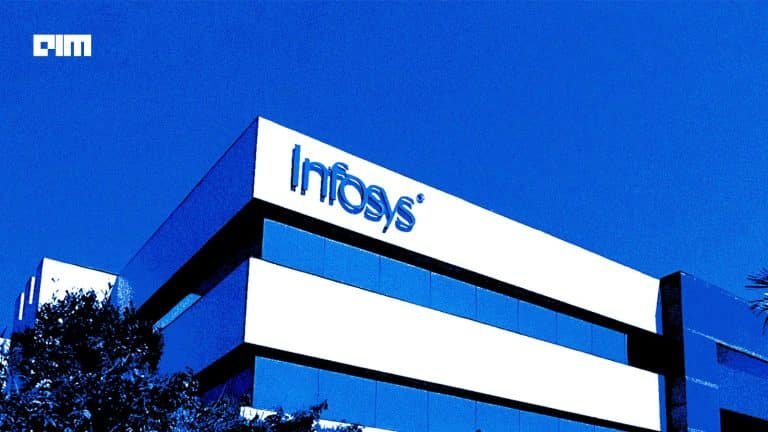
Infosys reported a mixed third quarter, with revenue growth accelerating but profit slipping as margins came under pressure.
For the quarter ended December 31, 2025, Infosys posted revenue of ₹45,479 crore, up 8.9% year on year from ₹41,764 crore in the same quarter last year.
In Q2, Infosys reported revenue of ₹44,490 crore, indicating that Q3 added nearly ₹1,000 crore in incremental revenue in just one quarter.
Net profit fell 2.2% to ₹6,654 crore from ₹6,806 crore a year ago, reflecting higher costs even as demand improved. In dollar terms, the company delivered $5,099 million in revenue, with 1.7% growth on a constant-currency basis and 0.6% sequential growth.
The Bengaluru-based IT major also reported an International Financial Reporting Standards (IFRS) operating margin of 18.4% for the quarter.
On an adjusted basis, excluding the impact of new labour codes, operating margin stood at 21.2%, up 0.2% sequentially. Free cash flow was $915 million, while adjusted free cash flow was $965 million, which is more than 112% of adjusted net profit.
Large deal momentum was one of the strongest signals of demand recovery. Infosys recorded $4.8 billion in large deal wins during Q3, with 57% of the total coming from net-new business.
That is a sharp improvement over Q2, when the company had reported $3.1 billion in large deal wins, of which 67% was net new. The higher TCV in Q3 suggests that enterprises are signing bigger and more strategic contracts than in the previous quarter.
The company also showed steady progress sequentially.
Constant currency growth in Q2 was much stronger at 8.6% year on year, but Q3 delivered better deal flow and a higher revenue base, indicating that growth is becoming more durable rather than driven by a few large contracts.
Profitability, however, moved in the opposite direction. In Q2, Infosys posted a net profit of ₹7,364 crore, up 13.2% year-on-year. In Q3, profit fell to ₹6,654 crore, mainly due to margin pressures and adjustments linked to India’s new labour codes.
The drop in IFRS operating margin to 18.4% from above 20% in Q2 underlines that costs are rising faster than revenue.
Looking ahead, Infosys raised its FY26 revenue growth guidance to 3.0-3.5% in constant currency, compared with the 2-3% range it had given in Q2. “We believe we are uniquely positioned to capture market share across these value pools and emerge as the leading AI value creator for global enterprises,” CEO Salil Parekh said during the Q3 press briefing.
That upgrade reflects confidence that the stronger deal pipeline seen in Q3 will translate into sustained revenue growth in the final quarter of the year.
The post Infosys Adds ₹1,000 Crore Revenue in Q3, Profit Falls 2% appeared first on Analytics India Magazine.


Google parent Alphabet is now the world’s second-most valuable company—just behind Nvidia—with a market capitalisation of more than $4 trillion. The milestone follows Apple choosing Google’s Gemini models to power Siri’s next major upgrade. For markets, the deal was a definitive signal that Google had won the first “great pivot” of the AI era.
“After careful evaluation, Apple determined that Google’s AI technology provides the most capable foundation for Apple Foundation Models and is excited about the innovative new experiences it will unlock for Apple users,” Apple had said in a statement, while also asserting that its arrangement with OpenAI—allowing users to access ChatGPT for certain queries—remains unchanged.
The turnaround has not been easy. After OpenAI’s ChatGPT burst onto the scene in 2022, Google was widely perceived as an AI laggard. That narrative began to reverse only last year, as the company executed rapidly across products, partnerships and platforms.
In 2025, Alphabet shifted decisively into what insiders describe as “aggressive incumbent” mode. After a tepid start to the year—its shares fell 18% in the first quarter, the worst period since mid-2022—the stock surged 65% by year-end, hitting record highs and assuring investors that it can retain dominance in an AI-first internet.
Now, after a year marked by a coherent AI strategy, deep partnerships, accelerating cloud growth and key legal wins, analysts are openly debating whether Alphabet could even overtake Nvidia to become the world’s most valuable company.
2025: The Defining Year
In a December 2024 strategy meeting, Google CEO Sundar Pichai reportedly told employees: “I think 2025 will be critical. We must internalise the urgency of this moment, and we need to move faster as a company. The stakes are high. These are disruptive moments.”
At the time, OpenAI’s ChatGPT and Sora were capturing consumer attention, while investors worried that AI chatbots and agents could upend Google’s advertising-driven business model. Pichai’s long-term vision was under scrutiny. For Google, it was a critical time.
The response was swift. In March 2025, Google rolled out AI Mode in Search and launched Gemini 2.5, its most advanced model at the time. In April, long-time executive Josh Woodward was promoted to lead the Gemini app—Google’s answer to ChatGPT.
Momentum sustained through the year. In August, DeepMind unveiled Nano Banana, a new image-editing model. September saw the launch of AI features in Chrome. By then, Gemini had crossed five billion generated images and overtaken ChatGPT at the top of Apple’s App Store.
November marked a turning point with the launch of Gemini 3. A month later, reportedly alarmed by Gemini’s traction, OpenAI CEO Sam Altman issued an internal “code red” memo, asking teams to refocus on improving ChatGPT’s core product and pause other initiatives.
According to Sensor Tower, between August and November 2025, Gemini’s global monthly active users grew by around 30%—outpacing ChatGPT’s 6% growth over the same period.
“Google’s AI credibility clicked with the markets,” observes Ankita Vashishtha, founder and managing partner at Arise Ventures. “The narrative shifted from ‘Google is behind’ to ‘Google is one of the few full-stack AI companies’, with models, distribution and infrastructure,” she tells AIM.
Winning Products, Winning Partnerships
With Gemini 3, Google moved beyond simple chatbots and into agentic AI. It was not just a model, but a reasoning system. Its Deep Think mode—designed to emulate human reflection—scored 91.9% on GPQA Diamond, a benchmark for PhD-level scientific reasoning, leapfrogging OpenAI’s GPT-5 on technical accuracy.
Google also launched a “Flash” variant, positioning itself as a leader in high-speed, low-latency AI for developers. Crucially, Gemini was integrated directly into Search, demonstrating that AI could enhance rather than cannibalise Google’s core advertising business.
At the same time, Google Cloud emerged as a genuine second growth engine, reducing Alphabet’s reliance on advertising alone. The company leaned into its infrastructure advantage, including custom chips and TPUs, which it increasingly rents out as AI compute. This not only improves margins but also gives Google leverage against rivals dependent on Nvidia GPUs. Google Cloud revenue jumped 34% in Q3 2025, ending the quarter with a sales backlog of $155 billion.
High-stakes partnerships amplified that momentum. Beyond Apple, Google struck an expanded deal with Samsung, announcing plans to double the number of devices featuring Gemini. Meta is also reportedly in talks to spend billions on Google’s custom TPUs, viewing them as a credible alternative to Nvidia’s costly H100 and B200 chips.
“Being the intelligence layer inside Apple’s ecosystem makes Google’s AI ambient,” notes Sanchit Vir Gogia, founder of Greyhound Research. “Users don’t choose it—they encounter it. That strengthens Google’s feedback loops and sends a powerful signal to enterprises about maturity, safety and reliability at scale.”
Legal and institutional wins further bolstered confidence. In September 2025, a US judge ruled against a forced breakup of Google, allowing it to retain Chrome and Android, and lifting a long-standing overhang on the stock. When Berkshire Hathaway disclosed a multi-billion-dollar stake in Alphabet later last year, it reinforced the perception of Google as a durable, long-term bet in an AI-driven world.
2026: Most Valued Company?
Whether Alphabet can overtake Nvidia is less about superiority and more about cycle dynamics. Nvidia is the primary chip supplier enabling AI infrastructure buildout, while Google monetises what sits on top of that infrastructure.
“If AI demand remains supply-constrained and hardware-driven, Nvidia stays ahead,” Gogia observes. “If the market shifts towards normalisation, cost pressure and returns on deployed AI, platform durability becomes more valuable. That’s where Google looks attractive.”
Alphabet’s advantage is diversification. It monetises AI across ads, cloud services, enterprise software, consumer productivity tools, and developer ecosystems. Its internal compute stack provides a structural hedge: TPUs are not about replacing Nvidia overnight, but lowering marginal costs, improving negotiating leverage, and protecting long-term margins.
Nvidia remains extraordinarily strong, but it is also more exposed to cyclicality, customer concentration and capex digestion. Google’s valuation is steadier, and in a maturing AI market, that can be its advantage.
Apple–Google Deal: A New Power Concentration?
The Apple–Google deal has also raised concerns. Elon Musk was among the first to react, posting on X: “This seems like an unreasonable concentration of power for Google, given that they also have Android and Chrome.”
Apple’s choice of Gemini is both a validation and a distribution coup. It effectively endorses Google’s models at a massive consumer scale, pulling developers and enterprises towards Google’s stack. But it also signals a duopoly: one company controls premium hardware and operating systems, the other controls AI models and global search monetisation.
“The risk isn’t just big companies partnering—it’s foreclosure,” warns Vashishtha. “Defaults, deep integrations and data advantages can make it harder for smaller players to compete.”
As AI becomes embedded in daily workflows, consumer habits increasingly shape enterprise procurement. Defaults turn into de facto standards, creating subtle lock-in even when organisations pursue multi-vendor strategies. That, in turn, raises regulatory stakes.
Google has strengthened its position dramatically. But in doing so, it has also led to a sharper scrutiny from regulators, partners, and enterprises.
The post From AI Laggard to $4 Tn Titan: How Google Won the First Great Pivot of AI Era appeared first on Analytics India Magazine.


TCS and AMD have announced a collaboration to help enterprises move AI from pilot projects into full scale production across industries. The partnership focuses on generative AI, hybrid cloud, high performance computing, and AI powered digital workplaces, as companies struggle to turn experimentation into real business outcomes.
The collaboration, announced on January 14 from Mumbai and Santa Clara, brings together TCS’s systems integration and industry expertise with AMD’s computing and AI hardware portfolio.
The two companies will co-develop industry specific AI and generative AI solutions aimed at modernising legacy systems, improving cloud and edge deployments, and accelerating enterprise wide AI adoption.
Under the agreement, TCS will also upskill and certify its workforce on AMD’s hardware and software platforms. Both firms plan to jointly invest in building a pool of talent that can design, deploy, and scale next generation AI systems for global clients.
Industry focused generative AI frameworks will be created for life sciences, manufacturing, and BFSI, covering areas such as drug discovery, smart factories, cognitive quality engineering, and intelligent risk management.
K Krithivasan, CEO and MD of TCS, said the collaboration is aimed at helping organisations cross the gap between AI trials and real deployments.
“By combining TCS’s deep industry expertise with AMD’s high performance computing capabilities, we are enabling organisations to move from AI experimentation to AI at scale and deployment,” he said, adding that the partnership also supports TCS’s ambition to become the world’s largest AI led technology services company.
AMD chair and CEO Dr Lisa Su said that as AI adoption accelerates, enterprises need more powerful and open computing foundations. “Through our work with TCS, we are helping customers translate AI innovation into new growth opportunities across industries,” she said.
On the technology side, TCS will work with AMD to integrate Ryzen powered client solutions for digital workplace transformation, while using AMD EPYC CPUs, AMD Instinct GPUs, and AI accelerators to modernise hybrid cloud and high performance computing environments.
AMD’s embedded computing portfolio, including adaptive system on chips and FPGAs, will also be used to drive edge AI, inference, and industrial digitalisation.
TCS said its experience in building solutions on advanced semiconductor platforms complements AMD’s computing roadmap, allowing the two companies to co create AI and computing solutions that are designed for enterprise scale.
The partnership aims to give companies a more practical path to deploying AI across cloud, data centre, and edge environments as the push to operationalise GenAI continues to grow.
The post TCS, AMD Team Up to Push Enterprise AI Beyond Pilots appeared first on Analytics India Magazine.
Jan. 13, 2026 — In 2011, a small team at the Department of Energy’s Lawrence…