OpenAI’s Bengaluru Workshop Helps Nonprofits Scale AI for Social Impact 

OpenAI, the company behind ChatGPT, hosted its Nonprofit AI Jam in Bengaluru on January 15.

The event is part of a multi-city series designed to bring together leaders from the nonprofit ecosystem for hands-on sessions focused on applying AI to achieve more effective, scalable outcomes in the social sector, the company said in a statement shared with AIM.

The Bangalore edition brought together nonprofit organisations working across education, public health, skilling, climate action, and gender inclusion.

Participants identified real operational challenges from their day-to-day work and collaborated with technical experts throughout the day to design practical AI solutions tailored to their needs.

“The Jam reflects OpenAI’s commitment to ensuring that advanced AI is accessible and useful not only to large organisations, but also to mission-driven teams working closest to communities,” the company said. The goal is to help these organisations identify and apply practical AI use cases in the social sector, the company added.

OpenAI added that participants will continue to have access to shared resources and peer-learning opportunities after the workshop, ensuring that collaboration and development extend beyond the event itself.

The workshop is being delivered in partnership with Karya and supported by Wadhwani AI as the knowledge partner. Karya is a social enterprise that creates ethical AI datasets while providing dignified digital work to rural and economically disadvantaged communities.

Wadhwani AI is a non-profit organisation that builds and deploys AI solutions for social impact in areas such as healthcare, agriculture, and education.

The workshop is being held ahead of the AI Impact Summit in India, a global artificial intelligence summit hosted by the Government of India under the IndiaAI Mission and the Ministry of Electronics and Information Technology.

The summit is scheduled for February 19–20, 2026, in New Delhi.

The summit will bring together international leaders, policymakers, researchers, industry executives, and innovators to shape how AI can be deployed responsibly, inclusively, and at scale to deliver social and economic impact.

The post OpenAI’s Bengaluru Workshop Helps Nonprofits Scale AI for Social Impact appeared first on Analytics India Magazine.

Ola Electric Extends 4680 Bharat Cell Platform to Indian Startups

Ola BhavishOla Bhavish

Ola Electric has made its in-house developed 4680 Bharat Cell and battery pack platform available to third parties, spanning households to enterprises across energy, healthcare, defence, and robotics.

“The 4680 Bharat Cell has been researched in India, engineered in India, and manufactured at scale in India at our Gigafactory,” Ola CEO Bhavish Aggarwal said on X. He emphasised that it is India’s only facility that not only manufactures cells but also develops its own cell technology from start to finish.

“We are now opening this platform up. Not just to large enterprises, but also to startups, innovators, and builders who want to create advanced products on a strong and reliable energy foundation,” he said.

https://t.co/8jRyGD3jkD

— Bhavish Aggarwal (@bhash) January 14, 2026

Businesses can now directly purchase the 4680 Bharat Cells, or the 1.5kWh 4680 Bharat Cell battery pack for application across automotive, humanoids, drones, and portable medical equipment.

The company aims to enable startups and businesses to innovate and scale rapidly with new energy storage solutions designed, engineered, and manufactured in India.

Ola Electric also announced that its residential Battery Energy Storage System (BESS) solution, Ola Shakti, is now available for purchase, with deliveries for Shakti 6kW/9.1kWh starting at the end of January 2026, and Shakti 3kW/5.2kWh starting mid-February 2026.

The 3kW/5.2kWh model is priced at ₹1,49,999 and the 6kW/9.1kWh model for ₹2,49,999. It powers appliances like air conditioners and refrigerators, with a backup capacity of up to 1.5 hours on full load.

Furthermore, the company has begun deliveries of its flagship motorcycle, the Roadster X+ 9.1kWh, powered by the 4680 Bharat Cell, offering a range of up to 500 km on a single charge. In addition, the company has scaled up deliveries of the S1 Pro+ 5.2kWh across India.

The post Ola Electric Extends 4680 Bharat Cell Platform to Indian Startups appeared first on Analytics India Magazine.

85% of Enterprises Now Run or Test Autonomous AI Agents: HCLSoftware

HCLSoftwareHCLSoftware

HCLSoftware has launched its Tech Trends 2026 report, a global study based on interviews with more than 173 CXOs, and the clearest message from it is that AI agents have moved from experiments to the operating core of enterprises.

The report states that 8 in 10 enterprises are already running AI systems in production, with 85% either piloting or operating autonomous AI agents that can take actions, not just make suggestions.

For the first time, agentic AI is no longer treated as a future bet but as a baseline capability for running businesses in 2026 and beyond.

Kalyan Kumar, chief product officer of HCLSoftware, said the shift is about who or what actually runs the enterprise. “Enterprises will be defined less by what they build and more by what they allow technology to decide, adapt and govern on their behalf. The next 24–36 months belong to leaders who can turn intelligence into a living operating model — autonomous by default, resilient at scale, and sovereign by design,” he said.

The study finds that this move toward autonomy is happening across almost every layer of the enterprise.

More than 92% of organisations are now actively engaging with robotics that combine cloud and cognitive systems, while over 70% are using immersive and spatial computing in real workflows rather than demos.

At the same time, 84% of enterprises expect AI powered low code and no code platforms to scale inside their businesses within the next 18 months, making software creation itself more automated.

Security and governance are becoming just as important as speed. One in 3 enterprises now flags cybersecurity, trust, and transparency as an urgent priority, and 79% say responsible AI is already in motion rather than something to plan for later.

Yet the report also highlights a gap. While nearly 80% of companies are running or piloting autonomous AI agents, only 26% say they have clear governance frameworks in place to control how those systems act.

According to HCLSoftware, this tension between fast adoption and weak guardrails is shaping how technology leaders think about 2026.

Across all regions, AI agents and autonomous systems stand out as the only technology reaching something close to global consensus. North America, Europe, APAC, and emerging markets all rank it as a top priority, even though other technologies like immersive reality, energy tech, and advanced semiconductors show sharp regional differences based on regulation, capital, and talent.

The report argues that the next phase of digital transformation is no longer about buying tools. It is about redesigning the enterprise so that software systems can decide, adapt, and operate on their own, with humans shifting into oversight, design, and exception handling.

HCLSoftware frames this through its XDO blueprint, which connects experience, data, and operations into what it calls a single intelligent operating model.

The post 85% of Enterprises Now Run or Test Autonomous AI Agents: HCLSoftware appeared first on Analytics India Magazine.

OpenAI’s GPT-5.2 Better Than Claude Opus 4.5 for Long Autonomous Tasks, Says Cursor

Cursor says it has found OpenAI’s GPT-5.2 models to be significantly more reliable than Anthropic’s Claude Opus 4.5 for long-running, autonomous coding tasks.

On the same day, Cursor also made the GPT 5.2 model available on its platform.

This was found when the team set out to build a web browser from scratch using Cursor. CEO Michael Truell said on X that the browser’s rendering engine was built from scratch in Rust, with support for HTML parsing, CSS cascade and layout, text shaping, painting, and a custom JavaScript virtual machine.

“It kind of works,” Truell wrote. “It still has issues and is, of course, very far from WebKit/Chromium parity, but we were astonished that simple websites render quickly and largely correctly.”

Cursor has released the code on GitHub.

Watch a timelapse of GPT-5.2 building a browser!
Both websites start out barely working, and then after millions of lines of code, the browser actually works.
Pretty cool experiment with long-running agents. https://t.co/KT6HgHEivA pic.twitter.com/8EPbyih8cU

— Lee Robinson (@leerob) January 14, 2026

In a research blog post published this week, Cursor described the browser as part of a broader effort to test whether autonomous coding agents can scale to projects “that typically take human teams months to complete.”

Cursor stated that while building the browser, “We found that GPT-5.2 models are much better at extended autonomous work: following instructions, keeping focus, avoiding drift, and implementing things precisely and completely.”

By contrast, “Opus 4.5 tends to stop earlier and take shortcuts when convenient, yielding back control quickly,” Cursor said.

Other long-running experiments include a multi-week, in-place migration of Cursor’s own codebase from Solid to React, involving +266,000 and –193,000 lines of changes, a Java Language Server Protocol project with 7,400 commits and 550,000 lines of code, a Windows 7 emulator exceeding 1.2 million lines, and an Excel-like system reaching 1.6 million lines.

In another case, Cursor said a long-running agent rewrote a video-rendering pipeline in Rust, making it “25× faster” while also adding smooth zooming, panning, and motion-blur effects.

The post OpenAI’s GPT-5.2 Better Than Claude Opus 4.5 for Long Autonomous Tasks, Says Cursor appeared first on Analytics India Magazine.

HCLTech Elevates Sandeep Saxena to Drive India-led Growth Push

HCLTechHCLTech

HCLTech has elevated company veteran Sandeep Saxena as chief growth officer of Growth Markets 2, underscoring its renewed focus on India as a strategic growth market.

In his new role, Saxena will lead business growth across India and other key regions, including the Middle East and Africa. He will be based in Mumbai and report to the CEO and managing director, C Vijayakumar. The company said the appointment is part of its strategy to sharpen focus, particularly on the India region.

Commenting on the move, Vijayakumar said, “HCLTech has played a defining role in shaping India’s technology growth story through sustained innovation and global leadership. As one of the world’s fastest-growing economies, India presents a significant opportunity, and we will bring our global scale, deep expertise and full-stack capabilities to help enterprises harness next-generation technologies and accelerate growth.”

Saxena said, “I am honoured to spearhead HCLTech’s growth agenda across strategic markets, including India.”
“Our unwavering focus will be on driving client relevance through innovative, future-ready solutions that deliver measurable and transformative impact in the real world.”

Saxena joined HCLTech in 1998 and has held multiple leadership roles across geographies during his long tenure.

The company said he played a key role during the rapid growth phase of its European business. Most recently, he led the retail-CPG, travel, transportation and logistics, and energy and natural resources segments for Europe, along with all non-financial services verticals for France, Italy, and Iberia (Spain and Portugal), securing major client wins and strengthening the company’s market position.

The leadership announcement comes close on the heels of HCLTech’s Q3 results, which highlighted strong momentum in artificial intelligence-led deals. The company said its Advanced AI business emerged as a key growth engine in the quarter, with revenue jumping to $146 million as enterprises moved from pilot projects to paid deployments.

Advanced AI revenue grew 19.9% quarter-on-quarter in constant currency during Q3 FY26. In the previous quarter, the segment had crossed the $100 million mark for the first time, with HCLTech adding nearly $50 million in incremental AI revenue within a single reporting cycle.

The AI-led surge coincided with a robust overall performance. HCLTech reported revenue of ₹33,872 crore ($3.79 billion) in the quarter, up 6% sequentially and 13.3% year-on-year.

The post HCLTech Elevates Sandeep Saxena to Drive India-led Growth Push appeared first on Analytics India Magazine.

Bengaluru-Based Aule Space is Building ‘Jetpacks’ to Save Dying Satellites

Satellites rarely fail in dramatic ways. Most stop working because they run out of fuel. The electronics, antennas, and payload often remain fully functional. But once fuel is depleted, a satellite can no longer hold its position in orbit, leaving operators with little choice but to abandon it.

In geostationary orbit, 36,000 kilometres above Earth, this problem is especially costly. These satellites remain fixed over a single region and provide television broadcasts, navigation signals, and long-distance communication. Replacing one can cost hundreds of millions of dollars. Yet, until recently, there has been no reliable way to reach these satellites and keep them functional.

That act, approaching a satellite, matching its motion, and physically attaching to it, is known as space docking. While it sounds straightforward, in practice, it is one of the hardest manoeuvres in space.

There is no GPS to rely on, no real-time joystick control, and no room for error. Signals from Earth take time to travel, making human intervention impractical in the final moments.

A satellite must see, think, and move on its own. Hence, autonomy becomes unavoidable. Only a handful of nations have achieved this capability. The United States first mastered rendezvous and docking with its Gemini 8 mission in 1966. The Soviet Union followed with automatic docking tests in the late 1960s. Five decades later, China proved its capabilities during the Shenzhou 8 mission in 2011. It autonomously docked with its Tiangong-1 module.

With its Space Docking Experiment (SpaDeX) mission in January 2025, India became the fourth country to achieve this feat by bringing two small spacecraft together in orbit without direct human control. This mission places India among a small group of nations that have demonstrated that a spacecraft can autonomously find and latch onto its partner.

Jetpacks in Space?

In the private sector, one Indian startup aims to go further than docking. Bengaluru-based Aule Space is building ‘jetpack satellites’, autonomous spacecrafts designed to dock with ageing satellites and extend their operational life.

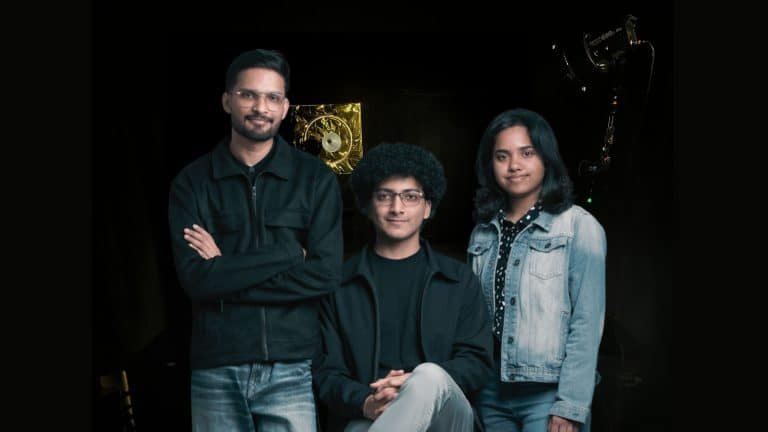
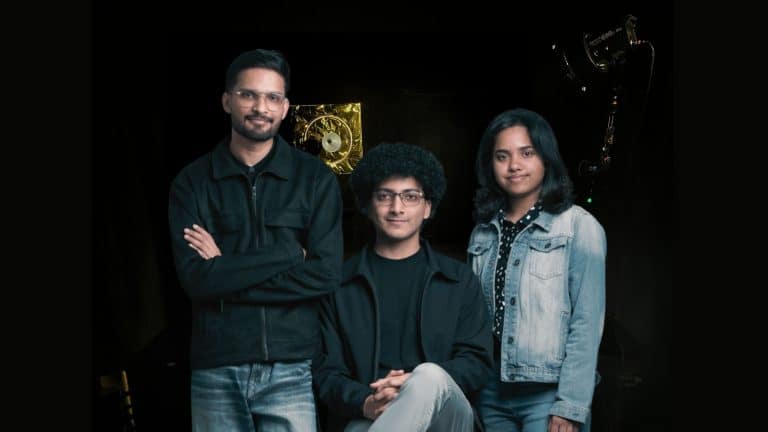
Jay Panchal, founder and CEO of Aule Space and an early engineer at Pixxel, believes this is no longer a problem for the future. “If you had unlimited fuel, you could run the satellite for twice its life,” he says in an exclusive conversation with AIM.

Founded in 2024, Aule designs satellites capable of docking with spacecraft that were not originally built for servicing. Instead of replacing billion-dollar assets, the startup wants to keep them running longer.

But this is not a mission achieved with determination alone.

Panchal and his team secured $2 million in a pre-seed round, led by pi Ventures. It is backed by angel investors with experience in satellite communications and defence, including Intelsat board member Eash Sundaram (also founder of Utpata Ventures) and Tonbo Imaging CEO Arvind Lakshmikumar.

The company plans to use the capital to expand its engineering team, build ground testing infrastructure, and launch its first demonstration satellite next year. These satellites will validate Rendezvous, Proximity Operations and Docking (RPOD), the capability for a spacecraft to safely approach, manoeuvre near, and physically attach to other objects in orbit.

In the past year (2025), India’s space tech startups have received a total of around $177 million in funding, according to data by Tracxn.

Manish Singhal, founding partner at pi Ventures, says the combination of deep technical expertise and a clear commercial roadmap stands out. He adds that Aule Space is building the next phase of the space economy across satellite servicing, orbital sustainability and space security.

Aule’s satellite docking demo during ground testing under orbital conditions.

Aule Space’s initial focus is on the geostationary communication satellites, which form the backbone of television broadcasting and long-distance connectivity. Panchal says some of these geostationary satellites can cost up to $500 million and generate around $100 million in annual revenue. Once fuel runs out, operators often abandon them despite most systems remaining functional.

He painted the company’s jetpack solution as “an external power bank attached to a phone.”

Why This Docking Matters

While several global startups work on in-space refuelling, Aule Space takes a different approach. Panchal says the hardest problem is not fuel transfer but reaching and attaching to satellites that were never designed for servicing.

“We are solving the docking technology part,” he says. “We can do it with the existing satellites, which were not designed to be refuelled.” He adds that ISRO’s SpaDeX mission creates a favourable environment for Indian startups working on similar challenges.

According to Panchal, deploying a servicing satellite is significantly cheaper than launching a replacement. “It is three times cheaper than launching a new satellite,” he says.

Globally, only one commercial mission has demonstrated satellite life extension at scale. Northrop Grumman’s Mission Extension Vehicle docks with ageing satellites and repositions them to keep services running. Panchal says Aule Space wants to make similar missions cheaper and more routine.

From Ground Tests to Orbit

Aule Space plans to launch its first demonstration satellite next year, a critical milestone for unlocking commercial contracts. “If someone has to allow us to touch their $500 million satellite, it better be proven before,” Panchal says.

Before launch, the company builds ground setups to simulate space conditions. Panchal says microgravity and lighting conditions pose the biggest challenge. “In space, there’s so much more sunlight, and the background light blurs computer vision models.”

To address this, the team has built a dark room that simulates space lighting, with a single controlled light source acting as the sun. It also uses air-bearing tables to test docking algorithms in a frictionless environment.

Satellite in ground testing in a dark room.

The company develops onboard autonomy as communication delays make real-time control from Earth impractical. “We have to have that command and control centre on the satellite,” Panchal described.

This requires what he described as an ‘AI pilot’ that can handle final approach and docking without human intervention. The company will likely develop a satellite-agnostic docking mechanism combined with advanced AI-driven guidance, navigation, and control (GNC) algorithms.

This system allows them to create some of the world’s lightest and most cost-efficient fleets of RPOD-enabled satellites, which also support debris removal and defence applications, including satellite inspection for space domain awareness.

Aule Space is in discussions with both commercial and defence customers as it refines its technology. Panchal said the company will choose the most cost-effective launch option available for its first mission.

Panchal with the satellite demo in a dark room setup.

The Next Space Economy

Beyond commercial servicing, Aule Space sees defence applications for its docking technology. Panchal says modern military operations depend heavily on communication and navigation satellites.

“If you want to disable someone’s communication, you cut the satellite,” he says, adding that the future conflicts increasingly extend into space.

Recent incidents highlight the importance of close-proximity operations. Panchal compares examples of Chinese satellites approaching and inspecting foreign spacecraft. He compares the capabilities to a fighter jet in orbit.

“In a true sense, what we are building can also be used as an F-16 in space,” he says, adding that the satellites can move fast, refuel and complete their mission.

For now, the company focuses on execution. Over the next two years, Aule Space aims to build and validate its technology before scaling commercially. Looking further ahead, Aule Space wants to support a broader in-space economy. Panchal says routine docking and servicing could enable manufacturing and assembly in microgravity environments.

This could lead the company to delve into other domains, such as robotics. “We want to build a robotic workforce for that large-scale industrialisation of space,” he says.

The post Bengaluru-Based Aule Space is Building ‘Jetpacks’ to Save Dying Satellites appeared first on Analytics India Magazine.

For AI-first SaaS Companies, Customer Retention is the New Bottleneck

For most SaaS companies, the biggest problem isn’t finding customers; it’s keeping them.

Customers today have too many choices. AI has made features easier to copy and switching tools simpler. The result? Their patience is low. If a product stops feeling useful, is complicated, or no longer fits into the workflow, they leave. Retention, not acquisition, is the real bottleneck for SaaS growth.

A 2025 Gartner survey found that 73% of chief strategy officers and sales leaders in SaaS companies now prioritise growth from existing customers over acquiring new onesBut to retain customers and defy the MVP-and-churn pattern, SaaS companies need to design their AI products such that they perfectly match user requirements. This is the Cinderella Glass Slipper Effect, coined by Andreessen Horowitz, theorising that growth happens when a product fits a very specific customer perfectly.

In the AI era, finding that perfect product-market fit (PMF) isn’t an easy task. As Ashutosh Prakash Singh, co-founder and CEO of RevRag.ai, puts it: “In AI, PMF is a moving target. You don’t find it once; you must maintain it.”

Consumer Behaviour is Rewriting PMF

PMF in SaaS is shaped by changing customer behaviour and rapid AI-driven commoditisation.

“Most customers initially look for a SaaS that fits their problem well at that moment,” notesAyush Shukla, Co-founder and CEO of e-commerce loyalty rewards platform Nector.io, in a conversation with AIM. “If the tool clearly solves their core need, they’re happy to adopt it.”

What causes churn, however, is not the absence of new features. “They switch when the product stops fitting their workflow, becomes too complex, or no longer delivers clear value,” Shukla adds.

This shift is being amplified in the AI era. Singh explains, “Retention is no longer defended by features, but by workflow integration and proprietary outcomes.” With models becoming interchangeable, differentiation increasingly lies in how deeply products understand and adapt to customer behaviour.

The emphasis is now on solving a single, high-intensity problem with precision rather than expanding horizontally across features.
SaaS Investors are Fixated on Retention

Across venture and alternative capital, retention has become the most trusted signal of SaaS quality.

“There is no single most important metric,” says Viju George, Partner at Mela Ventures. “There are a handful of key metrics—ACV/customer (to assess land-and-expand potential), number of customer adds, net revenue retention (NRR), gross margins, marketing expenses, churn, and pipeline-to-TCV-to-revenue conversion are key metrics we track.”

Among these, NRR stands out. “NRR reflects product value, customer stickiness, and the ability to grow revenue without excessive capital burn,” says Shelly Kwatra, assistant vice president of investments at BlackSoil.

Singh also notes that high NRR indicates the product, rather than being a one-off delivery, grows with the client. “We also obsess over the LTV/CAC ratio to ensure our unit economics are ‘recession-proof’.”

The LTV/CAC ratio compares the total profit a customer generates over their relationship with the business to the cost of acquiring them.

However, Kwatra adds a cautionary note on headline growth. “Well-funded startups can always drive topline growth through aggressive customer acquisition. From an alternative credit perspective, retention and unit economics matter far more.”

In the AI era, retention is increasingly becoming synonymous with outcomes. “Customers stay with SaaS platforms that are conversational, context-aware, and intelligent—systems that understand intent and deliver value with certainty, not just features,” says Shankar Lagudu, co-founder and COO of SaaS company Responsive. “Retention has become the clearest signal of whether a product is truly delivering outcomes.”

Real Defensibility

Early customers are no longer just validation points; they are also the foundation of long-term defensibility.

George stresses that many SaaS failures stem not from premature scaling. “We have seen technically excellent startups unable to create a dent in the marketplace because of their inability to cogently communicate their value proposition.”

His advice is blunt: “Build essential/core features first with the goal of building an MVP. Don’t wait to ship the final product.” Instead, founders should “work closely with 5–10 early users and manually observe how they use the product.”

Scale, he notes, should come only when “retention is strong, customers repeatedly use the product, and the core feature set is stable.”

For investors, early customer trust matters more than future roadmaps. As Shukla observes, “Investors typically prioritise retention and early customer trust because these are strong proof points that the product is solving a real problem.”

Retention vs Acquisition

The traditional growth playbook of ‘acquire aggressively, fix retention later’ is rapidly losing favour.

“Customer acquisition is becoming more expensive and uncertain, while retention is fundamentally a win-win,” notes Lagudu. “Companies already understand their existing customers’ workflows, needs, and context. Serving them better lowers friction and builds trust.”

Singh frames this in valuation terms: “High churn is a leaky bucket that kills valuations. By focusing on retention first, every new dollar of growth is cumulative, not restorative.”
He adds that the strategic goal is to become indispensable: “We choose to be the ‘glue’ in our customers’ tech stack, making the cost of switching far higher than the cost of staying.”
Srinivasan Raghavan, CPO, Freshworks explains it’s not about getting the contract, but rather about delivering value. “Retention becomes the engine for efficient growth: renewals, expansion, advocacy, and lower CAC payback.”

Freshworks is leaning into retention by designing for time-to-value and value-to-renewal. The company is building around the customer’s operational outcomes—faster resolution, higher CSAT (customer satisfaction), lower cost-to-serve, better agent productivity—so that customers feel ROI early and continuously.

New-age Metrics

As SaaS models mature, the metrics used to evaluate them are evolving as well.

“ARR remains a starting point, but it no longer tells the full story,” says Kwatra. “From an alternative credit perspective, retention and unit economics matter far more. A healthy LTV/CAC ratio of 3:1 or higher, low churn, and improving efficiency with scale indicate a business that can generate predictable cash flows. For more mature SaaS companies, we also assess incremental burn, revenue per employee, and whether growth is being achieved without operational strain. Growth without discipline is usually an early warning sign.”

Time-to-value has emerged as a critical metric in AI-first products. “In the AI era, customers have zero patience; if your tool doesn’t solve a problem in days, you’ve lost,” says Singh. “NRR and time-to-value are the gold standards today.”
Operational discipline is also under scrutiny. “Growth without discipline is usually an early warning sign,” Kwatra notes, pointing to metrics like incremental burn and revenue per employee as indicators of long-term resilience.

The New SaaS Reality

Taken together, these perspectives point to a clear shift in how SaaS companies are built and evaluated.

“Outcome-based SaaS means the software doesn’t just support work—it helps complete it,” says Lagudu. “That’s what drives long-term customer trust and retention.”

Or as he sums it up: “In the age of AI, growth follows retention.”

The post For AI-first SaaS Companies, Customer Retention is the New Bottleneck appeared first on Analytics India Magazine.

AIM x Snowflake Innovator Session: Redesigning Work in the Age of AI

As technology becomes more embedded in everyday business decisions, the pressure on leaders is no longer just to adopt new tools but also to ensure teams can use them confidently, safely and without losing human judgement.

The challenge is particularly acute for mid-career professionals, where rapid change can create uncertainty even as expectations rise.

In this context, Snowflake, in collaboration with AIM, will host a webinar focused on how leaders can guide teams through technological change while strengthening, rather than sidelining, experienced talent.

The webinar will be conducted on Zoom on January 28 from 4.00 pm to 5.00 pm.

Register Now

The session will examine how organisations can build practical skills across all levels of the workforce.

As innovative tools increasingly influence analysis, reporting and planning, employees must know how to ask clear questions, review outputs for accuracy, and apply basic safety and governance checks.

The session will be led by Yeshwanth S, Director – data, analytics & transformation at IQVIA, and Shubhosree Dasgupta, country Data and analytics officer at HSBC India.

Together, they bring a practitioner’s view of how large organisations are navigating AI adoption—combining data, process and people leadership—with direct experience in applying analytics and governance at scale across healthcare and financial services.

Why You Should Attend

The discussion will focus on everyday techniques designed for non-technical users, helping teams avoid over-reliance on automated outputs while still benefiting from speed and scale.

A central theme of the webinar is the balance between human and technological strengths.

While machines excel at processing data quickly and consistently, people remain critical in areas that require empathy, context and judgement.

Through real-world examples, the session will explore how leaders successfully combine automated insights with human decision-making in functions such as customer engagement and team planning, ensuring technology supports relationships rather than replacing them.

Special attention will be given to professionals over 40, a group often most affected by shifts in work expectations.

Register Now

The webinar will address how tailored workshops, peer mentoring and supportive learning formats can help experienced employees adapt without feeling overwhelmed.

Rather than focusing solely on new tools, the emphasis will be on building confidence, reducing stress and enabling roles that blend oversight, judgement and creative thinking.

Finally, the session will look at how organisations measure whether these efforts are working.

Moving beyond basic productivity metrics, leaders will be encouraged to assess decision quality, morale, cost savings and retention.

The webinar will conclude with a practical 30-day upskilling plan, an ROI checklist and a live Q&A to address participant challenges.

Register Now

The post AIM x Snowflake Innovator Session: Redesigning Work in the Age of AI appeared first on Analytics India Magazine.