Novo Nordisk Foundation Grants €736M to Support BioInnovation Institute Growth Across Europe
COPENHAGEN, Denmark, Jan. 15, 2026 — The Novo Nordisk Foundation has allocated up to DKK…
Artificial Intelligence News
AI world news.
COPENHAGEN, Denmark, Jan. 15, 2026 — The Novo Nordisk Foundation has allocated up to DKK…


GrowthPal, a platform for matchmaking in mergers and acquisitions (M&A), has announced a $2.6 million funding round to enhance its AI-driven M&A copilot for deal sourcing and execution.
The funding round was led by Ideaspring Capital, with participation from notable angel investors from around the globe. This new investment will facilitate product development and broaden GrowthPal’s reach into international markets as the demand for quicker, more systematic strategies for inorganic growth increases.
“M&A sourcing is where most time and effort is wasted, especially for smaller and mid-market deals,” Maneesh Bhandari, co-founder and CEO of GrowthPal, said in the press release. “Teams spend weeks researching, filtering and chasing opportunities that never go anywhere. We built GrowthPal to help buyers focus only on high-intent, high-fit targets and move from mandate to meaningful conversations far faster.”
GrowthPal’s platform serves as an intelligent M&A assistant. When a buyer sets a growth goal, such as acquiring a specific capability or entering a new market, the system converts it into a structured acquisition thesis.
Its AI agents analyse a vast database of over four million technology companies, using signals from public documents, online activity, hiring trends and funding history. This results in a targeted list of off-market firms closely aligned with the buyer’s criteria.
According to the company, GrowthPal has supported over 42 completed M&A transactions and facilitated more than 210 LOI discussions across North America, Europe, Asia and Latin America. Clients range from large enterprises to fast-growing startups and private equity-backed firms in sectors such as IT services and fintech. One client closed seven acquisitions within 18 months using the platform, it said.
“GrowthPal is solving one of the most under-optimised parts of the M&A lifecycle,” said Naganand Doraswamy, managing partner at Ideaspring Capital. “By focusing on qualified deal discovery and using AI to compress timelines, the team is enabling a more systematic approach to inorganic growth that traditional tools cannot offer.”
GrowthPal intends to enhance its intelligence across the transaction lifecycle, focusing on valuation, deal structuring and negotiation preparation. The long-term goal is to empower teams to make better M&A decisions earlier and with greater confidence, from discovery through to execution.
M&A teams are increasingly pressured to do more with fewer resources. Inorganic growth relies on timing, context and accessibility. However, originating M&A deals from mid-market and early-stage companies has changed little over the years, still relying on banker networks and static databases.
The post GrowthPal Announces $2.6 Mn Funding to Enhance its AI-Driven M&A Copilot appeared first on Analytics India Magazine.


Google has announced a new market access initiative and two open-source AI models to support Indian startups from early-stage development to global scale at the Google AI Startups Conclave held in the national capital.
Google Market Access Program aims to help Indian AI startups transition from pilot projects to long-term enterprise contracts.
“Indian startups are building serious deep technology and solving population-scale problems with AI,” said Preeti Lobana, VP and country manager for India at Google, in a statement.
She said that although the journey from labs to prototypes has improved over the past few years, many startups continue to struggle with scaling, a gap the Google Market Access Program seeks to address.
The programme targets AI-first startups that have moved beyond the prototype stage and are preparing to scale. It will focus on enterprise readiness through structured training on global enterprise sales, pricing, and buyer behaviour, alongside facilitated introductions to Google’s global network of CIOs and CXOs.
The initiative also includes international immersion programmes in partnership with ecosystem organisations, including TiE Silicon Valley and Alteus. Applications for the programme are now open.
Google also recently announced new additions to its Gemma open model family to support healthcare and on-device AI development.
One of the releases, MedGemma 1.5, is a 4-billion-parameter open-source model for medical AI applications. It supports high-dimensional medical imaging workflows, including CT and MRI scans, whole-slide histopathology, longitudinal chest X-ray analysis, anatomical localisation, and extraction of information from medical lab reports.
The model builds on Google’s Health AI Developer Foundations programme and follows its collaboration with All India Institute of Medical Sciences, which is using MedGemma to develop health foundation models as part of the country’s Digital Public Infrastructure.
Google also introduced FunctionGemma, a lightweight variant of the Gemma 3 270M model optimised for function calling and on-device AI agents. The model enables applications to convert natural language commands into executable actions locally, allowing AI systems to operate with low latency, limited connectivity, and enhanced user privacy.
FunctionGemma can be fine-tuned using tools such as Hugging Face Transformers, Keras, and NVIDIA NeMo, and deployed across environments including LiteRT-LM, vLLM, Llama.cpp, and Vertex AI.
Google said these efforts complement its ongoing investments in India’s AI infrastructure, including the Global AI Hub in Visakhapatnam, which provides a one-gigawatt compute foundation powered by green energy and Google’s AI chips.
The company also reiterated its focus on data availability, citing progress on Project Vaani in collaboration with the Indian Institute of Science. The initiative has released more than 27,000 hours of speech data across over 100 Indic languages through the government’s Bhashini platform.
The post Google Launches Market Access Programme to Scale Indian AI startups appeared first on Analytics India Magazine.
COPENHAGEN, Denmark, Jan. 15, 2026 — The Novo Nordisk Foundation has allocated up to DKK…


Indian IT’s next phase of growth will not come from adding thousands of engineers to delivery teams, but from fundamentally reshaping how technology services are built, sold and scaled in an AI-first era.
That was the central message from industry leaders at an Umagine TN 2026 panel discussion on “Unlocking the Next Wave of IT Growth: AI, Platforms & Digital Innovation in Tamil Nadu.”
Srinivasan Panchapakesan, senior corporate vice president and global delivery head of digital and software at Hexaware Technologies, framed the shift in stark economic terms. The traditional services model, where hiring 1,500–2,000 people translated into incremental revenue, was being dismantled by AI-led delivery, he said.
He argued that the industry was facing an unprecedented opportunity rather than an existential threat. Jobs would not disappear, he said, but the nature of work would change decisively. “A person who knows AI is going to be more challenging than a person who doesn’t know AI.”
The next growth cycle, according to Panchapakesan, will be driven by “copilot-driven, collaborative, AI-supported models,” rather than pure headcount expansion.
If AI is the growth engine, data, especially local, contextual data, is the fuel. Ganesh Sankaralingam, director and delivery head at LatentView Analytics, argued that Tamil Nadu and other states’ biggest AI opportunity lies in their linguistic and sectoral diversity, but warned that India is dangerously underprepared on data creation in regional languages.
“To build Tamil large language models, we need a corpus of data in Tamil, which is a mandate,” he said. Yet, he pointed out, most people do not type in Tamil, even on messaging platforms, starving AI systems of training data.
Sankaralingam traced the problem back to the education system, suggesting that digital literacy in regional languages must begin in primary school if Tamil and other Indian languages are to thrive in an AI-driven world.
The market reality, he said, is overwhelmingly regional. He cited practical use cases such as analysing emergency call transcripts to surface public safety trends, problems that can only be solved when local data exists.
While data enables intelligence, platforms are emerging as the dominant economic structure through which AI will be monetised. Janardhan Santhanam, CIO at Tata Consultancy Services, said the industry’s evolution, from infrastructure-as-a-service to software, business process services and now agentic AI, has placed platforms at the centre of value creation.
Tamil Nadu, he argued, is unusually well-positioned as a test bed because of its mix of manufacturing, automotive and textile industries.
Santhanam pointed to digital twin platforms in process industries, where real-time data and predictive algorithms can simulate supply chains and production systems tailored to Indian conditions. In automotive manufacturing, he highlighted AI platforms that combine computer vision, generative and agentic AI with robotics, designed for shop floors that look very different from global warehouses.
In textiles and crafts, where Tamil Nadu accounts for 28% of total employment in the sector, generative design platforms enable consumers to co-create products while preserving artisan employment. He cited a TCS initiative that blends AI, IoT and immersive technologies to translate digital designs into handwoven output. The common thread, he said, is that platforms built for Indian realities can become globally relevant products.
Building such platforms for global markets, however, comes with structural challenges. Raj Radhakrishnan, vice-president of engineering at NielsenIQ, said success requires engineering at scale, not just building strong code.
Global platforms must meet international standards across user experience, security and reliability, while remaining locally adaptable. Talent, he added, remains a bottleneck, not in quantity, but in depth. Sustained investment in R&D, cybersecurity, MLOps and deep tech capabilities will determine whether platforms built in Tamil Nadu can compete globally.
Compliance is another constraint. Platforms serving international clients must meet regulations such as GDPR and SOC 2 while adhering to Indian laws.
Radhakrishnan said Tamil Nadu’s data centre policies and digital infrastructure provide a base, but long-term competitiveness will also depend on green, globally resilient infrastructure.
Underpinning all of this, he argued, is culture. “Collaboration is non-negotiable,” he said, calling for tighter alignment between academia, industry and government to move from participation to leadership in the global IT landscape.
As the delivery model and technology stack evolve, talent remains the most immediate pressure point. Panchapakesan was blunt in distinguishing education from employability.
Degrees alone, he said, do not prepare candidates for AI-led work. While governments and industry are investing in labs, hackathons and internships, students must actively seize those opportunities, focusing on practice, problem-solving, and continuous learning.
Santhanam extended the argument to mid-level professionals, warning that AI and automation will rapidly erode traditional coordination and people-management roles. Large firms like TCS, he said, are already redeploying mid-level managers into specialised technical roles and certifying them in cloud, enterprise platforms and AI. He welcomed recent reskilling initiatives involving IIT Madras, Google, and the Tamil Nadu government, but stressed that responsibility ultimately lies with individuals.
Sankaralingam offered a pragmatic lens for employability: domain knowledge combined with AI skills. Candidates, he said, routinely underestimate the importance of understanding industry-specific problems, whether in financial services, automotive, or consumer analytics.
The speakers stressed that Indian IT’s shift toward AI-led platforms will only translate into durable growth if it is anchored in intellectual property creation and reuse, rather than one-off deliveries.
He said that creating globally relevant IP also depends on embedding design thinking, privacy-first architectures and secure data practices early, starting at the school and college level.
Santhanam framed IP in two parts: creation and reuse.
On creation, he pointed to large-scale AI hackathons as a powerful mechanism to drive grassroots innovation and surface ideas that can later be industrialised into platforms. He cited TCS’s internal AI hackathon, which saw participation from over 2,80,000 employees, and argued that similar ecosystem-wide initiatives could significantly expand the pool of reusable IP.
On reuse, Santhanam said not every patent or innovation becomes a product, but unused IP still carries economic value if it can be discovered, licensed or reused. He suggested that a structured IP marketplace, supported by clearer visibility into existing patents and data assets, could accelerate this process.
Panchapakesan said IP-backed platforms have already become central to service delivery. However, he emphasised that IP creation is ultimately an outcome of attitude rather than numbers, continuous learning, disciplined planning and thoughtful execution.
The post How Indian IT’s AI-led Growth Could Hinge on Regional Data, Talent appeared first on Analytics India Magazine.
Jan. 15, 2026 — The European Commission has launched two new calls under the ‘Digital,…


Elon Musk, the founder and CEO of xAI, said in a post on X that the company’s upcoming model, Grok 4.2, will be better than Anthropic’s Claude Opus 4.5 in several aspects — but “not quite in programming.”
A few days ago, Musk responded to a user on X who praised Claude Opus 4.5’s benchmark performance, saying that Grok “might do better” in its next iteration, Grok 4.2. He later clarified that while Grok 4.2 could surpass Claude in several areas, coding would not be one of them.
“Anthropic has done something special with coding,” Musk said.
Surprisingly, Musk’s praise for Anthropic comes at a time when the company has blocked xAI’s access to Claude models.
Recently, Anthropic restricted the use of its AI models by rival labs, including xAI. According to journalist Kylie Robinson’s post on X, xAI staff used Anthropic’s AI models internally via the Cursor platform until Anthropic cut off access.
Robinson cited an internal message she viewed from xAI co-founder Tony Wu sent to the team, which revealed that, “I believe many of you have already discovered that anthropic models are not responding on cursor. According to Cursor, this is a new policy anthropic is enforcing for all its major competitors.”
“This is both bad and good news. We will get a hit on productivity, but it [really] pushes us to develop our own coding product/models,” Wu appeared to add in the memo.
Currently, Anthropic’s Claude Opus 4.5 model leads several benchmarks on coding evaluations, outperforming xAI’s Grok 4 and Grok 4.1 models, and even the company’s coding-focused model, Grok Code.
That said, Musk stated last week that the Grok Code is set to receive a major upgrade next month. “It will one-shot many complex coding tasks.”
The post Elon Musk Admits Anthropic Has Done ‘Something Special With Coding’ Despite xAI Being Blocked appeared first on Analytics India Magazine.

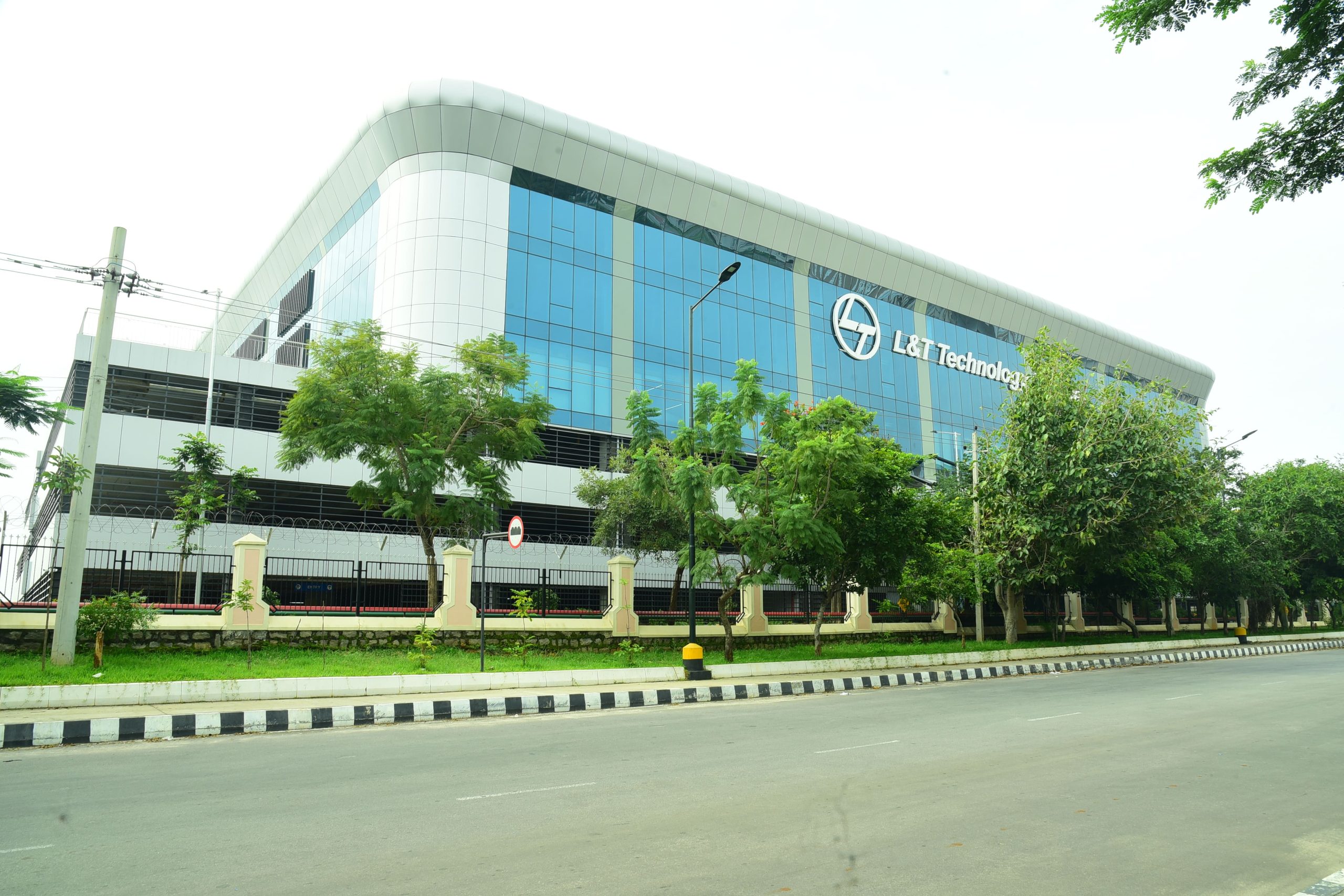
L&T Technology Services reported a steady third quarter for the financial year 2026, posting double digit growth in revenue and continuing its strong run of large deal wins, even as profit growth remained modest.
The company said its revenue for Q3FY26 rose 10.2% year on year to ₹2,923 crore, driven by sustained demand for engineering, digital and AI led services. Net profit came in at ₹329 crore, up 2.1% from the same quarter last year, while operating margin stood at 14.6%.
The firm also extended its streak of large deal wins to a fifth consecutive quarter, with average total contract value of around $200 million.
During the quarter, it signed multiple large contracts including one deal worth about $70 million with a global OEM, another of about $30 million, a $20 million programme and five more deals each above $10 million.
Amit Chadha, CEO and managing director of L&T Technology Services, said the company is seeing sustained traction across key segments. “We sustained the momentum in large deal wins delivering an average TCV of about $200 million for five consecutive quarters. The Sustainability segment continued to grow double digit on a year on year basis while Mobility is seeing a turnaround,” he said.
Chadha added that the company’s push into AI driven engineering is beginning to reflect in its margins. “Our AI suite of offerings are evolving with the launch of new Agentic AI platforms, as we pivot to deliver full stack Engineering Intelligence solutions, which integrate physical and digital AI for our clients’ products and processes,” he said.
He added that this aligns with LTTS’ 5 year Lakshya plan, which is about doubling down on value accretive high growth and high margin areas.
In terms of talent, L&T Technology Services ended the quarter with a total employee strength of 23,639, reflecting its steady hiring and retention strategy.
The post LTTS Rides $200 Crore Deal Streak to Strong 10% Q3 Growth appeared first on Analytics India Magazine.


Three earnings reports. Three approaches to artificial intelligence. And one clear signal that Indian IT has moved beyond experimentation.
In the December quarter, TCS, HCLTech and Infosys all show that AI now drives real business. The difference lies in how they report.
TCS reported $1.8 billion in annualised AI revenue in Q3. HCLTech showed a $146 million advanced AI business growing nearly 20% in one quarter. Infosys, instead, is measuring what it calls AI impact.
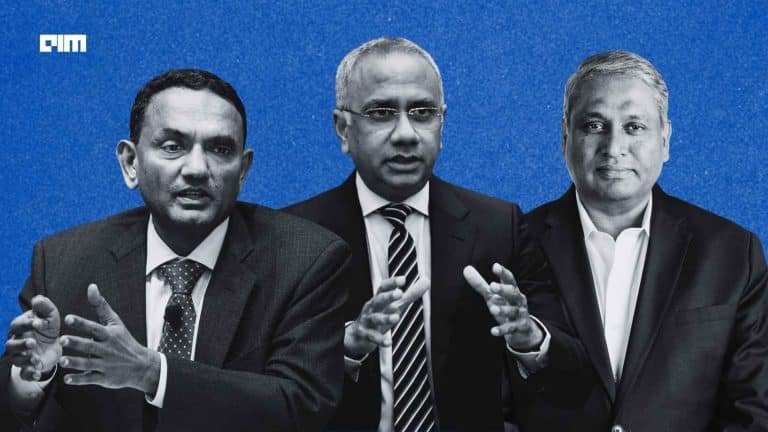
On its Q3 earnings call, Infosys CEO Salil Parekh detailed the AI footprint, mentioning 4,600 active AI projects, over 500 AI agents, and nearly 28 million lines of code created with AI tools.
The company claims that around 90% of its top 200 clients are now running AI programmes.
Yet there are no AI revenue numbers. By comparison, TCS reported $1.8 billion in annualised AI revenue for Q3. HCLTech reported an advanced AI business of $146 million, which grew nearly 20% quarter-on-quarter. Infosys chooses to report AI impact.
“We are using agents in several of our service lines to help enhance either growth or productivity. So that’s what we are sharing, in terms of what our impact is,” Parekh said.
This approach is not evasive. It reflects how Infosys positions AI. In Q3, the company integrated Cognition’s AI software engineer Devin into its Infosys Topaz Fabric. This turns Topaz from a toolset into a system that can deploy, manage, and govern AI agents inside live enterprise environments.
Parekh says the Cognition partnership helps Infosys deliver software agents directly into client systems. For Infosys, AI is part of the delivery, not an add-on.
Gaurav Vasu from UnearthInsight, a market intelligence firm, tells AIM that as AI matures, it is increasingly being embedded across the full spectrum of enterprise technology work, including transformation programs, application development and modernisation (ADM), ER&D engagements, and managed services.
That strategy shows up in deal flow. Infosys closed $4.8 billion in large deal wins in Q3, up sharply from $3.1 billion in Q2. AI-led modernisation, automation, and agent deployment form part of the core scope of work.
This is where the comparison with peers matters.
Greyhound Research calls this a deliberate choice. Sanchit Vir Gogia, the founder, says Infosys is avoiding the trap of treating AI as a fragile line item. “AI is being positioned as a horizontal capability, not a vertical business line. It is infused across build, modernise, test, and run. That makes revenue attribution not only difficult but potentially misleading,” Gogia told AIM.
Accenture took a similar approach. Vasu draws a direct line to earlier tech cycles.
“This mirrors earlier technology cycles such as cloud, automation, and DevOps, where initial standalone reporting gradually gave way to embedded delivery models,” Vasu says.
Vasu argues that much of what the industry is calling “AI revenue” is already buried in existing contracts. “AI components are bundled within broader transformation or run engagements, and pricing reflects outcome improvement rather than tool usage,” he says. In many deals, AI is assumed as a default capability rather than a premium add-on.
That makes a clean AI revenue line harder to defend as AI becomes normalised across delivery.
There is also a commercial logic. Gogia said that once a company publishes an AI revenue number, it must defend its definition and growth every quarter. Any change creates confusion.
Infosys instead shows the delivery metrics clients care about. Projects, agents, code, and penetration.
Greyhound’s enterprise fieldwork backs that up. Procurement teams are increasingly rejecting headline AI revenue claims in RFPs. They ask for code-level auditability, faster release cycles, fewer defects and lower infrastructure costs after AI refactoring.
Infosys’ disclosure aligns with that demand. Gogia points to the 28 million lines of AI-generated code that require strict controls. Infosys embeds policy gates, human review, and provenance tracking into its AI workflows. This matters in regulated industries where a single error can carry high risk.
Vasu says, the real impact will be seen in execution, not as a flashy revenue line. “The impact going forward is primarily around speed, scale, and productivity.” AI-assisted coding lets Infosys push more work through the same programs faster, which supports margins without linear hiring.
This model also reshapes pricing. When AI cuts delivery effort by 30%, clients resist old pricing models. Outcome-based contracts and shared productivity gains become the norm. Infosys prepares for that shift by tying AI to business KPIs rather than billed hours.
Gartner sees the same pattern. Biswajit Maity, senior principal analyst at Gartner, said Infosys’ Q3 showed a robust AI strategy built around enterprise-wide adoption, not isolated use cases. “Infosys focuses on generative and agentic AI across entire enterprises,” he says. Products like Topaz Fabric, Maity added, now support more granular and AI-driven delivery.
The financial trade-off reflects the transition. Infosys reported Q3 revenue of ₹45,479 crore, up 8.9% year on year, adding nearly ₹1,000 crore in a single quarter. Net profit fell 2.2% to ₹6,654 crore as margins came under pressure from higher costs and the new labour codes.
TCS, by contrast, maintained margins above 25% while increasing AI revenue. HCLTech took a margin hit from restructuring but is seeing fast growth in advanced AI. Infosys sits between the two. It spends on building platforms, agents, and governance that will pay off in the long run.
Hiring trends reinforce this. Infosys added 5,043 employees in Q3. TCS cut over 11,000 jobs. HCLTech trimmed staff. Greyhound sees this as demand-driven rather than denial. Large, long-term deals still need people. The difference lies in roles. The delivery pyramid now rebuilds around AI oversight, testing, risk and workflow design.
Vasu notes that AI tools speed up tasks like coding and testing, but large enterprises still rely heavily on system integration, legacy modernisation, security, compliance, and change management.
Those are still people-heavy. In this model, “AI shortens timelines and raises throughput, allowing teams to deliver more with incremental headcount,” He says. Freshers no longer join to write boilerplate code. They join to manage systems that do.
Indian IT has cracked AI monetisation. All three IT firms simply choose to measure it differently.
The post Three IT Giants, Three AI Playbooks appeared first on Analytics India Magazine.


IG Defence (formerly IG Drones) has secured orders from the Indian Army and the Indian Navy for its indigenous counter-drone system, the IG T-Shul Pulse Anti-Drone Gun. The orders were confirmed in New Delhi and the system will be deployed on the front lines to strengthen India’s counter-unmanned aerial systems capability.
This follows the company’s contract with the Indian Air Force signed in March last year.
The Armed Forces will deploy the handheld electronic warfare-based system for perimeter security, base protection, and frontline operations. IG Defence will deliver and induct the system within a month, the company said, with production entirely in India.
The company had previously deployed the IG FPV Striker in Operation Sindoor, which informed the development of the T-Shul Pulse as a standalone system with integrated safety features.
The IG T-Shul Pulse is designed to disrupt hostile drones by jamming multiple radio frequency links. The system offers an effective range of up to two kilometres under line-of-sight conditions. It allows troops to respond quickly to low-cost drone threats without reliance on external networks.
Modern drones often use several RF pathways for command, navigation, and recovery. The company said the system moves away from single-band jamming approaches. The IG T-Shul Pulse applies simultaneous multi-band jamming in a controlled, directional manner to improve neutralisation while limiting impact on friendly communications.
Directional electronic suppression also supports deployment in complex electromagnetic environments, including naval platforms. IG Defence said the architecture reduces electromagnetic spillover and lowers exposure to cyber and electronic attacks.
IG Defence said the system is fully designed, developed, and manufactured in India. Current production capacity stands in the hundreds and can scale to meet operational demand.
Commenting on the induction, Major General R C Padhi, senior VP at IG Defence, said, “The induction of indigenous counter-drone systems such as the IG T-Shul Pulse reflects the Indian Armed Forces’ increasing focus on preparedness against emerging aerial threats.” He added that handheld electronic warfare systems give frontline units the ability to respond swiftly to asymmetric drone threats.
IG Defence said it will continue to invest in in-house research and engineering. The company aims to support India’s defence self-reliance goals by supplying deployable counter-drone systems for both land and maritime forces.
The post IG Defence Secures Army, Navy Orders for Indigenous Counter-Drone System appeared first on Analytics India Magazine.