How the Memory Shortage Is Impacting AI and HPC Projects
Surging demand for high bandwidth memory (HBM) is impacting the cost and availability of DRAM…
Artificial Intelligence News
AI world news.
Surging demand for high bandwidth memory (HBM) is impacting the cost and availability of DRAM…


Tech Mahindra reported a strong December quarter, with consolidated net profit rising 14.1% year-on-year to ₹1,122 crore. Sharp margin expansion and improved operating performance added to the sharp rise in profits.
Revenue from operations increased 8.3% to ₹14,393 crore in Q3 FY26, compared with ₹13,286 crore in the same quarter last year. It indicated steady growth despite a cautious demand environment.
Operating metrics showed a sharper improvement. Earnings before interest and taxes (EBIT) jumped 40.1% year-on-year to ₹1,892 crore, while EBIT margin expanded to 13.1₹, reflecting better execution and cost discipline during the quarter.
Deal momentum also remained strong. The company reported new deal wins worth $1.1 billion in Q3, up 47% from a year earlier. It points to improving demand traction and a healthier deal pipeline going into the next quarter.
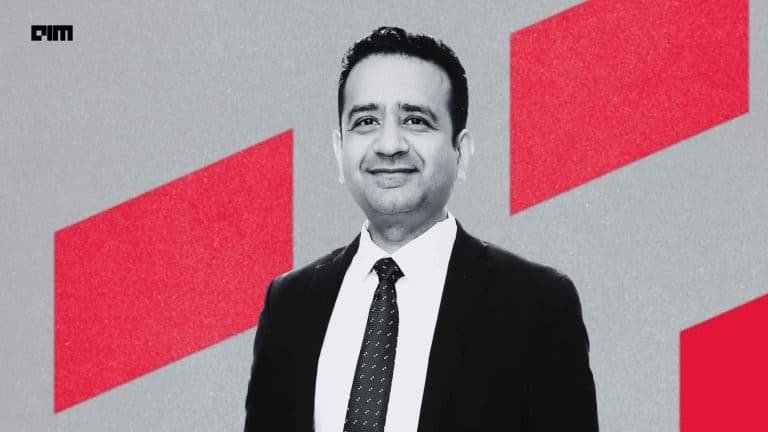
“Our deal wins on an LTM basis are the highest we have achieved in the past five years, reflecting an improved deal-win run-rate over the past several quarters,” Mohit Joshi, CEO and managing director, Tech Mahindra, said.
Meanwhile, Rohit Anand, CFO, Tech Mahindra, said the company continued to make steady progress on profitability and cash generation. He said the quarter reflects a strong financial performance, with nine consecutive quarters of margin growth and robust cash flow. “The company remains on track to achieve its FY27 goals.”
The quarter also witnessed AI emerge as a central growth driver. Tech Mahindra partnered with Google to accelerate enterprise adoption of Gemini Enterprise using Gemini 2.5 multimodal models. It also achieved the AWS Generative AI Competency, underlining its capabilities in deploying generative AI at scale.
The company said clients are increasingly moving from pilots to multi-year AI programs embedded into core operating models.
Employee headcount stood at 1,49,616 at the end of the quarter, down 872 year-on-year. Over the last twelve months, IT attrition was 12.3%.
Overall, the results point to a broader recovery, with stronger deal flow, steady revenue growth and sustained margin expansion. It makes Tech Mahindra stand out among its peers including HCLTech, TCS, Infosys, and Wipro, for whom the profit declined sharply due to the labour code changes.
The post AI Deals Drive Tech Mahindra Q3 Results, Profit Climbs 14% appeared first on Analytics India Magazine.


OpenAI said it will begin testing advertisements on ChatGPT in the United States in the coming weeks, as part of a broader effort to expand access to its AI tools while keeping paid subscriptions ad-free.
“We’re not launching ads yet, but we do plan to start testing in the coming weeks,” the company said in a blog post.
The ads will appear for logged-in adult users on the free tier and the ChatGPT Go subscription, which costs $8 per month. OpenAI said Pro, Business and Enterprise subscriptions will not include ads. The company recently expanded ChatGPT Go to the US after launching it in 171 countries since August.
The ads will be shown at the bottom of ChatGPT responses when there is a relevant sponsored product or service linked to the user’s current conversation. OpenAI said ads will be clearly labelled and separated from organic answers, and users will be able to dismiss ads or see why a particular ad is shown.

“Ads do not influence the answers ChatGPT gives you,” OpenAI said, adding that responses are optimised based on what is most useful to users, not advertising considerations.
OpenAI said it will not show ads to users under 18 and that ads will not appear near sensitive or regulated topics such as health, mental health or politics. The company also said conversations will remain private and will not be sold to advertisers.
“People trust ChatGPT for many important and personal tasks,” the company said. “It’s crucial we preserve what makes ChatGPT valuable in the first place.”
According to OpenAI, users will have control over ad personalisation and can turn it off or clear the data used for ads at any time. The company said it will always offer a way to use ChatGPT without ads, including through paid plans.
OpenAI said the move is aligned with its goal of making advanced AI tools accessible to more people. “Our mission is to ensure AGI benefits all of humanity,” the company said, adding that advertising is intended to support broader access with fewer usage limits.
The company said it does not plan to optimise for time spent on ChatGPT and will prioritise user trust and experience over revenue. OpenAI added that it expects ads to evolve over time, including formats that allow users to ask questions directly within sponsored listings to help with purchase decisions.
OpenAI said it will refine the ad experience based on user feedback but that its focus will remain on subscriptions and enterprise products as core parts of its business, with advertising playing a supporting role in expanding access.
The post OpenAI to Test Ads on ChatGPT Free and Go Tiers in the US appeared first on Analytics India Magazine.


AI is fundamentally rewriting age-old codes and reshaping how systems are designed, tested, and trusted. At a massive scale, traditional engineering assumptions are breaking down, and nowhere is this more evident than in testing.
Writing unit tests has increasingly been delegated to AI tools like GitHub Copilot and ChatGPT, offering developers a much-needed sense of respite by reducing repetitive effort and speeding up test creation.
This shift is structural, and it has sweeping implications for engineering talent, infrastructure design, and how the next generation of technologists must be trained.
Venkat Pullela, CTO, networking at Keysight Technologies, mentions in a conversation with AIM, “With AI, people are forced to do system testing. You cannot do unit testing anymore.”
However, the larger question is why unit testing is no longer enough.
For decades, engineering excellence was measured by how well individual components performed in isolation. Unit testing became the gold standard. But AI systems, especially those running on thousands or even millions of GPUs, do not fail that way.
“The failures at a system level are fundamentally different,” Pullela explains. “And people are finding failures that are unique and different.”
In fact, “during interviews, candidates with an existing code block and ask them to explain its time and space complexity, evaluate trade-offs, and propose alternative approaches. Rather than testing how fast they can write code, we focus on how deeply they can reason, analyse, and think critically about it,” founder and CEO of a software technology company tells AIM.
In hyperscale AI environments, even a minor anomaly can cascade across the entire system. “When you have a million GPUs, even if one GPU runs at half speed, all the million minus one also is as if they are running at half speed because of it.”
The cost of such failures is enormous. It forces teams to rethink how early and how holistically they test.
Perhaps the most radical change is when testing now begins. Engineers are being asked to validate entire systems before hardware even exists.
“You don’t even have an ASIC (Application-Specific Integrated Circuit),” Pullela notes. “You have a design of an ASIC—and you have to do system testing.”
To make this possible, companies are blending simulation, emulation, and real components into what is often loosely called a ‘digital twin’. But the intent is precise: bringing system-level behaviour forward in time.
“We are combining simulation, emulation and real components and building a system,” he says. “You are bringing the system to you while you don’t have anything—you just have ideas.”
This shift-left approach is dramatically compressing development cycles, uncovering failures earlier, and fundamentally changing how products reach production.
This transformation is not happening in silos. Vendors, cloud giants, and infrastructure providers are now tightly coupled in co-design relationships.
Hyperscalers have become lighthouse customers, shaping architectures, testing methodologies, and tooling alongside their partners. Massive-scale simulation environments, such as containerised networks that mirror real-world deployments, are now standard practice before a single line of production code is released.
The Indian IT Sector’s testing and quality assurance/quality control (QA/QC) function currently has over 3.75 lakh active professionals across different experience ranges as of April 30, 2025, according to Xpheno data.
The talent pool’s churn, often seen as an indicator of active hiring activity, has been in the average range of 7-9%.
Meanwhile, a Reddit discussion thread reflects widespread scepticism within the QA community about claims that AI can fully automate end-to-end testing or replace QA roles in the near future. While AI is increasingly being adopted as a productivity booster, most practitioners see it as an assistive tool rather than a substitute for human judgement.
Several experienced QA professionals and Software Development Engineers in Test (SDETs) noted that, despite heavy marketing, no AI-powered testing tools today can independently design, execute, and maintain meaningful end-to-end tests at scale without significant human guidance.
AI performs reasonably well in limited areas such as generating helper functions, writing boilerplate test code, parsing unfamiliar codebases, creating mock data, or assisting with debugging. However, when tests involve complex workflows, business logic, domain-specific edge cases, or evolving product behaviour, AI’s effectiveness drops sharply.
Attempts to fully automate testing by simply pointing AI tools at an application often yield brittle, low-quality tests unless a skilled QA professional actively directs the process. Without human oversight, AI-generated tests are often deemed unreliable.
As systems grow more complex, the skills required to build and validate them are evolving faster than institutions can adapt.
When systems become more complex and AI-generated code becomes more common, the need for professionals who can validate behaviour, assess risk, and understand system impact is expected to grow.
Upskilling is widely encouraged, not as a way to escape QA, but to strengthen it. Many QA professionals are learning to work alongside AI by using it for acceleration while focusing their own efforts on higher-value work such as test strategy, exploratory testing, business validation, and cross-functional collaboration.
This naturally pushes QA roles closer to SDET or Dev-in-Test profiles, with stronger coding skills and AI-assisted workflows.
“The skill sets needed are evolving so fast,” Pullela admits. “None of us has the skill set. Any given time, we all feel less adequate than before.”
Even seasoned engineers are re-learning fundamentals, often in real time. “This is like a once-in-a-lifetime opportunity,” he says, explaining why many senior technologists are postponing retirement to stay in the game.
The challenge is even sharper for new graduates. Traditional curricula—heavy on theory, light on real systems—are proving insufficient for an AI-first world.
As AI systems become more interconnected, engineering is once again becoming collaborative and interdisciplinary. Those who cannot explain their thinking—or challenge others—risk becoming invisible, regardless of technical ability.
The decline of unit testing as the primary quality gate does not mean testing is disappearing. It means testing is becoming more expansive, more expensive, and more critical than ever.
Engineers are now judged by how well they understand systems, anticipate failure domains, and validate behaviour at scale—often before hardware exists.
In that sense, AI is not killing engineering fundamentals. It is raising the bar. And for those willing to learn fast, think system-first, and build relentlessly, the opportunity—like the technology itself—is massive
The post AI is Forcing the End of Unit Testing. Here’s What It Means for Engineering Talent appeared first on Analytics India Magazine.


Bharat Sanchar Nigam Limited (BSNL) and Viasat will support the next phase of the Indian Navy’s satellite communications upgrade programme, set to begin later this month.
The companies announced the development as part of the Navy’s ongoing efforts to modernise its communication systems. The programme will use Viasat’s high-capacity Ka-band satellite systems alongside its existing L-band infrastructure.
L-band offers weather-penetrating signals ideal for navigation, while Ka-band is ideal for broadband and streaming.
The deployment follows an agreement between BSNL and the Indian Armed Forces, and aims to provide secure, resilient connectivity for Indian naval platforms. Viasat confirmed that equipment for the programme has already arrived in India. Installation activities are scheduled to begin this month, marking the start of the upgrade’s new phase.
Robert Ravi, chairman and MD of BSNL, said the partnership reflects the company’s role in supporting strategic communication needs. “BSNL is proud to support the Indian Navy’s SATCOM modernisation by providing advanced connectivity solutions through our partnership with Viasat,” he noted in a statement.
Under the arrangement, BSNL will work with Viasat to deliver satellite services that support mission-critical naval operations. Viasat’s international government team will support the programme through its Communication Services segment.
The upgrade will allow the Indian Navy to move towards a multi-band, multi-constellation satellite communications strategy. The programme will leverage BSNL’s Gateway Earth Station and Viasat’s global satellite network to expand coverage and increase data throughput for naval operations.
According to the companies, integrating Ka-band and L-band systems will improve operational reliability at sea. The approach is designed to ensure continuity of communications across different operational conditions.
Gautam Sharma, managing director of Viasat India, said the deployment represents progress in the partnership with Indian defence agencies. “With the equipment having arrived in India and installation activities set to begin this month, we are proud to support the Indian Navy in modernising its satellite communication capabilities,” he said.
Viasat has worked with Indian government agencies across several sectors, including disaster response networks and maritime tracking. The company also provides aeronautical connectivity services for government and private aircraft in India.
BSNL and Viasat said they remain committed to supporting India’s defence and maritime communication modernisation as the programme moves into its next stage.
The post BSNL, Viasat to Support Indian Navy Satellite Communications Upgrade appeared first on Analytics India Magazine.


In the third quarter of FY26, AI quietly influenced every aspect of Tech Mahindra’s growth, even as the company opted not to disclose AI revenue figures, unlike Infosys and Wipro.
The results show the IT firm rebuilding momentum through execution, margins, and deal flow, with AI deeply embedded in the work delivered.
The company reported consolidated net profit of ₹1,122 crore, up 14.1% year on year. Revenue rose 8.3% to ₹14,393 crore, reflecting cautious demand across global enterprises. This marks the ninth consecutive quarter of margin improvement.
New deal wins totalled $1.1 billion in the quarter, up 47% year on year. It’s the highest the company has reported in the past five years. “Our deal wins on an LTM basis are the highest we have achieved in the past five years, reflecting an improved deal-win run-rate over the past several quarters,” Mohit Joshi, chief executive and managing director, said.
This quarter, Joshi linked deal performance to AI, emphasising that winning large enterprise deals now requires credible AI capability, without making AI a headline revenue source.
“Almost all of our large deals are now AI-infused,” he said, adding that clients expect proof of productivity gains, automation, and transformation powered by AI tools.
Tech Mahindra’s stance diverges from peers. TCS reports $1.8B in AI revenue, HCLTech $146M, growing 20% quarterly. Infosys discusses AI impact, Wipro avoids clear AI revenue figures.
He explained that the challenge lies in the fact that one’s definition of AI is either too narrow, limited to selling a large language model or providing AI-specific consulting, or too broad.
Joshi believes reporting a small number from model sales underestimates AI’s integration, while stating that most clients use AI offers little insight.
“Almost all of our clients over $20 million have AI programs in position,” Joshi said, pointing to a shift from pilots to scaled, multi-year initiatives integrated into core operating models.
Biswajit Maity, senior principal analyst at Gartner, told AIM that the growth is largely driven by Tech Mahindra’s TechM Orion. This agentic AI platform helps global enterprises deploy and manage AI solutions more quickly, he said.
Tech Mahindra specializes in SAP, offering support (build, operate, manage) for RISE with SAP, especially on AWS and Azure. They also deliver sector-specific solutions for BFSI, healthcare, and manufacturing.
During the quarter, the company deepened its collaboration with Google to accelerate enterprise adoption of Gemini Enterprise using Gemini 2.5 multimodal models.
The company is working to build a foundational LLM for the education sector under the IndiaAI Mission. Joshi, however, said it will not have any significant or meaningful impact on revenue.
The managing director mentioned a reevaluation of pricing strategies. Tech Mahindra is exploring models distinguishing human labour from digital labour.
Today, AI-driven productivity shows up as cost savings passed on to clients. The company wants to change that. Joshi stated that they aim to alter the current paradigm by billing clients separately for human labor and digital labor.
One proposal being discussed is to connect digital labour pricing to token consumption, an idea the company outlined in a white paper with Forrester. It is an early signal of how Indian IT firms may eventually monetise AI beyond headcount-linked billing.
Financially, the benefits of discussing AI are already evident. Improved productivity, especially in fixed-price programs, allowed the company to increase revenue without expanding headcount.
Total employee strength stood at 1,49,616, down 872 year on year, while revenue per employee continued to rise. Joshi rejected the idea that this indicates shrinking opportunities, arguing instead that efficiency improvements are freeing capacity and increasing margins.
Amid peers reporting mixed growth and margin pressure from regulatory changes, Tech Mahindra’s quarter is notable for its clear direction. AI is not marketed as a shiny new revenue stream but as the engine behind deal wins, productivity, and margin expansion.
For Tech Mahindra, AI is no longer viewed as a standalone category. Instead, it has become the core operating system that guides the company’s growth strategy.
The post Tech Mahindra Wants Clients to Pay Separately for Digital Labour appeared first on Analytics India Magazine.


Big Tech has been openly and aggressively pushing countries to adopt artificial intelligence. In India alone, Microsoft has commited $17.5 billion to develop AI infrastructure over the next four years, while Amazon has one-upped the software giant with a $35-billion pledge for AI-driven digitisation and cloud infrastructure.
However, the rapid pace at which AI is being promoted has unsettled regulators and civil society groups, with some accusing Big Tech of only serving corporate interests and warning governments against deepening their dependence on the Global North.
At a recent public dialogue on The Evolving Politics of AI Governance, hosted in New Delhi by the embassies of France and the Netherlands, in collaboration with digital civil rights-focused non-profit Access Now, panellists noted Big Tech has been sidestepping the idea of putting checks and balances against AI in the race to be on top.
“It’s a race everyone wants to win, regardless of what they actually want from the technology,” the panellists observed in the discussion held under the Chatham House Rules.
They flagged that India is being projected as the next major AI destination without sufficient consideration of local needs. “AI is not a magic solution to all problems. Healthcare apps won’t fix the fact that India spends less than 2% of its GDP on healthcare. We are also building data centres in drought-prone areas—are we not reinforcing dependence on the Global North?” they pondered.
Moreover, Big Tech companies tend to avoid scrutiny and liability due to the “black box” nature of complex AI models and to protect IP amid competitive pressure. Recent incidents, such as xAI’s Grok AI chatbot generating sexualised deepfakes of women and SaaS company Workday facing a lawsuit for its AI hiring tools allegedly discriminating against certain demographics, have catapulted the issue.
Calls for post-model testing, panellists noted, were increasingly framed as being anti-innovation. “We speak of AI sovereignty, yet quietly become dependent on Big Tech. Why is digital public infrastructure being rebranded? Why is deregulation central to Big Tech’s agenda? These questions must be answered before embracing AI wholesale,” the speakers noted.
Regulations Haven’t Worked
The panellists argued that existing regulatory approaches have been insufficient.
“Self-regulation has not worked in the tech sector and never will. For Big Tech, reputational harm matters more than social harm, and regulation must address that,” they said.
Moreover, AI monopolies pose risks to democracy and national security. According to a Trends Research & Advisory study, the concentration of the AI value chain in the hands of a few Big Tech companies—Amazon, Microsoft, Google, and Meta—has fostered vertical integration and network effects that restrict competition and limit bottom-up innovation.
The panellists also raised concerns that industrial policy is not aligning with AI governance frameworks.
“We do not want to repeat the mistakes made with social media 15 years ago, where the debate now centres on banning platforms. We should adopt AI and GenAI more cautiously and assess long-term consequences. Different stakeholders have different responsibilities, and they must act accordingly,” the speakers said.
The Way Forward
Panellists called for non-monopolistic pathways for AI development to prevent Big Tech from continuing to act as kingmakers. Regulations, they argued, should focus on core technology infrastructure. Suggestions included breaking up cloud businesses, tightening scrutiny of acquisitions, and mandating detailed ‘bills of materials’ for AI systems, covering data sources, labour conditions, and legal frameworks.
On India’s role, speakers stressed the need for the country to emerge as a leader of the Global South through varied forms of cooperation—not just North–South, but also South–South, including partnerships with regions such as Africa. Expanding renewable energy use, they said, would be critical to offset the growing energy demands of data centres.
The panellists also urged greater transparency and substance from global AI summits. “Ethics, equity and ecology must be on the table. Industry should be left off it,” they said.
The event featured opening remarks by Anne Bouverot, France’s special envoy for AI and a concluding address by Damien Syed, deputy chief of mission at the French Embassy in New Delhi. It was attended by Arthus Barichard, deputy ambassador of France for digital affairs; Deepak Maheshwari, senior policy advisor at the Centre for Social and Economic Progress and a member of the public affairs advisory board at Palo Alto Networks; Isha Suri, European AI & Society Fund Fellow and former research lead at the Centre for Internet Society; Raman Jit Singh Chima, Asia-Pacific policy director at Access Now; Astha Kapoor, co-founder at Aapti Institute; and Amba Kak, co-executive director at AI Now Institute.
The session was moderated by Huib Mijnarends, deputy ambassador to India at the Embassy of the Kingdom of the Netherlands and Radhika Mittal, research programme manager and impact lead for the Ethics of Socially Disruptive Technologies project, the Netherlands.
The post India’s Big Tech Governance, Unchecked Tech Optimism Alarm Policy Advisors appeared first on Analytics India Magazine.


Cloudflare has acquired Human Native, an AI data marketplace that connects content creators with AI developers, as the company steps up its push to build a paid, transparent content economy for the AI era.
Financial details of the deal were not disclosed.
The acquisition is aimed at making it easier for AI companies to discover, access, and pay for high quality content for training and inference, while allowing creators and publishers to price and monetise their data in a structured way.
Cloudflare said the move will help transform original content into AI-ready data and enable a new business model for the internet.
With Human Native’s team and technology, Cloudflare plans to build tools that allow content to be indexed, discovered, priced, and purchased by AI developers through transparent channels. The company said this would give content owners flexibility to block AI access, optimise content for AI use, or sell data at a fair price.
“Content creators deserve full control over their work, whether they want to write for humans or optimise for AI,” Matthew Prince, co-founder and CEO of Cloudflare said. “The Human Native team will help us accelerate the next phase, where we build the tools that allow content to be discovered, priced, and purchased through transparent channels. This acquisition is about building the tools needed to protect the longevity of the open Internet.”
Founded in 2024, Human Native focuses on creating a more equitable relationship between AI companies and content creators. It is backed by UK venture firms LocalGlobe and Mercuri, and its team includes veterans from DeepMind, Google, Figma and Bloomberg.
“We started Human Native with the goal of getting generative AI out of its Napster era. We believe that creators should have control, compensation and credit when their work is used to power AI products, ensuring equitable compensation for rights holders while enabling responsible AI development,” James Smith, co-founder and CEO of Human Native said.
Investors said the acquisition validates the need for infrastructure that enables ethical and paid access to data. “High quality data is the key that unlocks real differentiation in AI,” Ziv Reichert, partner at LocalGlobe said, adding that Human Native had built systems that allow AI teams to access valuable data while enabling owners to surface, price, and monetise it.
Mercuri founding general partner Alan Hudson said the firm’s belief in rewarding creators for their data has only strengthened as AI adoption has accelerated, calling the partnership with Cloudflare a chance to scale that vision across the internet.
The post Cloudflare Acquires Human Native to Help Creators Monetise Content for AI Models appeared first on Analytics India Magazine.


Artificial intelligence is no longer just changing how information is accessed. It is reshaping how ideas move from concept to execution, compressing timelines that once defined enterprise development and forcing organisations to rethink who builds, how fast, and under what assumptions.
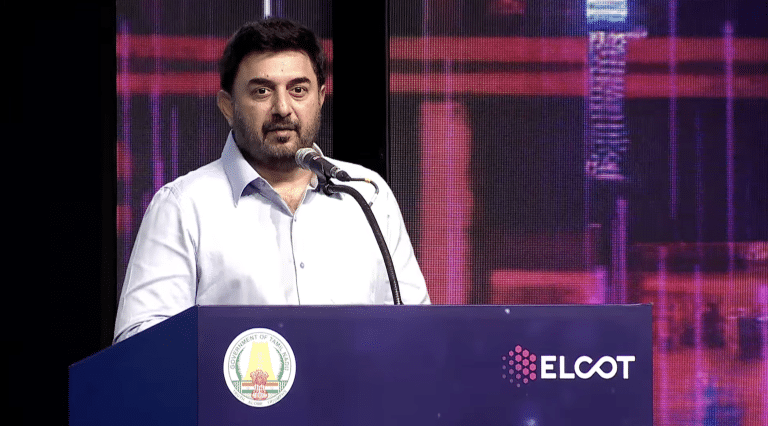
That was the central argument placed by actor and entrepreneur Arvind Swami at Umagine TN 2026, a technology summit attended by policymakers, students and founders. Drawing on examples from enterprise software, product development and research, Swami framed AI not as an incremental efficiency tool but as a structural break from earlier technology cycles.
In previous shifts, he noted, the focus was on distributing knowledge. AI, by contrast, enables creation itself. By making large bodies of reference material, patterns and prior work machine-accessible, it lowers the cost of experimentation and shortens the distance between idea and prototype.
This shift is already visible across industries. Startups are shipping products with smaller teams. Enterprises are questioning long development cycles and their reliance on external vendors. In research-heavy fields such as pharmaceuticals, simulation and iteration are increasingly done before physical trials begin.
Swami illustrated this change through his own experience in enterprise software. As the founder of Talent Maximus, a tech-led HR firm, he said translating business logic into working software had long been slow and expensive, even when domain expertise was clear. Engagements with vendors, he said, rarely reduced timelines or costs in any meaningful way.
That mismatch led him to pause some initiatives and rebuild internally using AI-driven development workflows. According to Swami, complex enterprise modules that once took months to prototype can now be assembled within hours once requirements are fixed. While he said he plans to publish technical documentation once his system is fully deployed, the broader claim reflects a trend seen across software teams experimenting with AI-assisted development.
Crucially, he argued, this shift is not dependent on elite engineering talent. His current team, with an average age in the mid-twenties, is largely drawn from non-coding backgrounds. Selection, he said, is based on analytical ability, communication and structured thinking rather than formal technical credentials.
This reflects a broader rebalancing underway in product teams, where clarity of intent and problem definition matter as much as coding skills. As AI systems absorb more of the translation layer between idea and implementation, the bottleneck shifts upstream.
The economic implications are significant. When experimentation becomes cheap and fast, failure loses much of its stigma. Iteration replaces long planning cycles, and abandoned ideas are no longer sunk costs. Swami acknowledged that several of his earlier ideas failed or were dropped prematurely, only to reappear later as successful global products developed by others.
Today, he said, he applies AI-led research and validation to domains far removed from his core businesses, including pharmaceuticals, where he is working on patent filings. Whether individual efforts succeed or not, the underlying point remains: access to depth is no longer limited to institutional gatekeepers.
From technology, Swami moved to leadership. In environments where certainty is low and plans are short-lived, he argued, leadership begins with self-awareness rather than authority. Knowing what to pursue, what to abandon, and what compromises not to make becomes more important than control.
He linked this perspective to personal history and ethics, but positioned it as a broader requirement for modern organisations. As AI erodes established hierarchies of expertise, ego becomes a liability. Adaptability, not mastery, defines effective leadership.
Failure, he added, is no longer exceptional but expected.
Resilience is the ability to continue operating when progress is not immediately visible, whether in business, recovery or innovation. That mindset, he suggested, applies as much to institutions as to individuals.
Swami closed by invoking the story of Ernest Shackleton, whose Antarctic expedition failed in its original objective but succeeded in preserving human life after plans collapsed. The lesson, he argued, is not heroic endurance but strategic abandonment, knowing when to let go of outdated goals and reorient around what matters.
As AI unsettles long-standing models of work and leadership, such “Shackleton moments” are becoming common. Old assumptions are breaking down faster than new certainties can form. In that environment, leadership increasingly belongs to those willing to unlearn, adapt quickly, and use new tools without clinging to old identities.
The post Actor Arvind Swami Says ‘Old Models Will Collapse’ as Leaders Navigate Shackleton Moments appeared first on Analytics India Magazine.


OpenAI has participated in the seed funding round of Merge Labs, a research lab focused on developing new brain-computer interface (BCI) technologies. The company said such interfaces could enable more direct human interaction with AI.
According to a recent report, the company has raised a total of $252 million at a valuation of $850 million, backed by Bain Capital, Gabe Newell, and other investors.
“Progress in interfaces enables progress in computing,” OpenAI said in a blog, asserting that BCIs represent an important new frontier for communication, learning, and interaction with technology.
On BCI, Merge Labs is working to safely interface with the brain at higher bandwidth by integrating biology, hardware devices, and AI. The company’s stated long-term mission is to bridge biological and artificial intelligence to expand human capability and agency.
The investment puts OpenAI CEO Sam Altman on a collision course with Elon Musk, whose startup Neuralink is working on brain-computer interface chips that enable people with severe paralysis to control devices using their thoughts. Last year, it secured $650 million in funding at a $9 billion valuation from investors including Sequoia Capital, Thrive Capital, and Vy Capital.
According to OpenAI, AI will be central to Merge Labs’ work, supporting research across bioengineering, neuroscience, and device engineering. AI systems are also expected to help interpret user intent, adapt to individuals, and function effectively despite limited and noisy neural signals.
“High-bandwidth interfaces will benefit from AI operating systems that can interpret intent, adapt to individuals, and operate reliably with limited and noisy signals,” OpenAI stated in the blog.
As part of the collaboration, OpenAI plans to work with Merge Labs on scientific foundation models and other advanced tools to support the development of BCI technologies.
Merge Labs was co-founded by researchers Mikhail Shapiro, Tyson Aflalo, and Sumner Norman, who have previously worked on new approaches to brain-computer interfaces. The founding team also includes technology entrepreneurs Alex Blania, Sandro Herbig, and Sam Altman, who is participating in a personal capacity.
Blania is the CEO and co-founder of Tools for Humanity, the company behind the eyeball-scanning digital ID project, World, and will continue his role. Herbig is the founding team president and product and engineering lead at Tools for Humanity.
“We are excited to support and collaborate with Merge Labs as they turn an ambitious idea into reality and ultimately products that are useful for people,” OpenAI said.
The post OpenAI Bets on Brain-Computer Interfaces With Merge Labs Investment appeared first on Analytics India Magazine.