Pfizer Is Certified as a Best Firm for Data Scientists

Pfizer has been certified as a Best Firm for Data Scientists by Analytics India Magazine (AIM) through its workplace recognition programme. The certification is based on structured feedback from data science and analytics professionals within the organisation. It evaluates how companies enable technical teams to contribute to enterprise decision-making.

The Best Firm for Data Scientists certification surveys assess workplace culture, access to leadership, collaboration, learning opportunities, and the nature of the analytical work delivered. AIM conducts an independent analysis of survey responses to understand how effectively organisations support data teams in their day-to-day work.

At Pfizer, the certification recognises the company’s Analytics Gateway and broader data science ecosystem, where teams work across functions to support business, research, and operational priorities.

Building and Scaling Data Science Capability

Over the past year, Pfizer has focused on building organised data science teams with defined ways of working and clear ownership across projects. This effort has involved setting up teams, aligning delivery with business needs, and ensuring analytics outputs are integrated into decision-making processes.

Commenting on this journey, Sutapa Das, director of Data Science and AI, said, “Thrilled and honoured to share that we have been certified as a Best Firm for Data Scientists by AIM.

“Stepping into the role of Gateway Lead has been an incredible 12-month journey, building a talented team from the ground up, shaping our ways of working, and driving impact across the business,” Das said.

He further noted that they have not only grown together but also created meaningful value through data-driven solutions, from advanced predictive models that optimise decision-making to AI-powered analytics platforms enabling faster insights for critical business needs.

Leadership teams have also worked across geographies and functions to enable collaboration at scale. Emma Mendonca, director of Data Science and AI, reflected on her experience with the Gateway Team over a year and has seen her growth as truly transformative.

They have led initiatives that encouraged thinking bigger, innovating more rapidly, and developing solutions that make a meaningful impact. Each project has provided new insights about technology, leadership, and the strength of global collaboration.

Recently, they celebrated a significant milestone: Analytical Gateway was named the AIM Best Firm for Data Scientist. This accolade represents not only a mark of distinction but also highlights the exceptional team they have been fortunate to work with and the culture of excellence cultivated collaboratively.

How Teams Work Across Business Priorities

Data science teams at Pfizer work closely with business stakeholders, engineers, and functional leaders to address defined business problems. Teams are engaged at various stages of projects, enabling data professionals to grasp how insights are utilised and assessed.

Chirag Shah, manager of Data Science and AI, highlighted that joining the Gateway Team revealed a culture where data drives better decisions and strategies, ultimately benefiting patients. He expressed pride in the team’s recognition as the Best Firm for Data Scientists, viewing it as a reflection of people, collaboration, and shared purpose. He feels grateful to contribute to a meaningful mission of transforming insights into impact.

Senior team members highlight their involvement in enterprise initiatives as a key aspect of their roles. Nikhil Kumar Mishra, senior manager of Data Science and AI, expressed pride in being part of the Gateway team, a collaborative group driven by innovation and impact.

He described his experience as a valuable learning journey, working directly with advanced AI technologies like Generative AI and Agentic AI on real-world enterprise applications. Mishra also mentioned that the team’s efforts were recognised with the Best Firm for Data Scientists award, highlighting strong teamwork, expertise, and a commitment to excellence. He valued the leadership at Analytics Gateway and his colleagues at Pfizer, and he looks forward to making further contributions.

Certification and the Data Science Talent Landscape

Across industries, demand for experienced data science professionals continues to grow. Beyond compensation, professionals increasingly seek roles that offer learning through practice, ownership of work, and clear links between analytics and business outcomes.

For Pfizer team members, the AIM recognition aligns with their everyday experience. Sheetal Pandrekar, Manager Data Science and AI, shared, “The recognition feels especially rewarding because it reflects the everyday experiences of those working here. I feel proud to contribute to a team that is setting high standards not just for data science excellence but also for what a great workplace should look like.”

The Best Firm for Data Scientists certification by Analytics India Magazine (AIM) is considered a benchmark for organisations seeking to build structured and credible data teams. Companies participate in the programme to gather employee-led insights and review internal practices that support long-term capability development.

The post Pfizer Is Certified as a Best Firm for Data Scientists appeared first on Analytics India Magazine.

Berkeley Lab Materials Project Surpasses 650,000 Users as Demand for AI-Ready Data Grows

DDN Report Reveals 65% of Organizations Are Struggling to Achieve AI Success

CHATSWORTH, Calif., Jan. 13, 2026 — As enterprises race to adopt and deploy artificial intelligence…

Kaynes Semicon, SiMa.ai Partner to Manufacture Physical AI in India

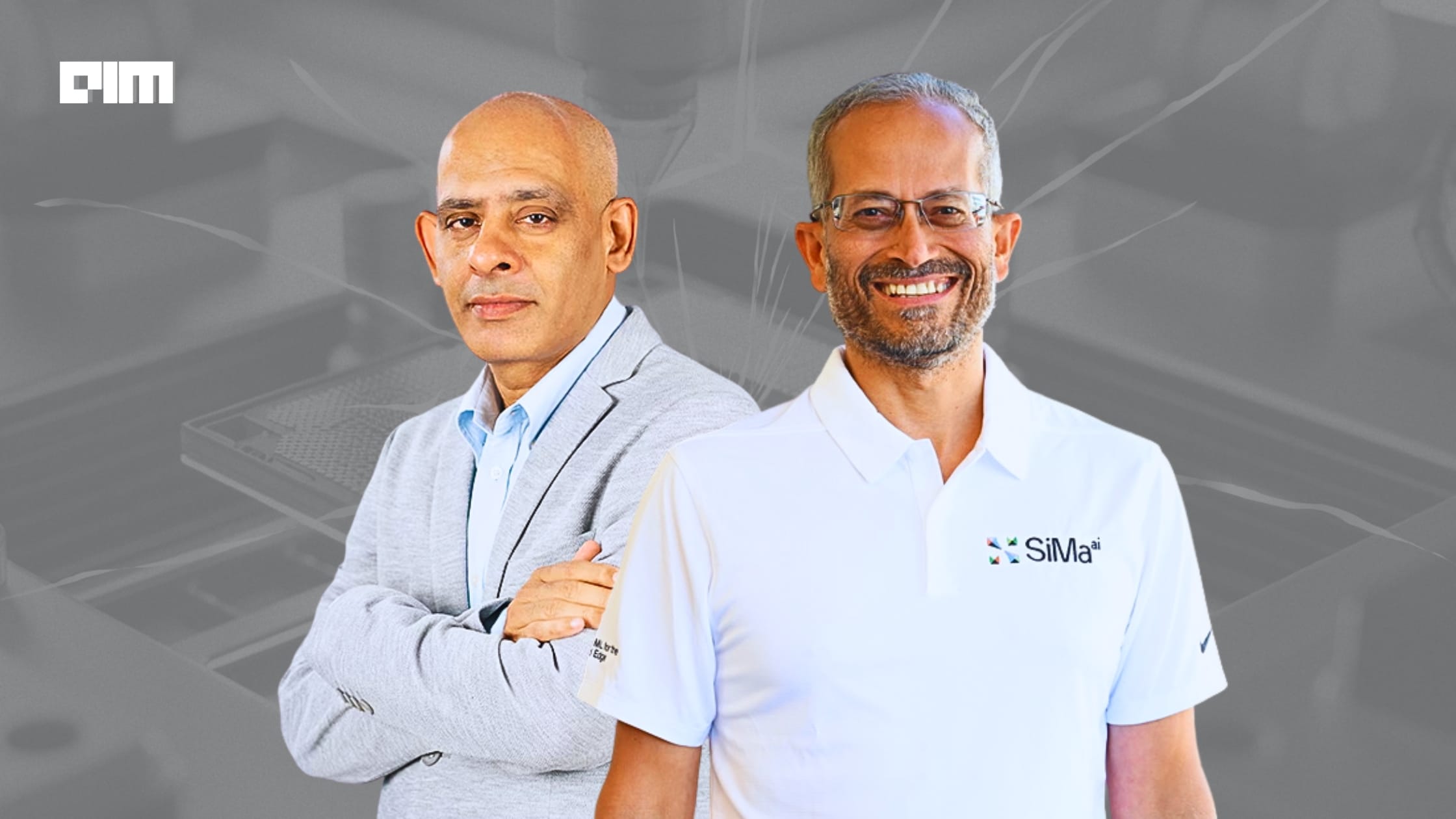
US-based startup, SiMa.ai announced a partnership with Kaynes Semicon, to expand high-performance Physical AI solutions in India and abroad. The collaboration brings together SiMa.ai’s hardware and software platform with Kaynes Semicon’s semiconductor assembly and testing capabilities (OSAT).

The companies aim to use these capabilities to deliver Make in India electronic systems for AI and machine learning applications. The companies said the tie-up will support sectors such as industrial automation, robotics, automotive, aerospace and defence.

As part of the agreement, the two firms will localise critical semiconductor packaging in India, aiming to strengthen supply-chain resilience and reduce time-to-market for customers. They will also co-develop electronic systems designed for edge AI and machine learning workloads.

The partnership includes plans to jointly deliver a portfolio of defence-focused AI solutions to meet mission-critical requirements in smart vision, robotics, surveillance and autonomous systems across defence and aerospace applications.

In a previous interview with AIM, Krishna Rangasayee, CEO and founder of SiMa.ai, had mentioned that India’s engineering talent and scale are central to the company’s mission. With this partnership, he added that the company is committed to delivering effortless ML for every industry and position India as a “global force in physical AI.”

Kaynes Semicon will design and manufacture production reference boards for SiMa.ai’s MLSoC platforms. The companies said this will allow customers and system integrators to rapidly evaluate and deploy SiMa.ai’s “push-button” AI inference technology at the edge.

They expect co-created hardware and manufacturing readiness to support faster movement from pilots to commercial rollouts.

Raghu Panicker, CEO of Kaynes Semicon, said the partnership strengthens India’s semiconductor ecosystem. “By fusing Kaynes’ advanced OSAT and manufacturing capabilities with SiMa.ai’s world-leading AI at the edge, we’re empowering critical industries to innovate at scale,” he said.

He noted the companies intend to build a trusted supply chain and deliver value for customers in India and international markets. He had also emphasised partnerships in a previous interview with AIM.

The initiative also supports the government’s Atmanirbhar Bharat vision by enabling next-generation security and surveillance electronics and fostering collaborative R&D, co-development, and custom product innovation for strategic sectors.

The post Kaynes Semicon, SiMa.ai Partner to Manufacture Physical AI in India appeared first on Analytics India Magazine.

Tamil Nadu Teams Up With Sarvam AI to Build ₹10,000 Cr Sovereign AI Park

The Tamil Nadu government has signed an MoU with Sarvam AI to set up India’s first full stack Sovereign AI Park in Chennai, committing an initial investment of ₹10,000 crore to create a state controlled AI ecosystem where data, models and computing infrastructure stay within a trusted boundary.

The agreement was exchanged on January 13 in the presence of chief minister MK Stalin, industries minister TRB Rajaa, senior government officials and Sarvam AI co-founder Pratyush Kumar.

According to the state government, the project is expected to generate around 1,000 high skilled jobs across AI research, infrastructure engineering and governance focused technology roles.

The proposed Sovereign AI Park will be built as a dedicated district that brings together large scale AI computing infrastructure, secure data frameworks, model research labs and innovation clusters. It will also host a specialised Institute for AI in Governance, which will focus on building and deploying AI systems for public sector use while meeting data security and ethical requirements.

The park is being designed as a full stack environment where data storage, model training and AI deployment will all take place within Tamil Nadu’s jurisdiction.

Officials said this approach is aimed at supporting AI applications across education, agriculture, healthcare and citizen services without exposing sensitive data outside the state controlled framework.

Previously, Sarvam AI was selected under the IndiaAI Mission to build India’s first sovereign large language model and has been given access to high-performance computing resources to support that effort.

According to reports, the foundational model would be released next month at the India AI Impact Summit 2026. These models will be trained and deployed entirely within India and will follow the country’s regulatory and data governance rules.

The post Tamil Nadu Teams Up With Sarvam AI to Build ₹10,000 Cr Sovereign AI Park appeared first on Analytics India Magazine.

Complex Reinforcement Learning Tasks Can Cost Up to $20,000 Each: EpochAI Report

A report from Epoch AI examines the economics of reinforcement learning (RL) environments, a market that has become a core input into how frontier AI models are trained.

Based on interviews with 18 people across RL environment startups, neolabs and frontier AI labs, the report brings together insights on how RL environments are built, priced, and used.

Among those interviewed, one RL environment founder said, “I’ve seen $200 to $2,000 mostly. $20k per task would be rare but possible.” EpochAI stated that the $20k figure “comes up for especially complex software engineering tasks, but it’s rare.”

In modern RL training, an environment defines the world a model operates in—what actions it can take, such as running code, clicking through software interfaces, querying databases, or using tools, and how the system responds.

Tasks sit on top of these environments, specifying the objective and the grader that determines whether the objective has been achieved. Once built, a single environment can support hundreds of tasks, which is what makes the business viable despite high upfront costs.

Epoch AI cited examples of RL environments such as a Bloomberg terminal clone, where tasks involve calculating metrics such as five-year compound annual growth rates, with the system simulating the interface and automatically verifying the results.

The report points to a growing ecosystem of startups that build and sell RL environments as a service.

Companies such as Mercor, Surge, Handshake, and Turing, which are traditionally known for providing human-labelled data, now also sell RL environments.

Spending in this market is substantial. “Contract sizes are often six to seven figures per quarter,” the report said.

One RL environment founder noted that contracts frequently reach seven figures per quarter or more, while a neolab researcher said they had seen contracts in the $300,000 to $500,000 range, depending on task volume.

RL environments and tasks can be sold exclusively to a single lab or non-exclusively to multiple customers.

Two RL environment founders independently told Epoch AI that exclusive deals are roughly four to five times more expensive than non-exclusive ones.

Recently, SemiAnalysis also reported that so-called “UI gym” environments—mocked-up replicas of real websites used to train agents—typically cost around $20,000 per website.

It added that “OpenAI has purchased hundreds of sites for ChatGPT Agent training and development.” These environments are usually built once and reused across multiple model generations, improving their return on investment.

The Information previously reported that Anthropic had discussed spending more than $1 billion on RL environments over the course of a year.

According to EpochAI, RL environments are reused across multiple stages of model development.

The same environment–task pair can be used for reinforcement learning, benchmarking, or supervised fine-tuning on successful trajectories. In practice, reinforcement learning dominates.

One RL environment startup employee said, “RL is the main use. We have some requests for creating [environments] for benchmarking. I’d say perhaps 10–20x more the former vs the latter.”

Early RL environments focused on mathematics and coding tasks with verifiable answers.

While coding remains a major source of demand, interviewees said growth is increasingly coming from enterprise workflows—tasks that mirror real business processes and can be scored reliably.

The report also notes growing interest in longer-horizon tasks, where models must complete multi-step objectives across multiple tools or interfaces rather than single-turn problems.

Across sectors, interviewees emphasised that progress is constrained less by compute and more by the availability of high-quality, robust environments that resist reward hacking and provide meaningful learning signals.

The post Complex Reinforcement Learning Tasks Can Cost Up to $20,000 Each: EpochAI Report appeared first on Analytics India Magazine.

GCCs Dominate India’s Office Market, Set to Cross 100 Mn Sq Ft by 2027: JLL Report

India’s office market closed 2025 at an unprecedented high, defying global uncertainty and workspace contraction trends, with gross leasing touching a record 83.3 million sq ft—the highest ever recorded in the country, according to a JLL report.

The milestone was driven by aggressive expansion from global capability centres (GCCs), surging demand for flexible workspaces, and sustained business and headcount growth across major metros.

The full-year leasing volume exceeded the previous peak in 2024 by 7.8% year-on-year, while Q4 2025 alone set an all-time quarterly high at 26.8 million sq ft.

Market activity has been creating successive new peaks since 2023, reinforcing India’s position as a global business hub amid ongoing global macroeconomic volatility.

GCCs emerged as the dominant force in India’s office market, accounting for 37.7% of total gross leasing activity in 2025.

“GCCs established themselves as the dominant force in India’s office leasing market in 2025, capturing a commanding 37.7% share of gross leasing activity and achieving record-breaking 31 million square feet of space absorption—the highest annual figure ever recorded for this segment,” said Rahul Arora, head of office leasing and retail services, senior MD (Karnataka, Kerala), India, JLL.

He added that strong GCC expansion, coupled with robust occupancies and an active deal pipeline, could push India’s office leasing market to cross 100 million sq ft within the next two years, marking a transformational milestone.

Meanwhile, flexible workspace operators continued their rapid ascent, emerging as the largest occupier segment for the second consecutive quarter. In Q4 2025, flex captured a record 26.6% share of total leasing—its highest quarterly contribution ever.

Domestic occupier activity was largely driven by indigenous flex firms, which leased nearly 18 million sq ft during the year—their best performance to date.

In 2025, tech firms led leasing with a 25.8% share, followed by flex at 21.5%, while manufacturing/industrial and BFSI posted near-equal shares of 15.4% and 15.2%, respectively, according to the report.

Bengaluru remained the undisputed leader, commanding 29% of gross leasing in 2025, followed by Delhi-NCR (20.9%), and Mumbai and Hyderabad with near-identical shares of 14% each.

Bengaluru, Hyderabad, Pune, and Mumbai all recorded their highest annual leasing levels, highlighting broad-based demand across industries and geographies.

India’s net absorption surged to a record 57 million sq ft in 2025, up 14.1% from 2024.

In Q4 alone, net absorption reached 17.1 million sq ft, the highest quarterly figure of the year, led by Bengaluru, Hyderabad, and Delhi-NCR. As a result, overall vacancy fell to 15.2%, down 50 basis points quarter-on-quarter and the lowest level in five years, with several core markets now reporting single-digit vacancy levels.

“India’s office market delivered exceptional performance in 2025, achieving record-breaking gross leasing of 83.3 million sq. ft and net absorption of 57 million sq ft, with Q4 alone contributing 17.1 million sq ft in net absorption—the year’s highest quarterly figure,” said Samantak Das, chief economist and head of research and REIS, India, JLL.

He noted that the entry of nearly 200 new GCCs over the past two years, combined with tight occupancies and strong pipeline activity, signals sustained portfolio expansion ahead.

JLL expects India’s office market momentum to continue into 2026, supported by sustained GCC demand, manufacturing-led investments, and India’s deep talent pool. With GCCs now accounting for nearly 50% of all active space requirements, the country remains firmly positioned as the world’s preferred destination for large-scale, innovation-driven office expansion.

The post GCCs Dominate India’s Office Market, Set to Cross 100 Mn Sq Ft by 2027: JLL Report appeared first on Analytics India Magazine.

Thomson Reuters Convenes Global AI Leaders to Advance Trust in the Age of Intelligent Systems

Owkin Launches Agentic AI Infrastructure for Biology at JPM Healthcare Conference

SAN FRANCISCO, Jan. 12, 2026 — Owkin today announced the launch of its agentic infrastructure for…

India’s Privacy Law Prioritises Consent—But Will Compliance Follow? 

When data security firm Matters.ai, which helps organisations ensure data privacy compliance and operational safety, looked into the application logs of a prominent financial institution, what it found was astonishing, to say the least.

“When we worked with a very big financial institution, we told them within a span of twenty-four hours, their application logs contained more than one lakh people’s Aadhaar card numbers, which the developer could see with their bare eyes,” said Keshava Murthy, CEO and co-founder of Matters.ai, in an interaction with AIM.

These numbers weren’t there by mistake; they were accumulated over years of application development, sitting in logs that nobody thought to audit for sensitive data.

Under India’s new Digital Personal Data Protection Act, this constitutes a breach, even if the exposure originates internally. The financial institution was clueless about the presence of personal data in internal logs, and they are certainly not alone.

The DPDP Act, enacted in 2023 and operationalised in 2025, is India’s first comprehensive data protection law. The law applies to personal data—defined as any information that identifies an individual—including mobile number and Aadhaar details. Even information that may not identify someone on its own, such as salary slips or an address, becomes personal data when combined with other identifiers.

The Act’s origin is constitutional, its scope vast, and the implications are only beginning to register—for both organisations and individuals.

What Rights Do Users Get?

For India’s one billion internet users, the Act gives them a basket of digital rights.

“Think of it as the one piece of law that tells you how companies are allowed to process your data, what rights you have in relation to this, and how you really help enforce these rights against those companies,” Thomas Vallianeth, a lawyer who advises corporates and technology companies on regulatory compliance, told AIM.

Individuals can now demand a summary of all their personal data processing activities from an organisation. They can also request correction of inaccurate information that may block a transaction or service, and even deletion of their data if they don’t wish to be contacted.

“Next time you get an annoying, pesky call from a real estate telemarketer… you can approach that organisation and say, ‘Look, tell me about how you have my personal information and give me a summary of how you obtained this personal information,’” added Vallianeth.

The approach to consent has also structurally changed. Digital services have historically relied on bundled consent—forcing users to accept broad and overlapping purposes just to access an app. Under DPDP, users can withdraw consent for specific types of data processing. Companies must now justify collection and provide granular consent choices rather than blanket approvals.

The law also mandates breach notifications. If a data breach occurs, organisations must inform affected users within a specified timeframe and notify the government. This replaces a discretionary disclosure regime that often left users unaware of exposure.

However, personal data voluntarily placed in the public domain is exempt from DPDP protections. Vallianeth noted that if a user posts a photograph publicly on a social media platform and another user downloads it and creates a deepfake, the DPDP Act is not invoked. Deepfakes that cause harm fall under the IT Act and the Intermediary Guidelines.

Similarly, DPDP does not meaningfully intervene when it comes to malware. If a malicious file uploaded to a cloud storage service extracts personal data after being downloaded, liability flows through the existing IT Act, which penalises unauthorised access under Section 43.

New Compliance Architecture

For organisations, DPDP compliance rests on establishing a lawful basis for every instance of personal data processing.

Obtaining valid consent requires notice. Companies must disclose what data is collected, how it will be used, and what grievance mechanisms are available.

“Social media apps and other organisations that are doing data-intensive businesses should be ready to grant a little bit more control to users,” Vallianeth remarked.

Beyond consent, organisations must provide grievance mechanisms that allow users to raise complaints. If a user believes their data is being misused or handled inconsistently with stated purposes, they can file a grievance with the organisation. If the response is unsatisfactory, the complaint can be escalated to the Data Protection Board of India—a new enforcement body under the Act.

The Board can investigate organisations and impose penalties ranging from ₹50 crore to ₹250 crore for serious violations. Enforcement is expected to focus on material contraventions rather than minor lapses, particularly in the early years.

A subset of entities classified as ‘Significant Data Fiduciaries’—including social media platforms and other entities processing large volumes of data—will face higher compliance obligations, including data protection impact assessments, audits, and appointing local data protection officers.

Why Discovery Comes First

The case of the financial institution unaware of Aadhaar numbers in the application logs raises a bigger question: how many organisations actually know where their sensitive data lives?

“If you want to protect the data, first, discovery is very important to understand where your data is present and what are the guardrails are present,” said Murthy.

In large enterprises, personal data is spread across databases, application logs, documents, internal tools, and employee devices. Without automated discovery, obligations such as consent management, erasure, and breach readiness become difficult to enforce.

This challenge has given rise to startups with expertise in data management, data engineering, and data security to help organisations comply with DPDP requirements.

Matters.ai analyses data not merely on format or pattern, but also on content, context, meaning, and intent. Murthy explained that a phone number in a résumé does not carry the same risk as the same number embedded in a production database or exposed in application logs.

This distinction becomes critical when enforcing the right to erasure. While users can demand deletion of their personal data, for large organisations, the challenge is scale.

Murthy described cases in which traditional security tools failed because they relied on naming conventions or sampling-based inspection rather than semantic understanding. In one instance, a departing senior employee in a firm embedded sensitive commercial information into a file labelled as a “medical blood report PDF” and exfiltrated it via WhatsApp. Existing systems flagged the file name but treated the content as benign.

The failure was not due to a lack of controls but a lack of context. Sampling files or relying on filenames was insufficient to detect intent.

Still, Murthy drew an important distinction between protecting all data and protecting sensitive data. “If you know where sensitive data is present, you can place guardrails there rather than across the entire ecosystem, without affecting team productivity,” he said.

Enforcement Complexities

Grievance redressal is likely to become the primary exposure layer under DPDP due to the sheer volume of user complaints expected.

“This is the one bucket that will eventually lead to the penalties,” Amit Das, founder and CEO of full-stack data science and AI firm Think360.ai, noted. “How else will you figure out what’s going wrong unless a customer is complaining about it?”

The problem, Das explained, is that most organisations are structurally unprepared to respond. When a grievance is raised, they often lack the ability to trace where an individual’s data resides, why it was collected, or how it is being processed—within statutory timelines.

He pointed to how large banks operate across multiple internal systems and external partners, with personal data flowing between core platforms, sourcing channels, and downstream service providers. These data flows were built incrementally, often without clear visibility into where data travels or how it is reused.

Intermediaries compound this complexity. DPDP liability does not stop at the primary institution. Lending service providers, sourcing platforms, and other third parties that process personal data now fall within the compliance perimeter. Banks must account for how data is shared, for what purpose, and under what consent—across their extended ecosystem.

Like Murthy, Das stressed that problems compound when organisations haven’t built their data architecture with discovery as the foundation.

DPDP also reverses a long-standing data strategy. Regulators now demand purpose upfront. Dormant user bases, once treated as assets, become liabilities as re-consent exercises lead to drop-offs, shrinking engagement metrics and affecting valuations.

At a structural level, Das said, “DPDP is basically not a scale problem, it’s a sequencing problem.”

Discovery must precede consent. Consent must precede grievance handling. Grievance handling must feed compliance reporting. Organisational preparedness for this sequence will make or break compliance.

The Infrastructure Opportunity

India’s IT services industry has long prioritised data security due to global client requirements. DPDP changes the nature of that obligation. Compliance becomes systemic rather than project-based.

Sanjay Agrawal, CTO of Hitachi Vantara India, told AIM that DPDP forces CIOs to confront whether regulation is a burden or an opportunity. “We feel this is an opportunity for all the enterprises to streamline their entire stack, be it data infrastructure or the entire landscape,” he said.

Agrawal explained that organisations operate with siloed systems and duplicated datasets governed unevenly. Some data is tightly protected, and the other data is ignored.

“That [ignored] part of the data may have some PII [personally identifiable information] that will suddenly become important,” he said.

DPDP forces uniform governance across all data assets. It pushes enterprises to consolidate, normalise, and eliminate redundant copies. The result is not only compliance, but clarity on what data exists and why it is retained.

“This will trigger a normalisation, consolidation or streamlining of all the infrastructure and data assets in the organisation,” Agrawal said.

Organisations have until mid-2027 to put compliance measures in place. Their compliance will determine whether DPDP evolves into a meaningful enforcement regime or remains a procedural exercise that falls short of its constitutional promise.

The post India’s Privacy Law Prioritises Consent—But Will Compliance Follow? appeared first on Analytics India Magazine.

How Tamil Nadu is Gaming Its Way Into an AVGC-XR Future

Tamil Nadu is attempting something unique: converting its deep cultural legacy in cinema, music and visual arts into a modern, export-oriented digital economy anchored in animation, visual effects, gaming, comics, and extended reality (AVGC-XR).

That effort is now moving from intent to infrastructure, with policy, funding, industry events and physical institutions aligned around a single objective: positioning the state as a national hub for AVGC-XR.

Last year, the Electronics Corporation of Tamil Nadu (ELCOT) floated a tender for the development, operation and management of the proposed Viyan AVGC-XR Centre of Excellence (CoE) in Chennai. The centre is designed to foster innovation, content creation, and advanced skill development in emerging digital media sectors.

In its initial phase, the Viyan CoE is envisaged to operate out of a 12,000–15,000 sq ft leased facility in Chennai, offering co-working spaces and dedicated private offices for startups and MSMEs. The facility will house specialised studios for performance capture, 2D and 3D art creation, audio and foley services, and XR testing, alongside shared infrastructure to lower entry barriers for early-stage studios.

The second phase significantly expands this vision. The centre is planned to grow into a one lakh sq ft facility in Chennai, with larger co-working capacity, advanced production and testing studios, screening halls, event spaces, and high-tech labs for hardware rentals and digital content prototyping.

Beyond its capital, Tamil Nadu plans to extend this infrastructure to Coimbatore, Madurai, Tiruchirappalli, Salem, and Tirunelveli. These hubs are intended to function as regional innovation centres, providing access to infrastructure, training and networking opportunities for local startups and MSMEs.

The physical infrastructure is backed by a broader policy and ecosystem narrative. Speaking at UmagineTN, Palanivel Thiaga Rajan, minister for information technology and digital services, framed AVGC as a strategic cultural and economic pivot for the state.

“This year’s focus is also on the creative arts,” he said, adding that Tamil Nadu’s “unique cinematographic and music industry” provided a natural foundation to build on.
He pointed to the state’s ongoing work on an AVGC policy, funding support for a CoE, and its partnership with the Game Developers Association of India (GDAI), which helped bring the India Game Developers Conference (IGDC) to Chennai for its 17th edition.

IGDC has historically been held in cities such as Pune and Hyderabad, according to GDAI.
In November, the conference was hosted in Chennai for the first time. Speaking to AIM, Sridhar Muppidi, chairperson of the GDAI, said Tamil Nadu was gaining significant traction in AGVC, driven in part by its strong creative legacy.

He observed that talent availability had historically been a constraint, but that is now beginning to change. With continued investment, incubation programmes and support for large-scale industry events, he said Tamil Nadu could quickly emerge as a leader, ranking alongside Maharashtra, Telangana, and Karnataka.

On the policy front, Muppidi said Tamil Nadu has not yet formally announced its AVGC policy, but discussions around its contours have been encouraging. “We’ve heard some of the elements that are likely to be included, and they seem very promising,” he said.

He cautioned against framing the sector purely in terms of inter-state competition. “We are not competing with each other; we are competing globally,” he said, noting that India currently accounts for only about 1% of the global gaming market.

“The market is so large that even states with a head start have not captured it in any significant way.”

The real objective, he said, should be to build a globally competitive export industry. On measuring success, he said output alone was insufficient. “Gaming can create a lot of self-employed entrepreneurs,” he said. The more meaningful metric, he added, was the number of sustainable studios created.

By industry estimates, he said, India currently has just over 600 established gaming studios. “Over the next 10 years, that number should grow to at least 5,000 across the country,” Muppidi said, adding that Tamil Nadu aims to capture at least 10% of that growth.
“In the next five years, can we see 500 studios being formed in Tamil Nadu? That depends on how quickly we can build talent, education and skills.”

A Promising Future

Industry voices at UmagineTN broadly welcomed the state’s direction while also flagging gaps that still need to be addressed.
Prashanth Krishnan, co-founder and chief product officer of Chennai-based mobile game developer Highbrow Interactive, noted that, unlike SaaS, where companies such as Freshworks and Zoho have created visible playbooks, gaming in India remains a first-generation industry.

“We are all very first-generation companies who are trying to create that first success and hopefully become the playbook for others to follow,” he said, stressing the need for government support in sensitisation and perception-building, particularly within colleges, to encourage students to consider gaming as a career.

For more mature studios, policy clarity and financial instruments matter as much as infrastructure. Mohan Doss, co-founder and chief executive of Chennai Games Studio, said clearly defined policies would provide much-needed certainty. He called for ecosystem support in the form of grants and funds for quality studios that have demonstrated sustained work over five to ten years, arguing that such backing would materially accelerate growth.

Awareness and early exposure emerged as another recurring theme.

Karthikeyan Thanigaivel, who heads Nextwave Multimedia, said gaming is still not treated as a serious sector. He argued that awareness must begin at school so students see gaming as a domain where they can “play, enjoy and also survive,” while reaching a global audience.

Access to guidance and global distribution channels is another gap the state’s initiatives aim to address. Mario Royston, co-founder and managing director of gaming company Weloadin Studios, recalled how a lack of mentorship and publisher access led many early indie studios to shut down. He said exposure at platforms such as IGDC plays a crucial role in helping studios connect with global platform editors and publishers.

Alongside AVGC, Tamil Nadu is sharpening its focus on extended reality as a distinct strategic pillar.

M Manivannan, a professor at IIT Madras, said the state “has a huge opportunity to lead frugal XR in the world,” emphasising the need for targeted policy attention. Frugal XR focuses on making extended reality technologies affordable and accessible to a wider population.

He noted that IIT Madras has already drafted XR policy inputs and submitted them to the state government, hoping that Tamil Nadu would become the first state to announce an exclusive XR policy, alongside the eventual creation of a dedicated institute for XR.
These initiatives should not be looked at in isolation. As early as September 2023, ELCOT convened a state-level stakeholder consultation on the TN AVGC-XR Policy, bringing together industry, academia and government to shape a framework focused on industry development, education and skilling, access to infrastructure and technology, and financial viability.

At UmagineTN 2026, the government also signed multiple MoUs across priority sectors, including AVGC-XR, gaming, visual effects, XR research, and skilling, signalling an effort to translate policy vision into on-ground partnerships.

The post How Tamil Nadu is Gaming Its Way Into an AVGC-XR Future appeared first on Analytics India Magazine.