Meet The AI Expert Who Taught Bangla to GPT

In 2019, Irene Solaiman was the first few people who started questioning and working on the social impact and bias research of large language models (LLMs). In an exclusive interview stating her Bangladeshi heritage she told AIM, while she was at OpenAI, she “started prompting GPT-2 and GPT-3 in Bangla.”

“To my knowledge, this is the only test in a non-Latin character language from an OpenAI publication. Google has started doing the same for Bard. I’m not sure where this correlation comes from, but researcher representation goes a long way,” she added.

Currently, Solaiman is the Policy Director at Hugging Face and a big part of her heart is in research; which is safe, ethical, and responsible to different cultural groups. After studying human rights policy, Solaiman realized reading human rights violations 12 hours daily is draining. So she learned to code and went straight from graduate school to OpenAI which was transitioning from a nonprofit.

Value Misalignment Paradox

Solaiman loves ‘Star Trek: The Next Generation’. She said, “We should be cognizant of dangers, but also dystopian novels. Several times they reflect historical events, and it’s important to refer back to them as opposed to sci-fi.”

She suggested, to ground ourselves in how people use systems, the effects of systemic issues, and how AI can be used to create goodness but also exacerbate social inequity.

The safety expert is not a fan of the solution-oriented language and states that the cultural value alignment is never going to be solved. “We’re always going to be figuring out how to empower different groups of people. When you treat a group of people as a whole you’re going to be hearing the loudest the people with the most platform or privilege. The feedback is notoriously difficult. Even if we achieve something incredibly powerful, having iterative and continual feedback mechanisms is going to be a continual process,” she said.

The alignment issue keeps many researchers awake at night like Solaiman. Recently, while talking to AIM, acclaimed thinker Nick Bostrom pondered, “How do we ensure that highly cognitively capable systems — and eventually superintelligent AIs — do what their designers intend for them to do?”. Bostrom has delved deeper into the unsolved technical problem in his book ‘Super Intelligence’ to draw more attention to the subject. Meanwhile, the most infamous instance of misaligned AI happens to be Meta’s racist BlenderBot that hated Mark Zuckerberg.

Read more: ‘Pain in the AIs’ by Nick Bostrom

Solaiman actively talks about alignment problem. For her, it is important to understand what feedback mechanisms look like for the parts of the world where systems are being deployed, but don’t necessarily have that direct input into development (like India).

The increasing politicization worries her, she said, referring to the white RightWingGPT that claims that systems are too woke when she fine-tuned some language models on human rights frameworks.

“It’s crazy to me that human rights would be considered woke. We need to have a better understanding of what is just fun and what fundamentally needs to be encoded in systems to respect people’s rights.” said the AI safety expert as she advises to empower not to overwrite different cultures.

OpenAI vs Open Source

When she came to Hugging Face in April 2022, Solaiman didn’t have a background in open source. “I was in awe and so enamored by how open source empowers different groups around the world who don’t often have access to these systems to contribute,” she said.

The big part of her questions for model access and release is what it means to make a model more open. Simply releasing model weights isn’t the most accessible she opined. “When we released GPT-2 we open-sourced the model weights, but it was Hugging Face that created the ‘Write with Transformers’ interface that people including myself started using especially in a time where people might not be affected by AI,” the HF enthusiast added.

Current Research

Solaiman shared that there’s intense pressure on people in the humanities to master computer science. Having programming skills gives her an insight into a system that otherwise she would not have. “But this training needs to come on both sides for truly interdisciplinary research to work. There needs to be respect and an embedding of people who work on safety and ethics in those developer teams. I feel least empowered to do my work when I’m siloed and have less access to engineering infrastructure.

Currently, Solaiman spends a third of her time building everything from public policy to ensuring that new regulations are technically informed. A lot of the time policymakers have to wear a lot of hats and may not have that level of understanding of what is technically feasible. Guiding that right now is mostly with Western governments. But wishing to have more engagement with the rest of the world.

The other two-thirds of her work is research. “There’s just a multifaceted ecosystem of what makes systems better. You have to work with policymakers who can coordinate public interest. But you also just have to understand these systems, know to evaluate their behaviors and their impacts,” she added.

“I don’t fear in the near term AI systems going rogue because people give technical systems their power. We’ve hooked up a lot of our personal lives to social media to our bank accounts. I don’t fear AI systems getting access to nuclear codes. I fear people giving technical systems or autonomous systems this incredible power and access. So it’s really important to focus on the human aspect.” she concluded while mentioning the need for AI regulations.

The post Meet The AI Expert Who Taught Bangla to GPT appeared first on Analytics India Magazine.

How to hide the Discover button and Copilot in Microsoft Edge

An image with the Microsoft Edge browser logo in the middle and a box above that says "Hide the Discover button in Microsoft Edge."
Image: Created by Mark W. Kaelin from public domain images.

Whether or not you’re ready for it, many companies around the world have decided artificial intelligence is the technology that will drive our future. One of the industry leaders pushing this technological evolution is Microsoft, which has built AI capabilities directly into its Edge browser in the form of the Discover button and a feature called Copilot.

Jump to:

  • What do Edge’s Discover button and Copilot do?
  • Hide the Discover button and Copilot in Microsoft Edge
  • Should you hide the Discover button and Copilot in Microsoft Edge?

What do Edge’s Discover button and Copilot do?

When you click the Discover button in Microsoft Edge — located on the sidebar in the upper right-hand corner — a side panel will display providing access to the Copilot feature (Figure A). Using the power of AI, Copilot provides intelligent suggestions and insights based on web page context. Copilot is designed to help users compose better emails, search the web faster, learn new skills and enhance the overall web browsing experience.

Figure A

A screenshot of a Microsoft Edge browser window with the sidebar's Discover button highlighted.
This is where you can access the Discover button in your sidebar.

When still in preview mode for the Windows Insider Program, Microsoft resisted feedback that asked for a simple method to disable or hide the Discover feature from the new Edge version. Eventually, Microsoft relented, and the March 2023 release of Edge added a way to hide the Discover button and its corresponding Copilot feature through standard settings. However, the procedure to accomplish this task is not as simple or straightforward as it could be.

Hide the Discover button and Copilot in Microsoft Edge

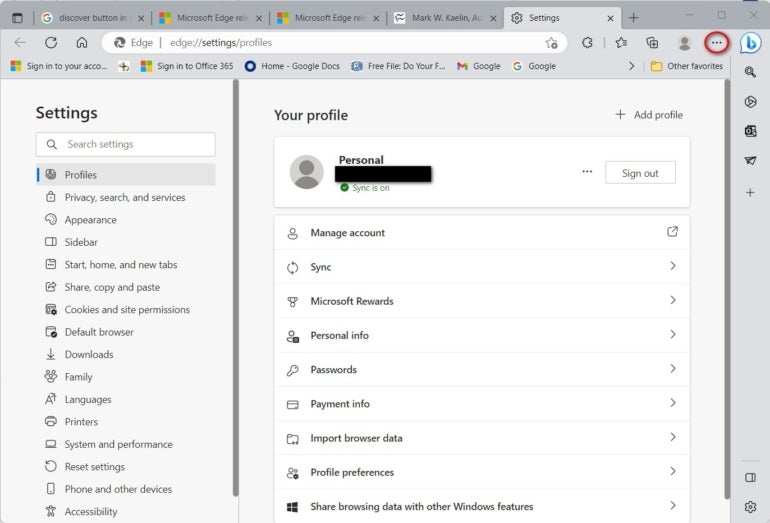
To hide the Discover button and its access to the Copilot feature in Microsoft Edge, you first must open the Settings window. With Edge open to any web page, click the ellipsis in the upper right-hand corner to open the context menu and select Settings from the list of items (Figure B).

Figure B

A broad look at Microsoft Edge settings and where to change Discover button settings.
The Discover button and Copilot can be hidden with changes to user settings.

From the left-hand navigation bar, select the Sidebar item (Figure C). Under the App and notification settings section on this page, select and click the Discover item.

Figure C

A closer look at the App and notification settings in Microsoft Edge settings.
App and notification settings give you access to the Discover feature.

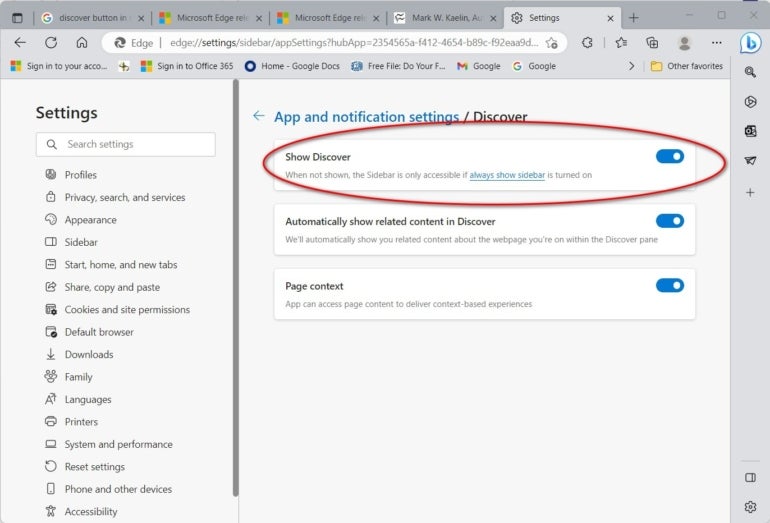
With the Discover item clicked, you will see a new settings page appear (Figure D). From here, you can select the appropriate toggle button to either hide or display the Discover button on the sidebar in Edge; displaying the button is the default setting.

Figure D

The toggle bar in Microsoft Edge settings where users can turn on or turn off their view of the Discover button.
Users have the option to hide or display this feature with the Show Discover toggle bar. Image: Mark W. Kaelin

You may also use this setting page to toggle on or off the ability to show related content or access systems that provide content-based experiences.

With Discover toggled off, the button will be removed and hidden from view the next time you open Microsoft Edge.

Should you hide the Discover button and Copilot in Microsoft Edge?

The decision about whether to hide the Discover button and Copilot from Microsoft Edge is up to you. After an initial learning curve, the Copilot feature of Microsoft Edge could prove to be more useful than original impressions may suggest.

Microsoft Weekly Newsletter

Be your company's Microsoft insider by reading these Windows and Office tips, tricks, and cheat sheets.

Delivered Mondays and Wednesdays Sign up today

GitHub Unveils Revamped Search Engine After 18 Months

The developers’ favourite code hosting platform GitHub has (finally!) released its updated code search engine. Two years after GitHub laid out plans to improve code search today their new code search and code view are generally available to all users on GitHub.com.

In a blog post the company stated, the goal is to enable developers to quickly find critical information scattered across their codebase, put that information into context, to increase productivity. Furthermore, GitHub claims it is infusing intelligence into every aspect of software development.

The updated version has an entirely redesigned search interface, with suggestions, completions, and the ability to slice and dice the results. Second, the new code search engine is completely from scratch that understands code, giving priority to the most relevant results.

Use cases

The updated code search feature is a guide for fixing bugs. Developers can use it to quickly pinpoint the cause of a bug or error message across all of an organisation’s code at once. Similarly, searching for specific configuration files or security vulnerabilities is made easier with the new tool. Usually, an error message pops up and that’s it. With the new feature the result is a constant called queryErrorIsNothing which contains the error string.

In another example, the search tool can be used to find all YAML configuration files containing the word “memory,” enabling developers to quickly identify the Kubernetes configuration files for their team’s services and determine how much memory they have. This information can then be shared with the infrastructure team for further analysis and discussion.

Lastly, finding a security vulnerability is made easy with the update, too. For instance, React users are familiar with the prop dangerouslySetInnerHTML. It allows you to directly inject HTML into an element using a string. But it can be a vulnerability if the string being injected into the DOM is untrusted.

Earlier this year, GitHub announced BlackBird, a new code search engine that can function at the GitHub scale. Written in Rust, it creates and incrementally maintains a code search index shared by Git blob object ID. In a blog post, GitHub engineer Timothy Clem noted that it currently provides access to almost 45 million GitHub repositories.

Read more: Rust Turns GitHub’s Long-standing Problem to Dust

The post GitHub Unveils Revamped Search Engine After 18 Months appeared first on Analytics India Magazine.

Passkeys are More Secure, But There’s a Bigger Threat…

Last week, Google jumped on the passcode bandwagon, claiming that it was ‘the beginning of the end of the password’. While this statement holds some ground, passkeys also represent the beginning of the end for user control.

The passwords we use today are platform-agnostic, generally secure, and are part of a wider ecosystem. Passkeys, on the other hand, are vendor-specific, and while they may be more secure than passwords, they skip out an important part of cybersecurity — decentralisation. What’s more, the biggest proponents of passkeys are companies such as Microsoft, Google, and Apple that benefit the most from diluting user control.

Passkeys Explained

Passkeys are a new form of authentication first proposed by the FIDO (Fast Identity Online) Alliance. This new standard aims to replace passwords, claiming that the old way is easy to phish and harvest, and that they are a ‘hassle to use’. By adopting the passkey standard, websites and service providers can allow for secure password less sign-ins to their services.

The system works by using public-key cryptography to authenticate access to websites. In this method, a server on the website saves a ‘public key’, which is one part of the puzzle. The other part, a private key, stored on a users’ device, functions as a method to prove that the user is the one accessing the website.

Imagine there is a secret club, and the bouncer has a well-known pass phrase (public key). Each person who comes up to the door will be assigned a secret completion to the pass phrase, with access only being granted if the bouncer’s phrase and the customer’s phrase matches up. This is more secure than the club having just a passphrase which is passed around publicly.

Under FIDO’s standards, the passkey for every person’s credentials will be saved on their device, and can be accessed through authentication either by biometrics or a second factor (2FA). Reportedly, these passkeys will also be importable and exportable, cross-device, and compatible across passkey managers in the future.

While this might seem on the surface to be a more secure and easier alternative option to passwords, it is a tug of war between different facets of cybersecurity. Solutions to make passwords stronger, such as multi-factor authentication, or to make them redundant, such as OAuth and password managers, already exist and are widely deployed. While these options keep the power in the users’ hands, passkeys, on the other hand, give more power to the companies in charge of them.

Centralisation of authority

When taking a look at the board level members of the FIDO alliance, we can find tech giants such as Amazon, Apple, Google, Meta and Microsoft, as well as financial institutions like VISA, Bank of America, and AmEx. The list goes on, but the trend is clear — these are all companies who wish to enforce better security on the Internet.

However, in the pursuit of security, these parties seem wholly satisfied to gloss over centralisation. The idea of putting all the eggs in one basket is far from secure, especially when the basket is financially motivated to lock-in their customers.

Let’s take Apple’s deployment of passkeys for example. To activate passkeys on Apple devices, users are required to opt-in to both the Keychain service and iCloud to use the feature. Apart from iCloud’s bevy of security vulnerabilities, the service also removes transparency on how the passkey is being handled. In fact, even after a year of release, the passkeys are not exportable, preventing them from being moved around to other devices where users would wish to use the passkeys.

Passkeys allow for another venue for companies to further lock customers into their services on the pretext of security and ease-of-use. This move dilutes user power while multiplying the problem of centralised identity providers. Identity providers are companies like Google or Facebook that offer ‘Sign-in with Google’ or ‘Connect with Facebook’ as a sign-in option.

If passkeys become the sole sign-in option in the future, the idea of users having control over their own passwords fades away, replaced with centralised control by big techs. Passkeys also intrude upon the concept of self-sovereign identity, wherein individuals are given control over their information.

With measures like passkeys, users continue to give more power to centralised identity providers, handing over more of their data and agency to corporations. While decentralised identity solutions do exist, the momentum carried by FIDO and its members will prove very difficult to break, shepherding the Internet further away from its open source roots.

The post Passkeys are More Secure, But There’s a Bigger Threat… appeared first on Analytics India Magazine.

Microsoft Work Trend Index: AI will work alongside employees

Conceptual technology illustration of artificial intelligence and edge computing.
Image: kras99/Adobe Stock

Will generative artificial intelligence replace jobs or enhance them? That’s the question Microsoft set out to answer in its Work Trend Index report. For this report, Edelman Data x Intelligence, commissioned by Microsoft, surveyed 31,000 full-time employed or self-employed people in 31 countries and analyzed trillions of Microsoft 365 productivity signals across organizations, as well as labor trends from the LinkedIn Economic Graph. Data was gathered between February 1, 2023 and March 14, 2023. Survey results indicated that jobs will change but not necessarily be replaced.

The tech giant also announced its own AI-powered product, Microsoft 365 Copilot, will be available in an invitation-only paid preview program with a gradual rollout starting in May. The new version of Copilot includes some expanded capabilities geared toward enterprise, such as collaboration and idea generation in Whiteboard; the image generator DALL-E; and generative AI assistants for Outlook, OneNote and Viva Learning.

Jump to:

  • Employers could support, not lighten, their workforce with AI
  • AI could open up more focus time for workers
  • How business leaders can prepare for using AI

Employers could support, not lighten, their workforce with AI

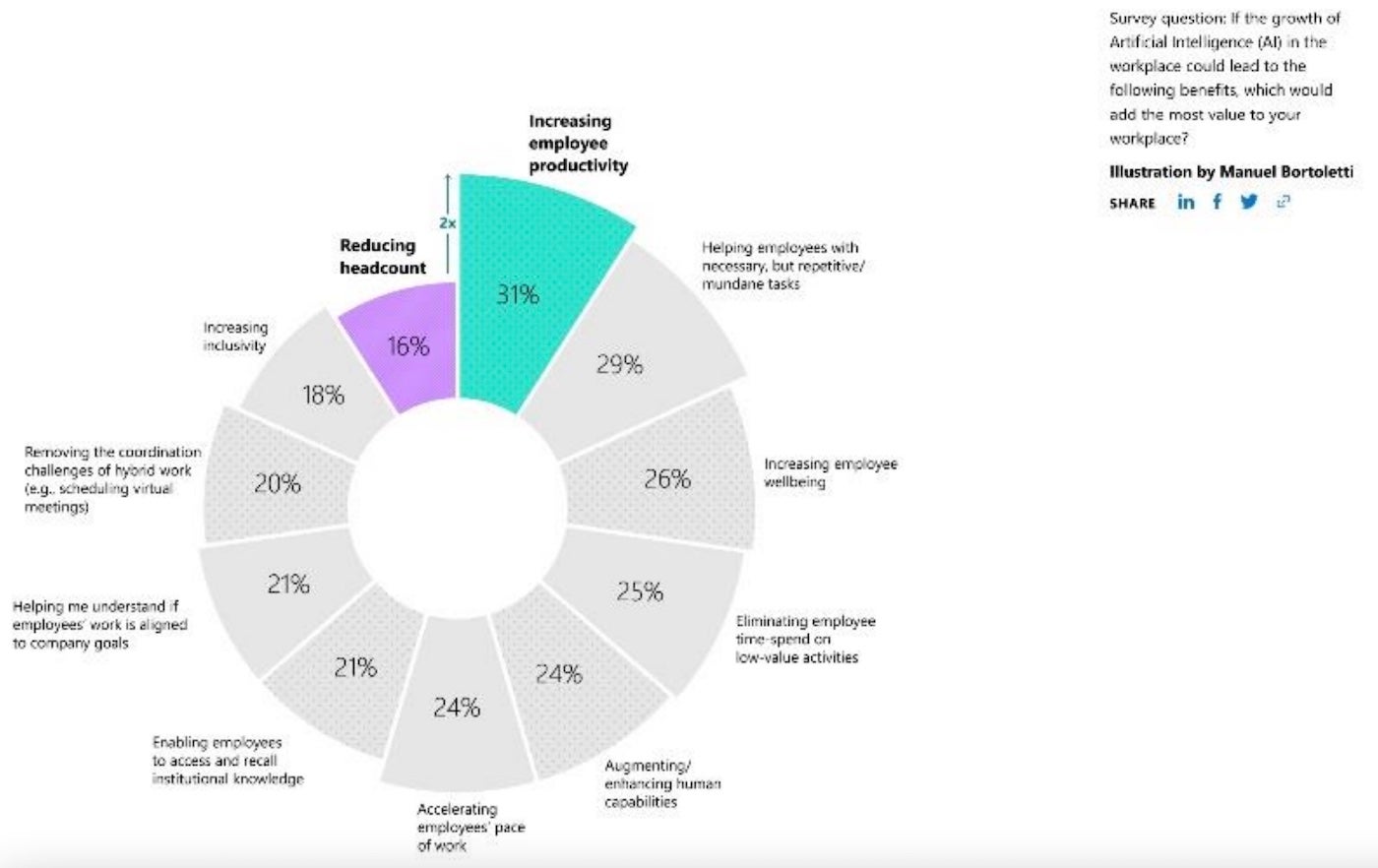
The Work Trend Index report found business leaders are more likely to want to use AI to increase employee productivity (31%) rather than to reduce head count (16%) (Figure A). Other popular uses include helping employees with necessary but repetitive or mundane tasks (29%) and increasing employee well-being (26%).

Figure A

Survey results show workers believe AI would bring value to the workplace in these ways.
Survey results show workers believe AI would bring value to the workplace in these ways. Image: Microsoft

AI is a digital tool, and like any tool, it will take time for people to learn how to use it optimally. As of May 2023, 70% of employees surveyed said they would use generative AI to lighten, not fully automate, their workloads. Meanwhile, 49% of the people surveyed are worried AI will completely replace their jobs.

Microsoft found 87% of people in creative roles would like to use AI for the creative aspects of their jobs, but there are some caveats here. This percentage includes only people who are “extremely” familiar with AI already. In addition, creative fields were defined as product development, creative/design, or marketing and public relations.

AI could open up more focus time for workers

Microsoft seems confident in AI’s ability to relieve pressure at work. However, some of the problems Microsoft wants to relieve with its new products and services come from the proliferation of communication itself. Of the people surveyed, 68% of workers say they don’t have enough uninterrupted focus time. From data pulled from Microsoft 365 apps, Microsoft found the average employee spends 57% of their time in meetings, email or chat.

“Inefficient meetings” are the top culprit for disrupting productivity in workers’ day-to-day roles. The next most common productivity breakers include “lacking clear goals,” “having too many meetings” and “feeling uninspired.”

Microsoft’s proposed solution is “AI-powered intelligent meeting recaps, transcripts and recordings” so employees can fit in meetings on their own time and in the formats they prefer.

SEE: Investors love generative AI, while organizations are “scrambling” to figure out how to use it.

How business leaders can prepare for using AI

Microsoft asked workers to look ahead to an imagined 2030 in which AI has proliferated throughout the workforce. When asked what AI-driven workplace changes they would value most, many responded with “producing high-quality work in half the time” (33%), understanding the most valuable ways to spend their time (26%) and energy (25%), and avoiding unnecessary or irrelevant information (23%).

Shaping what the future of work looks like with AI will require careful decision-making and a balance between human and machine strengths. Like any digital transformation, it will be a process of learning which changes are practical and which are not. Microsoft recommends organizations establish guardrails for employees’ interactions with AI, deploy AI where people need the most relief, and delegate carefully to be sure AI is applied to specific disciplines, processes and workflows under specific team leaders.

SEE: Artificial Intelligence Ethics Policy (TechRepublic Premium)

New hiring criteria for businesses using AI

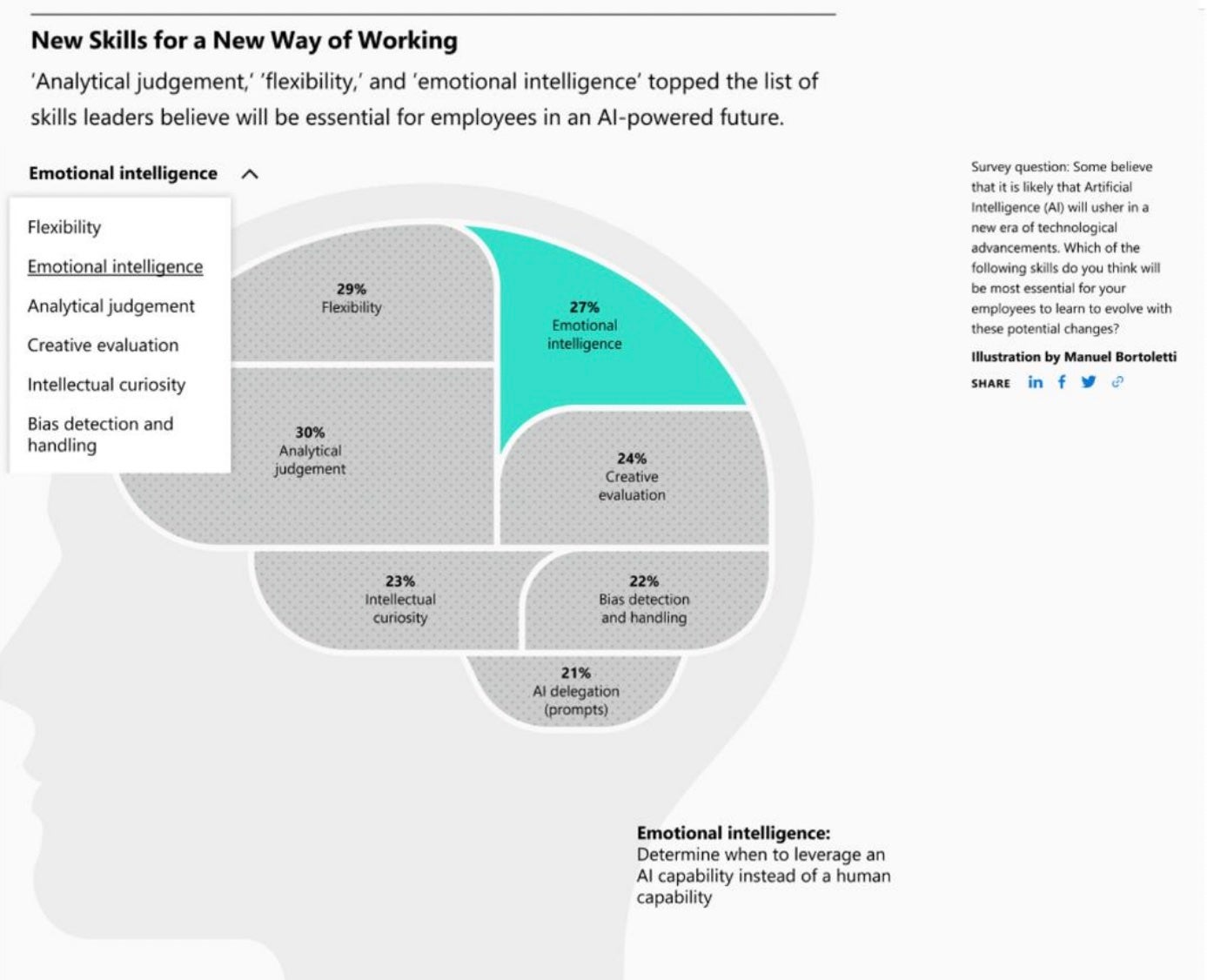
If a business uses AI, relevant AI skills will likely become part of new hiring criteria, Microsoft said – and those skills aren’t all technical. Employers said that, if AI were to “usher in a new era of technological advancements,” employees will need to learn more analytical judgment (30%), flexibility (29%) and emotional intelligence (27%) (Figure B).

Figure B

Employees will need these skills to work alongside AI.
Employees will need these skills to work alongside AI. Image: Microsoft

“We’re in the next phase of change with the introduction of generative AI, and it’s already starting to reshape the labor market,” said Karin Kimbrough, chief economist at LinkedIn, in the Work Trend Index. “While it’s still early days, this shift will expand opportunities, create new roles, and augment productivity.”

Innovation Insider Newsletter

Catch up on the latest tech innovations that are changing the world, including IoT, 5G, the latest about phones, security, smart cities, AI, robotics, and more.

Delivered Tuesdays and Fridays Sign up today

Google I/O 2023 is tomorrow; here’s what we’re expecting

Google I/O 2023 is tomorrow; here’s what we’re expecting

A whole bunch of new hardware, coupled with a lot of AI and the best look yet at Android 14

Brian Heater @bheater / 8 hours

Update: Google just went ahead and announced the Pixel Fold over on Twitter. The company gave a good look at the upcoming foldable smartphone from just about every angle. That means all three of the expected pieces of hardware – including the Pixel 7a and Pixel Tablet – have officially been announced.

There I days I think Google wants all of its announcements leaked out ahead of time. I’m not mad, so much as slight annoyed, crammed into Delta economy seat, writing about the news I’m ostensibly flying across the country to cover. Anyway, at least one of the more recent leaks comes courtesy of Amazon. Someone pulled the wrong lever somewhere, and tossed up the Pixel Tablet product page.

So, a quick rundown there: Same Tensor G2 found in the rest of tomorrow’s devices (following the Pixel 7’s launch)m coupled with 8GB of RAM and either 128 or 256GB of storage. Screen is 11 inches, with pen support. The front- and rear-facing cameras are megapixel, and the system ships with the dock, which looks like it effectively turns it into one, big Nest Hube-style product. Expected launch is June 20.

Another entirely different leak also arrived recently, by way of internal documents. In a bit of a refreshing change, these ones are focused on the AI side of things, which we anticipate will monopolize a second keynote immediately following the first.

PaLM 2, the latest version of the company’s LLM (large language model) is set to take center stage. Codenamed “Unified Language Model,” the system can generate content in 100 different languages, and the company has reportedly used it to analyze writing, coding and math tests. A new version Bard and AI-based upgrades to search are said to also be on their way. Also on the list is a “Workspace AI collaborator,” designed to leverage its models for things like Google Docs and Gmail.

Google’s annual developer conference, Google I/O, returns to Mountain View’s Shoreline Amphitheater next week, and for the first time in four years, we’ll be returning along with it. The kickoff keynote is always jammed-packed full of information, debuting all of the different software projects the company has been working on for the past year.

The event, which kicks off May 10 at 10 AM PT will be a big showcase for everything that’s on the way for Android 14. The company has, arguably, missed a step when it comes to the current generative AI land rush — hell, who could have predicted after all of these years that Bing would finally have a moment?

CEO Sundar Pichai will no doubt be making the case that the company continues to lead the way in the world of artificial intelligence. There’s always been a fair bit of the stuff at the event largely focused on practical real-world applications like mobile imaging and dealing with customer service. This year, however, I’d say it’s safe to say the company is going to go bonkers with the stuff.

Hardware, meanwhile, is always a bit of a crapshoot at developer conferences. But after an off-year for the industry at large, a deluge of rumors are aligning, pointing to what’s likely to be an unusually consumer electronics-focused keynote. Given the fact that the last bit is my focus at TechCrunch, I’m going to start the list there.

The Pixel 7a is about as sure as bets get. Google has settled into a comfortable release cadence: releasing a flagship in the fall, followed by a budget device in the spring. The former is designed to be an ideal showcase for its latest mobile operating system and first-party silicon, while the latter makes some compromises for price, while maintaining as many of its predecessors as possible.

How to show excitement without shouting? Asking for a friend

Coming to @Flipkart on 11th May. pic.twitter.com/il6GUx3MmR

— Google India (@GoogleIndia) May 2, 2023

It’s a good system that works, and Google’s newly focused mobile hardware team has created some surprisingly good devices at extremely reasonable prices. Never one to be outdone by the deluge of rumors, the company went ahead and announced via Twitter its next device is due out on May 11 — the day after Google I/O and, perhaps not coincidentally, my birthday. It was Google India that specifically made the announcement — perhaps not surprising, as the company is likely to aggressively target the world’s number one smartphone market with the product. The image points to a very similar design as the 7 — not really a surprise as these things go. Though it does stop short of actually mentioning the name, as it’s done in the past.

Basically expect the 7 with cheaper materials. Rumors point to a 6.1-inch device featuring a 90Hz refresh rate, coupled with a 64-megapixel rear camera. The 7’s Tensor G2 returns for a command performance, likely bringing with it many of the software features it enabled the first time around.

Image Credits: Google

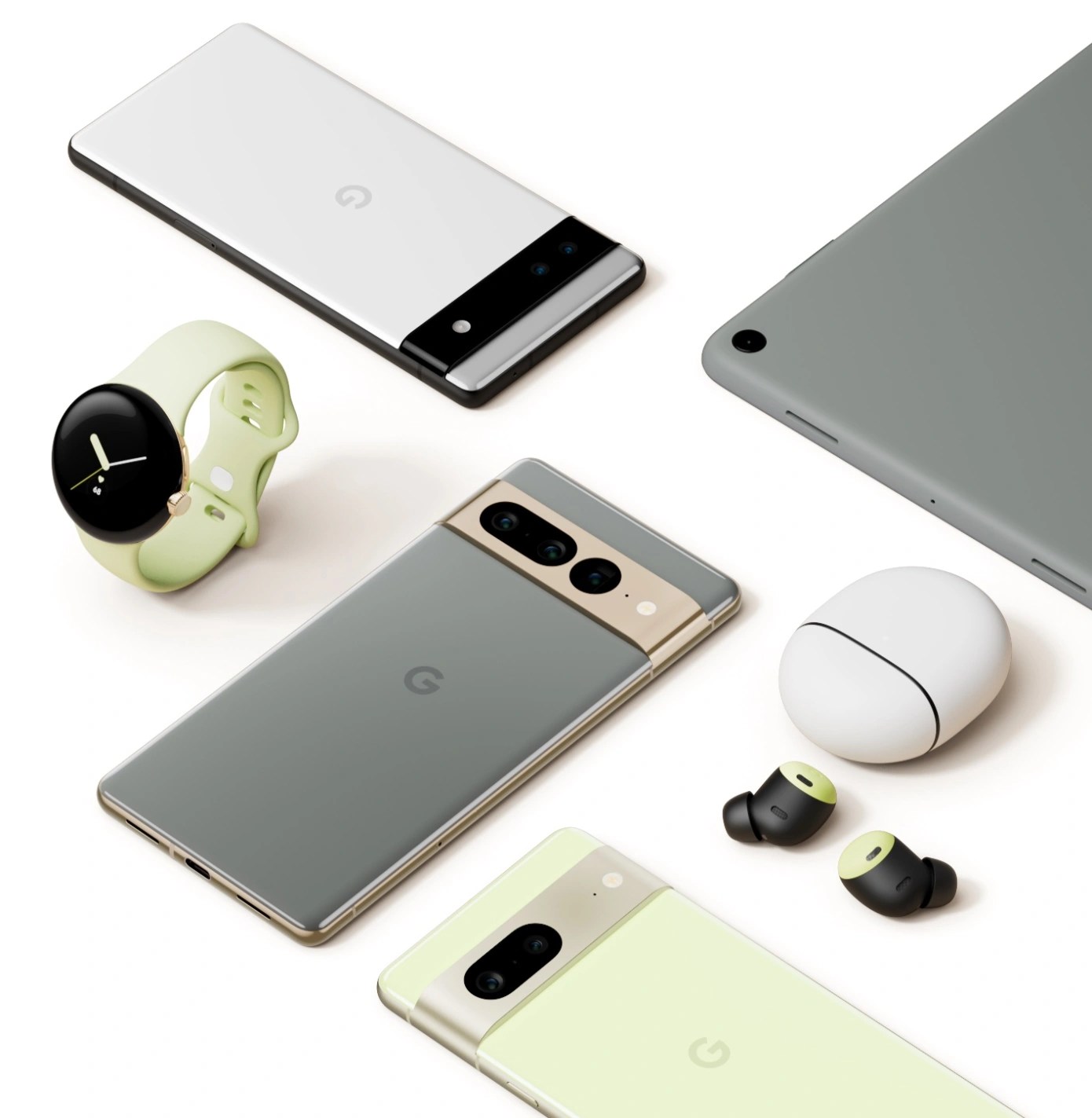
We know for sure that a Pixel Tablet is coming…at some point. Google confirmed the device’s existence at last year’s event, providing a broad 2023 release date, along with a render alongside the rest of the current Pixel lineup. Effectively there are two points this year Google is likely to officially announce the thing: next week or September/October. I would be shocked if the company’s long-awaited (?) reentry into the category doesn’t, at the very least, get a bit of stage time. As a category, the Android tablet has been very hit or miss over the years — presumably/hopefully the company’s got a unique spin here. I would be surprised if Google jumped back into the space without some sort of novel angle.

The leaks point to a design that would effectively turn the system into one giant Nest dock. It’s not entirely original, as Amazon tried something similar with its Fire tablets, but it would certainly buck the iPad model, which is so pervasive in the industry. Other rumors include the aforementioned Tensor G2, coupled with 8GB of RAM.

Here’s your wildcard, folks: the Pixel Fold. Google has seemingly been laying the groundwork for its own foldable for years. Here’s what I wrote a couple of weeks ago:

Some important background here. First, Google announced foldable screen support for Android back in 2018. Obviously, Samsung was both the big partner and recipient in those days, and Google wanted to make Android development as frictionless as possible for other OEMs in exploring the form factor.

The following year, Google foldable patents surfaced. Now, we’re all adults here, who implicitly understand that patents don’t mean a company is working on a product. That said, it’s another key data point in this story. In the intervening years, foldables have begun gathering steam, even outside of the Samsung orbit. I was genuinely amazed by how many different models there were populating the halls of MWC back in March.

The leaked renders point to a form factor that is more Samsung Galaxy Z Fold than Samsung Galaxy Z Flip. It also looks like it shares some common design DNA with Oppo’s recently foldable, which is frankly the right direction. EV Leaks says the foldable is half an inch thick when folded and 0.2 inches unfolded, weight in at 283 grams.

As evidenced by our trip to MWC back in February, foldables are no longer fringe devices. It’s true that they’re still cost-prohibitive for most, but it’s getting to the point soon where nearly ever Android manufacturer will have their take on the category. So why shouldn’t Google?

Other less likely hardware rumors include a Google/Nest AirTag competitor (the company announced yesterday that it’s working with Apple to create a standard for the category), new Pixel Buds and a Pixel Watch 2. I’d say all are unlikely — that last one in particular. We didn’t get much in terms of Nest products last year, but so far not much is forthcoming in terms of rumors for home products.

Google's Android booth at MWC 2023 in Barcelona.

Image Credits: Brian Heater

Android is always a tentpole of Google I/O for obvious reasons. We’ve already caught some major glimpses of the mobile operating system, by way of beta releases. As Frederic noted in March, “So far, most of the features Google has talked about have also been developer-centric, with only a few user-facing features exposed to far. That also holds true for this second preview, which mostly focuses on added new security and privacy features.”

The operating system, which is apparently named Upside Down Cake internally, is likely set for a summer release in late-July or August. At the top of the list of potential features are a boost to battery life (can always use one of those), additional accessibility features and privacy/security features, which include blocking users from installing ancient apps over malware concerns.

AI is going to be everywhere. Expect generative AI (Bard) in particular to make appearances in virtually every existing piece of Google consumer software, following the lead of Gmail and Docs. Search and the Chrome browser are prime targets here.

A preview of a new Wear OS seems likely. I don’t anticipate a ton of news on the AR/VR side of things, but I would also be surprised if it doesn’t at least get a nod, given what Apple reportedly has in the works for June.

The keynote kicks off at 10 AM PT on May 10. As ever, TechCrunch will be bringing you the news as it breaks.

Read more about Google I/O 2023 on TechCrunch

Researchers Combine Brain-Like Neurons and FPTT For Faster Neural Nets

A new Nature Machine Intelligence study demonstrated a new approach to training spiking neural networks on a large scale. By combining brain-like neurons with Forward-Propagation Through Time (FPTT), researchers were able to achieve both speed and energy efficiency in their neural networks. The potential applications of this technology are vast, ranging from wearable AI to speech recognition and augmented reality (AR). Furthermore, chips are being developed that can run these programs at very low power.

The research by Bojian Yin and Sander Bohté from the HBP partner Dutch National Research Institute for Mathematics and Computer Science (CWI) is a significant step towards AI. It can be used from speech recognition to local surveillance.

Spiking neural networks closely mimic the exchange of electrical pulses, but only sparingly. These networks, implemented in chips known as neuromorphic hardware, bring AI programs directly to users’ devices while maintaining privacy. This is particularly relevant in speech recognition for toys and appliances, as well as local surveillance. The algorithm enables learning directly from data, allowing for much larger spiking neural networks to be created.

According to Bohté, neural networks could be trained with up to 10,000 neurons but now, the same can be done for networks with more than 6 million neurons. With this capability networks can be trained like the SPYv4.

The way these networks communicate poses serious challenges. “The algorithms needed for this require a lot of computer memory, allowing us to only train small network models mostly for smaller tasks. This holds back many practical AI applications so far,” said Bohté.

Yin said the team wanted to develop something closer to the way our brain learns. He made an analogy: when you make a mistake during a driving lesson, you immediately learn from it and adjust your behavior on the spot.

To replicate this process, the researchers developed a neural net in which each individual neuron receives a constantly updated stream of information. This allows the network to adapt and learn in real time, rather than having to store and process all previous information. This approach is a major upgrade from current methods, which require significant computing power and memory.

By enabling the network to learn and adapt on the fly, the team wants to make machine learning more efficient and energy-efficient, with potential applications in a variety of fields from healthcare to transportation.

The post Researchers Combine Brain-Like Neurons and FPTT For Faster Neural Nets appeared first on Analytics India Magazine.
How to use Dream by WOMBO to generate artwork in any style

sample-image-16-9-red.jpg

Among the different websites designed to create images from your text descriptions, one worth trying is Dream by WOMBO. The free basic version of this tool conjures up a single image. You can even choose a specific style of art, such as realistic, mystical, vibrant, dark fantasy, and a host of others. A paid tier concocts as many as four images, dispenses with ads, and offers quicker generation times. Dream by WOMBO is also available as an iOS app and an Android app, so you can use it on your mobile device. Here's how it works.

How to use: Midjourney | Bing Image Creator | DALL-E 2 | Stable Diffusion

Browse to the Dream by WOMBO website. Click the Start Creating button to dive in for free. Otherwise, click the funky yellow circle icon at the top to set up a paid account for $9.99 a month, $89.99 a year, or $169.99 for lifetime. A free three-day trial also lets you try before you buy. Further, you can sign up for an ad-supported account without having to shell out money for a subscription. Plus, join Dream's Discord channel to chat with other users, share artwork, and pick up ideas for effective prompts.

Also: How to use Craiyon AI (formerly known as DALL-E mini)

How to get started using Dream by WOMBO

How to use the mobile app

Beyond trying Dream by WOMBO at the website, you can use it on your mobile device. Download the app for iOS/iPadOS or Android. Sign into your account if you've created one. The home screen displays artwork from other people to serve as inspiration. To generate your own image, tap the plus icon. At the next screen, choose the size for your image. Type a description in the prompt field or tap the option for Start with an image to upload an existing image for modification. Choose an art style. Then tap Create.

In response, the app generates one or four images depending on your account type. From there, choose a specific image and you can regenerate it to see a new version, create variations of it, or edit it with text. When done, tap Finalize and you're able to share it with other people or apps.

OpenAI’s new tool attempts to explain language models’ behaviors

OpenAI’s new tool attempts to explain language models’ behaviors Kyle Wiggers 9 hours

It’s often said that large language models (LLMs) along the lines of OpenAI’s ChatGPT are a black box, and certainly, there’s some truth to that. Even for data scientists, it’s difficult to know why, always, a model responds in the way it does, like inventing facts out of whole cloth.

In an effort to peel back the layers of LLMs, OpenAI is developing a tool to automatically identify which parts of an LLM are responsible for which of its behaviors. The engineers behind it stress that it’s in the early stages, but the code to run it is available in open source on GitHub as of this morning.

“We’re trying to [develop ways to] anticipate what the problems with an AI system will be,” William Saunders, the interpretability team manager at OpenAI, told TechCrunch in a phone interview. “We want to really be able to know that we can trust what the model is doing and the answer that it produces.”

To that end, OpenAI’s tool uses a language model (ironically) to figure out the functions of the components of other, architecturally simpler LLMs — specifically OpenAI’s own GPT-2.

OpenAI explainability

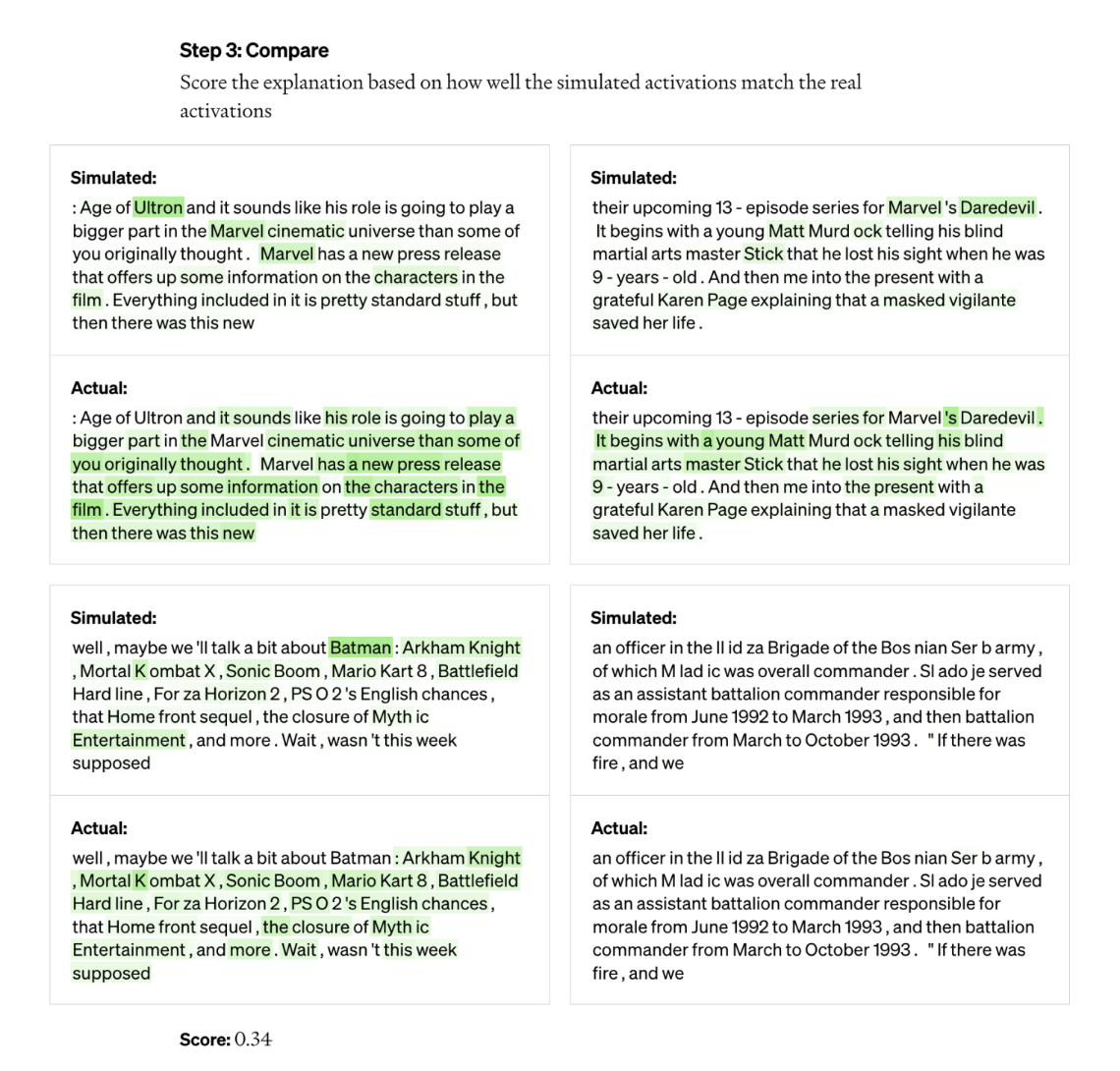
OpenAI’s tool attempts to simulate the behaviors of neurons in an LLM.

How? First, a quick explainer on LLMs for background. Like the brain, they’re made up of “neurons,” which observe some specific pattern in text to influence what the overall model “says” next. For example, given a prompt about superheros (e.g. “Which superheros have the most useful superpowers?”), a “Marvel superhero neuron” might boost the probability the model names specific superheroes from Marvel movies.

OpenAI’s tool exploits this setup to break models down into their individual pieces. First, the tool runs text sequences through the model being evaluated and waits for cases where a particular neuron “activates” frequently. Next, it “shows” GPT-4, OpenAI’s latest text-generating AI model, these highly active neurons and has GPT-4 generate an explanation. To determine how accurate the explanation is, the tool provides GPT-4 with text sequences and has it predict, or simulate, how the neuron would behave. In then compares the behavior of the simulated neuron with the behavior of the actual neuron.

“Using this methodology, we can basically, for every single neuron, come up with some kind of preliminary natural language explanation for what it’s doing and also have a score for how how well that explanation matches the actual behavior,” Jeff Wu, who leads the scalable alignment team at OpenAI, said. “We’re using GPT-4 as part of the process to produce explanations of what a neuron is looking for and then score how well those explanations match the reality of what it’s doing.”

The researchers were able to generate explanations for all 307,200 neurons in GPT-2, which they compiled in a data set that’s been released alongside the tool code.

Tools like this could one day be used to improve an LLM’s performance, the researchers say — for example to cut down on bias or toxicity. But they acknowledge that it has a long way to go before it’s genuinely useful. The tool was confident in its explanations for about 1,000 of those neurons, a small fraction of the total.

A cynical person might argue, too, that the tool is essentially an advertisement for GPT-4, given that it requires GPT-4 to work. Other LLM interpretability tools are less dependent on commercial APIs, like DeepMind’s Tracr, a compiler that translates programs into neural network models.

Wu said that isn’t the case — the fact the tool uses GPT-4 is merely “incidental” — and, on the contrary, shows GPT-4’s weaknesses in this area. He also said it wasn’t created with commercial applications in mind and, in theory, could be adapted to use LLMs besides GPT-4.

OpenAI explainability

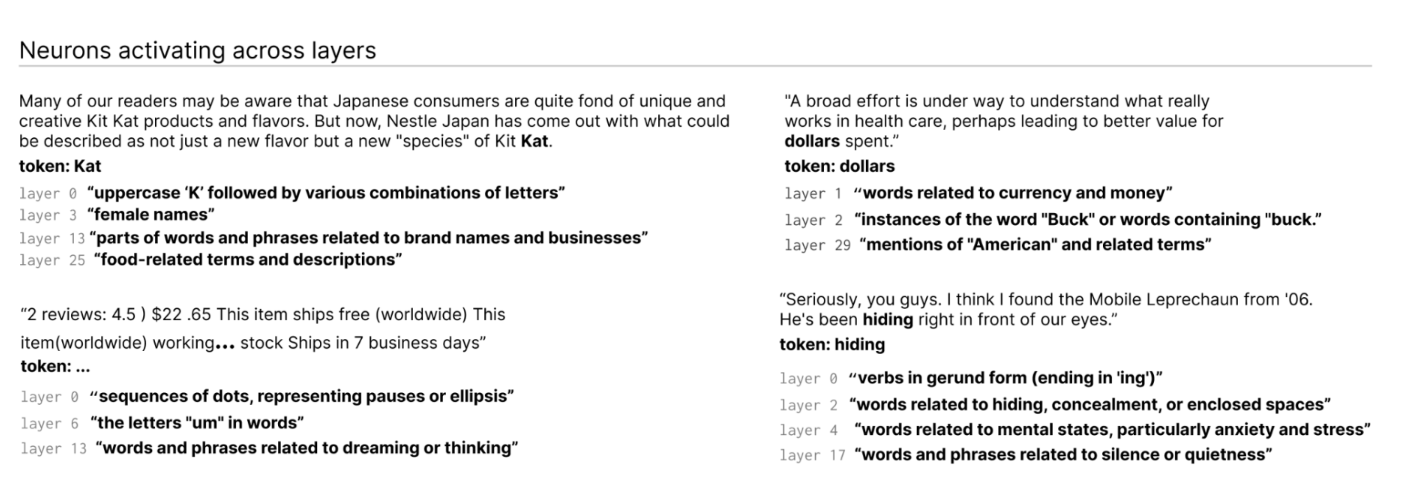
The tool identifies neurons activating across layers in the LLM.

“Most of the explanations score quite poorly or don’t explain that much of the behavior of the actual neuron,” Wu said. “A lot of the neurons, for example, active in a way where it’s very hard to tell what’s going on — like they activate on five or six different things, but there’s no discernible pattern. Sometimes there is a discernible pattern, but GPT-4 is unable to find it.”

That’s to say nothing of more complex, newer and larger models, or models that can browse the web for information. But on that second point, Wu believes that web browsing wouldn’t change the tool’s underlying mechanisms much. It could simply be tweaked, he says, to figure out why neurons decide to make certain search engine queries or access particular websites.

“We hope that this will open up a promising avenue to address interpretability in an automated way that others can build on and contribute to,” Wu said. “The hope is that we really actually have good explanations of not just not just what neurons are responding to but overall, the behavior of these models — what kinds of circuits they’re computing and how certain neurons affect other neurons.”

Metaverse Takes a Detour to Auto Industry, Leaving Big Tech Behind

Disney has added to the wave of tech industry layoffs by cutting its 50-person metaverse team as part of a company restructuring effort, which will result in 7,000 job cuts in the coming months. This move follows Meta’s announcement of 10,000 job cuts in its Metaverse division after suffering a $13.7 billion loss in 2022. Additionally, Microsoft shut down its industrial metaverse team resulting in 100 layoffs, while Apple has put its plans for augmented reality glasses on hold.

Despite waning interest from major tech industry players, the metaverse is finding new and exciting opportunities in unexpected places like the automobile sector which is taking steps towards incorporating the metaverse into their industries, signalling a new era of innovation and creativity.

The Rise of the Automotive Metaverse

The global market for automotive products within the metaverse is anticipated to exceed $116.5 billion by 2030, with a compounded annual growth rate of more than 41.46%.

Pandemic-related disruptions in the supply chain have made it difficult for prospective buyers to find their desired vehicles. As a solution to this problem, car manufacturers are adopting immersive solutions like AR and 3-D visuals to assist customers in finding their dream cars.

Additionally, some companies are establishing virtual worlds, such as Acura’s virtual showroom in Decentraland and Skoda’s Skodaverse, to captivate their target audience by providing interactive experiences, like receiving non-fungible tokens of cars.

Read more: Meta’s Dreams Have Become A Metaverse Nightmare

The attempt to connect virtual and physical worlds is expected to become more immersive with advancements in extended reality (XR) technology and haptic devices that simulate touch. This could allow consumers to have a highly realistic experience with virtual replicas of vehicles, including opening doors, feeling seats, and accelerating. Initially, these virtual experiences may be limited to dealerships and trade shows because of the high cost of the required devices. However, as consumers increasingly adopt XR devices, such experiences may become more readily available at home.

Original equipment manufacturers (OEMs) can create unique customer experiences like virtual launch events or car races. Echoing along similar lines, Amit Lakhotia, founder and CEO of auto tech brand Park+, shared his views with AIM and said, “The metaverse presents opportunities for auto OEMs to engage with customers through immersive experiences such as virtual test drives and modifications”. He added that it also enables them to set up virtual showrooms and dealerships to display vehicles, reducing the need for physical assets. Additionally, connecting with customers directly through the metaverse may help reduce marketing and advertising costs.

“Although Metaverse is sort of stagnated, it will eventually reach its full potential. However, customer experience is one area that could benefit from the metaverse, allowing people to explore products virtually without having to visit a physical store,” Padmashree Shagrithaya, Executive Vice President and MD – Insights and Data GBL, at Capgemini, told AIM.

Some car manufacturers are using metaverse tools to create driver assistance applications. Mercedes-Benz offers heads-up-display technology that shows information on the car’s windshield. Holoride is also creating immersive entertainment packages for passengers, including a VR headset and game that matches the motion of the vehicle. Audi customers can currently access this package.

Digital Twins: The New Car Factories

OEMs are already using digital twins of factories. Several leading car companies including BMW, Mercedes Benz, Geely Lotus, Jaguar Land Rover, Rimac, and BYD at the NVIDIA GTC conference announced work on digital twins programs to help lower these costs.

Although digital twins are still in their early stages of development, they have been previously used for robot simulations in specialised tools.

Mercedes has started using Nvidia’s Omniverse Enterprise software platform to design, plan and optimise its factories. The platform will be used specifically to manufacture its new electric vehicle platform at its plant in Rastatt, Germany.

With Omniverse, Mercedes can build a digital twin of the factory and simulate new production processes without disrupting existing vehicle production. This will enable Mercedes to quickly react to supply chain disruptions and reconfigure the assembly line as needed. Nvidia has also been working with Mercedes to test out autonomous vehicle technology in simulation. Automakers can use Drive SIM, NVIDIA’s simulation platform, to collaborate on vehicle design in virtual reality.

However, it is too early to tell if these big bets on the automobile metaverse are going to be a success as there comes its fair share of disadvantages like expensive hardware, privacy and ecological concerns, among others. Only time will tell whether the industry can navigate these challenges or give up like the rest.

Rest more: Why the Old-School Gaming Industry is Averse to the Metaverse

The post Metaverse Takes a Detour to Auto Industry, Leaving Big Tech Behind appeared first on Analytics India Magazine.