Google launches ML Hub to help AI developers train and deploy their models Frederic Lardinois @fredericl / 9 hours
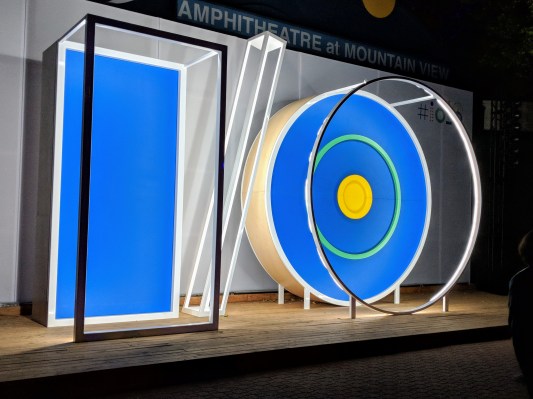
At its I/O developers conference, Google today announced its new ML Hub, a one-stop destination for developers who want to get more guidance on how to train and deploy their ML models, no matter whether they are in the early stages of their AI career or seasoned professionals.
“We talk about this concept of democratizing machine learning and really making it more accessible, so something that we’re pretty excited about is Google has a bit of a sprawling set of open-source technologies that cover many different assets […] We want to make it much, much easier to understand how they fit together and actually help folks get up and running,” said Alex Spinelli, Google’s VP of product management for machine learning. The idea here, he said, is to give developers a landing page where they can basically look at what kind of model they want to generate, based on the data they have, and then get step-by-step directions for how to think about deploying those models.
The company is launching this platform with an initial set of toolkits that covers a set of common use cases, with plans to regularly update these and launch new ones in a steady cadence. Some of the early toolkits, for example, can help developers build text classifiers using Keras or take large language models and run them on Android with Keras and TensorFlow Lite.
As Spinelli rightly noted, generative AI may be getting all of the hype right now, but machine learning is a large space that covers a wide range of types of models and technology.
“There’s amazing things going on in computer vision and facial recognition and recommendation systems and relevance ranking of content and those kinds of things — clustering content — all this stuff. We really don’t want to leave anything behind and want to make sure we can actually help developers and researchers have the right set of tools and technologies for their particular use case,” Spinelli noted.
He noted that a lot of the focus here is on open source — and while developers can take these technologies and run them on-premises or in any cloud, these new toolkits will also provide what he called a “glide path into the Google cloud.” But as Spinelli stressed, there is no lock-in here. “There is a fundamental commitment that this is open source that you can use anywhere,” he said.
“AI is having a very busy year,” said Google CEO Sundar Pichai, kickstarting Google I/O 2023 at the Shoreline Amphitheatre. He said, the ‘AI company is reimagining all core products, including search with Generative AI, alongside announcing groundbreaking developments that will reshape the way users interact with the company’s suite of products and services.
Don't miss a beat at #GoogleIO 2023 – here are the latest highlights and updates A thread
— Analytics India Magazine (@Analyticsindiam) May 10, 2023
Sending Your Emails Just Got Easier
At this year’s Google I/O conference, Gmail got an interesting new update, where the company introduced a new generative AI feature called ‘Help me Write,’ an extension that expands on the capabilities of Smart Reply and Smart Response. The new features aim to enhance user productivity by providing more comprehensive and refined responses. These updates will be rolled out in conjunction with Workspace updates, elevating the productivity and convenience of Google’s email platform.
Unveils Next Generation LLM, PaLM 2
One of the key highlight of the developers’ conference was PaLM 2. Whose predecessor was announced last year. The new model represents a significant leap forward in AI technology and is set to power over 25 products released by Google. It boasts an expanded language support, enabling collaboration and communication across more than 100 languages. Products such as Gecko, Otter, Bison, and Unicorn, all built on this latest model, showcase Google’s commitment to leveraging AI to deliver innovative and user-friendly experiences.
PaLM 2, surpasses its predecessor. “As a versatile foundation, it can be customized to cater to specific needs and requirements,” shared Google.
Med PaLM 2
Google also highlighted Med-PaLM 2, which has been fine-tuned for medical applications, enabling it to analyze X-ray images and generate comprehensive mammography reports independently. Google will let selective users test this cutting-edge technology during the upcoming summer.
“Med-PaLM 2 was the first large language model to perform at an expert level on the US medical licensing exam,” Zoubin Ghahramani, a VP at Google’s DeepMind division said.
Google Bard To Developers’ Rescue
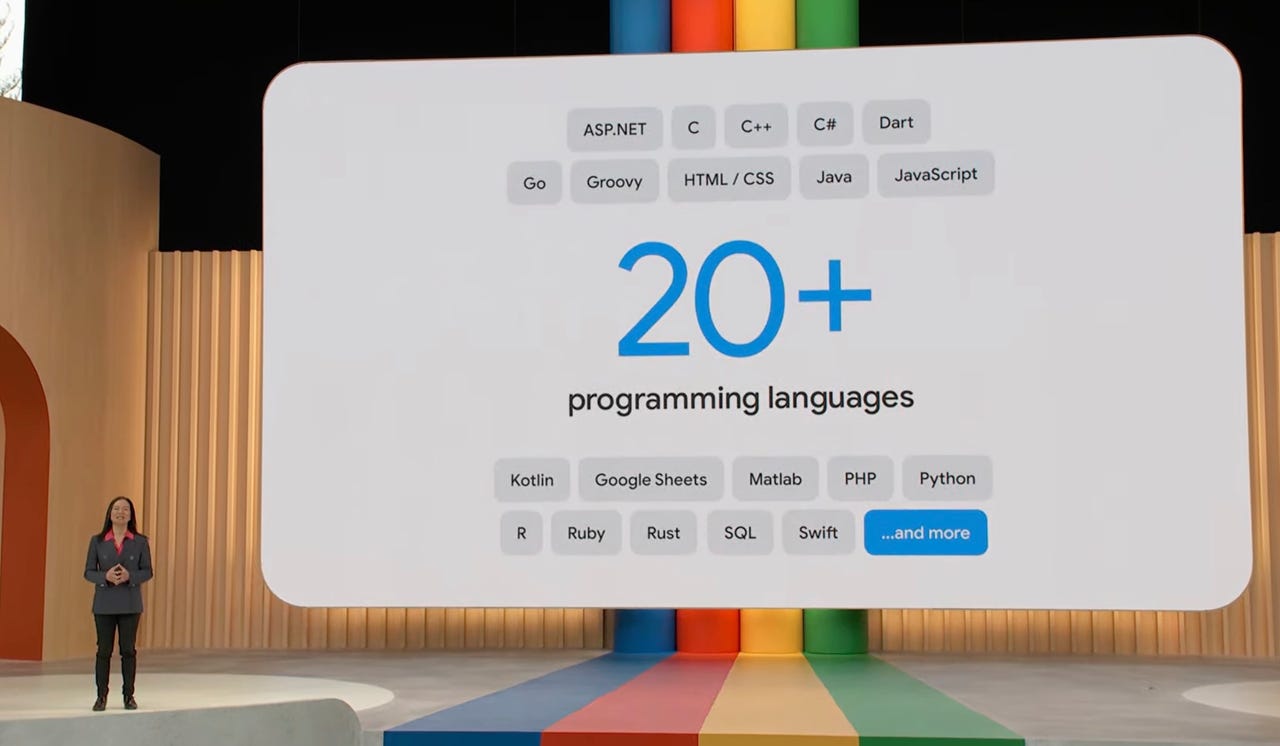
Sissie Hsiao, VP/GM, Google Assistant and Bard at Google, took the stage to announce the new capabilities of Bard, which is currently built on the foundation of PaLM 2 model. Bard, which has been trained on more than 20+ programming languages, now allows developers to streamline coding and debugging.
Furthermore, Bard introduced a Dark Theme, catering to developers’ preferences. Additionally, Bard’s update extends to Adobe Firefly and Google Lens, expanding its reach and utility across various platforms and tools.
In addition to this, Bard has now become available in 180 countries and territories, with support for languages beyond English, including Japanese and Korean as a move to promote global accessibility.
Workspace GenAI’ed
Aparna Pappu, VP of Workspace, reminded attendees of the Help Me Write feature, which was launched to trusted testers in March this year. Pappu unveiled several GenAI features tailored for Google Docs, Slides, and Sheets. These advancements, part of the newDuet AI for Workspace product, will be made available to trusted users and testers later this year, followed by a wider release. Duet AI aims to amplify productivity by harnessing the capabilities of AI to facilitate seamless collaboration and enhance user creativity.
Search Gets Generative AI Boost
Not to be left behind, the tech giant’s flagship product, Google Search is also set to undergo a transformative upgrade. Cathy Edwards, leading the Search team, announced the integration of generative AI into the search results page, providing users with a comprehensive overview of their queries. The new AI-powered snapshot delivers key information at a glance, empowering users with quick and insightful summaries of their search results.
Perspective API
Google also introduced Perspective AI, which has been used by publishers to “mitigate toxicity.” Interestingly, all significant LLMs developed by OpenAI and Anthropic now use Google’s Perspective API to evaluate toxicity generated by their own models.
Introduces Generative AI Capabilities for Google Cloud
Google also unveiled Duet AI for Google Cloud, an AI-powered collaborator designed to assist cloud users with programming tasks such as contextual code completion, code review, and real-time function generation. It is integrated across Google Cloud platforms, including the IDE, Google Cloud Console, and chat functions.
In addition to this, Google has introduced new foundation models and capabilities for AI development, including Codey for code generation, Imagen for text-to-image conversions, and Chirp for advanced speech recognition. These models are accessible via APIs and feature enterprise-grade security and reliability.
Additionally, Google has launched a Text Embeddings API for semantic understanding of text or images, and Reinforcement Learning from Human Feedback (RLHF) for model improvement via human feedback.
These innovations are supported by Google’s AI-optimized infrastructure, which includes the new A3 Virtual Machines based on NVIDIA’s H100 GPU, offering a broad spectrum of GPU power for AI model training and serving.
Google Cloud chief Thomas Kuriansaid that Google Cloud’s infrastructure makes large scale training workloads up to 80% faster, and up to 50% cheaper compared to any alternatives out there.
The post Key Highlights from Google I/O 2023 appeared first on Analytics India Magazine.
Therapy has proven to be an effective outlet for people to express their thoughts, emotions and concerns. However, sitting across from a therapist and spilling all of your deepest thoughts can be intimidating and challenging.
As a result, some people would rather talk about their feelings with an AI chatbot.
Also: 70% of employees are happy to delegate work to AI, according to new Microsoft report
A new study by Tebra, an operating system for independent healthcare providers, surveyed 1,000 Americans and additional healthcare professionals to measure feelings regarding AI in healthcare.
The study found that 1 in 4 Americans would rather talk to an AI chatbot instead of attending therapy with a human therapist.
Of those people who turned to ChatGPT for advice, 80% felt it was an effective therapy alternative, according to the study.
Communicating in cyberspace can provide a certain level of comfort to users and allow them to communicate more freely, referred to as the online disinhibition phenomenon.
Also:AI can write your emails and essays. But can it express your emotions?
This phenomenon is why people have the courage to say things online that they would be able to say in person, and could be a contributing factor as to why people are preferring to chat with a bot instead of a human.
Knowing that you're not talking to a person can also provide an added level of comfort and help eliminate additional inhibitions a person may have.
The study also found that Americans are not just turning to AI for therapy but also other medical concerns.
Also: AI bots have been acing medical school exams, but should they become your doctor?
Of the people surveyed, just over 5% reported using ChatGPT for medical diagnosis and following its advice. Of those who did, 90% found the advice to be effective.
As people continue to embrace and trust AI, we can expect to see a growth of AI applications in the medical field.
Google has been a leader in developing advanced artificial intelligence and machine learning models way before the generative AI craze began.
However, the company's generative AI efforts have paled in comparison to those of competitors, such as OpenAI and Microsoft, who are currently dominating the space with ChatGPT and Bing Chat. Even Google's direct answer to those services, Google Bard, has been underwhelming and fallen short of expectations.
Also:What is Google Bard? Here's everything you need to know
To accelerate its growth and hopefully bridge the innovation gap, Google unveiled new AI and software at Google I/O. Some of the highlights included a much-needed new and improved Bard, a brand new large language model, and a generative AI developer interface.
Here's a roundup of what Google announced and how you can take advantage.
Sissy Hsiao announces Bard has learned over 20 programming languages during Google I/O 2023.
At the same time that new artificial intelligence (AI) tools have been dominating headlines with their innovative ideas and captivating abilities, Google's own creation has been gaining attention for entirely different reasons.
Also: How to use ChatGPT: Everything you need to know
Google Bard is meant to be an assistive AI chatbot; a generative AI tool that can generate text for cover letters and homework to computer code and Excel formulas, question answers, and detailed translations. Similarly to ChatGPT, Bard uses AI to provide human-like conversational responses when prompted by a user.
Bard's performance, however, has been found lacking on more than one occasion. From its abysmal opening debut to its official launch, users have struggled to get the chatbot to provide accurate information or even follow along a conversation without hallucinating.
Also: Bard vs. ChatGPT: Can Bard help you code?
There's some other big differences between Bard and other AI-powered chatbots. Bard can access Google's search engine, while ChatGPT has no internet access and has only been trained on information available up to 2021. Google Bard competes more directly with Bing Chat, Microsoft's new AI-powered Bing search engine, which uses GPT-4, OpenAI's most advanced large language model, and it has access to the entirety of the web.
How to use Google Bard
I asked Bard if wasps are aggressive — here's what the chat window looks like.
FAQ
What can I ask Google Bard?
The Bard AI chatbot can answer most questions you ask, since it uses the search tools from Google. These AI-based answers can serve many purposes, from giving you recipes to helping you debug code.
Also: How to write better ChatGPT prompts (and this applies to most other text-based AIs, too)
Here are some examples of prompts you can ask the bot:
Write two to-do lists, one for daily household cleaning and another for maintenance
Write a —- plugin that does ——
What is at the center of the Earth?
Write a poem for a trashbag that fell in love with a reusable water bottle
Define XML
Does Google Bard have a waitlist?
For months now, Bard AI has only been accessible through a waitlist, but in May the company announced during its Google I/O event that it's ending the waitlist access program and opening up its new AI tool to over 180 countries and territories. Now anyone that logs in with their Google account can access Bard AI, no need to wait.
Also: ChatGPT and the new AI are wreaking havoc on cybersecurity in exciting and frightening ways
Does Bard AI save my conversations?
Google doesn't save your entire interaction each time you chat with its chatbot, but it does save the prompts and questions you asked it. That being said, as a search engine, Google is known for being one of the largest trackers in the world, so giving its chatbot private information is probably not a great idea.
Also: Why your ChatGPT conversations may not be as secure as you think
Does Bard AI use GPT-4?
Bard uses its own large language model named Language Model for Dialogue Applications (LaMDA), instead of the GPT series, which is the technology that many popular AI chatbots are using. Google Bard is the first chatbot to use a lightweight and optimized version of LaMDA.
Also: This new technology could blow away GPT-4 and everything like it
Can I use Bard with my Google Workspace account?
Bard AI is now also available for Workspace accounts. The Workspace admin needs to go to the Admin Console and enable Bard so their users can access it. A Worspace admin can do this by following these steps:
Go to your Workspace account
Access the Admin console
Select Apps
Click on Additional Google services
Choose Early Access Apps
Enable Bard
Will Bard AI replace Google Search?
Google Bard and other AI chatbots, such as Bing Chat and ChatGPT, certainly have the potential to replace search engines. These AI tools use information found on the web to provide answers to users' queries, but instead of giving them a list of websites where that answer may or may not be found, these tools provide a straightforward, though not always accurate, answer in a conversational manner.
Also: The new AI-powered Bing is now open to everyone — with some serious upgrades
Some people might use AI chatbots in place of a Google Search, especially since the added abilities of asking follow-up questions and generating text make it more functional for some use cases than a search engine.
Does Bard provide inaccurate answers?
When Bard AI was announced last February, it faced scrutiny after factual mistakes made during its demo. Users have subsequently wondered whether Google's new chatbot still continues to provide inaccurate or inappropriate responses and whether it can be trusted, as some have come to trust other AI tools.
Also:I tested Google Bard. It was surprisingly bad
Google has reiterated that Bard is an experiment capable of making mistakes. The company wants users to provide feedback on their experiences to improve LaMDA and propel it forward.
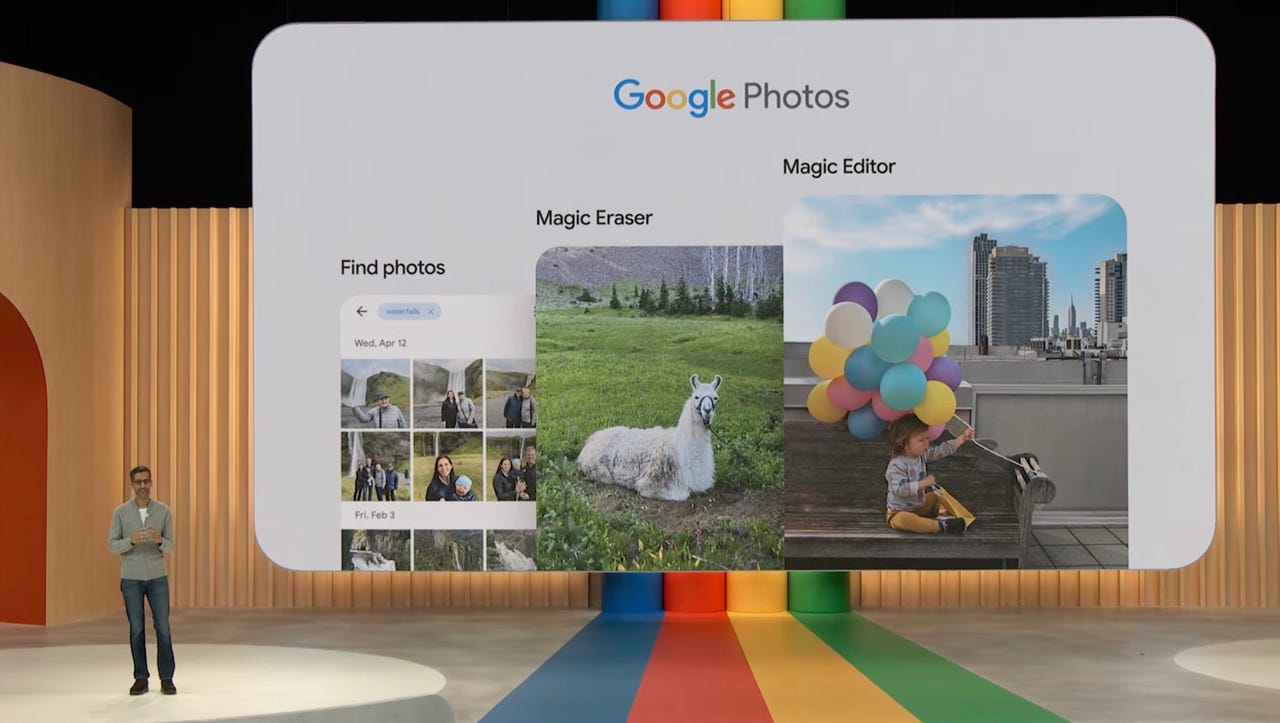
Google CEO, Sundar Pichai, announces new Magic Editor during Google I/O 2023.
Google I/O is delivering another year's worth of innovation and announcements, including the new Magic Editor, a novel use of artificial intelligence coming later this year to Google Photos.
Also: The 6 biggest AI features to expect from Google I/O 2023
Sundar Pichai, Google CEO, announced during the event that users currently edit 1.7 billion images a month in Google Photos. With Magic Eraser already used to remove unwanted distractions, now Magic Editor goes beyond, using AI to perform complex edits without using a separate photo editor.
The Magic Editor will use generative AI tools combined with other AI techniques to help you easily make edits to your images. For example, users can select a subject or item and move it elsewhere in the photo, while the tool generates the background content to compensate for the object's absence.
Aside from helping with image composition and integrating technology already used for the Magic Eraser, Magic Editor will also help users edit the brightness and other adjustments, as well as alter features like the sky and more.
The new Magic Editor feature will roll out as early access to select Pixel phones later in 2023.
With Project Tailwind, Google is using AI to make note-taking smarter Kyle Wiggers 7 hours
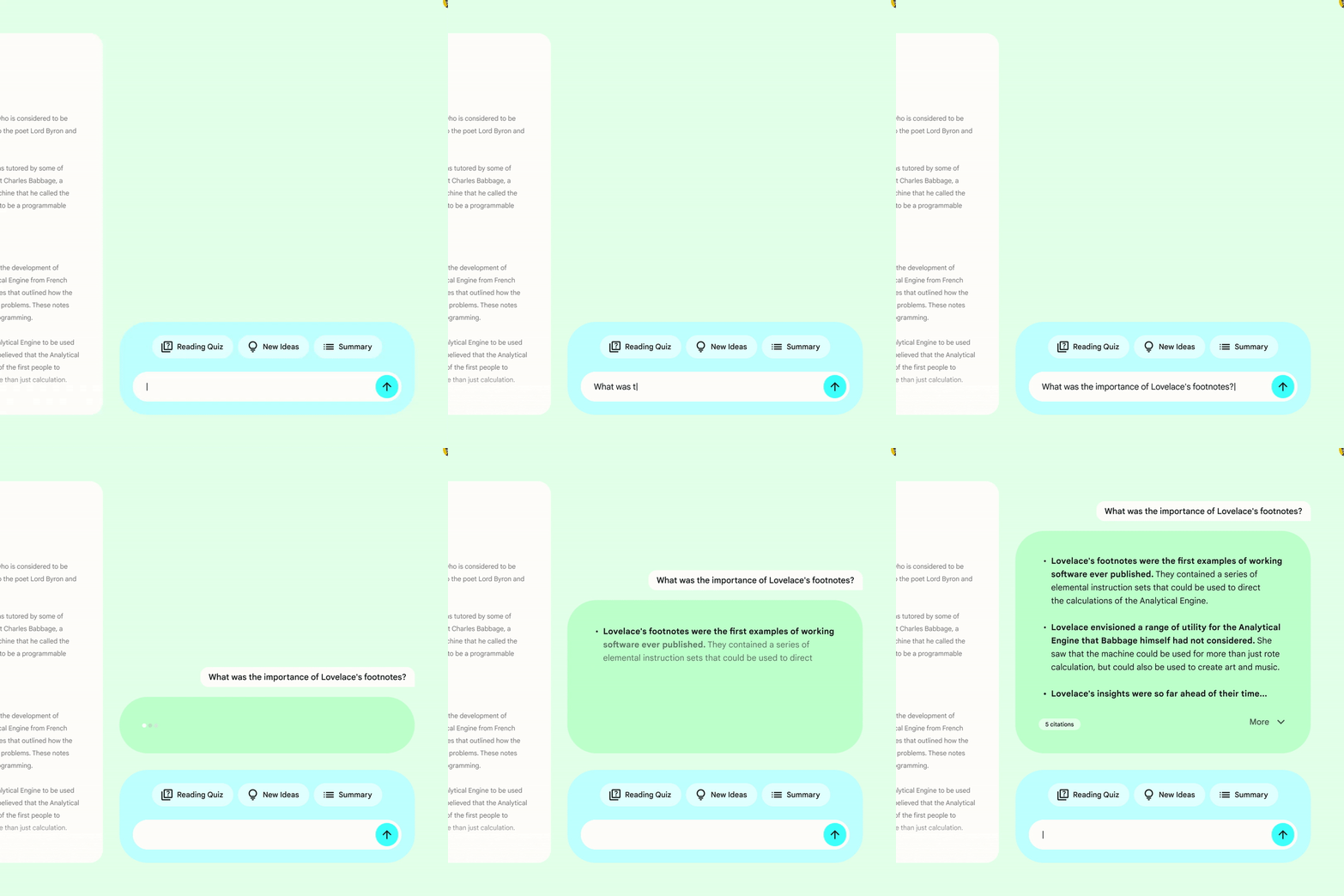
Google’s building an AI-powered notebook tool called Project Tailwind, the company revealed at its I/O developer conference. The goal, Google says, is to take a user’s freeform notes and automatically organize and summarize them.
To use Tailwind — which is available through Labs, Google’s refreshed hub for experimental products — users pick files from Google Drive. Tailwind then creates a private AI model with expertise in that information, along with a personalized interface designed to help sift through the notes and docs.
The Verge’s James Vincent points out that it’s not a new idea. Note-taking app Notion recently launched an AI component to automatically write blog posts, job descriptions and more in a user’s style. Elsewhere, the open source community is training leaked language models on the contents of their Google Drive.
But Tailwind also serves as a demo for PaLM 2, the successor to Google’s PaLM large language model for understanding and generating multilingual text. Many of Tailwind’s features are powered by PaLM 2 through a newly-launched API.
Image Credits: Google
Tailwind can generate a study guide, for example, highlighting key concepts and suggesting questions or even creating a reading comprehension quiz. The tool can also answer natural language questions about the notes, citing all of its sources within the docs.
Who’s Tailwind for? That’s a good question. Google itself doesn’t appear to know — during a demo onstage, Josh Woodward, a senior director of product management at Google, rattled off a list of potential groups, including college students, writers researching an article, analysts going through earnings calls and lawyers reviewing a case.
Hence the preview, it seems. Tailwind in its current form might not become a fully-fledged product — Woodward said it came together in a matter of weeks — but you can be sure Google intends to watch how it’s used to inform its future projects.
The waitlist for “Project Tailwind” is open now to U.S.-based users.
China has its DrakeGPT moment as AI singer goes viral Rita Liao 8 hours
Mandopop singer Stefanie Sun has gone viral on Bilibili, China’s largest user-generated video streaming site. But the sudden revival of interest in Sun, who hasn’t released an album since 2017, comes not from the artist having another moment of genius.
The songs that have attracted millions of views on Bilibili feature Sun’s voice cloned by artificial intelligence, raising questions about copyright protection.
Reminiscing on the golden age of Mandarin pop music, tech-savvy Chinese internet users took the liberty of mimicking Sun’s voice using singing voice conversion, a deep learning method that lets a user deliver one person’s singing in another person’s voice, and swap it into a compilation of Mandpop classics.
A search for “AI孙燕姿” (“AI Stefanie Sun”) yields hundreds of videos on Bilibili uploaded within the last month. The most popular ones have amassed over one million views. WeChat Index, which tracks keywords across the super app’s social and content ecosystem, shows that the term’s trending score skyrocketed to 50,000 on May 5 from zero just two days before.
Deepfake singing has captivated audiences in the West as well. In late April, an AI-generated song featuring the voices of The Weekend and Drake blew up on Spotify and TikTok. Grimes made a buzz by tweeting that she would split 50% of royalties on any successful AI-generated song using her voice.
As in the West, current copyright law in China does not have specific guidelines for AI-generated songs that rip off celebrity voices, but the country’s regulators have been quick to formulate legal constraints on the synthetic technology field overall.
As Chinese tech firms raced to capitalize on breakthroughs in generative AI with their Midjourney and ChatGPT alternatives, China passed a regulation in November to set the tone for how the bleeding-edge technology should be used. Service providers are required to verify users’ real identities and keep records of their illegal behavior, for example.
While Sun’s deepfakes first took off on Bilibili, the Chinese haven for mashup videos, the series of works have been reposted to other major social media platforms including Douyin, TikTok’s Chinese version.
We’ve reached out to seek comment from Bilibili, Kuaishou (Douyin’s rival) and Tencent Music Entertainment, which owns some of China’s largest music streaming platforms.
Douyin is the quickest to address the legal implications of the explosion of AI content. The ByteDance-own company published this week a guideline on AI-generated content, which is largely based on China’s new synthetic technology regulation.
Content uploaders should mark AI-generated content with “distinguishing labels” and are responsible for the “consequences” of such content, the short video platform’s guideline reads. Any content that infringes on copyrights is prohibited and subject to “severe punishment” once detected by the platform.
The question is, then, whether songs made with tools that mimic singers’ voices without their consent violate the artists’ rights. Sun hasn’t publicly responded to the dozens of songs created using her AI voice.
Generative AI has found adoption in helping to fill people’s emotional void, whether it’s used for remembering deceased loved ones or, in deepfake Sun’s case, addressing the dearth of good Mandopop today. As one AI product manager tweeted: “It’s like Sun’s fans have suddenly entered the festival mode.”
How China is building a parallel generative AI universe