How Big Data and Scraping Can Help Evaluate News Accuracy

Evaluating News Accuracy
Photo by The Blowup at Unsplash

Please note that all information contained in this article is provided on an “as is” basis and for informational purposes only. We make no representation and disclaim all liability with respect to your use of any information contained herein or any third-party websites that may be linked. Before engaging in scraping activities of any kind you should consult your legal advisors and carefully read the particular website’s terms of service or receive a scraping license.

A lot has been written about fake news in recent years. Supercharged by events like the pandemic and the Russo-Ukrainian war, the topic has reached incredible levels of importance. With the advent of publicly available Large Language Models, the production times of fake news are likely to decrease, making the issue even more pressing.

Unfortunately, detecting fake news manually requires some level of expertise in the topic at hand, so recognizing inaccuracies and misleading content is impossible for most people. Everyone can’t be an expert at anything – we might be able to understand geopolitics well, but the same person is unlikely to be equally as qualified in medicine and vice versa.

Defining fake news would be a good starting point, however. There have been several studies that have shown that even in academic research, a singular definition has not been agreed upon. In our case, however, we may define fake news as a report that masquerades as reputable while having low facticity and high intent to deceive while presenting a specific narrative.

Another topic, less spoken about, is news bias. Some reporting might not be fake news per se, but might provide a highly specific interpretation of events, which verges awfully close on factual inaccuracy. While these may not be as harmful, over a long period of time they may represent important events in an overly negative or positive light and skew the public perception in a certain way.

Both of these issues can be partly handled through the usage of web scraping and machine learning. The former can allow us to gather incredible amounts of information from news sources, while the latter can provide evaluations on the veracity and sentiment of the content.

Starting assumptions

I believe that sentiment analysis, when we consider news slant and its veracity, is important due to several factors. First, reporting pure facts is considered boring and, while truthful, usually does not attract large volumes of attention. We can see that even in reputable news sources, where clickbait is still often woefully abundant in titles.

So, most news sources, reputable or not, are inclined to build eye-catching headlines by including various emotional words into them. Most of the time, however, fake news or those who have a strong intention to provide a specific interpretation of events will use significantly more emotional language to generate attention and clicks.

Additionally, we can define news slant, in general, as the overuse of emotional language to produce a specific interpretation of events. For example, politically leaning outlets will often report some news that paints an opposing party in a negative light with some added emotional charge.

There’s also a subject I won’t be covering as it’s somewhat technically complicated. Some news sources outright do not publish specific news, fake or real, and in doing so, skew the world view of their audience. It is definitely possible to use web scraping and machine learning to discover outlets, which have missed specific events, however, it’s an entirely different problem that requires a different approach.

Finally, there’s an important distinction one could make when creating an advanced model – separating intentional and unintentional fake news. For example, it is likely that there were some factually inaccurate reports coming from the recent Turkey earthquakes, largely due to the shock, horror, and immense pain caused by the event. Such reports are mostly unintentional and, while not entirely harmless, they’re not malicious as the intent is not to deceive.

What is of most interest, however, is intentional fake news wherein some party spreads misinformation with some ulterior motive. Such news can be truly harmful to society.

Separating between these types of fake news can be difficult if we want to be extremely accurate, however, a band-aid solution could be to filter out recent events (say, less than a week old), as most unintentional reports appear soon after something happens.

Finding news slant with machine learning

Sentiment analysis is the way to go when we want to discover slants within news articles. Before starting, a large collection of articles should be collected, mostly from reputable sources, to establish a decent baseline for sentiment within regular articles.

Doing so is a necessary step as no news source, no matter how objective, can create articles without having some sort of sentiment in it. It’s nearly impossible to write an enticing news report and avoid using any language that showcases some sort of sentiment.

Additionally, some events will naturally pull writers towards a specific choice of words. Deaths, for example, will nearly always be written in a way that avoids negative sentiment towards the person, as it’s often considered a courtesy to do so.

So, establishing a baseline is necessary in order to make proper predictions. Luckily, there are numerous publicly available datasets, such as EmoBank or WASSA-2017. It should be noted, however, that these are mostly intended for smaller pieces of text, such as tweets.

Building an in-house machine learning model for sentiment, however, isn’t necessary. In fact, there are many great options that can do all the heavy lifting for you, such as the Google Cloud Natural Language API. Additionally, the accuracy of their machine learning model is amazing, so any sentiment analysis can be relied upon.

For data interpretation, any article falling far outside the established baseline should be eyed with some suspicion. There can be false positives, however, it’s more likely that a specific interpretation of events is being provided, which might not be entirely truthful.

Detecting fake news

Sentiment alone will not provide enough data to decide whether some reports are true or not, as many more aspects of a news article and its source must also be evaluated. Machine learning is extremely useful when attempting to derive a decision on a complicated network of interconnected data points. It has the distinct advantage that we do not have to define specific factors that separate legitimate from fake news. Machine learning models simply intake data and learn the patterns within it.

As such, web scraping can be utilized to collect an enormous amount of data from various websites and then label it accordingly. While there are predefined datasets for such use cases, they are quite limited and might not be as up-to-date with news cycles as one would expect.

Additionally, since news articles are largely text-based, extracting enough data from them won’t be an issue. Labeling the data, however, might be a little more complicated. We would have to be privy to our own biases to provide an objective assessment. All datasets should be double-checked by other people, as simple mistakes or biases could create a biased model.

Sentiment analysis may again be used to iron out any errors. As we have assumed previously, fake news will have greater usage of highly sentimental language, so, before labeling a dataset, one may run the articles through an NLP tool and take the results into account.

Finally, with the dataset prepared, all that needs to be done is to run it through a machine-learning model. A critical part of doing it correctly will be picking the correct classifier as not all of them perform equally well. Luckily, there has been academic research conducted in this area for exactly the same purpose.

In short, the study authors recommend picking either SVM or logistic regression with the former having slightly, but not statistically significantly better, results. Although it should be noted that most perform almost equally well with the exception of Stochastic Gradient Classifier.

Conclusion

Fake news classifiers were usually relegated to an academic exercise as collecting enough articles for a proper model was enormously difficult, so many turned to publicly available datasets. Web scraping, however, can completely remove that problem, making a fake news classifier much more realistic in practice.

So, here’s a quick rundown of how web scraping can be employed to detect fake news:

  1. Fake news is likely to be more emotive, about pressing topics, and a high intent to deceive. Sentiment and emotions are the most important part as that’s often how interpretations of events are provided.
  2. The emotional value of an article can be assessed through sentiment analysis, using widely available tools such as Google NLP or by creating a machine learning model with datasets such as Emobank.
  3. An important point to consider is event recency as these might have reporting inaccuracies without a particular intention to deceive.
  4. A trained model could be used to assess all of the above factors and compare articles of a similar nature across media outlets to assess accuracy.

Aleksandras Šulženko is a Product Owner at Oxylabs. Since 2017, he has been at the forefront of changing web data gathering trends. Aleksandras started off as an account manager overseeing the daily operations and challenges of the world’s biggest data-driven brands. This experience has inspired Aleksandras to shift his career path towards product development in order to shape the most effective services for web data collection.

Today as a Product Owner for some of the most innovative web data gathering solutions at Oxylabs, he continues to help companies of all sizes to reach their full potential by harnessing the power of data.


The AI faithful vs. the data skeptic

The AI faithful vs. the data skeptic
Image by Gerd Altmann from Pixabay

Freelance writer Christopher Beam is a skeptic of sorts. But in a May 2023 piece for Bloomberg on the aftermath of the crypto winter, Beam admitted he finally bought some Bitcoin, in April 2021. A friend had talked him into doing so. The Bitcoin he bought then lost 3/4s of its value. He bailed out a year later and no longer owns any cryptocurrency.

In the article, Beam profiled some of the crypto faithful. Their similarities are more telling than their differences. Near the end of the piece, he noted that his barber David had heard that “AI crypto” (not further specified) would be the next big thing. Beam told David he’d follow up. He still hasn’t.

SaaS–now available with GPT

Crypto needs a lot of help to move forward, as we all know. “AI” will not solve its most troubling problems.

Similarly, software as a service has some deeply rooted issues. But instead of confronting those issues, major SaaS providers have been announcing large language model (LLM) enhancements to their product lines at the Spring user conferences they’ve been staging. Tableau, for example, is now harnessing Salesforce Einstein GPT. Thankfully, Salesforce has put data governance guardrails in Einstein GPT, according to TechTarget’s Eric Avidon. The claim is that the external data Einstein GPT harnesses is trustworthy, and its data privacy is enhanced.

But the messaging surrounding these product enhancements is reminiscent of consumer food product labeling. Instead of “with DHA Omega 3” or somesuch, the SaaS enhancement messaging is along the lines of “Now with GPT.”

Paying software middlemen instead of investing in AI

Those vendors have become the middlemen in-between companies and their own data. That’s a problem because AI works best when it has unfettered access to a semantically connected, siloless flow of relevant internal plus external data sources.

Instead of committing to their own AI-friendly data foundations, enterprises are back on the sidelines. Andrew Ng described the dilemma most enterprises were facing in a June 2022 interview published in the MIT Sloan Management Review:

“I see lots of, let’s call them $1 million to $5 million projects, there are tens of thousands of them sitting around that no one is really able to execute successfully. Someone like me, I can’t hire 10,000 machine learning engineers to go build 10,000 custom machine learning systems.”

In 2023, it seems, many have just shelved their in-house AI initiatives entirely, not to mention the deeper data integration and enrichment efforts. Many enterprises are just sitting back, letting others determine how they’ll be collecting data and using “AI,” keeping the tech at arms length.

As it turns out, SaaS also stands for “silo as a service,” and companies are renting access to more and more of these multi-tenant silos.

Other data issues with development

Application-centric development typically starts with functionality: What’s the app going to do? The mentality behind providing this functionality focuses on coding the app.

When developers use this method, the data is an afterthought, because both designers and those funding the development aren’t thinking much in data terms. The app includes forms with implicit assumptions behind the forms for the data that end users are expected to input. Frequently, the end-user has to intuit how to fill the cryptic forms out to generate helpful data for the app functions. Additionally, the user has to participate to generate behavioral data specific to the app.

If and when the organization using the app decides that the insights coming from the app are insufficient, the knee-jerk response is to seek out another app that may do better. But the root problem is how to collect better data at scale.

There are always apps that vendors claim may do better.

Data-centric development and management commitment—not a new concept

For a couple of decades, API-driven app development has made it somewhat easier to share and reuse data and code. Google Maps was an early example.

What’s been notable about Maps has been serious data management from its inception. You could consider it an early data-as-a-product offering.

Maps required a major up-front investment and a continual level of long-term commitment to a data lifecycle tied to a vertically integrated offering users have grown heavily dependent on. Google decided to do its own data collection from scratch. Its cars still routinely scan the paved public landscape. Maps and Earth go hand in hand. Five million websites use Maps. 154 million users take advantage of it every month.

More data skeptics, including some at Google

The real power in applications derives from taking data seriously, whether AI-enhanced or not. The AI mantra has become tiresome. Some of the Google staff at the company’s annual I/O event, according to Jennifer Elias of CNBC, were rolling their eyes as execs kept mentioning the term.

Keep in mind that the skeptics have been proven correct in the case of AI as well as crypto. In an April 2023 paper, a group of researchers led by Asst. Prof. Sanmi Koyejo at Stanford reported on the abilities of large language models as they grow larger. They concluded that LLMs aren’t more than the sum of their parts. That is, the mystical emergent properties some have claimed for LLMs don’t really exist. LLMs, stable diffusion, and other similar advances aren’t magic. There is no magic bullet.

5 signs showing you need better data management

Financial management and technology

In today’s data-driven world, effective data management is vital for any business and organization that wants to thrive. Statistics show that companies that make data-driven decisions are 58% more likely to hit and surpass their revenue targets compared to those that don’t.

Even when you have all the data you need, it’s impossible to unlock the full benefits of this data without effective practices for managing it. In other words, you need to properly organize, store, protect, and maintain your data to ensure its accuracy, completeness, and reliability.

Poor data management practices can affect your bottom line negatively by causing increased costs, decreased productivity, and — in extreme cases — damaged brand reputation.

Let’s explore five signs that indicate your organization may need to improve its data management practices, as well as what you can do if you notice any of these signs.

1. Data inconsistency

Data inconsistency means that the different data sets in your organization don’t match, which can lead to confusion and errors in decision-making processes. Here are some ways to tell if you have inconsistent data:

  • Data reported by different teams or departments don’t match
  • Reports generated from different data sources produce different results
  • Customers receive conflicting information from different departments
  • Employees spend too much time on data reconciliation.

Data inconsistency can be caused by data entry errors, poor data validation processes, or a lack of standardization across different departments.

Inconsistent data can have severe consequences for your organization, such as lost revenue, decreased productivity, and reputational damage. For example, if your sales data doesn’t match inventory data, this could lead to inventory shortages, lost sales opportunities, and dissatisfied customers.

The best way to address data inconsistency is to adopt standardized data formats, implement data validation processes, and establish clear data governance policies. Additionally, you can have regular data audits to identify and resolve data inconsistencies before they lead to significant problems.

2. Data inaccuracy

Inaccuracy means that your data contains errors or mistakes and therefore does not reflect the actual values or information it represents. Some common causes of inaccurate data include human error during data entry, faulty data collection methods, or outdated data sources.

Making decisions based on inaccurate data can lead to incorrect decisions, wasted time and resources, and loss of reputation for the organization. For example, if a hospital’s patient data is inaccurate, it could lead to incorrect diagnoses, improper treatment plans, and potential harm to patients.

If your organization has inaccurate data, the best solution is to invest in data quality control processes such as data validation, cleansing, and normalization. With these processes in place, you’re more likely to catch and correct data errors on time. You can also prevent data inaccuracy by improving your data collection methods and using up-to-date data sources.

3. Duplicated data

This refers to situations where you have identical or nearly identical copies of the same data. The most common causes of duplicate data are human errors, system glitches, and inefficient data management practices.

Duplicated data can have a significant impact on an organization’s operations, including miscommunication, wasted resources, and inaccurate reporting. For instance, if your organization has duplicated supplier data, it can easily result in incorrect payments and billing discrepancies, leading to financial losses.

If you suspect that you have duplicated data, you can take any of the following actions to confirm it.

  • Manual inspection —involves manually comparing data to see whether identical information already exists
  • Automated data matching —involves using data matching algorithms to compare data across different databases and identify duplicates
  • Data profiling — involves using tools to scan data repositories and flag duplicates.

If you spot any duplicated data, you’ll need to merge it or remove the duplicates to ensure accurate and consistent data.

A good way to prevent data duplication is to implement data governance policies that standardize data entry and management practices across different systems and departments. Additionally, you can establish processes to help identify and merge duplicate data entries, such as data matching algorithms and manual data reviews.

4. Data security issues

Data security issues are vulnerabilities that threaten the confidentiality, integrity, and availability of your organization’s data. These vulnerabilities are particularly common in organizations that embrace data democratization without implementing proper mechanisms for safeguarding data.

Some common indicators of data security issues include:

  • Unauthorized access to sensitive data or login attempts from unknown users or devices
  • Suspicious activity on systems or applications, such as unexpected changes to user accounts or data
  • Slow or unresponsive systems, which could be a sign of a malware infection
  • Unexpected data loss or data corruption could indicate a security breach or a failure in data backup and recovery processes.

Common culprits behind security issues include cyber-attacks, human error, and system failures. Organizations that do not effectively manage their data are at risk of security breaches that could lead to data loss, financial losses, and PR crises.

For example, if a cyber-attack causes the breach of confidential consumer information stored without proper encryption or access controls, you could face legal and financial liabilities.

Data security is a serious issue. Therefore, it’s important to implement robust security protocols and standards to safeguard your data, such as access control, encryption, and network monitoring. You can also do regular security audits and vulnerability assessments to help identify potential security weaknesses, and enable proactive measures to address them.

Another important must-have is a comprehensive data backup and recovery plan to ensure you can easily recover your data in case of a disaster or system failure.

5. Inefficient data management processes

This means you’re using outdated or ineffective methods for organizing, storing, and processing data. Inefficient data management processes are the main cause of all the other problems discussed above.

Here are some tell-tale signs of inefficient data management processes:

  • Difficulty finding and accessing required data
  • Inconsistent, inaccurate, and redundant data
  • Time–consuming manual data entry
  • Low data applicability for decision-making or driving business outcomes.

Inefficient data management processes have a significant impact on your organization. They often lead to delayed decision-making, decreased productivity, and increased costs due to manual data entry or rework. They also affect customer satisfaction since inaccurate or incomplete data leads to poor customer experiences.

The best way to address inefficient data management processes is to implement modern data management systems and tools, such as cloud-based data storage solutions, data analytics software, and data visualization tools.

You can also establish clear data governance policies and procedures, such as data quality standards, data access controls, and data retention policies, to ensure that data is managed efficiently and effectively. Training your employees on data management best practices can also give them the necessary skills and knowledge to manage data effectively.

Wrapping up

The consequences of poor data management can be severe. If you want your organization to remain competitive, you have to ensure that you’re effectively managing your data and using it to make better business decisions.

By recognizing the signs indicating a need for better data management, you can take steps to improve your practices and avoid the negative consequences of poor data management. Data inconsistency, inaccurate data, duplicate data, security issues, and inefficient data management processes are all signs that your organization may need to re-evaluate its data management practices.

Fortunately, many solutions are available to address these issues and improve your organization’s data management practices. These include investing in modern data management tools, providing employee training, and implementing better data governance policies.

Author’s bio

Ben Herzberg

Ben is an experienced tech leader and book author with a background in endpoint security, analytics, and application & data security. Ben filled roles such as the CTO of Cynet, and Director of Threat Research at Imperva. Ben is the Chief Scientist for Satori, the DataSecOps platform, as well as VP of Marketing.

image-11
Ben Herzberg is Satori’s Chief Scientist and VP of Marketing

Publishing Industry: The Extreme Crucial Role of AI in Content Moderation

ai-content-moderation

During the past decade, the publishing industry has undergone significant transformations due to the development of digital platforms and the widespread availability of user-generated content. Although these advancements have enabled a greater availability of information and a more diverse perspective, they have also presented challenges when it comes to ensuring that the content adheres to legal and ethical standards. In order to maintain the integrity and safety of publishing platforms, content moderation plays a crucial role in removing inappropriate, harmful, or offensive content. Manual moderation approaches are often insufficient in light of the increased volume of content being generated. A scalable and efficient solution to content moderation is provided by Artificial Intelligence (AI) technologies. This article examines the role of artificial intelligence in content moderation for the publishing industry, as well as its benefits, challenges, and ethical implications.

Understanding Content Moderation:

The process of content moderation involves reviewing, assessing, and filtering user-generated content in accordance with predetermined rules, guidelines, and community standards. A key objective of this program is to identify and remove content that violates policies, including hate speech, explicit or adult content, harassment, violence, and other forms of harmful or illegal content. Traditionally, content moderation has been conducted through manual human reviews, which have proven to be time-consuming, resource-intensive, and subject to human bias. The use of artificial intelligence-driven content moderation offers an alternative approach that automates and streamlines the moderation process using machine learning algorithms and natural language processing.

The Role of AI in Content Moderation:

Scalability and Efficiency: A major advantage of AI in the moderation of content is its ability to deal with large volumes of content in a timely and efficient manner. A number of AI algorithms are capable of analyzing huge amounts of text, images, and videos in real-time and flagging potentially problematic content for further scrutiny by human moderators. A high level of user engagement, as well as large databases of user-generated content, make this type of scalability particularly important for publishers.

Speed and Real-Time Detection: An AI-powered content moderation system is capable of identifying and flagging potentially harmful or inappropriate content immediately after it is posted. By detecting the content in real-time, it is possible to take immediate action to prevent the content from reaching a wider audience and minimize its potential impact. Keeping users safe and secure requires quick response times.

Consistency and Objectivity: Using artificial intelligence algorithms, content moderation policies can be applied consistently and objectively. Defining specific rules and guidelines allows the algorithms to apply the same criteria across all content, eliminating the potential for bias or inconsistency that can arise from manual moderation. It facilitates the enforcement of community standards uniformly across the platform.

Enhanced Accuracy and Precision: Since advances in natural language processing and image recognition have made AI models more accurate at identifying and categorizing different types of information, they have become increasingly useful. A pattern, keyword, context, and visual element can be detected by these tools in order to determine whether content violates specific policies. As a result of this accuracy, false positives and negatives are minimized, leading to more effective moderation results.

content-moderation

Continuous Learning and Adaptation: AI systems are capable of learning from human feedback and adapting over time to improve their ability to moderate. A human moderator can provide feedback to the algorithms in order to help them develop a better understanding of nuanced context, cultural sensitivities, and evolving trends by providing feedback to them. In this way, artificial intelligence systems are able to continually improve their performance and adapt to new challenges as a result of iterative processes.

Benefits of AI-Powered Content Moderation: The adoption of AI in content moderation brings several benefits to the publishing industry:

User Experience: AI-powered moderation systems can enhance the user experience by identifying and removing offensive and harmful content as quickly as possible. As a result, an inclusive and positive online community is fostered, thereby increasing trust and participation among users.

Increased Efficiency and Cost Savings: AI-driven moderation automates the initial review process, thus reducing the burden on human moderators. By doing so, publishers will be able to handle greater volumes of content without having to increase the size of their moderation team or their costs significantly.

Improved Response Times: Real-time detection and automated moderation enable rapid response to problematic content. The prompt response reduces the potential impact on users and helps contain the spread of harmful content.

Application of Policy: In order to minimize the risk of biases or inconsistencies caused by manual moderation, AI algorithms apply content moderation policies consistently across all content. In this way, it is ensured that the standards of the community are maintained uniformly and fairly.

Scalability for Growing Platforms: In an age when publishing platforms are growing, and user-generated content is increasing, AI-powered moderation will provide the scalability needed to manage large volumes of content effectively. This enables publishers to maintain a safe and trusted environment for their users without having to devote a large amount of time and resources to moderation.

Challenges and Limitations – Content moderation powered by artificial intelligence has a number of significant advantages, but also presents a number of challenges and limitations.

The ability to understand nuanced context, cultural references, and subtle language variations is a challenge for AI algorithms. Occasionally, they may misinterpret or categorize content inaccurately, causing false positives or false negatives. The solution to these challenges requires human oversight and continuous training.

Evolving Strategies by Malicious Actors:

The content moderation system is constantly being bypassed by malicious users. For example, they may deliberately misspell words, alter images, or use coding to evade detection. In order to effectively identify and filter out inappropriate content, AI algorithms must continuously adapt to such evolving strategies.

Ethical Considerations:

In some cases, AI algorithms may be inadvertently influenced by the biases and prejudices present in the data upon which they are trained. As a result, content moderation may result in discriminatory outcomes. A diverse and representative dataset should be used to train AI systems to minimize the possibility of harm.

Complex and Sensitive Content:

When handling complex topics such as political discussions, satire, or controversial topics, content moderation becomes particularly challenging. In some cases, AI algorithms may have difficulty assessing the intent or subtleties involved in such content, thus requiring human judgment and contextual understanding.

Legal and Regulatory Compliance:

Moderation of content by artificial intelligence must adhere to a number of legal frameworks, including privacy laws, free speech, and local legislation. Maintaining effective moderation while ensuring compliance presents a number of challenges that must be carefully considered.

Ethical Considerations– There are several ethical considerations associated with the use of artificial intelligence in content moderation:

Transparency and Accountability:

A publisher should be transparent about the use of artificial intelligence in content moderation, providing users with information about the processes involved and the potential limitations of this technology. Clearly defined guidelines should be provided regarding the moderation of user-generated content and the steps that can be taken when disputes or errors arise.

User Privacy and Data Protection:

A large amount of data is used for training AI algorithms, including personal information. Users should be given the opportunity to consent to the use of their data for moderation purposes and publishers must ensure that robust data protection measures are in place.

Bias Mitigation:

AI models and systems should be designed to minimize bias. In order to detect and address biases that may arise, regular audits and monitoring should be conducted. To accomplish this, diverse training datasets should be used, diverse perspectives should be incorporated into the development process, and avenues for feedback should be provided to users.

Human Oversight and Intervention:

In spite of the fact that artificial intelligence plays a significant role in content moderation, human moderators are essential for making complex decisions, handling edge cases, and processing appeals. Assuring accountability, making ethical judgments, and handling nuanced or subjective content appropriately requires human oversight.

Summary:

The publishing industry can effectively and efficiently handle the increasing volume of user-generated content through AI-powered content moderation. In addition to providing scalability, speed, and consistency, it reduces the burden on human moderators by enforcing content policies. Nevertheless, AI moderation must be addressed in light of the challenges, limitations, and ethical considerations associated with it. For the platform to remain safe, inclusive, and responsible, it is essential to strike a balance between automated AI systems and human oversight.

5 Ways to Use Analytics to Inform Website Development Decisions

image-14

In today’s technological world, data is everything. It can inform our marketing decisions, improve product creation, boost internal processes, and more. For an online business, having the best possible data is key to success.

But simply having data isn’t enough. To obtain useful information, you need to understand your data. That’s where web data analytics comes into play. With the right analytics tool, you can unlock your data and transform your business.

But what exactly is web data analytics, and how can it improve your website? We’ll explore this, and more, below.

What is web data analytics?

If you’re running an online business, you’re probably sitting on a mountain of data. Each time a user comes to your site, they’ll make interactions. This might include purchasing a product or signing up for a mailing list. These activities can be monitored and analyzed to help you better understand your audience.

Of course, to do that, you first need an Analytics tool. Google Analytics (GA) is the chosen option for a majority of sites. In fact, 56.7% of websites now utilize GA. It’s an ideal analytics tool for beginners. GA has a massive online community and many online resources to help you.

What’s more, GA is ideal if you manage multiple websites. You can create as many properties as you need using the tool.

Due to its popularity, this article will focus on features found in GA. There are, however, other analytics options available, including:

  • Adobe Analytics
  • Hotjar
  • Matomo Analytics
  • Clicky

So, without further ado, let’s examine some of the top ways that web data analytics can help you.

#1 – Use visualizations to inform website development

Tools like GA are packed full of reports containing many different insights. If you’re new to data analytics, these can be difficult to get your head around. If you’re not careful, you might feel overwhelmed by your data. This can lead to poor decision-making.

Luckily, visualizations are on hand to help you and your team better understand your data. Using visualizations, you can ensure better decision-making.

In GA, there are lots of forms of visualizations. Let’s look at some of the most useful examples.

Pie Charts

5 Ways to Use Analytics to Inform Website Development Decisions

Image created by author

Pie charts are a simple way of sharing key insights. In GA, pie charts focus on one metric at a time, making data much easier to take in.

Let’s imagine that you want to view the top converting pages on your website. A pie chart can allow you to compare the performance of different pages in the blink of an eye. You can use the best-performing pages on your site as a model to optimize other pages.

Tables

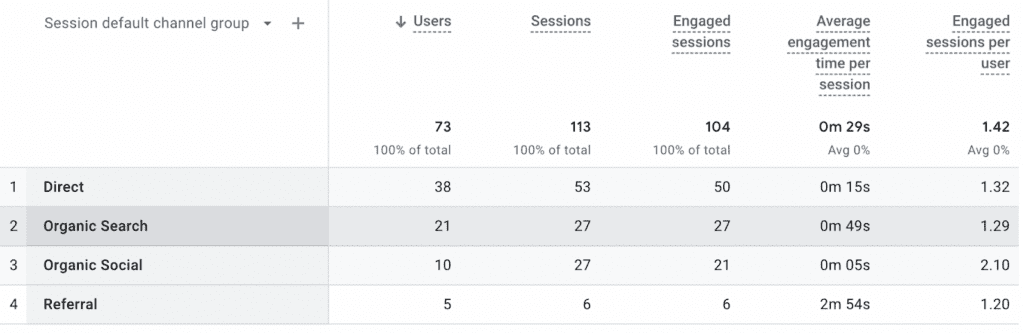
Tables are the default visualization in GA. Dimensions and metrics are clearly laid out in different columns. The logical and simplistic style of this visualization makes data easy to understand.

5 Ways to Use Analytics to Inform Website Development Decisions

Image created by author

Above is an image of a table from an acquisition report. From this table, we can clearly see the origins of different traffic sources, and the activities attributed to each. For example, we can see that 53 sessions came from direct traffic. By knowing the best-performing sources, we can better focus our efforts.

Comparisons

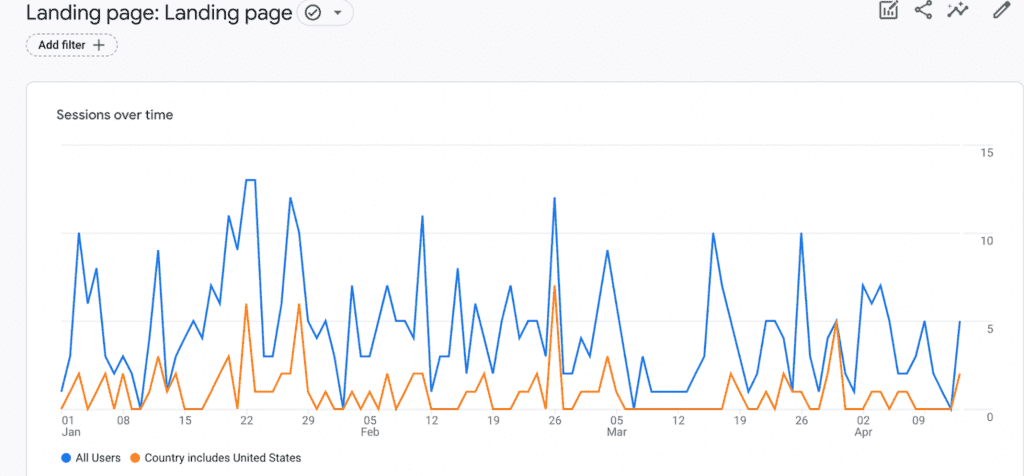
Sometimes in web data analytics, it’s necessary to compare two sets of data at once. Switching between reports can be time-consuming. What’s more, there’s a risk that you may misremember a certain statistic and make a false comparison. That’s why the comparison visualization is so useful.

5 Ways to Use Analytics to Inform Website Development Decisions

Image created by author

The image above shows an example of a comparison. We can see the number of US users that arrived on a landing page compared to the number of overall users. With a clearer understanding of the location of your users, you can tweak your marketing strategies.

Maximize Page Performance

To maximize page performance, it is crucial to analyze website data. In today’s technological world, data is everything. It can inform our marketing decisions, improve product creation, boost internal processes, and more. For an online business, having the best possible data is key to success. But simply having data isn’t enough.

To obtain useful information, you need to understand your data. That’s where web data analytics comes into play. With the right analytics tool, you can unlock your data and transform your business.

One such analytics tool is Kubio Builder. This is a powerful web data analytics platform that helps you track user behavior on your website, utilizing a user-friendly interface and advanced tracking capabilities, so you can better understand your audience and make data-driven decisions.

To maximize the benefits of web data analytics, partnering with a digital marketing agency, such as Brix Agency, can provide additional support in unlocking the potential of your data.

A great way to collect web data for analytics is through the use of unlimited bandwidth residential proxies, which can provide a pool of IP addresses that are difficult to detect and can help you gather information without getting blocked.

By leveraging these proxies, you can scrape more data without hitting rate limits or getting banned by websites that detect high traffic from a single IP address. This can give you a competitive edge by allowing you to gather more data than your competitors and gain deeper insights into your website’s performance.

For an ecommerce business, in particular, website data analytics is even more critical. Ecommerce website development can be complex, but with the right analytics tools, you can better understand your customers’ behavior and preferences, optimize your product pages and checkout process, and ultimately increase your conversion rates.

#2 – Segment data to personalize experiences

Lots of online businesses barely scratch the surface of their data. They don’t move beyond basic information, sticking with standard reports. These provide useful pieces of information. However, web data analytics can and should go much deeper.

Remember, customers want experiences that are tailored to them. Studies show that 49% of buyers will become repeat customers after a personalized experience. But to personalize, you need a strong understanding of your audience. This is where segmentation comes into play.

Segmenting is the process of breaking data down into smaller groups. Done in the right way, it can provide many useful insights into your audience. Below are some of the ways that you can segment your audience:

  • Age
  • Gender
  • Location (Country, district, city)
  • Industry
  • Customer vs prospect

Go a step further with micro-segmentation

Simple segmentation can provide you with lots of basic audience insights. However, you can take it a step further. Instead of segmenting based on one metric, you could use multiple metrics; this is known as micro-segmenting. For example, you could look at male users aged between 20-40 who frequently invest in tech.

By understanding users more granularly, you can ensure your site caters to them. Just remember, you’ll need the necessary knowledge to carry out tasks such as micro-segmentation effectively. Having an employee with certification will help. There are many certification options available. One example is Databricks’ data engineer certification.

#3 – Improve user experiences with audience reports

image-12

Image created by author

How are people accessing your site? On the face of it, this might seem like a basic question. But if you want to provide the best user experience, you need an answer.

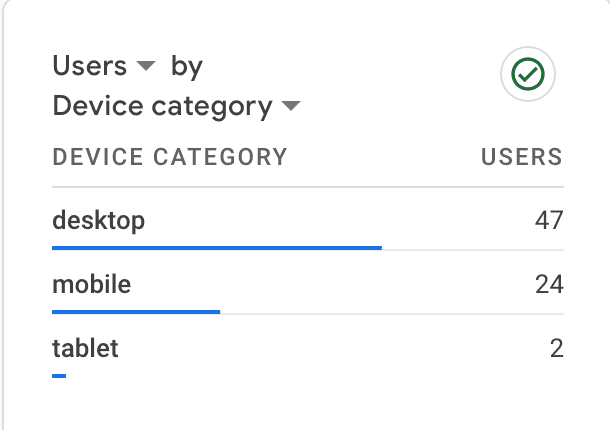
Fifteen years ago, very little focus was placed on mobile users. In recent years, however, this has all changed. A recent survey showed that over 60% of internet users are now on mobile. If you want your website to rank highly in the SERP ranking, you need to cater to these users.

Using GA, you can find out exactly how many of your users are on mobile or tablet. But perhaps more importantly, you can find out exactly what devices they are using. From ‘Audience reports’ you can gain a list of devices. Using this information, you can make sure your website runs smoothly across multiple devices.

Let’s imagine that you’re looking at bounce rates on your site. Using segmentation, you might find that users on Android devices have a higher bounce rate. This suggests that these users are having a poor user experience.

Consider the steps that you can take to make improvements. Why not access your site from different devices yourself, and see how it performs?

#4 – Boost SERP performance using SEO metrics

Search Engine Optimization (SEO) is key for any online business. Far too many stumble blindly when it comes to SEO. They make improvements here and there and hope for the best. To be effective, SEO needs a roadmap. You need a way of measuring your success and knowing which areas to focus on.

GA provides users with several SEO metrics to help measure their success. Take time, and build these into your wider SEO strategy. Using mind map software can help you to structure your plan.

Some examples of GA’s SEO metrics include:

  • Bounce rate: A key factor in SERP ranking is user experience. The bounce rate tells you the percentage of users that left after viewing only one page. A high bounce rate indicates a poor user experience.
  • Site speed: Slowly loading websites aren’t looked upon favorably by the Google Algorithm. Keeping an eye on the site speed metric is essential for success.
  • Organic conversions: When people enter your site organically (through Google Search) are they making valuable actions? If your SEO strategy is successful, the number of organic conversions should increase.
  • Dwell time: This is the amount of time a user spends on a page. Your SEO tactics should focus on creating valuable content for users. If dwell time is low, you need to rethink your approach.

#5 – Create conversion events to measure success

There are several important interactions you’ll want your users to take. For example, you’ll probably want to ensure that people are signing up for your mailing list. However, creating a sign-up page and hoping for the best won’t get you very far. Similarly, you don’t want to be constantly monitoring your mailing list.

Web data analytics allows you to monitor key events from a centralized space. What’s more, with GA, you can create conversions events. These can monitor any interaction that you’d like. Consider the actions that are most important to you and create conversion events to match them.

If a particular conversion event isn’t being triggered, you can investigate further. You may find that a page has a low dwell time, or is inaccessible to mobile users.

Web data analytics is essential

There’s no avoiding the fact; if you run a website online, you need web data analytics. If you haven’t already, sign up for Google Analytics (it’s free!). If GA isn’t for you, there are lots of alternatives to consider.

Be sure to also bear in mind additional tools that you might need to support website development. For example, you can manage infrastructure with Platfrom.sh. This can help to ensure the future scalability of your website.

Once set up with your chosen analytics tool, consider the tips mentioned here. Use these as a guideline as you make your first website improvements. Remember, however, that there are many, many more ways that analytics can help you. Luckily, there’s no shortage of additional materials.

Don’t get left behind by your competitors. Start making the most of web data analytics.

6 Reasons Real-Time Data Analytics is Beneficial for Your Business

image-15

Image sourced from striim.com

There’s one universal truth for every modern organization. It doesn’t matter whether you’re starting a business or already established: to succeed, you need data. Of course, not just any data will do. For strong data-driven decision-making, you also need the best insights. Thankfully, due to data analytics tools, businesses of all sizes can dig deep into their data.

But as time moves on, simply having access to analytics is no longer enough. The most successful businesses are now using data to make near-instant decisions. How are they doing this? It’s all thanks to real-time data analytics.

You might not have heard of this tool. It is, however, essential for every business that wants to stay afloat in an increasingly data-dependent world. Luckily, this article is here to give you a helping hand. We’ll explain real-time data analytics and we’ll also explore some of the many benefits of using this tool.

What is real-time data analytics?

6 Reasons Real-Time Data Analytics is Beneficial for Your Business

Free to use image from Unsplash

If you’re running a modern business, you’re probably already familiar with data analytics. From your chosen tool, you can access reports detailing all sorts of insights into your data. But first, you have to wait for information to filter into your reports. Sometimes, you might be waiting as long as 48 hours. Web analytics is one such tool that provides real-time insights into website performance.

With real-time data analytics, there is no delay. You receive data as soon as it’s available. Let’s imagine that a user logs on to your website. They head from your homepage to the contact page and sign up for your mailing list. Thanks to real-time data analytics, you could watch these interactions take place before you.

Of course, real-time data analytics is used for more purposes than simply for website data. The tool can help practically every aspect of your business. This ranges from marketing to customer support.

What tools provide access to real-time data analytics?

There are many tools that provide access to real-time data analytics. Let’s look at some popular tools that meet your needs.

  • Website Analytics – Google Analytics (GA) provides ‘Realtime Reports’. These enable you to monitor customer journeys as they take place. If the size of a user base is an indication of quality, GA puts you in safe hands. The tool is used by a huge 55.8% of websites.
  • Customer service – The customer service tool Woopers can analyze customer journeys to create user profiles in real-time. This ensures that agents instantly have the information they need.
  • Cybersecurity – Cybersecurity Marketing can also benefit from real-time data analytics. By constantly monitoring network traffic, businesses can detect any suspicious activity and take immediate action to protect their systems and data from cyber threats.
  • Internal Processes – The business BI tool Domo draws real-time data from your business processes. From detailed dashboards, you can gain insights that help improve company efficiency.

Another tool that can provide real-time data analytics is web scraping with Python. With the help of Python libraries like BeautifulSoup and Scrapy, businesses can extract data from various websites and receive real-time updates on their competitors’ pricing strategies, customer reviews, and more.

Real-time data analytics can also be used in conjunction with residential IP proxies, which offer a unique IP address assigned to a specific physical location, for a more accurate and comprehensive view of your data.

But why exactly should you use real-time data analytics? Here are six benefits that demonstrate how handy the tool is.

Improve user experiences

image-16

Image sourced from userguiding.com

There’s been a huge focus on user experience in recent years. Every business wants to make sure that its customers are happy. But not only that, user experience is a huge factor in your website’s SERP ranking. Search engines like Google want to ensure that users can access your site without running into issues.

Start by building user experience into every aspect of website development. Reading Platform.sh’s web application best practices can help. Once your website is developed, however, you need to keep a constant eye on user experiences. Real-time data analytics can provide useful insights into user journeys and help you make improvements.

We mentioned earlier how you can monitor user interactions in real time. Are you noticing any frequent issues for users? For instance, are people failing to click a certain link or leaving a page after only a few seconds? You can use these insights to make improvements to your website.

Similarly, when launching a new product, you’ll want to make the best first impression. Are users behaving in the way you want them to? Most crucially, can customers add products to their basket without a hitch? Other factors, however, are also important. Can customers easily share a product? Does the page function well for mobile users?

By keeping a close eye on real-time data analytics, you can make quick decisions, keeping users happy and boosting your SERP ranking.

Adapt to the market

6 Reasons Real-Time Data Analytics is Beneficial for Your Business

Free to use image from Unsplash

At the heart of real-time data analytics is speed. There are times in business when rapid decision-making is essential. Nowhere is the case more than when it comes to looking at the market. As we all know, the market isn’t static; it can change in the blink of an eye. This can alter the picture dramatically.

For businesses that deal in commodities trading in particular, unexpected market changes can have damaging consequences. But every retailer will be vulnerable to changes in cost and demand.

Real-time data analytics can monitor the market. This allows you to be notified as soon as a fluctuation occurs. In the past, you could have been caught off-guard by changes in the market, and left to pick up the pieces. But with the assistance of real-time data analytics, you can adapt dynamically to the market.

Boost internal processes

The internal efficiency of your business is equally as important as market-facing aspects. Clunky internal processes can slow the overall progress of your organization.

Real-time data analytics can be utilized in multiple ways to help your business internally. These include the following:

Identifying issues

You might not always realize when issues such as workflow inefficiencies occur. For instance, admin tasks might take a few seconds longer than intended. While these problems are small, they can slowly chip away at the growth of your organization.

Real-time data analytics can identify these issues before they become too damaging. This data can be used to power machine-learning tools that can identify a solution to the problem.

Ensuring goals are met

Your business goals should guide each of your operations. But it’s easy to stray from the path, focusing resources in the wrong areas. So, how can you ensure that you’re always progressing toward your objectives?

Real-time analytics can monitor each of your internal operations. It can provide insights that help to plan a way forward and optimize the effectiveness of each business process.

Consistent payroll

Nothing upsets staff more than an inconsistent payroll. If pay is frequently irregular, staff might start looking elsewhere for a job. Real-time data analytics can support your payroll enterprise. This instant access to payroll data, helps to ensure a regular payment process.

Enhance customer support

6 Reasons Real-Time Data Analytics is Beneficial for Your Business

Free to use image from Unsplash

Customer support is a lifeline for your organization. In business, just as in life, at some point you’ll make a mistake, no matter how hard you try. During this time, it’s critical that customer support is on hand to reassure customers.

Get it right, and there can be big rewards – 89% of consumers are more likely to make another purchase after a positive customer service experience. But too many organizations are let down by ineffective customer support.

As customers, it’s something that many of us have experienced. You’re forced to wait in a long queue, only for your issue to go unresolved. It’s extremely frustrating, and the average customer feels no different. Real-time data analytics can solve some of these problems, and help get your customer support back on track.

Below, we’ve listed some of the ways that real-time data analytics can enhance your customer support.

Make more informed decisions

Real-time analytics is constantly drawing from a rich well of data. When a customer makes a call, it can identify patterns from historical calls to help identify a resolution. For instance, did another customer call with a similar issue? Analytics can quickly bring up information from previous calls, and how they were solved.

Predict future actions

In its own right, real-time data analytics is extremely useful. But combined with predictive analytics, it can become a game changer. Predictive analytics uses machine learning to, as the name suggests, predict future trends. By inputting your real-time data, you can better prepare for future issues that might crop up.

Create more personalized experiences

One thing we can say for sure about the modern customer, is that they crave personalization. As many as 49% of customers say they will shop with a brand again if they provide a personalized experience. It’s in the interest of your business to do everything it can to tailor customer journeys.

Real-time data analytics provide you with the means to personalize. You can plug real-time data about customers into tools with a variety of personalization options. These include:

  • Presenting customers with offers that they are likely to enjoy.
  • Altering the layout of the homepage, ensuring that customers are always presented with content that they are likely to respond to.
  • Changing the color scheme of a page to match the preferences of a customer.

Support application development

6 Reasons Real-Time Data Analytics is Beneficial for Your Business

Free to use image from Unsplash

Lots of businesses are creating applications to promote their brand. An app provides customers with quick access to your product or service. But apps are only effective if they run smoothly. App development can be a tricky process. From interface development to sharing code using a CICD platform, lots of errors can crop up.

Real-time analytics can help improve your app development, providing a constant stream of data. As users interact you can provide continuous improvement.

Real-time data analytics is the next step

Staying on top of your data is key for every modern business. Simply having analytics software, however, is no longer enough. Real-time data analytics is the next step. It allows you to make instant decisions, keeping you ahead of the competition.

This article has only explored some of the benefits of this software. The full list of benefits goes on and on. And the best news is that it is constantly getting more advanced.

To put it simply, don’t get left in the past. Embrace real-time analytics, and enhance your business.

DSC Weekly 16 May 2023 – LLM success depends on quality, transparent data

Announcements

  • Enterprises today are experiencing rapid growth, citing IT observability as an essential business imperative so companies can properly monitor and manage their complex environments. Tune in to the Pursuing Full-Stack IT Observability summit to learn from leading experts how to establish enterprise observability with the right approach and solutions. Learn about the leading platforms and tools to help companies achieve full-stack observability and keep business environments functioning smoothly.
  • Attackers have many opportunities to strike on-site and cloud-based enterprise applications from early in the development process. But many solutions and tools — such as the emerging DevSecOps framework – are available to better secure applications and ensure security is prioritized within DevOps and application security testing tools. Tune into Effective Application Security summit to hear leading experts discuss how to secure applications in your enterprise infrastructure with strategies like DevSecOps along with the right combination of tools and testing.
close up of woman with transparent smartphone

LLM success depends on quality, transparent data

Everyone from writers to coders wonder if their job is in jeopardy as prognosticators say generative AI tools will take over business in the coming years. Of course, these large language model chatbots are still unreliable, and certainly can’t be trusted to complete jobs as well as humans…at least not yet.

But as we discussed last week, the future marriage between human workers and AI will likely be highly collaborative. The rise of LLM only reinforces what business leaders have known for years: Quality, accurate data is integral to success. It’s essential to train LLMs using high-quality data samples so it is able to understand various language complexities — LLMs trained using low-quality data sets can result in incorrect, biased results.

Data accessibility and transparency is essential as tech companies large and small tap into data to create LLMs. These models must be trained with quality data to be successful, so humans developing them rely on using accurate data that is also readily available.

Bill Schmarzo notes in his “AI for Everyone” series that it is vital to educate and empower everyone to actively participate in generational AI design to ensure its development remains responsible and ethical. In part 2 this week, Bill continues to outline how a “Thinking Like a Data Scientist” methodology drives an inclusive, collaborative AI development process. Much like data scientists, responsible AI development will rely on high-quality, accessible data to be successful.

The Editors of Data Science Central

Contact The DSC Team if you are interested in contributing.

DSC Featured Articles

  • 6 Reasons Real-Time Data Analytics is Beneficial for Your Business
    May 16, 2023
    by Gregory Batchelor
  • 5 Ways to Use Analytics to Inform Website Development Decisions
    May 16, 2023
    by Gregory Batchelor
  • Publishing Industry: The Extreme Crucial Role of AI in Content Moderation
    May 16, 2023
    by Roger Brown
  • 5 signs showing you need better data management
    May 16, 2023
    by Ben Herzberg
  • The AI faithful vs. the data skeptic
    May 16, 2023
    by Alan Morrison
  • How Big Data and Scraping Can Help Evaluate News Accuracy
    May 16, 2023
    by Aleksandras Šulženko
  • AI for Everyone: Learn How to Think Like a Data Scientist – Part 2
    May 14, 2023
    by Bill Schmarzo
  • Building a Secure Workplace: 5 Strategies to Raise Cybersecurity Awareness
    May 10, 2023
    by Evan Morris
  • 4 pillars of modern data quality
    May 10, 2023
    by Vanitha
  • You should never neglect to monitor your machine-learning models
    May 10, 2023
    by Prasanna Chitanand

Picture of the Week

DSC Weekly 16 May 2023 – LLM success depends on quality, transparent data

Amazon is working on its own AI chatbot to assist its shoppers

Amazon logo on a phone

Nearly every major tech company has tried to enter the booming generative AI race, so it was only a matter of time before Amazon decided to get in on the action.

According to new job listings posted by Amazon and spotted by Bloomberg, the company is hiring for different positions, including a senior software development engineer who would work on "reimagining Amazon Search with an interactive conversational experience".

Also: Is Temu legit? What to know about this shopping app before you place an order

These experiences are meant to help customers make buying decisions. The job postings, such as this Senior Applied Scientist listing, reveal that the new Amazon search would use AI to give customers answers to product questions, compare and suggest products, and more.

The job listing highlights Amazon's desire to push these features out as soon as possible.

Also: ChatGPT can help you shop now via Mercari's AI-powered assistant

"We're looking for the best and brightest across Amazon to help us realize and deliver this vision to our customers right away," said Amazon in the listing.

This isn't the first instance of AI chatbots being used for commercial purposes through search.

In late March Microsoft, who has made strides in the AI race with its own AI chatbot in Bing, announced that it would include ads and product suggestions within its chatbot's responses.

Also: These 4 popular Microsoft apps are getting a big AI boost

At Google I/O last week, Google revealed that it plans to revamp its search engine by including AI in a new Search Generative Experience (SGE), which also has features to help users make better-informed buying decisions.

For example, when searching for what product to buy, the Search snapshot will show users a series of items presented in a table that compares the products' features, prices, reviews, and more.

Also: Human or bot? This Turing Test puts your AI-spotting skills to the test

The use of AI can not only help users quickly find exactly what they need, but it can also present companies with a lucrative opportunity to increase revenue through improved suggestions and increased purchasing.

Artificial Intelligence

The Pitfalls of Fear-Mongering in AI

Through the ages, technological disruptions have left an indelible mark on human history, moulding the course of our collective journey. In the current era, standing witness as AI opens the floodgates to advancements, we contemplate the profound influence these technologies could have in shaping human history – focussing on the negatives.

Renowned American historian Melvin Kranzberg formulated six laws of technology to shed light on the intricate interplay between technology and society. These laws serve as a framework to understand the multifaceted relationship and its implications for our future. As the first law he stated, “Technology is neither good nor bad; nor is it neutral.” He meant technology does not possess any inherent moral qualities, rather, technology’s impact and implications are shaped by human choices, values, and societal contexts.

In today’s rapidly evolving world, the advancements in AI are unparalleled. OpenAI, one of the startups to propel this unprecedented AI development, has made artificial general intelligence (AGI) its mission.

While the growth may be exciting, it also sometimes leaves researchers split. Some experts argue that the AI technology is not as advanced as perceived, while others express concerns about the potential threats it could pose to our society.

Giada Pistilli, principal ethicist at HuggingFace, believes new technology always comes with force. “They kind of impose themselves and then we just have to stick with them,” she told AIM.

The fear narrative and anthropomorphism

Referring to Kranzberg’s first law, Pistilli said that technology always comes with political, ideological tensions, and social implications. If AI tools are utilised as personal tools, they have the potential to become highly effective. However, Pistilli believes that the impact of these tools ultimately relies on the individuals operating them.

Moreover, there is a fear surrounding AI, with frequent discussions about AI replacing jobs and posing threats to humanity etc, and the narrative is only getting stronger with each passing day.

“This fear narrative is not new and existed way before ChatGPT and often focuses on themes of AI becoming more intelligent, replacing humans and posing threats to society. I think it’s kind of irresponsible to fuel the fear narrative, because it is creating a kind of stressful and anxious sentiment in society,” Pistilli said.

Recently, Geoffrey Hinton, the godfather of AI, left Google to warn people about the danger the technology poses. Pistilli believes it only adds to the fear narrative because a certain section of the society is going to fall prey to such a narrative. She believes what’s imperative is responsible reporting and contextual understanding of AI capabilities and benefits, without solely nourishing the fear narrative.

Then, there is the problem of anthropomorphism, where non-human entities are attributed with human traits – emotions or intent. Anthropomorphism can obscure the true nature of the non-human entity, making it difficult to understand and use effectively. Pistilli believes it also helps shift the responsibility from the humans behind the technologies to the technology itself, which is a problem.

Society can fight back

Today, we are in the age of generative AI and fears of AI replacing human workers have skyrocketed in recent months. Most recently, IBM CEO Arvind Krishna, in an interview with Bloomberg, said that AI could potentially replace around 7,800 jobs. Now, imagine, most companies replacing 10% of their workforce with AI? The cumulative number could be huge.

“It’s always really challenging for humans to adapt to new technologies, especially when interaction comes into play. I think it’s unfortunate that we just have to deal with it and nobody kind of gave us instructions on how to deal with them,” Pistilli said.

However, she believes humans have an important weapon in hand. The ability to say no. As a society, we also have the ability to put pressure on the government and international institutions to start regulating AI. “Of course, it needs to be counterbalanced with all the potential harms that could undermine democracy for example, especially with all the flood of misinformation.”

“If society as a whole, like even 1% of the world population, says no, it’s going to make a difference. And I think we’re already seeing that, among artists, for example, when it comes to generative AI.”

To put that into perspective, Stability AI, DeviantArt, and Midjourney are currently facing a lawsuit that claims their utilisation of AI technology infringes upon the rights of countless artists. “And I think in the coming weeks or months we’re going to see similar protests from script writers, for example, and especially from people who are starting to feel threatened by those technologies,” Pistilli concluded.

The post The Pitfalls of Fear-Mongering in AI appeared first on Analytics India Magazine.

Zoom adds an AI assistant named Claude

Zoom Robot

Zoom is onboarding Claude, Anthropic's AI assistant, with this new partnership.

Zoom just announced a strategic partnership with Anthropic, an artificial intelligence company that conducts research into AI safety and develops tools based on that work. The collaboration will integrate Anthropic's AI assistant, Claude, into the Zoom platform, including the Zoom Contact Center.

Claude is an AI assistant that can be integrated into different business models through standard APIs available through Anthropic AI.

Also: How I tricked ChatGPT into telling me lies

The AI assistant, Claude, can be a customer service agent and sales representative. Claude can also parse documents and answer questions about them, perform searches, offer coaching, and do administrative tasks, like help you answer emails or go prioritize your most important tasks.

When integrated with Zoom, Claude will be used to guide customer service interactions, helping agents reach better resolutions for more successful customer experiences.

Also: The best AI chatbots

The AI assistant will also work for customers as a self-service tool, intelligently recognizing the users' intent and guiding them to the best outcome in order to improve productivity in the Zoom Contact Center.

On the management side, Zoom will also use Claude to identify insights that managers can use to coach their customer service representatives to improve the quality of customer and agent interactions.

The news follows a Zoom collaboration with OpenAI to create a series of text-generating features, dubbed Zoom IQ.

More on AI tools