Are You Worried About AI Stealing Your Job?

The ‘ChatGPT Dilemma’ of Job Creation and Destruction

Last month, under r/ChatGPT, a Reddit user narrated his story of how he has achieved an “extremely high interview invitation rate” by using ChatGPT for applying for jobs. The user would upload his resume on ChatGPT, ask specifically tailored roles for his experience, ask the chatbot to outstandingly answer questions for the role, and thus make his application “amazing” according to the feedback he got.

Another user tells a similar story where he was applying for jobs for weeks but could not get to an interview. Once he took help from ChatGPT to write a cover letter for a job and enhance his resume, he got back an interview invite the same day.

In both cases, it is clear that ChatGPT can get you interviews for jobs. But, the first story also narrates how the person could not get the job because he got “anxious during interviews”. Could it be that the cover letter and resumes got selected because a lot of companies are actually running ChatGPT or similar products in the HR department? “What a sound cover letter!” is what ChatGPT would say to such AI-generated cover letters.

On the other hand, these AI tools are threatening to wipe out millions of jobs around the globe. According to a Goldman Sachs report on the potential of generative AI, 300 million jobs could be automated by AI. The same report also reads that automation of any task historically has offset this loss of jobs by creating new jobs and occupations, resulting in long-run employment growth. Though, the specific job roles have not been specified.

OpenAI is also aware of the disruption in the job market that its technology has, and will eventually cause, and also published a paper talking about the same in March. We are already seeing companies like IBM freezing hiring for jobs that could be replaced by AI. On the other hand, PwC predicted that AI will create as many jobs as it will displace, but there would be different “winners” and “losers” by industry sectors. But this was back in 2018.

There are new jobs in the market such as prompt engineering, that provide a salary higher than even full-stack developers, but the number of jobs that are getting displaced and a number of people getting laid off is higher than the ones that are created.

AI Money Generator

Two months back, Jackson Greathouse Fall, a writer and a brand designer, used ChatGPT to guide him to becoming a millionaire. After telling the chatbot, “You have $100, and your goal is to turn that into as much money as possible in the shortest time possible, without doing anything illegal”, Fall got instructions on how to launch a business called Green Gadget Guru, offering products to enable people to live sustainably.

I gave GPT-4 a budget of $100 and told it to make as much money as possible.
I'm acting as its human liaison, buying anything it says to.
Do you think it'll be able to make smart investments and build an online business?
Follow along 👀 pic.twitter.com/zu4nvgibiK

— Jackson Greathouse Fall (@jacksonfall) March 15, 2023

After this, he managed to raise $1,378 in just one day, got investments, and his company got a valuation of $25,000.

Apart from running a business, ChatGPT has enabled users to acquire multiple full-time jobs simultaneously – referred to as “overemployment”. The trend started during COVID, and now ChatGPT has made it possible for a lot more people. The funny, and at the same time concerning, part is that their employers have no idea!

One said, “ChatGPT does 80% of my job,” which has allowed him to apply for multiple positions, and finish their work in half the usual required time. Moreover, there is a complete Reddit thread where “overemployed” people talk about how they are landing different jobs, working on more than two jobs at the same time, and looking for even more opportunities.

On the other hand, companies have been restricting people to use AI for jobs. Most recently, Apple announced that is not going to allow its employees to use ChatGPT internally. Is it fair that while some people are overemployed with this chatbot, but people in various roles are being restricted to use it amid the fear of layoffs?

Is AI Stealing My Salary?

One might be quick to celebrate and admire these “overemployed” workers getting chunks of money through different jobs. But if we look at this phenomenon a little critically, the case gets a little concerning. Roles that would have been filled by another person are now getting filled by a single person using ChatGPT and similar AI products. Seems unfair for people not trained enough with AI.

This is what Richard Baldwin said at the 2023 World Economic Forum. “AI won’t take your job, it’s somebody using AI that will take your job.” There is no doubt that AI is displacing jobs globally and people from various sectors are increasingly revolting against its use. It would have not been possible for the “overemployed” people to get these jobs if ChatGPT did not assist them.

Moreover, OpenAI’s ChatGPT has not just caused unemployment indirectly, but also directly. According to another Reddit post, the user explains how ChatGPT is slowly taking his job away. He has been working as an ML engineer at a company and was building conversational agents, similar to ChatGPT. But after OpenAI released ChatGPT API, the company adopted it, replaced the already built ML models, and started planning to remove the ML team entirely to cut costs.

There is no doubt that a lot of jobs are still safe from this AI phenomenon, but a lot of them are not. Coding too is slowly facing the brunt of its own development, with a lot of auto code generators shrinking a 10-people job to just one human and AI partnership.

Apart from prompt engineering, several other jobs are being introduced that now consider ChatGPT expertise as a relevant skill. It is now evident that the time to train humans to work along with AI is here. If you don’t do it right now, someone else will.

The post Are You Worried About AI Stealing Your Job? appeared first on Analytics India Magazine.

Today’s AI boom will amplify social problems if we don’t act now, says AI ethicist

AI developers must move quickly to develop and deploy systems that address algorithmic bias, said Kathy Baxter, principal Architect of Ethical AI Practice at Salesforce. In an interview with ZDNET, Baxter emphasized the need for diverse representation in data sets and user research to ensure fair and unbiased AI systems. She also highlighted the significance of making AI systems transparent, understandable, and accountable while protecting individual privacy. Baxter stresses the need for cross-sector collaboration, like the model used by the National Institute of Standards and Technology (NIST), so that we can develop robust and safe AI systems that benefit everyone.

One of the fundamental questions in AI ethics is ensuring that AI systems are developed and deployed without reinforcing existing social biases or creating new ones. To achieve this, Baxter stressed the importance of asking who benefits and who pays for AI technology. It's crucial to consider the data sets being used and ensure they represent everyone's voices. Inclusivity in the development process and identifying potential harms through user research is also essential.

Also: ChatGPT's intelligence is zero, but it's a revolution in usefulness, says AI expert

"This is one of the fundamental questions we have to discuss," Baxter said. "Women of color, in particular, have been asking this question and doing research in this area for years now. I'm thrilled to see many people talking about this, particularly with the use of generative AI. But the things that we need to do, fundamentally, are ask who benefits and who pays for this technology. Whose voices are included?"

Social bias can be infused into AI systems through the data sets used to train them. Unrepresentative data sets containing biases, such as image data sets with predominantly one race or lacking cultural differentiation, can result in biased AI systems. Furthermore, applying AI systems unevenly in society can perpetuate existing stereotypes.

To make AI systems transparent and understandable to the average person, prioritizing explainability during the development process is key. Techniques such as "chain of thought prompts" can help AI systems show their work and make their decision-making process more understandable. User research is also vital to ensure that explanations are clear and users can identify uncertainties in AI-generated content.

Also: AI could automate 25% of all jobs. Here's which are most (and least) at risk

Protecting individuals' privacy and ensuring responsible AI use requires transparency and consent. Salesforce follows guidelines for responsible generative AI, which include respecting data provenance and only using customer data with consent. Allowing users to opt in, opt-out, or have control over their data use is critical for privacy.

"We only use customer data when we have their consent," Baxter said. "Being transparent when you are using someone's data, allowing them to opt-in, and allowing them to go back and say when they no longer want their data to be included is really important."

As the competition for innovation in generative AI intensifies, maintaining human control and autonomy over increasingly autonomous AI systems is more important than ever. Empowering users to make informed decisions about the use of AI-generated content and keeping a human in the loop can help maintain control.

Ensuring AI systems are safe, reliable, and usable is crucial; industry-wide collaboration is vital to achieving this. Baxter praised the AI risk management framework created by NIST, which involved more than 240 experts from various sectors. This collaborative approach provides a common language and framework for identifying risks and sharing solutions.

Failing to address these ethical AI issues can have severe consequences, as seen in cases of wrongful arrests due to facial recognition errors or the generation of harmful images. Investing in safeguards and focusing on the here and now, rather than solely on potential future harms, can help mitigate these issues and ensure the responsible development and use of AI systems.

Also: How ChatGPT works

While the future of AI and the possibility of artificial general intelligence are intriguing topics, Baxter emphasizes the importance of focusing on the present. Ensuring responsible AI use and addressing social biases today will better prepare society for future AI advancements. By investing in ethical AI practices and collaborating across industries, we can help create a safer, more inclusive future for AI technology.

"I think the timeline matters a lot," Baxter said. "We really have to invest in the here and now and create this muscle memory, create these resources, create regulations that allow us to continue advancing but doing it safely."

See also

The Dean Meets Socrates: Mastering the Art of Questioning

Slide1-2

Sometimes science fiction becomes science fact.

Maybe this evitable meeting of minds was bound to happen. In the movie “Bill & Ted’s Excellent Adventure,” Bill and Ted bring back several important historical figures (e.g., Napoleon, Abraham Lincoln, Joan of Arc, Sigmund Freud) as part of their high school history project. One notable historical figure that Bill and Ted brought back was Socrates.

Slide2-2

That got me thinking…what would happen if Bill’s (Schmarzo) most excellent adventure – the “Art of Thinking Like a Data Scientist” adventure – would meet up with the Socratic Method. What would happen…

What is the Socratic Method

The Socratic method was created by Socrates, an ancient Greek philosopher, to encourage critical thinking by asking questions. Its purpose is to challenge assumptions, uncover inconsistencies, and arrive at a deeper understanding of a topic through collaboration. It helps individuals or groups to challenge their ideas and reach their own conclusions by revealing contradictions in their beliefs.

As we rely increasingly on AI (e.g., autonomous driving, GPS navigation, content distribution, facial recognization), the Socratic Method helps to strengthen critical human skills. These skills include:

  • Critical thinking: Individuals are forced to think critically and examine their beliefs and assumptions by engaging in a dialogue that challenges preconceived notions.
  • Active listening: By carefully listening to opposing viewpoints and asking probing questions, individuals can gain a deeper understanding of complex issues, engage in more productive discussions, and build deeper relationships.
  • Effective questioning: This method promotes asking insightful and thought-provoking questions, which is especially important when creating ChatGPT and Microsoft Bing requests or prompts that deliver relevant responses.
  • Problem-solving: Learning to approach problems systematically and explore different angles of inquiry by breaking down or decomposing complex issues into smaller components and examining them from multiple perspectives.
  • Self-reflection: By constantly questioning one’s beliefs and being open to alternative viewpoints, individuals can enhance their self-awareness, recognize biases, and foster continuous learning and personal growth.
  • Communication skills: By participating in meaningful dialogues and defending arguments with sound reasoning, individuals can refine their communication abilities, which are essential for effectively conveying complex concepts and collaborating.

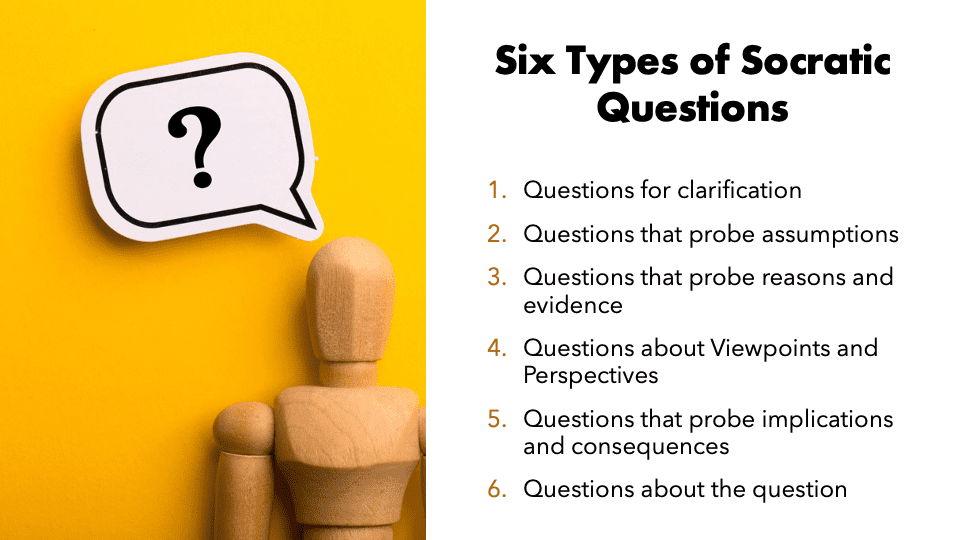
This is accomplished by mastering the six types of Socratic questions (Figure 1).

Slide3-1

Figure 1: Six Types of Socratic Questions

Thinking Like a Data Scientist (TLADS) Methodology

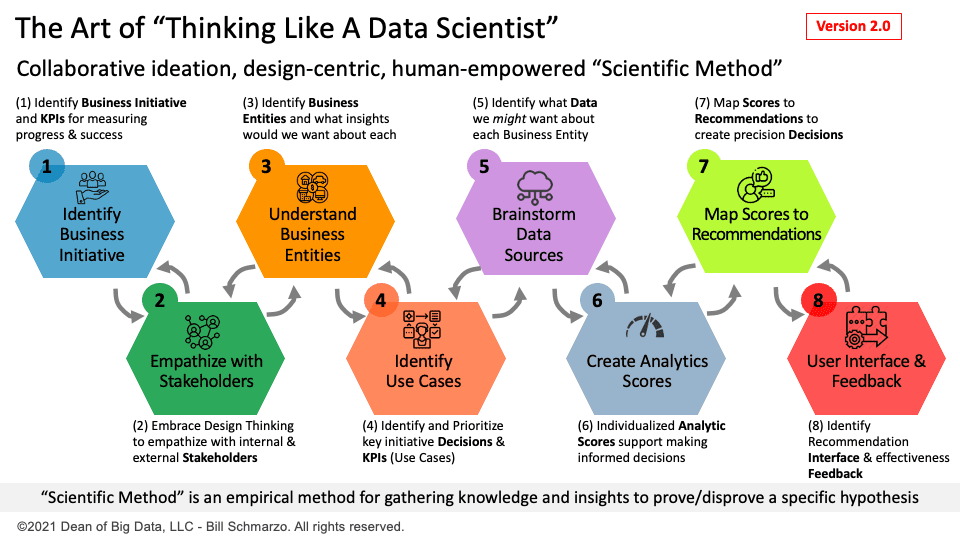
The TLADS methodology provides a specialized framework for value-based problem-solving and data-driven decision-making, incorporating business context, stakeholder alignment, and the practical application of data science techniques. It provides a structured process that maximizes the value and relevance of the analysis, making it particularly beneficial in the context of data science projects within organizations (Figure 2).

Slide4-1

Figure 2: The Art of Thinking Like a Data Scientist

In particular, the TLADS methodology focuses on the following:

  • Value-driven. Provides a framework with design templates and exercises for understanding how organizations create value, identifying the desired outcomes from those value-creation processes, and brainstorming the KPIs and metrics against which value-creation effectiveness will be measured across a diverse range of internal and external stakeholders.
  • Structured problem-solving. Provides a structured methodology for problem-solving using data science techniques. It offers a systematic approach that guides practitioners through defining the problem, gathering relevant data, analyzing data, and communicating results. This structured process helps ensure that critical steps are covered and increases the efficiency and effectiveness of the analysis.
  • Data-driven decision-making. Provides a step-by-step process for gathering, preparing, and exploring data to uncover insights (predicted behavioral and performance propensities) and test hypotheses. By exploiting the unique economics of data, the methodology enables practitioners to make scalable, repeatable evidence-based decisions, leading to improved business and operational outcomes.
  • Business context and stakeholder alignment. Emphasizes understanding the business context and engaging stakeholders throughout the process. It recognizes the importance of considering the objectives and perspectives of the organization, ensuring that the data analysis aligns with the broader business goals. This focus on stakeholder alignment helps ensure the analysis outcomes are relevant and meaningful to the business.
  • Practical application of data science. Bridges the gap between technical data science skills and real-world business problems. It provides practical guidance on applying data science techniques in a business context, helping practitioners translate their skills into actionable insights. This practical orientation makes it easier for organizations to implement the methodology and derive value from their data assets.
  • Iterative and adaptive approach. Exploits the iterative nature of data analysis and decision-making. It encourages feedback and refinement throughout the process, allowing continuous learning and improvement. This adaptive approach helps practitioners address complexities and challenges that may arise during the analysis and ensures that the methodology remains flexible and responsive to evolving needs.

Blending Socratic Method with Thinking Like a Data Scientist Methodology

To enhance the prompt engineering for AI-powered chatbots such as ChatGPT and Microsoft Bing, it is essential to merge the questioning skills of the Socratic Method with the “Thinking Like a Data Scientist” framework. This fusion guarantees the provision of pertinent details.

Prompt engineering involves creating natural language inputs that guide large language models (LLMs) to provide relevant responses. By designing prompts carefully, users can improve the quality of insights delivered by LLMs.

By integrating the Socratic method with the TLADS methodology, prompt engineering can be improved as it promotes critical thinking, enables a deeper understanding of the targeted problem, and leads to robust and informed decision-making. The following steps can be taken to achieve this:

  • Questioning assumptions: The Socratic method is centered around questioning assumptions and exploring underlying beliefs. By incorporating this approach into the TLADS methodology, data scientists can challenge assumptions made during the problem definition and hypothesis development stages to uncover hidden biases, consider alternative perspectives, and refine the problem statement for a more comprehensive analysis.
  • Guiding inquiry: The Socratic method encourages a guided inquiry process, where thoughtful and targeted questions prompt deeper exploration of the subject matter. This can be applied during the data exploration and feature engineering phases, where data scientists collaborate with business subject matter experts to ask probing questions to uncover patterns, anomalies, or potential confounding factors.
  • Testing and validating: The Socratic method encourages rigorous testing and validation of ideas. By combining this approach with some simple Design Thinking techniques in the hypothesis testing stage, data scientists can challenge their assumptions and design more thoughtful experiments that rigorously test the validity of the hypothesis.
  • Facilitating discussions: The Socratic method emphasizes asking thought-provoking questions and encouraging active subject matter expert engagement. As a result, data scientists can better understand the analysis findings, elicit different perspectives, and collectively arrive at a more informed and relevant approach.
  • Iterative learning: The Socratic method encourages an iterative learning process, where knowledge and understanding evolve through ongoing questioning and exploration. By embracing this mindset, data scientists can continuously reflect, learn, and refine their approach. They can adapt their hypotheses, refine data collection methods, or explore new analytic techniques based on the insights gained from the Socratic questioning.

The Dean Meets Socrates Summary

Integrating the Socratic method with my Thinking Like a Data Scientist methodology adds a layer of critical thinking, promotes deeper analysis, and enhances the overall rigor of the decision-making process. It encourages a more thoughtful and reflective approach, leading to more robust and informed data-driven decisions. It enables everyone to solve complex problems, generate insights, and create value from data. It fosters a culture of curiosity, collaboration, and innovation conducive to rational, data-driven decision-making.

As AI technology such as ChatGPT, Google Bard, and Microsoft Bing continue to advance, asking insightful and thought-provoking questions will become increasingly crucial for success in prompt engineering.

It’s an intriguing thought. Could technologies such as ChatGPT push us to be more human? Perhaps we’ll start asking more precise, insightful questions that align with our goals and learning objectives. It’s almost ironic that technology might force us to be more human.

Yea, now that’s a most excellent adventure!

ChatGPT Overemploys Some, Lays Off Many

The ‘ChatGPT Dilemma’ of Job Creation and Destruction

The alarm over AI taking away jobs went off when ChatGPT was able to perform tasks like a regular employee. Notwithstanding the fear, people have been trying to understand the technology, adapt to it, and implement it in their workings. In this wake, people have been able to use ChatGPT to earn money on the side as well.

Last month, under r/ChatGPT, a Reddit user narrated his story of how he has achieved an “extremely high interview invitation rate” by using ChatGPT for applying for jobs. The user would upload his resume on ChatGPT, ask specifically tailored roles for his experience, ask the chatbot to outstandingly answer questions for the role, and thus make his application “amazing” according to the feedback he got.

Another user tells a similar story where he was applying for jobs for weeks but could not get to an interview. Once he took help from ChatGPT to write a cover letter for a job and enhance his resume, he got back an interview invite the same day.

In both cases, it is clear that ChatGPT can get you interviews for jobs. But, the first story also narrates how the person could not get the job because he got “anxious during interviews”. Could it be that the cover letter and resumes got selected because a lot of companies are actually running ChatGPT or similar products in the HR department? “What a sound cover letter!” is what ChatGPT would say to such AI-generated cover letters.

On the other hand, these AI tools are threatening to wipe out millions of jobs around the globe. According to a Goldman Sachs report on the potential of generative AI, 300 million jobs could be automated by AI. The same report also reads that automation of any task historically has offset this loss of jobs by creating new jobs and occupations, resulting in long-run employment growth. Though, the specific job roles have not been specified.

OpenAI is also aware of the disruption in the job market that its technology has, and will eventually cause, and also published a paper talking about the same in March. We are already seeing companies like IBM freezing hiring for jobs that could be replaced by AI. On the other hand, PwC predicted that AI will create as many jobs as it will displace, but there would be different “winners” and “losers” by industry sectors. But this was back in 2018.

There are new jobs in the market such as prompt engineering, that provide a salary higher than even full-stack developers, but the number of jobs that are getting displaced and a number of people getting laid off is higher than the ones that are created.

AI Money Generator

Two months back, Jackson Greathouse Fall, a writer and a brand designer, used ChatGPT to guide him to becoming a millionaire. After telling the chatbot, “You have $100, and your goal is to turn that into as much money as possible in the shortest time possible, without doing anything illegal”, Fall got instructions on how to launch a business called Green Gadget Guru, offering products to enable people to live sustainably.

I gave GPT-4 a budget of $100 and told it to make as much money as possible.
I'm acting as its human liaison, buying anything it says to.
Do you think it'll be able to make smart investments and build an online business?
Follow along 👀 pic.twitter.com/zu4nvgibiK

— Jackson Greathouse Fall (@jacksonfall) March 15, 2023

After this, he managed to raise $1,378 in just one day, got investments, and his company got a valuation of $25,000.

Apart from running a business, ChatGPT has enabled users to acquire multiple full-time jobs simultaneously – referred to as “overemployment”. The trend started during COVID, and now ChatGPT has made it possible for a lot more people. The funny, and at the same time concerning, part is that their employers have no idea!

One said, “ChatGPT does 80% of my job,” which has allowed him to apply for multiple positions, and finish their work in half the usual required time. Moreover, there is a complete Reddit thread where “overemployed” people talk about how they are landing different jobs, working on more than two jobs at the same time, and looking for even more opportunities.

On the other hand, companies have been restricting people to use AI for jobs. Most recently, Apple announced that is not going to allow its employees to use ChatGPT internally. Is it fair that while some people are overemployed with this chatbot, but people in various roles are being restricted to use it amid the fear of layoffs?

Is AI Stealing My Salary?

One might be quick to celebrate and admire these “overemployed” workers getting chunks of money through different jobs. But if we look at this phenomenon a little critically, the case gets a little concerning. Roles that would have been filled by another person are now getting filled by a single person using ChatGPT and similar AI products. Seems unfair for people not trained enough with AI.

This is what Richard Baldwin said at the 2023 World Economic Forum. “AI won’t take your job, it’s somebody using AI that will take your job.” There is no doubt that AI is displacing jobs globally and people from various sectors are increasingly revolting against its use. It would have not been possible for the “overemployed” people to get these jobs if ChatGPT did not assist them.

Moreover, OpenAI’s ChatGPT has not just caused unemployment indirectly, but also directly. According to another Reddit post, the user explains how ChatGPT is slowly taking his job away. He has been working as an ML engineer at a company and was building conversational agents, similar to ChatGPT. But after OpenAI released ChatGPT API, the company adopted it, replaced the already built ML models, and started planning to remove the ML team entirely to cut costs.

There is no doubt that a lot of jobs are still safe from this AI phenomenon, but a lot of them are not. Coding too is slowly facing the brunt of its own development, with a lot of auto code generators shrinking a 10-people job to just one human and AI partnership.

Apart from prompt engineering, several other jobs are being introduced that now consider ChatGPT expertise as a relevant skill. It is now evident that the time to train humans to work along with AI is here. If you don’t do it right now, someone else will.

The post ChatGPT Overemploys Some, Lays Off Many appeared first on Analytics India Magazine.

Data Science Hiring Process at ZS

When it comes to healthcare, global management consulting and technology firm ZS is a leading player. Headquartered in Illinois, the company has worked with top 50 pharmaceutical companies, and catered to 21 out of 25 top medical technology firms.

ZS covers the entire value chain of AI and ML, starting from research and extending to value realisation. It has an AI research lab dedicated to developing innovative and cutting-edge AI concepts. Their team of experts focuses on creating and deploying tech solutions that enable clients to expand their influence across different units, brands, and regions.

It has made an array of acquisitions in the health sector with the recent most being Trials.ai, a healthcare-focused, pure-play AI and analytics company. ZS also acquired analytics company Intomics that works with biomedical big data to infer biological insights and solutions providing digital health firm Medullan. Some of the primary clients include Pfizer, Eli Lilly and Company, Johnson & Johnson, Merck and so on.

“We are constantly experimenting with generative AI and AR/VR to create immersive experiences for our customers,” said Manish Menon, office managing principal, ZS, in an exclusive interaction with AIM.

Currently, ZS is recruiting associates, associate consultants and consultants in the data science domain.

Inside ZS’ AI & Analytics Team

With over 3,600 employees on the AI and analytics team, the team leverages cutting-edge tech to work on both client-billable projects and internal assets.

The data science team is composed of professionals with different levels of expertise. There are currently 125 associates, 56 associate consultants, 31 consultants, 19 managers, and four associate principals in the team.

The company provides advanced AI-based data management solutions, specialising in semantic graph technology. Their smart algorithms optimise data services and enable in-house capabilities. They offer services like data lake development, warehouse migration, training, and organisational redesign. They also provide a customised solution integrating primary, secondary, and social data through their AI-powered cloud-native platform, ZAIDYN.

The team uses ML, statistical analysis and computing, deep learning, data visualisation, NLP, problem-solving skills, model deployment, data structures and algorithms, neural networks in their daily work.

Additionally, the team also uses the following tools, applications and frameworks: Power BI, Microsoft Excel, Tableau, Python or R, image recognition, fraud detection, speech recognition, augmented reality, random forest, NumPy, XGBoost, Pandas and more.

Interview Process

“We look for candidates who understand data science, AI, ML, NLP, BERT, NER, supply chain, operational research, clinical trials, pharmaceuticals, healthcare, and have expertise in Python and R,” said Menon.

For junior-level positions, there are three interview stages that include coding challenges, aptitude questions, and ML case studies, panel presentation, 60-minute discussion of a real-world business problem and more.

On the other hand, consultants in senior positions have similar but more intrusive technical rounds where they discuss the candidate’s CV and assess their expertise in ML, advanced algorithms, and data science projects. In the unstructured case study round, candidates analyse a real-world business problem and develop a comprehensive framework for solving it. The evidence-based interview requires candidates to present a data science project, showcasing their approach, methodology, and valuable insights.

Read more: Data Science Hiring Process at HARMAN

Skills Needed

When it comes to the understanding of tech tools, data science candidates should be familiar with Power BI, Microsoft Excel, Tableau, Spark, Python, R, SAS, NLTK, among others. They should have sufficient knowledge in healthcare, image recognition, fraud detection, speech recognition, augmented reality, and a wide range of other domains. Moreover, candidates should also have a solid grasp of frameworks such as TensorFlow, Scikit-learn, Pandas, PyTorch, Matplotlib, NumPy, Seaborn, XGBoost, and random forest.

ZS uses several key performance areas (KPA) and key result areas (KRA) to assess the data science candidates.

KRAs

  • Formulating questions aligned with the objectives of the organisation
  • Performing data inquiries and exploratory analyses to address those inquiries
  • Consolidating and manipulating data from diverse origins
  • Selecting suitable models and algorithms to steer the data analysis procedure
  • Proficiency in coding languages such as Python and R

KPAs

  • Net promoter score (NPS): This metric captures the level of customer satisfaction gathered through surveys and distributed among internal stakeholders.
  • Dollars saved (or earned) through data products: Evaluates the value generated by the team for the company in terms of monetary savings or gains.
  • Number of incidents per product monitored: Checks the dependability of data science products by measuring the frequency of incidents per product.
  • Time to incident resolution: Examines the efficiency of data science teams in addressing and resolving incidents, ensuring that key products are restored promptly.
  • Cloud computing costs per team member: Quantifies the expenditure on cloud computing resources per team member, offering insights into the efficient use of computational resources by data science team members.

Expectations

Menon emphasised on the fact that the candidate looking to pursue a career in data science should make it a standard practice to gather information from the hiring team about the company, the clients they will work with and the specific skill set they will be hired for.

It is important to have an appealing resume that showcases your previous projects and proficiency in different data science skills. Employers also prefer candidates who have a consistent work history and have good communication skills and practical problem-solving approach.

“Candidates should be transparent and honest about their preferences and counteroffers to foster a better working relationship with the hiring team and provide a foundation for successful collaboration,” Menon explained.

Read more: Data Science Hiring Process at Pepperfry

Work Culture

ZS is a values-driven organisation that aims to foster collaboration and teamwork towards shared goals based on principles of impact, growth, and empowerment.

ZS India boasts a 31% female representation in its workforce and has adopted a merit-based approach in hiring and promotions with clear policies around inclusivity, as well as a zero-tolerance policy for any violations of these values. “We aim to create a supportive and dynamic work environment that promotes personal and professional growth and cultivates a shared sense of purpose among our employees,” Menon added.

In addition to providing employee rewards and benefits like health insurance, maternity leaves, food, and transportation allowances, ZS also provides the following perks.

  • Paternity, adoption and family medical leaves
  • Mental health support for employees and family members, financial planning services and legal counselling
  • Wellness programs—from nutritional and physical to stress management
  • Employee retention bonus with increasing amounts over four years

So, if you are looking to make an impact as a data scientist in an environment that helps you grow both professionally and personally, check out ZS’ open opportunities now.

The post Data Science Hiring Process at ZS appeared first on Analytics India Magazine.

How To Create Enterprise Data Warehouse Software

The rapid development of data science and data mining techniques enables companies to enhance their understanding of customers, streamline operations, and gain insight into the capabilities and constraints of each department.

Prioritizing the analysis process requires extracting and appropriately formatting the data, then saving it for future use. Netflix’s data warehouse contains approximately 60 petabytes of information that require processing and categorization. Corporate data warehouses are commonly used by businesses to manage large amounts of information.

This article will explore the enterprise data warehouse, including its components and the steps to create one for a company.

How To Create Enterprise Data Warehouse Software

The Essence of EDW

The Enterprise Data Warehouse (EDW) is a centralized storage system designed to organize and manage a company’s data for analysis and reporting purposes. Data can be gathered from different sources, including ERP, CRM, and physical recordings. Using a data warehouse, enterprises can efficiently handle large data sets without the need to manage multiple databases after the completion of the enterprise mobile app development.

The following are the most sought-after EDW solutions that fulfill essential data warehousing criteria: storage resource expandability, advanced performance, availability, and high security.

  • Amazon Redshift
  • Google BigQuery
  • Snowflake

How the EDW System is Architectured

Enterprise data warehouses have a multifaceted structure, as they are responsible for transmitting, cleaning, storing, and analyzing data. A distinct layer is necessary for each function to handle its specific task.

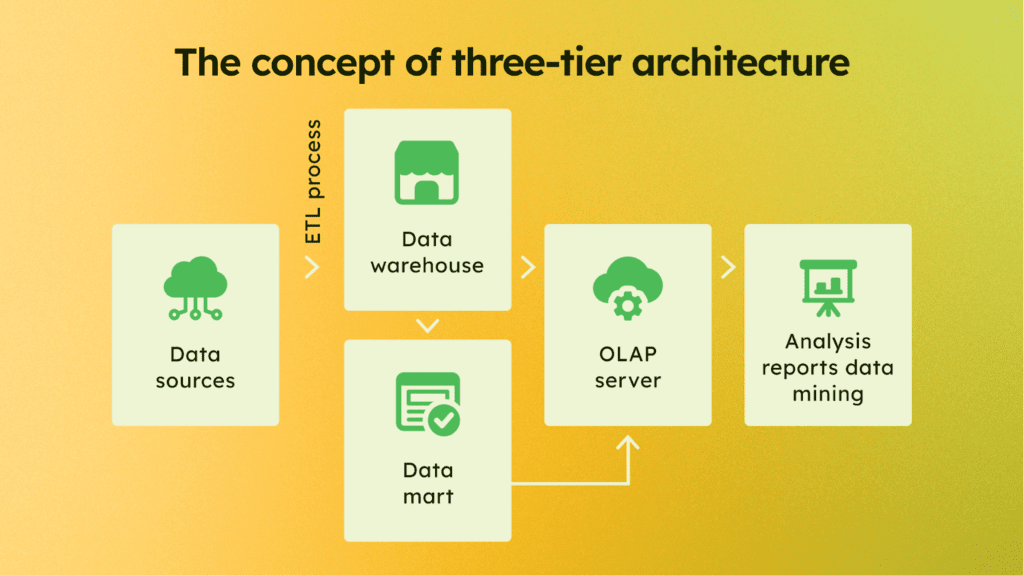
The typical structure of an EDW data pipeline involves three layers.

  • Single-tier architecture. The client, database, and server reside on the same machine.
  • Two-tier architecture. The characteristic feature of this type is the direct communication between the user and the server. The two-tier system consists of client applications and server databases.
  • Three-tier architecture. This is the most widely used enterprise data warehouse architecture type.
How To Create Enterprise Data Warehouse Software

The concept of a three-tier architecture: how it is functioning

Data Warehouse Types

Now, it is necessary to explore the technical aspects of EDW and become familiar with various data warehouse types.

How To Create Enterprise Data Warehouse Software

Major types of data warehouses

Enterprise Data Warehouse, or EDW is a widely used and established type of data warehouse. Companies utilize EDW databases to consolidate data from different sources into one location. Once the ETL process is completed, the data becomes available for trend analysis and reporting. The enterprise data warehouse stores information from various subject areas, making it a unique type of data warehouse.

Operational Data Stores differ from enterprise data warehouse solutions by collecting and retaining short-term data. The ODS information undergoes real-time updates with a shorter data retention period than EDW. This storage option is appropriate for analyzing daily tasks and conducting surface-level employee performance evaluations.

Data Mart is almost like an enterprise data warehouse but with a difference. EDM saves all company data, while Data Mart stores only departmental information. Two separate data marts will be created for marketing and sales. This storage is perfect for tracking department performance with precision.

Data Lake is a useful location for efficient access to raw, structured, and unstructured data for future cleaning and organization. The alternate term for it is “data on demand.” The data subgroup is selected based on particular criteria and then presented to the data analysts once the necessary information has been requested. The data lake serves the primary function of managing and interpreting data from various sources.

How to Develop an EDW Software?

First, starting to build an EDW system, you should find a programmer or a team of skilled specialists. One of the best variants is to apply to an experienced outsourcing software development vendor for help. They will offer you a professional staff to put your product concept to life.

How will it be? While creating the EDW platform, the specialists apply to Extraction-Transformation-Creation (ETL) process. Let’s consider its very essence in the image below.

How To Create Enterprise Data Warehouse Software

ETL workflow activities to know about

Wrapping Up

EDW creation for business requires a profound expertise to deliver the solution entirely fitting your company’s needs. A professional outsourcing software development company can help you deal with it. The specialists will carefully guide you through all the development processes and provide you with a robust, profitable, and modern solution boosting your business performance.

Author bio

Yuliya Melnik is a technical writer at Cleveroad. She is passionate about innovative technologies that make the world a better place and loves creating content that evokes vivid emotions.

How Blockchain Technology is Transforming the Business

Blockchain is a revolutionary technology, which is promising businesses in reducing risk and maintaining data transparency, privacy, and security. Blockchain has several opportunities that the business can utilize to improve business processes. Data privacy is highly important and a top concern for any business therefore several of them are trying to use blockchain in their process.

Several companies and enterprises are adopting blockchain to improve the overhaul of existing business operations and data handling. Industries such as healthcare, telecom, supply chain, and IT are integrating Blockchain to streamline business processes This article will be exploring the impact of Blockchain on business.

image-20

What is Blockchain Technology and Its Mechanics

Blockchain is the 5th ranked technology in the world. Blockchain has brought many changes in financial, healthcare, banking, accounting, and other sections irrespective of size, nature, and even geographical location. Blockchain is a list of records that is growing and linked using cryptography, a security standard in database management. Each record is known as a block and it is connected with the previous block. Transaction data is time-stamped and secure between two parties since it creates resistance to the modification of data. Blockchain is secure because it is managed by a peer-to-peer network and blockchain records are not unalterable.

Blockchain will improve the industry standards and the structure of global business using digital currencies. According to global experts, the lack of international standards is a big obstruction to the worldwide adoption of Blockchain technologies. Industries are reinforcing these necessary standards and transforming small, mid, and large-size businesses. We have researched and evaluated the following sectors and are significantly implementing this new technology to improve and optimize their operations.

Blockchain is Reinventing Financial Sectors

Blockchain has made major changes in the financial industry. Financial companies can make faster transactions since it has changed the way of banking services. It provides a way for unknown and untrusted members to satisfy the state of the transaction database without using any middleman. Transactions are now more speedy and secure for consumers and businesses. Major payment networks, stock exchanges, and money transfer services are using Blockchain in reducing transaction fees and making faster and more secure payment transactions.

Accounting Sectors

Accounting is a challenging task for any business. Several accounting firms are using blockchain to manage complex tax codes, invoices, bills, and income tax files which are in paramount need of accuracy and precision. Accounting professionals use new tools to audit and validate transactions and save time. Rubix is one of the best Blockchain software for accounting.

Human Resource Sectors

Blockchain could be used in HR and Resource management fields. Hiring professionals can use Blockchain to quickly verify credentials provided by candidates and employees. It can also help in processing inaccurate data and prevent third-party companies. MNCs and large organizations where thousands of employees are working across the country need a payroll system. Blockchain-based systems and tools can simplify payroll and payment transactions in different currencies. WorkChain and Aworker are great automated payroll systems based on Blockchain which offers employees to receive their pay when they complete the work assigned. These platforms are multichain-validated data processing platforms that work in peer-to-peer networks.

Asset Management, Shipping, and Tracking

Asset management is a critical task for any logistics company. What is the status of the material when it is in inventory when it arrived and where would it move? The asset data needs to be accurate and must not be alterable. Giant shipping companies are working on Blockchain systems to track the shipping containers that are roaming in the world. Currently, Blockchain systems are developed by IBM and Digital Asset which would host a chain of data than the traditional asset management tools.

Companies that store, manage and ship valuable assets are enabling the Blockchain security standards and records. With the increased business volume, traditional software is not enough to handle records when there are multiple edits and updates. Blockchain will transform this industry.

Top Management & Operations

Top management and operations are the most crucial departments of any organization. Blockchain is helping in streamlining internal operations and reducing friction in sharing business-critical information. Blockchain is allowing management employees to prepare a private and shared ledger with historical versions to maintain the authenticity and transparency of information.

This way businesses are implementing a level of trust to achieve the goals and targets. Blockchain is a secure and safe environment for management and operations to share confidential information with other departments in the company and different offices in other countries.

Digital Contracting

Blockchain is building the next generation of contract management. Digital contracts are the bridge between two organizations. Blockchain is providing a new infra to do streamlined business. Start contacts are shared blockchain databases. For example, Accenture has developed a unified solution for businesses to sign blockchain-enabled smart contracts. The contract is secure and can be revised, changed and captures all changes in a ledger. For each change, it generates a notification and is shared with transparency. Blockchain enables all participating parties to have a shared ledger of all activities in the contract. Final contact can be stored in one place and have all recorded versions and activities to maintain transparency.

Contracts are highly usable when two business parties come to meet common conditions and rules to be followed. Smart contracting solutions based on Blockchain technology are improving how businesses process contracts. Contracts need terms, additional supporting documents, proofs, number of revisions and shared between parties. Blockchain enables technology enabling several advantages to businesses and organizations in signing complex contracts.

Final Words

Blockchain technology has several potentials that can transform the foundation and structure of global industries. International industries will significantly adopt this new technology and this revolution will change the scenario in data handling, security, and records management. Businesses must follow innovation. Blockchain and digital currencies will make business processes faster, more secure, and more efficient to build a strong economy.

Author Bio

image-21

Piyush Jain is the founder and CEO of Simpalm, a mobile app development company in the USA. Piyush founded Simpalm in 2009 and has grown it to be a leading mobile and web development company in the DMV area. With a Ph.D. from Johns Hopkins and a strong background in technology and entrepreneurship, he understands how to solve problems using technology. Under his leadership, Simpalm has delivered 350+ mobile apps and web solutions to clients in startups, enterprises, and the federal sector.

This Week in Apps: ChatGPT comes to iPhone, Bing AI efforts expand, Instagram’s Twitter clone

This Week in Apps: ChatGPT comes to iPhone, Bing AI efforts expand, Instagram’s Twitter clone Sarah Perez @sarahintampa / 7 hours

Welcome back to This Week in Apps, the weekly TechCrunch series that recaps the latest in mobile OS news, mobile applications and the overall app economy.

The app economy in 2023 hit a few snags, as consumer spending last year dropped for the first time by 2% to $167 billion, according to data.ai’s “State of Mobile” report. However, downloads are continuing to grow, up 11% year-over-year in 2022 to reach 255 billion. Consumers are also spending more time in mobile apps than ever before. On Android devices alone, hours spent in 2022 grew 9%, reaching 4.1 trillion.

This Week in Apps offers a way to keep up with this fast-moving industry in one place with the latest from the world of apps, including news, updates, startup fundings, mergers and acquisitions, and much more.

Do you want This Week in Apps in your inbox every Saturday? Sign up here: techcrunch.com/newsletters

Top Stories

ChatGPT comes to the iPhone
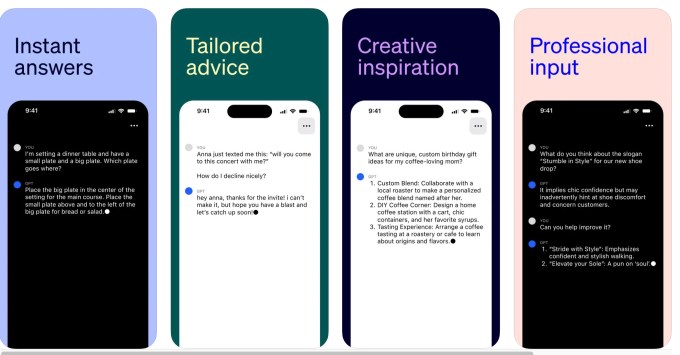
Image Credits: OpenAI (App Store screenshot)

ChatGPT is going mobile. On Thursday, OpenAI announced the launch of an official iOS app that allows users to access its popular AI chatbot on the go, months after the App Store was filled with dubious, unofficial services. The new ChatGPT app will be free to use, free from ads and will allow for voice input via Whisper, the company says, but will initially be limited to U.S. users at launch. Support for other markets will be available in the “coming weeks,” OpenAI said, without offering further details. An Android version is also promised to come “soon.”

Like its desktop counterpart, the new ChatGPT app allows users to interact with an AI chatbot to ask questions without running a traditional web search, plus get advice, find inspiration, learn, research and more. Given the issues with Apple’s own voice assistant, Siri, and its own lack of AI progress, the new release could push more users to try ChatGPT on their phones as their main mobile helper. This could potentially impact Google, as well, as the search engine today benefits from being the default search engine in Safari on Apple’s iPhone.

Consumer interest in AI has been growing, which led to the top 10 mobile AI apps generating double-digit millions in consumer spending before the first quarter of this year even wrapped, but far too many of today’s apps claiming to offer ChatGPT access were effectively scams that tricked users into high-priced subscriptions. Apple doesn’t always promptly take down fleeceware like this, despite the harm to consumers. (Some believe it’s not incentivized to do so given it benefits financially by leaving scam apps up where it can take a cut of the subscription payments.)

Now that there’s an official (and free!) ChatGPT app on the market, there’s little need for consumers to download a paid alternative. If people want more functionality — like faster response times or access to GPT-4 — they can pay OpenAI directly for a ChatGPT Plus subscription.

It remains to be seen how the launch will impact the wider AI chatbot market, or if Apple will begin to quietly pull down some of the more unscrupulous ChatGPT scam apps from the App Store. The app may also shift consumer behavior away from relying on voice assistants like Siri and, later, Google Assistant, as users turn to ChatGPT to answer more of their everyday questions and direct them to new information.

For the time being, the new ChatGPT app is No. 1 on the top free apps chart in the App Store and is also being featured at the top of the App Store’s Apps tab, and in a list of “Must-have” apps for iPhone. However, internally at Apple, staff has been banned from accessing ChatGPT over fears of leaked confidential data.

Microsoft expands AI features across its mobile apps

Open AI may have been the big news this week, but Microsoft also rolled out a number of AI updates to its suite of mobile apps as competition with Google and others heats up.

The company announced a number of changes to Bing, including the rollout of several of the features that it had detailed earlier this month. Across desktop and mobile, this included videos, Knowledge Cards, graphs, better formatting and social sharing capabilities in Bing Chat. Chat history is also arriving across desktop and mobile, allowing users to look back and view a list of their recent activity. (Mobile will receive the feature first, Microsoft says.)

Image Credits: Microsoft

Plus, users will now be able to add a Bing Chat widget to their iOS or Android Home Screen, for faster access to Bing Chat. Later, users will be able to also click the Bing app icon to be taken directly to chat or tap a microphone icon to ask a question.

Users will also be able to start a Bing Chat conversation on the desktop and then continue it on their smartphone — a feature that should arrive by next week. The company says it’s expanded the country and language support for voice input, as well.

In addition, Microsoft is adding Bing Chat to the mobile version of its Edge browser app, which lets you ask questions related to the mobile website you’re viewing, including for it to summarize the article or page. When reading, you’ll soon be able to highlight a word or phrase and have it open a conversation with Bing to learn more about the topic.

The updates included other apps, too, like the SwiftKey keyboard app, which gained the ability to compose text for you, based on the parameters you suggest related to the subject matter, tone, format and length. Microsoft suggests this could be used for writing emails, for example. The feature is coming to iOS and Android in a couple of weeks. An AI-powered translator is also being built into the SwiftKey keyboard.
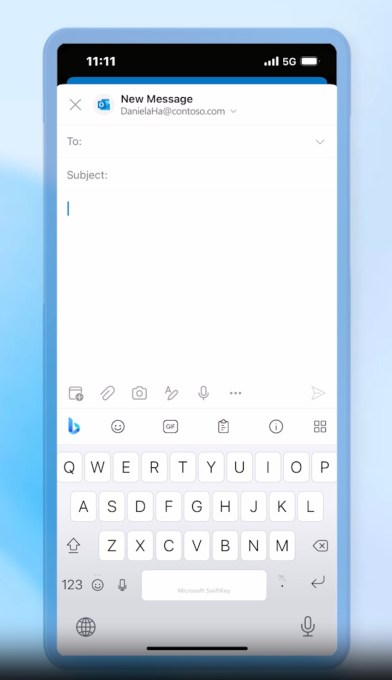
Image Credits: Microsoft

Meanwhile, Skype users can now use Bing in their group chats.

The pace of app updates here is worth noting. Microsoft only debuted Bing Chat 100 days ago, it noted in its announcement on Tuesday, and it has continuously shipped new features since. The latest round of updates follows news from Google’s I/O developer event, where it opened up access to its AI chatbot Bard, which is now available without a waitlist.

It should be interesting to see how quickly Google follows to add Bard access across its own suite of mobile apps, as Bing is doing, or integrate Bard into its own home screen widgets. For now, Google is testing AI features through Search Labs, where today it houses a handful of projects, including AI-powered Google search features, AI in Google Workspaces, smart note-taking project Tailwind and generative music maker MusicLM.

What we know about Instagram’s Twitter clone

More details are emerging about Instagram’s Twitter clone due out later this summer. The decentralized social app will allow users to authenticate with their existing credentials in order to post short updates, including text, links, photos and videos, to the platform. Their account details, like usernames, profile photos and even block lists are said to carry over to the new experience, which will also interoperate with decentralized apps like Mastodon.

Based on a (somewhat blurry) example I got, Meta's new app looks a lot like Twitter.

So, could this take over all the Twitter screenshots we've been seeing on the Feed lately? Maybe.

It’s impossible to predict how audiences will respond but this could be an alternative. pic.twitter.com/xgQa1kUjCl

— Lia Haberman (@liahaberman) May 19, 2023

This week, we understand Meta has been reaching out to celebs and high-profile influencers to get them on board as early adopters. Athletes, actors, producers, showrunners and comedians are said to be the early priorities. In addition, one leak involved screenshots of the new app — or at least mock-ups. These show an app that has a very Twitter-like look and feel, with text posts, likes and comments, but in more of a timeline view that’s less media-heavy that an Instagram feed.

What do you think about Instagram’s Twitter app? Let me know what you’re thinking and hearing via email (sarahp@techcrunch.com) or Signal (415.234.3994)

Everything we know about Instagram’s Twitter clone, due this summer

Platforms

Apple

  • Apple released updated versions of its operating systems, including iOS 16.5, iPadOS 16.5, macOS Ventura 13.4, watchOS 9.5, tvOS 16.5, and HomePod 16.5. The updates bring new Pride Wallpaper and watch faces, plus bug fixes around unresponsiveness in Spotlight, Screen Time and Podcasts in CarPlay, as well as a security fix for an actively used exploit. However, one of the bigger consumer-facing changes is the addition of a new Sports Tab in Apple News that gives you access to stories, scores, standings and more, as well as a My Sports score feature and scheduled cards that take you directly to game pages for more detail.
  • On Apple TV 4K, Apple officially launched its new multiview feature for sports fans, allowing viewers to watch up to four simultaneous streams at once. The feature was previously in beta and is currently limited to watching select sports content, including Major League Soccer matches, Friday Night Baseball games and certain MLS and MLB live shows.
  • Georgia is the latest U.S. state to add support for driver’s licenses and state IDs in Apple Wallet.
  • Bloomberg’s Mark Gurman shares more details about Apple’s upcoming mixed reality headset expected at WWDC, including how the device has deviated from Tim Cook’s initial vision of unobtrusive glasses to a headset that resembles ski goggles and has a separate battery pack.
  • Apple published its first transparency report as part of its settlement with app developers in a class action lawsuit. The report details app removals, appeals, account terminations and government requests for takedowns, among other things. For instance, the company says it rejected roughly 1.68 million apps and broke down the reasons, with the majority being rejected over performance issues, or 1+ million; 253,000+ were later approved and 186,000 apps were removed from the store. The report also breaks down reasons for removals, impacted geographies and more.
  • Apple introduced new accessibility features including Live Speech, Personal Voice and others, like Assistive Access which combines Phone and FaceTime apps and uses larger icons. However, people have been particularly intrigued by Personal Voice, which has users first spend about 15 minutes reading selected text prompts into their microphone. The tool then leverages machine learning on the local device to create a text-to-speech voice that sounds like you.
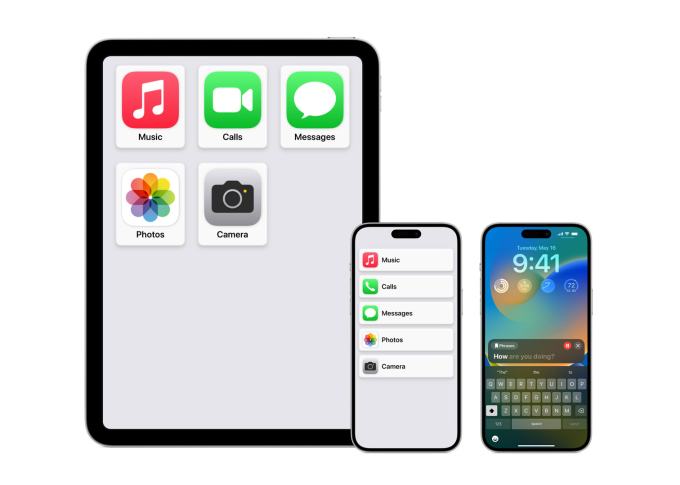
Apple accessibility displayed on iPad and

Image Credits: Apple

Google

  • Google is moving forward with its in-app billing policy in India after complaints from developers who said the service wasn’t compliant with regulations that require Google to let developers offer third-party billing. The developers had argued the new system still requires them to pay a high service fee of 11% or more, despite using their own billing systems. But Google says the 4% fee reduction (from 15% originally) is fair and legal.
  • After Google mistakenly launched an internal build of its Personal Safety app to the Play Store, the site 9to5Google grabbed screenshots of a new “Dashcam” feature that will record video while you’re driving, helping to protect drivers in the event of an accident or other situations where video could be helpful.

App News

Media & Entertainment

Image Credits: NYT

The NYT launched its own audio app. The launch capitalizes on The Times’ acquisition of audio journalism app Audm in 2020, which served as the basis for the new offering. In the newly launched New York Times Audio, the company combines the publication’s top podcasts, like “The Daily,” “The Ezra Klein Show,” “Hard Fork,” “Modern Love,” “The Run-Up” and others, with those made exclusively for the new platform. Thanks to its $25 million acquisition of the production studio behind “Serial,” the app includes content related to that deal, as well, like the namesake show itself, plus new shows from the studio like “The Trojan Horse Affair,” “The Coldest Case in Laramie” and others, as well as “This American Life,” hosted by Ira Glass. Sports talk from The Athletic is also ne included along with Audm’s long-form narrated journalism from non-NYT sources. Audm will now shut down and its subscribers will be moved to NYT Audio. The app arrives following the success of other standalone mobile properties, like NYT Cooking and Games, but it’s unclear if it will see similar traction as users tend to enjoy streaming podcasts in a dedicated app that provides access to all their shows.

More in media…

  • Apple said a change in Google’s podcast search results now allows users to click a button to start listening to podcasts directly in the Apple Podcasts app on their iPhone or iPad, via a deep linking. The change follows Google’s announcement in February that it was winding down a feature that would allow users to play podcasts directly in its search results.
  • YouTube clarified that Google’s recently announced plan to delete inactive accounts will not impact YouTube’s digital archives. Many had been worried that YouTube videos associated with older Google accounts, including those that belonged to people who had died, would be removed as part of this change.
  • Spotify’s AI DJ feature is now available in the U.K. and Ireland. The feature was only available in the U.S. and Canada at launch.
  • Entertainment discovery app Likewise launched a ChatGPT plugin that helps users find TV shows, movies, books and podcasts they may like. The plugin is available through the ChatGPT Plus plugin store, but is not yet a feature in the mobile app itself.
  • Apple brings new concert discovery features to Apple Music and Maps. On the Apple Music app, fans will gain access to Set Lists, which let you browse and listen to the set lists from favorite artists on tour, and read more about their productions. On Apple Maps, Apple is adding over 40 new Guides curated by Apple Music editors that will highlight music venues initially across 10 cities worldwide.
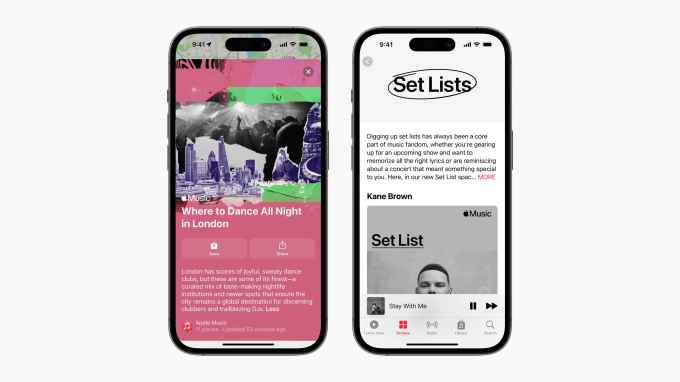
Apple Music app displayed on two smartphones

Image Credits: Apple

  • An audio journalism app Curio, which turns expert journalism into professionally narrated content, launched an AI helper that can create customized audio episodes, based on your prompts. The AI, powered by OpenAI technologies, leverages Curio’s catalog of high-quality journalism licensed from partners like The Wall Street Journal, The Guardian, The Atlantic, The Washington Post, Bloomberg, New York Magazine and others. This allows users to now ask the AI, “Rio,” a question they want to learn more about, then have it create a bespoke audio episode that includes only fact-checked content from these sources.

Audio journalism app Curio can now create personalized episodes using AI

Social Media

  • Twitter increased its video upload limits for Twitter Blue subscribers from one hour and 2GB to two hours and 8GB on the heels of Tucker Carlson’s announcement that he plans to publish his show directly on the platform. Soon after, Twitter users began to test the limits of the feature by uploading full-length movies, but so far, these posts have been pulled down with error messages that cite copyright claims.
  • Instagram announced support for GIFs in comments (on both posts and Reels) and support for collaborators in broadcast channels. The latter was introduced by CEO Mark Zuckerberg, who invited Instagram head Adam Mosseri into the channel to chat. Here, Mosseri teased other upcoming Instagram plans, like a lyrics feature for Reels. But the exec stayed silent on Instagram’s upcoming Twitter rival app, now in early development. When asked if he had anything to announce there, Mosseri just said “Nope.”
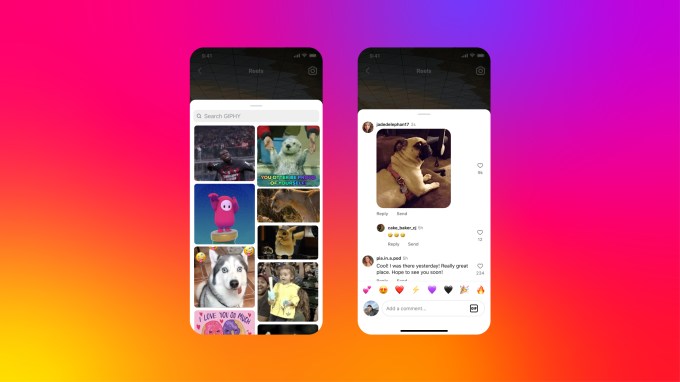
Image Credits: Meta

  • A Pew study conducted five months after Elon Musk’s acquisition asked if users had taken a break from Twitter over the past year. As it turns out, many had. The study, which was conducted in March, found that a majority of U.S. adult Twitter users, or 60%, said they have taken a break from Twitter for a period of “several weeks or more” over the past year. This doesn’t necessarily point a finger at Musk as the reason, as “the past 12 months” includes a large stretch of before he owned the social app. Still, what’s cause for concern is that a quarter of users also said they didn’t see themselves using Twitter a year from now.
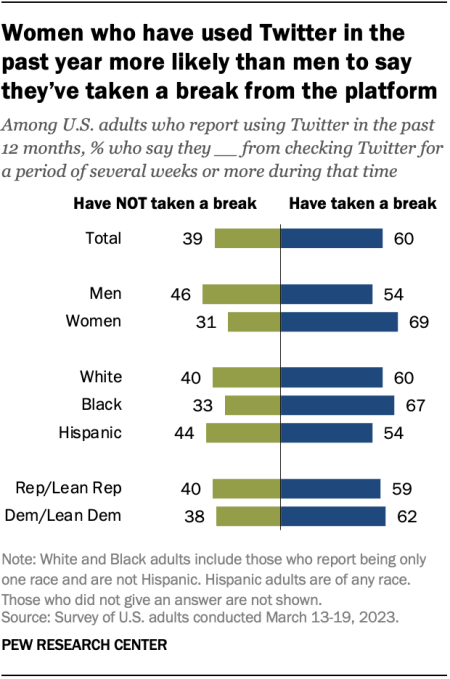
Image Credits: Pew Research Center

  • Meta has started refunding advertisers for an April glitch that caused them to overspend, but small advertisers claim they’re not getting the same attention.
  • Meta expanded its paid verification service to the U.K. after launching in Australia and New Zealand, then the U.S.
  • Right-wing video site Rumble acquired podcasting and livestreaming service Callin from PayPal’s former COO David Sacks, who will now join Rumble’s board. The app had previously raised $12 million in Series A funding.
  • Twitter reportedly acquired a recruiting startup, Laskie, in its first acquisition during the Elon Musk era, Axios reported. The company had raised $6 million.
  • TikTok’s new creator fund will pay creators who make popular AR effects. The $6 million fund pays out based on user engagement. When an effect is used in 500,000 unique videos within 90 days of being published, a creator gets $700 USD. For every 100,000 videos published thereafter within the same 90 days, creators collect an additional $140.
  • Spotify and Bumble team up on a new feature that lets dating app users share their favorite artists on their profiles. Daters can display their Top 10 list, helping matches find things they have in common.
  • Digital creation app maker Picsart introduced new in-app social communities called Spaces that are dedicated to specific topics and interests. The spaces allow for social collaboration, similar to group forums or group chats, where users can browse, post and like and comment on each other’s posts.
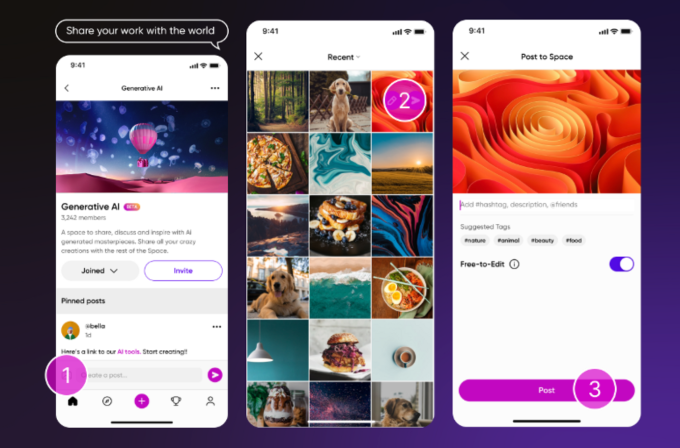
Picsart's new Spaces feature

Image Credits: Picsart

Gaming

Krafton to relaunch BGMI mobile game in India, a year after ban

Image Credits: Soumyabrata Roy / NurPhoto / Getty Images

  • South Korean tech giant Krafton won the approval from Indian authorities to resume operations of the popular India-focused battle royale mobile game, Battlegrounds Mobile India after the government banned PUBG in the region over its links to China. The new title has been granted a three-month trial approval, given Krafton’s move to address data security issues and the location of its servers. A final decision will be made later.
  • Fortnite and Unreal Engine maker Epic Games invested in CLO Virtual Fashion, a digital garment solutions provider offering 3D garment design software, a digital CMS and collaboration platform, and a marketplace for selling designs. The two companies said they purchased shares in each other, but declined to disclose terms.

News & Reading

  • News aggregator Artifact added a new feature that lets journalists and writers claim their profiles, so fans of their work can follow them on the app to see their content surfaced in recommendations. Writers who claim their profiles will be able to see how many people follow them and how many reads their articles have gained through the app. More metrics may be added in time. The company believes writers want a way to better connect with their audiences — beyond Twitter, that is — and this feature could allow them to gain a following that stays with them, even if they move between publications. (One issue? I followed all my TC colleagues to be supportive of them and found my Artifact homepage looking very much like TechCrunch afterward. I guess I need to diversify!)
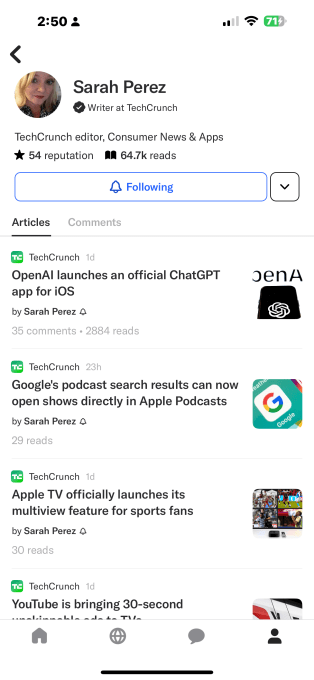
Image Credits: Artifact screenshot

  • Mozilla-owned read-it-later app Pocket added the ability to create lists of news articles, initially for U.S. users, with global support to come. The feature was one of several new additions, alongside the rollout of the redesigned app on iOS and better article-jumping features for Android.

Fintech

  • Neobanking service Step takes on Apple’s new Savings Account offering with the launch of a 5% rate on its own savings account. Like Apple, there are no monthly fees and no minimum balance requirements and the funds are FDIC-insured up to $250,000. But there is a catch: to get the new rate, users will have to set up a monthly direct deposit of $500 or more from either a payroll provider or employer — effectively making Step their primary bank.
  • Apple introduced Tap to Pay on iPhone in Australia, enabling secure, contactless payments for businesses.
  • Online brokerage apps catering to Chinese users who want to invest overseas were pulled from Chinese app stores. Futu and Tiger Brokers agreed to stop accepting new customers from mainland China, The WSJ reported.
  • Investing platform Public introduced a new project called Alpha, designed to “enhance your investing experience with artificial intelligence powered by GPT-4.” Alpha aims to save users time researching and tracking stocks, ETFs, crypto and alternative assets by receiving instant answers to your questions. The feature is rolling out to all Public members. ChatGPT-4 subscribers, will also now have access to Alpha through the OpenAI plugin network.

Image Credits: Public

Travel & Transportation

  • In an interview with TechCrunch, Uber head of rides Camiel Irving talks about all the avenues the company is pursuing to move beyond being only a ride-hailing app, including its expansions into areas like boats, groceries, supporting teen riders and more.
  • In addition to the private chartered boat bookings and teen rider support, Uber announced a new way to hail a car via a phone call (1-833-USE-UBER).
  • Porsche added support for Apple Maps EV routing, allowing Porsche Taycan drivers to use Apple Maps via CarPlay. The announcement follows GM’s plan to ditch CarPlay in all its future EVs in favor of working with Google instead.
  • Comedian Hasan Minhaj will be the newest personal navigator in Google’s Waze app, entertaining drivers with commentary on traffic, self-deprecating jokes and other funny insights.

Uber puts family (even teens) at the center of its new products and features

Uber launches private chartered boats in Mykonos

Commerce

  • Shein raised $2 billion at a $66 billion valuation, down from $100 billion in April 2022, The WSJ reported. Investors included Sequoia, General Catalyst and Mubadala. The e-commerce company generated $23 billion in 2022.

Messaging

  • WhatsApp announced a new feature called “Chat Lock” that lets you lock down your chats from prying eyes. When used, the feature takes the thread out of the inbox and puts it in its own folder that can only be accessed with your device password or biometric, like a fingerprint.

Security

  • Popular Android TV boxes being sold on Amazon, including AllWinner and RockChip, were found to be laced with malware. The boxes’ listings have thousands of good reviews and four out of five stars in their ratings. But security researchers discovered they were actually communicating with command-and-control servers as part of a larger botnet.
  • Twitter’s new encrypted DMs aren’t as safe as you think, security researchers are saying. Though Twitter had already acknowledged the feature doesn’t protect against man-in-the-middle attackers, researchers have pointed out that Twitter has the means to subvert the end-to-end nature of the conversation if it chose — but not without alerting users to that fact. While some encryption is better than none, it’s still worth using an app like Signal or WhatsApp if you wanted secure chats.
  • Apple touted its fraud-fighting capabilities in a recent Newsroom post as the tech giant aims to litigate its right to collect commissions from app developers in the court of public opinion. The company says it stopped over $2 billion in fraudulent transactions in 2022, blocked nearly 3.9 million credit cards, closed 428,000 developer accounts and stopped nearly 105,000 developer program enrollments over suspected fraud.
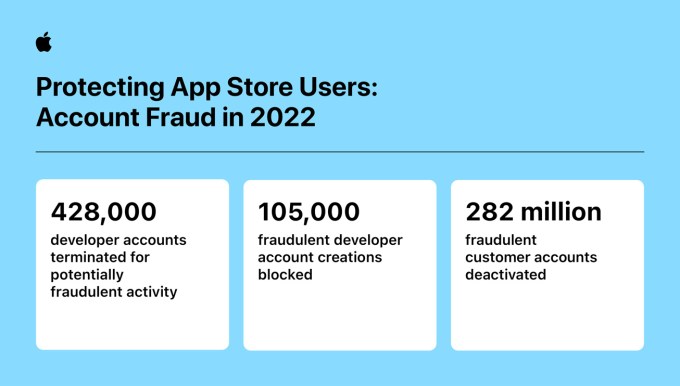
Image Credits: Apple

Government and Policy

  • The Supreme Court ruled in favor of Twitter and Google in a lawsuit that attempted to hold social platforms liable for dangerous content — specifically their hosting of content that promoted the terrorist organization ISIS. The case aimed to leverage an anti-terrorism law to open up the platforms to legal liability, but the court determined they were not responsible for aiding and abetting ISIS. The ruling on Twitter was applied to a related case on Google. The case was noteworthy because it had the potential to impact how Section 230 of the Communications Decency Act was applied. Currently, the law shields tech companies from being liable for the content they post, but a different decision could have carved out an exception for terrorist content.
  • Twitter owner Elon Musk threatened to sue Microsoft over an agreement regarding Microsoft’s use of Twitter data. In a letter to Microsoft CEO Satya Nadella, Twitter said Microsoft had used more data than it was supposed to and shared it with government agencies without permission. The letter appears to be an attempt to get Microsoft to pay for data access via Twitter’s new API fees. The microblogging app maker claimed that Microsoft products, including Xbox One, Bing, Azure, Power Platform and Microsoft Ads, had “retrieved over 26 billion tweets in 2022 alone.” In a tweet, Musk said that Microsoft had “trained illegally using Twitter data. Lawsuit time,” in a reference to Microsoft using Twitter data to train its AI. He also accused Microsoft of demonetizing the Twitter database and selling the data to others.
  • A group of TikTok creators is suing to overturn Montana’s new law that bans TikTok starting January 1, 2024, citing First Amendment violations. The state says it expected a legal challenge and is prepared to defend the new law. Montana’s new law bans apps tied to foreign adversaries including also Telegram, WeChat and Temu.
  • Ovulation tracking app Premom settled with the FTC and state AGs for $200,000 over its sharing of user information with third parties without gaining consent.

Downloads

Skylight, from the makers of Halide
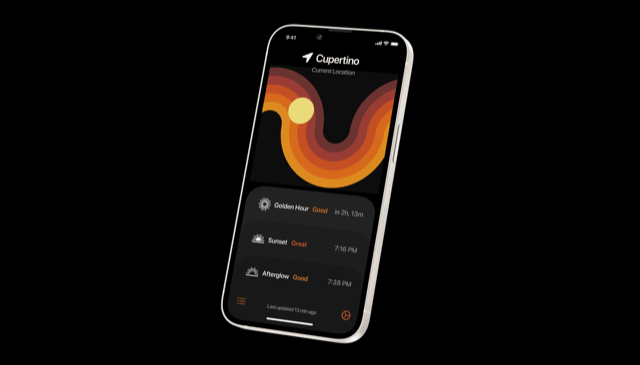
Image Credits: SkyLight via Lux

The creators of the popular iPhone camera app Halide are out this week with a new creation: Skylight Forecast, an app that predicts when you can see a spectacular sunset. The app uses dozens of atmospheric factors to make its intelligent predictions about whether you’ll see a great sunset, an average glow or nothing at all. The app also includes Home Screen and Lock Screen widgets and includes several nice touches. For instance, the app lights up in dynamic colors depending on the quality of the sunset, and the icons are adaptive to the circumstances, changing around based on condition. At launch, the app costs $1.99 per month, or $9.99 per year. Though typically the company offers one-time purchase options, it says it can’t do that in this case because of the ongoing costs for weather data.

Carrot Weather (Update: version 5.11)

Missing Dark Sky? The updated version of Carrot Weather out this week brings improved rain alerts via server-side push notifications as to when the rain will start and stop. You can also set a minimum delivery interval to receive these updates more or less often. It also added several new data sources for Europe and Japan, including OpenWeather and other regional sources. Plus, you can see monthly averages for any locations in the Location Details scene or time travel up to 80 years in the past or a year in the future, to compare weather trends, among other things. Some of these features are reserved for Premium subscribers, while others require a Premium Ultra subscription.

Version 5.11 is now available, meatbags! New data sources, expanded server-side rain alerts, improved location details, a redesigned weather time machine, a new Smart Layout, new secret locations, new dialogue, and more. https://t.co/cfh5hKHNoB pic.twitter.com/pCyHIuXzRO

— CARROT (@CARROT_app) May 18, 2023

Why should India Not be Part of an International Agency to Govern AI?

The need for regulation in AI is widely recognised and actively discussed. During his testimony before a US Senate committee, Sam Altman, CEO of OpenAI, advocated for international cooperation and leadership in regulating AI. He urged the US to play a leading role in establishing a global organisation similar to the International Atomic Energy Agency (IAEA), focused specifically on AI regulation.

Last month, legislators in Europe urged US President Joe Biden to convene a global summit aimed at addressing the need for control and regulation of AI development.

Popular AI critic Gary Marcus, in an Economist article, also argued for an international agency to regulate AI. He too advocated for the establishment of an international, non-profit organisation of governments, technology companies, non-profits, academia, and society as a whole to foster collaboration and address governance and technical challenges in AI.

Even though governments in Europe, USA and many other countries are exploring AI regulation, the Indian government has said it won’t regulate AI. The Modi-led administration perceives AI as a catalyst for progress and innovation, and therefore joining an international agency for AI regulation may not align with India’s vision and goals.

Technology and socio-economic conditions

Technology’s impact and implications are shaped by human choices, values, and societal contexts. Due to India’s rich diversity, the impact of AI can vary within the country, influenced by its unique cultural, social, and political contexts.

“We have seen that ChatGPT performs poorly when prompted in non-English languages, as its data set for non-English languages is less pronounced and other technical complications in Natural Language Processing. Since users of AI services may come from different strata of society, the usability of such technologies may also vary depending on the user,” Kamesh Shekhar, programme manager at the Dialogue, a research and public-policy think-tank, told AIM.

India also has unique socio-economic challenges, such as income inequality, poverty, and access to basic services. In India, AI is already playing an important role in addressing these challenges by enabling innovative solutions in areas like healthcare, agriculture, education, and governance. This was one of the primary reasons why India decided against regulation, for now.

Besides, AI would also impact India’s workforce differently compared to the Western countries. “For India, which has a large pool of low-skilled workers, the displacement of workers in certain sectors could have a more significant impact than in the West, where the workforce is more skilled and better equipped to adapt,” Ibrahim Khatri, founder and CEO of Privezi Solutions, told AIM.

The perspective here is that Western countries may be more open to lenient regulations as the impact on their workforce may not be as significant compared to India. In contrast, India may require stricter regulations to mitigate the potential impact on jobs.

A form of neo-colonialism

If such a body is formed, and India becomes a part of it, will India have a significant influence or will it be an organisation created by the West to fulfil Western interests? India, despite being a founding member of the United Nations (UN), and despite consistently supporting the aims and objectives of the UN, still does not have a permanent seat in the UN Security Council.

“Whether India chooses to participate in an international body to regulate AI would depend on a range of factors, including the mandate and scope of the body, our priorities, and the potential benefits and drawbacks of joining,” Khatri said.

Giada Pistilli, the principal ethicist at HuggingFace, is also not in favour of any international agency regulating AI. “ I’m not at all in favour of an international ethical committee for AI. I mean, that’s kind of a form of neo-colonialism, also, from my perspective, because we’re not going to impose our own Western views on India or China, or the African continent as well,” she told AIM.

For example, UNESCO is developing an ethical charter for AI, seen as a significant step towards a universal ethical framework. However, she found the approach cumbersome.

“Striving for generality in such a framework inherently limits the ability to delve into specific cultural backgrounds and diverse value systems. Imposing a singular viewpoint without considering these nuances can lead to the imposition of one’s own perspective rather than fostering inclusivity and respect for diverse perspectives,” she added.

India should self-regulate

It is worth noting that India is already a member of the Global Partnership on Artificial Intelligence (GPAI), an international initiative focused on promoting responsible and human-centric development and utilisation of AI.

However, when it comes to regulation, the Indian government, if ever they decide to, should regulate AI on their own terms. Even though the Indian government has decided against regulating AI, they have recognised the ethical concerns related to AI and the same has been highlighted in the National Strategy for AI (NSAI) released in June, 2018.

In fact, some government bodies have enacted a patchwork of AI regulations, such as the Ministry of Consumers Affairs imposing guidelines for companies promoting ‘AI-Enabled’ products and the Bureau of Indian Standards (BIS) is aligning Indian AI standards with international ones. Additionally, the Indian Council of Medical Research has released guidelines to address ethical considerations in the use of AI in biomedical research and healthcare.

Furthermore, “the Open Network for Digital Commerce (ONDC) has mandated sellers to reveal their algorithms, and the ONDC conducts audits to ensure that the platforms continue to uphold their commitment to transparency,” Khatri said. He believes that the Digital India Act, even though not explicitly focused on regulating AI, can affect AI regulation in India. “The Digital India Act will address data protection, privacy, and cybersecurity issues, among other things,” he said.

“As AI developers will be collecting and using massive amounts of data to train their algorithm to enhance the AI solution, they might classify as data fiduciaries,” Shekar added.

The post Why should India Not be Part of an International Agency to Govern AI? appeared first on Analytics India Magazine.

Data Science Showdown: Praxis Business School Launches ‘Data Science Student Championship 2023’

Data Science Showdown: Praxis Business School Launches ‘Data Science Student Championship 2023’

For the second year in a row, MachineHack and Praxis Business School have collaborated to invite students pursuing degree programs (UG or PG) from colleges and universities across India to participate in the ‘Data Science Student Championship‘ Hackathon contest.

This month-long championship offers a fantastic opportunity for students, and academic researchers from various STEM fields to showcase their data science and problem analysis skills and catch the attention of top companies at this grand stage. It’s a chance to demonstrate their abilities, innovate, and make a name for themselves in the world of data science.

Starting on May 19, 2023, and concluding on June 11, 2023, the Hackathon aims to discover data science talent from across institutions in India.

Get ready to showcase your talent and knowledge as the next generation of data science professionals come together to make their mark!

Click here to register

About Data Science Student Championship

In the first round, participants will dive into the dataset, analyze it, and come up with ingenious solutions. They will submit their solutions through the MachineHack platform.

Moving forward to June, the top ten contestants from the leaderboard will gather in Bangalore. They will present their final solutions to a panel of experts/leaders from the data science industry during the Final Jury Round.

The top three contestants/teams with the best solutions will be announced as the winners of the Data Science Student Championship 2023, receiving their cash awards and the prestigious title of ‘Data Science Student Champion 2023’.

All contestants who make it to the jury round will receive certificates of commendation, recognizing their exceptional work and dedication in the field of data science.

Problem Statement

Have you ever wondered how ride-hailing services determine the cost of your trip? Now, as a data enthusiast, you have the chance to put your skills to the test. Predict the total fare of a ride-hailing journey and showcase your talent in this thrilling competition. Get ready to show off your prediction prowess and join the excitement!

Here’s a quick look at your toolbox for this event:

  • ‘trip_duration’: How long did the journey last?
  • ‘distance_traveled’: How far did the taxi travel?
  • ‘num_of_passengers’: How many passengers were in the taxi?
  • ‘fare’: What’s the base fare for the journey?
  • ‘tip’: How much did the driver receive in tips?
  • ‘miscellaneous_fees’: Were there any additional charges during the trip?
  • ‘total_fare’: The grand total for the ride (this is your prediction target!).
  • ‘surge_applied’: Was there a surge pricing applied? Yes or no?

Evaluation & Prizes

The submissions for the competition will be assessed based on the RMSLE metric, ensuring a fair evaluation process.

A total of INR ₹50,000 is up for grabs between the top 3 winners as shown below:

  • First place: INR ₹25,000
  • Second place: INR ₹15,000
  • Third place: INR ₹10,000

To ensure your eligibility for the prizes, it is essential that you keep your MachineHack profile updated with all the relevant details. Additionally, we strongly recommend thoroughly reviewing the “Rules” section before participating in the competition.

Please note that the prize money will be awarded to participants only if they are selected by Analytics India Magazine and Praxis Business School in the Hackathon.

So gear up, put your data science skills to the test, and stand a chance to win big in this thrilling competition!

Start Date: May 19, 2023

End Date: June 11, 2023

Final Jury Round: June 20, 2023

Jury Round Venue: Hotel Davanam Sarovar Portico Suites, Bengaluru

Click here to register

The post Data Science Showdown: Praxis Business School Launches ‘Data Science Student Championship 2023’ appeared first on Analytics India Magazine.