LinkedIn is using AI to make it easier for recruiters to reach you

AI-assisted messages in Recruiter

Many professionals use LinkedIn as a networking platform to make connections that could help them eventually secure their dream job. The platform is equally as beneficial for recruiters who want to find top talent to onboard to their company.

However, it can be challenging for recruiters to connect with potential applicants because cold messages oftentimes look like spam and fail to make a personal connection.

Also:I've tested a lot of AI tools for work. These are my 5 favorite so far

LinkedIn is implementing a generative AI tool to help mitigate that issue.

According to LinkedIn, when recruiters personalize their InMail messages on the platform, they see a 40% increase in candidate acceptance rates. As a result, the company is rolling out AI-assisted messages to help recruiters save time and have higher acceptance rates.

AI-assisted messages in Recruiter will use LinkedIn's in-house generative AI to scan your profile to generate personalized messages in seconds.

Also: ChatGPT vs Bing Chat vs Google Bard: Which is the best AI chatbot?

Now, instead of getting a generic, copy-and-pasted InMail message in your inbox from a recruiter, which you would likely just delete, you will find an AI-curated note.

The message might include some attributes specific to your profile, including your work experience and details about the job description that relate to you and your experience.

The feature has already been rolled out to a handful of customers in the U.S. and Europe, with a larger rollout following in June.

Also: The best AI chatbots

LinkedIn also introduced other features to help businesses attract the right talent, including a new values section under the company's About section, an enhanced skills search option on Recruiter, and a new "raise your hand feature" in LinkedIn Learning coming soon.

Artificial Intelligence

Low-code ML platform Predibase raises another $12.2M

Low-code ML platform Predibase raises another $12.2M Frederic Lardinois @fredericl / 7 hours

End-to-end machine learning platform Predibase today announced a $12.2 million expansion to its $16.25 million Series A funding round from last year. The company also announced that its low-code, declarative ML platform for developers is now generally available.

During the beta period, which launched when the company came out of stealth last year, users have trained over 250 models on the platform. Now that the service is generally available, these users can also use Predibase to deploy their own large language models (LLMs) instead of using an API from the likes of OpenAI. Users will also get access to Predibase’s own LudwigGPT LLM — named after the suite of machine learning tools Predibase co-founder Piero Molino launched in 2019 (and not the tragic 19th-century Bavarian king).

“Every enterprise wants to gain a competitive edge by embedding ML into their internal and customer-facing applications. Unfortunately, today’s ML tools are too complex for engineering teams, and data science resources are stretched too thin, leaving the developers working on these projects holding the bag,” said Piero Molino, co-founder and CEO of Predibase. “Our mission is to make it dead simple for novices and experts alike to build ML applications and get them into production with just a few lines of code. And now we’re extending those capabilities to support building and deploying custom LLMs.”

To do this, the company also today announced its Data Science Copilot, a system that can give developers recommendations on how to improve the performance of their models. Predibase is also launching a free two-week trial version of its platform.

Current customers include the likes of Paradigm (which does something with crypto) and Koble.ai (a tool that uses AI to help investors find early-stage investments).

Like most startups at this stage, Predibase plans to use the new funding to expand its go-to-market functions and build out its platform.

Between low-code/no-code ML platforms from the likes of AWS, Google and Microsoft and plenty of startups in this space, Predibase is operating in an increasingly crowded market. The company argues that its focus on developers and its ability to provide them with easy escape hatches from the low-code environment allows it to stand out.

Predibase exits stealth with a low-code platform for building AI models

Amid Mass Layoff, Accenture Identifies 300+ Generative AI Use Cases

Global service provider Accenture has identified 300 plus use cases across 19 industries where generative AI can have tangible impact: said the Chief strategy officer Bhaskar Ghosh in an interview with ET. Earlier this year the company showed exit to 2.5 percent of its workforce.

Accenture has identified five broad areas where generative AI can be implemented – advising, creating, automation, software creation and protection. The company is also working with a multinational bank to use generative AI to route large numbers of post-trade processing emails and draft responses with recommended actions to reduce manual effort and risk.

Earlier this month, the company partnered with Salesforce to accelerate the deployment of EinsteinGPT; the company’s generative AI for CRM. Today, the company stated the implementation will be across service delivery, consulting and technology, taking a foundation model and training it with internal data to create a private model for the company.

Ghosh expects generative AI implementation projects to pick up further over the next two-three years. But earlier this month, the company manually identified 200 tasks related to language and assessed which tasks had higher potential to be automated or augmented. ‘We currently estimate that generative A.I. will impact 40% of people’s working hours. This does not mean 40% of jobs will be eliminated–far from it,’ the report stated.

Accenture had also announced plans to acquire Flutura, an AI company based in Bangalore and Houston, to increase performance in plants, refineries, and supply chains. Flutura specialises in industrial data science services for manufacturers and other asset-intensive companies, with over a hundred employees providing solutions for advanced analytics. Terms and the amount of the deal remain undisclosed.

Even though the tech company stated the jobs will not be negatively affected by the adoption of technology, it announced plans to axe 2.5 percent of its workforce i.e.19,000 employees. “”While we continue to hire, especially to support our strategic growth priorities, during the second quarter of fiscal 2023, we initiated actions to streamline our operations and transform our non-billable corporate functions to reduce costs,” the company stated in its SEC filing.

The post Amid Mass Layoff, Accenture Identifies 300+ Generative AI Use Cases appeared first on Analytics India Magazine.

Google’s Next TPU Looms Large as Company Wagers Future on AI

Google’s Next TPU Looms Large as Company Wagers Future on AI May 31, 2023 by Agam Shah
Google is hedging its future on artificial intelligence, and is swinging at the fences to prove it is up to speed with rival Microsoft, which has unexpectedly emerged as a frontrunner.

Google CEO Sundar Pichai managed to create excitement around its AI technologies at the recent IO conference. But many questions were left unanswered on the hardware that will drive the next-generation AI, and Google’s future.

CEO Sundar Pichai's keynote at Google IO was carefully curated, and the presentations gave life to how Google plans to embed AI to make its products smarter and easy for users. For example, Google Docs can use AI to assist users in creating documents – such as cover letters – and save time.

But Google did not match up to Microsoft on one thing: hyping up the hardware it is using to drive its AI future.

The hardware and infrastructure driving AI are becoming an important part of the conversation, but Google shared no details on its next TPU or other hardware that is training its upcoming generative AI technologies.

Pichai spent a few minutes talking about its upcoming foundational models, including Gemini, which will drive its product offerings including search.

Google CEO Sundar Pichai on stage at Google IO 2023. Credit: EnterpriseAI.

"Gemini was created from the ground up to be multimodal, highly efficient and … built to enable future innovations. While still early, we are already seeing impressive multimodal capabilities not seen in prior models," Pichai said during the keynote.

Gemini is still in training, Pichai said. But company representatives declined to comment on whether the company's next-generation AI chip – called TPU v5 – was in operation and being used to train Gemini.

The Gemini model will come in various sizes and can be adapted for different applications, much like PaLM and PaLM-2. But the training of Gemini could take time.

DeepMind has developed technologies targeting verticals, including models for nuclear energy and protein folding, and is targeting artificial general intelligence, a form of an all-purpose digital brain that can answer all questions. It is not clear if Gemini would compete with GPT-4 or GPT-5.

Google's silence on its hardware contrasts with Microsoft, which has been talking up the cost-per-transaction and response time of its Azure supercomputer, which is based on Nvidia's GPUs.

Gemini is expected to succeed PaLM-2, which was also announced at Google IO. The PaLM-2 model is an upgrade over the previous PaLM model that was used for Bard, its first AI chatbot used in its experimental search product. The Bard chatbot based on PaLM-2 is in beta and was opened to users in 180 countries.

PaLM-2, which was detailed in a research paper released this month, talks about fine-tuning the model so it is less toxic and more accurate in reasoning, providing answers, and coding. The model was trained on TPU-v4 hardware, according to the research paper.

The ability to release AI technologies faster and quicker responses to user queries is related to hardware capabilities. Microsoft is jumping quickly over to Nvidia's H100 GPUs after implementing OpenAI's GPT-4 technology in its search and productivity applications.

Google has turned to its homegrown Tensor Processing Units to train its generative AI models. Google’s last AI chip, TPU v4, was officially released in 2021, though it had been testing for a few years before that.

The company has TPU v4 supercomputers with 4,096 of the company’s AI chips. Google claims that the supercomputer is the first with a circuit-switched optical interconnect, and the company has deployed hundreds of TPU v4 supercomputers in its cloud service.

At the recent ISC tradeshow in Hamburg, keynote speaker Dan Reed shared an interesting fact: it was possible that training GPT-4 could have taken a year or more of sustained exascale-class computing.

"Think about any computational model we would run that we could justify devoting a calendar year to running that…you can make money doing that. That is what is driving it. It is also driving what is happening in the innovation space around the underlying technology," said Reed, who is the presidential professor for computer science at University of Utah.

The innovation is in the hands of the few with the best AI hardware, including Google, Amazon, and Microsoft, Reed said.

It is not yet clear what hardware was used to train GPT-4, but based on the timing, it was likely on the Azure supercomputer with Nvidia's A100 and H100 GPUs.

Google's AI applications are mostly tuned for execution on TPUs. But Google added AI hardware diversity with the announcement of the A3 supercomputer, which will host up to 26,000 Nvidia H100 GPUs. The offering is targeted at companies using Nvidia GPUs in their AI infrastructure. Nvidia's CUDA software stack dominates AI workloads.

Google did not share specifications on Gemini, but it is likely being trained on TPU-v4, said Dylan Patel, chief analyst at SemiAnalysis, a boutique consulting firm.

It could take under a year to train the model, Patel said.

"They didn't give parameters or tokens, but based on some extrapolation and speculation, likely a couple of months," Patel said.

TPU v5 will ramp this year, Patel said.

"They increased this number to 1,024 with TPUv3 and to 4,096 with TPUv4. We would assume that the current generation TPUv5 can scale up to 16,384 chips without going through inefficient ethernet based on the trendline," authors at SemiAnalysis said in a newsletter entry.

There have been hints of TPU v5 in the wild, but it has been mired in controversy.

Researchers at Google informally announced (via Twitter) the existence of TPU-v5 in June 2021 and published a paper in journal Nature on how AI was used to design the chip.

Google claimed that AI agents can be trained to floor-plan chips, which involves placing various blocks or modules at the best place on a chip. The agent learns over time and can place previously unseen modules on a chip.

"Our methods generate placements that are superior or comparable to human expert chip designers in under 6 hours, whereas the highest-performing alternatives require human experts in the loop and take several weeks for each of the dozens of blocks in a modern chip," Google said in the paper.

But academic researchers were not amused by Google's claims. Google came under fire for keeping its research closed, and not opening it up for public scrutiny. The company ultimately placed limited amounts of information on Github.

A researcher, Andrew B. Kahng, from University of California, San Diego, tried to reverse engineer Google's chip-design techniques, and found that in some cases, human chip designers and automated tools could be faster Google's AI-only technique. He presented a paper on his findings at the International Symposium on Physical Design in March.

The AI product announcements at the IO conference fit into Google's overall message of responsible use of AI, which was a big part of Sundar Pichai's keynote. But the message of safe AI was quickly forgotten after executives on stage showed off the cool Google Pixel smartphones and tablets.

But executives mentioned they had a lot more at stake to get AI right, especially with AI under the microscope of users and governments. The important thing was to get AI right, and not to hurry it out, which is what Microsoft did.

For example, a program called Universal Translator can dub the voice of a person speaking in a video into another language, and modify the lip sync to show as if the person was speaking the language natively. However, there are also concerns that the technology could be used to create deepfakes, so Google is preventing misuse by sharing the technology with a limited number of vetted partners.

The company also showed multimodal AI capabilities, which is an emerging technology. AI tools largely specialize in only one thing – ChatGPT excels in text-to-text responses, while Dall-E specializes in text-to-image. Multimodal AI unifies chat, video, speech, and images in a single AI model. Gemini will merge multimodal capabilities into a universal model.

Google IO's second keynote of the day, which was targeted at developers, talked about technologies like WebGPU, which was considered a protocol to accelerate AI on desktops. WebGPU, which is built into the browser, will use local hardware resources to accelerate AI on PCs and smartphones. It is considered a successor to WebGL, which is used for graphics.

Related

The Top AutoML Frameworks You Should Consider in 2023

The Top AutoML Frameworks You Should Consider in 2023
Image from Bing Image Creator

Artificial intelligence (AI) will transform our society in the future. The huge demand for AI specialists, data analysts, and data specialists means that organizations that wish to succeed in the competitive tech landscape must be as efficient as possible when allocating resources. With a shortage of AI professionals, it’s crucial for the exploration and prediction of data to be as automated as possible to allow specialists to focus on more important tasks.

Automatic machine learning (AutoML) frameworks do just this. By automating the selection, construction, and parameterization of data models, AutoML frameworks can free up time for data specialists to spend time on more complex aspects of analysis. This article will discuss the basics of AutoML frameworks, how they can help develop AI projects, and which AutoML frameworks are the best to use in 2023.

Why use AutoML frameworks?

Data sets allow analysts to create predictive models. While machine learning can take data and form predictive models, the process is often arduous and time-consuming. Traditional machine learning involves data processing, determining targeted data features, finding the most accurate learning model, refining necessary hyperparameters, and training your learning model with the best-performing parameters. When some or all of this process can be automated, results can be obtained much quicker.

AutoML and AI can open the doors to new possibilities, but they can also be dangerous weapons in the wrong hands. Automatic machine learning and AI are increasingly becoming a threat. Cyberattacks, identity theft, and credit card scams can all be carried out with the aid of AI or automatic machine learning because they offer the potential to quickly run through a series of data and find a match.

AutoML frameworks eliminate the tedious aspect of a data analyst’s job by handling routine sequences and eliminating manual testing of models. AutoML can automate the process of gathering and organizing data and help test out model hyperparameters. Here are the best AutoML frameworks to help data specialists accomplish more on their projects.

1. TransmogrifAI

Created in the Scala language and based on the SparkML framework, TransmogrifAI automates five of the most important functions of machine learning. Optimizing hyperparameters, checking functions, selecting models, deriving functions, and transmogrification (hence its name) are all functions that the framework can automate. This can be very useful for data cleansing, model selection, and engineering features.

2. AutoGluon

AutoGluon is an open-source library from AWS that is mostly geared toward machine learning application developers. This is an ideal AutoML framework for those who aren’t experts because it is very user-friendly yet provides access to powerful deep-learning methods. Forecasts can be achieved quickly and with a high level of accuracy. It can also be a great starting point for those looking to explore what you can achieve with a given dataset.

AutoGluon is great for automatic object recognition, tabular forecasting, and organizing data in the form of text and images. For more expert users, the AutoGluon AutoML framework provides a high level of insight into the programming behind the model parameters through its open library.

3. MLJAR

MLJAR is accessible through a browser and can be used as a platform for quickly creating and testing AutoML models. Compatible with NVIDIA’s CUDA, Python, and Tensorflow, it also provides Hyperfeit search functionality in an easy-to-use interface. Datasets can be easily downloaded to the site, and machine learning algorithms can be tried and tested to identify the optimal algorithm. Identifying and deploying the best predictive model is made a lot simpler with the MLJAR AutoML framework, and you can even share your results.

This is clearly one of the better AutoML frameworks, but it does come with a price. Users must pay a subscription to use all the features, or they are limited to the complimentary version, with a data limitation of 0.25 GB.

4. DataRobot

Perhaps the most easily recognizable name on the list, DataRobot is a popular AutoML framework for use among data analysts. Predictive analytics can be used for business purposes among those with no knowledge of programming, software development, or machine learning. In a simple process, organizations can create real-time predictive models made accurate by automated machine learning.

The workflow from this machine learning framework can be manipulated to serve the users’ needs. Business professionals can easily use it to receive accurate predictions based on the data they feed it, while experienced data scientists can play with the parameters to perfect their own predictive models.

5. Google Cloud AutoML

Google AutoML empowers developers with little machine learning knowledge to create highly accurate, custom models. It supports a large array of algorithms and ML techniques. Utilizing neural network architecture, Google AutoML simplifies the entire process with an easy-to-use interface.

However, Google AutoML comes at a high price tag, and the company does not offer a free or demo version unless you plan to use it for purely research purposes, in which case a restricted version is available.

Conclusion

Automated machine learning is rising in popularity, and the demand for specialists in this field is growing exponentially. There are so many important tasks that can only be completed by data scientists and analysts, such as managing model performance and analyzing the data resulting from predictive models.

Automating those routine tasks can free up a lot of time in a data analyst’s day so that they can focus on more integral responsibilities. This is why AutoML frameworks are so valuable and will continue to be so in the future.
Nahla Davies is a software developer and tech writer. Before devoting her work full time to technical writing, she managed — among other intriguing things — to serve as a lead programmer at an Inc. 5,000 experiential branding organization whose clients include Samsung, Time Warner, Netflix, and Sony.

More On This Topic

  • The next-generation of AutoML frameworks
  • A Breakdown of Deep Learning Frameworks
  • Frameworks for Approaching the Machine Learning Process
  • The Best Machine Learning Frameworks & Extensions for TensorFlow
  • Can you trust AutoML?
  • Easy AutoML in Python

Automated Grading Systems: How AI is Revolutionizing Exam Evaluation

automated garding systems

As technology continues to advance rapidly, the realm of education is not immune to its transformative effects. One area that has seen significant progress is exam evaluation. Traditionally, grading exams has been a time-consuming and subjective process, prone to human error and bias. However, with the emergence of automated grading systems powered by Artificial Intelligence (AI), the landscape of exam evaluation is undergoing a revolutionary change. In this blog post, we will explore the benefits of automated grading systems, discuss how AI is transforming exam evaluation, and highlight the role of AI courses offered by Great Learning in shaping this revolutionary field.

The Benefits of Automated Grading Systems

Automated grading systems bring a host of advantages to the process of exam evaluation. Here are a few key benefits:

Efficiency:

Manual grading exams can be labor-intensive, especially in large educational institutions. Automated grading systems significantly reduce the time and effort required to evaluate exams, enabling teachers and professors to focus on other critical aspects of education, such as lesson planning and personalized student feedback.

Consistency:

Human graders may introduce inconsistencies in their evaluation due to fatigue, personal biases, or varying interpretations of grading rubrics. Automated grading systems, on the other hand, follow a predefined set of rules and standards consistently, ensuring fair and objective evaluations for all students.

Speed:

With AI-powered grading systems, exams can be evaluated and results generated in a fraction of the time it would take manually. This not only benefits students by providing timely feedback but also allows educational institutions to streamline their administrative processes.

Scalability:

As educational institutions continue to grow, the demand for efficient grading systems increases. Automated grading systems can easily handle many exams, making them highly scalable solutions that can adapt to changing educational needs.

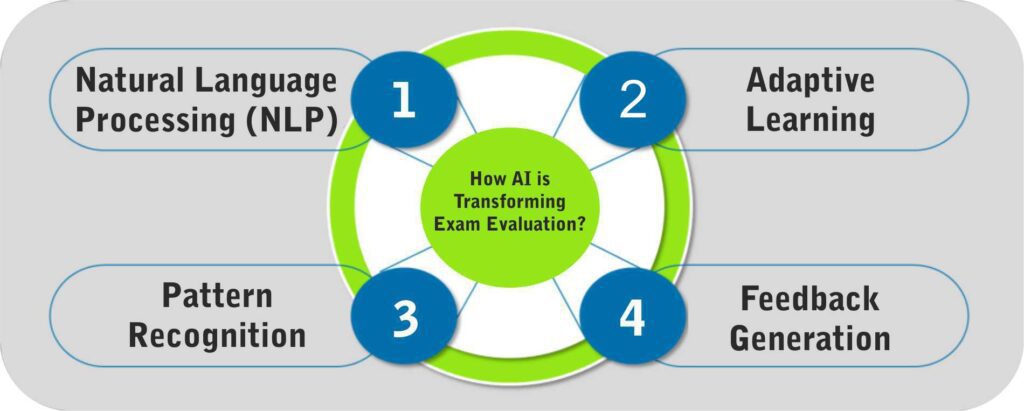
How AI is Transforming Exam Evaluation?

How AI is Transforming Exam Evaluation

Artificial Intelligence plays a vital role in revolutionizing exam evaluation through automated grading systems. Here are some ways in which AI technology is transforming this field:

Natural Language Processing (NLP):

NLP algorithms enable automated grading systems to analyze and understand written responses. By employing machine learning techniques, AI can assess the quality, coherence, and relevance of the student’s answers, providing valuable insights into their understanding of the subject matter.

Pattern Recognition:

AI-powered systems can recognize patterns in student responses and identify common errors or misconceptions. This allows educators to pinpoint areas where students may be struggling and tailor their teaching strategies accordingly.

Adaptive Learning:

AI-based grading systems, empowered by the knowledge and techniques acquired through an artificial intelligence course, can adapt and improve over time. By analyzing vast amounts of student data, these systems can identify areas of weakness and develop personalized feedback and recommendations for individual learners. This personalized approach enhances the learning experience and helps students progress at their own pace.

Feedback Generation:

AI algorithms can generate detailed feedback for students, highlighting their strengths and improvement areas. This feedback not only guides students but also saves educators’ time by automating the process of generating individualized feedback.

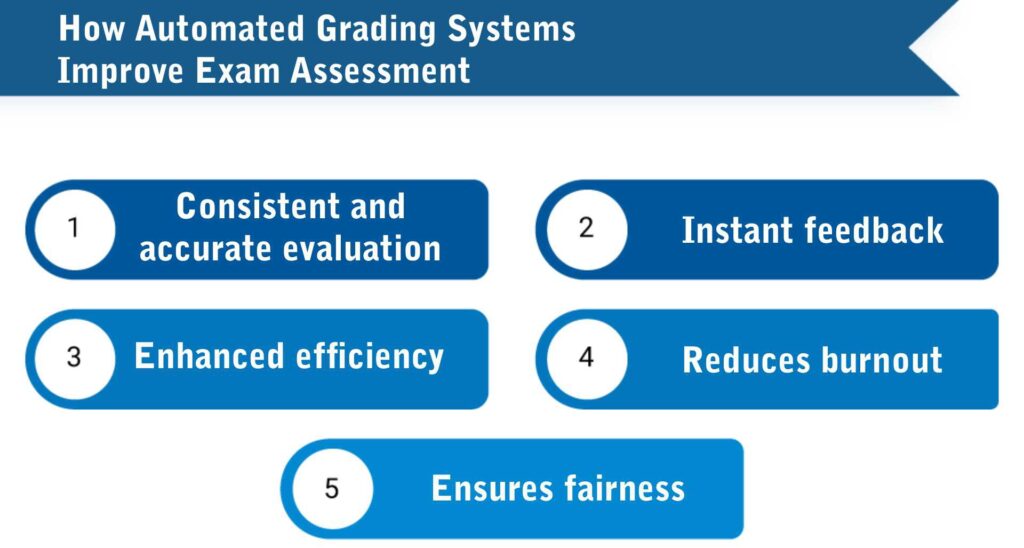
Accuracy and Efficiency: How Automated Grading Systems Improve Exam Assessment

Automated Grading Systems: How AI is Revolutionizing Exam Evaluation

Automated grading systems powered by artificial intelligence (AI) have revolutionized the exam evaluation process, increasing accuracy and efficiency. Traditional manual grading methods are time-consuming and susceptible to human errors and subjectivity. In contrast, automated grading systems offer a reliable and objective approach to assessing exams.

  • Consistent and accurate evaluation: AI algorithms can recognize patterns and evaluate responses based on predefined criteria, ensuring consistent and impartial grading.
  • Instant feedback: Automated grading systems provide students with immediate feedback, allowing them to promptly understand their mistakes and areas for improvement.
  • Enhanced efficiency: Automated systems can process exams at a faster pace than manual grading, reducing the workload on educators and freeing up their time for other important tasks.
  • Reduces burnout: By automating the grading process, educators are relieved from the daunting task of evaluating a large number of exams within a limited timeframe, reducing the risk of burnout.
  • Ensures fairness: Automated grading eliminates subjective biases that can arise from human grading, promoting fairness in the assessment process.

Overcoming Challenges: Implementing Automated Grading Systems in Educational Institutions

The implementation of automated grading systems in educational institutions presents various challenges that need to be addressed for successful integration. While these systems offer numerous benefits, their adoption requires careful planning, collaboration, and overcoming certain hurdles.

  • Compatibility with existing assessment practices and infrastructure: Ensuring that automated grading systems align with established evaluation methods, grading scales, and software systems may require modifications or adaptations. Collaborative efforts between administrators, educators, and technology experts are crucial in addressing this challenge.
  • Training and familiarization of teachers: Educators need to understand how automated grading systems work, their limitations, and how to interpret and utilize the generated results effectively. Professional development programs and training workshops can equip teachers with the necessary skills and knowledge for incorporating automated grading systems into their teaching practices.
  • Privacy and data security: Protecting student data and complying with privacy regulations are essential considerations. Implementing robust security measures, obtaining consent from students and parents, and transparently communicating data handling practices are necessary steps to address privacy and data security concerns.

The Role of Teachers in an AI-Driven Grading Environment

As automated grading systems powered by artificial intelligence (AI) become more prevalent in educational institutions, the role of teachers in an AI-driven grading environment evolves and expands. While these systems handle the bulk of exam evaluation, the importance of teachers in providing guidance, support, and context remains crucial for holistic student development.

  • Setting assessment criteria and standards: Teachers define the rubrics and guidelines used by automated grading systems, ensuring alignment with educational objectives and desired learning outcomes.
  • Interpreting and analyzing results: Teachers bring a human touch by understanding the context of student responses and providing nuanced feedback. They can identify patterns, offer individualized support, and guide students based on their strengths, weaknesses, and learning styles.
  • Personalized guidance and support: Teachers act as mentors and motivators, providing emotional support and encouragement to students. They foster a positive learning environment, inspire critical thinking, and cultivate a growth mindset. Teachers can also identify students who may require additional assistance and provide tailored support.
  • Going beyond automated grading: Teachers offer support and interventions that extend beyond the scope of automated grading systems. They provide personalized attention, address individual student needs, and offer academic and personal development guidance.

Conclusion

Automated grading systems powered by Artificial Intelligence are transforming the way exams are evaluated. With their efficiency, consistency, speed, and scalability, these systems offer numerous benefits to both educators and students. AI technology, including natural language processing, pattern recognition, and adaptive learning, plays a pivotal role in revolutionizing exam evaluation. Artificial Intelligence courses provide learners with the necessary skills and expertise to thrive in this field and contribute to the advancement of automated grading systems. By leveraging the knowledge gained from MIT’s AI course, learners can become catalysts for change in education, applying cutting-edge AI techniques to enhance exam evaluation methods. Embracing the potential of AI in exam evaluation will undoubtedly lead to a more efficient, accurate, and personalized learning experience for students worldwide.

Top 4 cybersecurity certifications that will get you hired

Top 4 Cybersecurity Certifications That Will Get You Hired

The Internet is a great place to hang out in. And it is also the place where cybercrimes are committed, grow, and evolve. Just like any other crime, cybercriminals also come up with innovative ideas from time to time to do damage to businesses as well as individuals. If we look at the numbers, the IBM report says the average cost of a data breach is $ 9.44 million. Another report from Astra Security says around 2200 cyber-attacks take place every day. These numbers show how vulnerable cyberspace is.

But this vulnerability has a positive side as well. This brings in a lot of opportunities for students and professionals who want to make the internet a safer place and want to establish themselves in a lucrative cybersecurity career. As per fortunebusinessinsights.com, the Cybersecurity market size is growing at a CAGR of 13.8% and is expected to reach $ 424.97 Billion by 2030. The most interesting part is there are 3.5 million cybersecurity jobs vacant worldwide with 750,000 in the US alone, as stated by Cybersecurity ventures

Therefore, it is a perfect time if you want to earn certification and learn all the cyber security specialist skills. The top cybersecurity certifications will not only help you to equip with the latest skills and knowledge but can also get you hired.

Here we have listed out the best certifications in the field of cybersecurity that will get you hired.

1. CompTIA Security+

The CompTIA Security+ certification is a globally recognized credential that validates the knowledge and skills required to secure computer systems and networks. Offered by CompTIA, this certification is ideal for beginners and professionals seeking to enhance their cybersecurity specialist skills.

It covers topics such as

  • Network Security
  • Threats And Vulnerabilities
  • Identity Management, and
  • Risk Management.

The Security+ certification serves as a foundation for cybersecurity careers and is often a prerequisite for entry-level positions. With its industry-wide recognition, earning the Security+ certification can open doors to various job opportunities. Candidates must pass a single exam (SY0-601) to obtain this valuable certification, which is valid for three years.

2. Certified Senior Cybersecurity Specialist (CSCS™): USCSI®

Offered by the United States Cybersecurity Institute (USCSI®) this certification is designed for Senior Cybersecurity Professionals having at least 3 to 7 years of work experience depending upon their educational qualification and prior cybersecurity certifications.

The curriculum of the CSCS™ program aims to improve the strategic approach to mitigating cyber risks and driving business growth through the development of safer and innovative practices. It encompasses leadership strategies and technical approaches to tackle cyber threats while ensuring business continuity, implementing AI technologies, and achieving compliance.

The program is available in both self-paced as well as instructor-led learning modes. Depending upon their budget, schedule, and learning preferences, candidates can choose any of them.

After completing this certification, the certified senior cybersecurity specialists will be proficient in cybersecurity concepts like:

  • Cryptographic techniques
  • Management and Business Continuity
  • AI concepts and tools of the trade
  • Detecting cybersecurity threats with AI
  • Onboarding Leadership, etc.

Professionals can learn these in detail through a well-organized resource center that contains HQ lecture videos, personalized eBooks, and practice codes.

3. GIAC Security Essentials (GSEC)

The Security Essentials (GSEC) certification, offered by GIAC (Global Information Assurance Certification), is a highly regarded credential in the cybersecurity field. Designed for both entry-level professionals and experienced practitioners, it establishes a solid foundation in information security and validates expertise in essential security concepts and techniques.

The GSEC certification covers a wide range of topics, including network security, access control, cryptography, risk management, and incident response required to excel in the cybersecurity career. Holding this certification demonstrates a commitment to ongoing professional development and enhances career prospects in roles such as security analyst or cybersecurity consultant.

With its practical focus and industry recognition, the GSEC certification from GIAC is a valuable asset for individuals looking to advance their careers in cybersecurity.

4. Post Graduate Certificate in Cybersecurity: MIT-xPRO

The Post-Graduate Certificate in Cybersecurity, offered by MIT Executive Education, is a comprehensive program designed to equip professionals with advanced knowledge and skills in cybersecurity.

The curriculum of this top cybersecurity certification program covers a wide range of topics, including

  • Cybersecurity Strategy
  • Risk Management
  • Threat Intelligence
  • Data Privacy
  • Incident Response, And
  • Emerging Technologies.

Participants will learn from renowned faculty members and industry experts, gaining insights into the latest trends, best practices, and cutting-edge techniques in cybersecurity.

This certification carries significant prestige and can enhance career opportunities in leadership roles within organizations, consulting firms, and government agencies.

Conclusion

Cybersecurity certifications are very helpful in getting hired be it in entry-level positions or senior-level positions. With the top cybersecurity certifications, you will gain the latest and trending knowledge that organizations are looking for in candidates they want to hire. There is a huge shortage of certified and skilled cybersecurity professionals. It is the best time to grab this opportunity. So, don’t think – just act. All the best.

Modern data quality approach

Data technology background. Big data visualization. Flow of data. Information code. Background in a matrix style. 4k rendering.

An organization with 1000 employees, in 2022, has an average of 177 SaaS applications. Most of these applications store data relevant to their needs, However, in order to perform cross-organizational analysis, this data needs to be aggregated, enriched and integrated. This process vastly increases the scope of data quality initiative from the past days, when all the data came from a handful of internal ERP or CRM applications that stored data in a structured manner. New AI and ML use cases are often using synthetic data which relies on good quality real-life data.

If we spent the past decade amassing more data, the current decade is more concerned with ensuring we have the right data.

“Gartner estimates that the cost of poor data quality to be on an average of $15M for each organization.” This is the decade where new ways of delivering data, such as data mesh, data products, data sharing and marketplaces are starting to become mainstream.

Take the example of an orders table in a retail application. Sales taxes differ widely in the US across states, counties and cities and change frequently. Your data quality subsystem should detect if it infers that incorrect taxes may have been applied on a certain order. The sooner an organization can capture and rectify problems, the lower is the cost.

The title of this section is ironic, because so much of traditional data quality is rule-based. Yes, the rethink requires that we shift from static, predefined rules to embarking on a discovery of rules that are hidden inside data. These rules are inferred from patterns that exist in the data and using ML algorithms can predict the reliability of new incoming data. When the inferred rules are combined with existing rules, a much richer data quality system emerges.

We have realized the limitations of creating rules and policies in the dynamic and fast-changing world of data. The new frontier is to understand the “behavior” of data using sophisticated ML models and dynamically detect anomalies and recommend remediation steps. An example of discovering rules is based on the volume of data that typically enters a system. This volume increases as a business grows by a steady rate which can be predicted using ML techniques. If suddenly there is an unexplained drift from the expected range, then the data quality product should alert the stakeholders. The faster this is done; the blast radius of the damage can be contained.

The modern data quality approach is contextual and designed to deliver data outcomes faster and with higher reliability and trust.

Want to explore our Modern Data Quality Platform? Request a demo

The reasons to pursue data center decommissioning

database123

Data centers are consuming substantial amounts of power; hence, it is pivotal for data centers to focus on becoming more and more energy or resource-efficient. In this digital era, it is crucial to focus on being more energy-conscious. As such, data centers are trying to identify effective ways of enhancing their performance. One of the most effective techniques for achieving this goal is to rely on data center decommissioning. You may realize that data center decommissioning is integral to the data center hardware’s lifecycle. It has to be carried out in a planned and careful way. An article on Forbes points out that data centers are consuming phenomenal electricity, over 205 terawatt hours every year. The statistics reveal that data centers are consuming more electricity than the energy Taiwan, Denmark, South Africa, or Ireland use annually.

Organizations should realize and acknowledge the necessity of data center decommissioning since using obsolete or outdated hardware can be hazardous to the environment and your data. Decommissioning old hardware helps safeguard your valuable data by making sure the equipment is not infected by malware or viruses. If organizations undermine or ignore the importance of data center decommissioning and keep using outdated or obsolete equipment, you may end up losing valuable data and compromising your system.

What is data center decommissioning?

Data center decommissioning means eliminating hardware for relocating, reselling, disposing, or recycling while data is being rerouted to brand-new servers. The data center of an organization acts as the fuel for powering diverse business operations. Your organization’s data is valuable and sensitive. Therefore, the decommissioning process necessitates meticulous planning and cautious execution. Decommissioning goes far beyond dismantling or eliminating hardware, installing brand-new servers, and rewiring relevant network cables. IT administrators may initiate the data center decommissioning process by drafting a detailed and clear-cut Decommission Project Plan for the Data Center and a Decommissioning Checklist. This much documentation or paperwork is essential for facilitating streamlined decommissioning minus disruptions in business operations.

You may understand that data center decommissioninvolve the following:

  • De-installing servers, computers, storage devices, power generators, cabling, and all other data center equipment.
  • Disposing of old storage devices that are about to conk off, like solid-state drives, hard disk drives, DVDs, and CD ROMS.
  • Disposing of e-waste products and materials.
  • Recycling e-waste and trying to recover hardware parts for manufacturing IT equipment.

Reasons to opt for decommissioning data center

Substantial Cost Savings: One of the top reasons for decommissioning a company’s data center is cost savings. It can be an expensive affair to maintain a data center. You can make substantial savings on energy consumption, staffing expenses, and maintenance by decommissioning your data center.

Environmental Benefits: Data center decommissioning may result in a positive impression on the environment. A tremendous amount of energy is essential to operate a data center that can lead to greenhouse emissions. You may decommission your data center to minimize your carbon footprint and contribute positively towards a sustainable future.

Conclusion

When you decommission your data center, it is pivotal to erase all data securely from your systems. It can be a complicated process. However, it is crucial for preventing undesirable data breaches and protecting sensitive data and information. It can be a challenging process to decommission your data. However, be sure to reap the benefits associated with data center decommissioning.

Hyro secures $30M for its AI-powered, healthcare-focused conversational platform

Hyro secures $30M for its AI-powered, healthcare-focused conversational platform Kyle Wiggers 7 hours

Israel Krush and Rom Cohen first met in an AI course at Cornell Tech, where they bonded over a shared desire to apply AI voice technologies to the healthcare sector. Specifically, they sought to automate the routine messages and calls that often lead to administrative burnout, like calls about scheduling, prescription refills and searching through physician directories.

Several years after graduating, Krush and Cohen productized their ideas with Hyro, which uses AI to facilitate text and voice conversations across the web, call centers and apps between healthcare organizations and their clients. Hyro today announced that it raised $20 million in a Series B round led by Liberty Mutual, Macquarie Capital and Black Opal, bringing the startup’s total raised to $35 million.

Krush says that the new cash will be put toward expanding Hyro’s go-to-market teams and R&D.

“When we searched for a domain that would benefit from transforming these technologies most, we discovered and validated that healthcare, with staffing shortages and antiquated processes, had the greatest need and pain points, and have continued to focus on this particular vertical,” Krush told TechCrunch in an email interview.

To Krush’s point, the healthcare industry faces a major staffing shortfall, exacerbated by the logistical complications that arose during the pandemic. In a recent interview with Keona Health, Halee Fischer-Wright, CEO of Medical Group Management Association (MGMA), said that MGMA’s heard that 88% of medical practices have had difficulties recruiting front-of-office staff over the last year. By another estimates, the healthcare field has lost 20% of its workforce.

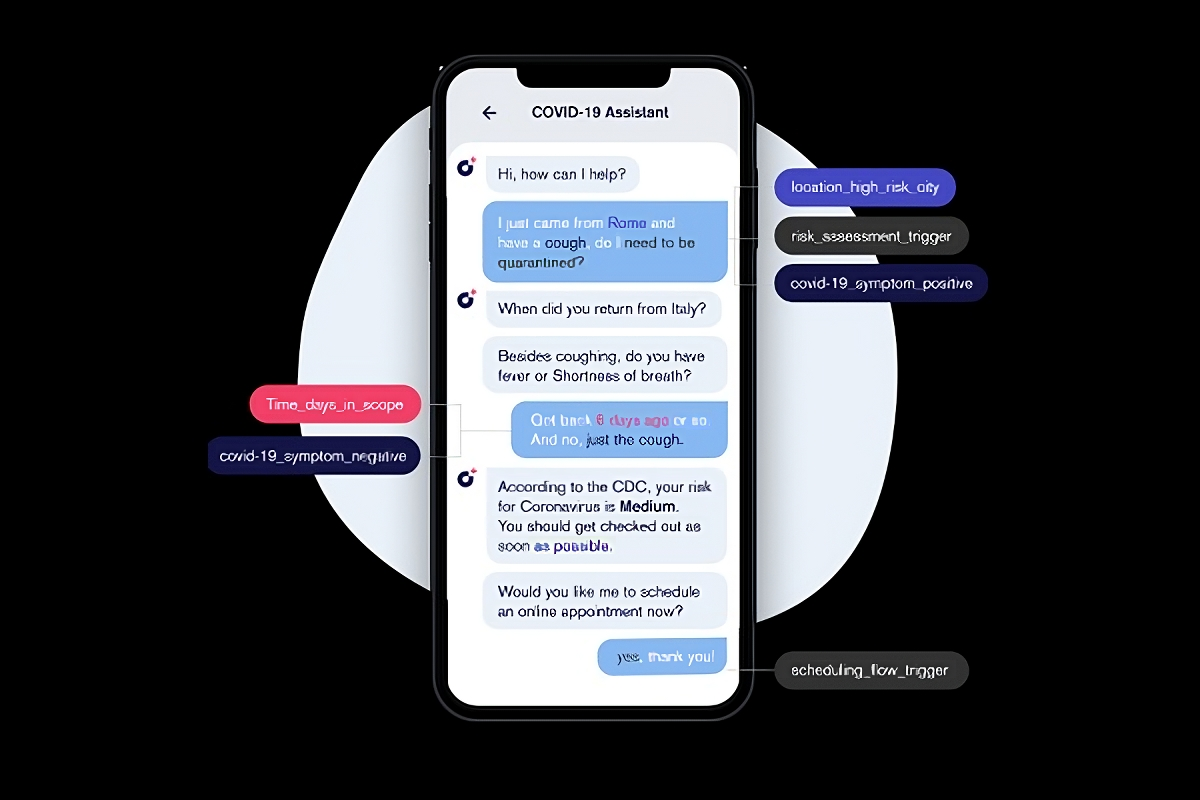
Hyro doesn’t attempt to replace staffers. But it does inject automation into the equation. The platform is essentially a drop-in replacement for traditional IVR systems, handling calls and texts automatically using conversational AI.

Hyro can answer common questions and handle tasks like booking or rescheduling an appointment, providing engagement and conversion metrics on the backend as it does so.

Plenty of platforms do — or at least claim to. See RedRoute, a voice-based conversational AI startup that delivers an “Alexa-like” customer service experience over the phone. Elsewhere, there’s Omilia, which provides a conversational solution that works on all platforms (e.g. phone, web chat, social networks, SMS and more) and integrates with existing customer support systems.

But Krush claims that Hyro is differentiated. For one, he says, it offers an AI-powered search feature that scrapes up-to-date information from a customer’s website — ostensibly preventing wrong answers to questions (a notorious problem with text-generating AI). Hyro also boasts “smart routing,” which enables it to “intelligently” decide whether to complete a task automatically, send a link to self-serve via SMS or route a request to the right department.

A bot created using Hyro's development tools.

A bot created using Hyro’s development tools. Image Credits: Hyro

“Our AI assistants have been used by tens of millions of patients, automating conversations on various channels,” Krush said. “Hyro creates a feedback loop by identifying missing knowledge gaps, basically mimicking the operations of a call center agent. It also shows within a conversation exactly how the AI assistant deduced the correct response to a patient or customer query, meaning that if incorrect answers were given, an enterprise can understand exactly which piece of content or dataset is labeled incorrectly and fix accordingly.”

Of course, no technology’s perfect, and Hyro’s likely isn’t an exception to the rule. But the startup’s sales pitch was enough to win over dozens of healthcare networks, providers and hospitals as clients, including Weill Cornell Medicine. Annual recurring revenue has doubled since Hyro went to market in 2019, Krush claims.

Hyro’s future plans entail expanding to industries adjacent to healthcare, including real estate and the public sector, as well as rounding out the platform with more customization options, business optimization recommendations and “variety” in the AI skills that Hyro supports.

“The pandemic expedited digital transformation for healthcare and made the problems we’re solving very clear and obvious (e.g. the spike in calls surrounding information, access to testing, etc.),” Krush said. “We were one of the first to offer a COVID-19 virtual assistant that deployed in under 48 hours based on trusted information from the health system and trusted resources such as the CDC and World Health Organization …. Hyro is well funded, with good growth and momentum, and we’ve always managed a responsible budget, so we’re actually looking to expand and gather more market share while competitors are slowing down.”