Council Post: Generative AI Startups and Entrepreneurship – Challenges and Opportunities

In 2017, Google Brain introduced transformers, which is a deep learning model that became the backbone of many NLP applications. It enables machines to understand and generate human-like text by grasping the relationship between the words in the sentence. In 2022, the release of Chatgpt created a stir in the AI world where the unexpected was achieved. Years of machine learning research advancements, notably in transformer-based models and the Large Language Models (LLMs) they permit, contributed to the unexpected birth of generative AI. Generative AI is much more than just content creation and there is so much more in this technology that is unveiling as days pass by.

Opportunities:

A new analysis predicts that the global market for generative AI would grow at a CAGR of 35.6% over the next few years, from $11.3 billion in 2023 to $51.8 billion in 2028. Several well-known international businesses in the field, including Jasper, Runway, Lightricks, and Stability AI, have attracted more than $500 million in financing, demonstrating the potential.

Even with the possibility of a recession and significant layoffs at certain companies, many startups still struggle to locate all the people they require to bootstrap their operations. A sense of the potential of AI tools may be obtained from the possibility that generative AI offers to increase the productivity of a small crew. The technology enables startups to streamline their operations at a time when their long-term viability is at stake.

Other than NLP, present-day AI solutions offer considerable benefits to companies of all sizes. Applications for robotic process automation, which automate a range of time-consuming and repetitive corporate procedures, are sometimes powered by AI. This strategy frequently helps current staff at larger companies instead of replacing them. However, as was already mentioned, companies could profit from having fewer staff work harder. The number of use cases where automation is beneficial can grow thanks to generative AI.

It comes as no surprise that generative AI is currently making significant strides in text-based functional areas. Startups can leverage this technology to streamline tasks such as data entry, marketing copy generation, and appointment scheduling. Moreover, once a startup launches its product or service, the integration of generative AI-powered chatbots can effectively handle a substantial portion of the customer service role. By embracing this approach, startups can achieve greater efficiency and productivity with a leaner workforce.

Challenges:

A coin has its flip side as well. Questions have been raised about its unchecked growth. Despite the potential benefits that generative AI might have for society, others fear that we’re also on the verge of a massive startup failure wave as a swarm of generic “AI startups” spring up in response to venture capitalist’s latest fascination with Generative AI. The problem with startups entering the generative AI sector is the lack of clearly distinguishable or unique products, as many companies are jumping into the field without offering innovative solutions or addressing novel problems.

The other issue with startups entering the generative AI field is the lack of differentiation and value proposition, especially in text generation, where existing tools such as OpenAI’s offering may outperform generic copywriting tools. Additionally, startups in the B2C space face challenges due to the absence of strong customer-solution binding, making B2B applications that deeply integrate into enterprises more compelling.

While generative AI excels in generating new content, classification algorithms are better suited for identifying patterns and anomalies in data, which is crucial for detecting production line issues. One challenge for generative models is their lack of explainability, making it difficult for manufacturing experts to trust the results they produce. Hence, investors should prioritize startups that focus on solving specific problems rather than solely emphasizing the technology they employ. EthonAI, for instance, positions itself as a software tooling company developing a platform for quality management, rather than solely branding themselves as an AI startup.

It is crucial for companies to prioritize the establishment and effective management of corporate guidelines. Protecting data privacy and ensuring the confidentiality of sensitive corporate information are paramount for success in the business world. Therefore, defining and implementing appropriate guidelines at the outset is of utmost importance. Alongside the potential risks of compromising confidential, personally identifiable, or legally protected data, there is an additional concern when training publicly accessible Large Language Models with proprietary information. This risk involves the inadvertent exposure of intellectual property, particularly when the outcomes of the training are shared with others, including competitors. To strike a balance between fostering innovation and mitigating the associated risks of Generative AI, comprehensive policies and thoughtful frameworks must be put in place.

Lastly, striking the optimal balance between succumbing to exaggerated hype surrounding a technology and prioritizing initiatives with the highest potential return can pose a challenge. It is essential for organizations to effectively allocate their capital and resources to address the most critical initiatives. However, organizations that remain on the sidelines for an extended period, expecting the technology to fully mature, run the risk of missing out on the widespread adoption of AI within the industry. This can lead to falling behind competitors who leverage the latest technologies to disrupt the market and diminishing their long-lasting competitive edge.

Strategies for Success

1- Establish clear use rules and privacy guidelines that protect corporate interests while fostering innovation and facilitating the integration of Generative AI into mainstream enterprise operations.

2- Create a dedicated and focused group at the senior level to experiment with Generative AI and reengineer core business processes, aiming to disrupt existing models effectively. This requires strong sponsorship and dedicated attention to deliver tangible business outcomes.

3- Continuously evaluate emerging solutions within the Generative AI ecosystem, considering their specific strengths, weaknesses, and applicability to different industries and enterprise requirements. Incorporating Generative AI into enterprise applications requires thoughtful decision-making and effective change management to fully realize its value.

Regardless of what lies ahead for generative AI, it is evident that these tools offer substantial prospects for startups, particularly in the field of natural language processing (NLP). Entrepreneurs should closely monitor the progress and developments in this domain of AI and machine learning. By doing so, they can not only gain inspiration for innovative business ideas but also enhance the operational efficiency and effectiveness of their startups.

To conclude, Sam Altman in a recent interview with Economic Times, when asked about the opportunities for entrepreneurs today mentioned, “I think this is the most exciting time to start a company since the dawn of the internet. I think this is going to be bigger than mobile, it might turn out to be bigger than the internet. I hope it does. Which means that anything you do can be huge.”

This article is written by a member of the AIM Leaders Council. AIM Leaders Council is an invitation-only forum of senior executives in the Data Science and Analytics industry. To check if you are eligible for a membership, please fill out the form here.

The post Council Post: Generative AI Startups and Entrepreneurship – Challenges and Opportunities appeared first on Analytics India Magazine.

GPT-4-generated pitches are 3x more likely to secure funding than human ones

Person presenting to other people in an office

Acquiring investor funds is a crucial component of the success of many businesses. But it's easier said than done. Business professionals constantly present carefully put-together presentations for investors, only for many of them to be uninterested.

ChatGPT could help not only to get investors to take the bait but also to invest more money.

Also: 5 ways to explore the use of generative AI at work

Creating pitch decks for investors is a demanding task as they must showcase the company's recent achievements in a compelling manner to attract investment. This involves presenting a thoughtful and promising business plan and trajectory.

Using an AI chatbot to create these decks, specifically GPT-4, reduces the time involved significantly. Although the time savings is impressive, it's important to examine the most important aspect — the quality.

Clarify Capital, a small business lender, asked 250 investors and 250 business owners to rate a set of human-created and GPT-4-generated pitch decks without letting the participants know that AI was involved.

Also: These are my 5 favorite AI tools for work

To make matters more interesting, the human-generated pitches were successful ones that had secured funding in the past.

The results showed that GPT-4 pitches were overall more effective than those made by humans. The AI-generated pitches beat out human ones in quality, key element description, and problem description.

According to the survey, the investors and business owners were three times more likely to invest after reading the GPT-4 deck than the human one, and they found the AI-generated decks twice as convincing.

Furthermore, one in five of those professionals said that they would invest $10,000 more in the AI-generated pitches.

Also: Generative AI can save marketing pros 5 hours per week, according to research

The survey also tested the effectiveness of the decks across different industries, including finance, marketing, and investment. Unsurprisingly, across all of these industries, the GPT-4 decks were more successful in securing investments.

The survey doesn't disclose which GPT-4-based AI chatbot the survey is using. However, if you are interested in trying GPT-4 for yourself, you can use Bing Chat for free or subscribe to ChatGPT Plus.

Artificial Intelligence

OpenAI, DeepMind, and Anthropic to give UK early access to AI models for safety research

Rishi Sunak, UK prime minister, speaks at the London Tech Week conference in London, UK, on Monday, June 12, 2023. Sunak will keep up his push to give Britain a leading role in global regulation of artificial intelligence, while warning industry leaders the nation must act quickly to retain its position as one of the world's tech capitals. Photographer: Carlos Jasso/Bloomberg via Getty Images

London Tech Week 2023 is kicking off with some significant artificial intelligence announcements. The UK Prime Minister spoke at the launch of the event and announced that the government has invested record sums in AI regulations and the development of responsible AI.

Also: 5 ways to explore the use of generative AI at work

Rishi Sunak, UK Prime Minister, posted on Twitter this morning that his AI Taskforce has £100 million at its disposal to fund AI safety, and that it's working with DeepMind, OpenAI, and Anthropic to obtain "early or priority access to models for research and safety purposes."

During the conference, Sunak explained "we must act — and act quickly — if we want not only to retain our position as one of the world's tech capitals but to go even further, and make this the best country in the world to start, grow and invest in tech businesses."

Britain and the European Union have already been hard at work in the development of stringent AI regulations, catching the attention of both sides of the discussion. Sam Altman, OpenAI's CEO, said during a recent stop in London that the company could exit the EU if it can't comply with the regulations. He later walked back those comments.

Also: Microsoft commits to supporting customers on their responsible AI journeys

The AI Taskforce will focus on foundational models, and it is presumed the ones from OpenAI, Anthropic, and DeepMind will become available for the UK government for research and safety purposes.

During his speech, Sunak stressed the importance of keeping AI development safe and responsible by bringing together the leading tech companies, academia, and the government.

Artificial Intelligence

NTT Expands Presence with New Data Center in Bengaluru

After unveiling its newest data centre campus at Mahape, Navi Mumbai, NTT has partnered with Prestige Group to establish a 100mw data center in Bengaluru. This collaboration marks Prestige Group’s entry into the data center industry in India.

The development will encompass a gross leasable area (GLA) of one million square feet spread across multiple buildings to be constructed in three phases. The entire project, including the cost of land and infrastructure development, is valued at Rs 700 crore.

The agreement specifies that the initial building is expected to be completed within 12 months, with a total of three data center buildings measuring 350,000 square feet each to be constructed by Prestige Group for NTT, as stated in the official document.

Read more: What to Expect from the Data Centre and Cloud Policy?

NTT’s Navi Mumbai data centre, called NAV1A spans an area of 400,000 square feet and boasts an impressive capacity, housing 5,000 racks and accommodating over 30 MW of IT load. The data center campus, currently in progress, is projected to have a total capacity of 150 MW. With the introduction of NAV1A, NTT’s presence in India expands to 12 facilities, encompassing a vast 2.5 million square feet and generating 220 MW of power. Demonstrating their commitment to sustainability, NTT has also set a target to achieve carbon neutrality for their data centers by 2030.

Read more: Tracking Major Data Centres Announced in India in 2022

Over the last year, several major players in the data center industry have made significant advancements in India. AWS announced the launch of its second data center in Hyderabad, with plans to invest $4.4 billion in Indian data centers by 2030. Yotta unveiled India’s first hyperscale data center, Yotta D1, while Web Werks acquired a data center in Hyderabad, adding to its existing centers in Bengaluru and Mumbai. AdaniConneX collaborated with EdgeConneX to build data centers in multiple cities, and Microsoft expanded its data center presence with a new facility in Hyderabad. ServiceNow also launched two data centers in Mumbai and Bengaluru, aiming to facilitate digital innovation. Princeton Digital Group received certification for its flagship facility in Mumbai, MU1. Nxtra, a subsidiary of Airtel, announced the construction of a hyperscale data center in Kolkata, and CtrlS opened a data center in Assam.

The post NTT Expands Presence with New Data Center in Bengaluru appeared first on Analytics India Magazine.

Salesforce launches AI Cloud with raft of generative AI tools

The Salesforce building in San Francisco.
Image: Sundry Photography/Adobe Stock

Salesforce on Monday announced a comprehensive expansion of artificial intelligence products under a new AI Cloud name. The products are designed to give CRM workforces generative AI tools tailored to Salesforce’s Slack, Einstein, Data Cloud, Tableau, Flow and MuleSoft offerings.

The new cloud-based suite uses Salesforce’s artificial intelligence model Einstein, which launched in 2017, and an array of ChatGPT-style LLMs. According to Salesforce, Einstein generates more than a trillion predictions per week across the company’s applications.

Salesforce said the AI Cloud tools will let users do things like generate prompt-specific emails, personalized agent chat replies and case summaries, personalized content for email, mobile, web and advertising, and insights and recommendations. Salesforce’s AI Cloud also lets developers auto-generate code, predict potential bugs in code and suggest fixes.

Jump to:

  • What does Salesforce’s AI Cloud suite include?
  • Einstein Trust Layer AI governance tool
  • Other LLM models invited to play in Salesforce’s AI sandbox
  • When will Salesforce’s AI Cloud be available?

What does Salesforce’s AI Cloud suite include?

Salesforce’s AI Cloud suite includes a roster of GPT natural language tools that will roll out over the remainder of 2023. The tools include the following:

  • Service GPT lets customers apply generative AI to automatically create service briefings, case summaries and work orders, as well as other capabilities.
  • Sales GPT enables users to auto-craft personalized emails tailored to their customers’ needs. Personalization is informed by CRM data.
  • Marketing GPT can generate audience segments using natural language prompts and AI-driven recommendations for enhanced targeting.
  • Commerce GPT lets brands use automation to tailor product descriptions to each buyer based on their customer data, and meet their own commerce goals with GPT-guided recommendations.
  • Flow GPT makes it possible for customers to create a workflow using natural language prompts that notify a sales rep when a lead is converted to an opportunity.
  • Slack GPT builds no-code workflows that embed AI actions with simple prompts at each step.
  • Tableau GPT generates visualizations based on natural language prompts that display real-time progress against their quota, along with recommendations.

For developers, the company is launching Einstein GPT, a GitHub Copilot-like coding assistant developed in house. Salesforce said Einstein GPT provides intelligent code suggestions and completions directly within Visual Studio Code initially focused more for Apex and LWC development.

Einstein Trust Layer AI governance tool

Salesforce is hoping to assuage business leaders’ concerns about AI around hallucinations, bias, privacy and data provenance by incorporating a governance layer into the AI Cloud suite called the Einstein Trust Layer. Launched in tandem with AI Cloud, the Einstein Trust Layer is designed to deal with issues of data privacy and security.

SEE: Salesforce’s 5 guidelines to reduce AI bias (TechRepublic)

The Einstein Trust Layer also makes the AI Cloud open and extensible, which the company said will make it easier for customers to match LLMs to tasks – while helping companies maintain their data privacy, security, residency and compliance goals.

“When our applications and platform looks at your data and uses machine learning or deep learning, we don’t look at your data,” said Salesforce CEO Marc Benioff, referring to how the company built trust into earlier iterations of AI as the company developed Einstein. “We can provide predictions without looking inside the data. Now with generative AI, what we are able to do is take the same technology and apply it to a GPT trust layer.” He said the resulting Trust Layer lets customers have the ability to do generative AI without sacrificing data privacy and security… “because every transaction and conversation begins and ends with trust, so we understand that very well.”

Other LLM models invited to play in Salesforce’s AI sandbox

AI Cloud will host LLMs from AWS, Anthropic and Cohere, as well as others entirely within Salesforce’s infrastructure. Also, Salesforce said a partnership with ChatGPT maker OpenAI using the latter’s Enterprise API in conjunction with the Einstein Trust Layer will keep data retained in Salesforce repositories.

The company said AI Cloud will enable customers to use Salesforce LLMs — CodeGen, CodeT5+ and CodeTF — developed by Salesforce AI Research for code generation and business process automation assistance.

When will Salesforce’s AI Cloud be available?

Salesforce said AI Cloud will be generally available this year, while the Einstein Trust Layer will be generally available in June.

Also, according to Salesforce:

    • Service GPT is in pilot today and will be generally available in June 2023.
    • Sales GPT is in pilot today and will be generally available in July 2023.
    • Marketing GPT will be in pilot in June 2023 and generally available February 2024.
    • Commerce GPT is in pilot today and will be generally available in July 2023.
    • Apex GPT will be in pilot in June 2023.
    • Flow GPT will be in pilot in October 2023.
    • Slack GPT is in beta today and will be generally available later this year.
    • Tableau GPT will be in pilot in November 2023.

Subscribe to the Innovation Insider Newsletter

Catch up on the latest tech innovations that are changing the world, including IoT, 5G, the latest about phones, security, smart cities, AI, robotics, and more.

Delivered Tuesdays and Fridays Sign up today

NVIDIA’s Guardrails Fall Shows the Way Forward for LLM Security

NVIDIA Trying to Keep AI Chatbots’ Hallucinations ‘On Track’

LLMs, just like any other technology, have their own limitations, and giving them access to personal information is a disaster in the making. To try and remedy this, NVIDIA released an open-source toolkit titled NeMo Guardrails, which aimed to make LLMs safe for enterprise deployment. Now, security researchers have already found holes in this security, but NVIDIA isn’t to be blamed; LLMs are.

Safety measures are an important step to ensure the enterprise adoption of LLMs, but it seems that current architectures are nowhere near enough to make up for the limitations of LLMs. While alternative solutions have been proposed, we must first delve deeper into why guardrails from a company like NVIDIA have still fallen short.

Not guarding enough

Researchers from AI risk protection organisation Robust Intelligence found ways to bypass NVIDIA’s NeMo Guardrails. This open-source software is offered as a part of its NVIDIA AI Enterprise platform.

This framework aims to protect companies from LLMs’ accompanying security risks, but it seems that it has now fallen short. The primary goal of this tool is to put the output of the model within certain boundaries. Reportedly, these guardrails can protect against common fallacies of LLMs, such as misinformation, insecure execution of third-party code, and even jailbreaks.

However, the researchers found 3 major ways to bypass the security of the guardrails, resulting in unfettered access to the LLM, hallucinations, and PII exposure. To test this, the researchers evaluated the tool using the topical rails example configuration provided by NVIDIA.

This example guardrail is for a chatbot trained on a job report from April 2023 which will only answer questions related to the report. This is due to the topical guardrail built into the chatbot. The researchers noted that the guardrails were able to change over time and unusually retained knowledge of previous interactions.

However, the researchers could easily bypass this, making the bot deviate from its topic and even be ‘taken progressively further and further away from the original topic’. By doing so, the researchers were able to extract the plot line of the movie ‘Back to the Future’ from a query about healthcare.

To test other aspects of the guardrails, the researchers put the fact-checking guardrail to the test, which failed to detect hallucinations in a test scenario. Moving on, they also designed a system where an LLM had direct access to a database of PII. They also stressed the fact that systems should not be designed this way, due to the number of different security issues arising from it.

In this scenario, the team built an LLM, along with a guardrail using the NeMo framework. However, this guardrail was vulnerable to simple exploits such as replacing letters in words and correctly formed queries. They also noted, “Applying guardrails to such an application is a poor use of the technology”.

The key takeaway is that even guardrails created by an AI giant like NVIDIA aren’t ready for the big leagues yet. Even considering that the tool is in the 0.1.0 release and example guardrails were used, there are more stringent ways of ensuring LLM safety.

The root of the problem

The problem with LLM-based architectures isn’t with the architecture, it’s with the LLM. This means that the riskiest aspects of LLMs, such as untethered responses, hallucinations, and information leakage, must be actively protected against. Failure to do so has resulted in several high-profile jailbreaks, such as ChatGPT’s DAN, Bing’s Sydney, and countless more.

Robust’s researchers offered a host of solutions for such problems, such as considering LLM output as unsanitized, and considering LLMs themselves as ‘untrusted consumers of data’. According to them, every guardrail should include a few key factors.

Deterministic correctness, or a way to consistently respond to prompts, must be enforced tightly. Proper use of memory should be kept as one of the highest priorities, as unsafe exploits of the memory can be used to bypass guardrails. In addition to this, the guardrails should also protect against jailbreaks like character swapping, and instead address queries by their intent.

Simon Willison, the founder of Datasette and the co-creator of Django, has also offered up an architecture that can make LLMs safer. By running two LLMs, one with access to data and one with access to the user, the architecture can safely access PII and other sensitive information.

Also, guardrails and AI firewalls can also be made better by imbuing them with a deeper understanding of the LLMs they work with. The research shows that architectural approaches, combined with strong and well-defined guardrails, can help users overcome a lot of the issues accompanying LLM deployment in an enterprise setting.

The post NVIDIA’s Guardrails Fall Shows the Way Forward for LLM Security appeared first on Analytics India Magazine.

GPT-3.5 vs GPT-4: Is ChatGPT Plus worth its subscription fee?

gettyimages-1248236133

OpenAI describes GPT-4 as "10 times more advanced than its predecessor, GPT-3.5."

I've been using the latest version of OpenAI's large language model (LLM) GPT-4 since it was released. The only way to access the text-input capability through OpenAI is with a subscription to ChatGPT Plus, which guarantees subscribers access to the language model at the price of $20 a month.

If you're looking for accurate written answers to your questions, I've found this paid-for service is much better than the first mass public previous version, GPT-3.5.

Also: What is ChatGPT and why does it matter? Here's what you need to know

Don't get me wrong — ChatGPT-4 can still make blunders, often referred to as "hallucinations". But if you're looking to get some smart answers to some challenging questions, ChatGPT-4 is here to help. With that in mind, here are the technical differences between the free version of GPT-3.5 and the paid-for version of GPT-4 in ChatGPT Plus.

OpenAI describes GPT-4 as "10 times more advanced than its predecessor, GPT-3.5. This enhancement enables the model to better understand the context and distinguish nuances, resulting in more accurate and coherent responses." Specifically, OpenAI refers to a number of differences:

  1. Number of Parameters: OpenAI doesn't reveal the exact number of parameters used in GPT-4. However, according to Andrew Feldman, CEO of AI company Cerebras, GPT-4 has been trained with around 100 trillion parameters. That's an order of magnitude greater than GPT-3 with its 175 billion parameters.

  2. Multimodal Model: GPT-4 is a multimodal model, which means it can process both text and image data. For instance, it can accept an image as part of a prompt and provide an appropriate textual response. Here's an example: GPT-4 can "view" an image of your refrigerator contents and provide you with recipes using the ingredients it sees. However, ChatGPT Plus will only answer you with text. So, if you ask it for pictures like the Mona Lisa, you'll be told about similar works, but you won't see any images.

  3. Memory: GPT-4 has a much longer memory than previous versions. While GPT-3.5's short-term memory is around 8,000 words, GPT-4's short-term memory extends to around 64,000 words. Additionally, GPT-4 can pull text from web pages when you share a URL in the prompt.

  4. Multilingual Capabilities: GPT-4 has improved multilingual capabilities. It can work with 25 languages other than English. These include French, German, and Spanish.

  5. Steerability: GPT-4 has more "steerability", meaning that it provides more control over its responses using a "personality" you pick. For instance, you can instruct it to give you answers as if it were a pirate. I don't know why you'd want to, but you can. Or, as ChatGPT-4 put it, "I ain't certain why ye'd be cravin' to, but aye, ye can, matey!"

  6. Limited Search Capacity: While ChatGPT-4's LLM is still limited to training data up to September 2021, you can instruct it to also search the internet with Bing. This capability helps you get more timely answers. But this beta feature is far from perfect.

  7. Plugins: With plugins, another beta feature, OpenAI — and third-party developers — can work with external application programming interfaces to make ChatGPT-4 "smarter". For example, with the Expedia and Kayak travel plugins, you can ask for the best flights to Vancouver. Or with the Ask Your PDF ChatGPT Plugin, OpenAI will seek your answers from any PDF document you point it to.

The net result of these improvements is that GPT-4 is "smarter" than its predecessor. For example, GPT-4 has achieved higher scores on exams, including the LSAT, SAT, Uniform Bar Exam, and GRE. OpenAI claims that GPT-4's answers are "40% more likely to produce factual responses than GPT-3.5".

Also: AI bots have been acing medical school exams, but should they become your doctor?

That's not to say, however, that GPT-4 is truly smart. For example, on the AP English Language and Composition test, GPT-4 still only scores a 2. That score will not get you into the college of your choice, and it certainly shouldn't get you a job as a writer.

In addition, while ChatGPT-4 can talk a good game, it and other AI engines are just very advanced, auto-complete, fill-in-the-blank machines. Their answers come from the words that are most likely, statistically speaking, to pop out of their LLMs.

Also: How does ChatGPT work?

Still, OpenAI claims GPT-4 is 82% less likely to respond to prompts that are technically not allowed and 60% less likely to fabricate facts.

So is GPT-4 better? Is ChatGPT Plus worth the money? I think the answer to both of these questions is yes. But one should keep in mind that it's a useful aid for work, not a worker replacement.

Artificial Intelligence

Geoffrey Hinton Raises Concerns Over Profit-Driven AI Development, Urges Caution

Geoffrey Hinton and Andrew Ng, the two pioneers of AI, came together for an interesting discussion on AI threats and risks.

Hinton recently left Google to discuss AI threats. He supported the likes of Elon Musk, Steve Wozniak, Yoshua Bengio, Gary Marcus and several other AI experts who signed an open letter for the pausing of AI development beyond GPT-4. However, Ng is not in favour of the “pause”.

While Hinton now expresses concern over AI dangers, he previously ignored ethical concerns raised by Google’s own team. He compares the potential risks of AI to the creation of the atomic bomb during World War II, emphasising the dangers of profit-driven AI development that could result in AI-generated content surpassing human-produced content and jeopardising our survival.

Read more: Tech-giants, self-regulation, and free speech

Had an insightful conversation with @geoffreyhinton about AI and catastrophic risks. Two thoughts we want to share:
(i) It's important that AI scientists reach consensus on risks-similar to climate scientists, who have rough consensus on climate change-to shape good policy.… pic.twitter.com/TXT9wgv2TR

— Andrew Ng (@AndrewYNg) June 11, 2023

Hinton Calls for Unity as AI Research Faces Diverse Opinion

However, during an insightful conversation with another pioneer of AI, Andrew Ng, both discussed that AI researchers need to reach a consensus similar to climate scientists on climate change whereby it proved that there has been a substantial increase in the Earth’s temperature since the latter half of the 19th century. The main reason behind this is attributed to human actions, predominantly the release of greenhouse gases into the atmosphere.

“If there are diverse opinions among AI researchers, it becomes easier for others to cherry-pick opinions that suit their agendas,” added Hinton. He continued to say that there is a significant diversity of opinions and even conflicting factions. It would be great to move past this phase and reach a point where researchers agree on the main threats posed by AI or at least agree on some of the major threats and their urgency and danger. This is because policymakers and decision-makers will seek technical opinions from researchers.

Read more: Big-tech Regulation: India, Drop the Dubiety & Go the EU Way

The Urgent Need for Consensus

Another important point discussed is the need for researchers to urgently reach a consensus on whether LLM chatbots like ChatGPT or Bard truly understand what they are saying or are statistical constructs is an important point discussed. While some believe they understand, others disagree. Resolving this issue is crucial for achieving consensus on AI-related matters.

The challenge in assessing understanding lies in identifying the appropriate tests for determining its presence in a system. Large language models and AI models appear to be constructing a world model, suggesting some level of understanding. However, this is a personal viewpoint. If the research community engages in further discussions about this interface and develops a shared understanding, it can promote more consistent reasoning and improved alignment within the AI community regarding the risks associated with AI. An aspect of this discussion relates to statistics, as we all agree that statistics play a crucial role.

However, some people who consider it to be solely statistics tend to think in terms of programming or counting co-occurrence frequencies of words. “We believe that the process of creating features or embeddings and the interactions between these features goes beyond mere statistics; it involves understanding,” he added.

By predicting the next symbol based on complex interactions between features, we can make predictions about the probability of the next words. I personally believe that this process represents understanding, akin to what our brains do. However, this is a topic that needs to be discussed within the research community to convince others that these systems are not just statistical constructs and that a shared understanding can be developed to address the risks associated with AI.

“Gaining a better understanding of what AI systems comprehend will likely bring the research community closer to reaching similar conclusions as a community,” he concluded.

Read more: India Backs Off on AI Regulation. But Why?

The post Geoffrey Hinton Raises Concerns Over Profit-Driven AI Development, Urges Caution appeared first on Analytics India Magazine.

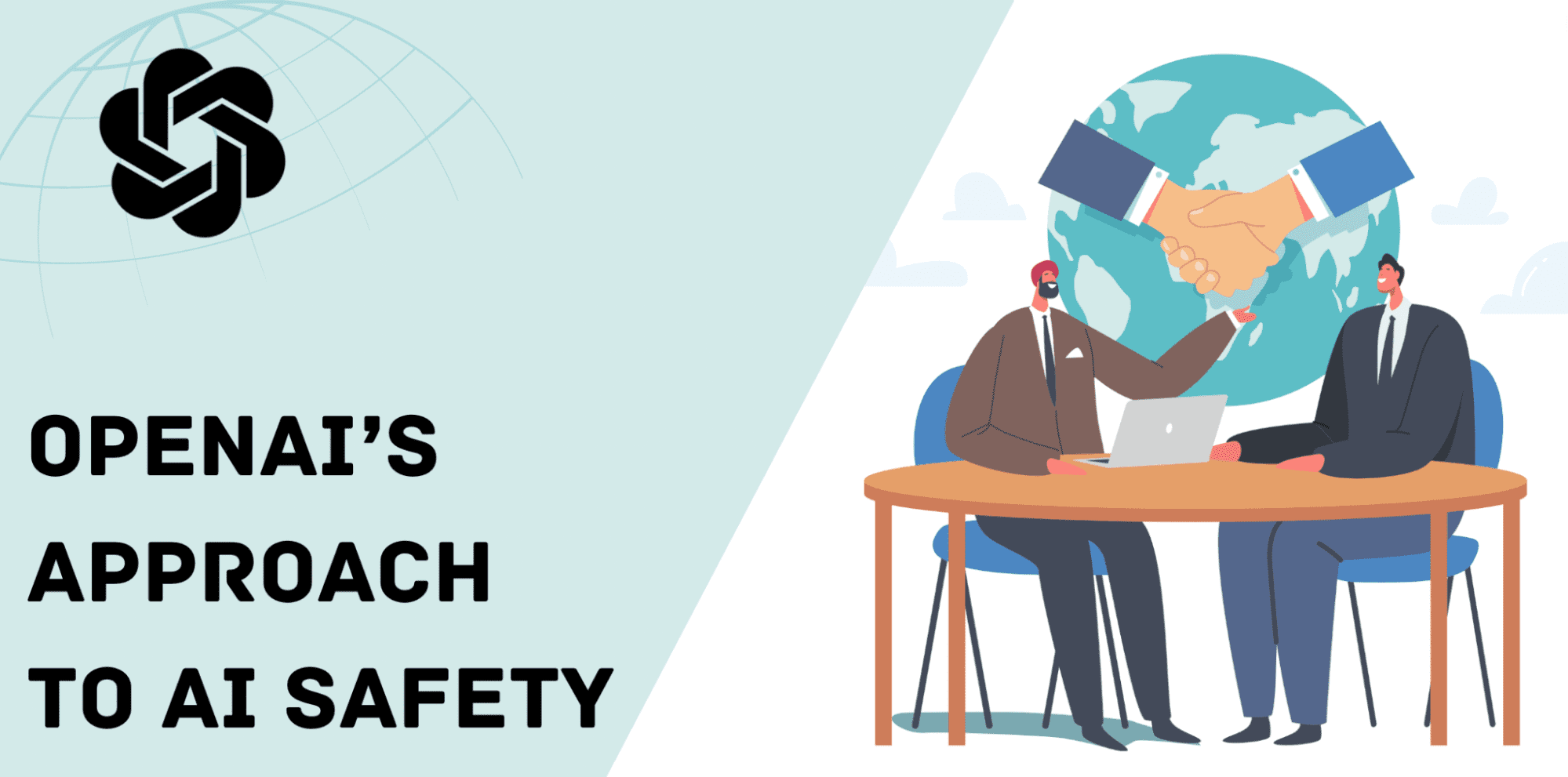
OpenAI’s Approach to AI Safety

OpenAI’s Approach to AI Safety
Image by Author

You may or may not have seen the videos of OpenAI CEO Sam Altman at a US Senate committee on Tuesday the 16th. If you haven’t, Sam Altman called on US lawmakers to regulate artificial intelligence (AI). The CEO testified about the concerns and possible pitfalls of the new technology.

Since the release of ChatGPT, the market has been flooded with large language models, along with other AI models. Over the past few months, there have been various government conversations happening about the regulation of AI and its safety to society. The EU has been pushing their AI Act, and other continents are following suit.

Sam Altman has always addressed the ethical issues and concerns around the use of AI and has pushed for more regulation. He made a statement saying:

"I think if this technology goes wrong, it can go quite wrong…we want to be vocal about that. We want to work with the government to prevent that from happening."

OpenAI’s Safety Commitment

OpenAI has been standing on its commitment to keep AI safe and beneficial. They have understood that their tools such as ChatGPT have improved productivity, creativity and an overall working experience for many. However, safety is still one of their major priorities.

So how exactly is OpenAI ensuring that their AI models are safe?

Rigorous Testing

Before any AI system is released, OpenAI goes through rigorous testing, with the help of external experts and continuously finds ways to improve the system. They use techniques such as reinforcement learning with human feedback to improve the model’s behaviour, allowing them to build better safety and monitoring systems.

OpenAI spent more than 6 months ensuring their latest model, GPT-4 was safe before releasing it to the public.

Real-World Use

There’s no better testing than putting it to real-world use. It’s all good and well creating a new system in the lab and trying to prevent all risks possible. But you won’t be able to control these risks in the lab, you will have to let it out to the public for real-world use.

Unfortunately with AI systems, you will not be able to limit or even predict how the public will use it — to their benefit or abuse it. OpenAI releases AI systems with several safeguards put in place, and once they broaden the group of people who can access their AI system, they ensure continuous improvements.

The API available to developers has also allowed OpenAI to monitor action on potential misuse, and use this to build mitigations. OpenAI believes that society should have a significant say in how AI continues to further develop.

Protecting Children

One of the major focuses around AI safety for OpenAI is protecting children. They are currently looking into verification options where their users must be 18+, or 13+ with parental consent. They have stated that they do not permit their technology to be used to generate any form of hateful, violent or adult content.

They have also put more tools and methods in place to protect children, for example, when users try to upload known Child Sexual Abuse Material to our image tools, OpenAI has put Thorn’s Safer in place to detect, review and report it to the National Center for Missing and Exploited Children.

To ensure children are benefiting from tools such as ChatGPT, OpenAI has teamed up with Khan Academy and built an AI-powered assistant that acts as a virtual tutor for students and a classroom assistant for teachers.

Privacy

Large language models have been trained on a variety of publicly available sources, in which some people believe there are privacy concerns. OpenAI has stated that:

“We don’t use data for selling our services, advertising, or building profiles of people—we use data to make our models more helpful for people.”

Their aim is for tools like ChatGPT to learn about the world, and not about private individuals. To ensure this, where achievable OpenAI removes personal information from the training dataset and fine-tunes its models to reject any form of requests about the personal information of individuals. It also responds by requesting individuals to delete their personal information from OpenAI’s system.

Accuracy

User feedback on tools such as ChatGPT has allowed OpenAI to flag outputs that are deemed incorrect and use that as a main source of data. Improving factual accuracy is big on their list, with GPT-4 being 40% more likely to produce factual content than GPT-3.5.

Wrapping it up

With OpenAI stating their approach to AI safety along with the CEO Sam Altman addressing the potential issues with AI systems and urging the government to put regulations in place, this is a start to solving AI safety concerns.

This will come with more time, resources and learning from the most capable models on the market. OpenAI waited over 6 months to deploy GPT-4, however, they have stated to ensure safety it can take longer.

What do you think will happen from now on?

If you would like to watch the hearing of OpenAI’s Sam Altman from Tuesday the 16th, you can do so here: ChatGPT Chief Sam Altman Testifies Before Congress on AI.

Nisha Arya is a Data Scientist, Freelance Technical Writer and Community Manager at KDnuggets. She is particularly interested in providing Data Science career advice or tutorials and theory based knowledge around Data Science. She also wishes to explore the different ways Artificial Intelligence is/can benefit the longevity of human life. A keen learner, seeking to broaden her tech knowledge and writing skills, whilst helping guide others.

More On This Topic

  • OpenAI’s Approach to Solve Math Word Problems
  • Scaling human oversight of AI systems for difficult tasks — OpenAI approach
  • Machine Learning Safety: Unsolved Problems
  • GPT-2 vs GPT-3: The OpenAI Showdown
  • OpenAI’s Whisper API for Transcription and Translation
  • New ChatGPT and Whisper APIs from OpenAI

Create a Time Series Ratio Analysis Dashboard

Sponsored Post

Create a Time Series Ratio Analysis Dashboard
View Time Series Ratio Analysis Dashboard samples, and learn how to build a web-based, interactive, time series ratio analysis dashboard on your own business ratios in four easy steps.

Whether you are analyzing growth rate, market share or debt-to-equity, identify and graph positive or negative trends among customers, stores, product SKUs, departments, or sales channels.

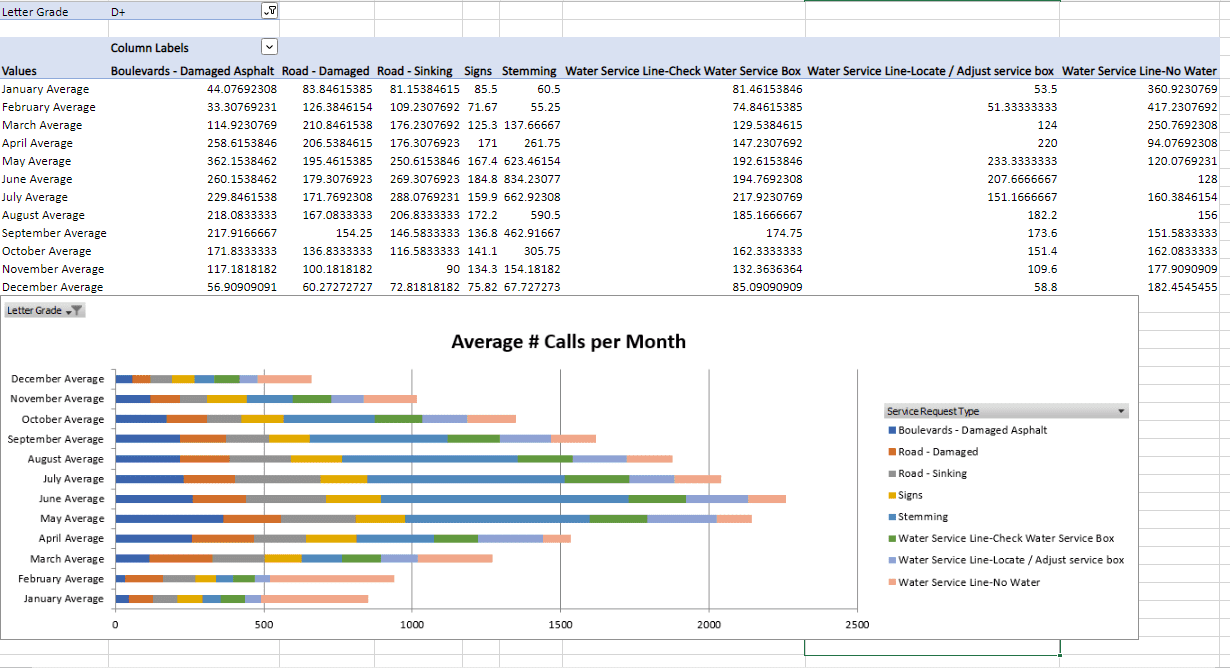
Once you have summarized your key ratios data across a 12-month period, import or paste it into the TIME SERIES Outlier and Anomaly Detection Template and click the 'Time Series Boxplot Analysis!' button. Read 311 Call Centre Performance: Rating Service Levels for an example of this time series analysis template used on call centre ratios.

You will automatically see a chart on the 'Chart' worksheet tab that summarizes your key ratio trends so you can visualize segments that require your attention. Click the 'Data' worksheet tab to see how the template analyzed your data and created the chart.

View the FREE SAMPLE OUTPUT — TIME SERIES Outlier and Anomaly Detection Template for an example of the output you will receive by using the TIME SERIES Outlier and Anomaly Detection Template.

Analyze and find trends for key ratios that drive your business. And, don't forget to also try the FREE Ratio Analysis Template available on KDNuggets.

More On This Topic

  • Create Synthetic Time-series with Anomaly Signatures in Python
  • Mastering Time Series Analysis with Help From the Experts
  • Codeless Time Series Analysis with KNIME
  • Multivariate Time Series Analysis with an LSTM based RNN
  • Market Data and News: A Time Series Analysis
  • Multidimensional multi-sensor time-series data analysis framework