European Parliament Votes in Favour of Act to Regulate AI Across EU

The European Parliament has taken a significant step towards regulating artificial intelligence systems by voting in favor of the EU AI Act. This act, if passed into law, would be the first of its kind globally and aims to provide a comprehensive framework for AI regulation within the European Union.

The EU AI Act has several key objectives. Firstly, it seeks to protect fundamental civil rights by ensuring that AI systems do not infringe upon privacy, dignity, and non-discrimination. It addresses concerns surrounding the potential for AI to be used in ways that violate individuals’ rights and aims to establish safeguards to prevent such abuses.

Secondly, the act aims to mitigate risks to health and safety posed by AI systems. This includes addressing concerns related to biased or discriminatory AI algorithms, which could result in unfair outcomes in areas such as hiring, lending, or criminal justice. The EU AI Act strives to ensure that AI systems are developed and used in a manner that is transparent, accountable, and unbiased.

Thirdly, the act seeks to foster innovation and competitiveness in the field of AI. It aims to create a favorable environment for AI development and deployment, promoting trust, reliability, and ethical considerations. By providing clear rules and guidelines, the EU intends to encourage responsible AI practices that benefit both businesses and society as a whole.

Under the proposed regulations, AI systems are classified into four levels of risk: unacceptable, high-risk, limited risk, and minimal risk. AI applications deemed to pose the most unacceptable risks include those that infringe upon fundamental rights, engage in subliminal manipulation, and enable social scoring based on behavior or appearance. Predictive policing tools and remote biometric identification systems in public spaces are also considered high-risk applications.

The EU AI Act places stringent requirements on high-risk AI systems. Developers of such systems will need to undergo a conformity assessment before placing them on the market. This assessment will evaluate factors such as data quality, documentation, transparency, and human oversight. Additionally, high-risk AI systems must adhere to specific requirements regarding robustness, accuracy, and cybersecurity.

On the other hand, most currently deployed AI systems, such as text generators like ChatGPT, video games,and spam filters are considered low- or no-risk applications. The EU aims to strike a balance between ensuring the safety and rights of individuals while allowing for the continued use and development of AI technologies that pose minimal risks.

To enforce compliance with the regulations, the EU AI Act empowers national supervisory authorities to carry out inspections, issue warnings, and impose fines for non-compliance. Violations may result in penalties of up to €30 million ($33 million) or 6% of a company’s annual global revenue, depending on which amount is higher.

While the EU Parliament’s approval of the AI Act is a significant milestone, the act is not yet law. It still requires final approval from member states and further discussions among EU institutions. The anticipated timeline suggests that the regulations will not come into effect until 2025, following the next European Parliament elections.

In the meantime, the EU plans to collaborate with US counterparts to establish a voluntary code of conduct for AI. This cooperation aims to align AI principles and standards between the EU and the US and potentially extend to other like-minded countries, ensuring a global approach to AI regulation.

Overall, the EU AI Act represents a comprehensive and ambitious effort to regulate AI within the EU. By addressing potential risks, protecting civil rights, and promoting responsible innovation, the act seeks to create a trustworthy and sustainable AI ecosystem that benefits individuals, businesses, and society as a whole.

The post European Parliament Votes in Favour of Act to Regulate AI Across EU appeared first on Analytics India Magazine.

Apple Launches 15-inch Macbook Air Powered by M2 Processor

Apple Macbook Air just got bigger. The tech giant today announced the launch of its most awaited 15.3-inch Macbook Air, powered by M2 processor. While the new Macbook Air offers a stunning 15.3-inch Liquid Retina display, a good battery life, a super thin and light design, MagSafe charging, more speakers, and a great camera, it lacks a cooling fan, and comes with only two USB-C ports, showcasing its ability to drive multiple external displays.
Click here to order.

The new 15-inch MacBook Air is available today! We think you’re going to love it! pic.twitter.com/AWUyuf7ZTY

— Tim Cook (@tim_cook) June 13, 2023

The launch of the new Macbook Air was first announced at WWDC 2023.

Features & Specifications

Set in the middle, between the 13 and 16-inch models, the apt size is reported to make a huge difference in the positive direction by most reviewers. It has a surprisingly slim and lightweight design, characteristic of the Air series. Starting at $1,299, it presents a much more budget-friendly option compared to any of Apple’s previous laptops featuring a screen of this size.

Like the 13-inch, Macbook Air 15 possesses robust performance, extended battery life, and a high-quality display.

The laptop also offers a maximum of 24 GB of RAM and 2 TB of internal storage available in Silver, Starlight, Space Grey, and Midnight color variants. Even with its larger size, the laptop doesn’t come with a fan to cool the M2 chip, but depends on its passive cooling solution to do its thing.

The MacBook Air differs from its smaller counterpart in a few notable ways. The most apparent distinction is its 15.3-inch display, featuring a resolution of 2,880 x 1,864 pixels, resulting in a pixel density of 224 pixels per inch, matching that of the 13-inch Air. This display is classified as one of Apple’s “Liquid Retina” screens, offering a brightness of 500 nits, P3 “wide color” gamut support, and a refresh rate of 60Hz. The trackpad of the laptop has been stretched out keeping it proportional to the large size and Touch ID sensor are all excellent, which is true of all Mac laptops at this point.

Boasting a 18-hour battery life, Apple claims that the Air is much faster, the screen is better, the battery is longer while the laptop itself is thinner and lighter. As mentioned earlier the M2 chip delivers on excellent performance of the laptop. Apple claims that the Air is much faster, the screen is better, the battery is longer while the laptop itself is thinner and lighter.

The 15-inch Air has a six-speaker sound system with “force-canceling woofers” for improved bass, compared to a four-speaker setup in the smaller model. Apple has been making excellent laptop speakers in the last few models. The company said they “deliver[s] twice the bass depth of the 13-inch MacBook Air with M2 for fuller sound.”

For most, the best feature is the affordable pricing beginning at $1,299 or Rs. 1,34,900. Most reviewers have said that the laptop is a larger version of apple 13 with the M2 chip like performance.

The post Apple Launches 15-inch Macbook Air Powered by M2 Processor appeared first on Analytics India Magazine.

Synthesia Becomes a Unicorn with NVIDIA Backed Fundraise

Synthesia Becomes a Unicorn with NVIDIA Backed Fundraise

Synthesia is the latest AI startup to reach a valuation of $1 billion after raising a $90 million series C fund. The round was led by Accel Ventures with NVentures – NVIDIA’s venture capital arm along with existing investors Kleiner Perkins, GV, Firstmark Capital, Alex Wang, Olivier Pomel and Amjad Masad.

Synthesia plans to allocate the funds towards AI research, furthering its partnerships with renowned educational institutions such as TUM in Munich and UCL in London.

Philippe Botteri, the lead investor from Accel in the funding, said that, “Productivity can be improved because you are reducing the cost of producing the video to that of making a PowerPoint,” stating that TikTok, Netflix, and YouTube have made it easier for adoption of video.

“While we weren’t actively looking for new investment, Accel and NVIDIA share our vision for transforming traditional video production into a digital workflow,” said Victor Riparbelli, co-founder and CEO of Synthesia.

Synthesia just raised $90 million in Series C funding led by @Accel and with that… officially joined the unicorn club 🦄 🦄 🦄
Back in 2017, no one really understood our vision..
When @vriparbelli and @Stjerrild first used the term "generative video," people just didn't get… pic.twitter.com/y1bQ8OyCBW

— Synthesia 🎥 (@synthesiaIO) June 13, 2023

Founded in 2017, Synthesia is a London-based digital media platform startup that creates AI generated videos.

It was started by a team of researchers and entrepreneurs including Victor Riparbelli, Matthias Niessner, Steffen Tjerrild, and Lourdes Agapito, specialising in software development. Their innovative software enables individuals to create personalised digital avatars for various purposes, such as delivering corporate presentations, training videos, or even expressing compliments to colleagues, in over 120 diverse languages.

Synthesia caters to enterprise customers such as Tiffany’s, IHG, and Moody’s Analytics. While the company does not publicly disclose specific sales or revenue figures, it has reported consistent triple-digit growth. To date, the platform has facilitated the creation of over 12 million videos. Synthesia also highlighted a remarkable 456% year-over-year increase in the number of users on its platform.

Remarkably, it seems like no other company has been benefitting from the AI boom as much as NVIDIA. The company became the first chip firm to reach a trillion dollar valuation. Recently, NVIDIA also backed Cohere, reaching a valuation of $2.2 billion.

The post Synthesia Becomes a Unicorn with NVIDIA Backed Fundraise appeared first on Analytics India Magazine.

Paro raises $25M to match freelance financial experts with firms

Paro raises $25M to match freelance financial experts with firms Kyle Wiggers 16 hours

In 2015, Michael Burdick and Dan Wywrot, who’d spent years working at large accounting firms, founded a startup — Paro — to deliver finance and accounting solutions to businesses through a network of freelance talent. They say they were inspired by the lack of flexibility in traditional accounting firms to choose which projects to work on — and when to work.

Paro’s investors concur.

Today, Paro announced that it raised $25 million in a Series C round led by Top Tier Capital Partners, bringing the startup’s total raised to $67 million. Madrona Venture Group, Revolution Ventures and Sierra Ventures also participated in what Paro CEO Anita Samojednik described as an up-round with “clean terms.”

Samojednik told TechCrunch that the cash will be put toward further developing Paro’s platform, expanding its customer base and general R&D.

“The overall goal of this round is to become the go-to resource for finance and accounting solutions and for businesses of all sizes, including enterprises,” Samojednik said. “Given the continued traction we have seen within our business, the ongoing embrace of remote work and the increasing need for flexible business solutions, now was the right time to raise and double down on our efforts to push our unique offering to more enterprises and the value we bring to businesses and experts.”

Paro’s platform uses algorithms to identify and recommend financial talent — e.g. accountants — to businesses. Customers can connect on-demand to accounting and finance experts, paying them only for the work that’s needed.

It’s essentially like Fiverr, but exclusively for accounting and financial work.

“Understanding new ways to manage capacity and retain talent is key,” Samojednik said. “One way to do that is by introducing alternative staffing methods that are flexible and dynamic. This can improve morale, reduce burnout, better address client demands and efficiently grow business.”

If you buy Samojednik’s sales pitch, Paro is the silver bullet that the accounting industry so desperately needs. Many certified public accountant firms experience average annual turnover rates upwards of 25%. According to one recent survey, 99% of CPAs admit to suffering from chronic workplace stress. Another finds that nearly two-thirds — 62% — of accountants feel underpaid, with 60% saying they feel under-compensated given their qualifications and level of experience.

But color me skeptical. There are always downsides to contract work — for starters, a lack of benefits. Then one wonders about the healthiness of the dynamic between salaried accountants and financial workers and freelancers.

We’ve asked Paro its pay rates and will update this article once we hear back.

In any case, for better or worse, customers appear to be embracing the Paro platform. The company says revenue has tripled since its Series B in Q3 2021 while average client spend has doubled. Meanwhile, freelancers on the platform are on track to bill over $1 million through Paro this year, the company claims.

“Paro’s technology streamlines processes for those in need of talent — like hiring managers — to precisely match their business needs with Paro experts based on the exact experience and skill sets required to best achieve organizational goals,” Samojednik said. “For experts, Paro’s platform provides experts the productivity tools and insights to optimize their growing business, from pricing to performance, customer relationship management to ROI.”

Adobe Brings Firefly to Illustrator and Enterprise

Adobe Brings Firefly to Illustrator and Enterprise

Adobe has been killing it at the image generation game. After introducing Firefly in Photoshop, the software giant has introduced Generative Recolor, the first integration of Adobe Firefly in Illustrator. Released in beta, Generative Recolor revolutionises the way colours are transformed in vector artwork.

In the past, brands had to manually create colour variations whenever they worked on new packaging, reconsidered logo colour options during a rebranding process, or redesigned their websites. However, thanks to the innovative Firefly-powered assistance, designers can now significantly speed up laborious colour processes, allowing them to devote more time to creative and engaging tasks while minimising tedious workloads.

Generative Recolor features include:

  • Faster Color Capture: Intelligently recoloring graphics using simple text prompts.
  • Color Discovery and Transformation: Various colours, palettes and themes to achieve the feel for your artwork.
  • Multiple Colorway Variations: Generate numerous colour variations from a single artwork file

Ashley Still, senior vice president of digital media at Adobe, said that, ““Firefly will help customers accelerate their creative process and save countless hours, while facilitating rapid ideation, experimentation and asset creation.”

According to Adobe, this comprehensive offering stands out as the most distinct generative AI solution available in the market. To ensure ethical grounding, the company says that its training is based on a distinctive dataset that generates commercially viable, high-quality content suitable for professionals.

Read: Is Adobe Firefly Killing Midjourney, DALL.E?

Ever since Firefly was introduced in Photoshop, users have generated over 150 million images with the new generative fill feature.

Adobe has also been pioneering AI innovations through Adobe Sensei intelligent features across their Creative Cloud, Document Cloud and Experience Cloud.

Sensei GenAI for Enterprise

Today, at Adobe Summit EMEA 2023, Adobe also announced generative AI services for Adobe Cloud Enterprise customers. Utilising Microsoft Azure OpenAI Service and FLAN-T5 for generating text-based experiences for brands. Brands can leverage their proprietary customer insights to train generative AI models and customise the output for their specific use cases.

This includes Customer Journey Analytics, Marketo Engage with Dynamic Chat, Adobe Experience Manager, Adobe Journey Optimiser, and AI Assistant for Adobe Experience Platform.

Moreover, Adobe has also introduced Firefly for Enterprise, a new offering designed to streamline and expedite the content supply chain for enterprises while optimising costs. This company-wide solution allows employees of all creative skill levels to utilise

Businesses can also train Firefly with their own branded assets, integrating its capabilities into their ecosystem and generating content in their unique style and brand language.

Firefly is designed for commercial use and enterprises have the option to obtain IP indemnity from Adobe for content produced through specific Firefly-powered workflows, ensuring confident deployment across the organisation.

The post Adobe Brings Firefly to Illustrator and Enterprise appeared first on Analytics India Magazine.

AMD Has a GPU to Rival Nvidia’s H100

AMD Has a GPU to Rival Nvidia’s H100 June 14, 2023 by Agam Shah

If you have not been lucky enough to find Nvidia’s prized H100 GPU in the cloud or off the shelf, AMD has a challenger waiting in the wings that could be worth considering.

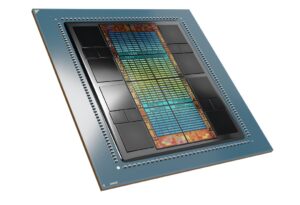
AMD announced the new MI300X GPU, which is targeted at AI and scientific computing. The GPU is being positioned as an alternative to Nvidia’s H100, which is in short supply because of the massive demand for AI computing.

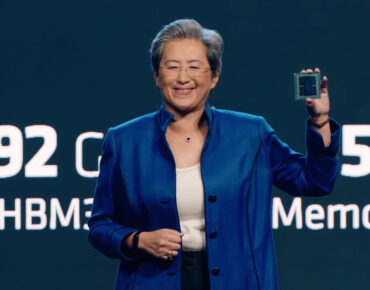
“I love this chip, by the way,” said Lisa Su, AMD’s CEO, during a livestreamed presentation to announce new datacenter products, including new 4th Gen Epyc CPUs.

AMD is on track to sample MI300X in the next quarter. The GPU’s production will ramp up in the fourth quarter.

The MI300X is a GPU-only version of the previously announced MI300A supercomputing chip, which includes a CPU and GPU. The MI300A will be in El Capitan, a supercomputer coming next year to Lawrence Livermore National Laboratory. El Capitan is expected to surpass 2 exaflops of performance.

But to be sure, Nvidia’s H100 has a sound footing in datacenters that AMD may find hard to overcome. Google Cloud last month announced the A3 supercomputer, which has more than 26,000 Nvidia H100 GPUs, and Microsoft is using Nvidia GPUs to run BingGPT, the AI service it has built into its search engine. Oracle and Amazon also offer H100 GPUs through their cloud services. Nvidia’s market cap as of Tuesday stood at around $1 trillion, largely boosted by demand for its AI GPUs.

AMD Instinct MI300X GPU. (Source: AMD)

The MI300X has 153 billion transistors, and is a combination of 12 chiplets made using the 5-nanometer and 6-nanometer processes. AMD replaced three Zen4 CPU chiplets in the MI300A with two additional CDNA-3 GPU chiplets to create the GPU-only MI300X.

“For MI300X to address the larger memory requirements of large language models, we actually added an additional 64 gigabytes of HBM3 memory,” Su said.

The MI300X has 192GB of HBM3 memory, which Su said was 2.4 times more memory density than Nvidia’s H100. The SXM and PCIe versions of H100 have 80GB of HBM3 memory.

Su said the MI300X offered 5.2TBps of memory bandwidth, which she claimed was 1.6 times better than Nvidia’s H100 GPUs. That comparison was made to the SXM version of H100 GPU, which has a memory bandwidth of 3.35TBps.

However, Nvidia has the NVL version of H100 – which links up two GPUs via the NVLink bridge – that has an aggregate 188GB of HBM3 memory, which is close to the memory capacity of MI300X. It also has 7.8TBps bandwidth.

Su cherry-picked the performance results, but did not speak about the important benchmark – the overall floating point or integer performance results. AMD representatives did not provide performance benchmarks.

(Source: AMD livestream, June 13, 2023)

But Su said MI300A – which has the CPU and GPU – is eight times faster and five times more efficient compared to the MI250X accelerator, a GPU-only chip that is in the Frontier supercomputer.

AMD crammed more memory and bandwidth to run AI models in memory, which speeds up performance by reducing the stress on I/O. AI models typically pay a performance penalty when moving data back and forth between storage and memory as models change.

“We actually have an advantage for large language models because we can run large models directly in memory. What that does is for the largest models, it actually reduces the number of GPUs you need, significantly speeding up the performance, especially for inference, as well as reducing total cost of ownership,” Su said.

The GPUs can be deployed across standard racks with off-the-shelf hardware with minimal changes to the infrastructure. Nvidia’s H100 can be deployed in standard servers, but the company is pushing specialized AI boxes that combine its AI GPUs with other Nvidia technology such as its Grace Hopper GPUs, BlueField data processing units, or the NVLink interconnect.

AMD’s showcase for the new GPU is an AI training and inference server called the AMD Infinity Architecture Platform, which crams eight MI300X accelerators and 1.5TB of HBM3 memory. The server is based on Open Compute Project specifications, which means it is easy to deploy in standard server infrastructures.

The AMD Infinity Architecture Platform sounds similar to Nvidia’s DGX H100, which has eight H100 GPUs and 640GB of GPU memory, and overall 2TB of memory in a system. The Nvidia system provides 32 petaflops of FP8 performance.

The datacenter AI market is a vast opportunity for AMD, Su said. The market opportunity is about $30 billion this year, and will grow to $150 billion in 2027, she said.

“It’s going to be a lot because there’s just tremendous, tremendous demand,” Su said.

Four generations of Epyc. (Source: AMD)

Nvidia has a major advantage over AMD in software, with its CUDA development stack and AI Enterprise suite helping in the development and deployment of AI tools. AMD executives spent a lot of time trying to address software development tools, and said its focus was on an open-source approach as opposed to Nvidia’s proprietary model with CUDA.

Like CUDA, AMD’s ROCm software framework was originally designed for high-performance computing, but is now being adapted for AI with libraries, runtimes, compilers, and other tools needed to develop run and tune AI models. ROCm supports open AI frameworks, models, and tools.

The CEO of AI services provider HuggingFace, Clem Delangue, said it was optimizing AI models being added to its repository to run on Instinct GPUs. About 5,000 new models were added to HuggingFace last week, and Huggingface is optimizing all those models for Instinct GPUs.

AMD also introduced new CPUs, including a new lineup of 4th Gen Epyc 97X4 CPUs codenamed Bergamo, which is the company’s first family of chips oriented for cloud computing.

Bergamo chips can be compared to Arm-based chips developed by Amazon and Ampere, which are deployed in datacenters to serve up cloud requests. The chips run applications as microservices – think cloud-native applications running on Google and Facebook servers – by breaking up code and distributing it among a vast number of cores.

The Bergamo chips have up to 128 cores based on the Zen4c architecture, which are broken up over eight compute chiplets. The top-line Epyc 9754 has 128 cores, runs 256 threads, and draws up to 360W of power. The chip has 256MB of L3 cache and runs at frequencies up to 3.10GHz. The mid-tier 9754S has similar specifications but runs only one thread per code. The final version Epyc 9734 has 112 cores, runs two threads per core, and draws 320 watts of power.

Meta is preparing to deploy Bergamo in datacenters as its next-generation high-volume computing platform.

“We’re seeing significant performance improvements with Bergamo over Milan on the order of two and a half times,” said Alexis Black Bjorlin, vice president of infrastructure at Meta, during an on-stage presentation.

AMD also announced chips codenamed 4th Gen Epyc chips Genoa-X with 3D V-Cache technology, employing up to 96 CPU cores. The chips will be available in the third quarter.

The fastest chip in the Genoa-X lineup is 9684X, which has 96 cores, supports 192 threads, and draws 400 watts of power. It has 1.1GB of L3 cache and runs at frequencies up to 3.7GHz. The other two SKUs, 9384X and 9184X have 32 and 16 cores respectively, 768MB of L3 cache, frequencies of 3.9Ghz and 4.2GHz respectively. The chips draw 320 watts of power.

Related

Google’s new generative AI lets you preview clothes on different models

Google’s new generative AI lets you preview clothes on different models Kyle Wiggers 12 hours

Google, ever eager to lean into generative AI, is launching a new shopping feature that shows clothes on a lineup of real-life fashion models.

A part of a wide range of updates to Google Shopping rolling out in the coming weeks, Google’s virtual try-on tool for apparel takes an image of clothing and attempts to predict how it would drape, fold, cling, stretch and form wrinkles and shadows on a set of real models in different poses.

Virtual try-on is powered by a new diffusion-based model Google developed internally. Diffusion models — which include the text-to-art generators Stable Diffusion and DALL-E 2 — learn to gradually subtract noise from a starting image made entirely of noise, moving it closer, step by step, to a target.

Google trained the model using many pairs of images, each including a person wearing a garment in two unique poses — for instance, an image of someone wearing a shirt standing sideways and another of them standing forward. To make the model more robust (i.e., combat visual defects like folds that look misshapen and unnatural), the process was repeated using random image pairs of garments and people.

Google try-on

Google’s new AI-powered try-on feature, which taps generative AI to adapt clothing to different models.

Starting today, U.S. shoppers using Google Shopping can virtually try on women’s tops from brands including Anthropologie, Everlane, H&M and LOFT. Look for the new “Try On” badge on Google Search. Men’s tops will launch later in the year.

“When you try on clothes in a store, you can immediately tell if they’re right for you,” Lilian Rincon, senior director of consumer shopping product at Google, wrote in a blog post shared with TechCrunch. She cites a survey showing that 42% of online shoppers don’t feel represented by images of models while 59% feel dissatisfied with an item they shopped for online because it looked different on them than expected.

“You should feel just as confident shopping for clothes online,” Rincon continued.

Virtual try-on tech isn’t new. Amazon and Adobe have been experimenting with generative apparel modeling for some time, as has Walmart, which since last year has offered an online feature that uses customers’ photos to model clothing. AI startup AIMIRR takes the idea a step further, using real-time garment rendering technology to overlay images of clothing on a live video of a person.

Google itself has piloted virtual try-on tech in the past, working with L’Oréal, Estée Lauder, MAC Cosmetics, Black Opal and Charlotte Tilbury to allow Search users to try on makeup shades across an array of models with various skin tones.

Google try-on

Image Credits: Google

But as generative AI increasingly encroaches on the fashion industry, it’s been met with pushback from models who say it’s exacerbating long-standing inequalities.

Models are largely low-paid independent contractors, on the hook for high agency commission fees (~20%), as well as business expenses including plane tickets, group housing and the promotional materials required to land jobs with clients. And, reflecting biased hiring preferences, they’re pretty homogenous. According to one survey, 78% of models in fashion adverts were white as of 2016.

Among others, Levi’s has tested AI tech to create customized AI-generated models. Levi’s defended the tech in interviews, saying that it would “increase the diversity of models shoppers can see wearing its products.” But the company didn’t respond to critics asking why the brand didn’t recruit more models with the diverse characteristics it’s seeking.

In the blog post, Rincon stressed that Google opted to use real models — and a diverse range, spanning sizes XXS-4XL representing different ethnicities, skin tones, body shapes and hair types. But she didn’t address the elephant in the room: whether the new try-on feature might lead to fewer photo shoot opportunities for models down the line.

Google try-on

To train the generative AI model behind its new try-on feature, Google assembled a data set of models and garments.

Coinciding with the rollout of virtual try-on, Google is launching filtering options for clothing searches powered by AI and visual matching algorithms. Available within product listings on Shopping, the filters let users narrow their searches across stores using inputs like color, style and pattern.

“Associates can help with this in a store, suggesting and finding other options based on what you’ve already tried on,” Rincon said. “Now you can get that extra hand when you shop for clothes online.”

Data Science Hiring Process at Purplle

Online beauty and personal care brand Purplle became India’s 102nd unicorn after raising $33 million last year in Series E funding, led by South Korea’s Paramark Ventures. Founded by Manish Taneja and Rahul Dash, the Sequoia-backed company has also found investors in Premji Invest, Blume Ventures, and Kedaara Capital.

With a small but strong 11-member team, consisting of seven data scientists and four data analysts, Purplle stands out in its industry by harnessing the power of AI and analytics to refine the customer experience and drive operational excellence. The team employs data-based prognostic models to empower other business divisions in making concise and more impactful choices.

Data science is applied across various key functions and areas at Purplle. These include personalisation, product discovery, search and suggestions, recommendations, and data-driven supply chain management processes like box suggestions and DRR (delivery, return, and replacement).

Analytics India magazine got in touch with Vivek Parihar, Head of Engineering, Purplle, to understand how the e-commerce platform leverages data science in their daily operation and what they look for in potential candidates.

Read more: This AI Startup From Paris Raises Highest Seed Funding Ever

Inside Purplle’s AI & Analytics Team

“One of the main focuses of Purplle’s AI and analytics team is to provide personalised recommendations and optimising the search engine, resolving customer product discovery challenges through the use of AI and analytics,” said Parihar.

Purplle ensures that the appropriate products are displayed to the correct customers at the appropriate time, optimising their platforms by using personalised and customer-centric data. Moreover, AI is employed to tackle supply chain concerns, such as determining the most suitable source warehouse for efficient delivery.

One recent achievement of Purplle’s data science team is taking control of Purplle’s item views (IVs) planning process, transitioning it from a manual to a fully automated system. This allows for the prediction of product-level IVs, enabling the business teams to take informed actions and streamline their processes in collaboration with brands. By planning daily IVs, the algorithm effectively targets customers and optimises their experience.

Additionally, the introduction of a reinforcement learning-based algorithm, specifically the multi-armed bandit algorithm, has enabled Purplle to strike a balance between exploration and exploitation. This algorithm determines when to show the most performing products and when to showcase diverse products for exploration purposes.

Their tech stack is on Google’s cloud platform, including tools like Bigtable, BigQuery, Google Storage, Dataproc, Kubernetes, Redis, and Elastic Search, among others, to train and serve their data models. The team also uses Flagr and Open Source for AB testing, and Python as a programming language. From model building and deployment to serving, their entire pipeline is fully automated using CI/CD.

Interview Process

Purplle seeks individuals who possess robust analytical capabilities, a deep understanding of statistics, proficient programming skills, keen business acumen, and expertise in data visualisation techniques.

Purplle’s interview process for data science roles consists of two rounds for junior data scientists and three rounds for senior data scientists.

  • Round 1: The first round is conducted with senior data scientists to assess a candidate’s technical proficiency and problem-solving abilities.
  • Round 2: The second round takes place with the data science lead to delve deeper into the candidate’s domain knowledge and project experience.

For senior-level positions, an additional round takes place with the senior data product manager to focus on the candidate’s leadership skills and ability to contribute to the strategic vision of the team.

Finally, the “Level Up” round is included in the cultural fit assessment to evaluate candidates’ cultural fitment, ensuring alignment with the organization’s values and ability to thrive in the work environment.

Data science candidates are assessed based on key result areas (KRAs) or key performance areas (KPAs), which include evaluating the impact of their projects on business metrics, producing reusable artefacts, ensuring code and delivery quality, proactively resolving errors, optimising code, implementing new technologies or learning initiatives, maintaining consistent effort variance below 10%, managing bugs and issues, and achieving optimal performance in memory handling, CPU usage, and query optimisation.

Expectations

When joining Purplle’s data science team, new members are expected to value independence and excel in analysing and making decisions that positively impact the business and sales. Proficiency in coding, familiarity and strong graph with commonly used ML frameworks are essential technical skills. The team actively seeks individuals who can effectively apply their ML knowledge to evaluate, understand, and solve real-world business problems.

On the other hand, candidates can expect to work in a dynamic environment where they can make decisions autonomously, communicate freely, build and test hypotheses, and experiment.

However, Vivek points out that some of the common mistakes that candidates make often include applying models and expecting them to solve business problems directly without intervention or analysis, and utilising complicated models without knowing the model mechanism and function clearly.

Work Culture

At Purplle, the company maintains an employee-centric work culture with flexible policies, differentiating itself from competitors in the industry. The work environment fosters collaboration among teams, facilitated by frequent meetings with reporting managers and teammates, ensuring seamless communication throughout the organisation.

The company boasts a flat organisational structure and a vibrant startup culture, actively cultivating cross-functional team connections and providing access to anyone within the organisation, regardless of their level or designation.

When it comes to working with the data science team, Purplle stands out by fostering individual ownership and empowering employees. They use advanced data science tools and robust pipelines to capture user activity, providing hands-on experience with the latest technology.

“The team is knowledgeable, resourceful, and ready to provide guidance. We promote cross-team learning and idea exchange. We encourage experimentation and analysis before going live, leading to valuable knowledge and rapid learning” he added.

When it comes to perks, employees receive performance-based ESOPs after a stipulated period. The company also offers insurance, maternity leave, and other benefits like employee discounts on the Purplle shopping app.

Candidates applying to Purplle should remember to master the basics and focus on applying their knowledge to solve business problems instead of building fancy models to showcase their expertise,” he concluded.

So if you have a penchant for analytical thinking, problem-solving, and a keen interest in working with data, you are ideally suited for Purplle.

Read more: Data Science Hiring Process at Meesho

The post Data Science Hiring Process at Purplle appeared first on Analytics India Magazine.

EU moves ahead with draft law to regulate AI

Robot sitting in Europian parliament

AI-generated image created in Bing Image Creator with the prompt "a robot sitting in the European parliament".

The European Parliament on Wednesday passed the first draft of the AI Act, a proposed law that focuses on the safe development and application of artificially intelligent systems, to ensure AI tools respect international human rights laws.

The act, which has served as an example for other nations to develop their own AI regulations, restricts the use of technologies like facial recognition software and requires transparency from AI developers to share more data used to create their systems, like, for example, ChatGPT or Bing chat.

Also: ChatGPT's hallucination just got OpenAI sued. Here's what happened

The final version of the law is expected to be passed later this year after negotiations between the Parliament, European Commission, and Council of the EU are concluded.

For now, the draft includes provisions for generative AI systems like ChatGPT, Bing chat, or Google Bard, to prevent them from generating illegal, racist, or biased content.

Jonathan Boakes, Managing Director at Infinum in the UK, told ZDNET he believes the AI Act will play a vital role in ensuring responsible governance and protecting consumer rights and privacy while stimulating innovation.

"In fact, rather than stifling innovation, the Act should actually mean tech developers have to get more creative, rather than just jumping on the AI hype train and using it for the sake of it with little thought around what they want it to achieve", Boakes added.

Also: ChatGPT and the new AI are wreaking havoc on cybersecurity in exciting and frightening ways

As one of the first to create such a comprehensive draft of an AI law, the EU is solidly ahead of the US and other countries in taking control of AI regulation and policies.

"At the moment we have barely scratched the surface of AI's potential and its greatest possibilities. The AI Act serves as a necessary framework to harness AI's potential while prioritising consumer needs and creating a sustainable AI ecosystem" Boakes explained.

Worldwide, policymakers are striving for strong government regulation on AI development and use, including in the US. Just last week, three bipartisan bills were announced to ensure AI transparency, address its risks, and ensure the US maintains a leadership role in innovation.

Also: Microsoft commits to supporting customers on their responsible AI journeys

The US is also proposing rules for testing AI systems and protecting user data and privacy, and China is imposing strict censorship rules and control over AI technologies and data.

Whether these laws prove effective remains to be seen, as the fast-paced development of AI technologies, particularly generative AI, has been changing the industry constantly.

92% of programmers are using AI tools, says GitHub developer survey

Yellow lines and blue dots representing data intelligence

It wasn't that long ago that the idea of using AI for development was science fiction. Then, along came GitHub Copilot, Microsoft's AI pair-programming service, in the summer of 2022.

Then, in November 2023, ChatGPT 3.5 appeared, and everyone got excited about AI. But, you already knew that. You might not know that, according to a new GitHub programmer survey, "92% of US-based developers are already using AI coding tools both in and outside of work."

Also: GPT 3.5 vs GPT 4: Is ChatGPT Plus worth its subscription fee?

GitHub partnered with Wakefield Research to survey 500 US-based enterprise developers. They found that 70% of programmers believe AI is providing significant benefits to their code.

Specifically, developers said AI coding tools can help them meet existing performance standards with improved code quality, faster outputs, and fewer production-level incidents.

Also: How ChatGPT can rewrite and improve your existing code

This is more than just people working on external open-source projects or just fooling around. Only 6% of developers said they solely use these tools outside of work. In other words, today, AI programming tools are part and parcel of modern business IT.

Why has this happened so quickly? It's all about the programmers' bottom line. Developers say AI coding tools help them meet existing performance standards with improved code quality, faster outputs, and fewer production-level incidents. It's also all about simply producing more lines of code.

Also: How to use ChatGPT to write code

But, Inbal Shani, GitHub's chief product officer, added, "Engineering leaders will need to ask whether measuring code volume is still the best way to measure productivity and output." The answer is no. Shani added, "Ultimately, the way to innovate at scale is to empower developers by improving their productivity, increasing their satisfaction, and enabling them to do their best work — every day."

According to the survey, "Developers want to upskill, design solutions, get feedback from end users, and be evaluated on their communication skills." In other words, generating code with AI is a means to an end, not an end to itself.

Also: How to use ChatGPT to create an app

Developers believe they should be judged on how they handle those bugs and issues, which is more important to performance than just lines of code. This aligns with the belief that code quality over code quantity should remain a top performance metric. The worry is that AI coding tools will make managers focus even more on simply shoving more code out the door rather than delivering good code.

Besides, as Mark Collier, OpenInfra Foundation COO, said at OpenInfra Summit in Vancouver, Canada, "The Python community is grappling with code reviews of AI-generated code, often because it's crap, and the person 'contributing' it can't explain it because they didn't write it."

This is becoming a real problem. Yes, you can have ChatGPT write a program for you, but if you don't understand what you're doing in the first place or the code you're "writing," the code will still be garbage. So, don't think for a minute that just because you can use ChatGPT to write a Rust bubble-sort routine, it means you're a programmer now, You're not.

Also: Okay, so ChatGPT just debugged my code. For real.

Serious developers also have other problems that AI can't help — or, at least still can't. For instance, developers say they spend as much time waiting for builds and tests as they do writing new code. These wait times still need to be solved despite DevOps advances. This, in turn, hinders programmers from learning new skills and designing solutions to novel problems. If AI and better DevOps can help programmers spend more time on these, they'll be happy, and your company or organization will be more productive.

Specifically, developers believe AI coding tools will give them more time to focus on solution design. They hope to spend more time designing new features and products instead of writing boilerplate code. The survey is showing that programmers are already using generative AI coding tools to automate parts of their workflow. This frees up time for more collaborative projects like security reviews, planning, and pair programming.

Also: I'm using ChatGPT to help me fix code faster, but at what cost?

In short, even though AI is helping developers at a remarkable rate, it's not replacing them. It can, however, make them happier, as well as make the entire programming effort faster and more productive if used properly.

Artificial Intelligence