3 Ways to Access Claude AI for Free

3 Ways to Access Claude AI for Free
Image by Author

The AI model Claude has outperformed GPT-3.5 Turbo on multiple metrics, and its Claude-Instant-100k variant achieves performance close to GPT-4. In essence, you can expect a highly engaging AI conversational experience.

You can access and use Claude AI models for free through a few ways that are not yet widely known publicly. Anthropic is currently granting access to select companies and individuals to help test and improve the models.

Note: While Anthropic offers early access to Claude models through their API and applications, demand currently outpaces availability. Getting access to Claude may take time as Anthropic reviews applications and onboards partners gradually. There is no guarantee that all who apply will be granted access.

In this post, we will learn about 3 easy and free platforms that offer access to State of the art model Claude.

1. Vercel AI Playground

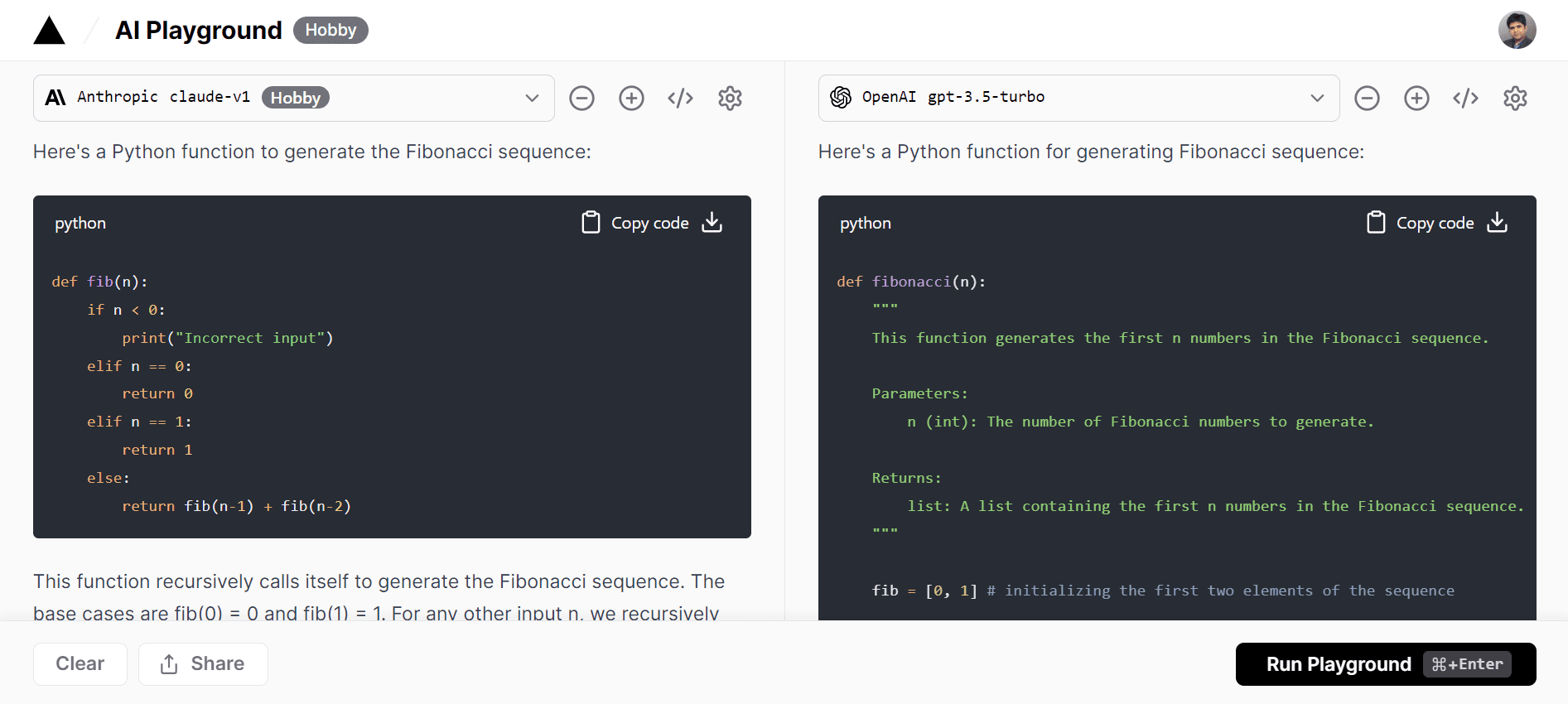
Vercel AI Playground is a free, easy-to-use tool that allows you to experiment with and compare various AI models, including commercial and open-source options. Through the AI Playground, you can interact with conversational AI models from companies like OpenAI, Hugging Face, Cohere, Replicate, and Anthropic.

To experiment with Anthropic's Claude models on the AI Playground, you first need to create a free Vercel Hobby account. Setting up an account only takes a few minutes. Once logged in, you'll have immediate access to Claude and other AI models within the AI Playground interface.
3 Ways to Access Claude AI for Free
Image from Vercel AI Playground 2. Poe

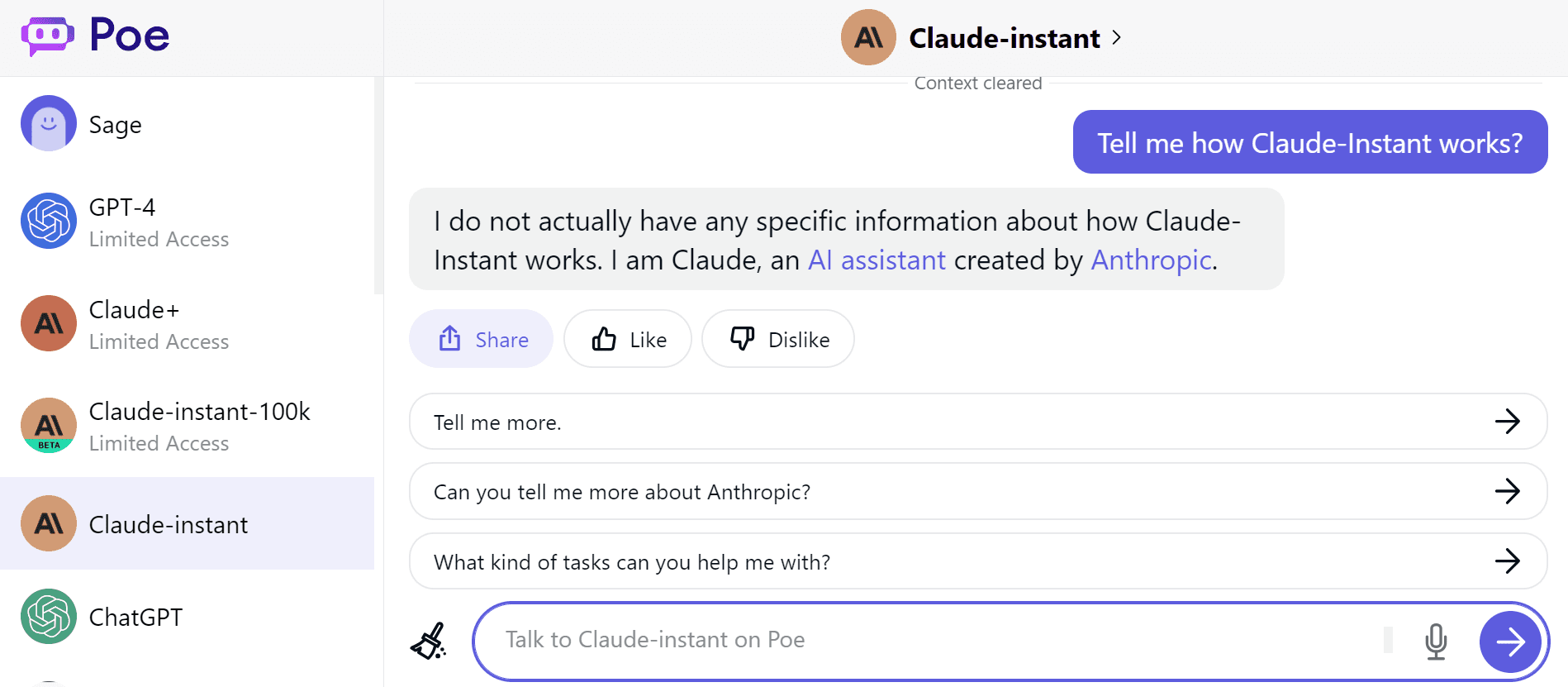
Poe AI is a free AI playground built by Quora that allows you to interact with AI conversational models. After setting up a free account, you can converse with models like ChatGPT, Claude, Sage, and other customized AI options within Poe. You can even create your own customized model by following the guide.

Some key advantages of Poe AI include:

  • Fast response times and high uptime.
  • No strict limitations on use.
  • Ability to customize AI using Caude models.
  • Suggestions for follow up prompts.

3 Ways to Access Claude AI for Free
Image by Poe 3. Slack App

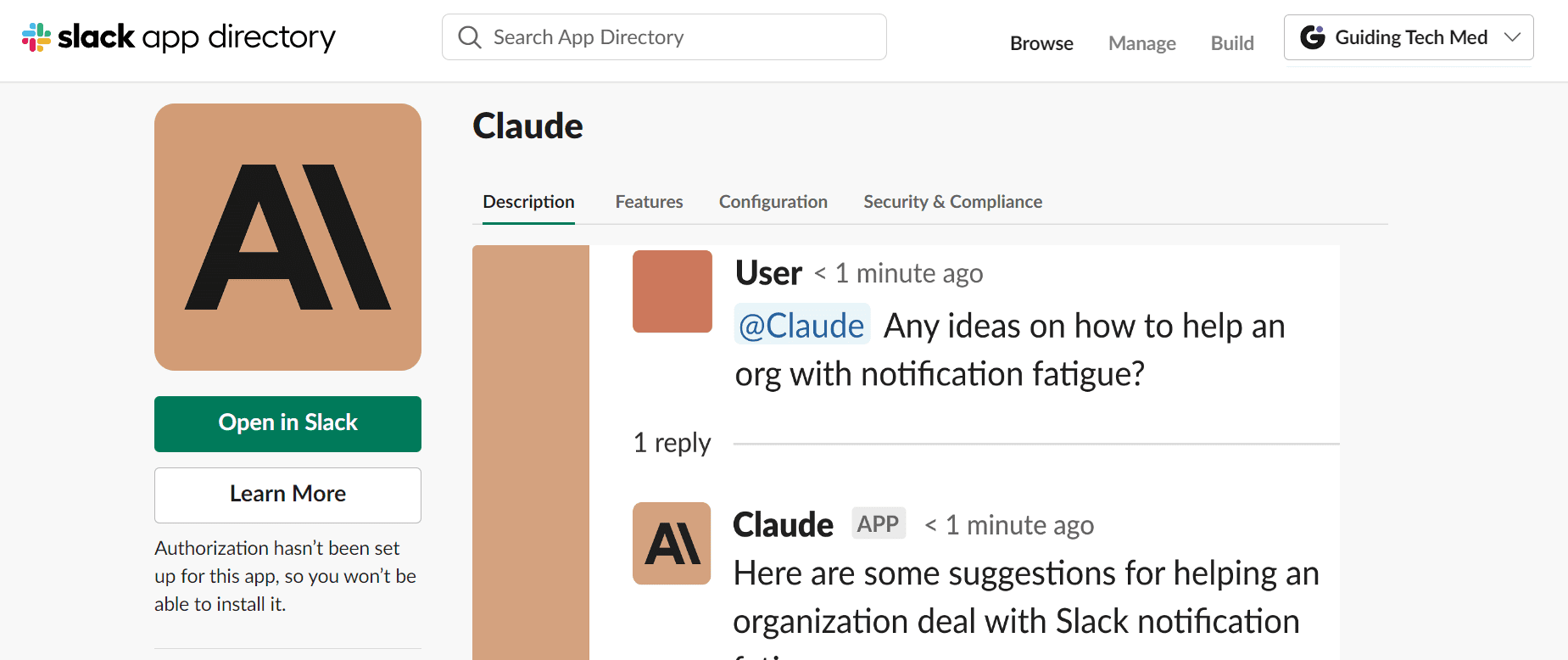
Think of Claude as an AI assistant dedicated to helping your team. Speak to it simply and give clear step-by-step instructions for what you need. Claude can assist with writing summaries, generating ideas, answering questions, and more.

Install Claude in your Slack by:

  1. Clicking the “More” button
  2. Selecting "Apps"
  3. Searching for "Claude"
  4. Clicking "Add to Slack"

There are two ways to interact with Claude in Slack:

  • In channels and group DMs, mention @Claude in a message. Claude will reply in that thread for everyone to see. Follow up by mentioning @Claude again.
  • Send Claude a direct message (Private). Claude will respond back directly, just like messaging a coworker.

Give Claude specific tasks and it will do its best to assist your team efficiently.
3 Ways to Access Claude AI for Free
Image from Slack App
Bonus (Paid)

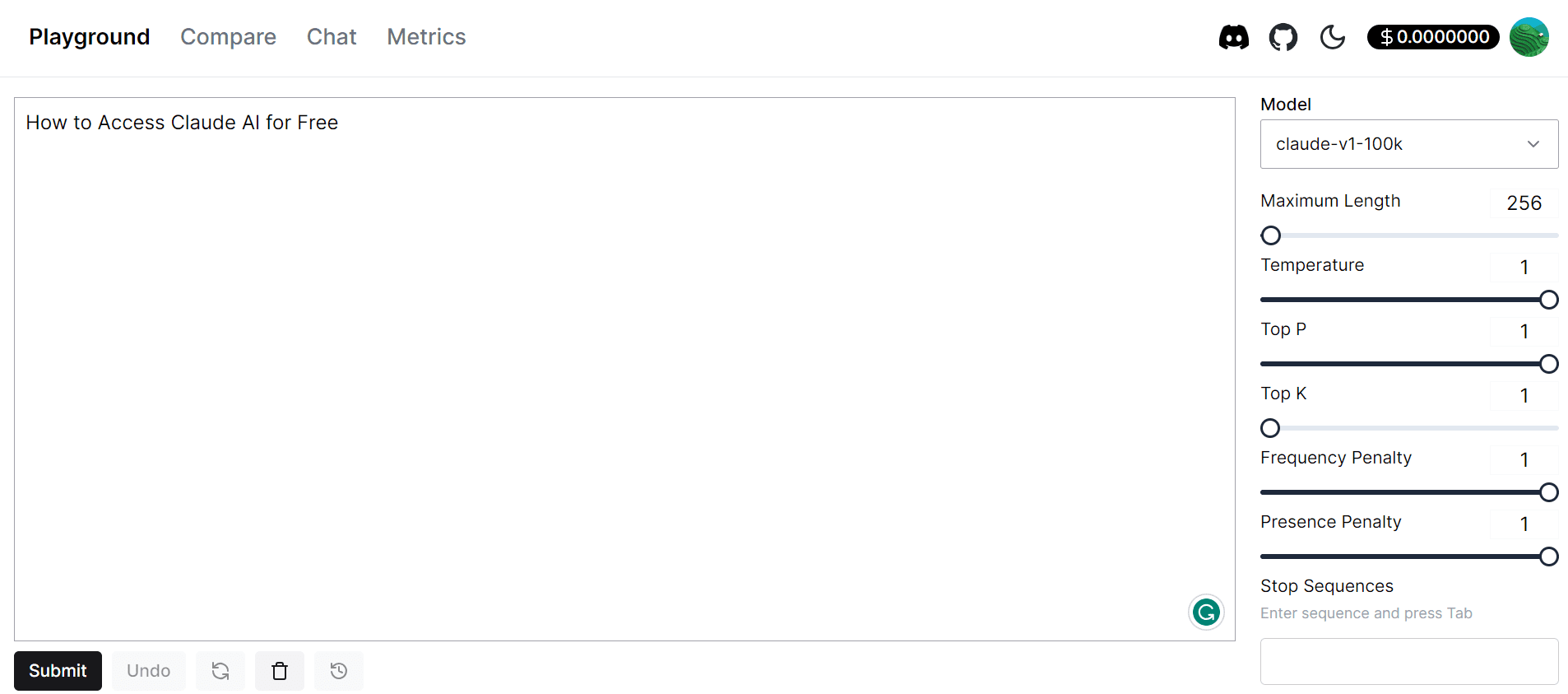
If you want to access a wide variety of paid, open-source and commercial conversational AI models, nat.dev is worth exploring. For just $5 in credits, you can test out all kinds of chatbots from Claude, to other models, all in one place.
3 Ways to Access Claude AI for Free
Image from nat.dev

Abid Ali Awan (@1abidaliawan) is a certified data scientist professional who loves building machine learning models. Currently, he is focusing on content creation and writing technical blogs on machine learning and data science technologies. Abid holds a Master's degree in Technology Management and a bachelor's degree in Telecommunication Engineering. His vision is to build an AI product using a graph neural network for students struggling with mental illness.

More On This Topic

  • 3 Ways to Access GPT-4 for Free
  • Hone Your Data Skills With Free Access to DataCamp
  • 15 Trending MLOps Talks You can Access for Free at ODSC East 2022
  • 2 Coding-free Ways to Extract Content From Websites to Boost Web Traffic
  • Top 10 Tools for Detecting ChatGPT, GPT-4, Bard, and Claude
  • Meet Gorilla: UC Berkeley and Microsoft’s API-Augmented LLM Outperforms…

Gladia turns any audio into text in near real time

Gladia turns any audio into text in near real time Romain Dillet @romaindillet / 12 hours

Meet Gladia, a French AI startup that wants to change how companies interact with audio data. The company develops an audio transcription application programming interface (API) that you can integrate with other products and is supposed to work much better than what’s available out there. And this tech foundation unlocks new use cases around audio.

If you’re familiar with audio transcription APIs, you know that big cloud providers already have their own APIs. There’s Google’s speech-to-text API, Amazon Transcribe, Microsoft’s Speech to Text, etc. They work well, but they are expensive, slow and don’t have a ton of features.

Gladia’s co-founder and CEO Jean-Louis Quéguiner, who was the former head of AI for OVHcloud and co-founded the company with Jonathan Soto, told me about some of the limitations with existing APIs. According to him, there are three pain points with existing products. First, when it comes to prices, transcribing an hour of audio generally costs $1.50 to $2 an hour.

Second, the output isn’t always very reliable as some languages work well while others are barely supported. When it comes to advanced features, if people speak in multiple languages, chances are the API simply won’t be able to notice the language change and transcribe the audio in more than one language.

Third, transcription APIs are slow. It can take more than 15 minutes to transcribe an hour of audio. That’s fine if you don’t need transcriptions right away, but it means that you won’t be able to use these APIs in some industries.

Whisper’s whisperer

Gladia is based on Whisper, OpenAI’s open-source transcription model. “We started from Whisper. We haven’t reinvented the wheel, but we listened to our customers and they told us: ‘What I want is something that works as well as Whisper,’” Jean-Louis Quéguiner told me.

But Whisper isn’t perfect. The vanilla version is still quite slow, so Gladia has spent a lot of time turning Whisper into a fast and responsive transcription model. That’s not the only issue.

“Half of Whisper is GPT-2. You’ve seen LLMs and ChatGPT, it tends to hallucinate. We’ve done a lot of work to avoid hallucination problems too,” Quéguiner said.

In particular, he told me that Whisper has been trained on closed captions that you can find on the internet, such as on YouTube. OpenAI’s model tends to hear common phrases that you can hear in online videos, such as “if you enjoyed this video, please like and subscribe.” There is a mathematical overrepresentation of some sentences like this one and Gladia tries to fix those shortcomings.

In addition to these modifications to Whisper and its implementation, Gladia also has some pre-processing and post-processing algorithms that improve the end results.

Gladia promises that it can transcribe an hour of audio for $0.61. And the transcription process takes roughly 60 seconds. Its API can detect when there are multiple speakers, add timestamps, detect languages and switch from one language to another if needed. Gladia also automatically adds punctuation and casing.

Like most APIs, the end result is in JSON format. But Gladia also supports SRT and VTT files for companies that want to generate subtitles.

I created an account and uploaded an audio recording of an interview to see how Gladia works. It took a bit more time than expected but it was definitely much faster than Google’s or Azure’s speech-to-text APIs.

The result wasn’t flawless, but it was extremely good — it understood acronyms and technical terms. I opened the same audio file in Aiko, a Mac app developed by Sindre Sorhus and that lets you transcribe audio file locally using Whisper. As expected, the output was close to Gladia’s output — but Gladia was much faster than running Aiko on my MacBook Pro.

Overall, Gladia was the best transcription API I’ve ever used.

Becoming an audio intelligence API

The company currently works with call center companies, virtual meeting services, and video publishers, including Claap, Livestorm and Selectra.

Gladia raised a $4 million seed round in a funding round led by New Wave. Other investors include Sequoia, Cocoa and business angels, such as Solomon Hykes, Pierre Betouin, Miroslaw Klaba and Alexandre Berriche.

Having a rock-solid transcription API is just step one for Gladia. The company hopes that it can then build features on top of this strong technical foundation.

For instance, after an audio file has been transcribed, Gladia can translate text into another language. Combined with word-level timestamps, it means that a company can upload an audio file and get subtitles in dozens of languages in just a few minutes.

In the future, the company hopes that it can summarize the content of an audio file, categorize content into multiple topic categories, create chapters automatically, conduct sentiment analysis and more.

“Our longer-term vision is to move from 2D to 3D data. Audio is pretty flat, and the idea is to augment it with intelligence,” Quéguiner said. “We think that transcription will become a commodity. But we think that what’s going to matter more is the options we’re going to add.”

Online Community Helps Catch Thief Using AI in Philippines

Augmented human

The real use cases of generative AI tools have started taking shape. Many use cases in healthcare, agriculture amongst others have started emerging. Iin one such instance the online community came together to catch a thief. During a music festival in Bacolod City in the Philippines, a man stole a bag from two children who were performing on stage. The incident was captured on a CCTV camera located at the venue. The stolen bag contained two smartphones, a wallet with money, important documents, and equipment.

Seeking assistance, the children posted a video of the theft on social media, particularly on Facebook, asking users to help identify the thief. The online community responded by leveraging the capability of artificial intelligence technology to enhance the image of the thief, making it clearer and more identifiable. The improved image was then shared with the children.

The children, in turn, provided the enhanced photo to the local police authorities to aid in the investigation. Thanks to the collaboration between social media users and the police, the stolen bag was successfully recovered. However, one of the cell phones that were inside the bag was still missing.

Although the identity of the suspect has been established, they remain at large. The incident highlights the power of AI and online communities in assisting law enforcement and solving crimes. The proactive engagement of Filipino internet users and their use of AI technology played a crucial role in restoring the image and aiding the investigation.

Additionally, AI has been used in Law enforcement for quite a long time now. It is used for facial recognition, has been paired with genetic genealogy databases to solve cold cases. Machine learning algorithms are also being used today by the police and investigative agencies to analyse crime data from a specific geographic area, such as a city or neighborhood, to identify crime hotspots and predict future crime incidents. However, predictive policing is controversial and has been subjected to scrutiny.

What About India

In India, facial recognition systems which use artificial intelligence have increased multifold. Recently police in Bangalore completed installation of 4000 CCTVs equipped with facial recognition technology.

According to data from the Internet Freedom Foundation (IFF), Indian authorities have implemented 126 facial recognition technology systems (FRTs) across the country, with an initial expenditure of INR 1,499.41 crore. This information comes from the IFF, a civil society group in India dedicated to protecting internet liberties.

Among the states using FRT systems, Maharashtra and Delhi have the highest number of installations, while other states like Uttar Pradesh, Bihar, and the Union Territory of Jammu and Kashmir have deployed 3, 5, and 2 systems respectively.

The post Online Community Helps Catch Thief Using AI in Philippines appeared first on Analytics India Magazine.

Opera One’s stable release is here. Here’s how to download it

Opera One

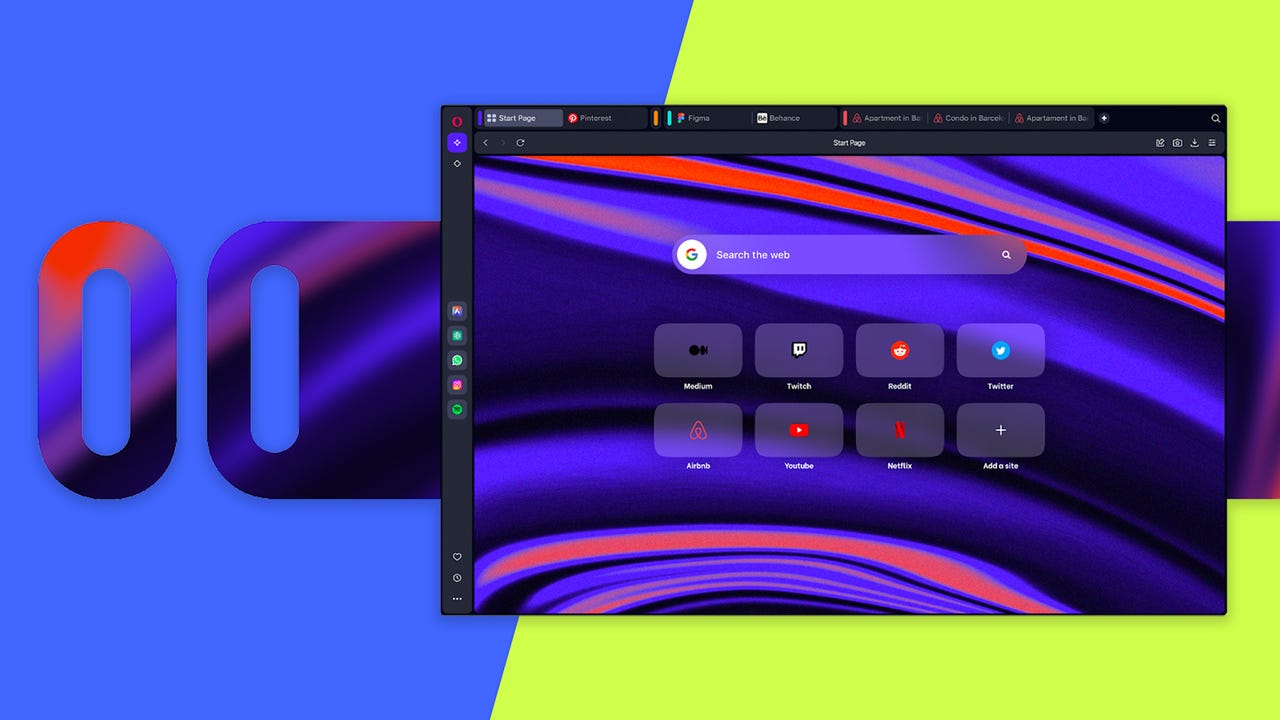
Opera One, the latest iteration of the Opera browser, announced in April, is now officially out of testing and available for download for desktop and Android devices.

One of the main features that makes Opera One stand out from the previous 99 versions of the Opera browser is the native integration of artificial intelligence (AI). The browser features Aria, a generative AI assistant that has access to the web and leverages OpenAI's GPT technology to power search results with AI, generate text, write code, and answer questions.

Also: How to enable tracker blocking in Opera One (and why you should)

"As people who obsess over browser innovation, we saw fit to rethink the role of the browser in light of the recent developments in the AI space," explained Joanna Czajka, product director at Opera. "Compared to other browser companies, Opera didn't simply add AI services to its browser. We went back to the drawing board and redesigned our flagship browser".

Opera One features Aria prominently on the left-hand sidebar, always available to help with more than just giving you a classic knock-knock joke. Aria is also trained on Opera's database of support documentation, and can answer customer questions and provide them with product knowledge.

Also: How to use Opera's Speed Dial to get to your favorite sites quickly

One of the features announced with Opera One's stable release is the ability for users to call on Aria by using a keyboard shortcut of ctrl+/ for Windows users and cmd+/ for Mac users, as well as getting contextual prompts by right-clicking or selecting text in the browser that are then given to Aria.

If users opt out of the AI experience in the Opera One browser, they can hide Aria from the sidebar and not engage with the AI tools.

Users can download the Opera One browser today for Windows, MacOS, and Linux by following this link.

Extra features for Opera One

With Opera One, the browser has been visually redesigned to adopt a modular design powered by a Multithreaded Compositor that makes for efficient and smooth visual transitions.

Also: What is the Opera Personal News feature and how do you use it?

The Tab Island feature is one of the most widely expected changes coming to the Opera One browser. This feature helps you easily manage your tabs by intuitively linking related tabs, grouping them automatically by context.

This feature makes a mess of tabs in your browser a thing of the past, but it still allows you to edit your islands by adding or moving tabs around.

Artificial Intelligence

Software developers work best in teams. Here’s how AI is helping

Two people discussing code on a computer

The popular perception of software developers for decades has been that of brainy and somewhat introverted types who do their best work alone. But research suggests today's software professionals are actually extraverted, preferring to work as actively as possible within broad teams and with end users. What's more, with artifical intelligence (AI) sweeping through IT shops, opportunities for higher-level advisory roles will only accelerate.

That's the conclusion from a recent survey of 500 developers by code-hosting platform GitHub. "Developers thrive in collaborative environments," writes Inbal Shani, chief product officer at GitHub. The bottom line is that "developers want to upskill, design solutions, get feedback from end users, and be evaluated on their communication skills."

Also: The developer role is changing radically, and these figures show how

The survey shows that developers work with an average of 21 other developers on a typical project, and 52% report working with other teams daily or weekly. They rank regular touchpoints as the most important factor for effective collaboration. Yet developers also say they spend too much time on builds and tests, and current performance metrics do not adequately represent the contributions they make to their organizations.

Shani believes developer experience should be just as much of a priority to organizations as customer experience and user experience. The best path to code quality is through a productive developer experience that is built on collaboration across the board.

"Too many pings and messages can affect flow, but there's still a need to stay in touch," she observes. "In our survey, developers say effective collaboration results in improved test coverage and faster, cleaner, more secure code writing — which are best practices for any development team. This shows that when developers work effectively with others, they believe they build better and more secure software."

Developers in the survey say they're currently measured by the number of incidents they resolve. However, they believe that how they handle those bugs and issues is more important to performance — in other words, code quality over quantity. Developers also believe collaboration and communication should be just as important as code quality in terms of performance measures, yet only 33% report that their companies use collaboration and communication as a performance metric.

Also: Low-code platforms mean anyone can be a developer

AI now plays a role in freeing up developer time and resources to pursue greater collaboration, the GitHub survey finds. As described in a recent piece by my ZDNET colleague Steven Vaughan-Nichols, developers in the survey see AI coding tools as a way to meet existing performance standards with improved code quality, faster outputs, and fewer production-level incidents.

Industry leaders concur that AI — in particular, generative AI — has the potential to elevate developer roles within their enterprises to that of advisors and business advocates. "As generative AI tools become more commonplace, we expect demand for IT professionals to shift from a builder role to a facilitator role," says Patrick Stokes, executive VP and general manager for Salesforce Platform.

"Organizations will pressure IT to democratize application development while ensuring that proprietary business and domain data are available to the AI assistants but kept within the trust boundaries established by the business."

Also: How to use ChatGPT to write code

The automated development and deployment of software made possible through AI "has expanded the remit of conventional IT pros, agrees Rajesh Kumar R., CIO at LTIMindtree. "The hyper-automated environment has freed up the bandwidth of IT pros, enabling them to actively engage in mindful innovation and invention, solve complex business problems swiftly, and enhance usability of software, rather than spending time on repetitive tasks," he says.

"In its current form, generative AI stands to enhance developer productivity as it builds codes on demand for simpler and proven algorithms, increase code quality in test cases, and improve maintainability as it documents the code."

Developments in generative AI "represent a massive step forward in this journey because almost anyone can ask an AI to produce a functioning program," says Stokes. "Instead of spending hours writing that code, they can spend that time testing it, securing it, and tweaking its interfaces to satisfy its users best. The outcome is higher quality apps in much less time produced by people who will inevitably be even closer to the end-user experience."

Developer

Consumer group calls on EU to urgently investigate ‘the risks of generative AI’

Consumer group calls on EU to urgently investigate ‘the risks of generative AI’ Ingrid Lunden @ingridlunden / 8 hours

European regulators are at a crossroads over how AI will be regulated — and ultimately used commercially and non-commercially — in the region, and today the EU’s largest consumer group, the BEUC, weighed in with its own position: stop dragging your feet, and “launch urgent investigations into the risks of generative AI” now, it said.

“Generative AI such as ChatGPT has opened up all kinds of possibilities for consumers, but there are serious concerns about how these systems might deceive, manipulate and harm people. They can also be used to spread disinformation, perpetuate existing biases which amplify discrimination, or be used for fraud,” said Ursula Pachl, Deputy Director General of BEUC, in a statement. “We call on safety, data and consumer protection authorities to start investigations now and not wait idly for all kinds of consumer harm to have happened before they take action. These laws apply to all products and services, be they AI-powered or not and authorities must enforce them.”

The BEUC, which represents consumer organizations in 13 countries in the EU, issued the call to coincide with a report out today from one of its members, Forbrukerrådet in Norway.

That Norwegian report is unequivocal in its position: AI poses consumer harms (the title of the report says it all: “Ghost in the Machine: addressing the consumer harms of generative AI”) and poses numerous problematic issues.

While some technologists have been ringing alarm bells around AI as an instrument of human extinction, the debate in Europe has been more squarely around the impacts of AI in areas like equitable service access, disinformation, and competition.

It highlights, for example, how “certain AI developers including Big Tech companies” have closed off systems from external scrutiny making it difficult to see how data is collected or algorithms work; the fact that some systems produce incorrect information as blithely as they do correct results, with users often none the wiser about which it might be; AI that’s built to mislead or manipulate users; the bias issue based on the information that is fed into a particular AI model; and security, specifically how AI could be weaponized to scam people or breach systems.

Although the release of OpenAI’s ChatGPT has definitely placed AI and the potential of its reach into the public consciousness, the EU’s focus on the impact of AI is not new. It stated debating issues of “risk” back in 2020, although those initial efforts were cast as groundwork to increase “trust” in the technology.

By 2021, it was speaking more specifically of “high risk” AI applications, and some 300 organizations banded together to weigh in to advocate to ban some forms of AI entirely.

Sentiments have become more pointedly critical over time, as the EU works through its region-wide laws. In the last week, the EU’s competition chief, Margarethe Vestager, spoke specifically of how AI posed risks of bias when applied in critical areas like financial services such as mortgages and other loan applications.

Her comments came just after the EU approved its official AI Law, which provisionally divides AI applications into categories like unacceptable, high and limited risk, covering a wide range of parameters to determine which category they fall into.

The AI Law, when implemented, will be the world’s first attempt to try to codify some kind of understanding and legal enforcement around how AI is used commercially and non-commercially.

The next step in the process is for the EU to engage with individual countries in the EU to hammer out what final form the law will take — specifically to identify what (and who) would fit into its categories, and what will not. The question will be in how readily different countries agree together. The EU wants to finalize this process by the end of this year, it said.

“It is crucial that the EU makes this law as watertight as possible to protect consumers,” said Pachl in her statement. “All AI systems, including generative AI, need public scrutiny, and public authorities must reassert control over them. Lawmakers must require that the output from any generative AI system is safe, fair and transparent for consumers.”

The BEUC is known for chiming in in critical moments, and for making influential calls that reflect the direction that regulators ultimately take. It was an early voice, for example, against Google in the long-term antitrust investigations against the search and mobile giant, chiming in years before actions were taken against the company. That example, though, underscores something else: the debate over AI and its impacts, and the role regulation might play in that, will likely be a long one.

Nandan Nilekani Donates ₹315 Crore to IIT Bombay

Nandan Nilekani Donates ₹315 Crore to IIT Bombay

Nandan Nilekani, the co-founder of Infosys, has announced a donation of ₹315 crore to his alma mater, the Indian Institute of Technology (IIT) Bombay, in commemoration of his 50-year association with the institution.

According to a statement, the purpose of the donation is to enhance the establishment’s infrastructure to a world-class standard, promote research in emerging fields of engineering and technology, and cultivate a thriving ecosystem for deep tech startups at IIT Bombay. The statement also highlights that this contribution is one of the most substantial donations ever made by an alumnus in India.

To mark 50 years of my association with @iitbombay, I am donating ₹315 crores to my alma mater. I am grateful to be able to do this🙏
Full release: https://t.co/q6rvuMf2jn pic.twitter.com/f8OEfZ1UTq

— Nandan Nilekani (@NandanNilekani) June 20, 2023

In the release, Nilekani expressed his profound gratitude towards IIT Bombay, stating that it played a pivotal role in his life, shaping his early years and providing the groundwork for his journey. As he celebrates five decades of his affiliation with this esteemed institution, he feels fortunate to contribute to its future and make a positive impact.

“This donation is more than just a financial contribution; it is a tribute to the place that has given me so much and a commitment to the students who will shape our world tomorrow,” he added.

Read: Why is Nandan Nilekani the ‘Go To Guy’ for GoI?

It is worth mentioning that Nilekani had previously donated grants totalling ₹ 85 crore to the institute, making his overall contribution to IIT Bombay reach ₹ 400 crore.

Nilekani and Professor Subhasis Chaudhuri, Director of IIT Bombay, signed the Memorandum of Understanding (MoU) today in Bengaluru. The statement quoted Professor Chaudhuri expressing his belief that this significant contribution will pave the way for IIT Bombay to achieve global leadership in its endeavors.

“We are extremely delighted to see our illustrious alumnus Nandan Nilekani continuing his foundational & pioneering contributions to the Institute. This historic donation will significantly accelerate the growth of IIT Bombay and will firmly set it on a path of global leadership,” Mr Chaudhari said.

Last year, Nilekani also contributed ₹36 crores grant for launching Nilekani Centre at AI4Bharat in partnership with IIT Madras, for advancing Indian language technology for creating social impact.

The post Nandan Nilekani Donates ₹315 Crore to IIT Bombay appeared first on Analytics India Magazine.

Voice-generating platform ElevenLabs raises $19M, launches detection tool

Voice-generating platform ElevenLabs raises $19M, launches detection tool Kyle Wiggers 8 hours

ElevenLabs, the viral AI-powered platform for creating synthetic voices, has raised a new round of cash.

Today, the startup announced the closure of a $19 million Series A round co-led by entrepreneurs Nat Friedman and Daniel Gross alongside Andreessen Horowitz. Other participants included heavyweights Creator Ventures, SV Angel, Instagram co-founder Mike Krieger, Oculus co-founder Brendan Iribe, Deepmind and Inflection AI co-founder Mustafa Suleyman and O’Reilly Media founder Tim O’Reilly.

A source familiar with the matter tells TechCrunch that the tranche values ElevenLabs at $99 million post-money — a respectable figure, especially considering that the startup launched just over a year ago.

“This investment will be used to continue building ElevenLab’s cutting-edge research hub for voice AI and to launch a range of additional products to support specific market verticals such as publishing, gaming, entertainment and conversational applications,” co-founder and CEO Mati Staniszewski told TechCrunch via email.

ElevenLabs, which has made headlines over the past few months for reasons both good and abhorrent, was founded by Staniszewski, who previously worked at Palantir, and his childhood friend Piotr Dabkowski, an ex-Google employee. Inspired by the mediocre dubbing of American movies they watched growing up in Poland, their native country, the pair set about designing a platform that could do better — leveraging AI, of course.

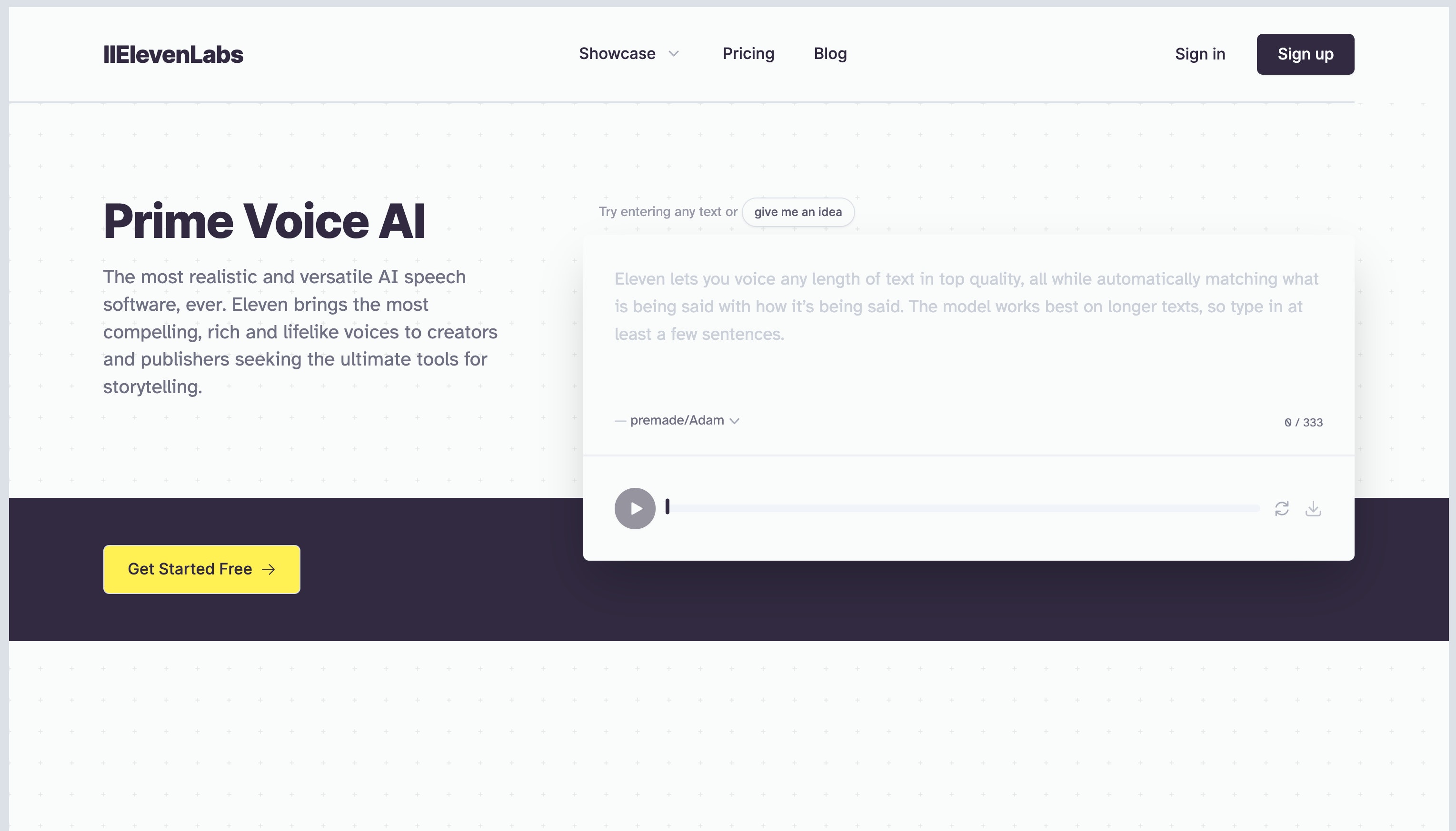
ElevenLabs can turn text into speech using synthetic voices, cloned voices or entirely novel “artificial” voices that mimic the sounds of people of various genders, ages and ethnicities. The company’s AI text-to-speech models are language-agnostic, allowing corporate customers to fine-tune them and build their own, proprietary speech models on top.

Coinciding with the Series A raise, 15-employee ElevenLabs is launching Projects, a workflow for editing and creating long-form spoken content. With Projects, users can generate dialogue segments and even audiobooks without having to leave the platform.

“For business-to-business partners, our technology can be used in areas such as scalable and multilingual audiobook creation, voicing characters in video games, voicing digital articles, supporting the visually impaired to access online written content and powering AI radio,” Staniszewski said.

ElevenLabs, which launched in beta in late January, picked up steam rather quickly — owing to the extremely high quality of its generated voices, speedy generation times and generous free tier. But as alluded to earlier, the publicity hasn’t always been positive — particularly once bad actors began to exploit the platform for their own ends.

ElevenLabs

ElevenLabs offers tools to clone — or generate from scratch — realistic-sounding voices, leveraging AI.

4chan, the infamous message board known for its conspiratorial content, used ElevenLabs’ tool to share hateful messages mimicking celebrities like the actor Emma Watson. Elsewhere, The.Verge’s James Vincent was able to tap ElevenLabs to clone targets’ voices in a matter of seconds — generating audio samples containing everything from threats of violence to expressions of racism and transphobia.

In response, ElevenLabs said that it would introduce a set of new safeguards, like limiting voice cloning to paid accounts, banning users who repeatedly violate its terms of service and providing a new AI detection tool.

The detection tool launches today. Called AI Speech Classifier and available as an API to “selected” partners, it’s designed to detect whether an uploaded audio sample contains AI-generated content from ElevenLabs.

“Ensuring Generative AI platforms can be embraced safely is a key challenge for the whole AI-generated sector, including text, image and voice platforms,” Staniszewski said. “We must ensure that people are educated about the nature of the generative media landscape and know that such content is out there — we are committed to building tools to help people detect AI-generated content, in the interest of transparency.”

A voluntary detection tool — assuming it even works as advertised — won’t necessarily deter bad behavior. But there’s another elephant in the room that ElevenLabs hasn’t addressed: the existential threat its tech poses to voice actors.

Motherboard writes about how voice actors are increasingly being asked to sign rights to their voices away so that clients can use AI to generate synthetic versions that could eventually replace them — sometimes without additional compensation. Internal emails seen by The New York Times, meanwile, indicate that Activision Blizzard, one of the biggest game publishers in the world, is working on tools for AI-assisted “voice cloning.”

It would appear that ElevenLabs sees this as the natural progression of things, touting its work with publishers like Storytel and media platforms like TheSoul Publishing and MNTN for audiobooks, video games and radio content. (Storytel and TheSoul Publishing are strategic investors.) The company claims that it has over a million registered users across the creative, entertainment and publishing spaces who’ve created ten years’ worth of audio content.

ElevenLabs plans to eventually extend its AI models to voice dubbing, following in the footsteps of startups like Papercup and Deepdub and building what it calls “a foundation to be able to transfer emotions and intonation from one language to another.”

“This will enable any video to be dubbed into any language in an engaging, effective, and scalable way, all while maintaining the original speaker’s voice,” ElevenLabs writes in a press release. “[We are] already conducting a number of tests with industry partners to enable AI dubbing at scale.”

With $21 million in the bank ($2 million of which came from a pre-seed round in January), ElevenLabs — consequences be damned — is laser-focused on beating back its rivals in the burgeoning generative voice space. They include incumbents like Amazon, Google and Microsoft as well as startups like Murf, Tavus, Resemble AI, Respeecher, Play.ht and Lovo.

Is This the End of LangChain?

Last week, OpenAI released a slew of updates. Of these, function calling in the Chat Completions API was the most important. The feature uses external APIs and tools with OpenAI’s API. This, surprisingly, has a striking resemblance with LangChain, which also performs similar action, bringing us to question its relevance when building autonomous agents.

Machine learning expert Santiago said that using function calling, we can define custom functions the model can use to answer questions. “For example, we can now have GPT solve queries requiring real-time data like stock prices, weather information, or match results,” he added. He said that previously this new ‘calling function’ feature was only possible using LangChain, but now it is natively available as part of the API.

In other words, with this new update, users now have the choice to bypass the third party (i.e. LangChain) and directly built using OpenAI’s API – which is available for its GPT-3.5-Turbo and GPT-4 models.

Relevance of LangChain

LLM expert Derek Haynes said, “Pretty stoked with OpenAI’s function calling. My previously massive ReAct-based agent prompt has been reduced to this. It’s a fine-tuned GPT for agents … and makes me wonder if LangChain is worth the complexity?”

In his blog post, Haynes explained the need for LangChain and the role of ‘calling function’ update introduced by OpenAI. He said that ReAct presents an approach where LLMs like GPT-3.5-Turbo and GPT-4 can use external tools to perform tasks, observe the outcomes, and use those outcomes to inform the next actions. For example, a model can use Zapier to search unopened emails and OpenAI’s models to summarise them.

However, using this approach requires users to do considerable work, including listing available tools in a format that the LLM understands, applying custom code to parse the response and extract useful data, and guiding the LLM to perform tasks accurately.

Haynes believes that this process can result in complex, brittle string parsing code. He said, that is where LangChain comes into the picture, bringing structure to this process, but this in turn can make the code less readable. A user, who goes by the name ‘fbrncci’ on HackerNews, said that the deeper and more complex the application becomes, the more of a risk LangChain seems to become to keeping it maintainable.

Enters function calling

On their website, OpenAI provided examples and applications of the update. (as seen below)

“Function calling within your own applications is one of the interesting waves that we’re seeing with language models, which is increasing their capabilities outside of just normal text generation,” said AI expert Greg Kamradt, in an explainer video – Function Calling via ChatGPT API – First Look With LangChain.

He said a lot of systems need to make decisions as well and when you use a language model as a reasoning engine, freeform text isn’t the best way to talk to other computers. It’s better if you can do it in a JSON format and that’s what function calling is a step towards.

Here’s a quick glimpse on how function calling works:

On a sprint mode

Within an hour of OpenAI’s new update, LangChain responded with support. While users are free to choose between the two, it would be easier to use with its variety of features and plugins. And they aren’t the only one offering these services, with Hugging Face keeping up as well.

But, one question remains: did OpenAI steal LangChain‘s limelight. “Yes, OpenAI took this from LangChain,” said Santiago. He, however, said that this will not kill LangChain. “There’s much more functionality there,” he added, questioning OpenAI’s plans of syphoning off from them and integrating it natively on its API.

The post Is This the End of LangChain? appeared first on Analytics India Magazine.

Vimeo adds a suite of AI tools to make video creation significantly easier

vimeo-ai-prompt-720

Have you ever had a great video idea that you just never got to because of how much work was involved? Vimeo, the video-sharing and editing platform, is attempting to solve that problem with the use of AI.

On Tuesday, Vimeo announced it is adding a suite of AI tools to its platform that will automate a lot of the video-editing process. The features include an AI script generator, a teleprompter, and even a text-based video editor.

Also: TikTok's new Script Generator tool uses AI to write ad scripts for you in seconds

"AI in video opens up a new frontier of accessibility. Any individual or business now has the ability to produce engaging, professional content with no prior production experience, and within mere minutes," said Ashraf Alkarmi, chief product officer at Vimeo.

The script generator will do exactly what the name implies — generate a complete video script from user inputs, including tone and duration.

TikTok recently added an AI Script Generator to its own platform. However, TikTok's integration is aimed at helping businesses produce ads, whereas Vimeo's is open to any consumer.

To facilitate the recording of the video with the generated script, Vimeo is addeding a teleprompter feature that will bring a built-in script display to the platform. Like a real TV studio, the teleprompter's pace and font size can be personalized.

Also: Is humanity really doomed? Consider AI's Achilles heel

Lastly, the most time-consuming part of creating a video is typically the post-production edit. With the goal of helping users save time, as well as simplifying the editing process for beginners, Vimeo will now have a text-based video editor.

This feature will allow users to cut filler words, long pauses, and other unwanted bits automatically with a single click of a button, eliminating the need to go in manually and edit every little thing.

The features will be available starting July 17 and will be part of Vimeo's Standard plan, the second tier of the company's paid plans.

Artificial Intelligence