NASA is Creating ChatGPT for Astronauts

NASA is developing its own ChatGPT-style interface that could allow astronauts to talk to their spacecraft and mission controllers to converse with artificial intelligence-powered robots exploring distant planets and moons, Guardian reported on Saturday.

NASA is currently arranging to deploy AI on Lunar Getaway, a planned extraterrestrial space station that is part of the Artemis programme. The new system will allow the astronauts and mission control to talk to spacecraft in a natural language interface, saving the hassle of going through technical manuals for relevant information.

Dr Larissa Suzuki, a visiting researcher at Nasa said “The idea is to get to a point where we have conversational interactions with space vehicles and they [are] also talking back to us on alerts, interesting findings they see in the solar system and beyond.” Suzuki outlined an interplanetary communications network with inbuilt AI to detect, and possibly fix, glitches and inefficiencies as they occur.

“It then alerts mission operators that there is a likelihood that package transmissions from space vehicle X will be lost or will fail delivery,” she said.

“We cannot send an engineer up in space whenever a space vehicle goes offline or its software breaks somehow.”

Suzuki further added that she is also investigating how to deploy machine learning in space, where it is not possible to run vast amounts of data through supercomputers.

Read more: Why NASA Crashed Spacecraft Into an Asteroid

The post NASA is Creating ChatGPT for Astronauts appeared first on Analytics India Magazine.

Forecasting Future Events: The Capabilities and Limitations of AI and ML

Forecasting Future Events: The Capabilities and Limitations of AI and ML
Image from Bing Image Creator Can ML and AI be Applied to Predicting what is yet to come?

Predicting the future is a challenging task, but one that is increasingly being attempted using machine learning and artificial intelligence. These technologies have the potential to revolutionize the way we make predictions in various fields such as finance, healthcare, and natural disasters. They have the ability to make predictions based on patterns and trends found in data, but the accuracy of those predictions can vary depending on the quality and quantity of the data used, as well as the complexity of the model. It is difficult to predict future events with certainty, as there are many variables that can affect the outcome. Additionally, predictions about future events, such as natural disasters or world leaders, can also be influenced by human behavior and decision making, which is difficult to model and is currently beyond the capabilities of ML and AI, they are not yet advanced enough to predict future events with a high degree of accuracy.

The Current State of Predictions using ML and AI

Nowadays predictions using ML and AI are seen in various fields. Some examples are, in finance, algorithms have been used to predict stock market prices with a high degree of accuracy. In healthcare, machine learning algorithms have been used to predict the risk of a patient developing a certain disease. In natural disasters, algorithms are used to predict the likelihood of a flood or a hurricane. However, these predictions are not always accurate and there are several challenges that need to be overcome.

Forecasting Future Events: The Capabilities and Limitations of AI and ML

However, it's important to note that while these models and algorithms can provide useful predictions and forecasts, they too are limited by few factors discussed further.

Limitations of Predictions

ML and AI can make predictions about future events, but the accuracy of these predictions is highly dependent on the quality and quantity of data used to train the model, as well as the complexity of the task being predicted. One of the most recent cases is ChatGPT, which is an AI language model, which doesn’t have the ability to observe the world or experience events, it can only generate predictions based on patterns and relationships in the data that was trained on. Some of the limitations include:

  1. Lack of data: In order to make accurate predictions, ML and AI models need large amounts of data to learn from. For certain types of events, there may not be enough data available to train a model.
  1. Complexity of the task: Some events are inherently more complex than others. For example, predicting the stock market is a highly complex task, as there are many different factors that can influence stock prices.
  1. Unpredictable events: Some events, such as natural disasters, are difficult to predict because they are caused by unpredictable factors.
  1. Human behavior is hard to model: Many events depend on human behavior which is hard to predict. For example, predicting the outcome of an election can be hard because it depends on how people will vote, which can be influenced by many factors such as emotions, beliefs, and context.
  1. Limited understanding of the world: There are many things we don't understand about the world, and models can only predict what they were trained on.
  1. Bias in data: If the data used to train a model is biased in some way, the predictions it makes will also be biased.

Are the limitations strong enough to make predicting future events an impossibility?

It's difficult to say whether it is impossible to predict future events or not. Predictions are based on incomplete information, and the complexity and uncertainty of the future make it challenging to make accurate predictions.

However, with the advancements in technology and the increasing availability of data, it is becoming possible to predict future events.

Ways to Improve Predictions

Predicting future events is a complex task that requires understanding the underlying factors that influence the event and the ability to model the interactions between those factors. There is no one-size-fits-all approach to predicting future events, but some methods that can be used include:

  • Data-driven approaches: This method involves analyzing historical data to identify patterns and trends and using those patterns to make predictions about future events. This method is commonly used in areas such as finance, weather forecasting, and sports prediction.
  • Expert opinion: Gaining insights from experts in the field, who have a deep understanding of the factors that influence the event, can be used to make predictions. These experts may use their own experience and knowledge, as well as data-driven approaches, to make predictions. It is important to use a combination of techniques such as ML, AI, and expert knowledge.
  • Simulation: Building computer models that simulate the interactions between the factors that influence the event can be used to make predictions. This method is commonly used in areas such as weather forecasting, engineering, and economics.
  • Scenario planning: This method involves creating a set of plausible future scenarios and then using them to inform decision making. This approach can be used to predict future events, such as the actions of world leaders, by considering different possible actions and the likely outcomes.
  • Continuously monitor and update predictions: The future is constantly changing, and it is important to continually monitor predictions and update them as new information becomes available.
  • Be aware of the limitations and uncertainty of predictions: Predictions will never be 100% accurate, and it is important to approach them with a degree of skepticism and to consider them alongside other sources of information.

Furthermore, it's important to note that even if predictions are accurate, they may not be actionable. For example, if a prediction says that a natural disaster is going to happen, but there is no action that can be taken to prevent it, then the prediction is not useful. Therefore, it's important to consider the actionability of the predictions when making them.

Conclusion

Predictions are an important tool for decision-making but are subject to limitations. Machine learning and artificial intelligence have the potential to revolutionize the way we make predictions, but it is important to understand the limitations of these predictions. By collecting more data, developing more advanced models, gathering insights from experts, and incorporating multiple scenarios, predictions can be improved. However, it is important to use these predictions with caution and not to rely on them too heavily.
Parisi Shalini is a Data Engineer and an enthusiast for exploring areas that pose intriguing questions without readily available answers. She thrive on the excitement of delving into uncharted territories where knowledge is yet to be uncovered.

More On This Topic

  • Learn modern forecasting techniques to help predict future business…
  • AI meets BI: Key capabilities to look for in a modern BI platform
  • Amazing Low-Code Machine Learning Capabilities with New Ludwig Update
  • Future Says Series | Discover the Future of AI
  • Forecasting Stories 5: The story of the launch
  • Multiple Time Series Forecasting with PyCaret

Is AI the key to fighting wildfires?

Yucaipa wildfire day 1 evening viewed from Yucaipa blvd

Artificial intelligence is a rapidly evolving technology. Its versatility and unique functions make it a prime candidate for firefighting. In addition, its processing speed is a significant benefit in a situation that demands a rapid response. Could it be the key to fighting wildfires?

Is AI-powered wildfire prevention mecessary?

Wildfires are becoming more common and severe yearly due to various environmental factors and human actions. They occur extensively worldwide, significantly impacting property, people and wildlife. The situation demands attention and a collaborative response.

In 2021, there were over 58,900 wildfires spanning more than 7.7 million acres. Humans simply can’t process that amount of information in time. Since fire often spreads faster than they can adequately manage, a technological solution is essential. Artificial intelligence (AI) may be the key to prevention and mitigation because of its unique capabilities.

Why is AI more useful than other methods?

Although various other methods can help detect, prevent or mitigate wildfires, AI has a significant advantage — it can analyze information at a dramatic pace. Typically, human intervention is not enough, even with other technological support. By one estimate, institutions don’t correctly analyze up to 90% of weather data due to the limited processing power people possess. An algorithm can rapidly automate processes, an incredibly useful feature for such time-sensitive situations.

With accurate input information, it can make precise predictions. It can also let institutions visualize their data, making collaborative action more likely — a significant benefit since wildfires are a global concern. Although other technologies may be useful, AI offers versatility and adaptability to a greater extent.

How can AI assist?

Since global wildfires have steadily risen since 2012, a modern technological solution is necessary. People have been using AI to help fight fires for a while, but the technology has quickly and significantly progressed in the last decade. Now, algorithm-driven drones, robots and cameras can accurately predict wildfire occurrence and impact.

AI can assist in fighting wildfires in four primary ways:

  • Prediction: Algorithms can use historical and current information about an environment’s condition to make data-driven predictions.
  • Detection: People can teach an AI how to detect signs of a wildfire. They can use the algorithm instead of having a human watch for potential indicators.
  • Prevention: Once an algorithm notices abnormal activity, it can inform humans of a potential fire. If they respond quickly enough, they can prevent it from becoming severe.
  • Mitigation: AI can instantaneously provide plans to mitigate wildfire damage. For example, algorithmic support systems can offer resource allocation insight and incident response plans.

An algorithm can automate reasoning and decision-making at speeds much faster than humans. With machine learning, it can evolve with new inputs to better identify signs and produce mitigation strategies. It can create an accurate local risk map, consider how weather changes impact fire chances or manage responses.

How is AI fighting wildfires?

Many organizations and institutions are incorporating AI into their wildfire prevention techniques. For instance, a research team at Stanford University created a machine-learning model to track and predict the spread of particle pollution caused by wildfire smoke.

It monitors air quality at an incredible speed and makes inferences based on its input data. Considering plant matter releases volatile organic compounds while burning, this method is of significant importance. Breathing in such contaminants is unhealthy for humans and animals. With the algorithm’s help, they plan to reduce exposure rates.

AI can also help support existing firefighting technology. For instance, a county in California added algorithm monitoring to its monitor display to free up dispatchers’ time. It consistently signaled them a full 10 minutes before witnesses called to make a report. It could recognize wildfire indicators and respond much more quickly than humans.

Originally, the county had 21 high-definition cameras providing constant photographs to emergency responders. While it was a helpful setup, it was simply not feasible to have an individual constantly stare at screens to spot minor potential signs of a wildfire. Their AI is more accurate and can process at a much faster pace.

AI is the key to fighting wildfires

Multiple businesses and agencies utilize AI to predict, detect and prevent wildfires. It can analyze indicators and make accurate decisions much faster than humans, a critical feature for a duty reliant on time. Its unique features make it the key to fighting wildfires.

AI Will Eliminate Roles – And We Want It To

AI Will Eliminate Roles – And We Want It To June 26, 2023 by Bob Friday and Jeff Aaron

By implementing AI carefully and with purpose, enterprises have the opportunity to automate mundane tasks that typically require human cognitive skills, allowing their employees to focus on more strategic business initiatives. Learning to leverage AI will be a necessity for future businesses to remain competitive.

There is little question that artificial intelligence will have a major impact on the job market. AI technologies such as OpenAI’s ChatGPT are already making some jobs obsolete while at the same time creating new ones.

This is not unusual. In fact, it is a continuation of the same trend that began when the first farmer hitched a plow to a pair of oxen and replaced the labor of 100 field hands. More recent innovations like robotics and process automation have produced all manner of new jobs – and sometimes entirely new industries – more than making up for the jobs they eliminated.

AI takes automation to a new level given its ability to perform cognitive functions on par with humans across all segments of the enterprise, including the office. This is causing some concern that AI automation will eliminate more jobs than created, and possibly redefine the nature of work in society. In essence, when most manual functions are done by machines, what should be the human contribution to productivity and prosperity, and how should they be rewarded? Time will tell if the AI technology transition will be on par with historical transitions or radically redefine society’s character.

Opportunity for Growth

Job elimination is always a difficult process, especially when entire classes of jobs are fading away. But it is also true that in every transition new opportunities are created and, in this case, the rise of AI automation represents an opportunity for growth, evolution and the creation of new jobs in areas such as computer science, networking, data centers, sensors and robotics.

AI is highly adept at doing two main things: ingesting and interpreting vast amounts of data at extremely high speeds and learning from its past to adapt to new situations. This allows AI to perform the many functions required to manage and optimize complex, data-intensive environments. And with networking complexity growing and becoming a national economic necessity on par with electricity and water, AI is becoming a necessity.

The key challenge that most organizations face when it comes to networking is that it is very expensive in both capex and opex. Modern network architectures rely on many layers, formats, protocols and interchanges in order to serve the needs of their users, whether these are customers, partners or employees. Traditionally, this has required a lot of hands-on, manual labor. Functions like monitoring, load balancing and resource management often require teams of highly paid professionals working 24/7, and that’s just when things are working properly.

AI promises to vastly simplify this environment and lower costs dramatically, in large part by transforming problem-solving methodologies and taking over the many mundane tasks that currently occupy most, if not all, of the network engineer’s attention.

A few key examples:

Load Balancing

Modern IT environments are highly chaotic with workloads rising and falling at a rapid pace. This often leads to over- and under-provisioning of network resources, both of which harm productivity and the bottom line. AI has the capacity to monitor this activity in real time and then make the proper adjustments to ensure the relationship between resource consumption and productivity remains optimized.

Security

Threats to modern data infrastructure are on the rise, in large part from AI-driven sources. Using AI to combat these attacks provides the most effective response while still maintaining data and system availability. Not only is AI more adept at handling the volume of monitoring and analysis required in today’s environment, it can also provide deeper insight into data patterns and operational conditions to identify the threats that would otherwise have gone unnoticed.

Design and Development

As AI becomes more knowledgeable about the network environment, it can start recommending ways to optimize and expand both physical and virtual ecosystems. In part, this takes advantage of AI’s ability to project future needs using available data – not just technology developments and emerging architectural profiles, but things like market trends and consumer data so that AI can create networks that are more in-line with business needs.

Support

As ChatGPT and other forms of Generative AI are essentially “virtual assistants,” the potential for AI to be used in a support role in the enterprise becomes clear. And in general virtual assistant and conversational interfaces become the user interface of the future. For example, AI can identify and even predict network problems that previously would require a network engineer to drive to a location to troubleshoot, costing hours and dollars. AI can lead to a ‘self-driving network’ that takes prescriptive actions, which then frees up the engineer’s time to do higher-value work such as planning and executing projects that would have previously taken a back seat to the ‘whack-a-mole’ nature of constant trouble tickets.

All of this will change the nature of the human manager’s contribution to the enterprise, and yes, some jobs will be eliminated. But as we’ve seen in the past, this creates new opportunities for the workforce to operate at a higher level of efficiency and productivity. This will only enhance their value to the enterprise, leading to higher-paying jobs that are less-stressful and more creatively satisfying.

For networking professionals, this is a tremendous opportunity. No longer will they be looked at as cost centers that must be minimized, but as vital contributors to the core, revenue-generating, aspects of the business mode. But only those who embrace AI will successfully make this transition. Those who do not will likely be swept aside – not by AI but by someone using AI to make themselves more productive.

About the Authors

Bob Friday is group vice president and chief AI officer at Juniper Networks' AI-Driven Enterprise business unit that develops self-learning wireless networks using artificial intelligence. He was a co-founder, vice president, and chief technology officer at Mist, a part of Juniper Networks.

Jeff Aaron serves as VP of Enterprise Marketing at Juniper Networks, where he is responsible for global promotion of the company's groundbreaking AI-Driven Enterprise portfolio. Prior to Juniper, Jeff served as Head of Marketing at Mist Systems (acquired by Juniper). Jeff has over 24 years of experience marketing in the high-tech space, having worked at various software, networking and telecommunications companies including Silver Peak Systems, Airespace (acquired by Cisco), Turnstone Systems, and Newbridge Networks (acquired by Alcatel).

Related

SnapCalorie taps AI to estimate the caloric content of food from photos

SnapCalorie taps AI to estimate the caloric content of food from photos Kyle Wiggers 8 hours

While working at Google, Wade Norris wanted to create a project that could positively impact people’s lives. He co-founded Google Lens, Google’s computer vision-powered app that brings up information related to the objects it identifies. But it didn’t quite scratch the itch.

So several years ago, Norris teamed up with Scott Baron, a systems engineer in the aerospace industry, to launch a health-focused startup called SnapCalorie. SnapCalorie, powered by AI, attempts to get an accurate calorie count and macronutrient breakdown of a meal from a single photo taken with a smartphone.

This month, SnapCalorie raised $2 million in funding from investors including Accel, Index Ventures, former CrossFit CEO Eric Roza and Y Combinator. The company previously raised $125,000 from unidentified investors in a pre-seed round.

“Human beings are terrible at visually estimating the portion size of a plate of food,” Norris said. “SnapCalorie improves on the status quo by combining a variety of new technologies and algorithms.”

To be clear, SnapCalorie isn’t the first computer vision-based app for calorie counting. Apps such as Calorie Mama, Lose It, Foodadviser and Bite.AI have all attempted the feat — to varying degrees of success. But what makes SnapCalorie different, Norris claims, is its use of depth sensors on supported devices for measuring portion size and team of human reviewers for “an added layer of quality.”

“On average, the team is able to reduce the caloric error to under 20%,” Norris says. “There are other apps capable of using AI to do photo-based meal tracking, but none of them help with portion size estimation — the most important part to reduce error.”

SnapCalorie

Image Credits: SnapCalorie

There’s a lot of skepticism in the health industry around photo-driven calorie estimating tools — and for good reason. One 2020 study comparing some of the more popular AI-based calorie counters found that the most accurate — Calorie Mama — was only right about 63% of the time.

So how’s SnapCalorie improved? Beyond the use of depth sensors and reviewers, Norris points to an algorithm that the company developed that can ostensibly outperform a person at estimating a food’s calories. Using the algorithm, SnapCalorie both identifies the types of food in a photo and measures the portion size of each to estimate the caloric content.

The results can be logged in SnapCalorie’s food journal or exported to fitness-tracking platforms like Apple Health .

The algorithm’s reported strong performance comes from its unique training data set of 5,000 meals, Norris says, which SnapCalorie created by taking thousands of photos of each meal — e.g. soups, burritos, oils, “mystery sauces” and more — using a robotic rig.

“We made sure these had all of the diverse and challenging conditions you’d see in the real world and we weighed out every single ingredient on a scale,” Norris said. “The traditional pipeline for training an AI model is to download public web images, have people label the images and then train the model to predict those labels. This isn’t possible for food, because people are very inaccurate at visually estimating portion size, so you can’t have people label the images after the fact.”

Norris admits that SnapCalorie’s algorithm may be biased toward American food, since the team collected most of the initial training data in the U.S. But the company in the process of expanding the training data — drawing both on photos from SnapCalorie’s users and internal data — to include other cultural cuisines, he says.

One might argue that, no matter how accurate the algorithm, no app can give a truly accurate account of how many calories you ate in a meal. There’s a range of variables apps don’t consider, after all, like different cooking methods and the amount of time it takes to break down individual foods.

Norris doesn’t make the claim that SnapCalorie is 100% accurate, suggesting that that app’s calorie estimating tools should be considered simply a piece of the larger nutrition puzzle. He spotlighted SnapCalorie’s other major feature, a ChatGPT-powered chatbot, which gives meal suggestions informed by a user’s coals and past preferences as well as SnapCalorie’s database of nutritional values.

SnapCalorie

Image Credits: SnapCalorie

“We’ve found that people’s interest in understanding what they’re putting in their bodies is on the rise. The negative health impacts of things like processed foods are becoming more and more clear every day,” Norris said. “We’ve heard that our users really like SnapCalorie especially when eating out, as many restaurants don’t post nutrition values, and they would otherwise have no way of logging the meal.”

To his point about popularity, SnapCalorie appears to be growing at a healthy clip — it’s on track to break 1,000 new users this month. The company’s focused on expansion at the moment as opposed to monetization, but Norris described the burn rate as “very conservative.”

“Our incredible organic growth rate seems to be indicative of our value proposition resonating well with consumers — people try it, love it, and recommend it to their friends and family,” he said.

Of Fight Or Flight, Reddit Chose To Survive

It’s a disastrous situation at Reddit. Things are going haywire. Reddit CEO and founder Steve Huffman’s proposed changes to the platform’s API have come under fire. First, there was a site-wide 2-day subreddit blackout, orchestrated to bring attention to how Reddit was killing third-party apps. Moreover, he is also facing internal strife, as company politics and layoffs rip through the soon-to-IPO social media giant.

Undeterred by these circumstances, it seems Huffman has a mad vision that will change the face of the company in this new AI age. Taking cues from Elon Musk, Huffman is looking to make Reddit the secret sauce for all LLMs going forward. By monetising on Reddit’s treasure chest of content, Huffman is looking to pave the way for the company’s successful IPO.

The AI market is currently valued at $94 billion, with analysts predicting explosive growth in the coming years. To complement this, Reddit is sitting on terabytes upon terabytes of real, human conversations across the platform, making it the prime fuel for building the LLMs of tomorrow. This presents a unique monetisation opportunity for the long-struggling company, but Huffman and company executives will have to overcome their internal struggles first.

Reddit is rife with toxic culture

In a series of posts on employee review platform Blind, employees at the social media giant shed light on some of the issues plaguing the company. Reportedly, the company is suffering from manager culture after taking on a huge number of executive roles from FAANG companies. They went on to state,

“When I was there, I had so much work to do and such a huge backlog, but I was completely bottlenecked at every turn because I had managers upon VPs and more managers trying to micromanage every single Slack message sent.”

They went on to elaborate that these new managers were trying to fight over territory, concluding that the board needs to get rid of CEO Steve Huffman because “he’s an idiot”. The sentiment was echoed by others on the same thread, with even more employees expressing similar concerns. Another employee stated,

“The CEO said they were super well-financed and didn’t need to do layoffs but they did regardless. Steve Huffman will eventually get shown the door, he can’t lead, he’s a jerk and plays favouritism.”

Interestingly, this echoes some of the management strategies executed by newly appointed Chief Twit Elon Musk. Coincidentally, Huffman has been vocal in his support of Musk’s management style, stating,

“I think one of the non obvious things that Elon Musk showed is what I was hoping would be true, which is: You can run a company with that many users in the ads business and break even with a lot fewer people.”

As Reddit begins to become a more prominent part of Internet culture, it seems that Huffman is looking to replicate Twitter’s recent “success” before the upcoming IPO. However, for a platform built on communities and not social media engagement, Reddit executives might be playing a dangerous game.

Killing the golden goose?

Reddit’s moderator team has been going after community moderators after they voted to continue the black out on various top subreddits. Moderators reported receiving messages that stated that the subreddits could not remain closed, with those wishing to ‘reopen the community’ able to retain their mod privileges while protestors would be stripped of their rank.

Now, it seems that the protest issue has gotten out of hand for Reddit’s communications team, as they have stopped speaking to the press. Tim Rathschmidt, a Reddit spokesperson, stated,

“We’ll no longer comment on hearsay, unsubstantiated claims, or baseless accusations from The Verge. We’ll be in touch as corrections are needed.”

They have also gone on the offensive, stating that moderators marking posts as NSFW in protest goes against the platform’s Code of Conduct and Terms of Service.

However, this is nothing more than a move to preserve the communities that make up the platform, as holding fast to the proposed API changes might hold the key to Reddit’s future profitability. A protest for third-party applications that are used by less than 10% of Reddit’s userbase seems baseless from a moderator’s standpoint, but not so much from Reddit’s.

The main reason for the API lockdown is to preserve Reddit’s value as a dataset for LLMs. In an interview speaking about Reddit’s dataset, Huffman stated,

“The Reddit corpus of data is really valuable, but we don’t need to give all of that value to some of the largest companies in the world for free. Crawling Reddit, generating value and not returning any of that value to our users is something we have a problem with,”

A situation where the API is freely available for third-party apps but not for companies, which have to pay, would have cannibalised this future market for Reddit. Instead of paying Reddit, customers could simply harvest data from third-party applications instead of the API.

Passing clouds

In hindsight, it seems that asking employees to lay low and wait for the blackout to simply ‘pass’ might not have been the best move for Reddit. However, as they slowly constrict their grip on the platform, it becomes more obvious that the strategy is going in the right path.

After a small dip at the beginning of the protests, users have come back to the platform, with traffic now returning to near-normal levels. This, combined with the relatively low user base of third-party applications, has effectively made the API protests a non-issue for Reddit management.

The company is aiming for an IPO in the second half of 2023, and is reportedly waiting for market conditions to improve before they hit the open market. Getting a potential API monetisation route in hand might help Reddit’s case, especially considering their lacklustre monetisation routes in the past.

While many would see this as using community moderators as a stepping stone to a good valuation, there is a case to be made that Reddit might replace the biggest subreddits’ moderators with internal employees. This would not only keep the communities at their prime, but also ensure that a protest of this scale does not occur again.

Combined with widespread layoffs, which have already begun, Reddit is uniquely positioned to make the most of the LLM wave. Moreover, VCs are all for funding any company even remotely related to AI, which means this would be an even bigger opportunity for a blockbuster IPO.

The post Of Fight Or Flight, Reddit Chose To Survive appeared first on Analytics India Magazine.

A Comparison of Machine Learning Algorithms in Python and R

A Comparison of Machine Learning Algorithms in Python and R
Image by Editor

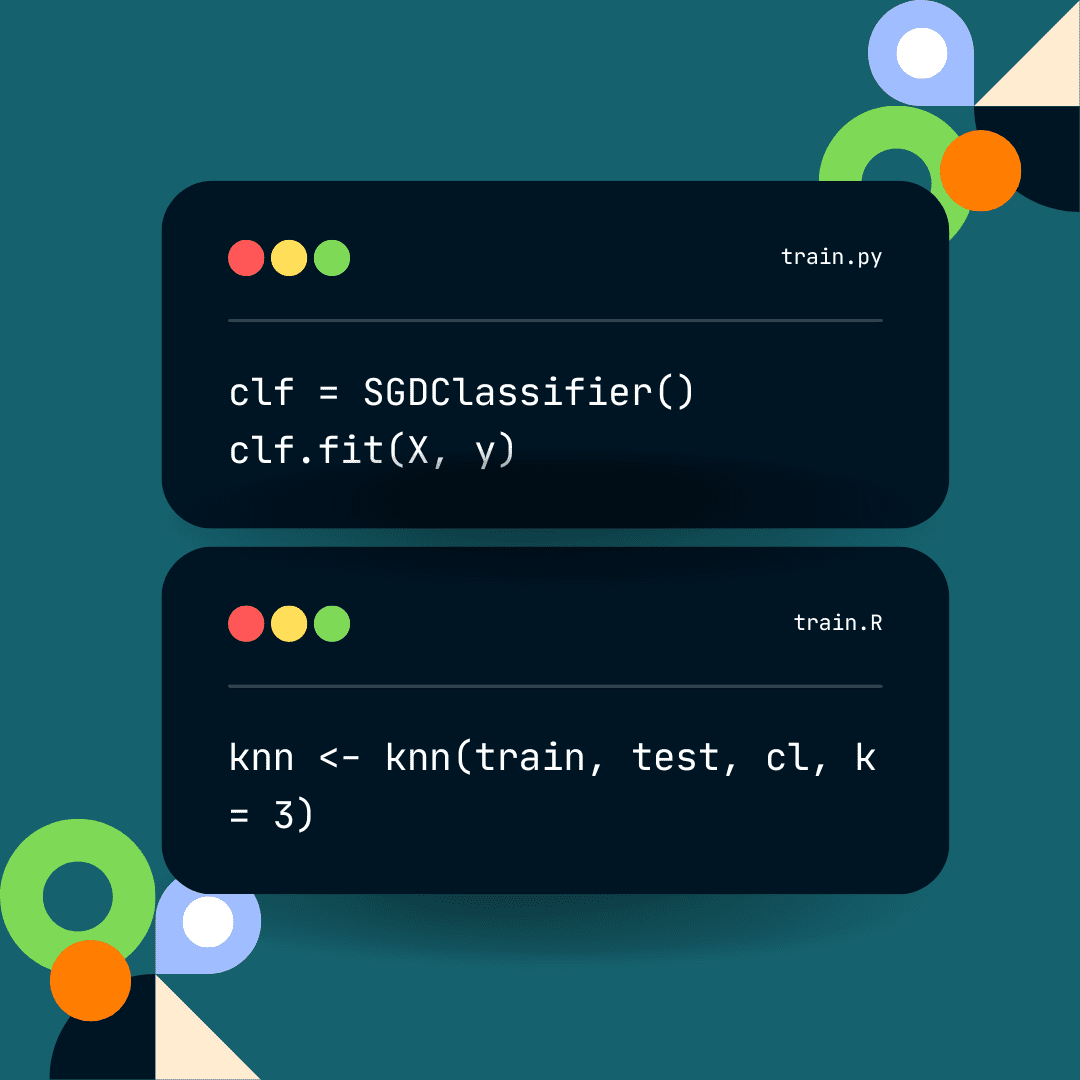
Python and R are two of the most used programming languages for machine learning. Both are open source and highly accessible, but where Python is a general-purpose language, R is a statistical programming language. This makes it ideal for various data roles and applications, such as data mining.

The two programming languages also encourage re-usability, meaning novice machine learning engineers and enthusiasts don’t have to write their code from scratch. Using them to build projects is about integrating the right modules and algorithms — all you have to know is where to look. To help you out, we’ve compiled a list of some of the most used machine learning algorithms for Python and R. Make sure to bookmark this guide and reference it whenever you get stuck.

1. K-Means Clustering Algorithm

As the name implies, machine learning is ultimately about teaching computer systems so they can function autonomously. This can either be facilitated through supervised or unsupervised learning.

One way to perform the latter is using the k-means clustering algorithm, which seeks to find patterns in a data set by grouping (clustering) similar data points.

In the R programming language, k-means clustering is generally performed using the k-means function. Unfortunately, Python doesn’t seem to offer an out-of-the-box solution that’s as straightforward. K-means clustering for Python is usually carried out using the sci-kit-learn library’s sklearn.cluster.KMeans class in conjunction with the matplotlib.pyplot library.

The k-means clustering algorithm is one of the most widely used for unsupervised machine learning, and you’ll likely run into it or need to use it sooner or later. Thus, it’s one of the first ones you should learn and master.

2. Decision Tree

The decision tree algorithm is favored because of its accessibility and usability. It’s a supervised machine learning algorithm that is mostly used for classification. For instance, companies can use it to determine how to handle difficult customers through chatbots.

The decision tree teaches machines how to make choices from prior experiences. One of the reasons it is so popular among new machine learning engineers is because it can be modeled and represented visually as a chart or diagram. This quality makes it appealing to those with traditional programming skills.

There are two main types of decision trees:

  • Continuous Variable Decision Tree: Refers to decision trees with unlimited target variables.
  • Categorical Variable Decision Tree: Refers to decision trees with grouped limited target variables.

The packages and classes that are most concerned with decision trees in R programming include:

  • Datasets
  • caTools
  • party
  • dplyr
  • magrittr

Once again, you’ll have to look outward for Python modules to implement this algorithm. As with the k-means clustering algorithm, sci-kit-learn contains a host of modules for decision trees with sklearn.tree being the most relevant. You can also use the Graphviz module to render a graphical representation of your decision tree programmatically.

3. Linear Regression Analysis

Linear regression is another well-used supervised machine learning algorithm. The goal of linear regression analysis is to deduce an outcome or value based on a variable or set of variables.

Like most algorithms, the best way to visualize this is using a graph with two axes. The Y axis represents the dependent variable, while the X holds the independent variable. Linear regression analysis’s goal is to form or find a relationship between these two variables.

If an increase in the independent variable causes an increase in the dependent variable (similar to exponential growth), this is known as a positive relationship. On the other hand, if the dependent variable’s value decreases as the independent variable’s value increases (similar to exponential decay), this is known as a negative relationship.

We use a line of best fit to determine the relationship, which can be represented using the slope-intercept linear equation y=mx+b.

But how do we facilitate linear regression in R and Python? The packages most concerned with linear regression analysis in the R programming language are:

  • ggplot2
  • dplyr
  • broom
  • ggpubr

The gg packages are used for creating and plotting graphs, whereas dplyr and broom are used to manipulate and display data. sklearn.linear_model can be used to build your linear regression model in Python. You can also add NumPY to process large matrices and arrays.

A Comparison of Machine Learning Algorithms in Python and R
Photo by Pexels
4. Logistic Regression

As with linear regression, logistic regression allows us to predict the value of a variable based on another (set of) variable(s). However, where linear regression uses metric values, logistic regression uses discrete variables. These are dichotomous variables that can only have one of two values (yes or no, 0 or 1, true or false, etc.).

In the real world, this can be used to determine the likelihood of a person purchasing a product (retail) or the likelihood of them carrying a disease (healthcare). For instance, we could use age, height, and weight as independent variables (x). And the binary outcome would be the dependent variable (y). Thus, x is the domain of real numbers, and y contains discrete values.

The goal of logistic regression is to estimate (predict) the probability of an outcome or occurrence. Because the values of the y values are binary, we can’t use a linear equation and must use an activation function instead.

The Sigmoid Function is used to represent logistic regression:

f(x) = L / 1+e^(-x)

or

y = 1/(1+e^-(a+b1x1+b2x2+b3x3+…))

The Python packages and modules most concerned with logistic regression are:

  • matplotlib.pyplot
  • sklearn.linear_model
  • sklearn.metrics

The procedure for generating logistic regressions with R is much simpler and can be done using the glm() function.

5. Support Vector Machines

Support vector machine (SVM) algorithms are primarily used for classification but can also be used for regression-based tasks. SVMs are one of the simplest approaches to classification.

In an SVM, the object that must be classified is represented as a point in an n-dimensional space. Each coordinate of this point is called its feature. SVMs attempt to classify an object by first drawing a hyperplane so that all points of each category are on either side.

While there could potentially be multiple hyperplanes, SVM attempts to find the one that best separates the two categories. It mainly achieves this by finding the maximum distance between the categories, known as the margin. The points that touch or fall directly on the margin are called the supporting vectors.

Since SVM is a supervised machine learning method, it requires training data. You can implement this machine learning algorithm in Python using sklearn’s dedicated SVM module. SVMs in R are typically handled using the contour and plot functions.

Conclusion

Many of these algorithms are a testament to how heavily reliant machine learning is on probability and statistics. Although R predates modern machine learning engineering, it’s relevant to it because it is a statistical programming language. As such, many of these algorithms can easily be built or implemented out of the box.

Python is a multi-paradigm general-purpose programming language, so it has a wider array of use cases. Sci-kit–learn is the most trusted library for Python machine learning modules. If you want to learn more about the above algorithms and more, visit the library’s official website.

Nahla Davies is a software developer and tech writer. Before devoting her work full time to technical writing, she managed — among other intriguing things — to serve as a lead programmer at an Inc. 5,000 experiential branding organization whose clients include Samsung, Time Warner, Netflix, and Sony.

More On This Topic

  • Automated Machine Learning with Python: A Comparison of Different…
  • KDnuggets News, July 20: Machine Learning Algorithms Explained in Less Than…
  • Top KDnuggets tweets, Oct 28 — Nov 03: 11 Branches of #MachineLearning and…
  • A Critical Comparison of Machine Learning Platforms in an Evolving Market
  • Machine Learning Algorithms — What, Why, and How?
  • Machine Learning Algorithms for Classification

AI Consciousness: An Exploration of Possibility, Theoretical Frameworks & Challenges

Featured Blog Image-AI Consciousness: An Exploration of Possibility, Theoretical Frameworks & Challenges

AI consciousness is a complex and fascinating concept that has captured the interest of researchers, scientists, philosophers, and the public. As AI continues to evolve, the question inevitably arises:

Can machines attain a level of consciousness comparable to human beings?

With the emergence of Large Language Models (LLMs) and Generative AI, the road to achieving the replication of human consciousness is also becoming possible.

Or is it?

A former Google AI engineer Blake Lemoine recently propagated the theory that Google’s language model LaMDA is sentient i.e., shows human-like consciousness during conversations. Since then, he has been fired and Google has called his claims “wholly unfounded”.

Given how rapidly technology is evolving, we may only be a few decades away from achieving AI consciousness. Theoretical frameworks such as Integrated Information Theory (IIT), Global Workspace Theory (GWT), and Artificial General Intelligence (AGI) provide a frame of reference for how AI consciousness can be achieved.

Before we explore these frameworks further, let’s try to understand consciousness.

What Is Consciousness?

Consciousness refers to awareness of sensory (vision, hearing, taste, touch, and smell) and psychological (thoughts, emotions, desires, beliefs) processes.

However, the subtleties and intricacies of consciousness make it a complex, multi-faceted concept that remains enigmatic, despite exhaustive study in neuroscience, philosophy, and psychology.

David Chalmers, philosopher and cognitive scientist, mentions the complex phenomenon of consciousness as follows:

“There is nothing we know about more directly than consciousness, but it is far from clear how to reconcile it with everything else we know. Why does it exist? What does it do? How could it possibly arise from lumpy gray matter?”

It is important to note that consciousness is a subject of intense study in AI since AI plays a significant role in the exploration and understanding of consciousness. A simple search on Google Scholar returns about 2 million research papers, articles, thesis, conference papers, etc., on AI consciousness.

The Current State of AI: Non-conscious Entities

AI today has shown remarkable advancements in specific domains. AI models are extremely good at solving narrow problems, such as image classification, natural language processing, speech recognition, etc., but they don’t possess consciousness.

They lack subjective experience, self-consciousness, or an understanding of context beyond what they have been trained to process. They can manifest intelligent behavior without any sense of what these actions mean, which is entirely different from human consciousness.

However, researchers are trying to take a step towards a human-like mind by adding a memory aspect to neural networks. Researchers were able to develop a model that adapts to its environment by examining its own memories and learning from them.

Theoretical Frameworks for AI Consciousness

1. Integrated Information Theory (IIT)

Integrated Information Theory is a theoretical framework proposed by neuroscientist and psychiatrist Giulio Tononi to explain the nature of consciousness.

IIT suggests that any system, biological or artificial, that can integrate information to a high degree could be considered conscious. AI models are becoming more complex, with billions of parameters capable of processing and integrating large volumes of information. According to IIT, these systems may develop consciousness.

However, it's essential to consider that IIT is a theoretical framework, and there is still much debate about its validity and applicability to AI consciousness.

2. Global Workspace Theory (GWT)

Global Workspace Theory is a cognitive architecture and theory of consciousness developed by cognitive psychologist Bernard J. Baars. According to GWT, consciousness works much like a theater.

The “stage” of consciousness can only hold a limited amount of information at a given time, and this information is broadcast to a “global workspace” – a distributed network of unconscious processes or modules in the brain.

Applying GWT to AI suggests that, theoretically, if an AI were designed with a similar “global workspace,” it could be capable of a form of consciousness.

It doesn't necessarily mean the AI would experience consciousness as humans do. Still, it would have a process for selective attention and information integration, key elements of human consciousness.

3. Artificial General Intelligence (AGI)

Artificial General Intelligence is a type of AI that can understand, learn, and apply knowledge across a wide range of tasks, similar to a human being. AGI contrasts with Narrow AI systems, designed to perform specific tasks, like voice recognition or chess playing, that currently constitute the bulk of AI applications.

In terms of consciousness, AGI has been considered a prerequisite for manifesting consciousness in an artificial system. However, AI is not yet advanced enough to be considered as intelligent as humans.

Challenges in Achieving Artificial Consciousness

1. Computational Challenges

The Computational Theory of Mind (CTM) considers the human brain a physically implemented computational system. The proponents of this theory believe that to create a conscious entity, we need to develop a system with cognitive architectures similar to our brains.

But the human brain consists of 100 billion neurons, so replicating such a complex system would require exhaustive computational resources. Moreover, understanding the dynamic nature of consciousness is beyond the boundaries of the current technological ecosystem.

Lastly, the roadmap to achieving AI consciousness will remain unclear even if we resolve the computational challenge. There are challenges to the epistemology of CTM, and this raises the question:

How are we so sure that human consciousness can be purely reduced to computational processes?

2. The Hard Problem of Consciousness

The “hard problem of consciousness” is an important issue in the study of consciousness, particularly when considering its replication in AI systems.

The hard problem signifies the subjective experience of consciousness, the qualia (phenomenal experience), or “what it is like” to have subjective experiences.

In the context of AI, the hard problem raises fundamental questions about whether it is possible to create machines that not only manifest intelligent behavior but also possess subjective awareness and consciousness.

Philosophers Nicholas Boltuc and Piotr Boltuc, while providing an analogy for the hard problem of consciousness in AI, say:

“AI could in principle replicate consciousness (H-consciousness) in its first-person form (as described by Chalmers in the hard problem of consciousness.) If we can understand first-person consciousness in clear terms, we can provide an algorithm for it; if we have such algorithm, in principle we can build it”

But the main problem is that we don’t clearly understand consciousness. Researchers say that our understanding and the literature built around consciousness are unsatisfactory.

3. Ethical Dilemma

Ethical considerations around AI consciousness add another layer of complexity and ambiguity to this ambitious quest. Artificial consciousness raises some ethical questions:

  1. If an AI can understand, learn, and adapt to the extent of humans, should it be given rights?
  2. If a conscious AI commits a crime, who is held accountable?
  3. If a conscious AI is destroyed, is that considered damage to property or something similar to murder?

Progress in neuroscience and advances in machine learning algorithms can create the possibility of broader Artificial General Intelligence. Artificial consciousness, however, will remain an enigma and a subject of debate among researchers, tech leaders, and philosophers for some time. AI systems becoming conscious comes with various risks that must be thoroughly studied.

For more AI-related content, visit unite.ai.

Zuckerberg, Altman Extend Support for EU Regulation of AI 

Meta CEO Mark Zuckerberg and OpenAI CEO Sam Altman extended support for government oversight of artificial intelligence after a discussion with European Commission Thierry Breton, Bloomberg reported.

The commissioner announced on Friday that he and Zuckerberg are aligned on the EU’s regulation of Artificial Intelligence and it is now in the later stages of the negotiations. Breton further said, “ They agreed on the bloc’s risk-based approach and to measures like watermarking”.

Altman agreed with the EU’s approach to AI and said “I really appreciate the European institution here, and the foresight on taking this issue so seriously, for the rest of the world, too.”

Nick Clegg, Meta’s president of global affairs echoed similar sentiments on the objectives of the AI pact and said “it’s important for tech companies to be open about the work they’re doing on AI & engage collaboratively across industry, governments & civil society.”

Breton was pretty satisfied after his visit to the Meta office and said Facebook and Instagram appear well-prepared to meet Europe’s new strict content moderation rules but will submit to a stress test of its systems next month.

Zuckerberg has agreed to a test in mid July and Meta has deployed around 1,000 people working on Digital Services Act implementation.

Productive discussion with @Meta CEO Mark Zuckerberg in Menlo Park 🇺🇸 on EU digital rules: DSA, DMA & AI Act.
Preparedness on its way with 1000 Meta employees working on #DSA
We agreed to do a ‘stress test’ in July.
EU’s motto: “Move fast to fix things” 🇪🇺 pic.twitter.com/8LoJpD7c7O

— Thierry Breton (@ThierryBreton) June 23, 2023

On Thursday Breton visited Elon Musk‘s Twitter to comply with new regulations set out in the bloc’s Digital Services Act. After the meeting he tweeted “The company is taking this exercise very seriously,” he said, adding he had “constructive dialogue” with owner Elon Musk and new CEO Linda Yaccarino.

Twitter is the 1st platform to undergo a “stress test” to prepare for #DSA 🇪🇺
The company is taking this exercise very seriously.
Constructive dialogue in San Francisco🇺🇸 with @elonmusk & CEO @lindayacc ahead of the “real test” — on 25 August.
Sufficient resources will be key. pic.twitter.com/99uz5hqNUG

— Thierry Breton (@ThierryBreton) June 22, 2023

Breton separately met Jensen Huang, CEO of Nvidia, the world’s most-valuable chipmaker, which leads the market in supplying processors for AI. After the sit-down, Huang told reporters it was “extremely likely” that Nvidia would invest in Europe.

The EU is headstrong regarding AI regulation. Earlier this month, the European Parliament took a significant step towards regulating artificial intelligence systems by voting in favour of the EU AI Act. This act, if passed into law, would be the first of its kind globally and aims to provide a comprehensive framework for AI regulation within the European Union.

Read more: What Can India Learn from the UAE in AI?

The post Zuckerberg, Altman Extend Support for EU Regulation of AI appeared first on Analytics India Magazine.

Accenture Partners with AWS, Google and Microsoft to Unleash Generative AI Initiatives 

Accenture Partners with AWS, Google and Microsoft to Unleash Generative AI Initiatives

Accenture, on Monday, announced that it is going to partner with AWS, Google and Microsoft to accelerate the company’s abilities revolving around Generative AI. With this, the company becomes the first to follow a multi-cloud generative AI strategy.

The collaboration with AWS is built around its advanced machine learning (ML) and AI technologies. These investments will span across arenas, including financial services, life sciences, customer support, supply chain, cybersecurity, and more.

With Google’ partnership, the company is looking to co-develop solutions leveraging its industry and functional experience and Google Cloud’s suite of generative AI technologies to improve business processes across 19 industries and six business functions. In May 2023, Accenture CTO talked about how the company has identified 300+ use cases across 19 industries where generative AI can have tangible impact.

The partnership with Microsoft is aiming to harness the power of Microsoft Azure, Azure OpenAI Service, and Microsoft 365 Copilot to deliver AI-empowered solutions.

“Generative AI is already transforming how people work and access information and will dramatically amplify what humans can achieve,” said Julie Sweet, chair and CEO, Accenture.

These investments are built on Accenture’s recently announced $3 billion investment over three years in its data and AI practice to help clients across all industries rapidly and responsibly advance and use AI to achieve greater growth, efficiency and resilience. Earlier this month, the company announced plans to acquire Flutura, an AI company based in Bangalore and Houston, to increase performance in plants, refineries, and supply chains.

The company also announced plans to collaborate with Salesforce to accelerate the deployment of generative AI for CRM.

Generative AI Collaborations

So far, TCS, Wipro, Infosys, Cognizant, and Capgemini have partnered with Google Cloud to unleash generative AI initiatives. HCL Tech, has partnered with Microsoft, to scale generative AI, alongside setting up of GenAI CoE.

Accenture is perhaps the only service provider to date to have followed a multi-cloud generative AI strategy. This also brings us to question if more companies will follow a similar strategy in the coming months – as witnessed in the case of cloud adoption, where companies followed a multi-cloud approach.

The post Accenture Partners with AWS, Google and Microsoft to Unleash Generative AI Initiatives appeared first on Analytics India Magazine.