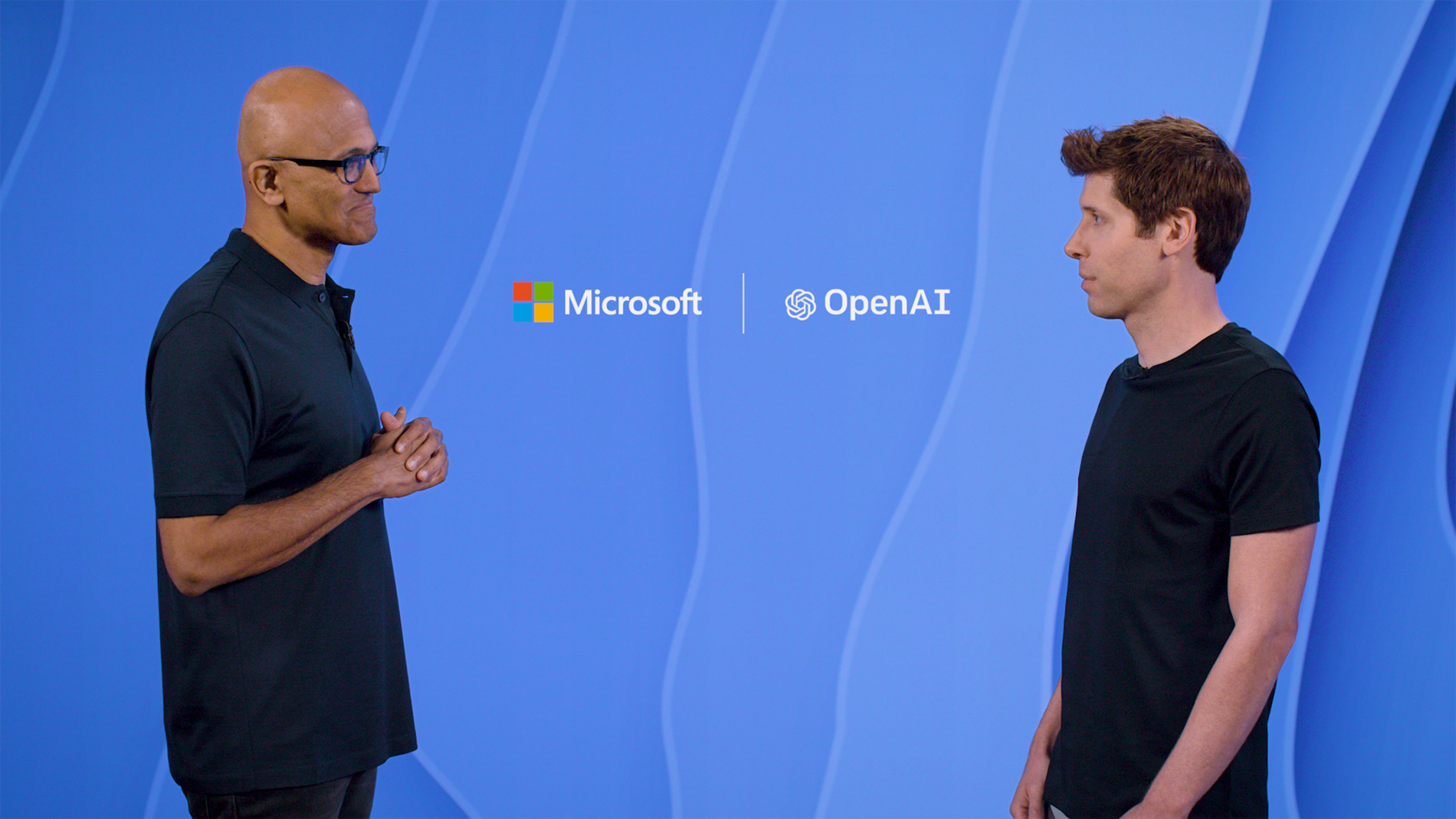
Why is Microsoft Distancing Itself from OpenAI?

What is Microsoft Without OpenAI?

Looks like the honeymoon period for Microsoft and OpenAI is coming to an end. Microsoft seems to be slowly moving away from OpenAI, prioritising its Azure cloud above all else and taking measures to protect its own interests. With a focus on being an enterprise-friendly entity, Microsoft’s growth relies heavily on maintaining the trust of its customers.

Lately, OpenAI hasn’t been in good books putting customers’ data at risk with ChatGPT. Large tech companies like Apple, Spotify, Wells Fargo, Samsung, JP Morgan Verizon had wayback ditched ChatGPT and banned it for their employees from using it.

Companies like Apple have valid concerns about its employees inadvertently sharing sensitive project details through the system. This data might potentially be viewed by OpenAI moderators. Studies indicate that certain language models can have training data extracted via their chat interface. Apple recently developed its own internal chatbot—nicknamed “Apple GPT” by its employees.

Recently, OpenAI openly introduced GPTbot​, an automated website crawler to collect publicly accessible data to train AI models. This also didn’t help their case either. Microsoft, which relies on OpenAI’s foundational models, to service its customers is taking the hit.

Microsoft knows that enterprises and their employees need ChatGPT considering the practical value of ChatGPT in enhancing coding and idea generation. Employees have found themselves grappling with a dilemma – whether to utilise ChatGPT or not. Even though their organisations had prohibited its use, some still went ahead and employed it secretly.

Just recently, Reuters published a report revealing that numerous workers across the U.S. are increasingly relying on ChatGPT for basic tasks, despite concerns that have prompted companies like Microsoft and Google to limit its usage.

To overcome trust issues among the enterprises Microsoft announced Azure ChatGPT recently which is being marketed as ChatGPT for enterprises where they don’t need to worry about their data. Microsoft, while announcing it, surprisingly accepted shortcomings of OpenAI’s ChatGPT.

“ChatGPT risks exposing confidential intellectual property. One option is to block corporate access to ChatGPT, but people always find workarounds,” said Microsoft.

Further it said: “ChatGPT on Azure solution accelerator is our enterprise option. This solution provides a similar user experience to ChatGPT but offered as your private ChatGPT.”

Microsoft also made it clear that customers’ data is “fully isolated from those operated by OpenAI”. Is data not secure with OpenAI and they are exploiting it to train GPT-4? When it released the ChatGPT API in March, the company said OpenAI retains API data for 30 days but no longer uses data sent via the API to improve their models.

When an enterprise makes API calls using ChatGPT 4, it is then OpenAI wants to keep user history for further training. Here with Azure ChatGPT what Microsoft is doing is that it is taking the OpenAI’s model and putting it behind an endpoint specific to the user’s Azure account. Businesses have been long interested in GPT-4 and so are asking for private endpoints. Amazon is doing the same with Bedrock.

Azure’s the only hope

Currently, Microsoft is on high with its Azure performance which saw 26% revenue growth due to generative AI initiatives it took by partnering with OpenAI and now it doesn’t want it to go down just because OpenAI as a brand isn’t trustworthy.

When Microsoft partnered with OpenAI, Microsoft deployed OpenAI technology through API and the Azure OpenAI Service—enabling enterprise and developers to build on top of GPT, DALL·E, and Codex. They also worked together to build OpenAI’s technology into apps like GitHub Copilot and Microsoft Designer.

​​However, one of the common doubts that rose among customers was: If data is submitted to the Azure OpenAI Service, does the data always remain within Microsoft Azure or is it passed to OpenAI at any time? Microsoft claimed that the data submitted to the Azure OpenAI Service remains within Microsoft Azure and is not passed to OpenAI for model predictions and Azure has sole control and governance of the data and OpenAI.

Microsoft owns enough of OpenAI that their endgame goal of putting GPT like features into Azure and Office365 for enterprise customers is what we’re likely to see happen. In one of the interesting conversations on HN, a user said OpenAI targets private consumers while Microsoft focuses on enterprise.

He also gave an example of his own company. “I can use my own organisation as an example. We’re an investment bank that does green energy within the EU. We would absolutely use GPT if it was legal, but it isn’t, and it likely never will be considering their finance model is partly to steal as much data as they can.”

Microsoft is concerned about the current negative perception of OpenAI’s data security for enterprises. Through the introduction of Azure ChatGPT, they are striving to rebuild trust among enterprises and attract more customers. They don’t want to associate themselves with OpenAI’s name on Azure, that’s why they have put Azure’s name at forefront.

Azure ChatGPT is just part of Microsoft’s overall strategy for total IT domination in enterprise Also, it isn’t the first time Microsoft is at crossroads with OpenAI. Earlier WSJ had reported that people within Microsoft have complained about diminished spending on its in-house AI and that OpenAI doesn’t allow most Microsoft employees access to the inner workings of its technology.

The post Why is Microsoft Distancing Itself from OpenAI? appeared first on Analytics India Magazine.

Snowflake Now Wants You to Converse With Your Data

Snowflake’s growth trajectory has been nothing short of remarkable. Since 2012, the company has witnessed exponential market adoption and has attracted a diverse range of clients, from startups to Fortune 500 giants. Some of its notable customers include Adobe, Airbnb, BlackRock, Dropbox, Pepsico, ConAgra Foods, Novartis and Yamaha. In India, Snowflake caters to the needs of companies such as Porter, Swiggy and Urban Company. The rapid expansion is a testament to Snowflake’s ability to address the ever-increasing demands of the data-driven world we live in.

But today, we are stepping into the age of generative AI and Snowflake too is gearing up to bring the best of the technology to its long list of clients. Torsten Grabs, senior director of product management at Snowflake told AIM that with the advent of generative AI, we will increasingly see less technical users successfully interact with computers with technology and that’s probably the broadest and biggest impact that he would expect from generative AI, and Large Language Models (LLMs) across the board. Moreover, talking about the impact of generative AI on Snowflake, he said that it has impacted Snowflake on two distinct levels.

Firstly, like almost every other company, generative AI is leading to productivity improvements at Snowflake. Grabs anticipates developers working on Snowflake to benefit the most from generative AI. This concept is akin to Microsoft’s co-pilot and AWS’s Whisper, where a coding assistant aids in productivity by comprehending natural language and engaging in interactive conversations to facilitate faster and more precise code creation.

Moreover, Snowflake is harnessing generative AI to enhance conversational search capabilities. For instance, when accessing the Snowflake marketplace, it employs conversational methods to identify suitable datasets that address your business needs effectively. “There’s another layer that I think is actually very critical for everybody in the data space, which is around applying LLMs to the data that’s being stored or managed in a system like Snowflake,” Grabs said. The big opportunity for Snowflake lies in leveraging generative AI to offer enhanced insights into the data managed and stored within these systems.

Conversing with your data

On May 24, 2023, Snowflake acquired Neeva AI with the aim of accelerating search capabilities within Snowflake’s Data Cloud platform by leveraging Neeva’s expertise in generative AI-based search technology. “We recognised the necessity of integrating robust search functionality directly into Snowflake, making it an inherent and valuable capability. Partnering with Neeva AI further enriched our approach, combining their expertise in advanced search with generative AI, benefiting us in multiple dimensions,” Grabs said.

Grabs believes the Neeva AI acquisition is going to bring a host of benefits to Snowflake’s customers. Most importantly, it will give them the ability to talk to their data essentially in a conversational way. “It’s analogous to the demonstration we presented, where a conversation with the marketplace utilizes metadata processed by the large language model to discover relevant datasets,” Grabs said.

Now consider scaling this process and going beyond metadata, involving proprietary sensitive data. By employing generative AI, Snowflake’s customers can engage in natural language conversations to gain precise insights about their enterprise’s data.

Building LLMs for customers

Building on generative AI capabilities, Snowflake, at its annual user conference called ‘Snowflake Summit 2023’ also announced a new LLM built from Applica’s generative AI technology to help customers understand documents and put their unstructured data to work. “We have specifically built this model for document understanding use cases and we started with a tilt-based base model that we leveraged and then built on top of it,” Grabs said.

When compared to the GPT models from OpenAI or other models developed by labs such as Antrhopic, Snowflake’s LLMs offers few distinct advantages. For example, the GPT models are trained on the entirety of publicly available internet data, resulting in broad capabilities but high resource demands. Their resource-intensive nature also makes them costly to operate. Much of these resources are allocated to aspects irrelevant to your specific use case. Grabs believes utilising a more tailored, specialised model designed for your specific use case allows for a narrower model with a reduced resource footprint, leading to increased cost-effectiveness.

“This approach is also poised to yield significantly superior outcomes due to its tailor-made design for the intended use case. Furthermore, the model can be refined and optimised using your proprietary data. This principle isn’t confined solely to the document AI scenarios; rather, it’s a pattern that will likely extend more widely across various use cases.”

In many instances, these specialised models are expected to surpass broad foundational models in both accuracy and result quality. Additionally, they are likely to prove more resource-efficient and cost-effective to operate. “Our document AI significantly aids financial institutions in automating approval processes, particularly for mortgages. Documents are loaded into the system, the model identifies document types (e.g., salary statements), extracts structured data, and suggests approvals. An associate reviews and finalises decisions, streamlining the process and enhancing efficiency.”

Addressing customer’s concerns

While generative AI has garnered significant interest, enterprises, including Snowflake’s clients, which encompasses 590 Forbes Global 2000 companies, remain concerned about the potential risks tied to its utilisation. “I think some of the top concerns for pretty much all of the customers that I’m talking to is around security, privacy and data governance and compliance,” Grab said.

This presents a significant challenge, especially concerning advanced commercial LLMs. These models are often hosted in proprietary cloud services that require interaction. For enterprise clients with sensitive data containing personally identifiable information (PII), the prospect of sending such data to an external system outside their control and unfamiliar with their cybersecurity processes raises concerns. This limitation hinders the variety of data that can interact with such systems and services.

“Our long-standing stance has been to avoid dispersing data across various locations within the data stack or across the cloud. Instead, we advocate for bringing computation to the data’s location, which is now feasible with the abundant availability of compute resources,” Grabs said. Unlike a decade or two ago when compute was scarce, the approach now is to keep data secure and well-governed in its place and then bring computation to wherever the data resides.

He believes this argument extends to generative AI and LLMs as well. “We would like to offer the state-of-the-art LLMs and side by side the compelling open-source options that operate within the secure confines of the customer’s Snowflake account. This approach ensures that the customer’s proprietary or sensitive data remains within the security boundary of their Snowflake account, offering them peace of mind.”

Moreover, on the flip side, another crucial aspect to consider is the protection of proprietary intellectual property (IP) within commercial LLMs. The model’s code, weights, and parameters often involve sensitive proprietary information. “With our security model integrated into native apps on the marketplace, we can ensure that commercial LLM vendors’ valuable IP remains undisclosed to customers utilizing these models within their Snowflake account. Our role in facilitating the compute for both parties empowers us to maintain robust security and privacy boundaries among all participants involved in the process,” Grabs concluded.

The post Snowflake Now Wants You to Converse With Your Data appeared first on Analytics India Magazine.

Stop Posting on the Internet

Stop Posting on the Internet

Finally, as we expected, the world and even the generative AI creators are realising the worth of human generated content. But right now, they want it for free.

Ah, the internet. A once-promising utopia of information and connection, now transformed into a dystopian playground for generative AI and its creators to wreak havoc. We’ve all heard of machines rising against their creators in sci-fi tales, but who knew it would be through the form of sinisterly scraping our digital lives through the internet?

The Writer’s Guild of America has been protesting against the use of AI in script writing for a few months now. Even more recently, around 8,000 authors wrote a petition to the big-tech to compensate them for training AI models on their data. People have been slowly realising that their original content is extremely valuable for these AI models, and thus, are demanding money for the same.

On the other hand, big tech is desperately scavenging for fresh content, like tech vultures feeding on the remains of our once-private and protected content. It seems like they feel that their generative AI models like Bard and ChatGPT might die if you don’t help them.

Wake up call

OpenAI, the creator of ChatGPT, introduced GPTBot to crawl the internet for training its AI models, possibly the next generation of GPT. More interestingly, if users want to opt out their content from being trained for these models, they would have to voluntarily take a step to block it from OpenAI’s bot. Moreover, OpenAI has strategically partnered with news agencies to make their models a little more legally relevant.

Similarly, this discussion around scraping information from the internet did not stop Google to also step in with its controversial take. According to a recent report, Google submitted to the Australian government to review its regulatory framework around AI copyright and allow Google’s generative AI systems to scrape the internet. This is after Google updated its privacy policy saying that it will use all the information for training its AI models.

The Writer’s Guild of America is practically wielding pitchforks against the intrusion of AI into scriptwriting. They have united in demanding compensation for their data. It appears their creativity isn’t just being stolen; it’s being monetised. They have woken up to realise this and put up a fight against these giant AI models.

On the flip side, while the advancement of technology is supposed to elevate society, it seems generative AI models have missed that memo entirely. Models like GPT, Bard, and Stable Diffusion have been descending into the abyss of mediocrity, and it’s no secret why.

Data cannibalism – when these algorithms train on their own subpar creations – is causing their output to degrade faster than an overplayed pop song. And now they are eyeing for more human-generated content on the internet.

Let AI go MAD

The crux of the issue lies in a simple equation: More AI-generated content on the internet = AI models feasting on it + quality eroding into oblivion. This chilling phenomenon was recently spotlighted in a scholarly paper by Stanford University and Rice University. Aptly titled Self-Consuming Generative Models Go MAD, the paper lays bare the grim reality of AI spiralling into madness through self-indulgence.

That means that the big-tech, and more specifically, generative AI models are craving for more human generated content to make themselves better. It doesn’t matter to them if you don’t want them to use your data or not, they would find loopholes to reach your content somehow. When signing up on Elon Musk’s X, you have already agreed to let him train his AI models based on your thoughts.

So, is it time to collectively pull the plug on our online presence? Perhaps, at least for a while. That is what Reddit did as well. While the internet once held promises of information and connection, it’s slowly mutating into a digital wasteland where AI gorges on our data and spits out subpar drivel.

But hey, if you’ve ever wanted your brilliant prose to serve as AI sustenance, go ahead, keep posting. It is up to you to decide if you want better generative AI models or preserve your data. Just know that every witty tweet and heartfelt blog post might be paving the way for an apocalypse led by lacklustre algorithms. It might be wise to earn a few bucks while you do it as human generated content is going to be very valuable in a few years.

The post Stop Posting on the Internet appeared first on Analytics India Magazine.

Riding High on Their Partnership With OpenAI, Okta Enters Indian Market 

Every time an individual logs in to OpenAI’s ChatGPT, Okta makes bank through Auth0—-its authentication and authorisation platform that runs on the cloud.

Okta is an Identity and Access management firm that offers customer identity and access management(CIAM) to OpenAI. IAM software facilitates appropriate resource access for internal users, streamlining operational processes, reducing costs, and bolstering security. Conversely, CIAM manages external consumer identities for IT services, with a focus on user experience, accessibility, and retention on public websites.

During an interview with AIM, Ben Goodman, Okta’s Senior Vice President and General Manager for Asia Pacific and Japan, discussed their partnership with OpenAI and their efforts to replace passwords and further bolster security.

He said, “The concept of not having a password, the concept of not being able to access the system without biometrics or whatever your factor is, rapidly increases security and minimises how many people get access to a system.”

He emphasised that the combination of Phishing Resistance Multi-Factor Authentication + password + biometric has significantly reduced the ransomware attacks and attackers from access.” He added the effectiveness of combining multiple layers of authentication, including biometrics, to enhance security and deter unauthorized access, leading to a notable reduction in ransomware attacks and intrusions.

Partnership With OpenAI

Goodman also discussed Okta’s partnership with OpenAI. He highlighted that the insights gained from safeguarding OpenAI’s operations contribute to enhancing security measures for all other clients. This collaborative learning approach is particularly valuable because OpenAI faces a substantial volume of threats, which, in turn, fortifies security protocols for other companies. This dynamic, Goodman noted, is both fascinating and promising in terms of cybersecurity advancement.

In a recent interview, Okta CEO Todd McKinnon was posed with a question about OpenAI choosing Okta. Responding to it McKinnon offered a straightforward explanation, delving into the pivotal role that developer experience played in this partnership.

He outlined the context of OpenAI’s choice, stating that it occurred in the early stages of product development. At that point, OpenAI’s developers were in the process of creating what would eventually become GPT. In this crucial phase, they were seeking an identity solution that could seamlessly integrate into their work, facilitating their focus on the groundbreaking technology they were crafting.

McKinnon highlighted the central factor that swayed OpenAI’s decision – Okta’s exceptional developer experience. He emphasised that Okta’s Identity Cloud boasted a remarkably simple API that precisely met the developers’ requirements. Importantly, it refrained from complicating matters by adding unnecessary features or complexities. Instead, it streamlined the development process, allowing OpenAI’s developers to concentrate on harnessing their innovative capabilities.

Okta’s India Calling

Okta recently announced the establishment of a new office in Bengaluru, India. The company aims to tap into the nation’s growing demand for digital identity solutions and cybersecurity measures.

A recent report by Avendus Capital supports this notion, projecting an 18% increase in India’s cybersecurity spending between 2020 and 2025. The report also highlights the shift towards cloud-based solutions and the adoption of zero-trust architecture, and that’s the space Okta is looking to capture

CEO and co-founder, Todd McKinnon, expressed excitement about entering the Indian market and providing industry-leading identity services to innovative businesses and government agencies. With the digital identity market gaining momentum due to heightened concerns over cyber fraud and authentication, Okta sees a significant opportunity in India.

Vice President Goodman also discussed Aadhar and its challenges and the idea of a potential partnership with the government of India emerged.

“Absolutely, we are looking to start a partnership. Aadhar’s got its challenges, (however), when you think about Aadhar being a factor in a multi-factor authentication could be Aadhar, it could be a facial biometric, voice biometric.”

The perspective shared was that while Aadhar does face specific challenges, it could serve as a component within a multi-factor authentication system. This could encompass other factors like facial and voice biometrics. The approach here is to use Aadhar as a factor but not the sole factor in authentication. By integrating it with other authentication methods, a more comprehensive and balanced approach can be achieved. This strategy aims to enhance the authentication process for critical services, while also mitigating potential friction that might arise. Ultimately, the envisioned partnership would involve leveraging various capabilities to enrich the Aadhar experience.

Competing With a Giant

Okta operates in the rapidly expanding global Identity and Access Management (IAM) market with a total addressable market of up to $80 billion.

This market is driven by the increased adoption of cloud-based applications and services, which require secure identity and access management solutions. Stricter regulations and security concerns also contribute to growth. Despite strong competition from Microsoft’s Azure Active Directory, Okta is a market leader alongside Azure AD.

In Q4 FY23, Okta demonstrated robust performance, with revenue growing 33% YoY and a solid free cash flow margin of 14.1%. The company’s profitability has improved, driven by strong customer growth and notable clients such as Sonos, Hewlett Packard Enterprise, and MassMutual. OpenAI, the developer of ChatGPT, benefitted from Okta’s Customer Identity Cloud, which offers self-service authentication solutions.

Looking forward, Okta anticipates further growth with revenue expected to rise by 23% YoY to $510 million for the next quarter. For the full fiscal year, a 17% revenue growth is projected, with $0.77 non-GAAP earnings per share and a non-GAAP % free cash flow margin of about 10%.

Okta could upsell its partnership with OpenAI and its additional products for increased revenue. And that’s what happened, Okta partnered with Sam Altman-led Worldcoin to revolutionise identity verification in Germany as it wants to be a part of the journey to replace passwords with WorldID.

According to Auth0’s pricing documentation and the initial reported number of 100M+ ChatGPT users, the cost would be possibly around $20 million for OpenIA and in revenue for Okta. However, with the increased user base, Okta is mining moolah.

Despite Okta’s market dominance, Microsoft’s Azure Active Directory poses a strong competitive challenge due to its integration into the Microsoft 365 ecosystem. Okta distinguishes itself through broader third-party protocol support and user management capabilities, though it’s susceptible to Microsoft’s AI-driven offerings integrated into its suite.

In terms of valuation, Okta appears attractively valued, especially considering its strong market position, historically low EV/Revenue ratio, and forward PE ratio of 34 for 2026. This valuation reflects the optimism surrounding the company’s earnings growth prospects.

Conclusively, Okta’s presence in the IAM market, partnership with Microsoft, strong financial performance, and favourable valuation suggest it’s a promising investment choice, despite facing competition and evolving market dynamics.

The post Riding High on Their Partnership With OpenAI, Okta Enters Indian Market appeared first on Analytics India Magazine.
AI Hate Speech Detection to Combat Stereotyping & Disinformation

Featured Blog Image-AI Hate Speech Detection to Combat Stereotyping & Disinformation

Today, the internet is the lifeblood of global communication and connection. However, with this unprecedented online connectivity, we also witness the dark side of human behavior, i.e., hate speech, stereotyping, and harmful content. These issues have permeated social media, online forums, and other virtual spaces, inflicting lasting damage on individuals and society. Hence, the need for hate speech detection.

According to the Pew Research Center, 41% of American adults say they have personally encountered internet abuse, and 25% are victims of severe harassment.

To foster a more positive and respectful online environment, embracing proactive measures and leveraging the power of technology is imperative. In this regard, Artificial Intelligence (AI) provides innovative solutions to detect and tackle hate speech and stereotypes.

Limitations of Current Mitigation Techniques & The Need for Proactive Measures

The current measures to mitigate hate speech are limited. They cannot effectively curb the spread of harmful content online. These limitations include:

  • Reactive approaches, predominantly relying on human moderation and static algorithms, struggle to keep pace with the rapid dissemination of hate speech.
  • The sheer volume of online content overwhelms human moderators, resulting in delayed responses and missed instances of harmful rhetoric.
  • Also, contextual understanding and evolving language nuances pose challenges for automated systems to identify and interpret hate speech instances accurately.

To address these limitations and foster a safer online environment, a shift towards proactive measures is imperative. By adopting AI-powered measures, we can fortify our digital communities, encouraging inclusivity and a cohesive online world.

Identifying & Flagging Hate Speech Using AI

In the battle against hate speech, AI emerges as a formidable ally, with machine learning (ML) algorithms to identify and flag harmful content swiftly and accurately. By analyzing vast amounts of data, AI models can learn to recognize patterns and language nuances associated with hate speech, enabling them to categorize and respond to offensive content effectively.

To train AI models for accurate hate speech detection, supervised and unsupervised learning techniques are used. Supervised learning involves providing labeled examples of hate speech and non-harmful content to teach the model to distinguish between the two categories. In contrast, unsupervised and semi-supervised learning methods leverage unlabeled data to develop the model's understanding of hate speech.

Leveraging AI Counterspeech Techniques for Combatting Hate Speech

Counterspeech emerges as a powerful strategy to combat hate speech by directly challenging and addressing harmful narratives. It involves generating persuasive and informative content to promote empathy, understanding, and tolerance. It empowers individuals and communities to actively participate in creating a positive digital environment.

While specific details of individual counterspeech models may vary based on the AI technology and development approaches, some common features and techniques include:

  • Natural Language Generation (NLG): Counterspeech models use NLG to produce human-like responses in written or spoken form. The responses are coherent and contextually relevant to the specific instance of hate speech it is countering.
  • Sentiment Analysis: AI counterspeech models employ sentiment analysis to assess the emotional tone of the hate speech and tailor their responses accordingly. This ensures that the counterspeech is both impactful and empathetic.
  • Contextual Understanding: By analyzing the context surrounding hate speech, counterspeech models can generate responses addressing specific issues or misconceptions, contributing to more effective and focused counterspeech.
  • Data Diversity: To avoid biases and ensure fairness, counterspeech models are trained on diverse datasets representing various perspectives and cultural nuances. This helps in generating inclusive and culturally sensitive responses.
  • Learning from User Feedback: Counterspeech models can continuously improve by learning from user feedback. This feedback loop allows the model to refine its responses based on real-world interactions, enhancing its effectiveness over time.

Examples of Combating Hate Speech Using AI

A real-world example of an AI counterspeech technique is the “Redirect Method” developed by Google's Jigsaw and Moonshot CVE. The Redirect Method uses targeted advertising to reach individuals susceptible to extremist ideologies and hate speech. This AI-powered approach aims to dissuade individuals from engaging with harmful content and promote empathy, understanding, and a shift away from extremist beliefs.

Researchers have also developed a novel AI model called BiCapsHate that acts as a potent tool against online hate speech, as reported in IEEE Transactions on Computational Social Systems. It supports a bidirectional analysis of language, enhancing context comprehension for accurate determination of hateful content. This advancement seeks to mitigate the damaging impact of hate speech on social media, offering the potential for safer online interactions.

Similarly, researchers at the University of Michigan have leveraged AI to combat online hate speech using an approach called Rule By Example (RBE). Using deep learning, this approach learns the rules of classifying hate speech from examples of hateful content. These rules are applied to input text to identify and predict online hate speech accurately.

Ethical Considerations for Hate Speech Detection Models

To maximize the effectiveness of AI-powered counterspeech models, ethical considerations are paramount. However, it is important to balance free speech and the prohibition of disseminating harmful content to avoid censorship.

Transparency in developing and deploying AI counterspeech models is essential to foster trust and accountability among users and stakeholders. Also, ensuring fairness is equally important, as biases in AI models can perpetuate discrimination and exclusion.

For instance, AI designed to identify hate speech can inadvertently amplify racial bias. Research found that leading hate speech AI models were 1.5 times more likely to flag tweets by African Americans as offensive. They are 2.2 times more likely to flag tweets as hate speech that are written in African American English. Similar evidence emerged from a study of 155,800 hate speech-related Twitter posts, highlighting the challenge of addressing racial bias in AI content moderation.

In another study, researchers tested four AI systems for hate speech detection and found all of them struggling to accurately identify toxic sentences. To diagnose the exact issues in these hate speech detection models, they created a taxonomy of 18 hate speech types, including slurs and threatening language. They also highlighted 11 scenarios that trip up AI, such as using profanity in non-hateful statements. As a result, the study produced HateCheck, an open-sourced data set of almost 4,000 examples, aiming to enhance the understanding of hate speech nuances for AI models.

Awareness & Digital Literacy

Combating hate speech and stereotyping demands a proactive and multidimensional approach. Hence, raising awareness and promoting digital literacy is vital in combatting hate speech and stereotypes.

Educating individuals about the impact of harmful content fosters a culture of empathy and responsible online behavior. Strategies that encourage critical thinking empower users to discern between legitimate discourse and hate speech, reducing the spread of harmful narratives. Also, equipping users with the skills to identify and effectively respond to hate speech is vital. It will empower them to challenge and counter harmful rhetoric, contributing to a safer and more respectful digital environment.

As AI technology evolves, the potential to address hate speech and stereotypes with greater precision and impact grows exponentially. Hence, it is important to solidify AI-powered counterspeech as a potent tool in fostering empathy and positive engagement online.

For more information regarding AI trends and technology, visit unite.ai.

Google DeepMind Alumni Shine As Startup Founders

Google DeepMind might have not just produced cutting-edge AI technologies, but have also churned out entrepreneurial talent who have gone out to build things outside their space. Leaving their nest to soar high, a number of DeepMind employees have left the organisation over the last few years. As per an article in Insider, over 200 former DeepMind employees have built startups in the field of AI, cryptocurrency, biotechnology, climate tech, and other fields, and have also raised millions of dollars for it. Insider also stated that a dozen of them are operating in stealth mode.

How are Google DeepMind employees able to shine outside?

Investor – Employee Competence

The AI craze got the wheel turning with investors jumping onto the bandwagon and betting big on AI startups. In addition to AI startups, ambitious investors are also focussing on companies that address climate problems and biomedical space too. With DeepMind’s executive team being active angel investors for AI startups, the impetus to guide their former employees who branch out to start their own venture, is strong.

Cofounder of Google DeepMind, Mustafa Suleyman, has invested in over ten AI startups, and cofounder Demis Hassabis has invested in three. Suleyman-founded Inflection AI has raised a total funding of $1.5B.

Mehdi Ghissassi, Director and head of product at Google DeepMind, invested in GlyphicAI, a startup founded by a former DeepMind employee. Cofounder Devang Agrawal, stated that the value offered by Google DeepMind executives is not solely financial; their substantial expertise gained from working in the research field holds significant importance too.

Flying on Stealth Mode

Most of the startups founded by DeepMind employees are operating as ‘stealth startups’. They operate with an intention to keep their products and other details secret from the public and competitors too. Protecting confidentiality and avoiding unnecessary attention until the company is fully prepared makes sense if these founders are looking to protect themselves from investor competition.

Two months ago, former research engineer at Google DeepMind Adam Liska, announced his newly founded company – Glyphic AI, an AI copilot for the sales team, is out of stealth mode after a year of incorporation. Co-founder Devang Patel told Insider that stealth mode is good for AI founders as it helps build a “substantial head start and view the competition before you show the world.” He also believes that stealth mode alleviates a founder’s burden, by providing them with the liberty to experiment with their product before presenting to investors.

Jonathan Godwin, co-founder of Orbital Materials, and former Research Engineer at Google DeepMind, believes working on stealth mode “makes sense.” Karl Moritz Hermann , another former employee, and founder of Dark Blue Labs that was acquired by Google DeepMind, has been inspired by Google DeepMind’s model of working in stealth mode.

Opportunity Beckons Everywhere

Going by how big tech companies and investors are seeking to tap into growing markets such as energy and climate, the startups are also pursuing similar goals. Nuclear energy which is considered as a potential renewable source of energy has driven a number of tech companies to invest in nuclear fusion and fission startups. Similarly, big tech are also employing AI to combat climate change – another beacon for startups to follow. Open ClimateFix, started by Jack Kelly , a former research engineer at Google DeepMind, works on reducing greenhouse gas emissions.

There is also a shift towards building startups that work on addressing societal problems with former employees working on a diverse range of domains. Adji Bousso Dieng, a former research scientist at Google DeepMind, has founded a nonprofit The Africa I Know to help improve STEM education in Africa.

Startup ventures are not complete without mentioning crypto markets. Miljan Martic and Peter Toth, former research engineers at Google DeepMind, started Kosen Labs that develops AI applications for Web3 and blockchain.

Considering the industry domains that former Google DeepMind employees have ventured into, it’s evident that they are exploring a wide range of potential leading industries. Even investor and entrepreneur Sam Altman, has invested in fields such as cryptocurrency, energy, bioscience, and more. This probably bodes well for the future of these industries. Coupled with the extensive experience acquired at Google DeepMind, it’s likely that they are all on a promising trajectory.

The post Google DeepMind Alumni Shine As Startup Founders appeared first on Analytics India Magazine.

Deal Dive: This AI startup is racking up government customers

Deal Dive: This AI startup is racking up government customers Rebecca Szkutak 9 hours

Tax evasion, money laundering and other financial crimes are massive, costly issues. In 2021, the Internal Revenue Service estimated that the U.S. loses $1 trillion a year due to tax evasion alone. IVIX thinks AI can help with that.

The Tel Aviv–based startup uses AI, machine learning and public databases of business activity to help government entities spot tax noncompliance, in addition to other financial crimes. IVIX was founded by Matan Fattal and Doron Passov in 2020. Fattal was working at his prior cybersecurity startup, Silverfort, at the time, but when he discovered how large of an issue these financial crimes are — and how governments didn’t have the technology to fight them — he switched gears.

“I was shocked by the magnitude of the problem and the technical gap that they had,” Fattal told TechCrunch+. “State or federal, there are pretty much the same [technological] gaps.”

Three years later, the startup has landed government contracts with federal agencies, including the IRS criminal investigation bureau; made notable hires like Don Fort, the former chief of criminal investigations at the IRS; and raised a $12.5 million Series A led by Insight Partners, which was announced last week.

How Llama 2 Became the Heartbeat of IBM’s Strategy

IBM Watson Health

IBM recently announced that it would host Meta’s Llama 2-chat 70 billion parameter model in the watsonx.ai studio, with early access available to select clients and partners.

Enterprises are now embracing the trend of generative AI to bolster their business strategies. To harness its potential effectively, they require streamlined methods for training and constructing their own LLMs using their accumulated years of data. To address this challenge, various cloud providers, including AWS and Azure, have stepped up to offer assistance.

OpenAI’s partnership with Microsoft provided them with GPT-4 while AWS multi-LLM approach gave them the options to choose from a buffet of models like AI21, Cohere, Anthropic Claude 2, and Stability AI SDXL 1.0. Apart from well known clouds several other service providers popped up recently.

Enterprises sought a reliable solution they could trust from service providers. Recently, AI enthusiasts have devised methods to train and construct Llama 2 models, yet the critical concern remains: Can these approaches be relied upon to handle the data with trustworthiness?

A few days back, AI expert Santiago tweeted “You can now test Llama 2 in less than 10 minutes,” introducing Monster API, a new tool that lets you effortlessly access powerful generative AI models such as Falcon, Llama, Stable Diffusion, and GPT J and others, without having to worry about managing the generative AI models or scaling them up to handle lots of requests.

However, new initiatives like this are too risky for established companies to trust on and they have not proved their ability to scale the business.

IBM has Customers’ Trust

IBM is dedicated to prioritizing trust and security as it introduces its generative AI features. As an example, when users use the Llama 2 model in the prompt lab of watsonx.ai, they can activate the AI guardrails function. This helps in automatically filtering out harmful language from both the input prompt text and the generated output of the model.

In an exclusive conversation with AIM, Geeta Gurnani, IBM Technology CTO and technical sales leader, IBM India & South Asia, said IBM is introducing an AI governance toolkit which is expected to be generally available later this year, which will help operationalise governance to mitigate the risk, time and cost associated with manual processes and provides the documentation necessary to drive transparent and explainable outcomes.

“It will also have mechanisms to protect customer privacy, proactively detect model bias and drift, and help organisations meet their ethics standards.” she said.

Why Llama 2 and not GPT-4

Llama2 has gained popularity among the enterprise. This can be backed by the fact that it is available on Amazon Sagemaker, Databricks, Watsonx.ai, and even on Microsoft’s Azure which is the backbone of proprietary LLM GPT-4.

Furthermore, the partnership between Meta and several prominent companies like Amazon, Hugging Face, NVIDIA, Qualcomm, Zoom, and Dropbox, as well as academic leaders, underscores the significance of open-source software.

Even OpenAI’s Karpathy, a prominent figure in the field of deep learning couldn’t resist himself from using Llama 2 which led to him creating Baby Llama. aka llama.c, where he had been exploring the concept of running large language models (LLMs) on a single computer as part of his recent experiments. Moreover, he even hinted that OpenAI might release open source models in the near future.

In a similar vein, AI expert Santiago expressed that Llama 2 possesses all the elements for potential success: being open-source, having a commercial license, allowing cost-effective GPU usage, and enabling comprehensive control over the entire utilization process.

“I’ve talked to two startups migrating from proprietary models into Llama 2. How many more companies will ditch commercial alternatives and embrace Llama 2?,” he questioned

GPT-4 is exclusively accessible through Microsoft Azure OpenAI Service, but enterprises can also purchase the GPT-4 API provided by OpenAI. Nonetheless, the limitation of GPT-4 is its closed-source nature, preventing users from creating their own models or experimenting with its code. Unlike Llama 2, which is free for commercial use, GPT-4 APIs come with a price tag. The charges are calculated per 1000 tokens, amounting to $0.03 for input and $0.06 for output.

For a slightly complex use case, the monthly inference cost for a GPT 4 API can be anywhere between $ 250,000 to $ 300,000 per month inference cost for a GPT-4 API (having 16K context length) for a complex use case as per AIM Research. Therefore, when using the ChatGPT API, it’s essential to keep track of the token usage and manage it effectively to control costs, just as you would with a website integration.

Initially, we observed a trend where companies leaned towards Azure this quarter for GPT-4, exclusively available there, which subsequently boosted Azure cloud’s revenue. However, things took an intriguing turn when Microsoft partnered with Meta to host Llama 2. This underscores the fact that open source LLMs possess a unique advantage that shouldn’t be overlooked.

The post How Llama 2 Became the Heartbeat of IBM’s Strategy appeared first on Analytics India Magazine.

Integrating Brain Activity Measurement With Virtual Reality

At The University of Texas at Austin, a group of pioneering researchers have successfully modified a commercial virtual reality (VR) headset to include a non-invasive method of measuring brain activity. This innovative venture offers unprecedented insights into how humans process various stimuli in immersive VR environments, ranging from basic hints to more intense stressors.

A Seamless Blend of VR and EEG Technology

The heart of this innovation lies in the integration of an electroencephalogram (EEG) sensor within a Meta VR headset. EEGs, as we know, gauge the brain's electrical activity. When combined with the immersive experience of VR, it provides a detailed view of neural reactions to various VR-induced stimuli.

“Virtual reality is so much more immersive than just doing something on a big screen,” highlighted Nanshu Lu, the lead researcher and professor at the Cockrell School of Engineering. “It gives the user a more realistic experience, and our technology enables us to get better measurements of how the brain is reacting to that environment.”

The research, which has been published in Soft Science, sets itself apart from the contemporary commercial market. While EEG and VR integrations are not new, existing devices are exorbitantly priced. In contrast, the EEG electrodes developed by the UT Austin team prioritize user comfort, allowing for prolonged use and broadening the scope for potential applications.

Most commercial EEG solutions involve wearing a cap inundated with electrodes. However, these are incompatible with VR headsets. Furthermore, conventional electrodes often face challenges in establishing a connection with the scalp due to hair obstruction. The research team addressed this concern innovatively. Hongbian Li, a key member of Lu's lab, commented, “All of these mainstream options have significant flaws that we tried to overcome with our system.”

Li spearheaded the development of a unique spongy electrode composed of soft, conductive materials to combat these challenges. This re-engineered headset boasts of electrodes embedded within the top strap and forehead pad, a flexible circuit reminiscent of Lu's electronic tattoos, and an EEG recording device situated at the rear.

Broadening Horizons: Robots, Humans, and VR

The implications of this groundbreaking technology are far-reaching. One notable application is its incorporation into a large-scale human-robot interaction study at UT Austin. Here, individuals can view events from the robot's vantage point using the VR headset, with the added advantage of measuring the cognitive load during extended observation periods.

Luis Sentis, another stalwart involved in the robot delivery project, stated, “If you can see through the eyes of the robot, it paints a clearer picture of how people are reacting to it and lets operators monitor their safety in case of potential accidents.”

To assess the potential of their invention, the researchers introduced a VR game. Collaborating with brain-machine interface specialist José del R. Millán, they devised a driving simulation that evaluates how attentively users process and respond to turn commands, with the EEG meticulously recording the brain activity throughout.

With a preliminary patent application already submitted, the team is poised to revolutionize the VR and EEG industry, actively seeking partnerships to further refine and expand their remarkable technology.

MetaGPT, Another Day Another Agent

MetaGPT is trending on GitHub, with 20,000 stars. It’s a multi-agent framework trying to connect several different programs and get them to work together better without hallucinating. The programs work on different parts of a problem separately, like experts in different areas – this way, they can double-check each other’s work and make fewer mistakes overall.

Until now, agents like Baby AGI and Agent GPT would spin up a bunch of agents to complete a task for ‘write me a code for this API’ but now, MetaGPT stepped up the game by taking in a one-line requirement as input and outputs user stories, competitive analysis, requirements, data structures, APIs, and documents. But is Meta GPT really any better?

Better than individual agents

The developers took the different roles of a software company, like product manager, project manager, software architect, and software engineer and used GPT-4 to build agents for each persona in a software company and run them at the same time. They tested MetaGPT on tasks related to making computer programs, and it could come up with better solutions compared to how these programs worked before.

It not only writes code but also performs various analyses that a software house would have to do. It has a lot of different agents, not just developers, but also engineers, QA testers, project managers, and architectural designers. It implements a manager-like structure to oversee these agents.

The manager agent acts as a decision-maker, passing tasks to different agents based on their roles.

After installing MetaGPT users can build anything, for example, a version of Flappy Bird without any code. Instead, the agents will start working on it, with the product manager defining goals, user stories, and competitive analysis. The architect will break down the schema into tasks, followed by developers working on the actual code.

MetaGPT generates a folder called ‘workspace’ with generated files. It even creates charts and diagrams that a software house would typically take days to produce. Though it might need some adjustments and debugging as GPT’s information is cut off till 2021, it’s still a powerful tool for rapidly generating code and documentation.

To do all this, they are using a set of instructions called SOPs. The SOPs are like plans that guide them on how to work together efficiently. First, each agent is given a description so that the system knows what job they’re best suited for. This helps the system start with the right instructions. The agents can talk to each other and share tools and information in a shared space, just like people in a team. They can also share their work with each other. Unlike waiting for messages, the agents can actively find useful information, which is faster. The shared space is like a digital version of a workplace where people collaborate.

How MetaGPT compares with others

MetaGPT is the ‘on steroids’ version of other agents like AutoGPT, LangChain, and AgentVerse.

When it comes to working together on projects, both MetaGPT and AgentVerse allow people to collaborate on tasks. They assign roles to different people, which helps them work better as a team. However, MetaGPT goes a step further by not only breaking down tasks but also managing them.

In terms of creating code, all the tools are good, but according to the paper, MetaGPT is seen as more complete because it covers a wider range of tasks in project development and offers a complete set of tools for managing and executing projects.

Even though MetaGPT can create working code for games, it’s not perfect because there are strict rules and limited options to adjust things manually. On the other hand, the other tools like AutoGPT, LangChain, and AgentVerse work better on larger tasks than MetaGPT.

According to the paper, in tests to create code, MetaGPT does really well, achieving a top score of 81.7% and 82.3% in getting things right on the first try. When we compare it to other ways of making code like AutoGPT, LangChain, and AgentVerse, MetaGPT can handle much more complex software and stands out for its many features. It’s important to note that in our experiments, MetaGPT successfully finished all the tasks we gave it, showing how strong and effective it is.

In conclusion

These various AI systems or frameworks seem to attract attention on GitHub, but they don’t seem to have practical applications beyond being entertaining demos. Similar to AutoGPT, they might struggle with anything even slightly complex. It’s possible that this is the direction we’re moving in. Could it really be as simple as just putting together the right combination of models to create truly useful general-purpose AI agents? So far, these agents draw the same low code/no code crowd with maybe 5-10% improvement but the same or worse technical debt.

The post MetaGPT, Another Day Another Agent appeared first on Analytics India Magazine.