Why Are Indian Tycoons Shying Away from Generative AI? 

In a Bloomberg interview, when Sam Altman was asked about China and Russia’s progress on AI and what they are doing, he said that it would be helpful if we knew – “ I would love to know more precisely where they are.” While those two countries might have been evading updates on their progress in the AI space, India may not have much to conceal. If you think about it, how involved are our Indian tycoons when it comes to investing in the AI space?

Not My Cup of Tea

If you look at investments that were pumped into Indian startups offering AI-based products and services,the investments received till 2022 have been promising. According to Stanford University’s annual AI Index report, Indian AI startups received a total funding of $7.73 billion during 2013-2022, with $3.24 billion in 2022, making it the sixth-ranking country with the most AI investments. India is placed ahead of countries such as South Korea, France, and others. Interestingly, China came in at second position after the US.

When it comes to future investments, India still stands as the most appealing investment hub of the next decade and even surpassing other emerging markets. However, the focus remains on banking, finance, renewable energy, electric vehicles and manufacturing to present a significant chance to generate returns.

While the picture has been quite different this year with generative AI making its way, and billion dollar investments pouring into AI companies, Indian investors seem to be missing in this ‘AI- action.’ If we look at our Indian favourites, none of them have shown any active interest.

Billionaire industrialist Gautam Adani, may have expressed his interest for ChatGPT earlier this year, however, there has been no significant movement when it comes to AI investments. In January this year, Adani announced his plan to set up an AI lab in Tel Aviv and also said that the company will collaborate with AI labs in India and the US. In December last year, Adani Enterprises completed an acquisition of SIBIA Analytics and Consulting for INR 14.80 crore, which he said will help Adani Group enhance their AI and ML capabilities. Apart from these two developments, there has been none in the AI space from the investor.

Similarly, billionaire Mukesh Ambani’s investments may largely be in telecom, energy, and retail, to name a few, and has not been too involved in the AI space. Last year, Reliance industries allocated a sum of $15 million to acquire a 25% ownership in Two Platforms, which specialises in deep-tech endeavours for building interactive and immersive AI encounters. However, this was at a time when generative AI madness had not begun.

Others Racing Past

Considering how India was ahead of South Korea in last year’s annual AI Index report, the latter is now moving leaps and bounds in the AI space. From competing in the global AI chip race to heavily investing in AI companies, South Korea is racing through. Recently, SK Telecom invested $100M in Anthropic. Telecom giant KT Corp is also planning to invest $5.4 billion on AI by 2027.

Furthermore, Sam Altman has also expressed interest in investing in Korean startups and has encouraged the country to lead in AI chip production. He even recommends Korea to direct its attention towards semiconductor chips which will be an integral feature for AI advancements.

Abu Dhabi has also stepped up in the open source model race with Falcon. Developed by the Technology Innovation Institute (TII) in Abu Dhabi, UAE, Falcon came in three iterations – 1B, 7B, and 40B. It is said to demonstrate superior performance when compared to LLaMA.

Will Not Give Up

Even if reality paints a different picture, the ambitions are uncapped. MD and CEO of Tech Mahindra, CP Gurnani was quick to take personal offence to Sam Altman’s statement which was taken out of context during his India visit. While he declared “challenge accepted”, without understanding the context of building LLMs with $10 million, the talent pool in India is not utilised itself. Furthermore, there’s not a single Indian investor who has gone big on AI investments.

While our investors may not be betting big on outside technologies, there has been significant progress happening within the country. There have been developments in Indic language model where AI4Bharat, an initiative of IIT Madras, is focussed on building open-source language AI for Indian languages including datasets, models and applications. Backed by Nandan Nilekani, AI4Bharat is working towards making these foundational models across tasks and 22 Indian languages.

You even have companies such as Karya that have partnered with rural India to create datasets for training LLMs for Microsoft, Google and other Indian players.

While India is ambitious in creating and supporting LLMs through datasets or implementing generative AI in their organisations, Indian investors take a step back when it comes to pouring money in AI companies that are aggressively working in the space.

The post Why Are Indian Tycoons Shying Away from Generative AI? appeared first on Analytics India Magazine.

This week in AI: Amazon ‘enhances’ reviews with AI while Snap’s goes rogue

This week in AI: Amazon ‘enhances’ reviews with AI while Snap’s goes rogue Kyle Wiggers 8 hours

Keeping up with an industry as fast-moving as AI is a tall order. So until an AI can do it for you, here’s a handy roundup of the last week’s stories in the world of machine learning, along with notable research and experiments we didn’t cover on their own.

This week in AI, Amazon announced that it’ll begin tapping generative AI to “enhance” product reviews. Once it rolls out, the feature will provide a short paragraph of text on the product detail page that highlights the product capabilities and customer sentiment mentioned across the reviews.

Sounds like a useful feature, no? Perhaps for shoppers and sellers. But what about reviewers?

I’m not going to make the case that Amazon reviews are a form of high art. On the contrary, a fair number on the platform aren’t real — or are AI-generated themselves.

But some reviewers, whether out of genuine concern for their fellow shopper or an effort to get the creative juices flowing, put time into crafting reviews that not only inform, but entertain. Summaries of these reviews would do them an injustice — and miss the point entirely.

Perhaps you’ve stumbled upon these gems. Often, they’re found in the review sections for books and movies, where, in my anecdotal experience, Amazon reviewers tend to be more… verbose.
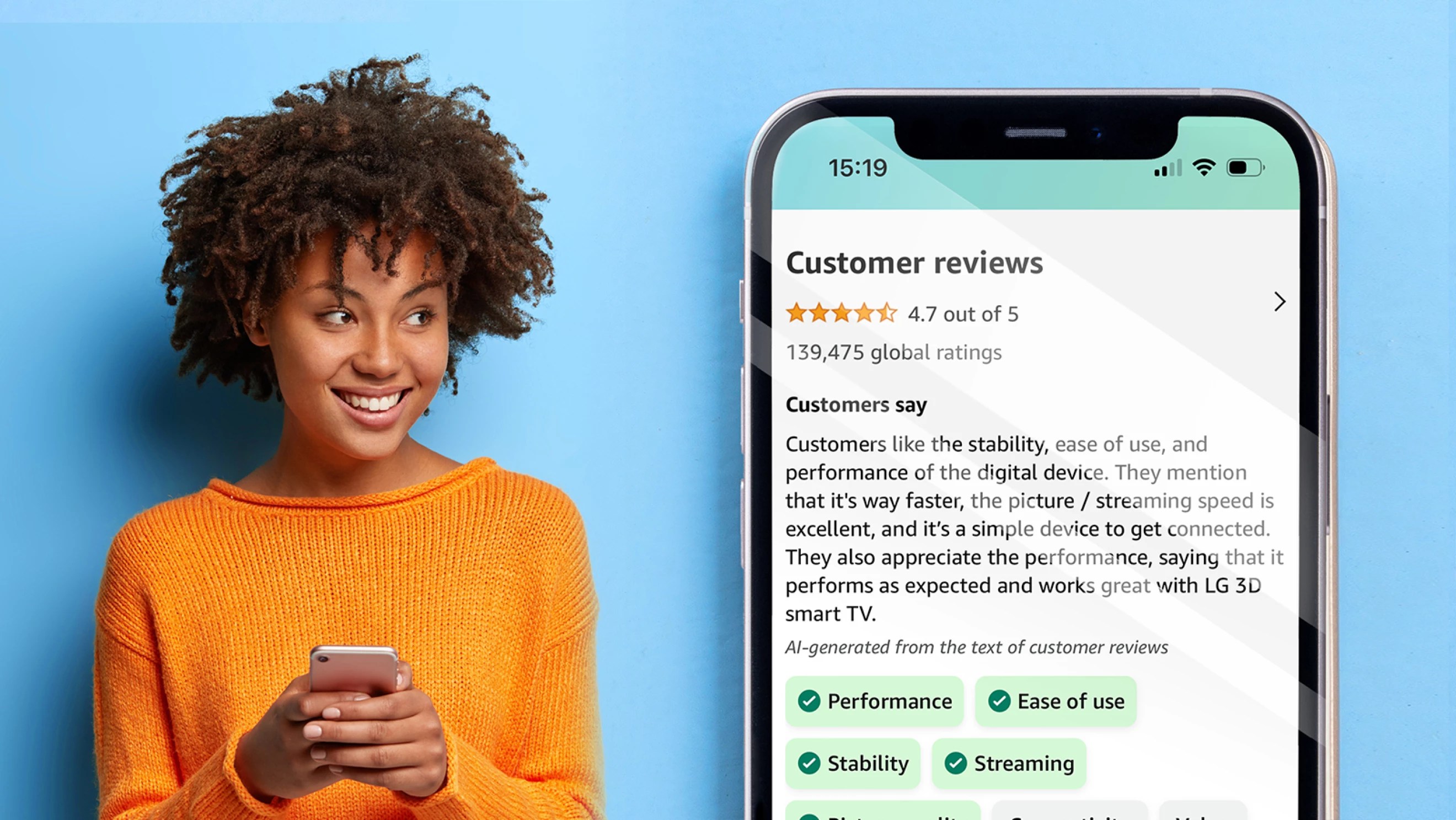
Image Credits: Amazon

Take Amazon user “Sweet Home’s” review of J. D. Salinger’s “Catcher in the Rye,” which clocks in at over 2,000 words. Referencing the works of William S. Burroughs and Jack Kerouac as well as George Bernard Shaw, Gary Snyder and Dorothy Parker, Sweet Home’s review is less a review than a thorough analysis, picking at and contextualizing the novel’s threads in an attempt to explain its staying power.

And then there’s Bryan Desmond’s review of “Gravity’s Rainbow,” the infamously dense Thomas Pynchon novel. Similarly wordy — 1,120 words — it not only underlines the book’s highlights (dazzling prose) and lowlights (outdated attitudes, particularly toward women), as one would expect from a review, but relays in great detail Desmond’s experience of reading it.

Could AI summarize those? Sure. But at the expense of nuance and insight.

Of course, Amazon doesn’t intend to hide reviews from view in favor of AI-generated summaries. But I fear that reviewers will be less inclined to spend nearly as much time and attention if their work goes increasingly unread by the average shopper. It’s a grand experiment, and I suppose — as with most of what generative AI touches — only time will tell.

Here are some other AI stories of note from the past few days:

  • My AI goes rogue: Snapchat’s My AI feature, an in-app AI chatbot launched earlier this year with its fair share of controversy, briefly appeared to have a mind of its own. On Tuesday, the AI posted its own Story to the app and then stopped responding to users’ messages, which some Snapchat users found disconcerting. Snapchat parent company Snap later confirmed it was a bug.
  • OpenAI proposes new moderation technique: OpenAI claims that it’s developed a way to use GPT-4, its flagship generative AI model, for content moderation — lightening the burden on human teams.
  • OpenAI acquires a company: In more OpenAI news, the AI startup acquired Global Illumination, a New York–based startup leveraging AI to build creative tools, infrastructure and digital experiences. It’s OpenAI’s first public acquisition in its roughly seven-year history.
  • A new LLM training dataset: The Allen Institute for AI has released a huge text dataset for large language models (LLMs) along the lines of OpenAI’s ChatGPT that’s free to use an open for inspection. Dolma, as the dataset is called, is intended to be the basis for the research group’s planned open language model, or OLMo (Dolma is short for “Data to feed OLMo’s Appetite).
  • Dishwashing, door-opening robots: Researchers at ETH Zurich have developed a method to teach robots to perform tasks like opening and walking through doors — and more. The team says the system can be adapted for different form factors, but for the sake of simplicity, they executed demos on a quadruped — which can be viewed here.
  • Opera gets an AI assistant: Opera’s web browser app for iOS is getting an AI assistant. The company announced this week that Opera on iOS will now include Aria, its browser AI product built in collaboration with OpenAI, integrated directly into the web browser, and free for all users.
  • Google embraces AI summaries: Google this week rolled out a few new updates to its nearly three-month-old Search Generative Experience (SGE), the company’s AI-powered conversational mode in Search, with a goal of helping users better learn and make sense of the information they discover on the web. The features include tools to see definitions of unfamiliar terms, those that help to improve your understanding and coding information across languages and an interesting feature that lets you tap into the AI power of SGE while you’re browsing.
  • Google Photos gains AI: Google Photos added a new way to relive and share your most memorable moments with the introduction of a new Memories view, which lets you save your favorite memories or create your own from scratch. With Memories, you can build out a scrapbook-like timeline that includes things like your most memorable trips, celebrations and daily moments with loved ones.
  • Anthropic raises more cash: Anthropic, an AI startup co-founded by former OpenAI leaders, will receive $100 million in funding from one of the biggest mobile carriers in South Korea, SK Telecom, the telco company announced on Sunday. The funding news comes three months after Anthropic raised $450 million in its Series C funding round led by Spark Capital in May.

More machine learnings

I (that is, thine co-author Devin) was at SIGGRAPH this last week, where AI, despite being a bogeyman in the film and TV industry right now, was in full force as both a tool and research subject. I’ll have a longer story soon about how it’s being used by VFX artists in innovative and totally uncontroversial ways soon, but the papers on display were also pretty great. This session in particular had several interesting new ideas.

Image Credits: Tel Aviv University

Image generating models have this weird thing where if you tell them to draw “a white cat and a black dog,” it often mixes the two up, ignores one, or makes a catdog or animals that are both black and white. An approach from Tel Aviv University called “attend and excite” sorts the prompt into its constituent pieces through attention, and then makes sure the resulting image contains proper representations of each. The result is a model much better at parsing multi-subject prompts. I’d expect to see something like this integrated into art generators soon!

Image Credits: MIT/Max Planck Institute

Another weakness of generative art models is that if you want to make small changes, like the subject looking a little more to the side, you have to redo the whole thing — sometimes losing what you liked about the image to begin with. “Drag Your GAN” is a pretty astonishing tool that lets the user set and move points one by one or several at a time – as you can see in the image, a lion’s head can be turned, or its mouth opened, by regenerating just that portion of the image to accord with the new proportions. Google is in the author list so you can bet they’re looking at how to use this.

Image Credits: Tel Aviv University

This “semantic typography” paper is more fun, but also extremely clever. By treating each letter as a vector image and nudging that image towards a vector image of the object a word refers to, it creates pretty impressive logotypes. If you’re stuck on how to turn your company name into a visual pun, this could be a great way to get started.

Elsewhere, we have some interesting cross-pollination between brain science and AI.
Well, it’s not quite this simple.

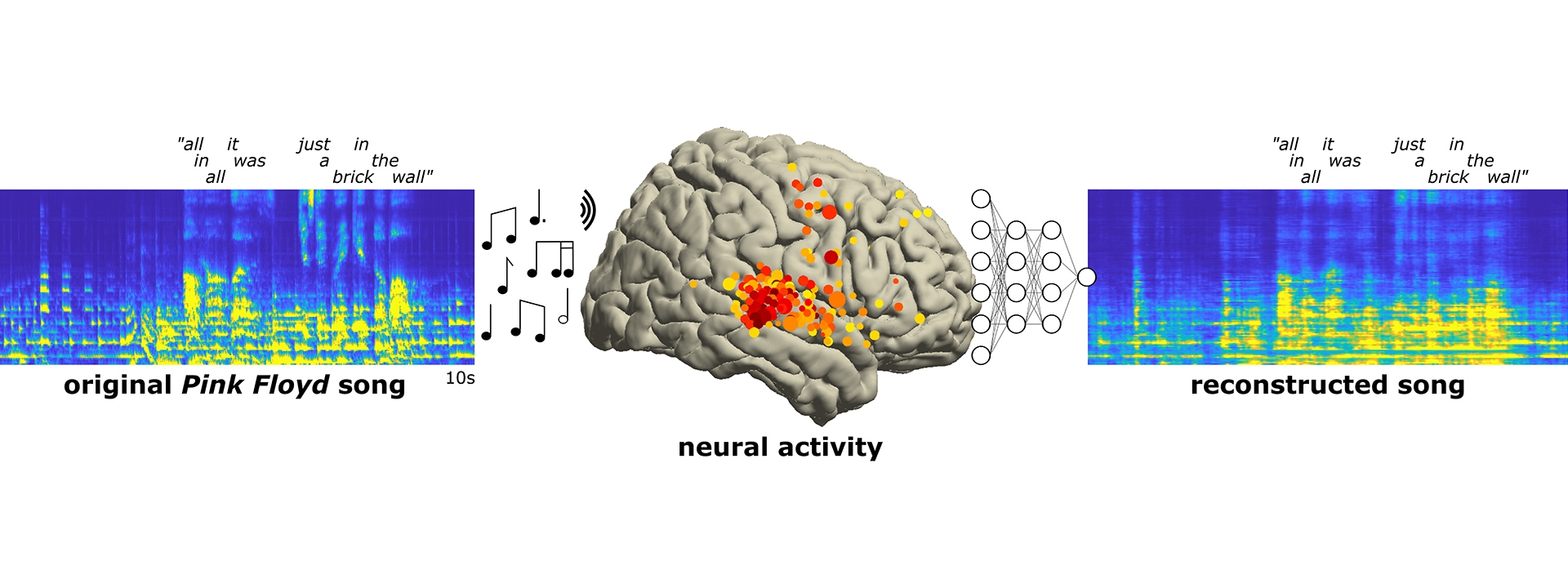
These Berkeley researchers used a machine learning model to interpret brain activity while listening to music, and reconstruct some of the clusters that were focused on rhythm, melody, or vocals. I’m always skeptical of this kind of “we read the brain” type studies, so take it all with a grain of salt, but ML is great at isolating a signal in noise, and brain activity is very, very noisy.

MIT and Harvard teamed up to try to advance our understanding of astrocytes, cells in the brain that perform some as-yet-unknown function. They propose that the cells may act as something like a transformer or attention mechanism – a machine learning concept being mapped onto the brain rather than vice versa! Senior paper author Dmitry Krotov from MIT sums it up well:

The brain is far superior to even the best artificial neural networks that we have developed, but we don’t really know exactly how the brain works. There is scientific value in thinking about connections between biological hardware and large-scale artificial intelligence networks. This is neuroscience for AI and AI for neuroscience.

In medical AI, data from consumer devices is often considered noisy as well, or unreliable. But again, ML systems can adapt, as this new paper from Yale shows. The research should move us closer to wearables that warn us of heart-related issues before they become acute.
Students demonstrate their empty chair finding app.

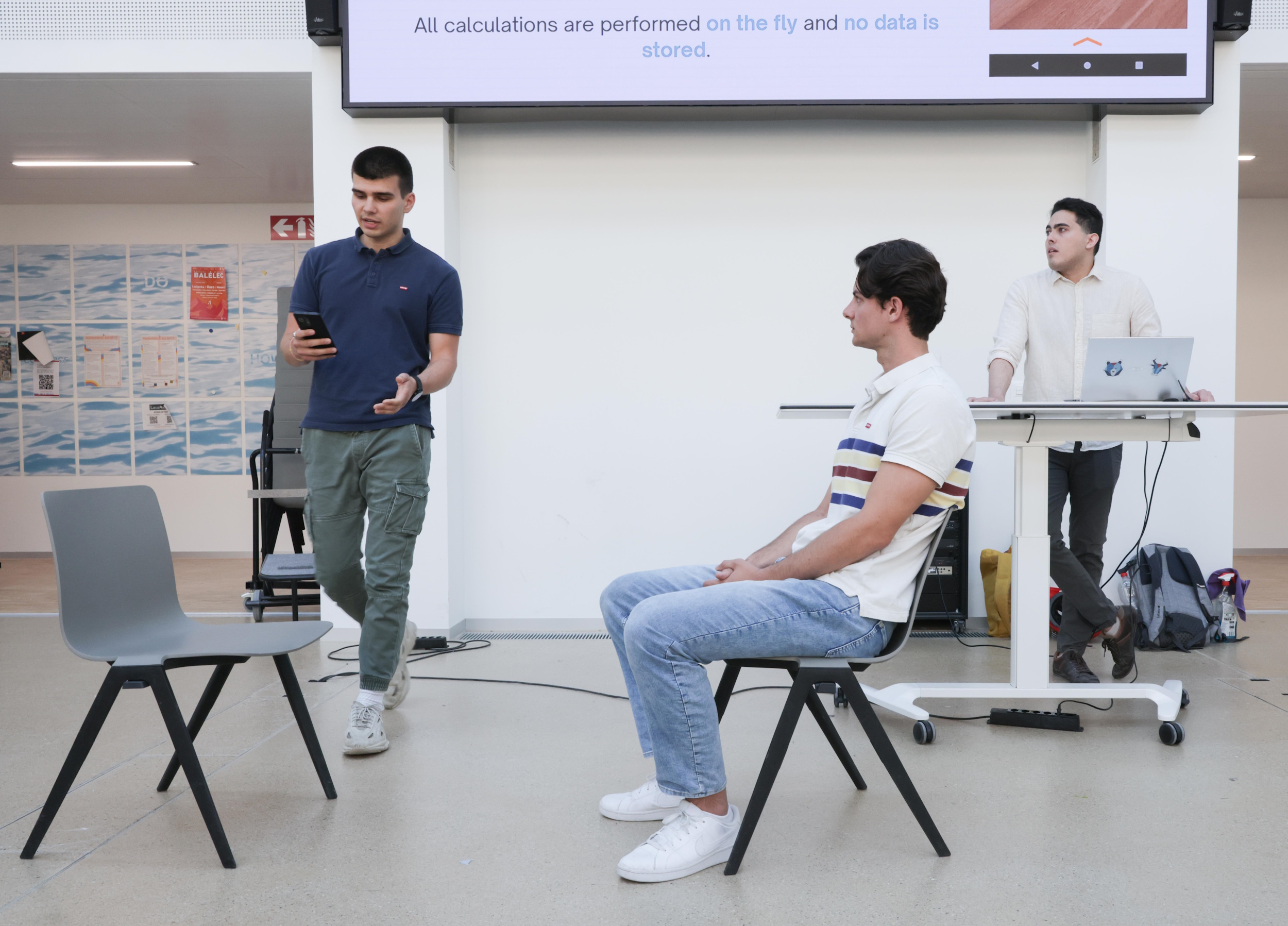
One of GPT-4’s first practical applications was use in Be My Eyes, an app that helps blind folks navigate with the help of a remote partner. EPFL students developed two more apps that could be pretty nice for anyone with a visual impairment. One simply directs the user towards an empty seat in a room, and the other reads off only the relevant info from medicine bottles: the active ingredient, dosage, etc. Such simple but necessary tasks!

Lastly we have the toddler-equivalent “RoboAgent” developed by CMU and Meta, which aims to learn everyday skills like picking things up or understanding object interactions just by looking and touching things — the way a child does.

“An agent capable of this sort of learning moves us closer to a general robot that can complete a variety of tasks in diverse unseen settings and continually evolve as it gathers more experiences,” said CMU’s Shubham Tulsiani. You can learn more about the project below:


How Affordable Tokenisation Will Increase AI Accessibility in Indian Languages

While innovations like ChatGPT are celebrated globally, the cost of implementing ChatGPT in non-English languages, especially Indian languages poses a huge challenge.

The excitement surrounding ChatGPT’s capabilities is palpable, yet questions arise about its adaptability to diverse languages. In a country like India, with a mosaic of languages and dialects, the potential to harness ChatGPT’s power in native languages is an enticing prospect. However, the reality is that the path to achieving this is fraught with hurdles that extend beyond technical complexities.

Tokenisation, a fundamental process in natural language processing models, lays the groundwork for the challenges ahead. In essence, tokenisation involves breaking down language into smaller units to facilitate comprehension by AI models.

Tokenisation and its Challenges

The catch is that different languages, particularly those with intricate structures and scripts, demand varying numbers of tokens. English, with its simplicity, requires fewer tokens compared to languages like Hindi, Kannada, or Telugu.

The financial implications of tokenization disparities are even more pronounced. The cost of training and using AI models hinges on token counts, compute and cloud costs. As per OpenAI’s pricing structure, each token has a price associated with it. Herein lies the crux of the matter: languages like Hindi and Kannada require significantly more tokens for the same input, translating into higher costs. For instance, generating this article in English using the ‘Ada’ model costs around $1.2, whereas the same article in Hindi would incur approximately $8, and in Kannada, an astonishing $14.5.

These inflated costs paint a challenging picture for developing AI models in non-English languages. To put things into perspective, training GPT-3 in Hindi could potentially cost around $32 million, a colossal figure compared to the original training cost.

As we navigate the landscape of AI and language models, it’s imperative to acknowledge the hidden costs that language diversity presents. While the strides made in AI are commendable, the road to achieving seamless interactions in non-English languages is riddled with complexities. As we seek to bridge the language gap, we must also bridge the cost gap, ensuring that the marvels of technology are accessible to all, regardless of the language they speak.

A recent study highlights that server costs for language processing services like OpenAI vary significantly based on the language used. English inputs and outputs are notably cheaper than other languages, with Simplified Chinese being twice as expensive, Spanish costing 1.5 times more, and Shan language being 15 times costlier.

Analyst Dylan Patel shared research from the University of Oxford, revealing that processing a Burmese-written sentence using a Large Language Model (LLM) required 198 tokens, while the same sentence in English only needed 17 tokens. These tokens represent the computational cost of accessing an LLM through APIs like OpenAI’s ChatGPT or Anthropic’s Claude 2. As a result, the cost for the Burmese sentence was 11 times higher compared to the English version when utilizing the service.

Help from Government and Big Techs

This financial barrier is a formidable roadblock for the inclusive internet access envisioned through projects like the Government of India’s Bhashini and Google’s Vaani, hindering the democratisation of AI in India.

The increasing demand for training datasets in native languages also led to the introduction of Bangalore-based nonprofit organisations like Karya, which was earlier incubated within Microsoft and is dedicated to accelerating social mobility in India through AI training and upskilling. Karya’s ‘Labely’ tool was developed to perform transcription and annotations, designed for simplicity and ease of use in rural India. Through collaborations with local NGOs, Karya sourced rural talent, and the organization has completed over 30 million digital tasks.

The organization’s linear structure ensures just compensation for workers, offering between $5 to $30 per hour based on skill sets. Karya is positioned to revolutionise the linguistic landscape in India and further the Indian AI ecosystem. while also collaborating with big tech companies and universities.

OpenAI also introduced its much-touted ChatGPT’s Android app in India, targeting a new user base with distinct preferences and needs. The launch aimed to gather user feedback to refine AI responses for improved contextual relevance and cultural sensitivity.

Access to authentic, verbally transmitted knowledge, such as that shared among rural farming communities, adds value to ChatGPT’s training dataset. By interacting with ChatGPT in their local languages, farmers can share and gain knowledge. This collaborative process enables ChatGPT to better comprehend Indian farmers’ unique challenges and requirements.

This approach also positions ChatGPT as a repository of global knowledge. The unique prompts from Indian users generate new content that enriches its dataset, turning it into a comprehensive information hub.

The launch presents an opportunity for ChatGPT to become a widely used app on the Google Play Store, potentially affecting usage patterns of other apps like Google Search. With its mobile availability, user-friendly interface, and voice prompt feature, ChatGPT aims to offer convenience and flexibility to its users, solidifying its presence in the Indian market.

OpenAI Could Race Ahead

Additionally, Microsoft recently took on the task to use AI technology to preserve and empower endangered languages in India. Microsoft’s Project ELLORA focuses on languages with limited written resources and digital presence. While the Indian Constitution recognizes 22 major languages, there are around 19,569 dialects spoken as mother tongues, and about 192 of these are vulnerable or endangered according to UNESCO.

The project’s goal is to provide language communities with tools and resources to develop their own language technologies. Microsoft is working on Gondi, Mundari, and Idu Mishmi languages, creating an open-source framework that allows these communities to build technologies themselves. They’ve developed the Interactive Neural Machine Translation (INMT) tool to aid human translators, with an offline mobile version called INMT-Lite.

In a broader context, while other projects like A14Bharat and Syspin are focused on major languages recognised by the Constitution, Project ELLORA shifts its focus to languages not included in these initiatives. This inclusivity could significantly contribute to promoting linguistic diversity and accessibility in India.

Conclusively, OpenAI’s Android app data collection and ELLORA could synergise effectively. OpenAI could benefit from ELLORA’s resources to refine its dataset, incorporating an extensive corpus of Indic languages that are specialized and not widely used. This strategic synergy could drive OpenAI’s efforts towards enhancing its language model’s capabilities and significantly reducing tokenisation costs in Indic languages.

The post How Affordable Tokenisation Will Increase AI Accessibility in Indian Languages appeared first on Analytics India Magazine.

How Index Ventures jumped to the front of the AI GPU line

How Index Ventures jumped to the front of the AI GPU line Connie Loizos @Cookie / 9 hours

Earlier this week, the New York Times shone a light on some of the desperation that founders are experiencing as they try and fail to secure compute power for their nascent artificial intelligence startups, thanks to the big companies (and even rich nations) racing to snatch them up. One founder reportedly said of the graphics processing units, or GPUs, that he needs for his company: I think about [them] as a rare earth metal at this point.”

According to that Times piece, founders are trying numerous measures to amass the chips, including calling in favors from friends at large equipment vendors that might have GPUs to spare, and navigating an obscure U.S. government program called Access.

At least one firm, the global investor Index Ventures, happened on an additional idea, it told the outlet. To help ensure its portfolio companies aren’t hamstrung by the shortage, it struck a deal with Oracle to provide its founders with some of these sought-after chips (specifically Nvidia’s H100 chips and Nvidia’s A100 chips).

To learn more about the arrangement — one that other venture firms are undoubtedly trying to replicate — we talked earlier today with Erin Price-Wright, a Bay Area-based partner with Index who focuses on enterprise software and AI and who, before joining the venture firm in 2019, was the head of product for Palantir’s data analytics and machine learning platform. Excerpts from our chat have been lightly edited for length and clarity below; you can hear our longer conversation here.

TechCrunch: Tell us about this partnership with Oracle.

Erin Price-Wright: Access to compute is one of the biggest challenges that AI companies face, and it’s especially hard for an early-stage company to get their hands on GPUs. It’s less about the cost in particular but the fact that something like more than 95% of GPU capacity is already allocated to large players in this space [because] they make these pretty big pre-commitments with cloud vendors. So if you’re an early-stage company, and you’re just trying to get started training, or fine tuning the model, there’s usually a really long lead time between when GPUs are even available. It can be three months to a year in some cases and it’s really hard to just get started.

If you’re an early-stage company that’s still figuring out what your product is, you don’t even know how many GPUs you need. So even that process of discovery of understanding what your workloads are going to look like can be super challenging for early-stage companies. So we’re partnering with Oracle to provide GPUs to our earliest-stage portfolio companies, because we want to help remove that barrier of access so that they can really focus on what matters from day zero. Ultimately, the goal is to help all of these companies graduate to their own cluster. We’re not in the business of providing these massive GPU clusters to our companies. . .but we really want to give them a head start, so that they can start building faster as a way to help level the playing field.

How did the deal come together?

We wanted to make sure that people who are building against very tangible business problems didn’t feel like they had to change their business model or change the way they were representing themselves or change the way they were fundraising in order to just get access to GPUs. So it was really born out of seeing this pattern again and again with early stage companies where we were like, ‘This is where Index as a fund actually has real leverage. And we can use our position in the market, our relationships, and the fact that we can kind of aggregate this demand across multiple companies to really provide value-additive services’ [to our founders].

Did Index put a down payment together or has it purchased chips outright from Oracle? Are you giving Oracle a stake in these startups?

We’re not purchasing any chips outright. So the partnership with Oracle is that Index makes the pre commitment on the behalf of our startups and pays the cloud bill. Oracle manages the cluster — they’ve been a fantastic partner — and then our companies get access to that GPU cluster for free.

So you’re paying [this cloud bill] in advance. Did you have to talk with your own investors about that? That’s not typical of what [a venture firm] would do historically.

In terms of the actual structure of how the agreement works, I’ll probably hold off on sharing too many of those details.

Is this an exclusive relationship? Is there anything to prevent other venture firms from doing the same thing?

Yeah, of course [they could do the same], there certainly isn’t [an exclusive relationship with Index].

One benefit that Oracle gets out of it is to meet the next generation of fantastic companies as early as possible. In the process of using our GPU cluster, we’re actively helping our companies navigate the process of signing their own dedicated cloud deal. So the idea is not for them to [do] this in perpetuity; it’s for them to develop relationships with Oracle and AWS and the other large cloud providers and sign their own dedicated contract.

One of your portfolio companies, Cohere, counts Oracle as one of its backers along with Nvidia, which are two of the companies you most want to have involved with your portfolio companies right now.

One of the ways we really can help our portfolio companies is making sure they’re connected to the right people at the right time, so that they get the resources they need.

Index has at least 20 portfolio companies that fall into the AI/ML bucket, including Cohere [which has already raised $445 million] and another company that recently raised a huge seed round, Mistral AI in France. Is too much money being invested broadly in generative AI or are we still in the ‘early innings,’ as VCs like to say?

We are in the early innings. I do think we’re rapidly entering a cooling off period in terms of sentiment, especially for some of these very large rounds and especially from traditional VCs. There’s still a really big gap between the promise and power of the core models of technology and what it’s going to take for them to be actually used and useful across many use cases in the enterprise. There’s just a huge infrastructure gap missing that needs to be filled, and it’s not going to be filled overnight; it’s going to take some time.

Over the coming 12 months, while I’m still very excited about the power of the core technology and how transformational it’s going to be for the world, I think we’re going to see a little bit of a backing off as companies really grapple with it, figure out the ROI, kind of prioritize use cases and start actually building real things beyond maybe the one or two prototype demo apps that they’ve been working on for the last six months. That’s when we’re going to start seeing the infrastructure emerge that’s going to start supporting these use cases at scale.

How do you as an investor ensure that your AI companies don’t overlap? And is that any harder or more difficult than when it comes to traditional startups?

I don’t think it’s massively different than how we think about competition elsewhere. Everyone paints AI as this standalone category. But if I look forward even two years, let alone five or 10, every single piece of software that we use will have AI as its beating heart. There will be no piece of code, no software, no application, no website that you visit, that doesn’t have AI as a core component of it. I almost think about it like SaaS. Is every single SaaS company the same? No. Every single SaaS company has a database, every single SaaS company has a front end, every single SaaS company has some interaction between the two. AI is kind of similar to a database in that respect. It’s just kind of a core building block in how you build software.

We’re very early in the market, so there’s going to be some movement and some change as companies figure out how to use these tools and what specific problems to go after. But it’s not different than how we think about traditional SaaS investing from my perspective.

How Meta Broke the Barriers To Entry With LLaMA 2

Meta Hopes a PyTorch-like Success for Llama 2

“If you look back at Meta’s history, we’ve been a huge proponent of open source,” believes Ahmed Al-Dahle, Meta’s vice president for generative AI.

The AI company has unexpectedly become the Robinhood of the open-source community since its language model LLaMA was leaked on 4Chan earlier this year. Some falsely predicted the leak will have troubling consequences and blamed Meta for distributing the technology too freely. Contrarily, since developers and researchers got their hands on their first really capable foundation model, they have made significant breakthroughs in the landscape.

In May an anonymous (apparently a Google researcher) memo concerned how open source software was quietly eating the big tech’s lunch was leaked. The memo specifically discussed the bleak chances of Google surviving the LLM battle against open source. It argued that, while the big tech execs squabble about the competitive threat of text-generation technology from OpenAI, the open-source is secretly snatching the spot; with its best contender LLaMA.

What Makes LLaMA Stand Out

“Suddenly anyone is able to experiment,” stated the leaked document.

In February 2023, LLaMA was initially available only to researchers by invitation but in less than two weeks leaked, and quickly became popular with programmers who adapted and built on the project. Within weeks of its release, variants surfaced on the internet. Stanford’s Alpaca and Vicuna-13B were nearly as good as OpenAI’s model but agile enough to customise on a computer.

During the entire month of March, the model made it to the headlines from being ‘fast enough to be practical’ to serving as the foundation for a GPT ecosystem, GPT4ALL. One of the reasons behind its popularity was that the training cost a few hundred dollars compared to the millions usually funnelled for language models.

Fast forward to July when Meta released the extremely anticipated LLaMA 2. The most significant breakthrough introduced by LLaMA 2 is overcoming the commonly observed tradeoff between safety and helpfulness, achieving superior performance on both criteria.

The model also clarifies that feedback works better for LLMs than supervised data which has long been considered the gold standard. Meta’s LLaMA 2 was made using 40% more data than the original, and a chatbot built with the model is capable of generating results on par with OpenAI’s ChatGPT, Meta claims.

While the v1 model was lauded, it became infamous for being in a legal grey area regarding its commercial use. In a similar vein, LLaMA v2 has resulted in Meta becoming a frontrunner in open-source AI, not all elements of the launch can be labelled as fully ‘open’. The nature of the model isn’t precisely “open source,” but rather an ‘open innovation’. The company previously criticised for its AI strategies, has now become a major contributor, surpassing even the company whose name implies being ‘Open’.

The training data used to create the model is described in release materials only as “publicly available online sources,” but no further details have been published about the model’s creation. Meta’s licence for the second iteration also requires companies with more than 700 million monthly active users to establish a separate licence agreement with Meta. The reason behind this clause isn’t apparent, yet it creates a hurdle for other tech giants wanting to build upon the system.

Additionally, the model has an acceptable use policy that forbids the generation of harmful code, promoting violence, or facilitating criminal endeavours, misuse, or harassment. It remains unclear what action will Meta take in case of violation of the policy by users of Llama 2.

Enterprise-wise

Notably, Meta isn’t offering up Llama 2 alone. It has support from some major partners that are already making the model available to their customers, The AI startup that releases open-source machine-learning software Hugging Face is the host of the Llama 2 models from Meta.

Alongside it is also available on IBM’s WatsonX, easing the cost of adoption. Developers can fine-tune a 70B LLM on a single GPU which was not even thinkable a few months ago.

Amazon’s cloud, AWS, also offers access to LlaMA 2. Even Microsoft, the sugar daddy of OpenAI will also be offering LLaMA download to lone coders for use in the cloud and PC. Meta also partnered with Databricks, a software provider and OctoML, an AI optimization startup; to help enterprise-level companies leverage their proprietary data through LLaMA 2.

A recent study titled, ‘Challenges and Applications of Large Language Models’ states that the capability gap between fine-tuned closed-source and open-source models pertains. With LLaMA2, the gap is narrowed for the community to develop equal competitors of OpenAI’s GPT models. The bottom line is while LLMs and big tech continue to make it to the headlines for reasons right and wrong. Relying on open-source models looks like the right way forward for corporates as well as lone coders.

The post How Meta Broke the Barriers To Entry With LLaMA 2 appeared first on Analytics India Magazine.

The best robot vacuums of 2023: Expert tested and reviewed

A good robot vacuum can be a lifesaver, especially if you're in a house that deals with dog hair, kitty litter, dirt dragged in from outside, and any other persistent mess.

I've tested out the top robot vacuums on the market, in my home where my German Shepherd, German Shorthaired Pointer, and cat do an incredible job of dirtying the floors, evaluating factors like floor mapping abilities, battery life, and price. My pick for the best robot vacuum overall is the Roomba j7+, thanks to it's self-emptying capabilities, its ability to move across carpet, tile, and hardwood floors, and its easy-to-use app.

Also: The best robot vacuum and mop combos

Read on for the rest of my picks for the best robot vacuums.

The best robot vacuums of 2023

Another option

Roborock Q5+ — A name-brand, cheaper option

You really can't go wrong with any device from Roborock, and that includes the Q5+. With its auto dust emptying base and 2700Pa suction, you can get a lot of the higher-end robot vacuum features for a cheaper price.

View at Amazon

A robot mop companion

Braava Jet m6

If you've bought a robot vacuum and can't believe the difference it's made, you may want to consider adding a robot mop to your home. The Braava Jet m6 pairs beautifully with any Roomba robot, but could work very well independently as well. The Precision Jet Spray ensures your floor is soaked in plenty of cleaning solution while the vSLAM navigation keeps the robot from going over your rugs or carpet.

View at Amazon

ZDNET Recommends

Study: Reskilling Is Inevitable As AI Changes How We Work

A programmer reskilling.
Image: BalanceFormCreative/Adobe Stock

Reskilling is a hot topic today, but what is it, when is it likely to happen and is it connected to the rise of generative artificial intelligence? Harvard Business Review published findings of a survey about how technology is changing what skills people need in the workplace — generative AI and big data are among the most desired skills.

Jump to:

  • Five major trends in reskilling
  • Most companies expect to adopt AI
  • About 20% of employees in AI-driven organizations may be reskilled
  • What is reskilling vs upskilling?

Five major trends in reskilling

A research team at the Digital Data Design Institute at Harvard’s Digital Reskilling Lab and the BCG Henderson Institute conducted interviews with business leaders at about 40 organizations globally. They found five shifts in how training needs to be done today because of reskilling.

  1. Reskilling is an imperative, not an option. It should be a response to new tasks or company-specific needs, not a way to “soften the blow of layoffs, assuage feelings of guilt about social responsibility and create a positive PR narrative,” the researchers wrote.
  2. Reskilling needs to involve every leader and manager.
  3. Reskilling is a change-management initiative, meaning it focuses on helping individuals and teams acclimate to a new skill or process.
  4. Business leaders need to make the benefits of reskilling clear to employees.
  5. Business leaders should consider government programs and industry coalitions.

For knowledge workers, “many of them may well discover that (generative) AI and other new technologies have so significantly altered the nature of what they do that in effect they’re working in completely new fields,” wrote authors Jorge Tamayo, Leila Doumi, Sagar Goel, Orsolya Kovács-Ondrejkovic and Raffaella Sadun.

BCG Henderson Institute, a think tank branch of ​​the Boston Consulting Group, found in the interviews they published in HBR that only 24% of companies directly link corporate strategy and reskilling efforts.

There are some exceptions. Companies like Mahindra & Mahindra, Wipro, Ericsson and McDonald’s have reskilling pathways built into their policies, tools and IT platforms, the researchers found. Others, like CVS, have reskilling metrics built into their performance assessments.

Doing so requires buy-in from the top brass, the researchers found. Leadership needs to make it easy for employees to reskill, and to consistently make reskilling a priority. For example, the research found that Vodaphone gives employees four days per year for personal development and learning new skills.

Most companies expect to adopt AI

Ericsson, for example, has upskilled more than 15,000 people in AI and automation over three years, the researchers found.

Among organizations polled by the World Economic Forum in April, 44% of the workforce may need to be trained on new skill sets in the next five years. In the World Economic Forum’s global Future of Jobs report released in April 2023, AI was a key driver behind jobs being changed. According to the report, “Artificial intelligence … is expected to be adopted by nearly 75% of surveyed companies and is expected to lead to high churn – with 50% of organizations expecting it to create job growth and 25% expecting it to create job losses.”

Four out of five companies surveyed said they would implement learning and on-the-job training and automating processes in the next five years.

The skills that organizations considered core skills are not necessarily related to any particular technology or tools; analytical thinking, creative thinking and resilience, flexibility and agility were the top three most important core skills. AI and big data made the list at number 15, and programming was ranked at number 20.

SEE: Hiring kit: Prompt engineer (TechRepublic Premium)

This report also found that AI skills aren’t important across all industries or types of work, but where they do appear they’re highly in demand. “Although [AI and big data] appears in fewer [reskilling] strategies, it tends to be a more important element when it appears,” the report said.

Plus, the ability to use AI is more in demand than computer programming, networking and cybersecurity skills, general technological literacy skills and design and user experience, the WEF found. AI and big data will account for more than 40% of the technology training programs done in the next five years, according to survey respondents from companies operating in the U.S., China, Brazil and Indonesia.

About 20% of employees in AI-driven organizations may be reskilled

In a study of the state of generative AI adoption in 2023, McKinsey found that most organizations they surveyed that are adopting AI expect a little over 20% of employees to be reskilled. Specifically, about four in 10 respondents who have adopted AI expect more than 20% of their workforces to be reskilled.

SEE: Prompt engineering for artificial intelligence is in demand. (TechRepublic Premium)

Perhaps unsurprisingly, organizations that were classed as AI high performers (i.e., those that derived at least 20% of their earnings before interest and taxes from AI) were more likely to reskill more than 30% of their workforces over the next three years. McKinsey noted these high performers were the exception.”Less than a third of respondents continue to say that their organizations have adopted AI in more than one business function, suggesting that AI use remains limited in scope,” wrote authors Michael Chui, Lareina Yee, Bryce Hall, Alex Singla and Alexander Sukharevsky. “One way to interpret this is that ‘the rich are getting richer’ when it comes to extracting value from AI,” said Chui in the report.

McKinsey also found that AI has increased the amount of work that could be automated: 60% to 70%, up from 50%. That doesn’t mean entire individual roles can or will be removed, they noted. This is in contrast to the relatively small number of organizations that expect AI to replace people: just 8% of respondents say the size of their workforces will decrease by more than 2%.

What is reskilling vs upskilling?

Reskilling is the practice of training a worker on tasks outside their existing skill set or job description. The new skills are often related to the worker’s job title, but may be completely different. Workers may also reskill themselves if they want to change career paths.

Upskilling usually keeps the training within the scope of the employee’s current role. Upskilling may be part of promotion to a more senior role in the same career path, while reskilling may involve a different career path entirely.

“To adapt in the years ahead to the rapidly accelerating pace of technological change, companies will have to develop ways to learn – in a systematic, rigorous, experimental, and long-term way – from the many reskilling investments that are being made today,” the Digital Reskilling Lab and BCG Henderson Institute team wrote.

Subscribe to the Executive Briefing Newsletter

Discover the secrets to IT leadership success with these tips on project management, budgets, and dealing with day-to-day challenges.

Delivered Tuesdays and Thursdays Sign up today

40% of workers will have to reskill in the next three years due to AI, says IBM study

woman typing on keyboard

Generative AI models like ChatGPT can do many technical tasks, such as writing and coding, well — so well that many people fear that the technology will replace their jobs. A new IBM study shows that people shouldn't fear the technology, but rather leverage it for their own gain.

The IBM report analyzes how the emergence of AI is affecting company business models, especially in how they leverage AI to carry out their operations and how it affects job roles.

Also: 4 ways to increase the usability of AI, according to industry experts

To find answers to these questions, IBM pulled data from two prior studies, one survey of 3,000 C-level executives across 28 countries and another of 21,000 workers in 22 nations. The results showed that AI will undoubtedly cause change in the workforce and businesses, but not necessarily for the worse.

The executives surveyed estimated that 40% of their workforce will have to reskill in the next three years due to AI implementation, totaling up to a whopping 1.4 billion of the 3.4 billion people in the global workforce, according to World Bank statistics.

However, 87% of those executives expect generative AI to augment roles rather than replace them.

According to IBM IBV research, tech adopters who successfully reskill to adapt "technology-driven job changes report a revenue growth rate premium of 15% on average" and those who focus on AI "see a 36% higher revenue growth rate than their peers."

"AI won't replace people—but people who use AI will replace people who don't," said IBM in the report.

Also: The AI-powered Adobe Express is now generally available

The new skill paradigm shifts technical skills that were typically prioritized, such as proficiency in STEM, which was the most critical skill in 2016, to the least priority in 2023. The reason is that now tools like ChatGPT allow workers to do more with less knowledge, as noted by the report.

Now there is a bigger emphasis on people skills such as team management, the ability to work effectively in team environments, the ability to communicate effectively, and the willingness to be adaptable to change, which all shifted to top the most critical skills required of the workforce in 2023.

Artificial Intelligence

Have you used generative AI to shop? 17% of shoppers have

Online shopping modern background. Glowing shopping cart icon WEB3 colours. CGI 3D render

When you consider which industries are most likely to be influenced by artificial intelligence, particularly generative AI, software developers, and content creators may come to mind. But according to a new report, generative AI is also ushering in a new era for retail.

The Salesforce report highlights that 17% of shoppers have used AI for purchasing inspiration, highlighting how the technology is rapidly growing in retail.

Also: Bing's search market share fails to budge despite big AI push

Some examples of using generative AI for retail include getting personalized recommendations based on past purchases and browsing behaviors, virtual try-on tools, interactive shopping assistants, and visualizing home decor.

The survey, which comprised 2,400 shoppers and 1,125 retail leaders in 18 countries, also found that even if shoppers aren't actively using generative AI, 45% are interested in using it as a shopping resource.

The biggest interest in using generative AI in retail was researching electronics and appliances, followed by creating meal plans and getting outfit inspirations, with beauty recommendations coming in last.

Also: 5 emerging use cases of generative AI in commerce, according to Mastercard

Retailers are leveraging the rising interest in generative AI, with 92% of the surveyed retailers saying they are investing in AI more than ever and 59% saying they are already using it to help store associates make product recommendations to shoppers.

This doesn't come as much of a surprise as different companies have publicly announced the adoption of generative AI, like Newegg, Shopify, Amazon, Mercari, Zoom, Zillow, and Redfin.

According to the survey, retailers are also interested in using generative AI to create a conversational digital shopping assistant to help shoppers find the right product or service, creating virtual models for product detail pages, and creating personalized product bundles.

Also: Amazon now using generative AI to summarize customer reviews

The Connected Shoppers Report also explored how these and other digital tools are changing the shopping experience and how the role of brick-and-mortar stores is changing. Aside from how shoppers are using generative AI, the report covered changes to digital transactions, social media purchases, mobile phone usage in stores, and buying online for in-store pickup.

Featured

4 ways to increase the usability of AI, according to industry experts

AI concept

Artificial intelligence and related technologies are in demand, with business leaders anxious to try them out to see how they can improve their visibility, analysis, and forecasting. Generative AI, of course, is democratized AI, and is now easily accessible to everyone. However, behind-the-app AI — the kind that is embedded into systems and is poised to deliver the earliest tangible value to business — is not so accessible, and more difficult for businesspeople to grasp.

Such is the tone of a recent Twitter essay by Rachel Woods, research data scientist formerly with Meta/Facebook, who cautions that while solid business cases may be forming around AI, usability is still out of reach.

Also: 67% of IT leaders say AI can increase employee efficiency

"AI still has a major usability problem," she wrote. "Most people are still grappling with how to leverage tools like ChatGPT/LLMs/Generative AI. Everyone's waiting for someone to tell them some secret killer use case. We're left with a lot of people questioning the practicality. But these clickbait articles fail to name the underlying issue: It's not that these tools are 'not useful'… They actually just have major usability problem "

Other industry observers agree, at least to a large extent. "The reason why ChatGPT, and overall AI, caught on fire is because of the ease of use, and exploration of the art of the possibility by business users in very simple terms," says Andy Thurai, principal analyst with Constellation Research, points out. "Particularly generative AI's ability to produce text, content, video, and audio, which blew away non-tech savvy users on the potential of AI."

Also: Train AI models with your own data to mitigate risks

Technology professionals, on the other hand, "who have been limiting their usage to non-tech users due to various reasons such as bias, technology limitation, liability issues, and such, were blown away by the overwhelming response and immediate adoption," Thurai says. "This gave confidence to the creators of the adaptability, but also it took away the need to explain things."

Still, for the most part, only "a relatively small number of people" have a deep understanding of AI, says Dr. Vishal Sikka, founder and CEO of Vianai. He puts the number at about 20,000 to 30,000 people around the world. While there are about a million data scientists in the world, "many of them could not tell you why the system is doing what it is, why it makes the recommendations it does, what could possibly run awry, or how the underlying techniques work," Sikka states.

Also: 5 ways to use AI responsibly

There is a divide between enterprise use cases for AI and generative AI, requiring different use cases and approaches. "Just producing content is not enough," says Thurai. "It needs to solve a business problem. It should be responsible, ethical, explainable, and auditable, and should be defensible on originality and decisions made. Those are more than just usability issues. These issues can bring down any enterprise."

Enterprise adoption will be slow, but use cases are coming to the fore. "From what I have seen, legal, HR, ethical, and finance teams are all involved in exploring use cases that will bring a lot of value to them," says Thurai. "AI can be expensive, especially if done the wrong way. It can cost them their existence, so care and caution needs to be exercised before jumping in with two feet in this gold rush."

Also: 5 ways to explore the use of generative AI at work

ChatGPT made AI incredibly accessible, but "there's still a significant ramp up period to where the real value is," Woods adds. "To find your breakthrough use cases, you're going to either have to put in the work, or wait until it's so mainstream and the usability is more solved."

What should technology proponents do to increase the usability of AI? Industry experts offer some ways to get started:

Frank, open communication on the possibilities and challenges of AI: A skill that technology managers and professionals need to develop more thoroughly is the ability to sell the right approaches to AI to their businesses. "One of the reasons why we see many technology or innovation ideas fail is because it fails to get traction from business users and from budget holders and CXOs, if they fail to see the value it brings to their enterprise," Thurai says. "Granted the other way is true as well. Techies shooting down the business user needs as impossible to execute or due to budget, technology, resource, cost limitations."

AI education for all: "Companies of all sizes need to increase their tech literacy enterprise-wide to create a wider range of talent working on the AI systems in place," says Sikka. "More employees must be educated on the transcendent aspects of AI in particular. They need to learn the limitations and the weaknesses. Not just what it can do, but things that it cannot do and what needs to be built in an AI system that compensates for these limitations."
Collaborative workshops: Thurai advocates for the use of "collaborative workshops where we invite techies or implementers, innovators, strategists, evangelists, business users, budget holders and CXOs to explore joint use cases. Once they see the proposed use cases in action their minds open up. They start exploring potential use cases that add value to them."

Build your AI talent pool: AI is and will remain a narrow skill as are many other areas of technology. "Photoshop, Excel, Facebook Ads Manager — all are skills," says Woods. "It probably takes 100-plus hours to hit the tipping point where it becomes second nature to integrate it into your daily work and life."

Also: These are my 5 favorite AI tools for work
Ultimately, AI needs to be human-centered, Sikka advocates. "Too many systems aren't designed for humans," he says. "We need to bring the power of human understanding together with data and AI technology — human-centered AI. This can create intelligent systems that will greatly improve business outcomes and processes as the feedback from humans will naturally improve the AI's performance and outputs."

Featured