Google Docs already offers a spelling and grammar checker that will scan your documents for typos and grammatical errors. But now Google has kicked off a more advanced AI-based tool designed to make your documents more readable. Unveiled on Tuesday, the new Proofread tool can scan your documents for writing style, tone, and readability to suggest ways to improve them.
On the downside, Proofread isn't available for regular Google Docs users or even for all Google Workspace customers. The tool is limited to just Google Workspace Enterprise customers and only through an add-on for the company's Duet AI product, at least for now.
Also: Google Flights will now tell you when you can get the cheapest flights
A Google spokesperson didn't share any specifics but did tell ZDNET through email that "[Google] will be releasing additional offerings over the coming months for other customer segments, including small and medium-sized businesses and consumers."
For now, if your business or organization uses Duet AI, Proofread may be worth exploring to see if it can enhance the quality of your documents.
Beyond providing the usual spelling and grammar checks, Proofread will offer the following types of suggestions for your review:
Conciseness: Make your writing more concise and succinct.
Active voice: Make your writing clearer to your readers.
Wording: Make words sound more dynamic or formal within the right context.
Sentence Split: Split up long and complex sentences so your document is easier to read.
The suggestions made by Proofread are just that — suggestions. As you can with any spelling or grammar checker, you're able to review each one and either accept it or reject it. All suggested changes appear in the Proofread sidebar so they don't crowd the actual text of your document. Plus, you can use filters to control and limit the types of suggestions you see.
Also: How these two Google Docs features can simplify your project management features
If the Proofread add-on is enabled, the option will be on by default. However, individual users can turn it on and off in Google Docs by going to Tools and selecting Proofread. To open the Proofread sidebar, just click the icon with an A and checkmark. A blue dot will appear next to the icon when writing suggestions are waiting for you.
Also:Are your Google Docs safe from AI training?
With all the buzz over artificial intelligence, Google has been trying to infuse AI into many of its key products. Google Docs, Google Slides, and Gmail all offer an AI-powered option to help you write or rewrite text based on your own description. Google Labs lets you play with generative AI at the Google search engine and in Google Workspace. Lastly, Google Bard is the company's own AI-based chatbot designed to help you find information and generate content.
For over a decade, Grammarly has been a go-to tool for proofreading text. Now, by further harnessing generative AI, Grammarly has expanded its scope of assistance with new AI-powered features designed to help students throughout the entire writing process.
In late July, Grammarly first announced its AI-powered student features, which include ideation prompts, feedback prompts, auto-citations delineating generative AI use, and AI guideline reminders. Now, one month later, Grammarly for Students is live.
Also: The best laptops for college students right now
On the landing page for Grammarly for Students, the company claims it has "Everything you need to ace your assignments." There, you can learn more about all the individual features and get started by signing up for Grammarly.
The ideation prompt feature enables students to help brainstorm plans for writing papers or assignments with prompts like "brainstorm topics for my assignment" or "build a research plan for my paper."
Grammarly says this feature encourages students to collaborate with AI instead of having the technology do all the work for them.
The feedback prompt feature allows Grammarly to offer students feedback on their work as they write. The notes Grammarly might provide include "evaluate the strength of a thesis statement" or "explore counterarguments," according to the company.
The feedback will also include explanations students can leverage to make the corrections, learn from their mistakes, and build their writing skills over time.
Also: The best Chromebooks for back-to-school: Expert tested and reviewed
Both the ideation and feedback prompts are free for users but are limited to 100 monthly prompts. If more prompts are needed, users can opt for Grammarly Premium, which gives users up to 1,000 monthly prompts for both features.
The auto-citation feature is meant to help students credit the appropriate sources for their work when leveraging generative AI. With auto-citations for ChatGPT, students can easily credit the chatbot for its assistance with essays.
An auto-citations feature for Grammarly's generative AI will go live in September.
Also: Google's Duet AI for Workspace can create presentations, write emails, and attend meetings for you
Finally, AI guideline reminders are now live throughout the site and are meant to help students remember how to use AI responsibly.
Grammarly isn't the only company releasing AI in time for this back-to-school season.
Recently, Chegg partnered with Scale AI to develop proprietary large language models (LLMs) to develop a personalized learning assistant. Quizlet also launched four generative AI tools for studying this month.
Google’s AI-powered search expands outside U.S. to India and Japan Sarah Perez @sarahintampa / 8 hours
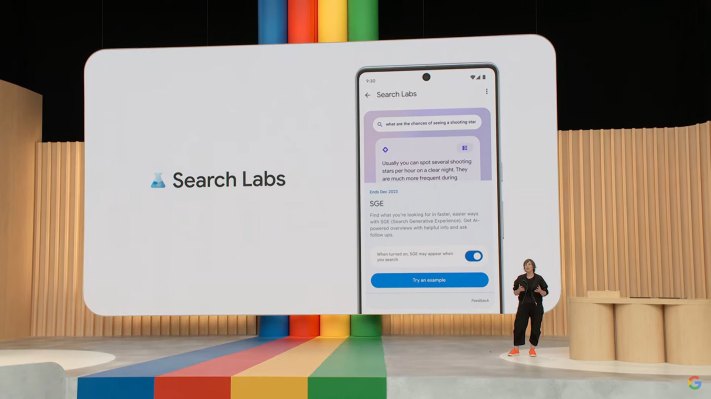
Google is bringing its generative AI search experience to the first countries outside the U.S., the company announced today, starting with expansions in India and Japan. The new AI-powered search feature, also known as SGE (Search Generative Experience), will become available through Google’s Search Labs in those markets, and will introduce a new feature aimed at making it easier to find information in its AI-powered overviews.
First announced at this year’s Google I/O Developer conference in May, SGE introduces a conversational mode to Google Search where you can ask Google questions about a topic and then have it return answers, similar to an AI chatbot. The company in recent months has updated the experience with support for videos and images, local info and travel recommendations, as well as new tools to provide summaries, definitions, and more help with coding-related queries.
It also began to experiment with ads that would be integrated alongside its AI-generated responses, looking to capitalize on the new real estate dedicated to the AI chat experience.
With the global expansion, SGE is being customized for the newly supported regions.
In Japan, users will be able to use generative AI in their local language, while in India it will support both English and Hindi with a language toggle so users can move back and forth between the two. It’s also adding voice input — something that’s popular in India — so users can speak queries instead of typing them and then listen to the responses.
And in both countries, search ads will continue to appear in dedicated ad slots across the page.
Alongside these launches, SGE is introducing a new feature that’s designed to make it easier for people to discover and visit the web pages that back up the information that’s offered in the AI’s responses.
Image Credits: Google
Starting today, users will see a new arrow icon next to information in an AI-powered overview that they can click to see the relevant web pages. This lets them visit the source of the AI’s information directly where they can learn more about the answer to their questions. This is rolling out first in the U.S., and will arrive in India and Japan in the weeks that follow.
The company noted that since the launch of SGE, it’s found the feature is more popular among younger users. Google said the highest satisfaction scores are among those ages 18-24, who like to ask their questions in a more conversational manner.
Google also said people liked to be able to ask follow-up questions and say they’re now asking longer and more conversational questions in full sentences. That’s a different experience than traditional Google searches where users simply type in a few keywords to start a query.
It additionally claimed people were finding the integrated ads useful, but didn’t provide data on click-through rates.
To access SGE, you can find it in the Search Labs section of the Google app on Android and iOS and on Chrome on the desktop.
Man versus robot is a trope that’s been around for decades, but it might soon be woman versus robot. Recent data released by McKinsey established that women are 1.5 times more likely to be displaced by automation, as women in the U.S. make up the largest percentage of workers in low-wage jobs, or those earning less than $30,800 a year.
Other big job losses are likely to occur in customer service, office administrative roles and food services, which McKinsey estimates will equate to 11.8 million workers overall by 2030—all jobs where female workers are heavily represented.
Black and Hispanic workers also make up a vast proportion of workers in the above categories and will be affected by AI in the workplace.
Change in mindset
However, McKinsey’s data suggests that the increasing importance of soft skills in the workplace, often learned on the job, will result in employers looking beyond educational credentials when considering prospective candidates.
These skills include skills the bots have yet to master (for now):
Critical thinking.
Creativity.
Leadership and social influence.
Flexibility.
Stress tolerance.
In fact, 60% of U.S. workers have gained skills through experience, not college degrees. And when employers facilitate remote working opportunities for those who cannot travel to an office or need additional flexibility due to family obligations or childcare issues, they can immediately access additional talent that they might have previously overlooked or discouraged from applying.
Whether you want to pivot to a role that is at the forefront of generative AI or are looking for ways to futureproof your career and ensure your skills are not only valued but nurtured, the TechRepublic Job Board is the perfect place to start your job search. It features thousands of opportunities in companies that are committed to fostering an equal-opportunities workplace and are actively hiring, like these three:
Machine Learning Engineer 5, Adobe, San Jose
Adobe says it is committed to creating exceptional employee experiences where everyone is respected and has access to equal opportunity. Its GenTech team is seeking a Machine Learning Engineer to help make generative AI offerings a world-class, leading-edge, differentiating product in the Adobe Cloud ecosystem. As such, you will design and engineer cloud infrastructure with effective computing and storage resources and an efficient networking topology that meets enterprise security compliance and build and develop an effective and maintainable toolkit for infrastructure provision and management on public cloud like AWS. View additional details here.
Front End Web Developer, Booz Allen Hamilton, Reston
Booz Allen Hamilton states that it is an equal employment opportunity employer that empowers people to fearlessly drive change. It is currently hiring a Front End Web Developer to research, conceive and develop innovative software applications for use across the Department of Defense and intelligence community. In this role, you will ensure the successful delivery of new services and capabilities while enabling a rapid pace of innovation and prototyping. You will also leverage the latest technologies and frameworks in a DevOps pipeline and create intuitive visualizations of large-scale data and geospatial analytics. See the full job description here.
As a remote-first organization, DigitalOcean employees are based around the world. However, every staffer benefits from formalized mentorship and other internal programs as part of the company’s high-growth mindset, which involves investing in employee development at every step of your career. As a Senior Software Engineer, you will build and maintain customer-facing and internal APIs that provide a full lifecycle of features to customers for Droplets and their associated images. You will also design, build, test and scale distributed systems, contribute to and take part in open source software communities and solve large scale problems in a technically rewarding environment. Get more information about this role here.
Accelerate your career today via the TechRepublic Job Board
By Aoibhinn McBride
Subscribe to the Daily Tech Insider Newsletter
Stay up to date on the latest in technology with Daily Tech Insider. We bring you news on industry-leading companies, products, and people, as well as highlighted articles, downloads, and top resources. You’ll receive primers on hot tech topics that will help you stay ahead of the game.
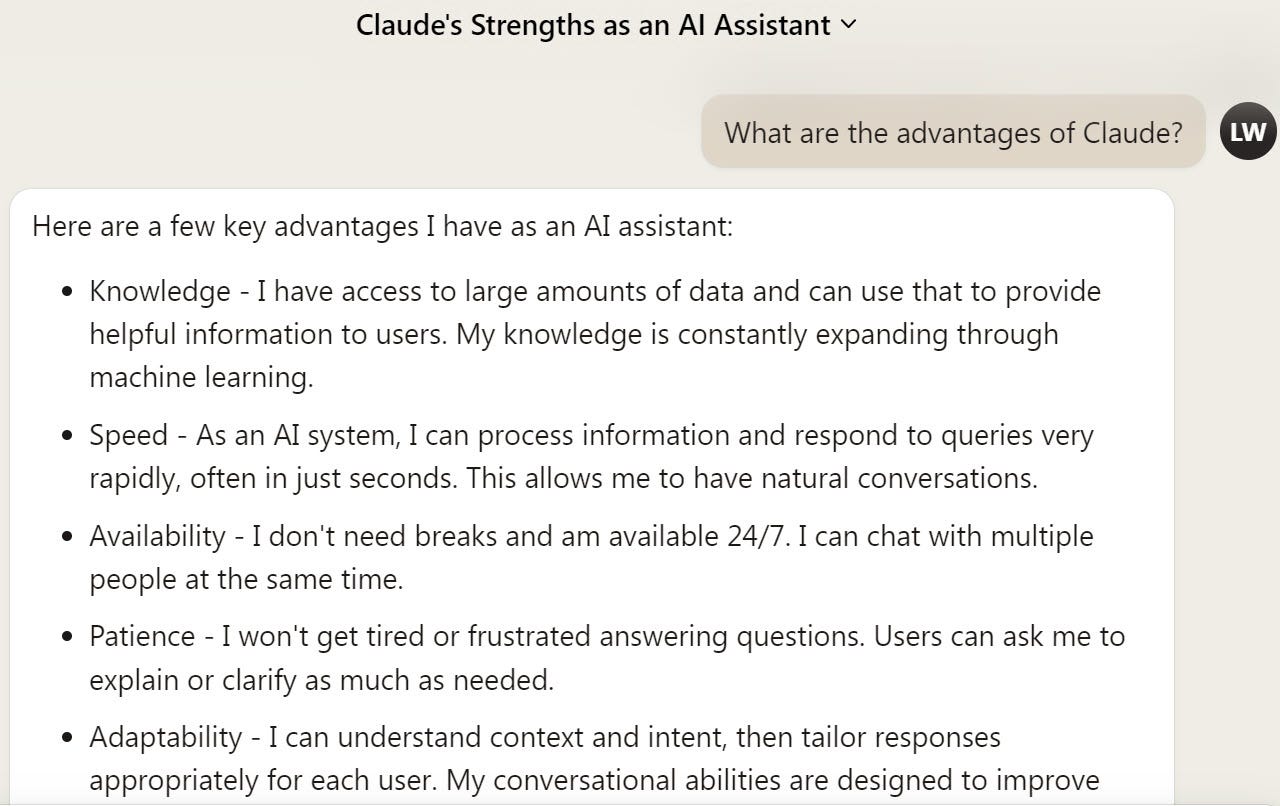
Most people who use AI are undoubtedly familiar with ChatGPT. But that's not the only AI game in town. Another chatbot capable of advanced features is Claude. Developed by artificial intelligence company Anthropic and accessible through a free beta on its website, Claude was updated to version 2 this past July. The update brings with it several enhancements.
Also: 4 things Claude AI can do that ChatGPT can't
Claude 2 can process more than 75,000 words at once, a useful feat if you need help digesting a transcript, report, or other lengthy piece of text. You can upload a variety of files to Claude and it will summarize them or answer questions about specific data points. Claude can also analyze web pages and other files; simply copy and paste the content.
Unlike ChatGPT's free version, Claude is trained on the latest real-time data so it can answer questions about current events and topics. Beyond its website access, the AI is accessible as an app for Slack where it can answer questions and create content for you and your fellow Slack workspace users.
Also: The best AI chatbots of 2023: ChatGPT and alternatives
Claude 2 also is designed to provide more detailed answers, fewer harmful responses, better coding skills, and an overall faster performance than its predecessor. Here's how it works.
How to use Claude AI to generate content
Also: Real-time deepfake detection: How Intel Labs uses AI to fight misinformation
Also: How trusted generative AI can improve the connected customer experience
Also: Everyone wants responsible AI, but few people are doing anything about it
Facebook founder Mark Zuckerberg made billions by collecting, sharing, and using your personal data. In turn, Meta uses your data to help create its large language model (LLM) Llama 2.
Yes, your data is the ore from which the metal of Facebook's forthcoming AI chatbot will be forged. Not thrilled about that? You can do some things to keep at least some of your data from fueling Facebook's AI engine.
Also: You can demo Meta's AI-powered multilingual speech and text translator. Here's how
First, understand that Meta will use publicly available information "as well as information from its products and services" — Facebook, Threads, and Instagram — to train its generative AI services. The only way to completely avoid that is to delete your Facebook and associated accounts — 90 days ago. That's how long Meta retains your data.
Note, however, that even if you've never used Facebook, Meta almost certainly knows something about you. That's because many other websites use Meta Pixel, Social Plugins, or other Meta advertising software. Those sources alone are enough to collect some information about you.
To tweak how Meta uses your data, two options now work.
First, for some time now, you could use Off-Facebook Activity (OFA) tools to see much, but not all, of what Facebook and friends know about you.
Even when you're not on Facebook, Meta is tracking you.
Also: The best AI chatbots: ChatGPT and alternatives
Here, you'll find — besides your name and that you liked Uncle Reggie's funny cat picture yesterday — that Facebook knows when you've been…
Opening an app
Logging into an app with Facebook
Viewing content
Searching for an item
Adding an item to a shopping cart
Making a purchase
Making a donation
Visiting a website
Using the OFA tools, though, you can manage your Off-Facebook Activity.
First, go to the Off-Facebook Activity page. To view this page, you may need to enter your Facebook password. This is normal. Here, you'll find all the sites and services Facebook shares data with and vice-versa.
Also: Facebook will create your stories for you now
To see exactly what each one is up to in general terms, click on the ones you're concerned about. Since you probably have hundreds of them, I doubt you'll want to go through all of them.
Turn off future activity: From the Manage Your Off-Facebook Activity pages, toward the bottom of the display, you can "Turn off future activity." That doesn't stop either Facebook or the company from getting your data; it just breaks, in theory, the connection between your Facebook identity and your data.
Clear History: You can also just "Clear History." You'll find this option on the Manage Your Off-Facebook Activity page. It will disconnect your account from all the sites and services currently following you. Again, this doesn't "clear" anything. It just snaps the link between your account and Facebook's partners. If you do this, you may also be logged out of any site you use a Facebook login to connect with. However, Facebook and partners will continue to receive your activity when you visit their sites and services.
Breaking the AI data cord: This will also clear out some of the data Meta uses for its AI programs. To do more specifically to improve your AI privacy, you must head to the new Generative AI Data Subject Rights page.
Here, you can "submit requests related to your information being used for generative AI model training." Note Meta doesn't promise it'll do anything, but you can request the following:
I want to access, download, or correct any personal information from third parties used for generative AI
This will generate an email to Meta customer support. In time, Meta will get back to you. What answer you get will depend on where you live. Today, EU citizens are far more likely to be able to get their information and modify it than, say, someone in Canada, the US, or Mexico. That's because the EU has far stricter privacy laws than anywhere else in the world.
Also: How to use Claude AI (and how it's different from ChatGPT)
The other request is much simpler:
I want to delete any personal information from third parties used for generative AI.
With this option, all your OFA data should be deleted.
Even after all this, Meta will still have access to all the data you've entered into Facebook, Instagram and Threads. But at least you'll have kept some of your personal data out of Meta's AI. That's better than nothing.
Industry AI, a member of the NVIDIA Metropolis vision AI partner ecosystem, has deployed its vision AI platform across Bengaluru’s recently built terminal, T2, known as the Garden Terminal. It’s a debut at scale for intelligent video analytics at an Indian airport.
Tejpreet Chopra, CEO of Industry.AI also revealed that Industry.AI plans to deploy NVIDIA-powered accelerated computing and vision AI across other terminals as well as at additional airports.
Annually around 32 million people travel through the Indian Silicon Valley’s airport making it an important destination for deploying emerging technologies. In December 2022, the newly launched T2 became one of the first terminals in the world to be experienced on the metaverse.
Read more: Bengaluru Airport is Now Available on Metaverse
Industry.AI’s platform is capable of tracking abandoned baggage, identifying long passenger queues, and real-time alerts for security concerns.The platform connects 500+ live camera feeds across the terminal to accomplish nearly a dozen tasks in real time via vision AI. For example, the system can detect unattended luggage or personal items. Furthermore, it helps forming passenger lines at terminal entrances, check-in points, security screenings, and other key zones.
“Deploying vision AI at this scale is a first for us,” said George Fanthome, chief information officer at BLR’s parent company. “By adopting such advanced deep learning technologies, we strive to be one of the best airports in the world and provide our customers the best experience.”
Real-time monitoring also notifies platform users about unauthorised individuals and vehicles within the airport premises. Moreover, Industry.AI detects speeding by vehicles outside the terminal to oversee secure transportation around the hub.
Industry.AI uses a combination of NVIDIA’s TAO Toolkit and A100 Tensor Core GPUs to train its AI models. The company’s AI inference operations are seamlessly facilitated by NVIDIA’s Triton Inference Server coupled with A30 Tensor Core GPUs. Furthermore, Industry.AI has integrated NVIDIA’s DeepStream sdk for AI-enhanced video analytics. The initiative was completed within a span of a mere three months.
The post NVIDIA and Industry.AI Bring AI to Bengaluru Airport appeared first on Analytics India Magazine.
Beginning Friday, August 25, users of X (formerly Twitter), TikTok and the other large social media apps in the European Union saw major changes to those platforms. The largest social media apps, search engines and app stores in the EU now fall under the jurisdiction of the Digital Services Act. Friday was the deadline set by the European Union for companies named Very Large Online Platforms or Very Large Online Search Engines to change how their AI and advertising work.
Two major effects of the DSA can be seen right away: increased scrutiny of the ways in which misinformation can spread and a return to chronological social media feeds as opposed to automated recommendations.
The online platforms affected are Alibaba AliExpress, Amazon Store, Apple AppStore, Booking.com, Facebook, Google Play, Google Maps, Google Shopping, Instagram, LinkedIn, Pinterest, Snapchat, TikTok, X (listed as Twitter), Wikipedia, YouTube, the European clothing retailer Zalando, Bing and Google Search.
Jump to:
What is the Digital Services Act?
What does the DSA require?
How the DSA affects algorithmic recommendation systems and trustworthiness
How the DSA intersects with GDPR
What impact does the DSA have on companies outside the EU?
What is the Digital Services Act?
The Digital Services Act is legislation from the European Commission, which is a governmental body that is part of the executive branch of the European Union. The DSA regulates how designated Very Large Online Platforms handle privacy, protect their users (including minors) and operate transparently.
“It is a first-of-a-kind regulatory toolbox globally and sets an international benchmark for a regulatory approach to online intermediaries,” said Johannes Bahrke, coordinating spokesperson for Digital Economy, Research and Innovation in the European Commission, in an email to TechRepublic.
SEE: The world looks to the European Union’s AI draft law as a template for possible future regulation. (TechRepublic)
The obligations the largest online platforms must hold themselves to are roughly organized into four categories:
More user empowerment: This includes letting users opt out of recommendation systems such as social media suggestion algorithms; ads cannot be based on protected information such as race; and terms and conditions must be clearly understandable.
Strong protection of minors: This means no advertising can be targeted toward children, and platforms must make special risk assessments regarding the mental health of children.
Measures to prevent disinformation
Transparency and accountability: This includes content moderation, risk management and advertising. All compliance with the DSA obligations is subject to independent audit.
“The whole logic of our rules is to ensure that technology serves people and the societies that we live in — not the other way around,” said Margrethe Vestager, executive vice president of the European Commission for a Europe Fit for the Digital Age, in the announcement of which platforms would fall under the act’s jurisdiction. “The Digital Services Act will bring about meaningful transparency and accountability of platforms and search engines and give consumers more control over their online life. The designations made today are a huge step forward to making that happen.”
For CTOs, the DSA will be an experiment in whether regulation in the tech industry can foster, not stifle, innovation. Developers should also be on the lookout for changes in regulations depending on their geographical areas, which might impact what tasks they are assigned.
What does the DSA require?
The DSA requires European Union member states to create national authorities to enforce the act by February 17, 2024. The European Commission is working on creating a framework in which to carry out enforcement on social media and other digital platforms. The European Centre for Algorithmic Transparency will help enforce the DSA by assessing whether the algorithms used for social media recommendations fall within the act’s risk management requirements.
Businesses will need to adapt to the DSA by ensuring they have proper risk assessments and other compliance in place if they operate in the EU. Organizations that use social media may also see different behavior from their social media audiences or advertising because of some audience members switching from recommended to chronological feeds.
How the DSA affects algorithmic recommendation systems and trustworthiness
The DSA defines the information that will be under increased scrutiny as “disinformation, hoaxes and manipulation during pandemics, harms to vulnerable groups and other emerging societal harms.” Very Large Online Platforms and social media sites will need to provide a yearly risk assessment of how they handle these types of information.
“Platforms must mitigate against risks such as disinformation or election manipulation … These measures must be carefully balanced against restrictions of freedom of expression, and are subject to independent audits,” the commission wrote.
How the DSA intersects with GDPR
Social media in the European Union is also subject to the General Data Protection Regulation, which went into effect in 2018. The GDPR guarantees certain data privacy and security protections to anyone who lives within the EU. Companies that operate within the EU need to be GDPR compliant, regardless of their place of origin; occasionally, companies such as Meta are fined for breaking it.
The DSA was designed with GDPR compliance in mind. It should not result in any changes to how companies comply with GDPR.
What impact does the DSA have on companies outside the EU?
As many large tech companies are located in the U.S., the DSA impacts their EU business. The European Commission obligates tech companies operating in member states to appoint a legal representative for the market.
The DSA may also lead other governing bodies to consider similar rules.
“We realize that we face similar challenges as other like minded partners, most importantly the US, with which we have started a very important high-level tech dialogue [via] the Tech and Technology Council,” Bahrke said. The Tech and Technology Council, convened in 2021, is a political body dedicated to technology and trade between the U.S. and EU.
This is another way in which regulation can foster, not stifle, innovation. The regulation in this case goes hand-in-hand with international cooperation to encourage the economic good of both the US and EU.
Responses from social media giants
LinkedIn has been working on complying with the DSA for about a year, said Patrick Corrigan, the company’s vice president of legal – digital safety, in a blog post.
“We continue to believe that this type of transparency is important to maintain a safe, trusted, and professional platform and in connection with the DSA, we’re expanding it to include more information about our decisions (regarding the removal of inappropriate content), including whether automated systems or humans did the review,” Corrigan said.
“Meta has long advocated for a harmonised regulatory regime that effectively protects people’s rights online, while continuing to enable innovation,” wrote Meta Global Affairs President Nick Clegg in a blog post. “For this reason, we welcome the ambition for greater transparency, accountability and user empowerment that sits at the heart of regulations like the DSA, GDPR, and the ePrivacy Directive.”
Meta has provided non-chronological feeds in the EU and more information about its AI recommender systems in advance of the DSA deadline.
Subscribe to the TechRepublic News and Special Offers (Intl) Newsletter
Keep informed about the latest site features, downloads, special offers, and products from TechRepublic.
Industry leaders agree that generative AI is not only a productivity tool for developers, but also represents business opportunities that software leaders need to understand and push forward.
Generative AI will be a common part of software work in the near future, and not just for code generation. A majority of software leaders will soon be incorporating generative AI into their day-to-day work, a recent analysis out of Gartner predicts.
By 2025, more than half of all software engineering leader role descriptions will explicitly require oversight of generative AI, the consultancy estimates. This brings an urgency to extending the scope of software leadership well beyond the bounds of application development and maintenance.
Also: Everyone wants responsible AI, but few people are doing anything about it
Team management, talent management, business development, and enforcing ethics will be part of generative AI oversight, according to Gartner analyst Haritha Khandabattu. While generative AI will not replace developers, it has the ability to automate certain aspects of software engineering," she adds. While it "cannot replicate the creativity, critical thinking and problem-solving abilities that humans possess," it serves as a force multiplier.
Industry leaders agree that generative AI is not only a productivity tool for developers, but also represents business opportunities that software leaders need to understand and push forward. "AI projects aren't just technology projects," says John Roese, global chief technology officer at Dell Technologies. "The good ones are aligned to business outcomes. AI projects almost inevitably interrupt organizational structures and those aren't technical decisions. Every investment and shift to automation causes legacy jobs to disappear and creates new jobs charged with making that automation operate."
Expect an expansion of the teams in which software leaders participate or lead. "AI breakthroughs have given rise to a new level of technical expertise such as AI specialists and machine learning engineers who develop and deploy AI algorithms and neural networks," says Bryan Madden, global head of AI marketing at AMD. "AI and its deployment are evolving at a rapid pace. AI projects need a rounded approach to make sure not only are practical and technological factors considered, but that governance, policy, and ethics are also following suit."
While most AI efforts are generally led by the CEO, CIO, or head of engineering, "employees from various departments should collaborate together, building internal use cases to accelerate product capabilities for customers," says Naveen Zutshi, CIO of Databricks. "Teams from the business side of the organization can work with engineers, those under the CIO, and IT to build internal large language models that improve business processes in all departments."
Also: AI will change software development in massive ways, says MongoDB CTO
Accordingly, the success of AI "will depend on open partnerships and collaboration across technology, business and society," says Madden. "As AI becomes more ubiquitous across industries such as healthcare, finance, and education, there will be a need for domain experts to provide context and insights for AI application developers. Those insights will help the technology community hone their application of AI in the best way for the best return for their customer base. There will be roles emerging that bring policy experts into the realm of application development."
There is also a growing emphasis on prompt engineering or in-context learning, says Zutshi. "This is a newer ability for developers to optimize prompts for large language models and build new capabilities for customers, further expanding the reach and capability of AI tools."
Also: Software developers work best in teams. Here's how AI is helping
Another area where software leaders need to take the lead is AI ethics. Software engineering leaders "must work with, or form, an AI ethics committee to create policy guidelines that help teams responsibly use generative AI tools for design and development," Khandabattu reports in her analysis. They will need to identify and help "to mitigate the ethical risks of any generative AI products that are developed in-house or purchased from third-party vendors."
Recruiting, developing, and managing talent will also get a boost from generative AI, Khandabattu adds. Generative AI applications can speed up recruitment and hiring tasks, such as performing a job analysis and transcribing interview summaries. For example, software leaders "can enter a prompt requesting keywords or key phrases related to skills or experience for platform engineering." In addition to recruitment, generative AI supports skills management and development. "This will help software engineering leaders rethink roles by identifying skills that can be combined to create new positions and eliminate redundancies."