How to use Google Bard: What to do and what not to do

Google Bard

At the same time that new artificial intelligence (AI) tools have dominated headlines with their innovative ideas and captivating abilities, Google's own creation has been gaining attention for entirely different reasons.

Google Bard is meant to be an assistive AI chatbot; a generative AI tool that can generate text for everything from cover letters and homework to computer code and Excel formulas, question answers, and onto detailed translations. Similar to ChatGPT, Bard uses AI to provide human-like conversational responses when prompted by a user.

Bard's performance, however, has been found lacking on more than one occasion. From its abysmal opening debut to its official launch, users have struggled to get the chatbot to provide accurate information or even follow along with a conversation without hallucinating.

How to use Google Bard

Here's what the chat window looks like before sending any prompts.

Here's an example of a response from Bard.

FAQ

What can I ask Google Bard?

The Bard AI chatbot can answer most questions you ask since it uses the search tools from Google. These AI-based answers can serve many purposes, from giving you recipes to helping you debug code.

Also: How to write better ChatGPT prompts (and this applies to most other text-based AIs, too)

Here are some examples of prompts you can ask the bot:

  • Write two to-do lists, one for daily household cleaning and another for maintenance
  • Write a —- plugin that does ——
  • What is at the center of the Earth?
  • Write a poem for a trashbag that fell in love with a reusable water bottle
  • Define XML

As with all AI chatbots, it's important to refrain from giving Bard any personally identifiable information or private information that you don't want to be shared. Even if generative AI tools say they are private, personal information isn't something that should be used to test that claim.

Does Bard provide inaccurate answers?

When Bard AI was announced last February, it faced scrutiny after factual mistakes made during its demo. Users have subsequently wondered whether Google's new chatbot still continues to provide inaccurate or inappropriate responses and whether it can be trusted, as some have come to trust other AI tools.

Also: How does ChatGPT actually work?

Google has reiterated that Bard is an experiment capable of making mistakes. The company upgraded Bard to use it's next-generation large language model, PaLM 2 — after launching the AI chatbot with its earlier model, LaMDA — and has made significant upgrades to the user experience through integrations with Gmail, Maps, Lens, and more.

Does Bard AI save my conversations?

Google doesn't save your entire interaction each time you chat with its chatbot, but it does save the prompts and questions you asked it. That being said, as a search engine, Google is known for being one of the largest trackers in the world, so giving its chatbot private information is probably not a great idea.

Also: Your Bard conversations are someone else's Google results

Does Bard AI use GPT-4?

Bard uses Google's proprietary large language model named PaLM 2 (Pathway Language Model), instead of the GPT series, which is the technology that many popular AI chatbots are using.

Also: Google's Bard AI says urgent action should be taken to limit (*checks notes*) Google's power

Will Bard AI replace Google Search?

Google Bard and other AI chatbots, such as Bing Chat and ChatGPT, certainly have the potential to replace search engines. These AI tools use information found on the web to provide answers to users' queries, but instead of giving them a list of websites where that answer may or may not be found, these tools provide a straightforward answer in a conversational manner. The drawback is that these answers may not always be accurate.

Also: 4 things Claude AI can do that ChatGPT can't

Some people might use AI chatbots in place of Google Search, especially since the added abilities of asking follow-up questions and generating text make it more functional for some use cases than a search engine.

Does Google Bard have a waitlist?

For months now, Bard AI has only been accessible through a waitlist, but in May, the company announced during its Google I/O event that it's ending the waitlist access program and opening up its new AI tool to over 180 countries and territories. Now anyone who logs in with their Google account can access Bard AI; no need to wait.

More on AI tools

Google is opening up its generative AI search experience to teenagers

Google is opening up its generative AI search experience to teenagers Aisha Malik 12 hours

Google is opening up its generative AI search experience to teenagers, the company announced on Thursday. The company is also introducing a new feature to add context to the content that users see, along with an update to help train the search experience’s AI model to better detect false or offensive queries.

The AI-powered search experience, also known as SGE (Search Generative Experience), introduces a conversational mode to Google Search where you can ask Google questions about a topic in a conversational manner.

Starting this week, teens ages 13-17 in the United States who are signed into a Google Account will be able to sign up for Search Labs to access the AI search experience through the Google app or Chrome desktop.

“Generative AI can help younger people ask questions they couldn’t typically get answered by a search engine and pose follow-up questions to help them dig deeper,” wrote Senior Director of Product Management at Google Hema Budaraju in a blog post. “As we introduce this new technology to teens, we want to strike the right balance in creating opportunities for them to benefit from all it has to offer, while also prioritizing safety and meeting their developmental needs. Informed by research and experts in teen development, we’ve built additional safeguards into the experience.”

Google's AI Search experience depicted on a phone

Image Credits: Google

Budaraju notes that Google has designed guardrails to prevent inappropriate or harmful content from surfacing. For instance, the company has placed stronger protections for “outputs related to illegal or age-gated substances or bullying.”

The expansion to teenagers comes as Google notes that since the launch of SGE, it’s found the experience is more popular among younger users. Google said the highest satisfaction scores are among those ages 18-24, who the company believes like to ask their questions in a more conversational manner.

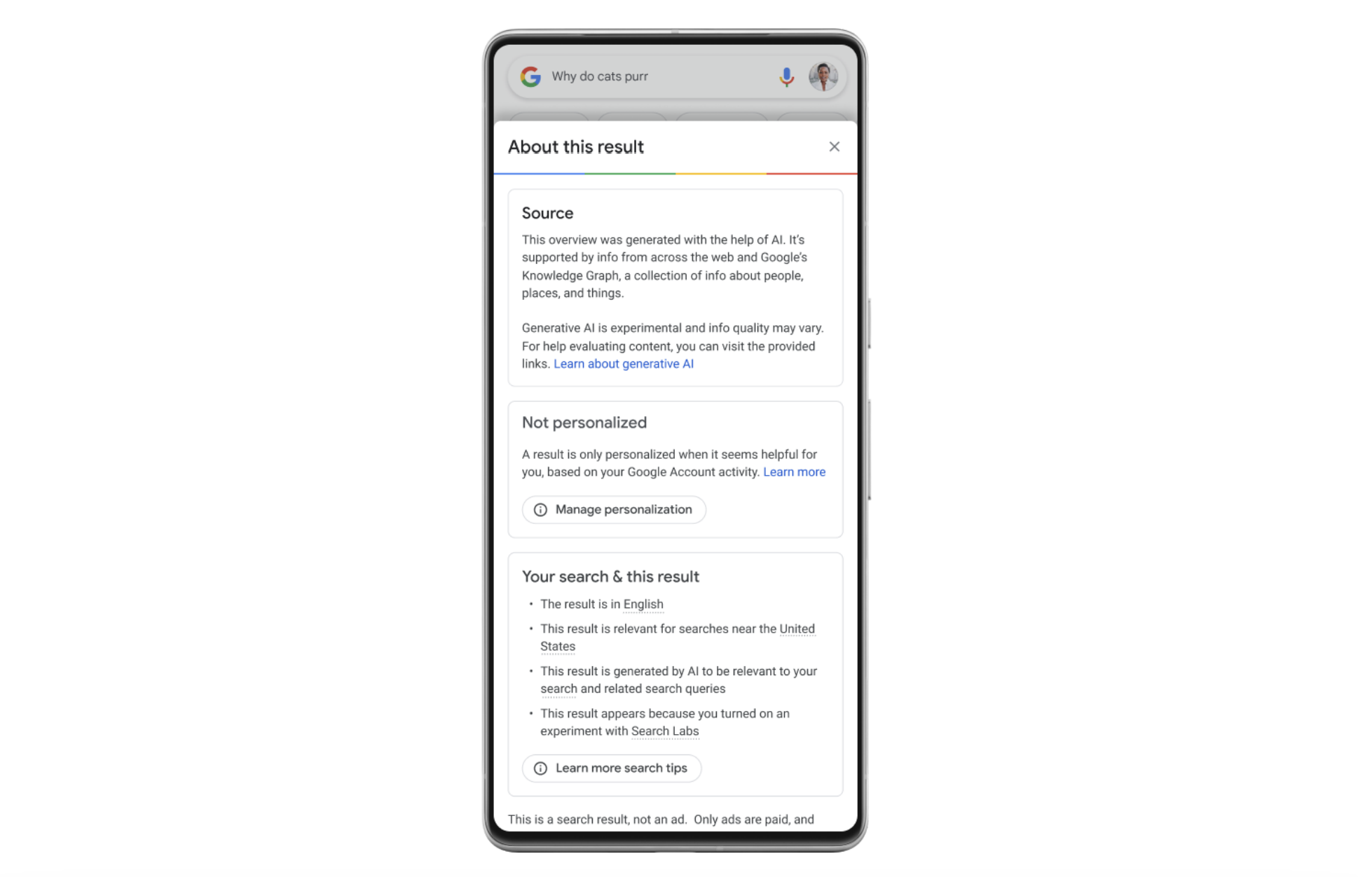
In addition to opening up the AI search experience to teenagers, Google is introducing a new feature to give users more context about the content that they see. The company is adding an “About this result” notice, which has long been available in the standard Google Search experience, to the AI search experience. Google says the notices will give people context about how SGE generated the response, so they can get a better idea of how the technology works.

Google soon plans to add “About this result” to the individual links that are included in SGE responses, so people can understand more about the web pages that back up the information in AI-powered overviews.

Google's new About This Result feature depicted on a phone

Image Credits: Google

The company says it’s focused on making targeted improvements to the AI search experience. One area where it’s looking to improve is when a query includes a false or offensive premise, which can result in an AI-powered response that ends up validating the false or offensive claim. Google notes that this can happen even if the web pages themselves point to reliable information.

To help address this situation, Google is rolling out an update to help train the AI model to better detect these types of false or offensive premise queries, and respond with higher-quality, more accurate responses. The company is also working on solutions to use large language models to critique their own first draft responses on sensitive topics, and then rewrite them based on quality and safety principles.

Google has spent the last few months updating the AI search experience with things like support for videos and images, local info and travel recommendations, along with new tools to provide summaries and definitions. It has also started to experiment with ads that would appear next to the AI-generated responses.

Google’s AI-powered search expands outside US to India and Japan

The search for a 5G killer app that’s ‘bigger than connectivity’

vr-glasses3-gettyimages-1359511221

The rise of 5G both inside and outside of enterprises may give rise to a million new ideas and concepts, breaking the current barriers of innovation. Imagine theme parks handing out augmented reality glasses for immersive experiences. Or wearing such headgear to explore a futuristic city.

These are just some of the ideas being explored by visionaries, entrepreneurs, and developers as 5G becomes entrenched within our enterprises and the wider world.

Also: As industry lauds 5G potential, businesses will need to justify investment

In pursuit of exploring this new frontier, several large tech and telecom companies have banded together to launch the 5G Open Innovation Lab, which seeks to support collaboration between startups, industry leaders, technical experts, and investors interested in 5G's potential. The effort is supported by AT&T, Comcast, Deloitte, Dell, Intel, Microsoft, and Nokia.

"The opportunity for developers to impact the potential of edge and 5G is fundamentally bigger than connectivity," according to Jim Brisimitzis, founder of the 5G Open Innovation Lab. "To realize this potential, we need a bold approach to experimenting, learning, and unleashing the transformational impact software is capable of."

Industry observers agree that 5G represents a new frontier of innovation — which has only started to gain traction. "Innovations that can consume and take advantage of the increased bandwidth and responsiveness of new 5G networks have been hard to come by," says Dan Hays, PwC partner and telco expert. "With 5G standalone networks now growing in coverage, advanced capabilities such as network slicing and ultra-low latency are poised to finally become a reality."

Also: 5 technologies that will transform enterprises, according to Gartner

Emerging technologies such as AI also can be enhanced by the 5G revolution. "The enhanced wireless capabilities are arriving right on time as bandwidth-intensive generative AI technologies hit the mass market," Hays continues. "They look to take advantage of not only increased bandwidth, but also efficient computing architectures — including edge computing and hybrid cloud — to serve as the engine rooms of their applications. Together, the bandwidth, responsiveness, and reduced cost of these technologies open the doors to new applications and services, ranging from virtual fitting rooms to AI-assisted repairs for industrial equipment."

Slalom Element Labs is an example of a company that is working directly with Ericsson to develop new use cases for 5G in business settings. For example, employing augmented reality: "We have created immersive cityscape experiences that provide real-time visual rendering of data for demographics, transportation, ecological and geographic information allowing people to see existing places in new ways," says John Tomik, managing director of Slalom Element Labs. "The low latency and high performance of 5G makes the experience of seeing details in this way feel like you are living in a future world and for the first time allows the experience to feel human-like."

Another innovation supported by 5G may be interaction with digital humans, Tomik continues. "We see a night-and-day difference in making digital people more human-like when compute is done at the edge of a 5G network," he explains. "Gestures, response time and human interactivity all take on Hollywood film-like quality which allows for groups to innovate on experiences that typically were off limits for digital humans because they felt robotic."

Also: What Verizon's 5G latest upgrade news actually means for users

5G may also open up new avenues in city design and urban planning. "Think of a traffic light that can see an intersection and process data quickly, thanks to edge computing, while sending back useful information no matter where it's located, thanks to 5G," says Mark Varnas, database administrator and consultant with Red9. "The short and immediate effect is that there'll be no more needless waiting at traffic lights, but the long-term potential of a city that's data-driven in this way can have major effects on improving the way we live."

PwC's Hays provides an example of a 5G use case that pushes the boundaries of innovation: enhanced guest experience in theme parks. "Imagine an amusement park attendant wearing a set of augmented reality glasses while doing their job in the park," he illustrates. "Using the power of 5G, the glasses could be proactively scanning for guests who might be tired, hungry, or just plain important. When on-board facial recognition software being processed on a local edge computing network identifies a guest who may require attention — say a cranky child on the verge of a meltdown — it could match them with their importance level and prompt the attendant right in their field of vision to take an action — perhaps offering a complementary ice cream — to make the experience truly special."

5G

Worldcoin doubles down on emerging markets amid wider criticism

Worldcoin doubles down on emerging markets amid wider criticism

'Those are the easier ones to operate in,' the company’s head of product says

Jacquelyn Melinek 8 hours

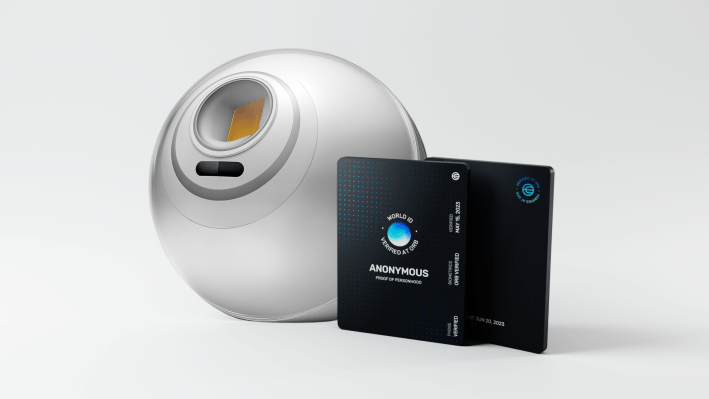
It has been 66 days since OpenAI CEO Sam Altman launched his crypto project Worldcoin to the public, and millions have already signed up for it — some enamored by the tech, others lured by the free tokens you get on signing up, and most driven by the hype. Still, the project seemingly has just as many, if not more, skeptics and critics.

Naysayers reacted to the hype around Worldcoin with almost the same level of intensity as its backers — Kenya famously halted the project from scanning any more of its citizens — but the company is still moving forward with its big plans.

“I think it’s super healthy for people to be skeptical,” Tiago Sada, head of product for Tools for Humanity and a core contributor to Worldcoin, said on TechCrunch’s Chain Reaction podcast recently. “At the same time, we have seen a ton of adoption . . . When we first started going out, we were expecting a lot more skepticism, but people just are really, really excited by the Orb.”

Since the project was launched, about 2.325 million people, across 120 countries, have gone face-to-face with the Worldcoin Orb to sign up by scanning their irises. In the past seven days, about 39,000 new accounts have been made, and there have been over 130,000 daily wallet transactions, according to the company’s website.

Worldcoin has also been on a bit of a world tour starting in April, hitting major cities like Tokyo, Miami, New York City and San Francisco. In particular, it’s enjoyed a bunch of traction in smaller, developing regions, though the company would like everyone to believe traction is mostly spread out across the world.

“In Portugal, more than 1% of the population has already signed up for Worldcoin, so we’re starting to see some real traction all over the world,” Sada said. The project hit that mark in February, so overall adoption in the country has probably risen beyond that number since.

As of Tuesday, the company shared that over 200,000 people had verified their World ID in Chile, marking over 1% of that country’s population as well.

Meta Propels User Interaction Forward with AI-Powered Assistants and Characters

Meta, previously known as Facebook, is spearheading innovative initiatives by introducing AI-powered assistant characters and novel creative tools. This endeavor aligns with the company’s mission to enrich user interaction across its suite of applications, with an initial focus on WhatsApp and Instagram.

Revolutionizing Interaction with AI Assistants

Meta’s latest development is poised to revolutionize interaction within its platforms by deploying AI-powered assistants. These characters will serve as interactive aids, designed to guide users through the multifarious features of the apps and assist them in navigating the platforms more intuitively.

The assistants aim to bring a more personal and engaging touch to user interactions, emphasizing ease-of-use and dynamic engagement. This unprecedented level of interactivity is expected to make platforms more user-centric, enabling users to explore and utilize the platforms’ functionalities with enhanced guidance and support.

Image: Meta

Elevating Creative Expression with Innovative Tools

Beyond interactive assistants, Meta has also unveiled a set of pioneering creative tools intended to allow users to express themselves more uniquely and vividly. These tools are focused on providing users with the means to create more immersive and personalized content, enhancing the overall user experience within Meta's platforms. They are structured to elevate the creative potential of users, allowing them to conceptualize and share their visions more fluidly and innovatively.

By combining state-of-the-art technology with innovative design principles, these tools are reshaping the boundaries of creative expression, enabling users to experience and create content in novel and exciting ways. This initiative underscores Meta’s commitment to fostering creativity and individuality within the digital sphere, providing users with the resources to explore and redefine artistic possibilities.

User-Centric Experience and Personalization

The inception of AI assistants and creative tools is a clear reflection of Meta’s strategy to center user experience and personalization. These advancements are architected to cater to the evolving needs and preferences of users, ensuring that interactions are more tailored and resonant. The AI assistants, in particular, are meticulously designed to understand and respond to individual user needs, enabling more personalized interactions and enhancing the overall user journey within the platforms.

The emphasis on user-centric experience is pivotal for Meta, as it seeks to build more coherent and adaptive platforms. The integration of AI and innovative tools is a testament to Meta’s dedication to optimizing user engagement and satisfaction, enhancing the interactive landscape of its platforms to accommodate and anticipate user needs more proficiently.

Enhanced Connectivity and Cohesiveness

Meta’s integration of AI assistant characters and creative tools is emblematic of its vision to foster enhanced connectivity and cohesiveness within the digital ecosystem. The emphasis on seamless interaction and enriched engagement is aligned with the company’s aspiration to build a more interconnected and harmonious digital environment. By facilitating more intuitive interactions and enabling elevated creative expressions, Meta is contributing to the realization of a more unified and inclusive digital world.

The unification of technology and creativity is driving the development of more enriched and diverse digital experiences, making platforms more accessible and inclusive. As Meta continues to innovate, the convergence of enhanced interactivity and creative expression is paving the way for a more interconnected and harmonious digital future.

Gmail will Become Less Accessible for Some from 2024

Software giant Google is sending Gmail’s basic HTML view, a minimalist version of the popular email service to the graveyard. Starting in January 2024, all users of the HTML view will be automatically switched to the feature-rich “Standard” view, marking the end of an era for those who valued its simplicity and speed.

While the majority of Gmail users have long embraced the Standard view on their personal computers, the HTML version had its unique advantages. This stripped-down version offered lightning-fast loading times and accessibility for older machines or slower internet connections. Its lean design made it particularly valuable in situations where network conditions were less than ideal.

While the company will officially shut down the service in 2024, there are already reports of difficulties in setting the Basic HTML mode, even before the code’s formal deprecation date.

A Step Backward

The upcoming Gmail transition has its critics, particularly among visually impaired users. Pratik Patel, a blind technologist and advocate for accessibility, expressed concerns about the move. He argued that many blind individuals relied on Gmail’s HTML view for its efficiency and simplicity. The Standard view, according to Patel, posed usability challenges due to its complex design elements and inconsistent navigation patterns.

Patel emphasized that blind and partially sighted users often found it quicker to accomplish tasks using the HTML interface than the Standard one. He called on Google to engage with its users to address these usability issues and ensure that accessibility concerns were adequately considered.

While the long-loved HTML is being bid adieu to, for people using older hardware switching to lightweight clients like Mozilla Thunderbird and Microsoft Outlook is generally preferable to loading web-based platforms.

For people who need accessibility features, Thunderbird is known to work well with the Jaws, NVDA, and Windows Eyes screen readers and offers a range of display and text size adjustment options that enhance usability for people with visual impairments.

While progress is inevitable, it should not come at the cost of leaving users, especially those with specific accessibility needs, behind. The company’s decision to retire the HTML view underscores the choices tech giants make as they navigate the shifting terrain of user expectations and AI race.

Blinded by AI

A Google spokesperson defended the decision, stating that the HTML view was replaced by its modern counterpart over a decade ago and lacked many of the advanced features found in today’s Gmail.

But the HTML view was never intended to match the full functionality of modern email clients, and its retirement aligns with Google’s ongoing efforts to enhance Gmail’s capabilities through AI features.

Moving away from the early era of the internet, the decision to retire the minimal view is part of the company’s broader strategy to infuse AI-powered features into its products, including Gmail. In recent months, the company has launched AI features like Duet AI to assist users in composing emails and integrated the Bard chatbot into Google accounts for email-related inquiries.

With a focus on AI integration, the tech goliath’s move away from the simplified version reflects its ongoing evolution. However, some argue that the company’s reluctance to innovate meaningfully in recent years may have led to a loss of investor confidence.

While Google remains a profitable corporation, questions linger about its ability to adapt in an ever-changing tech landscape. The company has been on an AI innovation spree since the Microsoft-backed OpenAI gained popularity in Silicon Valley. Google has been trying to keep up with the AI wave but nothing has worked in its favour yet.

The retirement of Gmail’s basic view is the latest addition to Google’s growing graveyard of discontinued products and services, including the Pixel Pass phone upgrade program, Google Currents, and Nest Secure. As Google continues to refine its offerings, it continues to struggle balancing innovation with the needs of its diverse user base, including those who valued the simplicity of the now-retired HTML view.

The post Gmail will Become Less Accessible for Some from 2024 appeared first on Analytics India Magazine.

How will the Big Data market evolve in the future?

Dna test infographic. Genome sequence map, chromosome architecture and genetic sequencing chart abstract data vector illustration

Big data has been around for some time now, becoming a more or less common concept in business. However, recent developments in AI technology have shaken up an already volatile field, inviting us to reconsider our projections of how the big data market will look in the future.

We can already see the signs that these developments have game-changing effects on the labor market, business data management, and entire organizational structures. Tracking these signs allows for a better understanding of this fast-paced evolution that we are witnessing.

Rapid developments in big data

Mostly driven by evolving web data gathering technologies, the recent breakthrough years in the big data sector have brought many positive changes. Complex machine-learning models have become more accessible, hardware and software solutions for ML algorithm training are now cheaper and more specialized, while tools for creating and optimizing the models are more readily available due to cloud technology.

Apart from the advancements in ML, two other important trends that significantly influence big data processing capabilities can be distinguished:

  1. More powerful graphic processing units (GPUs) and enhanced precision with which AI performs tasks allows businesses to make the most of parallel processing. Two or more processing units solving different aspects of the same problem now produce better solutions faster, enlarging the scope of use cases for this method.
  2. The rapid rise of MLops (machine learning operations) allows more effective ML model deployment, observability, and experimentation in production environments.

Companies of all sizes have come to realize that big data and ML algorithms based on it are going to be among the most growing and growth-inducing factors in business. This year’s incredibly high-valued acquisitions of very young tech companies go to show it. For example, Databricks paid $1.3 billion for just a few years old, 60-employee MosaicML because the latter has offered a novel and convenient method for training AI-based tools.

There is room for more innovation as current big data-based solutions are certainly not perfect. In the near future, we can expect developments in models for generating text and visuals, as well as improved tools for tasks related to communication.

On the other hand, there are legitimate concerns about biased and unethical decisions that AI can come up with when there is no human oversight. These concerns will continue to foster regulatory initiatives such as the European Union’s Artificial Intelligence Act (AIA).

Growing regulation will, most probably, force firms to look for new ways to collect or generate the necessary data. Furthermore, companies will also need more compliance specialists to oversee AI and big data-related procedures, which brings us to the next topic.

Employers’ perspective – the growing need for data specialists

As an increasing number of firms are getting interested in applying big data solutions, the demand for various kinds of data specialists is bound to continue growing. Along with the aforementioned compliance officers, big data experts capable of creating tools based on it are on top of the “most wanted” list.

Data engineering is at the center of professions in the big data sector. Data engineers are the ones responsible for obtaining data and its initial processing, enabling the creation of new models. Meanwhile, among emerging professions, the demand for MLops (machine learning operations) engineers is also growing fast. Without MLops engineers, companies usually cannot deploy or supervise machine learning models created by data scientists.

The demand for data specialists is being boosted even more by new AI-based tools, like ChatGPT, that attract huge public interest and media coverage. Up to a point, such tools might save a company’s time and increase productivity. Additionally, these tools foster interest in big data and the inception of new professions. For example, the position of prompt engineer, currently boasting potentially 6-figure salaries, has not even been heard of just a few years ago.

Data democratization is another trend affecting the labor market. Companies aim to remove data silos, enabling more business users to work with data directly in the course of carrying out their main tasks. This goes along with shifting some data analysis responsibilities from data teams to product, marketing, or other departments. Thus, it can be expected that the need for specialists who are skilled in both data analytics and one of the domains of business will grow in the future.

Employees’ perspective – getting the skills in demand

From the perspective of job seekers, the aforementioned developments mean two things.

  1. The big data sector provides an increasing number of lucrative career opportunities.
  2. Having skills in data analytics is a major advantage for specialists across the departments.

Naturally, this raises the interest in getting data-related skills among those thinking about their future career path. In terms of higher education, aside from study programs that explicitly have “data” or “AI” in their titles, future students can choose general subjects like mathematics and statistics to acquire a robust analytical background. Knowing specific programming languages, such as Python, would be beneficial, too, as data scientists and engineers today often need to automate processes (for example, data collection at scale).

Interestingly, getting the skills relevant to the big data market does not necessarily require going for the hard sciences. Social sciences, like psychology, are filled with courses on higher mathematics and statistical modeling while also training experts to interpret real-life social events and human actions.

Even humanities have perfect conditions to shine in today’s big data labor market. Background in linguistics and philology can be an advantage for prompt engineers and other specialists working with natural language processing tools. Meanwhile, philosophy has AI ethics as its subdiscipline and provides the fundamentals of the interdisciplinary theory of decision-making.

There are also plenty of opportunities outside formal education to learn data-related skills, suitable for both labor market beginners and seasoned workers looking to gain additional qualifications. Various online courses allow learning on your own time, making it easy to accommodate it with a day job or other responsibilities. Such accredited private institutions like Turing College remotely prepare data specialists specifically to have skills and practical knowledge currently in demand.

Willingness to learn constantly is perhaps the most important attribute when aiming for a career in the big data sector. It all begins with learning the fundamentals of statistics, databases, and programming languages like SQL and Python for data processing. When core knowledge is in place, it is important to keep track of technical innovations, new tools, models, and firms in the big data industry. Platforms like Substack provide access to numerous blogs and newsletters that allow one to conveniently stay on top of such news.

Finally, one should have an active interest in the principles of business and how it functions in order to solve its problems with the help of big data. After all, the main goal of data processing and analysis is finding new and better ways to do business.

In conclusion

Being able to work with big data and AI provides a continually growing advantage for both companies and employees. However, the big data market is so dynamic and fast-evolving that all future predictions should come with a disclaimer. Unforeseen innovations and developments can quickly give birth to new professions while making others obsolete. The key to feeling secure in such volatile conditions is effective learning – both companies and employees should be prepared to process and impart new knowledge as it is being created – nearly in real time.

Raspberry Pi 5 is Here

Raspberry Pi 5 is Here

In a surprise move, the highly anticipated Raspberry Pi 5 has made its debut, defying initial doubts. The latest iteration of the microcomputer, boasting significant enhancements, is now available, starting at an enticing $60.

Notably, the Raspberry Pi 5 not only promises improved performance over its predecessor but also marks the first time the device incorporates in-house silicon.

At the core of the Raspberry Pi 5 is a robust 64-bit quad-core Arm Cortex-A76 processor clocked at 2.4GHz, offering a substantial two to three-fold increase in performance compared to the aging Raspberry Pi 4, which was introduced four years ago. Additionally, the device houses an 800MHz VideoCore VII graphics chip, a feature lauded by the Raspberry Pi Foundation for its remarkable graphics performance boost.

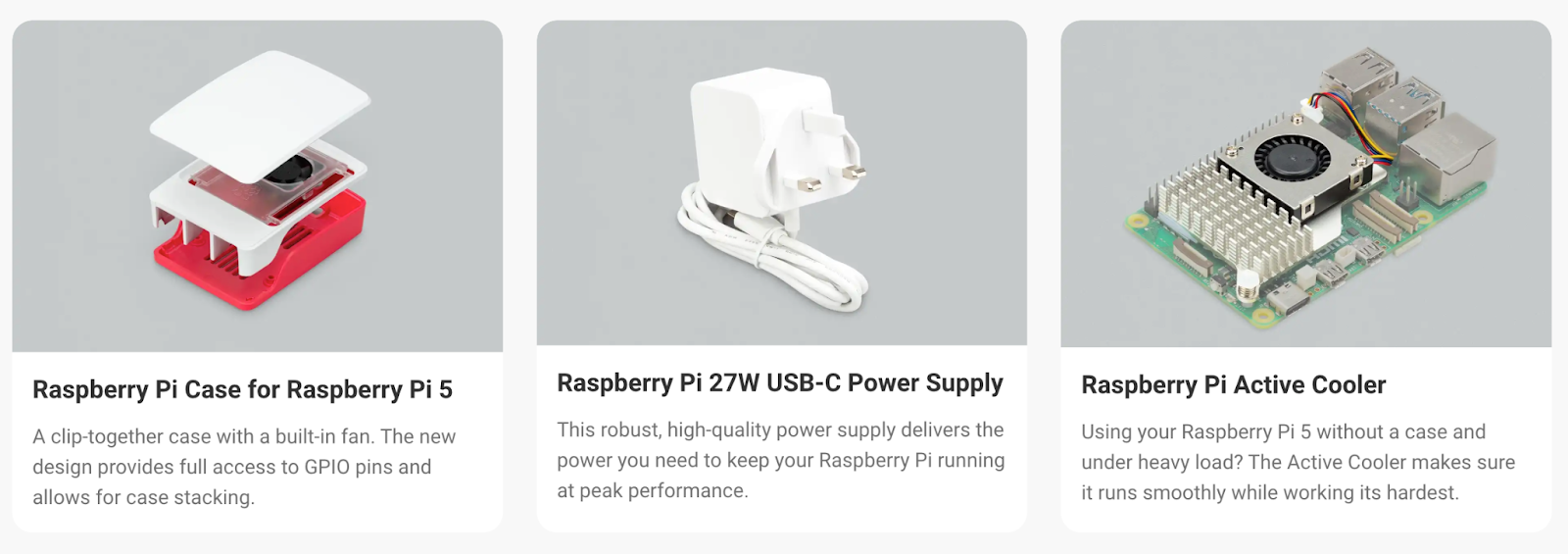
The device reveals speedy boot times and swift webpage loading, particularly when compared to older models such as the Raspberry Pi 3 Model B+. Notably, the device tends to generate significant heat, but Raspberry Pi has addressed this concern by supplying an active cooling component for direct board mounting.

Key features include:

  • 2.4GHz quad-core 64-bit Arm Cortex-A76 CPU
  • VideoCore VII GPU, supporting OpenGL ES 3.1, Vulkan 1.2
  • Dual 4Kp60 HDMI® display output
  • 4Kp60 HEVC decoder
  • Dual-band 802.11ac Wi-Fi®
  • Bluetooth 5.0 / Bluetooth Low Energy (BLE)
  • High-speed microSD card interface with SDR104 mode support
  • 2 × USB 3.0 ports, supporting simultaneous 5Gbps operation
  • 2 × USB 2.0 ports
  • Gigabit Ethernet, with PoE+ support (requires separate PoE+ HAT, coming soon)
  • 2 × 4-lane MIPI camera/display transceivers
  • PCIe 2.0 x1 interface for fast peripherals
  • Raspberry Pi standard 40-pin GPIO header
  • Real-time clock
  • Power button

A noteworthy highlight of the Raspberry Pi 5 is the inclusion of a southbridge component, a critical part of the motherboard responsible for peripheral communication. Developed by the Raspberry Pi Foundation and dubbed the RP1 southbridge, this component introduces a substantial leap in peripheral performance and functionality. This enhancement translates to faster data transfer speeds to external UAS drives and other peripherals.

Furthermore, the Raspberry Pi 5 introduces two four-lane 1.5Gbps MIPI transceivers for connecting up to two cameras or displays, along with a single-lane PCI Express 2.0 interface, which, though available for the first time, requires a separate adapter like an M.2 HAT for full utilization.

In terms of connectivity, the Raspberry Pi 5 offers dual 4Kp60 HDMI display outputs with HDR support, a microSD slot, two USB 3.0 ports, two USB 2.0 ports, Gigabit Ethernet, and a 5V DC power connection via USB-C.

Additional features include Bluetooth 5.0 and Bluetooth Low Energy (LE) support, and peak SD card performance that is claimed to be “doubled” with the SDR104 high-speed mode. These enhancements solidify the Raspberry Pi 5 as a versatile choice for various applications, whether it’s serving as an ultra-budget desktop PC, a media server, or a DIY security system.

The Raspberry Pi 5 offers multiple RAM configurations at launch, with the 4GB version priced at $60 and the 8GB version at $80. While this places it slightly above the Raspberry Pi 4 in terms of cost, which is priced at $55 for 4GB of RAM and $75 for 8GB, it still maintains an attractive price point. Interested buyers can expect the Raspberry Pi 5 to be available for purchase before the end of October.

Read: Raspberry Pi: A timeline

The post Raspberry Pi 5 is Here appeared first on Analytics India Magazine.

Can AI code? In baby steps only

baby-code

The first thrilling days of OpenAI's release to the public last winter of ChatGPT brought with it evidence of the program's ability to generate computer code, something that was a revelation to developers. It seemed at the outset that ChatGPT was so good at code, in fact, that suddenly, even people with little coding knowledge could use it to generate powerful software, so powerful it could even be used as malware to threaten computer networks.

Many months of experience, and formal research into the matter, have revealed that ChatGPT and other such generative AI cannot really develop programs, per se. The best they can do is offer baby steps, mostly for simple coding problems, which may or may not be helpful to human coders.

Also: How to use ChatGPT to write code

"What generative has opened everyone's eyes to is the fact that I can almost have a partner when I'm doing a task that essentially gives me suggestions that move me past creative roadblocks," said Naveen Rao, co-founder and CEO of AI startup MosaicML, which was acquired in August by Databricks.

At the same time, said Rao, the level of assistance for coding is low.

"They give you a scaffolding, some things that are repeatable, but they don't give you anything particularly good," he said. "If I say, go solve this really hard problem, then they can't do that, right? They don't even write particularly good code; it's like someone who's been doing it for a year or two, kind of, level code."

Indeed, some studies have found large language models such as GPT-4 are well below those of human coders in their overall level of code quality.

A recent study by Sayed Erfan Arefin and colleagues at Texas Tech University scholars tested GPT-4 and its predecessor, GPT-3.5, in example coding problems from the online platform LeetCode — problems that are the kinds asked of job applicants to Google and other tech giants.

The programs were assessed based on two core challenges, "organizing data for efficient access (using appropriate data structures)" and "creating workflows to process data (using effective algorithms)." They were also evaluated on what's called "string manipulation," which intersects with both of the other two.

Also: How to use ChatGPT to make charts and tables

When the language models were given what the authors called complete questions, where the programs were supplied with examples of solutions to the questions, GPT-4 answered only 26% of the questions correctly, versus 45% for human respondents. When some information was taken away, GPT-4's ability plummeted to 19% of questions answered correctly. GPT-3.5 was down at around 12% and 10%, respectively.

The authors also examined the quality of the GPT code, both for success and failure. In either case, they found a consistent problem: GPT often struggled with a basic practice of coding, "defining variables in a consistent manner."

Correctness of GPT-3, GPT-4, and humans, for train and test sets, when given either full problem information, with example solutions, incomplete information.

Scale is also an issue for AI code generation. The most encouraging results so far in studies of GPT-4 are mostly on baby problems.

One study, by David Noever of cyber-security firm PeopleTec, tested how well GPT-4 could find faulty coding in samples of code, similar to existing programs on the market for vulnerability testing, such as Snyk, a form of "Static Application Security Testing," or SAST.

In some cases, GPT-4 found more errors than Snyk, the authors reported. But it also missed numerous errors. And, it was tested on a grand total of just over 2,000 lines of code. That is minuscule compared to full production applications, which can contain hundreds of thousands to millions of lines of code, across numerous linked files. It's not clear that successes on the toy problems will scale to such complexity.

Also: How ChatGPT can rewrite and improve your existing code

A study last month by Zhijie Liu and colleagues at ShanghaiTech University examined quality of code based upon correctness, understandability, and security. The examination challenged ChatGPT on LeetCode tasks, like Arefin and team at Texas Tech, and also tested its code generation on what's called the Common Weakness Environment, a test of vulnerabilities maintained by research firm MITRE.

Lou and team tested ChatGPT on tasks formulated either before or after 2021, because ChatGPT was trained only on material before 2021, so they wanted to see how the program did when it was tested on both established and newer challenges.

The results are striking. For the newer problems, called "Aft.," for "after" 2021, Lui and team found very low rates of correctness in ChatGPT's code. "ChatGPT's ability to functionally correct code generation decreases significantly as the difficulty of the problem increases," they write. Only 15.4% of C-language program code was acceptable, and none of it was acceptable for the hardest problems. And, "the code generated by ChatGPT for hard and medium problems is more likely to contain both compile and runtime errors." Human coders taking the test, on average, got 66% right.

Also: How to use ChatGPT to create an app

For older problems, labeled "Bef.," the percent rises to 31% correct, which is still low.

The team went through numerous examples and qualified the kinds of wrong answers ChatGPT gave in its lines of code. For example, while an overall program design might be in the right direction, a given line of code would show a fundamental wrong use of something as simple as evaluating a variable, an error it's hard to imagine a beginner programmer making.

Example of wrong code generated by ChatGPT. The program is supposed to sort boxes into categories by description. In line 12, the code decides that if a box is neither "bulky" nor "heavy," it should be sorted into the category of "both" — exactly the opposite for a box description that should be "neither."

Liu and team arrive at a series of fascinating general conclusions and also mitigating factors. For one, they find that ChatGPT struggles with novel problems: "ChatGPT may have limitations when generating code for unfamiliar or unseen problems in the training dataset, even if the problems are easy with logic from human perspective."

But which programming language is used matters: the technology does better with certain programming languages that are "strongly typed" or more "expressive."

Also: How does ChatGPT actually work?

"In general, the probability of ChatGPT generating functionally correct code is higher when using languages with more strongly expressive power (e.g., Python3)," they write.

Another shortcoming is that ChatGPT can be convoluted so that its errors are harder to fix. "The code generation process of ChatGPT may be careless," they write, "and the generated code may fail to meet some of the detailed conditions described, resulting in it being difficult to successfully generate or fix (to functional correct)."

And on the Common Vulnerabilities test by MITRE, "the code generated by ChatGPT often exhibits relevant vulnerabilities, which is a severe issue," they write. Fortunately, they note, ChatGPT is able to correct many of those vulnerabilities in subsequent prompts when supplied with more detailed information from the MITRE data set.

All three studies suggest it is very early in the use of generative AI for programming. It is, as Rao said, helpful in simple assistant tasks, where the programmer is in charge.

Also: The 10 best ChatGPT plugins (and how to make the most of them)

It's possible that progress will come from new approaches that break programming paradigms. For example, recent Google work trains language models to reach out to the internet for tools to solve tasks. And work by Google's DeepMind unit trains language models to go more deeply into engineering its own prompts to improve performance — a kind of self-reflexive programming that seems promising.

Something deeper may ultimately be required, says Rao.

"I don't think it can be solved with prompts," says Rao. "I think there's actually some fundamental problems we still have to solve — there's still something fundamentally missing."

Added Rao, "We can basically throw so much data at a large neural network that it's a hundred lifetimes or more of human experience, and yet, a human with much less experience can solve novel problems better, and not make certain kinds of basic errors."

More on AI tools

Zapier launches Canvas, an AI-powered flowchart tool

Zapier launches Canvas, an AI-powered flowchart tool Frederic Lardinois @fredericl / 8 hours

Zapier today announced the launch of Canvas, a new tool that aims to help its users plan and diagram their business-critical processes — with a fair bit of AI sprinkled in there to help them turn those processes into Zapier-based automations. Canvas is now in early access.

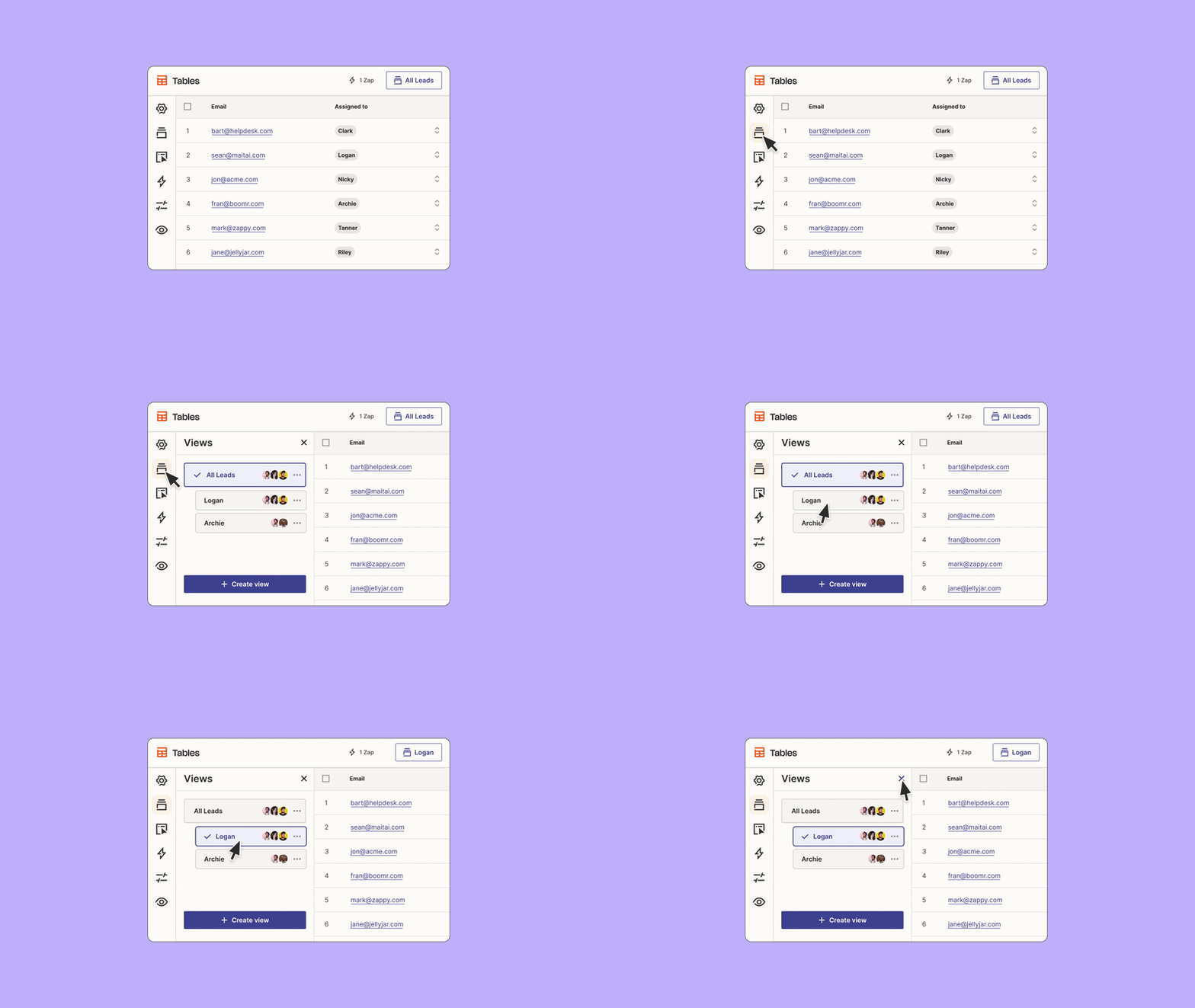
In addition, the company also today announced that Tables, its automation-first database service, is now generally available to all users.

The eleven-year-old company is hosting its (virtual) ZapConnect user conference today. Over the years, Zapier has moved from offering its customers the basic tools to connect one web service to another to allowing them to build rather complex integrations and workflow automations. In a way, Zapier was low-code/no-code before that monicker ever became popular. Today, Zapier co-founder and CEO Wade Foster told me, people are building entire projects — and sometimes entire businesses — on top of Zapier. But that has also led to a number of challenges that the company is now trying to address with, among other things, Canvas and Tables.

Image Credits: Zapier

“One of the things we started to notice is that as you adopt these tools [you built with Zapier], you’re quite happy in the early days, because you’re like, ‘Wow, this is great. This is awesome. It was so fast. I didn’t need any help. This is great. This is awesome.’ And then, there’s this pit of success that comes next. Your project starts to grow and all of a sudden, you’re stitching together all these things, you’re starting to invite collaborators, a things start to get turned into a bit of a hairball. You’re like, ‘oh, no, what am I going to do?’ And Tables and Canvas both fit into helping solve this problem.”

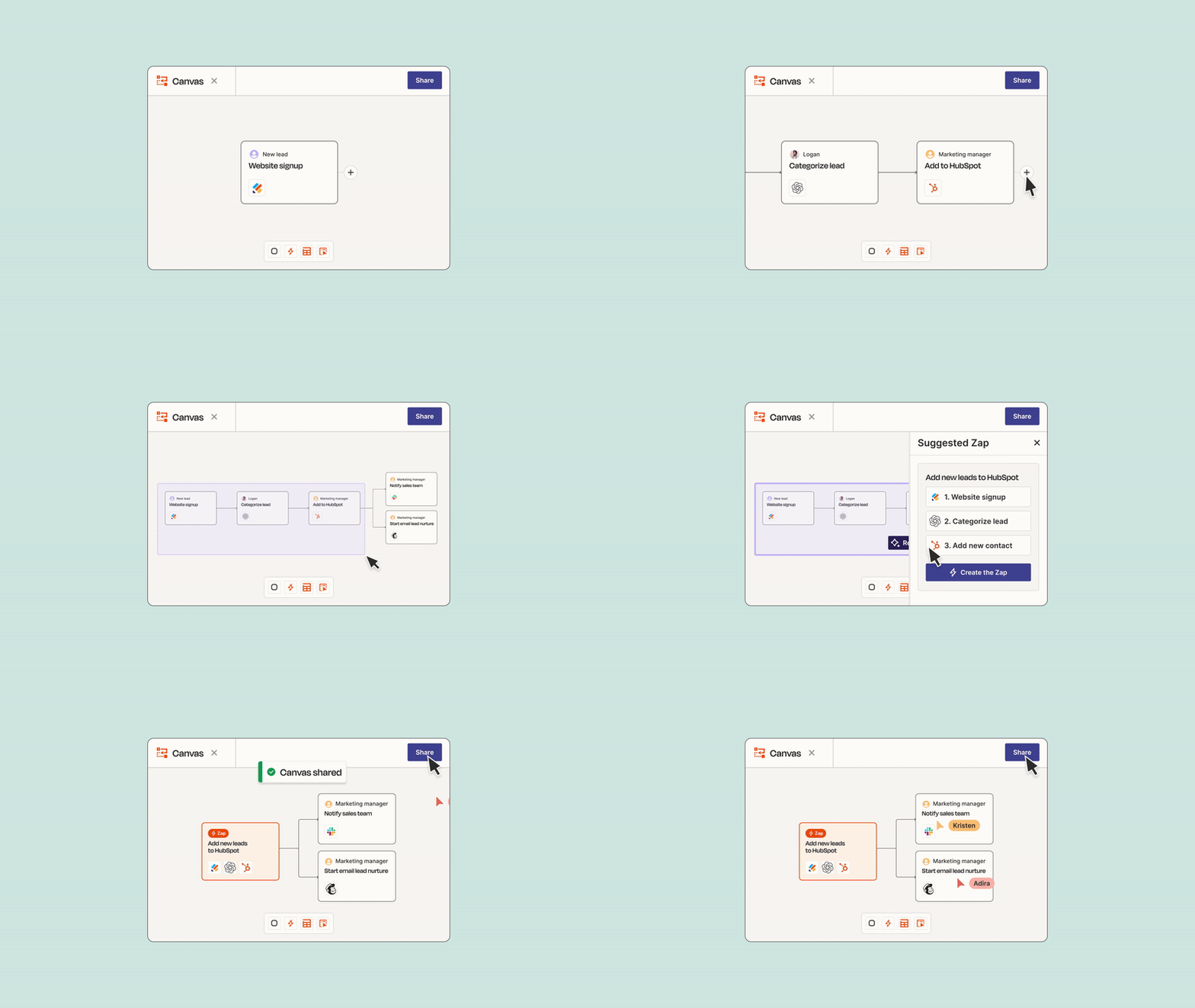
Foster noted that currently, you can use Zapier’s virtual editor to visualize all of the components that you have stitched together in Zapier, but for most users, that only covers a part of their workflow. If it’s not connected to Zapier, it won’t show up there. With Canvas, the idea is to allow users to map out their entire workflows — no matter whether they are connected to Zapier or not.

Image Credits: Zapier

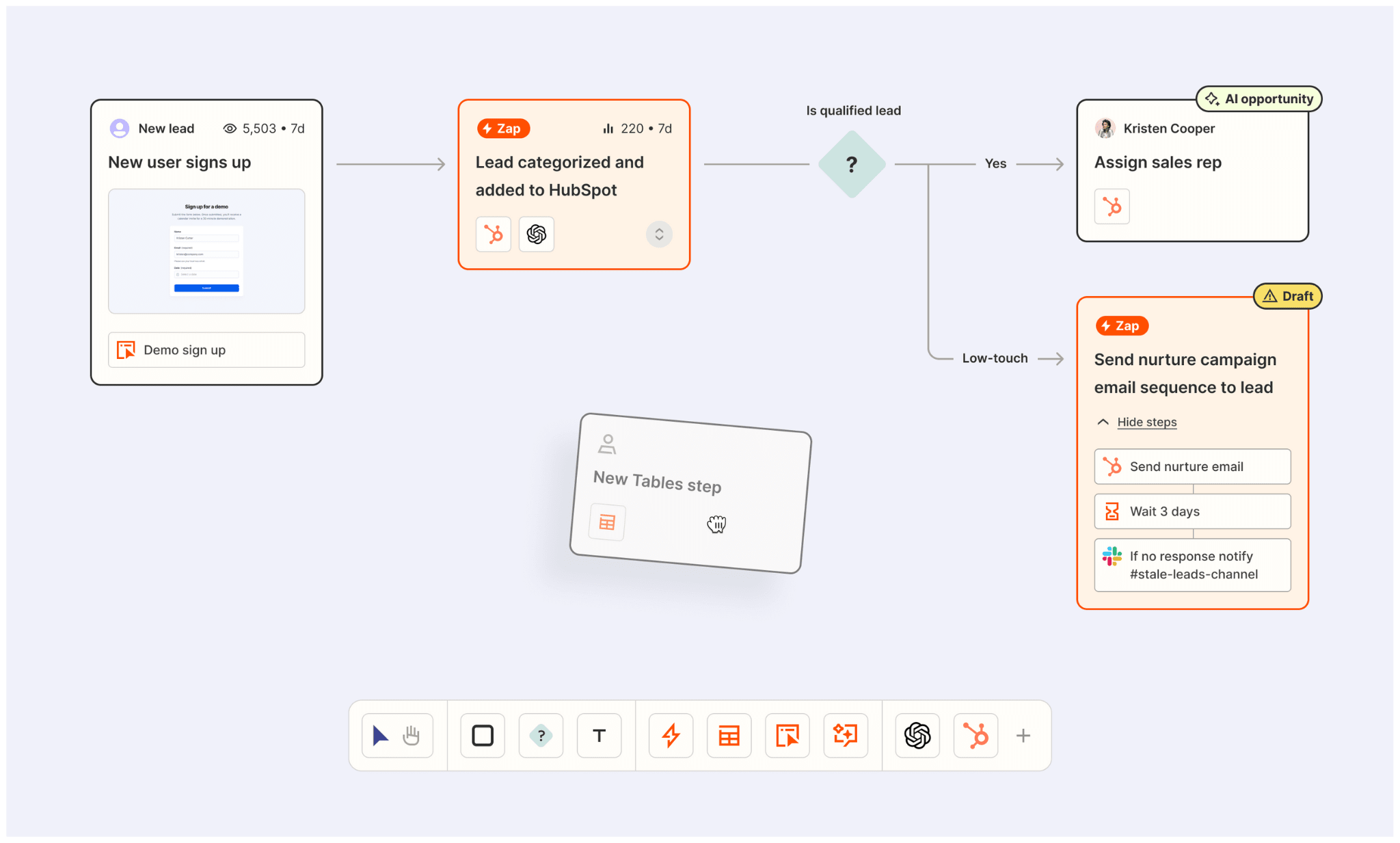
“Canvas is a visual diagramming tool where you can start to map out those processes end-to-end. And then the components that Zapier connects to, you can then actually edit those pieces within Canvas,” Foster explained. “Now, over time, the vision is that you can edit any of the components, whether they connect to Zapier or not, within the Canvas as well.”

That means there are essentially two components to Canvas: you can use it as a basic flowchart diagramming tool to document processes and — for the components that are already connected — it becomes the interface to edit those processes.

Of course, there is an AI component to this as well. You will also be able to tell Canvas what kind of problem you are trying to solve and then have the service generate a process for you, no matter whether you are planning an elaborate birthday party or setting up a complex business problem. Canvas will also include a more standard template library.

Image Credits: Zapier

Like virtually every other company, Zapier is looking into how it can build AI — and generative AI in particular — into its services. “LLMs are a good opportunity to go back and look at all the hardest problems you’ve had in your business, the things that you maybe haven’t quite been able to solve yet — and just see if an LLM can make this problem easier to solve,” Foster said about his overall philosophy of how he thinks about the use of AI.

In addition to the launch of Canvas and making Tables generally available, Zapier is also launching a number of smaller feature updates today. These include a new interactive editor that can handle up to 10 paths, new admin controls, and more integrations (which now number over 6,000).