Is This the End of Human Therapists?

After diagnosing a four-year-old’s mysterious disease that 17 doctors could not, ChatGPT can now also be a good therapist. Lillian Weng, Head of Safety Systems at OpenAI, recently had a long heart to heart conversation with ChatGPT in voice, the recent update. Interestingly, even though she never sought therapy, she feels that ChatGPT is a good therapist.

Just had a quite emotional, personal conversation w/ ChatGPT in voice mode, talking about stress, work-life balance. Interestingly I felt heard & warm. Never tried therapy before but this is probably it? Try it especially if you usually just use it as a productivity tool. https://t.co/9S97LPvBoS

— Lilian Weng (@lilianweng) September 26, 2023

Weng’s conversation with ChatGPT sparked mixed reactions. Users took to X to share their concerns on how using ChatGPT as a therapist was both sad and wrong, likening it to the “Eliza Effect,” where people assign human-like emotions to AI, exemplified by the early “therapy chatbot” Eliza by MIT scientist Joseph Weizenbaum in 1966, highlighting the tendency of chatbots to mirror users’ language without true understanding. Eliza unintentionally drew people into deep and emotional conversations, revealing the potential for human attachment to AI.

However, Weng is not the first person to treat ChatGPT as a therapist. Users find it convenient and appreciate its empathetic responses, although mental health experts express concerns about its limitations.

Despite these concerns, individuals like Chipres have found ChatGPT helpful in offering practical advice and a human-like interaction, making it a unique alternative for those unable or unwilling to seek professional therapy. 37-year-old EMT Dan initially used ChatGPT for creative writing but found solace in discussing his real-life struggles with the chatbot, especially when it came to cognitive reframing—a technique suggested by his therapist. 27-year-old Gillian also used ChatGPT for therapy, considering the skyrocketing price of healthcare. On the other hand, a Belgian man tragically succumbed to suicide following six weeks of “seeking therapy” with Chai.AI chatbot.

However, considering the increasing charges of therapy which is often not covered by health insurance, humans tend to go towards LLM-based chatbots like Bard, ChatGPT, and Perplexity AI.

In the future, once the robustness of our models will exceed some threshold, we will have *wildly effective* and dirt cheap AI therapy. Will lead to a radical improvement in people’s experience of life. One of the applications I’m most eagerly awaiting. https://t.co/latwdlcaoq

— Ilya Sutskever (@ilyasut) September 27, 2023

While they can offer advice and support, they cannot diagnose specific mental health conditions or provide accurate treatment details. Some worry that users might be disappointed, misled, or compromise their privacy by confiding in the chatbot.

Can Chatbots Replace Therapists?

Traditionally, chatbots have been “stateless,” treating each new request as an independent interaction without recollection or learning from past conversations. However, GPT-4 introduces a new calling function that enables it to remember user input from previous interactions, resulting in a highly personalised experience.

Now, with ChatGPT’s ability to engage in natural language conversations, humans are more prone to forming attachments. According to a research paper by the University of Tennessee and Illinois State, interaction with an AI model can trigger the same emotional responses as interacting with a human.

“A person expresses their true self more when interacting with generative AI models, providing an experience nearly identical to human interaction while eliminating the need to carefully consider words before speaking,” noted Nikita (Zeb) Shringarpure, a psychology professor at Mumbai University. This highlights the growing dependency of humans on AI, as it reduces cognitive effort and draws people towards tasks requiring less mental exertion.

Furthermore, LLMs possess the ability to simulate human characteristics, showcasing distinct personalities shaped by biological and environmental influences. These personalities play a crucial role in influencing interactions and preferences, blurring the lines between human and artificial intelligence interactions.

In a recently published paper by Google DeepMind, larger and instruction-fine-tuned LLMs show stronger evidence of reliability and validity in synthetic personality generation. The study also reveals the possibility of shaping LLMs to imitate human behaviour, including matching different human personalities, as seen in their actions, such as creating posts on social media.

Decoding the Sentience Debate

Someone finding solace in sharing their stories with ChatGPT in voice and getting attached to it is not new. Eugenia Kuyda’s Replika chatbot helped many people cope with symptoms of social anxiety, depression, and PTSD, TIME reported. Many people fell in love with the chatbot as well. Humans have formed emotional connections with AI chatbots for a long time now, sparking interest in the phenomenon of parasocial relationships.

“These connections, though fantastical, emulate genuine human bonds. The potential of AI to develop its own identity and attain sentience opens up limitless possibilities,” clinical psychologist Hemalatha S told AIM.

The concept of AI becoming sentient has been debated for a while now. Back in June, Google’s Blake Lemoine was fired for calling the big tech’s LLM LaMDA sentient. Now with companies like Microsoft, OpenAI, and Google racing towards AGI that can replicate the cognitive abilities of humans, the prospect of AI having consciousness is being widely debated in recent times. Not just Lemoine, OpenAI’s cofounder Ilya Sutskevar and Andrej Karpathy also received backlash on X for a similar thought.

it may be that today's large neural networks are slightly conscious

— Ilya Sutskever (@ilyasut) February 9, 2022

LLM chatbots allow us to tailor companions—whether for companionship, work, or social interaction—according to our preferences. The prospect of creating ideal partners, be they platonic, romantic, or professional, or even therapy is a notable aspect of AI’s impact on human relationships, Hemlatha added. However, there’s a cautionary note about the unforeseen consequences and potential evolution of AI into sentient entities.

Though ChatGPT-like chatbots may not replace professional therapy, their intriguing resemblance to talk therapy sparks user interest, aligning with individuals’ conceptualization. This could drive increased engagement in formal therapy sessions.

The post Is This the End of Human Therapists? appeared first on Analytics India Magazine.
Bumble CEO Whitney Wolfe Herd shares how AI will ‘supercharge’ love with digital matchmakers

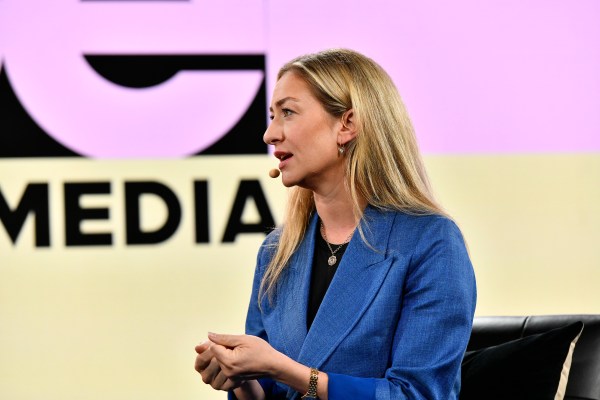
Bumble CEO Whitney Wolfe Herd shares how AI will ‘supercharge’ love with digital matchmakers Sarah Perez @sarahintampa / 22 hours

Bumble, Inc. CEO Whitney Wolfe Herd believes the power of AI technology will lead to a better online dating experience for her apps’ users. Speaking at the Code Conference on Wednesday, the Bumble and Badoo exec shared how her company uses AI technology to improve matching and other aspects of the business. While she noted Bumble would not venture into more “sci-fi” areas like using AI to make virtual girlfriends or boyfriends — something other apps like Replika have done — she does see a future where AI could help play the role of digital matchmaker.

Though much of the industry is focused on novel uses of AI — like Meta’s introduction of AI chatbots and generative AI features at its event yesterday — Wolfe Herd pointed out that AI technology has actually been a big piece of Bumble’s business for years.

“I think this is something that is lost on the general public, maybe,” she said. “Because our matching algorithms are AI-driven. This is machine learning. This is how we understand relevance and compatibility,” she said.

She added that various safety measures the app uses are also powered by AI and machine learning and these areas will improve along with AI advances.

But Wolfe Herd believes that AI technology will also help to make online dating even better in the future.

“I would really think about AI as a supercharger to love and relationships,” she explained. “I want to be very clear, we are not intending on replacing humans with bots. We are not intending for people to fall in love in the sci-fi version of a digital boyfriend, girlfriend, [or] partner. What we will do, however, is we will really lead with the customers’ pain points and reducing friction, reducing things that stress a customer out,” Wolfe Herd said.

For example, she wants to leverage AI technology to help people find more compatible matches. In addition, she imagines a future where Bumble could leverage AI to train people to interact in a way that makes them feel more positive.

But the exec also hinted that there are even more innovative ways to capitalize on AI that haven’t yet been built.

“I think that’s where I’m spending a lot of my energy and time. I’m quite obsessed with AI at the moment,” Wolfe Herd said.

One example of something she’s been thinking about is building a personal matchmaker or dating coach for Bumble users that leverages AI technology. Users would tell the bot everything they wanted it to know about what’s important to them in a relationship — like their non-negotiables and values that must exist in a partner, as well as the things they like to do, how they want to spend their summer, what a typical Sunday morning looks like and so on.

This AI matchmaker could then talk to other digital matchmakers to determine two users’ compatibility.

“And only if those other matchmakers triggered a certain level of compatibility would it bring it back to the human,” Wolfe Herd explains. “So now, instead of you having to swipe and match and chat with dozens of people to find someone who’s compatible for you, you can, in fact only talk to the three people that came back as qualified individuals for what you’re looking for. So you can really leverage AI to supercharge compatibility and that’s just on the matching side of things,” she added.

Other means of using AI could involve image recognition techniques — like being able to see that someone enjoys eating at the same restaurant as you from photos — or using AI to set up dates by placing the reservation.

“I think that we are in a really interesting opportunity, in a moment, that can leverage AI and human connection, and the intersection is really fascinating,” she said.

More importantly, perhaps, is that Wolfe Herd imagines that AI will help boost Bumble’s bottom line by allowing the dating app to offer a premium experience.

Though the CEO wouldn’t put a price on the AI-powered offering, following Tinder’s reveal of a $500 per month tier, she did say that AI will allow Bumble to offer an experience that feels “very curated, very selected” and “it will definitely be at a premium to where we are now.”

Microsoft is testing an AI-powered image creator for Windows 11 Paint

The new AI-powered Paint Cocreator rolling out to Windows 11 insiders

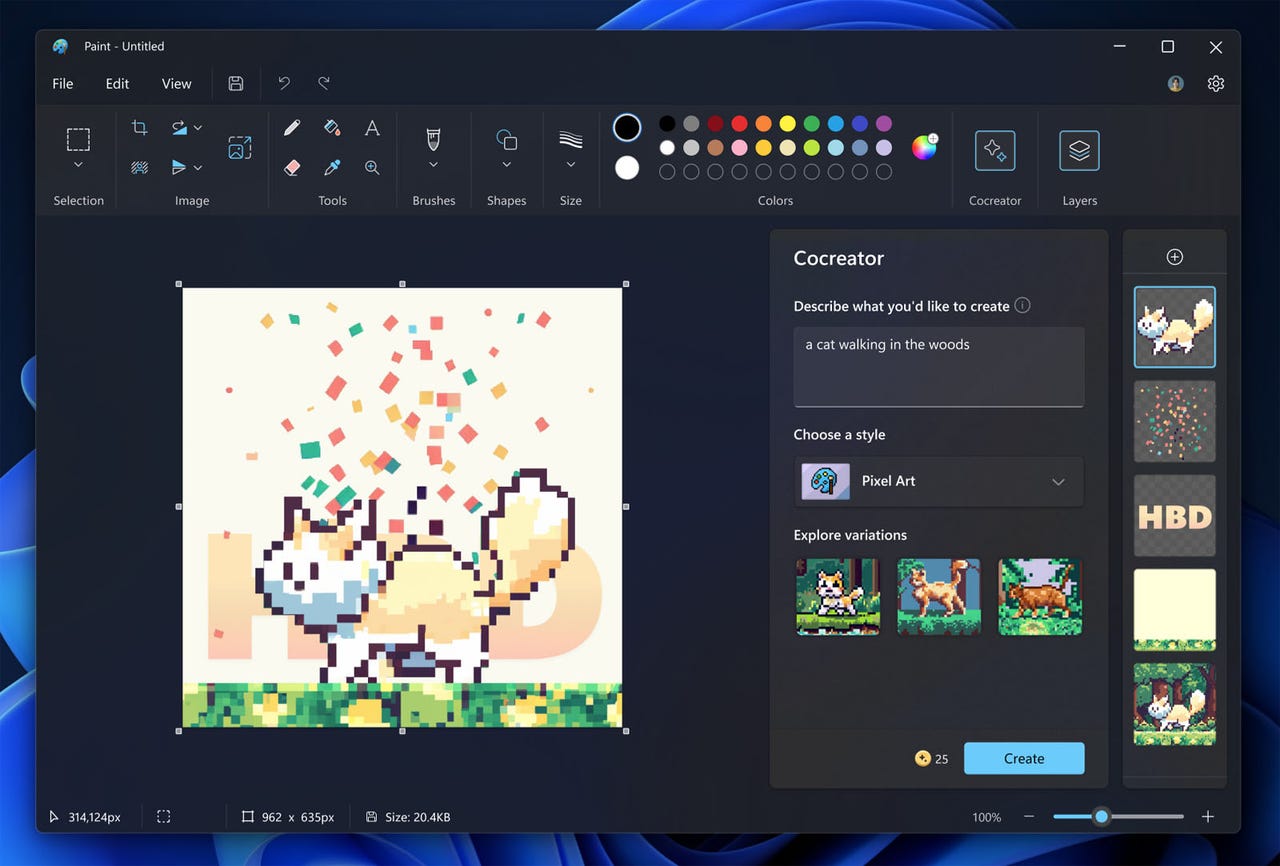
Those of you who've ever struggled to draw your own artwork in Microsoft Paint will soon be able to turn to AI to automatically generate your desired images.

In a Windows Insider blog post published Wednesday, Microsoft announced a new AI-powered tool for the Paint app in Windows 11 that will create images for you. Known as Paint Cocreator and based on OpenAI's DALL-E text-to-image platform, the feature is currently on its way to Windows Insiders.

Also: Microsoft's MS Paint is getting two Photoshop-like upgrades, and it'll still be free to use

Like other AI-based image generators, Paint Cocreator will cook up images based on your descriptions. You can submit anything from a few general words to a couple of sentences. But you'll want to be as descriptive as possible to improve your odds of getting just the right image.

You can also select a particular style of art. When you're ready, the tool will create and display three different images from which to choose. Select the one you like and you can then fine-tune it in the Paint canvas if you wish.

To let you use Cocreator, however, Microsoft is imposing a credits system as virtual currency, according to its support page for the tool.

By Joining Cocreator, you start you off with 50 credits. Each time you create an image, one credit is used. You can always see how many credits you have left by checking the bottom right area of the Cocreator pane.

Microsoft didn't explain what would happen if you run out of credits and need more. But hopefully that will get ironed out before the tool hits the release version of Windows 11, assuming this credits system sticks around.

Also: Getty Images launches its own 'commercially safe' AI image generator

To ensure that Cocreator is being used responsibly, Microsoft will also employ content filtering. The aim here is to prevent people from creating images that are considered harmful, offensive, or inappropriate. The content filter is based on certain standards, such as human dignity, diversity, and inclusion, according to Microsoft.

With all the buzz and interest surrounding AI, image generators have taken off among people who need to generate drawings, paintings, artwork, and other types of graphics. OpenAI offers its DALL-E image creator on which other tools are based. The company is currently testing a new version known as DALL-E 3.

Microsoft's DALL-E-powered Bing Image Creator works as a standalone tool and as part of its Bing AI chatbot. Other popular tools include Midjourney, Stable Diffusion, DreamStudio, and Craiyon.

Also: The latest Windows 11 update is rolling out now. Here's what's new

To try Cocreator at this point, you'll need to be registered with the Windows Insider program for Windows 11. You'll also need to be running the Dev or Canary build of Windows 11. And for now, the tool is available only in the US, UK, France, Australia, Canada, Italy, and Germany.

Make sure you've downloaded and installed the latest updates for your Windows 11 build. Once Cocreator is accessible, you'll still need to join a waitlist to use the tool as Microsoft is rolling it out slowly at first. To do this, click the Waitlist button in the Cocreator pane when the tool shows up in your build. You'll receive an email notice when you've been approved to use it.

Amazon launches its Bedrock generative AI service in general availability

Amazon launches its Bedrock generative AI service in general availability Kyle Wiggers 20 hours

Amazon today announced the general availability of Bedrock, its service that offers a choice of generative AI models from Amazon itself and third-party partners through an API.

Bedrock, which was unveiled in early April, allows AWS customers to build apps on top of generative AI models and customize them with their proprietary data. Leveraging these models, brands and developers can also create AI “agents” that automatically execute tasks like booking travel, managing inventory and processing insurance claims.

In the coming weeks, Llama 2, the open source large language model from Meta, will come to Bedrock, Amazon says — joining models from AI21 Labs, Anthropic, Cohere and Stability AI.

Amazon claims Bedrock will be the first “fully managed generative AI service” to offer Llama 2, specifically the 13-billion- and 70-billion-parameter flavors. (Parameters are the parts of a model learned from historical training data and essentially define the skill of the model on a problem, such as generating text.) However, it’s worth noting that Llama 2 has been available on other cloud-hosted generative AI platforms for some time, including Google’s Vertex AI.

Bedrock is in many ways comparable to Vertex AI, speaking of, which offers its own library of fine-tunable first- and third-party models on which customers can build generative AI apps. But Swami Sivasubramanian, VP of data and AI at AWS, argues that Bedrock has an advantage in that it plays nicely with existing AWS services, like AWS PrivateLink for establishing a secure connection between Bedrock and a company’s virtual private cloud.

To be fair to Google, I’d argue that’s more of a perceived advantage than an objective one, seeing as it’s dependent on the customer in question and the cloud infrastructure they’re using. Of course, you won’t hear Sivasubramanian acknowledge that.

“Over the last year, the proliferation of data, access to scalable compute, and advancements in machine learning have led to a surge of interest in generative AI, sparking new ideas that could transform entire industries and reimagine how work gets done,” Sivasubramanian said in a press release. “Today’s announcement is a major milestone that puts generative AI at the fingertips of every business, from startups to enterprises, and every employee, from developers to data analysts.”

In related news this morning, Amazon announced the rollout of its Titan Embeddings model, a first-party model that converts text to numerical representations called embeddings to power search and personalization applications. The Titan Embeddings model supports around 25 languages and chunks of text — or whole documents — up to 8,192 tokens (equivalent to ~6,000 words) in length, on par with the latest embeddings model from OpenAI.

Bedrock had a rocky start. Bloomberg reported in May that, six weeks after Amazon demoed the tech with an unusually vague presser and just one testimonial, most cloud customers still didn’t have access. With today’s announcements — and its recent, multibillion-dollar investment in AI startup Anthropic — Amazon’s clearly looking to make waves in the growing and lucrative market for generative AI.

Lenovo’s New TruScale Services Take AI to the Edge for Rapid Business Deployment

The circuit board is highlighted with blue color and has a chip with AI print on it.
Image: Shuo/Adobe Stock

Lenovo announced on September 20 the new TruScale for Edge and AI services that are designed to give companies immediate, scalable access to next-generation AI. The company also released the new ThinkEdge SE455 V3 edge server, an AI-ready hardware resource for businesses that build their own edge infrastructure.

TechRepublic spoke to Blake Kerrigan, general manager, Global ThinkEdge Business Group at Lenovo, to learn what types of businesses should look into the new solutions, discuss challenges affecting the AI industry, including tech talent gaps, and find out how these products could help with environmental, social and governance concerns.

Jump to:

  • What are Lenovo’s new TruScale services?
  • Which businesses should consider the new ThinkEdge SE455 V3?
  • Challenges of the U.S.-China tech regulations and AI talent gaps
  • ESG and AI consumption demands and opportunities
  • Top AI infrastructure-as-a-service competitors

What are Lenovo’s new TruScale services?

Building on TruScale’s Infrastructure-as-a-Service, Lenovo’s new TruScale for Edge and AI services allows businesses to leverage a pay-as-you-go model and rapidly deploy edge computing resources with AI-powered insights.

Kerrigan explained that even businesses with limited resources and funding can benefit from TruScale for Edge and AI solutions, giving them immediate access to edge AI deployment and Lenovo’s more than 150 turnkey AI solutions that address a wide range of industry-specific applications. Companies can also avoid the costs of managing their infrastructure because the platform is managed by Lenovo from end to end, from deployment to management and operation and scaling.

Lenovo TruScale allows companies to access:

  • AI-ready hardware infrastructure from data centers to the edge.
  • Expert support for companies to keep their IT staff focused on business innovation.
  • A diverse portfolio of Lenovo edge’s clients, edge servers and data center hardware.
  • High-performing CPU and GPU systems to efficiently handle heavy AI workloads.
  • Lenovo Open Cloud Automation — a software solution for rapid deployment and management of on-premises infrastructure inside a data center or distributed across edge infrastructure.
  • Hardware shipped directly from the factory, ready to be unboxed, activated and automated for remote deployment.

Companies can scale up or down and customize their infrastructure for AI.

Lenovo assures that the TruScale for Edge and AI services are designed for businesses across every industry, no matter where they work or operate.

“Whether that is on a city street, a manufacturing line or a fishing boat in the middle of the ocean,” Kerrigan said.

“As the amount of worldwide data grows exponentially, efficient edge computing infrastructure is essential to overcoming AI deployment complexities and helping businesses quickly translate data into actionable insights that streamline operations and improve business outcomes,” Kerrigan explained. “Across every industry, data center-like computing at the edge is empowering AI for improved emergency response, public safety, accessibility, tourism and retail experiences.”

Which businesses should consider the new ThinkEdge SE455 V3?

Companies that are heavily invested and committed to building their own infrastructure should look into the new ThinkEdge SE455 V3, especially if they’re facing networking constraints and lags due to massive data transfers from and to their edge systems.

Built into the new ThinkEdge SE455 V3 is the AMD EPYC 8004 Series Processor, which is designed for advanced data center computing. This processor enables next-generation AI applications while lowering power consumption.

The SE455 V3 edge hardware can handle the latest innovations such as large language models, which are known for their high computing demands. Lenovo says the edge server is silent, discrete and rugged to withstand tough environments.

“So whether it’s near a cash register, in a streetside cabinet, on a factory floor or in a guest lobby, businesses are able to leverage the (ThinkEdge SE455 Edge AI server) while gaining significant cost savings from lower power consumption in a small, quiet form factor with enhanced security,” Kerrigan said. Lenovo states the ThinkEdge SE455 is the most powerful edge AI server in the global market today.

Challenges of the U.S.-China tech regulations and AI talent gaps

U.S.-China tech regulations

In the past month, tensions between China and the U.S. have increased as both nations seek to control AI and the technology sector by applying import and export restrictions on chips and supply chain materials. The Biden administration says its China AI policy and restrictions are driven by concerns of how Beijing plans to use AI for cybersecurity, surveillance and AI weapons development, while China continues to impose new restrictions on the exports of key raw materials vital for the global tech industry.

U.S. company NVIDIA, which has already been banned from selling the A100 and H100 GPUs to China and any company operating in that country, along with AMD and others leading the AI development sector, assure that the escalation of tensions between both countries will hurt national businesses and lead to permanent long term losses.

We asked Kerrigan how the conflict impacts Lenovo globally and its operations in the U.S. Kerrigan explained that Lenovo remains strong in its position on AI and continues to push on through investing in AI.

“A challenging business environment also presents opportunities and only makes our focus on innovation more important,” Kerrigan said. “We will continue to leverage the opportunities the market presents, especially around AI and computing, to drive our sustainable growth and profitability.”

Kerrigan added that Lenovo considers AI and computing as their anchor technologies and critical pillars of its intelligent transformation strategy. The company is heavily invested in the area and has recently committed an additional $1 billion to AI initiatives, solutions and hardware.

If the tech conflicts between the U.S. and China continue to escalate, platforms such as TruScale for Edge and AI may benefit companies because they provide access to vital AI infrastructure.

AI talent gaps

Another issue affecting AI deployment in the U.S. and globally is talent gaps. While the U.S. leads the way in AI tech, the nation also faces serious AI talent deficits. McKinsey Digital reveals that applied AI and next-generation software development posted nearly one million jobs between 2018 and 2022, but the shortage of qualified talent “has been a persistent limiting factor.”

McKinsey data shows that the talent supply for some roles is extremely low. For example, for cloud and edge computing and generative AI regulatory compliance — both essential roles for companies to deploy and manage AI — there is only one skilled person for every 10 jobs posted.

Kerrigan explained that companies affected by talent gaps can use TruScale for Edge and AI to ” … offload all aspects of the deployment and lifecycle management to Lenovo’s team of AI experts.”

By significantly reducing the upfront costs of powering AI solutions and maximizing the end-to-end services and solutions offered by Lenovo, companies with reduced IT teams can deploy AI solutions.

ESG and AI consumption demands and opportunities

AI is expected to impact economic, sustainable and governance policies. Companies with ESG goals are looking closely into AI vendors that offer built-in ESG features; they want to track energy and power consumption and make sure their AI solutions are compliant and fair.

“Balancing performance with energy consumption is a challenge, especially when AI models demand significant computational resources,” Kerrigan said. “Edge devices often run on limited power sources, making power efficiency a crucial concern and barrier to adoption for industries navigating environmental variability and remote and specialized locations.”

Lenovo says the ThinkEdge SE455 V3 provides breakthrough performance without compromising energy efficiency.

“By consuming significantly less power compared to other servers, it not only reduces operational costs but also minimizes carbon footprint, contributing to ESG goals for Lenovo and our customers,” Kerrigan explained.

He added that customers can optimize their data center with TruScale to reduce their CO2 emissions and power consumption by up to 20% while supporting efficient edge AI computing to help improve business outcomes.

Lenovo AI Innovators program

Through the Lenovo AI Innovators program, the company offers more than 150 ready-to-go AI solutions. These solutions, developed by Lenovo and its partners, have already been tested, proven efficient and can be seamlessly deployed.

For example, in manufacturing, a Lenovo and partner edge AI solution is helping companies detect workplace hazards such as accidents, defective machinery and fires while state-of-the-art edge AI computing processes. Other solutions work specifically for sectors such as healthcare, hospitality, security and business intelligence and can enhance social and governance postures.

These AI solutions were developed prior to the launch of Lenovo’s new AI server, though the solutions use some of the infrastructure that TruScale offers. As more AI Innovators’s solutions are developed, it’s likely we’ll see them use the latest edge AI server.

Top AI infrastructure-as-a-service competitors

AI infrastructure-as-a-service is a relatively new industry that’s being developed using edge, cloud and infrastructure-as-a-service models combined with AI-as-a-service. While there has been a rise in new vendors specializing solely in AI software solutions, there are other companies that compete with Lenovo and offer the hardware and the software needed to deploy AI.

Amazon Web Services: The popular cloud vendors offer AI hardware and software solutions for customers to adopt machine learning and AI. AWS AI products and services are focused on business solutions and e-commerce and include generative AI chatbots and virtual assistance, antifraud and product recommendations.

Google Cloud AI: Google is another top cloud vendor that has incorporated AI infrastructure into its portfolio. Google Cloud AI provides a wide range of tools for developers to build generative AI apps, speech, text and language APIs and image and video APIs. Google Cloud AI also offers hardware for every type of AI workload through its partners (NVIDIA, Intel, AMD, Arm and more), as well as AI-optimized compute options across TPUs, GPUs and CPUs.

Azure AI infrastructure: Microsoft, through Azure, competes in the AI market offering compute-intensive hardware and software for AI workloads. The company is known for its Azure virtual machines and its AI infrastructure, which is optimized for Azure machine learning. Microsoft recently added the option for clients to access supercomputing resources, which they achieve by combining NVIDIA GPUs.

IBM Watson: Companies seeking data, AI training, coding and advanced business solutions can look into IBM Watson — the enterprise-ready AI and data platform. IBM provides infrastructure through its IBM edge and cloud computing solutions.

DataRobot: Founded in 2012 to support data scientists globally, this company has evolved to become one of the most well-known names in the AI adoption business. The company provides everything a business needs to build, deploy, manage and govern generative and predictive AI. Part of the hardware infrastructure DataRobot offers is through partners such as Google Cloud.

Alibaba Cloud AI and Data Intelligence: The biggest cloud vendor in China has jumped into the AI infrastructure-as-a-service market, leveraging its cloud and edge portfolio and combining it with a new and wide range of AI services, including pretrained models, machine learning frameworks and tools for developers and data scientists.

Subscribe to the Innovation Insider Newsletter

Catch up on the latest tech innovations that are changing the world, including IoT, 5G, the latest about phones, security, smart cities, AI, robotics, and more.

Delivered Tuesdays and Fridays Sign up today

ChatGPT can finally access the internet in real time, but there’s a catch

OpenAI ChatGPT web browsing

ChatGPT has proven itself to be a versatile chatbot, capable of assisting with tasks such as writing, coding, researching, planning vacations, and more. However, it's had one major limitation since it launched, and now that flaw is finally fixed — for those willing to pay the price.

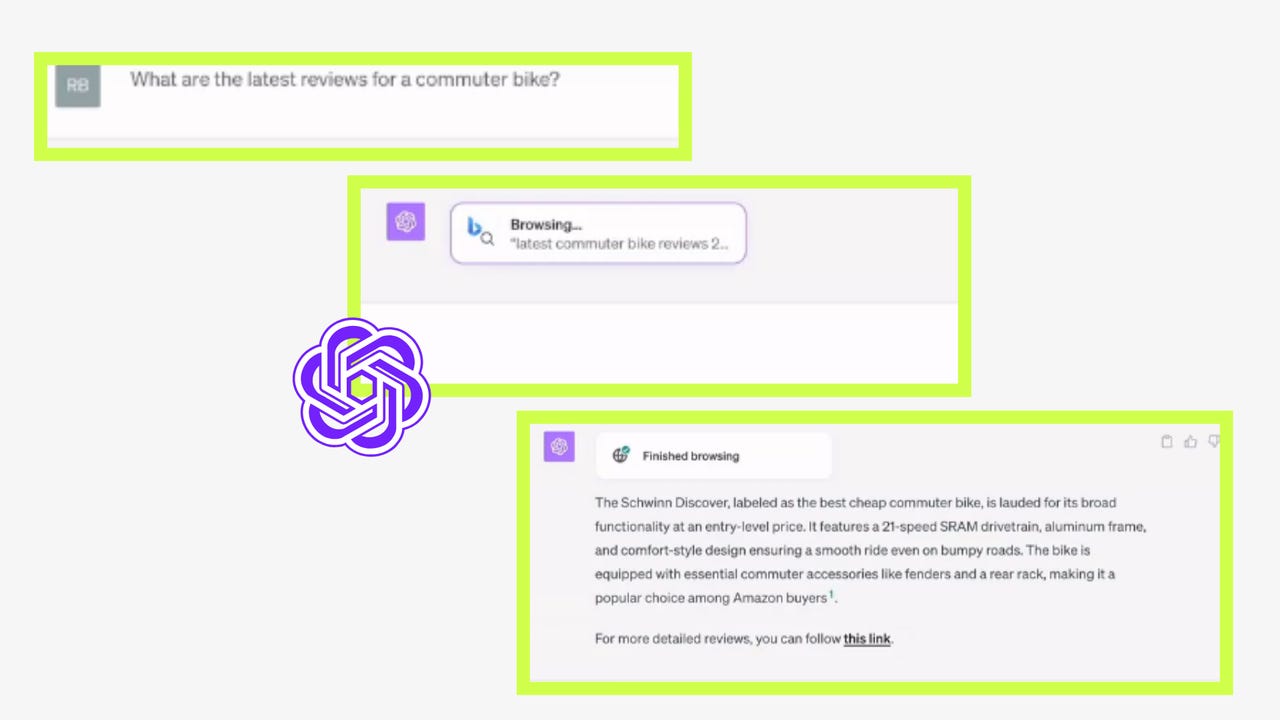
On Wednesday, OpenAI announced via an X (formerly Twitter) post that its chatbot is now able to access the internet in real time and provide direct links to its sources. The added functionality will be available to ChatGPT Plus and Enterprise subscribers.

Also: The 3 biggest AI announcements at Meta Connect: Meta AI, Snoop Dogg, more

This means that for paying customers, ChatGPT will no longer be limited to information before 2021, opening the floodgates for new capabilities and increasing the reliability of the chatbot.

ChatGPT can access the internet through Microsoft's Bing web browser. The announcement of this partnership was initially made at Microsoft Build back in May and rolled out to ChatGPT Plus users. However, after a couple of months, it was removed by OpenAI after users were leveraging the feature to hop paywalls.

OpenAI shared that since the initial rollout in May, the company received helpful feedback from users that has been incorporated into the new update, including "following robots.txt" and "identifying user agents so sites can control how ChatGPT interacts with them."

To activate the feature, all ChatGPT Plus and Enterprise users have to do is choose "Browse with Bing" from the drop-down under GPT-4.

Also: Meta's new AI chatbots let you ask celebrities your most burning questions

A ChatGPT Plus membership costs $20/month; however, for users who require the latest information, the added accuracy and dependability might be worth the investment.

For all other users who are itching to have their hands on this feature, OpenAI says it will expand to all users soon. Until then, Bing Chat is a solid alternative as it is supported by GPT-4, has access to the internet, provides sources, and is free.

This announcement comes just days after OpenAI announced that ChatGPT could "see, hear, and speak," referring to it accepting image and voice prompts as well as outputting voice prompts back.

The new search and response features also are limited to ChatGPT Plus and Enterprise users and will roll out to users within the next two weeks.

Artificial Intelligence

Amazon CodeWhisperer gains an enterprise tier

Amazon CodeWhisperer gains an enterprise tier Kyle Wiggers 16 hours

On the heels of the debut of its Bedrock service for building generative AI apps, Amazon has launched a new enterprise plan for CodeWhisperer, its AI-powered service to generate and suggest code.

The new plan, aptly called CodeWhisperer Enterprise Tier, introduces new functionality that allows a company to integrate their internal codebases and resources to have CodeWhisperer provide custom recommendations to developer teams.

As Amazon explains in a press release, an admin using the CodeWhisperer Enterprise Tier can connect CodeWhisperer to a private code repository, after which CodeWhisperer will learn the repository and adjust its suggestions accordingly. Customizations can be managed from a console, from where admins also have the ability to view evaluation metrics, estimate how each customization will perform and selectively deploy them to developers so they don’t widely expose proprietary code.

Customization will initially be available in preview as part of the CodeWhisperer Enterprise Tier, Amazon says.

CodeWhisperer Enterprise Tier marks Amazon’s latest expansion of CodeWhisperer, which launched in late June as a part of the AWS IDE Toolkit and AWS Toolkit IDE extensions in a response, of sorts, to GitHub Copilot.

In April, Amazon made CodeWhisperer free of charge to developers without any usage restrictions. That month also saw the launch of CodeWhisperer Professional Tier, which added single sign-on with AWS Identity and Access Management integration as well as higher limits on scanning for security vulnerabilities.

Code-generating services haven’t escaped the controversy that’s arisen around other generative AI technologies.

In many cases, the models underpinning code-generating services such as CodeWhisperer are trained on code that’s copyrighted or under a restrictive license. Vendors claims that fair use — the doctrine in U.S. law that permits the use of copyrighted material without first having to obtain permission from the rights holder — protects them in the event that the models was knowingly or unknowingly developed on copyrighted code. But not everyone agrees.

Amazon launches its Bedrock generative AI service in general availability

Vendors’ liability aside, some legal experts have argued that code-generating services could put companies at risk if they were to unwittingly incorporate copyrighted suggestions from the tool into their production software.

Amazon’s attempt to mitigate all this is a feature in CodeWhisperer that highlights and optionally filters the license associated with functions it suggests that bear a resemblance to snippets found in its training data. The company makes it clear, too, that it doesn’t — and won’t — use any customer-specific customizations for future CodeWhisperer model training and that it won’t store or log customer content when handling requests from a developer’s IDE.

iPhone 15 Pro users can replace Siri with ChatGPT. Here’s how

iPhone 15 Pro Action Button

Voice assistants like Alexa and Siri were all the rage when they arrived on the scene about a decade ago. However, the rise of generative AI models has created a demand for smarter voice assistants. With this quick iPhone hack, you can make the upgrade from Siri to ChatGPT.

Last week, Amazon and OpenAI announced two significant releases that upped the ante for voice assistants. First, Amazon supercharged Alexa with a new LLM, intended to make her function like a hands-free ChatGPT.

Also: The best VPN services for iPhone and iPad (yes, you need to use one)

Then, OpenAI released an update to ChatGPT that could make it "see, hear, and speak" by accepting voice and image inputs and responding with voice answers.

Having voice chats with ChatGPT elevates the chatbot to the status of a voice assistant like Siri, and it can replace Siri on your iPhone 15 Pro and iPhone Pro Max by leveraging the new Action button.

The new Action button, which replaces the side slider, allows users to use the button to perform a series of personalized actions depending on the users' needs, such as accessing the camera, flashlight, Voice Memos, and even ChatGPT.

Also: How to use the iPhone 15 Pro's Action Button to do just about anything

If you would like to quickly access ChatGPT with a tap of a button on your new iPhone, we have quick instructions to do so efficiently below.

How to access ChatGPT quickly on iPhone 15 Pro and Pro Max

The hot new thing: AI platforms that stop AI’s mistakes before production

The hot new thing: AI platforms that stop AI’s mistakes before production Connie Loizos @Cookie / 14 hours

If you haven’t noticed, a growing amount of code that’s being generated today is “AI-assisted.” In fact, Scott Guthrie, Microsoft’s executive vice president of Cloud and AI, estimated back in March that upwards of 40% of the code that developers were uploading to the AI developer tool GitHub Copilot was both “AI-generated and unmodified.”

Now, the trend is giving rise to startups that promise to keep AI-augmented code from mucking up the works — and investors are taking notice.

Earlier this week, an Israel-based startup, Digma, announced $6 million in seed funding for a continuous feedback platform that runs locally on developers’ machines and helps them analyze their code — including generative AI-created code — to identify issues. Yesterday, a San Francisco-based testing platform called Kolena announced its own funding — $15 million — to build tools to test, benchmark and validate the performance of AI models.

Today, a months-old, four-person, Bay Area-startup called Braintrust is taking the wraps off its own fresh funding round of $3 million. According to co-founder and CEO Ankur Goyal, Braintrust is like an “operating system for engineers building AI software,” one that helps them avoid bad results from AI models. Developers building customer support chatbots, for example, might use Braintrust’s tech to ensure that their chatbot answers questions accurately rather than hallucinating false information.

Like many startups promising the ability to build more reliable AI software, Braintrust has savvy backers. Renowned angel investor Elad Gil is among its investors and helped incubate Braintrust’s initial product. (Gil flagged the round for us, calling the six-week-old outfit “a good one.”) Others of its notable investors include Adam D’Angelo of Quora, Clem Delangue of the buzzy AI outfit HuggingFace and OpenAI co-founder Greg Brockman.

Whether an impressive investing syndicate can help push Braintrust to the front of the pack is an open question. In the meantime, ensuring that AI code doesn’t break a company’s workflow is something Goyal says he was practically born to solve.

The child of doctors, Goyal grew up in Pittsburgh and thought he’d become a doctor, too. “Super nerdy” as a teenager, he says a linear algebra class in high school where he learned about Google’s PageRank algorithm would change his life. (“I get goosebumps just talking about it,” he says.) He moved on from biology, studied computer science at Carnegie Mellon University, then “out of extreme boredom” dropped out his junior year to build a relational database system at MemSQL, an early Y Combinator alum. More than five years later, Goyal co-founded his own company, Impira, and when Figma acquired the company late last year, Goyal became the head of its machine learning platform.

It was a good gig. It also gave Goyal even more insight into the growing challenge of building high-quality software products in this new age of AI everything. So late this past summer, he left to start Braintrust.

“I spent quite some time building old-school software,” he says, “and what’s really different about AI is that it’s inherently non deterministic, meaning if you write code, you can’t really guarantee that it’s going to work. You have to test it on real-world examples.” The process is called evaluation or, colloquially, “evals” and not all companies have high-enough quality data to do enough testing. It’s why Braintrust — which has yet to commercialize its product — is working with companies that do, including the workflow automation company Zapier and the spreadsheet tool company Coda, which are currently beta testing what Braintrust has built.

“Their challenge,” says Goyal, “is ‘Okay, we actually have tons of data, and we have lots of users using our product. But it’s really hard for us to boil that down into a representative set of examples that we can use to test our software.'” With BrainTrust, he says, “They can dump as much data as they want into our product, run evaluations against it, and we’ll help them curate ‘golden datasets’ that they can accumulate over time and use as a measure of whether their software is working or not.”

As a bonus, says Goyal, “We actually run inside of their cloud environments,” which enables Braintrust to operate around thorny compliance issues that could otherwise slow down its adoption within enterprises.

It’s early days, of course, and competition will only grow fiercer in the coming months and years. Deepchecks, an Israeli startup whose tagline is “continuous validation for AI,” is yet another outfit that recently raised seed funding.

Still, Goyal describes Braintrust as exactly the product he needed at Figma, and which didn’t live in the world until Braintrust recently created it. “There’s a whole universe around continuous integration that has developed over the past decade. And that’s kind of turned this into a science of shipping software. But in AI land, that methodology and workflow — until our product — just didn’t really exist.”

Pictured above, from left to right: Coleen Baik (founding designer), Ankur Goyal (CEO), Manu Goyal (founding engineer) and David Song (product manager; part of Elad Gil’s team).

Mistral AI Releases Generative AI Model Competitor to Meta’s Llama 2

Virtual chip with a, inscripted digital brain symbol on a circuit grid background.
Image: putilov_denis/Adobe Stock

French generative AI startup Mistral AI has released a free-to-use large language model called Mistral 7B, which has 7.3 billion parameters and has proven competitive with Meta’s Llama 2.

Mistral 7B can be downloaded directly from Mistral AI’s blog post.

Jump to:

  • What makes Mistral 7B different from other generative AI?
  • How can businesses use Mistral 7B?
  • Mistral AI draws on Meta and DeepMind experience

What makes Mistral 7B different from other generative AI?

Mistral AI positions its LLM as different from the competition like LLama 2 and GPT-4 because it is open and community-focused instead of proprietary. (Meta calls Llama 2 open source.) Mistral 7B can be downloaded for free, and Mistral AI set up a Discord channel and a GitHub page for community discussion. Mistral 7B is released under the Apache 2.0 commercial use license, meaning there are no restrictions on how it is used or by whom.

“Community-backed model development is the surest path to fight censorship and bias in a technology shaping our future,” stated the Mistral AI team in a blog post on September 27.

Being able to adjust model sizes and costs will make generative AI more affordable and reduce latency, Mistral AI said.

Mistral AI claims Mistral 7B “outperforms all currently available open models up to 13B parameters on all standard English and code benchmarks,” including Llama 2. Grouped-query attention speeds up inference, while sliding window attention handles long sequences cost effectively, Mistral AI said.

“This is the result of three months of intense work, in which we assembled the Mistral AI team, rebuilt a top-performance MLops stack and designed a most sophisticated data processing pipeline, from scratch,” the Mistral AI team said in the blog post.

While Mistral AI hasn’t announced statistics relative to OpenAI’s GPT-4, it does seem to be throwing its hat into the same ring.

How can businesses use Mistral 7B?

Like other generative AI, Mistral 7B can generate text (such as emails, presentations or project outlines), write code, summarize text and answer questions. Mistral AI proposes the Mistral 7B LLM is a way to combat AI-based misinformation. “They [open generative AI models] will allow public institutions and private companies to audit generative systems for flaws, and to detect bad usage of generative models,” Mistral AI wrote in a blog post.

Mistral AI anticipates businesses across industries will want to create generative AI models that specialize in the business’ own tasks. Compressing each model and connecting it to specific modalities will help tailor Mistral 7B for efficient use, Mistral AI said.

SEE: Expectations are inflated around generative AI as companies search for ways to make generative AI products productive. (TechRepublic)

Mistral AI plans to offer a paid version of its generative AI in the future; the paid version will offer a “white box” solution with training weights and code sources open to the user. The company anticipates offering hosted solutions and dedicated enterprise deployment at an unspecified later date.

Mistral AI draws on Meta and DeepMind experience

Mistral AI cofounder and CEO Arthur Mensch previously worked as a research scientist at Alphabet DeepMind; Chief Scientist and cofounder Guillaume Lample was a research scientist at Meta (known at the time as Facebook) AI research; and CTO Timothee Lacroix worked as a research engineer at Meta.

Mistral AI received $113 million in seed funding from Lightspeed Venture Group in June.

Subscribe to the Innovation Insider Newsletter

Catch up on the latest tech innovations that are changing the world, including IoT, 5G, the latest about phones, security, smart cities, AI, robotics, and more.

Delivered Tuesdays and Fridays Sign up today