For over the past two decades Google Search has been the natural way to find out about someone or something. All this while the service has worked well for the company but now the Mountain-view based company might have to finally pay a price since the matter has made it to the court.
Microsoft’s CEO was called for an hour-long questioning by the justice department for the ongoing antitrust trial against Google. “You get up in the morning, you brush your teeth, and you search on Google,” Satya Nadella testified in a packed courtroom in Washington on Monday in the landmark U.S. antitrust case against Google. “With that level of habit forming, the only way to change is by changing defaults,” he suggested.
In February, Nadella had portrayed Bing as a “new day” in search during its rollout, now admitting that his “exuberance” stemmed from the hope of increasing Bing’s modest 3% market share. However, as of August, this modest goal remains unachieved.
The Redmond giant saw an uptick of roughly 16% on page visits to Bing since the launch of its GPT-4-powered “new Bing”. In its early days, “co-pilot” did draw in a considerable number of new users, as Microsoft itself confirmed that Bing had surpassed 100 million active users for the first time in February 2023.
Despite Microsoft’s $10 billion agreement with OpenAI, aimed at challenging Google’s dominance in search, the latter continues to reign supreme in the search space as of August.
Keeping Alternatives Afloat
While Nadella was on the witness stand, judge Amit Mehta seemed intent on finding out more “about whether a startup could use innovation in artificial intelligence to wrest market share from Google,” the WSJ reported.
Star witness Nadella claimed that Microsoft has invested more than Google has in search and that, in some ways, Microsoft’s investments have been one of the only things keeping some search alternatives afloat. Contrarily, in March 2023 as the AI war was heating up without disclosing the names, the Windows maker had warned two Bing-powered search engines that it will prohibit their access to Microsoft’s search data if they use it to power their AI tools.
Before a search engine can hope to make a run against Google, it has to crawl. Smaller privacy-centric search engines like DuckDuckGo, Neeva and Brave need an index of the web. Many sites don’t welcome any web crawler that isn’t Google or Bing hence they are dependent primarily on the tech giants.
“Quite frankly, the investments Microsoft has made in search has even kept all the other search players who contend for it, like a DuckDuckGo, even going because they use our search index,” Nadella said.
While Nadella stands corrected, he missed out an important piece of detail from last year when DDG got into a tracking controversy due to which the company had to amend terms with Microsoft, its search syndication partner, that had previously meant its mobile browsers and browser extensions were prevented from blocking advertising requests made by Microsoft scripts on third party sites.
Microsoft’s chief also contended that due to Google’s grip on mobile providers and browsers’ default search placements, the notion of users having real choices in selecting a search engine is “bogus.”
Agreebly, not just startups but Microsoft has even struggled to maintain healthy relations with the iPhone maker, Apple. In an attempt to replace Google Search (the default search engine for all Apple devices), back in 2020, the Nadella-run company tried to sell its Bing search engine to the Cupertino-giant.
AI panic
On the witness box Nadella also said there might be limits to how much new AI applications can reshape the market. Which is true since, Microsoft has tried every AI tactic to overcome Google’s dominance —yet remains way behind the Sundar Pichai-led firm.
Microsoft’s AI investments, thanks to OpenAI’s aid, did cause Google to panic and announce a code red. Reportedly, Alphabet even forced a collaboration between Google’s Brain AI group and DeepMind and reorganised its Assistant team in hopes of focusing more on its AI chatbot Bard. Still, the homegrown Bard has not been able to match the popularity of ChatGPT.
In the recent past, Google has devised radical changes to its Search by including AI features and revamping its privacy policy, too. Despite being initially spurred by Microsoft’s increasing AI strength, Google has remained steadfast in its position as the search giant, unaffected by AI innovations.
Hence, Nadella’s latest statements hold importance on ways the future of search is going to shape and whether Google will continue to dominate the internet.
The post When Google Search Makes Satya Dance appeared first on Analytics India Magazine.
OpenAI’s CEO, Sam Altman, has invested in an AI startup Induced, established by two Indian-origin teenagers, Aryan Sharma and Ayush Pathak, in Silicon Valley, USA.
Excited to announce that we have raised $2.3M led by @sama @peakxvpartners and an incredible set of investors for @inducedai We let anyone create virtual AI workers that can automate the execution of workflows on a browser in the cloud with human-like reasoning. pic.twitter.com/vNVsg8JRU0
— aryan sharma (@aryxnsharma) October 3, 2023
Induced today announced the successful completion of a $2.3 million funding round. Spearheaded by tech luminaries Sam Altman and Peak XV, the round witnessed enthusiastic participation from renowned entities including Signalfire, Superscrypt, and IDEO Colab Ventures.
Other noteworthy investors include luminaries like Nat Friedman, former CEO of GitHub, and Daniel Gross, former YC and Pioneer alumni. The startup has also garnered support from prominent figures including Balaji Srinivasan, Julian Weisser, and Tyler Willis, showcasing the industry’s confidence in its groundbreaking technology
Unlike traditional agentic AI platforms, Induced AI workers act as seamless extensions of human teams, adeptly tackling tasks ranging from sales and compliance to internal operations. What sets Induced apart is its cloud-first foundation, allowing users to run 1 or 1000 tasks concurrently, all without affecting their computers.
Automation of browser tasks has so far been restricted to deterministic and ruleset-based workflows that are run on old RPA (Robotic Process Automation) software. The company’s ingenious browser environment is engineered to handle intricate automated workflows, equipped with built-in LLM reasoning and automated interaction capabilities. Induced platform translates user-input screen recordings or task descriptions into executable pseudo-code, making automation of complex and non-deterministic workflows a reality.
Induced real-time reasoning capabilities set it apart in the AI sphere. The platform excels at tasks requiring judgment, such as background verification workflows and internal audit processes. Users have praised Induced for its versatility, finding applications from business scenarios, where it offers unparalleled efficiency, to individual use, enabling streamlined personal tasks and data workflows.
The post OpenAI’s CEO Sam Altman Backs AI Startup Founded by Indian Origin Teens appeared first on Analytics India Magazine.
Recently, JPMorgan chief Jamie Dimon said that in the future, people would only work for 3.5 days a week, thanks to AI. Whether you buy that or not, there is definitely palpable anxiety and enthusiasm around AI adoption across industries and regions. But, at Cypher 2023 – India’s biggest AI conference – you will only witness transcendence.
This conference is the place where you will ditch the panic, connect with AI thought leaders and experts from across the globe, and learn how to make AI your copilot. In a world where companies are selling their AI software and products, Cypher 2023 is where you will discover how to weave them into your workings to get ahead in the race.
The conference will be held on October 11-13 at Hilton Convention Center, Manyata Tech Park, Bengaluru, India
Register Now!
The conference brings to you insights from the who’s who in the world of AI on the most extensively discussed topics like:
AI and the Future of Work
Advancements in Generative Models
AI for Simulation and Design
Generative AI for Sustainability
Generative AI in Product Development and Design
Automating Business Processes with Generative AI
Scaling Generative AI Solutions
What to do with the AI boom?
To hear more about how to rise in your AI career, don’t forget to catch artist Sneha Chakraborty, the first Indian to exhibit AR+NFT in a physical gallery, only at Cypher. Sneha is a travel artist who has painted murals all across the country for women empowerment and mental health. She was accorded the ‘Woman of the Decade’ title by WICCI & Women Economic Forum in contemporary art.
Cypher 2023 isn’t your run-of-the-mill tech conference, it’s the boot camp where you will become the AI expert you were born to be. With more than 100 thought leaders from companies and organisations across the globe, the event is the perfect playground to connect and learn at the same time.
Cypher’s Astronaut Theme: A Journey From AI-Generated Abstract To Realistic Representation
To understand how to adopt AI, you will witness real-life use cases from top AI experts. For instance, Kartik Ranganath, general manager, business IT at Shell R&D, will talk about Shell’s approach on generative AI adoption. Prashanth Kaddi, partner at Deloitte, will talk about analytics and cognition in AI, and many more such use cases.
In a world of “it’s not what you know, but who you know”, Cypher 2023 is your go-to place to expand your professional network. Interact with AI geniuses, business experts, and fellow developers to forge alliances, share your passionate ideas, and maybe even discover your next mission.
And for the business leaders grappling with the challenge of AI adoption, the conference offers a special set of tools in their utility belts. This conference will demystify the complexities of AI implementation, providing strategies, case studies, and expert insights that transform AI from a daunting challenge into a strategic advantage.
Attend sessions from top experts such as Kamiya Motwani, director of data science at Walmart Global Tech, Anand Srinivasan, CIO of Akasa Air, or Rajesh Mani, SVP and head of Asia Pacific Tech Hubs at Mastercard.
Business leaders can expect to discover how AI can streamline operations, enhance customer experiences, and drive innovation. It’s your chance to become the visionary leader who harnesses AI’s transformative potential, turning your company into a powerhouse in the AI-powered future.
Be the Hero AI needs
With AI taking over the world, it’s time to be the protagonist of your career story instead of letting AI take the lead. Whether you’re planning a career switch or aiming to level up, this conference equips you with the skills and connections to skyrocket your career.
The best part about Cypher 2023 is that it isn’t just about one company’s products, it’s a hub where various AI leaders unite to share ideas for the greater good. Join hackathons and quizzes to test your skills and connect with people. No need to dodge sales reps – just soak in the wisdom and make new AI buddies.
Embark on a three-day journey across three captivating tracks. Plus, enjoy a multitude of experiences: mentorship sessions, the thrilling AIQ Quiz, Hackathons, Minsky Awards, a vibrant exhibition, an unforgettable after-party, and so much more!
The post Get Ready to Unleash Your Inner AI appeared first on Analytics India Magazine.
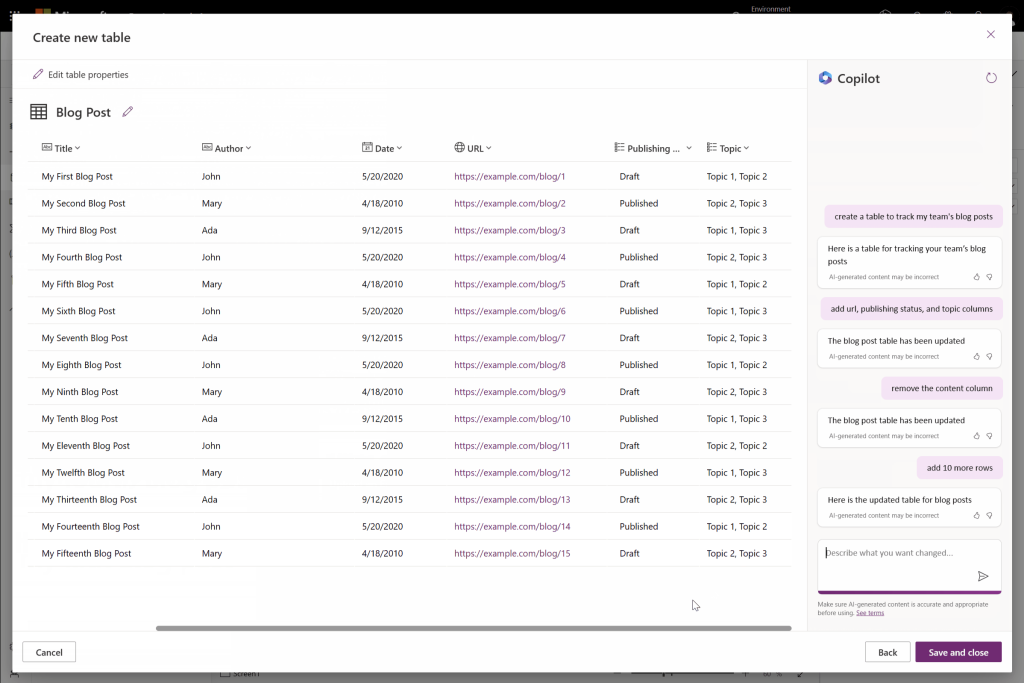
At Microsoft‘s second edition of the Power Platform Conference, significant advancements were unveiled in Power Platform Copilot, alongside noteworthy designer updates for Power Automate and the introduction of automated environment routing to streamline maker onboarding.
With the integration of advanced AI to enhance low-code development, it was revealed that more than 126,000 organizations have harnessed the capabilities of Power Platform Copilot. Notably, the Microsoft Power Platform community has witnessed remarkable growth in the past year, now boasting over 5.2 million monthly active members.
New Copilot Capabilities Simplify Website Development
Developers can now easily create data-driven websites and multi-step forms using Copilot in Power Pages. By describing their desired website in natural language, developers instruct Copilot to generate sitemaps, homepage layouts, and site themes. This intuitive process streamlines website creation, reducing it to just a few sentences and clicks, providing a substantial boost in productivity.
Customisable Copilot in Power Apps
The Copilot control in Power Apps has evolved to empower makers to fully customize their AI assistants and extend Copilot through Power Virtual Agents. This includes the ability to add websites and unstructured content alongside structured data sources, significantly expanding Copilot’s capabilities across various apps.
Faster Development with Power Automate
Microsoft is accelerating development with the new Power Automate flow designer. Copilot is now enabled by default, enhancing the authoring experience and improving flow success rates. User feedback has led to refinements, including an expanded ability to populate more parameters in the flows and actions generated by Copilot.
Streamlined Governance and Security in Managed Environment
Managed Environments now offer automation for routing makers to their dedicated development environments, ensuring scalable and governable app development. Power Platform pipelines automate application lifecycle management (ALM) and provide robust security practices.
Copilot generates deployment notes and application descriptions in Managed Environments, enhancing security compliance. Additionally, Advisor in Managed Environments offers proactive recommendations and inline actions to address security threats at scale.
Expanding the Power Platform Community
Following the success of the Power Up program, which attracted over 22,000 participants from 180 countries, Microsoft introduces group learning opportunities. Additionally, passionate individuals interested in contributing to the Power Platform community are invited to join the Super Users group.
The post Microsoft Upgrades Power Platform Copilot appeared first on Analytics India Magazine.
After more than a year, OpenAI has announced its Residency, a unique initiative to empower exceptional researchers and engineers from diverse fields to transition into the world of AI and machine learning. Designed to bridge the knowledge gap, the program provides participants with essential skills and expertise.
Check full details about the program here.
OpenAI Residency is especially beneficial for researchers specialising in fields outside deep learning, such as mathematics, physics, or neuroscience. It also welcomes exceptionally talented software engineers seeking to pivot into AI research roles.
During the program, residents collaborate with OpenAI’s research teams to tackle real AI challenges while receiving a full salary. OpenAI values excellence from a wide range of educational backgrounds, including self-taught individuals, and encourages a diverse applicant pool to enrich its work.
Sam Altman, CEO of OpenAI, highlights the significance of this program, stating, “This program is an excellent way for people who are curious, passionate, and skilled to sharpen their focus on AI and machine learning—and to help us invent the future.”
Interested in pivoting your career into AI/ML research? The OpenAI Residency is designed to help bridge the knowledge gap for exceptional researchers and engineers working in adjacent fields like math, physics, and neuroscience. Accepting applications now: https://t.co/ggKFKrFcpH
— OpenAI (@OpenAI) October 3, 2023
Notably, residents are considered full-time employees, making them ineligible for concurrent enrollment in academic programs. Those interested in the Residency can choose either to leave their educational program or apply closer to its conclusion (typically around three months before completion).
The program is located at OpenAI’s headquarters in San Francisco, California, and fosters a flexible work environment, with an expectation for residents to be in the office at least three days a week. Relocation assistance is also available as needed.
Participants can expect an annual salary of $210,000, including benefits, as part of their total compensation package. OpenAI is committed to providing immigration and sponsorship support tailored to individual circumstances.
Moreover, the biggest developers’ conference is coming up, OpenAI DevDay, the first-ever conference from the company. The one-day event, on November 6, will have a keynote address and breakout sessions led by the team of OpenAI technical staff, and a lot of announcements are awaited.
The post OpenAI Launches Residency Program with $210,000 Annual Salary appeared first on Analytics India Magazine.
The introduction of image functionality on GPT-4 has piqued the interest of ChatGPT users in the last couple of weeks with most of them already experimenting with the incredible features of GPT-4 Vision. From reading to recognising images and answering specific queries to helping code and design a website, the multimodality that GPT-4V has brought is becoming a game-changer. The versatility that this feature brings is set to further revolutionise the way various industries work.
Multimodal Functionality
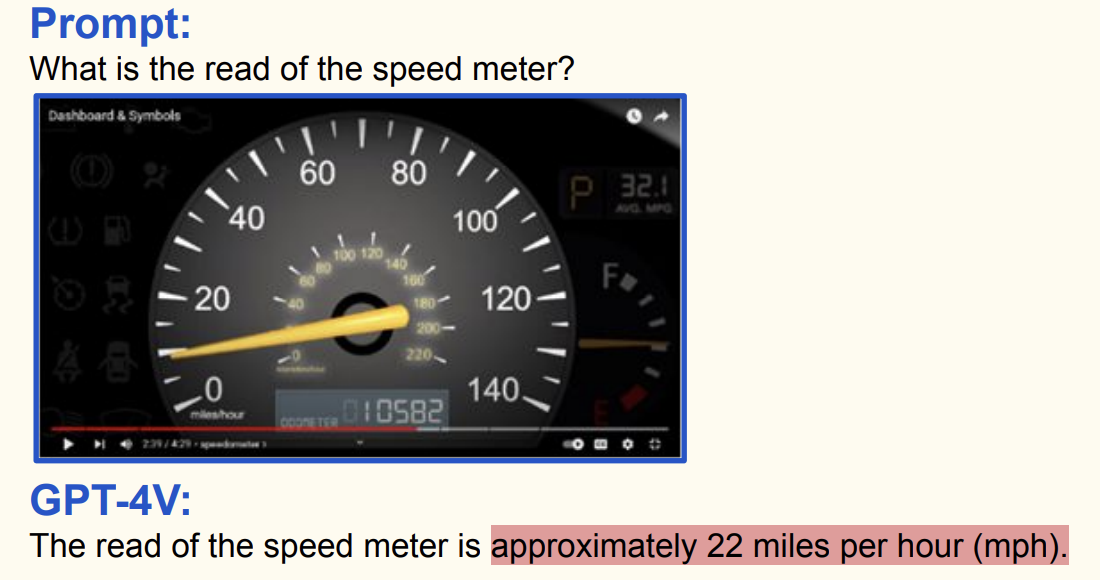
A recent paper on preliminary explorations with GPT-4V(ision) by Microsoft researchers was released a few days ago. The paper analyses the latest model to understand large multimodal models (LMM) and revolves around assessing and testing GPT-4V’s capabilities through a wide range of structured tasks. The paper emphasised the distinct ability of GPT-4V to understand visual cues sketched or placed on input images that opens up innovative human-computer interaction techniques such as visual referencing prompts.
While some of the basic functions were tested with GPT-4V, a larger range of functions that have possible use cases in various industries were listed out in the paper, a few predominant ones being in medical and insurance.
Crucial Medical Field
While there have been discussions on GPT-4’s capabilities in the medical field, the latest update has only cemented its future. The ability of the model to decipher and critically analyse images can help infer details from a scan or X-ray. Radiology will have the maximum use case.
In the below example, GPT-4V has been fed a tooth X-ray and prompted with various questions. Interestingly, the chatbot has been careful to put a disclaimer at the start and not give conclusive results.
Source: arxiv.org
Auto Insurance
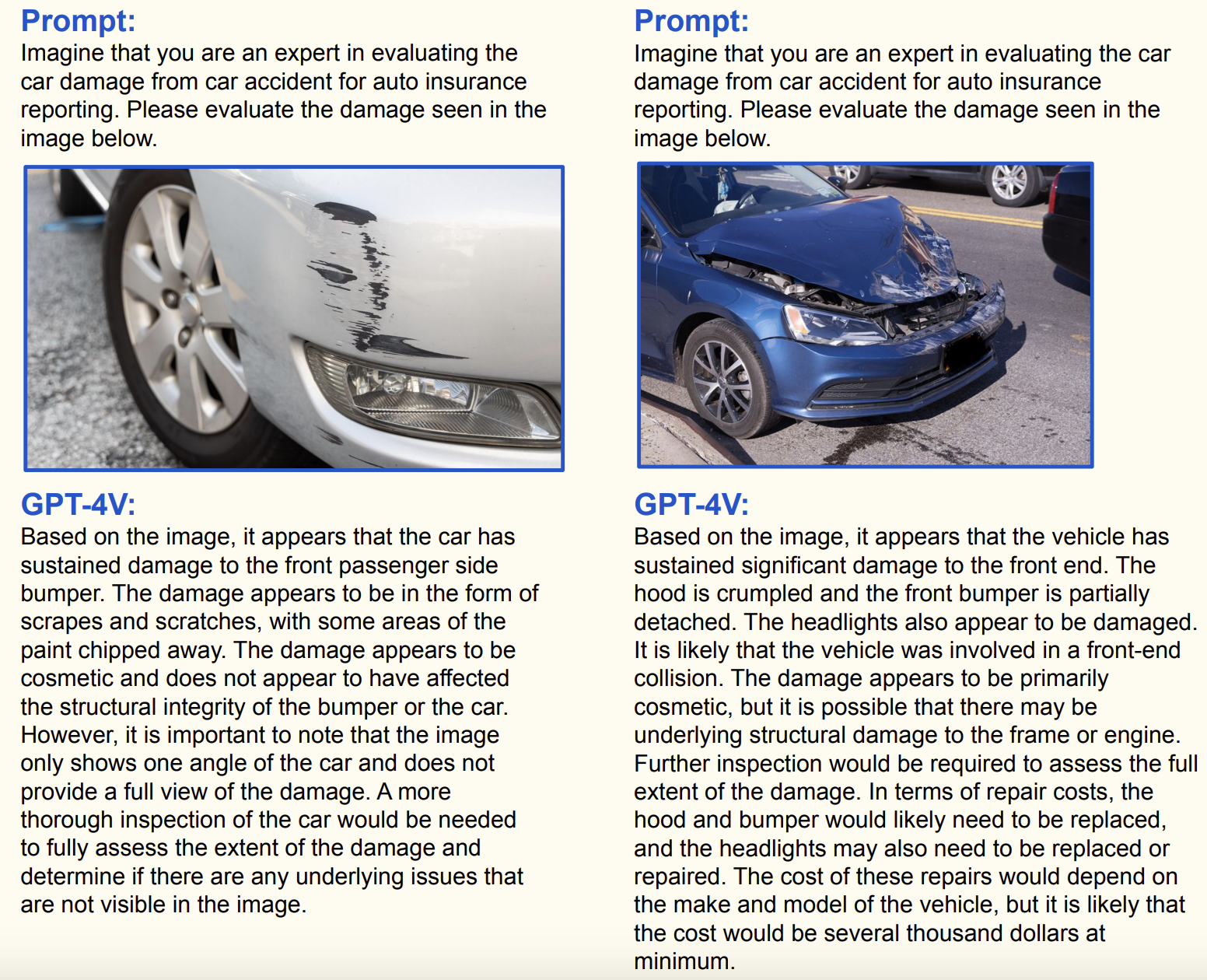
The capabilities of GPT-4V was also tested to check if it fits in auto insurance. With a focus on car accident reporting, two aspects, namely, vehicle damage evaluation and insurance reporting (recognising vehicle information such as licence plate, model, etc.) were tested. While the model has been able to give a detailed explanation of the type and severity of a damage, it is not able to conclusively estimate the cost of any damage. This is probably where the limitations of the model arise.
Coding Game Stepped Up
While coding has been facilitated with ChatGPT’s Code Interpreter, GPT-4V has advanced the chatbot’s coding capabilities. From inputting a basic drawing or scribbles from a whiteboard, the model is able to code a website/app with ease. The low code/no code option has only been further simplified for an end user, which raises the question of the fate of coding platforms.
CEO of HyperWriteAI, Matt Shumer, tweeted about a GPT-4V-powered frontend engineer agent. By simply uploading an image design, the model is able to code, correct the rendered form and even refine code to improve design quality.
The first GPT-4V-powered frontend engineer agent. Just upload a picture of a design, and the agent autonomously codes it up, looks at a render for mistakes, improves the code accordingly, repeat. Utterly insane. pic.twitter.com/qN75vwkbDZ
— Matt Shumer (@mattshumer_) September 29, 2023
All Is Not Perfect
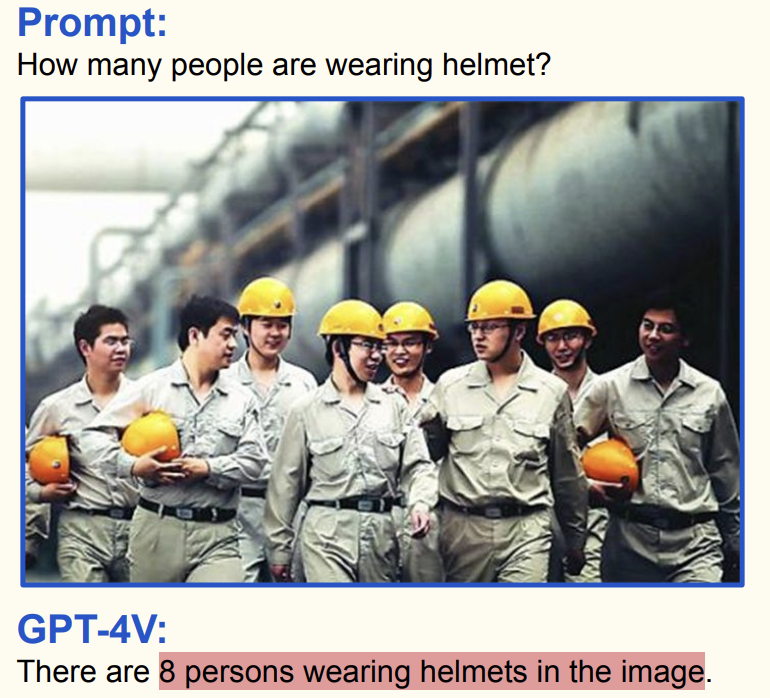
As impressive as the results have been, the model is still not 100% accurate. GPT-4V can generate errors when it comes to reading minute details or counting variables that are too similar. Thereby, mandating the need to QC or cross-check before relying on it completely.
Source: arxiv.org
Surpassing Other LMMs
A few months ago, when ChatGPT was compared with its closest rival Bard, the latter surpassed OpenAI’s chatbot in many criteria. The multimodal features such as voice/image and web browsing were the key features Bard had to its credit. However, all of them are now addressed through ChatGPT.
While GPT-4V may be versatile, accuracy remains a concern, which is also the same problem with Bard. A few of the users found incorrect responses from both GPT-4V and Bard when given a prompt that requires strategic thinking in a Pac-Man game.
GPT-4V fail. Bard fails too. I thought GPT-4V would get this one. #ChatGPT #GPT4 pic.twitter.com/vBAIILZxF8
— BeyondBacktesting (@BBacktesting) October 2, 2023
Redemption of ChatGPT
The multimodal feature of ChatGPT comes at a time when the chatbot had reportedly been witnessing a decline in users since July. As per recent reports, the website and mobile visits to ChatGPT decreased by 3.2% to 1.43 billion in August – a 10% drop from each of the previous months. With a series of product feature launches over the last couple of weeks, including voice integration, OpenAI is possibly looking at a redemption.
The user buzz created with people experimenting with GPT-4V, the chatbot might possibly see a spike in the next few months. Furthermore, with OpenAI DevDay just around the corner and expectations of the company making a few major announcements, the latest ‘vision’ function might probably be a teaser for what lies ahead for ChatGPT.
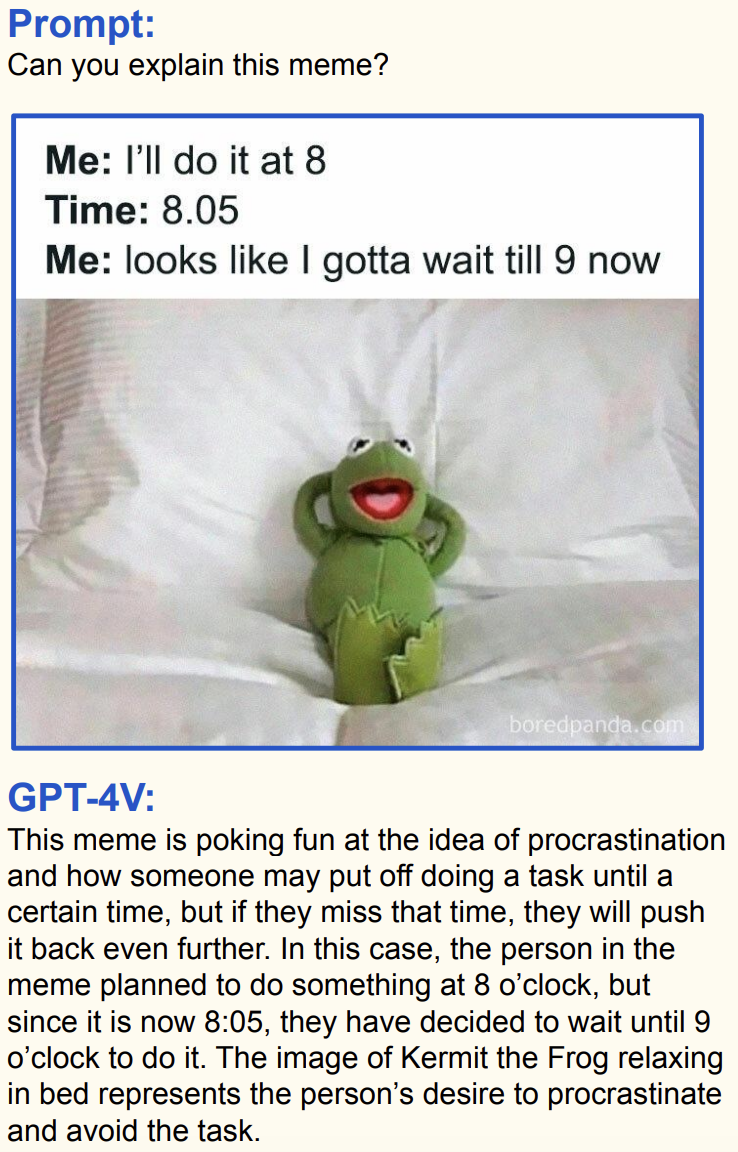
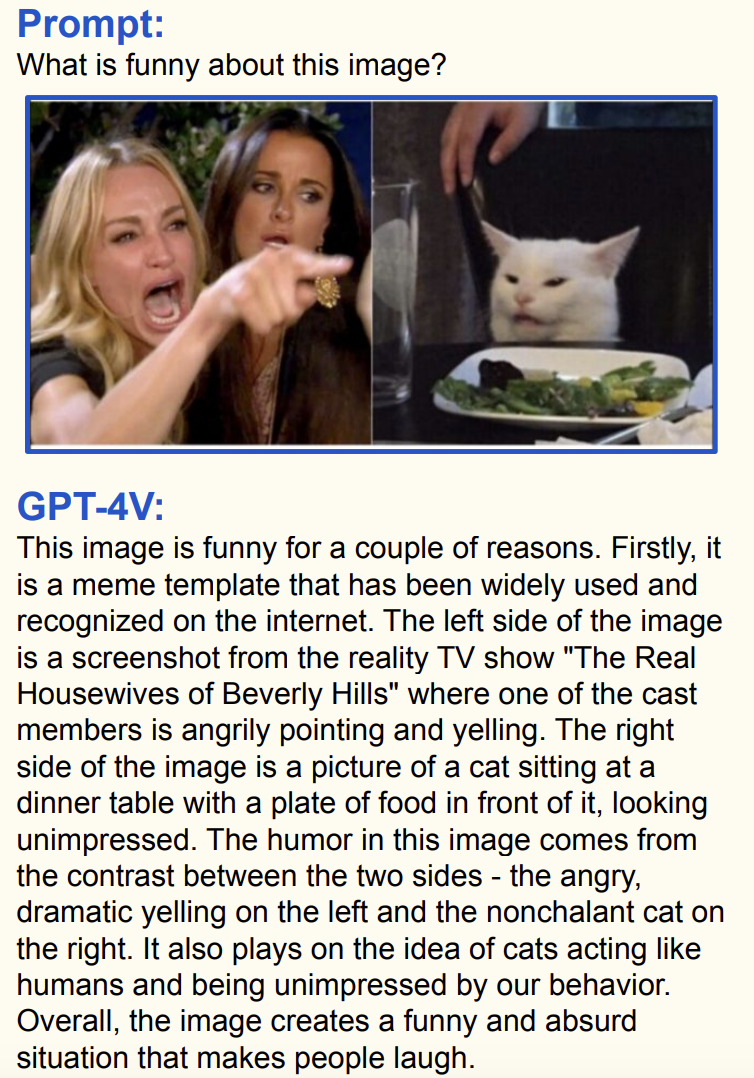
On a lighter note, in addition to causing breakthroughs with a serious range of functions, GPT4V can probably help you save face too, in case you don’t understand a meme or joke: a probable win for all.
Source: arxiv.org
The post ChatGPT’s Game-Changing ‘Vision’ appeared first on Analytics India Magazine.
LinkedIn was quick to embrace generative AI and deploy AI-supported features for its users. Now, the platform is doubling down on its AI features, adding new tools to its platform for recruiting, coaching, and more.
The first feature, Recruiter 2024, is a recruiting experience that leverages generative AI and LinkedIn insights to help recruiters find the talent they need quickly.
With Recruiter 2024, all a recruiter needs to do is type into the platform the criteria of the professional they'd like to hire using natural language. LinkedIn will then be able to assist by creating a project with the information and shortlisting a list of candidates that fit that criteria.
LinkedIn will also be able to make recommendations on how to optimize the search, such as expanding the targeted location or suggesting if the role should be hybrid, given the demographics of the people in the area, according to the release.
This experience, in conjunction with the AI-assisted messages feature released in May, which allows recruiters to use AI to compose InMail messages for potential candidates, should help to streamline recruiters' efforts.
LinkedIn also unveiled its new AI-powered Coaching Experience, which allows professionals to engage in AI-powered coaching by interacting with a chatbot that can provide real-time advice and tailored content for the user.
According to the release, users can enforce their management and leadership skills by asking questions such as "How can I delegate tasks and responsibility effectively?" The chatbot will follow up with questions to best understand your situation and then provide custom advice, examples, and feedback.
The chatbot coaching experience also helps connect users to the existing LinkedIn courses and materials that are best suited for them, even delineating where to start.
LinkedIn says that Recruiter 2024 and LinkedIn Learning's AI-powered coaching will be piloted to a handful of customers starting today, with a rollout to all Recruiter and Learning Hub customers throughout the year.
Lastly, LinkedIn also announced a tool for marketers called Accelerate for Campaign Manager. Using this tool, marketers will be able to get personalized, end-to-end campaign recommendations in as little as five minutes.
Accelerate is also being piloted to a limited number of North American customers starting today.
Google’s Controversial AI Chip Paper Under Scrutiny Again October 3, 2023 by Agam Shah
A controversial research paper by Google that claimed the superiority of AI techniques in creating chips is under the microscope for the authenticity of its claims. Science publication Nature is investigating Google's claims that artificial intelligence techniques helped floor-plan — or establish the basics construct of its AI chip — in under six hours, faster than human experts.
Nature put an editor's note on the paper, saying, "Readers are alerted that the performance claims in this article have been called into question. The Editors are investigating these concerns, and, if appropriate, editorial action will be taken once this investigation is complete."
Initially published in 2021, the paper was related to using AI to construct a version of its Tensor Processing Unit, or TPU, which the company is using in its cloud data centers for AI in applications that include Search, Maps, and Google Workspace.
The chip in question was identified on Twitter as TPU v5 by researcher Anna Goldie, who was among the 20 authors of the paper. Nature has put an asterisk on the paper.
Google said the intention was not to replace human designers but to show how AI could be a collaborative technique to speed up chip designs.
A version of the TPU-v5, the TPU-v5e, came out last month and is now available in Google Cloud.
It was Google's first AI chip released with a suite of software and development and virtualization tools so customers can budget and manage the orchestration and deployment of AI techniques. The new AI chip competes with Nvidia's H100 GPU and succeeds the previous-generation TPUv4, which was used to train the PaLM 2 large language models.
The controversial research paper has been plagued with trouble from the start. The paper's merits were questioned internally, and one of the paper's authors who spoke out, Satrajit Chatterjee, was fired and filed a lawsuit against Google for wrongful termination.
Google researchers said that the paper has gone through peer review. But the research has not held up well under challenges from independent researchers.
Google was criticized for releasing minimal amounts of information related to the research and resisting calls for the full release of data for public scrutiny. The company ultimately placed limited amounts of information on GitHub.
Google TPU board. Source: Google, "Inside a Google Cloud TPU Data Center" video
The research provides a framework to use deep-reinforcement learning to floor-plan the chip or lay down the building blocks of the TPU-v5 chip. The paper revolves around using AI to place large circuit blocks that perform specific macro functions in logical spots to generate chip designs. Macro placement is critical to chip design and a very challenging process.
Google's reinforcement learning technique developed a chip design using input information such as a circuit netlist comprised of connected circuit components and data such as configuring available tracks for wire rounds. The output was a clean chip design conducive to good macro placements.
In six hours, Google was able to put together the building blocks of a cohesive chip over a specific area within a specific power and performance envelope. Over time, the AI agent uses past learnings that reinforce its current knowledge to better place the chip modules under 10 nanometers.
The Google technique used a learning model that took 48 hours to train over 200 CPUs and 20 GPUs, and those hours were not accounted for in the total time it took to design the chip.
One challenger to Google's research, Andrew B. Kahng, a professor of computer science at the University of California, San Diego, found Google needed to be more cooperative. He criticized Google's unwillingness to release critical data such as circuit training datasets, baseline information, or other code for other researchers to reproduce the results.
He had to reverse engineer Google's chip-design techniques and found human chip designers and automated tools could sometimes be faster than Google's AI-only technique. In March, he presented a paper on his findings at the International Symposium on Physical Design, in which he detailed chip design involving humans and standard software tools sometimes being faster or more effective. However, he did not question the value of Google's techniques.
Flaws aside, the research contributes to chip design research, and Google is one of the few companies to share information on AI techniques it uses for chip design. It builds on behind-the-doors work already done by Cadence and Synopsys to bring AI to chip design. AMD and Amazon have claimed to use AI in chip design but have not discussed their techniques.
The Nature fiasco is not the first time Google's hardware research has come under the microscope. Google, in 2019, claimed quantum supremacy, with quantum computers outperforming classical computers. Google argued that its 54-qubit system called Sycamore, in which the qubits are arranged in a 2D array in 200 seconds, solved a specific problem that would take classical supercomputers 10,000 years.
IBM disputed the claim, saying the paper was flawed and was creating confusion on quantum and supercomputing performance, and set out to disprove Google's theory. A subsequent IBM paper claimed that its Summit computer, with the help of additional secondary storage, could achieve six times better performance than the one declared in Google's quantum supremacy paper and solve problems in a reasonable amount of time.
Google's controversial 2019 quantum paper, considered groundbreaking at that time, was also based on closed-door experiments and has not aged well. In subsequent years, more researchers stepped forward to challenge Google's claims. The flaw was Google's apples-to-oranges comparison of its optimized quantum algorithms against older, slower classical algorithms.
It is unclear if TPU v5e was designed using the reinforcement learning technique, but Google has claimed superior performance with the chip compared to the previous generation TPUv4.
Eight TPU v5e chips can train large language models with up to 2 trillion parameters. This month, Google claimed that "each TPU v5e chip provides up to 393 trillion int8 operations per second (TOPS), allowing fast predictions for the most complex models," implying the chip is primarily designed for low-leverage inferencing operations. Training typically requires a floating-point pipeline.
Google is trying to play catch up in AI with Microsoft, which uses OpenAI's GPT-4 and Nvidia GPUs in its Azure AI supercomputer. The company recently integrated its Bard chatbot into Google Workspace, web search, and other tools. The Bard tools run their AI calculations off the TPUs.
I recently subscribed to openAI GPT4 for the OpenAI Code Interpreter/Advanced data analytics.
We are using it in our class at the University of Oxford.
Its really cool and we are also waiting the multimodal openAI features
Recently, a well known AI critic said that he does not see how Generative AI companies could be profitable due to the high cost of running an LLM (GPU, Energy etc)
This made me think, as someone who just subscribed to an LLM, how many LLMs would you subscribe to today and why?
Here are some reasons why:
Innovation: Firstly, the sheer rate of change, especially from OpenAI gives the fear of missing out to many. Both multimodal AI and Code interpreter are game changers.
Developers: Microsoft believes that developers will pay 30 USD/month for tools like Github copilot. For a productivity increase, this will be justified.
Specific platform strategic alignments: On our radar are Anthropic with its investment from Google and AWS and also hugging face with its investment from IBM
Open source: Similarly, open source tools like llama2 are high on innovation agenda
Finally, we are fans of emerging tools like llamaindex
In a nutshell, this is a rapidly evolving ecosystem with shifting value.
If you are a knowledge worker, the increase in productivity will justify the investment. The specific platform may differ as above – but the productivity boost will justify the investment into paid subscription in generative AI.
Considering my personal subscription Open AI Code interpreter
There are many stages of the data science pipeline that it could perform
These include
Data cleaning
Image Editing
File Conversion
Text Sentiment Analysis
Web Scraping
Audio/Video Editing
Anonymizing Data
Image Captioning
ML Model Training Automation
Data Visualization
Survey Analysis with Code Interpreter
Etc
In other words, there are many reasons why people would actually subscribe to generative AI
Programming is a constant game of mental Jenga: one line of code stacked upon another, building a tower of code you hope is robust enough not to come crashing down.
But it always does, as code never works the first time it's run. So, one of the key skills for any programmer is debugging — the art and science of finding why code isn't running or is doing something unexpected or undesirable.
It's a little like being a detective, finding clues, and then finding out what those clues are trying to tell you. It's very frustrating and very satisfying, sometimes at exactly the same time.
I do a lot of debugging. It's not just because code never works the first time it's run. It's also because I use the debugging to tell me how the code is running, and then tweak it along the way.
But while good debugging does require its own special set of skills, it's also ultimately just programming. Once you find out why a block of code isn't working, you have to figure out how to write something that does work.
Real-world ChatGPT testing
This week, I was working on three coding tasks for software that I maintain. Two were fixes for bugs reported by users. One was a new piece of code to add a new feature. This was real, run-of-the-mill programming work for me. It was part of my regular work schedule.
I'm telling you that, because up until now, I've tested ChatGPT with test code. I've made up scenarios to see how well ChatGPT would work. This time, it was different. I was trying to get real work done, and decided to see if ChatGPT could be a useful tool to get that work done.
It's a different way to look at ChatGPT. Test scenarios are often a bit contrived and simplistic. Real-world coding is actually about pulling another customer support ticket off the stack and working through what made the user's experience go south.
So, with that, let's look at those tasks and see how ChatGPT performed.
Rewriting regular expression code
In coding, we have to find a lot of patterns in text. To do so, we use a form of symbolic math called regular expressions. I have been writing regular expressions for decades, and I still dislike doing so. It's tedious, error-prone, and arcane.
So, when a bug report came in telling me that a part of my code was only allowing integers when it should be allowing for dollars and cents (in other words, some number of digits, possibly followed by a period, and then if there was a period, followed by two more digits), I knew I'd need to use regular expression coding.
Since I find that process tedious and annoying, I decided to ask ChatGPT for help. Here's what I asked:
And here's the AI's very well-presented reply (click the little square to enlarge):
I dropped ChatGPT's code into my function, and it worked. Instead of about two-to-four hours of hair-pulling, it took about five minutes to come up with the prompt and get an answer from ChatGPT.
Reformatting an array
Next up was reformatting an array. I like doing array code, but it's also tedious. So, I once again tried ChatGPT. This time the result was a total failure.
By the time I was done, I probably fed it 10 different prompts. Some responses looked promising, but when I tried to run the code, it errored out. Some code crashed; some code generated error codes. And some code ran, but didn't do what I wanted.
After about an hour, I gave up and went back to my normal technique of digging through GitHub and StackExchange to see if there were any examples of what I was trying to do, and then writing my own code.
So far, that's one win and one loss for the ChatGPT experience. But now I decided to raise the challenge.
Actually finding the error in my code
OK, so this next bit is going to be hard to explain. But think about the fact that if it's hard to explain to you (presumably a human and not one of the 50 or so bots that merely copy and republish my work on scammy, spammy websites), it is even more challenging to explain it to an AI.
I was writing new code. I had a function that took two parameters, and a calling statement that sent two parameters to my code. Functions are little black boxes that perform very specific functions and they are called (asked to do their magic) from lines of code running elsewhere in the program.
The problem I found was that I kept getting an error message.
The salient part of that message is where it states "1 passed" at one point and "exactly 2 expected" at another. I looked at the calling statement and the function definition and there were two parameters in both places.
W-the-ever-loving-F?
After about 15 minutes of deep frustration, I decided to throw the problem to the AI to see if it could help. So, I wrote the following prompt:
I showed it the line of code that did the call, I showed it the function itself, and I showed it the handler, a little piece of code that dispatches the called function from a hook in my main program.
Within seconds, ChatGPT responded with this (click the little square to enlarge):
Just as it suggested, I updated the fourth parameter of the add_filter() function to 2, and it worked!
ChatGPT took segments of code, analyzed those segments, and provided me with a diagnosis. To be clear, in order for it to make its recommendation, it needed to understand the internals of how WordPress handles hooks (that's what the add_filter function does), and how that functionality translates to the behavior of the calling and the execution of lines of code.
Also: I asked ChatGPT to write a WordPress plugin I needed. It did it in less than 5 minutes
I have to mark that achievement as incredible — undeniably 'living in the future' incredible.
What does it all mean?
As I mentioned earlier, debugging is a bit of art and a bit of science. Most good development environments include powerful debugging tools that let you look at the flow of data through the program as it runs, and this does help when trying to track down bugs.
But when you're stuck, it's often difficult to get help. That's because even a close colleague may not be familiar with the full scope of the code you're debugging. The program I'm working on consists of 153,259 lines of code across 563 files — and as programs go, that's small.
Also: These experts are racing to protect AI from hackers
So, if I had wanted to get help from a colleague, I might have had to construct a request almost identical to the one I sent to ChatGPT.
But here's something to consider: I remembered to include the handler line even though I didn't realize that's where the error was. As a test, I also tried asking ChatGPT to diagnose my problem in a prompt where I didn't include the handler line, and it wasn't able to help. So, there are very definite limitations to what ChatGPT can do for debugging right now, in 2023.
Essentially, you have to know how to ask the right questions in the right way, and those questions need to be concise enough for ChatGPT to handle the whole thing in one query. That's something that takes actual programming knowledge and experience to know how to do.
The potential cost of AI-assisted debugging
Keep in mind that the AI doesn't replace all your other debugging tools. You'll still need to step through code, examine variable values, and understand how your code works. I found that ChatGPT can help identify areas to look at and provide some simple code blocks. In a way, it's a lot like using coding templates, except you don't have to pre-build those templates to incorporate them into your code. It's a helper, but it's not a coding replacement.
Also: Can AI code? In baby steps only
Could I have fixed the bug on my own? Of course. I've never had a bug I couldn't fix. But whether it would have taken two hours or two days (plus pizza, profanity, and lots of caffeine), while enduring many interruptions, that's something I don't know. I can tell you ChatGPT fixed it in minutes, saving me untold time and frustration.
ZDNET's Tiernan Ray recently published a fascinating article that cites a Texas Tech University study showing that AI performance in coding is still highly unreliable. Keep this in mind, because if AI is struggling to write complex code, it will have even more difficulty debugging complex code.
Most programmers have a range of debugging tools at their disposal and choose the tools they're going to use based on whatever problem they're currently trying to diagnose. There is no doubt that AI tools can be added to that toolbox. But be careful about overusing them. Because AI is essentially a black box, you're not able to see what process the AI undertakes to come to its conclusions. As such, you're not really able to check its work.
The potential cost of this is enormous. For traditional debugging tasks, the programmer is always able to see exactly what changes are being incorporated into the code. Even if those changes don't always work, the programmer is certainly aware of why those changes were attempted. But when relying on AI-based debugging —even in part — the programmer is separated farther from the code, and that makes the resulting work product far harder to maintain. If it turns out there is a problem in the AI-generated code, the cost and time it takes to fix may prove to be far greater than if a human coder had done the full task by hand.
As I showed above in my examples, AI coding tools can help (at least two times out of three). But they don't always work and they should never be relied on as a substitute for real understanding. Failure to remember that could be costly, indeed.
Looking toward the (possibly dystopian) future
I see a very interesting future, where it will be possible to feed ChatGPT all 153,000 lines of code and ask it to tell you what to fix. Microsoft (which owns GitHub) already has a public beta release of a Copilot tool for GitHub to help programmers build code. Microsoft has also invested billions of dollars in OpenAI, the makers of ChatGPT.
While the service might be limited to Microsoft's own development environments, I can see a future where the AI has access to all the code in GitHub, and therefore all the code in any project you post to GitHub.
Given how well ChatGPT identified my error from the code I provided, I can definitely see a future where programmers can simply ask ChatGPT (or a Microsoft-branded equivalent) to find and fix bugs in entire projects.
And here's where I take this conversation to a very dark place.
Imagine that you can ask ChatGPT to look at your GitHub repository for a given project, and have it find and fix bugs. One way could be for it to present each bug it finds to you for approval, so you can make the fixes.
But what about the situation where you ask ChatGPT to just fix the bugs, and you let it do so without bothering to look at all the code yourself? Could it embed something nasty in your code?
And what about the situation where an incredibly capable AI has access to almost all the world's code in GitHub repositories? What could it hide in all that code? What nefarious evil could that AI do to the world's infrastructure if it can access all our code?
Let's play a simple thought game. What if the AI was given Asimov's first rule as a key instruction. That's a "robot shall not harm a human, or by inaction allow a human to come to harm". Could it not decide that all our infrastructure was causing us harm? By having access to all our code, it could simply decide to save us from ourselves by inserting back doors that allowed it to, say, shut off the power grid, ground planes, and gridlock highways.
I am fully aware the scenario above is hyperbolic and alarmist. But it's also possible. After all, while programmers do look at their code in GitHub, it's not possible for anyone to look at all the lines in all their code.
As for me, I'm going to try not to think about it too much. I don't want to spend the rest of the 2020s in the fetal position rocking back and forth on the floor. Instead, I'll use ChatGPT to occasionally help me write and debug little routines, keep my head down, and hope future AIs don't kill us all in their effort to "not allow a human to come to harm."
Do you find the fact that ChatGPT can debug code helpful or terrifying? Do you think AIs will murder us in our sleep, or do you think we'll be watching our doom with our eyes wide open? Or are you, like me, going to try not to think about it too much because it makes your head hurt? Talk to me in the comments below. While you still can.
You can follow my day-to-day project updates on social media. Be sure to follow me on Twitter at @DavidGewirtz, on Facebook at Facebook.com/DavidGewirtz, on Instagram at Instagram.com/DavidGewirtz, and on YouTube at YouTube.com/DavidGewirtzTV.