Cracking the code: The rising demand for data scientists in various industries

Cracking the Code: The Rising Demand for Data Scientists in Various Industries

In the ever-evolving landscape of the digital era, the relentless quest for deriving actionable insights from a sea of information has become the cornerstone of innovation and strategy. As businesses and organizations strive to navigate the complex corridors of big data, the spotlight invariably falls upon the expertise of data scientists, the modern-day architects of data comprehension and utilization. These professionals stand at the intersection of analytics, programming, and sector-specific knowledge, meticulously deciphering patterns and trends that can steer pivotal decisions and strategies.

At this pivotal juncture, a burgeoning demand for data scientists is witnessed across industries, transcending traditional boundaries and embedding itself as a necessity in various sectors. As we stand on the cusp of a data-driven revolution, dissecting this soaring demand and delineating the pathways for aspiring individuals to embark on a promising journey in this field is imperative.

The evolution of data science

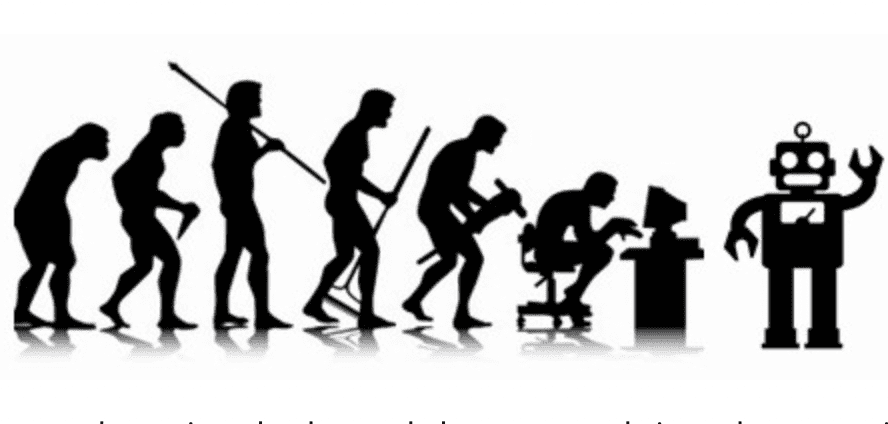
Data science emerges as a formidable chapter in the grand narrative of technological evolution, heralding a new era of informed decision-making and innovation. The discipline has metamorphosed from tracing its roots to statistical analysis and data mining, incorporating sophisticated algorithms and computational abilities into its arsenal. The synthesis of statistics, computer science, and domain expertise, which forms the cornerstone of data science, has evolved to tackle the complexities of modern-day data structures and voluminous datasets.

At its nascent stage, the focus was primarily on data collection and storage; however, as technology advanced, the emphasis shifted towards extracting meaningful insights from this stored data. A data scientist harnesses data and communicates the extracted information effectively to influence business strategies and policies. As we navigate further into the digital age, the evolution of data science becomes even more intricate, expanding its reach and influence and solidifying its crucial role in various industries around the globe.
image

A deep dive into the role of a data scientist

As the world increasingly transitions to a data-centric modality, the role of a data scientist evolves into a vital pillar supporting the scaffold of contemporary industries. Being a data scientist is akin to being a storyteller, a detective, and a strategist. These professionals must weave through the labyrinthine pathways of data, sifting through the noise to discern patterns and draw actionable insights that foster innovation and drive business acumen.

At the heart of their skill set lies a robust foundation in mathematics and statistics, coupled with an adept understanding of programming languages and tools essential for data manipulation and analysis. Often, a Master in Data Science degree stands as testimony to their refined expertise, augmenting their ability to merge technical prowess with business intelligence. Moreover, they are expected to have a keen eye for detail and a profound understanding of their industry, allowing them to tailor their approaches to solving complex problems with data-driven solutions.

The allure of this profession lies in its dynamic nature, where no two days are the same. Daily, they grapple with new challenges, continuously innovating and enhancing their strategies to adapt to the changing tides of the business landscape. Thus, a data scientist emerges as a beacon of expertise, guiding organizations toward a future with informed decisions and calculated strides toward progress and growth.

Rising demand across various industries

In an epoch where data is dubbed the new oil, industries across the spectrum are witnessing an unprecedented surge in the demand for data scientists. This uptick is not confined to the realms of technology and finance but permeates into sectors as diverse as healthcare, e-commerce, and manufacturing.

  • Healthcare: In healthcare, data scientists are revolutionizing the sector by deploying predictive analytics to forecast disease outbreaks and customize medicine, thus promising a new dawn of preventative and individualized healthcare.
  • Finance: The finance sector leans heavily on data science for risk management, employing intricate algorithms to detect fraud and safeguard investments, a vital measure in an ever-fluctuating market.
  • E-commerce: Conversely, e-commerce giants leverage data science to refine customer experiences through segmentation and crafting intelligent recommendation systems, fostering a more personalized shopping journey.
  • Manufacturing: The manufacturing sector isn’t far behind, implementing predictive maintenance strategies and optimizing production lines, thereby heralding a new era of efficiency and sustainability.

Thus, the rising demand for data scientists across diverse industries is a testament to the profession’s versatility and the immense value it adds in deciphering complex data, fostering innovation, and driving informed strategies, promising a transformative impact on the global industrial landscape.

Bridging the skill gap through education

Cracking the code: The rising demand for data scientists in various industries

As the clamor for data science expertise escalates, the existing educational pathways are witnessing a metamorphosis to foster a brigade equipped with the requisite skills and knowledge. A vital instrument in this endeavor has been the proliferation of online data science courses, offering accessible and flexible avenues for learning. These platforms are meticulously curated to bridge the skill gap, paving the way for aspirants to venture into this lucrative field with a solid foundation.

In this dynamic scenario, continuous learning emerges as a quintessential aspect. The data science landscape is ever-evolving, necessitating professionals to keep up-to-date with the latest tools and techniques. These educational platforms serve as hubs of knowledge dissemination, fostering a community of learners keen to innovate and drive change.

Thus, in the wake of a data-driven era, the educational sphere is stepping up, offering diverse and robust channels to nurture the next generation of data scientists, ready to steer the wheel of innovation in various industries.

Wrap up

As we stand at the nexus of technological advancement and data proliferation, the role of data scientists crystallizes as instrumental in shaping a progressive future. From fostering innovation in healthcare to propelling advancements in finance and manufacturing, the prowess of data science is undeniably transformative. Aspiring professionals stand before an open vista of opportunities, where acquiring skills through a data science course can be the gateway to making significant strides in this dynamic field. In this data-centric epoch, a career in data science is a personal progression and a contribution to a global movement toward a brighter, more informed, innovative society.


DSC Weekly 3 October 2023

Announcements

  • End-user computing must now account for the millions of workforces that have transitioned to hybrid and remote models. Virtual workspace models such as DaaS and VDI allow users to access virtual desktops to help streamline their workflow and minimize the burden on IT staff. However, companies must consider cost, scalability and management when deploying a virtual workspace, as well as security strategies to ensure workers are protected and able to remain productive. Join the Next-Generation End User Computing summit to discover how to best implement and manage hosted and virtual workspaces including DaaS and VDI.
  • To truly utilize the capabilities of the cloud, enterprises must implement a cloud-like experience for their on-premises data centers and improve their public cloud connections. This means that the future of the data center looks quite different from the present. Enterprises in the midst of modernizing their application infrastructure and migrating to the cloud are increasingly realizing they also need a cloud-like experience for on-premises data centers. To learn more about how to improve public cloud connectivity, attend the Updating the Enterprise Data Center online summit to gain access to live webinars and fireside chats from the world’s leading innovators, vendors and evangelists.

Top Stories

  • Generative AI megatrends: How many LLMs would you subscribe to?
    October 3, 2023
    by Ajit Jaokar
    I recently subscribed to openAI GPT4 for the OpenAI Code Interpreter/Advanced data analytics. We are using it in our class at the University of Oxford. Its really cool and we are also waiting the multimodal openAI features.
  • Entity Language Models: Monetizing Language Models – Part 2
    October 1, 2023
    by Bill Schmarzo
    We must move beyond just taming…to monetizing Language Models! In part 1 of this series on Small Language Models (“Use Case Language Models: Taming the LLM Beast – Part 1”), I explored the business and operational value of Use Case-specific Small Language Models (Use Case Language Models).
  • Doing graph + tabular analytics directly on modern data lakes
    September 26, 2023
    by Alan Morrison
    A podcast with Weimo Liu and Sam Magnus of PuppyGraph Open source Apache Iceberg, Hudi and Delta Lake have made it possible to dispense with the complexities and duplication of data warehousing. Instead of requiring time-consuming extract, transform and load (ETL) procedures, these large table formats make it simple to tap S3 and other repositories.
Education_DSC_160x600-2

In-Depth

  • Generative AI Megatrends: ChatGPT can see, hear and speak – but what does it mean when chatGPT can think?
    October 3, 2023
    by Ajit Jaokar
    One of the most impressive generative AI applications I have seen is viperGPT. The image / site explains it best. The steps are: This example, earlier this year, showed the potential of multimodal LLMs And as of last week, that future is upon us ChatGPT can now see, hear & speak.
  • Cracking the code: The rising demand for data scientists in various industries
    October 3, 2023
    by Erika Balla
    In the ever-evolving landscape of the digital era, the relentless quest for deriving actionable insights from a sea of information has become the cornerstone of innovation and strategy. As businesses and organizations strive to navigate the complex corridors of big data, the spotlight invariably falls upon the expertise of data scientists.
  • A few highlights of the Efficient Generative AI Summit (EGAIS)
    October 3, 2023
    by Alan Morrison
    Large language models (LLMs) for generating text and vision models for generating images are notoriously inefficient. The larger they get, the more power hungry they become. Kisaco Research in September hosted a one-day event in Santa Clara dedicated to the topic of generative artificial intelligence (GAI) efficiency, followed by a three-day Summit.
  • How will the Big Data market evolve in the future?
    September 28, 2023
    by Rytis Ulys
    Big data has been around for some time now, becoming a more or less common concept in business. However, recent developments in AI technology have shaken up an already volatile field, inviting us to reconsider our projections of how the big data market will look in the future.
  • DSC Weekly 26 September 2023
    September 26, 2023
    by Scott Thompson
    Read more of the top articles from the Data Science Central community.
  • In fraud detection for e-commerce: How does anomaly detection fit in and what are the key approaches?
    September 25, 2023
    by John Lee
    E-commerce has improved technology and convenience for consumers globally. Fraud is a problem in e-commerce. Merchants and platforms fight fraud to protect their businesses and customers. Anomaly detection is a powerful tool for identifying irregular patterns and potential fraud.

Is AI in software engineering reaching an ‘Oppenheimer moment’? Here’s what you need to know

Abstract coding on screen with keyboard in front of it

This morning, when I put gas in my car, I grumbled because prices went up again. Today, gas prices rose to $4.55 per gallon.

But then, I started to ask a number of questions about what it took to get that six pounds of volatile liquid to me, particularly how software fueled the process. Software analyzed geological data and managed the drilling machines to make sure they didn't overheat. Software helped track weather and guided the giant ships transporting the fuel. It managed the refinery systems and provided safety monitoring. Further, it managed payment and pump operations to get it into my car.

Also: How to use ChatGPT to write code

Then, there's what it took to write the software that helped locate the fuel underground. It's certainly not one programmer sitting down with a Coke and pizza and writing code while listening to Rush. Industrial software, like that driving deep drilling machines, requires specialized software engineering.

And that software engineering was probably assisted by AI.

I find myself enormously excited yet deeply terrified in equal measure. AI may well be software engineering's "nuclear" moment, where we're bringing enormously powerful new capabilities into the world, but what's contained in those capabilities? The power to destroy.

You can follow my day-to-day project updates on social media. Be sure to subscribe to my weekly update newsletter on Substack, and follow me on Twitter at @DavidGewirtz, on Facebook at Facebook.com/DavidGewirtz, on Instagram at Instagram.com/DavidGewirtz, and on YouTube at YouTube.com/DavidGewirtzTV.

Gmail to enforce harsher rules in 2024 to keep spam from users’ inboxes

Gmail to enforce harsher rules in 2024 to keep spam from users’ inboxes Sarah Perez @sarahintampa / 11 hours

Google today is announcing a series of significant changes to how it handles email from bulk senders in an effort to cut down on spam and other unwanted emails. The company says that starting next year, bulk senders will need to authenticate their emails, offer an easy way to unsubscribe and stay under a reported spam threshold.

The changes will impact any bulk sender, which Google defines as those who send more than 5,000 messages to Gmail addresses in one day. That could include virtually any business with a decently-sized mailing list, from large retailers to big tech companies to even smaller startups and B2C companies or newsletter writers looking to market themselves through email messaging.

Google claims that it already leverages AI technology to stop more than 99.9% of spam, phishing and malware from reaching users’ inboxes, and it blocks 15 billion unwanted emails per day. But as technology improves, so must Google’s defenses for its now 20-year-old email system.

For starters, Gmail will be building on a policy it introduced last year that requires emails sent to Gmail addresses to have some form of authentication to validate that the sender is who they claim to be. This change was necessary because many bulk senders don’t properly secure and configure their system, which allows an attacker to “easily hide in their midst,” a Google blog post explains. While this reduced the number of unauthenticated messages Gmail users received by 75%, now, Google will require bulk senders to strongly authenticate their emails following a set of documented best practices by February 2024.

It will also require bulk senders to allow users to unsubscribe in a single click and for those unsubscribe requests to be processed within two days.

Perhaps more controversially, Google will also require bulk senders to stay under a clear spam rate threshold — something the company notes is an industry first. This means that if enough users are marking a sender’s emails as spam, the bulk sender could lose access to users’ inboxes.

While Google is announcing the changes in advance of their 2024 arrival, it also notes it’s working with industry partners to institute the new policies as well. Yahoo (which owns TechCrunch), is already on board.

“No matter who their email provider is, all users deserve the safest, most secure experience possible,” said Marcel Becker, senior director of Product at Yahoo, in a statement. “In the interconnected world of email, that takes all of us working together. Yahoo looks forward to working with Google and the rest of the email community to make these common sense, high-impact changes the new industry standard,” he added.

Google noted that many bulk senders already meet the new requirements and it will continue to offer clear guidance before the changes go into effect in February 2024.

Generative AI Megatrends: ChatGPT can see, hear and speak – but what does it mean when ChatGPT can think?

One of the most impressive generative AI applications I have seen is viperGPT.

Generative AI Megatrends: ChatGPT can see, hear and speak – but what does it mean when ChatGPT can think?

The image / site explains it best. The steps are:

  1. You start with an image and a prompt. Ex how would you divide the muffins between two boys
  2. No other information is provided
  3. Using computer vision, the LLM detects that there are two boys and 8 muffins in the image
  4. Then the LLM generates code to divide these muffins between the two boys – coming up with the answer of 4

This example, earlier this year, showed the potential of multimodal LLMs

And as of last week, that future is upon us

ChatGPT can now see, hear & speak.

What are the implications of it (as per the open AI announcements)

  • You can speak with ChatGPT and have it talk back
  • You can provide Image and voice input and get voice output
  • ChatGPT can understand and generate text in various languages, styles, and tones

With multimodal ability, you can also work on higher level skills which involve engaging with chatGPT through multiple modalities

This includes

  1. Rehearsals – drama rehearsals
  2. Soft skills – preparing for teaching
  3. Scenario modelling –
  4. Completing artwork – ex take a picture of a painting and suggesting a story from it
  5. Suggesting content from images – ex show the London underground map and ask for verbal directions

But we could go higher levels of abstraction for creation

  1. Create an app from a sketch
  2. Design a game from a diagram

But what happens when the code generation ability takes on its full impact? In it;s ultimate incarnation, that implies an ability to reason. The real value is in the ability to create better code which ties the other modalities together – much as we see in ViperGPT

Generative AI Megatrends: ChatGPT can see, hear and speak – but what does it mean when chatgPT can think?

One of the most impressive generative AI applications I have seen is viperGPT.

The viperGPT image / site explains it best. The steps are:

  1. You start with an image and a prompt. Ex how would you divide the muffins between two boys
  2. No other information is provided
  3. Using computer vision, the LLM detects that there are two boys and 8 muffins in the image
  4. Then the LLM generates code to divide these muffins between the two boys – coming up with the answer of 4

This example, earlier this year, showed the potential of multimodal LLMs

And as of last week, that future is upon us

ChatGPT can now see, hear & speak.

What are the implications of it (as per the open AI announcements)

  • You can speak with ChatGPT and have it talk back
  • You can provide Image and voice input and get voice output
  • ChatGPT can understand and generate text in various languages, styles, and tones

With multimodal ability, you can also work on higher level skills which involve engaging with chatGPT through multiple modalities

This includes

  1. Rehearsals – drama rehearsals
  2. Soft skills – preparing for teaching
  3. Scenario modelling –
  4. Completing artwork – ex take a picture of a painting and suggesting a story from it
  5. Suggesting content from images – ex show the London underground map and ask for verbal directions

But we could go higher levels of abstraction for creation

  1. Create an app from a sketch
  2. Design a game from a diagram

But what happens when the code generation ability takes on its full impact?

In it’s ultimate incarnation, that implies an ability to reason.

Thus, the real value is in the ability to create better code which ties the other modalities together – much as we see in ViperGPT

Image source: viperGPT

The Top 5 Data Management Tools For Your Projects

The Top 5 Data Management Tools For Your Projects

Data management involves receiving, validating, and refining data to ensure reliability for users. Data management tools are capable of carrying out a wide array of functions such as rigorous storage, analysis, distribution, and synchronization of data. It is mostly used for Product Information Management, Customer Databases Management, Multimedia Sources Management, and Administrative and Financial Resources Management.

The management of data can be made easier through automation, which reduces redundancies and errors while saving time and costs. These tools aren’t just handy for storage but can also provide features for analyzing data, monitoring file usage, updating associated platforms and applications, etc.

The main types of data management tools are:

  • Cloud data management tools
  • ETL and data integration tools
  • Data transformation tools
  • Master data management (MDM) tools
  • Data visualization and analytics tools

Each category serves a different purpose in managing large datasets efficiently.

AWS 🔑 Key Points

  • Offers multiple tools and databases
  • Pay-as-you-go basis solutions
  • Cost effective for smaller businesses

✅ Pros

  • Includes a variety of databases and tools
  • Offers a comprehensive solution to manage and develop your data needs
  • Cost-effective
  • Highly reliable and available

❌ Cons

  • Using some tools can be difficult due to their complex user interface
  • Billing can be confusing
  • Require experts in cloud computing

Cloud Data Management (AWS) provides a wide range of cloud computing services that enable organizations to build sophisticated data management pipelines and analytics workflows. Key offerings include Amazon Redshift, a data warehousing service that allows for easy scaling and SQL-based analysis of petabytes of structured data. Amazon Athena enables serverless SQL queries directly against data stored in S3. The AWS services create a powerful cloud-based platform for managing and deriving insights from large datasets. The pay-as-you-go pricing model allows organizations flexibility and reduces infrastructure costs.

Fivetran 🔑 Key Points

  • Fully managed data pipeline
  • No data limit
  • One platform for all your data movement
  • Automation, reliability and scale

✅ Pros

  • Great value for money
  • Straight forward setup
  • Low code ELT data operations
  • Easy Integration

❌ Cons

  • Lacking Custom features
  • Occasional delays do occur
  • Syncing large amounts of data can be expensive

Fivetran is a cloud-based data integration platform that automates the movement and transformation of data between sources and destinations. It provides pre-built connectors to easily extract data from applications, databases, APIs, and files, and load it into data warehouses and lakes. With its powerful capabilities, Fivetran enables seamless extraction, loading, and transformation of data across various sources and destinations, making data integration a breeze.

dbt 🔑 Key Points

  • SQL transformations
  • Can be run within your own data warehouse, lake, database, or query engine
  • Version Control and CI/CD
  • Test and Document

✅ Pros

  • dbt transformations are written in SQL
  • Transformations are streamlined
  • Transformations are run in near real-time
  • The operational features like CI/CD, versioning, and collaboration

❌ Cons

  • Not for non-technical users
  • dbt is centered on transformations only and limited
  • There are a number of missing data lakes, relational databases, and data warehouses

dbt (data build tool) is an open-source platform for managing and executing SQL-based data transformations. It allows analysts and data engineers to develop modular, reusable transformation logic that can be applied across data sources within a data platform like a warehouse, lake, or database. dbt handles dependency mapping, schema compilation, and execution of transformation code while providing tools for refactoring, documentation, testing, and version control.

Informatica 🔑 Key Points

  • Enterprise master data management solution
  • Integrations with third-party applications
  • Modular Configuration
  • Great scalability and security

✅ Pros

  • The data-cleaning capabilities of Informatica are highly valuable
  • The match and merge capabilities, along with the audit trail feature, are highly efficient
  • Accurate and consistent master data management

❌ Cons

  • Complicated and difficult to understand initial setup
  • The UI needs updating
  • Needs improvement in data catalog and data marketplace

Informatica is an enterprise master data management solution that competes with IBM's InfoSphere and Oracle's Siebel UCM. It is a flexible, multidomain solution supporting master data management both on-premises and in the cloud. A key advantage of Informatica is its ability to handle multiple domains and relationships of master data, whether on-premises or in the cloud. It provides a centralized platform to discover, explore, manage and share master data across the organization through various tailored applications. This improves data quality, governance and business productivity.

Tableau 🔑 Key Points

  • Powerful tool for data discovery and exploration
  • It can connect to several data sources
  • Tableau Server provides a centralized location for managing all published data sources in an organization

✅ Pros

  • Easy to use.
  • Free for community
  • Multiple Integration
  • High Performance
  • Sharing and Collaboration

❌ Cons

  • Pro version is expensive
  • Security problem
  • Lacks features that are present in a full-fledged business intelligence tool

Tableau is an excellent data visualization and business intelligence tool for analyzing and visualizing vast volumes of data. It helps users create charts, graphs, maps, dashboards, and stories to visualize and analyze data to help make business decisions. Tableau supports powerful data discovery and exploration, enabling users to answer essential questions in seconds. Users without prior programming knowledge can begin creating visualizations immediately using Tableau. Moreover, you can connect to several data sources that other BI tools do not support. With Tableau, users can generate reports by combining and blending various datasets.

Data management tools play a critical role in organizing, processing, and analyzing data to drive business insights. As data volumes continue to grow, having robust tools to manage data throughout its lifecycle becomes even more important.

This article provided an overview of five leading data management solutions: AWS, Fivetran, dbt, Informatica MDM, and Tableau. Each tool serves a different purpose, from handling cloud data at scale to seamless ETL pipelines to master data management and analytics.

Abid Ali Awan (@1abidaliawan) is a certified data scientist professional who loves building machine learning models. Currently, he is focusing on content creation and writing technical blogs on machine learning and data science technologies. Abid holds a Master's degree in Technology Management and a bachelor's degree in Telecommunication Engineering. His vision is to build an AI product using a graph neural network for students struggling with mental illness.

More On This Topic

  • Data Management: How to Stay on Top of Your Customer's Mind?
  • Top Data Science Projects to Build Your Skills
  • Top 5 Data Management Platforms
  • 2024 Data Management Crystal Ball: Top 4 Emerging Trends
  • Top 6 Tools to Improve Your Productivity on Snowflake
  • How to Create Stunning Web Apps for your Data Science Projects

This square-shaped robot vacuum may be the future of cleaning, and it’s got the AI features to prove it

Ecovacs Deebot X2 Omni

You know that gratifying feeling of coming home to a clean house? With a family of five, that's not a feeling I often get, if at all. Enter the Ecovacs Deebot X2 Omni.

Also: Ecovacs announced a new robot vacuum that squares up to the competition

I've tested a fair share of robot vacuum and mop combinations, so I quite appreciate the experience of having a robot roaming around my home that picks up crumbs, dust, and everything in between. But the Deebot X2 Omni is easily the best robot vacuum and mop I've tried so far.

ZDNET RECOMMENDS

Ecovacs Deebot X2 Omni

This high-end robot vacuum and mop has been engineered to give users a hands-free cleaning experience.

View at Amazon

Ecovacs is launching the Deebot X2 Omni today, a new flagship robot vacuum and mop combo with a clear edge. After testing it out for a couple of weeks, I've found room for improvement in some tasks — largely outweighed by its long list of strengths.

The X2 Omni checks all the specs boxes for a high-end robot vacuum and mop. It has 8,000Pa of suction power, higher than the 6,000Pa of the current market leader, the Roborock S8 Pro Ultra. Using artificial intelligence (AI), the robot can detect and avoid objects strewn about the floor, such as socks and charging cables, and has a mopping pad that automatically lifts 15mm when carpets or rugs are detected.

Also: The best robot mops you can buy

The Omni station charges the robot vacuum and mop, and also works as a base where it goes to empty its dustbin and self-wash and dry its mop pads. This feature means you only have to worry about keeping the base station's clean water tank filled and its dirty water tank empty, which is a task you need to complete every few cleaning cycles.

Designed to be a hands-free experience, the base station is also self-cleaning. Running the self-cleaning option in the Ecovacs app will clean the base plate in the station — the spot where your mops are cleaned that typically sees water and dirt accumulation. This feature is a level above competitors like Yeedi, which requires users to periodically clean dirty water at the bottom of the docking station.

The dust bag holds everything the Deebot X2 sweeps from your floors and only needs emptying about once a month, although your mileage may vary.

This closure is supposed to hold four liters of clean water when you carry the clean water tank by the handle.

One of my only gripes is that the clean water tank feels awkward to hold when filled — it almost feels like it's not built to last, although I won't know for certain until I've used it for several months. It's a four-liter water tank with a handle to carry it on the lid, held shut by a plastic clip. I hold the tank from the bottom because I feel like using the handle to carry the full tank around will result in the closure failing and four liters of water going everywhere.

About the square shape

The Deebot X2 Omni has several superpowers, starting with its compact package. The squared edges stood out to me as a feature as soon as I unpacked the device, along with how narrow and short it was. At only 12.6 inches wide, it's about 0.3 inches narrower than the Eufy X9 Pro robot vacuum mop, which had been my super mop until the X2 Omni arrived.

Although 0.3 inches sounds like a small difference in size, it's proven to be considerable when a robot has to navigate through furniture legs. Case in point: the Eufy X9 Pro uses AI to avoid objects, but whenever I sent it to clean the first floor, it'd get stuck between the kitchen barstools legs. The stools are fairly lightweight, so the robot would drag them around instead of signaling it was stuck. I'd see my kitchen barstools gliding around my floor or randomly find one hanging out by the shoe bench.

Also: The best iRobot vacuums

This isn't a big deal and is highly subjective, so it's not something I included in my Eufy review; it's not the robot's fault that it's the exact size as the width of the distance between my barstool's legs. But the narrower Deebot X2 Omni can clean under the barstools and figure its way back out, which means no more 'guess where the barstools are today' games.

The Ecovacs Deebot X2 Omni making its way out of the traveling barstools.

The Deebot X2 is also almost an inch shorter than my Eufy robot vacuum, at 3.7 inches in height. The lower dimensions and narrow build allow the Deebot X2 to clean in places other robots typically can't reach or navigate under.

Some AI-powered features

The Deebot X2 leverages Ecovacs' AIVI 3D 2.0 and combines an AI processor with 3D-structured light sensors with dual-laser LiDAR technology. The result is efficient maps that allow the robot to intelligently detect objects during navigation and clean around them. This feature set means you won't have to ensure your floors are free of charging cables, toys, or shoes before sending out the X2.

The AI-powered navigation and obstacle avoidance, backed by Ecovacs' proprietary AINA Model, uses visual recognition and reinforcement learning that's based on information collected by the sensors.

Also: 6 things to know about robot vacuums before you buy one

The Deebot X2's clever technology also makes for a customized cleaning process, if that's your thing. The device's AI-powered visual recognition, its ability to detect floor type, and its historical cleaning logs let the robot infer which room it's cleaning, such as the kitchen, living room, or bedroom, and to adjust its suction power and mopping mode.

A new level of voice control

Voice control makes everything in my home easier. Countless robot vacuums let you use a third-party virtual assistant for voice control, such as Amazon Alexa, Google Assistant, or Siri. Saying, "Alexa, clean the floors" in my house dispatches the Eufy X9 Pro to clean my bedroom and hallway. However, these assistants are limited in the functions they can make the robot perform.

Sure, you can dispatch your robot with Alexa or Google, but have you ever been able to tell it to "turn right, move three meters forward, turn left, and clean there"?

Also: This robot vacuum connects to your home's water supply for full automation

Ecovacs robot vacuums have a built-in voice assistant named YIKO that users can talk with to control the robot directly — and it works swimmingly. Saying "OK, YIKO" wakes up the voice assistant. If your robot is out cleaning, you can ask it to go back and clean the dining room again, or give it multiple commands in one sentence without pulling up the app.

ZDNET's buying advice

The Ecovacs Deebot X2 Omni is the company's new flagship robot with all the smart features and a price to match, at $1,500. Over the past few weeks, it's gained a top-dog position in our home, becoming the main robot to clean the entire downstairs floor — and that's saying a lot.

The great thing about an all-in-one, self-emptying, and self-cleaning robot vacuum and mop is that it's not best suited for some circumstances — it's suited for all. Some mid-range models might be great at mopping but suffer from not having strong or effective suction, making them best-suited for homes with hard floors. Others might boast great suction power, okay mopping, and short battery life, making them best for mostly carpeted apartments or small homes.

The Deebot X2 Omni is great at all of these things. The biggest challenge in our home is downstairs because it's mostly hardwood and tile with some area rugs — it's the area where the dog comes in and out from the yard, where we cook, and where the toddler drops most of the crumbs.

Also: Skip the Dyson: This $150 stick vacuum is just as powerful (and can mop, too)

As mentioned above, the X2 Omni costs $1,500, which compares to $1,600 for the Roborock S8 Pro Ultra. Suppose I were on the market for a hands-free robot vacuum and mop that's suitable for my home's complex needs. In that case, I'd have to choose the Deebot X2 Omni over the Roborock's flagship because the extra features, like the self-cleaning station and stronger suction, set it apart.

Arc browser’s new AI-powered features combine OpenAI and Anthropic’s models

Arc browser’s new AI-powered features combine OpenAI and Anthropic’s models Ivan Mehta 8 hours

The Arc browser is ‘finally’ launching its AI-powered features under the ‘Arc Max’ moniker. The Browser Company is using a combination of OpenAI’s GPT-3.5 and Anthropic’s models to build lightweight but useful features.

Just like other AI-powered assistants present in rival browsers, you can converse with ChatGPT or ask questions in the context of the current page.

However, Arc has added some nifty features with its implementation. Arc Max can rename pinned tabs based on the page title and make them short and easy to read. Plus, it can also rename downloaded files based on the content in them. The new AI-powered feature also can fetch a summary preview of a link when you hover over it and press shift.

Users can access these features by going to the command bar (Cmd + T) and typing “Arc Max.” They can choose what features to enable. They can converse with ChatGPT by typing “ChatGPT” in the command bar and asking the query.

There are tons of AI-powered tools on the web ranging from web apps to extensions. The trick is to make them useful by integrating them well within your workflow, so you don’t have to go out of the way to use an “AI-powered feature to boost your productivity.”

In an interview with The Verge, The Browser Company said it made various prototypes to make AI features contextual. The team experimented with automatic notetaking by selecting the text and turning the forward button into an exploration page (StumbleUpon anyone?).

Earlier this year, Arc unveiled a feature called Boosts, that lets you remove some elements from a page and customize it. In one of the prototypes, the company experimented with a way for users to create Boosts with prompts. But these features didn’t make the final list as they were not fast enough.

In a livestreamed announcement, the company’s CEO Josh Miller said that these features are not set in stone. He said that the browser is going to keep these five features at least for 90 days and meanwhile gather feedback about them to decide which ones to keep.

Energy-Efficient AI: A New Dawn With Neuromorphic Computers

The rapidly growing realm of artificial intelligence (AI) is renowned for its performance but comes at a substantial energy cost. A novel approach, proposed by two leading scientists at the Max Planck Institute for the Science of Light in Erlangen, Germany, aims to train AI more efficiently, potentially revolutionizing the way AI processes data.

Current AI models consume vast amounts of energy during training. While precise figures are elusive, estimates by Statista suggest GPT-3's training requires roughly 1000 megawatt hours—equivalent to the yearly consumption of 200 sizable German households. While this energy-intensive training has fine-tuned GPT-3 to predict word sequences, there's consensus that it hasn't grasped the inherent meanings of such phrases.

Neuromorphic Computing: Merging Brain and Machine

While conventional AI systems rely on digital artificial neural networks, the future may lie in neuromorphic computing. Florian Marquardt, a director at the Max Planck Institute and professor at the University of Erlangen, elucidated the drawback of traditional AI setups.

“The data transfer between processor and memory alone consumes a significant amount of energy,” Marquardt highlighted, noting the inefficiencies when training vast neural networks.

Neuromorphic computing takes inspiration from the human brain, processing data parallelly rather than sequentially. Essentially, synapses in the brain function as both processor and memory. Systems mimicking these characteristics, such as photonic circuits utilizing light for calculations, are currently under exploration.

Training AI with Self-Learning Physical Machines

Working alongside doctoral student Víctor López-Pastor, Marquardt introduced an innovative training method for neuromorphic computers. Their “self-learning physical machine” fundamentally optimizes its parameters via an inherent physical process, making external feedback redundant. “Not requiring this feedback makes the training much more efficient,” Marquardt emphasized, suggesting that this method would save both energy and computing time.

Yet, this groundbreaking technique has specific requirements. The process must be reversible, ensuring minimal energy loss, and sufficiently complex or non-linear. “Only non-linear processes can execute the intricate transformations between input data and results,” Marquardt stated, drawing a distinction between linear and non-linear actions.

Towards Practical Implementation

The duo's theoretical groundwork aligns with practical applications. Collaborating with an experimental team, they're advancing an optical neuromorphic computer that processes information using superimposed light waves. Their objective is clear: actualizing the self-learning physical machine concept.

“We hope to present the first self-learning physical machine in three years,” projected Marquardt, indicating that these future networks would handle more data and be trained with larger data sets than contemporary systems. Given the rising demands for AI and the intrinsic inefficiencies of current setups, the shift towards efficiently trained neuromorphic computers seems both inevitable and promising.

In Marquardt's words, “We are confident that self-learning physical machines stand a solid chance in the ongoing evolution of artificial intelligence.” The scientific community and AI enthusiasts alike wait with bated breath for what the future holds.

Zoom Unveils New Generative AI-Powered Features at Zoomtopia ‘23

At Zoom’s annual conference Zoomtopia 2023, the video communications platform revealed its strategic focus on generative AI, investing heavily through in-house models and partnerships with major AI firms like OpenAI and Anthropic. The company is steering towards a “federated approach” to AI, aiming to utilise various AI models from different providers rather than relying on a single model.

One of the key announcements at the conference was the introduction of Zoom Docs, a modular AI-powered workspace intended to address the challenges of hybrid work. Scheduled for release in 2024, Zoom Docs integrates seamlessly with Zoom and third-party apps, providing a versatile platform for document creation and collaboration.

It features the Zoom AI Companion, a generative AI digital assistant, facilitates productivity by generating content based on Zoom Meetings. This addition enables teams to create wikis, manage workflows, and collaborate efficiently, enhancing the overall user experience with its tight integration into the Zoom interface.

The generative AI digital assistant, Zoom AI Companion, has been expanded to include live transcription and sentiment analysis. It now offers seven functionalities, including meeting summaries, faster video reviews, and enhanced Team Chat and Mail features. Zoom has also introduced features such as Whiteboard tasks, making the AI Companion accessible to higher education and healthcare sectors.

Furthermore, the company is enhancing collaboration by integrating with Workvivo, allowing users to access Workvivo directly within the Zoom desktop client. Workspace Reservation is set to introduce a Wayfinding feature, aiding users in navigating office spaces with a map to their reserved seats.

In the domain of customer experience, they are introducing Zoom AI Expert Assist for Contact Center users, offering generative AI capabilities to provide knowledge-based articles and insights during live engagements. Generative AI in Zoom Events aims to support event managers with AI-composed email invitations, lobby chats, and sessions for better event preparation and execution.

The company is also advancing its Developer Ecosystem, enhancing its open platform and Zoom App Marketplace for seamless integration with Zoom to drive key business outcomes.

To enhancing customer engagement, they are integrating Zoom Virtual Agent and Zoom Contact Center with popular Meta digital messaging apps, WhatsApp, and Messenger. This integration ensures personalised interactions, quicker resolutions, and increased customer loyalty.

The company is also bolstering its AI capabilities in various areas, such as the Zoom Virtual Agent, which facilitates faster bot creation without engineering resources. New channels and integrations, including WhatsApp, Messenger, and email, have been introduced.

Zoom Events will see streamlined production and enhanced value for event managers with features like Salesforce integration, Outbound Dialer capabilities, remote desktop control, and third-party app integration, expected to roll out in tiered bundles by year-end.

Overall, Zoom is tailoring its platform to meet the demands of hybrid, remote, and in-office work, with a focus on delivering an outstanding employee experience. The recent enhancements collectively aim to foster flexible collaboration and support various work styles in the evolving hybrid work landscape.

The post Zoom Unveils New Generative AI-Powered Features at Zoomtopia ‘23 appeared first on Analytics India Magazine.