India has ambitious plans and aspirations in the realm of quantum computing. Earlier this year, the Indian government allocated INR 6000 crores towards the National Mission on Quantum Technologies and Applications, which aims to develop indigenous quantum computers and advance quantum technologies.
Simultaneously, the country is also actively investing in a quantum workforce, research and development, establishing labs and institutes dedicated to quantum computing, and supporting startups in the field. However, to advance India’s ambitions in the quantum space, access to quantum computers is pivotal.
As part of the National Quantum Mission (NQM), India will develop intermediate-scale quantum computers with 50-1000 physical qubits but they are expected to be delivered in the next eight years. This is where services like Amazon Braket could prove to be monumental, which enables developers and researchers to test their quantum computing algorithms on quantum simulators and quantum hardware.
By doing this, they can get a reasonable degree of confidence in the algorithm’s performance before running it on an actual quantum computer, which is expensive and generally takes time to get access to.
“Without access to a quantum computer, the barriers are significant. Researchers seeking to utilise a quantum computer face a cumbersome process. They must secure a time slice on a quantum computer, wait for their turn, reminiscent of the process used with large computer machines in the 1960s,” said Kanishka Agiwal, head of service lines, India & South Asia at AWS, sharing his aim to democratise access to quantum computing.
Collaborates with Meity
AWS is not only bringing Indian developers and researchers access to quantum computers, it recently partnered with the Ministry of Electronics and Information Technology (MeitY) to set up the Quantum Computing Applications Lab (QCAL), which is the only initiative of its kind in India that provides quantum computing as a service on the cloud to government ministries and departments.
“So the lab became our first effort in India, which would call for proposals from various academicians, researchers, institutes, startups, and developers to come in and tell us what kind of quantum problems they want to solve?” Agiwal said, saying that this was done across two different cohorts.
The first of which received around 21 applications and 17 of them were greenlighted. The second cohort was relatively bigger and received 75 applications out of which 62 were greenlighted.
“And they’re across multiple domains. From a technology standpoint, they’re doing things around quantum machine learning, quantum mechanics, quantum crypto, quantum key distribution, quantum materials, sciences, and so on and so forth. Whereas from a domain standpoint, we’re doing things in agriculture, in smart infra or financial or health care, protein gene folding, etc,” Agiwal said.
As part of the second cohort, AWS has partnered with the Principal Scientific Advisor’s Office and other private plates such as Mphasis, Fractal, among others. “We had multiple partners come in and evaluate these proposals,” he said.
The proposals, which were greenlighted, Agiwal says, will receive a number of benefits such as AWS credits to run their quantum computing workload, support from subject matter experts, and constant mentoring.
Building a quantum workforce
With quantum computers, India is also aiming to build a quantum computing workforce and is emphasising a lot on training its young population on quantum technology. The NQM focuses on nurturing a skilled workforce in quantum technology and fostering collaborations with international partners to accelerate technological advancements.
AWS focus is also aligned with the NQM regarding developing a quantum technology skill force in India. “As we were doing our first cohort we realised there is a skill base that needs to be built up here in India. And that’s when we started introducing quantum-specific programmes or courses or curriculum with some of our partners like Mahindra University, QpiAI, with whom we have launched specific quantum courses,” Agiwal said.
Mahindra University currently offers a couple of courses on quantum technology, targeting working professionals as well as students who are still in the learning phase. “Our intent is that India will have a workforce or a skill base of quantum computing, essentially aligned to the NQM,” shared Agiwal.
Democratising access to quantum computers
Amazon Braket essentially provides access to four major quantum computers or quantum hardware as well as a quantum computing simulator. While AWS does not have a quantum computer for now, the hyperscaler is partnering with companies like IonQ, Rigetti, OQC, Xanadu, and QuEra to make quantum computers more accessible. Nonetheless, Agiwal did reveal that AWS is also developing its own quantum computers.
He also stated that the simulator is a key differentiator in the way AWS brings this forward to the researchers as well as the developer community. “Sometimes utilising a quantum computer for algorithms can yield unsatisfactory results, with accuracy as low as 30% or 40%,” said Agiwal, saying that repeated recording and experimentation are required, which is a time-consuming and cost-prohibitive process.
“This is why simulators offer a more cost-effective and accurate initial development stage before transitioning to a quantum computer. This approach reduces time-to-market, scales efficiently, and minimises costs,” he added.
With Braket, what AWS is aiming to do essentially is to democratise the access to quantum computers. Anybody with an AWS account and a decent laptop can have access to these quantum computers, Agiwal said. “So you don’t have to be a researcher at a particular facility that houses a quantum computer for you to go and access it. With cloud, we have expanded the scope of adoption, the scope of experimentation and everything else around it.”
While other hyperscalers like Azure offer similar services, AWS stands out by providing access to various quantum computers and including a simulation component within Braket. This combination is what sets AWS apart, according to Agiwal.
The post How AWS is Democratising Access to Quantum Computing in India appeared first on Analytics India Magazine.
Back in November 2022 before OpenAI’s ChatGPT entered the market, Meta and Papers with Code released Galactica, an open-source large language model, boasting 120 billion parameters, for scientific research.
However, just three days after its launch, Meta took it down as it was hallucinating and blurting out incorrect information.
Despite being trained on an extensive dataset of 48 million scientific materials, including articles, textbooks, and lecture notes, it was deemed by users to be a “random bullshit generator”, leading to deep scientific fakes where researchers’ names could be cited on papers they did not write. It could generate counterfeit scientific papers and attribute them falsely to legitimate researchers, as well as fabricate fictional wiki articles, such as one detailing the “history of bears in space.”
While designed to address the issue of information overload in scientific searches by organising knowledge from diverse sources, every output generated by Galactica came with a warning about potential unreliability, as language models are prone to hallucinating text.
The model’s false results raised serious concerns about the potential dangers of misinformation in scientific research, emphasising the risk of misleading information infiltrating scientific submissions.
However, since then Meta has come up with better and more accurate foundational like Llama and Llama 2, yet the research community awaits the fusion of GPT-4 and a resurrection of Galactica.
“I hope one day this product can be re-launched after researchers figure out a way to harness the ‘monster of hallucination’ because the future of AI rests not just in its creativity, but also in its trustworthiness,” said Daliana Liu, Senior Data Scientist, Predibase.
Should You Trust LLM Feedback for Research?
While Galactica might not have been sufficient, pairing it up with GPT-4 can be a good solution because according to a recent research paper by Stanford University proves that LLMs, particularly GPT-4, have the potential to be valuable contributors to the scientific feedback process for research manuscripts.
The study demonstrates that the feedback generated by GPT-4 shows a noteworthy overlap with human peer reviewer feedback, especially in the context of weaker papers that are typically rejected.
Additionally, a user study involving researchers in the field of AI and computational biology indicates that a significant portion of users find GPT-4-generated feedback helpful and, in many cases, more beneficial than feedback from some human reviewers.
Even Jensen Huang, the chief of NVIDIA, earlier told AIM that he finds ChatGPT useful for preliminary search in environmental causes like dissolving plastic.
The research underscores that LLMs, such as GPT-4, help in scientific review, providing valuable feedback to augment human expert insights. However, the inherent challenge lies in eradicating hallucination.
Hallucinations are Parts & Parcels of LLMs
Given LLMs’ stochastic predictions and reliance on a vast decision tree for token selection, getting rid of hallucinations is impossible. LLMs lack the experiential capacity to discern between true and false statements, operating solely on linguistic analysis — an inherent feature.
The reliance on human-provided information to validate synthetic statements complicates their performance, and even with extensive data training, the inherent limitation of discerning real-world experiences hinders the complete elimination of error rates in generating accurate outputs.
However, many like Kevin Scott, CTO of Microsoft considers hallucinations to be a part of the learning process of LLMs, noting that pushing the model into a hallucinatory path detaches it from grounded reality.
According to Vu Ha from the Allen Institute for AI, Ha acknowledges that any deployed LLM-based system will still exhibit hallucinations. However, his main concern is whether the benefits of the model outweigh the negatives caused by occasional hallucinations.
Sebastian Berns, a doctoral researcher at Queen Mary University of London, proposes that models prone to hallucinations might not be entirely detrimental; instead, they could function as valuable “co-creative partners.” offering imaginative narratives that, though not entirely accurate, may contain useful threads of ideas for exploration. However, this is a huge problem for researchers as data needs to be factually correct.
Hallucinations in LLM are due to the Auto-Regressive prediction. I think what I call "Objective Driven AI" will solve the problem: systems that plan their answer by optimizing a number of objective functions *at inference time* https://t.co/JcR5hItwzJ
— Yann LeCun (@ylecun) June 9, 2023
Meanwhile, Mustafa Suleyman, CEO and co-founder, of Inflection AI believes that LLM hallucinations will be significantly reduced by 2025, emphasising their profound impact beyond current model errors. However, Meta AI chief scientist Yann LeCun thinks that hallucinations occur due to auto-regressive prediction and the solution lies in “Objective Driven AI,” where systems plan their answers by optimising multiple objective functions during inference.
So, the aim is to strike a balance, acknowledging that LLMs hold the promise of enhancing scientific research, provided the challenge of hallucination is effectively addressed. Whether through Meta or another major tech player, the development of a more sophisticated Galactica holds significant potential for advancing the research ecosystem.
The post Bring Back Galactica appeared first on Analytics India Magazine.
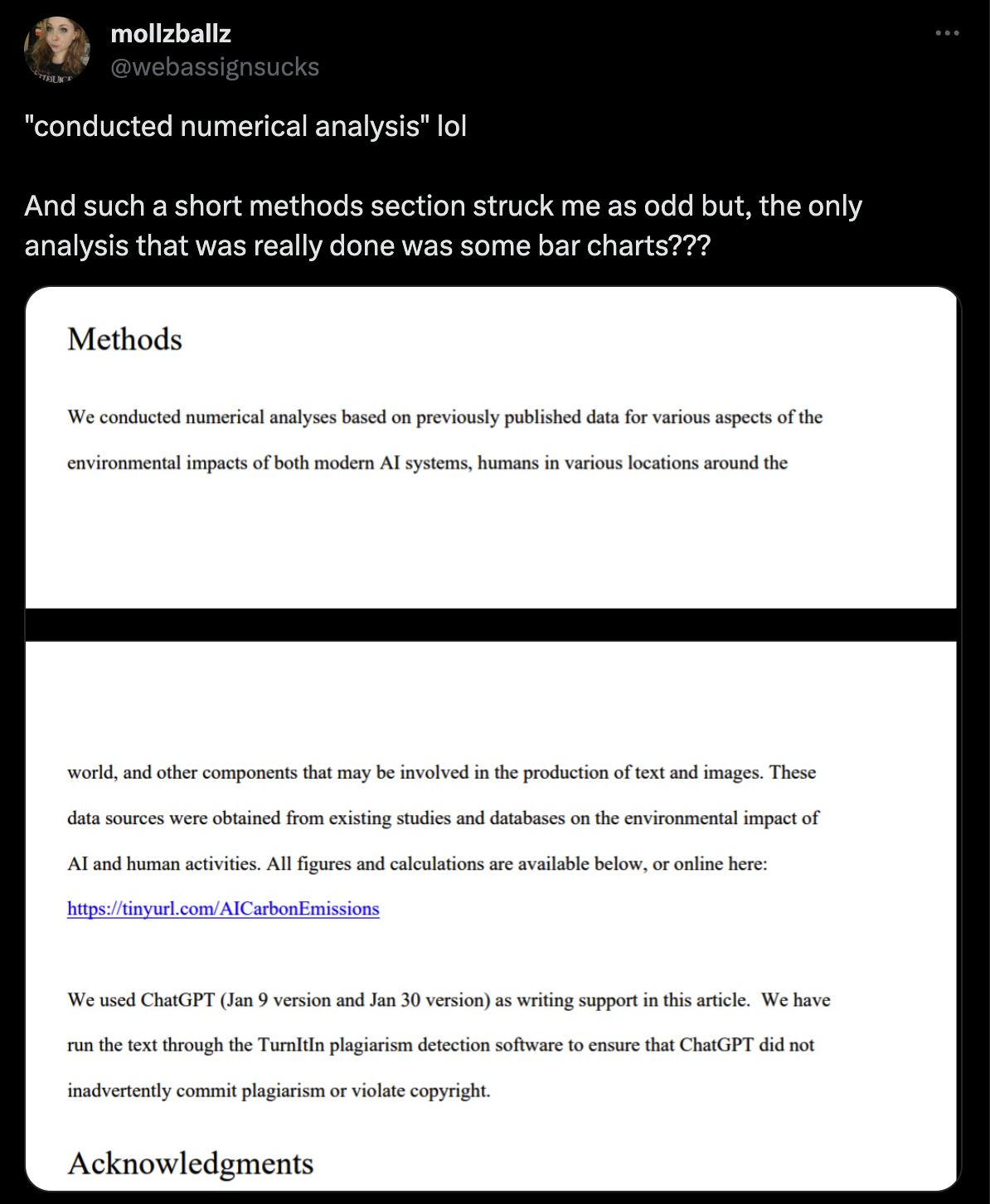
It’s not uncommon for studies to make bold claims about the environmental impact of AI. Recently, a study from MIT, the University of California, and others caught our attention with a provocative headline: “The Carbon Emissions of Writing and Illustrating Are Lower for AI than for Humans.” While the findings sound impressive at first glance, a closer examination reveals some critical flaws that undermine the study’s credibility.
The study in question compared the carbon emissions of AI systems, including ChatGPT, BLOOM, DALL-E2, and Midjourney, to those of human writers and artists. It concluded that AI emits significantly less carbon dioxide equivalent (CO2e) when performing tasks like writing and illustration. For example, ChatGPT emitted a mere 2.2 grams of CO2 per query, while a human writer from the United States was responsible for around 1400 grams of CO2e per page. But let’s not get carried away just yet.
Yann LeCun, the Meta AI chief, shared the study on X where a lot of people were talking about the problems with the paper and the hundreds of things it overlooks.
Yann, the methodology of this article is so broken. You can't just compare the emissions of a person and those of an AI model. It's like comparing the fuel efficiency of a rocket ship and a horse, yeah they both convert fuel to speed, but fundamentally they're different.
— Sasha Luccioni, PhD (@SashaMTL) September 19, 2023
The study neglects to address the energy-intensive process of training AI models. AI models like ChatGPT and DALL-E2 require massive amounts of computational power and electricity during their training phases. The carbon emissions associated with training these models are substantial and are often overlooked in such analyses. It’s essential to consider the entire lifecycle of AI systems, from training to operational use, when evaluating their environmental impact.
Some funny claims
At the risk of sounding like an AI ethicist, another issue is the methodology used in the study. It assumes that a person’s emissions while writing are in line with their overall annual carbon footprint, equating an hour of writing to an hour of breathing. This assumption is far from scientific and doesn’t account for the fact that humans continue to breathe even when they’re not actively writing.
A user on HackerNews explains that this is like saying that the emissions of a person riding a bicycle should be attributed to cycling alone, ignoring the carbon emissions associated with their daily existence. To put it simply, humans breathe whether they’re writing or not. AI systems, on the other hand, can be turned off when not in use, effectively reducing their carbon footprint to the tasks they perform. This skewed comparison fails to consider the full scope of human and AI emissions accurately.
Another user points out that the study also overlooks a critical aspect of AI development: the data. AI systems rely on large datasets of text and images to generate content. These datasets are created by humans, and the energy and resources required for data collection, labeling, and preparation should be factored into the environmental equation.
Another aspect ignored by the study is the continuous improvement and fine-tuning of AI models. These models require regular updates and adjustments, which consume computational resources and emit carbon emissions. The study’s focus on a single page of text or one illustration does not account for the ongoing operational costs of AI systems, contributing to an incomplete picture.
Honestly, it doesn’t really matter
In essence, AI models are built on the creative work of humans, making it misleading to compare AI’s emissions directly to those of humans without acknowledging this significant contribution. In response to these valid criticisms of the paper, some might argue that even if AI systems emit more CO2 during their lifecycle, it doesn’t really matter because they’re more efficient at certain tasks.
In conclusion, while the study’s findings may initially suggest that AI is a greener alternative to human creativity, a deeper examination reveals the flaws in its methodology and the incomplete picture it paints. However, AI researchers are also not overlooking the impact AI creates on the environment and are actively taking steps such as investing in nuclear energy to resolve the issue.
The post Researchers Found A Way to Make AI Emit Less CO2 appeared first on Analytics India Magazine.
Human feedback has proven essential in the recent past to train machine learning algorithms. Back in 2019, the Director of Research at IBM emphasised that while reinforcement learning holds promise, relying solely on this approach can be challenging due to its heavy dependence on trial and error.
Apart from being Google DeepMind’s most preferred technique to train its popular algorithm like AlphaGo and its latest iteration AlphaStar, reinforcement learning from human feedback (RLHF) has been particularly effective in aligning large language models with human preferences.
Furthermore, a majority of the large language models have been trained using the reward system approach including OpenAI’s beloved ChatGPT. Even Meta AI’s framework PyTorch recently upgraded its RLHF elements for developers to easily build an RLHF training loop with limited RL knowledge.
However, a prime hurdle lies in gathering high-quality human preference labels. This is where reinforcement learning from human feedback with AI feedback (RLAIF) comes into the picture, a novel framework by Google Research to train models with reduced reliance on human intervention. Researchers found that both exhibit similar performance, with RLHF having a slight edge albeit not significantly so.
To Human or Not
One of the areas where ChatGPT has not been able to thrive yet is summarising documents. Since the chatbot debuted late last year, researchers have been exploring new methods for generating concise summaries via its more potent GPT-4-based paid version.
Interestingly, in the latest Google study it was discovered that human evaluators preferred RLAIF 71% of the time and RLHF 73% of the time. However, in a direct comparison, the two were equally favoured, with a 50% win rate. Furthermore, summaries from both the methods were preferred over human-written reference summaries, with RLAIF at 79% preference and RLHF at 80%.
Meanwhile, one important factor to consider is that both the recipes tend to produce longer summaries than the supervised fine-tuning (SFT) policy. This could contribute to the perceived quality improvements. The researchers conducted further analysis, which revealed that even after adjusting for length, both approaches, with and without AI feedback, outperformed the SFT policy by a similar margin.
While the community continues to grapple with the summarising issues, RLAIF appears to be a viable alternative to RLHF without the need of human annotation. However, the researchers acknowledge the need for conducting further experiments on a broader spectrum of natural language processing (NLP) tasks to validate these findings, a path they intend to explore in their future research.
Reinforced in Secret
Just a few weeks ago, Google DeepMind proposed another new algorithm called Reinforced Self-Training (ReST) for Language Modelling. It follows a similar process of removing humans from the loop by letting language models build their own policy with a single initial command. While ReST finds application in various generative learning layouts, its expertise lies in machine translation.
In comparing ReST (Reward Estimation from Suboptimal Trajectories) with Online RL, a tactic frequently used in RLHF, the results indicate that the latter performs at par with the former when only one “Grow” step is used.
However, when ReST incorporates multiple “Improve” steps, it highly surpasses Online RL in terms of higher rewards. Additionally, the study observed that Online RL exhibited an 8-point drop in BLEU score on the validation set, hinting at potential issues related to reward manipulation. In contrast, ReST demonstrated an ability to improve reward model scores without adversely affecting other performance metrics, suggesting it may impose a lower “alignment tax” compared to Online RL methods.
These research developments have come in the wake of Project Gemini, which is ready to unseat ChatGPT as the premier generative AI tool as per DeepMind boss Demis Hassabis.
The model anticipated for almost a year now is reportedly being trained via the company’s pioneering technique — reinforcement learning. Even though much official details have reached the media yet, reinforcement learning with AI is expected to play a huge role in the training process. With the recent studies pointing towards the company’s interest in incorporating AI with reinforcement learning, we can’t wait to see what’s cooking in the research lab.
The post Reinforcement Learning Craves for Less Human, More AI appeared first on Analytics India Magazine.
Deciding to dabble in AI is just the starting point. If you're going to use generative AI and other emerging technologies in your business, you'll need to make sure you have a platform that allows you to exploit data safely and effectively.
Those kinds of platforms are likely to be provided by an external technology provider. So, how are businesses sorting the wheat from the chaff when it comes to AI partners, and what does a great technology partner look like? Three business leaders give us their views.
1. Focus on your use case
Carter Cousineau, vice president of data and model governance with Thomson Reuters, recognizes that sorting the wheat from the chaff is a challenge, particularly in areas that have developed at a rapid pace during the past 12 months.
"On generative AI, there's a bit of a mix right now," she says. "There's a lot of hype and I'm personally very curious about what use cases will stick."
Such is the level of hype that Gartner recently placed generative AI at the peak of inflated expectations on its Hype Cycle for Emerging Technologies, 2023.
The tech analyst says the scale and rapid adoption of generative AI applications is heralding a new wave of workforce productivity and machine creativity.
Cousineau believes professionals should ride this wave of data-led innovation while also thinking carefully about what the implementation of AI and large language models (LLMs) means for their business, especially when they're looking to build or buy technology.
"My first question to many professionals is, 'do you need a large language model?'" she says. "Because the cost to do that can be quite significant. So, you want to be careful that it's an area where you need to invest in a large language model."
As with any other technology purchase, your starting point for investing in AI systems and services should be a clear business case.
Cousineau says Thomson Reuters is exploring a range of use cases and her team works with people across the organization to ensure data governance is prioritized.
"We look at these tools from an ethics and harm-mitigation standpoint," she says. "Depending on the use case, we look at what's happening and try to mitigate potential concerns quickly."
Thomson Reuters already has a couple of key vendor partnerships. Enterprise information is stored in the Snowflake Data Cloud as a single source of truth for data-led innovations.
Cousineau also refers to her company's nascent partnership with Microsoft Copilot, which is an AI assistant that helps professionals create documents, summarize presentations, and more
"There are use cases and we're just in the final stages of sorting that work out. And we're also looking at some of our existing products and thinking how we can take some of the bones and build a different feature or capability that would better service customers," she says.
"Even when we use LLMs internally, it's very important that our staff have a safe environment to use this technology. So, we look at it from the view of our external customers and our employees, and we look at supporting all LLM environments."
2. Find a flexible partner
Tulia Plumettaz, director of machine learning at e-commerce giant Wayfair, recognizes that one of the thorny questions for business leaders to consider when it comes to AI is whether it's better to put an early stake in the ground or to play more of a waiting game.
Go in too early and you risk spending too much money with one partner that gets left behind as the market moves on. But, go in too late and your competitors could leave you behind.
Add in a series of other considerations, such as vendor lock-in and concerns around the exploitation of enterprise data assets, and business leaders face a tricky conundrum.
"Think about Gen AI today," she says. "There are big hurdles and questions around data ownership, such as who owns the asset and are the big vendors going to use your data for training their own models or are they not. That's something we're focusing on now. We are learning the landscape when it comes to data and legality in that space."
Plumettaz explained to ZDNET recently how her company is working with Snorkel AI to boost the online search experience for consumers — and just as Wayfair is dabbling in machine learning, so the company is exploring other fast-emerging areas.
"We are exploring applications of conversational AI," she says. "There are definitely use cases in our space that we believe we can get into quickly."
Wayfair and Snorkel have created an integrated relationship that's allowing Plumettaz and her business colleagues to think carefully about potential use cases.
"With Snorkel, we're taking a much more long-term view on this space, which is about trying to understand the differentiator at an enterprise level," she says.
Plumettaz is working with Snorkel to develop foundational models that will help the company make use of its key data assets, such as the products it sells and their defining characteristics.
With this structure in place, Wayfair will be able to think about how other AI specialists might help the business meet its long-term aims.
"We're focused on understanding where this field is going while also carving out low-hanging fruit," she says.
"We're asking, 'what is going to be the one thing that makes the data asset that Wayfair has into a unique value unlock that we are not going to get with a generic, off-the-shelf product?'"
3. Stay open to experimentation
While generative AI is getting a lot of media attention right now, Lalo Luna, global head of strategy and insights at Heineken, says business leaders must recognize that ChatGPT and other conversational bots are far from the only AI game in town.
"I think companies need to be more concerned about how they're going to adopt and embrace, not only AI but also traditional machine learning and other data-intensive processes," he says.
That's what Luna is prioritizing at Heineken, where his team is using Stravito's enterprise insights platform to share insights through an internally branded platform, known as Knowledge & Insight Management (KIM).
Even though the power of data is recognized by his business peers, Luna believes some other companies are still lagging when it comes to understanding the value of information.
Rather than waiting for market leaders to emerge, he says now is the time for professionals to start working out which vendors will help their organizations.
"Data and AI is already a competitive advantage," says Luna.
"Business leaders shouldn't be afraid of the technology. They need to be concerned about how they are going to upskill their people, and how they are going to build technological ecosystems that help, not only their consumers, but also their internal people to make better decisions."
Stravito recently announced it has added a proprietary generative AI engine to provide businesses with verified insights in a more engaging way.
Luna says it's important to stay open to new ideas in AI — and he envisages Stravito being a key player in helping his company make the most of the thousands of reports it holds.
"More and more we need to jump in into these kinds of things," he says. "Success is all about jumping to the experimentation phase."
Picture yourself stepping into the intensive care unit, where your beloved family member faces the possibility of immediate heart surgery. Instead of receiving crucial information about the situation, you’re immediately swamped with a barrage of questions: the patient’s height, weight, allergies, medical history, and prior surgical procedures.
Fear grips you, making it essential to provide accurate details. Eventually, the surgery is scheduled, but the heart isn’t a suitable match because of an error in the information you provided.
Jordan and Tristan, like countless others, have faced a healthcare nightmare when crucial patient information got lost in a sea of administrative tasks. This tragic experience highlighted the critical need for modernisation, collaboration, and technology in healthcare. As Tristan put it, “There is a profound opportunity for modernisation and technology and collaboration in the space.”
And that’s what Oracle has done, the conglomerate unveiled a range of innovative solutions at its first-ever Oracle Health Conference, aiming to enhance patient care, optimise clinical expertise, increase cost efficiency within the healthcare sector and genuine provider burnout. These innovations include cloud-based electronic health record (EHR) capabilities, generative AI services, public APIs, and back-office optimisations specifically designed for the healthcare industry.
Oracle’s cloud-powered transformation is another critical aspect of its healthcare strategy. The company is determined to transition all Cerner solutions to Oracle Cloud Infrastructure (OCI), promising increased speed, security, and cost savings for healthcare organisations. This shift represents a pivotal move towards a more agile and responsive healthcare ecosystem.
One of the key highlights was the introduction of a next-generation EHR platform by Oracle Health. This platform prioritises improving both patient and provider experiences by offering user-friendly, consumer-grade applications. The Oracle Health EHR platform simplifies patient engagement through an intuitive interface and guided processes. It provides self-service options for patients while simultaneously reducing administrative burdens for healthcare providers.
Travis Dalton, Executive Vice President and General Manager of Oracle Health, emphasised the goal of delivering a functionally rich EHR system that eliminates redundant processes, reduces wasted time, and adds value to practitioners and patients alike. The enhancements aim to improve the patient experience by connecting the healthcare ecosystem, making it more efficient and effective.
Patients will benefit from the platform’s secure patient portal, equipped with advanced document recognition, computer vision, and voice services. This allows patients to conveniently submit their health data, upload documents, and digitally sign HIPAA compliance forms. Additionally, patients can schedule appointments and check lab results using simple voice commands within the portal, enhancing their overall experience while saving time and increasing operational efficiency for healthcare providers.
Generative AI-powered Healthcare Solutions
In addition to the EHR platform, Oracle has introduced a generative AI capability called the Oracle Clinical Digital Assistant. This digital assistant is seamlessly integrated with Oracle’s EHR solutions, harnessing generative AI (backed Cohere) and voice commands to streamline workflows, reduce manual tasks for providers, and empower patients with self-service options. The technology promises to enhance patient engagement, automate note-taking during appointments, and provide content-aware recommendations for physicians.
Oracle also unveiled human resources enhancements, AI-powered workforce management capabilities within Oracle Fusion Cloud HCM, and finance and supply chain enhancements tailored for healthcare organizations. These innovations aim to consolidate disparate systems, automate critical processes, and adapt to evolving healthcare delivery models.
Acquisition of Cerner
Oracle’s acquisition of Cerner—a renowned provider of electronic medical records (EMR) systems, late last was an indicator of a significant shift in its corporate strategy towards healthcare. This move reflects Oracle’s belief in the value of data and its control, acknowledging the rising importance of healthcare in the tech industry.
The acquisition of Cerner has been a passion project for Oracle’s Founder and CTO, Larry Ellison, who views it as a potentially defining moment in his career and legacy. The acquisition is meant to place Oracle in direct competition with tech giants like Microsoft which purchased Nuance Communications and are expanding into healthcare. This would also help Oracle move beyond the highly saturated EHR market in the US, into a global market, with partnerships in regions like the UAE showcasing its commitment to the international healthcare landscape.
Oracle intends to leverage Cerner’s expertise and integrate it with its technology stack. For instance, Oracle Health aims to bridge the gap between Electronic health record (EHR) systems and enterprise resource planning (ERP) systems, streamlining operations and improving efficiency within healthcare organisations. This integration promises to enhance patient care and reduce administrative burdens like managing the inventory of medical supplies and drugs, ensuring authenticity and supply chain efficiency through technologies like RFID tags and blockchain.
Furthermore, Oracle plans to enhance Cerner’s existing system by creating a personalised patient portal that integrates telecommunications with data storage. This portal will empower patients to track their health, connect with smartphones and wearable devices, and upload data to the Oracle Cloud.
Oracle envisions a fundamental change in the healthcare records system by replacing the fragmented approach with a unified, patient-centred system that tracks patients across different healthcare facilities. The involvement of Tony Blair indicates Oracle’s intention to sell its solutions to governments, drawing on its experience in government contracts.
Leveraging its prevalence in the healthcare industry, Oracle Cerner is uniquely positioned to bridge the gap between clinical care and clinical trials. The demand for real-world data in pharmaceutical research is growing, and Oracle Health aims to facilitate this by connecting patient care with research.
Overall, Oracle’s acquisition of Cerner marks a strategic pivot towards healthcare, aiming to revolutionize medical care, enhance patient outcomes, and establish a significant presence in the healthcare information industry. This transition is the culmination of years of Oracle’s investment in healthcare records, positioning the company for a transformative role in the medical sector.
The post How Oracle is Reimagining Healthcare with Generative AI appeared first on Analytics India Magazine.
OpenAI has unveiled the Beta version of its Python SDK, marking a significant step towards enhancing access to the OpenAI API for Python developers. The OpenAI Python library offers a simplified way for Python-based applications to interact with the OpenAI API, while providing an opportunity for early testing and feedback before the official launch of version 1.0.
We are currently previewing OpenAI Python SDK 1.0. It's a breaking change, so please try it out & give us feedback: https://t.co/6WyM2rUr0Z https://t.co/UuKh3rKd7E
— Greg Brockman (@gdb) October 4, 2023
It streamlines the integration process by providing pre-defined classes for API resources, dynamically initialising from API responses, ensuring compatibility across various OpenAI API versions.
This Beta release is essential to give users a preview of the upcoming major update, version 1.0, which will introduce significant changes. OpenAI encourages developers to explore the Beta version and share their valuable feedback to help shape the final release.
To use the library, developers must configure it with their private OpenAI API key, which can be obtained from the OpenAI developer platform. This can be done either by setting the ‘OPENAI_API_KEY’ environment variable or directly within the code using ‘openai.api_key’.
The OpenAI Python library facilitates various tasks, including:
Chat Completions: For chat models like gpt-3.5-turbo and gpt-4.
Completions: For text models such as babbage-002 and davinci-002.
Embeddings: To measure text similarity or relevance.
Fine-tuning: To train models on specific data.
Moderation: To check content compliance with OpenAI policies.
Image Generation (DALL·E): For generating images based on prompts.
Audio (Whisper): For speech-to-text functionality.
Check out the full blog here.
The Beta release also includes support for optional dependencies, such as Weights & Biases and data libraries like numpy and pandas.
There goes my last reason (retrying) for using @langchain : ))
— Trần Trung Tín (@TTrungTin) October 5, 2023
Developers can find comprehensive documentation and code examples in the OpenAI Cookbook for various tasks, including classification, clustering, code search, customising embeddings, question answering, recommendations, visualisation of embeddings, and more.
The OpenAI Python SDK Beta version introduces significant improvements, including automatic error retry with backoff, proper type definitions for enhanced code clarity, and the ability to instantiate a client for more flexible usage.
This comes just weeks before OpenAI’s first developer conference, OpenAI DevDay.
The post OpenAI to Release Its Python SDK appeared first on Analytics India Magazine.
Microsoft OneDrive for Business has been redesigned and has a new upgrade roadmap, which includes the Copilot natural language AI assistant, Microsoft announced on October 3. A new look for Microsoft OneDrive rolled out to business and educational accounts on October 3. Copilot will be available in OneDrive for Business in December for people who have purchased a Microsoft 365 Copilot license.
Jump to:
New layout and features are now visible in Microsoft OneDrive for Business
File syncing and offline work are coming soon
Microsoft Copilot can scan and interpret OneDrive for Business files
Administrators will see new SharePoint tools
Competitors to Microsoft OneDrive
New layout and features are now visible in Microsoft OneDrive for Business
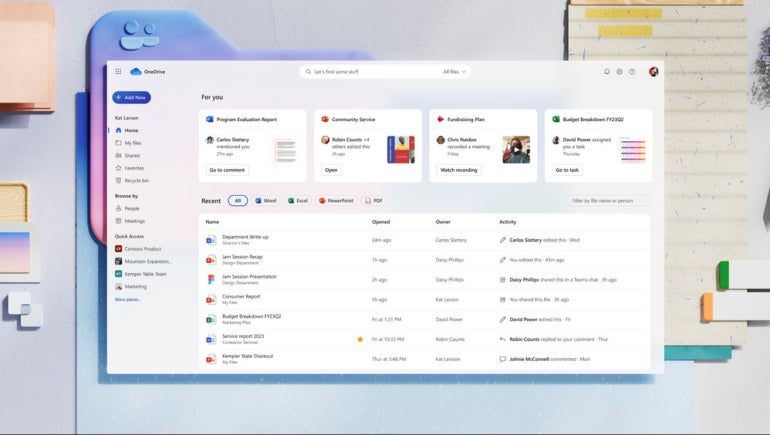
The major change is the addition of a redesigned Microsoft OneDrive home screen for OneDrive for Business on the web, from which other features can be accessed. The redesigned layout is available as of October 3. The new OneDrive for Business layout has a customized For You tab (Figure A), which uses AI to recommend files based on the time and what else you’ve been working on.
Figure A
The new OneDrive for Business home screen showing For You selections. Image: Microsoft
Other changes include:
The ability to change the color of folders.
The Add New option has been streamlined and placed in a more prominent position.
The menu on the left side of the Home screen will now include the Meetings view (a calendar) and People view (a directory).
Users can now mark files as Favorites.
File syncing and offline work are coming soon
In December, Microsoft OneDrive for Business users will be able to sync documents on the web to the desktop apps just like it’s possible to do with a Word, PowerPoint or Excel file.
Microsoft said providing users with access to all of their files across SharePoint and OneDrive from Teams will become easier in December. The change is part of the overall overhaul of OneDrive and SharePoint, which includes improving connections between the different applications and adding Copilot across applications.
In early 2024, Microsoft will roll out Files On-Demand for Web, which lets you access files while offline by selecting them to be available locally from OneDrive, and an offline mode worldwide.
Microsoft Copilot can scan and interpret OneDrive for Business files
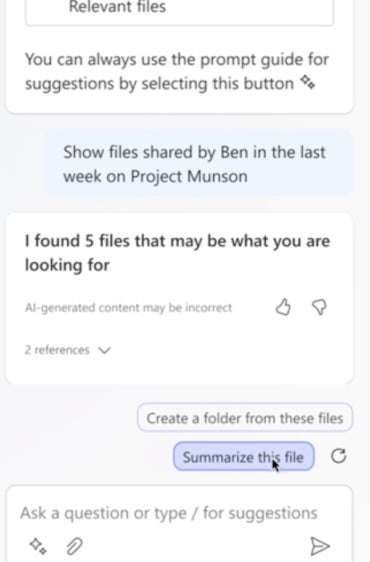
In December 2023, OneDrive for Business users with a Microsoft 365 Copilot license will be able to ask questions about their files in natural language and receive replies from the generative AI assistant Copilot — all without opening the files themselves (Figure B).
Figure B
Users can ask natural language questions about files in OneDrive with Copilot. Image: Microsoft
Copilot will also be able to interpret, summarize and answer questions about documents in SharePoint.
Microsoft detailed several ways in which Copilot’s ability to interpret and scan different kinds of files across OneDrive could be useful for business in the future. For example, Copilot can add files from around OneDrive to a single folder to better organize a project. Or, Copilot can generate summaries of groups of files or daily digests, to use as reference or to share with colleagues.
SEE: What does Microsoft’s new Bing AI assistant mean for your business?
Administrators will see new SharePoint tools
The Microsoft SharePoint Advanced Management add-on for OneDrive, which provides platform management and security tools, has new features as well. One of these is Collaboration Insights, a tool with which SharePoint administrators can track user behavior to cut down on possible security weaknesses or improve efficiency. Collaboration Insights is currently in private preview.
In January 2024, SharePoint administrators will be able to apply for a private preview of a data export tool for OneDrive sync client admin reports. The ability to view sync admin reports on volume, health, errors and more and to apply Azure data tools to that data will be available in Microsoft Graph Data Connect for SharePoint.
Competitors to Microsoft OneDrive
Microsoft OneDrive file sharing competes with Google Drive and Google Workspace, Box, Dropbox, Apple’s iCloud, WeTransfer and more.
Subscribe to the Microsoft Weekly Newsletter
Be your company's Microsoft insider by reading these Windows and Office tips, tricks, and cheat sheets.
While no business can afford to ignore the rapid growth of artificial intelligence (AI), no organization can let data-led initiatives sprout up without control.
Whether it's in the form of generative AI services, such as ChatGPT or Bing, or in machine-learning-led initiatives that allow organizations to undertake large-scale data analytics, AI is a step change in the way organizations use technology. Our businesses and the way we work for these companies are being changed forever.
The priority now is for enterprises to ensure AI is introduced in a well-governed manner. So, who should be responsible for making sure the business makes the most of AI? Should it be the CIO, the CDO, or someone else?
The bad news, according to industry experts, is that there's no straightforward answer.
"It's a really complex question," Lily Haake told ZDNET. Haake is the head of technology and digital executive search at recruiter Harvey Nash. She recognizes the increased use of AI comes at a time when the roles and responsibilities of CIOs and their IT teams are contested.
While CIOs have traditionally been the executives most likely to lead technology initiatives, there's been a shift during the past five or so years, where line-of-business managers have taken more responsibility for sourcing and procuring IT systems and services.
Cloud computing sits at the heart of this shift. Professionals across the business now use the cloud to buy technological solutions to their business challenges on demand.
In this era of decentralization, the key role of CIOs and their IT departments is to engage with the rest of the business, offer advice on technology purchases, ensure the right governance is in place, and build strong ecosystems of internal and external support.
The rapid rise of AI — and generative AI in particular — brings a further layer of complexity to this technology management conundrum.
And Haake says her firm's research suggests AI in most organizations is still at a nascent stage. "There's a chunk of organizations that haven't even considered AI," she says. "About 60% have piloted it in some way, but it's certainly not everyone."
In this preliminary phase of testing, it's more likely than not that the CIO picks up the leadership slack for all kinds of AI projects. There are some variations: In a large business with a mature data organization, the CDO might oversee AI on a day-to-day basis.
But even in these cases, the CDO is likely to report into the CIO, so the accountability for AI ultimately rests with the CIO. And, right now, given the uncertainty around how emerging technology is likely to be brought into the business, that's no bad thing.
"The CIO is the one executive who has the helicopter view of the different needs of the organization and, of course, AI has the power to impact every single facet of the business," says Haake. "So, we're tending to see the CIO in charge of AI. They want to be the person to control this area and have accountability for it."
Also: What is artificial general intelligence really about? Conquering the last leg of the AI arms race
But while CIOs are taking the lead for AI in many organizations, they're not the only people with an interest in the technology. Just as the cloud has allowed line-of-business professionals to expand their interest in technology, people across the organization are having a say on how AI is used.
Haake refers to this joined-up approach to AI as "a joint effort," which is a strategy that resonates with Avivah Litan, distinguished VP analyst at Gartner. "AI really is a team sport, so you can't just put it on one unit," Litan told ZDNET. "In fact, it's always been like that — AI crosses business units. So, if you're talking about the opportunities or the risks, it's across the lines of business – its compliance, its privacy, its marketing, its customer service."
Véronique van Houwelingen, solution manager for conversational technology at Air France-KLM, also told ZDNET a joint effort is the best way to develop an enterprise-wide approach to emerging technologies such as AI.
"There are all kinds of initiatives going on in a big business like ours. So, how do you keep track of them?" she says. "If you see this happening, then a workforce or task force is key, because then at least you know what's going on in your company."
The message from industry experts is straightforward: For whoever leads AI developments in the longer term, every department must be involved in short-term discussions about how AI is applied to business use cases.
For example, HR will think about how AI affects job roles and retention rates, marketing will concentrate on content and personalization, and legal will focus on ethics and governance.
Take Carter Cousineau, vice president of data and model governance with Thomson Reuters, who explained to ZDNET recently how she's helping her firm reap the rewards from AI without taking risks. "When we look at responsible AI, we look at it for all of our use cases," she says. "So, whether it's in a testing phase or we're looking to actually create a true model and move it into production, there's governance and ethics stages that we put in place."
Some organizations, therefore, are already bringing different departments into the discussions around how AI is adopted and adapted. But one executive will still be expected to bring these cross-organization efforts together — and most organizations will expect the CIO to fulfill this role, says Gartner's Litan.
"When you have your whole team working together across the organization, you end up with more proof of concepts moving into production," she says.
"But when it comes to the budget, if you put it with the CIO, then projects tend to move faster into production. What's happened with AI projects is that the higher up the budget goes, the better off the project is, which is not rocket science."
That's a view that chimes with Cathrine Levandowski, global head of operations at lifestyle management company Quintessentially. CIOs have oversight of all business operations, and their understanding of technology and data could prove crucial as AI begins to make its mark.
"Personally, I do think it should be the CIO. And I think that's because I feel like they have an overlapping view of, not only data, but also operations," she told ZDNET. "I think it's key that whatever AI decisions you make are operational because they should be positive for the business. We would want to use AI to enhance our operations and efficiencies."
The digitization of health care has been a long time coming, with the practice of healing tied, for obvious reasons, to older, carefully vetted ways of doing things.
But increasingly, artificial intelligence in various forms is creeping into the clinic. Applications include in predictive analytics, smart prostheses, mobile diagnostics, and brain implants. Plus, with the emergence of large language models (LLMs) like ChatGPT, we explore whether that technology can assist in health care today.
While much of the work is in the form of pilot studies, it's clear AI will play a major role in shaping how health care is delivered in decades to come.
"Deep learning AI has finally gotten through this process of the technical infrastructure being in place, and the data being available to train it, after years of really hard work," said Jeremy Howard, co-founder of the AI research and education startup Fast.ai, and founder of the first company to apply deep learning to medicine, Enlitic.
After all that effort, "You should expect to see a hell of a lot more of it in the coming years," meaning, applied AI in medicine, said Howard in an interview with ZDNET.
Right now, the state of the art in applying AI to medicine consists of small-scale studies that employ a variety of very well-established machine learning forms of AI. Those programs have proven their worth over decades. They are finally being taken into the clinic and being applied to a variety of data, from real-time brain activity readings to electronic health records.
It's still a ways off for the newer kinds of machine learning AI, the stuff such as ChatGPT from OpenAI. That technology gets all the attention but it is too new to be reliable in the sensitive realm of the clinic.
Already, the use of machine learning has been transformative for the participating patients. Gert-Jan Oskam, a 40-year-old bicycle accident victim, was given a novel brain-computer interface that let him stand and walk again. He told the prestigious journal Nature the device has been "life-changing."
"Last week, there was something that needed to be painted and there was nobody to help me," said Oskam. "So, I took the walker and the paint, and I did it myself while I was standing."
1. Restoring functionality with AI
Among the most dramatic early wins for AI in health care are the successes, still small in number, with prostheses of various kinds to restore functionality to individuals with serious injuries.
Step aside, Elon Musk: the fabled "brain-computer interface," or BCI that Musk says he'll put into clinical trials has already been achieved by the Stanford team in a stunning example of using carefully developed machine learning forms of AI.
The fabled "brain-computer interface" touted by Elon Musk is already a reality. Researchers in Switzerland made a "digital bridge" between the brain's motion regions and "lumbosacral" region of the spine that translates intention into stimulation of the muscles to make legs move naturally.
The "digital bridge," developed by researchers at Stanford's mechanical engineering department, routes brain signals around a spinal impairment using sensors and wireless technology. The device restores walking to Oskam, who had almost no ability to walk after a spinal cord injury from a bicycle accident a decade prior.
Researchers Henri Lorach and team described in Nature in May how they implanted a "brain–spinal cord interface" in Oskam. He limited use of his legs following a five-month program of epidural electrical stimulation of the spinal cord, an ability to take some steps with the help of a walker.
Lorach and team implanted two devices, each consisting of 64 electrodes, on top of the parts of either hemisphere of the brain that are known to control movement. Those sensors gathered signals known as electrocorticograph, or, ECoG, that are linked to intentions to move. The ECoG signals were picked up wirelessly via a 3-D-printed headset worn by the patient, which is attached via a USB cable to a "base station" computer worn in a backpack.
The backpack computer decodes the ECoG patterns into commands that are then sent, wirelessly, to a third device, implanted on top of the "lumbosacral" region of the spine — think of your lower back and tailbone. Called a "pulse generator," it turns the commands into electrical stimulation that "engages the muscles that mediate the intended movements."
The result is that the patient was able to "regain intuitive control over the movements of his legs, giving him the ability to stand, walk, climb stairs and even traverse complex terrains," reported Lorach and team. Videos accompanying the report show the patient getting up from a seated position and walking, in this case with the base station computer set on a walker instead of in a backpack.
It's important to realize this is not just a matter of brain sensor implants. The machine learning algorithms that Lorach and team have pioneered to interpret the brain signals for movement intention are a key element.
Using an approach known as an "online adaptive supervised learning algorithm," the program is tuned as the patient tries repeatedly to move first an on-screen avatar's limbs, and then an exoskeleton.
The software combines several threads of machine learning science, including a "mixture of experts," where different commands control different limbs, and then what's called a "Hidden Markov model," a kind of algorithm in use for decades. The computing of movement intention is all done in real time, as the patient moves. More details on the algorithm can be found in a prior paper from the team from 2022.
Scientists are finding out lots of other ways they can gather signals from the brain and decode them via machine learning to restore functionality.
Last month, researchers Sean Metzger and team at the Department of Neurological Surgery at the University of California at San Francisco related in Nature a speech decoder that generated a voice for a 47-year-old stroke victim rendered mute nearly twenty years earlier.
The so-called multimodal speech decoder also used an implanted ECoG detector to decode "intended sentences" from signals in areas of the brain's sensorimotor cortex. That area is responsible for "attempted movements of the lips, tongue, and jaw." The signals are decoded into what the researchers call "vocal-tract representations" that can then be turned into multiple kinds of output: text on a screen, generated audio of spoken words, and movements of an avatar speaking.
The so-called multimodal speech decoder also used an implanted ECoG detector to decode "intended sentences" from signals in areas of the brain's sensorimotor cortex, using a tried and true type of machine learning algorithm, known as a "bidirectional recurrent neural network" or "RNN," a program long used for modeling times-series data.
The key, again, is not just sensors but also machine learning algorithms. The signals from the ECoG of vocal tract attempts were fed into another tried-and-true type of machine learning algorithm, known as a "bidirectional recurrent neural network" or "RNN," a program long used for modeling time-series data, data that measures the same variables at different points in time to spot trends. The RNN was first tuned to anticipate several canned sentences the patient was trying to speak (which were shown to the patient on a screen) — that's a form of correlating the brain activity to a defined set of output.
However, after two weeks of such training, the RNN was producing spontaneous text output from unprompted sentences the patient was trying to utter. The program was able to generate as many as 78 words per minute. That was multiple times faster than the 14 words per minute the patient had been able to produce with their existing assistive device, a head-tracking apparatus where the patient had to nod at words on a screen, similar to what the late physicist Steven Hawking used.
Likewise, the RNN was able to be trained to interpret the ECoG to match a waveform, which could then drive a vocoder to generate speech. After two weeks of tuning the system with the patient, the "speech-neuroprosthetic system" they developed showed such impressive results that "we believe … these results have surpassed an important threshold of performance, generalizability, and expressivity that could soon have practical benefits to people with speech loss," writes Metzger and team.
2. AI can make medical diagnostics portable
One of the chief stumbling blocks of medical diagnostics is that it requires patients to make a trip to a medical facility where tests can be administered using gigantic equipment and data manually examined by trained experts. But some new attempts at diagnostics are using machine learning forms of AI to take the matter out of the clinic.
Take sleep studies, which usually involve a seven-hour stay at a facility, hooked up to electrodes, and monitored throughout the night by staff. Could it instead be done at home, with a phone and a couple of stick-on patches?
A team at the Georgia Institute of Technology in Atlanta, Georgia, came up with wireless sleep patches made of silicone with embedded flexible circuitry, as reported recently in the prestigious journal Science. The patches make use of machine learning to measure the sleep data rather than having a live technician monitor the patient overnight.
The patches can be attached to the face by the patient at home, one on the forehead, one on the chin. They gather data for electroencephalograms (EEG) and electrooculograms (EOG), two kinds of measurements used to detect sleep apnea. The patches can be used for days at a time, unlike the gel-based electrodes used in a sleep clinic.
The patches transmit the EEG and EOG data via Bluetooth to a mobile device at bedside, and the mobile device uses what's called a "convolutional neural network" or a "CNN," a workhorse of machine learning. With a CNN, data represented as a spectrum of activity can be analyzed to detect sleep apnea.
Silicone face patches for at-home sleep study contain flexible circuitry so they're able to be worn during sleep. They connect wirelessly to a mobile device for data collection and analysis.
Lead author Shinjae Kwon and team found in trials with eight subjects that "the system's performance shows a high accuracy of 88.52%" in detecting obstructive sleep apnea. Moreover, the detection of the home patches and CNN showed "high agreement" with the 82.4% detection produced by the gold standard clinic-based sleep studies known as "polysomnography."
Kwon and team expect to conduct a large-scale study of the system, and they are extending the sensors' capabilities to detect other indicators of sleep apnea, including blood oxygen saturation, carbon dioxide, and motions.
Given that the mobile device is sorting and sifting the CNN data, Kwok and team's effort points to a much larger trend: gathering and analyzing data in the field with AI on a mobile device. By automating the measurement that usually happens manually by skilled technicians, some diagnoses can be extended outside clinic walls.
A 2021 study by a team at Stanford University led by Chayakrit Krittanawong listed over a dozen examples of consumer-grade wearable health cardiac monitoring in addition to the Apple Watch's ECG monitoring. They include glasses from Israel's OrCam Technologies and shoe insoles from MEGAComfort.
Those wearables produce "biosignals," which the team defines as "physiological signals that can be continuously measured and monitored to provide information on electrical, chemical, and mechanical activity." Machine learning is a good candidate to aggregate, analyze, and interpret all that data.
Krittanawong and team relate small-scale studies of 100 subjects that used wearable patches with disposable sensors worn on the subject's chest. The sensor, powered by a disposable battery, detected multiple data from the subject's skin including electrocardiogram waveforms, skin temperature, and the subject's posture. All that data was continuously streamed via Bluetooth wireless to a mobile phone and then uploaded to the cloud for analysis using machine learning.
The patches were used as an alternative to implantable heart monitoring devices to predict the risk of hospitalization for heart failure. With cloud analysis, the patches and mobile devices performed with a level of sensitivity and specificity that matched traditional medical-grade implantable monitors.
3. Better predictive analytics for patient safety
Among the most widely deployed uses of AI to date in actual clinical settings is the use of predictive algorithms — programs that can do things such as predict a patient's chance of hospital re-admission. They often use data from electronic health records (EHRs), since such records are a readily available store of vast amounts of data.
A study this year by the University of Utah School of Medicine found "broad adoption of AI in current clinical operations" based on EHR data, according to lead author David Classen and team.
However, those predictive tools have had questionable accuracy. A 2021 study of the Epic software for sepsis by the University of Michigan Medical School found extremely low rates of accuracy in the tool's prediction of sepsis, raising doubts about its utility in practice.
That suggests that researchers need better ways to deduce what an EHR is telling them with all that data.
In an example of the cutting edge of predictive analytics, scientists at the Stanford University School of Medicine gathered EHRs for 22,104 pairs of mothers and their newborns, linked the records, and came up with what they describe as greater ability to predict mortality in premature births, the leading cause of death of children under 5.
The work by Davide de Francesco and team, published February in Science Translational Medicine, used features contained in the mother's health records to predict neonatal outcomes. The main objective is to get a more precise picture of infant mortality than the handful of features typically used, known as the "Appearance, Pulse, Grimace, Activity, and Respiration," or Apgar, score at the time of birth/delivery.
Instead, the researchers fed multiple data points from multiple visits by the mother prior to delivery into another time-tested type of machine learning algorithm, called a "long-short-term memory" or "LSTM," used, like RNNs, to piece together time-series data. The LSTM was trained to correlate codes for things such as maternal procedures, medications, and observations leading up to birth with the conditions in the infant's neonatal medical record, such as hypotension or sepsis.
The authors found a significant increase in the ability to predict the reported outcomes of the infant versus the traditional risk assessment.
Specifically, the LSTM program could generalize heightened risk from some maternal conditions. "Among these codes strongly associated with neonatal outcomes were […] opioid dependence in remission, fetal-maternal hemorrhage, various congenital heart diseases," they relate.
What's more, they could also assert some things that protect a premature newborn in the weeks and months that follow birth.
"Notable laboratory measurements that suggest a protective association against neonatal outcomes include serum albumin, serum protein, platelets, basophils, lymphocytes, and eosinophils," they write. "These data suggest that there is interplay between the maternal immune system at one week before delivery and the relative health of the fetus that carries forward into the neonatal period and beyond."
The Stanford work suggests that as more sophisticated deep learning models take over from relatively primitive predictive systems, there's lots more information just sitting there, waiting to be decrypted.
Large language models (LLMs) in health care?
The machine learning AI methods discussed above — RNNs, CNNs, LSTMs, and Hidden Markov models — are all fairly well-established AI approaches that have been around for decades. The novelty is that they are being deployed now with new, greater levels of sophistication, and with new data.
But what about the really new algorithms in deep learning, the "generative AI" that is all the rage, such as OpenAI's ChatGPT?
It's very, very early days for generative AI in medicine and health care. AI in the form of large language models is only gradually entering the field in pilot studies, held back by concerns over things such as the "hallucinations" of language models, meaning their propensity to assert false information.
In fact, a study by Weill Cornell Medicine in August reported that "LLMs could be susceptible to generating factually inconsistent summaries and making overly convincing or uncertain statements, leading to potential harm due to misinformation."
ChatGPT's creator, OpenAI, has in fact told the journal Nature Medicine, that "its models should not be used for medical diagnostics, to triage or to manage life-threatening issues."
The risks and the ethical issues of generative AI mean many regulatory hurdles lie ahead.
In July, Scientists Bertalan Meskó of Hungary's The Medical Futurist Institute, and Eric Topol of the Scripps Research Translational Institute, wrote an overview paper in which they observed that "LLMs offer tremendous promise for the future of healthcare, but their use also entails risks and ethical challenges."
Meskó and Topol predict that regulators will "create a new regulatory category for LLMs as those are distinctively different from AI-based medical technologies that have gone through regulation already."
"It certainly appears to be extremely useful," says Jeremy Howard of generative AI, "but very difficult to deploy in a rigorous way that fits into the current constraints and processes in the US medical system."
Howard predicts that despite shortcomings, generative AI may have value in filling the medical skills gap.
"Most of the population of the world does not have access to nearly enough doctors," he said. "It may come down to, Would you like a community health worker with six months of training in effectively utilizing this AI system versus nothing at all?"


 (@SashaMTL) September 19, 2023