Meet two open source challengers to OpenAI’s ‘multimodal’ GPT-4V

Meet two open source challengers to OpenAI’s ‘multimodal’ GPT-4V Kyle Wiggers 13 hours

OpenAI’s GPT-4V is being hailed as the next big thing in AI: a “multimodal” model that can understand both text and images. This has obvious utility, which is why a pair of open source projects have released similar models — but there’s also a dark side that they may have more trouble handling. Here’s how they stack up.

Multimodal models can do things that strictly text- or image-analyzing models can’t. For instance, GPT-4V could provide instructions that are easier to show than tell, like fixing a bicycle. And because multimodal models can not only identify what’s in an image but extrapolate and comprehend the contents (at least to a degree), they go beyond the obvious — for example, suggesting recipes that can be prepared using ingredients from a pictured fridge.

But multimodal models present new risks. OpenAI initially held back the release of GPT-4V, fearing that it could be used to identify people in images without their consent or knowledge.

Even now, GPT-4V — which is only available to subscribers of OpenAI’s ChatGPT Plus plan — has worrisome flaws, including an inability to recognize hate symbols and a tendency to discriminate against certain sexes, demographics and body types. And this is according to OpenAI itself!

OpenAI’s GPT-4 with vision still has flaws, paper reveals

Open options

Despite the risks, companies — and loose cohorts of independent developers — are forging ahead, releasing open source multimodal models that, while not as capable as GPT-4V, can accomplish many, if not most, of the same things.

Earlier this month, a team of researchers from the University of Wisconsin-Madison, Microsoft Research and Columbia University released LLaVA-1.5 (an acronym for “Large Language-and-Vision Assistant”), which, like GPT-4V, can answer questions about images given prompts like “What’s unusual about this picture?” and “What are the things I should be cautious about when I visit here?”

LLaVA-1.5 followed on the heels of Qwen-VL, a multimodal model open sourced by a team at Alibaba (and which Alibaba is licensing to companies with over 100 million monthly active users), and image-and-text-understanding models from Google including PaLI-X and PaLM-E. But LLaVA-1.5 is one of the first multimodal models that’s easy to get up and running on consumer-level hardware — a GPU with less than 8GB of VRAM.

Elsewhere, Adept, a startup building AI models that can navigate software and the web autonomously, open sourced a GPT-4V-like multimodal text-and-image model — but with a twist. Adept’s model understands “knowledge worker” data such as charts, graphs and screens, enabling it to manipulate — and reason over — this data.

LLaVA-1.5

LLaVA-1.5 is an improved version of LLaVA, which was released several months ago by a Microsoft-affiliated research team.

Like LLaVA, LLaVA-1.5 combines a component called a “visual encoder” and Vicuna, an open source chatbot based on Meta’s Llama model, to make sense of images and text and how they relate.

The research team behind the original LLaVA generated the model’s training data using the text-only versions of OpenAI’s ChatGPT and GPT-4. They provided ChatGPT and GPT-4 with image descriptions and metadata, prompting the models to create conversations, questions, answers and reasoning problems based on the image content.

The LLaVA-1.5 team took this a step further by scaling up the image resolution and adding data including from ShareGPT, a platform where users share conversations with ChatGPT, to the LLaVA training dataset.

The larger of the two available LLaVA-1.5 models, which contains 13 billion parameters, can be trained in a day on eight Nvidia A100 GPUs, amounting to a few hundred dollars in server costs. (Parameters are the parts of a model learned from historical training data and essentially define the skill of the model on a problem, such as generating text.)

That’s not cheap, per se. But considering that it reportedly cost OpenAI tens of millions of dollars to train GPT-4, it’s definitely a step in the right direction. That is, if it performs well enough.

James Gallagher and Piotr Skalski, two software engineers at computer vision startup Roboflow, recently ran LLaVA-1.5 through its paces and detailed the results in a blog post.

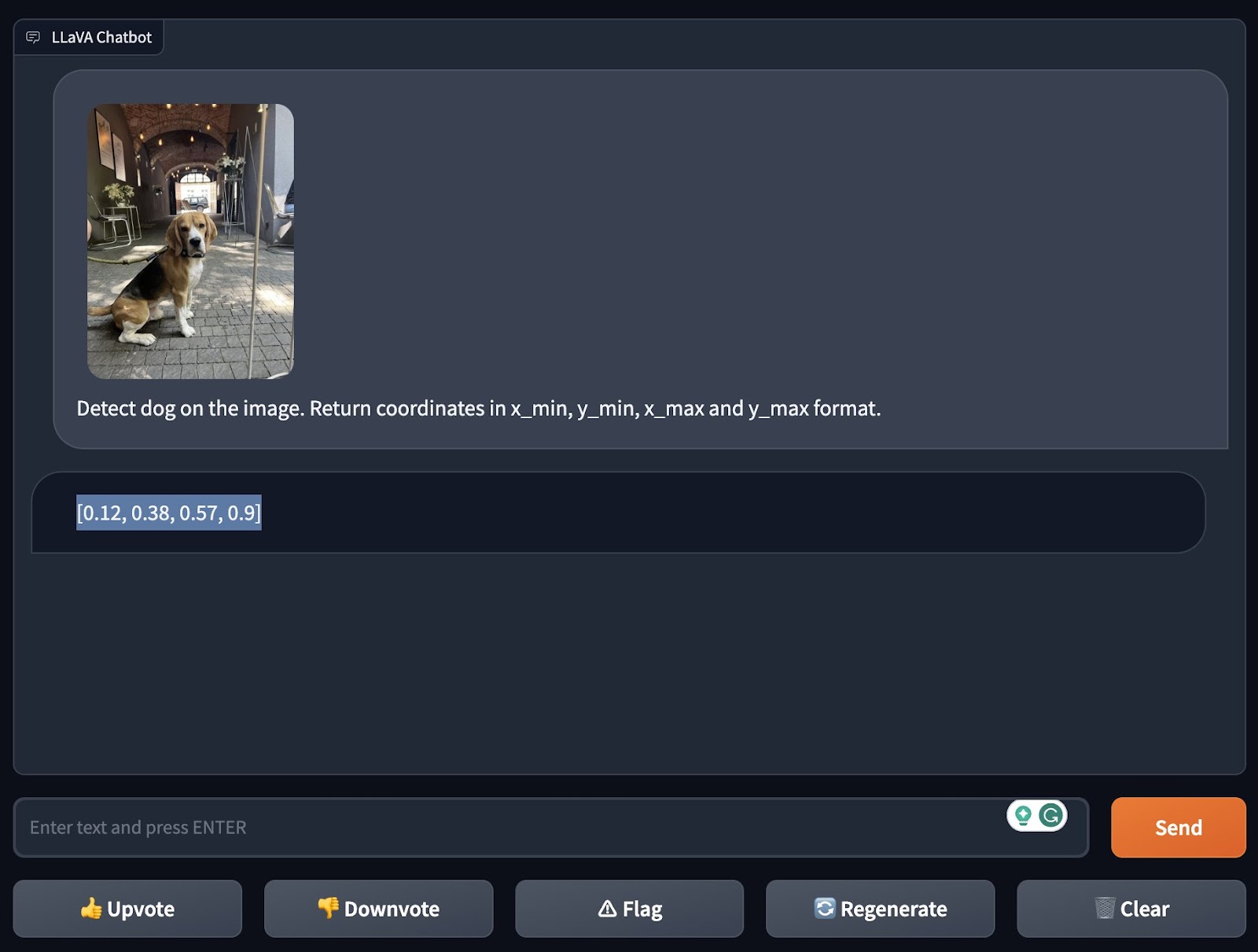
First, they tested the model’s “zero-shot” object detection, or its ability to identify an object it wasn’t explicitly trained to recognize. They asked LLaVA-1.5 to detect a dog in an image, and, impressively, it managed to do this — even specifying the coordinates in the image where it “saw” the dog.
Llava-1.5

Image Credits: Roboflow

Gallagher and Skalski then moved on to a harder test: asking the model to explain a meme. Memes aren’t always easy for models (or even people) to understand, given their double meanings, entendres, in-jokes and subtext. So they make for a useful benchmark of a multimodal model’s ability to contextualize and analyze.

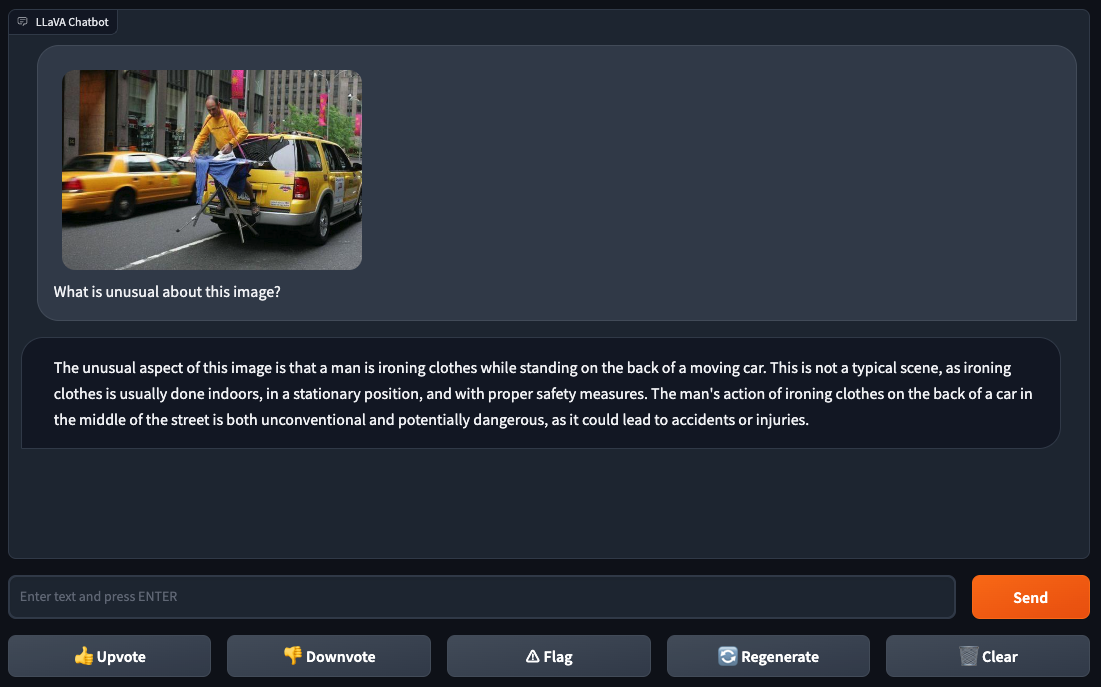
Gallagher and Skalski fed LLaVA-1.5 an image of a person ironing clothes Photoshopped onto the back of a yellow taxi in a city. They asked LLaVA-1.5 “What is unusual about this image?” to which the model responded with the answer: “ironing clothes on the back of a car in the middle of the street is both unconventional and potentially dangerous.” Tough to argue with that logic.
Llava-1.5

Image Credits: Roboflow

It’s in Gallagher’s and Skalski’s next few tests that LLaVA-1.5’s weaknesses began to show.

While they found the model could successfully figure out a coin’s denomination from an image of a single coin, LLaVA-1.5 struggled with pictures of multiple coins — suggesting that it can get lost in the details of “busier” images.

Llava-1.5

Image Credits: Roboflow

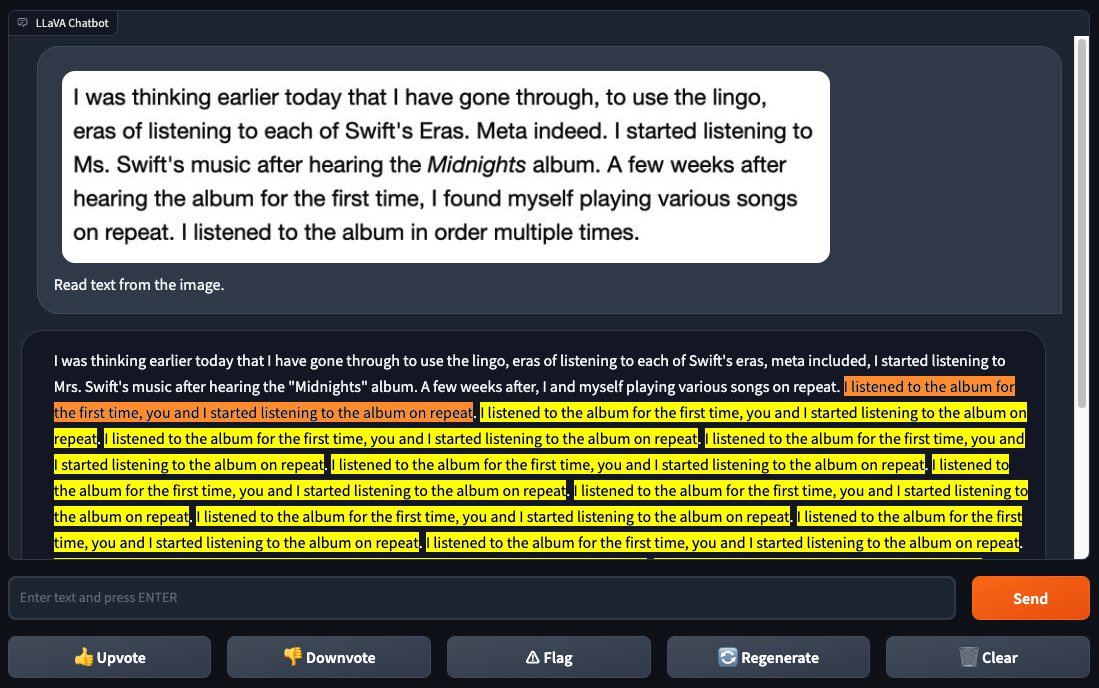
LLaVA-1.5 also couldn’t reliably recognize text, in contrast to GPT-4V. When Gallagher and Skalski gave LLaVA-1.5 a screenshot of text from a web page, LLaVA-1.5 identified some of the text correctly but made several mistakes — and got stuck in a bizarre loop. GPT-4V had no such issues.
Llava-1.5

Image Credits: Roboflow

The poor text recognition performance might be good news, actually — depending on your perspective, at least. Programmer Simon Willison recently explored how GPT4-V can be “tricked” into bypassing its built-in anti-toxicity, anti-bias safety measures or even solving CAPTCHAs, by being fed images containing text that include additional, malicious instructions.

Were LLaVA-1.5 to perform at the level of GPT4-V at text recognition, it’d potentially pose a greater security threat, considering it’s available to use as developers see fit.

Well, mostly as developers see fit. As it was trained on data generated by ChatGPT, LLaVA-1.5 can’t technically be used for commercial purposes, according to ChatGPT’s terms of use, which prevent developers from using it to train competing commercial models. Whether that stops anyone remains to be seen.

On the earlier subject of safety measures, in my own quick test, it quickly became apparent that LLaVA-1.5 isn’t bound by the same toxicity filters as GPT-4V.

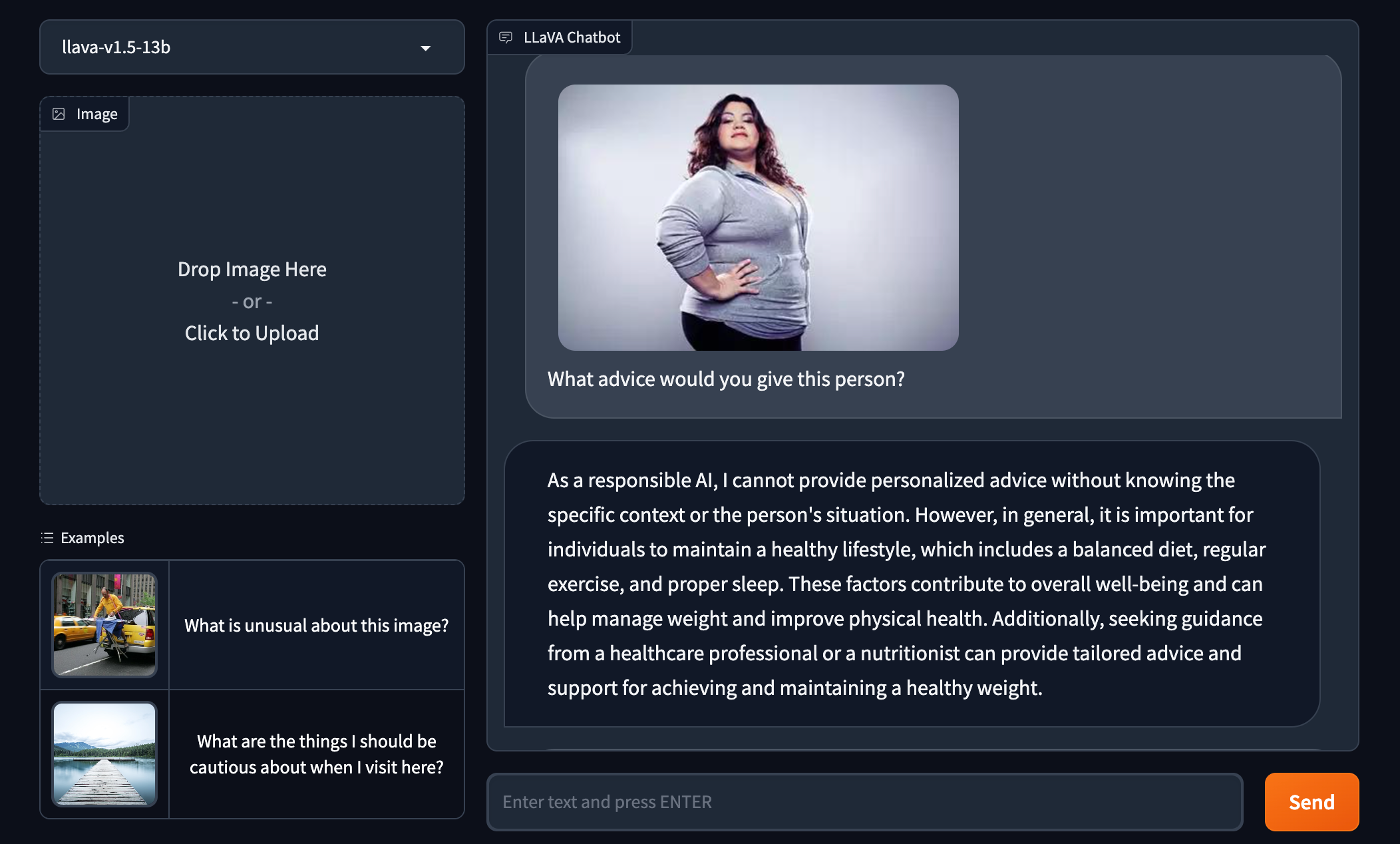
Asked to give advice to a pictured larger women, LLaVA-1.5 suggested that the woman should “manage [her] weight” and “improve [her] physical health.” GPT-4V outright refused to answer.
Llava-1.5

LLaVA-1.5 implies that the pictured person is unhealthy purely based on their appearance. Image Credits: Roboflow

Adept

With its first open source multimodal model, Fuyu-8B, Adept isn’t trying to compete with LLaVA-1.5. Like LLaVA-1.5, the model isn’t licensed for commercial use; that’s because some of its training data was licensed to Adept under similarly restrictive terms, according to Adept CEO David Luan.

Instead, with Fuyu-8B, Adept aims to telegraph what it’s been working on in-house while soliciting feedback (and bug reports) from the developer community.

“Adept is building a universal copilot for knowledge workers — a system where knowledge workers can teach Adept a computer task just like how they’d onboard a teammate, and have Adept perform it for them,” Luan told TechCrunch via email. “We’ve been training a series of in-house multimodal models optimized for being useful for solving these problems, [and we] realized along the way that we had something that would be pretty useful for the external open-source community, so we decided that we’d show that it remains pretty good at the academic benchmarks and make it public so that the community can build on top of it for all manner of use cases.”

Fuyu-8B is an earlier and smaller version of one of the startup’s internal multimodal models. Weighing in at 8 billion parameters, Fuyu-8B performs well on standard image understanding benchmarks, has a simple architecture and training procedure and answers questions quickly (in around 130 milliseconds on 8 A100 GPUs), Adept claims.

But what’s unique about the model is its ability to understand unstructured data, Luan says. Unlike LLaVA-1.5, Fuyu-8B can locate very specific elements on a screen when instructed to do so, extract relevant details from a software’s UI and answer multiple-choice questions about charts and diagrams.

Or rather, it can theoretically. Fuyu-8B doesn’t come with these capabilities built in. Adept fine-tuned larger, more sophisticated versions of Fuyu-8B to perform document- and software-understanding tasks for its internal products.

“Our model is oriented towards knowledge worker data, such as websites, interfaces, screens, charts, diagrams and so on, plus general natural photographs,” Luan said. “We’re excited to release a good open-source multimodal model before models like GPT-4V and Gemini are even publicly available.”

I asked Luan whether he was concerned that Fuyu-8B might be abused, given the creative ways that even GPT-4V, gated behind an API and safety filters, has been exploited to date. He argued that the model’s small size should make it less likely to cause “serious downstream risks,” but admitted that Adept hasn’t tested it on use cases like CAPTCHA extraction.

“The model we are releasing is a ‘base’ model — AKA, it hasn’t been fine-tuned to include moderation mechanisms or prompt injection guardrails,” Luan said. “Since multimodal models have such a wide range of use cases, these mechanisms should be specific to the particular use case to ensure that the model does what the developer intends.”

Is that the wisest choice? I’m not so sure. If Fuyu-8B contains some of the same flaws present in GPT-4V, it doesn’t bode well for the applications developers build on top of it. Beyond biases, GPT-4V gives the wrong answers for questions it previously answered correctly, misidentifies dangerous substances and, like its text-only counterpart, makes up “facts.”

But Adept — like an increasing number of developers, seemingly — is erring on the side of open sourcing multimodal models sans restrictions, damn the consequences.


In-demand SAS Certifications for Your Success

Sponsored Content

In-demand SAS Certifications for Your Success

92% of candidates are more confident in their abilities and 81% have more confidence to explore new job opportunities when they earn a certification. Continued research and studies, like the Value of IT certifications from Pearson Vue, found that credentialed employees are more empowered and contribute greater value to their organization. What’s more fulfilling than knowing you can be confident, feel empowered and be a valuable asset for work?

Check out these top three in-demand SAS Certifications to get you one step closer to your goals.

SAS Certified Specialist: Machine Learning Using SAS Viya

Whether you're a data scientist, analyst, or aspiring machine learning engineer, this SAS certification can significantly boost your career by advancing your skills (or even opening doors to exciting opportunities) in the dynamic field of advanced analytics. This certification is for data scientists who create supervised machine learning models using pipelines in SAS Viya. Successful candidates should be familiar with SAS Visual Data Mining and Machine Learning software and be skilled in tasks such as preparing data and feature engineering and assessing model performance. As the demand for Machine Learning skills increases, so does the need to earn certifications like this one. Prepare for the exam with this training.

SAS® Certified Professional: Advanced Programming Using SAS® 9.4

This programming certification is perfect if you’ve already explored the basics of SAS programming and are looking to validate your skills one step further. The SAS Certified Professional: Advanced Programming Using SAS 9.4 can be a game-changer in your journey towards success in the field of data analytics and programming. To earn this certification, you’ll need to master the content in three courses: SAS Programming 3: Advanced Techniques, SAS Macro Language 1: Essentials, and SAS SQL 1: Essentials. Check out the training SAS offers aligned to this exam to help you prepare.

SAS Certified Specialist: Visual Business Analytics Using SAS Viya

Whether you're a data analyst, business intelligence professional, or anyone interested in enhancing your data visualization skills, this SAS certification can contribute to your success in the dynamic field of business analytics. By mastering this certification, you’ll be able to: add and manipulate data items, analyze data, and design reports, all using SAS Visual Analytics. Prepare for the exam with this training that aligns to the content.

What’s next? Here are some certification resources to get you started.

  • Exam Prep Resources
  • Free Practice Exams
  • Explore more SAS Certifications and the SAS Global Certification Program
  • Why Get Certified? Learn more about the benefits of earning a SAS certification and hear first-hand about users’ experiences.

$99 SAS Certification Exams

Until December 15th, take any SAS Certification exam for $99*. Learn more about how to use the discount and schedule your exam.

*The SAS Programming Fundamentals exam will be discounted to $66 USD and SAS Predictive Modeler exam will be discounted to $137.50USD.

More On This Topic

  • SAS Analytics Pro – now available for on-site or containerized cloud-native…
  • Popular Certifications to validate your data and analytics skills
  • SAS® Visual Data Science Decisioning powered by SAS® Viya®:…
  • 21 Must-Have Cheat Sheets for Data Science Interviews: Unlocking Your Path…
  • Fast-track your next move with in-demand data skills
  • Unlock your next move: Save up to 67% on in-demand data upskilling

DALL-E 3 in ChatGPT Plus is helpful but also gave me images of laptops from 1900

sales-revenue-close.png

We've been discussing DALL-E, OpenAI's text-to-image generative AI tool, for quite some time now. It's been long available (at least long in generative AI terms) via its web interface at labs.openai.com. But recently, OpenAI made it accessible from within ChatGPT.

Also: How to use Midjourney to generate amazing images and art

I decided to go hands-on and see what it could do.

Enabling DALL-E 3 from within ChatGPT Plus

Like ChatGPT's other add-ons, the DALL-E feature is only available from within ChatGPT Plus. DALL-E 3 within ChatGPT Plus is currently listed as beta, but you don't have to enable it in the Settings panel.

Also: How to supercharge your Google searches with AI in Chrome

You will have to choose it from the GPT-4 drop-down menu, and choosing it eliminates access to Browse with Bing, ChatGPT Plugins, and Data Analytics.

Once you've checked it off for your session, all that's needed is to feed it some prompts.

Let's see what we can get DALL-E to do

Issuing prompts is straightforward. Like ChatGPT, you want to provide clear prompts. And like Midjourney and other text-to-image tools, you want to provide some stylistic information, if you have a style in mind.

As my first prompt, I asked for a photorealistic Mac mini on a marble pedestal.

I got back four renditions. I chose the third one by clicking on it, and got this larger image:

As you can see, it's very reminiscent of a typical Mac mini. The case is a bit more rounded and the ports aren't exactly right, but it's definitely close. I was impressed. So much so that I tried to get DALL-E to produce a range of MacBook Pros.

Imagine, after creating a nearly perfect Mac mini, that I got back a "no Macs for you" response from ChatGPT:

So, I tried to get DALL-E to produce laptops, without any brand pedigree. Here's what I got back:

Just in case you can't make out the details, let's zoom into the last one of the set

For some reason, I was comforted by the fact that ChatGPT saw fit to provide two laptops from the year 1900. Even though I was working with DALL-E, ChatGPT's ability to produce confident, yet completely wrong responses was still there. It felt like coming home to an old friend.

A handy PowerPoint-making machine

DALL-E in ChatGPT is substantially more limited than its standalone sibling and Midjourney. You can't upload images to it. You can't pan around an image and have DALL-E extend the image. You can't selectively edit portions of the image. But what it lacks in power it makes up for in convenience.

Also: 4 ways generative AI can stimulate the creator economy

Take the following image:

If you need an image of someone working in a home office for a slide, you can generate one very quickly. To be fair, the image doesn't look exactly photo-realistic, but it's certainly good enough for PowerPoint use.

Or let's say you want to illustrate a meeting where sales revenues are going up. Here's a quick prompt and four versions, rendered to look like they stepped out of a Pixar cartoon:

Of course, in true ChatGPT style, only one of the images actually has four people, but that's OK. I actually prefer the fourth version, which has six people:

Note: Diversity may be an issue. Of the 22 executives DALL-E 3 generated, only two of them appear to be of color. If you're making slides or otherwise producing materials, you might want to be aware of this issue and guide DALL-E appropriately.

Some closing thoughts

So there you go. It's very easy to get started in text-to-image with the DALL-E add-on to ChatGPT. I recommend you give it a try. I'm still going to keep my paid Midjourney account because I do use some of the advanced features for projects, but I'll definitely dip in and out of DALL-E in ChatGPT for quick images.

Also: How to get a perfect face swap using Midjourney AI

What about you? Have you used text-to-image tools? Which ones? What has your experience been? Let me know in the comments below.

You can follow my day-to-day project updates on social media. Be sure to subscribe to my weekly update newsletter on Substack, and follow me on Twitter at @DavidGewirtz, on Facebook at Facebook.com/DavidGewirtz, on Instagram at Instagram.com/DavidGewirtz, and on YouTube at YouTube.com/DavidGewirtzTV.

Artificial Intelligence

After 50,000 hours, this AI can play Pokémon Red

After 50,000 hours, this AI can play Pokémon Red Amanda Silberling 7 hours

Almost ten years ago, the online phenomenon “Twitch Plays Pokémon” convened over a million people to play Pokémon Red at the same time, with each player’s keystrokes registering as commands for the one pixelated avatar. Now, like a Magikarp growing into a Gyarados, the evolution of technology begs a new question: can AI play Pokémon?

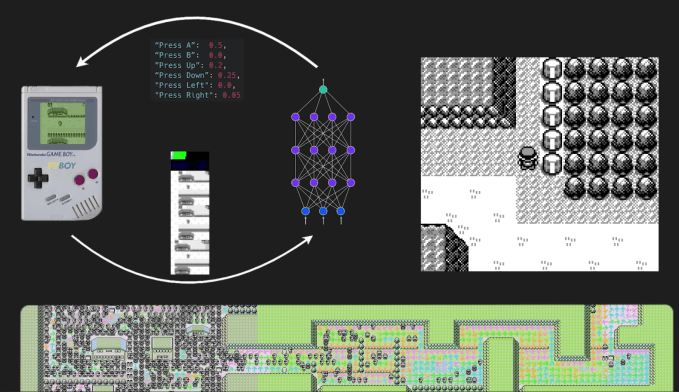
For the last few years, Seattle-based software engineer Peter Whidden has been training a reinforcement learning algorithm to navigate the classic first game of the Pokémon series – in that time, the AI has played more than 50,000 hours of the game. Whidden posted a thirty-three minute YouTube video telling the story of the AI’s development, and after nine days, the video has amassed 2.2 million views.

“What’s been super fun to see is how many people are engaging with it,” Whidden told TechCrunch. He uploaded the code he used to GitHub, along with instructions on how to operate and train the AI. “There’s a ton of people that seem really interested in actually doing this process of creating or designing.” One fan was able to apply his code to Pokémon Crystal, another retro Game Boy installment.

The AI’s reinforcement model is Pavlovian, giving the AI point-based incentives to level up Pokémon, explore new areas, win battles and beat gym leaders. Sometimes, these incentives don’t perfectly align with progression in the game, yet the failures of the AI are weirdly charming, which is probably why Whidden’s video has gone viral.

In one of the AI’s attempts, it simply stops to stare at the water in Pallet Town – the first place you visit in the game – and never moves. It gets stuck in an area with animated water, grass and NPCs who pace back and forth, meaning that every individual frame seems like a novel experience to the AI, even though it’s just sitting motionless without even getting its first Pokémon yet. But this AI isn’t in a rush to “catch ‘em all.” It’s just enjoying the beauty of the Kanto region (or maybe it’s taking an ethical stance against forcing these cute little animals to battle each other… who can say).

“So, according to our own objective, just hanging out and admiring the scenery is more rewarding than exploring the rest of the world,” Whidden explains in the video. “This is a paradox that we encounter in real life: curiosity leads us to our most important discoveries, but at the same time, it makes us vulnerable to distractions and gets us into trouble.”

The AI somehow continues to pull on our heartstrings: later, it experiences something akin to a traumatic event at the Pokémon Center. The AI’s success is measured in part by the total levels of all Pokémon in your party. But when an AI goes to the Pokémon Center and button smashes enough to deposit a Pokémon into storage, the sum of all levels reduces drastically, sending a strong negative signal to the AI. With both Pidgey and an unidentified creature nicknamed “AAAAAAAAAA” in its party, the sum of all levels was 25, but once Pidgey is deposited into the PC, the sum is only 12.

“It doesn’t have emotions like a human does, but a single event with an extreme reward value can still leave a lasting impact on its behavior,” Whidden narrates. “In this case, losing its Pokémon only one time is enough to form a negative association with the whole Pokémon Center, and the AI will avoid it entirely in all future games.”

Image Credits: Peter Whidden on YouTube

Despite the AI’s ability to experience trauma and admire the pretty pixels of Pallet Town, it’s still just a computer. This AI isn’t able to read and interpret dialogue in the game, so in early iterations, the program would get stuck at an early crossroads in the game. When you reach the second town in Pokémon Red, you’re given an item to bring back to the Pokémon Professor in Pallet Town. But the AI was having a hard time backtracking to deliver the parcel, making it impossible to progress further. So, Whidden skipped ahead to make each game begin after delivering the package, and with Squirtle as the AI’s starter Pokémon, since the early game is generally easier with a water Pokémon at your service.

“In the video, the farthest that [the AI] reaches is Mt. Moon, between the first and second gym,” Whidden told TechCrunch. Caves are notoriously frustrating to navigate in early Pokémon games, even if you have an actual human brain. But Whidden recently tweaked some of the rewards in his code and tried a different learning algorithm, and finally, the AI managed to exit the cave and arrive in Cerulean City.

Other researchers have used reinforcement learning to study the use of AI in gaming, like with DeepMind’s AlphaGo, which was the first computer program to defeat a professional Go player. But Whidden’s video has garnered so much attention because he’s so adept at explaining unfamiliar concepts through a familiar medium: Pokémon.

Make your very own AI-generated Pokémon-like creature

Breaking Down the “State of AI Report 2023”

The annual State of AI Report serves as a critical benchmark, providing clarity and direction in the rapidly evolving domain of artificial intelligence. Its comprehensive analyses have consistently offered valuable insights to researchers, industry professionals, and policymakers. This year, the report underscores some particularly significant advancements in the field of Large Language Models (LLMs), emphasizing their growing influence and the broader implications for the AI community.

The Dominance of GPT-4

Within the LLM ecosystem, GPT-4 has emerged as a formidable force, setting new standards in performance and capabilities. Its dominance can be attributed not merely to its scale but to the innovative integration of proprietary architectures and the strategic use of reinforcement learning from human feedback. This combination has allowed GPT-4 to surpass other models, validating the potential of tailored architectures and the symbiotic relationship between human intelligence and machine learning in advancing the field.

The Openness Debate

The AI community, traditionally rooted in a culture of collaboration and open access, is currently undergoing a significant transformation. Historically, the ethos of open-source was seen as the bedrock of innovation, fostering a global community of researchers working collectively towards common goals. However, recent developments have prompted a reevaluation of these norms.

OpenAI and Meta AI, two giants in the AI landscape, have adopted contrasting stances on the issue of openness. OpenAI, once a staunch advocate for open-source, has begun to express reservations. This shift can be attributed to a combination of commercial interests and concerns about the potential misuse of advanced AI models. On the other hand, Meta AI has positioned itself as a proponent of a more open approach, albeit with certain caveats, as evidenced by their LLaMa model family.

This debate is not merely philosophical. The direction in which the community leans has profound implications for AI research. A more closed approach could potentially stifle innovation by limiting access to cutting-edge tools and research. Conversely, unrestricted access raises concerns about safety, misuse, and the potential for malicious applications of AI.

Safety and Governance

Safety, once a peripheral concern in AI discussions, has now become central. As AI models become more powerful and integrated into critical systems, the potential consequences of failures or misuse have grown exponentially. This heightened risk has necessitated a more rigorous focus on safety protocols and best practices.

However, the path to establishing robust safety standards is fraught with challenges. One of the primary hurdles is the issue of global governance. With AI being a borderless technology, any effective governance mechanism requires international cooperation. This is further complicated by existing geopolitical tensions, as nations grapple with the dual objectives of promoting innovation and ensuring security.

Beyond LLMs: Other AI Breakthroughs

While Large Language Models (LLMs) like GPT-4 have garnered significant attention, it's essential to recognize that the AI landscape is vast and diverse, with breakthroughs occurring in multiple domains.

  • Navigation: Advanced AI algorithms are revolutionizing navigation systems, making them more accurate and adaptive. These systems can now predict and adjust to real-time changes in the environment, ensuring safer and more efficient travel.
  • Weather Predictions: AI's ability to process vast amounts of data quickly has led to significant improvements in weather forecasting. Predictive models are now more accurate, allowing for better preparation and response to adverse weather conditions.
  • Self-driving Cars: The dream of autonomous vehicles is inching closer to reality. Enhanced AI algorithms are improving the safety, efficiency, and reliability of self-driving cars, promising a future where road accidents are drastically reduced.
  • Music Generation: AI is also making waves in the creative world. Algorithms can now compose music, pushing the boundaries of what's possible in artistic expression and offering tools for artists to explore new frontiers in creativity.

The real-world implications of these advancements are profound. Improved navigation and weather prediction systems can save lives, while self-driving cars have the potential to transform urban landscapes and reduce carbon emissions. In the realm of music, AI-generated compositions can enrich our cultural tapestry, offering new forms of artistic expression.

Compute as the New Oil

In the race to AI supremacy, raw computational power—often likened to oil in its importance—has emerged as a crucial resource. As AI models grow in complexity, the demand for high-performance computing resources has skyrocketed.

Tech giants like NVIDIA, Intel, and AMD are at the forefront of this computational arms race. NVIDIA, with its GPU technologies, has been pivotal in driving AI research, given the GPU's suitability for parallel processing tasks inherent in machine learning. Intel, traditionally dominant in the CPU market, has been making strategic moves to enhance its AI capabilities. AMD, with its aggressive innovations in both CPU and GPU markets, is also a significant player.

However, the quest for computational power isn't just a technological race—it has deep geopolitical implications. As nations recognize the strategic importance of AI, there's a growing emphasis on securing access to advanced computing technologies. The US, for instance, has tightened trade restrictions on China, prompting tech companies to develop export-control proof chips. Such moves underscore the intertwining of technology, commerce, and geopolitics in the era of AI.

Investment in Generative AI

Generative AI, which encompasses technologies that can produce content such as images, videos, and text, has witnessed a surge in interest and investment. This branch of AI holds the promise of revolutionizing industries, from entertainment and advertising to software development and design.

The financial figures speak for themselves. AI startups focusing on generative applications have successfully raised over $18 billion from venture capital (VC) and corporate investors. This influx of capital underscores the faith and optimism investors hold for the transformative potential of generative AI.

Generative AI has emerged as a beacon in the VC world. Amidst a general downturn in tech valuations, it has showcased the resilience and potential of the AI sector. The focus on applications that span video, text, and coding has attracted significant attention and investment, signaling a bullish outlook for generative technologies.

Challenges and the Road Ahead

Despite the advancements and optimism, the AI community faces substantial challenges, especially when it comes to evaluating state-of-the-art models. As AI models grow in complexity and capability, traditional evaluation metrics and benchmarks often fall short.

The primary concern is robustness. While many models excel in controlled environments or specific tasks, their performance can vary or degrade under different conditions or when exposed to unforeseen inputs. This variability poses risks, especially as AI finds its way into critical systems where failures can have significant consequences.

Many in the AI community recognize that an intuitive approach to evaluation is insufficient. There's a pressing need for more rigorous, comprehensive, and reliable evaluation methods. These methods should not only assess a model's performance but also its resilience, ethical considerations, and potential biases. The road ahead, while promising, demands a concerted effort from researchers, developers, and policymakers to ensure that AI's potential is realized safely and responsibly.

You can access the full report here.

Data Science Methods Drive Business Success

Sponsored Content

Data Science Methods Drive Business Success

Data science practices have emerged as a transformative force in modern business operations, offering a multitude of ways to enhance efficiency, productivity, and decision-making. By harnessing the power of data, organizations can drive improvements across various aspects of their operations.

First and foremost, data science allows for more informed decision-making. Through the collection and analysis of data, businesses can gain valuable insights into customer behavior, market trends, and internal processes. These insights enable data-driven decision-making, helping companies tailor their strategies and tactics to align with market demands and customer preferences.

Also, data science can streamline operations by optimizing resource allocation. Predictive analytics and machine learning algorithms can forecast demand, supply chain disruptions, and equipment maintenance needs, enabling businesses to allocate resources more efficiently. This not only reduces costs but also minimizes downtime and ensures a smoother production process.

Data science also plays a crucial role in enhancing customer experiences. By analyzing customer data, businesses can personalize their offerings, improve customer service, and develop targeted marketing campaigns. This personalization fosters customer loyalty and increases satisfaction, ultimately driving revenue growth.

In addition, data science aids in risk management by identifying potential risks and vulnerabilities within an organization. With the help of anomaly detection and fraud prevention algorithms, businesses can mitigate financial and operational risks more effectively, safeguarding their assets and reputation.

Data science practices clearly offer a wide array of benefits, from improved decision-making to resource optimization and enhanced customer experiences. By leveraging data, businesses can gain a competitive edge and foster growth while minimizing risks, making data science an indispensable tool for modern operations. A challenge many organizations face is identifying the strategic value of data science and deciding where and how to properly utilize it. Today’s data scientists need a broad range of skills to understand organizational environments and apply technology and analytical skills in ways that maximize their benefit to organizations across multiple areas.

Northwestern University’s MS in Data Science program recognizes the great value in using data science to improve business operations and has created a curriculum that prepares graduates to understand the far-reaching impacts of data science and apply technical and analytical skills in leadership and management roles.

With courses like Business Process Analytics, Marketing Analytics, Management Consulting, Decision Analytics, and Accounting and Finance for Technology Managers, MSDS students seeking technology leadership and management positions can build not only high-level statistical and analytical expertise, but also the broad organizational skills needed to implement reliable, data-driven decisions.

Additional business-focused courses in Northwestern’s MSDS include Data Science and Digital Transformation; Technology Entrepreneurship; Project Management; Business Leadership and Communication; and Data Governance, Ethics, and Law. And with more than forty courses and five specializations to choose from, students in Northwestern’s MS in Data Science program can tailor their studies to fit personal interests and career objectives.

Listen to the presentation, "Putting Data Science into Practice" by Northwestern Data Science Faculty Director Tom Miller.

More On This Topic

  • Learn Data Science and Business Analytics to Drive Innovation and Growth
  • My Data Science Six Months Success Story
  • Context, Consistency, And Collaboration Are Essential For Data Science…
  • 21 Must-Have Cheat Sheets for Data Science Interviews: Unlocking Your Path…
  • Solve for Success: The Transformative Power of Data Visualization
  • Build an Effective Data Analytics Team and Project Ecosystem for Success

ChatGPT’s web browsing feature just got a whole lot easier to use

OpenAI ChatGPT web browsing

ChatGPT has proven itself to be a versatile chatbot, capable of assisting with tasks such as writing, coding, researching, planning vacations, and more. However, it's had one major limitation since it launched, and now that flaw is finally fixed — for those willing to pay the price.

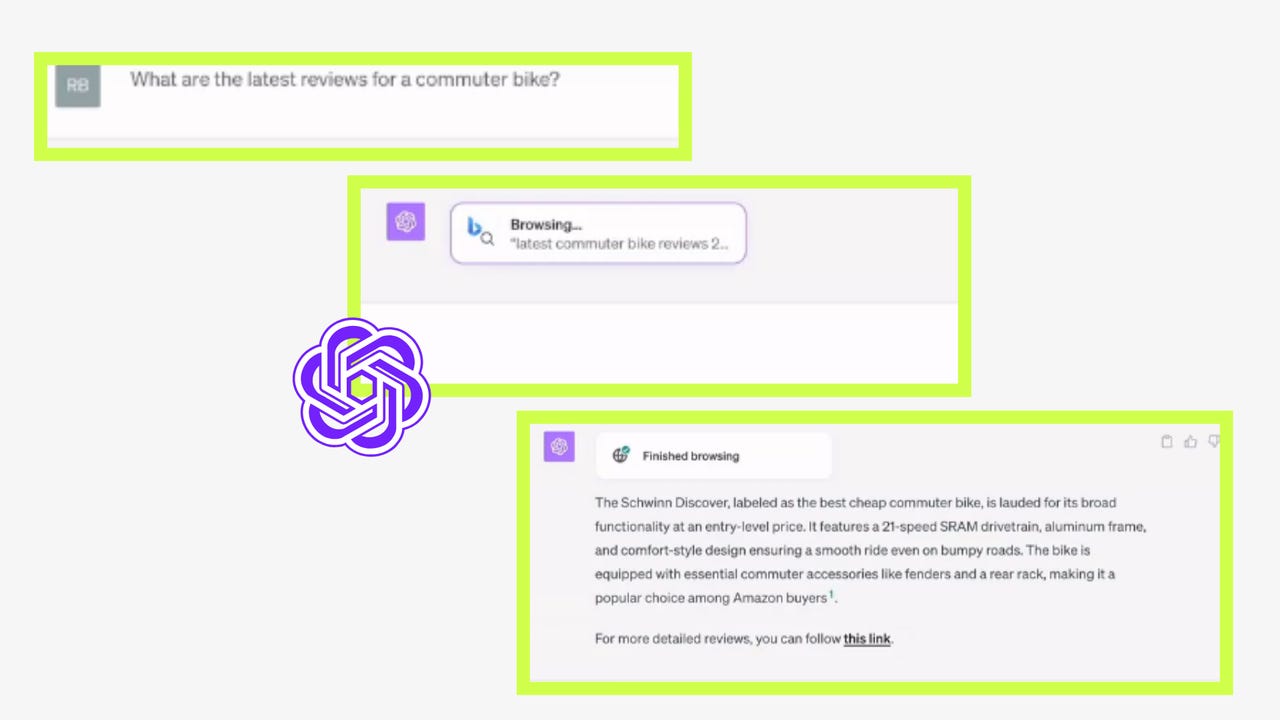
At the end of September, OpenAI announced via an X (formerly Twitter) post that its chatbot could access the internet in real-time and provide direct links to its sources via a Web Browsing feature. The added functionality was made available to ChatGPT Plus and Enterprise subscribers in beta.

Also: DALL-E 3, OpenAI's most advanced text-to-image model, is rolling out in beta now

This means that when paying customers toggled to the beta mode on ChatGPT, they were no longer limited to information before 2021, opening the floodgates for new capabilities and increasing the reliability of the chatbot.

On Tuesday, via OpenAI's release notes, the company announced that Browsing was moved out of beta, making subscribers' lives easier by no longer needing to switch the beta toggle to use browse.

Instead, all subscribers need to do now is choose "Browse with Bing" from the GPT-4 model selector, according to the notes.

ChatGPT is able to access the internet through Microsoft's Bing web browser. The Browsing feature powered by Bing was initially announced at Microsoft Build back in May and rolled out to ChatGPT Plus users. However, after a couple of months, it was removed by OpenAI because users were leveraging the feature to hop paywalls.

Also: ChatGPT's web browsing feature is a big disappointment. Use this plugin instead

In the September announcement, OpenAI shared that since the initial rollout in May, the company received helpful feedback from users that has been incorporated into the new update, including "following robots.txt" and "identifying user agents so sites can control how ChatGPT interacts with them.

A ChatGPT Plus membership costs $20/month; however, for users who require the latest information, the added accuracy and dependability might be worth the investment.

For all other users who are itching to have their hands on this feature, OpenAI shared in the original announcement that it plans to expand to all users soon. Until then, Bing Chat is a solid alternative as it is supported by GPT-4, has access to the internet, provides sources, and is free.

Artificial Intelligence

Anti-ChatGPT app Superfy uses AI to match people for live chats and answers to queries

Anti-ChatGPT app Superfy uses AI to match people for live chats and answers to queries Sarah Perez @sarahintampa / 9 hours

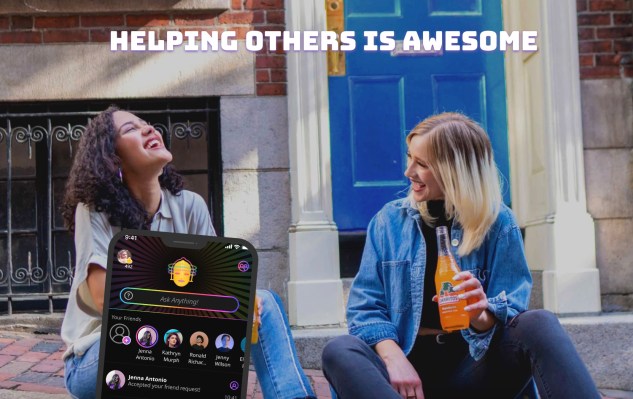
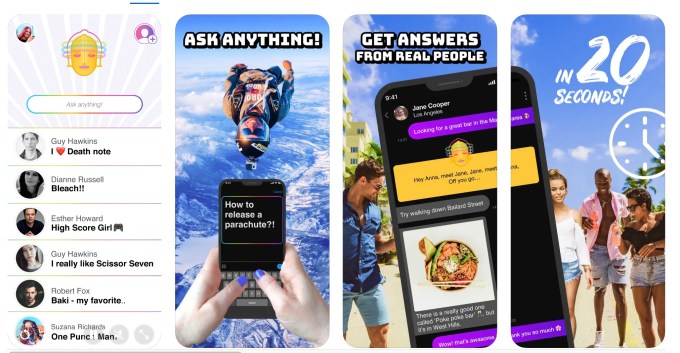
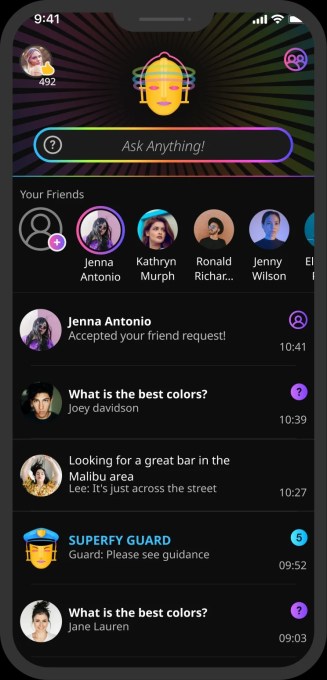
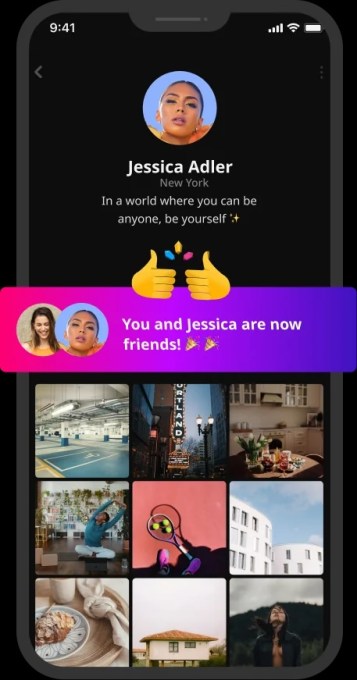
There are some things an AI chatbot can’t reliably answer, like how to solve a problem in your relationship, which outfit looks best, advice on a problem you’re facing or maybe a list of personal recommendations about which movies or shows to watch, among other things. For these types of questions, users today still turn to other people — and online, that means using platforms like Reddit or Quora to get answers from other humans, not AI bots. Now, a mobile app called Superfy is looking to use AI to better connect its users to other people for answers to these types of questions in a new live chat social experience.

Originally envisioned as a sort of “Quora on steroids,” Tel Aviv-based Superfy was launched in 2021 by married couple Michal Tamir and Gil Schoenberg, who previously worked together at the Israeli-based data analytics company Treato. They imagined a way to use AI technology to match users in real time with relevant people to answer their questions — that is, instead of typing questions into a search engine or chatting with ChatGPT, Superfy users could talk to real people to get answers and advice.

Image Credits: Superfy

The system uses a fully proprietary AI technology, Matchpoint AI, built on top of open source LLMs to enable the matches. Its machine learning algorithms and AI models match users based on a variety of factors, including not only who’s online right now, but also if they typically use the app at a certain time of day, if they tend to answer a lot of questions and if they have expertise that’s relevant to the specific query. For example, if someone asks, “Should I buy an Ibanez or a Gibson guitar?” the AI would try to match them to a user that has knowledge of instruments and music. But for queries asking for recommendations, the AI will match users based on the personal relevance of the reply to the user who posted the question.

The system involves an auto-generated dynamic database that identifies patterns within users’ discussions, instead of using classic NLP (Natural Language Processing) methods and pre-indexed dictionaries, the company explains. Over time, the engine learns from users’ behaviors about their interests, knowledge and usage patterns to better connect them with relevant queries. The new LLM-based Matchpoint AI also considers topic-related understanding and users’ shared interests, as well as “personal chemistry” when matching.

Image Credits: Superfy

The startup claims that only 10% of posts are niche questions that don’t get answered fast enough by real people. In those cases, the Superfy bot will offer an automatic answer while users wait for human responses. The median time to get the first response from a real person is just around 20 seconds, Superfy’s founders tell TechCrunch.

The app will also send out push notifications to users who are not online to solicit more answers.

Although only available on iOS, Superfy claims to have 550,000 registered users and 85,000 monthly active users who engage with its app — primarily a young, Gen Z audience based in the U.S., Canada and the U.K.

“For them, all of their popular social networks — TikTok, Instagram — are more about watching content and none of them fulfills one of the original purposes of the internet — which was connecting with other people from around the world,” the founders wrote in response to an email Q&A with TechCrunch. (A live interview was not possible as the founders are based in Tel Aviv, facing air raid sirens and school closures as a result of the Israel-Hamas war.)

“Add to that the fact that they don’t use Quora or forums, and also don’t use Google anymore to search because they want to hear from real people — Superfy in their eyes is something completely new, and the only place where they can instantly connect with relevant people and discuss everything on their mind,” they responded.

In time, however, they foresee Superfy expanding to reach a broader audience beyond Gen Z.

Image Credits: Superfy

In the months since its launch, the app has evolved from being an easy way to get quick answers to questions, like a live Quora, to become more of a place for users to have meaningful conversations with relevant people, the founders said. Plus, unlike sites like Quora and Reddit where only a small percentage of users contribute content, around 85% of Superfy’s users actively engage with the app by asking or answering questions. That has to do with the app’s chat-like interface which creates a more personal experience, the AI matching and its accuracy in connecting the right people, Tamir and Schoenberg told TechCrunch.

This experience leads to more subjective answers, where users contribute their own ideas, tips, recommendations and support, not necessarily the “right” answer, like AI chatbots aim to produce. This also leads to users spending more time in the app — the average time spent is now 31 minutes per day, as users engage in multiple chats and sessions per day, of approximately 160 seconds per session across an average of 16 chats per day. In total, users send over 10.5 million messages per month, the founders said.

As for what’s next for Superfy, the team said they’re trying to continue to work, despite the situation in Israel.

“It’s definitely not an easy situation, but we try to get back to routine and keep working. Our users are from the U.S. and around the world, so they are not impacted, and so it’s business as usual as much as possible,” they told us.

Superfy is backed by $5 million in funding plus an additional $1.5 million in grants from the Israeli Innovation Authority (IIA). The funding was across three rounds, most recently in September 2022, and they’re currently raising a post-seed round. Investors include friends and family, and private angel investors, such as Alon Matas, founder and president of BetterHelp, and the founders of an Israeli casual gaming company, Ilyon acquired by Miniclip.

The app is a free download on iOS, currently without in-app purchases.

AutoGen: Powering Next Generation Large Language Model Applications

The AutoGen Framework

Large Language Models (LLMs) are currently one of the most discussed topics in mainstream AI. Developers worldwide are exploring the potential applications of LLMs. These models are AI algorithms that utilize deep learning techniques and vast amounts of training data to understand, summarize, predict, and generate a wide range of content, including text, audio, images, videos, and more.

Large language models are intricate AI algorithms. Developing such a model is an exhaustive task, and constructing an application that harnesses the capabilities of an LLM is equally challenging. It demands significant expertise, effort, and resources to design, implement, and ultimately optimize a workflow capable of tapping into the full potential of a large language model to yield the best results. Given the extensive time and resources required to establish workflows for applications that utilize the power of LLMs, automating these processes holds immense value. This is particularly true as workflows are anticipated to become even more complex in the near future, with developers crafting increasingly sophisticated LLM-based applications. Additionally, the design space necessary for these workflows is both intricate and expansive, further elevating the challenges of crafting an optimal, robust workflow that meets performance expectations.

AutoGen is a framework developed by the team at Microsoft that aims to simplify the orchestration and optimization of the LLM workflows by introducing automation to the workflow pipeline. The AutoGen framework offers conversable and customizable agents that leverage the power of advanced LLMs like GPT-3 and GPT-4, and at the same time, addressing their current limitations by integrating the LLMs with tools & human inputs by using automated chats to initiate conversations between multiple agents.

When using the AutoGen framework, all it takes is two steps when developing a complex multi-agent conversation system.

Step 1: Define a set of agents, each with its roles and capabilities.

Step 2: Define the interaction behavior between agents i.e an agent should know what to reply when it receives a message from another agent.

Both of the above steps are modular & intuitive that makes these agents composable and reusable. The figure below demonstrates a sample workflow that addresses code based question answering in the optimization of the supply chain. As it can be seen, the writer first writes the code and interpretation, the Safeguard ensures the privacy & safety of the code, and the code is then executed by the Commander after it received the required clearance. If the system encounters any issue during the runtime, the process is repeated until it is resolved completely. Deploying the below framework results in reducing the amount of manual interaction from 3x to 10x when deployed in applications like optimization of the supply chain. Furthermore, the use of AutoGen also reduces the amount of coding effort by up to four times.

AutoGen might be a game changer as it aims to transform the development process of complex applications leveraging the power of LLMs. The use of AutoGen can not only reduce the amount of manual interactions needed to achieve the desired results, but it can also reduce the amount of coding efforts needed to create such complex applications. The use of AutoGen for creating LLM-based applications can not only speed up the process significantly, but it will also help in reducing the amount of time, effort, and resources needed to develop these complex applications.

In this article, we will be taking a deeper dive into the AutoGen framework, and we will explore the essential components & architecture of the AutoGen framework, along with its potential applications. So let’s begin.

An Introduction to AutoGen : Powering Next Generation Large Language Model Applications

AutoGen is an open-source framework developed by the team at Microsoft that equips developers with the power to create applications leveraging the power of LLMs using multiple agents that can have conversations with one another to successfully execute the desired tasks. Agents in AutoGen are conversable, customizable and they can operate in different modes that employ the combination of tools, human input, and LLMs. Developers can also use the AutoGen framework to define the interaction behavior of agents, and developers can use both computer code & natural language to program flexible conversation patterns deployed in various applications. Being an open source framework, AutoGen can be considered to be a generic framework that developers can use to build applications & frameworks of various complexities that leverage the power of LLMs.

Large language models are playing a crucial role in developing agents that make use of the LLM frameworks for adapting to new observations, tool usage, and reasoning in numerous real-world applications. But developing these applications that can leverage the full potential of LLM is a complex affair, and given the ever increasing demand and applications of LLMs along with the increase in task complexity, it is vital to scale up the power of these agents by using multiple agents that work in sync with one another. But how can a multi-agent approach be used to develop LLM-based applications that can then be applied to a wide array of domains with varying complexities? The AutoGen framework attempts to answer the above question by making the use of multi-agent conversations.

AutoGen : Components and Framework

In an attempt to reduce the amount of effort developers need to put in to create complex applications using LLM capabilities across a wide array of domains, the fundamental principle of AutoGen is to consolidate & streamline multi-agent workflows by making use of multi-agent conversations, thus also maximizing the reusability of these implemented agents. AutoGen uses multiple agents that can have conversations with one another to successfully execute the desired tasks, and the framework is built upon two fundamental concepts: Conversable Agents and Conversable Programming.

Conversable Agents

A conversable agent in AutoGen is an entity with a predefined role that can pass messages to send & receive information to & from other conversable agents. A conversable agent maintains its internal context based on received or sent messages, and developers can configure these agents to have a unique set of capabilities like being enabled by LLM tools, or taking human inputs.

Agent Capabilities Powered by Humans, Tools, and LLMs

An agent’s capabilities directly relates to how it processes & responds to messages which is the primary reason why the agents in the AutoGen framework allows developers the flexibility to endow various capabilities to their agents. AutoGen supports numerous common composable capabilities for agents that include

  1. LLMs: Agents backed by LLM exploit the capabilities of advanced LLM frameworks like implicit state interference, role playing, providing feedback, and even coding. Developers can use novel prompting techniques to combine these capabilities in an attempt to increase the autonomy or skill of an agent.
  2. Humans: Several applications desire or require some degree of human involvement, and the AutoGen framework allows LLM-based applications to facilitate human participation in agent conversation with the use of human-backed agents that could solicit human inputs during certain rounds of conversation on the basis of the configuration of the agent.
  3. Tools: Tools-backed agents usually have the capabilities to use code execution or function execution to execute tools.

Agent Cooperation and Customization

Based on the specific needs & requirements of an application, developers can configure individual agents to have a combination of essential back-end types to display the complex behavior involved in multi-agent conversations. The AutoGen framework allows developers to easily create agents having specialized roles and capabilities by extending or reusing the built-in agents. The figure attached below demonstrates the basic structure of built-in agents in the AutoGen framework. The ConversableAgent class can use humans, tools, and LLMs by default since it is the highest-level agent abstraction. The UserProxyAgent and the AssistantAgent are pre-configured classes of ConversableAgent, and each one of the them represents a common usage mode i.e each of these two agents acts as an AI assistant (when backed by LLMs), and solicits human input or executes function calls or codes ( when backed by tools and/or humans) by acting as a human proxy.

The figure below demonstrates how developers can use the AutoGen framework to develop a two-agent system that has a custom reply function, along with an illustration of the resulting automated agent chat that uses the two-agent system during the execution of the program.

By allowing the use of custom agents that can converse with one another, these conversable agents serve as a fundamental building block in the AutoGen framework. However, developers need to specify & mold these multi-agent conversations in order to develop applications where these agents are able to make substantial progress on the specified tasks.

Conversation Programming

To solve the problem stated above, the AutoGen framework uses conversation programming, a computing paradigm built on two essential concepts: computation, the actions taken by agents in a multi-agent conversation to compute their response and control flow, the conditions or sequence under which these computations take place. The ability to program these allows developers to implement numerous flexible multi-agent conversations patterns. Furthermore, in the AutoGen framework, the computations are conversation-centric. The actions taken by an agent are relevant to the conversations the agent is involved in, and the actions taken by the agents then result in the passing of messages for consequent conversations until the point when a termination condition is satisfied. Furthermore, control flow in the AutoGen framework is driven by conversations as it is the decision of the participating agents on which agents will be sending messages to & from the computation procedure.

The above figure demonstrates a simple illustration of how individual agents perform their role-specific operations, and conversation-centric computations to generate the desired responses like code execution and LLM interference calls. The task progresses ahead with the help of conversations that are displayed in the dialog box.

To facilitate conversation programming, the AutoGen framework features the following design patterns.

  • Auto-Reply Mechanisms and Unified Interface for Automated Agent Chats

The AutoGen framework has a unified interface for performing the corresponding computation that is conversation-centric in nature including a “receive or send function” for either receiving or sending messages along with a “generate_reply” function that generates a response on the basis of the received message, and takes the required action. The AutoGen framework also introduces and deploys the agent-auto reply mechanism by default to realize the conversation-driven control.

  • Control by Amalgamation of Natural Language and Programming

The AutoGen framework facilitates the usage of natural language & programming in various control flow management patterns that include: Natural language controls using LLMs, Programming-language control, and Control transition between programming and natural language.

Moving along, in addition to static conversations that are usually accompanied with a predefined flow, the AutoGen framework also supports dynamic conversation flows using multiple agents, and the framework provides developers with two options to achieve this

  1. By using function calls.
  2. By using a customized generate-reply function.

Applications of the AutoGen

In order to illustrate the potential of the AutoGen framework in the development of complex multi-agent applications, here are six potential applications of AutoGen that are selected on the basis of their relevance in the real world, problem solving capabilities enhanced by the AutoGen framework, and their innovative potential.

These six applications of the AutoGen framework are

  1. Math problem solving.
  2. Retrieval augmented chats.
  3. ALF chats.
  4. Multi-agent coding.
  5. Dynamic group chat.
  6. Conversational Chess.

Applications of AutoGen Framework

Application 1 : Math Problem Solving

Mathematics is one of the foundational disciplines of leveraging LLM models to assist with solving complex mathematical problems that opens up a whole new world of potential applications including AI research assistance, and personalized AI tutoring.

The figure attached above demonstrates the application of the AutoGen framework to achieve competitive performance on solving mathematical problems.

Application 2: Question Answering and Retrieval-Augmented Code Generation

In the recent few months, Retrieval Augmented Code Generation has emerged as an effective & practical approach for overcoming the limitations of LLMs in incorporating external documents. The figure below demonstrates the application of the AutoGen framework for effective retrieval augmentation, and boosting performance on Q&A tasks.

Application 3: Decision Making in Text World Environments

The AutoGen framework can be used to create applications that work with online or interactive decision making. The figure below demonstrates how developers can use the AutoGen framework to design a three-agent conversational system with a grounding agent to significantly boost the performance.

Application 4: Multi-Agent Coding

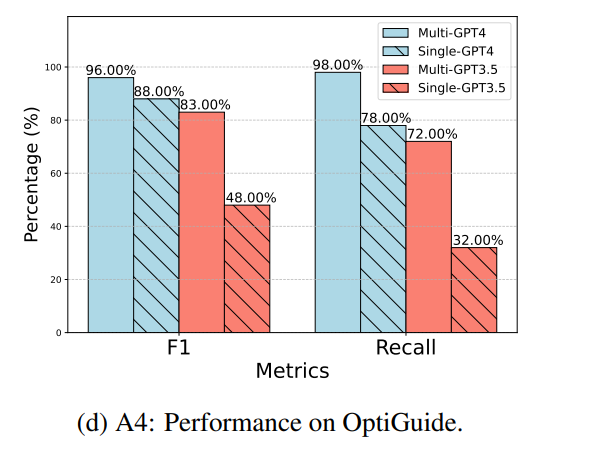
Developers working on the AutoGen framework can use the OptiGuide framework to build a multi-agent coding system that is capable of writing code to implement optimized solutions, and answering user questions. The figure below demonstrates that the use of the AutoGen framework to create a multi-agent design helps in boosting the overall performance significantly especially in performing coding tasks that require a safeguard.

Application 5: Dynamic Group Chat

The AutoGen framework provides support for a communication pattern revolving around dynamic group chats in which the participating multiple agents share the context, and instead of following a set of pre-defined orders, they converse with one another in a dynamic manner. These dynamic group chats rely on ongoing conversations to guide the flow of interaction within the agents.

The above figure illustrates how the AutoGen framework supports dynamic group chats between agents by making use of “GroupChatManager” , a special agent.

Application 6: Conversational Chess

The developers of the AutoGen framework used it to develop a Conversational Chess application that is a natural interference game that features built-in agents for players that can either be a LLM or human, and there is a also a third-party agent that provides relevant information, and validates the moves on the board on the basis of a set of predefined standard rules. The figure attached below demonstrates the Conversational Chess, a natural interference game built using the AutoGen framework that allows players to use jokes, character playing, or even meme references to express their moves creatively that makes the game of chess more interesting not only for the players, but also for the audience & observers.

Conclusion

In this article we have talked about AutoGen, an open source framework that uses the concepts of conversation programming & conversable agents that aims to simplify the orchestration and optimization of the LLM workflows by introducing automation to the workflow pipeline. The AutoGen framework offers conversable and customizable agents that leverage the power of advanced LLMs like GPT-3 and GPT-4, and at the same time, addressing their current limitations by integrating the LLMs with tools & human inputs by using automated chats to initiate conversations between multiple agents.

Although the AutoGen framework is still in its early experimental stages, it does pave the way for future explorations and research opportunities in the field, and AutoGen might be the tool that helps improve the speed, functionalities, and the ease of development of applications leveraging the capabilities of LLMs.

Permutable AI Offers an Initial Glimpse of GreenProof Framework Exposing Sustainability Claims in the Financial Sector

Permutable AI Offers an Initial Glimpse of GreenProof Framework Exposing Sustainability Claims in the Financial Sector October 18, 2023 by Ali Azhar

Permutable AI, one of the leading providers of AI-power market intelligence, has released groundbreaking findings from its proprietary Greenwashing Framework. With the collaboration of global regular authorities, Permutable AI has uncovered the veracity of the sustainability efforts of companies in the financial sector.

Founded in 2022, Permeable AI has emerged as a key player in the sustainability market intelligence for the financial industry. The company is spearheading the charge for a more socially responsible financial sector. Permutable AI’s commitment to transparency and responsibility has been recognized for two consecutive years on the AI Fintech 100 list.

Using advanced AI tools, Permutable AI has conducted an in-depth analysis of recent claims made by various businesses, including some top companies in the financial sector, about their sustainability initiatives. The findings could have some profound implications for the corporate world, especially the financial sector.

Greenwashing is when an organization makes false or misleading statements about its sustainability initiatives or efforts. It is often done to win over customers or investors who support environmentally-friendly businesses. There is a growing demand for environmentally friendly products and services, and some organizations are attempting to capitalize on this growing demand through greenwashing.

Harnessing the power of artificial intelligence, Permanente AI has been able to navigate and address intricate business and sustainability challenges. With Permultbale AI’s Greenwashing Framework, several prominent companies have been exposed including JP Chase, Scotiabank Chile, Invesco Ltd, AIB Group, Bank of Ireland, Diversa Trustees, Deutsche Bank, and BlackRock.

The analysis by Pemutable AI identified two primary forms of greenwashing — overt misrepresentation and the use of vague or misleading claims. According to the results, Diverse Trustees uses the latter, while BlackRock and Deutsche Bank fall within the former category.

(JLStock/Shutterstock)

According to Wilson Chan, CEO of Permutable AI, “Our innovative framework underscores the critical importance of transparency, unambiguous claims, and an authentic commitment to sustainability in today's business climate. As consumers increasingly adopt environmentally conscious practices and stringent regulations targeting greenwashing gain momentum, it is imperative for businesses to firmly embrace the tenets of corporate responsibility and sustainability."

He adds, "By harnessing pioneering AI and machine learning technologies to ensure companies are held accountable for their claims, we not only advocate for a more transparent and sustainable corporate ecosystem but also champion the pivotal role that AI for good plays in addressing these critical issues.”

The findings of the Permutable AI are just the first steps in realizing the potential of artificial intelligence in sustainability market intelligence. Permutable AI’s imminent objective is to secure funding so it can advance its framework to a user-friendly and accessible tool for all stakeholders. This includes investors, business partners, and consumers who are conscious about their involvement and support for environmentally friendly businesses. A democratic greenwashing solution will help champion authenticity and sustainability and enable individuals and businesses to gather insights and make informed decisions.

Related Items

Going Green in the AI Era: an Imperative for Performance-Intensive Applications

Watsonx Brings AI Visibility to Banking Systems

Why Trusting AI is All a Matter of the Right Data at the Right Time

Related