In a move to enhance passenger safety and assistance at Indian airports, Prisma AI has extended its partnership with the Adani Group. The collaboration brings forward Prisma AI’s visual AI technology to identify incidents such as falls or unusual passenger behaviour. The “Desk of Goodness” system, powered by Prisma AI offers swift real-time notifications to airport staff for immediate assistance, greatly improving passenger support and safety.
The system, initially deployed at Sardar Vallabhbhai Patel International Airport in Ahmedabad, has now been expanded to five additional airports. This initiative reflects the commitment of both Prisma AI and the Adani Group to promote exceptional airport experiences and the values of “AI for Good.”
The model is powered by Prisma AI’s core computer vision platform, Gryphos, which empowers organisations with practical applications, such as automatic number plate recognition, security surveillance, illegal object detection, and smart parking systems, aiming to contribute to shaping a better future through the potential of artificial intelligence.
The company specialises in predictive information technologies, including Visual-based AI applications for various applications such as body behavioural analysis, sentiment analysis, OCR, image recognition, video analysis, face recognition, and object recognition.
Prisma AI and the Adani Group initially introduced the innovative “Desk of Goodness” system at the Sardar Vallabhbhai Patel International Airport (SVPIA) in Ahmedabad and have expanded it to five more airports. The system significantly enhances passenger assistance and safety in departure and pre-security areas at SVPIA.
Recently, Industry.AI, a member of the NVIDIA Metropolis vision AI partner ecosystem, introduced its vision AI platform at Bengaluru’s Terminal T2, marking the debut of intelligent video analytics on a large scale at an Indian airport.
The platform enables real-time tracking of various tasks, including detecting abandoned baggage, identifying long passenger queues, providing security alerts, and more. Industry.AI plans to extend its NVIDIA-powered vision AI to other terminals and additional Indian airports, aiming to improve passenger safety and airport efficiency. The system connects over 500 live camera feeds across the terminal to execute these tasks via vision AI.
The post Adani Group, Prisma AI Partner to Improve Airport Travel with AI appeared first on Analytics India Magazine.
When Apple had announced that it would be making the iPhone 15 in India, the whole country thought that this would bring down the cost of the flagship phones for everyone in the country. But much to everyone’s surprise, it didn’t really turn out that way.
Now, even Google is heading the same way and there seems to be no reason to assume otherwise.
At the Google for India 2023 event in New Delhi, Google declared its intent to manufacture the flagship Pixel line-up of phones in India, following the path laid by Apple, which had followed the footsteps of Samsung.
However, despite the increasing local production of smartphones in India, iPhone prices in the country remain significantly higher compared to other countries like the US, Dubai, and Singapore. Even made-in-India phones, such as OnePlus, which is ramping up India manufacturing, sells at a higher price here.
The latest Google Pixel phones are most expensive in India. pic.twitter.com/O5Cu2GX8cS
— Dr. Jonathan (@just1doctorwala) October 10, 2023
This apparent paradox reveals the multifaceted nature of smartphone pricing, with various factors contributing to the disparities in prices.
Not entirely “Made in India”
Firstly, it’s crucial to understand that iPhones are not entirely “made in India”. Instead, they are assembled in the country, and the supply chain for iPhone production still relies heavily on components imported from other regions. This reliance on imported components makes Apple subject to customs duties, which inevitably have a direct impact on the final prices.
Additionally, the Goods and Services Tax (GST) of 18% further contributes to the overall cost, leading to a cumulative price increase of approximately 40% compared to the base price of the imported models. Though the GST was reduced to 12% in July, the pricing did not drop much because of other factors.
Apple’s approach to the Indian market differs from its strategies in other countries. Apple has limited collaborations with local banks in India for providing convenient financing options. Furthermore, trading in a year-old iPhone at an Apple store in India typically yields only about one-third of its original value, making the upgrade path less financially attractive for consumers.
Despite these challenges, Apple has devised strategies to mitigate the impact of heavy customs duties and taxes on imported models. The company has partnered with local companies to provide discounts and trade-in options. This also includes Tata.
These initiatives help make iPhones more affordable for Indian consumers and, to some extent, level the playing field with their international counterparts. Thus, the company is also planning to scale up production in India by five fold.
Another notable aspect to consider is that older-generation iPhone models significantly drive Apple’s sales in India. Analysts suggest that the profit margins earned from the sale of premium Pro models help subsidise base models and older-generation iPhones, making them more competitively priced in India compared to countries like Dubai and Singapore.
This strategic pricing approach aligns with Apple’s broader business model of offering a diverse range of products to cater to various consumer segments.
Furthermore, despite the significant increase in the number of iPhones assembled in India over the years, not all models are produced domestically. Only a few iPhones before 14 were assembled in India.
This limitation prevents Apple from implementing dual pricing tiers, one for locally assembled iPhones and another for those imported. As a result, pricing disparities between locally assembled and imported iPhones remain relatively marginal.
Not the phone makers’ fault
It’s also important to note that the pricing stability of flagship smartphones is not unique to Apple. Other smartphone brands, such as Samsung, Oppo, Xiaomi, and Vivo, have also set up manufacturing facilities in India, producing flagship models locally. However, the prices of flagship devices across these brands have remained relatively unchanged over the years, highlighting the overall pricing dynamics in the Indian smartphone market.
Apart from Apple, the fluctuation in international currency exchange rates can impact the pricing of smartphones in India. The value of the Indian rupee, in particular, has been depreciating against the US dollar over the past year. This depreciation has contributed to the higher pricing of the iPhone 15 in India, reflecting the cost challenges associated with importing components and the cumulative effect of taxes.
Many factors contribute to these price disparities. A key Apple distributor pointed out, “One of the reasons is the supply chain, as several components are shipped after the payment of import duty. Also, the scale of business in India is much less when compared to strong volumes in the US and Dubai.”
This highlights the cost and logistical challenges of operating in a vast and diverse market like India.
When it comes to Google, given the market share is less than 1% because of other competitors that offer Android support, Pixel 8 will end up with the same fate as iPhone 15.
The post Why are Made-in-India Phones So Expensive? appeared first on Analytics India Magazine.
The previous nine tips covered the more apparent bits of advice to beginner data scientists.
The next round of interview tips deals with more nuanced aspects of painting yourself as the best candidate for the job.
Building on my previous article, these additional tips will further your chances at the beginner data science job interviews.
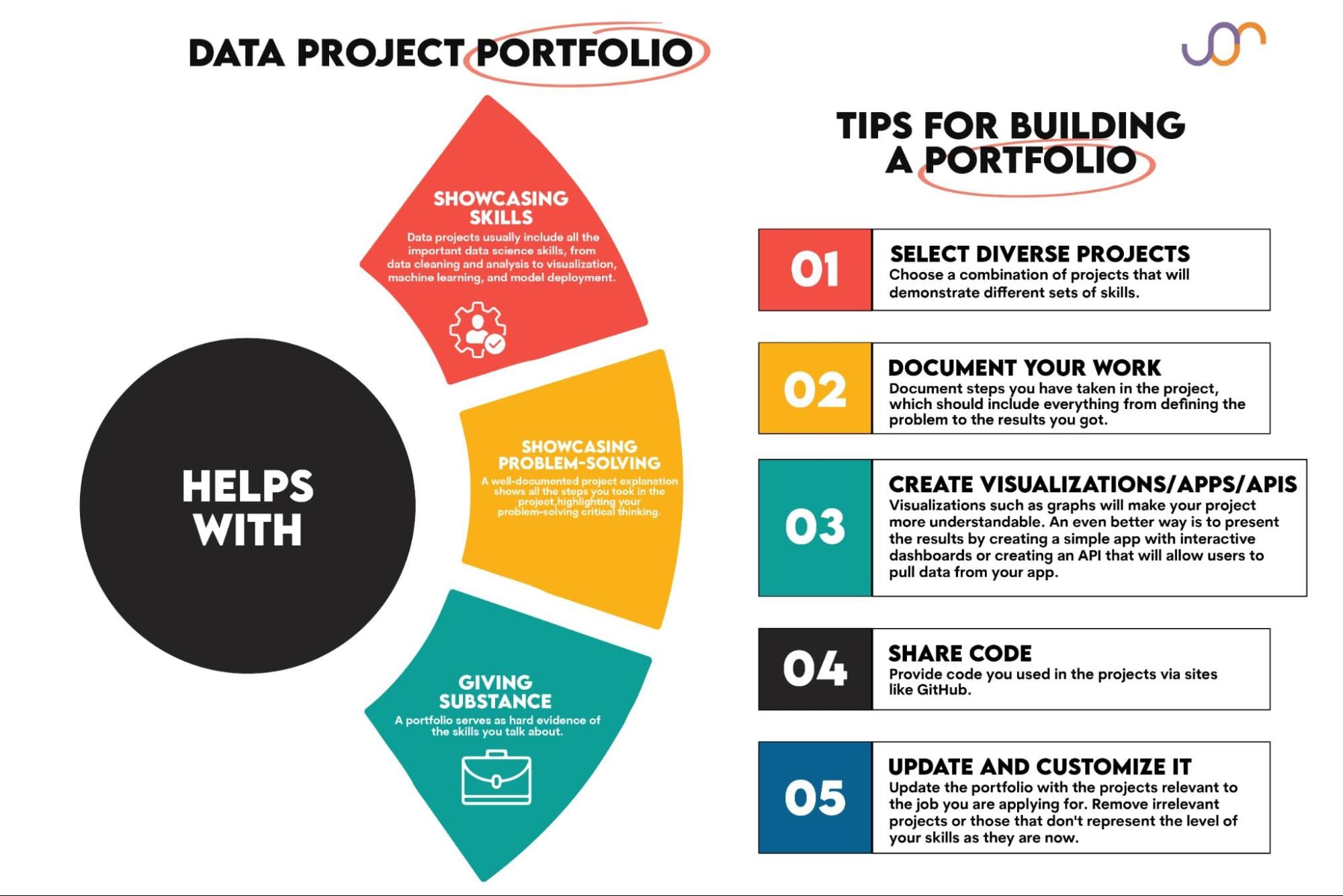
1. Prepare a Portfolio
Creating a data science project portfolio is one of the best ways to showcase how good a data scientist you are.
It can be difficult for beginners to choose suitable projects for their portfolio. Here are some data science project ideas for a start. You can also dig into Datacamp’s suggestions or data projects we have on StrataScratch.
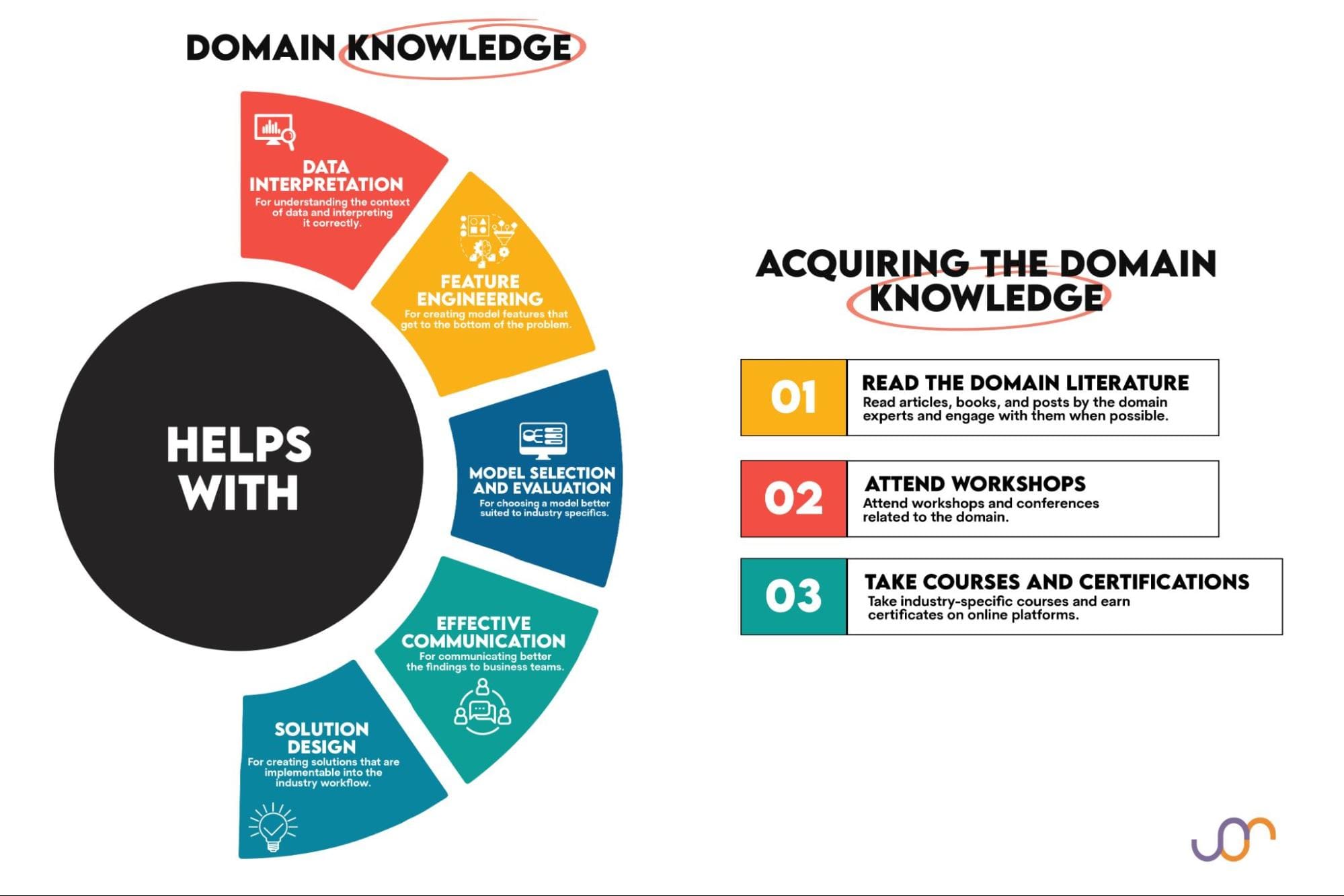
2. Practice Coding With Domain Knowledge
Domain knowledge means you’re knowledgeable of a specific industry, sector, or subject area. This knowledge includes intricacies, challenges, terminologies, processes, and nuances of that particular domain.
It has to be reflected in your coding skills, as you’ll use them to solve problems for a particular company within a particular industry.
When you practice coding, it would be ideal if you did that on actual questions by the company you’re interviewing for. I mentioned StrataScratch and LeetCode in the first article.
Of course, you can practice on challenges not coming from the interviews directly. But when you choose them, try to find data science interview questions and datasets from the relevant industry. Say you’re interviewing for Meta (tech industry) and Pfizer (pharmaceutical industry). These companies work with completely different data, which behaves differently. Naturally, the questions will then be different, too. So, for Meta, use tech/social media data, and for Pfizer, pharmaceutical data.
That way, you’re also ensuring that you’re improving your domain knowledge. You’ll possibly run into specific data you’re unfamiliar with, so you’ll have to learn about it and its importance within the industry.
Now, you’re connecting coding with domain knowledge!
3. Showcase Your Data Storytelling Skills
Data storytelling means you can communicate the insights from your data projects clearly and understandably. Think about why you started a certain project and what you achieved; there’s always a story in there.
By creating a story from your project, you’ll make data more accessible for non-technical people. In return, you’ll have more influence on the decision-making.
Here are some tips for showcasing this skill.
Create a Narrative: Any good story has an arc: exposition, a problem, rising action, climax, falling action, and resolution. Include this in telling your story using data.
You could start with the business context, e.g., “The company launched five new products in the last three years.” Then, the problem. You noticed that sales are increasing, but customer retention is not. You’ll now act by going deeper into the data and trying to find the reasons for the retention issue. Here, your story should dig deep into the technical aspects of the project: what you did and why. The climax is when you find one product with high sales but also high return rates. The falling action is when you discuss potential reasons for high returns. In the resolution, you make a recommendation for product improvements. In the resolution, directly relate to what your project did, and quantify its achievements. Don’t let your story finish with you giving product improvement recommendations, but tell about the sales increase of that product, how much money it brought to the company, etc.
Use Clear Visualizations: Use visualizations that support your story.
In your project on sales trends over the past years, don’t just show a table with monthly sales figures. Instead, use a line graph to visually represent the ups and downs in sales. This way, the audience will grasp the trend. For significant spikes in sales, use a bar chart to break down the sales by product or product categories, highlighting which products drove the spike.
Avoid Jargon And Simplify Complex Concepts: Use technical terminology only when necessary. The point is to ‘sell’ (sometimes even literally) your idea and project to business people, so simplify complex concepts for them. Don’t say, “The heteroscedasticity in the residuals indicated that our linear regression model might not be the best fit.” Instead, say, “The patterns in our data suggested that our initial model might not be capturing all the information effectively." Much better!
4. Discuss Failures and Learning
We all make mistakes. They are necessary in the learning process. Interviewers don’t seek a perfect candidate; they’re looking for someone who wants and can learn.
Let the interviewer get to know that side of you. If you honestly share your failures and what you learned from them, it will build trust and demonstrate your setbacks resilience.
Here are some tips on how to talk about this.
Avoid the Blame Game: Avoid blaming everyone and everything for your mistakes. Of course, give the context of circumstances out of your control, but don’t play a victim. Take responsibility for your part, show what you learned from these circumstances, and talk about what you should’ve done differently.
Emphasize the Learning, Not the Failure Part: Talking about the failures should only serve to present how and what you learned from them, so focus on that.
Talk From Experience: Find a real example from your previous job. Even if it’s not in data science, it may be applicable if it shows your focus on learning and self-awareness. If you don’t have working experience, talk about mistakes you made in your data projects and what you learned.
Talk About the Steps You Took: This relates to what you did to correct your mistake or minimize its impact, e.g., changing the data, tweaking the algorithm, or altogether ditching the project and starting a new.
Here’s what the conversation between you (Y) and the interviewer (I) might look like.
I: “Can you tell me about a time when a project or task didn't go as planned and how you handled it?”
Y: Of course! During my previous role as a data scientist, I was responsible for a project aimed at predicting customer churn. I chose the k-nearest neighbor algorithm based on my initial understanding and ran with it. However, the results were not as accurate as I had hoped.
I: How come? What did you do when you realized that?
Y: There were some data inconsistencies, and the deadline was very tight, so my EDA wasn’t very thorough. Despite that, I realize now that I should've done a more detailed EDA. After I found out about the inconsistencies, I collaborated with the data quality team to understand them better. I also explored other algorithms and evaluated them. Finally, I switched to the XGBoost algorithm, which improved the model’s prediction accuracy significantly. I learned not to underestimate the importance of EDA. I’m also glad that I wasn’t afraid to admit mistakes and start from scratch having in mind that we would have no use for a model we couldn’t trust.
Conclusion
Data science is more than brainless data handling and code writing. This involves being able to translate your work into mere mortals’ language via data storytelling and visualizations.
You will showcase this by talking about it in the interview. You need to make sure you can talk the talk but also prove that you can walk the walk. The best way to do this is by having a solid data project portfolio, where your coding, storytelling, and visualization skills will be apparent.
While working on the projects, you’ll make mistakes. Don’t hide them. Talk about them openly and seek feedback from your interviewer.
It boils down to two simple things: be competent and honest about how you achieved that. Easier said than done!
But with some tips I gave you in this article, I’m sure you’ll do well in your next data science interview!
Nate Rosidi is a data scientist and in product strategy. He's also an adjunct professor teaching analytics, and is the founder of StrataScratch, a platform helping data scientists prepare for their interviews with real interview questions from top companies. Connect with him on Twitter: StrataScratch or LinkedIn.
More On This Topic
Tips for Successfully Navigating Beginner Data Science Job Interviews
7 Must-Know Python Tips for Coding Interviews
How to Successfully Deploy Data Science Projects
Mastering NLP Job Interviews
5 Tips to Get Your First Data Scientist Job
The Ethics of AI: Navigating the Future of Intelligent Machines
When Apple had announced that it would be making the iPhone 15 in India, the whole country thought that this would bring down the cost of the flagship phones for everyone in the country. But much to everyone’s surprise, it didn’t really turn out that way. Now, even Google is heading the same way and there seems to be no reason to assume otherwise.
At the Google for India 2023 event in New Delhi, Google declared its intention to manufacture the flagship Pixel line-up of phones in India, following the path laid by Apple, which had followed the footstep of Samsung.
However, despite the increasing local production of smartphones in India, iPhone prices in the country remain significantly higher compared to other countries like the US, Dubai, and Singapore. Even the made in India phones such as OnePlus, which is ramping up India manufacturing, sells at a higher price.
The latest Google Pixel phones are most expensive in India. pic.twitter.com/O5Cu2GX8cS
— Dr. Jonathan (@just1doctorwala) October 10, 2023
This apparent paradox reveals the multifaceted nature of smartphone pricing, with various factors contributing to the disparities in prices.
Not entirely “Made in India”
Firstly, it’s crucial to understand that iPhones are not entirely “made in India.” Instead, they are assembled in the country, and the supply chain for iPhone production still relies heavily on components imported from other regions. This reliance on imported components makes Apple subject to customs duties, which inevitably have a direct impact on the final prices.
Additionally, the Goods and Services Tax (GST) of 18% further contributes to the overall cost, leading to a cumulative price increase of approximately 40% compared to the base price of the imported models. Though the GST was reduced to 12% in July, the pricing did not drop much because of other factors.
Apple’s approach to the Indian market differs from its strategies in other countries. Apple has limited collaborations with local banks in India for providing convenient financing options. Furthermore, trading in a year-old iPhone at an Apple store in India typically yields only about one-third of its original value, making the upgrade path less financially attractive for consumers.
Despite these challenges, Apple has devised strategies to mitigate the impact of heavy customs duties and taxes on imported models. The company has partnered with local companies to provide discounts and trade-in options. This also includes Tata.
These initiatives help make iPhones more affordable for Indian consumers and, to some extent, level the playing field with their international counterparts. Thus, the company is also planning to scale up production in India by five fold.
Another notable aspect to consider is that older-generation iPhone models significantly drive Apple’s sales in India. Analysts suggest that the profit margins earned from the sale of premium Pro models help subsidise base models and older-generation iPhones, making them more competitively priced in India compared to countries like Dubai and Singapore.
This strategic pricing approach aligns with Apple’s broader business model of offering a diverse range of products to cater to various consumer segments.
Furthermore, despite the significant increase in the number of iPhones assembled in India over the years, not all models are produced domestically. Only a few iPhones before 14 were assembled in India. This limitation prevents Apple from implementing dual pricing tiers, one for locally assembled iPhones and another for those imported. As a result, pricing disparities between locally assembled and imported iPhones remain relatively marginal.
Not the phone makers’ fault
It’s also important to note that the pricing stability of flagship smartphones is not unique to Apple. Other smartphone brands, such as Samsung, Oppo, Xiaomi, and Vivo, have also set up manufacturing facilities in India, producing flagship models locally. However, the prices of flagship devices across these brands have remained relatively unchanged over the years, highlighting the overall pricing dynamics in the Indian smartphone market.
Apart from Apple, the fluctuation in international currency exchange rates can impact the pricing of smartphones in India. The value of the Indian rupee, in particular, has been depreciating against the US dollar over the past year. This depreciation has contributed to the higher pricing of the iPhone 15 in India, reflecting the cost challenges associated with importing components and the cumulative effect of taxes.
Many factors contribute to these price disparities. A key Apple distributor pointed out, “One of the reasons is the supply chain, as several components are shipped after the payment of import duty. Also, the scale of business in India is much less when compared to strong volumes in the US and Dubai.” This highlights the cost and logistical challenges of operating in a vast and diverse market like India.
When it comes to Google, given the market share is less than 1% because of other competitors that offer Android support, Pixel 8 will end up in the same fate as iPhone 15.
The post Why Are Made in India Phones Still Not Cheap? appeared first on Analytics India Magazine.
It is interesting that many prominent hospitals – both private and public – have Oracle’s presence in one form or another, particularly its Fusion ERP software, which has been embraced by many healthcare providers. Some of the popular names include Apollo Hospitals, Fortis, Aster Hospitals, Omega Healthcare and others.
For instance, Apollo Hospitals has implemented Oracle Fusion for complete ERP and HCM and became the first payroll customer. Fortis also relies on Oracle Fusion for its back-office operations. Meanwhile, Aster Hospitals and Omega Healthcare have integrated Oracle Fusion into their business process outsourcing (BPO) operations.
Another noteworthy success story is that of Indira IVF, which operates 108 centres across India. They faced challenges due to numerous manual processes, making consolidation and scaling difficult. With Oracle Fusion, they have witnessed a dramatic turnaround. The technology has not only streamlined their processes but also allowed them to expand their services and onboard more patients, offering a wider range of finance options.
Bringing Cerner to India
“I have very big plans to get Cerner to India,” said Oracle Senior VP and Regional MD, Shailender Kumar on the sidelines of the company’s flagship event ‘Oracle CloudWorld’.
Oracle’s recent acquisition of Cerner, a healthcare solutions provider could be the game changer, given its experience in cloud AI and changing healthcare workflows for maximum efficiency.
Interestingly, Cerner is dedicating its CSR funds to support the digitalisation of primary health centres (PHCs) across India. This effort aims to improve community healthcare and benefit the nation’s large population, with approximately 30,000 PHCs throughout India.
Oracle is also partnering with non-governmental organisations (NGOs) responsible for managing PHCs to implement innovative healthcare solutions. These partnerships extend to numerous PHCs, enabling Oracle to have a broad reach within the Indian healthcare landscape.
The company’s vision goes beyond digitalisation; Oracle’s executive vice president, Mike Sicilia, explained that they aim to collaborate with governments globally, including the Indian government, to develop and deploy public health dashboards.
“Our hope and goal is to work with governments worldwide, including in India, to develop and deploy public health dashboards which will be quite advantageous when there are disease outbreaks or pandemics,” Sicilia said,
He added, “Providing governments with real-time information about what’s happening in large population centres is crucial to containing and preventing the potential next health crisis.”
These dashboards would provide real-time information, which is essential for responding to disease outbreaks or pandemics effectively. Oracle recognizes the crucial role of providing governments with up-to-date information in containing and preventing health crises.
With Cerner increasing its mark in the country, it will look to acquire more clientele and establish venues to integrate its technology into the ecosystem.
Oracle to the Rescue
Today, smaller hospitals struggle with the cost of implementation, and the absence of clear EHR standards hinders interoperability. Experts believe that government incentivisation is necessary to drive EHR adoption among healthcare providers, encourage data sharing, and build common EHR systems. Without standardised EHRs, clinical data for implementing AI and big data applications remains inaccessible.
If India could aggregate data from public hospitals, it could develop robust decision support systems, enhance diagnosis accuracy, predict disease outbreaks, and improve patient care, Prof. Rajendra Pratap Gupta, a WHO Digital Health Guidelines expert, believes.
And this is where Oracle comes in. Sicilia, recently outlined the company’s intentions to engage with the Indian government in the healthcare sector, emphasising the value of cloud-based solutions.
At ‘Oracle CloudWorld,’ Sicilia revealed Oracle’s plans for expanding its market in India and collaborating with governments to enhance healthcare services.
While Sicilia highlighted that India’s workforce is abundant, focusing on creating scalable, standardized Cloud services instead of custom solutions is more efficient and cost-effective. He acknowledged that there is a challenge in the prevalence of bespoke applications.
The transition from bespoke applications to true Cloud services is part of Oracle’s vision for India’s healthcare sector. The goal is to offer more economical, reliable, and secure Cloud services using standardised systems. Sicilia emphasised that there is value in both utility at a national level and customized solutions for specific healthcare challenges.
Some healthcare providers, such as Max Healthcare, and Bajaj Finserv are exploring EHR solutions to enhance patient care and data collection. Several others including Apollo, Columbia Asia, Narayana Health, Shankara Nethralaya, and Aravind Eyecare, are working on AI solutions for patient care.
Other tech giants are also playing key roles in the market.
In India, where there is a significant population-to-doctor ratio, Microsoft is actively collaborating with healthcare organisations including Apollo Hospitals, Forus, SRL Diagnostics, and others, to develop predictive analytics tools for cardiac diseases, diabetic retinopathy detection, and digital pathology.
On the other hand, Google is also making strides in India’s healthcare and AI sectors. At its Bengaluru event, they unveiled AI tools like a fast LLM through the PaLM API for healthcare applications. Additionally, Google Cloud is partnering with ONDC for commerce platforms and open-sourcing ONDC infrastructure. They’re also set to launch a Trusted Tester program for healthcare AI APIs that identify medicines in handwritten prescriptions. Additionally, they’re open-sourcing research models and speech data developed with the Indian Institute of Science.
However, Deepa Param Singhal, VP of Cloud Applications at Oracle, highlighted the company’s distinct approach. She explained that Oracle’s uniqueness lies in its comprehensive stack, spanning infrastructure to applications, making AI implementation seamless and insightful. Furthermore, they strategically invest in three key areas: eliminating manual processes through automation, enhancing decision-making, and improving user experiences to drive revenue growth.
The post How Oracle is Synonymous with Indian Healthcare appeared first on Analytics India Magazine.
Amid continued calls for deeper global cooperation between all stakeholders to bolster cyber defense, government officials are now debating whether multilateral relations have been effective.
Digitalization has become the new engine of economic growth for many countries, with the World Bank estimating that digital economies contribute at least 15% of global GDP. This digital revolution, though, has also triggered much anxiety, where tech-enabled possibilities and information flow have created new risks to guard against, said Heng Swee Kiat, Singapore's deputy prime minister and coordinating minister for economic policies.
He pointed to fears that digital advances could fuel a more dangerous global climate of untruths and arm malicious actors with the ability to cause harm, such as scams and cyberattacks, at scale and with ease.
"There are also deeper issues of ethics, privacy, and governance. All these means it is critical for us to work together to gain a fuller grasp of digitalization's potential and devise solutions to shape and harness it as a force for good, for all," said Heng, during his opening speech at this week's Singapore International Cyber Week conference.
With the world now highly interconnected and interdependent, he underscored the need to develop "a shared understanding" of how to tap new possibilities and mitigate new risks. This will not be a straightforward goal, he noted, given the state of the current global landscape.
"International cooperation today is constrained by geopolitical circumstances, from the US-China strategic competition, to the protracted war in Ukraine and now the conflict in Israel and Gaza," he said.
"These have affected collaboration in the technology domain, particularly when countries frame technology through a national security lens. Rather than work with one another to understand and harness the possibilities of technology, including digital technology, some countries are now adopting a protective, insular stance."
This approach not only creates inefficiencies — there's also the risk of a bifurcated and fragmented world where access to and, therefore, the benefits of technology, are also curtailed, Heng noted.
To navigate the world toward a digital order, he underscored the importance of a multi-stakeholder model and partnerships across borders and sectors. He pointed to efforts, such as the United Nations Open-Ended Working Group on Security, which Singapore currently chairs, and discussions around the Global Digital Compact, which aims to outline shared principles for "an open, free, and secure digital future for all".
Several nations have also established Digital Economy Agreements as an extension of free trade agreements. He added that Singapore has such agreements with South Korea, the UK, and Australia, as well as multi-country pacts, including the Digital Economy Partnership Agreement with Chile and New Zealand.
Singapore is working with member states on negotiations for the Asean Digital Economy Framework Agreement, targeted for completion by 2025, which aims to establish protocols that will ease cross-border digital trade and improve digital rules across key areas, including artificial intelligence (AI), cybersecurity, payments, and data.
But just how effective is multilateralism and cooperation between the different stakeholders, such as private and public sectors, in bolstering cyber defence?
While current multilateral ties may not be great or perfect, it is difficult to find one that can meet every stakeholder's ideals, said Tadeusz Chomick, ambassador for cyber and tech affairs at Poland's Ministry of Foreign Affairs, during a panel discussion at the conference.
On a global level, just one multilateral organization exists, he said, pointing to the United Nations (UN). Since it is the only entity available, it is everyone's duty to make the best use of it, even if it may not be able to resolve the most critical global issues, Chomick said.
Also: How AI can improve cybersecurity
He said the UN has at least produced some results in cybersecurity, where it has established 11 voluntary, non-binding norms of responsible state behavior in cyberspace.
Asean currently is the only regional organization to have subscribed, in principle, to these norms of behavior.
Chomick added that the UN is also looking to improve coordination on capacity building efforts and has worked to establish the Points of Contact directory.
This first global inter-government Points of Contact directory provides all UN members with a platform to reach out to relevant counterparts in the event of cyber incidents, according to Heng. A report detailing the operationalization of this directory was recently adopted by consensus in New York, he said.
Chomick noted that there are also multilateral initiatives on a regional level, such as those undertaken by the European Union and Asean, to improve cyber resilience.
On ties between the private sector and governments, he said the former's role is constantly growing and changing. The private sector has an increasingly important part to play, especially in providing threat intelligence and, often now, is feared for its ability to disrupt and change societies, for instance, in political and public opinion and global security. And it does so with or without the approval of governments, he said.
The question then is how governments should engage the private sector. He noted that many states are ill-prepared to face this reality.
There have been longstanding efforts to find the most effective balance between "the carrots and sticks", he said, pointing to discussions on whether to enforce regulations or offer incentives to encourage the desired behavior.
Countries that have been successful here have been able to create the right frameworks to drive innovation, while setting regulations to control the risks, Chomick said.
Also: AI's multi-view wave is coming, and it will be powerful
As technology advancements continue to emerge, governments will need to find a new balance, he said. And since companies leading such innovation are global, governments will have to engage them on discussions that are not just on a local level, but also on an international level, he added.
Such efforts should further include enterprises beyond the private sector, encompassing civil groups and non-government organizations. Cybersecurity is not sectoral, he said, and civil societies can play a role in bringing new ideas and monitoring what governments, as well as industry, are doing.
Cybersecurity is no longer just a technical issue, but also geopolitical and sociological, said fellow panelist Ibraheem Saleh Al-furaih, advisor to the governor of Saudi Arabia's National Cybersecurity Authority.
Noting that cybersecurity is a top priority that has taken a global agenda, Al-Furaih said all stakeholders need to work collectively to ensure a "resilient, secure, and trusted" cyber space for all countries.
This approach also requires a commitment to sharing cyber-incident reporting and threat intel, which the US aims to do, according to Anne Neuberger, the US White House deputy assistant to the president and deputy national security advisor for cyber and emerging technologies at the National Security Council.
Also: Industrial networks need better security as attacks gain scale
The goal is to allow adversaries to use a technique only once to successfully launch an attack. This approach requires an ability to quickly learn from it and address it, so cyber defenses can be improved in the most effective way, Neuberger said.
Some organizations do their part by sharing information when new techniques are uncovered, and they release indicators of compromise and best practices. They also ensure that security is baked into their products, she said.
Neuberger added that the US government also shares "in as broad and technical way as possible" what it learns from cyber incidents.
She also advocated the need for "purpose-built multilateral" relations, where groups of countries galvanize to tackle certain issues, such as ransomware, and test solutions as well as speak against unacceptable cyber behavior.
Heng also stressed the need to look beyond governments and international organizations, and include other stakeholders, such as non-government organizations, academia, and technology companies.
"Take 'big tech', for example. These are the world's largest technology companies which products we use and interact with on a daily basis," the Singapore government official said. "It is in their interest to build a digital domain that is secure, trusted, and inclusive, so that they can maximize their reach and impact. By working in partnership with the public sector, both sides can realize synergies and achieve better outcomes."
Also: AI gold rush makes basic data security hygiene critical
In this aspect, he noted that Singapore's Cyber Security Agency (CSA) this week announced separate partnerships with Microsoft and Google, to address cybersecurity threats and enhance the country's cyber defense.
The industry collaboration covers several areas, including the sharing of threat intelligence, joint operations to combat cybercrime, and technical cooperation.
"AI has long had a tremendous impact for good on the security ecosystem and leveraging advances in AI will be important for global security and stability going forward," said Michaela Browning, Google's AsiaPacific vice president of government affairs and public policy.
"Generative AI will present novel security risks, including misinformation and cyber threats, but will also become the foundation for a new generation of cyber defenses through advanced security operations and frontline intelligence — if we are bold and responsible with its development and regulation."
Google recently announced the integration of Paris based AI startup Mistral AI’s open-source model, Mistral-7B, with Vertex AI Notebooks. This integration empowers Google Cloud customers to delve into a comprehensive end-to-end workflow, enabling them to experiment, fine-tune, and deploy Mistral-7B and its instructional variant on Vertex AI Notebooks.
Leveraging this integration, Mistral AI users can optimize their models using vLLM, a highly efficient Large Language Model serving framework. By utilising Vertex AI Notebooks, users can deploy a vLLM image, maintained by Model Garden, on a Vertex AI endpoint for inference, ensuring streamlined model deployment.
Vertex AI Notebooks facilitate collaborative efforts among data scientists. They can seamlessly connect to Google Cloud data services, analyze datasets, experiment with diverse modeling techniques, deploy trained models into production, and manage MLOps throughout the model lifecycle.
A pivotal feature of this collaboration is the Vertex AI Model Registry, a central repository that empowers users to manage the lifecycle of Mistral AI models and their fine-tuned counterparts. From this registry, users gain a comprehensive overview of their models, enhancing organization and tracking capabilities.
Importantly, users can effortlessly deploy specific model versions directly from the registry, simplifying the deployment process. Additionally, users can employ aliases to deploy models to designated endpoints, further streamlining the deployment and management procedures.
Despite its compact size, Mistral-7B boasts deep reasoning capabilities and compressed knowledge. It utilises innovative technologies like Grouped-Query Attention (GQA) and Sliding Window Attention (SWA) to balance speed and accuracy, particularly in handling longer sequences, reducing training time, costs, and energy consumption, thus promoting sustainability and efficiency in AI applications.
The post Mistral-7B Now Available in Google’s Vertex AI appeared first on Analytics India Magazine.
At Google for India 2023 event in New Delhi, Alphabet Inc’s Google has declared India as a priority market and revealed its intention to manufacture the flagship Pixel line-up of phones in the country. Google’s Head of Devices & Services, Rick Osterloh, announced the company’s plan to commence the production of the Pixel 8 in India, with the devices set to hit the market in 2024, as part of the Make in India initiative.
In May, India’s Technology Minister, Ashwini Vaishnaw, held discussions with Google’s CEO Sundar Pichai at the company’s headquarters in Mountain View, California. Their conversation primarily revolved around Prime Minister Narendra Modi’s initiative to promote local manufacturing and the government-supported drive for technological advancements.
A recent report by Counterpoint Research highlighted India’s emergence as the second-largest manufacturing hub for mobile phones, owing to substantial investments from original equipment manufacturers, original design manufacturers, and companies specialising in components and parts. According to Counterpoint Research, India is expected to export approximately 22% of its total assembled mobile phones in 2023.
Government and industry data also revealed that the ‘Make in India’ initiative received a significant boost, with mobile phone exports valued at over $5.5 billion (or more than Rs 45,000 crore) in the April-August period of the ongoing fiscal year (FY24).
Furthermore, it is anticipated that India will surpass Rs 1,20,000 crore in mobile phone exports during the current fiscal year, with Apple holding a dominant market share of over 50% in FY24.
This decision by Google follows the footsteps of Apple, which has utilised a similar approach to bolster its network of suppliers in India. Apple’s participation in this program has led to a significant increase in iPhone production, surpassing $7 billion during the fiscal year ending in March 2023.
Apple has successfully harnessed the benefits of local manufacturing and supplier networks in India. This move by Google aligns with the broader trend of major tech companies leveraging India’s manufacturing capabilities to expand their operations.
The post Google Will Make Pixel 8 in India appeared first on Analytics India Magazine.
The upcoming Machine Learning Developers Summit (MLDS) 2024, set to unfold on February 1-2 at the NIMHANS Convention Center, Bangalore, is much more than a mere congregation of machine learning enthusiasts. It is a celebration of innovation, a recognition of excellence, and a hub of endless networking opportunities.
This edition marks the 6th iteration of the summit, with over 1,500 attendees, more than 50 speakers, and 400+ organizations expected to participate, reflecting the enormous scale and impact the event has on the ML community.
Paper Presentation:
One of the summit’s highlights is the Paper Presentation segment, where MLDS provides a platform to promote research in artificial intelligence (AI). This segment fosters scientific exchange between researchers, practitioners, scientists, academicians, and engineers, embracing a wide spectrum of AI and ML subareas. Submissions open to a broad array of topics, especially those cutting across technical areas or developing AI techniques in vital domains like healthcare, sustainability, transportation, and commerce.
The submission and review process is meticulously designed, ensuring only high-quality papers make it to the summit. The selected papers will be published in “Lattice,” the Machine Learning Journal by the Association of Data Scientists, providing a golden opportunity for authors to showcase their work to a wide audience1.
Awards:
The “40 Under 40 Data Scientists” awards are another summit highlight, aimed at recognizing young data scientists in India who have successfully transformed data into meaningful insights. This prestigious award celebrates the brightest leaders in the Data Science field in India and their achievements. The award not only recognizes the real innovators and achievers of the analytics industry but also acts as a catalyst to inspire others in the community.
Nominations are carefully reviewed and selected by a team of editors and industry veterans, ensuring a fair and thorough evaluation process. The awardees are recognized at the annual MLDS, adding a layer of motivation and aspiration for emerging data scientists to strive for excellence2.
Networking and Community Building:
With a remarkable assembly of over 1,500 attendees, more than 50 speakers from diverse organizations, and representation from over 400 organizations, MLDS 2024 is an epitome of networking and community building. Attendees have the opportunity to interact with industry leaders, share knowledge, and form collaborations that could lead to groundbreaking innovations in the ML field.
Conclusion:
The MLDS 2024 is a rich blend of knowledge sharing, recognition, and networking, making it a must-attend event for every machine learning and data science enthusiast. Whether it’s the insightful paper presentations, the prestigious awards, or the endless networking opportunities, there’s something for everyone. So mark your calendars for February 1-2, 2024, and be a part of this exhilarating journey into the heart of machine learning innovation in India.
Contact for more details: info@analyticsindiamag.com.
Explore MLDS Website
The post Announcing the 6th Edition of Machine Learning Developers Summit: A Convergence of ML Innovators appeared first on Analytics India Magazine.
“Copilot has dramatically accelerated my coding, it’s hard to imagine going back to manual coding,” writes Andrej Karpathy. There is a whole buffet of tools to choose from that can do the coding for you, but GitHub Copilot has become the grammarly for coding. It is used by more than 1.5 million developers of all calibres.
On the other hand, some might say that it is making programmers more lazy and incompetent. Unlike with Copilot where users can put in the requirements of what needs to be done and have someone do the job, using Stack Overflow requires understanding of the fundamentals and finding the right methodology from trial and error.
Code Whisperer recently released a customisation update to make this process easier by generating specific code based on their private repositories. This further makes the job easier requiring only users to only verify and check the generated code.
Arguably, these are just tools that have become more sophisticated to improve the efficiency in getting things done. It is much like moving from a paper map to the one on a smartphone.
Computer Education in the age of AI
In a research conducted by the University of San Diego, professors from universities across nine countries were interviewed to understand their approach to adapting courses as students increasingly use AI coding assistance tools like ChatGPT and GitHub Copilot.
In the short term, they were particularly concerned about preventing cheating. Sam Lau and Philip Guo, authors of the paper wrote, “Professors worry that an over-reliance on AI tools could stop students from thoroughly understanding programming fundamentals similar to using a calculator in a maths class without understanding decimal points.”
A dependence on these tools saw users take to social media and complain they can’t work when ChatGPT was down last month.
After the initial scare that Copilot will take over the work of programmers, it became quickly apparent that these tools were nothing more than an autocorrect and that it boosts the performance of developers who know what they’re doing.
There is staggering evidence that AI tools help students learn programming better and faster than teachers. One study by the university of Toronto looked at students who are being introduced to programming. They found that AI Coding Assistants like OpenAI Codex allowed novice programmers to perform better and faster with less frustration when writing code and did not reduce their performance on manual code modification or in the subsequent absence of AI code generators.
David J Malan’s popular CS50 course announced in June that they’re integrating AI to grade assignments and teach coding. It isn’t only Harvard but other Ivy League universities are also adopting AI to improve not only the students’ but also to make it easier on the teacher.
Stanford developed an AI teaching tool that gives students feedback on their homework. Chris Piech, the assistant professor said, “The one thing we couldn’t really do is scale the feedback. We can scale instruction and content but we couldn’t really scale feedback.”
Boon or bane?
There still are concerns with AI coding helper tools. Some worry that they’ll introduce, and reinforce, winner-takes-all dynamics, very few companies have the data (in this case, the billions of lines of code) to build tools like this, so creating a competitor to Copilot will be challenging. Recently Zoho announced they’re building a similar ‘Programmer Productivity’ platform for code generation.
GitHub Copilot’s accuracy in its responses is around 26%, which is very poor if users don’t already have a good understanding of the basic concepts. ChatGPT has a higher rate of accuracy though it may contain subtle bugs that are missed by beginners.
These tools are more useful to learn and experiment with, as a reddit user puts it, “I’ve literally spent 30 minutes just asking it what does this do, why did you do that, why didn’t you do this and it’s like having a big brother programmer to explain everything.” Another benefit is that using AI tools makes it easy to learn new programming languages once you’re familiar with one.
The post Why AI is a Better Programming Teacher Than Humans appeared first on Analytics India Magazine.






 2. Practice Coding With Domain Knowledge