CentML lands $27M from Nvidia, others to make AI models run more efficiently

CentML lands $27M from Nvidia, others to make AI models run more efficiently Kyle Wiggers 8 hours
Contrary to what you might’ve heard, the era of large seed rounds isn’t over — at least in the AI sector.

CentML, a startup developing tools to decrease the cost — and improve the performance — of deploying machine learning models, this morning announced that it raised $27 million in an extended seed round with participation from Gradient Ventures, TR Ventures, Nvidia and Microsoft Azure AI VP Misha Bilenko.

CentML initially closed its seed round in 2022, but extended the round over the last few months as interest in its product grew — bringing its total raised to $30.5 million.

The fresh capital will be used to bolster CentML’s product development and research efforts in addition to expand the startup’s engineering team and broader workforce of 30 people spread across the U.S. and Canada, according to CentML co-founder and CEO Gennady Pekhimenko.

Pekhimenko, an associate professor at the University of Toronto, co-founded CentML last year alongside Akbar Nurlybaev and Ph.D. students Shang Wang and Anand Jayarajan. Pekhimenko says that they shared a vision of creating tech that could increase access to compute in the face of the worsening AI chip supply problem.

“Machine learning costs, talent and chip shortages… any AI and machine learning company faces at least one of these challenges, and most face a few at a time,” Pekhimenko told TechCrunch in an email interview. “The highest-end chips are commonly unavailable due to the large demand from enterprises and startups alike. This leads to companies sacrificing on the size of the model they can deploy or results in higher inference latencies for their deployed models.”

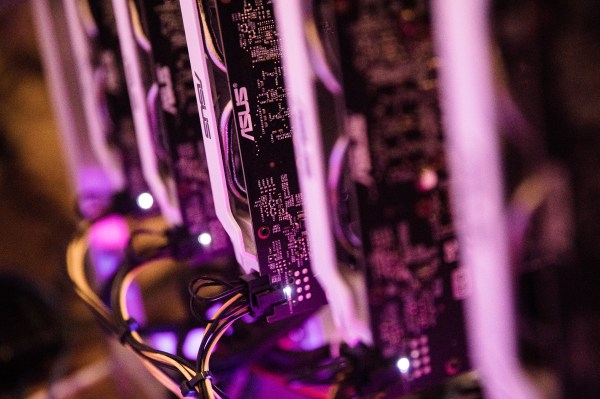
Most companies training models, particularly generative AI models like ChatGPT and Stable Diffusion, rely heavily on GPU-based hardware. GPUs’ ability to perform many computations in parallel make them well-suited to training today’s most capable AI.

But there’s not enough chips to go around.

Microsoft is facing a shortage of the server hardware needed to run AI so severe that it might lead to service disruptions, the company warned in a summer earnings report. And Nvidia’s best-performing AI cards are reportedly sold out until 2024.

That’s led some companies, including OpenAI, Google, AWS, Meta and Microsoft, to build — or explore building — their own custom chips for model training. But even this hasn’t proven to be a panacea. Meta’s efforts have been beset with issues, leading the company to scrap some its experimental hardware. And Google hasn’t managed to keep pace with demand for its cloud-hosted, homegrown GPU equivalent, the tensor processing unit (TPU), Wired reported recently.

With spending on AI-focused chips expected to hit $53 billion this year and more than double in the next four years, according to Gartner, Pekhimenko felt the time was right to launch software that could make models run more efficiently on existing hardware.

“Training AI and machine learning models is increasingly expensive,” Pekhimenko said. “With CentML’s optimization technology, we’re able to reduce expenses up to 80% without compromising speed or accuracy.”

That’s quite a claim. But at a high level, CentML’s software is relatively easy to make sense of.

The platform attempts to identify bottlenecks during model training and predict the total time and cost to deploy a model. Beyond this, CentML provides access to a compiler — a component that translates a programming language’s source code into machine code that hardware like a GPU can understand — to automatically optimize model training workloads to perform best on target hardware.

Pekhimenko claims that CentML’s software doesn’t degrade models and requires “little to no effort” for engineers to use.

“For one of our customers, we optimized their Llama 2 model to work 3x faster by using Nvidia A10 GPU cards,” she added.

CentML isn’t the first to take a software-based approach to model optimization. It has competitors in MosaicML, which Databricks acquired in June for $1.3 billion, and OctoML, which landed an $85 million cash infusion in November 2021 for its machine learning acceleration platform.

But Pekhimenko asserts that CentML’s techniques don’t result in a loss of model accuracy, like MosaicML’s can sometimes do, and that CentML’s compiler is “newer generation” and more performant than OctoML’s compiler.

In the near future, CentML plans to turn its attention to optimizing not only model training but inference — i.e. running models after they’ve been trained. GPUs are heavily used in inference today as well, and Pekhimenko sees it as a potential avenue of growth for the company.

“The CentML platform can run any model,” Pekhimenko said. “CentML produces optimized code for a variety of GPUs and reduces the memory needed to deploy models, and, as such, allows teams to deploy on smaller and cheaper GPUs.”


When Will India’s UPI Moment in AI Arrive? 

JanAI, a play on the word ‘Jantha’ that means ‘people’, the vision of creating AI for the people is something Jaspreet Bindra has been advocating for the country. Bindra believes that the concept where “JanAI is treated as a digital public good” can help facilitate the growth of startups and organisations that can build on these created as a part of digital public infrastructure.

Jaspreet Bindra, the founder of Tech Whisperer Limited in the UK, a consulting and advisory firm specialising in digital technologies such as AI and Web3, has an extensive background in the digital transformation space.

Bindra has served as the group chief digital officer at Mahindra Group and as a regional director at Microsoft, among other positions. His vision is to create an India-centric LLM (Bharat LLM), which aims to establish it as a second layer of the India stack, delivering it as a digital public good to 1.4 billion Indians, “much like UPI and Aadhaar.”

“If we have to create a million creators, a creator economy, this is a creative tool,” exclaimed Bindra.

Making AI in India, For India

Bindra has highlighted the need to have our own LLM as a necessity stemming from the need of bringing an Indian context into the training model. “If you look at ChatGPT or Bard, they are all trained on the internet, where almost 80 to 90% of the data is English, and western-oriented. It doesn’t have vernacular data nor an Indian context,” said Bindra. “For example, land is measured differently in every Indian state. You have ‘bigha’ in one place and ‘kanal’ in another, and these are words that a foreign LLM will not make sense especially when you want to deliver to rural India.”

Bindra even spoke about how UAE has Falcon and Jais which are contextual to their own culture. He even spoke about the availability of large datasets within our country citing an example of how using ‘All India Radio insertion recordings’ will be amazing.

Apart from the data being widely different, the concept of privacy and guardrails in India are also different, which is why Bindra believes a model for the country that caters to the privacy rules here will make more sense.

Indian LLM in WIP

There is already significant progress in the lines of large language models that cater to the Indian market. Tech Mahindra is working on Project Indus, a model that will have the ability to speak in 40 Indic languages with more languages that will be subsequently added. Similarly, Bhashini, a government initiative, also looks to leverage AI to break language barriers, and help the underserved communities.

“Bharat LLM and multiple elements will be created and that’s great. The JanAI bit is about how to take those LLMs and put them as part of the India stack,” said Bindra.

Interestingly, co-founder of Infosys, Nandan Nilekani, the architect of Aadhaar, who was also instrumental in bringing major banks in India to collaborate on UPI, is also actively involved in building LLMs for Indic languages through AI4Bharat. Nilekani has contributed INR 36 crores for launching Nilekani Centre at AI4Bharat in partnership with IIT Madras, and a total of INR 400 crores to IIT Bombay.

Forward-Looking But Not Obstacle-Free

Bindra believes that the adoption of such a platform in India may not be a challenge. Speaking about how Aadhaar and UPI has been massively adopted by people, touching over 1 billion now, Bindra is confident that as a country we know how to reach that level of adoption.

“The way we have done it as a country is when we’ve taken these critical technologies and products and served them as a digital public good. DPG is what the government gives to its citizens,” said Bindra.

In order for such an idea to come to fruition, Bindra believes there are four essential components- talent, data, money and the delivery model/governance. “Reliance and Tata have all signed with NVIDIA and we’ll get the infrastructure in place, but governance mechanism is the most important, which is missing,” said Bindra.

Bindra however, believes that the biggest challenge is to get the right sponsorship for the idea that people think it’s worth having. “It needs to be adopted, sponsored and owned by the government as there’s no other way.”

Collaboration

Bindra spoke about how countries such as the US and China have their own models and have lots of money, making them the leaders, and a country such as the UK is focusing on the ethics and governance part of it. “What we can do uniquely is to ride on the whole thing we did with UPI, Aadhar, etc. and deliver generative AI to 1.4 billion people. That can become the model for the world,” said Bindra.

With India ready to get 25,000 GPUs, Bindra believes that such kind of strategic partnerships will help divide the tasks and the costs will come down. “The ROI is nation building,” – referring to the jobs and creator economy that can be built with the JanAI-type of model.

Speaking about whether the model has to be completely India-made, Bindra’s vision is not restricted. “I don’t think in technology, we can say that everything will be built by an Indian company. One of the people who is evangelising this along with me is ThoughtWorks in Bangalore which is not an Indian company.” He also said that the company was also responsible for building large parts of ONDC and the India stack part of UPI.

AI’s NOT a Hype

Bindra believes that every technology brings some element of hype which he deems is necessary as it brings in innovation and investment. However, he said that there needs to be a “hype to reality ratio.”

“If you take the metaverse, the hype to reality ratio is bad. If you go into Metaverse, either Meta’s Metaverse or Roblox’s Metaverse, you will find 37 people or 74 in the game, but if you look at the sheer amount of news it created versus the people using it, the ratio is extremely large. However, with generative AI, we know there are over 100 million people using it. It’s been 11 months and sure, there is a hype but the reality is also there,” concluded Bindra.

The post When Will India’s UPI Moment in AI Arrive? appeared first on Analytics India Magazine.

Bigtech Gets an AI Safety Guru

Bigtech Gets an AI Safety Guru Now

After uniting in July to announce the formation of the Frontier Model Forum, Anthropic, Google, Microsoft, and OpenAI have jointly revealed the appointment of Chris Meserole as the inaugural Executive Director of the Frontier Model Forum. Simultaneously, they’ve introduced a groundbreaking AI Safety Fund, committing over $10 million to stimulate research in the realm of AI safety.

Chris Meserole brings a wealth of experience in technology policy, particularly in governing and securing emerging technologies and their future applications. Meserole’s new role entails advancing AI safety research to ensure the responsible development of frontier models and mitigate potential risks. Moreover, he would also oversee identification of best safety practices for these advanced AI models.

Meserole expressed his enthusiasm for the challenges ahead, emphasising the need to safely develop and evaluate the powerful AI models. “The most powerful AI models hold enormous promise for society, but to realise their potential we need to better understand how to safely develop and evaluate them. I’m excited to take on that challenge with the Frontier Model Forum,” said Chris Meserole.

Who is Chris Meserole?

Before joining the Frontier Model Forum, Meserole served as the Director of the AI and Emerging Technology Initiative at the Brookings Institution, where he was also a fellow in the Foreign Policy program. The Initiative, founded in 2018, sought to advance responsible AI governance by supporting a diverse array of influential projects within the Brookings Institution. These initiatives encompassed research on the impact of AI on issues like bias and discrimination, its consequences for global inequality, and its implications for democratic legitimacy.

Throughout his career, Meserole has concentrated on safeguarding large-scale AI systems from the potential risks arising from either accidental or malicious use. His endeavours include co-leading the first global multi-stakeholder group on recommendation algorithms and violent extremism for the Global Internet Forum on Counter Terrorism. He has also published and provided testimony on the challenges associated with AI-enabled surveillance and repression.

Additionally, Meserole organised a US-China dialogue on AI and national security, with a specific focus on AI safety and testing and evaluation. He’s a member of the Christchurch Call Advisory Network and played a pivotal role in the session on algorithmic transparency at the 2022 Christchurch Call Leadership Summit, presided over by President Macron and Prime Minister Ardern.

Meserole’s background lies in interpretable machine learning and computational social science. His extensive knowledge has made him a trusted advisor to prominent figures in government, industry, and civil society. His research has been featured in notable publications such as the New Yorker, New York Times, Foreign Affairs, Foreign Policy, Wired, and more.

What’s next for the forum?

The Frontier Model Forum is established for sharing knowledge with policymakers, academics, civil society, and other stakeholders to promote responsible AI development and supporting efforts to leverage AI for addressing major societal challenges.

The announcement says that as AI capabilities continue to advance, there is a growing need for academic research on AI safety. In response, Anthropic, Google, Microsoft, and OpenAI, along with philanthropic partners like the Patrick J. McGovern Foundation, the David and Lucile Packard Foundation, Eric Schmidt, and Jaan Tallinn, have initiated the AI Safety Fund, with an initial funding commitment exceeding $10 million.

The AI Safety Fund aims to support independent researchers affiliated with academic institutions, research centres, and startups globally. The focus will be on developing model evaluations and red teaming techniques to assess and test the potentially dangerous capabilities of frontier AI systems. This funding is expected to elevate safety and security standards while providing insights for industry, governments, and civil society to address AI challenges.

Additionally, a responsible disclosure process is being developed, allowing frontier AI labs to share information regarding vulnerabilities or potentially dangerous capabilities within frontier AI models, along with their mitigations. This collective research will serve as a case study for refining and implementing responsible disclosure processes.

In the near future, the Frontier Model Forum aims to establish an Advisory Board to guide its strategy and priorities, drawing from a diverse range of perspectives and expertise.

The AI Safety Fund will issue its first call for proposals in the coming months, with grants expected to follow soon after.

The Forum will continue to release technical findings as they become available. Furthermore, they aim to deepen their engagement with the broader research community and collaborate with organisations like the Partnership on AI, MLCommons, and other leading NGOs, government entities, and multinational organisations to ensure the responsible development and safe utilisation of AI for the benefit of society.

The post Bigtech Gets an AI Safety Guru appeared first on Analytics India Magazine.

5 Free Books to Master Machine Learning

5 Free Books to Master Machine Learning
Image generated with DALL-E 3

In today's high-tech world, machine learning is super important. You might have taken some online courses, but they often skim over the details. If you really want to dig deep and master machine learning, books are the way to go. I know it can be overwhelming with so many options out there. But don't worry, we've got your back.

I have handpicked five books that made a big difference in my own machine learning journey. These books will help you understand machine learning better in 2023.

So, if you are ready to take your knowledge to the next level and explore the depths of this fascinating field, keep reading.

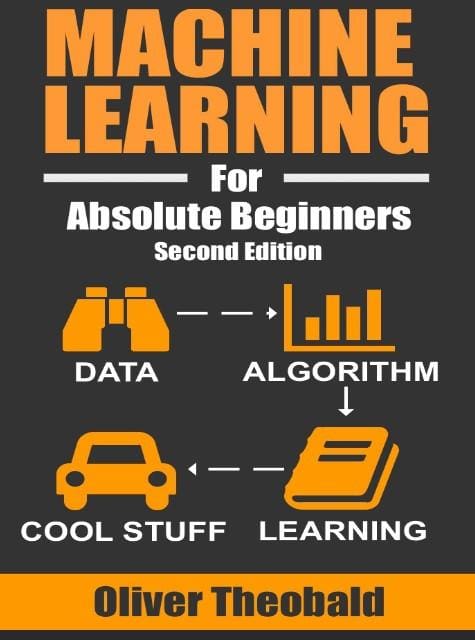
1. Machine Learning For Absolute Beginners

Author: Oliver Theobald

Link: Machine Learning For Absolute Beginners

5 Free Books to Master Machine Learning
Book Cover

You have heard the word Machine Learning and want to delve into this exciting field, but you don’t know where to start. Then this is the right book for you!

This book is perfect for those who are new to the field and don’t have any prior coding experience. It is written in plain English and does not require any prior coding experience. The book provides a high-level introduction to machine learning, free downloadable code exercises, and video demonstrations. What else would you want more?

Topics Covered:

  • What is Machine Learning?
  • ML Categories
  • The ML Toolbox
  • Data Scrubbing
  • Setting Up Your Data
  • Regression Analysis
  • Clustering
  • Bias & Variance
  • Artificial Neural Networks
  • Decision Trees
  • Ensemble Modeling
  • Building a Model in Python
  • Model Optimization

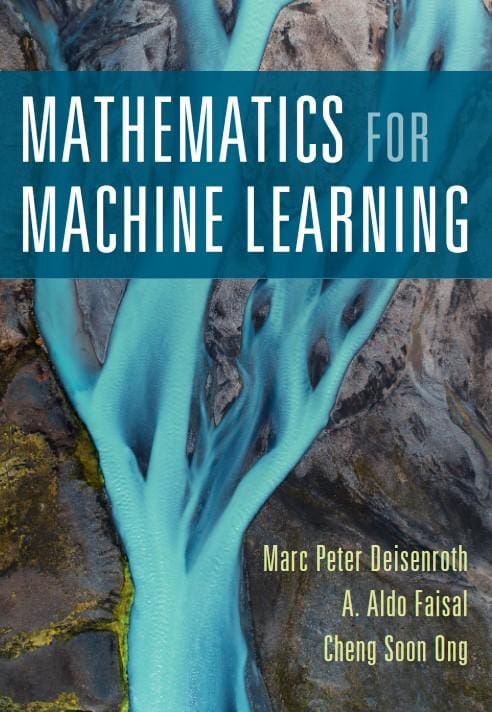
2. Mathematics for Machine Learning

Author: Marc Peter Deisenroth

Link: Mathematics for Machine Learning

5 Free Books to Master Machine Learning
Book Cover

Now that you know some basic concepts, it is time to build your base for complex topics of machine learning. What should you do now? Mathematics for Machine Learning is all you need!

It is a self-contained textbook that introduces the fundamental mathematical tools needed to understand machine learning. The book presents mathematical concepts with a minimum of prerequisites and uses these concepts to derive four central machine learning methods: linear regression, principal component analysis, Gaussian mixture models, and support vector machines.

The author of the book, Marc Peter Deisenroth, is the DeepMind Chair in Artificial Intelligence at University College London and has received several awards for his research in machine learning.

Topics Covered:

  • Linear Algebra
  • Analytic Geometry
  • Matrix Decompositions
  • Vector Calculus
  • Probability and Distributions
  • Continuous Optimization
  • When Models Meet Data
  • Linear Regression
  • Dimensionality Reduction with Principal Component Analysis
  • Density Estimation with Gaussian Mixture Models
  • Classification with Support Vector Machines

3. Machine Learning for Hackers

Authors: Drew Conway and John Myles White

Link: Machine Learning for Hackers

5 Free Books to Master Machine Learning
Book Cover

You have been onto learning theory till now and you really want to get started with hardcore machine learning coding. Do not worry then. If you are someone with a knack for programming and coding, this book is tailored just for you.

The book incorporates practical case studies to demonstrate the real-world relevance of machine learning algorithms. These examples, including one on building a Twitter follower recommendation system, serve to connect abstract concepts with tangible applications. This book is best for programmers who enjoy practical case studies.

Topics Covered:

  • Data Exploration
  • Classification: Spam Filtering
  • Ranking: Priority Inbox
  • Regression: Predicting Page Views
  • Regularization: Text Regression
  • Optimization: Breaking Codes
  • PCA: Building a Market Index
  • MDS: Visually Exploring US Senator Similarity
  • kNN: Recommendation Systems
  • Analyzing Social Graphs
  • Model Comparison

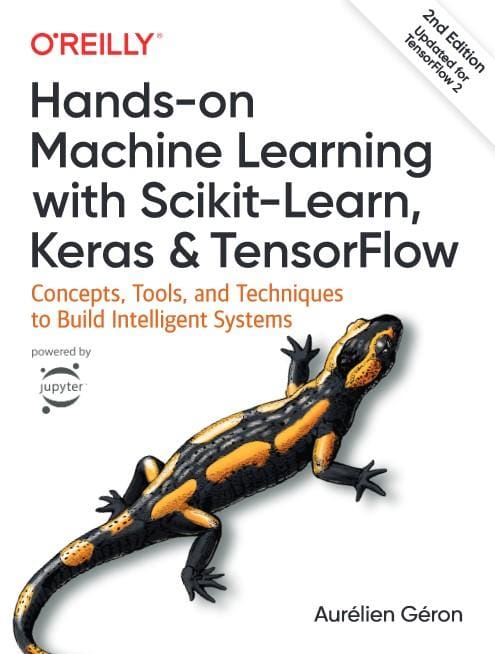
4. Hands-On Machine Learning with Scikit-Learn, Keras, and TensorFlow

Author: Geron Aurelien

Link: Hands-On Machine Learning with Scikit-Learn, Keras, and TensorFlow

5 Free Books to Master Machine Learning
Book Cover

This book is a practical guide to machine learning that focuses on building end-to-end systems. The book covers a wide range of topics including linear regression, decision trees, ensemble methods, neural networks, deep learning, and more.

The latest edition of this book contains code from cutting-edge versions of machine learning and deep learning libraries like TensorFlow and Scikit-Learn.

Topics Covered:

  • Performance measure selection
  • Test set creation
  • Linear regression with Gradient Descent
  • Ridge, Lasso, and Elastic Net regression
  • SVM for classification
  • Decision Trees and Gini Impurity
  • Ensemble learning methods
  • Principal Component Analysis (PCA)
  • Clustering with K-Means and DBSCAN
  • Artificial Neural Networks with Keras
  • Deep neural network training
  • Custom models with TensorFlow
  • Data loading and preprocessing with TensorFlow
  • CNNs, RNNs, and GANs in Deep learning

5. Approaching (Almost) Any Machine Learning Problem

Author: Abhishek Thakur

Link: Approaching (Almost) Any Machine Learning Problem

5 Free Books to Master Machine Learning
Book Cover

Ready to take your machine learning skills to the next level? This book is your ticket to the exciting world of applied machine learning. While it does not bog you down with complex algorithms, it is all about the "how" and "what" of solving real-world problems using machine learning and deep learning. If you're eager to bridge the gap between theory and practice, this book is definitely going to be your guide!

Topics Covered:

  • Supervised vs unsupervised learning
  • Cross-validation techniques
  • Evaluation metrics
  • Structuring machine learning projects
  • Handling categorical variables
  • Feature engineering
  • Feature selection
  • Hyperparameter optimization
  • Image and text classification, ensembling, and reproducible code

Conclusion

In this article, we introduced you to the five best books to learn machine learning in 2023. These books cover a wide range of topics, from the basics of machine learning to more advanced topics like deep learning. They are all well-written and easy to follow, even for beginners.

If you are serious about learning machine learning, I encourage you to read all five of these books. However, if you are only able to read one or two, I recommend Machine Learning for Absolute Beginners by Oliver Theobald and Hands-On Machine Learning with Scikit-Learn, Keras, and TensorFlow by Aurélien Géron.

We're curious to know which books have played a pivotal role in your machine learning journey. Feel free to share your recommendations in the comment section.

Kanwal Mehreen is an aspiring software developer with a keen interest in data science and applications of AI in medicine. Kanwal was selected as the Google Generation Scholar 2022 for the APAC region. Kanwal loves to share technical knowledge by writing articles on trending topics, and is passionate about improving the representation of women in tech industry.

More On This Topic

  • 5 Free Books to Help You Master Python
  • 5 Free Books to Master Data Science
  • KDnuggets News, June 22: Primary Supervised Learning Algorithms Used in…
  • Top 15 Books to Master Data Strategy
  • 15 Free Machine Learning and Deep Learning Books
  • KDnuggets News, November 2: The Current State of Data Science Careers • 15…

VMware Cross-Cloud Services Now Available on Oracle Cloud Marketplace

VMware announced that its Cross-Cloud services are now available to customers through the Oracle Cloud Marketplace. This integration will allow VMware users to leverage Oracle Cloud Infrastructure (OCI) in conjunction with VMware Cross-Cloud services, offering enhanced operational efficiency, accelerated innovation, and improved resilience for their applications, the company added.

“Building on our announcement that Oracle Cloud VMware Solution is available to customers through our VMware Cloud Universal program, we are now making it easier for customers to accelerate app and cloud modernization initiatives using their existing, pre-approved IT budgets to purchase VMware Cross-Cloud services via the Oracle Cloud Marketplace.”said Abhay Kumar, vice president, hyperscalers, and technology partners, VMware.

VMware Cross-Cloud services form a robust suite of multi-cloud services designed to empower organizations in building, running, and managing applications on OCI. The company said that organisations now have the option to utilise their current Oracle Universal Credits for accessing VMware Cross-Cloud services via private offers. This facilitates the modernization of their crucial enterprise applications on OCI, providing customers with a swift and seamless transition to the cloud.

Included in the VMware Cross-Cloud services available immediately on the Oracle Cloud Marketplace are:

  • VMware Tanzu: This modular application platform facilitates the development, operation, and optimization of modern applications across multi-cloud infrastructures. Tanzu offerings available include VMware Tanzu Mission Control Self-Managed, VMware Tanzu Kubernetes Grid, and VMware Tanzu Application Service.
  • VMware Aria: A multi-cloud management portfolio that provides end-to-end solutions for managing infrastructure and applications. Offerings in the marketplace encompass VMware Aria Universal Suite and VMware Aria Operations for Networks.
  • VMware Site Recovery Manager (SRM): This on-demand disaster recovery-as-a-service solution ensures the protection of critical data and applications, delivering cloud flexibility and cost-effectiveness.

“Our continued collaboration underscores our shared commitment to delivering tremendous value to our customers by providing an even more comprehensive suite of VMware solutions. We look forward to the exciting possibilities that lie ahead.” said Chris Sullivan, vice president, Strategic Partnerships, Oracle.

The post VMware Cross-Cloud Services Now Available on Oracle Cloud Marketplace appeared first on Analytics India Magazine.

ExecuTorch vs TensorFlow Lite

A few weeks ago, at the PyTorch conference, the team released ExecuTorch which is a tool that runs PyTorch models on devices like smartphones, wearables, and embedded systems.

Four years ago, PyTorch Mobile was introduced for a similar purpose but ExecuTorch uses a significantly smaller memory size and a dynamic memory footprint resulting in superior performance and portability compared to PyTorch Mobile.

ExecuTorch does not rely on TorchScript, and instead leverages PyTorch 2 compiler and export functionality for on-device execution of PyTorch models. It isn’t just a rewrite of PyTorch Mobile; it leverages the PyTorch 2 compiler, which is a significant advancement. Not restricted to mobiles, the performance includes hardware capabilities of CPUs, NPUs, and DSPs.

The team said that it was challenging for devices to adapt for TorchScript compatibility, so newer models increasingly opt for the PyTorch 2 compiler for improved performance which means the already unpopular Pytorch Mobile will see fewer users and an automatic support for ExecuTorch.

On the other hand, TensorFlow Lite which was released in 2017, is also a tool that converts TensorFlow models into a more efficient format that can be run on edge devices. It does this by using a compiler called the TensorFlow Lite Converter to convert the model into a flatbuffer format that can be executed by a lightweight runtime.

Now to compare the two systems, it is imperative to also understand how the frameworks are used in machine learning.

TensorFlow Lite vs ExecuTorch

ExecuTorch and TensorFlow Lite are both tools designed for deploying machine learning models on edge devices, such as smartphones, wearables, and embedded systems. However, these tools exhibit significant differences because of the

frameworks they’re built on.

PyTorch is undeniably more favourable than Tensorflow and most industry experts and researchers prefer it over its more cumbersome counterpart. While PyTorch Mobile was limited in its compatibility in edge devices the introduction of ExecuTorch has filled that gap.

ExecuTorch is built on the foundation of PyTorch 2.0. This is more popular than Torch Script as it is user-friendly and the compiler is supported by a wider range of devices than TensorFlow. One of its standout features is its compatibility with Android devices, making it an attractive option for those new to machine learning deployment or in need of Android device support.

In contrast, TensorFlow Lite, based on the TensorFlow framework, has established itself as a reliable choice known for its exceptional performance and efficiency within TensorFlow’s framework. To improve its adaptability TensorFlow updated the deployment of LLM models on Android.

ExecuTorch is lauded for its user-friendly nature, extensive model compatibility, and specific support for Android devices. In contrast, TensorFlow Lite, grounded in TensorFlow, excels in performance and boasts compatibility with a wide range of devices.

ExecuTorch is a practical choice for broad model compatibility, or Android device support. On the other hand, TensorFlow Lite may be the more suitable option for if your priority is top-tier performance on device.

A step up from PyTorch Mobile

ExecuTorch surpasses PyTorch Mobile in several key areas. Firstly, it demonstrates superior performance and portability due to its smaller memory size and dynamic memory footprint. The compiler used by ExecuTorch optimises the model for the target device, and the export functionality generates a smaller model file. It uses a technique called memory allocation on demand which means it only allocates the memory it needs when it needs it.

This is in contrast to PyTorch Mobile which has a static memory footprint. This means that PyTorch Mobile allocates all of the memory it needs upfront, even if it doesn’t need it all right away. This can lead to performance problems and memory crashes on devices with limited memory.

ExecuTorch also excels in ease of use. Unlike PyTorch Mobile, it doesn’t rely on TorchScript, a potentially complex compiler that requires changes to model code. Instead, Executorch utilises the PyTorch 2 compiler and export functionality, simplifying the deployment process.

In addition to these core advantages, ExecuTorch is actively maintained and updated, in contrast to the stagnation of PyTorch Mobile’s development. Its larger user and developer community provides a valuable support network.

Furthermore, ExecuTorch seamlessly integrates with the PyTorch ecosystem, ensuring consistency in tools and libraries for model development and deployment.

The post ExecuTorch vs TensorFlow Lite appeared first on Analytics India Magazine.

Stability AI Releases Two Japanese based LLMs

Stability AI Japan has recently released two Japanese language models, namely “Japanese Stable LM 3B-4E1T” and “Japanese Stable LM Gamma 7B.” The former boasts approximately 3 billion parameters, while the latter is a 7 billion parameters model. These models have been made available under the Apache 2.0 license for commercial use.

🚀日本語大規模言語モデル「Japanese Stable LM 3B-4E1T」と「Japanese Stable LM Gamma 7B」をリリースしました🎉
約30億と70億のパラメータを持つこれらのモデルは、日本語タスクの性能評価でトップクラスです✨
さらに、Apache 2.0ライセンスで商用利用も可能📜… pic.twitter.com/N9M31UhdL0

— Stability AI 日本公式 (@StabilityAI_JP) October 25, 2023

These models are built upon previously released English language models, specifically “Stable LM 3B-4E1T” and “Mistral-7B-v0.1,” published by Stability AI in August and Mistral AI in September 2023, respectively. These models were initially trained with predominantly English data, resulting in high proficiency in English but limited Japanese language capabilities due to the scarcity of Japanese data.

To enhance their Japanese language abilities, these models underwent continued pretraining, utilizing Japanese and English datasets from sources like Wikipedia, mC4, CC-100, OSCAR, and SlimPajama (excluding Books3), amounting to approximately 100 billion tokens.

The performance evaluation of these models followed the same methodology as the one used for “Japanese Stable LM Alpha,” released in August 2023. The evaluation included Japanese language understanding benchmarks (JGLUE) tasks, encompassing tasks such as sentence classification, sentence pair classification, question answering, and text summarization, totaling eight tasks.

The Japanese Stable LM 3B-4E1T demonstrated superior performance compared to the Japanese Stable LM Base Alpha 7B, despite having only 3 billion parameters. Japanese Stable LM Gamma 7B achieved even higher scores, showcasing the remarkable advancements in Japanese natural language processing enabled by these models.

The post Stability AI Releases Two Japanese based LLMs appeared first on Analytics India Magazine.

What’s Up with ChatGPT Enterprise

What’s Up with ChatGPT Enterprise

OpenAI has been going through a lot of ups and downs ever since it released ChatGPT. Acquiring millions of users, then a dip in revenue, reporting losses, and then finally releasing ChatGPT Plus and Enterprise to earn a little bit of revenue. But it seems like the company has been successively going under the bus when it comes to sales, as people are looking for other cheaper alternatives.

For enterprise, GPT-4 is 50 times more expensive than Llama 2, specifically for summarisation of the Wikipedia text into half its size. Imagine, for countless other use cases.

Meanwhile, just a year post-launch of ChatGPT, Salesforce and Wix, who were its early customers, have now decided to explore other options. They’re now frolicking with rival AI providers, touting cost-effectiveness and finding the alternatives budget friendly.

Salesforce has been one of the first customers and poster boys to use OpenAI’s GPT-4, using them to automatically draft emails or distil endless meeting chatter into manageable snippets. But now, Salesforce is also eyeing open-source models and creating their in-house creations, such as Einstein GPT, which rumour has it, are less expensive for them.

Jayesh Govindarajan, the senior vice president of AI at Salesforce, puts it, “we’re at the very beginning of this cost-reduction exercise in AI. It’s only going to become more important as these AI products reach greater scale and we begin to focus on achieving cost effectiveness.”

Even Zoho, which currently uses OpenAI products, is working on developing its own cost-effective, proprietary LLMs, and is in talks with NVIDIA for GPU acquisitions.

Morgan Stanley, another flagship OpenAI customer, is also testing out Microsoft Azure’s other offering, exploring whether the Azure service is a long-term match for OpenAI’s. Wix, too, once a dedicated OpenAI fan, is eyeing the competition, testing open-source models and even Google’s offerings to cut costs. The list goes on and on.

What’s the issue with ChatGPT Enterprise?

When OpenAI announced that it would release ChatGPT Enterprise soon, we said that it would fail, as Microsoft was just using OpenAI to do the dirty work. But when OpenAI actually launched it, it seemed as though the company had finally learned how to do business, directly from Microsoft.

Most LLM applications don’t need a generalist model.
For those, you’ll save a ton of money and get better accuracy by fine-tuning something like Mistral-7B.

— Mark Tenenholtz (@marktenenholtz) October 17, 2023

But now, Microsoft, the so-called OpenAI backer, is directly choking ChatGPT Enterprise by the neck. According to its recent earnings report, the tech giant’s revenue has risen 13% to $56.5 billion, as the sale of its AI cloud through Azure has accelerated, all thanks to OpenAI’s GPT.

When customers buy OpenAI through Azure, Microsoft snags a fatter slice of the pie. Moreover, enterprises have been considering the costs of building LLMs, and are finding open source models cheaper for them, that includes going through Microsoft.

Though it is not entirely clear if Microsoft’s cloud sale through AI investment is just because of OpenAI’s offering, or if it also includes other open source offerings or not. But Microsoft is dabbling in the open-source playground to cut costs as well. For example, it also provides Meta’s Llama 2 on its cloud platform. Developers are finding that these open-source offerings can replace OpenAI’s models for less demanding chores.

On the other hand, while its revenue has skyrocketed as Sam Altman said, and the company is on its way to the billion-dollar club, most of that moolah for OpenAI comes from ChatGPT Plus subscriptions. It is still learning the ropes in the enterprise world.

When it comes to open source, OpenAI had already raised the alarm on open source AI dangers long back. This was probably because it realised that these models would turn out to be dangerous for the company.

LLMs' hallucination is a major problem we face in enterprise AI application. While it is not a big deal if you occasionally get some incorrect answers when you chat with ChatGPT, it would be embarrassing if AI outputs nonsense when reviewing a legal document.

— Fei Li (@lifeitech) September 30, 2023

Apart from this, LLM hallucinations remain one of the biggest problems for ChatGPT Enterprise. It might be fine for a chatbot to hallucinate when asking random questions, but when it comes to handling legal and financial documents, hallucinations cannot be touted as a feature, but a bug.

But OpenAI is continually fixing the hallucinations problem, and its autonomous AI agents, which are touted to be released next month, would make it all possible.

Busy impressing customers, not enterprise

Recently, OpenAI made DALL-E 3 available for all the ChatGPT Plus and ChatGPT Enterprise users. But, enterprise customers are still not impressed as they crave for more specialised business use cases, and not generalised.

OpenAI isn’t entirely on the losing side. Some customers of other AI services (AWS Sagemaker, Google’s Vertex AI, etc.) are seeking more variety. Fidelity Investments, for instance, who was loyal to Amazon’s SageMaker, has started testing with Microsoft’s Azure OpenAI Service to give OpenAI’s models a whirl. But there are still a lot of use cases that OpenAI has to explore directly, and not via Microsoft.

The Altman led firm is also at the risk of being outshone by open-source models, which are smaller and simpler but pack enough punch for many tasks. Mistral AI’s new models have been also outperforming OpenAI’s generalist models, and enterprises are utilising them.

For instance, Pete Hunt, the founder of developer tools startup Dagster, switched from OpenAI’s GPT-3.5 model to a nifty open-source model from Mistral AI, for his Summarize.tech service, saving a bundle without compromising quality. He’s now eyeing that elusive mortgage payment, thanks to open-source cost savings.

Same goes for Oracle’s billion-dollar baby, Cohere, which is seeing seamless enterprise-wide adoption at scale. OpenAI’s ChatGPT is nowhere to be found in enterprise, except in Microsoft Azure OpenAI Service. Even the early adopters are yet to figure it out.

The post What’s Up with ChatGPT Enterprise appeared first on Analytics India Magazine.

Why ISRO’s “Bhoonidhi” is on par with NASA’s Datasets

In a world increasingly reliant on Earth observation data, ISRO’s Bhoonidhi Data Hub—which provides open access to Earth observation satellite data, serves as a comprehensive source of satellite images and essential geospatial data.

It sets itself apart when measured against Earth observation datasets provided by NASA or ESA.

Changes in the space policy indicate that the Bhoonidhi portal is moving towards providing free access to 5-meter data in the future, which is currently not available. However, some datasets like EOS-06, Landsat-8/9, and Sentinel -1/2 amongst others are available for free use.

India’s new space policy introduced this year—which is a game-changer in many aspects has set this revolution in Earth observation data in motion.

The data pricing table shows that a 17KM X 17KM scene from Cartosat-3, with a resolution of 0.3 meters, is priced at 3860 rupees. This pricing is significantly lower than commercial pricing for similar private satellites, as indicated by comparison to Geo-eye, which offers imagery at approximately the same resolution for $25 per square kilometre. For the entire area covered by Cartosat-3 (289 sq.km), the cost is approximately 5.78 lakhs, whereas Cartosat-3 offers the same coverage for just 3800 rupees, making it a more cost-effective option.

In most places, such data is exclusively available through private entities, giving Indian space companies a competitive edge and attracting global space businesses to explore opportunities in India.

This move supports the growth of the space ecosystem. The data is accessible via the Bhoonidhi portal and is categorised for thematic, sectoral, disaster management, and government projects.

For instance, the insurance industry amongst many has found immense value in Earth observation data for accurately calculating premiums. Indian companies like SatSure, which deal with geospatial data and have yet to launch their satellites, employ ISRO’s dataset. The company offers its services to banks to asses loans for agriculture—which helps them with risk analysis and demography analysis.

Comparison with NASA and ESA Datasets

Comparatively, other agencies like ESA provide data with lower resolutions, such as 3.7 meters from PlanetScope, 0.65 meters from SkySat, and 6.5 meters from RapidEye, but these services are not free. NASA, on the other hand, offers astronaut photography with a single-pixel resolution of up to 3 meters, but its clarity may be limited, and it lacks a consistent revisit schedule.

In contrast, ISRO stands out by offering a diverse range of Earth observation satellites. RESOURCESAT-2 and RISAT-1 cater to land and water resource monitoring, while Cartosat-3 showcases India’s high-resolution imaging capabilities with a remarkable 0.3-meter spatial resolution. ISRO’s satellites cover various applications, including environmental monitoring and disaster management, with imaging capabilities ranging from 1 km to 0.3 meters. This comprehensive approach positions ISRO as a significant player in the global Earth observation landscape.

Gamechanger

Bhoonidhi promises to revolutionise the accessibility of this invaluable resource by integrating the data hub with computational resources, allowing users to access data in real time without the need for extensive downloads.

“What happens is the data that is collected by ISRO’s ground stations comes into this portal in near real-time. There is some analytics built into it,” Radha Krishna Kavuluru, project head at ISRO’s NISAR, explained at Cypher, India’s biggest AI conference.

Initially designed for disseminating free data, it received a significant upgrade in March 2021, allowing the distribution of commercial data as well. By unofficial estimate about 2000 public and private entities in India in the realm of geospatial data, use this data.

Applications

Earth observation data have various applications, whether it be administrative or commercial use cases.

It empowers critical sectors with tools to combat climate change, manage disasters, monitor agriculture, and strengthen defence. Additionally plays a pivotal role in tracking climate change, aiding carbon credit initiatives, and bolstering disaster management.

The commercial sphere is equally impacted, with applications spanning commodity dynamics, asset monitoring, insurance pricing, and consumer insights. Businesses leverage this data to estimate supply chain risks, predict retail customer footfall using car counts, oversee dispersed assets, calculate insurance premiums accurately, and profile consumers effectively.

In the context of Walmart and other such enterprises, Earth observation datasets have proven valuable for consumer insights. The ability to analyse satellite images for consumer behaviour aids in making data-driven decisions.

Asset monitoring, another standout application, offers an efficient means of overseeing geographically dispersed assets. This is particularly crucial in industries where infrastructure maintenance and reliability are paramount.

Revolutionising EO data

Not just that, interactions with major US banks about EO data and Bhoonidhi have resulted in innovative ideas enriching different areas of their business using data from ISRO, sources indicate.

This portal offers several features to users, including simplified target area identification, event-driven input specifications, natural language text-based search options, and a Vista comparison slider for comparing different satellite imagery, which aids in change detection. It also provides a real-time satellite tracker for Earth observation missions.

To meet the growing demands of the geospatial industry and startups, Bhunidhi is planning to offer a cloud computing environment and API-based data access for machine-to-machine data retrieval. If you’re in need of Earth observation data, Bhunidhi is the place to explore, offering a unique perspective on observing the Earth.

To address the challenges posed by the vast volume of data, ISRO is launching “Codelab” early next year, as Kavuluru explained, “This is almost synonymous with Google Colab, but the additional benefit is the Bhoonidhi portal will be integrated into this, and you can leverage the infrastructure of ISRO directly on your browser.” He noted the advantage of being able to scale computing and storage horizontally, eliminating the need to download extensive data.

NISAR

Given the proficiency, NASA chalked a partnership with ISRO for a joint Earth-observing mission called—NISAR in 2014. The Low Earth Orbit observatory with advanced radar imaging capabilities slated to launch in January 2024 features two radars that are optimized each in their own way to allow the mission to observe a wider range of changes than either one alone.

NISAR’s primary mission is to map the entire globe in 12 days, providing consistent spatial and temporal data for monitoring various Earth processes.

It carries dual-band Synthetic Aperture Radar (SAR) technology, enabling a large swath with high-resolution data, facilitating in-depth studies in several domains, including Earth’s ecosystems, ice mass, vegetation biomass, sea-level rise, groundwater, and natural hazards like earthquakes, tsunamis, volcanoes, and landslides.

NISAR will contribute to scientific research and geospatial applications in the geosciences, offering valuable insights into surface deformations through repeat-pass InSAR techniques.

NISAR is expected to have applications in various disciplines, including ecosystems, deformation studies, and cryosphere sciences, and can help analyze changes in the Earth’s surface over time. The observatory will also monitor changes in Indian coastlines, deltas, and sea ice characteristics, aiding in the detection of marine oil spills for preventive measures.

Conclusively, EO data is India’s next big bet and it could prove commercially and strategically beneficial to bolster this capability further. Through collaborations with NASA, and upcoming missions and providing open-source earth observation data. ISRO is looking to make India a leader in the domain. The global market for commercial Earth Observation data and services is poised to reach $7.9 billion by 2031 and ISRO and IN-SPACe have already poised the country to be one of the leading providers.

The post Why ISRO’s “Bhoonidhi” is on par with NASA’s Datasets appeared first on Analytics India Magazine.

Perplexity AI Seeks Funds for $500 Mn Valuation

Perplexity AI Seeks Funds for $500 Mn Valuation

Amidst the funding boom in AI startups, Perplexity AI is seeking millions of funds to come on top of the pyramid. VC firm IVP is spearheading an investment in Perplexity, the developer of an AI-powered search engine competing with OpenAI’s ChatGPT and Google’s Bard.

This recent deal values the one-year-old company at approximately $500 million, a significant increase from the $150 million post-investment valuation in March. Perplexity currently generates $3 million in annual recurring revenue, resulting in a valuation multiple of about 150 times ARR.

The company is in discussions to raise approximately $50 million, following its previous funding round announced just seven months ago. This showcases the continued investor interest in generative AI startups.

Perplexity’s paid product allows users to find answers and summarise information from uploaded documents like PDFs, offering access to advanced models such as Anthropic‘s Claude and OpenAI’s GPT-4.

CEO Aravind Srinivas, a former research scientist at OpenAI, co-founded Perplexity with former Meta research scientist Denis Yarats, who now serves as the company’s CTO. The company’s user base has recently reached 15,000 paying customers.

This new investment by IVP underscores the firm’s growing interest in generative AI, following their leading role in a $100 million investment in AI language translator DeepL in January, valuing it at $1 billion.

In the previous year, IVP participated in Jasper’s $125 million Series A funding round, which valued the company at $1.5 billion. Notably, Perplexity’s existing investors include Databricks, NEA, AIX Ventures, Elad Gil, and Nat Friedman.

The post Perplexity AI Seeks Funds for $500 Mn Valuation appeared first on Analytics India Magazine.